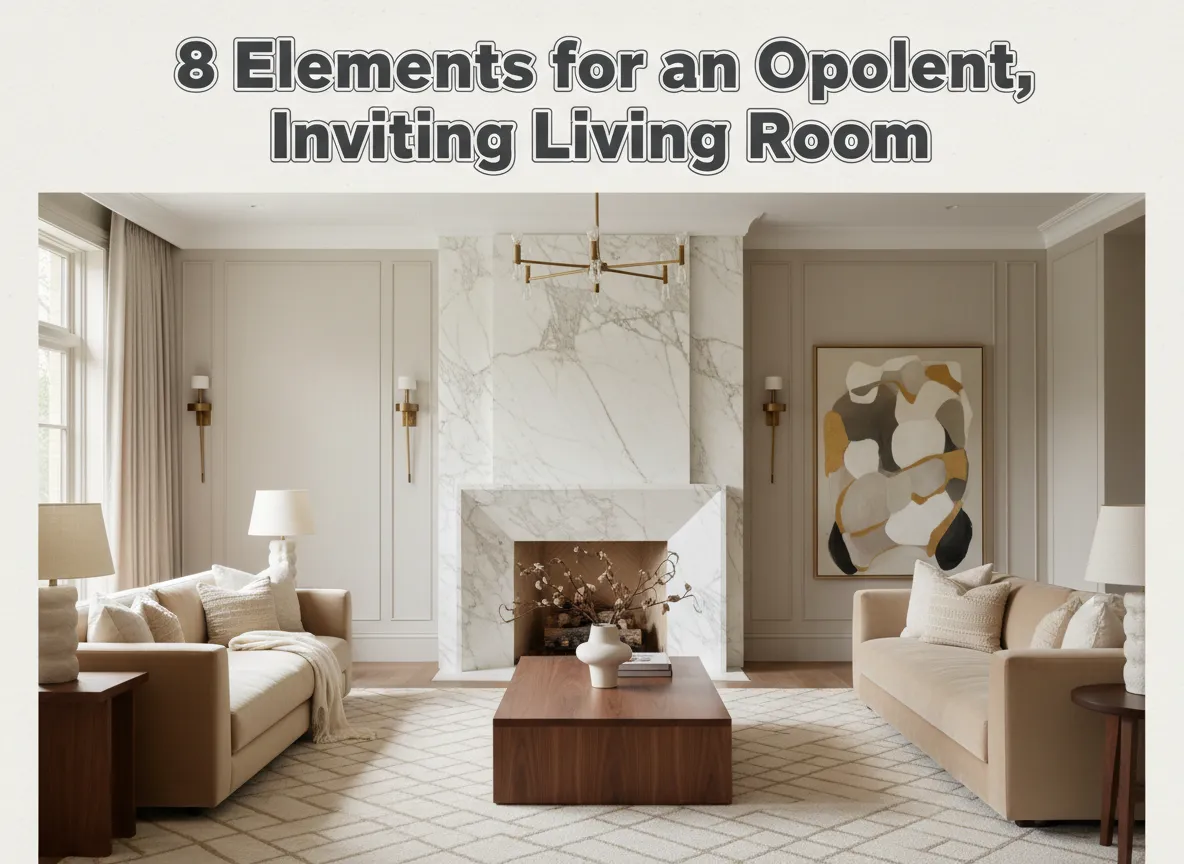
8 Luxury Living Room Design Elements for an Opulent and Inviting Atmosphere
Only 9% of homeowners say they are “completely satisfied” with their living room‘s sense of luxury, a striking figure that suggests most people know something is missing but cannot name exactly what it is. The gap between a room that looks expensive and one that genuinely feels opulent often comes down to a handful of deliberate design decisions. This guide breaks down the 8 Luxury Living Room Design Elements for an Opulent and Inviting Atmosphere that interior designers return to again and again, not because they are trendy, but because they work. Whether you are starting from scratch or refining a space you already love, these elements will help you build a living room that commands attention and earns admiration [4].
Disclosure: This post contains affiliate links. As an Amazon Associate, we earn from qualifying purchases, and at no extra cost to you.
Key Takeaways
- Quiet luxury and warm minimalism are the dominant aesthetic frameworks shaping high-end living rooms in 2026, restraint is as powerful as opulence.
- Layered lighting, premium textiles, and architectural details create the sensory depth that separates a truly luxurious space from a merely expensive one.
- Curated, meaningful accessories outperform quantity every time; a single sculptural object on a lacquered console can carry more visual weight than a shelf crowded with decorative pieces.
- Natural materials, stone, solid wood, silk, wool, age beautifully and signal quality in ways synthetic alternatives cannot replicate.
- Cohesion across all eight elements, rather than perfecting just one or two, is what produces an atmosphere that feels both opulent and genuinely inviting.
Why Quiet Luxury Defines the Modern High-End Living Room
Before diving into the individual elements, it helps to understand the broader aesthetic philosophy driving luxury interiors in 2026. The concept of quiet luxury, sometimes called warm minimalism, has replaced the maximalist, logo-heavy approach that dominated the previous decade. The idea is simple: true wealth does not need to announce itself. A room built on quiet luxury favors exceptional materials over flashy finishes, considered restraint over visual noise, and comfort over performance [5].
This does not mean a luxury living room must be cold or sparse. Warm minimalism layers rich textures, natural materials, and soft, nuanced color palettes to create spaces that feel both curated and lived-in. Think of a Parisian apartment where a single oil painting, a worn leather chesterfield, and a hand-knotted rug do more work than a room full of statement furniture ever could.
I have visited showrooms and private residences where this philosophy is executed flawlessly, and the common thread is always the same: every element earns its place. Nothing is accidental, and nothing is excessive. That discipline is the foundation on which all eight of the following elements rest [9].
The 8 Luxury Living Room Design Elements for an Opulent and Inviting Atmosphere
1. A Statement Architectural Focal Point
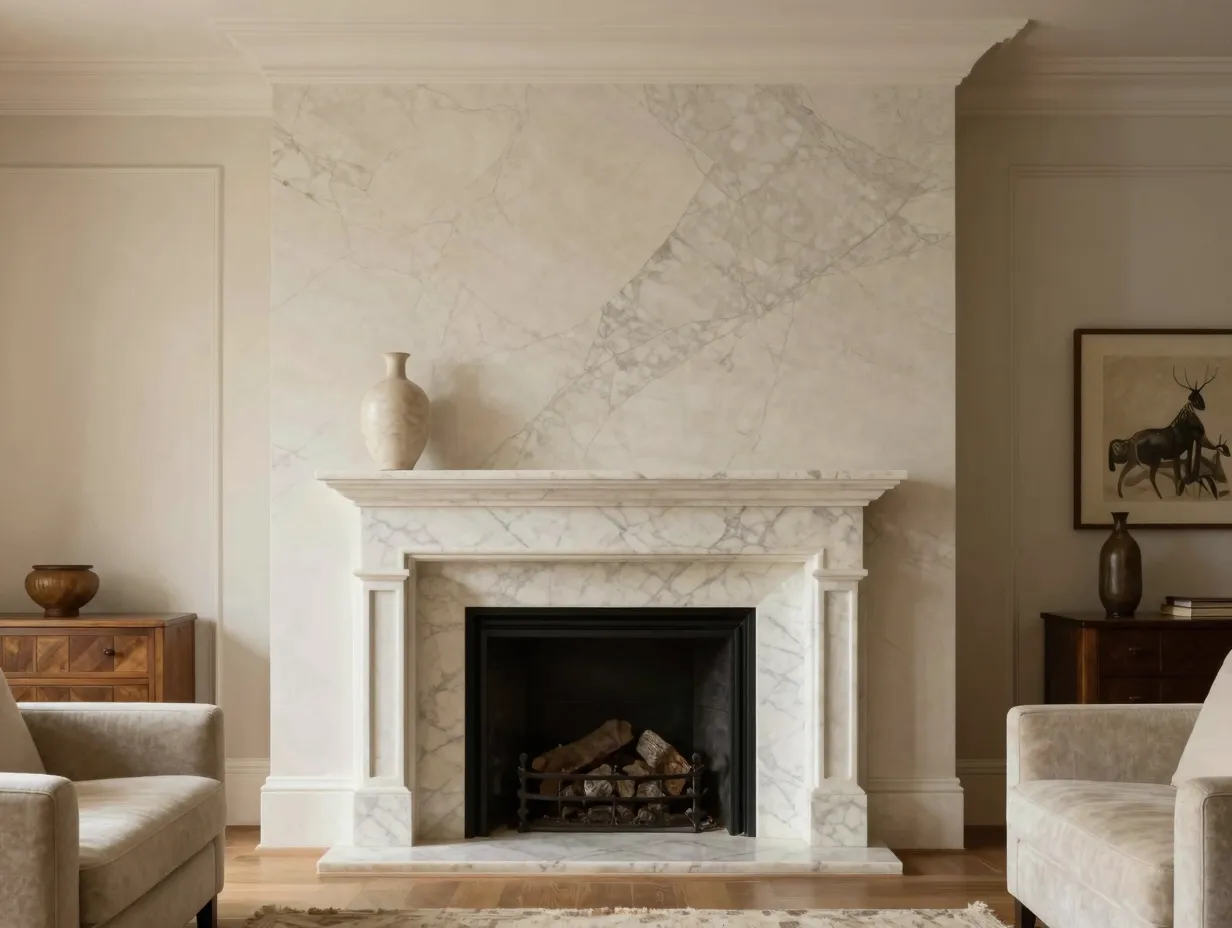
Every great luxury living room has one dominant feature that anchors the entire space. Most often, this is a fireplace with a sculptural surround, carved marble, honed limestone, or hand-plastered plaster are all strong choices. When a fireplace is not structurally possible, a floor-to-ceiling built-in bookcase, a dramatic accent wall clad in book-matched stone veneer, or an oversized piece of original artwork can serve the same function [4].
The key is singularity. Resist the urge to create multiple focal points competing for attention. Choose one, invest in it generously, and let everything else in the room orient toward it. A Carrara marble fireplace surround with a thick, projecting mantel shelf, for example, immediately communicates craftsmanship and permanence, two qualities that are inseparable from genuine luxury.
Design tip: The focal point should be visible from the primary seating position and ideally from the room’s entry point. Sightlines matter enormously in luxury design.
2. Layered, Intentional Lighting
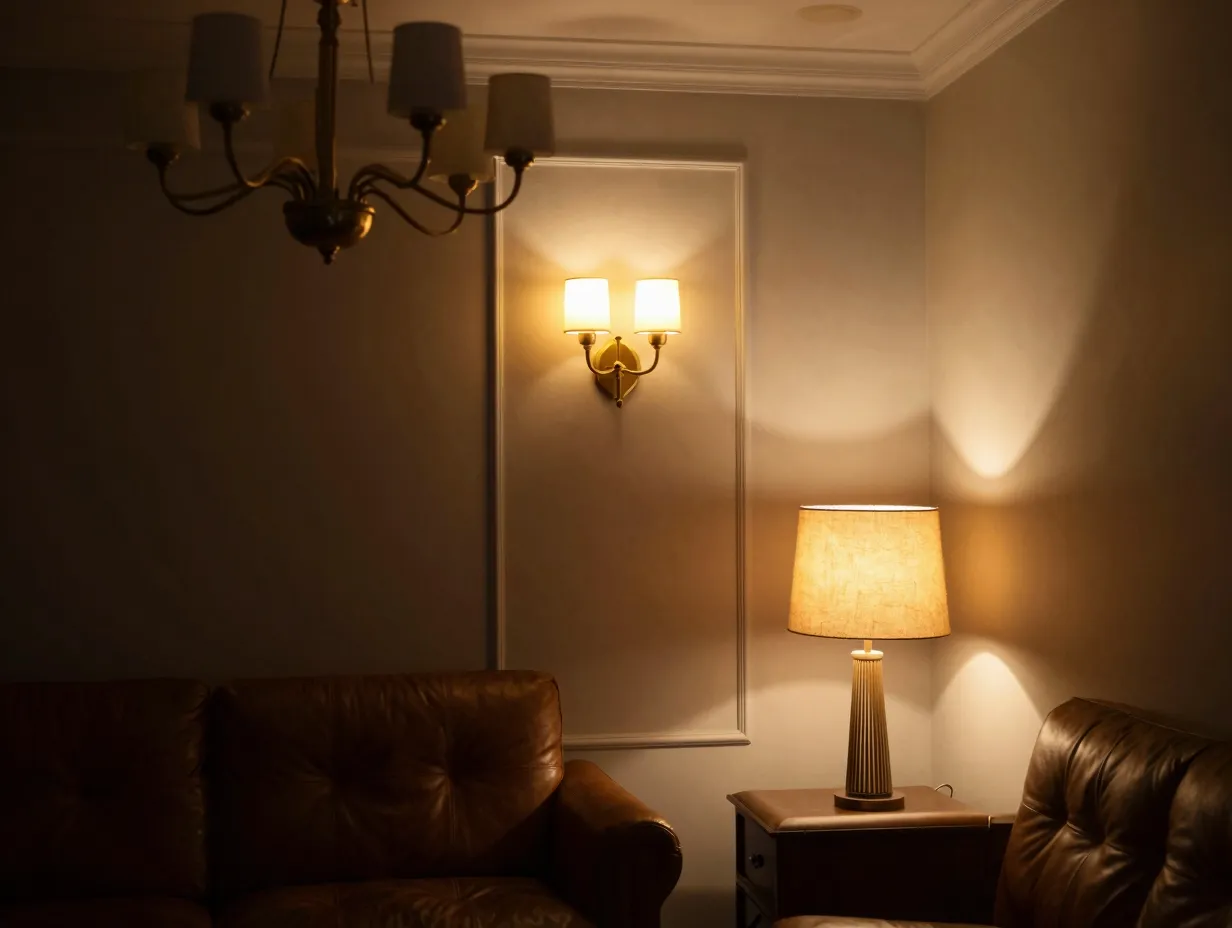
Lighting is the single most underestimated element in residential design. A room furnished with exceptional pieces will still feel flat and uninviting under harsh overhead lighting. Luxury living rooms use a minimum of three lighting layers: ambient (overall illumination), task (reading lamps, desk lights), and accent (picture lights, uplights, candlelight).
A chandelier or sculptural pendant establishes the room’s visual hierarchy and sets the tone immediately upon entry. Wall sconces add warmth at eye level, while table lamps on side tables and consoles create intimate pools of light that make a large room feel cozy rather than cavernous. Dimmer switches on every circuit are non-negotiable, the ability to shift a room from bright and energetic to soft and atmospheric is one of the most powerful tools a designer has [5].
“Light is not just how we see a room. It is how a room makes us feel.”
In my own experience redesigning a client’s formal sitting room, swapping a single recessed-light grid for a layered system of sconces, a statement chandelier, and four table lamps transformed the space more dramatically than any furniture change could have. The room went from feeling like a hotel lobby to feeling like a private club.
3. Premium Textiles and Upholstery
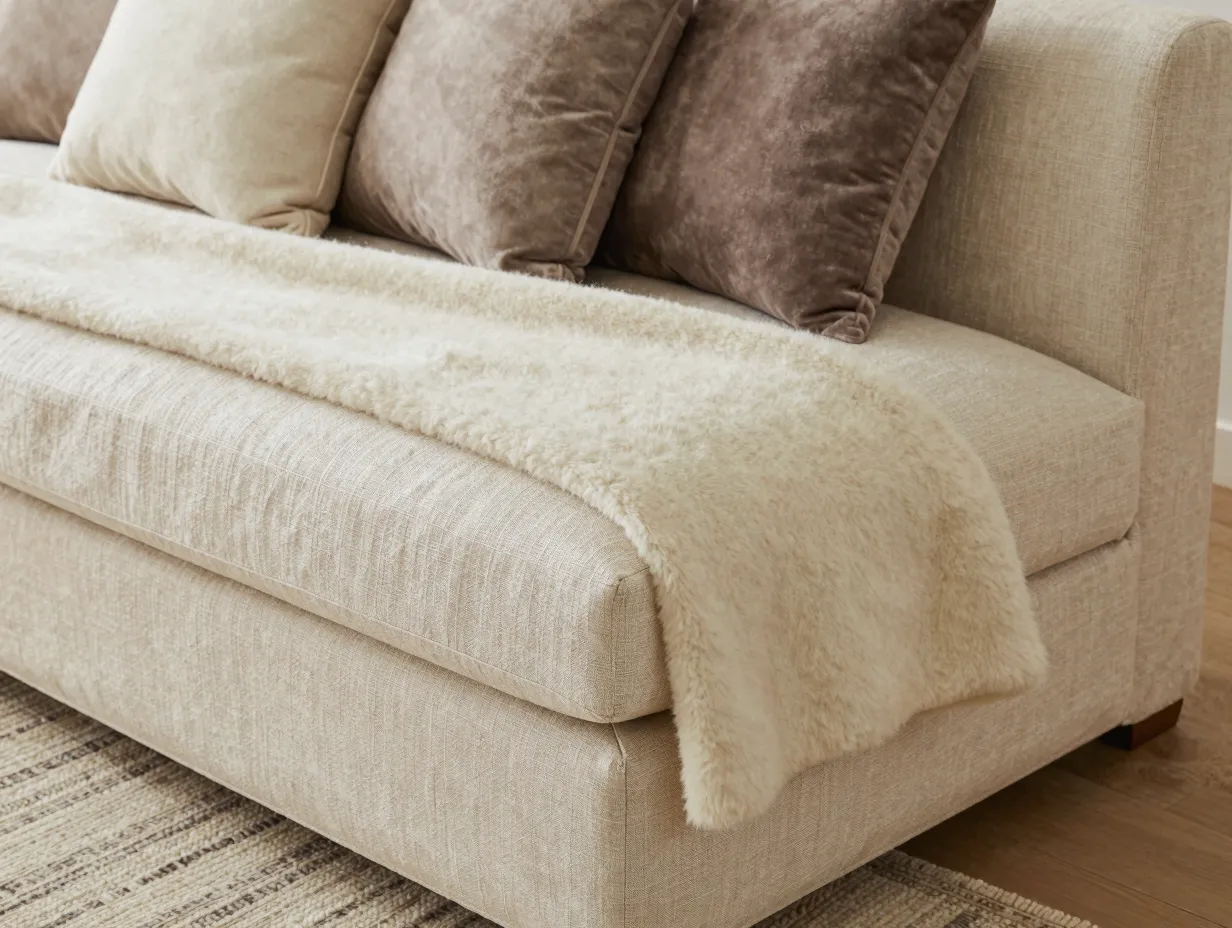
Touch is as important as sight in a luxury living room. The moment a guest runs a hand across a sofa cushion or settles into an armchair, the quality of the fabric communicates everything about the room’s standard. Velvet, bouclé, cashmere, silk, and high-thread-count linen are the textiles that define opulent upholstery [9].
Layering is essential. A linen sofa becomes exponentially richer when dressed with a cashmere throw and velvet accent cushions in a tonal palette. A bouclé armchair beside a lacquered side table creates a contrast of textures that is visually stimulating without being chaotic.
| Textile | Best Application | Luxury Signal |
|---|---|---|
| Velvet | Sofas, accent chairs, cushions | Depth of color, light play |
| Bouclé | Armchairs, ottomans | Tactile warmth, sculptural form |
| Cashmere | Throws, cushion covers | Softness, understated cost |
| Silk | Drapery, decorative cushions | Sheen, movement, formality |
| Hand-knotted wool | Area rugs | Craftsmanship, pattern, longevity |
The rug deserves special mention. A hand-knotted wool or silk rug is one of the highest-return investments in a luxury living room. It defines the seating area, adds acoustic warmth, and introduces pattern and color in a way that feels grounded rather than decorative [4].
4. Bespoke or High-Quality Furniture with Strong Silhouettes
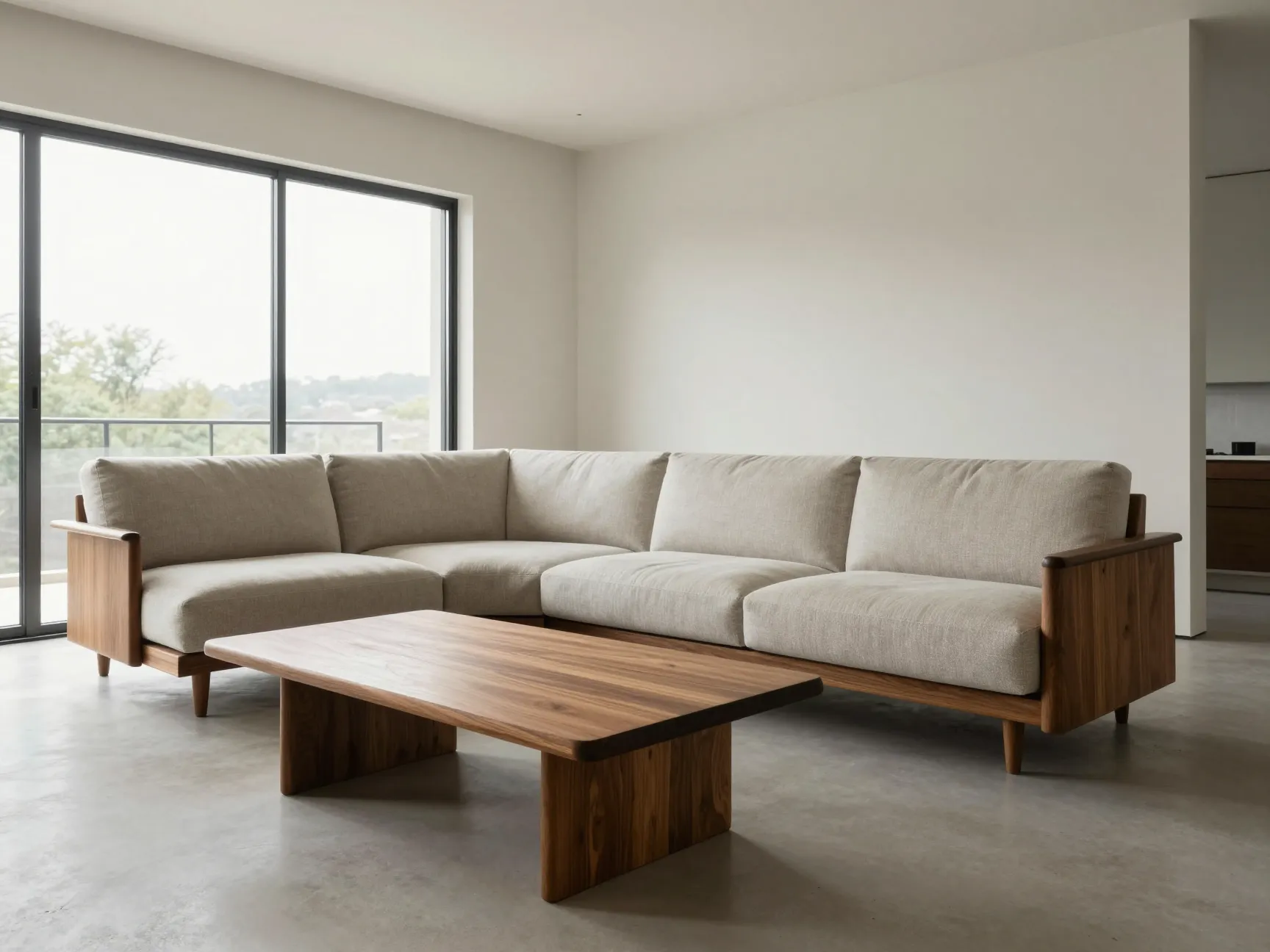
Mass-market furniture, no matter how well styled, rarely achieves the visual authority of a piece with a strong, considered silhouette. Luxury living rooms are built around furniture with architectural presence, a curved, low-profile sofa that references mid-century Italian design, a solid walnut coffee table with hand-turned legs, a pair of wing-back chairs in a bold stripe.
Bespoke furniture is the gold standard, but it is not the only path. Many established furniture houses produce pieces of genuine quality that hold their form and finish over decades. The criteria to apply when selecting each piece are: material quality, joinery and construction, silhouette clarity, and scale relative to the room.
Scale is critical. One of the most common mistakes I see in living rooms that aspire to luxury is furniture that is too small for the space. A grand room needs furniture of corresponding weight and presence. Undersized sofas and spindly side tables make a large room feel uncertain rather than confident [5].
5. Curated Art and Meaningful Accessories
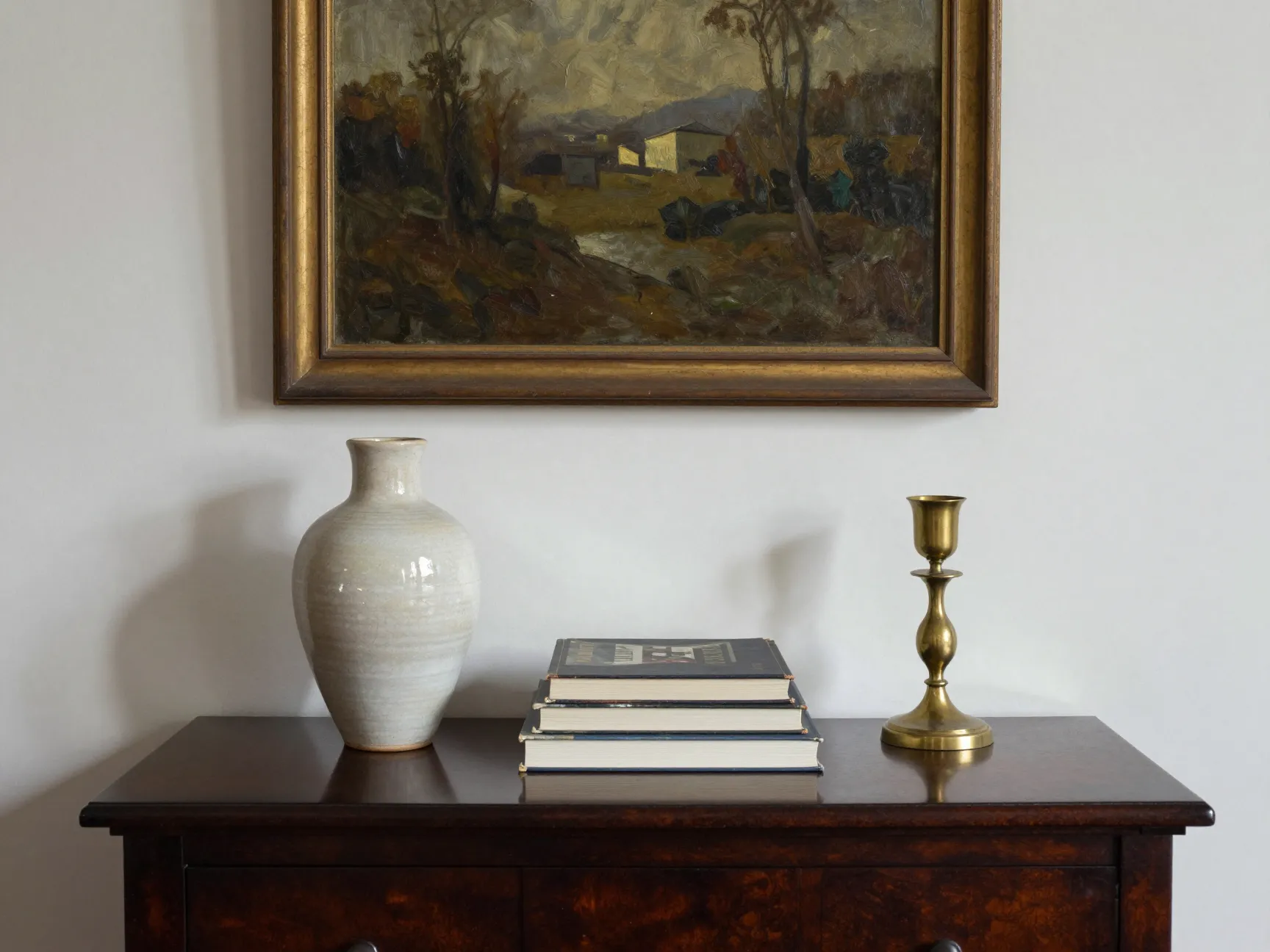
The difference between a luxury living room and a decorated showroom is almost always the presence of personal, meaningful objects. Art, in particular, is the element that makes a room feel inhabited by a real person with genuine taste rather than assembled by committee.
Original artwork, whether oil paintings, works on paper, photography, or sculpture, carries a cultural and financial weight that prints and reproductions cannot replicate. This does not mean every piece needs to be by a famous artist. A beautifully executed work by an emerging painter, acquired because it genuinely moved you, will always outperform a generic canvas chosen to match the sofa [4].
Accessories should be curated with the same discipline. A lacquered console styled with three objects, a sculptural vase, a stack of oversized art books, and a single candlestick, is more powerful than the same surface crowded with twenty decorative pieces. The principle of negative space applies to accessories just as it does to architecture.
“Luxury is not about filling every surface. It is about choosing what deserves to be seen.”
6. Architectural Details and Millwork
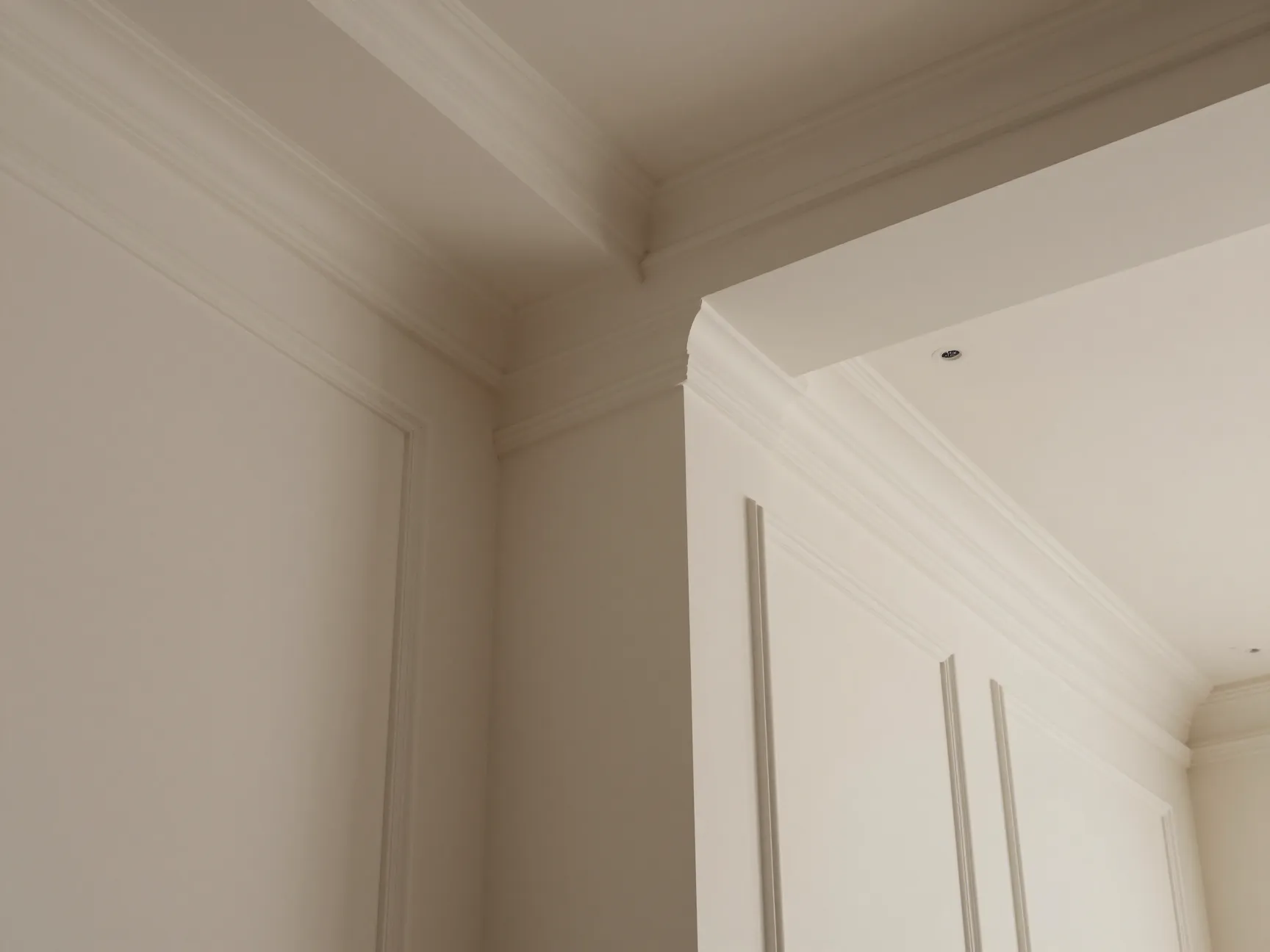
Rooms with architectural bones, crown molding, coffered ceilings, paneled walls, deep baseboards, and built-in cabinetry, have an inherent sense of permanence and craft that no amount of furniture can replicate. These details are the hallmark of traditional luxury interiors, but they translate equally well into contemporary spaces when executed with restraint.
Paneled walls in a matte paint finish, for example, add enormous visual depth to a room without introducing color or pattern. A coffered ceiling draws the eye upward and makes a room feel taller and more considered. Built-in bookshelves flanking a fireplace are both functional and deeply satisfying from a compositional standpoint [9].
If structural millwork is beyond budget, consider applied molding, decorative strips of MDF or solid wood that can be painted to match the wall and create the illusion of paneling at a fraction of the cost. The visual effect, when executed well, is nearly indistinguishable from the real thing.
7. Natural Materials and Organic Textures
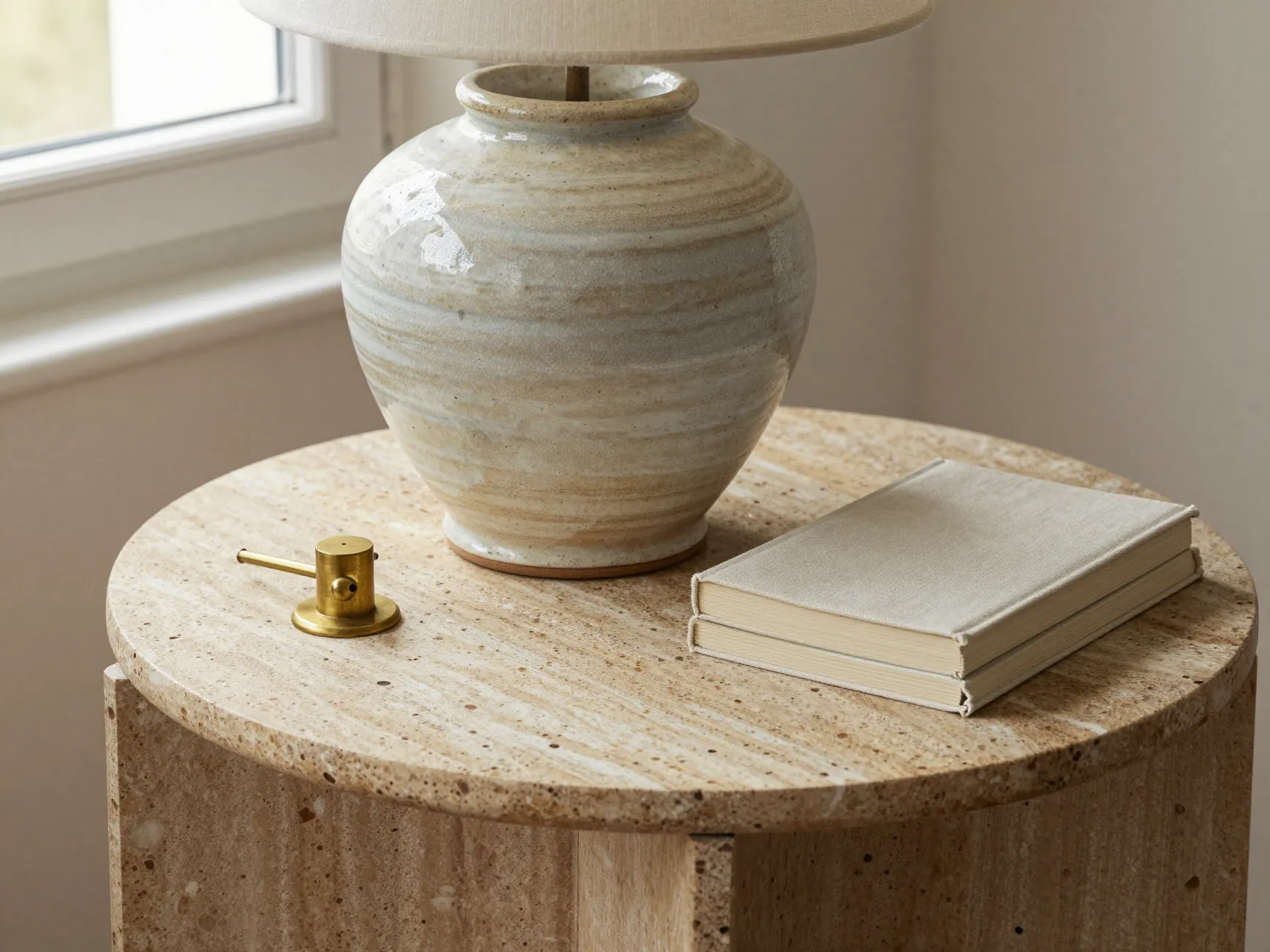
There is a reason that stone, solid wood, natural fiber, and hand-thrown ceramics appear in virtually every high-end living room: natural materials age with grace and communicate authenticity in a way that synthetic alternatives cannot. The warmth of a travertine side table, the grain of a solid oak floor, the slight irregularity of a hand-thrown ceramic lamp base, these qualities register subconsciously as quality and care [5].
The quiet luxury aesthetic is particularly dependent on natural materials. A palette of warm stone, aged brass, undyed linen, and oiled walnut creates a sensory environment that feels both rich and restful, the precise combination that defines an inviting atmosphere.
Natural materials to prioritize:
- Stone (marble, travertine, limestone) for surfaces and architectural details
- Solid hardwood for furniture, flooring, and millwork
- Natural fiber textiles (wool, linen, silk, cotton) for upholstery and soft furnishings
- Aged or unlacquered brass for hardware and lighting fixtures
- Hand-thrown or hand-formed ceramics for decorative accessories
Avoid mixing too many competing natural materials in a single room. Choose two or three and repeat them consistently, this creates the sense of a considered, unified palette rather than a collection of individual good choices [4].
8. A Cohesive, Sophisticated Color Palette
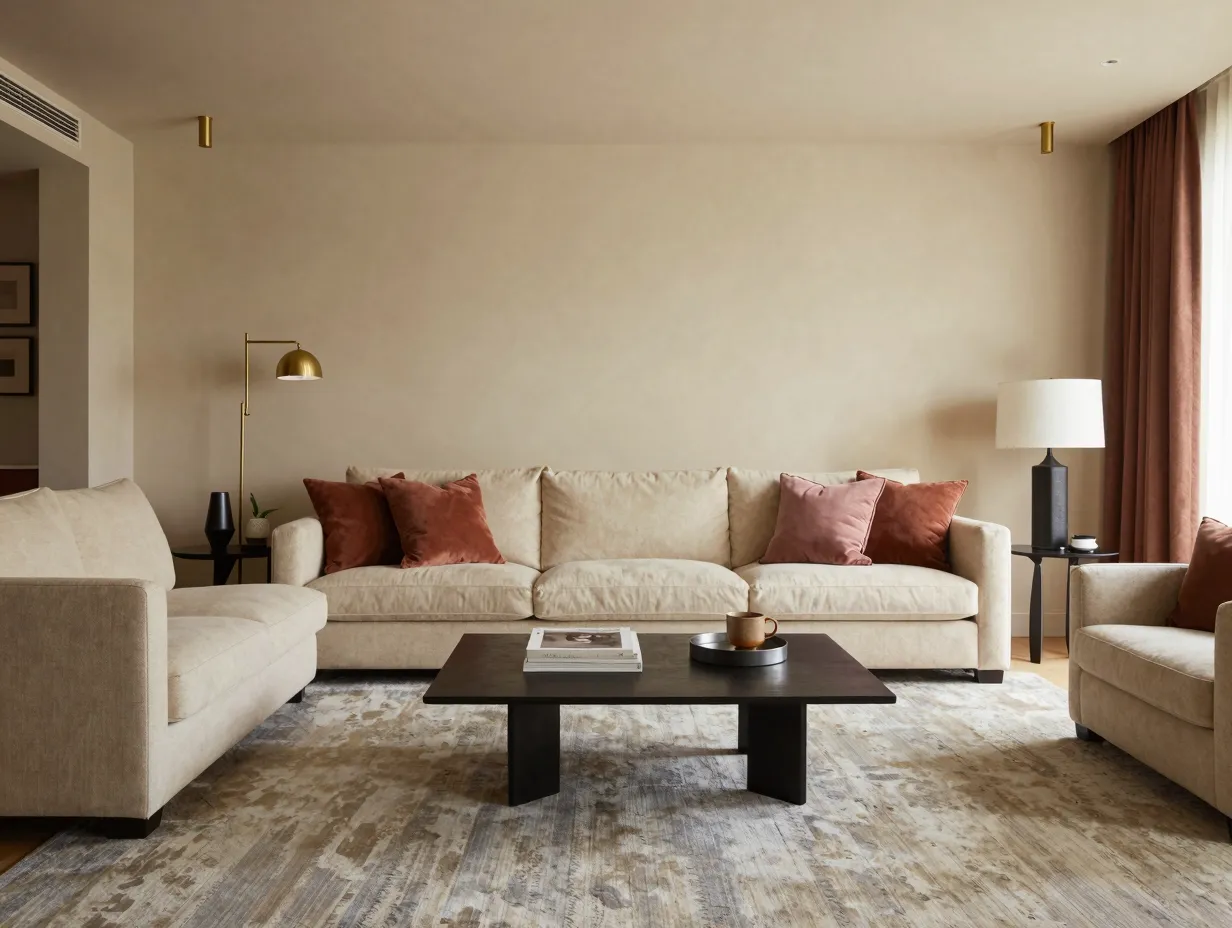
Color is the thread that ties all other elements together. In luxury living rooms, the most enduring palettes are built on a narrow range of sophisticated, nuanced tones rather than bold contrasts or trend-driven combinations. Warm whites, deep creams, soft stone grays, aged taupes, and muted sage greens form the backbone of most high-end interiors in 2026 [5].
This does not mean a luxury living room must be neutral to the point of blandness. Depth comes from layering tones within the same family, a sofa in warm ivory against walls in a slightly deeper cream, accented by cushions in a muted terracotta or dusty rose. The result is a room that reads as cohesive and calm at first glance but reveals increasing richness the longer you spend time in it.
Accent colors, when used, should be introduced through textiles and accessories rather than paint. This makes them easy to evolve over time without structural changes. A pair of deep emerald velvet cushions, a single cobalt blue vase, or a terracotta throw can introduce color with confidence while maintaining the room’s overall sense of restraint.
Color palette principles for a luxury living room:
- Anchor the room in one dominant neutral (walls, large upholstery)
- Introduce a secondary tone in soft furnishings and millwork
- Add one accent color through accessories and textiles
- Use metallics (brass, bronze, aged gold) as a fourth layer to add warmth and light
- Test every color in the room’s actual light before committing, natural and artificial light change colors dramatically
Bringing All 8 Luxury Living Room Design Elements Together
Understanding the 8 Luxury Living Room Design Elements for an Opulent and Inviting Atmosphere individually is useful, but the real skill lies in integrating them into a single, coherent space. Each element should reinforce the others rather than compete with them.
A practical way to approach this is to work from the outside in. Start with the architecture, the focal point, the millwork, the ceiling details. These are the hardest and most expensive to change, so they should be established first. Then layer in the flooring and large textiles (rugs, drapery), followed by the major furniture pieces. Lighting comes next, as it affects how every other element reads. Finally, add art, accessories, and accent textiles to complete the composition [9].
The table below summarizes how each element contributes to the two core qualities of a luxury living room, opulence and invitingness:
| Design Element | Contributes to Opulence | Contributes to Invitingness |
|---|---|---|
| Architectural focal point | Strong visual authority | Gives the eye a place to rest |
| Layered lighting | Dramatic atmosphere | Warmth and intimacy |
| Premium textiles | Visual richness | Physical comfort |
| Bespoke furniture | Presence and scale | Ergonomic quality |
| Curated art and accessories | Cultural depth | Personal character |
| Architectural millwork | Permanence and craft | Structural warmth |
| Natural materials | Authenticity and quality | Sensory comfort |
| Cohesive color palette | Sophistication | Visual calm |
Common Mistakes That Undermine Luxury Living Room Design
Even with the right elements in place, a few recurring mistakes can dilute the effect. Being aware of them is as important as knowing what to include.
Overcrowding the space. Luxury requires breathing room. Too much furniture, too many accessories, and too many competing focal points create visual anxiety rather than opulence. Edit ruthlessly.
Ignoring acoustics. Hard surfaces, stone floors, glass, bare walls, create echo and noise that make a room feel cold and uncomfortable regardless of how it looks. Rugs, upholstered furniture, drapery, and soft furnishings absorb sound and make a room feel genuinely comfortable.
Choosing style over comfort. A sofa that looks beautiful but is uncomfortable to sit on fails the fundamental test of an inviting atmosphere. Luxury should always be functional first.
Neglecting the ceiling. The ceiling is the fifth wall and one of the most overlooked surfaces in residential design. A coffered ceiling, a decorative plaster finish, or even a carefully positioned chandelier can transform a room’s perceived height and grandeur [4].
Conclusion
The 8 Luxury Living Room Design Elements for an Opulent and Inviting Atmosphere, a statement focal point, layered lighting, premium textiles, bespoke furniture, curated art, architectural millwork, natural materials, and a cohesive color palette, are not a checklist to complete in order. They are a system of interdependent decisions that, when made with intention and discipline, produce a space that is genuinely greater than the sum of its parts.
The most actionable step you can take right now is to audit your current living room against these eight elements. Identify the two or three where the gap between where you are and where you want to be is largest, and start there. In my experience, lighting and textiles deliver the fastest and most dramatic return on investment, they can transform a room in days rather than months.
Quiet luxury is not about spending more. It is about choosing better, editing more ruthlessly, and committing to the idea that every element in a room should earn its place. Start with one element, do it exceptionally well, and let that standard set the tone for everything that follows.
References
[4] Luxury Living Room Ideas – https://homecompanionmag.com/living-room/luxury-living-room-ideas/
[5] Luxury Living Room Ideas For 2026 – https://www.thecoolist.com/luxury-living-room-ideas-for-2026/
[9] 30 Ideas For Luxury Living Rooms That Are Sure To Wow T22103 – https://www.wayfair.com/sca/ideas-and-advice/rooms/30-ideas-for-luxury-living-rooms-that-are-sure-to-wow-T22103