9 Living Room Designs That Will Transform Your Home’s Heart
The average American spends more than four hours per day in their living room, yet most people have never made a single intentional design decision about the space. They inherited a sofa arrangement from a previous tenant, painted the walls a safe beige, and called it done. The result is a room that functions but never truly feels alive.
Disclosure: This post contains affiliate links. As an Amazon Associate, we earn from qualifying purchases, and at no extra cost to you.
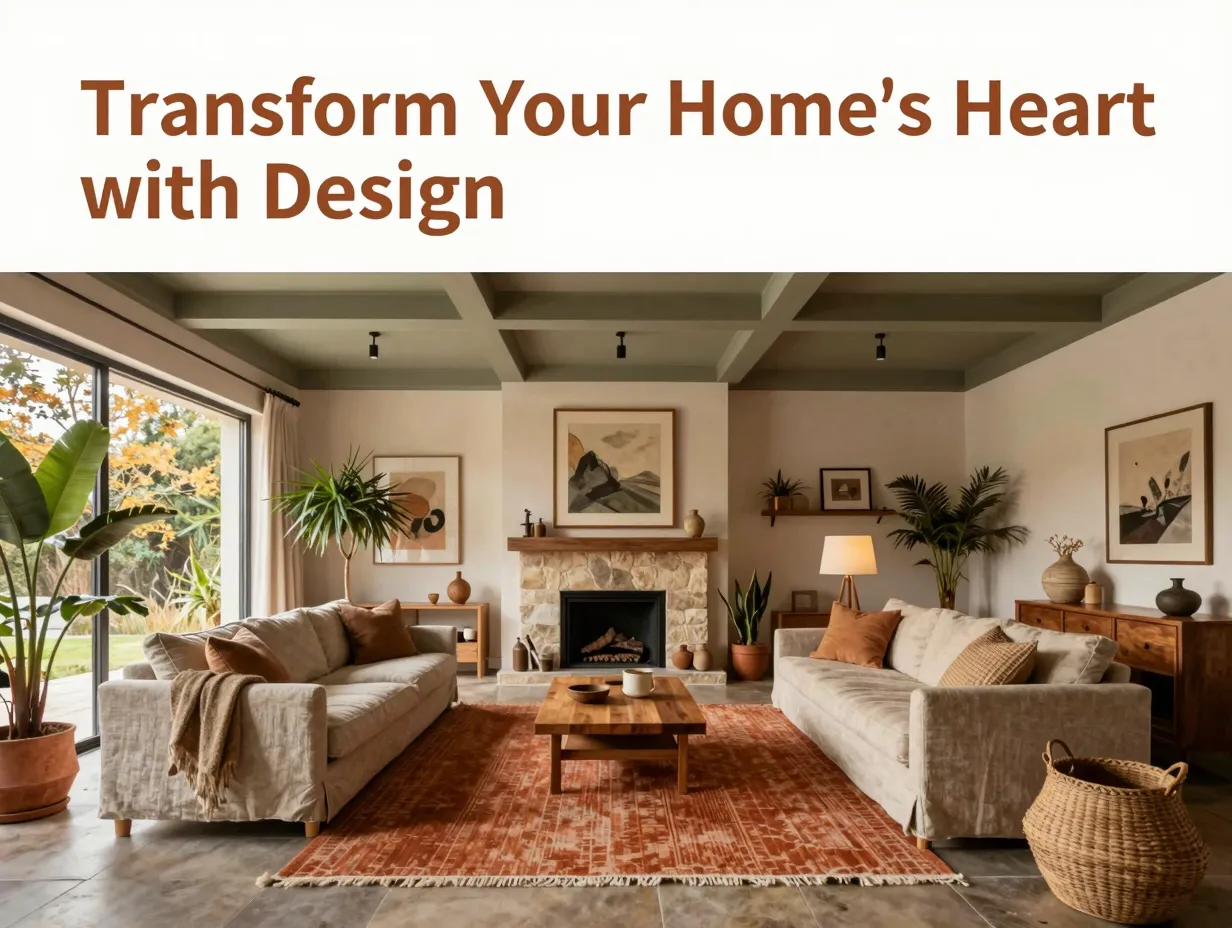
These 9 Living Room Designs That Will Transform Your Home’s Heart are built on a different premise: that your living room should do real emotional work. It should make guests feel welcome the moment they step inside, give your family a reason to put their phones down, and reflect something genuine about who you are. Whether you are starting from scratch or refreshing a tired space, the nine design frameworks below will give you a clear, actionable path forward.
Key Takeaways
- Pulling furniture away from walls and anchoring it with a central rug creates a more spacious, conversation-friendly living room [1]
- Warm earth tones and natural, biophilic materials are the dominant design direction in 2026 [1]
- A fireplace or other strong focal point organizes the entire room and gives every design decision a reference point [5]
- Strategic zoning with rugs and lighting can divide a large open-plan space without building a single wall [2]
- AI visualization tools now let homeowners test layouts and color schemes before spending a dollar [1]
Why Your Living Room Deserves a Serious Design Strategy
Most home improvement energy goes into kitchens and bathrooms because those rooms have clear return-on-investment data. But the living room is where daily life actually happens. It is the room where you host, where children do homework, where you decompress after work. A poorly designed living room creates low-level friction every single day.
A well-designed one does the opposite. It reduces decision fatigue, encourages conversation, and signals to everyone who enters that this home is intentional. The nine designs below are not just aesthetic choices, each one solves a specific spatial or emotional problem.
Before diving in, one practical note: AI visualization tools have changed the game for homeowners who want to test ideas before committing. Platforms that let you upload a photo of your actual room and experiment with layouts, paint colors, and furniture arrangements are now widely accessible and free or low-cost [1]. I strongly recommend using one before making any major purchase.
9 Living Room Designs That Will Transform Your Home’s Heart
1. The Floating Furniture Arrangement
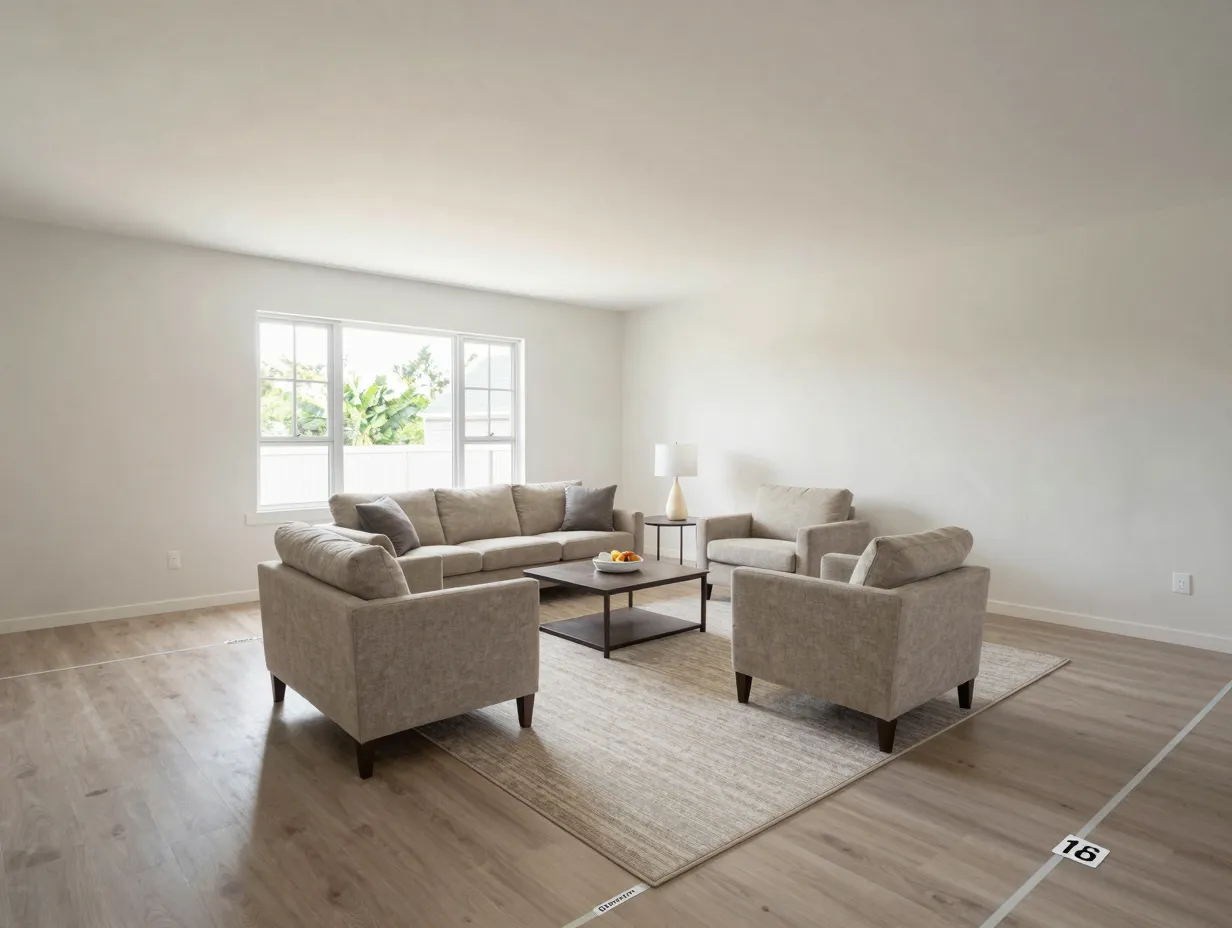
The single most common living room mistake is pushing every piece of furniture against the walls. It feels logical, more floor space in the middle, but it actually makes rooms feel smaller and more awkward, like a waiting room.
The fix is counterintuitive: pull your furniture 12 to 24 inches away from the walls and anchor the grouping with a central area rug [1]. This creates a defined conversation zone that draws people in rather than pushing them around the perimeter. The rug should be large enough that at least the front legs of every major seating piece rest on it.
This layout is particularly effective in square or near-square rooms, where the floating island of furniture creates a clear visual center. The open space between the furniture grouping and the walls actually reads as intentional breathing room rather than wasted space.
Quick checklist for floating arrangements:
- Rug size: minimum 8×10 feet for a standard living room
- Sofa-to-coffee-table gap: 14 to 18 inches for comfortable reach
- Traffic lanes: maintain at least 36 inches of clearance around the furniture island
- Anchor pieces: a sofa and two chairs in an open U or L shape work best
2. Warm Earth Tones and Biophilic Materials
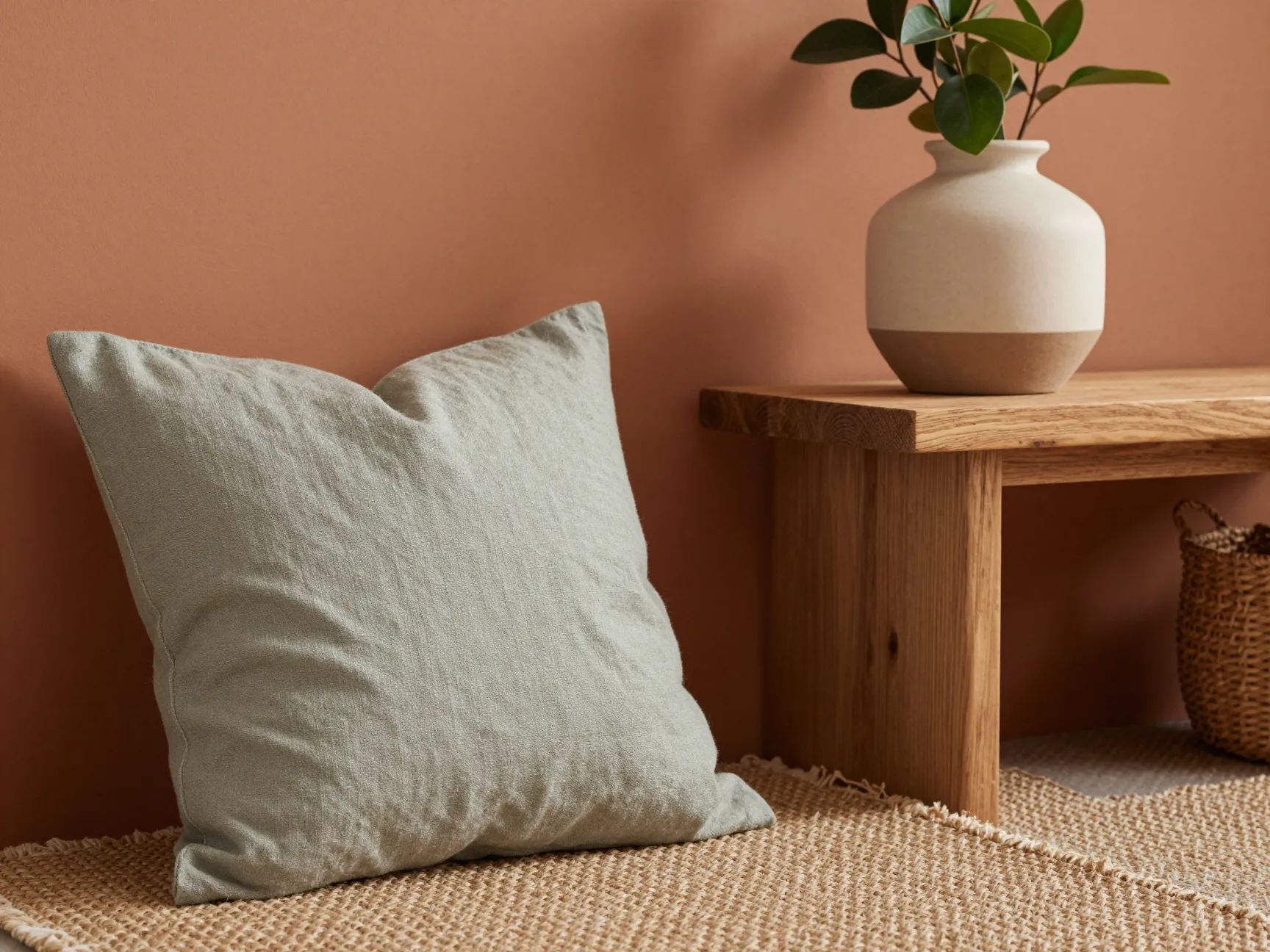
Color is the fastest and cheapest transformation tool available, and in 2026, the direction is clear. Living rooms are moving away from cool grays and stark whites toward warm earth tones, terracotta, ochre, warm taupe, dusty sage, and burnt sienna [1].
These colors work because they align with biophilic design principles, the idea that humans feel calmer and more comfortable in spaces that echo the natural world. Pair warm wall colors with natural materials, rattan, jute, linen, raw wood, stone, and live plants, and the room begins to feel genuinely restorative rather than just decorated.
“Biophilic design is not a trend. It is a response to a fundamental human need for connection with the natural world, and living rooms are its most powerful canvas.”
I repainted my own living room from a cool gray to a warm terracotta two years ago. The change cost less than $80 in paint, and every single person who has visited since has commented on how the room “feels different.” That is the power of color working in alignment with human psychology.
Biophilic material checklist:
- Textiles: linen, cotton, wool, jute
- Hard surfaces: raw oak, walnut, travertine, slate
- Accents: woven baskets, ceramic vessels, live or dried botanicals
- Lighting: warm-toned bulbs (2700K to 3000K color temperature)
3. The Statement Ceiling
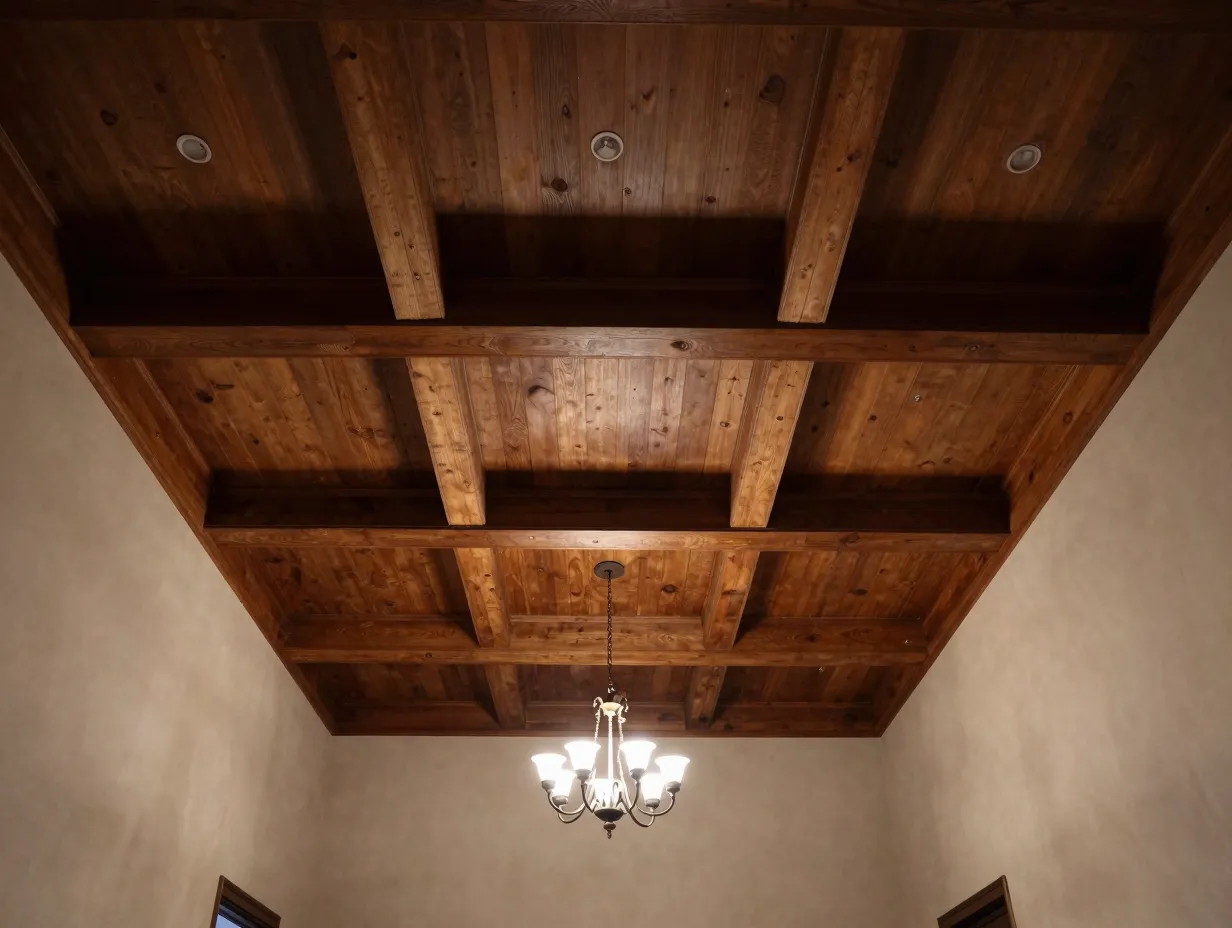
Most people treat the ceiling as a fifth wall that simply gets painted white and forgotten. In large or high-ceilinged living rooms, this is a significant missed opportunity.
Statement ceilings, coffered designs, painted murals, exposed beams, bold color, or decorative molding, draw the eye upward and add a layer of drama that no piece of furniture can match [2]. They also solve a common problem in large rooms: the feeling that the space is too tall and cavernous to feel intimate.
A coffered ceiling adds architectural weight and visual texture. A ceiling painted in a deep, saturated color (navy, forest green, charcoal) creates an enveloping, cozy effect even in a large room. Exposed wooden beams add warmth and a sense of craft.
The investment varies widely. A painted ceiling costs almost nothing. Faux beams can be installed for a few hundred dollars. True coffered ceilings are a more significant renovation, but the visual impact is proportional.
4. Strategic Zoning in Open-Plan Spaces
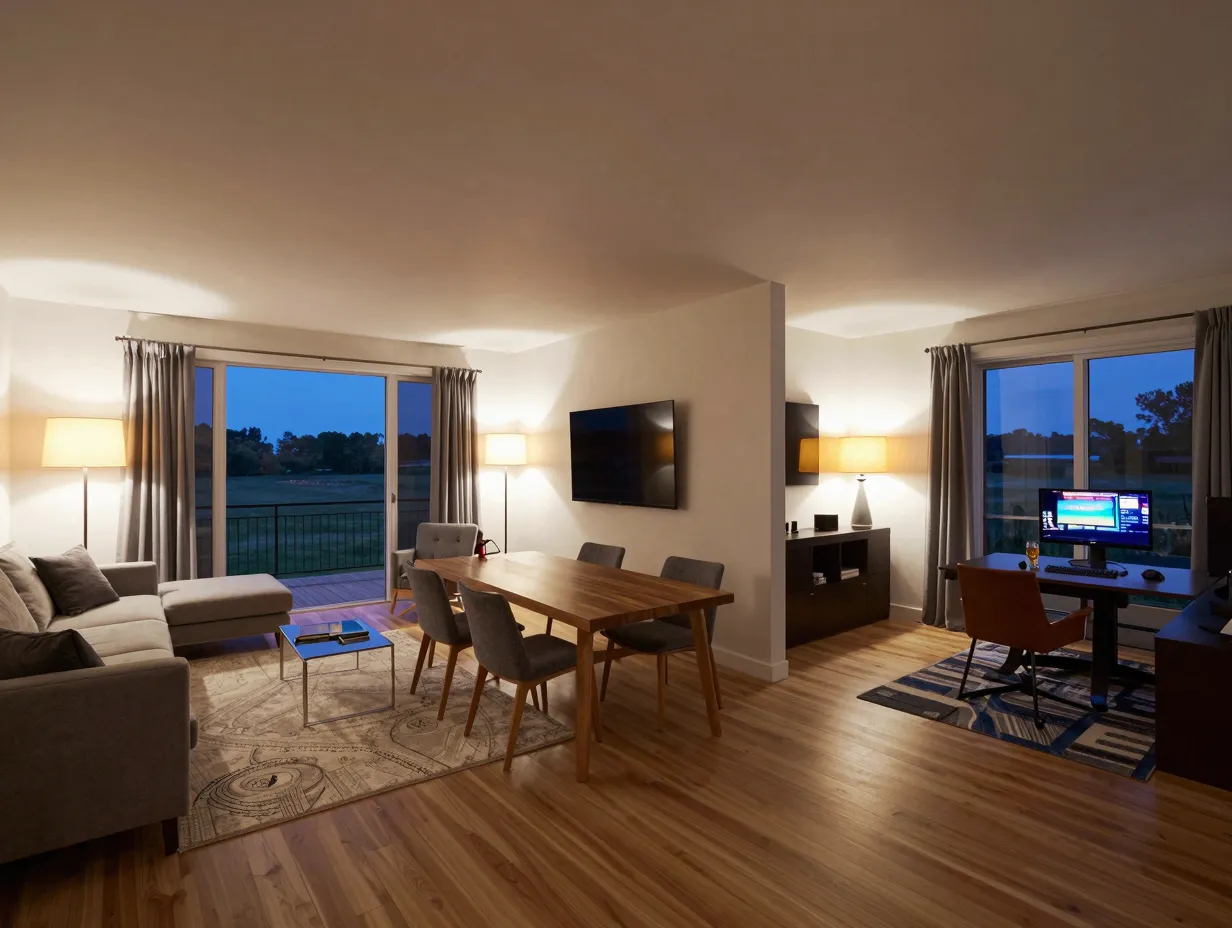
Open-concept living areas became the dominant floor plan in new construction over the past two decades. The appeal is obvious, light, flow, a sense of space. The challenge is equally obvious: a large, undivided room can feel directionless and hard to furnish.
Strategic zoning solves this without building a single wall [2]. The tools are furniture arrangement, area rugs, lighting, and occasionally a partial bookshelf or open shelving unit used as a soft divider.
A well-zoned open-plan living room might include:
- A primary conversation zone anchored by a large sofa and rug
- A reading nook defined by a single armchair, a floor lamp, and a small side table
- A games or hobby area in a corner, defined by a different rug or a change in lighting
- A transition zone between the living area and dining area, marked by a console table or pendant light
The key principle is that each zone should have its own light source [4]. Overhead lighting alone flattens a space. Layer in floor lamps, table lamps, and task lighting to give each zone its own atmosphere, even when the room is technically one continuous space.
5. Minimalist Chic with Clean Lines
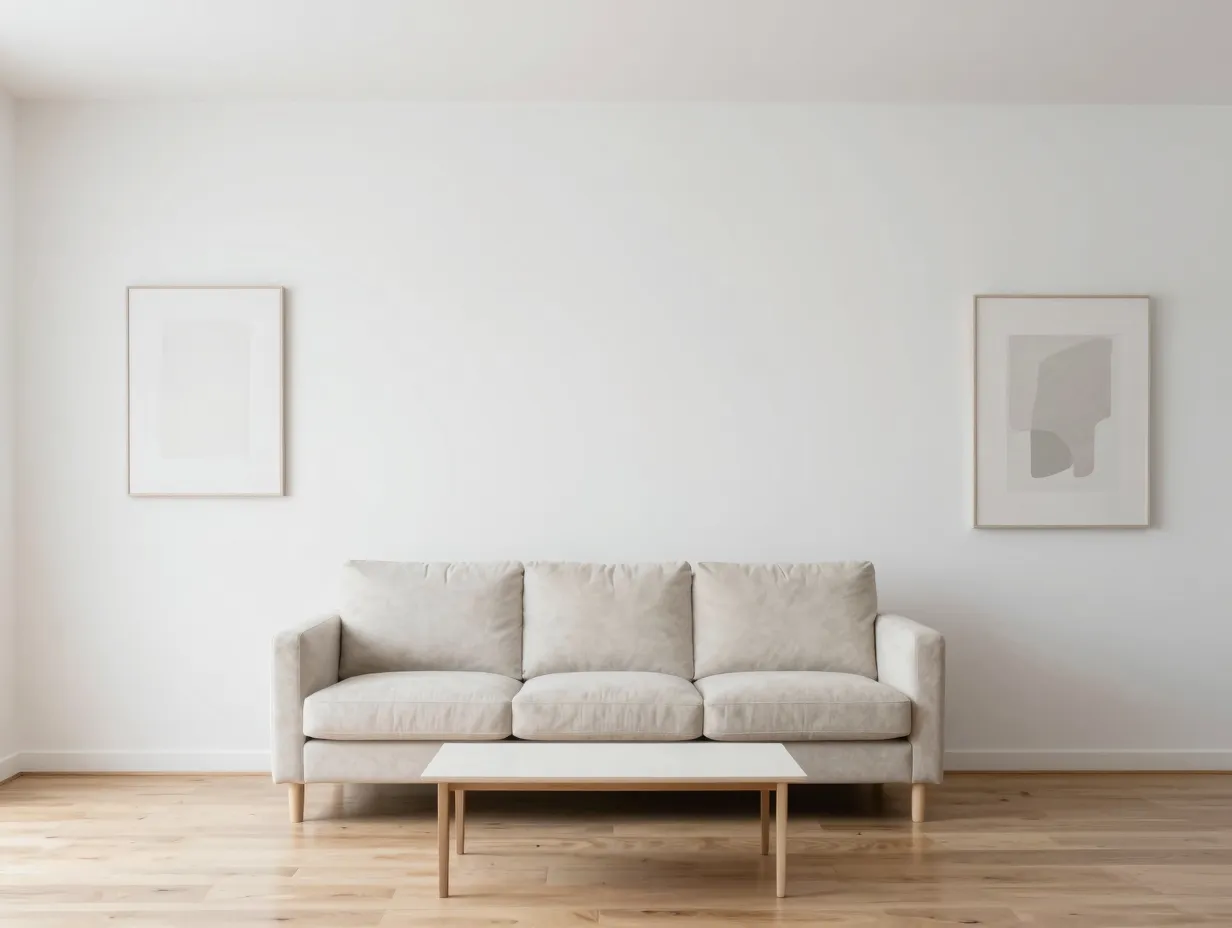
Minimalism is frequently misunderstood as emptiness. True minimalist living room design is not about removing everything, it is about keeping only what earns its place [3].
A minimalist chic living room features:
- A restrained color palette (monochrome or two-tone, often anchored in white, cream, or light gray)
- Furniture with clean, unornamented lines
- Intentional negative space, areas of floor, wall, or surface that are deliberately left empty
- Hidden or integrated storage so that everyday clutter disappears
- One or two high-quality statement pieces rather than many average ones
The payoff is an airy, open feeling that makes even a small living room feel larger than it is [3]. It also reduces visual noise, which has a measurable effect on stress levels.
The discipline required is the hard part. Every object in a minimalist room needs to be either functional, beautiful, or both. A minimalist living room is not a room you design once, it is a room you curate continuously.
6. Classic Elegance in Open-Concept Layouts
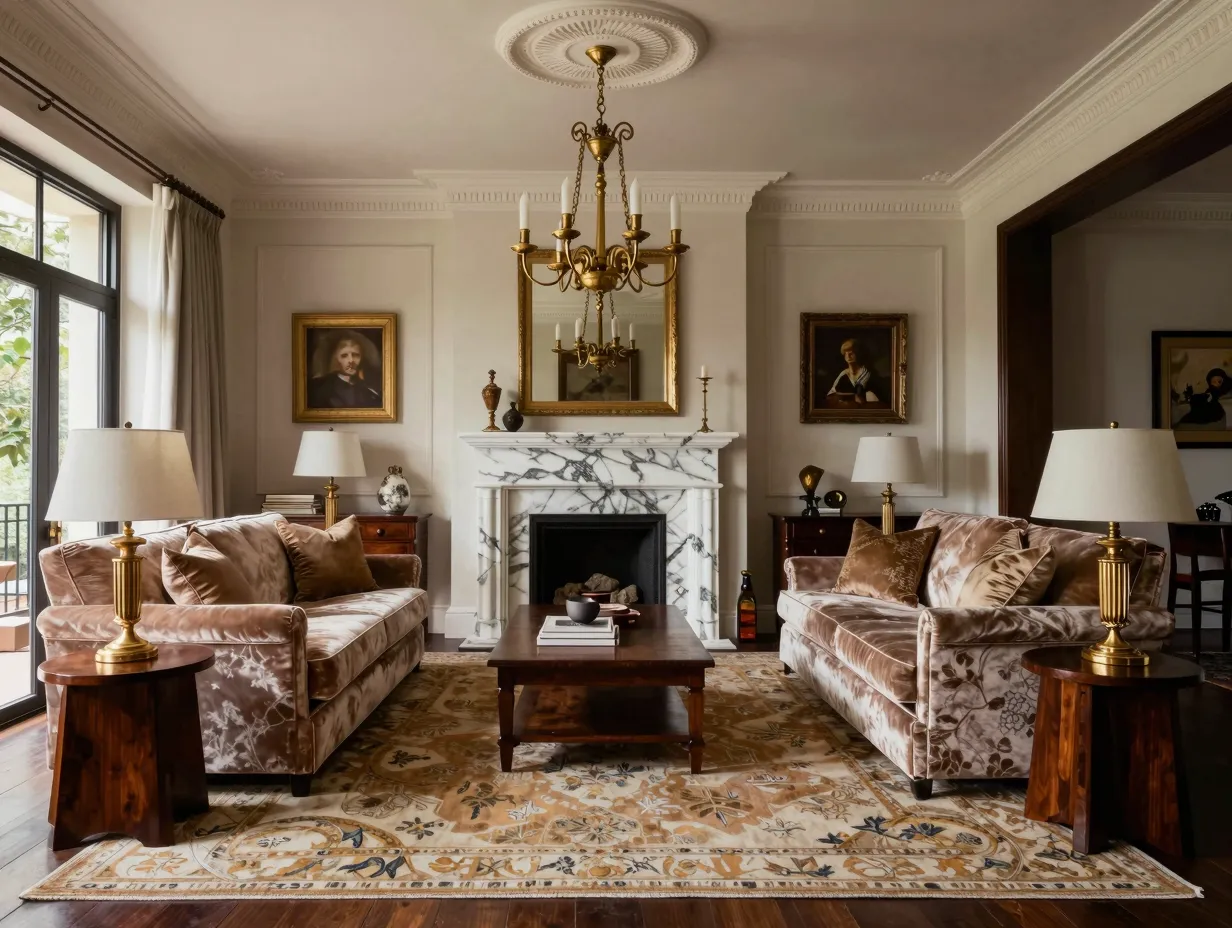
Where minimalism pursues reduction, classic elegance pursues refinement. This design approach brings timeless materials, symmetrical arrangements, and layered textures into an open-concept space to create something that feels both grand and livable [4].
The hallmarks of classic elegance in a living room:
- Symmetrical furniture arrangement around a central focal point (fireplace, large window, or statement artwork)
- Rich, layered textiles: velvet, silk, wool, and linen in complementary tones
- Timeless finishes: brass or bronze hardware, marble or stone surfaces, dark-stained wood
- Defined zones marked by large, patterned rugs
- Lighting that creates drama, a chandelier or large pendant over the seating area
The key to making classic elegance work in a modern home is restraint in the details. Crown molding and wainscoting add architectural character without tipping into period pastiche. Mixing one or two antique or vintage pieces with contemporary furniture creates depth and authenticity.
7. The Fireplace as Focal Point
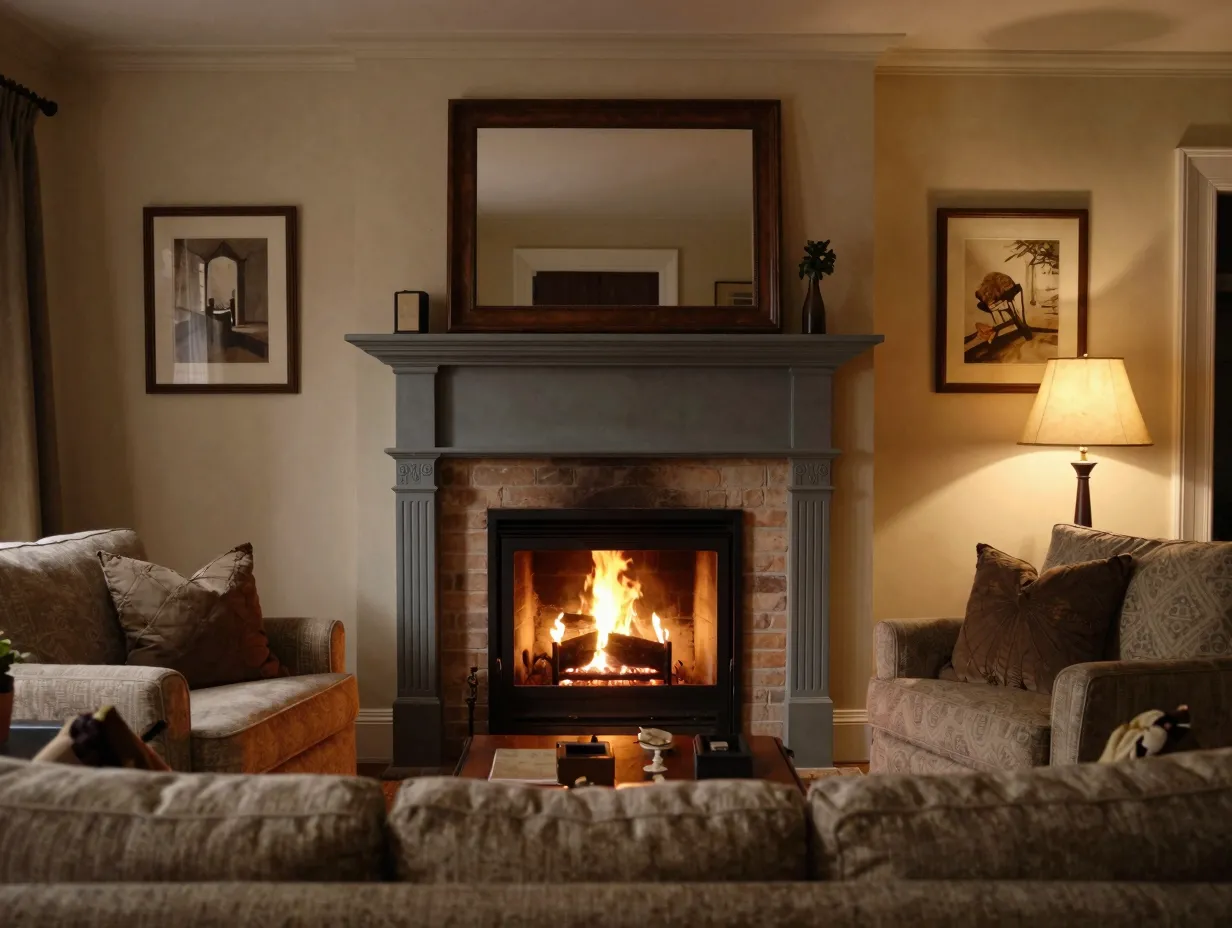
Every well-designed living room needs a focal point, a single element that anchors the eye and organizes the furniture arrangement around it. A fireplace is the most powerful focal point available to a living room designer [5].
A fireplace does several things simultaneously. It provides warmth (literal and atmospheric). It creates a natural gathering point. It gives every other design decision in the room a reference, furniture faces it, artwork flanks it, lighting complements it [5].
If your living room has an existing fireplace, treat it as the organizing principle of the entire space. Paint the surround a contrasting color. Add a large mirror or statement artwork above the mantel. Arrange seating to face it directly.
If you do not have a fireplace, you have options:
- Electric fireplaces have improved dramatically in realism and are available as built-in or freestanding units
- A large-scale piece of artwork or a gallery wall can serve a similar focal-point function
- A floor-to-ceiling bookshelf or a dramatic window with a view can anchor a room equally well
The principle is the same regardless of the specific element: choose one thing to be the most important thing in the room, and design everything else in relationship to it.
8. Layered Lighting Design
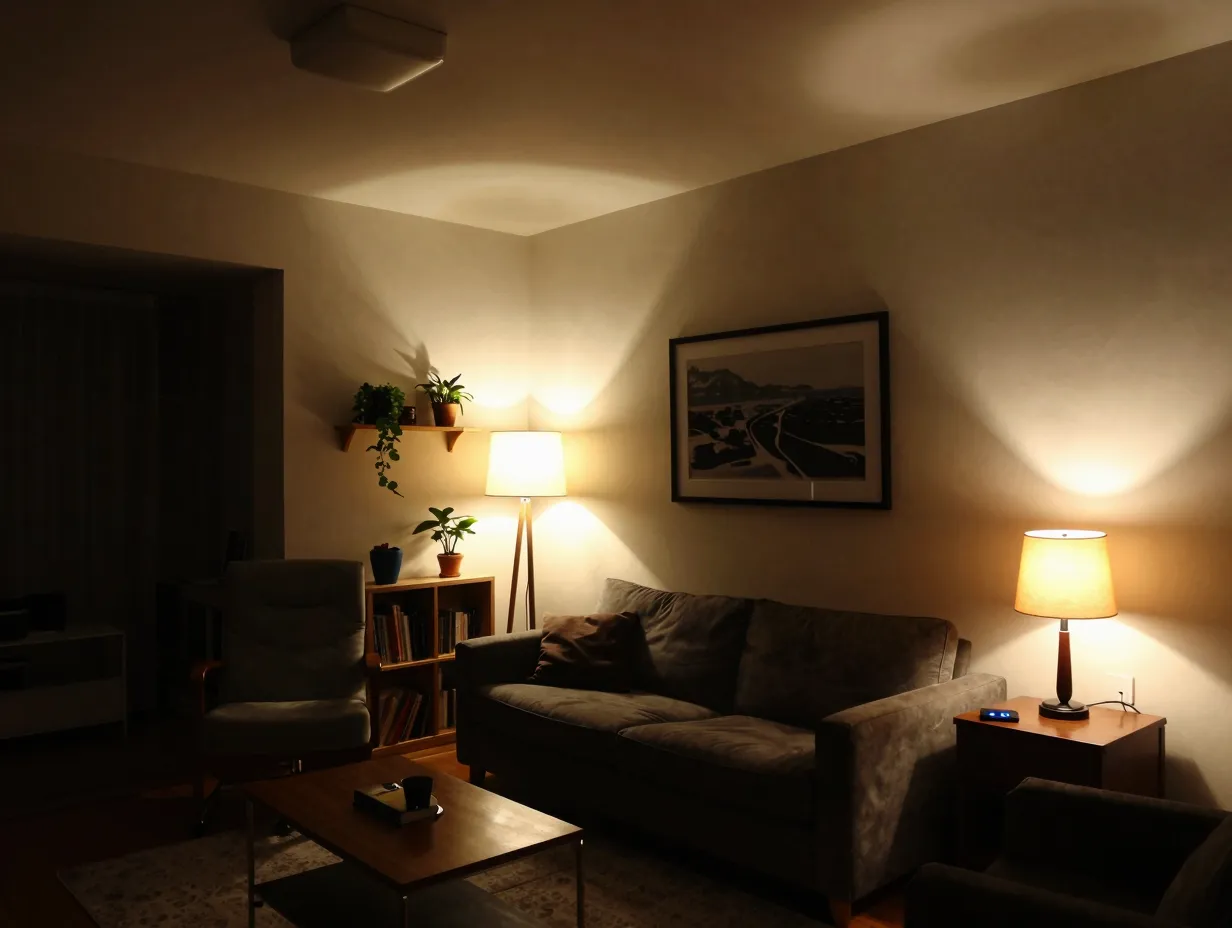
Lighting is the most underinvested element in most living rooms, and it is the one that has the largest impact on how a room feels at different times of day. A single overhead fixture is not a lighting plan, it is a starting point at best.
Layered lighting combines three types of light:
- Ambient lighting, the base layer, usually from overhead fixtures or recessed lights, that illuminates the whole room
- Task lighting, focused light for specific activities, such as a floor lamp next to a reading chair or a table lamp on a desk
- Accent lighting, decorative light that highlights architectural features, artwork, or plants, such as picture lights, strip lighting inside a bookshelf, or uplighting behind a large plant
The goal is to be able to set different moods in the same room by switching between combinations of these layers. Bright ambient light for daytime activity. Dimmed ambient plus warm accent lighting for evenings. Task lighting on when someone is reading, off when the room is in social mode.
Dimmers are non-negotiable in a well-designed living room. They cost almost nothing to add and transform the room’s flexibility entirely.
9. Personalized Maximalism
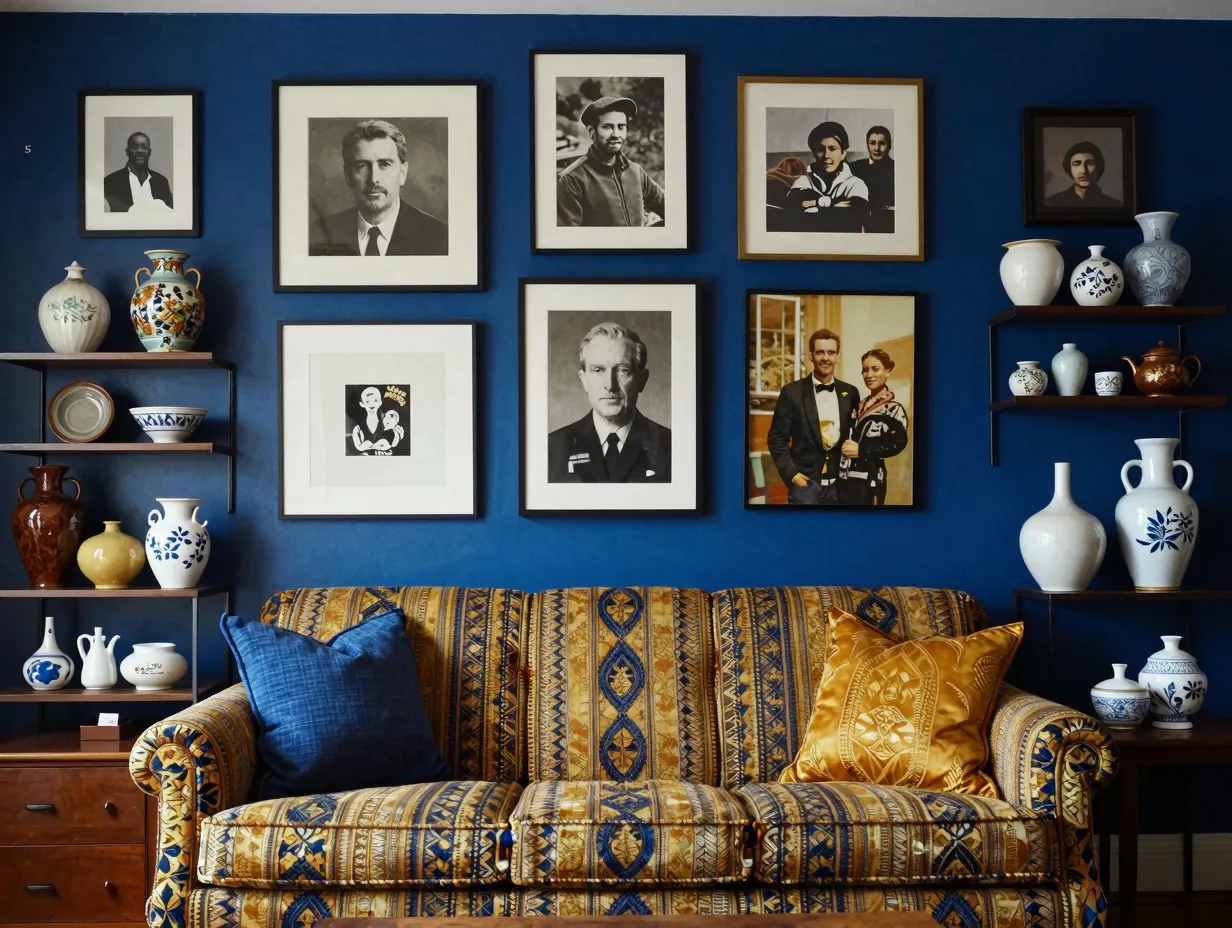
The ninth design in this collection of 9 Living Room Designs That Will Transform Your Home’s Heart is the most personal and the hardest to execute well: maximalism done with intention.
Maximalism is not the same as clutter. Clutter is accumulation without curation. Personalized maximalism is the deliberate layering of color, pattern, texture, and collected objects in a way that tells a specific story, yours [4].
A maximalist living room done well features:
- A unifying color story that ties disparate elements together (even if the palette is bold, it should be consistent)
- Collections displayed with intention, grouped by color, material, or theme rather than scattered randomly
- Pattern mixing that follows a scale rule: one large-scale pattern, one medium-scale, one small-scale
- Personal objects, travel souvenirs, inherited pieces, handmade items, that give the room genuine narrative depth
- Enough negative space (even if minimal) to prevent the room from feeling suffocating
The risk of maximalism is that it becomes visually exhausting. The safeguard is editing. Even in a maximalist room, every object should be there for a reason. If you cannot articulate why something is on display, it probably should not be.
How to Choose the Right Design for Your Living Room
With nine distinct approaches on the table, the natural question is: which one is right for your space? The answer depends on four factors.
1. Room size and shape. Floating furniture arrangements and strategic zoning work best in larger rooms. Minimalist chic and layered lighting are powerful in smaller spaces where every element needs to work harder.
2. Your lifestyle. A household with young children needs durable materials and easy-clean surfaces. A couple who entertains frequently needs flexible seating and strong ambient lighting. A single person who works from home might prioritize a reading nook and task lighting above all else.
3. Your maintenance tolerance. Classic elegance with layered textiles requires more upkeep than a minimalist room with hard surfaces. Be honest about how much time you will realistically spend maintaining the space.
4. Your budget. Lighting upgrades, paint, and furniture rearrangement are low-cost, high-impact changes. Statement ceilings and fireplace installations are significant investments. Start with the changes that give you the most return for the least expenditure, and build from there.
| Design Style | Best For | Budget Level | Maintenance |
|---|---|---|---|
| Floating Arrangement | Any room size | Low | Low |
| Earth Tones and Biophilic | All households | Low to Medium | Medium |
| Statement Ceiling | Large or tall rooms | Low to High | Low |
| Strategic Zoning | Open-plan spaces | Medium | Low |
| Minimalist Chic | Small rooms, busy households | Medium to High | Low |
| Classic Elegance | Entertainers, formal spaces | High | High |
| Fireplace Focal Point | Any room with a clear wall | Low to High | Medium |
| Layered Lighting | All rooms | Low to Medium | Low |
| Personalized Maximalism | Collectors, creative households | Variable | High |
Conclusion
The nine designs explored here, from floating furniture arrangements and warm biophilic palettes to statement ceilings, strategic zoning, and personalized maximalism, represent a complete toolkit for transforming your living room into a space that genuinely serves your life.
The most important insight is this: you do not need to pick just one. The best living rooms layer multiple approaches. A floating furniture arrangement anchored by a large rug, painted in warm earth tones, lit with three layers of light, and organized around a fireplace focal point is not four designs competing with each other, it is one coherent, deeply considered room.
Your actionable next steps:
- Take a photo of your current living room and upload it to an AI visualization tool [1]. Test at least three different layout and color combinations before spending anything.
- Identify your room’s existing or potential focal point. Every other decision flows from this.
- Start with the lowest-cost, highest-impact changes: furniture rearrangement, lighting upgrades, and paint. These three alone can transform a room.
- Add natural materials and warm tones incrementally, a new rug, a linen throw, a potted plant, rather than attempting a complete overhaul at once.
- Edit ruthlessly. A living room with fifteen objects that all earn their place is more powerful than one with fifty objects competing for attention.
Your living room is the heart of your home. These 9 Living Room Designs That Will Transform Your Home’s Heart give you everything you need to make it beat stronger.
References
[1] Living Room Ideas – https://archmaster.app/blog/interior/living-room-ideas?utm_source=openai
[2] Big Living Room – https://www.lorddecor.com/blog/big-living-room?utm_source=openai
[3] Chic Living Room – https://learncalifornia.org/chic-living-room/?utm_source=openai
[4] Living Room Makeovers Home Transformation – https://homesandlooms.com/living-room-makeovers-home-transformation/?utm_source=openai
[5] Living Room Fireplace Ideas – https://www.architecturaldigest.com/gallery/living-room-fireplace-ideas?utm_source=openai