9 Laundry Room Ideas That Make Chores Feel Less Like a Burden
The average American spends roughly 1.5 hours per week doing laundry, that adds up to more than three full days every year standing in a room most people barely think about designing. Yet the laundry room remains one of the most neglected spaces in the home, treated as a utility closet rather than a functional living area. That gap between how much time we spend there and how little attention we give it is exactly where these 9 laundry room ideas that make chores feel less like a burden come in.
Disclosure: This post contains affiliate links. As an Amazon Associate, we earn from qualifying purchases, and at no extra cost to you.

I renovated my own laundry room two years ago after realizing I dreaded walking into it every single time. The flickering fluorescent light, the piles of unsorted clothes on the floor, the awkward bending over a low folding surface, it all added friction to an already tedious task. After researching current design trends and making a handful of targeted changes, the room transformed from a space I avoided into one I actually do not mind spending time in. These ideas reflect both that personal experience and the broader design principles that experts and homeowners are embracing in 2026 [1].
Key Takeaways
- Concealed storage and smart layouts dramatically reduce visual clutter and mental fatigue in laundry spaces.
- Vertical solutions and stackable appliances are the dominant answer for small laundry rooms in 2026.
- Ergonomic design choices, like counter height and dedicated folding zones, reduce physical strain over time.
- Multi-functional rooms that combine laundry with mudroom or pet care features deliver more value per square foot.
- Joy-focused design elements, wallpaper, lighting, artwork, make routine chores feel less oppressive.
Why Your Laundry Room Deserves a Real Design Strategy
Before diving into the specific ideas, it is worth understanding why laundry room design matters more than most people assume. Research consistently shows that cluttered, poorly lit environments increase stress and reduce motivation [4]. A room that feels chaotic signals to your brain that the task ahead is overwhelming before you even start a load.
The good news is that even modest changes, better lighting, smarter storage, a dedicated folding surface, can shift the psychological experience of doing laundry from draining to neutral, or even pleasant. Designers in 2026 are increasingly treating laundry rooms as an extension of the home’s overall aesthetic rather than a hidden afterthought [10].
The following 9 laundry room ideas that make chores feel less like a burden are organized to address both the functional and emotional dimensions of the space. Some are quick wins. Others require a bit more planning. All of them are worth considering.
9 Laundry Room Ideas That Make Chores Feel Less Like a Burden
1. Use Concealed Storage to Eliminate Visual Noise
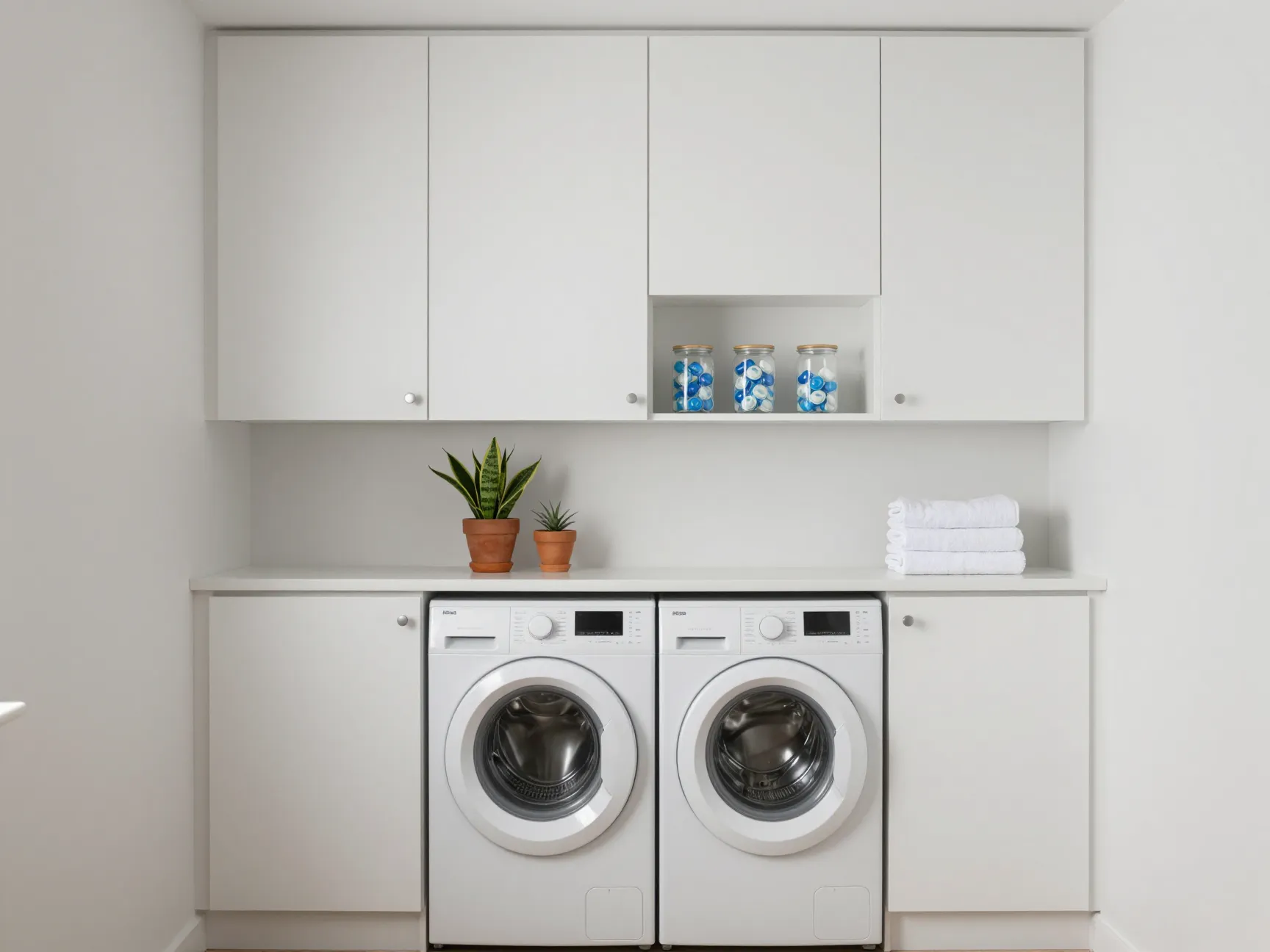
The single fastest way to make a laundry room feel calmer is to hide the mess. Open shelving full of mismatched detergent bottles, lint rollers, and stray socks creates what designers call “visual noise”, a constant low-level distraction that makes the room feel chaotic even when it is technically clean.
Concealed storage solutions to consider:
- Full-height cabinetry with push-to-open doors that eliminate visible hardware
- Panel-ready appliances that blend seamlessly into surrounding cabinetry
- Drawer inserts specifically sized for laundry supplies
- Hamper cabinets with built-in sorting compartments
Panel-ready washers and dryers, where the appliance front is covered with a matching cabinet panel, are one of the strongest trends in 2026 laundry design [1]. They make the room feel more like a well-appointed kitchen than a utility space. The visual result is striking: a room that looks organized even on a busy Tuesday morning.
“Concealment is not about hiding the function of a room, it is about respecting the visual calm that makes any space more livable.”
Pairing concealed storage with a few open shelves for frequently used items strikes the right balance between convenience and calm aesthetics [9]. Keep the open shelves intentional: a single row of matching glass jars for detergent pods, a small plant, a folded stack of clean towels.
2. Design an Integrated, Multi-Zone Workflow Layout
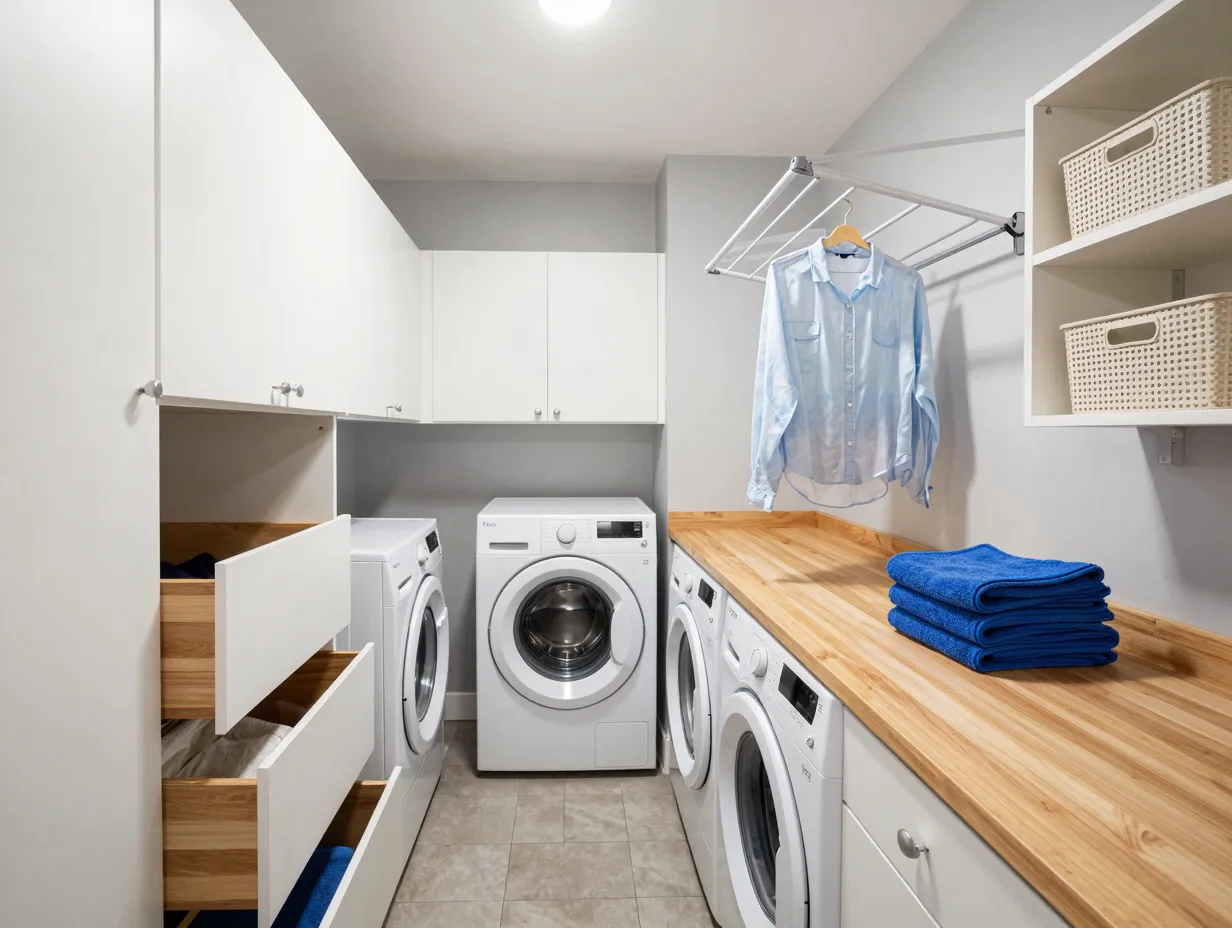
Most laundry rooms are designed around the appliances rather than around the person using them. The result is a room where you walk back and forth unnecessarily, set things down on the floor because there is no surface nearby, and lose track of what stage each load is at.
An integrated, multi-zone layout solves this by creating distinct areas for each step of the laundry process [2]:
Zone breakdown:
| Zone | Function | Key Feature |
|---|---|---|
| Sorting | Separate dirty laundry by type | Built-in hamper drawers |
| Washing | Run washer and dryer | Side-by-side or stacked appliances |
| Drying | Air-dry delicates | Retractable drying rack or rod |
| Folding | Fold and sort clean items | Counter at ergonomic height |
| Storing | Return items to household | Shelving or pass-through to closet |
When these zones flow logically from left to right, or in a U-shape for larger rooms, the chore becomes a linear process rather than a chaotic back-and-forth. Studies on workflow efficiency in kitchen design (which applies equally to laundry spaces) show that reducing unnecessary movement cuts task time significantly [4].
Even in a small laundry closet, you can create micro-zones by assigning specific purposes to each shelf, drawer, and surface.
3. Go Vertical with Stackable Appliances and Wall-Mounted Solutions
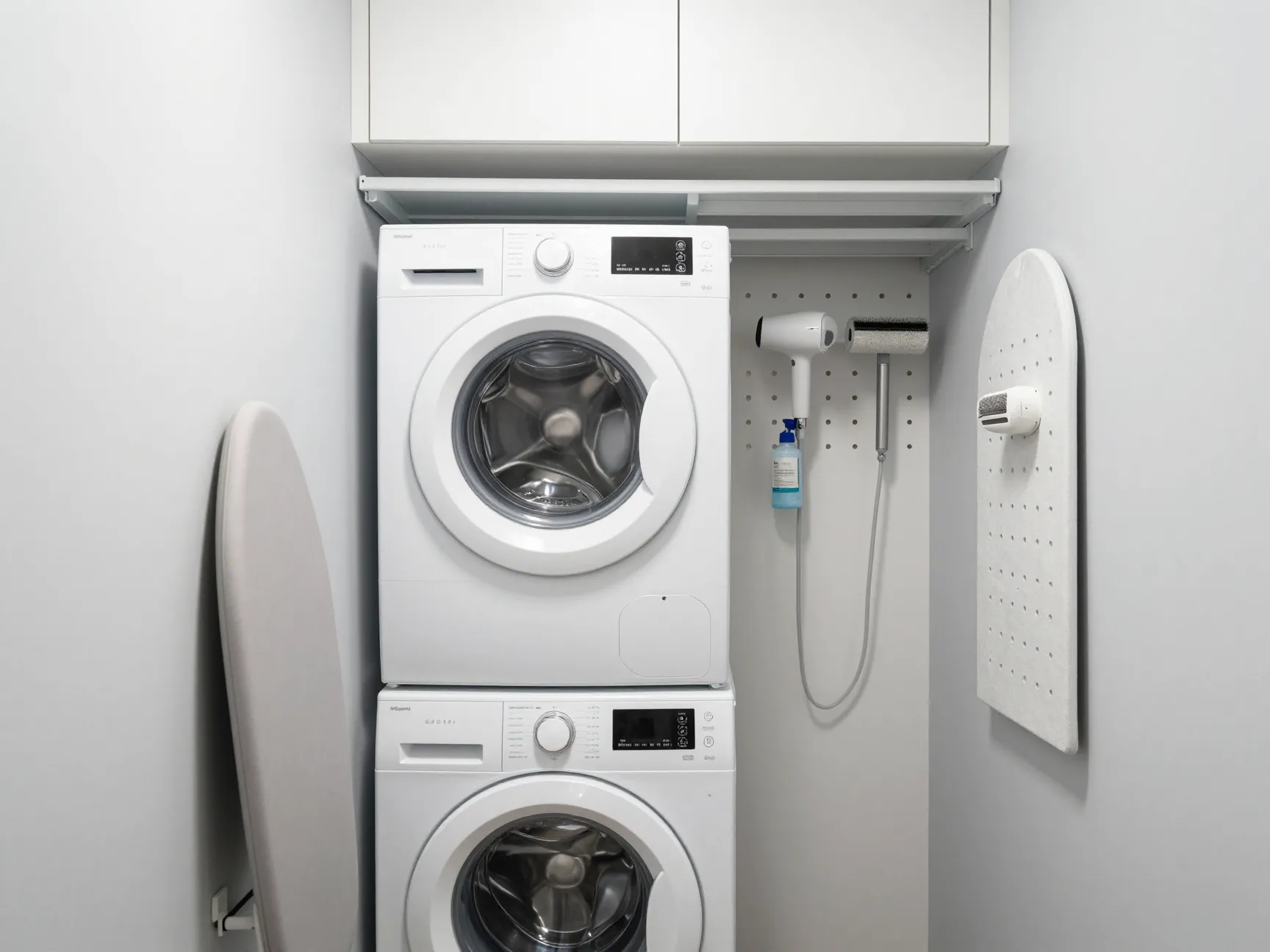
Square footage is finite. Vertical space is almost always underused. In 2026, stackable setups and vertical storage solutions have become the dominant design response to small laundry rooms [6][7].
Vertical strategies that work:
- Stacking the dryer on top of the washer frees up floor space for a folding counter or hamper station
- Wall-mounted cabinets that extend all the way to the ceiling maximize storage without eating into the floor plan
- Pegboards or slotted wall panels for hanging supplies, bags, and small tools
- Ceiling-mounted drying racks that lower when needed and retract when not in use
A wall-mounted ironing board deserves special mention here. Traditional freestanding ironing boards are bulky, awkward to store, and just inconvenient enough that many people skip ironing altogether. A wall-mounted version folds flat against the wall and takes up almost no space when not in use [3]. The reduction in physical effort, no dragging the board out of a closet, no wrestling it open, is surprisingly significant.
For very small spaces like laundry closets or alcoves, a stacked washer-dryer combo unit can reduce the appliance footprint by up to 50%, leaving room for a narrow folding shelf that would otherwise be impossible [7].
4. Invest in a Dedicated Ergonomic Folding Surface
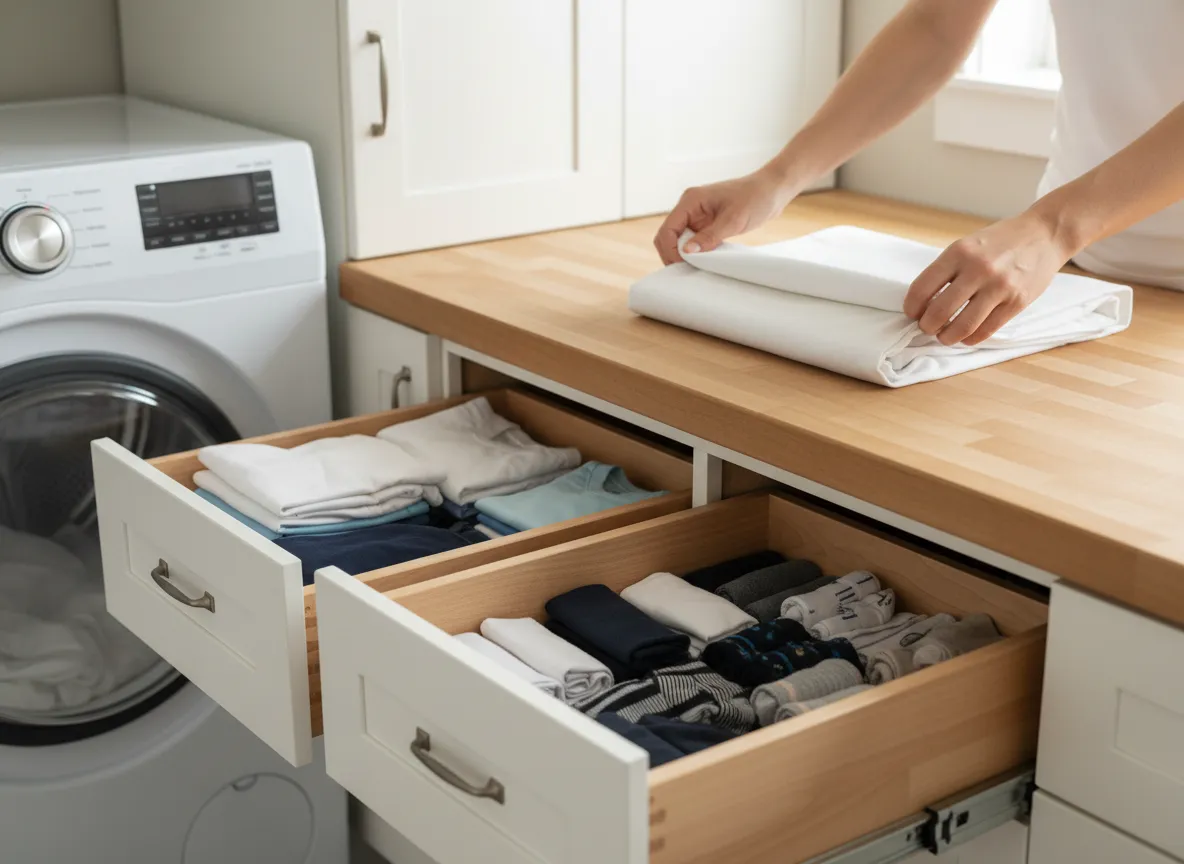
Back pain from laundry is a real and underappreciated problem. Most people fold clothes on a surface that is either too low (a dryer top at standard height) or too high (a counter designed for kitchen prep). Neither is ideal for the repetitive bending and reaching involved in folding a full load of laundry.
The ergonomic ideal for a folding counter is between 36 and 38 inches high for most adults, roughly the same as a kitchen counter, but positioned to allow comfortable standing work without hunching [4]. If you are taller than average, consider a custom counter at 40 inches.
Features of an ideal folding station:
- Smooth, easy-to-clean surface (quartz, laminate, or butcher block)
- Drawers or shelves below for immediate sorting into categories
- Width of at least 30 inches to accommodate a full load spread out flat
- Location directly adjacent to the dryer to minimize carrying distance
I added a 36-inch butcher block counter above my front-loading machines after my renovation, and the difference in how my back feels after a laundry session is genuinely noticeable. It is one of those changes that seems minor on paper but has a real daily impact.
5. Upgrade Your Lighting for Mood and Function
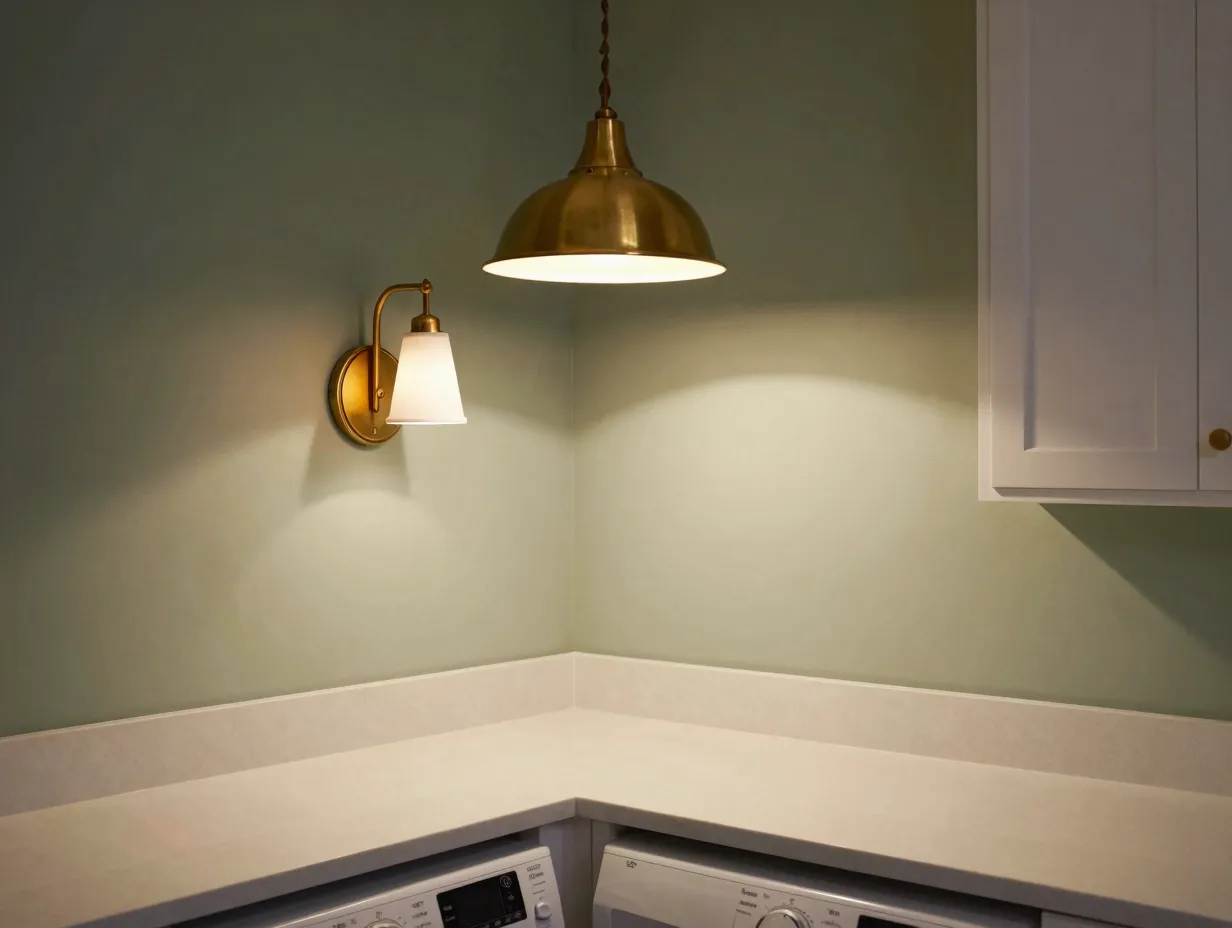
Laundry rooms are almost universally under-lit. A single overhead fluorescent fixture, the default in most utility spaces, creates harsh shadows, washes out colors (making it harder to sort laundry accurately), and contributes to the feeling that the room is a chore in itself.
Improved lighting is one of the most cost-effective upgrades available, and it works on two levels: functional and emotional [10].
Lighting layers to consider:
- Ambient lighting: A central LED fixture with a warm color temperature (2700K, 3000K) replaces the cold, clinical feel of fluorescent light
- Task lighting: Under-cabinet LED strips illuminate the folding counter and appliance controls directly
- Accent lighting: A small pendant light or decorative sconce adds personality and signals that this is a designed space, not just a utility room
Warmer finishes and warmer light work together. Brass or matte black fixtures against white or sage cabinetry create a visual warmth that makes the room feel more like a curated interior and less like a basement [1]. The psychological effect is real: warmer environments are consistently rated as more pleasant and less stressful than cool, bright ones.
6. Create a Multi-Functional Laundry, Mudroom, and Pet Zone
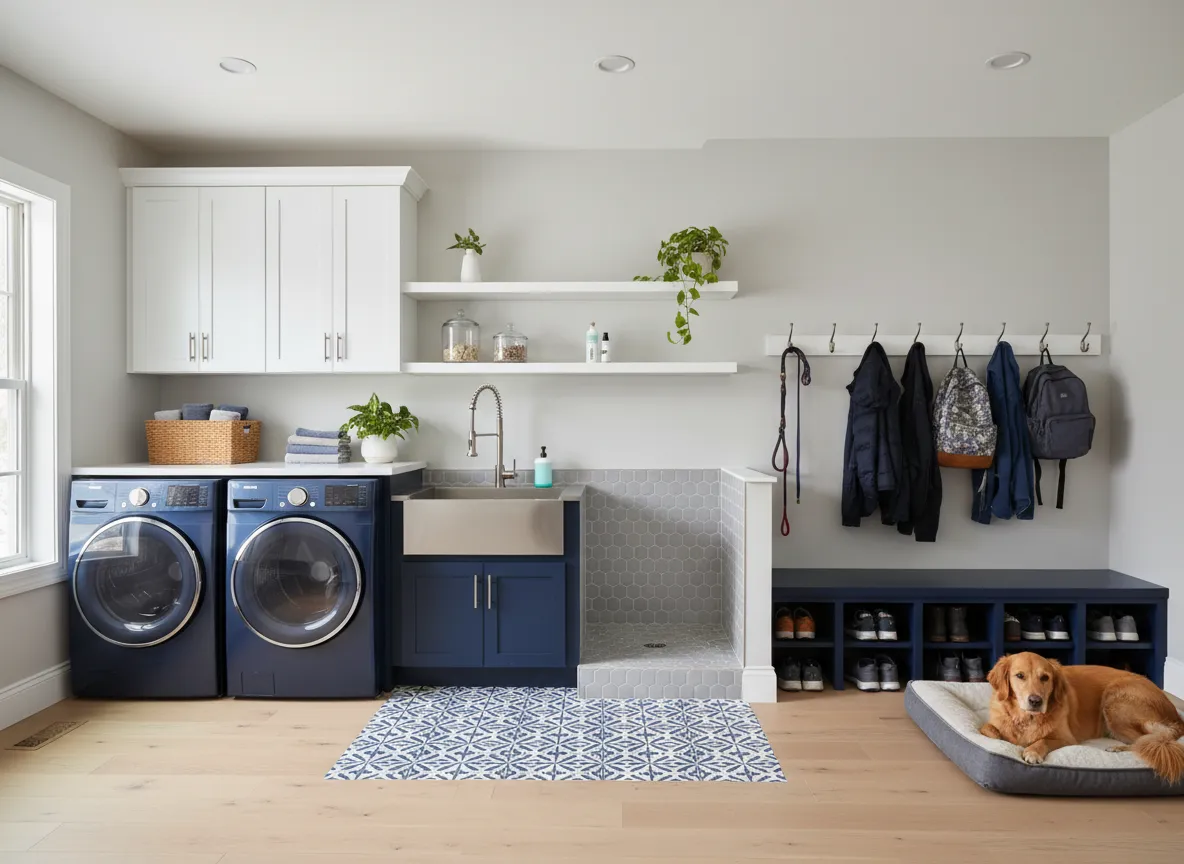
One of the most significant shifts in laundry room design in 2026 is the move toward multi-functional spaces that serve more than one household need [1][10]. The “laundry plus mudroom plus pet zone” combination has become particularly popular because it consolidates three high-traffic, high-mess functions into a single well-designed room.
What a multi-functional laundry room might include:
- A built-in bench with cubbies for shoes, bags, and outerwear near the entry
- A pet washing station with a low-profile tub, handheld sprayer, and nearby towel storage
- A utility sink that serves for hand-washing delicates, cleaning muddy boots, and bathing small pets
- Hooks at multiple heights for adults, children, and leashes
This approach increases the perceived value of the room dramatically. Instead of a space that is used for one task and then ignored, it becomes a genuine hub of household activity [10]. From a practical standpoint, it also means that the design investment pays off across multiple daily routines rather than just laundry days.
The key to making a multi-functional room work without feeling cluttered is dedicated zones with clear visual boundaries, different flooring materials, cabinet colors, or lighting zones for each function [2].
7. Install Smart Drying Racks and Retractable Features
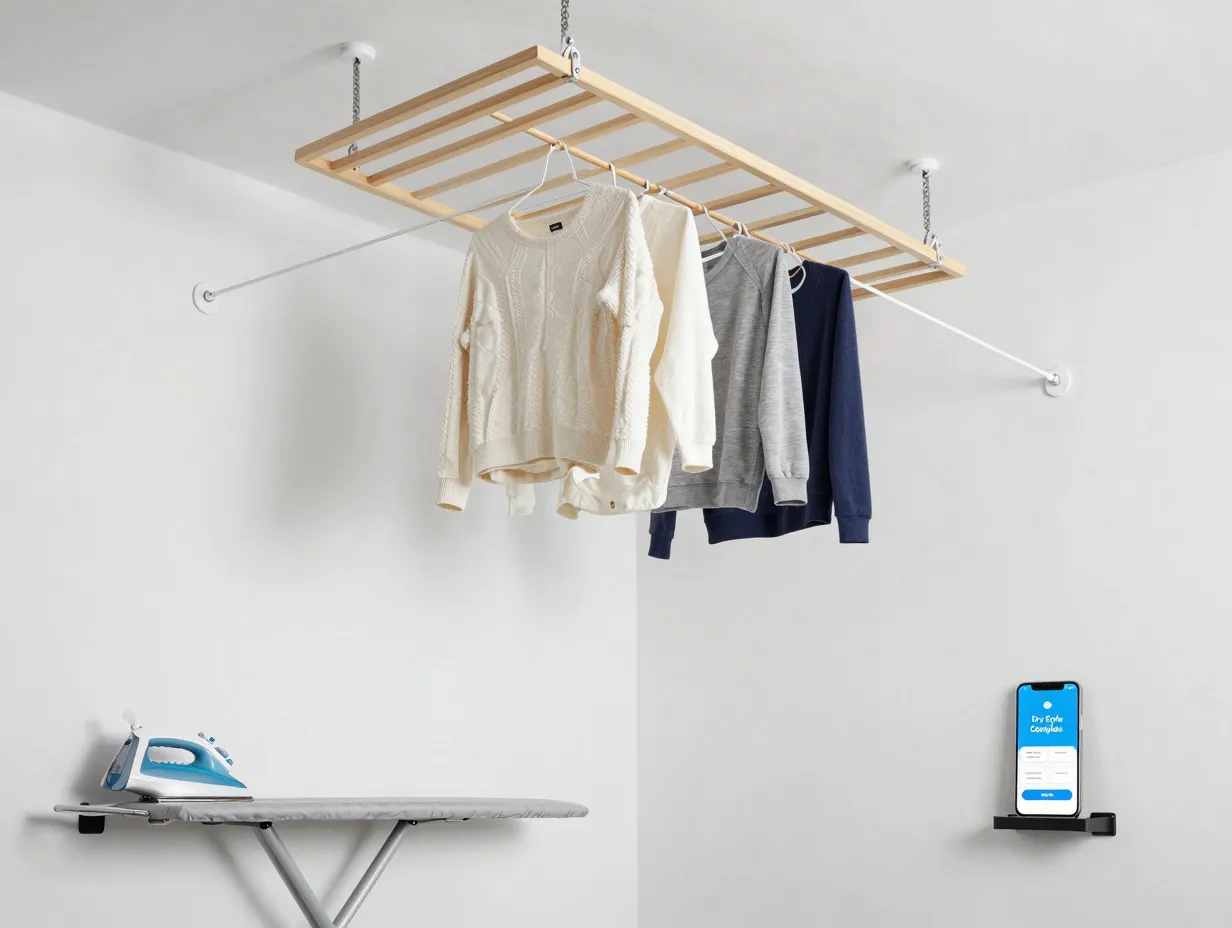
Physical effort is one of the hidden costs of laundry. Setting up a drying rack, moving it out of the way when not in use, wrestling with a traditional ironing board, these small friction points accumulate into a sense that laundry is more trouble than it should be.
Smart drying racks and retractable features address this directly [3][8].
Retractable and smart features worth installing:
- Ceiling-mounted pulley drying racks that lower for loading and raise out of the way when drying
- Retractable clothesline systems that extend across a wall and retract into a small housing unit
- Wall-mounted ironing boards that fold completely flat (some models include a built-in iron holder and outlet)
- Pull-out drying rods inside cabinets for delicates that need to hang
Smart appliance integration is also advancing rapidly. In 2026, Wi-Fi-connected washers and dryers can send notifications when a cycle finishes, be started remotely, and even diagnose maintenance issues before they become problems [8]. For anyone who has ever left a wet load sitting in the washer overnight, the simple addition of a phone notification can eliminate one of laundry’s most common frustrations.
The principle here is reducing friction at every step. Each small reduction in physical effort makes the overall task feel lighter.
8. Mix Open and Closed Storage for Practical Calm
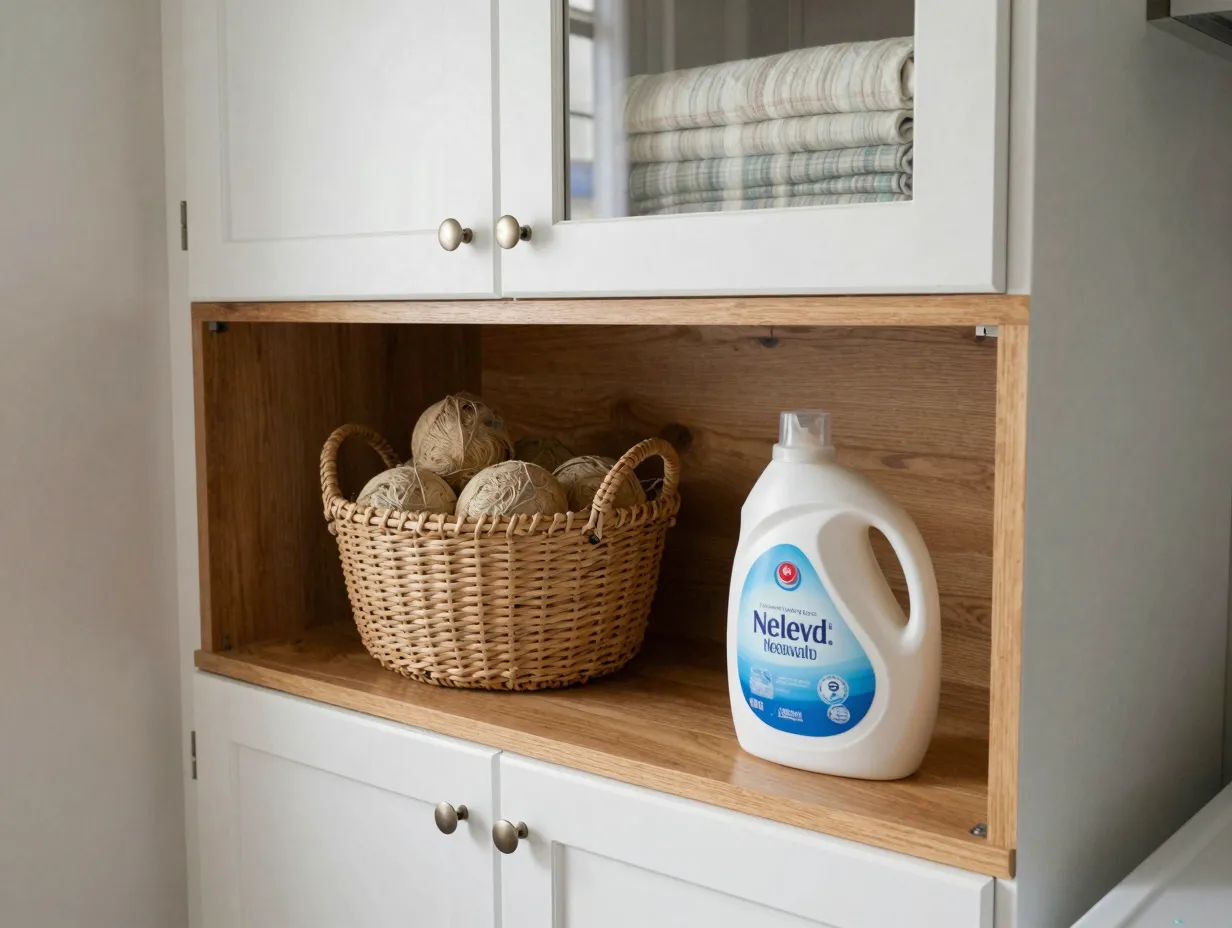
There is a tension in laundry room storage design between accessibility and aesthetics. Open shelving makes everything easy to grab but can look chaotic. Closed cabinetry looks clean but can make frequently used items inconvenient to access.
The solution that designers consistently recommend, and that I have found works best in practice, is a deliberate mix of both [9][3].
A balanced storage approach:
- Closed cabinets for infrequently used supplies, cleaning products, and anything that looks messy
- Open shelves for items used every single laundry session: detergent, fabric softener, dryer sheets
- Baskets or bins on open shelves to contain smaller items while still keeping them accessible
- Glass-front cabinet doors as a middle ground, items are visible but contained
The visual effect of this approach is a room that feels organized without feeling sterile. The open elements add warmth and personality. The closed elements provide the calm that makes the space feel manageable.
A simple rule of thumb: If you touch it every laundry session, it can be open. If you use it less than once a week, it should be behind a door.
9. Add Joy-Focused Design Elements That Make You Want to Be There
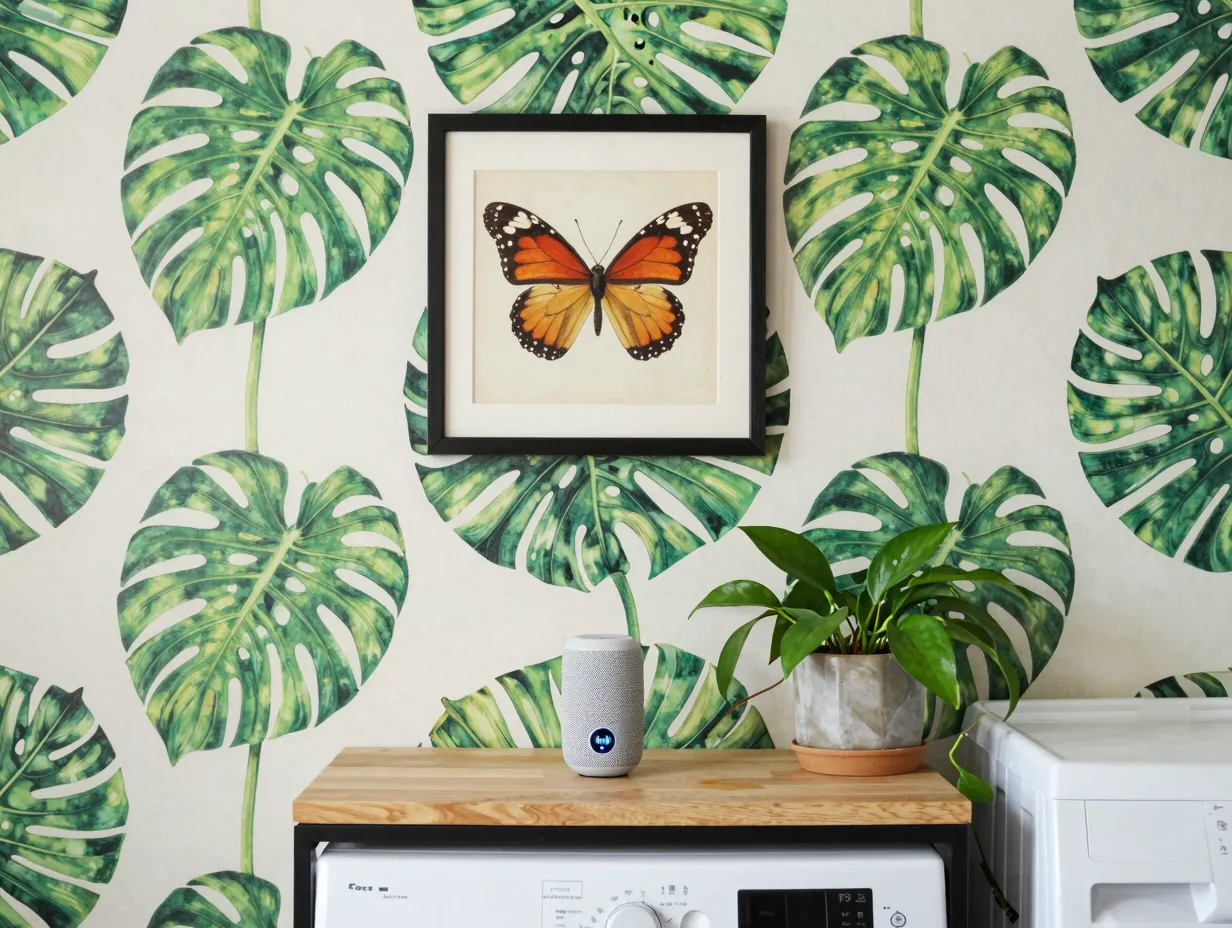
This is the idea that most people skip, and it is arguably the most transformative one on this list. The functional improvements in ideas 1 through 8 make laundry easier. This one makes it enjoyable, or at least, not unpleasant.
Joy-focused design in laundry rooms is a growing movement among interior designers in 2026, driven by the recognition that a room you dread entering will always feel like a burden, regardless of how efficiently it is organized [10][1].
Joy-focused design elements to consider:
- Bold wallpaper: A single accent wall with a botanical print, geometric pattern, or vintage illustration transforms the visual experience of the room entirely
- Artwork: A framed print or two signals that this is a designed space worth being in
- A small speaker or smart display: Music or a podcast playing while you fold laundry changes the emotional experience of the task
- Plants: Even a single low-maintenance plant (a pothos or snake plant thrives in laundry room humidity) adds life and color
- A scent element: A reed diffuser or linen spray with a scent you genuinely enjoy makes the room feel intentional
The research on environmental psychology supports this approach: people perform routine tasks more willingly and with less perceived effort in environments they find pleasant [4]. Designing a laundry room that you actually enjoy walking into is not indulgent, it is practical.
“The best laundry room is not the most efficient one. It is the one you are willing to use consistently.”
When I added a framed vintage botanical print and a small Bluetooth speaker to my laundry room, the change felt almost absurd in its simplicity. But I stopped procrastinating on laundry within a week. The room felt like somewhere I had chosen to be, not somewhere I was sentenced to.
Putting It All Together: Which Ideas to Prioritize
Not every idea on this list requires a full renovation. Here is a quick breakdown of effort versus impact to help you decide where to start:
| Idea | Effort Level | Impact on Daily Experience |
|---|---|---|
| 1. Concealed storage | Medium | High |
| 2. Multi-zone layout | Medium to High | Very High |
| 3. Vertical and stackable solutions | Medium | High (especially small rooms) |
| 4. Ergonomic folding surface | Low to Medium | High |
| 5. Lighting upgrade | Low | High |
| 6. Multi-functional space | High | Very High |
| 7. Smart racks and retractable features | Low to Medium | Medium to High |
| 8. Mixed open and closed storage | Low to Medium | Medium |
| 9. Joy-focused design elements | Very Low | High (often underestimated) |
If you can only make one change today, start with lighting (idea 5) or a joy-focused element like wallpaper or a speaker (idea 9). Both have an outsized psychological impact relative to their cost and effort. If you are planning a renovation, prioritize the multi-zone layout (idea 2) and ergonomic folding surface (idea 4) as your structural foundation, then layer the other ideas on top.
Conclusion
The 9 laundry room ideas that make chores feel less like a burden covered in this article share a common thread: they treat the laundry room as a space worth designing, not just a room worth tolerating. From concealed storage that eliminates visual stress to joy-focused design elements that make you willing to walk through the door, each idea addresses a specific friction point in the laundry experience.
Your actionable next steps:
- Walk through your current laundry room and identify the single biggest friction point, the thing that makes you dread the task most. Start there.
- Assess your lighting. If it is a single fluorescent overhead fixture, replace it with a warm LED alternative this week. It costs under $30 and takes 20 minutes.
- Add one joy-focused element, a framed print, a small plant, a speaker, before your next laundry session. Notice whether it changes how you feel about being in the room.
- If you are planning a renovation, use the multi-zone layout as your organizing principle and build every other decision around it.
- Revisit the full list of ideas with your specific space in mind. A small laundry closet will prioritize vertical solutions and retractable features. A larger laundry room has room for the full multi-functional treatment.
Laundry will never be anyone’s favorite activity. But with the right design strategy, it can stop feeling like a punishment and start feeling like a manageable, even pleasant, part of your routine.
References
[1] Laundry Room Trends 2026 – https://www.bhg.com/laundry-room-trends-2026-11896358
[2] Laundry Design Ideas – https://www.homestolove.com.au/rooms/bathrooms-laundry/laundry-design-ideas-6316/
[3] Laundry Room Ideas – https://jane-athome.com/laundry-room-ideas/
[4] Laundry Room Design Ideas – https://archmaster.app/blog/interior/laundry-room-design-ideas
[6] 38 Small Laundry Room Ideas For 2026 Fresh Layouts Soft Textures And Space Smart Style – https://milorien.com/38-small-laundry-room-ideas-for-2026-fresh-layouts-soft-textures-and-space-smart-style/
[7] Laundry Room Ideas 2026 For Small Spaces – https://www.eleganthomeedit.com/laundry-room-ideas-2026-for-small-spaces/
[8] 2026 Laundry Room Tech Design Guide – https://electronics.alibaba.com/buyingguides/2026-laundry-room-tech-design-guide
[9] Modern Laundry Room Ideas – https://www.thespruce.com/modern-laundry-room-ideas-8346953
[10] Designers Say Laundry Rooms Now Bring Joy With Popular Design Trends – https://www.homes.com/news/designers-say-laundry-rooms-now-bring-joy-with-popular-design-trends/1027363061/