9 Master Bedrooms with Modern Luxury Decor for a Sleek and Serene Escape
A well-designed master bedroom directly affects sleep quality, stress levels, and even morning productivity, yet most people spend less than two hours choosing how to furnish the room where they spend a third of their lives. That gap between effort and impact is exactly why the right design choices matter so much. This guide to 9 Master Bedrooms with Modern Luxury Decor for a Sleek and Serene Escape breaks down the specific elements, materials, and spatial strategies that turn an ordinary bedroom into a personal retreat. Whether you are starting from scratch or refreshing an existing space, each room below offers a distinct blueprint you can adapt to your own home in 2026.
Disclosure: This post contains affiliate links. As an Amazon Associate, we earn from qualifying purchases, and at no extra cost to you.
Key Takeaways
- Warm neutrals, earthy creams, and grounded tones dominate the most serene modern luxury bedrooms in 2026 [1][2]
- Architectural upholstered headboards and extended bed frames are the single biggest visual anchors in a sleek master suite [3]
- Layered lighting, combining ambient, task, and accent sources, creates the hotel-quality atmosphere most people associate with luxury [4]
- Tactile materials such as boucle, velvet, leather, and natural stone add depth without visual clutter [5]
- A cocooning, tailored approach to layout and furniture scale consistently outperforms maximalist or purely minimalist styles for long-term comfort [6]
What Makes a Modern Luxury Master Bedroom Work in 2026
Before diving into the nine rooms, it helps to understand the design language that connects them. The dominant direction for 2026 is what designers call “tailored cocooning”, spaces that feel enveloping and personal rather than cold or showroom-sterile [2]. Think warm plaster walls instead of stark white, curved furniture silhouettes instead of hard right angles, and textiles that invite touch.
Three core principles run through every room in this list:
- Scale: Furniture is proportioned to the room, not squeezed in or floating in empty space
- Restraint: Fewer, better pieces rather than a full catalog of accessories
- Sensory layering: Multiple textures, light sources, and tonal variations working together
Designers surveyed by major shelter publications consistently point to the bedroom as the space where clients are finally willing to invest in quality materials [1][4]. That shift in mindset, treating the bedroom as seriously as the living room, is what separates a truly luxurious retreat from a room that simply has expensive furniture.
9 Master Bedrooms with Modern Luxury Decor for a Sleek and Serene Escape
The nine rooms below represent distinct design approaches, from warm minimalism to richly layered maximalism-lite. Each one is built around a defining concept, a signature material, or a spatial strategy worth studying.
1. The Warm Minimalist Suite
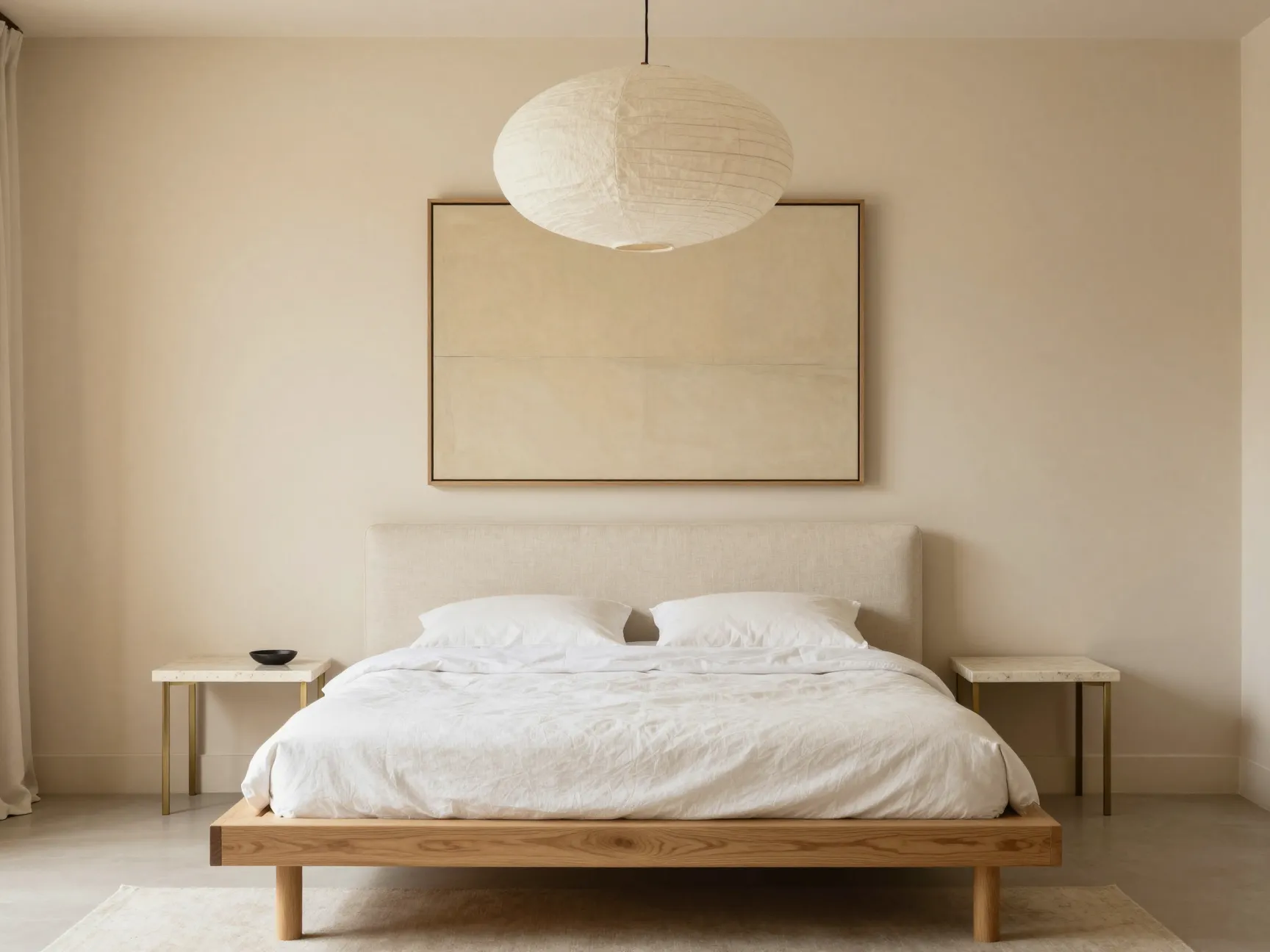
The first room in our exploration of 9 Master Bedrooms with Modern Luxury Decor for a Sleek and Serene Escape proves that restraint is its own form of luxury. A warm minimalist suite strips the room down to its essential elements: a low platform bed, a single large-format artwork, and a palette of bone, warm white, and sand.
What makes it work:
- A platform bed in quarter-sawn oak with a slim upholstered headboard in undyed linen
- Walls finished in a warm limewash plaster that shifts from ivory to pale gold depending on the light
- A single oversized linen pendant centered above the bed, providing soft ambient light
- Bedside tables that are almost architectural, thin slabs of travertine on brushed brass legs
The key lesson here is tonal coherence. Every surface sits within a narrow band of warm neutrals, so the eye finds rest rather than stimulation [2]. This approach aligns with the 2026 trend away from cool grays and toward creams and earthy tones [1].
“The bedroom should be the one room in the house where nothing demands your attention.”, a principle echoed by multiple designers in recent surveys [3]
2. The Architectural Headboard Statement Room
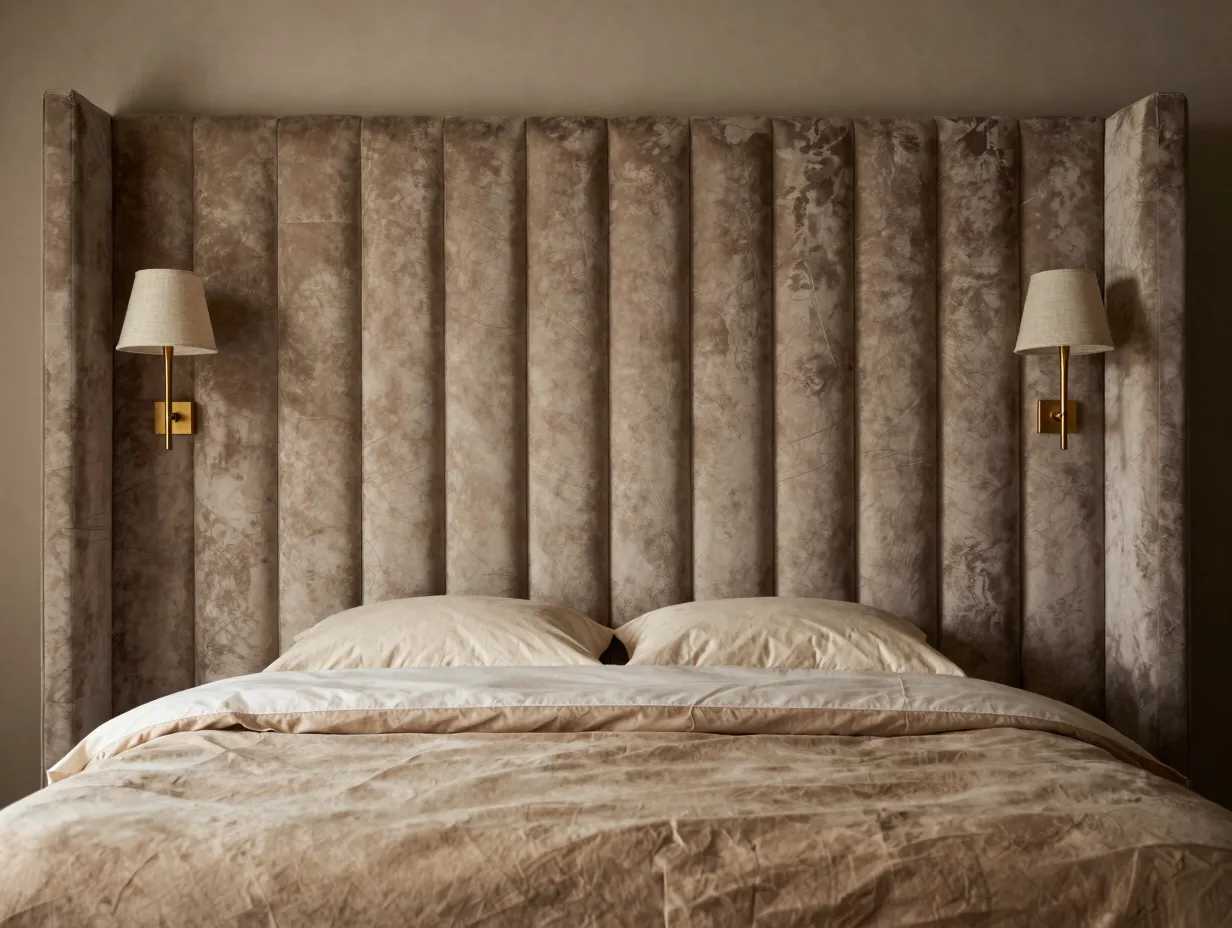
If there is one single investment that transforms a master bedroom faster than any other, it is an oversized architectural headboard. This room is built entirely around one, a floor-to-ceiling upholstered panel in deep mushroom velvet that spans the full width of the wall [3].
Signature elements:
- Headboard height: full ceiling height, approximately 10 feet, creating a dramatic focal point
- Fabric: performance velvet in a warm greige tone, tufted in a wide grid pattern
- Flanking sconces: slim articulating brass arms with linen shades, mounted directly into the headboard panel
- Bedding: layered in ivory, camel, and soft chocolate, three tones, no patterns
Extended headboard designs that wrap around the sides of the bed to form a partial enclosure are among the most-searched bedroom features of 2026 [4]. They create a sense of shelter that feels both modern and primal, the adult equivalent of a childhood fort.
3. The Natural Materials Sanctuary
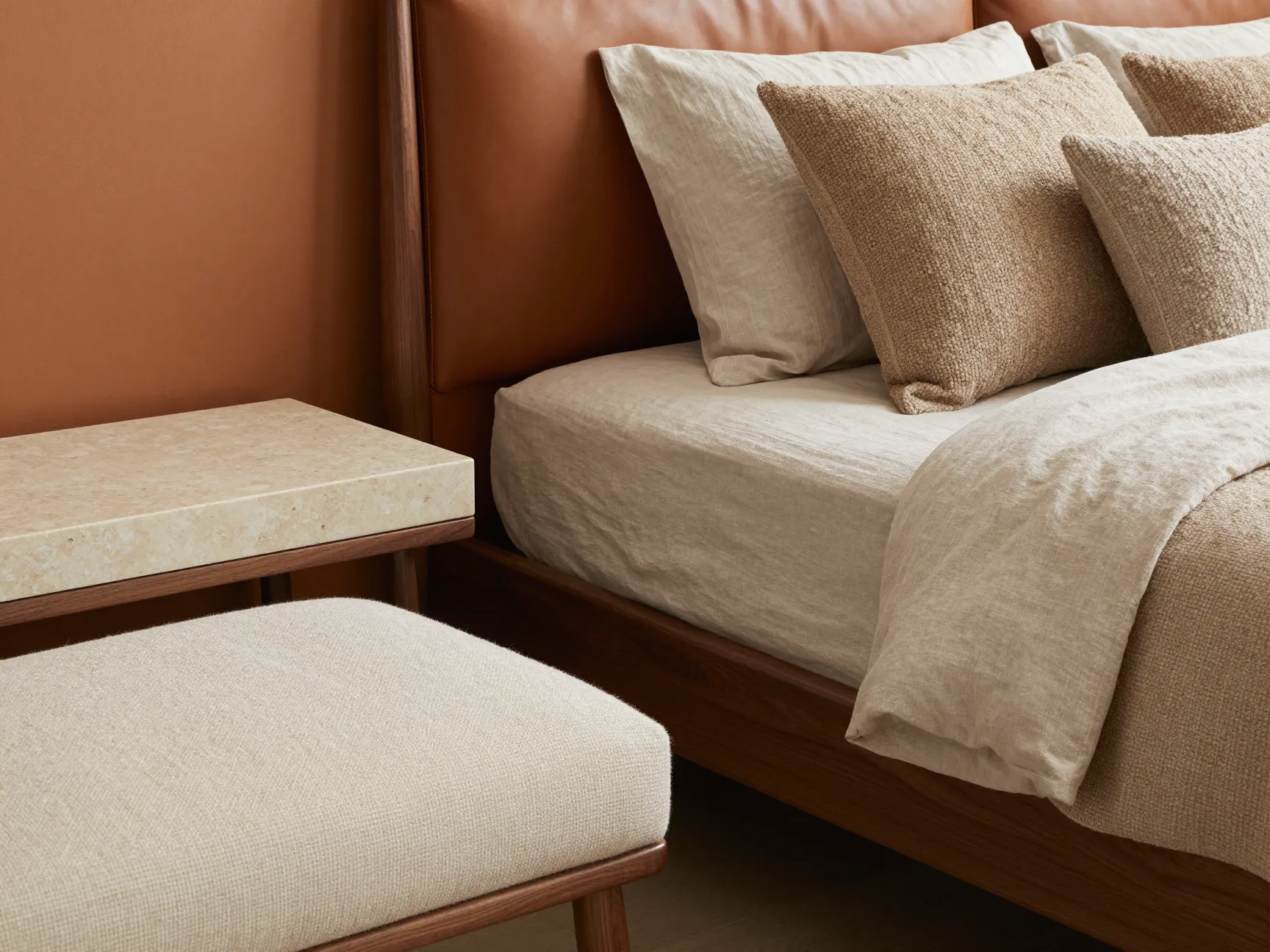
This room answers a question I hear often from clients: “How do I make a bedroom feel expensive without making it feel cold?” The answer, consistently, is natural materials with visible texture [5].
Material palette breakdown:
| Material | Application | Finish |
|---|---|---|
| Boucle | Upholstered bench, throw pillows | Natural ivory |
| Travertine | Nightstand surfaces, floor inlay | Honed, unfilled |
| Walnut | Bed frame, wardrobe doors | Oiled matte |
| Linen | Drapery, duvet cover | Stonewashed |
| Leather | Headboard panel | Aniline, cognac |
The combination of boucle, leather, and stone in a single room creates what designers call “material tension”, each surface has a different tactile quality, so the room feels rich without relying on color or pattern [6]. Boucle in particular has moved from trend to staple, appearing in bedroom designs across every price point in 2026 [7].
4. The Hotel-Inspired Layered Lighting Room
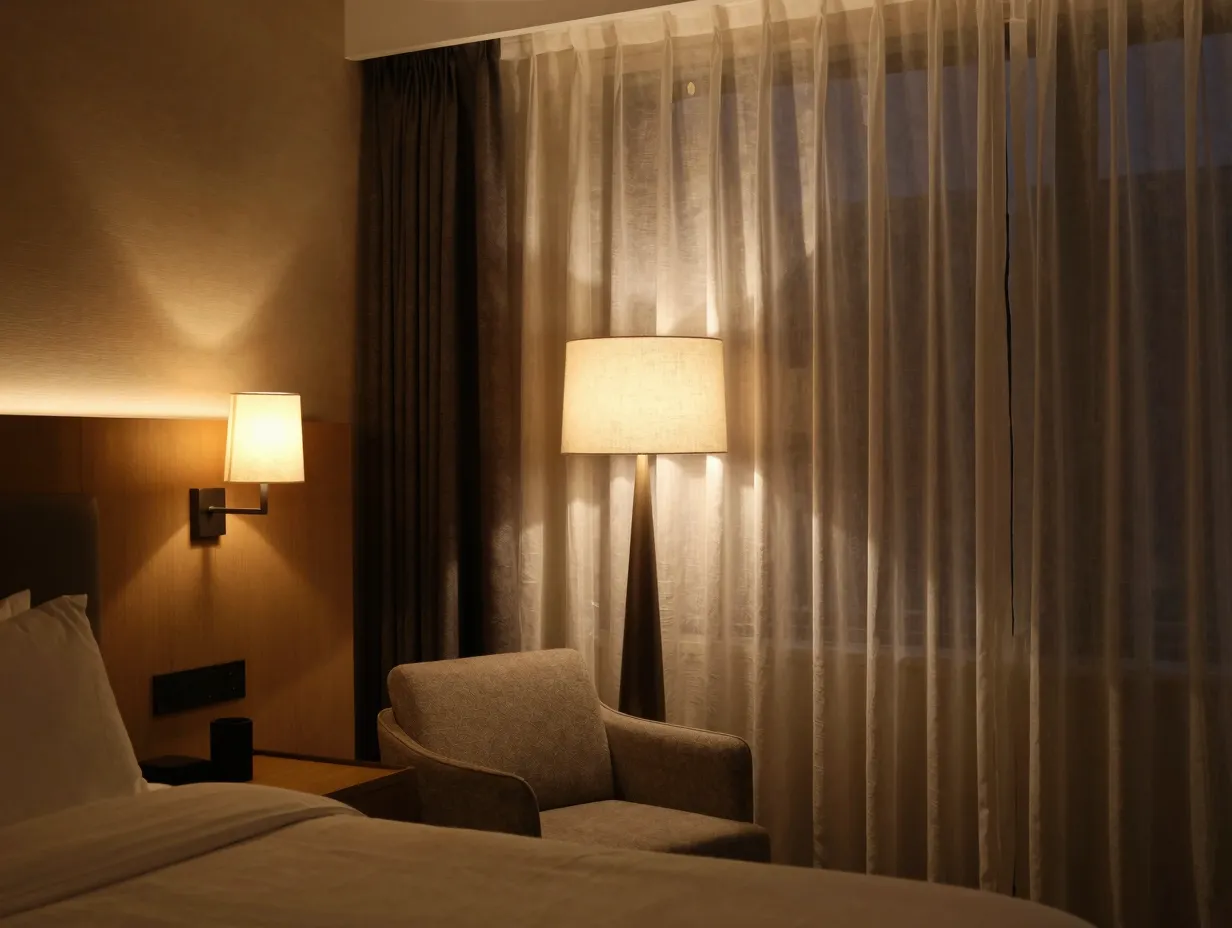
Most residential bedrooms rely on a single overhead fixture and two bedside lamps. Hotel designers know that is not enough. This room takes its cue from five-star hospitality spaces by using at least five distinct light sources, each on a separate dimmer [4].
The five-layer lighting plan:
- Recessed downlights on a warm-dim circuit (3000K dropping to 1800K)
- Cove lighting above the headboard wall, casting a soft upward wash
- Articulating wall sconces at reading height beside the bed
- A sculptural floor lamp in the seating corner for ambient fill
- Under-bed LED strip lighting on a motion sensor for nighttime navigation
Warm-dim technology, bulbs that shift from warm white to candlelight amber as they dim, is the single most impactful lighting upgrade available for a master bedroom in 2026 [4]. It eliminates the jarring experience of a bright overhead light at 10 p.m. and replaces it with a gradual transition toward sleep.
Window treatments in this room are equally considered: blackout roller shades sit behind floor-to-ceiling linen drapery panels, giving complete light control while maintaining a soft, layered look [1].
5. The Earthy Tonal Color Study
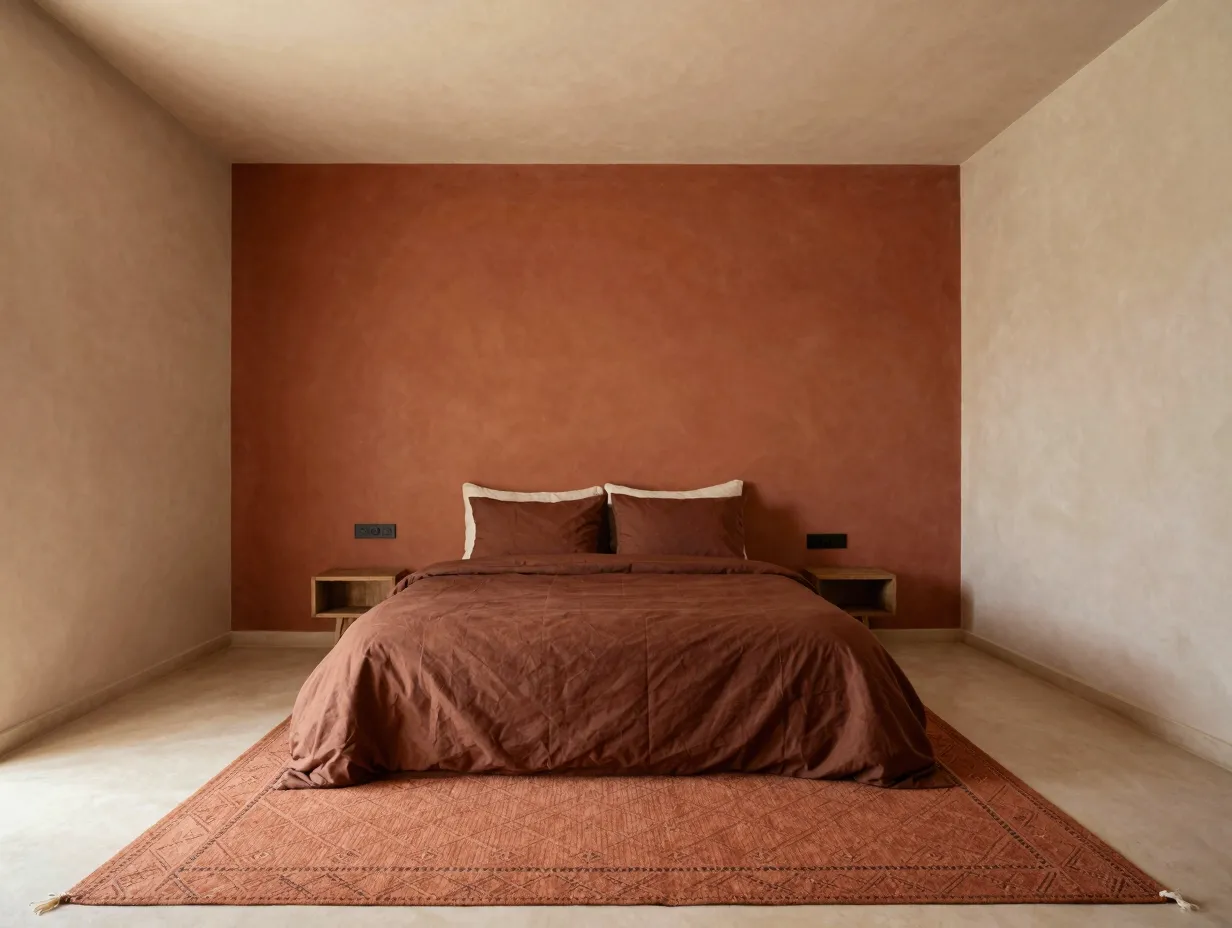
Color is the most personal element of any bedroom, and this room makes a bold argument for staying within a single earthy family rather than introducing contrast [2]. The palette runs from pale sand at the ceiling through warm terracotta on a single accent wall to deep umber in the bedding and rug.
Why tonal dressing works:
- It creates visual continuity that reads as calm rather than boring
- It allows texture to do the expressive work instead of color
- It photographs beautifully in natural light, which matters if you want a room that feels aspirational
The specific tones in this room, sand, clay, ochre, and umber, reflect the broader 2026 shift toward grounded, mineral-inspired palettes [3][5]. Cool blues and greens have not disappeared, but the dominant mood in luxury master bedrooms is unmistakably warm.
A handwoven Moroccan rug in faded terracotta anchors the bed and introduces the only pattern in the room, a subtle diamond weave that adds depth without visual noise.
6. The Curved Furniture Cocoon
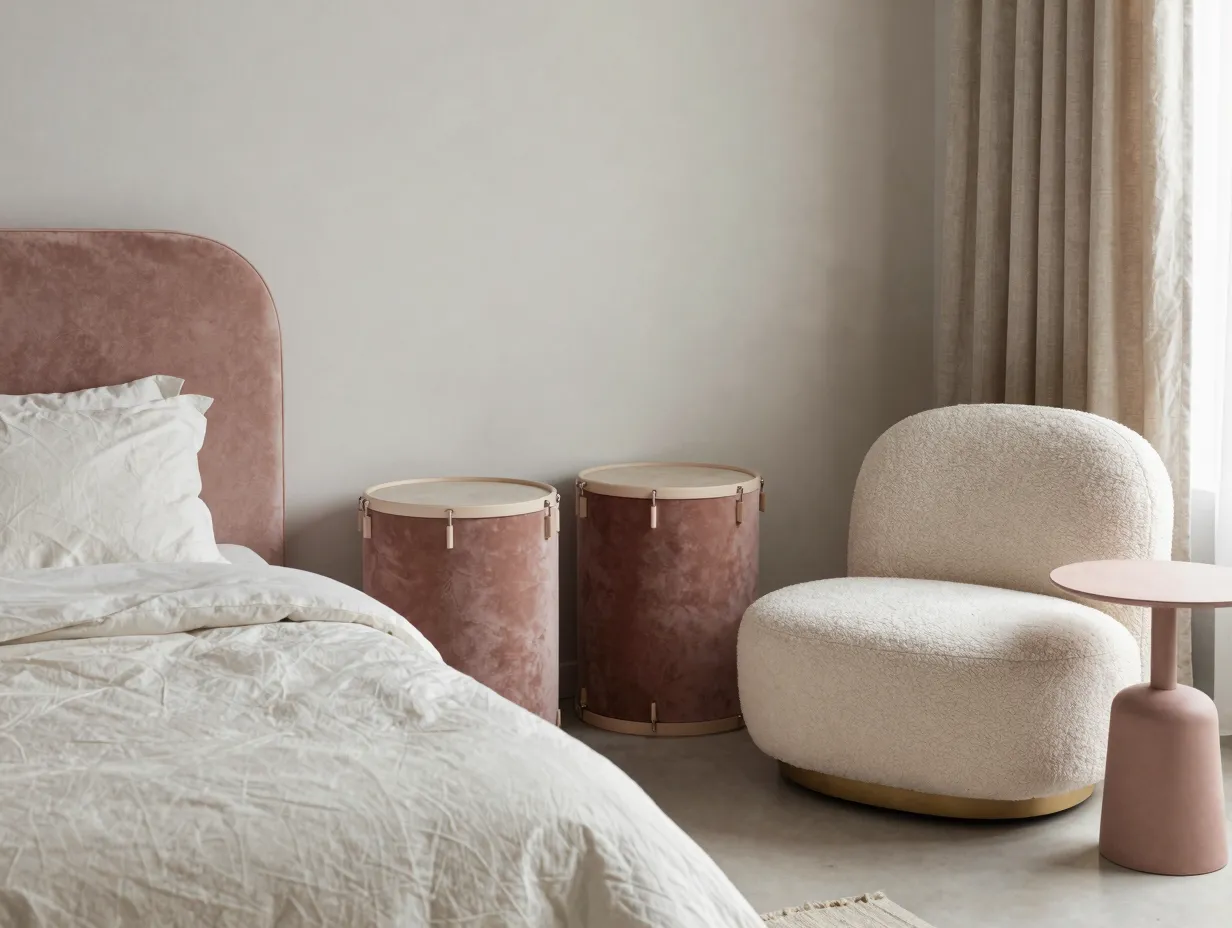
Hard lines dominated bedroom design for most of the 2010s. The current decade has swung firmly toward curves, and this room is a masterclass in using rounded forms to create a sense of envelopment [6].
Curved elements in this room:
- Bed frame with a gently arched footboard and curved side rails
- A pair of drum-shaped upholstered nightstands in dusty rose velvet
- A round boucle lounge chair in the corner, paired with a circular side table
- Drapery rods that curve slightly at the ends, softening the window treatment
The psychological effect of curved furniture is well-documented in environmental psychology: rounded forms are perceived as less threatening and more inviting than angular ones. In a bedroom, that translates directly to a faster transition from alert to relaxed.
Curved headboards and rounded bed frames are among the top five bedroom furniture requests reported by interior designers in 2026 [7].
7. The Statement Ceiling Room
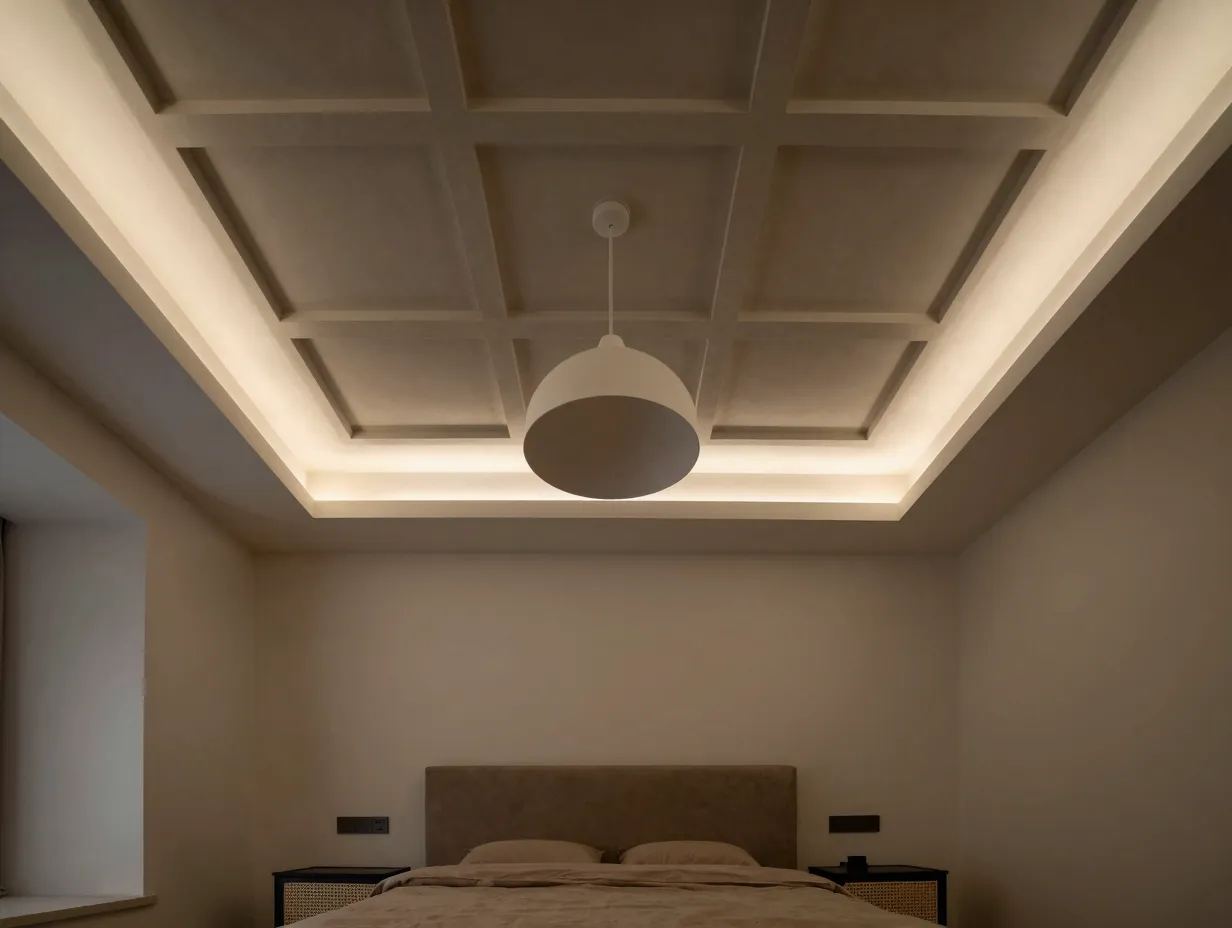
Most designers treat the ceiling as a fifth wall, an opportunity that most homeowners completely ignore. This room reclaims that space with a coffered ceiling finished in a deep warm greige, two full shades darker than the walls [4].
Ceiling design details:
- Coffered grid in painted MDF, approximately 24 inches square
- Interior of each coffer finished in the darker greige tone
- Perimeter cove lighting installed within the outermost coffer row
- A single large-format plaster pendant centered in the grid
The effect is dramatic without being heavy. The darker ceiling creates a sense of enclosure, the room feels more intimate, while the cove lighting prevents it from reading as oppressive. This technique is borrowed directly from high-end hotel design and is increasingly appearing in residential master suites [4][10].
Supporting details that complete the room:
- Walls in a warm off-white limewash
- Bed upholstered in a tight-weave performance fabric in warm taupe
- Nightstands in blackened steel with cane inserts
8. The Integrated Dressing Suite
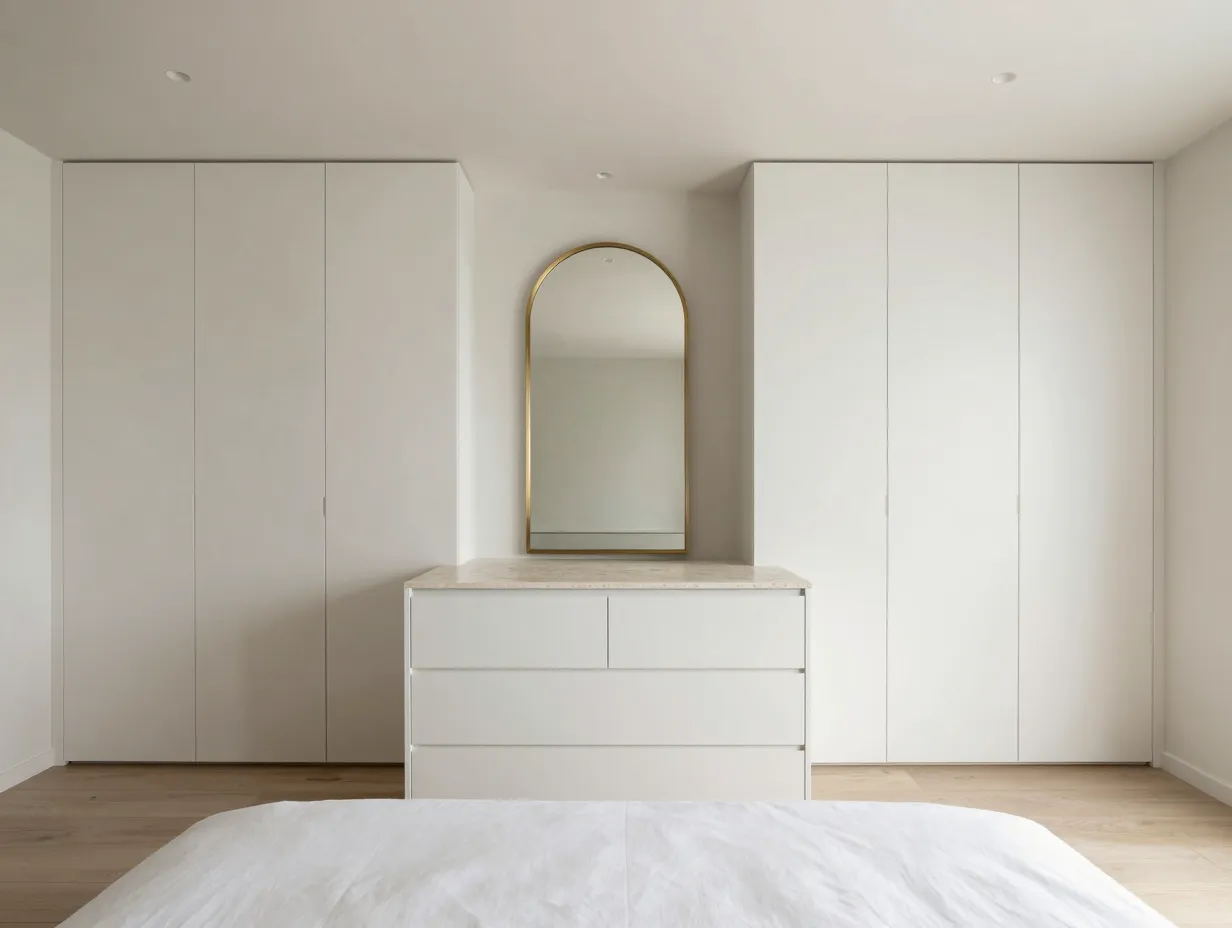
True luxury in a master bedroom is not just about the sleeping area, it extends to how the room functions as a complete private suite. This room integrates a dressing area seamlessly into the bedroom footprint without a separate walk-in closet [10].
How the integration works:
- A full wall of floor-to-ceiling cabinetry in matte lacquer, warm white, conceals all storage
- An island unit, essentially a large dresser with a stone top, sits in the center of the dressing zone
- Lighting within the cabinetry uses warm LED strips to illuminate clothing without harsh shadows
- A full-length mirror in an arched brass frame anchors the dressing zone visually
The cabinetry uses push-to-open hardware, eliminating visible handles and maintaining the clean, uninterrupted wall plane that is central to the modern luxury aesthetic [5]. When the doors are closed, the dressing area reads as a simple architectural wall, the room feels serene because there is no visual evidence of the storage it contains.
Material continuity between the sleeping and dressing zones is essential: the same flooring, the same wall tone, and the same metal finish throughout prevent the integrated suite from feeling like two rooms awkwardly joined together.
9. The Biophilic Retreat
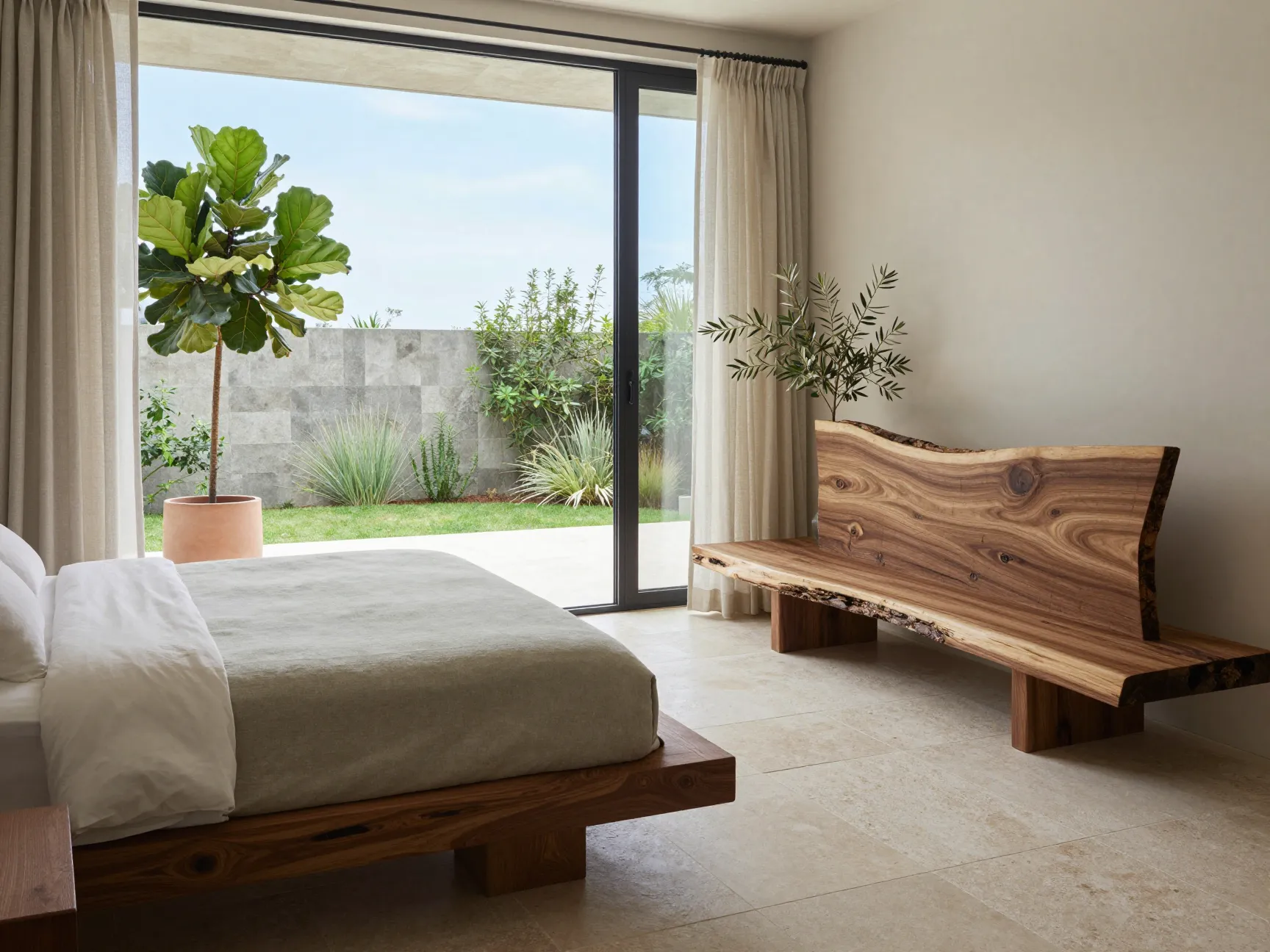
The ninth and final room in this collection of 9 Master Bedrooms with Modern Luxury Decor for a Sleek and Serene Escape takes its inspiration from nature, not in a literal, plant-covered way, but through the use of organic forms, natural materials, and views that connect the interior to the exterior [2][3].
Biophilic design elements:
- A live-edge walnut headboard, the natural edge of the wood left raw and sealed
- Stone-look large-format porcelain tiles on the floor, running in a continuous plane from bedroom to bathroom
- A sliding glass wall that opens onto a private terrace or garden
- Potted sculptural plants, a single large fiddle-leaf fig and a low-growing olive, positioned to frame the view
- A palette drawn entirely from the landscape outside: sage, stone, bark, and sky
Natural light is treated as a primary design material in this room. The glass wall is oriented to capture morning light, and the interior palette is calibrated to look its best in that specific quality of illumination [2]. Sheer linen panels filter direct sun without blocking the view, maintaining the visual connection to the outdoors throughout the day.
Biophilic design principles, the idea that humans have an innate need to connect with nature, have moved from academic theory to mainstream interior design practice [6]. In a master bedroom, that connection supports the room’s core function: restorative rest.
Design Principles That Connect All 9 Rooms
After studying these nine spaces, several consistent principles emerge. These are not rules, they are patterns that appear in every room that successfully achieves the sleek, serene quality that defines modern luxury bedroom design.
Consistency of metal finishes: Every room uses a single metal tone, brass, blackened steel, or brushed nickel, applied consistently across lighting, hardware, and decorative objects. Mixing metals is not wrong, but restraint in this area contributes significantly to the polished quality of each space.
Proportion and negative space: Each room allocates generous floor space around the bed. The industry standard of 24 inches of clearance on each side is treated as a minimum, not a target. More space reads as more luxury.
Bedding as architecture: High-quality bedding in tonal layers, typically three to four pieces in related but distinct tones, is treated as a designed element, not an afterthought. The bed is the largest visible surface in the room; it deserves the same attention as the walls or floor.
Scent and sound: While not visible in photographs, every truly luxurious master bedroom considers these sensory dimensions. A single reed diffuser, a white noise machine concealed in a drawer, or acoustic panels hidden behind fabric wall treatments contribute to the cocooning quality that makes these rooms feel like escapes [3].
How to Apply These Ideas to Your Own Bedroom
You do not need a full renovation to move your master bedroom toward the modern luxury aesthetic. These are the highest-impact changes you can make, ranked by return on investment:
- Replace your current overhead lighting with a warm-dim fixture on a dimmer switch. This single change affects the room every evening.
- Invest in a quality upholstered headboard that reaches at least two-thirds of the way to the ceiling. Height creates drama and a sense of shelter.
- Restyle your bedding using the tonal layering method: choose a base color and build three layers within that family, varying texture rather than color.
- Add a single large-scale piece of art or a textured wall treatment behind the bed. The wall behind the headboard is the most-viewed surface in the room.
- Replace synthetic throw pillows and blankets with natural fiber alternatives, linen, cotton, wool, or boucle. The tactile difference is immediate and significant.
- Audit your metal finishes and consolidate to one tone. Swap out mismatched hardware, lamp bases, and picture frames.
- Add a floor lamp to a corner of the room that currently has no light source. Layered lighting is the fastest way to elevate a bedroom’s atmosphere.
Conclusion
The nine rooms in this guide represent a clear and actionable vision for what a modern luxury master bedroom can be in 2026. From the warm minimalist suite to the biophilic retreat, each space demonstrates that true luxury is not about spending the most money, it is about making deliberate, informed choices about materials, scale, light, and texture.
The consistent thread running through all nine rooms is intentionality. Every surface, every light source, and every material choice serves the room’s primary purpose: creating a sleek and serene escape from the demands of daily life.
Your next steps:
- Identify the one element in your current bedroom that most undermines its serenity, clutter, poor lighting, a mismatched headboard, and address that first.
- Choose a palette direction from the rooms above that resonates with you and pull three paint or material samples to test in your actual space.
- Invest in one high-quality anchor piece, a headboard, a rug, or a lighting fixture, rather than spreading the same budget across several mediocre items.
- Revisit the room after 30 days and assess what the single change did for the way you feel when you walk in each morning.
A bedroom designed with this level of care pays dividends every single day. The investment in getting it right is, by any measure, worth making.
References
[1] Designers Bedroom Trends 2026 – https://www.goodhousekeeping.com/home/decorating-ideas/g70839014/designers-bedroom-trends-2026/
[2] Bedroom Design Trends 2026 – https://www.veranda.com/home-decorators/design-trends/a69514496/bedroom-design-trends-2026/
[3] Bedroom Trends 2026 – https://www.homesandgardens.com/interior-design/bedrooms/bedroom-trends-2026
[4] Bedroom Design Trends 2026 – https://www.housebeautiful.com/design-inspiration/a69619733/bedroom-design-trends-2026/
[5] 2026 Bedroom Trends Ideas – https://www.decorilla.com/online-decorating/2026-bedroom-trends-ideas
[6] Bedroom Trends 109028 – https://www.archiproducts.com/en/news/bedroom-trends_109028
[7] Bedroom Trends 2026 11840579 – https://www.bhg.com/bedroom-trends-2026-11840579
[10] Master Bedroom Decor Ideas – https://homedecorcontent.com/master-bedroom-decor-ideas/