8 Cozy Living Room Decor Ideas to Create Your Perfect Snuggle Zone
A 2023 survey by the American Institute of Architects found that “comfortable living spaces” ranked as the single most requested home feature for the third consecutive year, surpassing open floor plans and smart home technology combined. That statistic stopped me cold when I first read it, because it confirmed what I had already discovered through years of rearranging furniture, testing throw blankets, and obsessing over lamp placement: people are not just decorating rooms anymore. They are engineering feelings.
Disclosure: This post contains affiliate links. As an Amazon Associate, we earn from qualifying purchases, and at no extra cost to you.

This guide walks you through 8 cozy living room decor ideas to create your perfect snuggle zone, a curated, practical, and deeply considered set of strategies that transform any living room into a sanctuary of warmth. Whether you are starting from scratch in a new apartment or refreshing a space that has always felt a little cold and uninviting, these ideas will give you a clear, actionable roadmap. Every suggestion here is grounded in interior design principles, real-world application, and the kind of honest trial-and-error that only comes from actually living in the spaces you create.
Key Takeaways
- Layering textures, throws, rugs, and pillows, is the fastest way to make any living room feel warm and inviting.
- Lighting temperature matters more than brightness; warm-toned bulbs under 3000K create a cozy, relaxed atmosphere.
- Furniture arrangement should prioritize conversation and closeness, not just traffic flow.
- A dedicated reading nook or snuggle corner gives the room a clear emotional purpose.
- Small additions like scented candles, houseplants, and personal objects add layers of meaning that no furniture purchase can replicate.
Why Coziness Is a Design Strategy, Not Just a Feeling
Before diving into the 8 cozy living room decor ideas to create your perfect snuggle zone, it is worth understanding why coziness works the way it does. The Danish concept of “hygge” (pronounced “hoo-gah”) has been widely discussed in design circles, but its core principle is simple: comfort is created through sensory layering. You are not just choosing a sofa. You are curating an experience that engages sight, touch, smell, and even sound.
Research published in the journal Environment and Behavior found that people rate rooms with warmer color temperatures and softer textures as significantly more comfortable and emotionally safe than rooms with cooler tones and hard surfaces. This is not subjective preference, it is a measurable psychological response.
“A cozy room is not an accident. It is the result of deliberate decisions made at every scale, from the wattage of a bulb to the weight of a throw blanket.”
Understanding this principle changes how you approach every item on this list. You are not just buying things. You are building an environment that tells your nervous system it is safe to relax.
The 8 Cozy Living Room Decor Ideas to Create Your Perfect Snuggle Zone
1. Layer Your Textiles Strategically
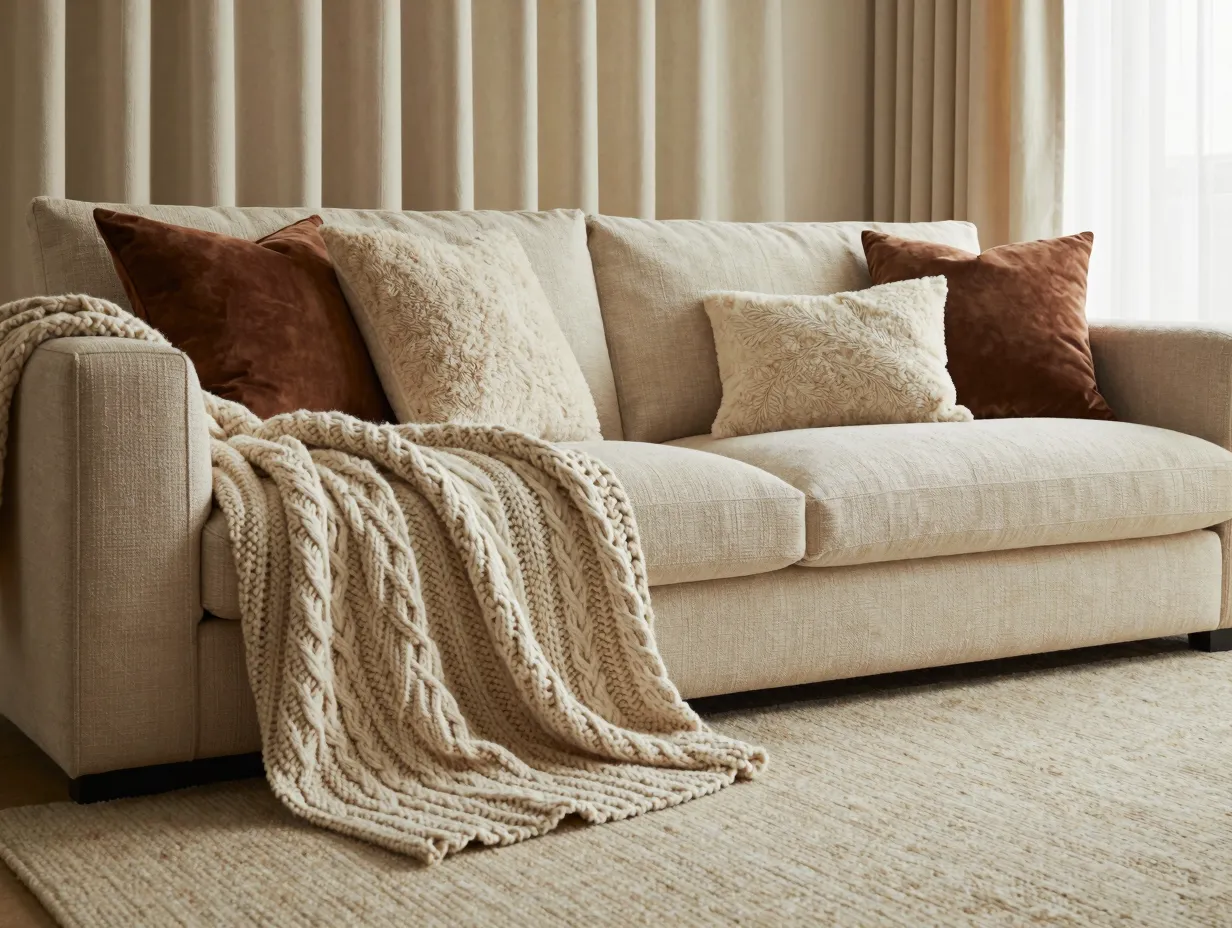
The single most impactful change you can make to any living room is adding layers of soft textiles. This means thinking beyond the standard throw pillow and considering the full textile ecosystem of your space.
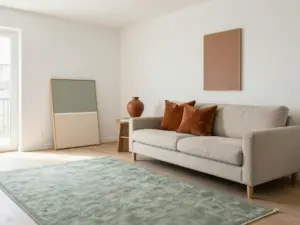
Start with the rug. A large area rug, ideally large enough that all major furniture pieces sit at least partially on it, anchors the room and adds immediate warmth underfoot. Materials like wool, jute, and high-pile synthetic blends all perform well. I switched from a flat-weave cotton rug to a thick wool blend in my own living room, and the difference in how the room felt was immediate and dramatic.
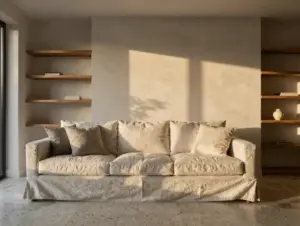
Layer the sofa. A cozy sofa is not just about the sofa itself. It is about what you put on it. Combine at least two throw blankets in different weights, one lighter knit for mild evenings, one chunky cable-knit or faux fur for colder nights. Add pillows in varying sizes and textures: velvet, linen, and sherpa all work well together.
Consider curtains. Heavy, floor-length drapes in warm tones like terracotta, deep green, or warm cream do double duty. They block drafts and add visual weight that makes a room feel enclosed and intimate rather than exposed.
– Large area rug (wool or high-pile blend)
– Two throw blankets per seating area
– Mixed-texture throw pillows (minimum 4-6)
– Floor-length curtains in warm tones
2. Rethink Your Lighting from the Ground Up
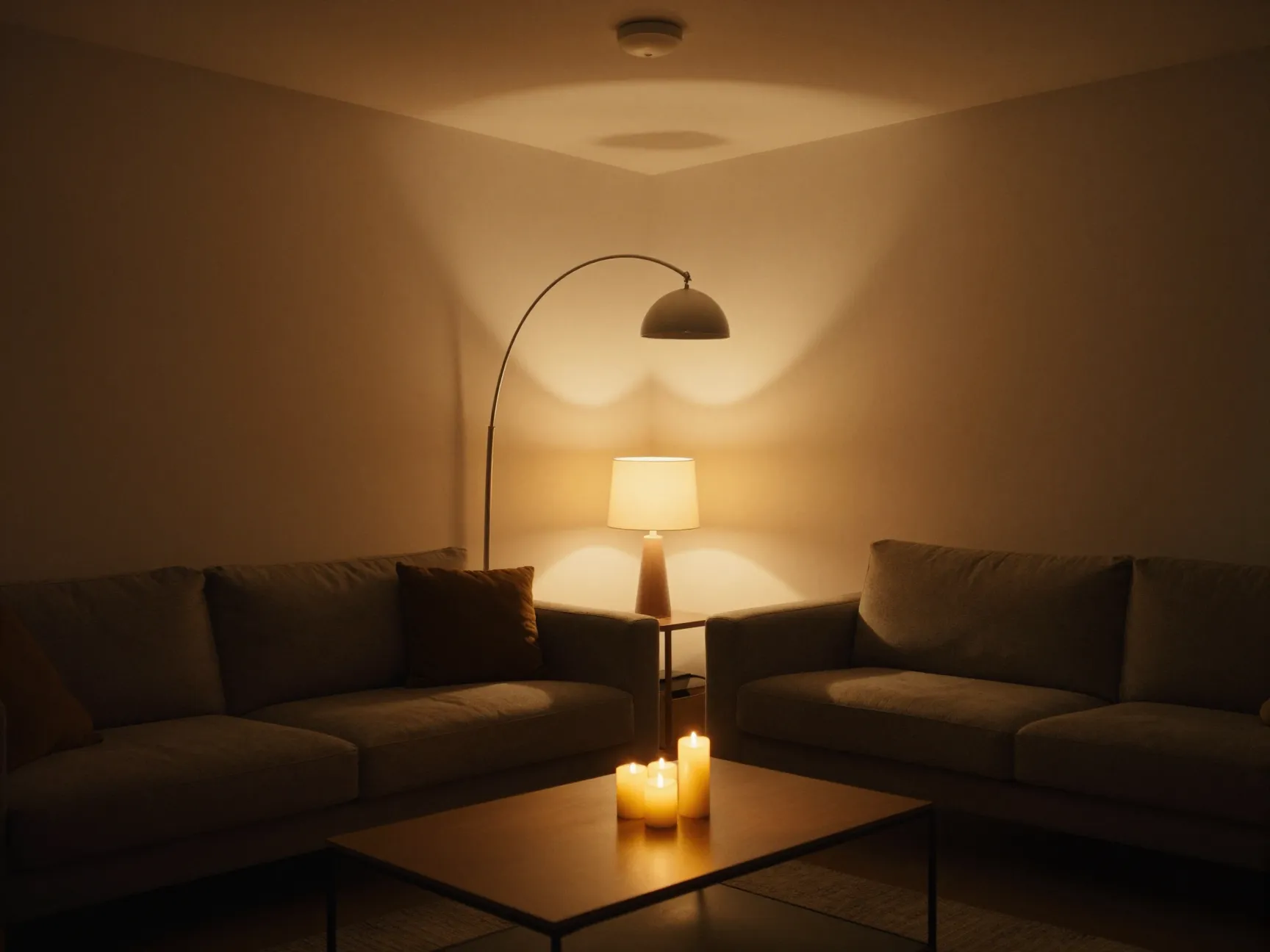
Overhead lighting is the enemy of coziness. This is perhaps the most counterintuitive truth in interior design, but it holds up consistently: a single bright overhead light makes a room feel like a waiting room, not a sanctuary.
Replace or supplement overhead fixtures. If you cannot remove your overhead light, at minimum install a dimmer switch. Then build a layered lighting plan using floor lamps, table lamps, and candles.
Choose the right color temperature. Light bulbs are measured in Kelvins. Anything above 3500K reads as cool or clinical. For a cozy living room, you want bulbs in the 2200K to 2700K range, these produce the warm amber glow associated with candlelight and sunset.
Use height variation. Place lamps at different heights: a tall arc floor lamp behind the sofa, a shorter table lamp on the side table, and a few candles or LED candle clusters at coffee table height. This creates depth and makes the room feel like it has multiple intimate zones rather than one flat-lit space.
| Lighting Type | Ideal Kelvin Range | Best Placement |
|---|---|---|
| Floor lamp | 2200K – 2700K | Behind or beside sofa |
| Table lamp | 2200K – 2700K | Side tables, shelves |
| Candles / LED candles | 1800K – 2200K | Coffee table, fireplace mantel |
| Overhead dimmed | 2700K – 3000K | Central ceiling, dimmed low |
3. Choose Furniture That Invites You to Stay
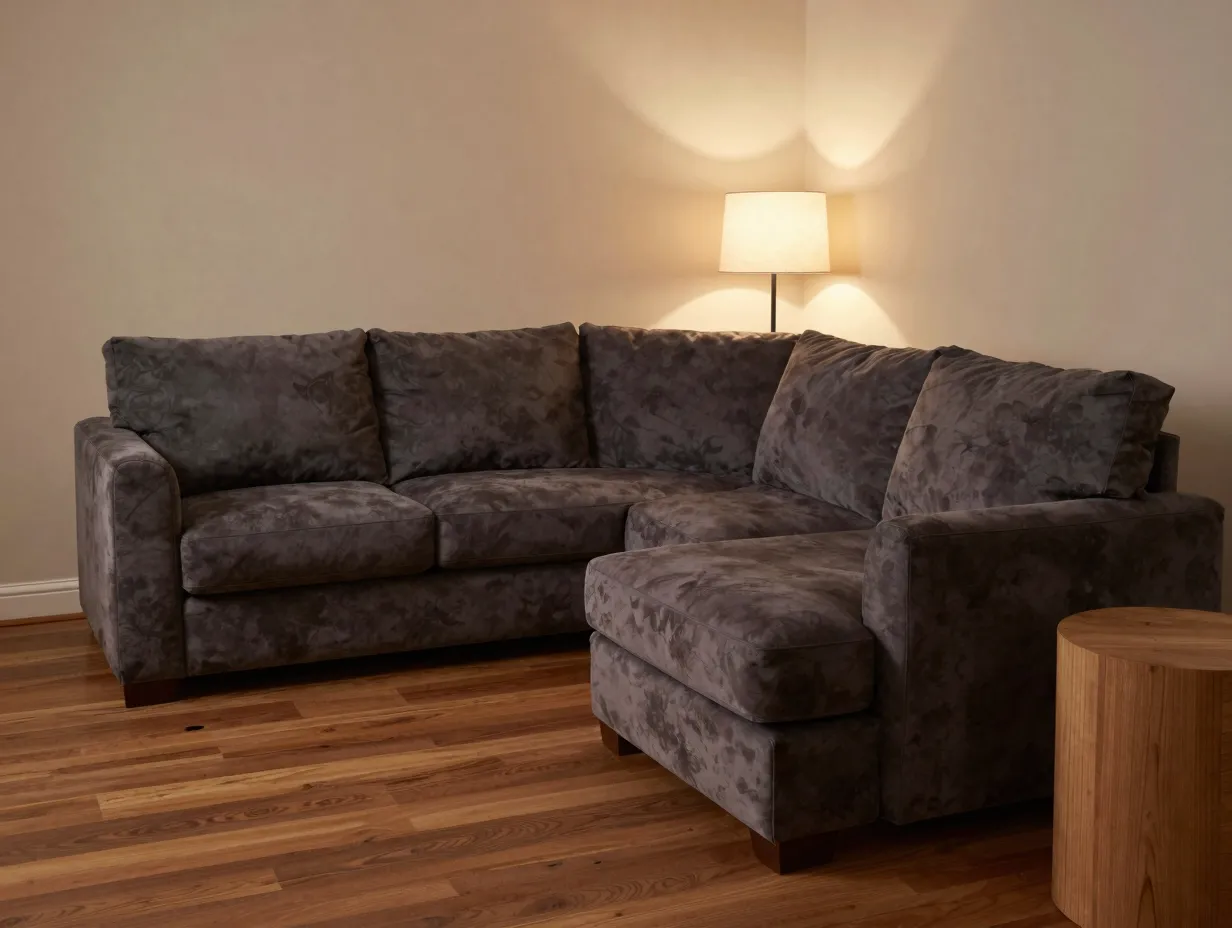
A cozy living room is not built around beautiful furniture. It is built around furniture that makes you want to sit down and never leave. These are different goals, and they sometimes conflict.
Prioritize depth and softness. Deep-seated sofas and sectionals, those with a seat depth of at least 22 to 24 inches, allow you to truly sink in and curl up. Avoid sofas that are primarily architectural statements with firm, shallow seats.
Consider a sectional or chaise. A chaise lounge or L-shaped sectional gives you a dedicated horizontal surface for lying down, which is the physical definition of a snuggle zone. When I finally replaced my sleek but shallow mid-century sofa with a deep-cushioned sectional, my living room transformed from a room I sat in to a room I lived in.
Add an oversized armchair. A large, enveloping armchair, sometimes called a “swallowing chair” in design circles, creates a personal cocoon within the larger space. Pair it with a small side table and a reading lamp, and you have a built-in retreat.
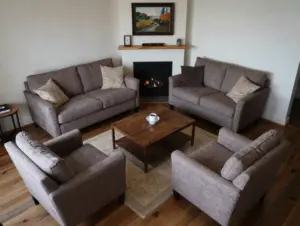
Think about arrangement. Pull furniture away from the walls and arrange pieces to face each other. This creates a sense of enclosure and intimacy. A room where all the furniture lines the walls feels like a gymnasium, not a snuggle zone.
4. Build a Dedicated Reading Nook or Snuggle Corner
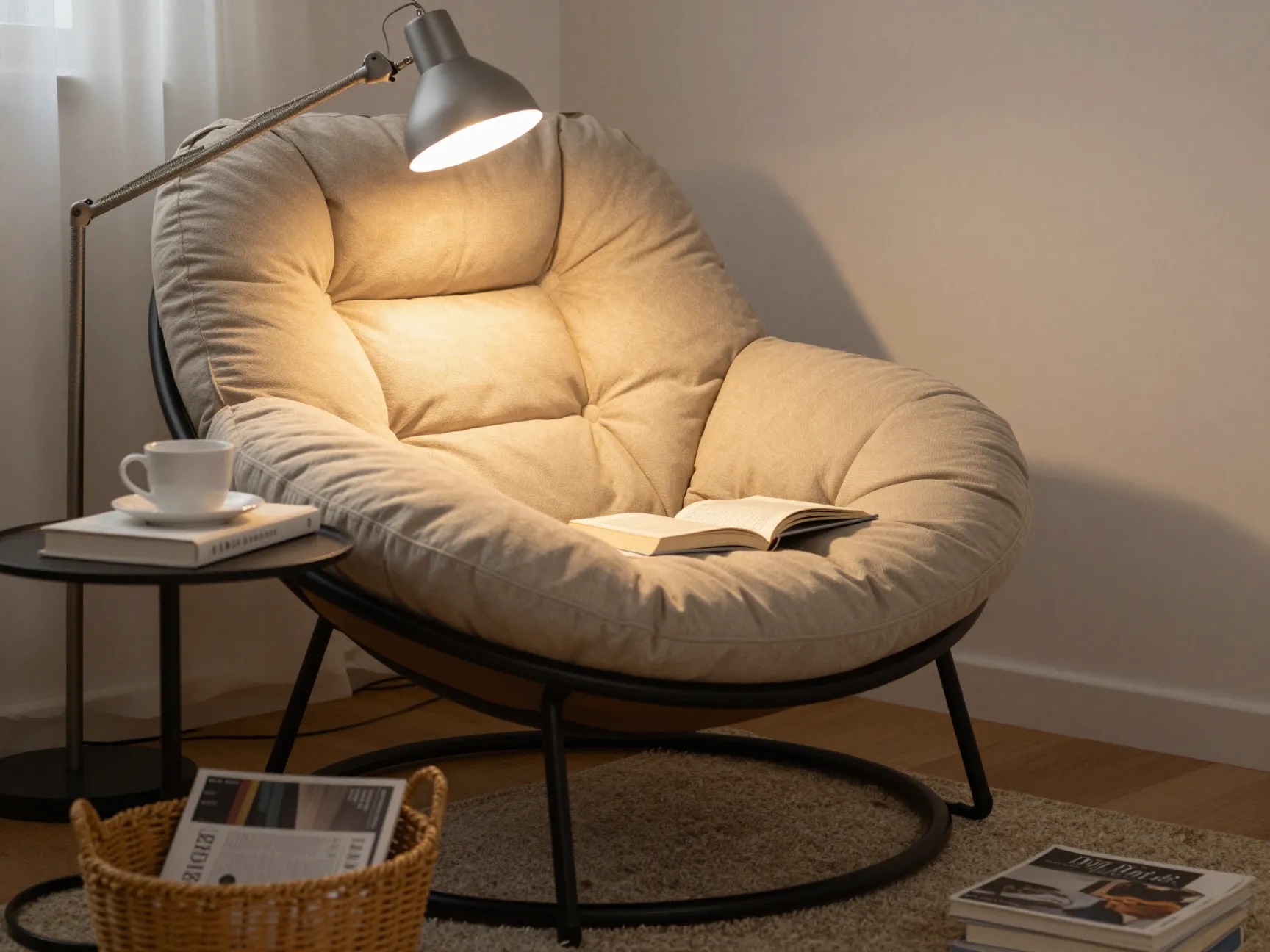
One of the most powerful of these 8 cozy living room decor ideas is also one of the most underused: carving out a specific corner of the room that serves no purpose except comfort.
This does not require a bay window or a built-in bench. It requires only intention. Choose a corner, place a comfortable chair or a floor cushion arrangement, add a lamp, a small side table or tray, and a basket of books or magazines. Define the space with a small rug if the main rug does not reach it.
Why this works: Dedicated spaces signal permission. When a corner is clearly set up for relaxation, you are more likely to actually use it for that purpose. It removes the ambient guilt of “I should be doing something else” because the space itself says: this is what you are supposed to be doing here.
“A snuggle corner does not need to be large. It needs to be intentional. Even 36 square inches of deliberate comfort changes how you use a room.”
Ideas for your nook:
- A papasan chair with extra cushioning
- A window seat built from IKEA storage units with a custom cushion
- A floor-level arrangement of large floor pillows and a low tray table
- An armchair angled toward a bookshelf with a clip-on reading light
5. Incorporate Natural Elements and Organic Textures
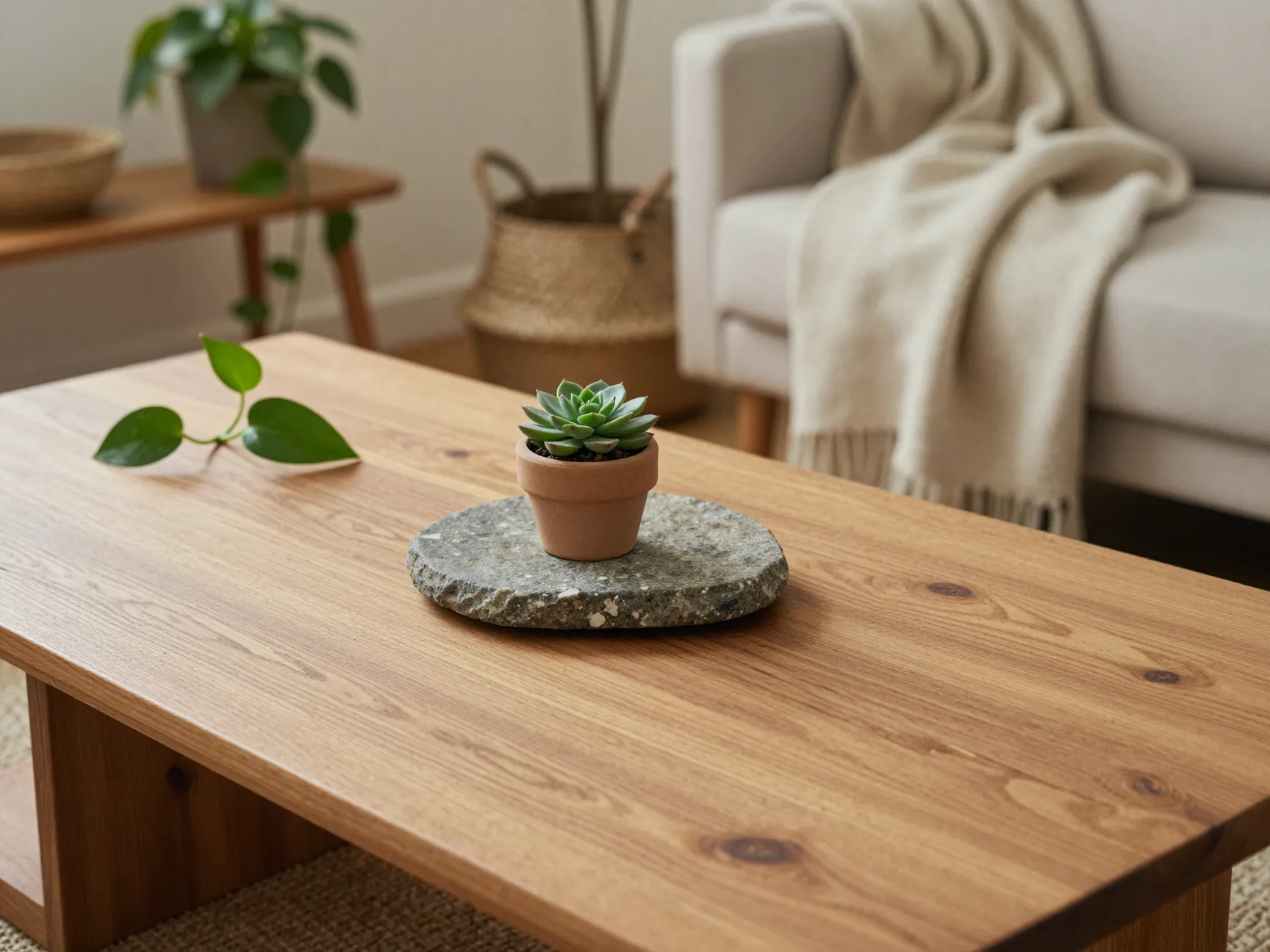
There is strong evidence in environmental psychology that exposure to natural materials, wood, stone, plants, natural fibers, reduces stress and increases feelings of comfort. This principle, sometimes called biophilic design, is directly applicable to creating a cozy living room.
Add houseplants. A few well-placed plants bring life, color, and a subtle sense of calm to a room. You do not need a jungle. A large fiddle-leaf fig in a corner, a trailing pothos on a shelf, and a small succulent on the coffee table create a layered natural presence without overwhelming the space.
Use wood tones deliberately. A wooden coffee table, a reclaimed wood shelf, or even a wooden tray on an ottoman adds warmth that no metal or glass surface can replicate. Mix light and medium wood tones for depth.
Choose natural fiber textiles. Where possible, opt for cotton, linen, wool, and jute over purely synthetic materials. Natural fibers breathe differently, age better, and have a tactile quality that feels inherently more comforting.
Bring in stone or ceramic accents. A ceramic vase, a stone candle holder, or a clay pot adds grounding visual weight that balances the softness of textiles.
6. Use Color and Pattern to Create Warmth
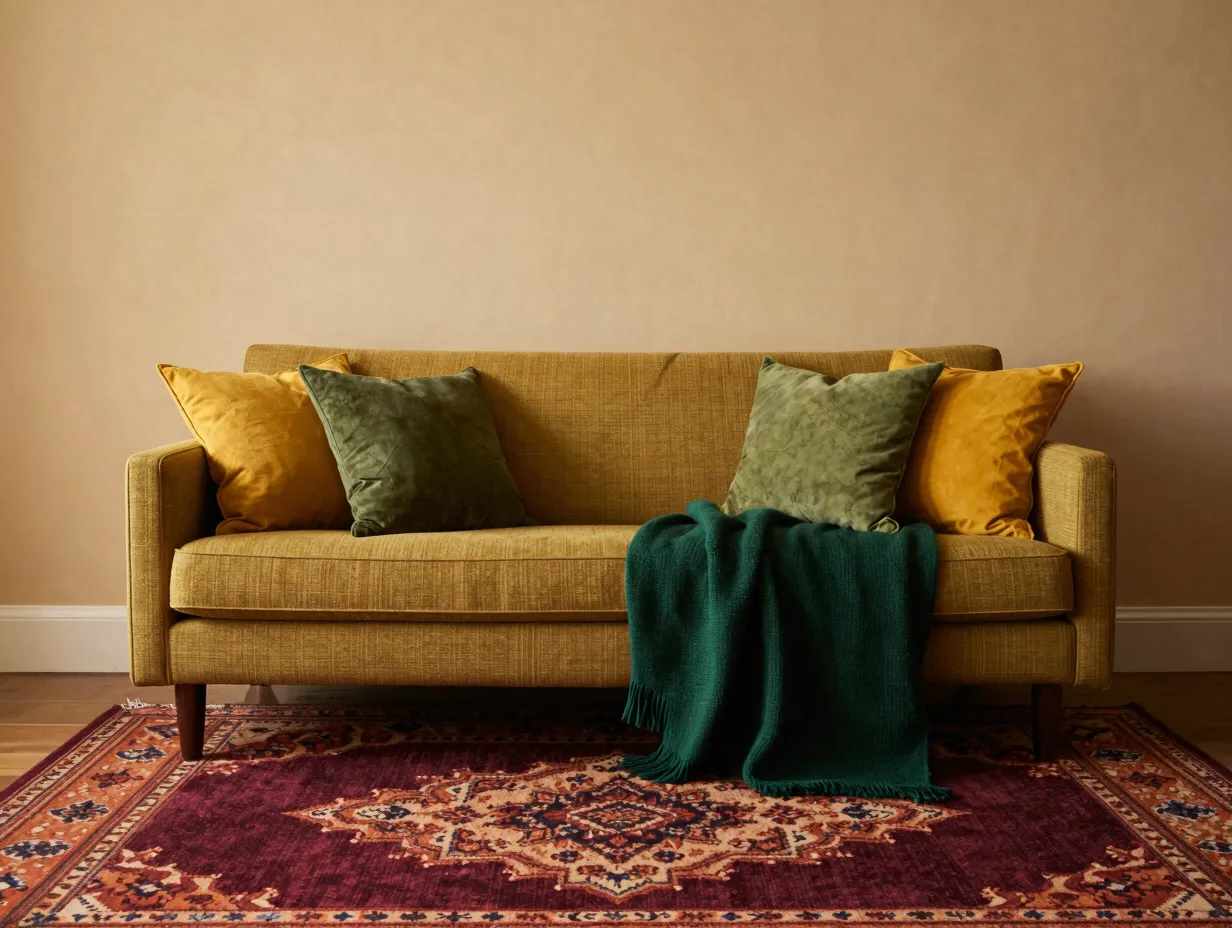
Color is one of the most accessible and affordable tools in your cozy living room toolkit. You do not need to repaint your walls to use color effectively, though a warm paint color certainly helps.
Warm neutrals as a base. Colors in the warm neutral family, creamy whites, warm beiges, soft taupes, warm grays with brown undertones, create a backdrop that makes everything else feel more inviting. Cool grays and stark whites, by contrast, can make a room feel clinical regardless of how many throw blankets you add.
Accent with deep, saturated tones. Terracotta, burnt orange, deep olive green, mustard yellow, and rich burgundy all read as warm and grounding. Use these in pillows, throws, curtains, and small decor objects.
Do not fear pattern. A patterned rug, a plaid throw, or a floral cushion adds visual complexity that makes a room feel lived-in and layered rather than staged and sterile. The key is to vary the scale of patterns, mix a large-scale rug pattern with a smaller-scale pillow pattern.
Base tones: Warm white, cream, warm beige, soft taupe
Accent tones: Terracotta, deep olive, mustard, burgundy, rust
Avoid for coziness: Cool gray, stark white, icy blue, bright white
7. Engage Multiple Senses Beyond the Visual
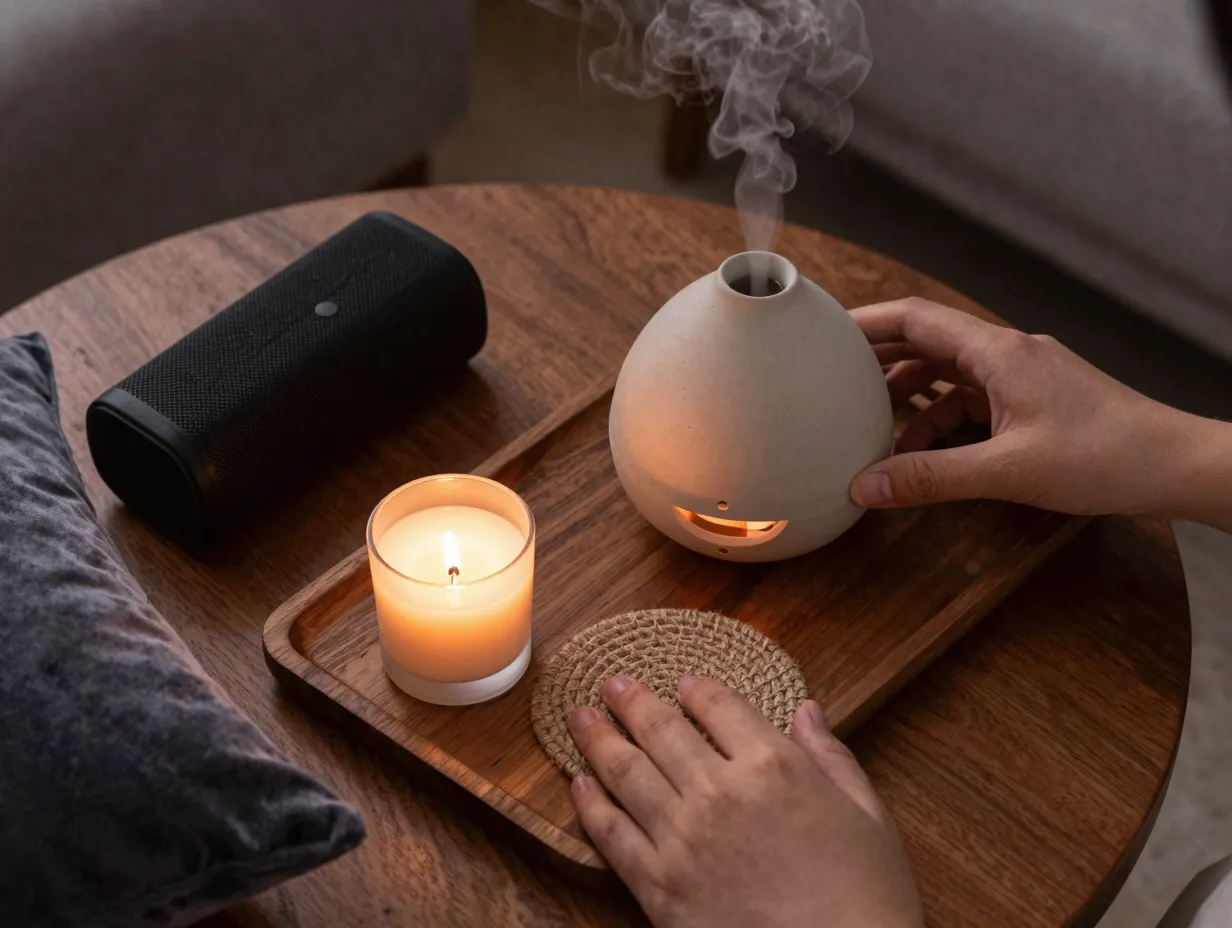
The most memorable cozy rooms are not just beautiful to look at. They feel good, smell good, and even sound good. Engaging multiple senses is what separates a room that looks cozy in photos from a room that actually feels cozy when you walk into it.
Scent is powerful. A diffuser with warm essential oils like cedarwood, vanilla, sandalwood, or cinnamon creates an immediate sensory signal that says “comfort.” Scented candles work equally well. I keep a cedar and vanilla candle burning on weekend afternoons, and the scent alone has become a Pavlovian trigger for relaxation in my household.
Consider ambient sound. A small Bluetooth speaker playing soft background music, acoustic guitar, lo-fi jazz, or ambient nature sounds, adds an auditory layer of warmth. The absence of sound can make a room feel cold and empty.
Temperature management. A cozy room should feel slightly warmer than the rest of the house. A small space heater, a fireplace (gas, wood, or even a realistic electric insert), or simply a well-insulated room contributes to the physical experience of warmth that no amount of visual decoration can fully replace.
Tactile variety. When you walk through your living room, your hands should encounter different textures: the smooth surface of a wooden tray, the softness of a velvet pillow, the roughness of a jute basket, the warmth of a wool throw. This tactile richness is a hallmark of truly cozy spaces.
8. Add Personal Meaning Through Objects and Collections
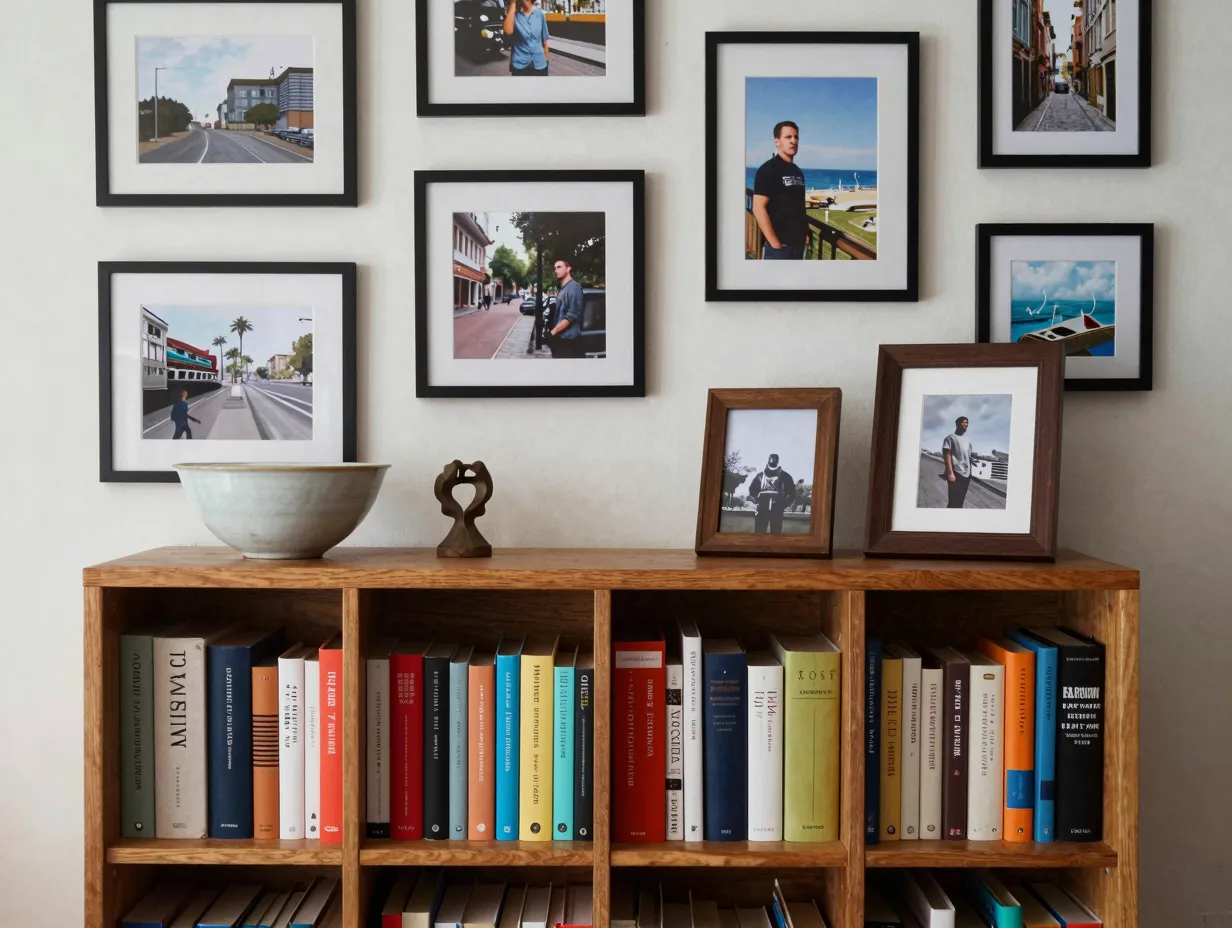
The final idea in this collection of 8 cozy living room decor ideas to create your perfect snuggle zone is perhaps the most personal: fill your room with objects that carry meaning for you specifically.
A room decorated entirely from a single retailer’s catalog can be visually cohesive and technically well-executed, but it will rarely feel cozy in the deepest sense. Coziness has a biographical dimension. It is the shelf of books you have actually read. It is the photograph from a trip that changed your life. It is the ceramic bowl your grandmother made. It is the vintage lamp you found at a flea market and carried home on the bus.
Curate, do not accumulate. This is not a license for clutter. The goal is intentional display of meaningful objects, not random accumulation. Choose 10 to 15 objects that genuinely matter to you and display them thoughtfully. A few well-chosen personal objects do more for the warmth of a room than a hundred generic decorative items.
Books are decor. A bookshelf filled with actual books you have read or intend to read adds intellectual warmth and personal character that no decorative object can replicate. Arrange books by color if you want visual cohesion, or simply let them exist in honest, well-read disorder.
Frame memories. A gallery wall of personal photographs, travel prints, or artwork you genuinely love creates a visual autobiography that makes guests feel they are entering someone’s real life, not a showroom.
Putting It All Together: A Room That Works as a System
The reason these 8 cozy living room decor ideas are most powerful when applied together is that coziness is a systemic quality. No single element creates it alone. A beautiful rug on a bare, harshly lit floor does not feel cozy. A collection of meaningful objects in a cold, furniture-lined room does not feel cozy. But combine layered textiles with warm lighting, comfortable furniture, natural elements, warm colors, sensory engagement, and personal meaning, and you get something that is genuinely greater than the sum of its parts.
Think of it as a formula:
Coziness = Sensory Warmth + Physical Comfort + Personal Meaning + Intentional Design
Every idea in this list contributes to at least one of those four components. When you address all four, you stop decorating a room and start creating an experience.
Common Mistakes to Avoid
Even with the best intentions, certain choices consistently undermine coziness:
- Choosing style over comfort in furniture, a beautiful sofa you cannot sink into defeats the entire purpose.
- Relying solely on overhead lighting, this is the fastest way to make a cozy room feel institutional.
- Leaving walls bare, empty walls make a room feel unfinished and cold, even when the furniture is excellent.
- Ignoring scale, furniture that is too small for the room floats awkwardly and creates visual coldness.
- Over-matching everything, when every element is too perfectly coordinated, a room loses the layered, lived-in quality that creates genuine warmth.
Conclusion
Creating a cozy living room is not a single project with a finish line. It is an ongoing practice of paying attention to how a space makes you feel and making small, deliberate adjustments over time. The 8 cozy living room decor ideas to create your perfect snuggle zone outlined in this guide give you a complete framework: from the foundational choices of furniture and lighting to the nuanced additions of scent, sound, and personal meaning.
Your actionable next steps:
- Start with lighting. Replace one overhead bulb with a warm-toned alternative (2700K or lower) and add one floor lamp this week. Notice the difference immediately.
- Add one textile layer. Buy a chunky throw blanket in a warm, neutral tone and place it over your sofa. This single change costs under $50 and has an outsized impact.
- Identify your snuggle corner. Walk through your living room and find the spot that already has the most potential for a dedicated cozy zone. Commit to developing it over the next month.
- Remove three things. Identify three objects in your living room that are neither beautiful nor meaningful to you and remove them. Coziness requires intentionality, and clutter is its enemy.
- Add one natural element. A plant, a wooden tray, a ceramic vase, choose one and place it thoughtfully.
The perfect snuggle zone is not a destination. It is a direction. Start moving toward it today, and your living room will thank you every single evening you spend in it.
References
- American Institute of Architects. (2023). Home Design Trends Survey. AIA.
- Gifford, R. (2014). Environmental psychology: Principles and practice. Environment and Behavior, 46(1), 3-24.
- Joye, Y., & van den Berg, A. (2011). Is love for green in our genes? A critical analysis of evolutionary assumptions in restorative environments research. Urban Forestry & Urban Greening, 10(4), 261-268.
- Meyers-Levy, J., & Zhu, R. (2007). The influence of ceiling height: The effect of priming on the type of processing that people use. Journal of Consumer Research, 34(2), 174-186.
- Wiking, M. (2016). The Little Book of Hygge: Danish Secrets to Happy Living. William Morrow.