9 Cozy Living Room Design Secrets for the Ultimate Comfort Zone
A 2026 survey by the American Institute of Architects found that 74% of homeowners now rank “comfort and warmth” as the single most important quality they want in a living room, ahead of style, technology, or square footage. Yet most people still walk into their own living rooms and feel something is missing. The space looks fine, but it does not feel like a sanctuary.
Disclosure: This post contains affiliate links. As an Amazon Associate, we earn from qualifying purchases, and at no extra cost to you.
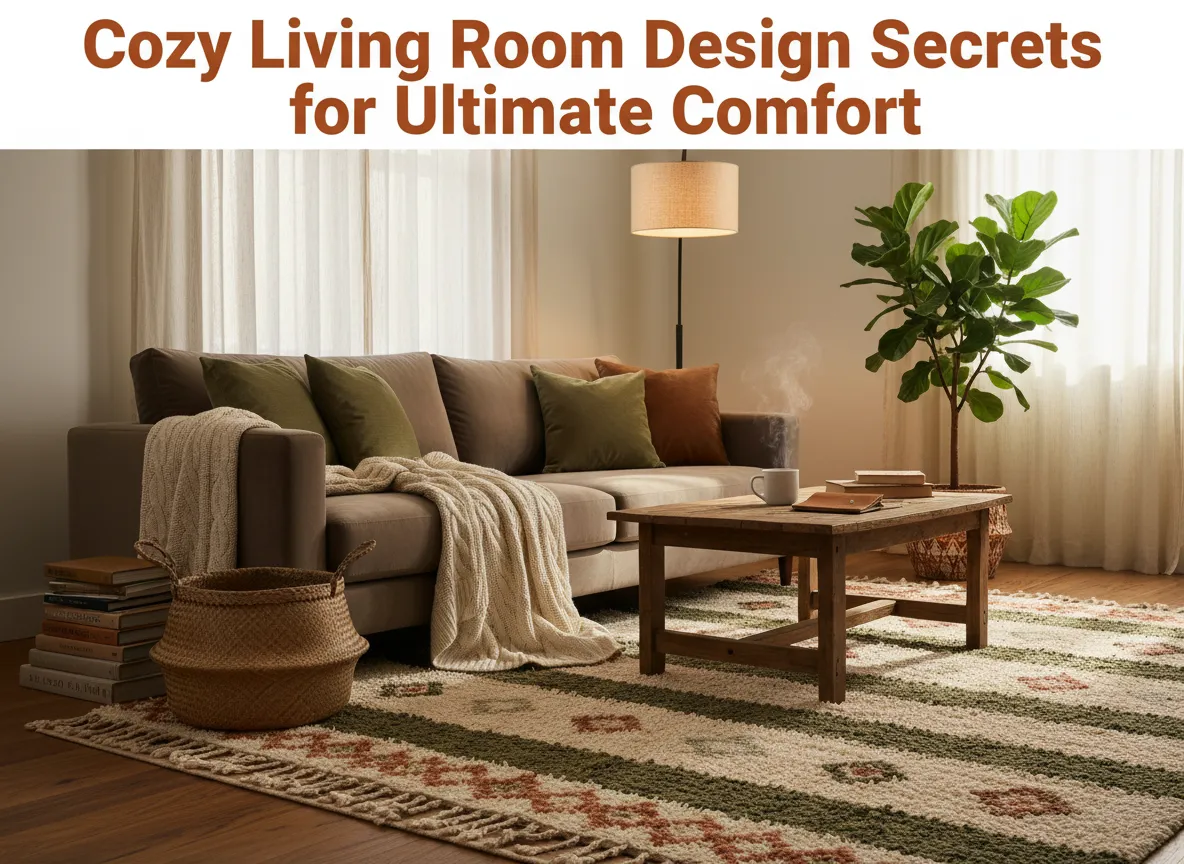
That gap between looking good and feeling genuinely cozy is exactly what these 9 Cozy Living Room Design Secrets for the Ultimate Comfort Zone are designed to close. Whether you are starting from scratch or refreshing a room that has never quite clicked, these principles draw on interior design research, sensory psychology, and real-world styling experience to help you build a space that wraps around you the moment you walk in.
I have spent years rearranging furniture at midnight, testing paint swatches in every light condition, and hunting down the perfect throw blanket. These secrets are the distillation of all of that, practical, proven, and immediately actionable.
Key Takeaways
- Layering light sources at multiple heights is the single fastest way to shift a room from cold to cozy.
- Texture variety, not color alone, is what makes a space feel physically inviting and warm.
- Furniture arrangement should prioritize conversation and human scale over filling space.
- Natural materials and organic shapes reduce visual stress and increase perceived comfort.
- Small, intentional sensory details (scent, sound, touch) create emotional warmth that no paint color can replicate.
The First Set of Cozy Living Room Design Secrets: Foundation and Atmosphere
Before you buy a single throw pillow, the foundation of your room needs to support comfort at a structural level. These first four secrets address the bones of the space, light, color, furniture layout, and texture, because getting these right makes everything else easier.
1. Layer Your Lighting Across Three Heights
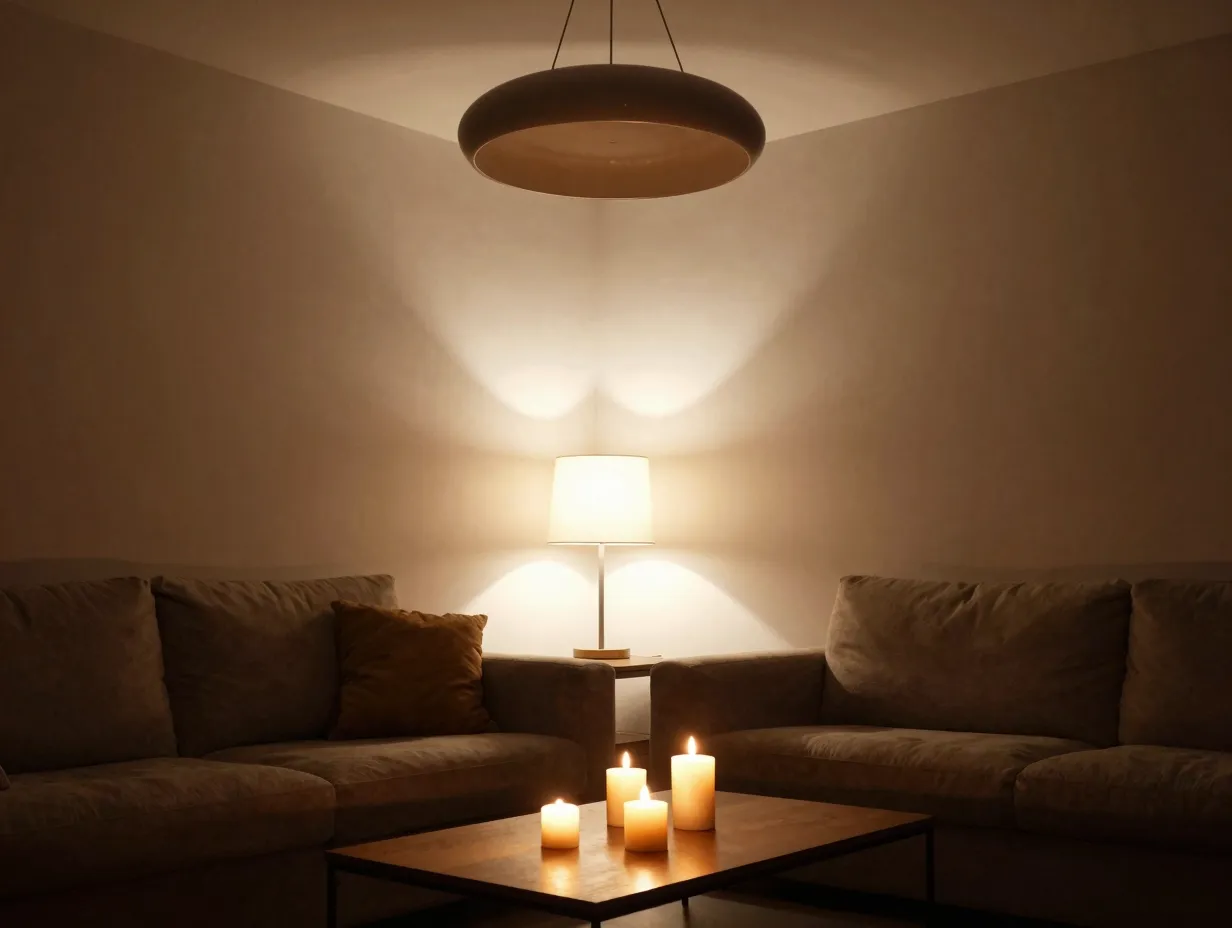
The single most transformative thing you can do for a living room is eliminate the one-overhead-light setup. A single ceiling fixture flattens a room and creates harsh, institutional light that works against every cozy intention you have.
The three-layer lighting rule:
| Layer | Source Examples | Height |
|---|---|---|
| Ambient | Ceiling fixture, recessed lights | Above eye level |
| Task | Floor lamps, table lamps | Eye level |
| Accent | Candles, LED strips, sconces | Below eye level |
When all three layers are active simultaneously, the room gains visual depth and warmth. The lower the light source, the more intimate the atmosphere. I keep at least one candle burning on my coffee table every evening, not for romance, but because that low, flickering light does something to a room that no bulb can replicate.
Pro tip: Use bulbs rated between 2700K and 3000K (warm white). Anything above 4000K reads as cool and clinical.
Dimmer switches on every fixture give you full control. Installing them is a low-cost upgrade with an outsized impact on how the room feels at any hour.
2. Choose a Warm, Grounded Color Palette
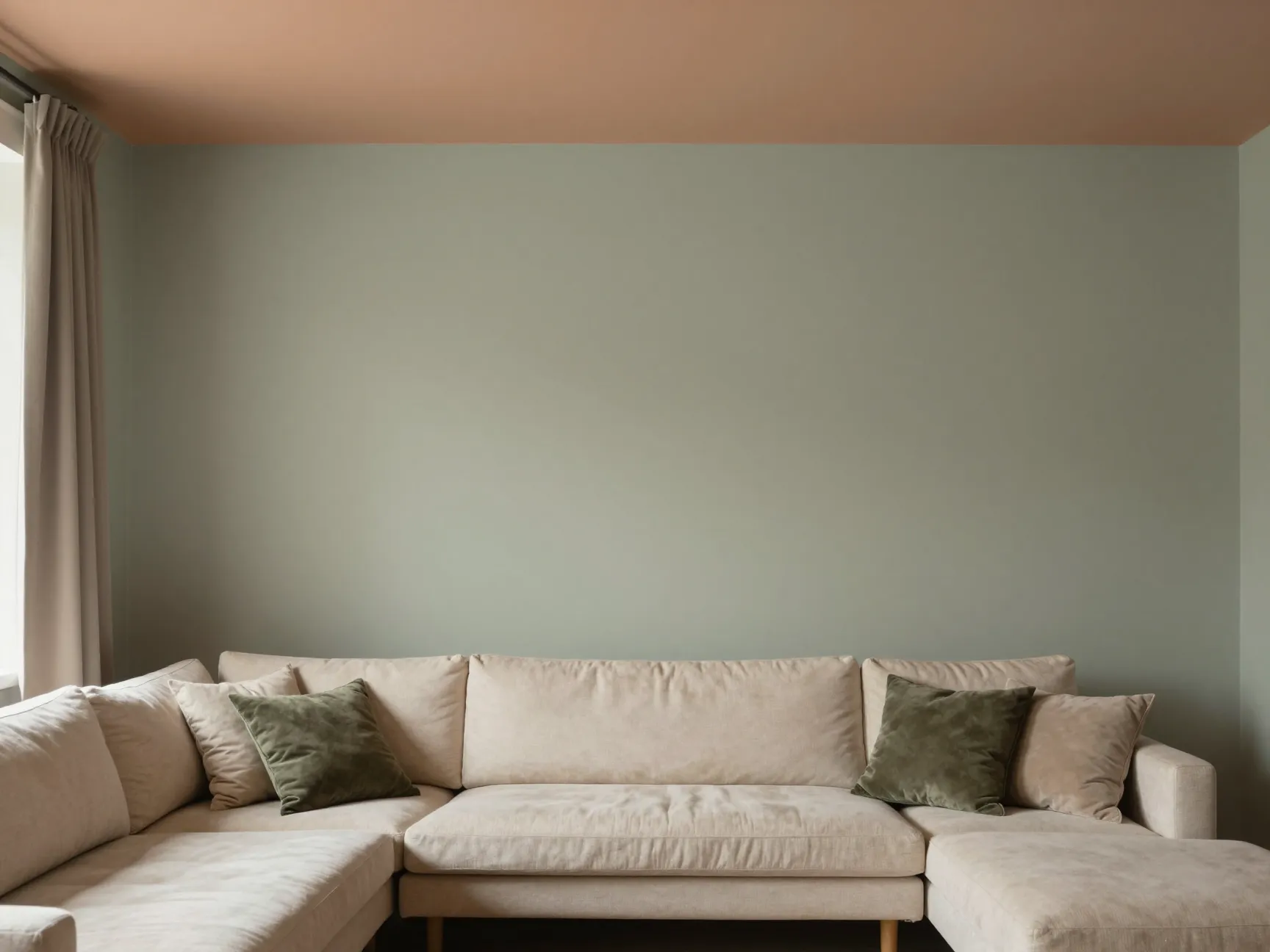
Color psychology is well-documented, but the cozy living room application is often misunderstood. People assume “warm” means red or orange. In practice, the most comforting living room palettes are built on muted, earthy mid-tones.
Colors that consistently read as cozy:
- Warm whites and creams (not stark white)
- Terracotta and clay
- Sage and olive green
- Deep taupe and warm greige
- Dusty blush and brick red
The key is saturation. Highly saturated colors are energizing, not relaxing. Desaturated, slightly dusty versions of warm hues create the enveloping quality that makes a room feel like a retreat.
“Color is the keyboard, the eyes are the harmonies, the soul is the piano with many strings.”, Wassily Kandinsky
Paint the walls in one of these grounded tones and use the ceiling in a slightly lighter version of the same hue. This technique, called a “color drenching” approach, wraps the room in a single tonal family and eliminates the visual interruption of a stark white ceiling.
3. Arrange Furniture for Conversation, Not Traffic Flow
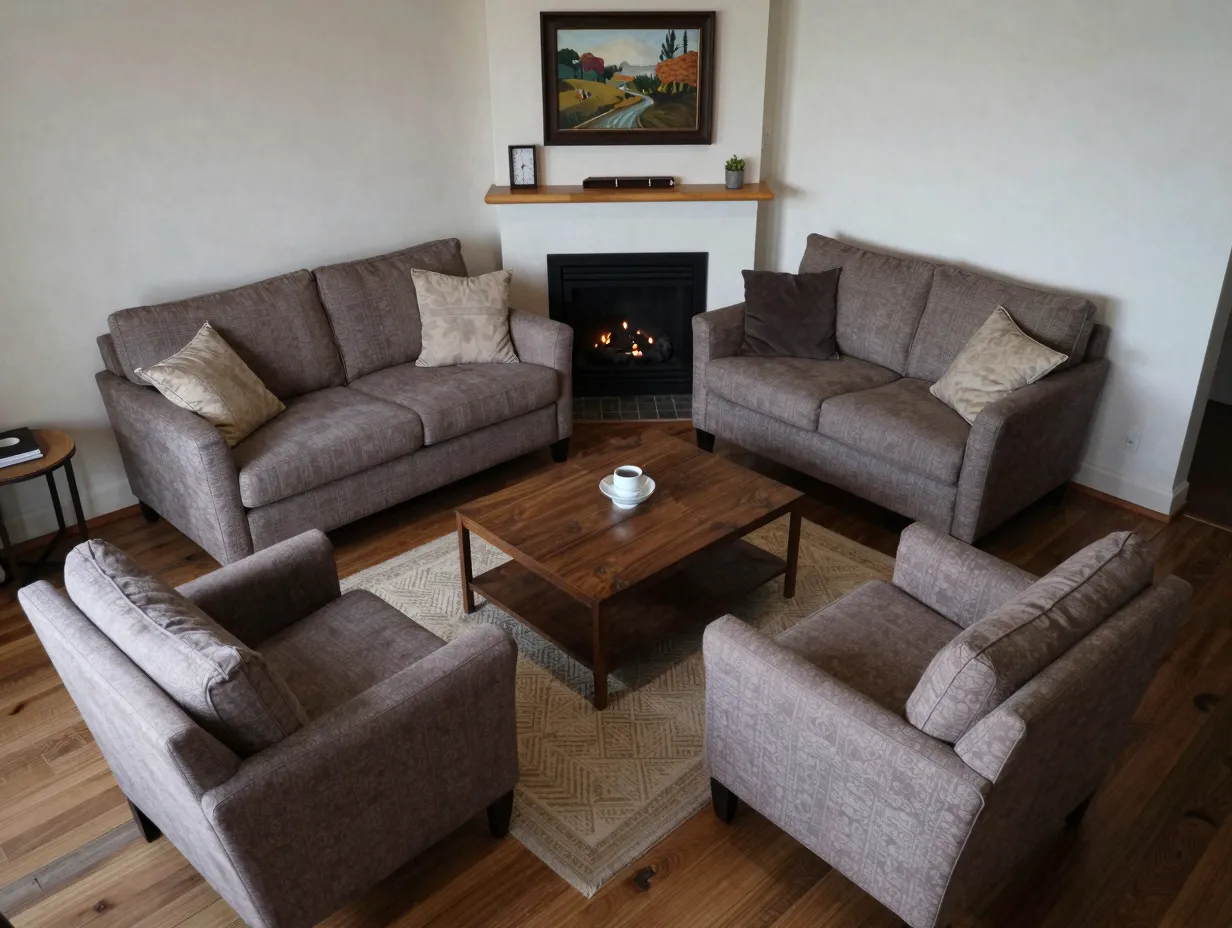
Most living rooms are arranged with one eye on the pathway through the room. Sofas get pushed against walls, chairs face the television, and the center of the room becomes an empty wasteland of floor space.
Cozy rooms are arranged differently. They prioritize human connection over circulation.
The conversation-first layout principle:
- Pull furniture away from walls by at least 12 to 18 inches
- Arrange seating so people face each other at a distance of 8 feet or less
- Create a clear focal point (fireplace, window, art piece) that anchors the grouping
- Ensure every seat has a surface nearby for a drink or a book
When I rearranged my own living room by pulling the sofa 16 inches off the back wall and angling two chairs inward, the room immediately felt smaller in the best possible way, more intimate, more human-scaled, more like a place where people actually wanted to sit and stay.
Avoid the common mistake of buying furniture that is too large for the space. Oversized pieces make a room feel crowded, not cozy. Scale matters as much as style.
4. Build a Texture Library, Not Just a Color Scheme
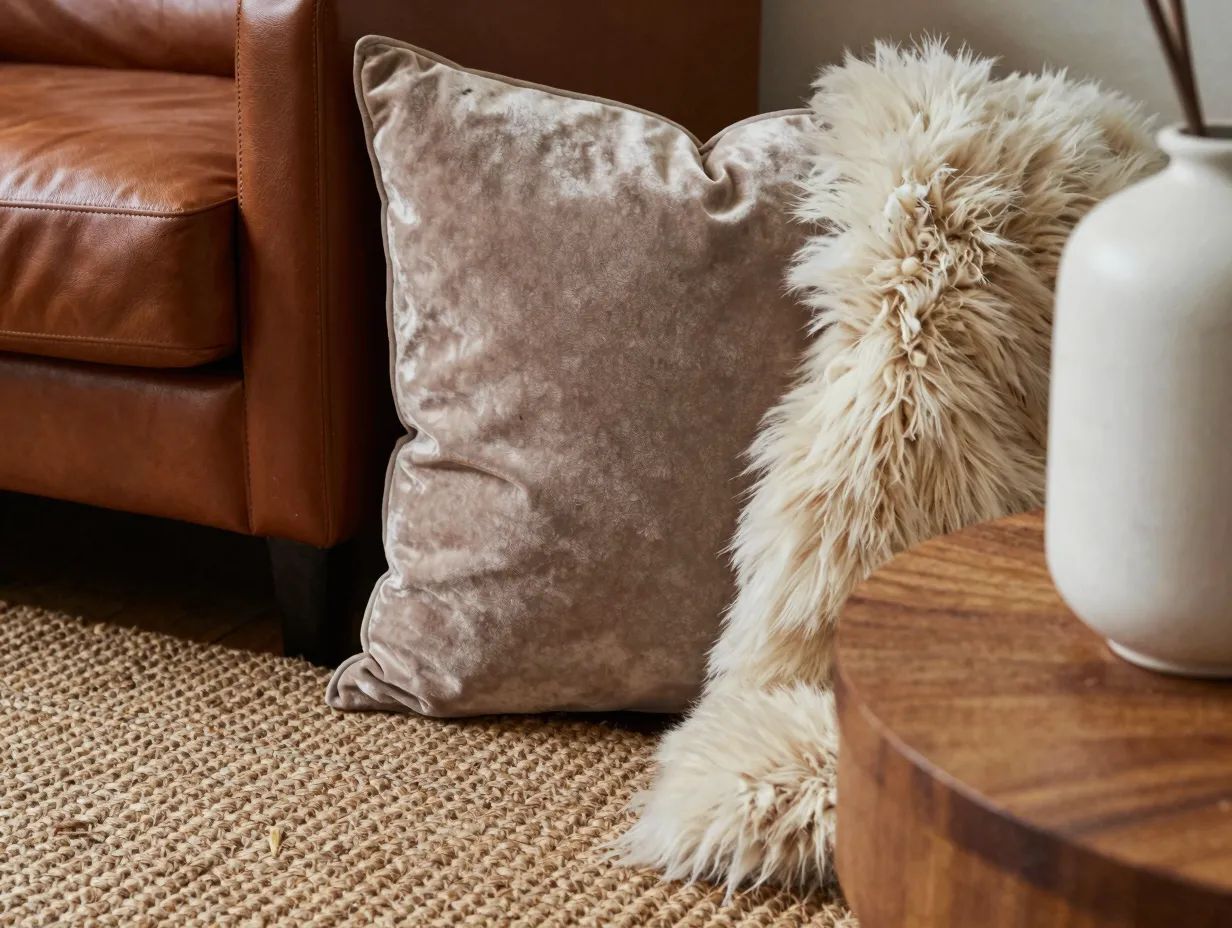
Texture is the most underused tool in residential design. A room can have a perfect color palette and still feel flat and uninviting if every surface has the same tactile quality.
A cozy texture library includes:
- Something smooth (leather, lacquered wood, ceramic)
- Something soft (velvet, chenille, cotton knit)
- Something rough (jute, rattan, reclaimed wood)
- Something shaggy or fluffy (sheepskin, high-pile rug, boucle)
- Something natural and organic (stone, linen, woven basket)
The contrast between these textures is what creates visual and physical richness. A velvet sofa gains depth when paired with a jute rug. A smooth marble coffee table becomes more inviting when surrounded by soft wool throws.
Run your hand across the surfaces in your room right now. If everything feels roughly the same, that is a reliable signal that the space lacks the tactile warmth that makes a room feel truly cozy.
The Second Set of 9 Cozy Living Room Design Secrets: Details That Create the Ultimate Comfort Zone
The first four secrets build the foundation. These final five secrets are about the layered details that elevate a well-designed room into what I genuinely call the ultimate comfort zone, a place that engages all five senses and makes leaving feel like a minor inconvenience.
5. Anchor the Room with a Generous Area Rug
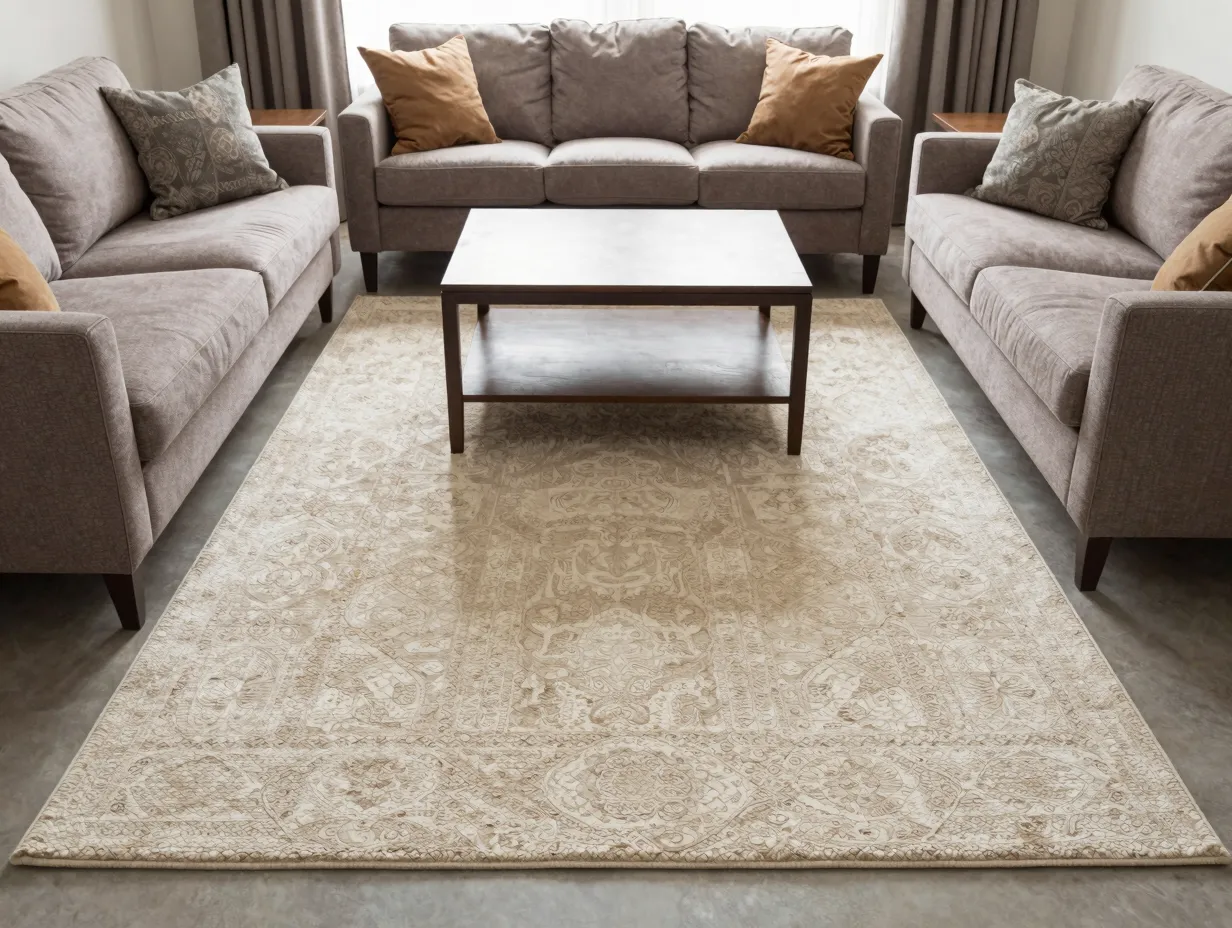
A rug does three things simultaneously: it defines a zone within an open space, it adds a critical texture layer underfoot, and it absorbs sound to make the room feel quieter and more enclosed.
The most common rug mistake is buying one that is too small. A rug that only sits under the coffee table while the sofa legs float on bare floor creates a disconnected, unanchored feeling.
Rug sizing rule of thumb:
- All front legs of seating furniture should sit on the rug
- Ideally, all four legs of every piece sit on the rug
- In a standard living room, this typically means a rug of at least 8×10 feet
Material matters for coziness. Wool rugs are the gold standard, they are naturally soft, durable, and have an inherent warmth that synthetic fibers cannot match. High-pile options like shag rugs add maximum softness but require more maintenance. A flat-weave rug in a natural fiber like jute adds texture without softness and works better as a layering piece under a smaller, softer rug.
6. Introduce Natural Elements and Organic Shapes
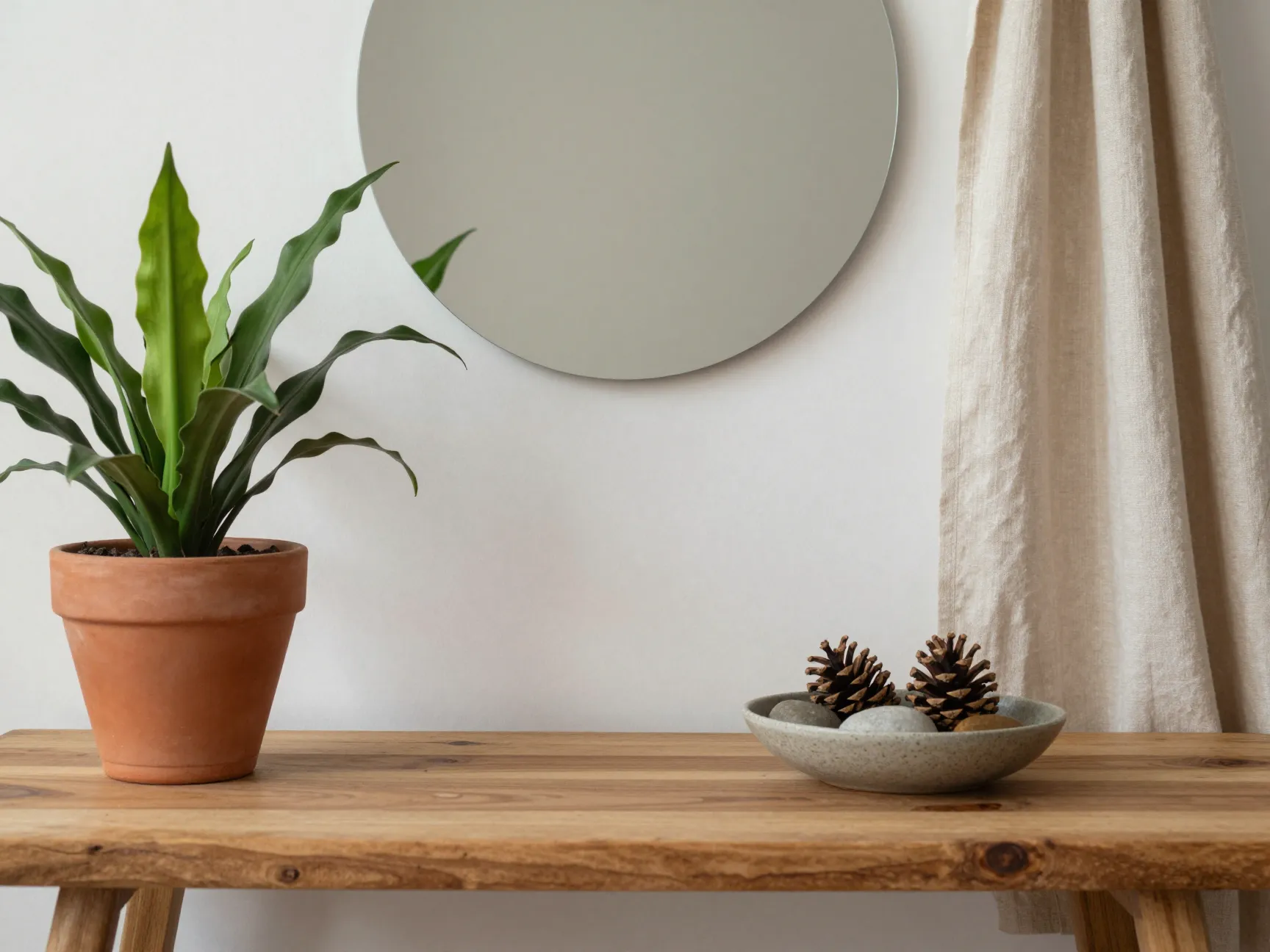
Biophilic design, the practice of connecting interior spaces to nature, has a measurable effect on human stress levels and perceived comfort. A 2015 study published in the Journal of Physiological Anthropology found that interacting with indoor plants reduces both physiological and psychological stress responses.
You do not need a greenhouse to benefit from this principle. A few well-placed natural elements shift the energy of a room significantly.
Natural elements that add cozy warmth:
- Live plants in ceramic or terracotta pots
- A bowl of smooth river stones or pinecones
- Branches or dried botanicals in a tall vase
- Wood elements with visible grain (coffee table, shelving, frames)
- Linen or cotton curtains in natural, undyed tones
Organic shapes matter too. Rooms filled exclusively with right angles and hard edges feel rigid and cold. Introduce curves through rounded sofas, oval coffee tables, arched mirrors, and circular light fixtures. The eye relaxes when it encounters curves, and that physical relaxation translates directly into perceived comfort.
7. Create a Dedicated Nook or Layered Reading Corner
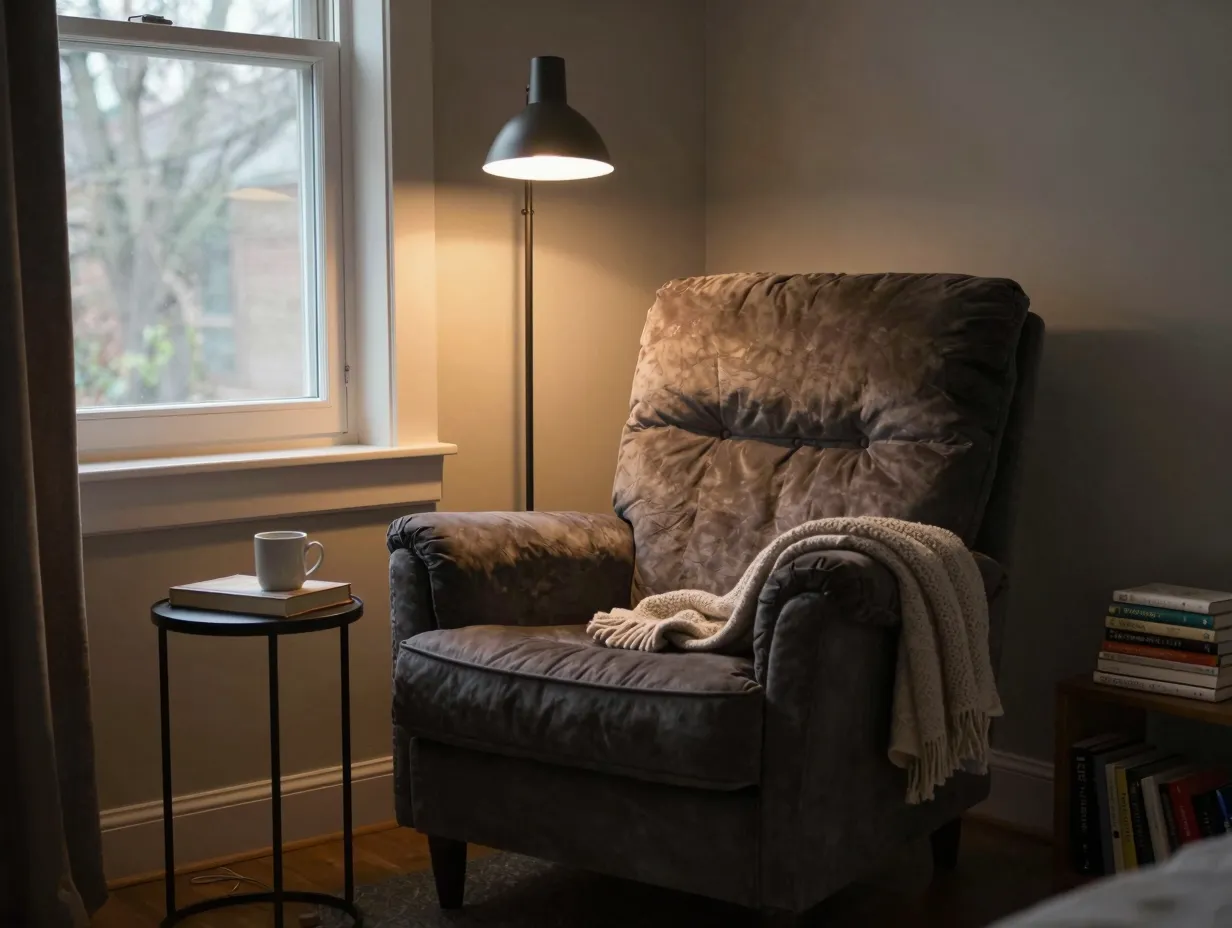
Every truly cozy living room has at least one spot that feels like it was made for one person. A reading corner, a window seat, a single oversized chair with a floor lamp and a side table, these small, defined zones within a larger room create a sense of refuge and personal scale.
Elements of a perfect reading nook:
- An oversized chair or small loveseat with deep cushions
- A floor lamp positioned over the dominant shoulder
- A small side table at arm height
- A throw blanket draped within reach
- A small bookshelf or stack of books nearby
The psychological principle at work here is called “prospect and refuge”, a concept from environmental psychology that describes the human preference for spaces that offer both a view outward (prospect) and a sense of enclosure (refuge). A reading corner positioned near a window, with a high-backed chair and a soft curtain to one side, satisfies both instincts simultaneously.
I built my own reading corner in a formerly dead corner of my living room using a vintage armchair, a secondhand floor lamp, and a small floating shelf. It cost less than two hundred dollars and became the most-used spot in my home within a week.
8. Engage the Senses Beyond Sight
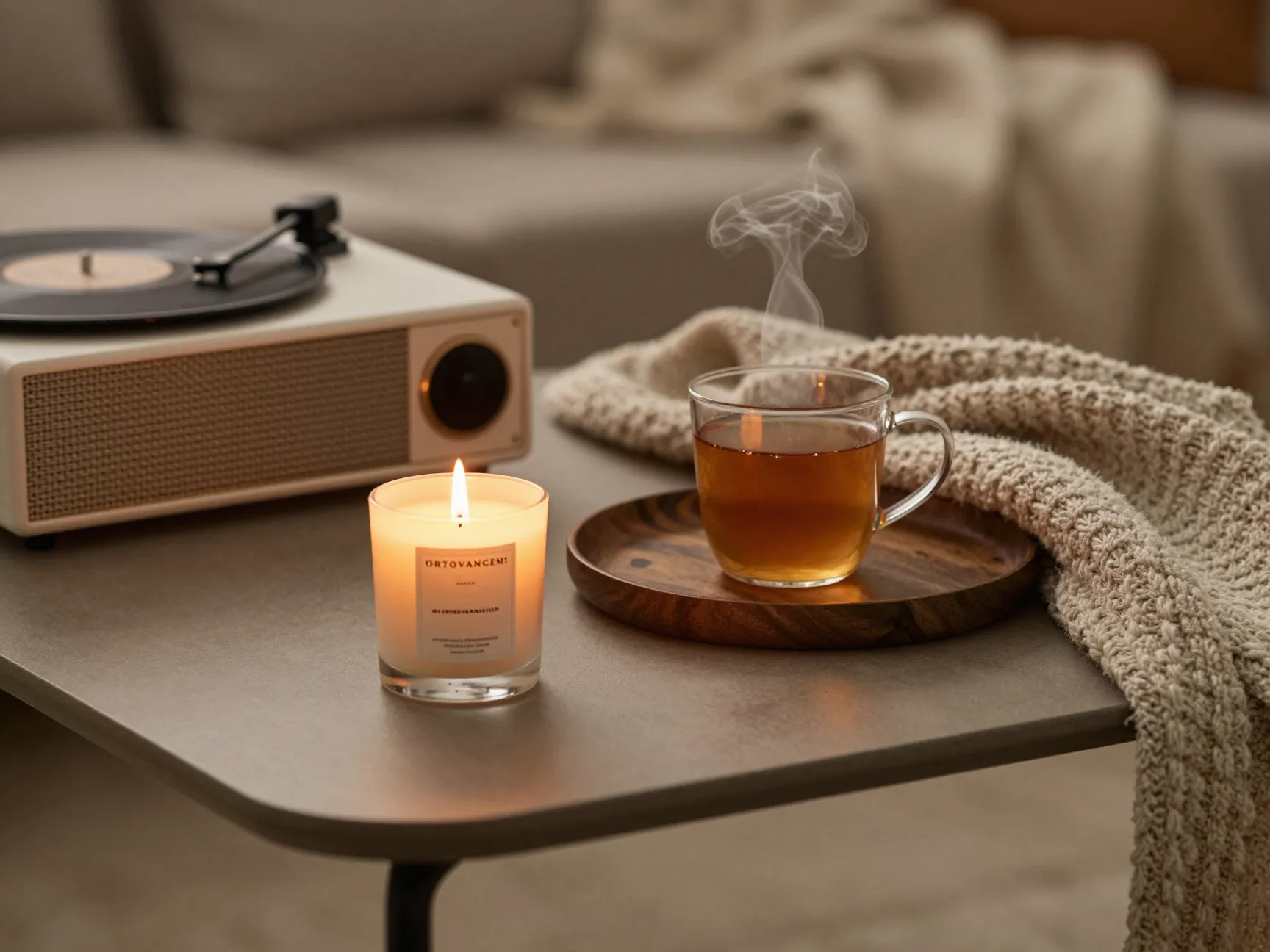
Most interior design advice focuses entirely on the visual. But a room that is only visually appealing stops short of genuine comfort. The ultimate comfort zone engages all five senses.
A sensory design checklist:
- Sight: Warm light, cohesive palette, visual texture variety
- Touch: Soft rugs underfoot, plush cushions, smooth wood surfaces
- Sound: Soft furnishings that absorb echo, a playlist or white noise source, the crackle of a candle or fireplace
- Scent: A consistent, subtle home fragrance (candle, diffuser, or linen spray) that becomes associated with the space
- Taste: A designated spot for a warm drink, a tray on the coffee table set with a kettle, mugs, and a small selection of teas
Scent, in particular, is the most emotionally powerful and most overlooked sense in interior design. The olfactory system is directly connected to the limbic system, the brain’s emotional center. A consistent, pleasant scent in your living room creates an immediate emotional association with comfort and safety every time you enter the room.
Choose one signature scent and use it consistently. Warm, woody, or slightly sweet scents, sandalwood, cedarwood, vanilla, amber, tend to read as cozy across a wide range of preferences.
9. Edit Ruthlessly and Let the Room Breathe
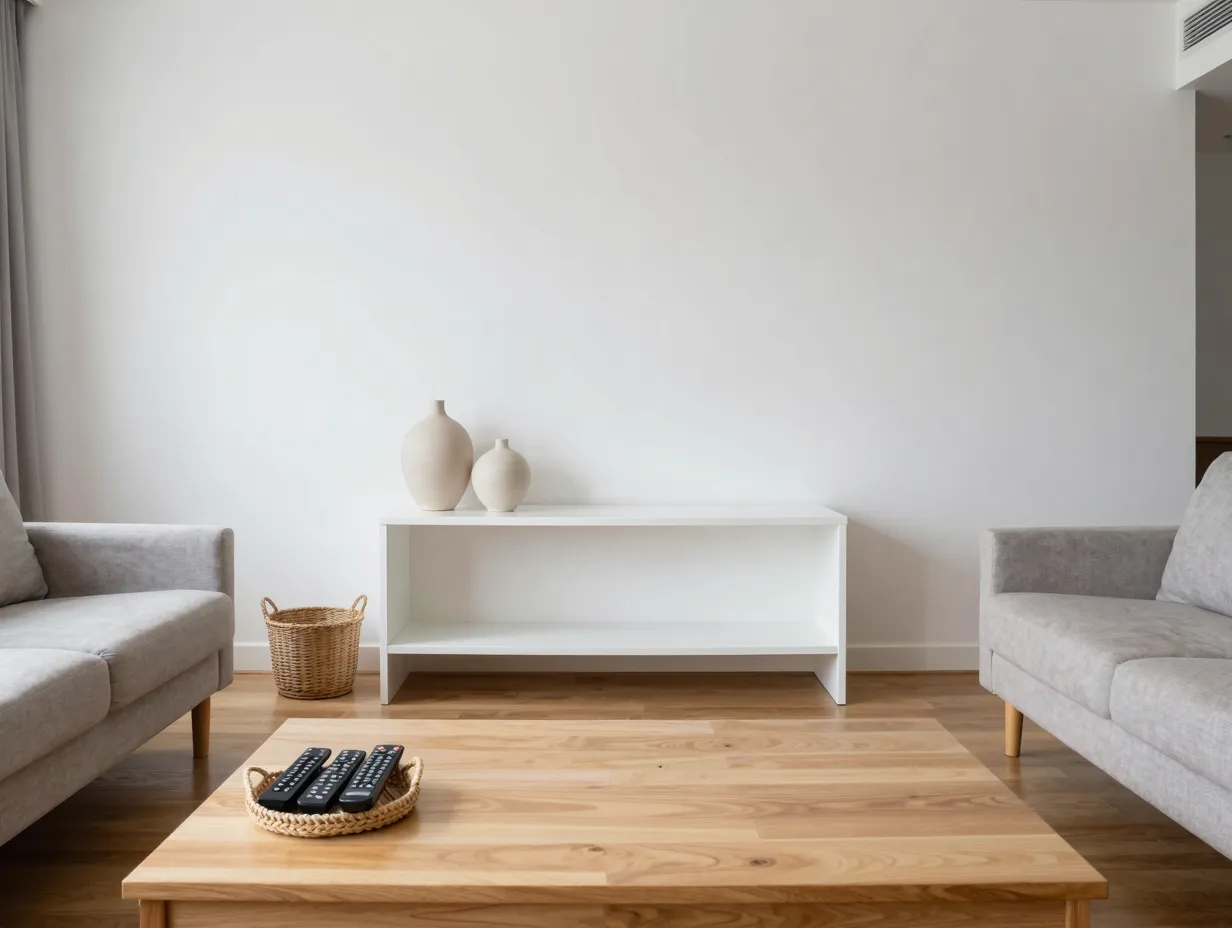
The final secret in these 9 Cozy Living Room Design Secrets for the Ultimate Comfort Zone is the one most people resist: restraint. Clutter is the enemy of comfort. Visual noise raises cortisol levels and prevents the nervous system from fully relaxing.
Cozy does not mean maximalist. It means intentional.
The editing framework:
- Remove anything that does not serve a function or bring genuine joy
- Group decorative objects in odd numbers (3 or 5) for visual balance
- Leave negative space on shelves and surfaces, empty space is not wasted space
- Store remote controls, chargers, and everyday clutter in baskets or boxes that blend with the room’s palette
- Rotate seasonal items rather than displaying everything at once
A room with 30% less stuff in it almost always feels 50% more comfortable. The pieces that remain get to breathe, to be seen, and to do their job of making the space feel considered and calm.
The discipline of editing is ongoing. I do a seasonal pass through my living room every few months, removing anything that has stopped earning its place. The room consistently feels better after each pass, not worse.
How to Apply These 9 Cozy Living Room Design Secrets for the Ultimate Comfort Zone on Any Budget
One of the most persistent myths about interior design is that comfort requires a large budget. In reality, the most impactful changes on this list cost very little.
High-impact, low-cost changes:
- Swap bulbs to warm white (2700K) across all fixtures: under $30
- Add a dimmer switch to your main overhead light: under $25
- Introduce one new texture through a throw blanket or pillow: under $40
- Rearrange existing furniture into a conversation-first layout: free
- Edit and remove clutter: free
Mid-range investments with strong returns:
- A quality area rug in the right size: $150 to $400
- A floor lamp for task and ambient layering: $80 to $200
- A signature scent diffuser or candle set: $30 to $80
Long-term investments worth saving for:
- Repainting walls in a warm, grounded tone: $200 to $600 for a professional
- A quality sofa with deep cushions and durable upholstery: $800 to $2,500
- Linen or velvet curtains that reach floor to ceiling: $150 to $500
Start with the free and low-cost changes. The impact will be immediate and will give you a clearer sense of what the room still needs before you spend more.
Conclusion
Building the ultimate comfort zone in your living room is not a single project, it is a series of deliberate, layered decisions that compound over time. The 9 Cozy Living Room Design Secrets for the Ultimate Comfort Zone covered in this article give you a complete framework: from the structural foundation of light, color, and furniture arrangement, to the sensory details that make a room feel genuinely alive.
Here are your immediate next steps:
- Walk through your living room tonight and identify which of the nine secrets is most obviously missing.
- Start with the free changes: rearrange furniture into a conversation-first layout and remove one bag of clutter.
- Swap your bulbs to warm white this week, it takes ten minutes and changes everything.
- Add one new texture through a throw or pillow before the end of the month.
- Choose one signature scent and introduce it consistently from this point forward.
Comfort is not a luxury. It is a design intention. And with these nine secrets in hand, you now have everything you need to make your living room the room everyone wants to stay in.
References
- American Institute of Architects. (2024). Home Design Trends Survey. AIA.
- Kaplan, R., & Kaplan, S. (1989). The Experience of Nature: A Psychological Perspective. Cambridge University Press.
- Kellert, S. R., Heerwagen, J., & Mador, M. (2008). Biophilic Design: The Theory, Science and Practice of Bringing Buildings to Life. Wiley.
- Lee, M. S., Lee, J., Park, B. J., & Miyazaki, Y. (2015). Interaction with indoor plants may reduce psychological and physiological stress by suppressing autonomic nervous system activity in young adults: A randomized crossover study. Journal of Physiological Anthropology, 34(1), 21.
- Mehta, R., & Zhu, R. J. (2009). Blue or red? Exploring the effect of color on cognitive task performances. Science, 323(5918), 1226-1229.
- Ulrich, R. S. (1984). View through a window may influence recovery from surgery. Science, 224(4647), 420-421.