8 Idea-Packed Tips for Living Room Decorating on Any Budget
A 2023 survey by the American Institute of Architects found that the living room remains the most renovated space in American homes, yet most homeowners dramatically overestimate how much a meaningful refresh actually costs. The truth is, a stunning living room transformation rarely requires a full gut renovation or a designer’s fee. These 8 idea-packed tips for living room decorating on any budget prove that smart decisions, not big spending, drive the most dramatic results.
Disclosure: This post contains affiliate links. As an Amazon Associate, we earn from qualifying purchases, and at no extra cost to you.
Whether you are working with $200 or $2,000, the same core principles apply. I have personally used several of these strategies to turn a drab, poorly lit apartment living room into a space that guests consistently compliment, without replacing a single major piece of furniture. The key is sequencing your decisions correctly and knowing exactly where impact lives.
Key Takeaways
- Start with layout and what you already own before spending a single dollar
- Anchor purchases (sofa, rug, main lighting) deserve the largest share of any budget
- Paint delivers the highest return on investment of any single decorating action
- Layered lighting transforms the mood of a room more than almost any other change
- Thrifted and DIY accessories can match the visual impact of expensive retail pieces
Why These 8 Idea-Packed Tips for Living Room Decorating on Any Budget Work
Before diving into each tip, it helps to understand the underlying logic. Most decorating mistakes happen because people spend money in the wrong order. They buy a new throw pillow before fixing the lighting. They paint the walls before deciding on furniture placement. They purchase art before choosing a color palette.
The tips below follow a deliberate sequence: first, zero-cost moves that maximize what you already have; then, high-impact low-cost purchases; and finally, finishing touches that add personality without breaking the bank. Follow them in order and the cumulative effect is far greater than the sum of its parts.
1. Audit Your Space Before Spending Anything
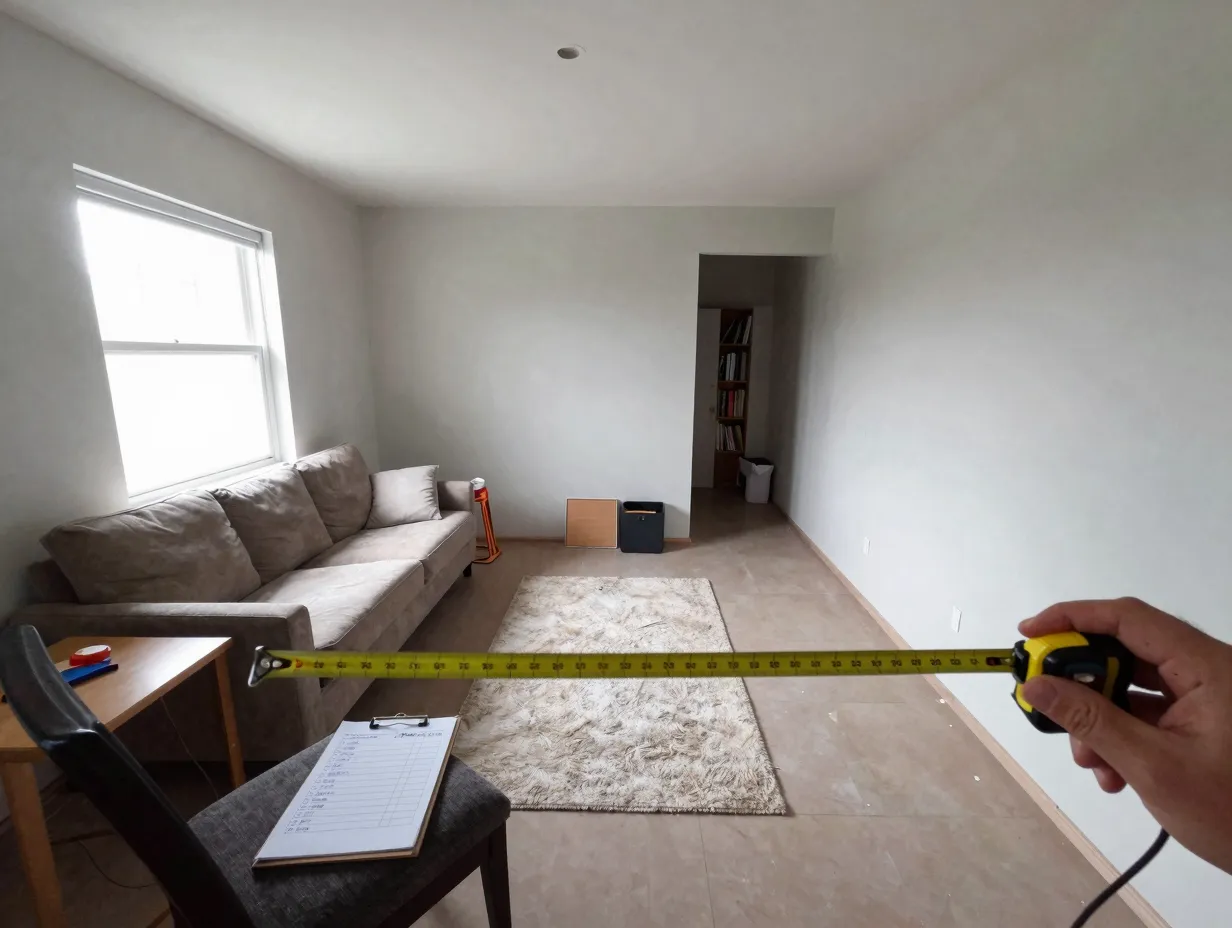
The single most powerful decorating move costs nothing. Walk into your living room with fresh eyes, or better yet, take photographs from each corner and review them on your phone. What you see in a photo is often radically different from what you notice standing in the room.
Measure the room carefully. Note the dimensions of every piece of furniture you currently own. Then ask three honest questions: What stays? What gets refreshed? What should be removed entirely?
Many living rooms are simply overcrowded. Removing two or three pieces often creates more visual impact than adding anything new. A side table that blocks natural light, a bookshelf that interrupts traffic flow, or a rug that is too small for the seating area, these are problems that no amount of new purchases will fix [1][3].
Once you have decided what stays, write a priority list before opening a single shopping app. This audit step alone can save hundreds of dollars by preventing impulse purchases that do not serve the room’s actual needs [5].
Quick audit checklist:
- Measure the room’s length, width, and ceiling height
- Photograph each corner and the center of the room
- List every item currently in the space
- Mark each item as Keep, Refresh, Remove, or Replace
- Identify the room’s natural focal point (fireplace, window, TV wall)
2. Rearrange Before You Redecorate
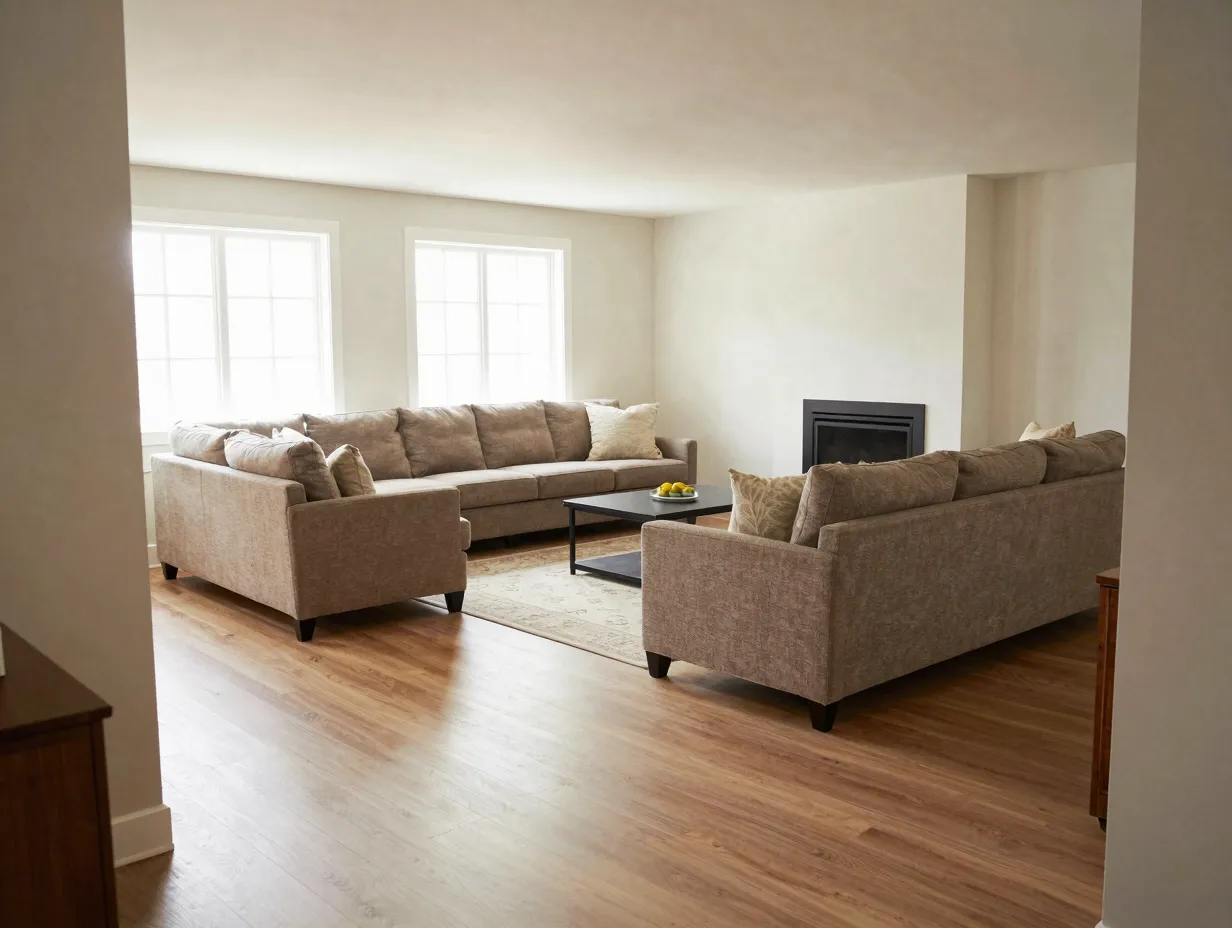
Furniture rearrangement is the most underrated zero-cost decorating tool available. Most people place sofas against walls out of habit, not design logic. Pulling a sofa even 12 inches away from the wall instantly creates a more intentional, layered look [1][3].
Consider your room’s natural anchor, the fireplace, a large window, or the TV wall, and orient the main seating toward it. If you have an L-shaped sofa, experiment with converting it into a U-shape by borrowing a chair from another room. This creates a conversation-friendly layout that feels more curated and complete [6].
I rearranged my own living room three times before landing on a layout that worked. The final version used the exact same furniture as the first attempt. The difference was purely positional, and the room felt twice as large.
“The layout of a room is its skeleton. No amount of decorative flesh will compensate for a broken skeleton.”
Traffic flow matters too. There should be at least 30 to 36 inches of clear walking space between major pieces. If you cannot walk comfortably from the entrance to the seating area, the room will always feel cramped regardless of how it is decorated [3][5].
3. Paint One Wall (or All of Them) With a Warm Neutral
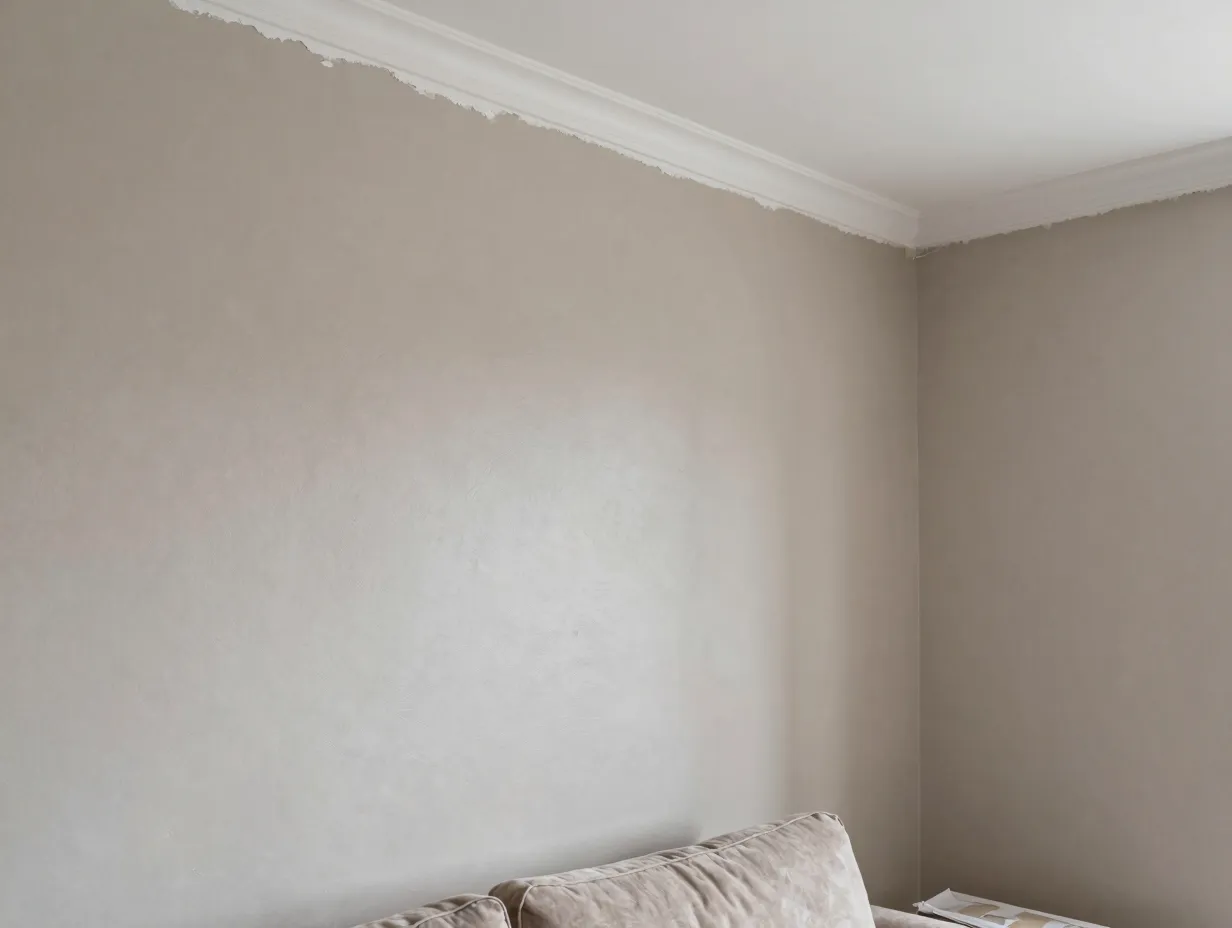
If there is one purchase that delivers the highest return on investment in living room decorating, it is paint. A single gallon typically covers 350 to 400 square feet and costs between $30 and $60 at most hardware stores [4][8].
Current decorating guidance strongly favors soft warm neutrals, light greige, warm beige, or muted sage, over stark white. Stark white can wash out a room under artificial lighting and tends to highlight imperfections in walls and trim. Warm neutrals, by contrast, support almost any furniture color and create a cozy, grounded atmosphere that reads as intentional rather than default [2][8].
Painting tips for best results:
- Choose low-VOC, scrubbable paint for durability and air quality [4][8]
- Spend 1 to 2 hours on prep: clean walls, tape edges, lay drop cloths
- Apply two coats for an even, professional finish
- Test paint samples on the actual wall (not just the chip card) in both daylight and artificial light
- Consider painting the ceiling the same color as the walls to create a cocooning effect in smaller rooms
If a full repaint feels overwhelming, start with a single accent wall behind the main sofa. This creates a focal point and dramatically changes the room’s visual weight without requiring a full weekend of work [2].
4. Layer Your Lighting for Instant Atmosphere
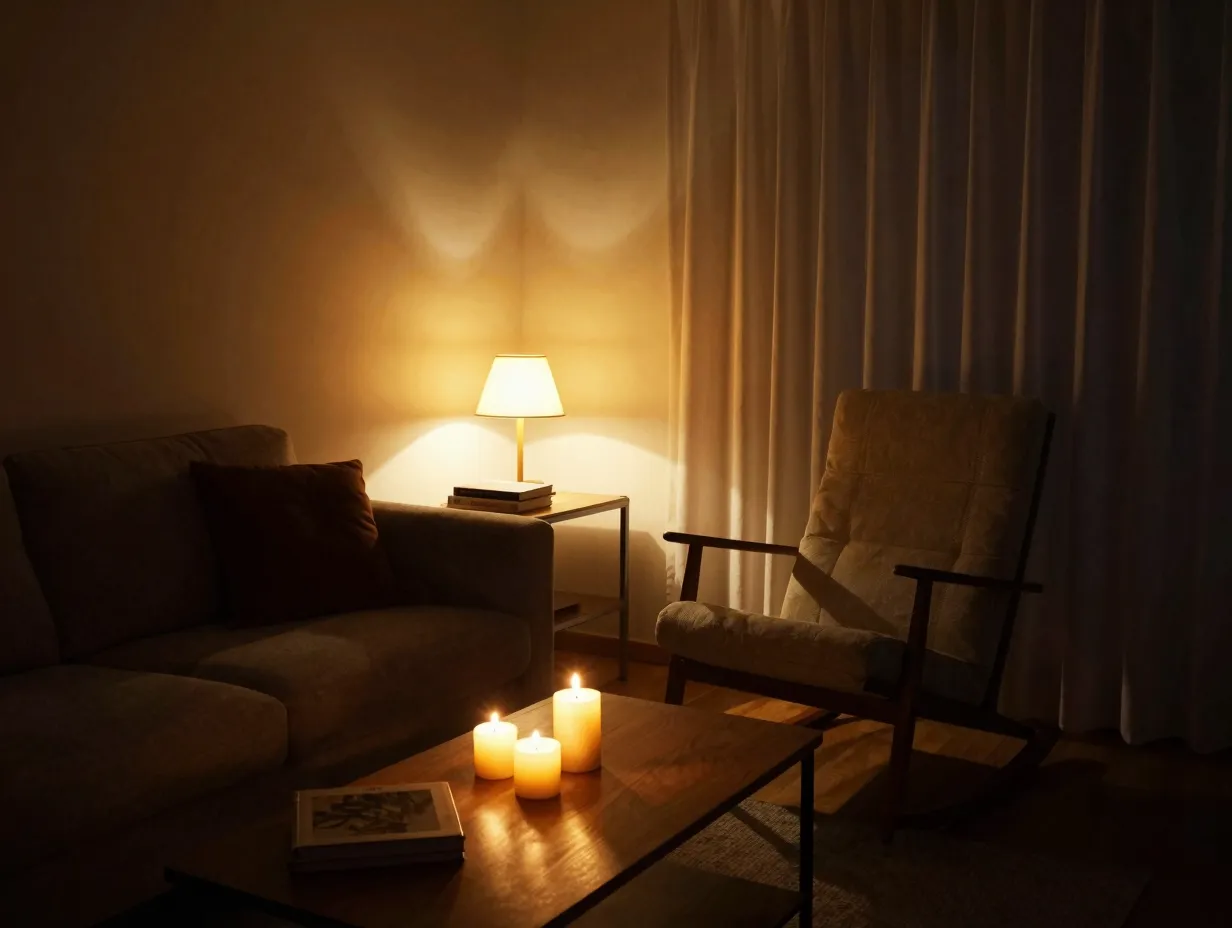
Overhead lighting alone is one of the most common reasons living rooms feel flat, clinical, or uninviting. The fix is not expensive, it is strategic. Layered lighting means combining at least three light sources at different heights: ambient (overhead), task (table or floor lamps), and accent (candles, LED strips, or picture lights) [4][9].
Start by adding a dimmable switch or a smart bulb to your existing overhead fixture. This single change, costing as little as $15, gives you immediate control over the room’s mood. A room at 40% brightness in the evening feels entirely different from the same room at 100% [4].
Next, add a floor lamp in a dark corner. Corners that are lit feel larger. Dark corners make a room feel smaller and less finished. A well-placed arc floor lamp behind a reading chair creates a cozy vignette that looks intentional and designed [9][10].
Lighting layer breakdown:
| Layer | Example | Approximate Cost |
|---|---|---|
| Ambient | Dimmable ceiling fixture | $15 for smart bulb |
| Task | Table lamp or floor lamp | $30 to $80 thrifted or budget retail |
| Accent | LED strip, candles, picture light | $10 to $30 |
The goal is to be able to turn off the overhead light entirely in the evening and rely solely on lamps. When you can do that comfortably, your lighting is working [9].
5. Anchor the Room With One Quality Rug
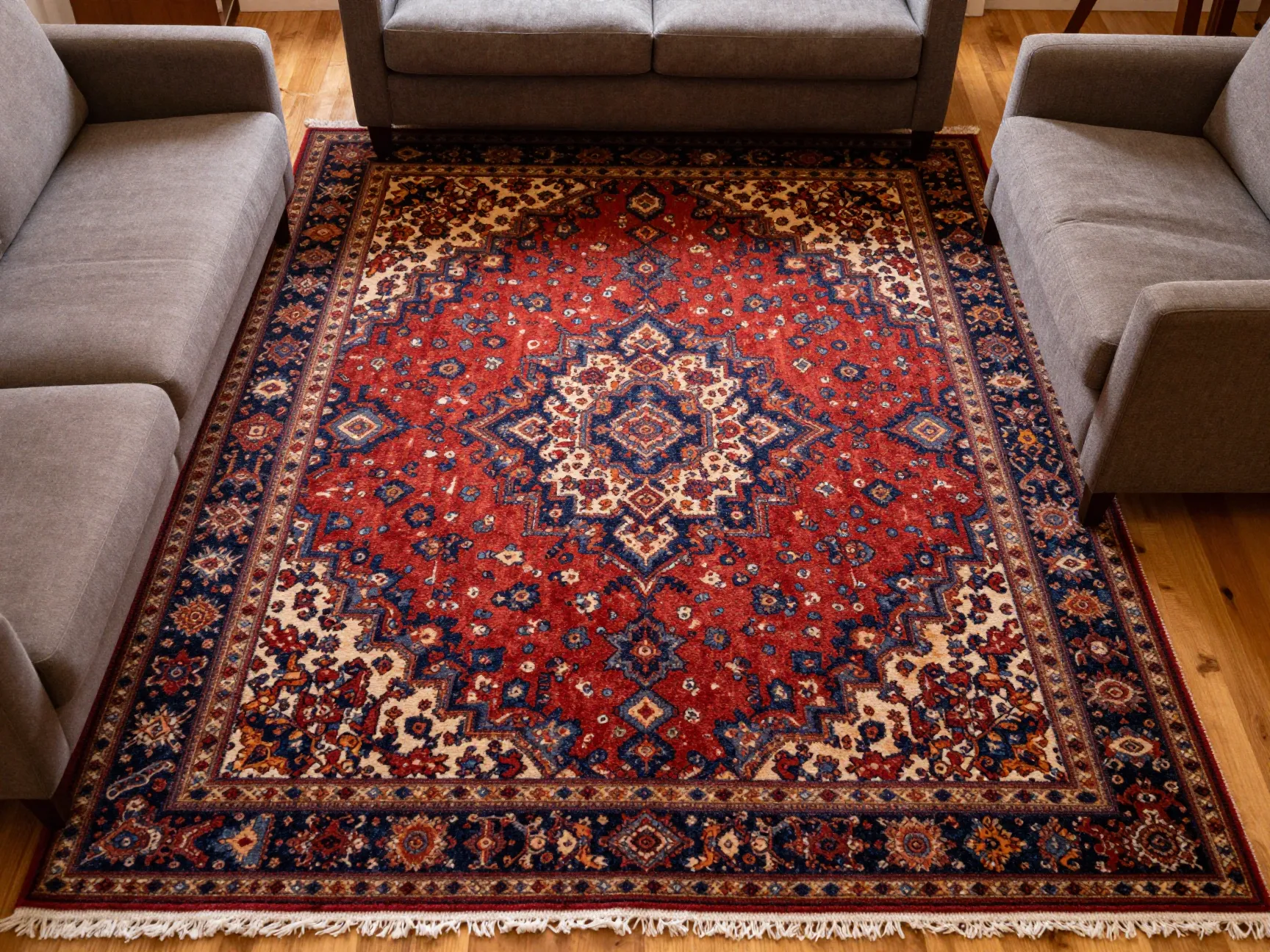
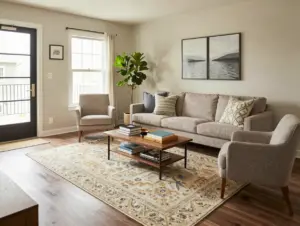
A rug does more work per square foot than almost any other element in a living room. It defines the seating area, adds warmth and texture, reduces echo, and, critically, makes the furniture arrangement feel intentional rather than random [1][5].
The most common rug mistake is buying one that is too small. A rug should be large enough for at least the front legs of every major seating piece to rest on it. In most living rooms, this means an 8×10 or 9×12 rug, not the 5×7 that many people default to because it costs less [7].
If a large new rug is outside the current budget, there are three practical alternatives:
- Layer two smaller rugs, a flat-weave base with a smaller textured rug on top
- Source a large rug from Facebook Marketplace, estate sales, or thrift stores
- Use a natural fiber rug (jute or sisal) as a base layer, which tends to cost significantly less than wool or synthetic pile rugs
When I was furnishing my first apartment, I found a 9×12 Persian-style rug at an estate sale for $40. It became the single most commented-on piece in the room. Quality and cost are not always correlated in the rug market [7].
6. Prioritize Anchor Furniture, Then Accessorize Last

This tip is about sequencing, not spending. The largest share of any decorating budget should go to the pieces that define comfort and scale: the main sofa, the rug (covered above), and the primary seating chairs. These are the items you interact with every day, and they set the proportional logic of the entire room [1][5][7].
Everything else, coffee tables, side tables, throw pillows, art, plants, decorative objects, is lower-risk and can be sourced affordably, upgraded over time, or swapped out seasonally. Spending $800 on a quality sofa and $20 on a thrifted coffee table is a far better investment than spending $400 on each [5].
For rooms with a budget under approximately $1,000 for the full refresh, one 2026 makeover guide recommends concentrating funds on three high-impact items: paint, a dimmable main light fixture, and one hardworking storage piece such as a TV stand or media cabinet [4]. Everything else can follow gradually.
Budget allocation framework:
- 40 to 50% on anchor seating (sofa, primary chairs)
- 15 to 20% on the rug
- 10 to 15% on lighting
- 10% on paint and supplies
- Remaining 10 to 15% on accessories and finishing touches
7. Build a DIY Gallery Wall With Thrifted Frames
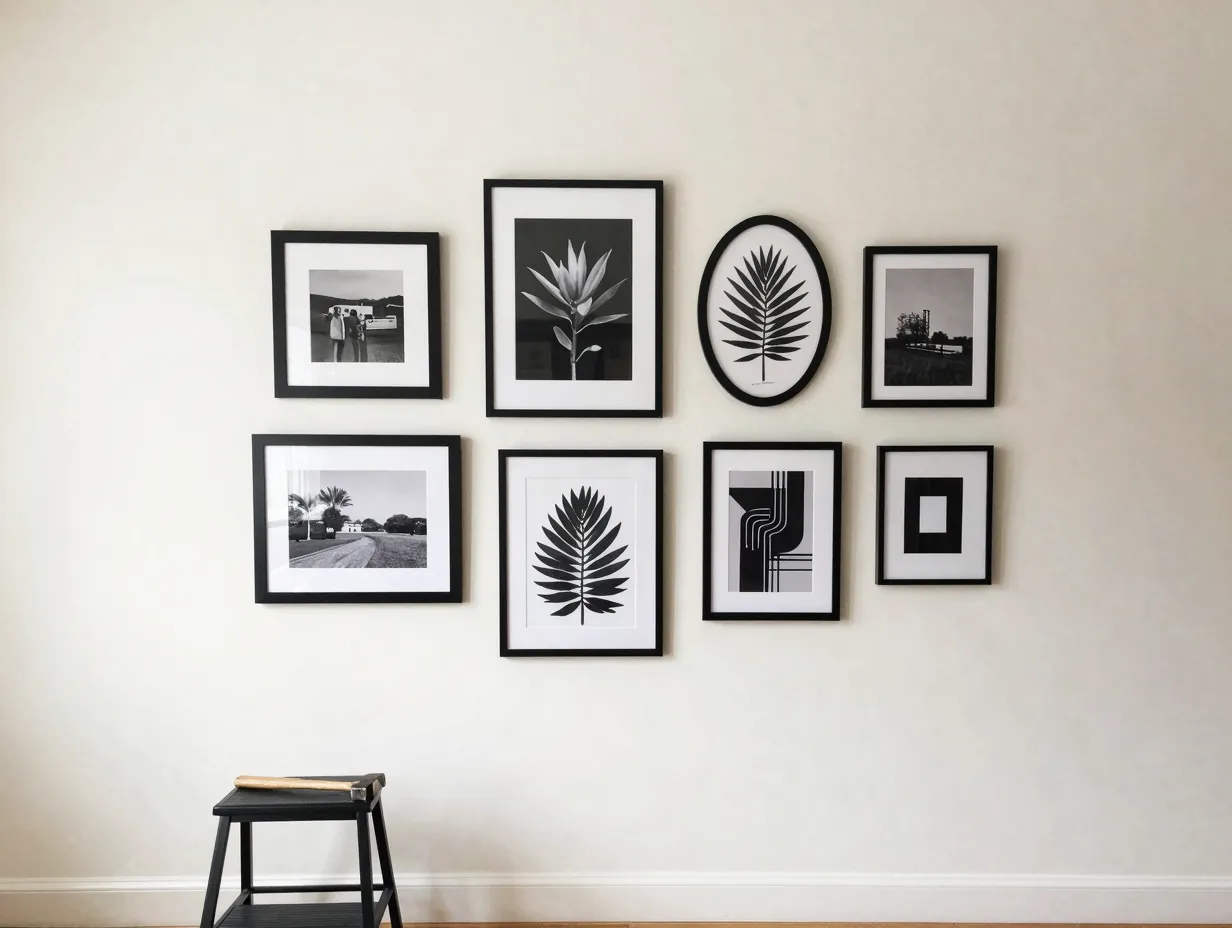
Wall art is one of the most expensive categories in retail home decor, and one of the easiest to replicate affordably with a little creativity. A gallery wall made from thrifted frames, printed photographs, and inexpensive art prints can look every bit as polished as a curated designer installation [2][7].
The key to a cohesive gallery wall is consistency in one element while varying others. For example, use all black frames in different sizes and shapes, but vary the content, a mix of black-and-white photography, botanical prints, and abstract shapes. Or use all white frames but vary the sizes dramatically. Consistency in one variable creates harmony; variation in others creates interest [2][7].
Steps to build a gallery wall on a budget:
- Collect frames from thrift stores, dollar stores, or your own home, aim for 5 to 9 pieces
- Paint all frames the same color if they do not match (spray paint costs about $6 a can)
- Print art from free sources such as Unsplash, the Smithsonian Open Access collection, or NASA’s image library
- Lay the arrangement on the floor before hammering any nails
- Use paper templates taped to the wall to test placement before committing
This entire project can be completed for under $30 and creates a focal point that anchors an entire wall [2][8].
8. Add Texture and Life With Plants and Layered Textiles
The final tip in these 8 idea-packed tips for living room decorating on any budget addresses the sensory layer, the elements that make a room feel lived-in, warm, and genuinely inviting rather than staged.
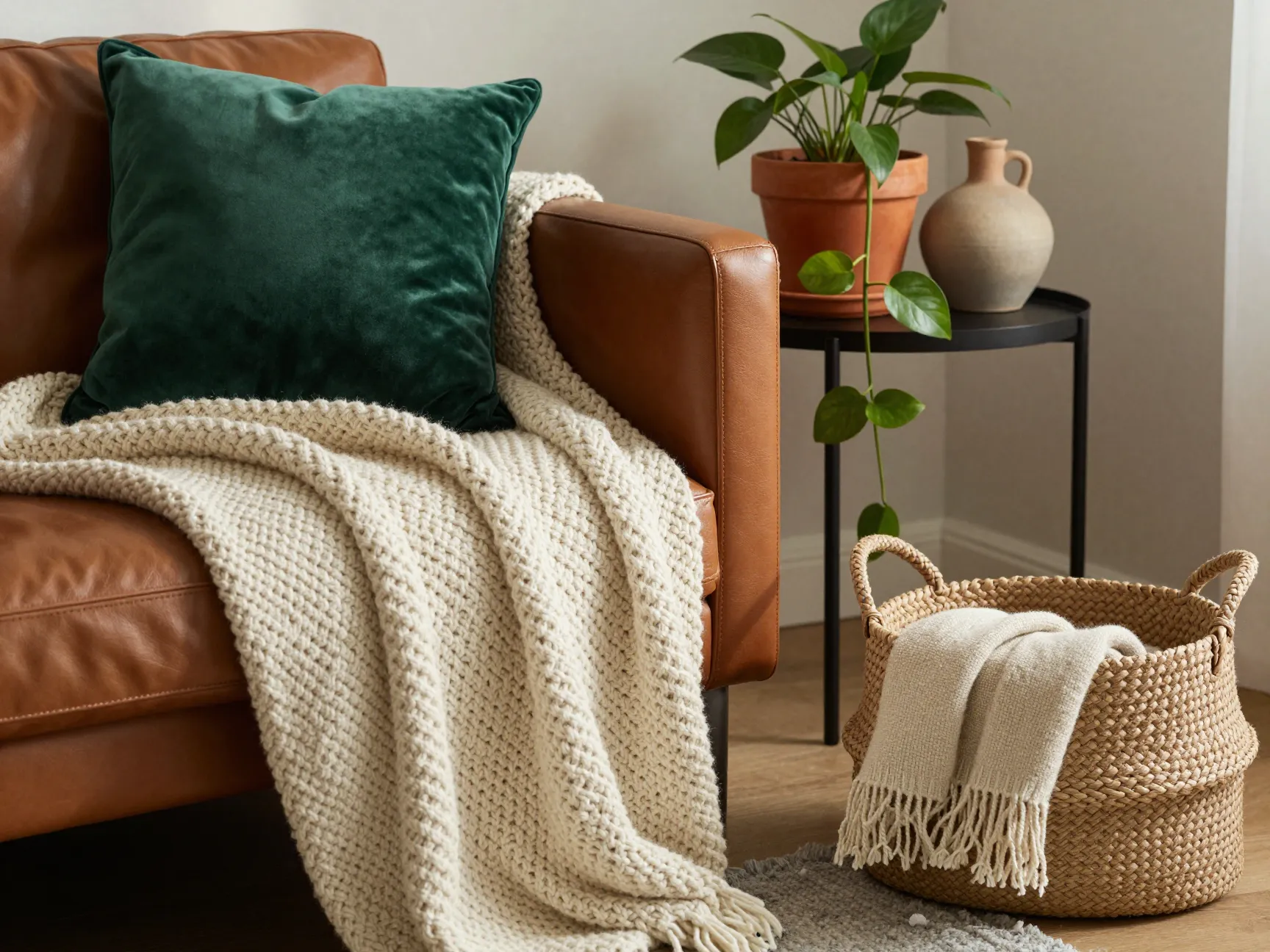
Texture comes from layering materials that contrast with each other: a linen throw on a leather sofa, a jute rug under a velvet cushion, a ceramic vase next to a woven basket. These combinations create visual and tactile richness that photographs cannot fully capture but that visitors feel immediately when they walk into a room [6][9][10].
Plants are one of the most cost-effective finishing touches available. A single pothos or snake plant from a garden center costs $8 to $15 and immediately adds life, color, and a sense of organic warmth that no artificial decor can replicate. Grouping three plants of different heights in a corner creates a lush, designed effect that looks far more expensive than it is [6][10].
High-impact, low-cost texture additions:
- Chunky knit or woven throw blanket draped over the sofa arm: $15 to $30
- Two or three mismatched throw pillows in complementary colors: $10 to $20 each
- A ceramic or terracotta vase (thrifted or budget retail): $5 to $15
- A woven or rattan basket for storage and visual texture: $12 to $25
- One or two potted plants at varying heights: $8 to $15 each
The goal is not to fill every surface but to create deliberate moments of texture and life at eye level, seated level, and floor level simultaneously [9][10].
Putting It All Together: A Room-by-Room Budget Example
To make these tips concrete, here is how they might apply to a typical 12×15 foot living room with a $500 total budget:
| Action | Tip Number | Estimated Cost |
|---|---|---|
| Rearrange existing furniture | 1 and 2 | $0 |
| Paint walls in warm greige (1 gallon) | 3 | $45 |
| Add smart dimmer bulb to overhead light | 4 | $15 |
| Thrift a 9×12 area rug | 5 | $40 to $80 |
| Reupholster or slipcover existing sofa | 6 | $30 to $60 |
| Build a gallery wall with thrifted frames | 7 | $25 to $30 |
| Add plants and layered textiles | 8 | $60 to $100 |
| Total | $215 to $330 |
This leaves $170 to $285 in reserve for a floor lamp or a storage piece, the two items most likely to make the next biggest impact [4][9].
Conclusion
The 8 idea-packed tips for living room decorating on any budget outlined here share a common thread: they prioritize decisions over dollars. A well-sequenced decorating approach, starting with layout, moving through paint and lighting, anchoring with quality where it matters most, and finishing with texture and life, produces results that consistently outperform random spending at any price point.
Actionable next steps to take this week:
- Photograph your living room from all four corners today and review the images critically
- Complete the audit checklist from Tip 1 before purchasing anything
- Rearrange the furniture at least once before committing to any layout
- Buy one paint sample in a warm neutral and test it on the wall in both daylight and evening light
- Set a written budget allocation using the framework from Tip 6 before opening any shopping app
The most beautifully decorated living rooms I have ever visited were not the most expensively furnished. They were the most thoughtfully arranged. Start there, and the rest follows naturally.
References
[1] How To Decorate A Living Room On A Budget – https://www.willisfurniture.com/how-to-decorate-a-living-room-on-a-budget/
[2] Diy Living Room Decorating On A Budget – https://renovatedfaith.com/diy-living-room-decorating-on-a-budget/
[3] 2026 Budget Friendly Living Room Decor Ideas – https://resident.com/resource-guide/2026/01/19/2026-budget-friendly-living-room-decor-ideas
[4] Living Room Makeover – https://www.povison.com/blog/decoration-ideas/living-room-makeover.html
[5] Living Room Makeover On A Budget – https://thesofacovercrafter.com/blogs/sofa-cover-ideas/living-room-makeover-on-a-budget
[6] 14 Living Room Decor Ideas 2026 – https://luxuryhomedecorstyle.com/14-living-room-decor-ideas-2026/
[7] Budget Friendly Living Room Decor Ideas – https://www.designhill.com/design-blog/budget-friendly-living-room-decor-ideas/
[8] Affordable Living Room Upgrades Diy Tips 2026 – https://www.fixatedonhome.com/living-room-ideas/affordable-living-room-upgrades-diy-tips-2026
[9] 2026 Living Room Trends On A Budget Blog – https://www.wgrfurniture.com/2026-living-room-trends-on-a-budget-blog
[10] New Year Living Room Refresh 2026 – https://livingroomonline.co.uk/articles/new-year-living-room-refresh-2026