9 Small One Bedroom Apartment Ideas For Decor That Doesn’t Crowd
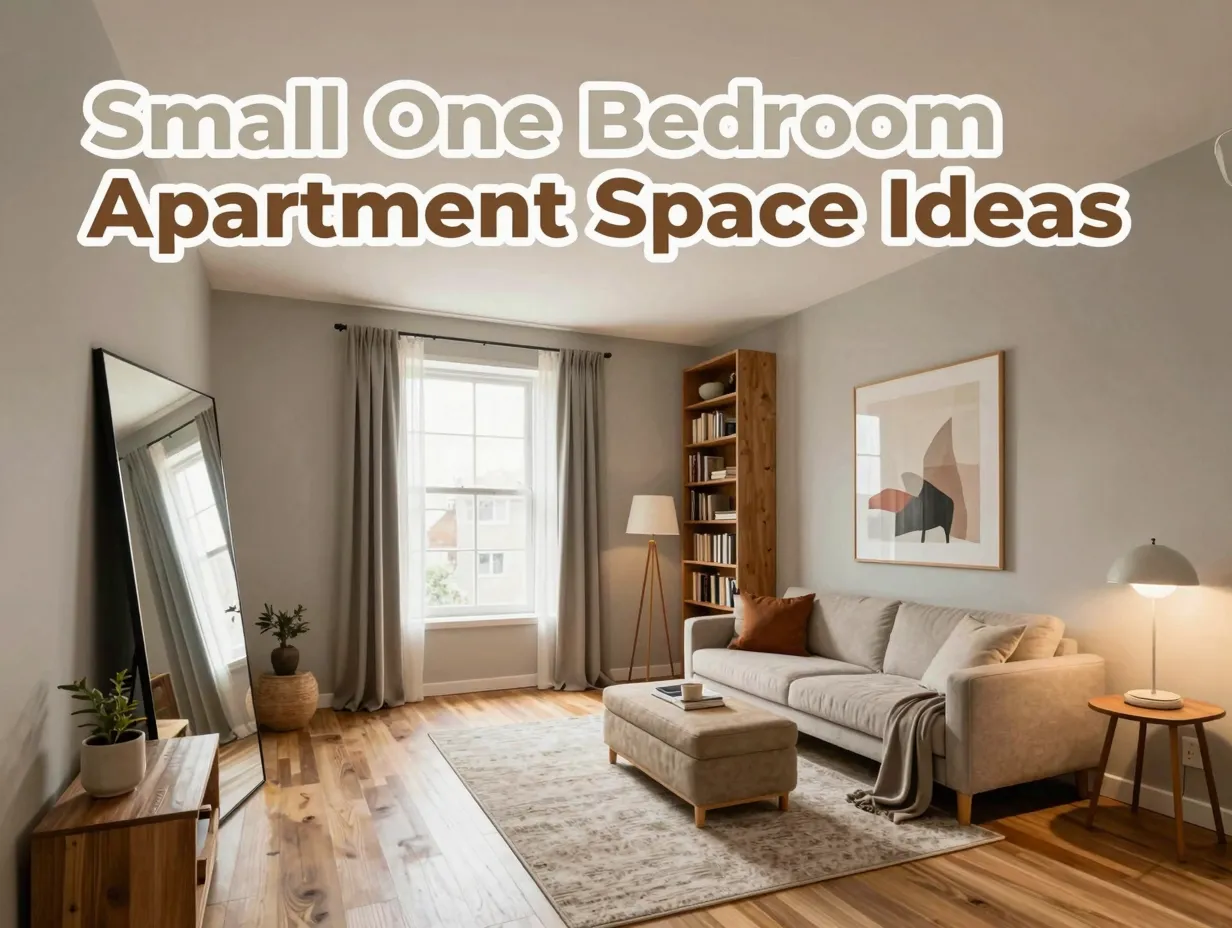
The average one-bedroom apartment in a major U.S. city clocks in at just 750 square feet, yet interior designers consistently produce spaces in those same walls that feel twice as large. The difference is never money. It is always strategy. These 9 small one bedroom apartment ideas for decor that doesn’t crowd are built on that exact principle: every choice either opens the room or earns its place.
Disclosure: This post contains affiliate links. As an Amazon Associate, we earn from qualifying purchases, and at no extra cost to you.
I have spent years renting compact apartments, making every rookie mistake along the way, cramming in too many accent chairs, buying rugs that were laughably small, hanging curtains at window height instead of ceiling height. Each of those errors shrank the room. When I finally started treating small-space decorating as a discipline rather than a shopping exercise, everything changed. This guide pulls together the best of what I have learned, combined with current expert guidance updated through 2026.
Key Takeaways
- Edit ruthlessly before buying anything new; fewer, well-scaled pieces always outperform many small ones
- Multi-functional furniture, storage beds, extendable tables, storage ottomans, is the single highest-impact investment in a small one-bedroom
- A large mirror (at least 80×120 cm) placed opposite the main window visually doubles the room’s depth
- Warm 2700K lighting from at least three sources at different heights replaces decorative clutter with atmosphere
- Vertical thinking, tall bookshelves, floor-to-ceiling curtains, wall-mounted fixtures, adds perceived height without using floor space
Why Most Small Apartment Decor Advice Gets It Wrong
Most decorating guides for compact spaces focus on what to buy. The smarter starting point is what to remove. Small-space experts warn that filling a room with many tiny pieces, a cluster of small side tables, a gallery of miniature frames, a row of short bookshelves, creates visual noise that makes the space feel chaotic and cramped [2]. The room does not feel small because it lacks decor. It feels small because the decor competes with itself.
The framework behind these 9 small one bedroom apartment ideas for decor that doesn’t crowd follows a simple rule: every item must either expand perceived space, serve a functional purpose, or do both simultaneously. If it does neither, it does not belong in the room.
A January 2026 small-apartment playbook distilled this into seven core rules, the most important being “edit before buying anything” [6]. That rule comes first for a reason.
The 9 Ideas: A Complete Breakdown
1. Invest in One Large Mirror and Place It Strategically
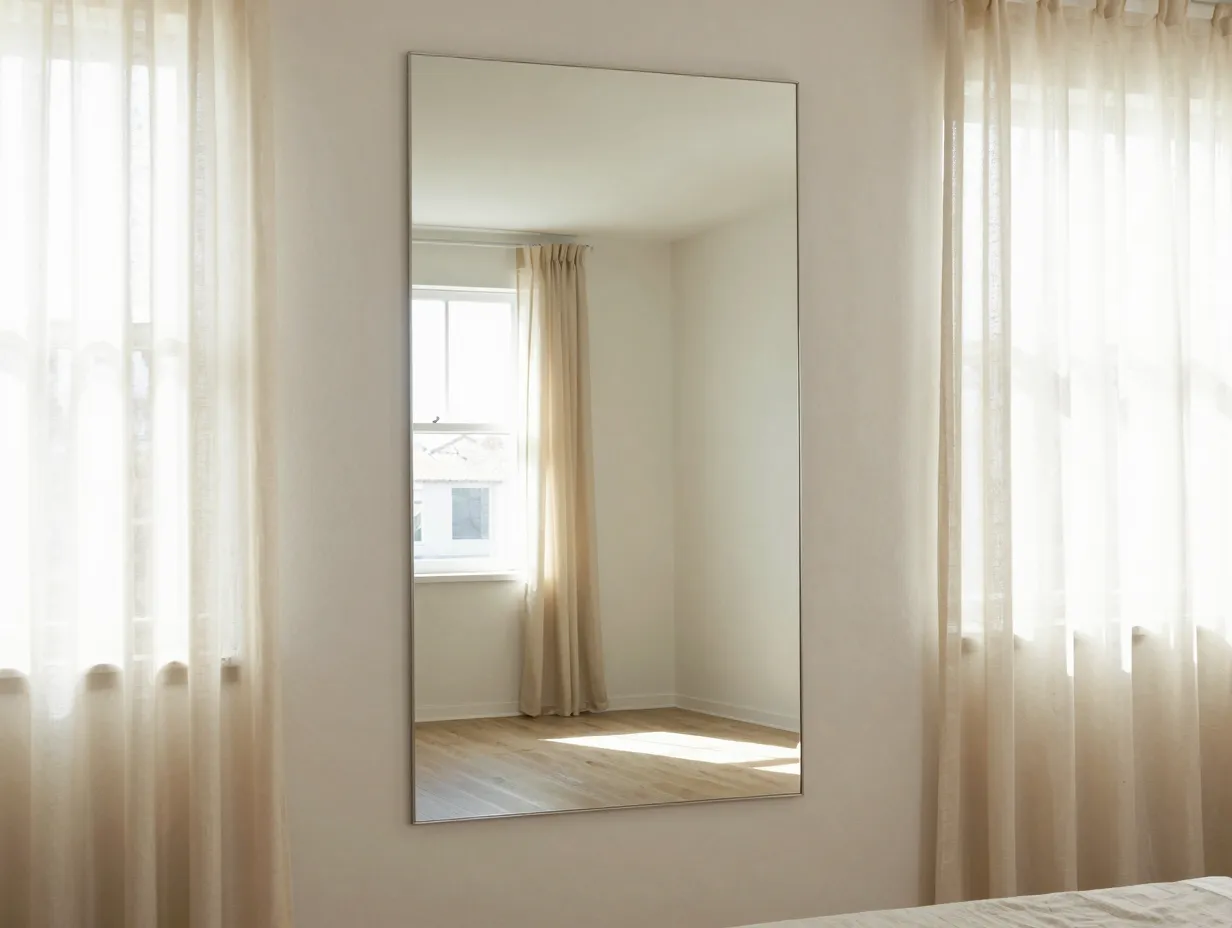
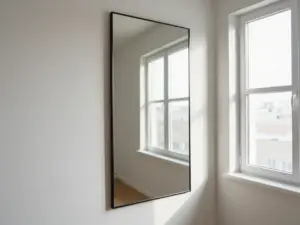
A single large mirror, minimum 80×120 cm, mounted on the wall directly opposite your main window is the most cost-effective space-expanding move available to any small apartment dweller [6]. The mirror does two things at once: it bounces natural light deeper into the room, and it creates the visual illusion of a second room beyond the wall.
Some designers take this further by framing the mirror with drapery panels on either side, making it read like an additional window rather than a reflective surface [1][8]. This is especially effective in bedrooms with only one real window.
Key placement rule: The mirror should face the window, not sit beside it. A mirror beside a window reflects the wall. A mirror opposite the window reflects the light.
2. Choose Multi-Functional Furniture Over Single-Purpose Pieces
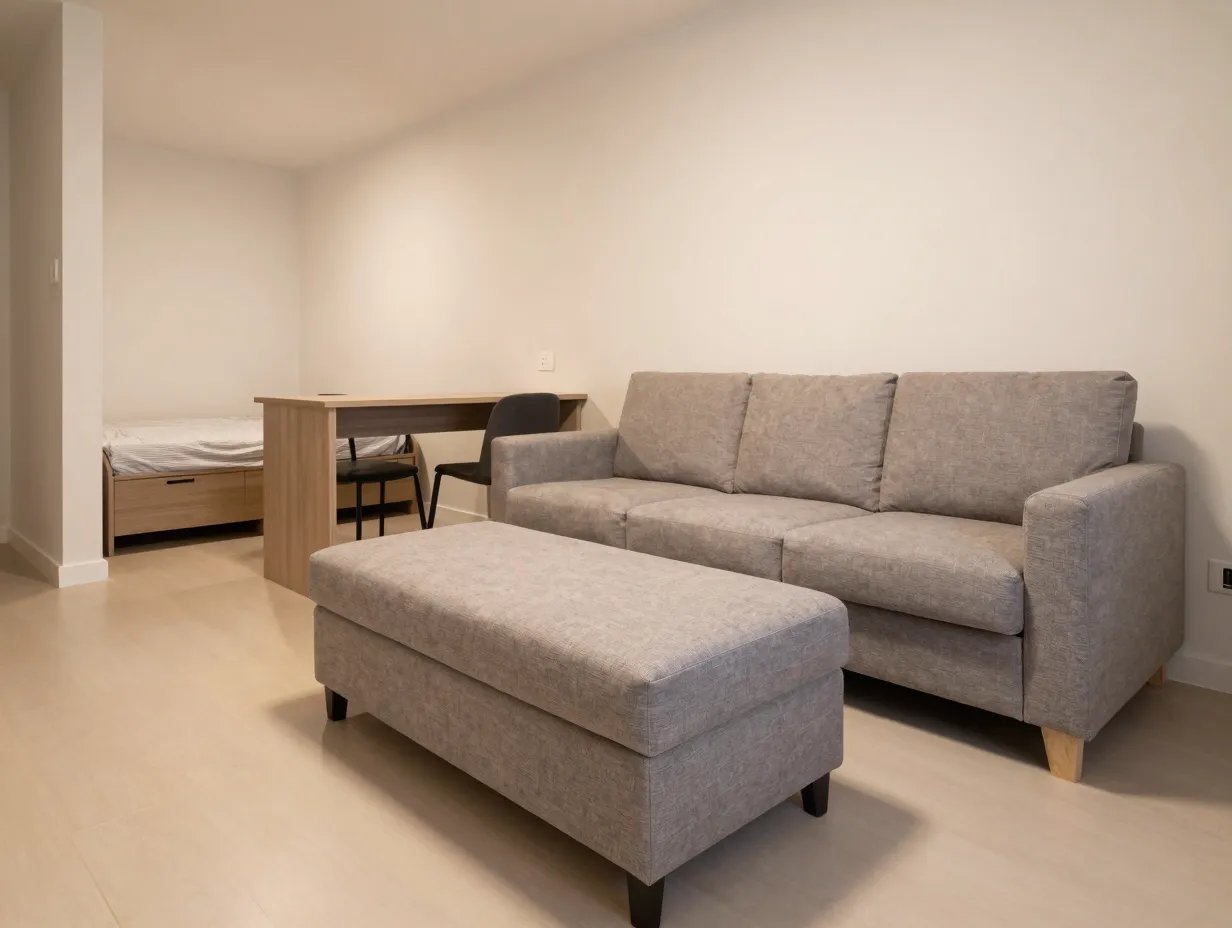
Multi-functional furniture is not a compromise, it is, as recent video guides put it, “a game changer” for compact living [4][9]. In a small one-bedroom, every piece of furniture should justify its floor footprint by serving at least two roles.
The highest-impact swaps include:
- A storage ottoman in place of a coffee table (seating, storage, and surface in one)
- A storage bed with drawers or a lift-up base (eliminating the need for a separate dresser)
- An extendable dining table that seats two daily but expands for guests
- A desk-vanity hybrid that functions as both a workspace and a dressing table
Small-space experts recommend keeping a restrained approach: one substantial sofa plus a storage ottoman, rather than a sofa plus a coffee table plus two side tables [2][5]. The floor space you recover is immediately noticeable.
3. Use Rugs to Define Zones Without Building Walls
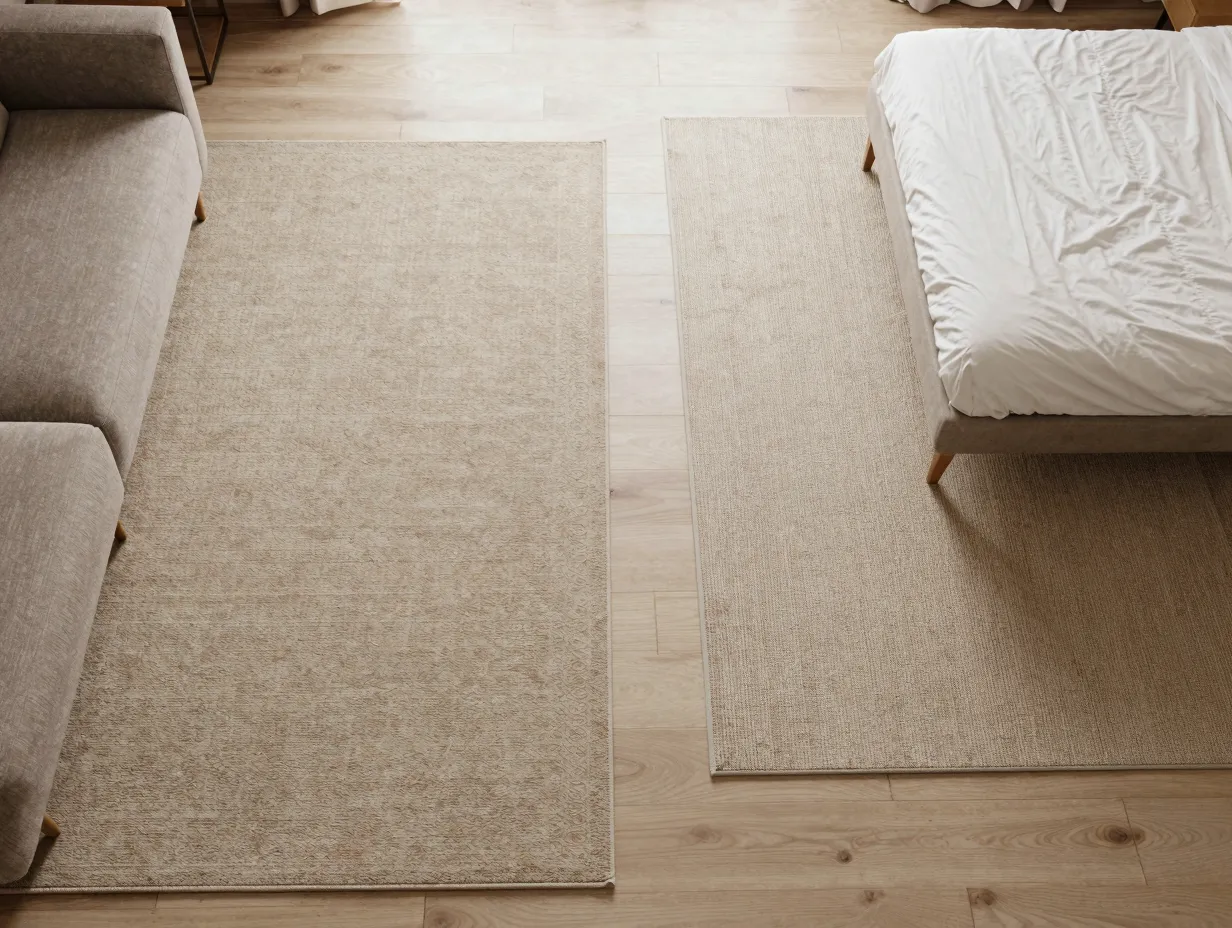
One of the most underused tools in small apartment decorating is the area rug, and the most common mistake is buying one that is too small. A correctly sized rug should have the front legs of the sofa resting on it, extending forward to the coffee table or ottoman [6]. A rug that floats in the middle of the room with no furniture touching it does the opposite of what you intend: it makes the room feel smaller and more fragmented.
Beyond sizing, rugs serve a structural purpose in open-plan one-bedrooms. Lowes’ guidance on small apartment decor specifically highlights “zoning without walls”, using rugs alongside curtains, bookshelves, or room dividers to separate living, sleeping, and dining areas while keeping floor space open [10]. A rug in the living area and a different (but complementary) texture near the bed creates two distinct zones without a single wall being added.
Palette tip: Stick to warm neutrals or low-contrast patterns. A high-contrast geometric rug in a small room draws the eye downward and fragments the floor plane visually.
4. Layer Lighting From at Least Three Heights
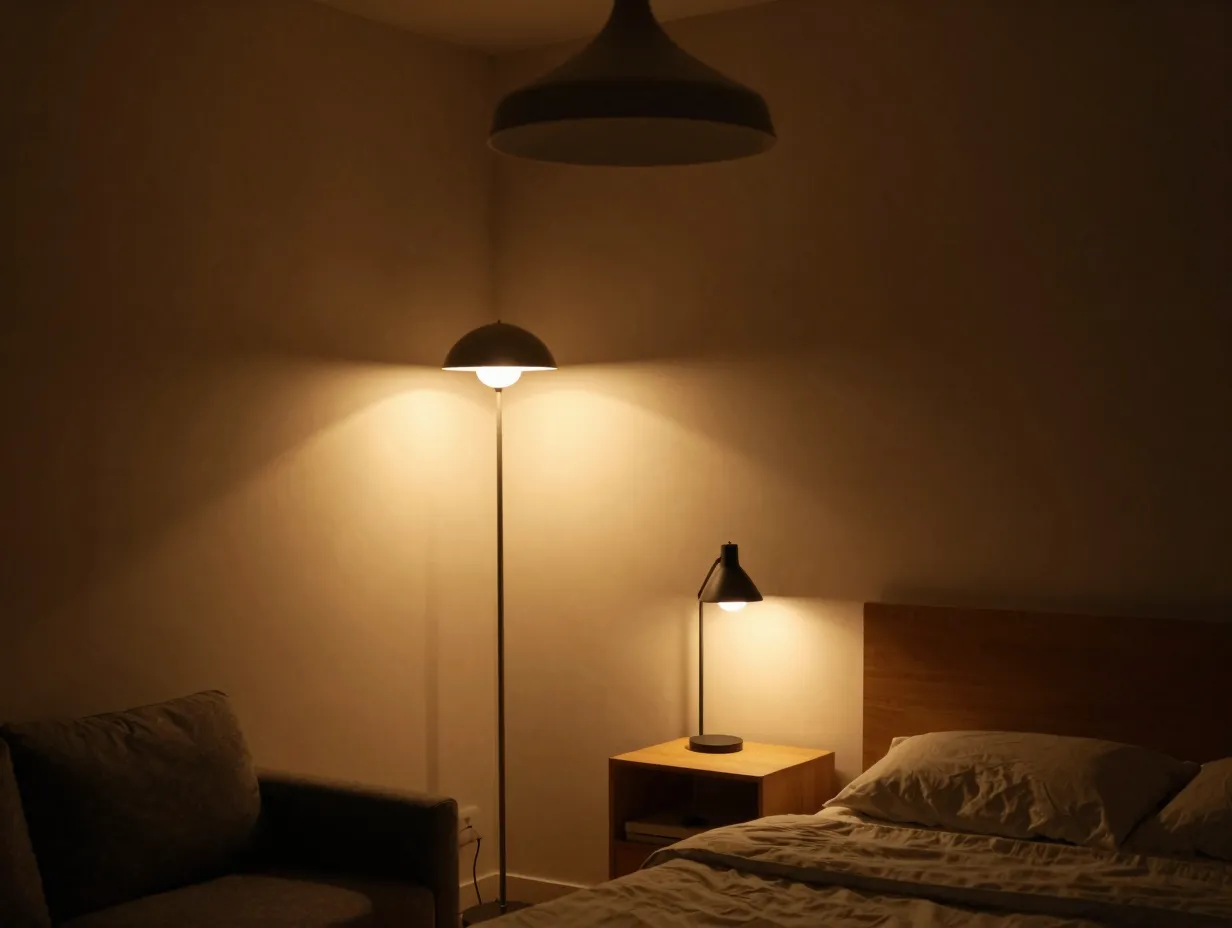
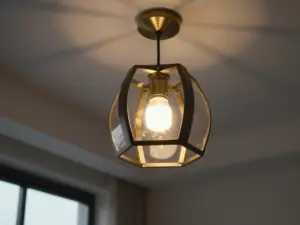
Overhead lighting alone flattens a room. It removes shadows, eliminates depth, and makes a small space feel like a storage unit rather than a home. The fix is layered lighting: a combination of overhead, floor, table, and task lights that create warmth and dimension [10].
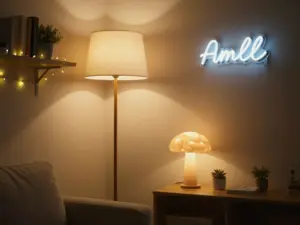
Designers and trend commentators for 2026 quiet-luxury interiors specifically advise swapping cool-white bulbs for warm 2700K bulbs and placing lamps at three heights, waist level, shoulder level, and higher [6][7]. This does something counterintuitive: it reduces the need for decorative accessories because light and texture become the primary design elements.
A practical three-source setup for a small one-bedroom:
- One overhead fixture (pendant or flush mount) on a dimmer
- One floor lamp in a corner of the living area
- One or two table lamps or wall-mounted sconces at bedside
Swing-arm wall sconces at the bedside are particularly valuable because they free up nightstand surface space entirely [3]. In a small bedroom, that cleared surface makes a measurable visual difference.
5. Hang Curtains High and Wide
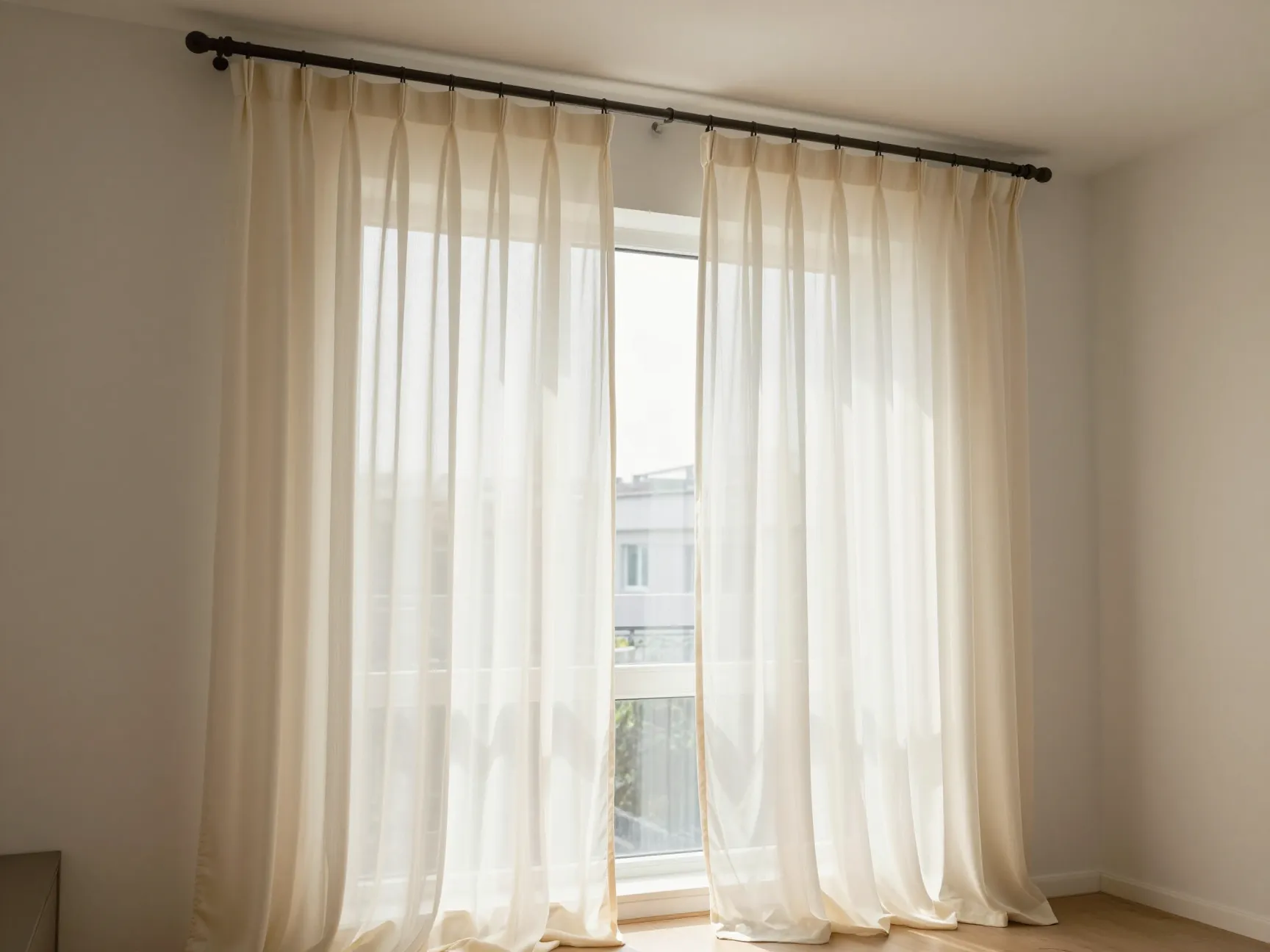
Curtain placement is one of the most powerful, and most frequently botched, visual tricks in small-space decorating. Hanging curtains at window height makes the window look small and the ceiling look low. Mounting the rod as close to the ceiling as possible and extending it 15 to 20 cm beyond the window frame on each side does the opposite: it makes the window appear larger, the ceiling appear higher, and the room appear taller [1][3].
Floor-to-ceiling drapes in soothing, light-reflective hues are a consistent feature in real small-bedroom case studies [3]. Sheer fabrics in ivory or cream are particularly effective because they let light pass through while reducing visual bulk compared with heavy drapes [5].
The combined effect: tall curtains plus a large opposite mirror creates a room that reads as both wider and taller than it actually is, without moving a single wall.
6. Think Vertically Above 170 cm
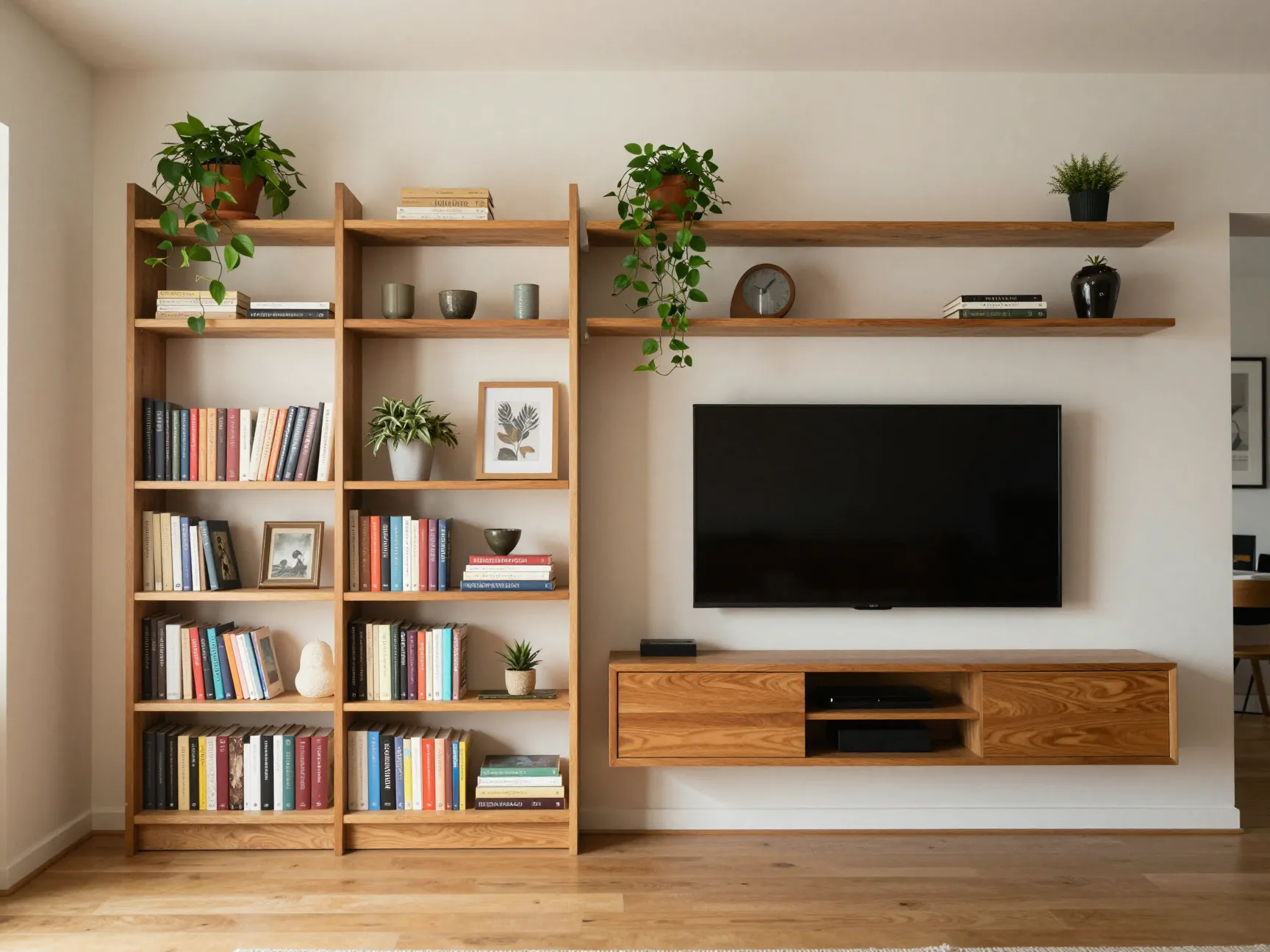
Floor space in a small apartment is finite. Vertical space above eye level is almost always wasted. Thinking vertically means treating the wall above 170 cm as prime real estate for storage, display, and visual interest [6].
Practical applications include:
- Tall bookshelves that run floor to ceiling, drawing the eye upward and providing substantial storage without expanding the room’s footprint
- Wall-mounted TV consoles that free the floor beneath the television entirely [1]
- Floating shelves positioned high on the wall for books, plants, or objects
- Overhead cabinet storage in the kitchen, taken all the way to the ceiling
Interior experts note that tall bookshelves and floor-to-ceiling curtains work together to exaggerate ceiling height in a way that no amount of horizontal furniture arrangement can replicate [1][2]. The eye follows vertical lines upward, and the brain interprets that movement as spaciousness.
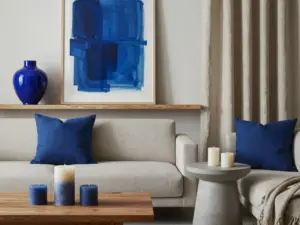
7. Commit to a Warm Neutral Palette With a Four-Color Limit
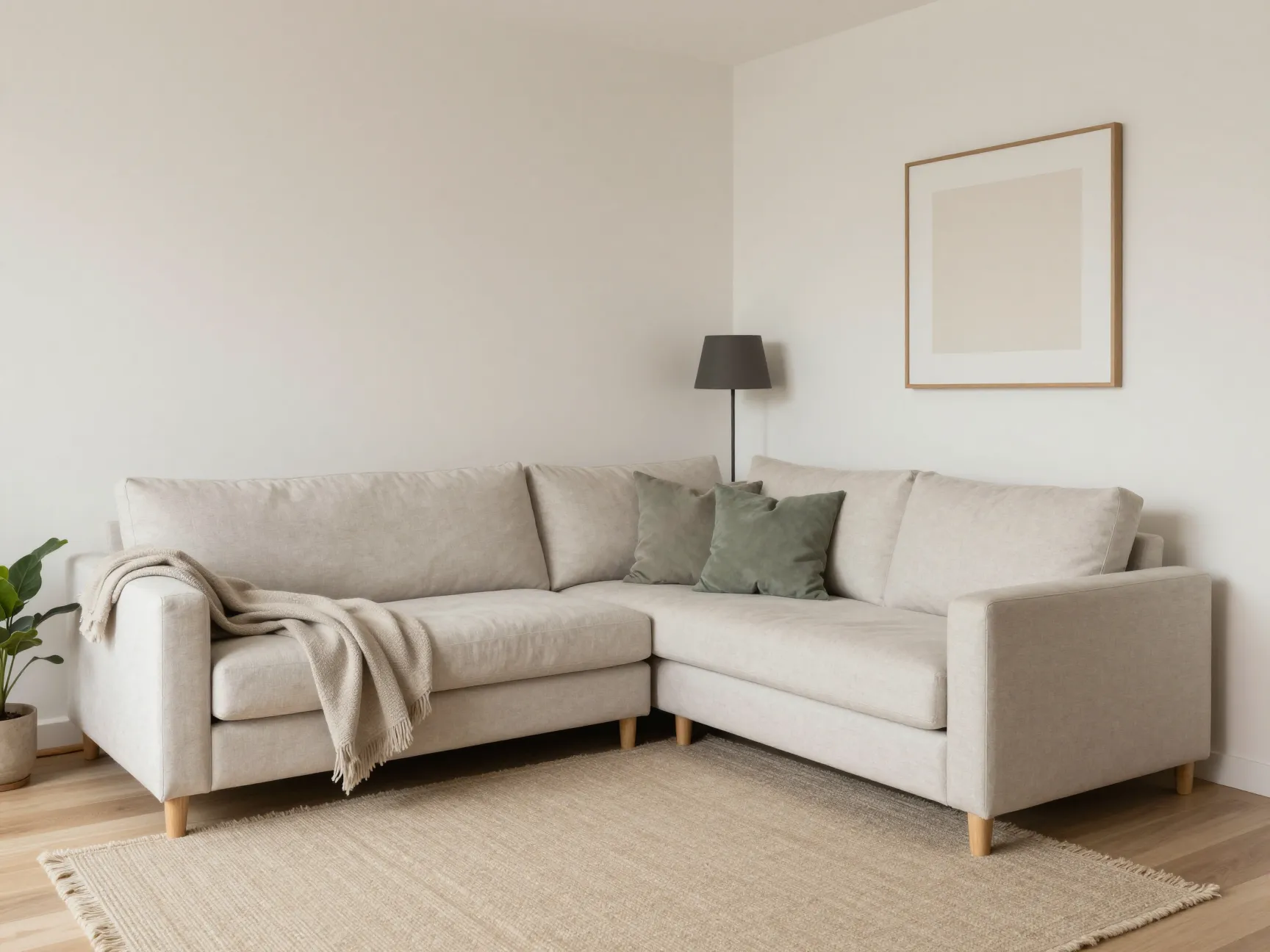
Color is one of the most direct levers for controlling how large a room feels. Lighter colors on walls and ceilings visually expand a room; darker colors “advance” and make it feel smaller [5]. Painting walls, ceiling, and woodwork in a uniform light tone, a warm white or greige, removes the visual interruption of color contrast and makes the room read as a single continuous space rather than a series of surfaces.
The 2026 small-apartment playbook recommends a specific warm neutral palette and sets a hard limit: no more than four colors in the entire space, with most storage hidden to keep surfaces visually clean [6][2]. This is not about creating a sterile environment. It is about ensuring that the colors you do use have room to breathe.
A practical four-color framework for a small one-bedroom:
| Role | Example Tone | Where It Appears |
|---|---|---|
| Dominant (60%) | Warm white or greige | Walls, ceiling, large furniture |
| Secondary (30%) | Warm linen or oat | Soft furnishings, curtains, rug |
| Accent (8%) | Dusty sage or muted terracotta | Throw pillows, one plant, small art |
| Anchor (2%) | Warm charcoal or deep walnut | Lamp bases, hardware, one frame |
8. Use One Oversized Art Piece Instead of Many Small Ones
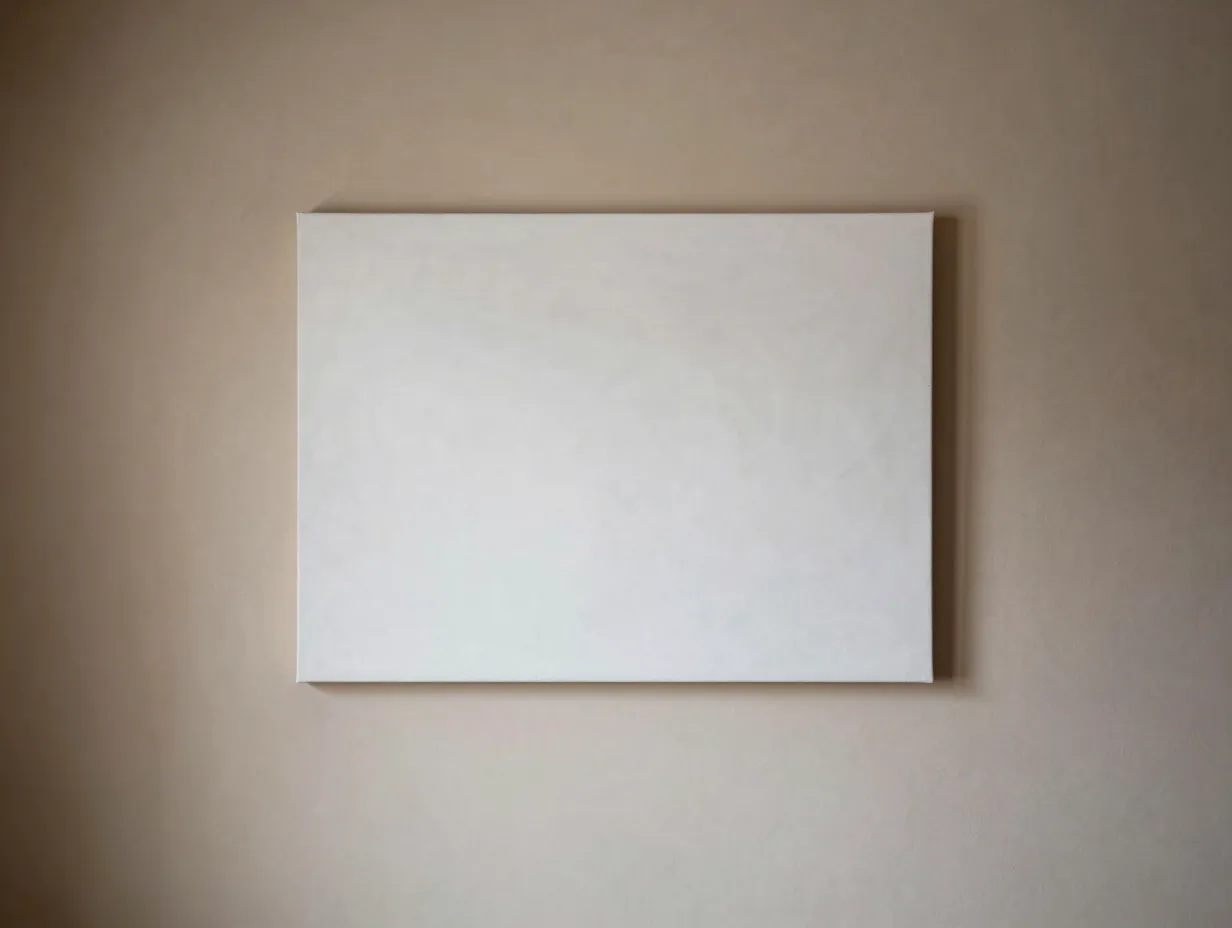
This is the idea that surprises most people. The instinct in a small room is to use small art, as if scaling down the decor will make the room feel larger. The opposite is true. One oversized art piece or a tightly focused gallery wall adds personality and visual weight without cluttering surfaces or fragmenting wall space [1][2][3].
A single large canvas or print, hung at eye level with generous breathing room around it, reads as intentional and confident. A collection of twelve small frames at varying heights reads as busy, regardless of how carefully each piece was chosen.
The additional benefit of statement art that draws the eye upward is documented in real small-bedroom case studies: when art is hung slightly higher than standard picture-hanging height, it pulls the gaze toward the ceiling and reinforces the perception of a taller room [3].
What to avoid: Leaning multiple small frames on a shelf, mixing many different frame finishes, or clustering art so tightly that the wall behind it disappears.
9. Pull Furniture Away From the Walls
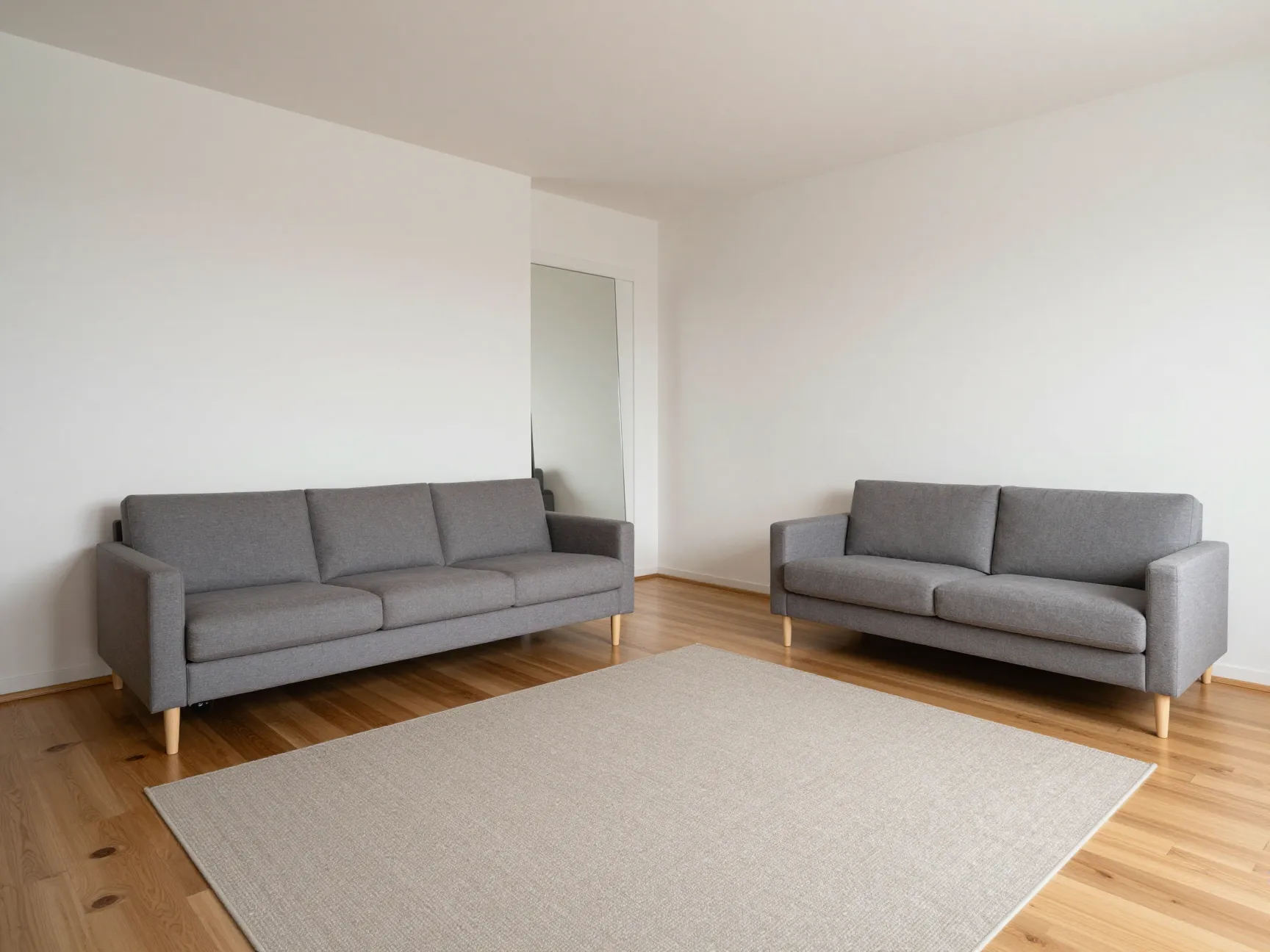
The most counterintuitive of these 9 small one bedroom apartment ideas for decor that doesn’t crowd is this one: do not push all your furniture against the walls. The instinct is to maximize floor space by clearing the center of the room. The result, paradoxically, is a room that feels smaller.
Interior experts consistently recommend pulling large furniture, particularly the sofa, slightly away from the wall, even by just 5 to 10 cm [1][2]. This creates a thin channel of space between the furniture and the wall that the eye reads as depth. The room appears to have layers rather than being a flat perimeter of furniture surrounding empty floor.
This works because of how peripheral vision processes space. When furniture is flush against every wall, the room reads as a single shallow plane. When there is even a small gap, the brain registers multiple planes and interprets the space as larger.
Combined with the other ideas in this list, particularly the large mirror, the layered lighting, and the vertical storage, pulling furniture slightly forward from the wall completes a set of visual tricks that collectively transform how a compact one-bedroom feels to anyone who walks into it.
Putting It All Together: A Room-by-Room Summary
These ideas do not need to be implemented all at once. In my own experience, the highest-impact starting trio is: the large mirror opposite the main window, warm 2700K lighting from three sources, and a correctly sized rug [6]. Those three changes alone produce a visible shift in how the room feels, before a single piece of furniture is moved or replaced.
From there, the multi-functional furniture swaps (storage ottoman, storage bed) deliver the next layer of improvement by recovering floor space and hidden storage simultaneously. The remaining ideas, vertical storage, curtain placement, palette discipline, statement art, and furniture placement, layer on top to refine and complete the transformation.
“The goal is not a room that looks decorated. The goal is a room that feels larger, calmer, and more livable than its square footage suggests.”
Small-space experts are consistent on one final point: restraint is the hardest skill to develop and the most important one to practice [2][5][8]. Every item added to a small room costs something, visual space, floor space, or both. The rooms that feel genuinely spacious are the ones where every single item has been chosen because it earns its place.
Conclusion
These 9 small one bedroom apartment ideas for decor that doesn’t crowd share a common thread: they work by changing perception rather than changing square footage. A large mirror, layered warm lighting, a correctly sized rug, multi-functional furniture, vertical storage, high-hung curtains, a restrained palette, statement art, and furniture pulled slightly from the walls, none of these require a renovation, a large budget, or a complete overhaul.
Actionable next steps to start today:
- Walk through your apartment and identify one item in each room that serves no functional purpose and adds visual noise. Remove it.
- Measure your current rug. If it is smaller than the front legs of your sofa, add a larger rug to your priority list.
- Replace any cool-white bulbs with 2700K warm bulbs in every lamp and fixture you currently own.
- Identify the blank wall opposite your main window. That is where your large mirror goes.
- Check your curtain rod height. If it is within 15 cm of the window frame, move it as close to the ceiling as possible.
None of these steps cost significant money. All of them produce immediate, visible results. The smallest apartments I have ever been in that felt genuinely spacious had one thing in common: every decision had been made with intention. That is the real secret behind decor that doesn’t crowd.
References
[1] Small Space Living Ideas Ncna1275493 – https://www.nbcnews.com/select/shopping/small-space-living-ideas-ncna1275493
[2] 12 Decorating Tiny Apartment – https://thedecoradvisor.com/12-decorating-tiny-apartment/
[3] Bedroom Ideas Small 37508484 – https://www.apartmenttherapy.com/bedroom-ideas-small-37508484
[4] Watch – https://www.youtube.com/watch?v=1u5t3rDwAJI
[5] Small Space Design Tips – https://www.countryliving.com/uk/homes-interiors/interiors/a40442005/small-space-design-tips/
[6] Small Apartment Decorating Ideas 2026 – https://www.warmcazza.com/post/small-apartment-decorating-ideas-2026
[7] Watch – https://www.youtube.com/watch?v=TYV1akotvSc
[8] Best Tips Small Cool 2020 36754744 – https://www.apartmenttherapy.com/best-tips-small-cool-2020-36754744
[9] Watch – https://www.youtube.com/watch?v=URkF2IiW8Z8
[10] Small Apartment Decor – https://www.lowes.com/n/ideas-inspiration/small-apartment-decor