8 Living Area False Ceiling Design Ideas To Elevate Your Home
The ceiling is the most underutilized surface in any home, and most homeowners never think about it twice. Yet interior designers consistently report that a well-designed false ceiling can increase a living room‘s perceived value by as much as 15 to 20 percent, simply by adding architectural depth and controlled lighting. If you have been staring at a flat, featureless slab above your sofa and wondering why your living room feels unfinished, the answer is almost certainly looking down at you.
Disclosure: This post contains affiliate links. As an Amazon Associate, we earn from qualifying purchases, and at no extra cost to you.
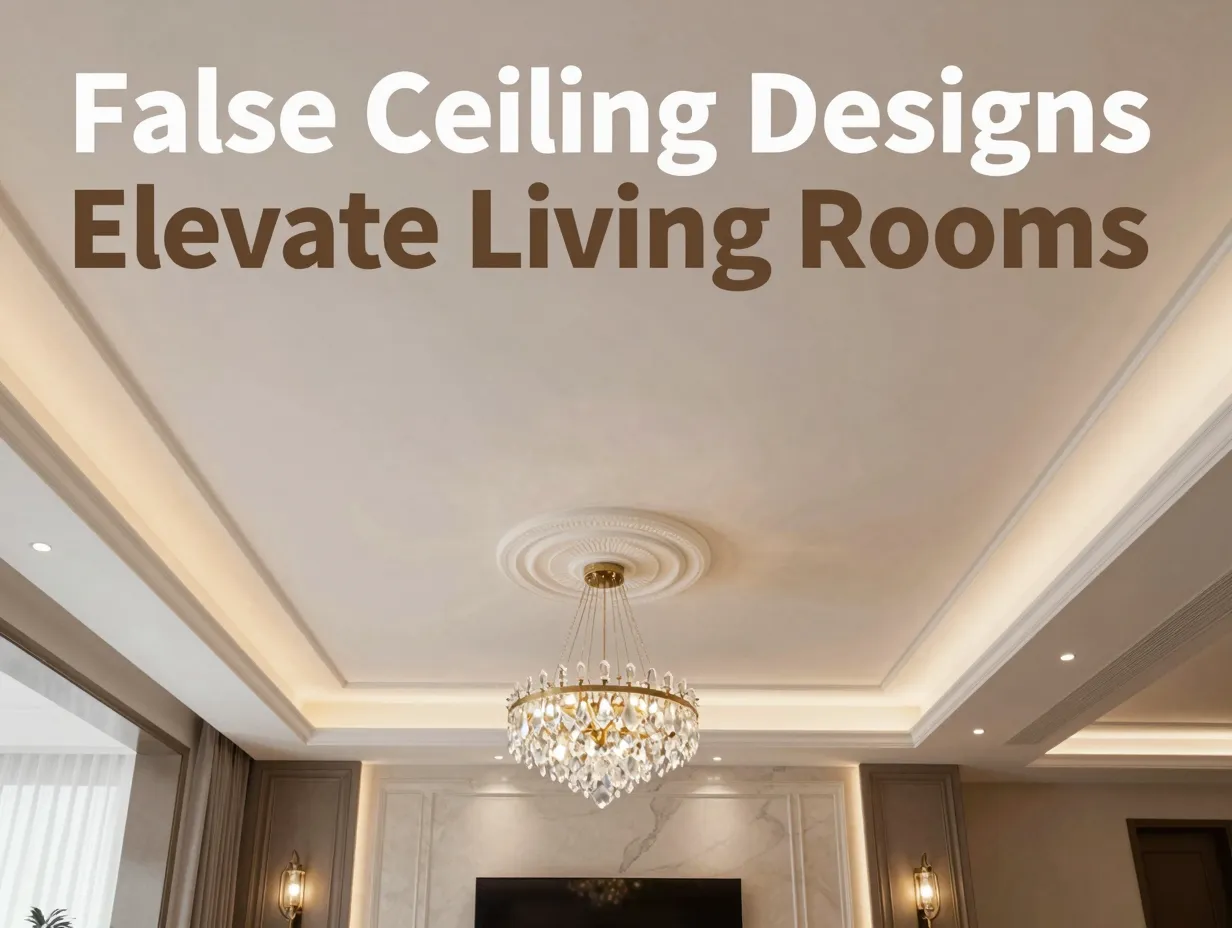
This guide to 8 living area false ceiling design ideas to elevate your home is built for homeowners, renters planning renovations, and design enthusiasts who want a practical, visually rich resource, not just a gallery of pretty pictures. Each idea below comes with context on materials, cost considerations, and the types of spaces where it works best.
Key Takeaways
- A false ceiling is not just decorative, it hides wiring, improves acoustics, and allows for sophisticated lighting integration.
- The 8 living area false ceiling design ideas covered here range from budget-friendly gypsum layers to premium coffered and wooden panel systems.
- Lighting integration, especially cove lighting, is one of the highest-impact upgrades you can make to a living room ceiling.
- Material choice drives both aesthetics and maintenance, PVC stretch ceilings are moisture-resistant, while wood requires periodic treatment.
- Matching ceiling design to room height is critical: low ceilings benefit from flat or single-tier designs, while high ceilings can handle layered and coffered options.
Why False Ceilings Transform Living Spaces
Before diving into the specific designs, it helps to understand what a false ceiling actually does. Also called a drop ceiling or suspended ceiling, it is a secondary ceiling installed below the structural slab. The gap between the two layers becomes a utility channel for electrical wiring, HVAC ducts, insulation, and lighting fixtures.
Beyond function, false ceilings are one of the most powerful tools in residential interior design. They define zones within an open-plan living area, lower an uncomfortably high ceiling to a more intimate scale, and create opportunities for layered lighting that flat ceilings simply cannot offer.
I have personally visited homes where a single false ceiling renovation changed the entire mood of a living room, turning a cold, echoing space into something that felt curated and intentional. The transformation is rarely subtle.
What to consider before choosing a design:
- Room height (standard is 9 to 10 feet; anything below 8.5 feet limits your options)
- Budget (gypsum board is the most affordable; wood and metal are premium)
- Lighting goals (ambient, accent, or task lighting integration)
- Maintenance expectations (PVC and metal require less upkeep than wood)
- Overall interior style (industrial, contemporary, rustic, or traditional)
The 8 Living Area False Ceiling Design Ideas To Elevate Your Home
Here are eight proven designs, each suited to different tastes, budgets, and room configurations. These are the ideas interior designers return to again and again in 2026 because they deliver consistent results.
1. Coffered Ceiling
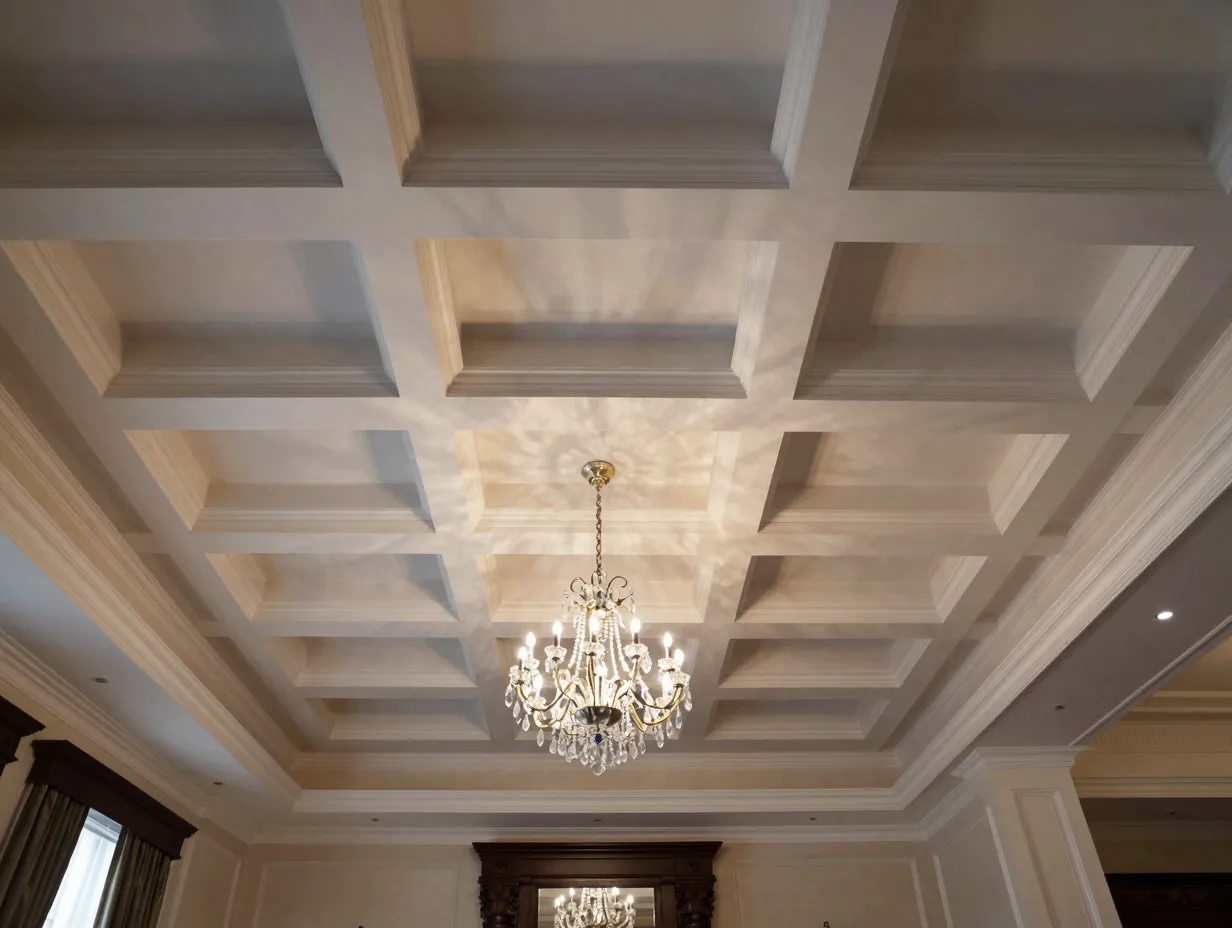
A coffered ceiling features a grid of recessed square or rectangular panels separated by beams, creating a three-dimensional pattern across the entire ceiling surface [1]. The result is a design that looks like it belongs in a heritage mansion or a high-end hotel lobby, because it does.
Why it works: The grid pattern adds architectural character without requiring elaborate furniture or decor to fill the room. The depth of each recessed panel plays with shadow and light throughout the day, giving the ceiling a dynamic quality that flat surfaces cannot replicate.
Best suited for: Large living rooms with ceiling heights of 10 feet or more. Luxury homes, colonial-style interiors, and spaces with formal furniture arrangements benefit most from this design.
Material options: Plaster of Paris (POP), gypsum board, wood, or a combination of wood beams with plaster panels.
Pro tip: Paint the recessed panels a slightly darker shade than the surrounding beams. This subtle contrast amplifies the three-dimensional effect without making the ceiling feel heavy.
| Feature | Detail |
|---|---|
| Ideal ceiling height | 10 feet and above |
| Primary material | Gypsum or wood |
| Lighting compatibility | Recessed downlights, chandeliers |
| Maintenance level | Low to moderate |
| Cost range | Moderate to high |
2. Wooden Panel Ceiling
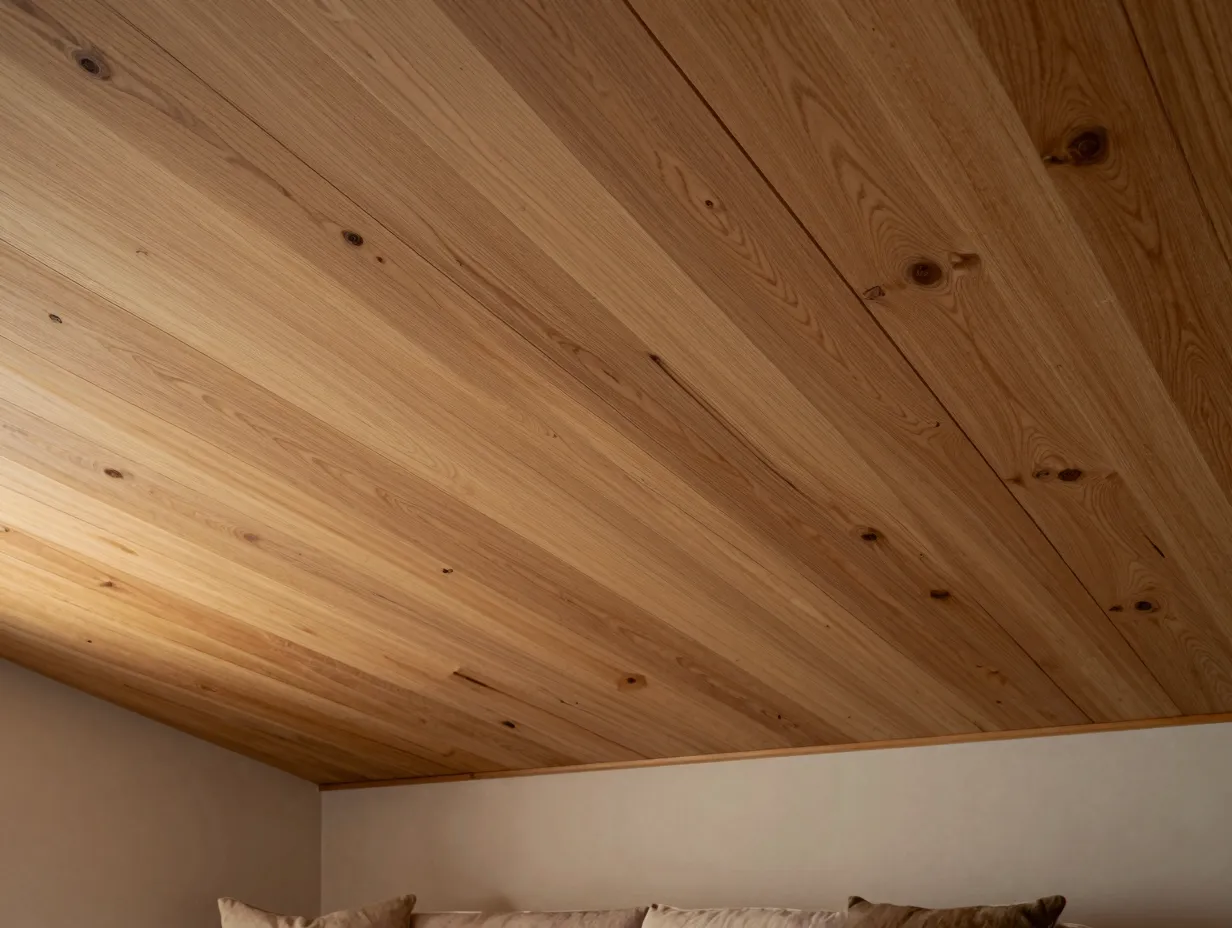
Incorporating wooden panels into a false ceiling brings warmth, texture, and a natural element that no painted surface can replicate [1]. Wood has a unique ability to make a room feel grounded and lived-in, qualities that are particularly valuable in living areas designed for relaxation and social connection.
Why it works: Wood is visually versatile. The same material reads as rustic in a farmhouse-style home and as sleek and contemporary when cut into narrow planks and installed in a linear pattern. The grain and color variation in natural wood also mean that no two ceilings are exactly alike.
Best suited for: Homes with a rustic, Scandinavian, mid-century modern, or biophilic design theme. It also works beautifully as a partial ceiling treatment, covering only the central portion of the living room to create a defined seating zone.
Material options: Solid hardwood planks, engineered wood, reclaimed timber, or wood-finish PVC panels for a lower-maintenance alternative.
“A wooden ceiling does not just change how a room looks, it changes how it sounds and feels. The material absorbs sound, reduces echo, and creates a sense of enclosure that makes conversation feel more intimate.”
Maintenance note: Natural wood requires periodic sealing or treatment to prevent warping, especially in humid climates. Engineered wood and wood-finish PVC are more stable alternatives that closely mimic the appearance of solid timber.
3. Stretch Ceiling
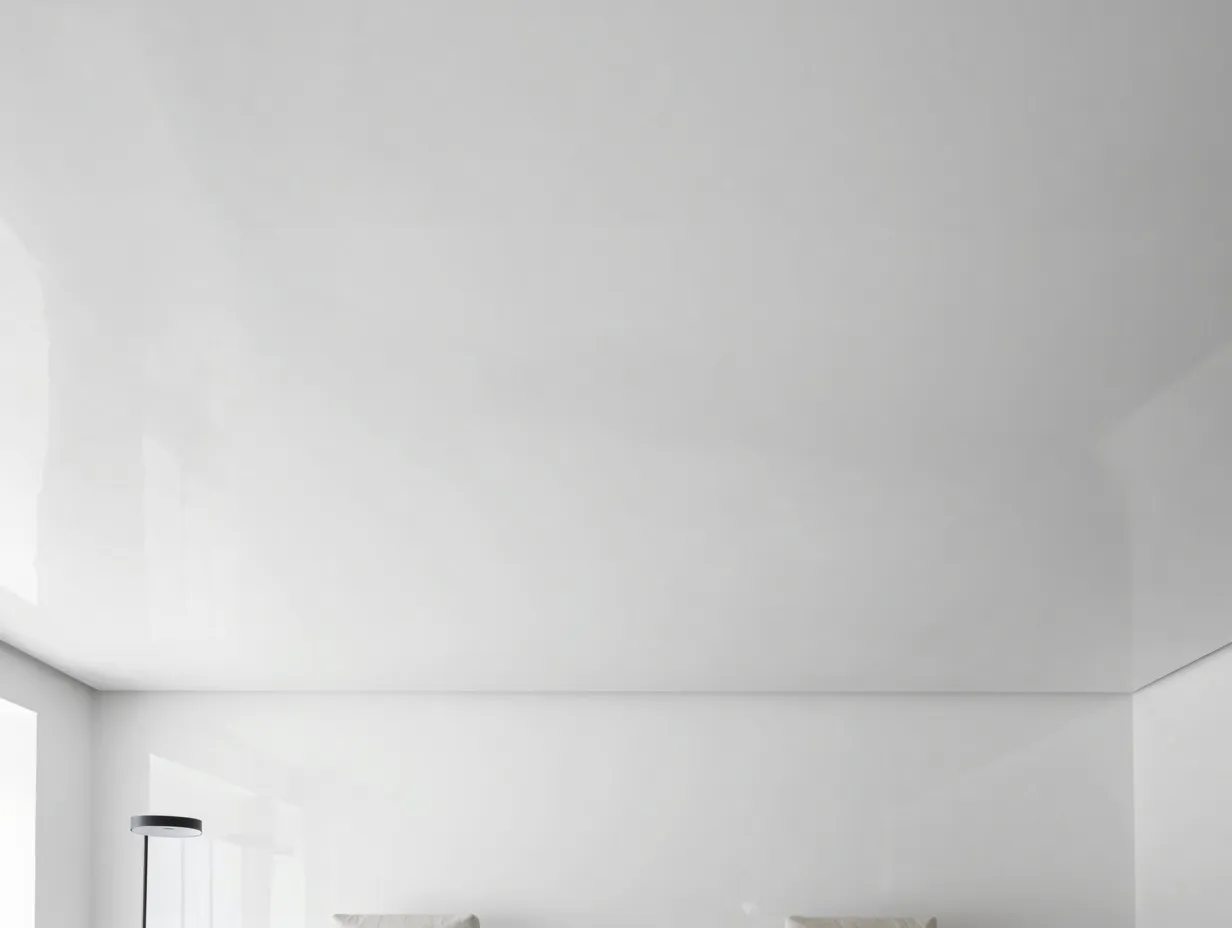
A stretch ceiling uses a thin, flexible PVC membrane that is heated and stretched across an aluminum frame fixed to the walls [1]. The result is a perfectly smooth, seamless surface that can be finished in matte, satin, or high-gloss options, and printed with any image or pattern imaginable.
Why it works: Stretch ceilings are the fastest-installed false ceiling option, often completed in a single day. They are also waterproof, which makes them practical in climates with high humidity or in homes prone to minor leaks from upstairs bathrooms or plumbing.
Best suited for: Contemporary and minimalist living rooms. The high-gloss finish is particularly effective in smaller spaces because it reflects light and creates the illusion of greater height and volume.
Color and finish options:
- Matte white (classic, diffuses light evenly)
- High-gloss white or silver (reflective, expands the perceived space)
- Custom printed (sky, abstract art, geometric patterns)
- Translucent (allows backlit LED panels to glow through the surface)
One important consideration: The PVC membrane can be damaged by sharp objects and may need to be replaced rather than repaired if punctured. For households with young children or active pets, a matte finish hides minor surface marks better than gloss.
4. Metallic Ceiling
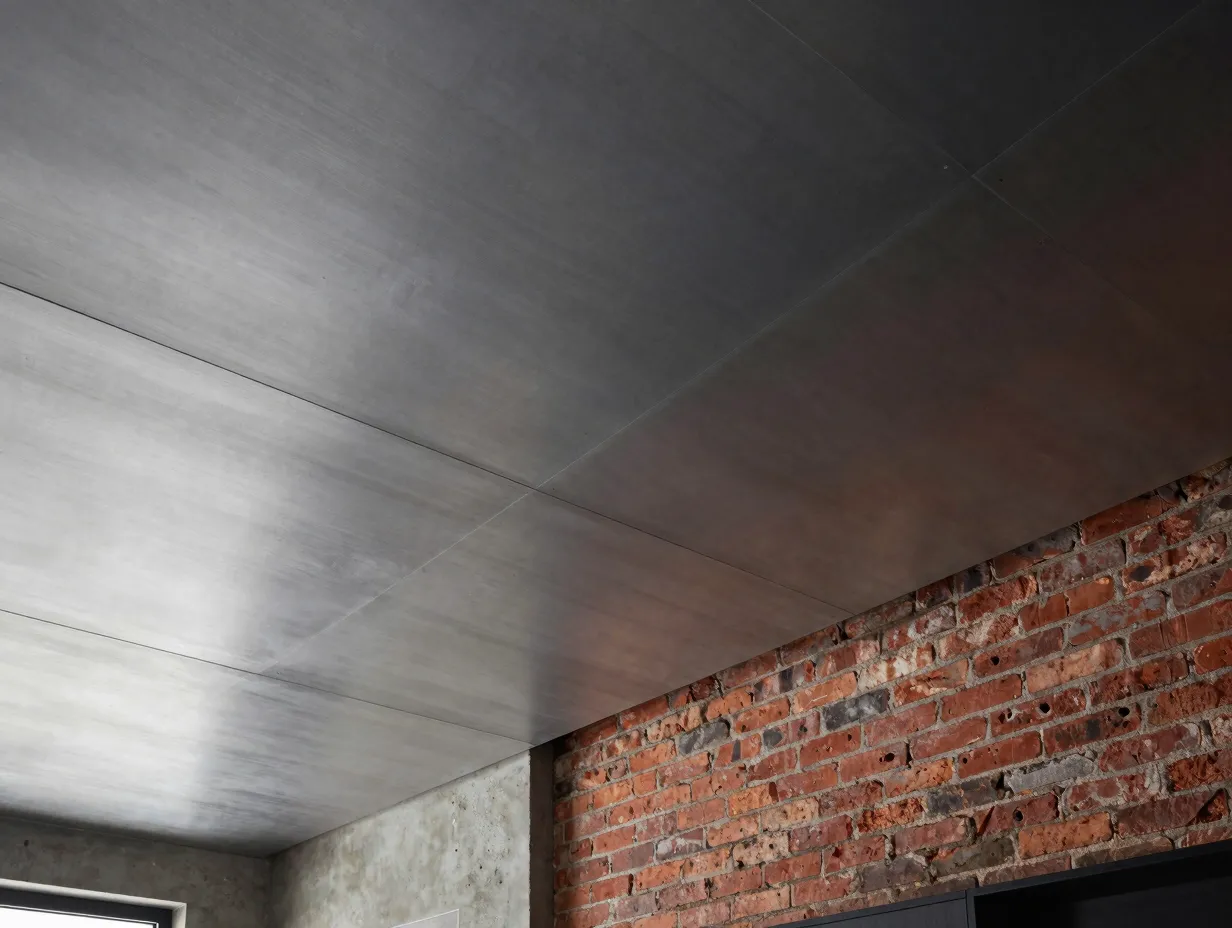
A metallic false ceiling introduces panels or tiles finished in steel, copper, brass, or aluminum to the living room overhead [1]. This design draws directly from industrial and contemporary architectural traditions, and it has become increasingly popular in urban apartments and open-plan loft conversions.
Why it works: Metal reflects light in a way that no paint or fabric can. Even in a room with modest natural light, metallic ceiling panels bounce illumination around the space, making it feel brighter and more dynamic. The material also pairs well with concrete floors, exposed brick walls, and dark furniture, the visual contrasts are striking.
Best suited for: Industrial, contemporary, or eclectic living rooms. Metallic accents work particularly well in homes where the kitchen and living area share an open floor plan, as the material bridges the two spaces visually.
Finish options and their effects:
- Brushed steel: cool, understated, professional
- Polished copper: warm, dramatic, statement-making
- Matte black metal: moody, sophisticated, high-contrast
- Antique brass tiles: vintage, layered, textured
Practical note: Metal ceiling panels are durable and require minimal maintenance. However, they conduct temperature, so proper insulation in the gap above the panels is important in both hot and cold climates.
5. Crystal or Chandelier-Integrated Ceiling
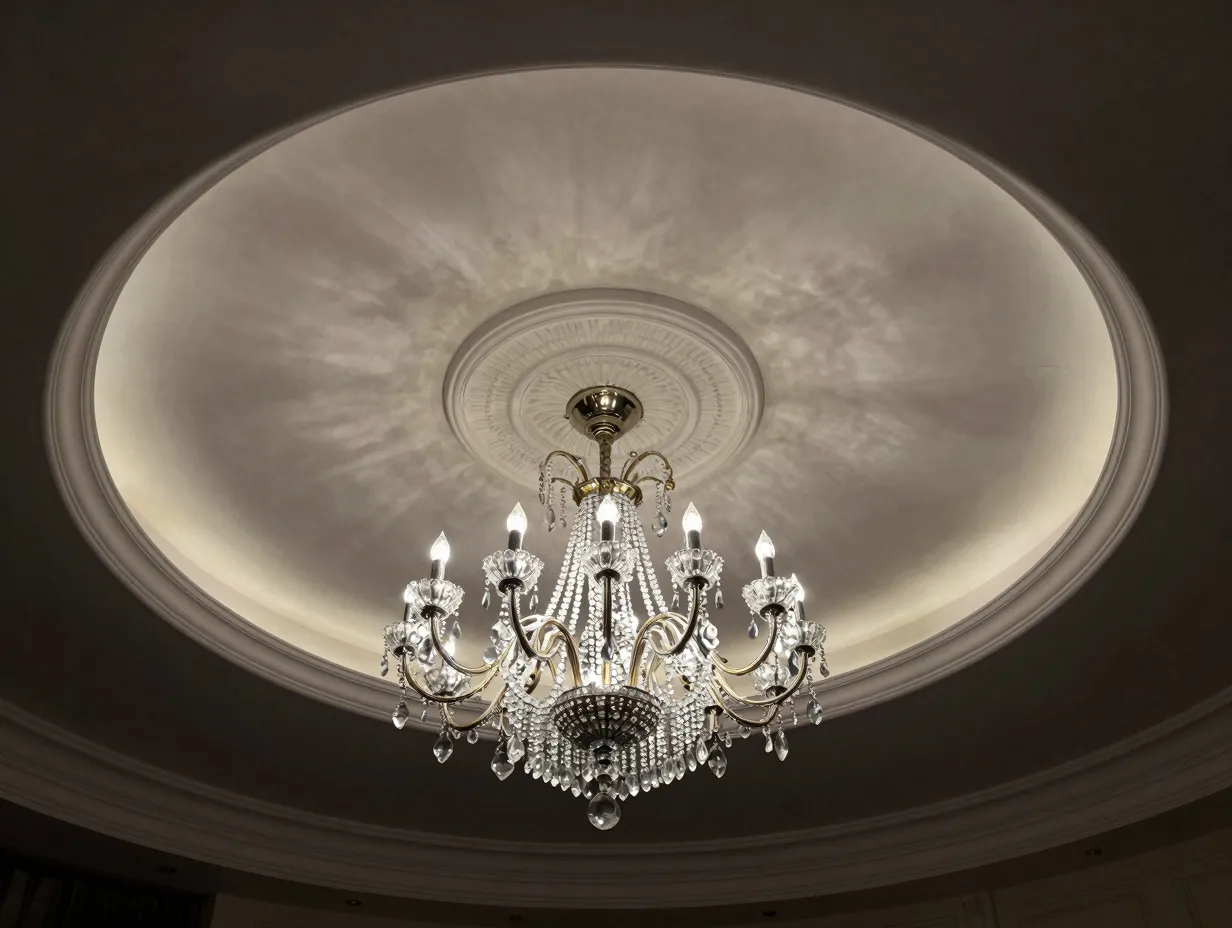
Embedding a chandelier or crystal lighting elements directly into the false ceiling design creates an instant focal point and elevates the formality of any living room [1]. Rather than simply hanging a fixture from a hook, this approach treats the chandelier as an architectural feature, framed by a recessed medallion, a layered gypsum surround, or a custom-shaped ceiling cutout.
Why it works: The chandelier becomes part of the ceiling’s geometry rather than an afterthought. When the surrounding ceiling is designed to frame the fixture, through a recessed circle, a lowered central panel, or a ring of cove lighting, the entire composition reads as intentional and luxurious.
Best suited for: Formal living rooms, large open-plan spaces with defined seating areas, and homes with a classic, Art Deco, or glam interior style.
Design approaches:
- Recessed circular medallion with a crystal pendant at center
- Lowered central panel with a flush-mount chandelier
- Cove-lit ring surrounding a hanging fixture
- Geometric cutout with a statement linear chandelier
Scale matters enormously here. A chandelier that is too small for the ceiling recess looks lost; one that is too large overwhelms the room. A general guideline: add the room’s length and width in feet, then use that number in inches as the chandelier’s approximate diameter.
6. Layered Gypsum Ceiling
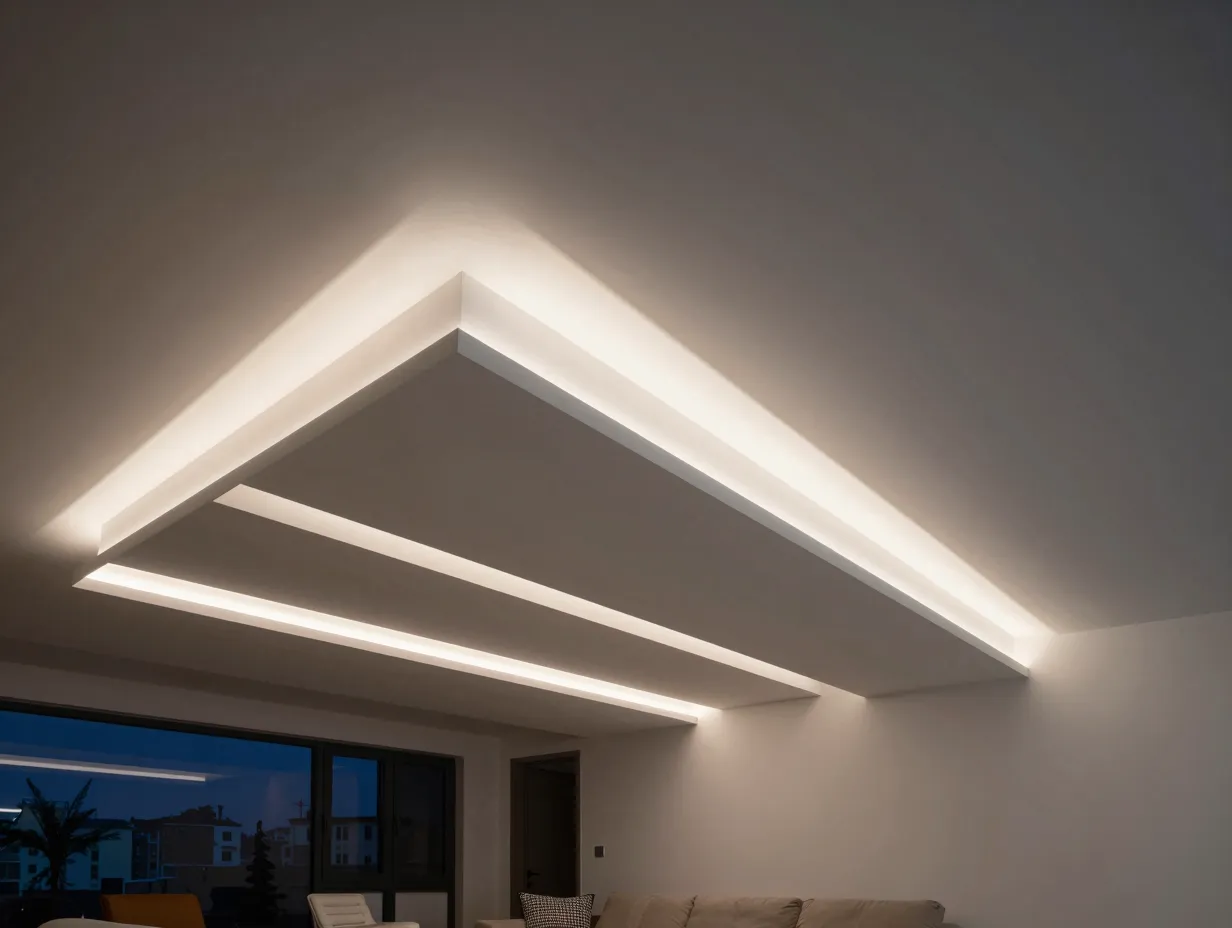
A layered gypsum ceiling uses multiple tiers of gypsum board installed at different heights to create a stepped or cascading effect [1]. It is one of the most popular false ceiling designs globally because gypsum board is affordable, easy to work with, and compatible with virtually any lighting setup.
Why it works: The layered effect adds depth and visual interest without requiring expensive materials. Each tier can be painted a different shade, fitted with cove lighting along its edge, or finished with a contrasting texture. The result is a ceiling that looks custom and complex but is achievable on a moderate budget.
Best suited for: Almost any living room. The design scales up or down depending on the number of layers and the height differential between tiers. It works in both compact urban apartments and spacious suburban homes.
Common configurations:
- Two-tier: one lowered central panel surrounded by a higher perimeter, classic and versatile
- Three-tier: adds a mid-level ring for additional depth
- Asymmetric: one side of the ceiling steps down, creating a dynamic, non-uniform effect
Budget note: Gypsum board is among the most cost-effective false ceiling materials available. Labor costs vary by region, but the material itself is significantly cheaper than wood or metal alternatives.
7. Cove Lighting Ceiling
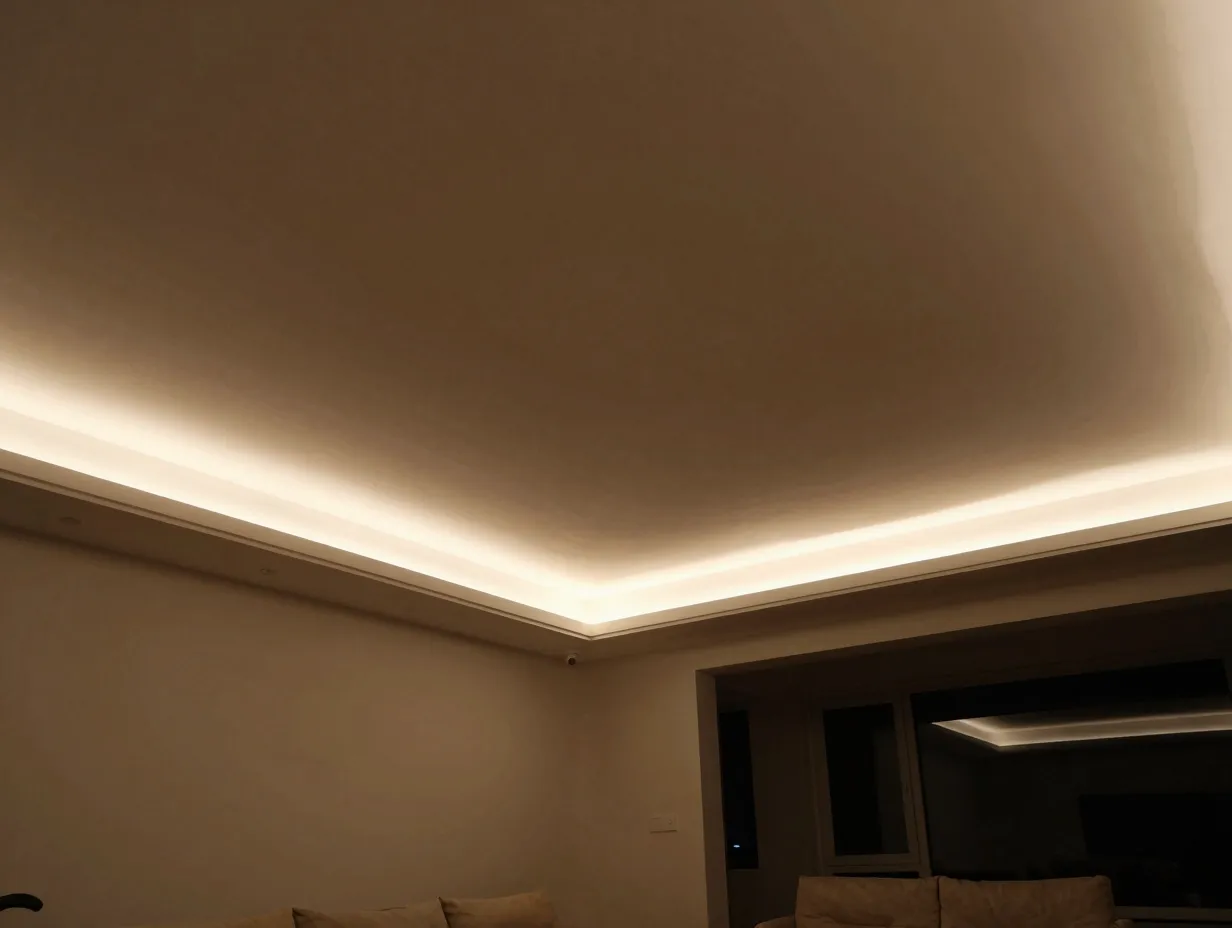
A cove lighting ceiling is not defined by its structure alone, it is defined by the integration of indirect LED strip lighting into a recessed ledge or trough built into the ceiling’s perimeter or central tiers [2]. The light source is hidden from direct view; what you see is only the glow it casts upward or across the ceiling surface.
Why it works: Cove lighting is the single most effective way to make a living room feel warm, inviting, and professionally designed. The indirect illumination eliminates harsh shadows, reduces eye strain, and creates a soft, layered light environment that flatters both the room and the people in it.
Best suited for: Every living room, regardless of style. Cove lighting integrates seamlessly with layered gypsum, coffered, and wooden ceiling designs. It is also the most requested feature among homeowners undertaking false ceiling renovations in 2026.
Lighting color temperature guide:
| Color Temperature | Effect | Best For |
|---|---|---|
| 2700K (warm white) | Cozy, amber glow | Relaxed, traditional spaces |
| 3000K (soft white) | Balanced warmth | Most living rooms |
| 4000K (neutral white) | Clean, bright | Contemporary, minimalist spaces |
| 6500K (daylight) | Cool, energizing | Rarely used in living areas |
Design tip: Use a dimmer switch with your cove lighting. The ability to shift from bright functional light to a low, atmospheric glow gives a single room two completely different personalities, one for daytime use and one for evening entertaining.
8. Geometric False Ceiling

A geometric false ceiling uses shapes, squares, rectangles, hexagons, triangles, or custom polygons, to create a structured, pattern-driven design overhead [3]. This is the most visually bold option on this list, and when executed well, it functions as the room’s primary design statement.
Why it works: Geometric ceilings bring order and intentionality to a space. They signal that the interior has been carefully designed from floor to ceiling, rather than assembled from furniture alone. The repetition of shapes also creates a rhythm that the eye follows naturally, making the room feel larger and more cohesive.
Best suited for: Contemporary, mid-century modern, and eclectic living rooms. Open-plan spaces benefit particularly from geometric ceiling designs because the pattern helps define zones without the need for walls or partitions.
Popular geometric configurations:
- Grid of squares with alternating recessed and flush panels
- Hexagonal tile pattern in PVC or gypsum
- Diagonal linear planks creating a chevron or herringbone effect
- Asymmetric polygon arrangement for a sculptural, artistic ceiling
Material options: Gypsum board cut to shape, PVC panels, metal tiles, or a combination of wood and plaster for mixed-material geometric designs.
Color strategy: A monochromatic geometric ceiling (all white or all grey) reads as sophisticated and restrained. A two-tone geometric ceiling, where alternating panels are painted in contrasting colors, makes a bolder statement and works best in rooms with minimal wall decor.
How To Choose the Right Design for Your Living Room
With these 8 living area false ceiling design ideas to elevate your home laid out clearly, the next challenge is matching the right design to your specific space. Here is a practical framework:
Step 1: Measure your ceiling height. Rooms below 8.5 feet should avoid deep coffered or multi-tier designs. Stick to a single-tier gypsum layer, a stretch ceiling, or a geometric flat design.
Step 2: Define your lighting goals. If ambient mood lighting is the priority, cove lighting integration is non-negotiable. If you want a dramatic focal point, a chandelier-integrated ceiling delivers the most impact.
Step 3: Match the ceiling to your existing interior style. A wooden panel ceiling in an industrial loft will fight the aesthetic rather than support it. A metallic ceiling in a traditional home will feel jarring. The ceiling should feel like a natural extension of the room’s design language.
Step 4: Set a realistic budget. Gypsum and PVC stretch ceilings are the most affordable options. Wood, metal, and custom geometric designs cost more in both materials and skilled labor.
Step 5: Think about maintenance. If the living room is in a humid climate or a high-traffic family home, prioritize materials that are easy to clean and resistant to moisture, PVC stretch ceilings and metal panels lead here.
Common Mistakes To Avoid
Even the most beautiful false ceiling design can underperform if a few key principles are ignored. Based on what I have seen in renovation projects and design consultations, these are the errors that come up most often:
- Ignoring room proportions: A heavily layered ceiling in a small room will make the space feel cramped and claustrophobic.
- Choosing the wrong light color temperature: Warm cove lighting in a room with cool grey walls creates a visual conflict that feels unresolved.
- Skipping a dimmer system: Fixed-brightness ceiling lights eliminate the flexibility that makes a living room feel versatile.
- Underestimating installation complexity: Coffered and geometric ceilings require skilled craftspeople. Cutting corners on labor leads to visible seams, uneven panels, and poor finishes.
- Forgetting about maintenance access: The gap above a false ceiling houses wiring and sometimes plumbing. Ensure there is at least one access panel built into the design.
Conclusion
The ceiling above your living room is not dead space, it is one of the most powerful design surfaces in your home, and it has been waiting for your attention. The 8 living area false ceiling design ideas to elevate your home covered in this guide, coffered, wooden, stretch, metallic, chandelier-integrated, layered gypsum, cove lighting, and geometric, represent a complete toolkit for transforming any living area from ordinary to exceptional.
Your actionable next steps:
- Measure your ceiling height and note any structural constraints such as beams, HVAC vents, or existing light fixtures.
- Collect reference images of the two or three designs that resonate most with your existing interior style.
- Request quotes from at least three licensed contractors, specifying the design type, material preference, and lighting integration requirements.
- Ask each contractor for a completed project portfolio, false ceiling quality is highly dependent on craftsmanship, and photos do not lie.
- Finalize your lighting plan before construction begins. Adding or moving cove lighting channels after the ceiling is built is expensive and disruptive.
A well-executed false ceiling is not a cosmetic upgrade, it is a structural investment in the quality of your daily life at home. Start with the design that excites you most, and build from there.
References
[1] 8 Modern False Ceiling Design Ideas For Living Rooms – https://www.wallandwood.com/post/8-modern-false-ceiling-design-ideas-for-living-rooms?utm_source=openai
[2] False Ceiling Design – https://www.lorddecor.com/blog/false-ceiling-design?utm_source=openai
[3] False Ceiling Designs For Living Room – https://www.ideasandliving.com/post/false-ceiling-designs-for-living-room?utm_source=openai