8 Bedroom Room Inspiration Ideas For a Restful and Beautiful Retreat
The average adult spends roughly one-third of their life in the bedroom, yet most people invest far more thought into their living rooms than the space where they actually recover, recharge, and reset. That imbalance is worth correcting. In 2026, bedroom design has moved decisively toward intentionality: rooms built not just to look good in photos, but to genuinely support rest, calm, and personal expression. These 8 bedroom room inspiration ideas for a restful and beautiful retreat bring together the most compelling directions in modern interior design, grounded in current research and expert guidance, to help you create a space that works as hard for you as you do every day.
Disclosure: This post contains affiliate links. As an Amazon Associate, we earn from qualifying purchases, and at no extra cost to you.
Whether you are starting from scratch or simply refreshing a tired room, this guide gives you a clear, practical path forward.
Key Takeaways
- Warm, earthy color palettes and soft organic tones are replacing cool neutrals as the foundation of restful bedroom design in 2026.
- Layered textures, linen, velvet, boucle, wool, transform a bedroom from merely decorative to genuinely comfortable and inviting.
- Statement headboards and curved furniture silhouettes are the two most impactful furniture upgrades you can make for both style and atmosphere.
- Integrated, layered lighting is as important as any piece of furniture in creating a calming bedroom environment.
- Personalized, meaningful decor and sustainable material choices are the details that elevate a good bedroom into a true personal retreat.
Why Your Bedroom Deserves a Design Rethink in 2026
I have spoken with enough homeowners to know that the bedroom is almost always the last room to get attention. The kitchen gets renovated, the living room gets new furniture, and the bedroom quietly waits. But the science of sleep and the growing field of environmental psychology both make the same argument: your physical surroundings have a measurable effect on how well you sleep, how quickly you decompress, and how you feel when you wake up.
Designers in 2026 are responding to this with a clear shift. The cold, minimalist aesthetic of the previous decade, all white walls, bare floors, and sharp angles, is giving way to something warmer, richer, and more human [1]. The new direction is about creating what designers call a “cocooning effect”: a space that wraps around you, signals safety to your nervous system, and makes leaving the bed in the morning feel like a genuine sacrifice.
The 8 bedroom room inspiration ideas for a restful and beautiful retreat outlined in this article are not abstract mood board concepts. Each one is actionable, scalable to different budgets, and rooted in what professional designers are actually recommending and implementing right now.
“The bedroom is no longer just a place to sleep. It is the one room in the home that should be designed entirely around how you want to feel.”, a principle echoed by leading interior designers in 2026 [2]
The 8 Bedroom Room Inspiration Ideas For a Restful and Beautiful Retreat
1. Embrace Warm, Earthy Color Palettes
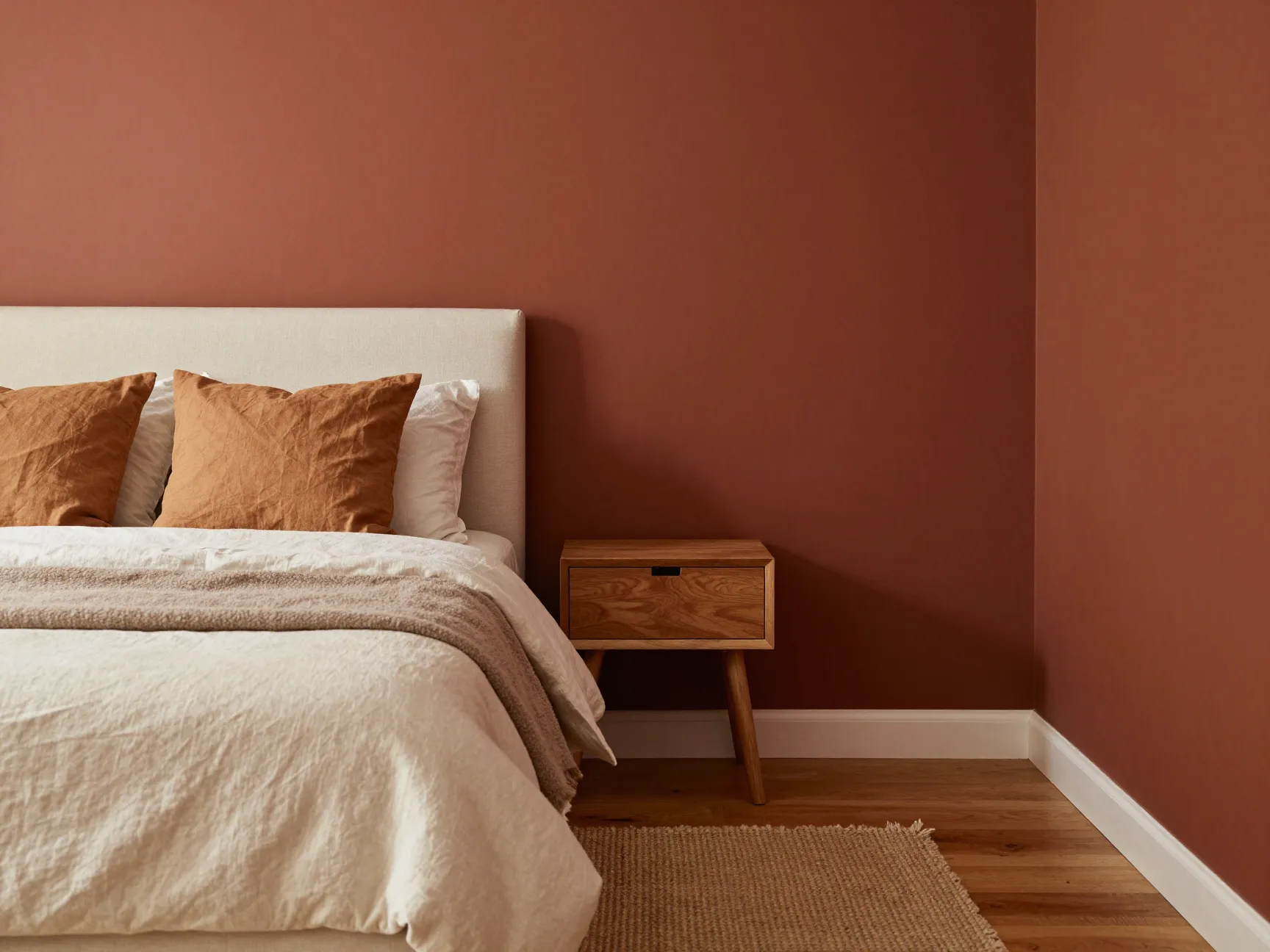
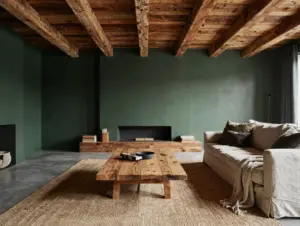
The single fastest way to change how a bedroom feels is to change its color. In 2026, the dominant move is away from cool grays and stark whites toward warm earth tones: terracotta, ochre, deep sage, burnt sienna, and clay [1]. These colors work because they mimic the natural world, the tones of soil, stone, dried grasses, and autumn leaves, and our nervous systems respond to them with a measurable reduction in alertness and an increase in calm.
How to apply this idea:
- Paint one wall in a deep terracotta or warm ochre as an accent behind the bed.
- Use sage green on all four walls for a full cocooning effect.
- Layer warm neutrals, cream, taupe, warm white, across bedding, curtains, and rugs to support the main wall color [4].
If full repainting feels like too large a commitment, start with soft organic tones in your soft furnishings. A set of ochre linen pillowcases and a taupe throw can shift a room’s emotional temperature significantly without touching a single wall.
2. Layer Textures and Tactile Materials
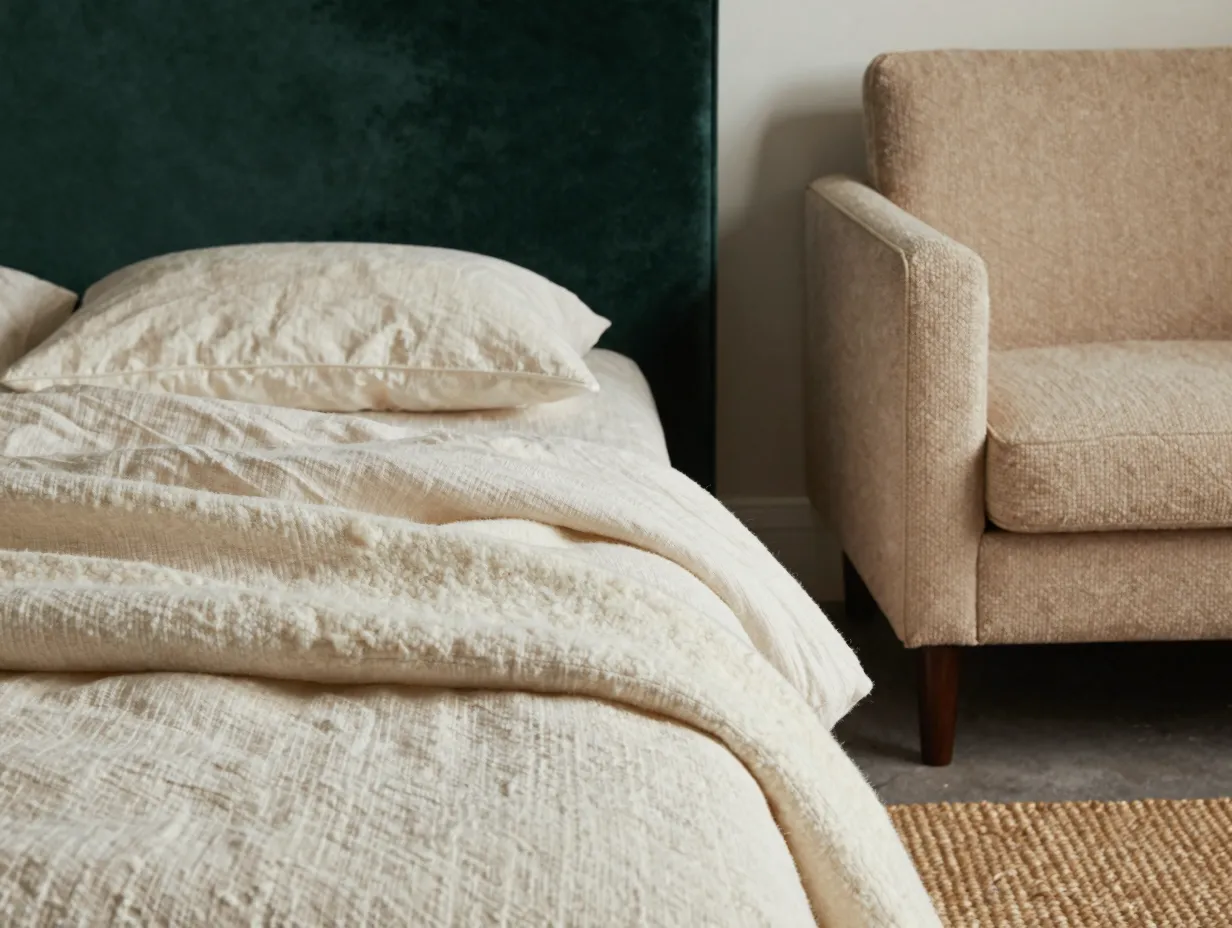
A bedroom that looks beautiful in a photograph but feels flat and cold in person has failed at its primary job. The solution is texture layering: deliberately combining materials with different tactile qualities so the room engages multiple senses at once [2].
The materials leading designers are working with in 2026 include:
- Linen: breathable, slightly rough, and naturally relaxed in appearance
- Velvet: rich, light-absorbing, and deeply luxurious to the touch
- Boucle: looped, cloud-like, and visually soft
- Wool: warm, weighty, and grounding
- Natural fiber rugs: jute, sisal, or seagrass for an organic base layer
The key is contrast. A smooth velvet headboard against a rough linen duvet. A chunky wool throw over a crisp cotton sheet. A boucle armchair beside a sleek wooden nightstand. These contrasts create visual and tactile interest that makes a room feel considered and alive rather than showroom-flat.
3. Invest in a Statement Headboard
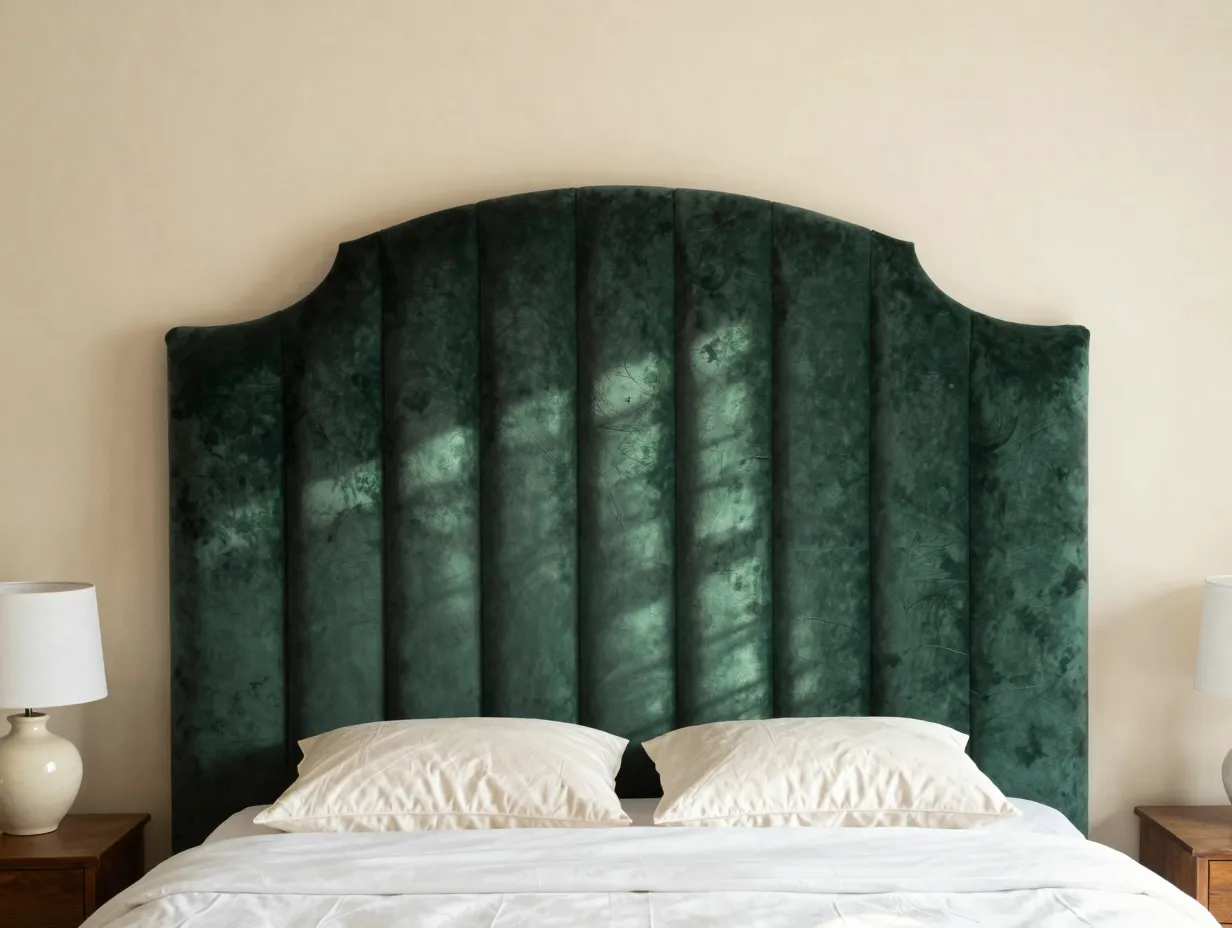
If there is one piece of furniture that delivers the highest return on investment in bedroom design, it is the headboard. A bold, well-chosen headboard instantly establishes the room’s personality, creates a natural focal point, and adds a sense of architecture to what is often the largest blank wall in the house [3].
In 2026, the headboards drawing the most attention are:
- Tall, floor-to-ceiling upholstered panels in velvet or boucle
- Arched or curved-top designs that soften the geometry of a rectangular room
- Fluted or channeled fabric headboards that add three-dimensional texture
- Natural rattan or woven frames for a more organic, relaxed look
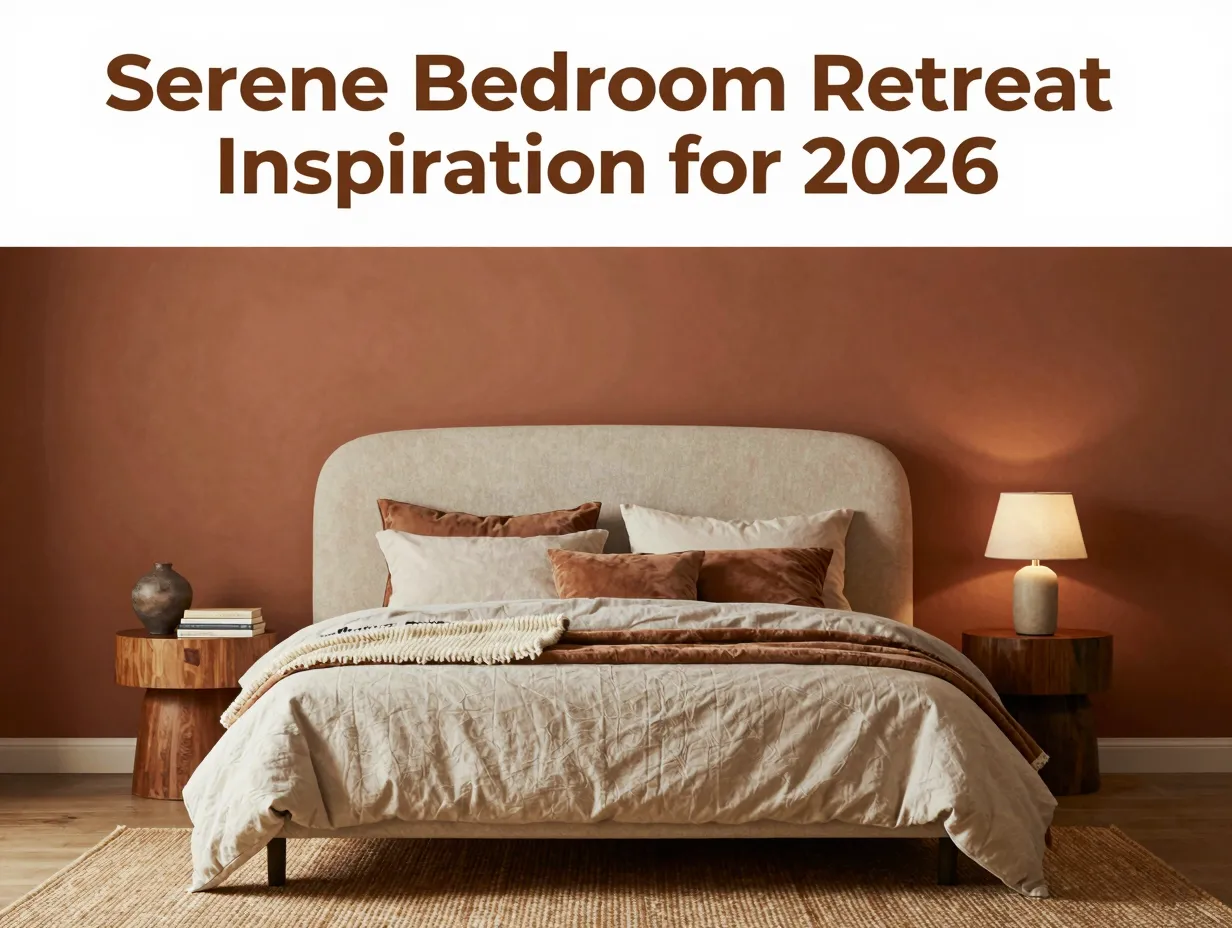
The color of the headboard is equally important. A deep forest green velvet headboard against a warm cream wall creates instant drama. A pale boucle headboard against a terracotta wall keeps the palette cohesive while still providing visual weight.
Budget tip: A custom upholstered headboard can be made relatively affordably by a local upholsterer using a simple plywood frame. The fabric choice does most of the work.
4. Choose Curved Furniture Silhouettes
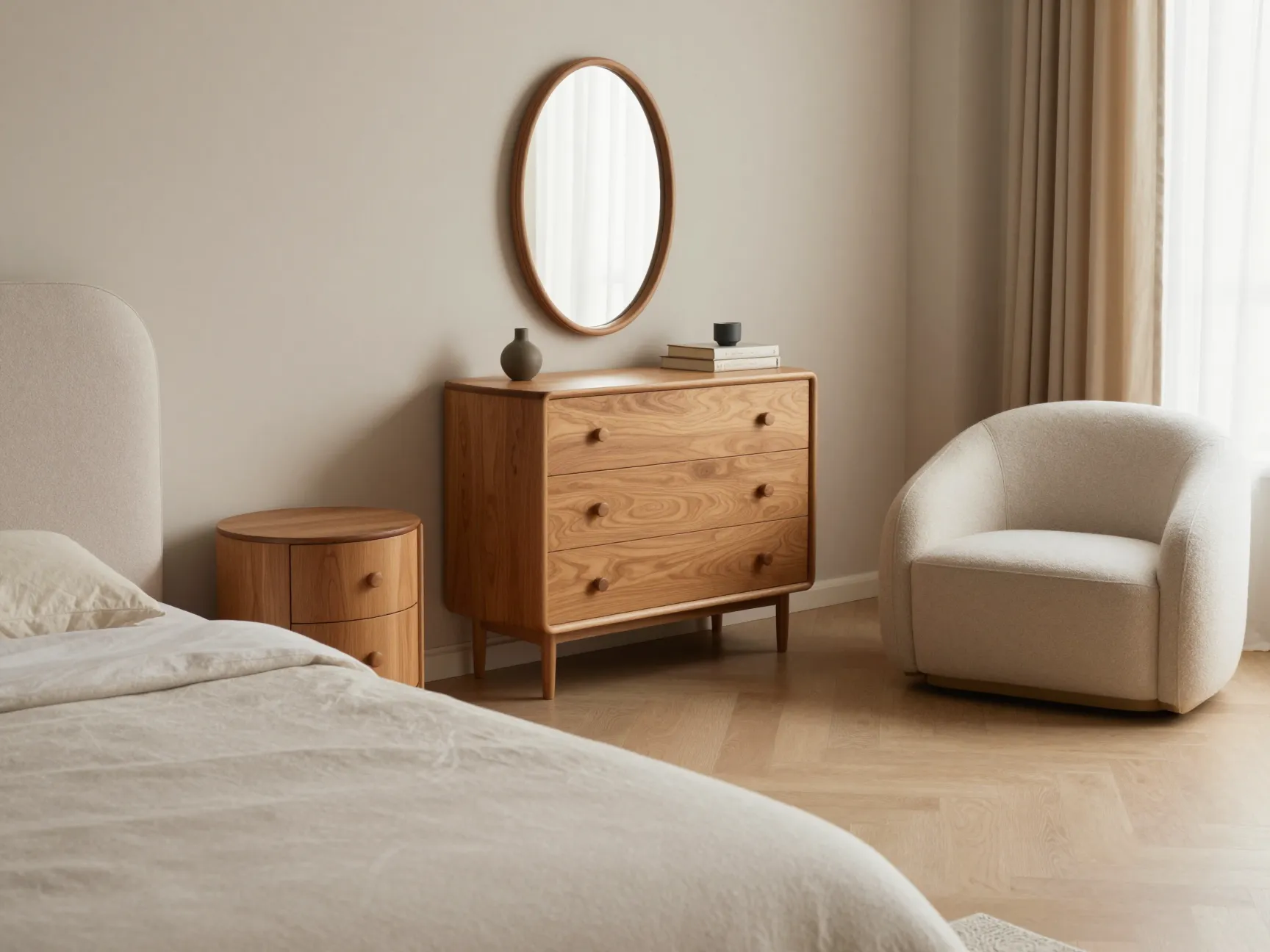
Sharp angles and hard geometric lines have a subliminal alerting effect, they signal structure, order, and activity. Soft, rounded furniture shapes do the opposite. They signal rest, safety, and ease [4]. This is why curved furniture silhouettes are one of the most consistent recommendations from designers focused on creating genuinely restful bedrooms in 2026.
Look for these curved elements:
- Rounded nightstands with soft edges instead of sharp corners
- Oval or arch-shaped mirrors above a dresser
- Curved-back armchairs in a reading corner
- Beds with gently arched headboards or rounded footboards
- Dressers with softly curved drawer fronts
The cumulative effect of multiple rounded forms in a single room is significant. The space begins to feel gentler, more welcoming, and less like a place where tasks need to be completed.
| Furniture Piece | Sharp Silhouette Effect | Curved Silhouette Effect |
|---|---|---|
| Nightstand | Structured, formal | Relaxed, approachable |
| Armchair | Alert, upright | Cocooning, restful |
| Mirror | Graphic, modern | Soft, organic |
| Bed frame | Architectural | Inviting |
5. Install Built-In Wardrobes with Bespoke Finishes
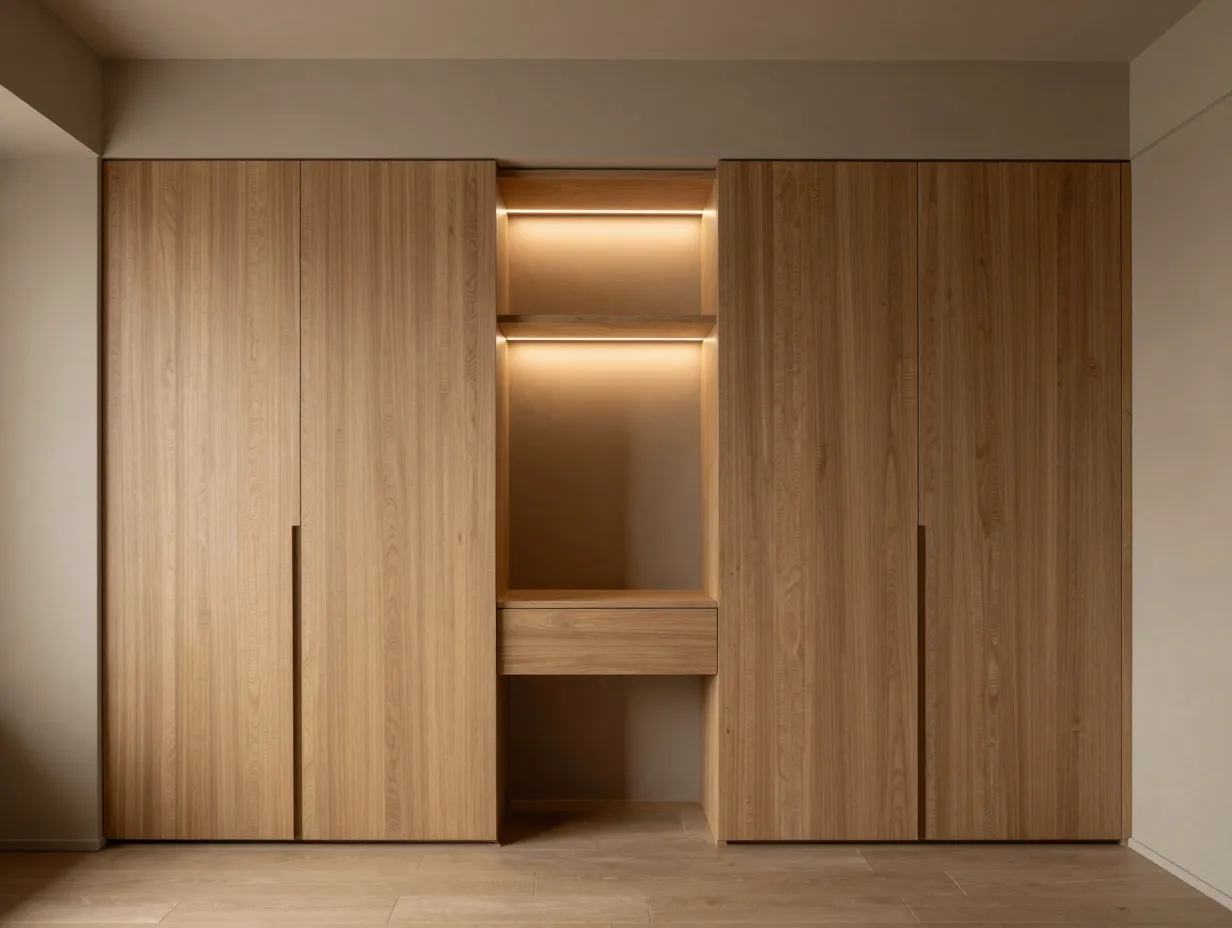
Clutter is one of the most reliable destroyers of bedroom calm. Studies on environmental psychology consistently link visual disorder with elevated cortisol levels and disrupted sleep. Built-in wardrobes with thoughtful, bespoke finishes solve this problem at the source by creating seamless, integrated storage that disappears into the room’s architecture [3].
In 2026, the design language for built-in wardrobes has moved well beyond the standard white MDF box. Current directions include:
- Fluted or reeded door fronts in warm wood tones
- Integrated LED strip lighting inside the wardrobe and along the top edge
- Mixed material fronts combining wood, cane, and frosted glass
- Floor-to-ceiling designs that maximize storage while making ceilings feel higher
- Custom paint finishes that match or complement the wall color for a seamless look
Even if a full custom build is not in the budget, replacing the doors on an existing wardrobe with new fronts in a warm wood finish or a painted color can dramatically change how the piece reads in the room.
6. Create a Multi-Functional Relaxation Zone
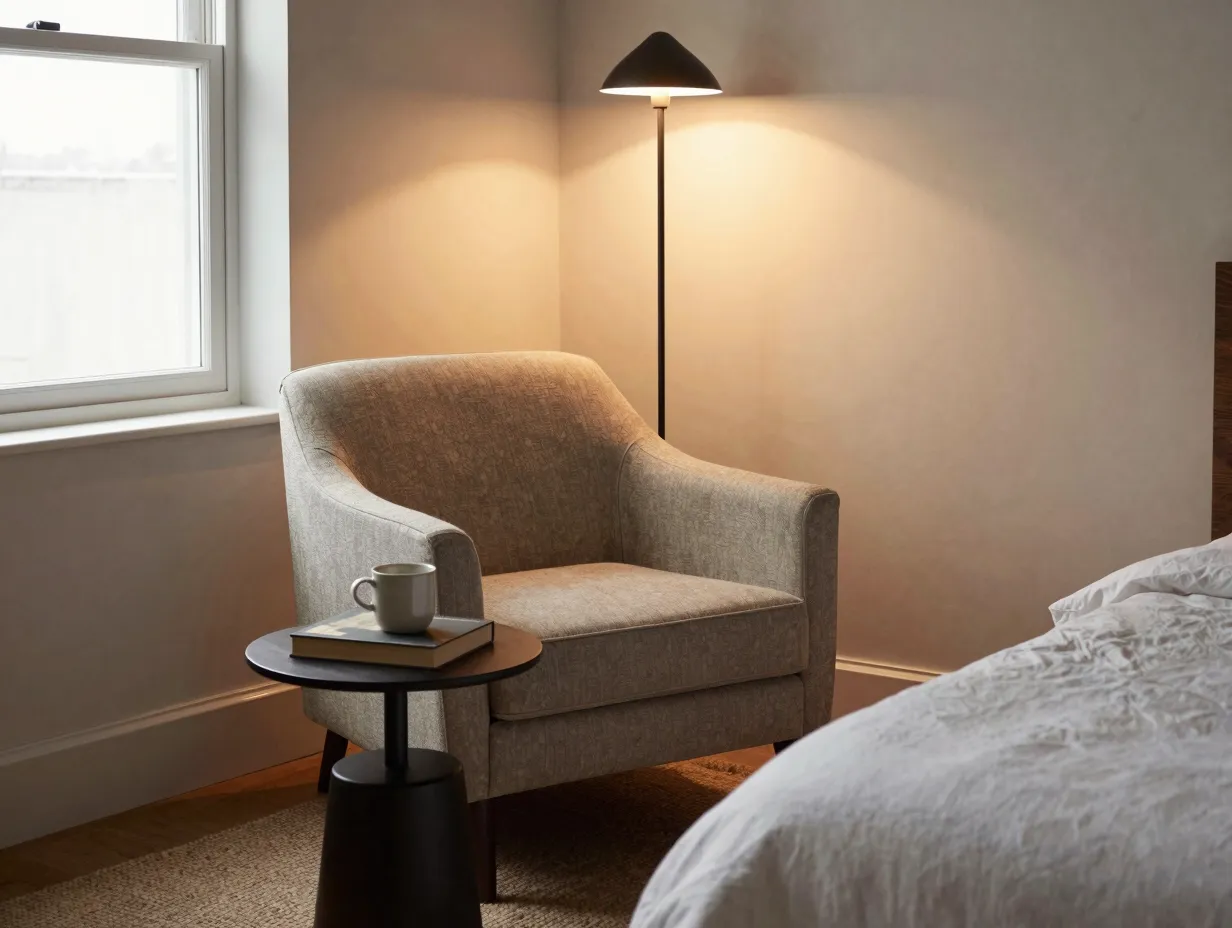
The bedroom of 2026 is no longer just a place to sleep. It is a personal sanctuary, a room where you might read, journal, meditate, or simply sit quietly before the demands of the day begin [3]. Creating a dedicated relaxation zone within the bedroom, separate from the bed itself, reinforces this intention and gives the room a layered sense of purpose.
How to create a relaxation zone:
- Place a curved armchair or a small loveseat near a window with good natural light.
- Add a small side table at the right height for a book, a cup of tea, or a journal.
- Use a floor lamp positioned behind the chair to create a warm, focused pool of light.
- Define the zone with a small rug that anchors the seating area visually.
- Keep this corner free of screens and work-related items.
I find that even a single well-chosen armchair in the corner of a bedroom changes how the whole room is used. It creates an invitation to slow down before sleep rather than going directly from a screen to a pillow.
7. Add Texture and Interest to the Ceiling
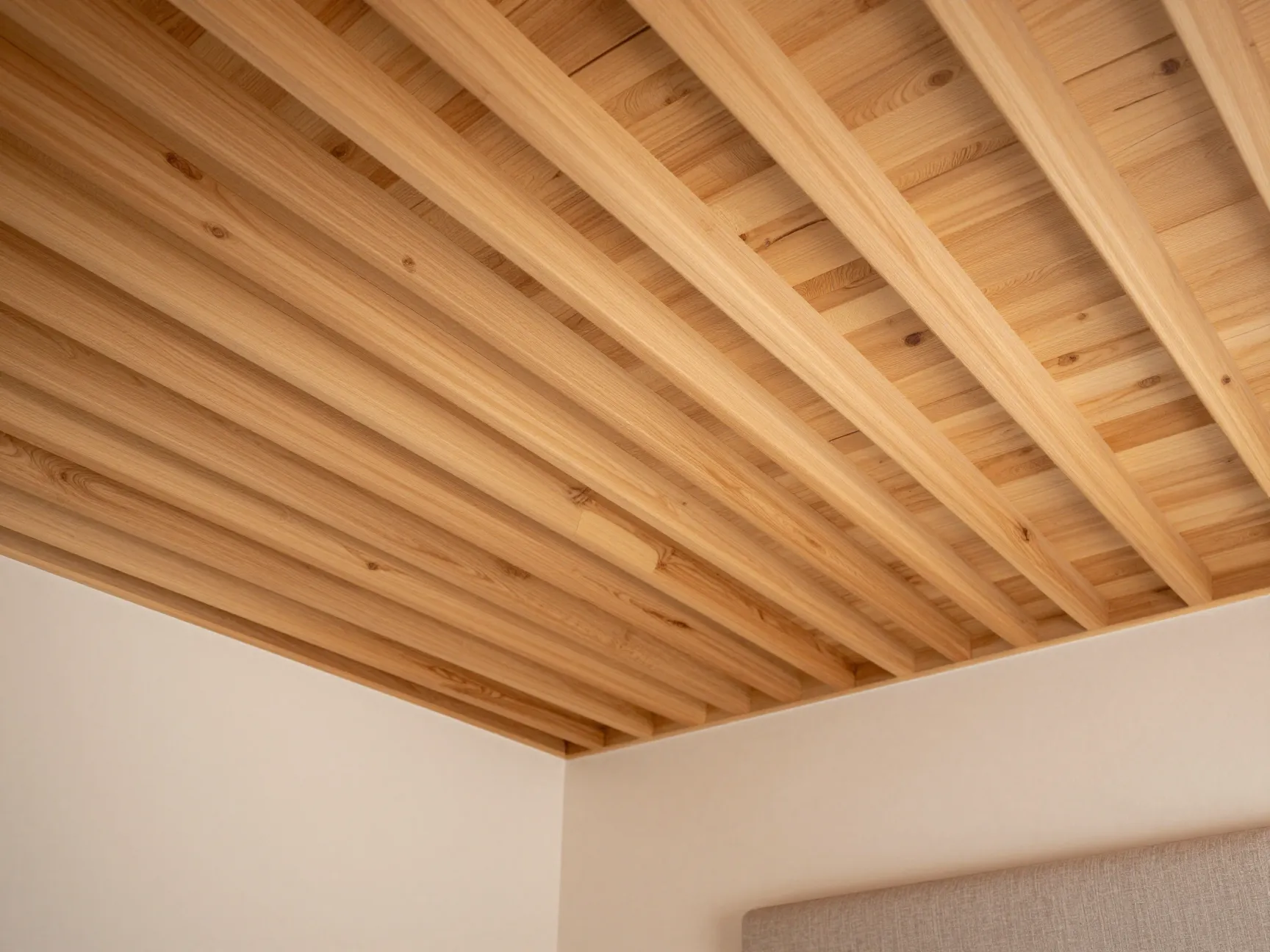
The ceiling is the one surface in a bedroom that you look at directly every time you lie down, and yet it is almost universally ignored in residential design. Designers in 2026 are calling this out as a missed opportunity [5]. Adding texture or visual interest to the ceiling creates depth, warmth, and a sense of enclosure that contributes directly to the cocooning effect.
Ceiling treatment ideas that are gaining traction:
- Wood slat panels: horizontal or vertical strips of warm-toned timber that add rhythm and natural warmth
- Fabric canopy treatments: sheer or textured fabric draped from a central point or across ceiling tracks
- Limewash or textured paint: a soft, mottled finish that catches light differently throughout the day
- Exposed beam detailing: real or faux beams in a warm stain for a grounded, architectural feel
- Coffered ceiling panels: geometric recessed panels painted in a tone slightly deeper than the walls
Even a simple limewash paint treatment on the ceiling, using a warm white or pale taupe, can make a room feel more finished and intentional without significant expense.
8. Personalize with Meaningful Decor and Sustainable Choices
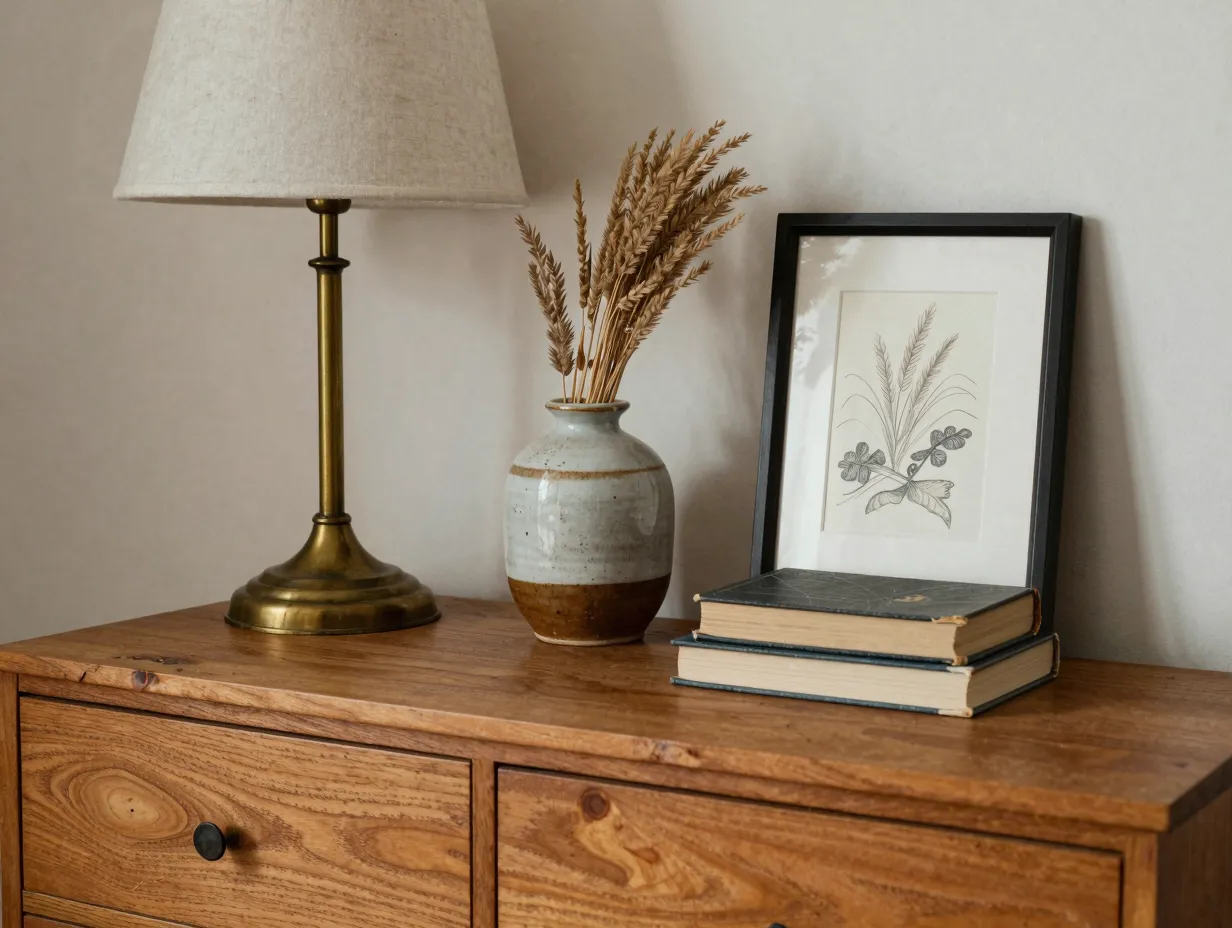
The final idea in these 8 bedroom room inspiration ideas for a restful and beautiful retreat is perhaps the most personal. A bedroom that looks like a hotel room, however beautiful, will never feel like a true retreat. What makes a space genuinely restorative is the presence of things that mean something to you [5].
In 2026, the design community is actively pushing back against the idea that bedrooms should be styled like catalog pages. The direction is toward rooms that reflect their inhabitants: a piece of art bought on a meaningful trip, a vintage lamp inherited from a grandparent, a shelf of books that are actually being read [5].
Sustainable design choices that also add character:
- Solid wood furniture from responsibly sourced or reclaimed timber [1]
- Natural fiber rugs in wool, jute, or cotton rather than synthetic alternatives
- Vintage or antique pieces that bring history and uniqueness to the room
- Handmade ceramics as bedside vessels or decorative objects
- Organic cotton or linen bedding certified by recognized sustainability standards
The sustainability angle here is not just ethical, it is aesthetic. Natural materials age beautifully, develop patina, and feel fundamentally different from synthetic alternatives. They make a room feel alive in a way that manufactured finishes rarely achieve.
Bringing It All Together: A Room-by-Room Approach
You do not need to implement all eight ideas at once. In fact, the most successful bedroom transformations I have seen happen in deliberate stages. A useful framework is to work in three layers:
Layer 1, Foundation (Color, Light, Storage)
Start with the wall color, the lighting plan, and the storage solution. These three elements define the room’s atmosphere and functionality before any furniture or decor is added.
Layer 2, Furniture (Bed, Headboard, Seating)
Choose a statement headboard and a bed frame with a silhouette that supports the room’s mood. Add a curved armchair or small seating area if the room’s dimensions allow.
Layer 3, Texture and Personalization (Soft Furnishings, Decor, Ceiling)
Layer in textures through bedding, rugs, and throws. Add the personal touches, the art, the meaningful objects, the ceiling treatment, that make the room unmistakably yours.
This staged approach also makes the project more manageable financially. Each layer can be completed over time without requiring the entire room to be finished before it becomes usable.
Conclusion
The bedroom you sleep in tonight is either working for you or against you. There is very little middle ground. The 8 bedroom room inspiration ideas for a restful and beautiful retreat covered in this article, from warm earthy color palettes and layered textures to statement headboards, curved furniture, built-in storage, multi-functional relaxation zones, textured ceilings, and personalized sustainable decor, give you a complete toolkit for creating a space that genuinely supports rest, recovery, and personal expression.
Your actionable next steps:
- Identify the single biggest friction point in your current bedroom, clutter, harsh lighting, cold colors, or a lack of comfort, and address that first.
- Choose one color from the warm earth tone palette and test it on a single wall or in your soft furnishings before committing fully.
- Audit your bedroom lighting. If you have only overhead lighting, add at least one table lamp or wall sconce at eye level to create a warmer, more layered atmosphere.
- Find one piece of meaningful, personal decor, a piece of art, a vintage object, a handmade item, and give it a prominent place in the room.
- Plan your transformation in three layers: foundation, furniture, then texture and personalization. Tackle one layer at a time.
A truly restful bedroom is not a luxury. It is an investment in every other area of your life. Start with one idea from this list, and build from there.
References
[1] Bedroom Design Trends For 2026 Whats Shaping The Modern Sleep Space – https://leonfurniturestore.com/blogs/news/bedroom-design-trends-for-2026-whats-shaping-the-modern-sleep-space?utm_source=openai
[2] Bedroom Trends 2026 Designing For Rest Feeling And Atmosphere – https://domkapa.com/en/blog/inspiration/bedroom-trends-2026-designing-for-rest-feeling-and-atmosphere/?utm_source=openai
[3] Bedroom Furniture Trends Designers Say Are Taking Over 2026 – https://www.interiordaily.com/article/9820401/bedroom-furniture-trends-designers-say-are-taking-over-2026/?utm_source=openai
[4] Bedroom Design Trends Embraces Comfort And Bespoke Style For 2026 – https://www.interiordaily.com/article/9811185/bedroom-design-trends-embraces-comfort-and-bespoke-style-for-2026/?utm_source=openai
[5] Designers Bedroom Trends 2026 – https://www.goodhousekeeping.com/home/decorating-ideas/g70839014/designers-bedroom-trends-2026/?utm_source=openai