9 Faux Brick Wall Living Room Ideas for Rustic, Urban Charm
Roughly 68% of homeowners who undertake a living room refresh say they want more texture and character without the cost of a full renovation, and faux brick delivers exactly that at a fraction of the price. Whether you live in a downtown apartment or a suburban home, the 9 Faux Brick Wall Living Room Ideas for Rustic, Urban Charm covered in this guide offer something for every style, budget, and skill level. From raw industrial statements to soft whitewashed finishes, faux brick has quietly become one of the most versatile design tools available in 2026.
Disclosure: This post contains affiliate links. As an Amazon Associate, we earn from qualifying purchases, and at no extra cost to you.
I first discovered the power of a brick-look wall when a friend transformed her cramped city apartment with a single accent wall. The room went from forgettable to genuinely impressive in a weekend. That experience sent me down a deep research rabbit hole, and what I found was a world of creative possibilities that most people never fully explore.
Key Takeaways
- Faux brick panels are lightweight, affordable, and can be installed without professional help in most cases [5]
- A single accent wall is often enough to anchor a room and add dramatic visual depth [1]
- Whitewashing or painting faux brick expands its design range from rustic farmhouse to modern industrial [2]
- Pairing brick with natural wood creates a cohesive, warm aesthetic that feels both timeless and current [3]
- Layering art, mirrors, and lighting on a faux brick wall adds personality and prevents the look from feeling flat [3]
Why Faux Brick Works So Well in Living Rooms
Before diving into the specific ideas, it helps to understand why faux brick has surged in popularity as a living room design choice. Real brick installation is expensive, heavy, and often structurally impossible in modern builds. Faux brick panels, tiles, and wallpapers solve all three problems at once [5].
The texture of brick does something that paint alone cannot: it creates depth. Light hits the raised mortar lines and the slightly uneven surface, casting micro-shadows that make a wall feel alive. That visual complexity is what gives a room warmth and character.
Faux brick also plays well with almost every other material. Wood, metal, concrete, linen, leather, brick complements them all. That versatility is why it appears in rustic farmhouses, sleek urban lofts, cozy cottages, and contemporary apartments alike.
Cost comparison at a glance:
| Option | Approximate Cost Per Sq Ft | DIY Friendly |
|---|---|---|
| Real brick veneer | $15 – $30 | Rarely |
| Faux brick panels | $3 – $10 | Yes |
| Faux brick wallpaper | $1 – $4 | Yes |
| Painted faux brick effect | $1 – $3 | Yes |
With that foundation in place, let us walk through the nine ideas that can genuinely transform your living room.
9 Faux Brick Wall Living Room Ideas for Rustic, Urban Charm
1. The Exposed Brick Feature Wall
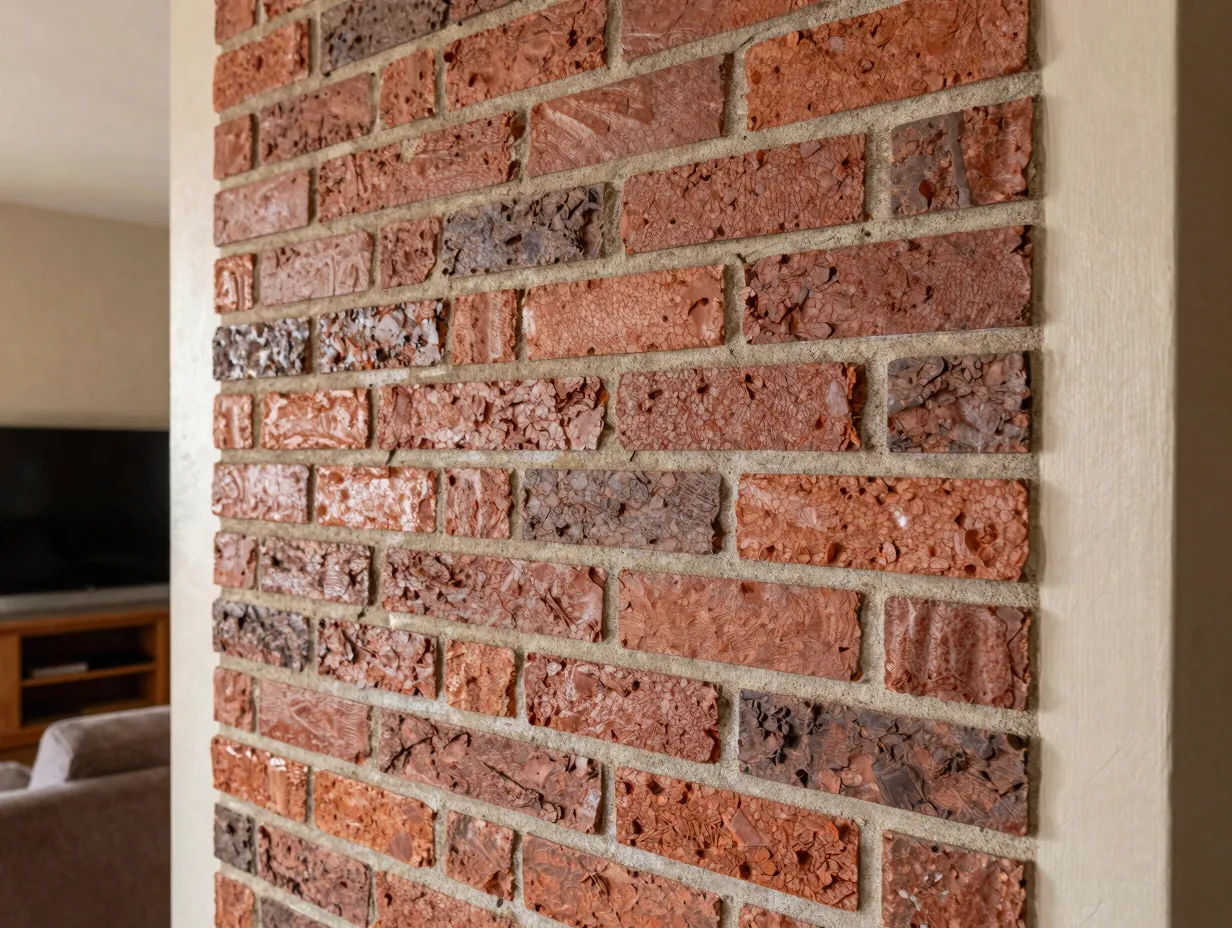
The most classic approach is also one of the most effective. Installing a faux brick accent wall on a single surface, typically the wall behind the television or the main focal point of the room, creates instant character without overwhelming the space [1].
The key is choosing the right wall. Look for the surface your eye naturally travels to when you walk into the room. That is your feature wall. A full-coverage faux brick treatment there, left in its natural reddish-brown tones, adds texture and warmth that painted drywall simply cannot replicate.
Pro tip: Use a matte sealant over your faux brick panels to reduce shine and make the surface look more authentic. Glossy finishes tend to reveal the artificial nature of the material under bright light.
This approach works especially well in rooms with neutral furniture. The brick becomes the statement; everything else supports it.
2. Whitewashed Brick for a Softer, Airier Feel
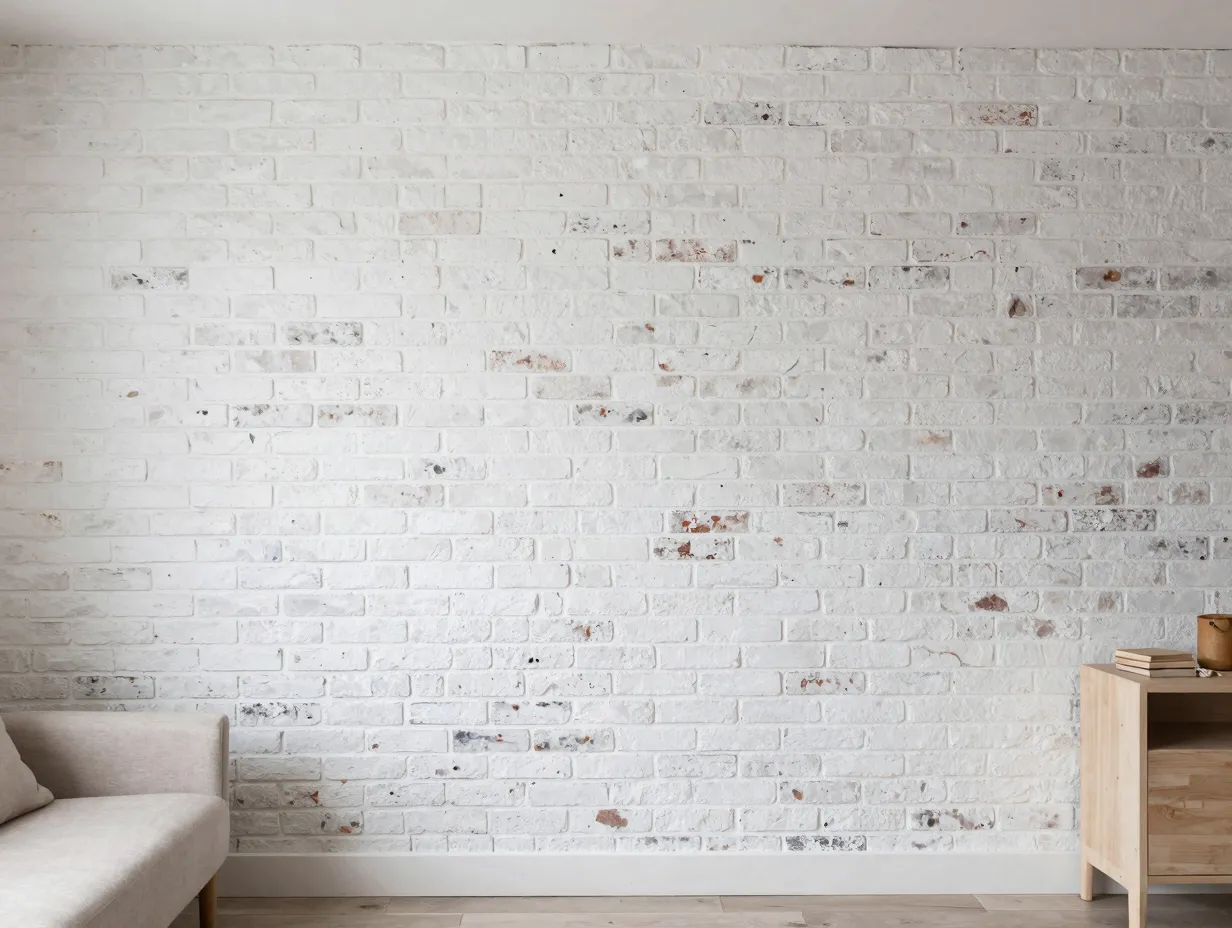
Not every home calls for the full rustic drama of raw red brick. If your living room is small, lacks natural light, or leans toward a softer aesthetic, a whitewash finish on faux brick is a brilliant solution [2].
Whitewashing involves applying a diluted white paint over the brick surface, allowing some of the original color and texture to show through. The result is a muted, layered look that feels both casual and refined. It brightens the room without making the wall disappear entirely.
I have seen this technique work beautifully in beach cottages and Scandinavian-inspired interiors. The whitewashed brick adds just enough texture to be interesting while keeping the overall palette light and airy.
“A whitewashed brick wall is the design equivalent of a well-worn linen shirt, relaxed, effortless, and somehow always appropriate.”
This is also a forgiving technique for beginners. Uneven application actually adds to the charm rather than detracting from it.
3. Industrial Loft Style with Exposed Ductwork and Metal Accents
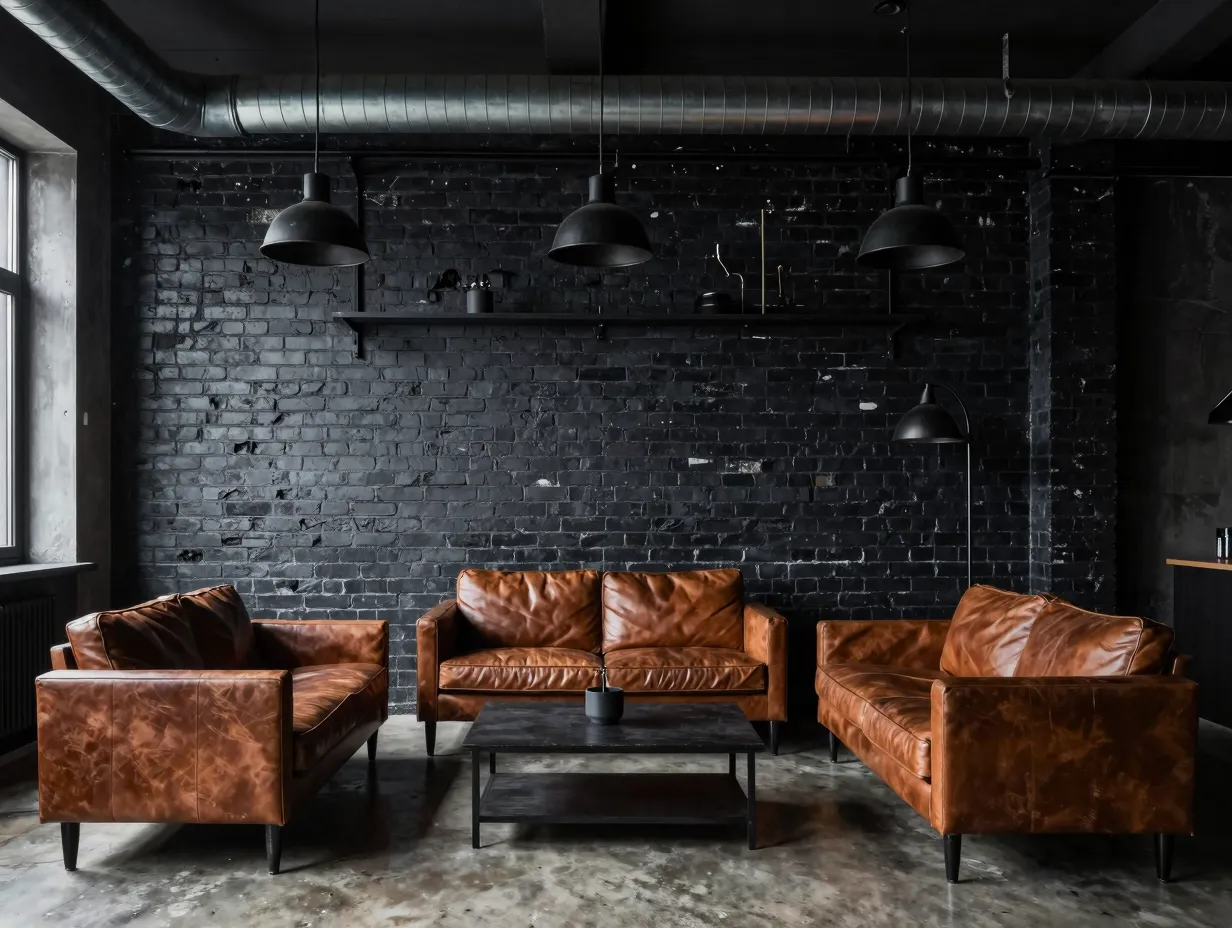
Faux brick is the backbone of the industrial loft aesthetic, and it translates surprisingly well into conventional living rooms [3]. The idea is to pair the raw texture of brick with other elements that reference urban manufacturing spaces: exposed metal ductwork (or decorative pipe shelving), black iron light fixtures, concrete-look flooring, and minimalist furniture with clean lines.
The faux brick wall in this context should be dark and moody, think deep charcoal grout lines and slightly weathered brick faces. Avoid anything too polished or uniform, as the industrial look depends on a sense of age and wear.
Elements that complete the industrial loft look:
- Matte black pendant lights or Edison bulb fixtures
- Open metal shelving with reclaimed wood planks
- Leather or canvas upholstered furniture in dark neutrals
- Concrete or slate-look flooring
- Minimal window treatments or bare steel-frame windows
The contrast between the rough brick texture and the sleek metal elements is what gives this style its energy. It feels urban, creative, and genuinely cool without trying too hard.
4. Brick Accent Wall Behind the Sofa
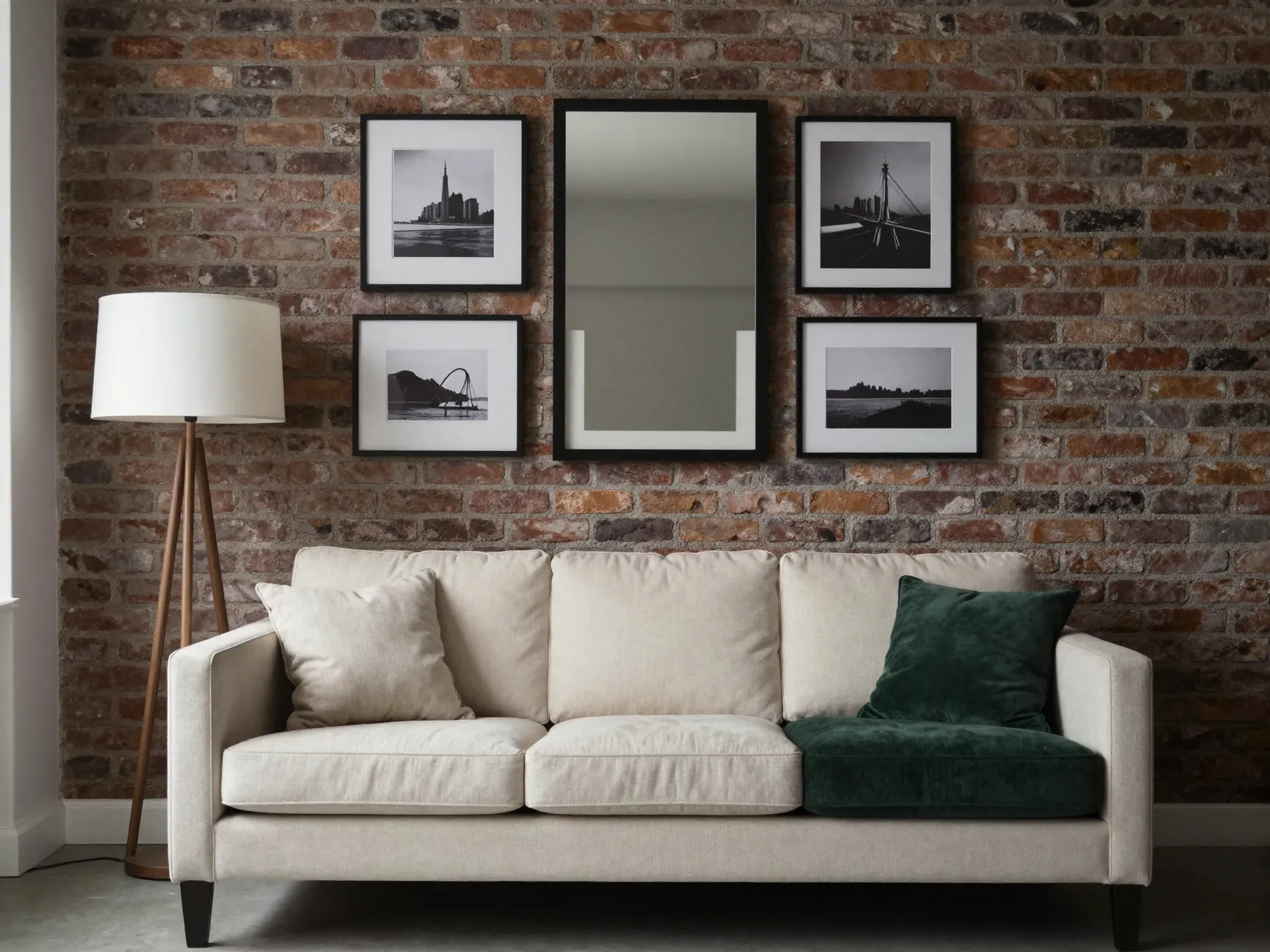
Positioning a faux brick wall directly behind the sofa is a smart design move that anchors the seating area and gives the room a clear sense of structure [3]. Think of it as creating a visual backdrop for your main furniture grouping, the same principle that makes a headboard feel essential in a bedroom.
This placement works particularly well in open-plan living spaces where the living area needs to be defined without physical barriers. The brick wall signals “this is the living room” without the need for walls or partitions.
When using this approach, consider the height of the brick treatment. A full-height wall is dramatic and bold. A partial-height treatment, say, from floor to about five feet, creates a wainscoting effect that feels more intimate and cottage-like.
Styling the sofa-wall combination:
- Keep the sofa color in contrast to the brick (cream, charcoal, or deep green all work well)
- Add a large floor lamp to one side to create depth and layering
- Use a gallery of framed prints or a single oversized mirror to break up the brick surface
5. Combining Faux Brick with Natural Wood Elements
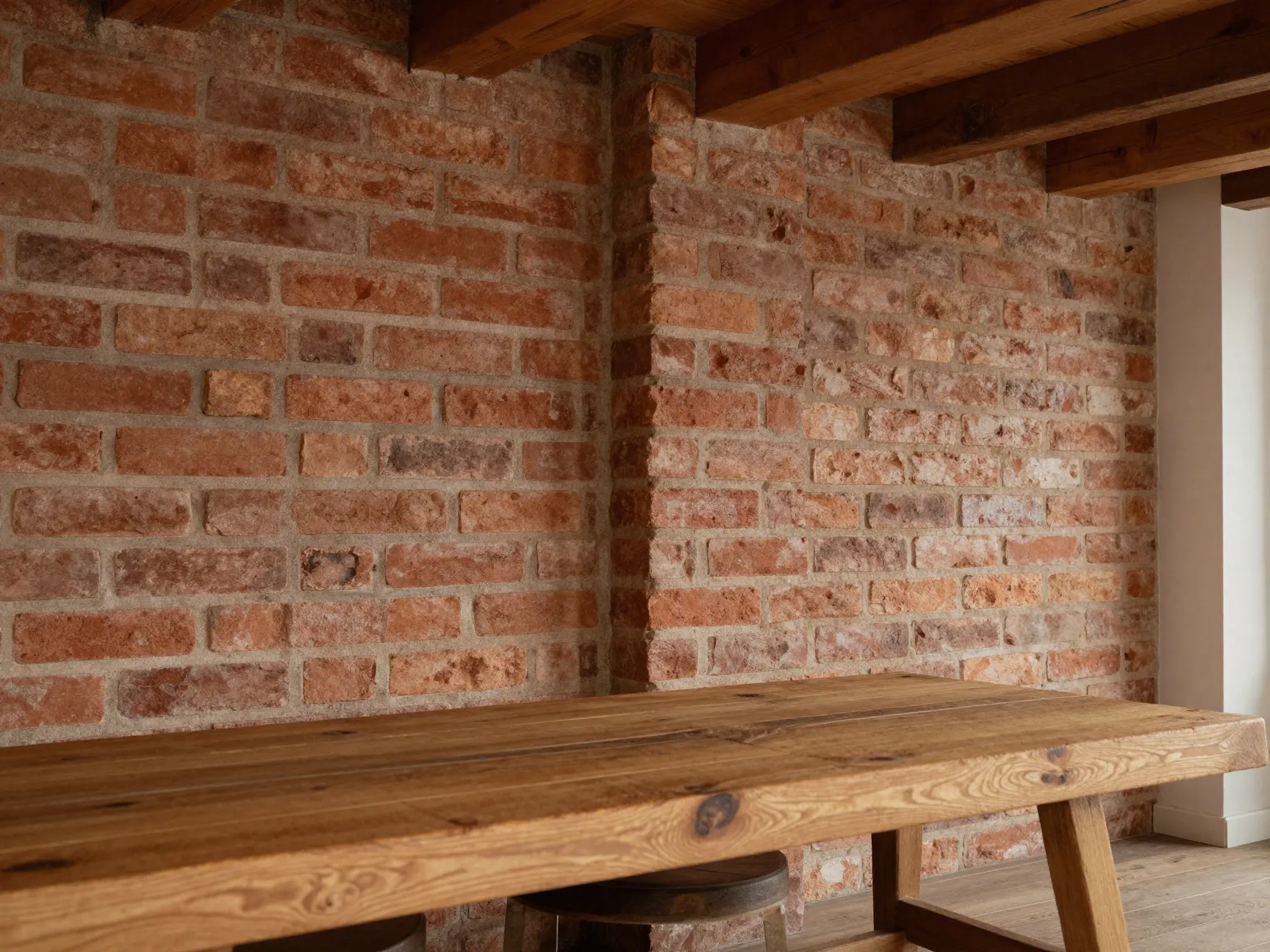
One of the most timeless pairings in interior design is brick and wood [3]. The two materials share a natural, earthy quality that makes them feel like they belong together. In a living room, this combination can be executed in several ways.
Exposed wooden ceiling beams above a faux brick wall create a strong rustic statement. A reclaimed wood mantel over a brick fireplace surround is another classic pairing. Wooden furniture, a chunky oak coffee table, a walnut media console, grounds the space and prevents the brick from feeling cold or industrial.
The secret to making this work is matching the warmth tones. Cool-toned gray brick pairs beautifully with light ash or whitewashed oak. Warm red-brown brick calls for deeper walnut or honey-toned pine.
“Brick and wood together tell a story of things built to last, there is a permanence to the pairing that feels genuinely comforting.”
This combination is also highly adaptable. It works in modern farmhouse interiors, traditional country homes, and even contemporary spaces where the wood and brick are used sparingly as accent elements.
6. Faux Brick Fireplace Surround
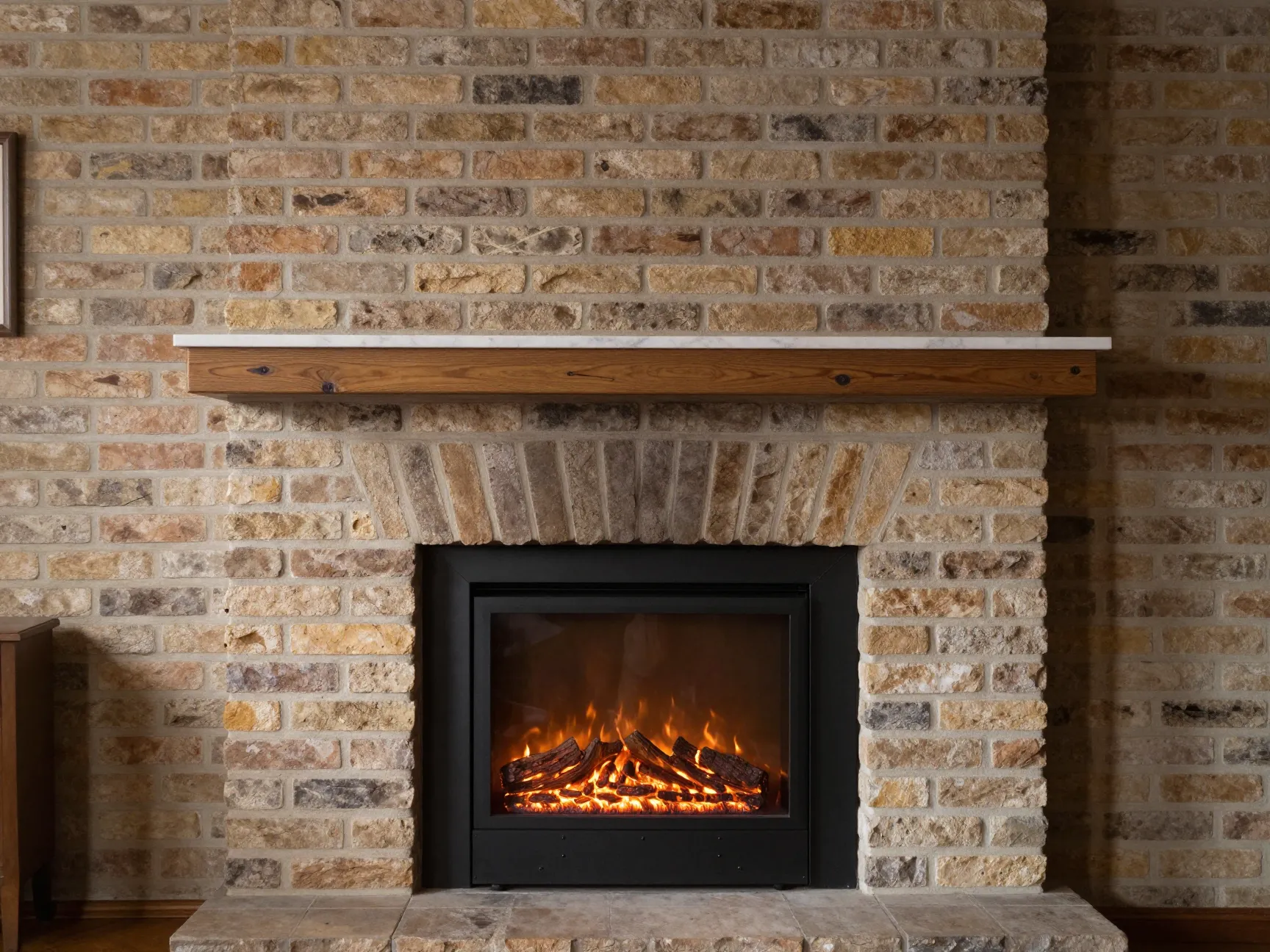
A fireplace is already the natural focal point of most living rooms. Adding a faux brick surround amplifies that focal power significantly [4]. The brick texture around a fireplace feels historically appropriate, after all, real brick fireplaces have been a domestic staple for centuries, and it adds a layer of warmth (visual, not just thermal) that other materials struggle to match.
Faux brick panels designed for fireplace surrounds are typically rated for heat resistance, which is an important specification to check before purchasing. Genstone and similar manufacturers produce panels specifically engineered for this application [4].
Design options for a faux brick fireplace surround:
- Full surround from floor to ceiling for maximum drama
- Partial surround with a contrasting mantel shelf in wood or marble
- Painted brick surround in white or cream for a more formal, traditional look
- Dark charcoal brick for a contemporary, moody fireplace aesthetic
Even in a room without a working fireplace, a faux brick surround around a decorative electric insert creates the same cozy, grounded feeling. The visual effect is nearly identical, and the installation is entirely DIY-friendly.
7. Painted Faux Brick for a Modern, Bold Twist
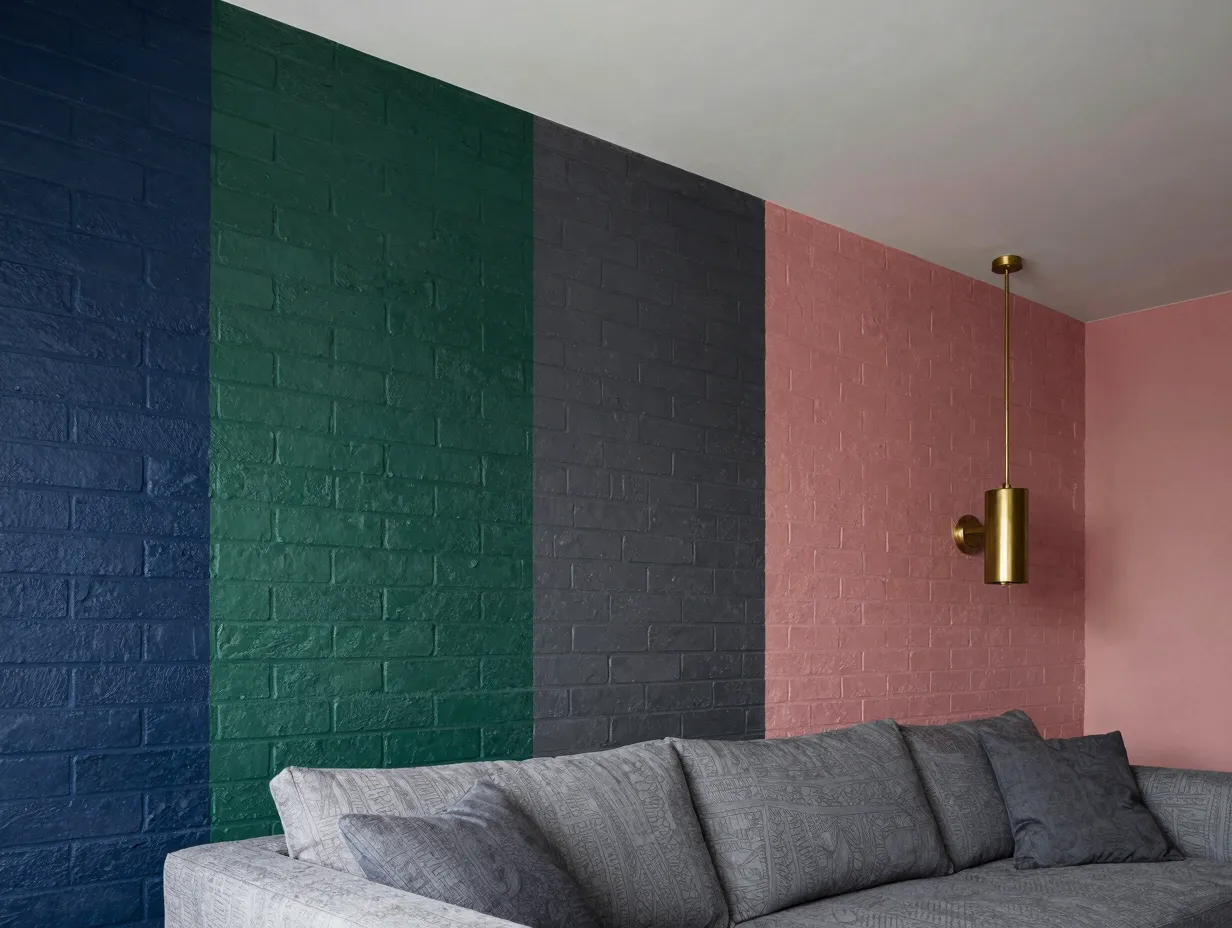
Who says brick has to be red? Painting faux brick in unexpected colors is one of the most creative ways to use this material in a contemporary living room [2]. Deep navy, forest green, charcoal gray, dusty rose, all of these colors applied over a textured brick surface create something genuinely striking.
The painted brick approach keeps the texture and depth that make brick interesting while completely transforming the color story of the room. A deep blue brick wall behind a mid-century modern sofa, for example, feels sophisticated and intentional rather than rustic.
The technique is straightforward: apply your chosen paint color directly over the faux brick panels using a roller for the flat surfaces and a brush to work paint into the mortar lines. Two coats are typically sufficient for full, even coverage.
Color pairings that work especially well:
- Charcoal gray brick with warm brass fixtures and cream upholstery
- Deep navy brick with natural oak furniture and white linen textiles
- Forest green brick with terracotta accents and rattan furniture
- Dusty rose brick with white trim and pale gray upholstery
This is the idea I would recommend most strongly to anyone who wants the texture of brick without the traditional rustic aesthetic. It is a genuinely modern approach that surprises people in the best possible way.
8. Faux Brick Panels for Fast, Cost-Effective Installation
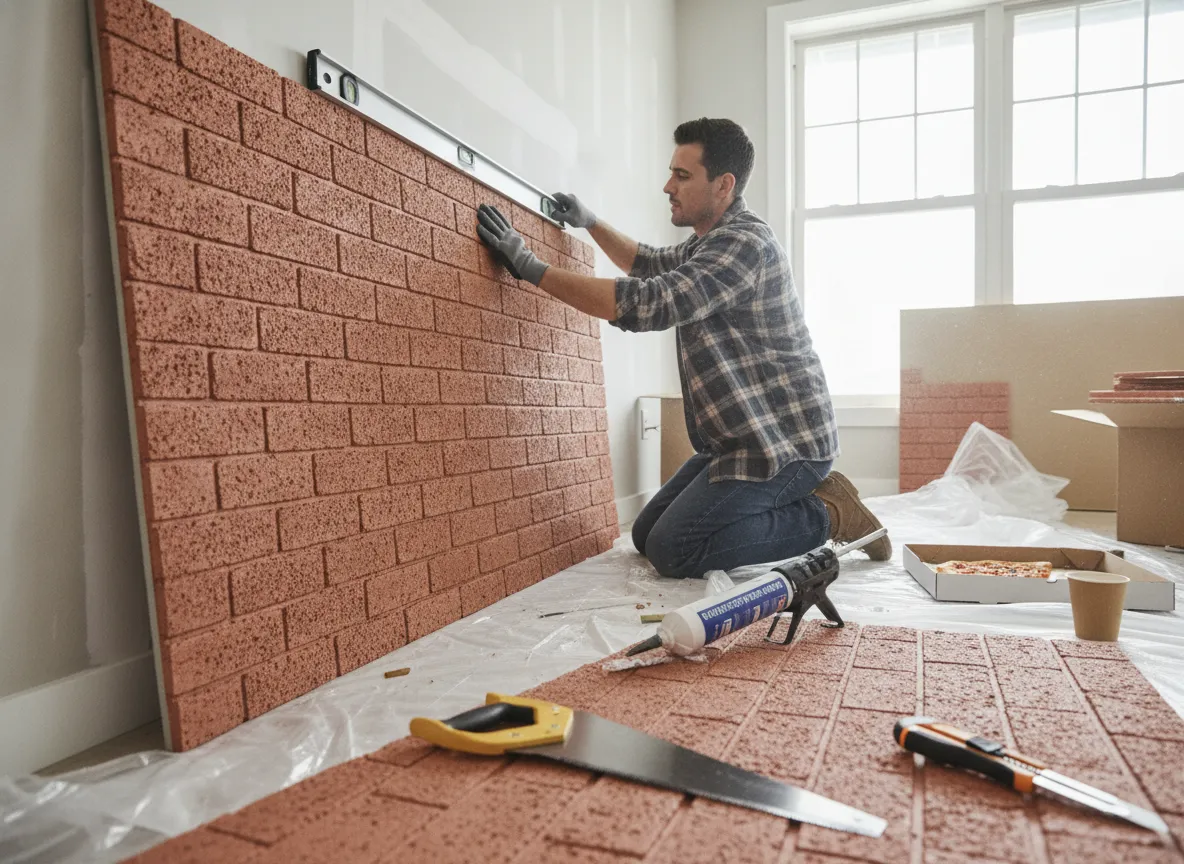
For anyone who wants results quickly and without a large budget, faux brick panels are the most practical solution available [5]. These lightweight panels, typically made from polyurethane foam, PVC, or compressed fiber, are designed to install directly over existing drywall using construction adhesive and finishing nails.
The installation process for a standard accent wall typically takes four to six hours for a competent DIYer. No special tools are required beyond a saw for trimming panels to size, a level, and a caulking gun for adhesive.
Step-by-step installation overview:
- Clean and dry the wall surface thoroughly
- Mark a level horizontal line as your starting guide
- Apply construction adhesive to the back of each panel
- Press panels firmly against the wall and secure with finishing nails
- Fill gaps and seams with flexible caulk tinted to match the mortar color
- Paint or seal as desired once adhesive has fully cured
The finished result is remarkably convincing, especially when viewed from a normal conversational distance. Most guests cannot tell the difference between quality faux brick panels and real brick veneer without touching the surface [5].
What to look for when buying faux brick panels:
- Panel thickness of at least 1 inch for realistic shadow depth
- UV-resistant finish if the wall receives direct sunlight
- Moisture resistance rating for rooms with humidity variation
- Realistic color variation across individual bricks (avoid overly uniform panels)
9. Layering Art and Mirrors on a Faux Brick Wall
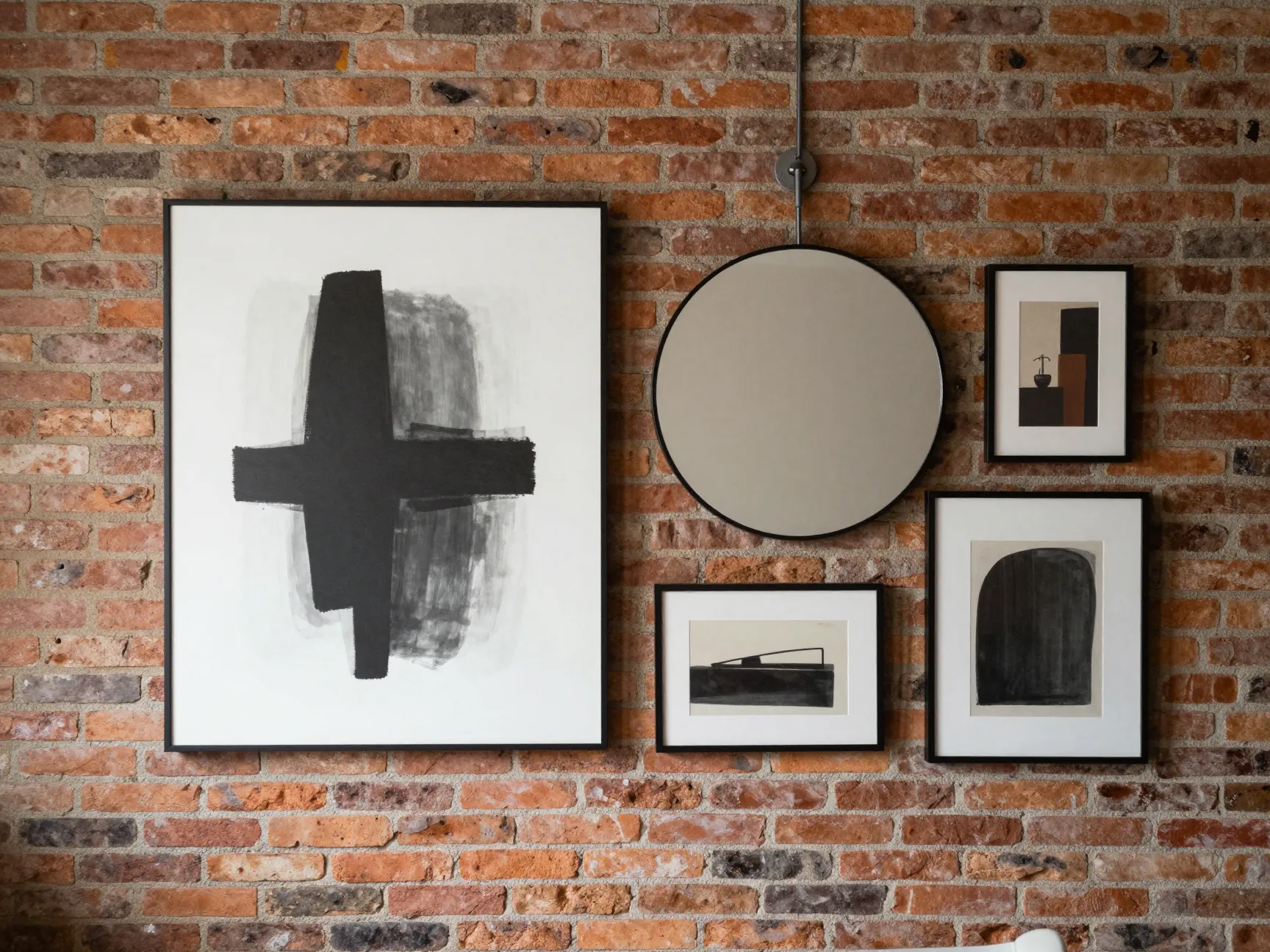
The final idea is about what you do with the brick wall after it is installed [3]. A bare faux brick wall is beautiful, but a brick wall with carefully chosen art, mirrors, and lighting becomes something truly personal and layered.
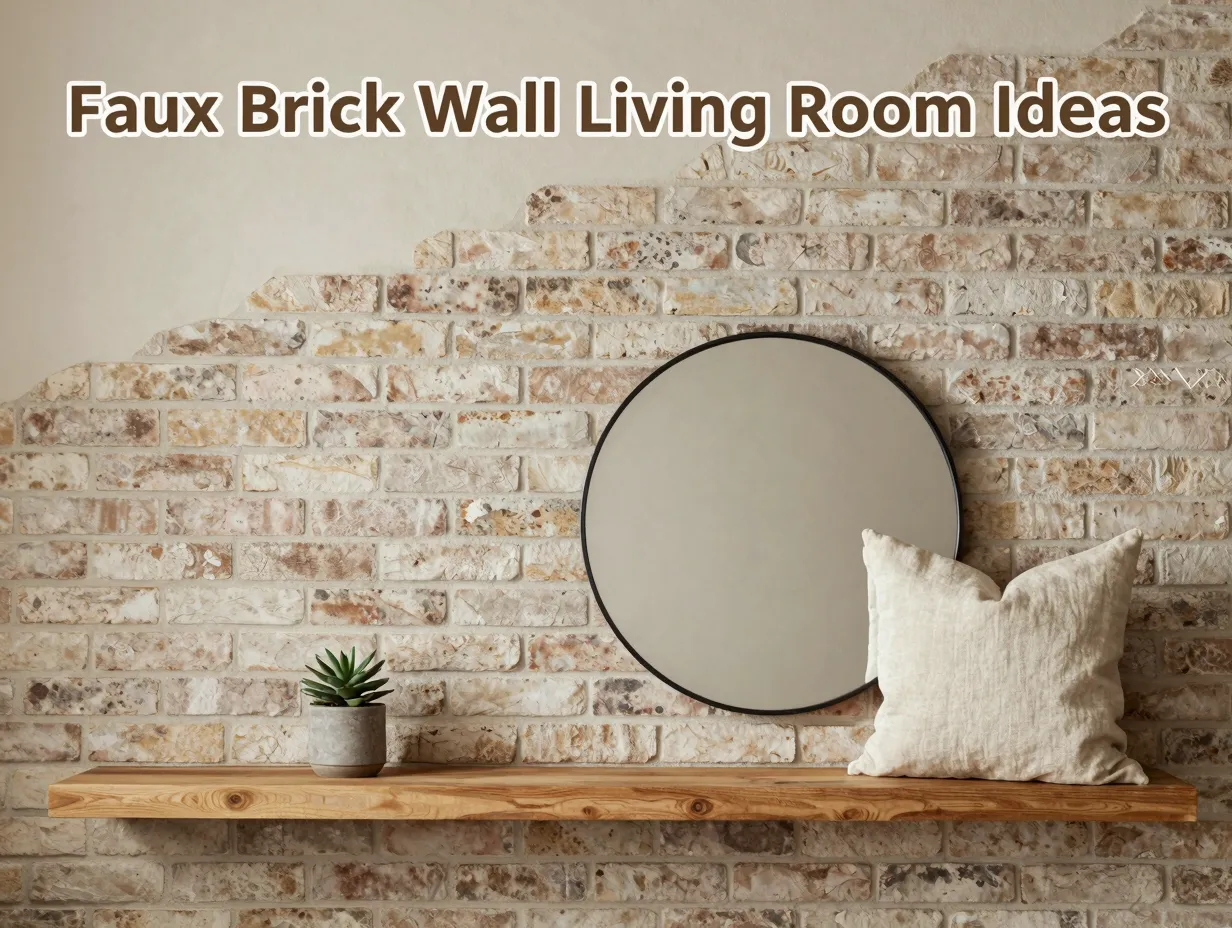
The rough texture of brick creates an interesting tension with the smooth surfaces of framed artwork and mirrors. That contrast is visually compelling. A large round mirror on a brick wall, for example, plays the organic geometry of the brick against the perfect circle of the mirror frame in a way that feels both deliberate and effortless.
Layering strategies that work:
- A gallery wall of black-and-white photography in thin black frames
- A single oversized abstract canvas in colors that echo the brick tones
- A collection of vintage mirrors in mixed frame styles and sizes
- Industrial-style wall sconces flanking a central artwork
- Floating wooden shelves with plants, books, and small sculptural objects
The key is to avoid overcrowding. Brick is already a busy surface visually. Give each piece of art or decor enough breathing room to be seen clearly against the textured background.
I personally favor the approach of one large statement piece, a canvas or mirror, rather than a dense gallery wall on brick. The single large piece creates a focal point within a focal point, and it tends to look more intentional and curated.
Choosing the Right Faux Brick Material for Your Living Room
With nine ideas in hand, the next practical question is which material to use. The three main options each have distinct advantages.
Faux brick wallpaper is the most budget-friendly and easiest to apply. It works well for renters or anyone who wants a temporary solution. The limitation is that it lacks the three-dimensional depth of panel options, so it reads as flat from certain angles.
Faux brick panels offer the most realistic appearance and the greatest design flexibility [5]. They can be painted, stained, or sealed in any finish. The higher upfront cost is offset by durability, quality panels can last ten to fifteen years without significant wear.
Faux brick paint techniques (using sponges, stamps, or stencils to create a brick pattern directly on the wall) are the most labor-intensive option but offer complete creative control over color, scale, and finish. This approach is best suited to confident DIYers with some painting experience.
Common Mistakes to Avoid
Even the best design idea can go wrong in execution. Here are the most frequent errors I see with faux brick living room projects.
Choosing panels that are too uniform. Real brick has natural color variation. Panels that are all the same shade look obviously artificial. Look for options with at least three to four color tones mixed across the surface.
Ignoring the grout lines. The mortar color matters as much as the brick color. Gray mortar reads as modern and industrial. White mortar reads as clean and contemporary. Brown or tan mortar reads as traditional and rustic. Choose intentionally.
Covering too much wall space. More is not always better with faux brick. One strong accent wall typically creates more impact than three walls covered in brick, which can make a room feel like a cave.
Skipping the sealant. Faux brick panels in living rooms collect dust in the mortar lines over time. A clear matte sealant makes cleaning dramatically easier and extends the life of the finish.
Conclusion
The 9 Faux Brick Wall Living Room Ideas for Rustic, Urban Charm explored in this guide cover the full spectrum of what faux brick can do, from the raw drama of an exposed feature wall to the refined subtlety of a whitewashed finish, from bold painted statements to the practical speed of panel installation. The common thread is that faux brick delivers genuine visual impact at a cost and complexity level that almost any homeowner or renter can manage.
Actionable next steps to move forward:
- Identify the single wall in your living room that would benefit most from a texture treatment, this is your starting point.
- Decide on your aesthetic direction (rustic, industrial, modern, or soft and airy) before choosing a material or color.
- Order sample panels or wallpaper swatches and test them against your existing furniture and lighting before committing.
- Plan your installation on a weekend when you have uninterrupted time, rushing a faux brick installation is the most common cause of poor results.
- Once the wall is complete, layer in art, lighting, and accessories gradually rather than all at once, stepping back to assess the effect at each stage.
Faux brick is one of those rare design choices that punches well above its weight. A single well-executed wall can redefine how a room feels, and in 2026, the quality of available materials makes the result more convincing than ever. Start with one wall, commit to the details, and the transformation will speak for itself.
References
[1] Brick Wall Living Room – https://purelyinspo.com/brick-wall-living-room/?utm_source=openai
[2] Brick Wall Living Room – https://plusmood.com/brick-wall-living-room/?utm_source=openai
[3] Brick Wall Living Room Ideas – https://www.coohom.com/article/brick-wall-living-room-ideas?utm_source=openai
[4] Our Favorite Faux Brick Design Ideas – https://genstone.com/insights/diy-project-ideas/our-favorite-faux-brick-design-ideas?utm_source=openai
[5] Your Guide To Brick Interior – https://www.textureplus.com/your-guide-to-brick-interior/?utm_source=openai