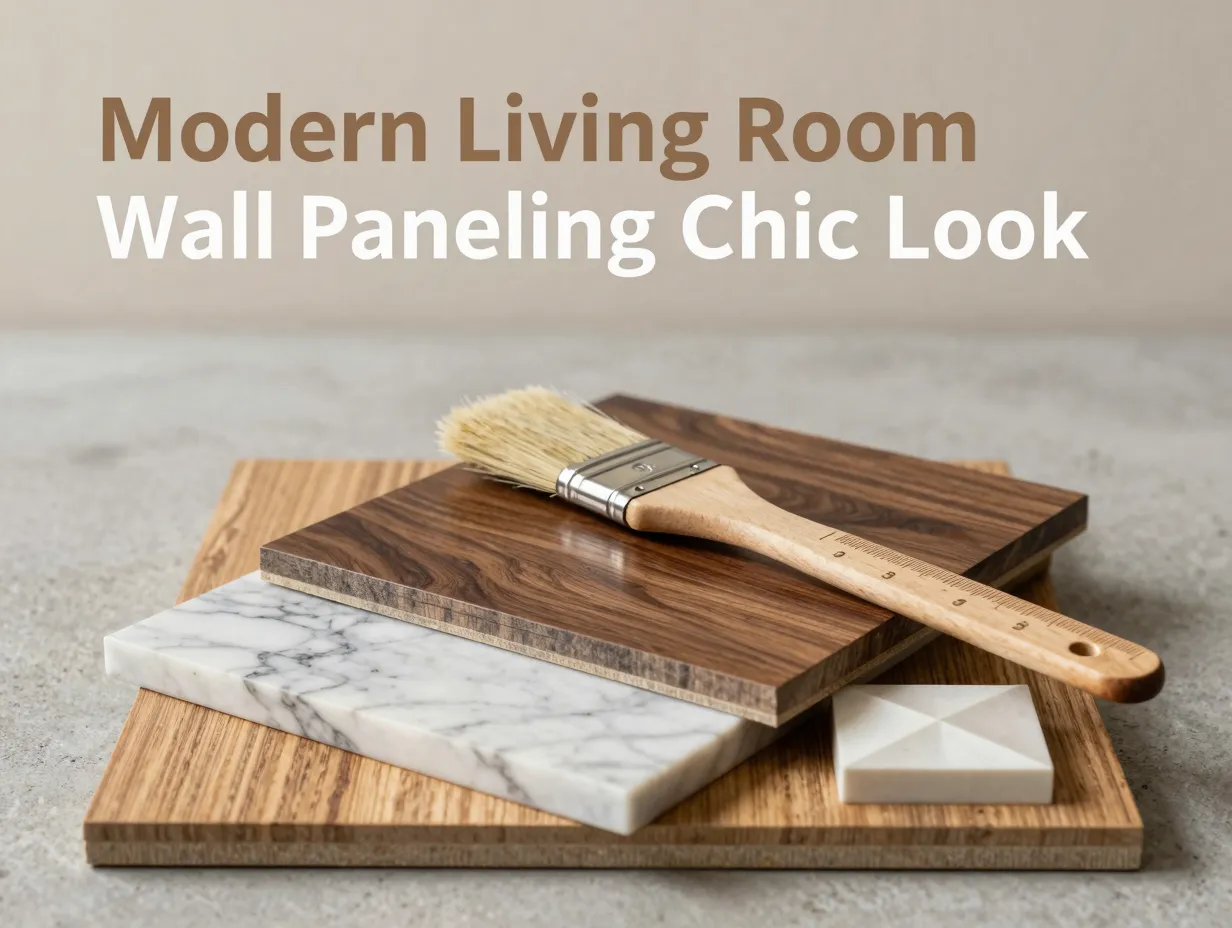
8 Modern Living Room Wall Paneling Ideas for a Chic Look
Wall paneling has made one of the most dramatic comebacks in interior design history, a 2023 survey by Houzz found that accent walls and wall treatments ranked among the top five most-requested living room upgrades by homeowners. That single statistic tells you everything about where interior design is heading. If your living room walls feel flat, forgettable, or just plain boring, the 8 modern living room wall paneling ideas for a chic look explored in this guide are exactly what you need to transform the space.
Disclosure: This post contains affiliate links. As an Amazon Associate, we earn from qualifying purchases, and at no extra cost to you.
I have spent years helping homeowners and renters rethink their interiors on various budgets, and wall paneling consistently delivers the highest visual return on investment of almost any upgrade you can make. A single paneled wall can shift the entire mood of a room, from sterile to sophisticated, from chaotic to calm, from builder-grade to bespoke.
Whether you are drawn to the warmth of dark wood, the sculptural drama of 3D geometric panels, or the quiet luxury of marble-effect finishes, this guide covers every major style, material, and practical consideration you need to make a confident decision.
Key Takeaways
- Wall paneling is one of the most cost-effective ways to add character and sophistication to a living room without a full renovation.
- Materials range from natural wood and MDF to PVC and fabric, each offering distinct aesthetic and practical benefits.
- Strategic placement, such as an accent wall behind the sofa or TV unit, creates maximum visual impact with minimal disruption.
- Trends in 2026 favor a mix of texture, depth, and organic materials, moving away from purely flat painted surfaces.
- Even renters can explore removable or lightweight panel systems that require minimal wall damage.
Why Wall Paneling Belongs in Every Modern Living Room
Before diving into the specific ideas, it is worth understanding why wall paneling has become such a dominant force in contemporary interior design. For decades, paneling carried the stigma of dark, dated 1970s rec rooms, the kind with brown tongue-and-groove boards running floor to ceiling. Today’s paneling is an entirely different animal.
Modern panels are engineered for precision, available in hundreds of finishes, and designed to work with minimalist, maximalist, Scandinavian, industrial, and traditional aesthetics alike. They add architectural interest to rooms that otherwise rely solely on furniture and accessories for personality.
Three core reasons paneling works so well in living rooms:
- It adds a third dimension to what is otherwise a flat surface.
- It draws the eye to a deliberate focal point, making the room feel intentionally designed.
- It can improve acoustics by absorbing sound, particularly with fabric or foam-backed options [2].
The 8 modern living room wall paneling ideas for a chic look covered below are organized from the most timeless to the most trend-forward, so you can find the style that matches both your taste and your timeline.
8 Modern Living Room Wall Paneling Ideas for a Chic Look
1. Dark Wood Paneling for Depth and Sophistication
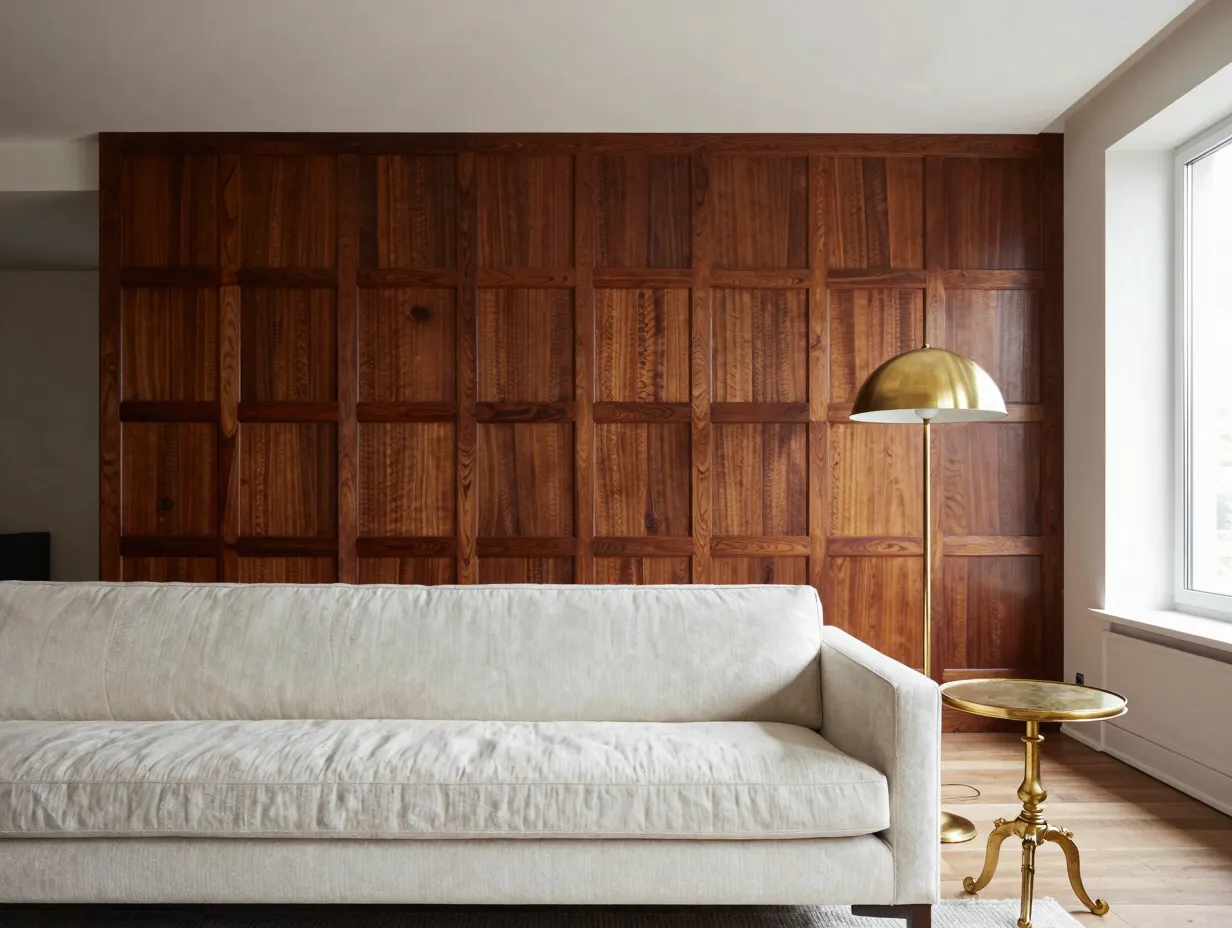
There is a reason dark wood paneling keeps appearing in the homes of people with refined taste. Rich, deep wood tones, mahogany, walnut, ebony-stained oak, create an immediate sense of warmth and gravitas that lighter finishes simply cannot replicate.
Jennifer Aniston’s living room, widely photographed and praised by design editors, features a mahogany-paneled accent wall that anchors the entire space [1]. The panel does not overwhelm the room; instead, it acts as a grounding element that makes every other piece of furniture feel more intentional.
Best suited for: Larger living rooms, rooms with high ceilings, spaces with natural light from multiple windows.
Practical tip: If your room is smaller, limit dark wood paneling to a single accent wall rather than all four walls. Pair it with light-colored upholstery and metallic accents, brushed brass or antique gold, to prevent the space from feeling closed in.
Material options:
- Solid hardwood (premium, long-lasting, expensive)
- Engineered wood veneer (cost-effective, realistic grain)
- MDF with dark wood-effect laminate (budget-friendly, easy to install)
Dark wood paneling is the design equivalent of a well-tailored suit: classic, authoritative, and always appropriate.
2. Fluted Panels for Vertical Elegance
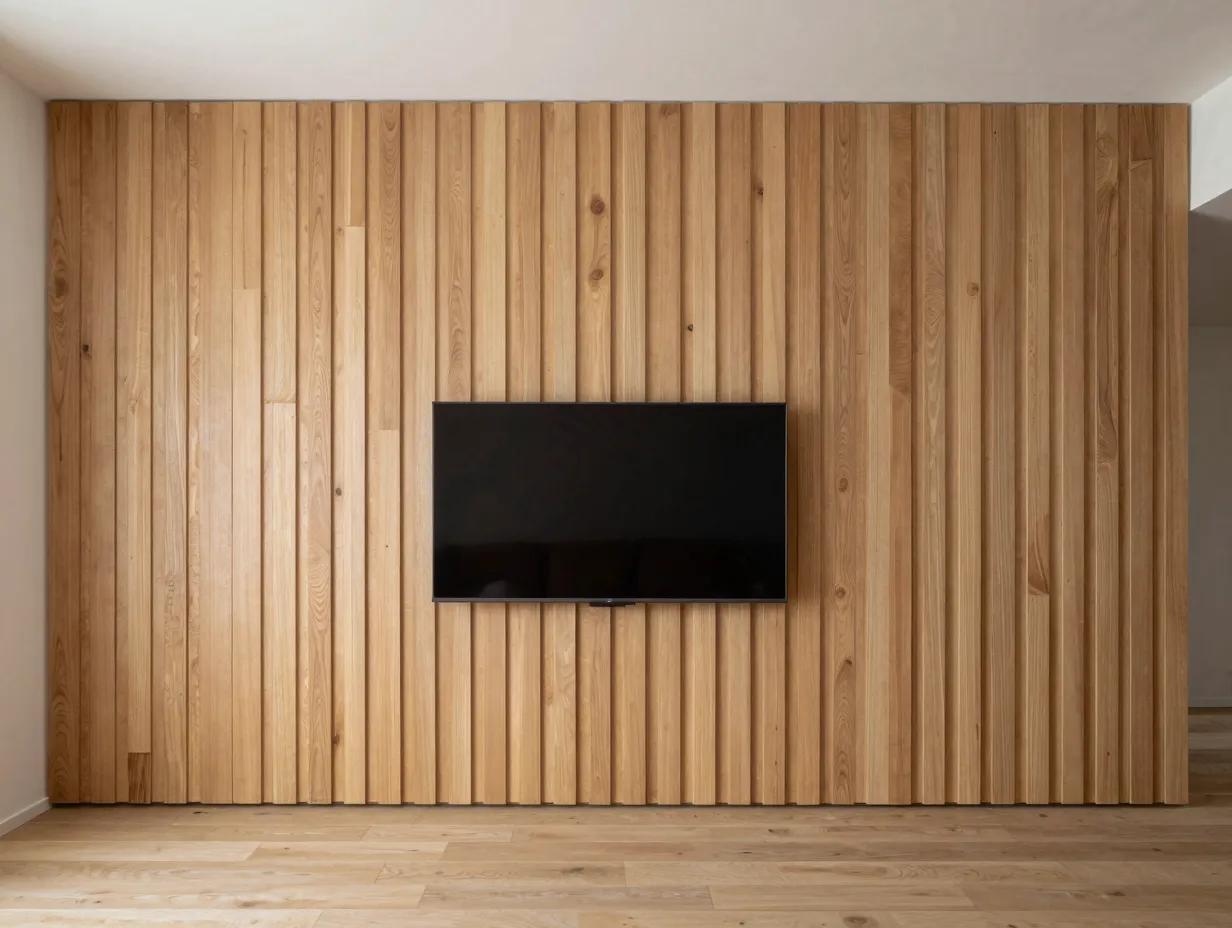
Fluted paneling, characterized by repeating vertical ridges or channels, has become one of the defining aesthetics of contemporary interior design. The vertical lines create an optical illusion of height, making ceilings feel taller and rooms feel more expansive [2].
What makes fluted panels particularly versatile is the range of materials available. PVC fluted panels are moisture-resistant and easy to clean, making them practical for busy households. MDF versions accept paint beautifully, allowing you to match any color palette. Natural wood fluted panels bring warmth and organic texture that no synthetic material can fully replicate.
I recently worked with a client whose living room had standard 8-foot ceilings, a common constraint in modern apartments. After installing floor-to-ceiling natural oak fluted panels on the wall behind the television, the room felt dramatically taller and more polished. The transformation took a single weekend and a modest budget.
Color and finish recommendations:
| Finish | Best Paired With | Mood Created |
|---|---|---|
| Natural oak | Linen, cream, warm whites | Scandinavian warmth |
| Painted white | Bold furniture, graphic art | Clean minimalism |
| Charcoal or black | Brass, marble, jewel tones | Dramatic luxury |
| Walnut stain | Leather, terracotta | Earthy sophistication |
Fluted panels are particularly effective when used as a full-height feature wall rather than a partial installation. The unbroken vertical rhythm is what gives the style its distinctive, modern elegance.
3. Marble-Effect Panels for Effortless Luxury
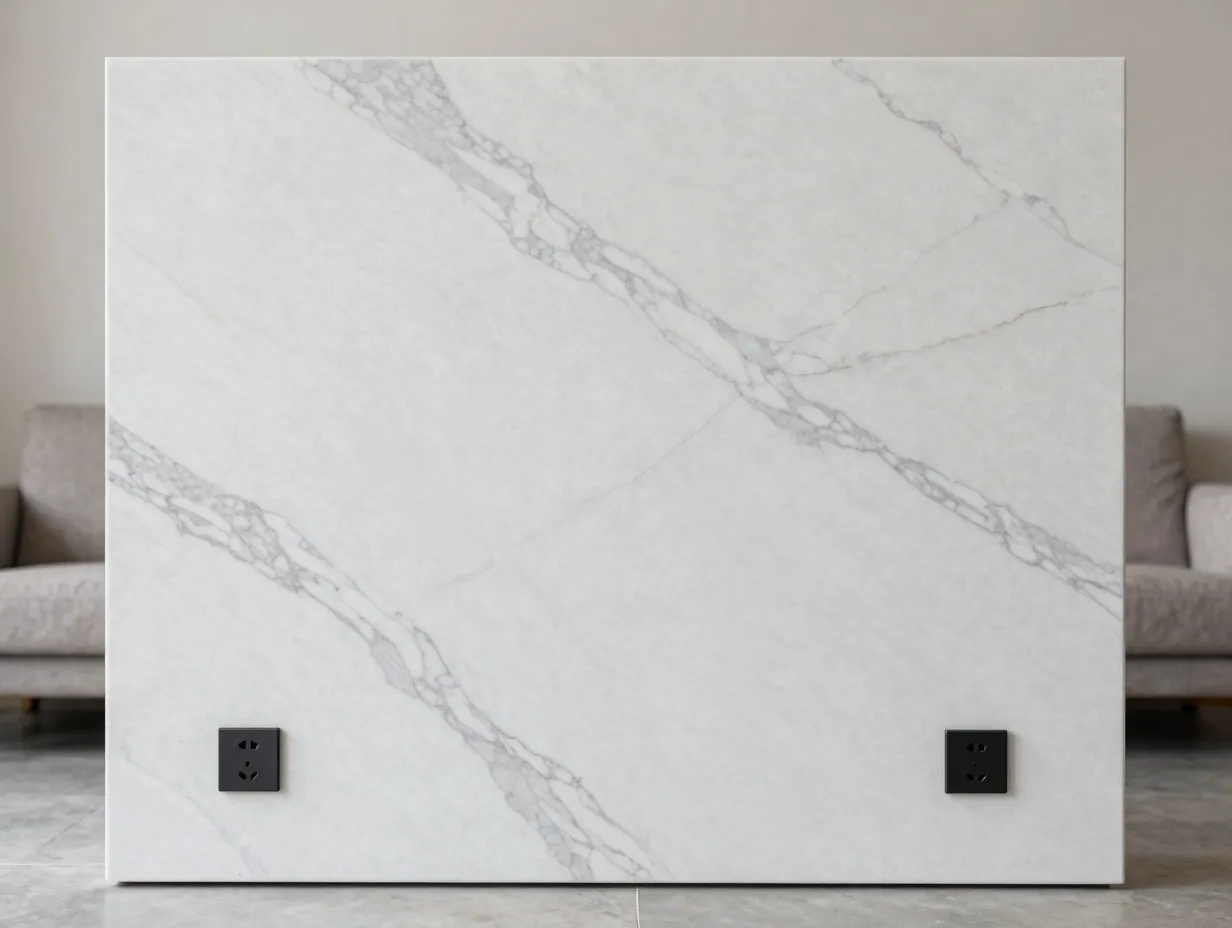
Real marble is breathtaking. It is also extremely heavy, prohibitively expensive for most homeowners, and notoriously difficult to maintain. Marble-effect panels solve all three problems while delivering a visual result that is, in many cases, genuinely difficult to distinguish from the real thing [3].
Modern marble-effect panels use high-resolution digital printing and textured surface treatments to replicate the depth and variation of natural stone. The result is a panel that captures the grey-white veining of Carrara marble or the dramatic gold-on-black of Nero Marquina without the structural requirements of actual stone installation.
Why marble-effect panels work in living rooms:
- They create an instant luxury focal point behind a sofa or fireplace.
- Large-format panels (some up to 10 feet wide) minimize visible seams for a seamless look.
- They are significantly lighter than stone, making DIY installation feasible.
- Maintenance is as simple as wiping with a damp cloth [3].
“The goal of a luxury interior is not to use expensive materials, it is to create the feeling of expense. Marble-effect panels achieve that goal with remarkable efficiency.”
For maximum impact, pair marble-effect panels with matte black fixtures, low-profile furniture in neutral tones, and statement lighting. The contrast between the busy marble pattern and the calm simplicity of everything else is what makes the look feel curated rather than chaotic.
4. Geometric 3D Panels for Artistic Drama
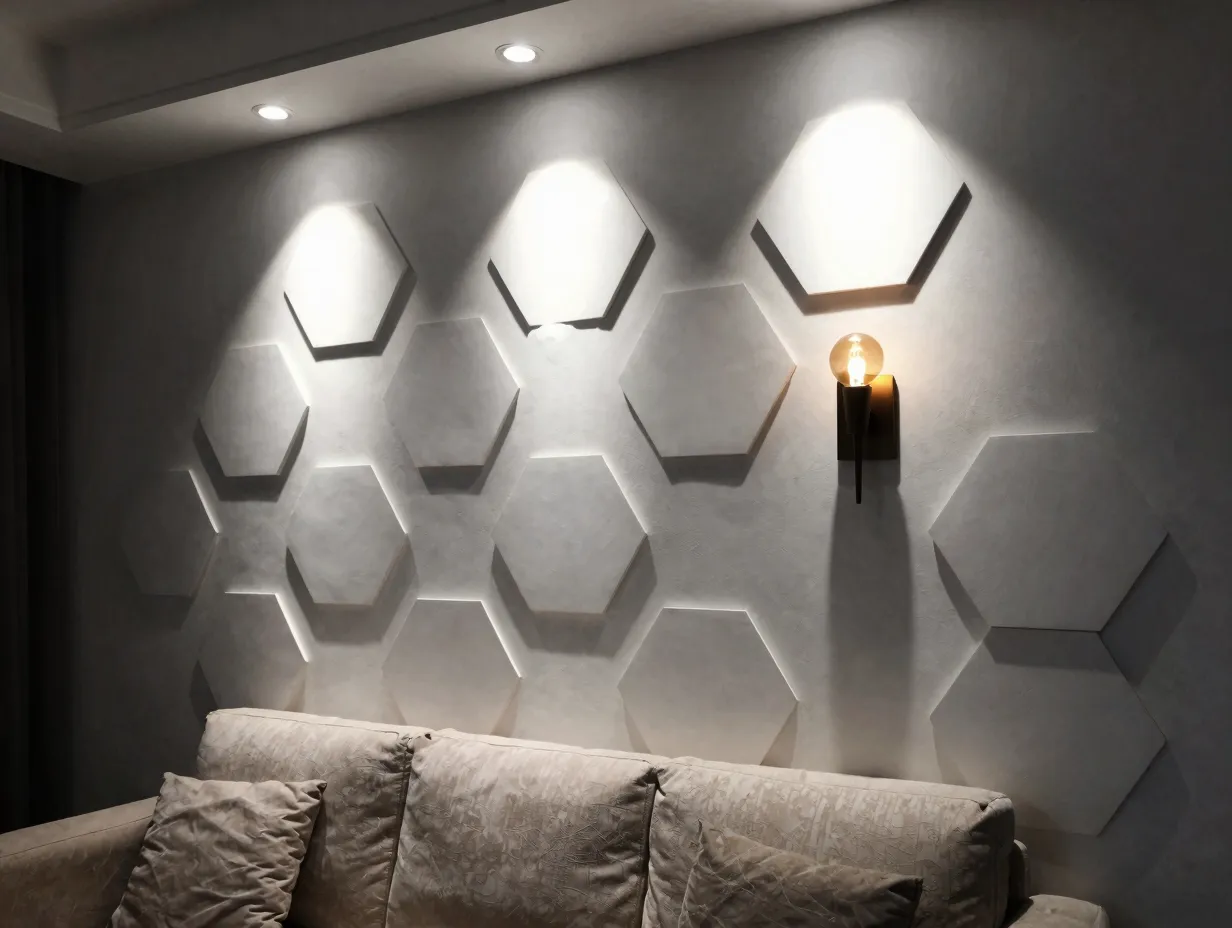
If you want your living room wall to function as a piece of art, geometric 3D panels are the answer. These panels are molded or carved into repeating three-dimensional shapes, hexagons, diamonds, waves, chevrons, that cast shadows and change appearance depending on the light source and viewing angle [4].
The effect is genuinely dynamic. A wall covered in 3D geometric panels looks different in morning light than it does under evening lamps. That built-in variability keeps the space feeling alive and interesting in a way that a flat painted wall never can.
Material options for 3D panels:
- Gypsum (plaster): Heavy but highly detailed; ideal for traditional or transitional interiors.
- Polyurethane foam: Lightweight, easy to cut and install; suitable for renters.
- MDF: Paintable, durable, and available in precise geometric cuts.
- PVC: Water-resistant and low-maintenance.
3D panels are most effective when lit deliberately. Recessed spotlights positioned at an angle to the wall will amplify the shadow play and make the geometric pattern appear more pronounced. A single warm-toned wall sconce can achieve a similar effect on a smaller scale.
Best placement: The wall directly behind the main sofa, or the wall facing the room’s primary entrance, anywhere a guest’s eye naturally travels first.
5. Wainscoting for Timeless Charm
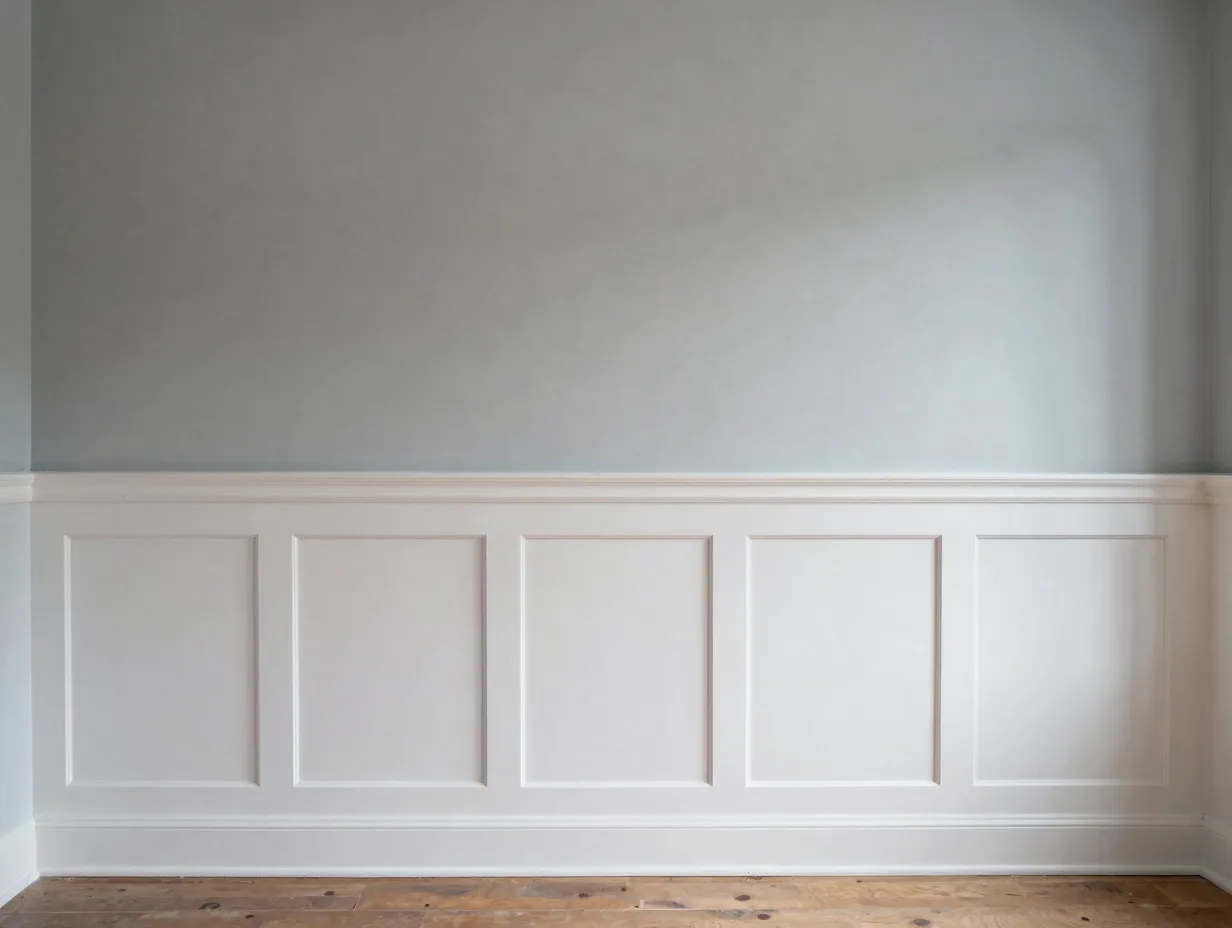
Wainscoting is the oldest idea on this list and, in many ways, the most enduringly relevant. Traditionally, wainscoting referred to wooden paneling applied to the lower portion of a wall, typically the bottom third, with a chair rail or cap molding at the top. In modern interiors, the concept has expanded considerably [5].
Shaker-style wainscoting, with its clean rectangular frames and flat centers, has become a particular favorite for homeowners who want a classic look without heavy ornamentation. It works equally well in contemporary, farmhouse, and transitional living rooms. The key is proportion: the wainscoting height should relate logically to the ceiling height, typically sitting between 32 and 36 inches from the floor in standard rooms [5].
Modern wainscoting variations:
- Full-height picture frame molding, rectangular frames applied across the entire wall height, creating a grid of panels without covering the wall surface.
- Board and batten, vertical boards separated by flat battens, creating a rhythmic, linear pattern.
- Shiplap, horizontal boards with a small reveal between each plank, associated with coastal and farmhouse aesthetics.
- Raised panel wainscoting, the most traditional form, with panels that project slightly from the wall surface.
Wainscoting is also one of the most DIY-friendly options on this list. Pre-primed MDF molding kits are widely available, and a confident beginner can complete a single wall in a day.
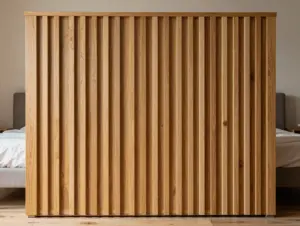
6. Vertical Wooden Slats for Contemporary Warmth
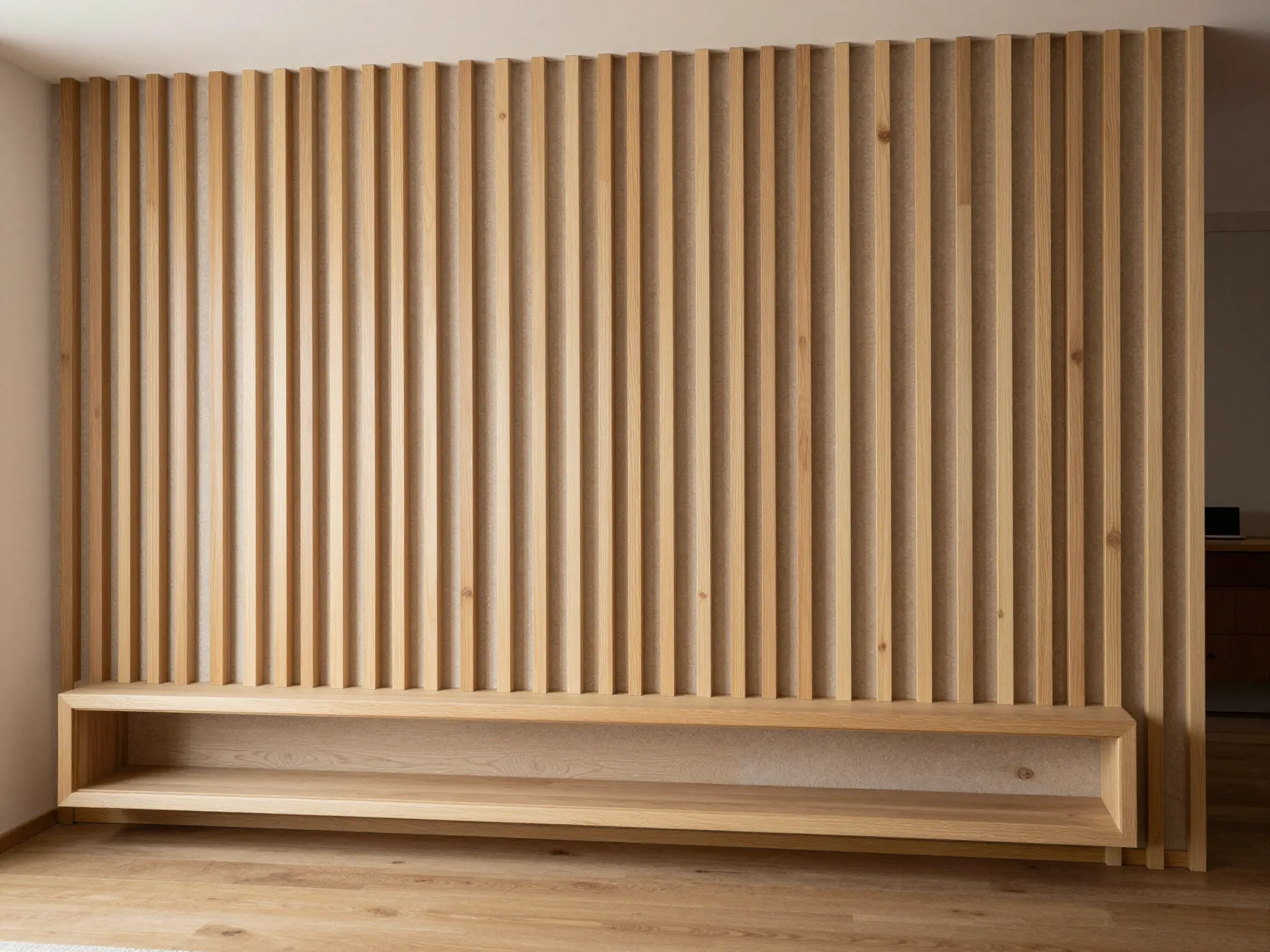
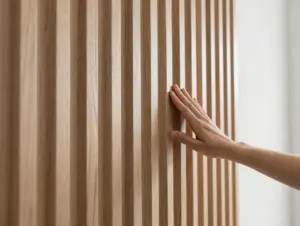
Vertical wooden slat panels occupy a sweet spot between the organic warmth of natural wood and the clean geometry of modern design. Unlike solid wood paneling, slat systems create a rhythm of light and shadow between each plank, giving the wall a sense of depth and movement [4].
Floor-to-ceiling slat installations are particularly effective because they draw the eye upward, making the room feel taller. Natural wood tones, ash, pine, birch, work beautifully in Scandinavian-inspired spaces. Painted finishes in white, grey, or black suit minimalist or industrial aesthetics.
A personal note: The first time I installed vertical wooden slats in my own living room, I was skeptical that the relatively simple concept would have much impact. I was completely wrong. The wall became the first thing every visitor commented on, not because it was flashy, but because it felt considered and warm in a way that paint alone never achieved.
Installation considerations:
- Spacing between slats: Narrower gaps (half an inch to one inch) create a denser, more dramatic look. Wider gaps (two to three inches) feel lighter and more open.
- Depth of slats: Deeper slats cast more shadow and create stronger visual texture.
- Backing: Many slat systems come mounted on an acoustic felt backing, which improves sound absorption, a practical bonus in open-plan living rooms.
For a cohesive look, extend the slat installation to include a built-in shelf or media unit at the base. This grounds the vertical element and gives the wall a purposeful, architectural quality.
7. Accent Wall Panels for Strategic Focal Points
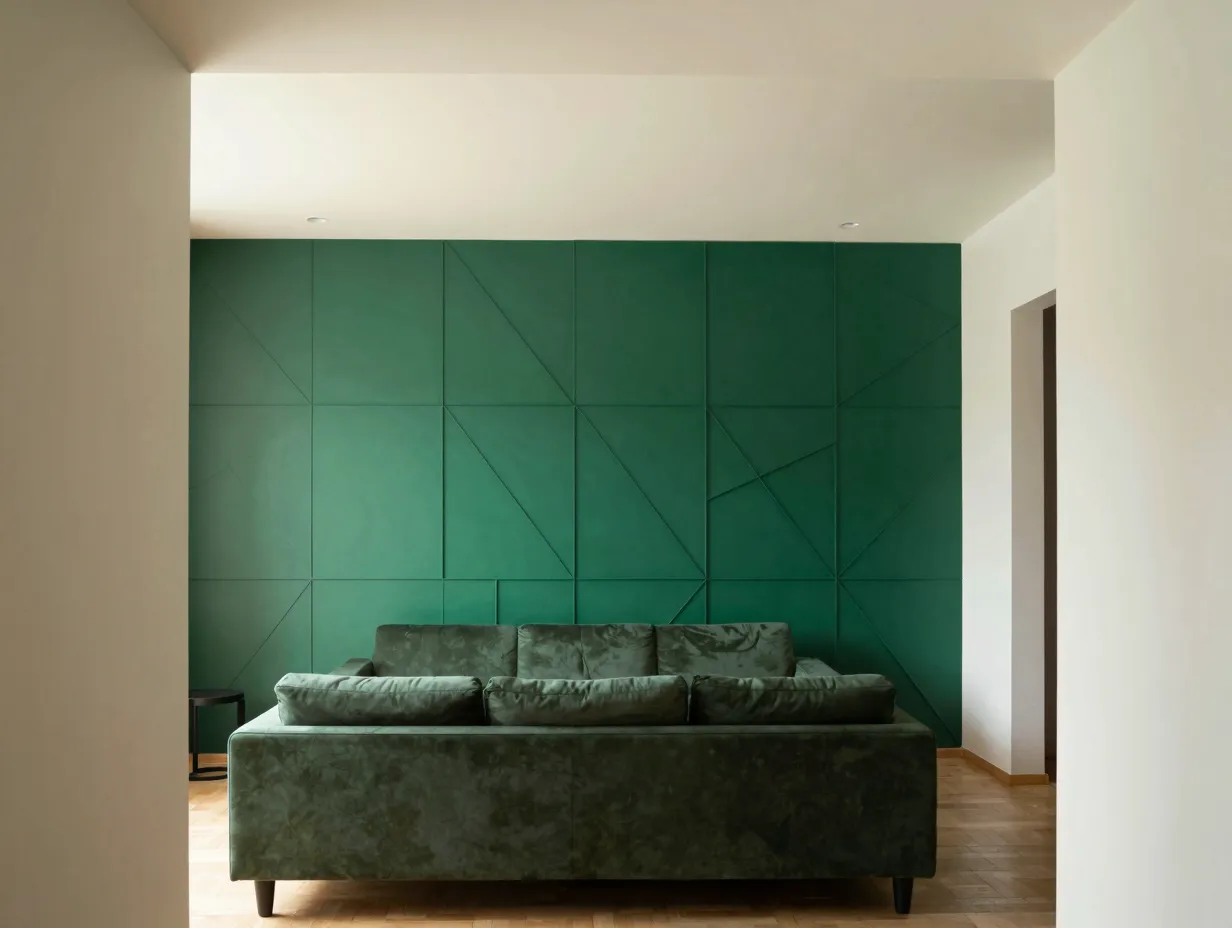
Not every living room needs, or benefits from, paneling on all four walls. In many cases, a single paneled accent wall delivers more visual impact than a fully paneled room, precisely because the contrast between the paneled surface and the plain walls amplifies the effect [6].
The most effective locations for accent wall panels in a living room are:
- Behind the main sofa: This is the natural focal point when entering most living rooms. Paneling here frames the seating area and makes it feel like a deliberate, designed zone.
- Behind the television or media unit: A paneled TV wall elevates what is often the most utilitarian element in a living room into a design feature.
- Around a fireplace: Paneling that frames and extends beyond the fireplace surround creates a dramatic chimney breast effect, even in rooms without a traditional chimney.
Design principle: When using an accent wall approach, choose a panel style or color that is more bold or textured than you might use across an entire room. The single-wall format gives you permission to be more adventurous [6].
A client of mine used large-format geometric 3D panels in a deep forest green on the wall behind their sofa. The rest of the room was painted in a warm off-white. The result was striking without being overwhelming, exactly the balance that makes a room feel professionally designed rather than over-decorated.
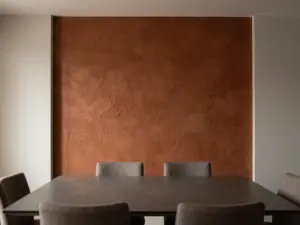
8. Textured Panels for Tactile Depth and Acoustic Comfort
The final idea in this collection of 8 modern living room wall paneling ideas for a chic look is also the most sensory: textured panels that engage not just the eye but the sense of touch and even sound.
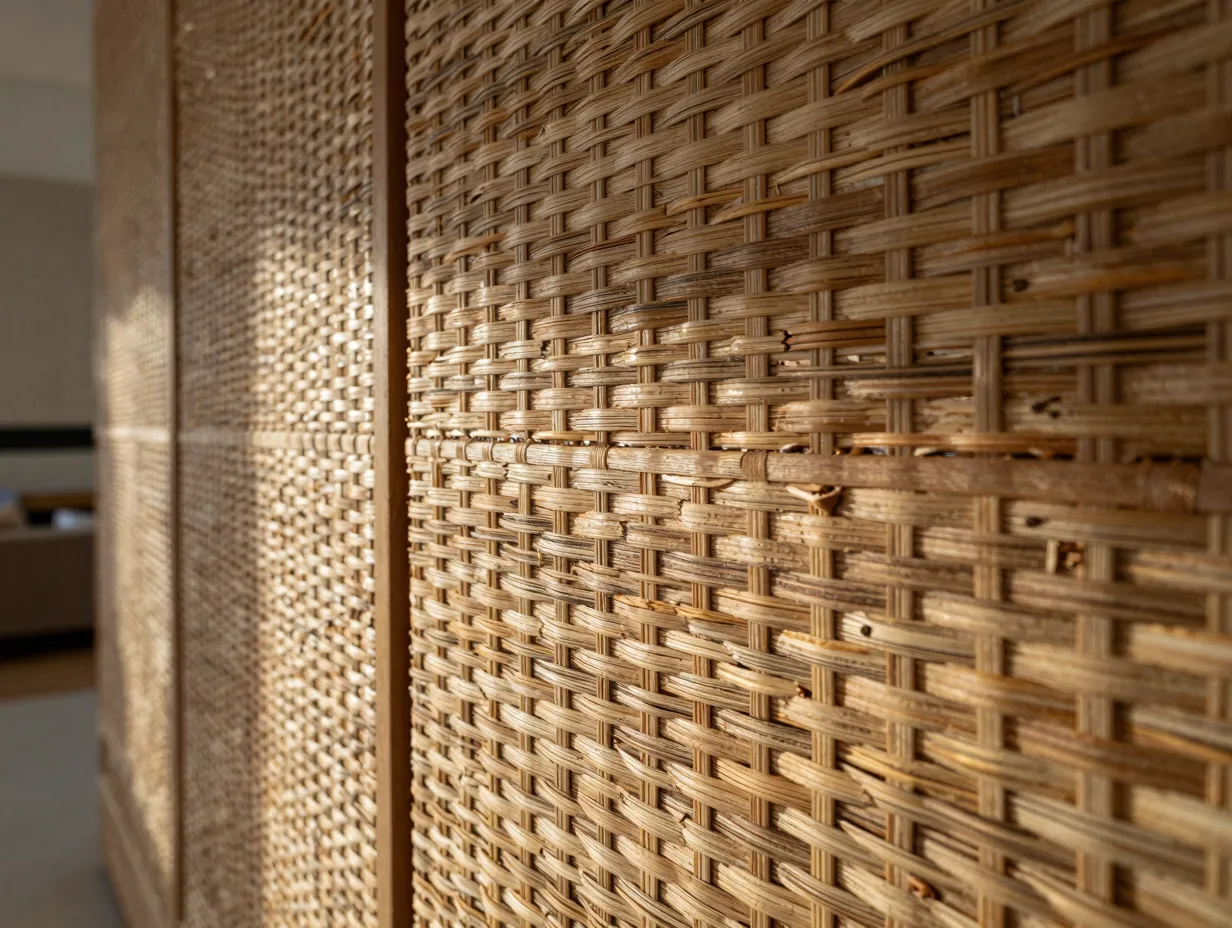
Textured panels come in a wide range of materials and surface treatments. Leather-effect panels bring a rich, tactile quality associated with high-end hospitality design, think boutique hotel lobbies and private members’ clubs. Fabric-wrapped panels offer a softer, more residential warmth. Rattan and woven natural fiber panels connect the interior to organic, biophilic design principles that are increasingly central to contemporary living spaces [2].
Acoustic benefits of textured panels:
One underappreciated advantage of textured and fabric panels is their ability to reduce echo and improve sound quality in a room. Hard surfaces, concrete, glass, plaster, reflect sound, creating a live, reverberant acoustic environment. Soft, textured panels absorb sound energy, making conversation clearer and music more enjoyable [2].
This makes textured panels particularly valuable in open-plan living rooms, rooms with high ceilings, or any space that tends to feel acoustically harsh.
Textured panel material comparison:
| Material | Visual Effect | Acoustic Benefit | Maintenance |
|---|---|---|---|
| Leather effect | Luxurious, rich | Low | Wipe clean |
| Fabric wrapped | Soft, residential | High | Spot clean |
| Rattan/woven | Natural, organic | Medium | Dust regularly |
| Cork | Earthy, textured | High | Minimal |
| Embossed PVC | Geometric, modern | Low | Wipe clean |
For the most impactful result, combine a textured panel installation with deliberate lighting. Grazing light, a light source positioned close to the wall surface and aimed across it, will highlight every ridge and weave, turning the texture into a visual feature in its own right.
How to Choose the Right Panel Style for Your Living Room
With eight strong options on the table, the challenge is narrowing down to the right choice for your specific space. Here is a practical framework I use when advising clients:
Consider the room’s existing architecture first. High ceilings favor vertical elements like fluted panels or wooden slats. Low ceilings benefit from lighter colors and horizontal or geometric patterns that draw the eye across rather than up.
Match the panel style to your furniture aesthetic. Dark wood paneling pairs naturally with leather upholstery and antique brass hardware. Marble-effect panels suit contemporary furniture with clean lines and metallic accents. Wainscoting works with almost any furniture style but feels most at home with traditional or transitional pieces.
Set a realistic budget before you fall in love with a material. Solid hardwood paneling is beautiful but expensive. MDF, PVC, and polyurethane alternatives can achieve remarkably similar visual results at a fraction of the cost. For most living rooms, the difference is not visible from a normal viewing distance.
Think about installation complexity. Some panel systems, particularly tongue-and-groove and slat systems with acoustic backing, are genuinely DIY-friendly. Others, like full-height gypsum 3D panels or large-format marble-effect slabs, benefit from professional installation.
Do not overlook maintenance. A fabric-wrapped panel in a household with young children or pets will require more care than a PVC or lacquered MDF panel. Choose a material that matches your actual lifestyle, not just your aspirational one.
Common Mistakes to Avoid with Living Room Wall Paneling
Even the best panel style can fall flat if the execution is poor. These are the mistakes I see most often:
- Stopping the panel at an arbitrary height. Either go floor to ceiling or use a deliberate architectural break like a chair rail or cornice. Panels that stop halfway up a wall without a logical termination point look unfinished.
- Ignoring the room’s lighting. Panels with texture or depth need light to perform. If you install 3D geometric panels in a poorly lit room, you will lose most of the visual effect.
- Choosing a style that conflicts with the room’s proportions. Heavy, dark paneling in a small room with low ceilings will feel oppressive. Scale the ambition of the paneling to the scale of the room.
- Forgetting about electrical outlets and switches. Plan the panel layout around existing outlets, or budget for an electrician to relocate them before installation begins.
- Skipping the primer coat on MDF panels. Raw MDF is highly absorbent and will consume paint unevenly. Always prime before painting for a smooth, professional finish.
Conclusion
The 8 modern living room wall paneling ideas for a chic look covered in this guide represent the full spectrum of what contemporary paneling can achieve, from the quiet warmth of dark wood and vertical slats to the sculptural drama of 3D geometric panels and the practical luxury of marble-effect finishes.
Actionable next steps to move forward:
- Identify the single wall in your living room that would benefit most from a focal point treatment, this is where your first panel installation should go.
- Collect reference images of the two or three panel styles that appeal most to you, and hold them against your existing furniture and flooring to check for compatibility.
- Request samples of your shortlisted panel materials before committing. Texture, weight, and finish always look different in person than they do on a screen.
- Get at least two installation quotes if you are not confident doing the work yourself, the difference in price between contractors can be significant.
- Plan your lighting alongside your paneling. A well-lit panel installation will always outperform an identical installation with poor lighting.
Wall paneling is one of the few home improvements that genuinely changes how a room feels, not just how it looks. The investment, whether measured in money, time, or both, pays dividends every single day you spend in the space. Start with one wall, choose a style that excites you, and let the transformation speak for itself.
References
[1] Jennifer Aniston Living Room Dark Wood Paneling – https://www.homesandgardens.com/celebrity-homes/jennifer-aniston-living-room-dark-wood-paneling?utm_source=openai
[2] Wall Paneling Ideas For Living Room 6 Styles That Transform Any Space – https://www.decorlane.com/blogs/read/wall-paneling-ideas-for-living-room-6-styles-that-transform-any-space?utm_source=openai
[3] Modern Living Room Wall Paneling – https://www.atlasplan.com/en-US/news/modern-living-room-wall-paneling/?utm_source=openai
[4] Wall Paneling Living Room Ideas – https://thelivingroomideas.com/wall-paneling-living-room-ideas/?utm_source=openai
[5] Living Room Panelling – https://www.wickes.co.uk/ideas-advice/panelling/living-room-panelling?utm_source=openai
[6] Wall Panelling Designs – https://www.designcafe.com/blog/living-room-interiors/wall-panelling-designs/?utm_source=openai