8 Tasteful Artificial Flower Decoration Ideas That Look Real
The global artificial flower market surpassed $2.5 billion in recent years, and the reason is not just convenience. Modern faux florals have become so convincing that professional interior stylists are now using them alongside fresh blooms without clients ever noticing the difference. If you have ever dismissed silk flowers as cheap or tacky, 2026’s generation of real-touch botanicals will make you reconsider everything you thought you knew.
Disclosure: This post contains affiliate links. As an Amazon Associate, we earn from qualifying purchases, and at no extra cost to you.
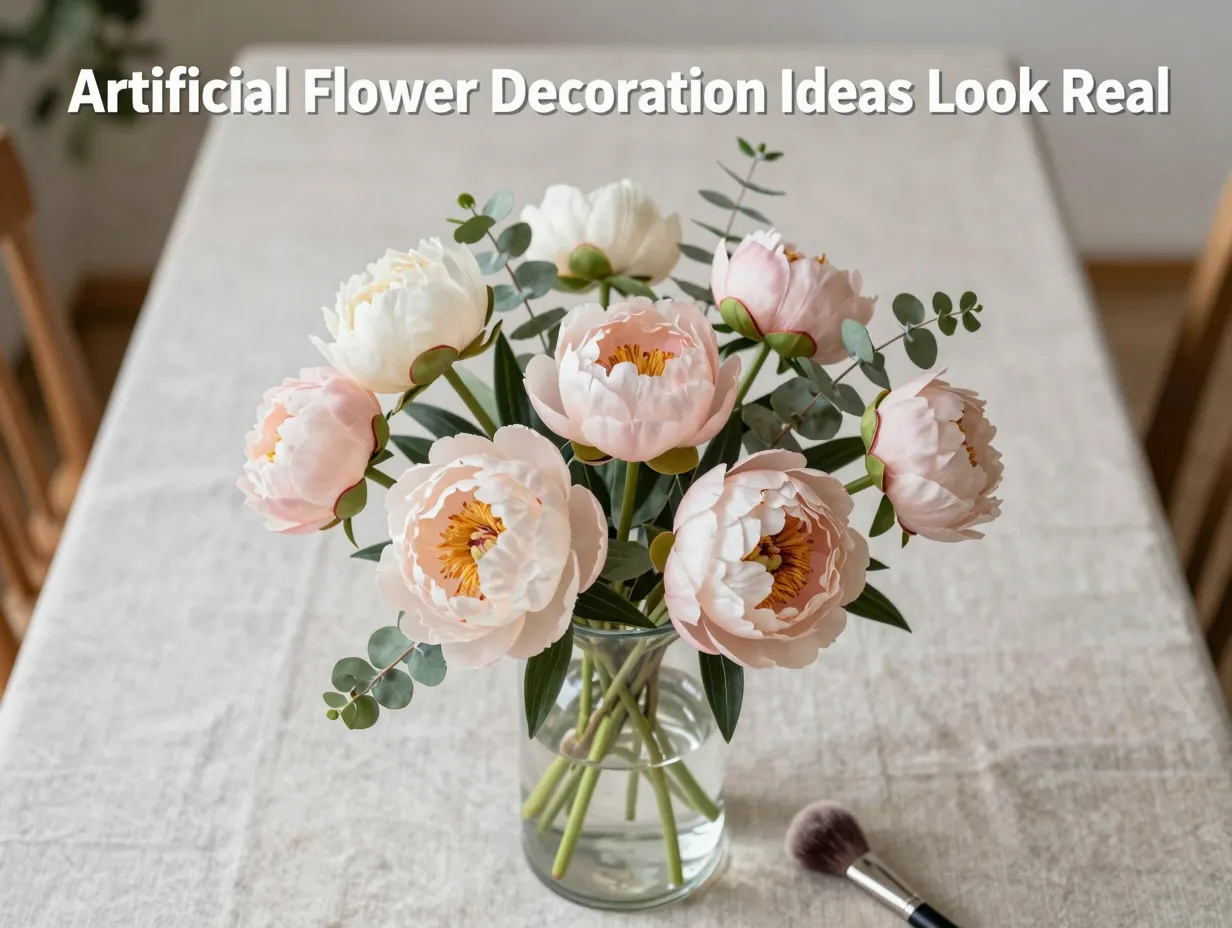
This guide walks through 8 tasteful artificial flower decoration ideas that look real, drawing on the latest styling techniques, material innovations, and expert-approved tricks that separate a convincing faux arrangement from one that looks obviously fake. Whether you are decorating a living room, a home office, or a commercial space, these ideas will help you create displays that earn genuine compliments.
Key Takeaways
- Real-touch and super-real silk flowers, especially peonies, orchids, tulips, and hydrangeas, are the 2026 benchmark for believable artificial arrangements [2][4].
- Mixing faux florals with natural elements such as fresh greens, real branches, or actual water in clear vases is the single most effective trick for making artificial flowers pass as real [1][5].
- Container choice, stem concealment, and scale all have a dramatic effect on how realistic an arrangement appears.
- Layering textures, varying stem heights, and avoiding overly symmetrical arrangements mimic the organic imperfection of fresh flowers.
- Proper cleaning and occasional repositioning keep faux arrangements looking fresh for years, making them a cost-effective long-term investment [7].
Why Artificial Flowers Have Earned a Place in Tasteful Decor
For a long time, artificial flowers carried a stigma. They were associated with dusty plastic arrangements in hotel lobbies or synthetic bouquets that faded in sunlight. That era is over. The shift happened gradually, driven by advances in materials science and a growing demand for low-maintenance home styling.
Today’s best faux florals are made from polyester blends, latex coatings, and real-touch silicone that replicate the tactile softness of a fresh petal. Trend forecasts for 2026 point specifically to high-detail tulips, peonies, roses, orchids, and hydrangeas as the most convincing options on the market, with manufacturers now engineering color gradients, subtle veining, and even slight asymmetries directly into each bloom [2][4].
I remember visiting a friend’s home and spending a full ten minutes admiring what I assumed was a fresh peony arrangement on her dining table. When she finally told me every stem was faux, I was genuinely stunned. That moment changed how I approached artificial flower decoration entirely.
The key, as I learned, is not just buying quality flowers. It is knowing how to style, arrange, and display them so that the overall composition feels alive. The 8 tasteful artificial flower decoration ideas that look real outlined below cover exactly that.
8 Tasteful Artificial Flower Decoration Ideas That Look Real
1. Choose Real-Touch Blooms in Botanically Accurate Varieties
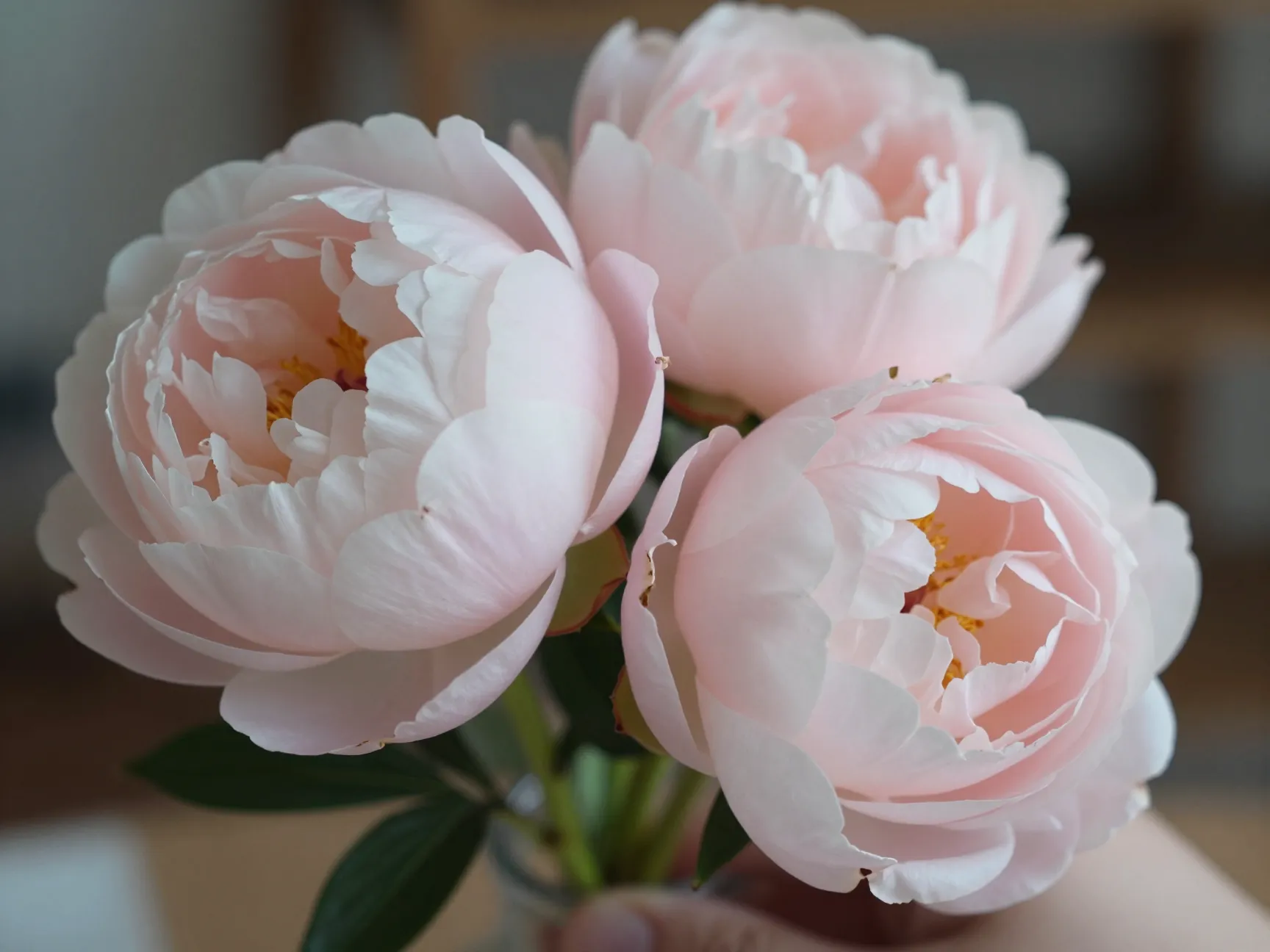
The foundation of any convincing faux arrangement is the quality of the flower itself. Not all artificial flowers are created equal, and the gap between a low-quality plastic stem and a premium real-touch bloom is enormous.
What to look for:
- Petals with soft, pliable texture that bends rather than crinkles
- Subtle color gradients that mimic natural variation (no single flat tone)
- Visible veining or surface texture on leaves
- Slightly imperfect petal edges rather than perfectly uniform shapes
Peonies, garden roses, orchids, and hydrangeas are consistently ranked among the most convincing artificial varieties available in 2026 [4]. These blooms have complex, layered structures that translate well into high-quality faux versions. Simpler flowers like daisies or carnations are easier to replicate but tend to look less impressive in a finished arrangement.
When shopping, hold the flower up to natural light. A quality real-touch bloom will show depth, translucency, and subtle color shifts, the same visual cues that make fresh flowers beautiful.
2. Mix Faux Flowers With Real Natural Elements
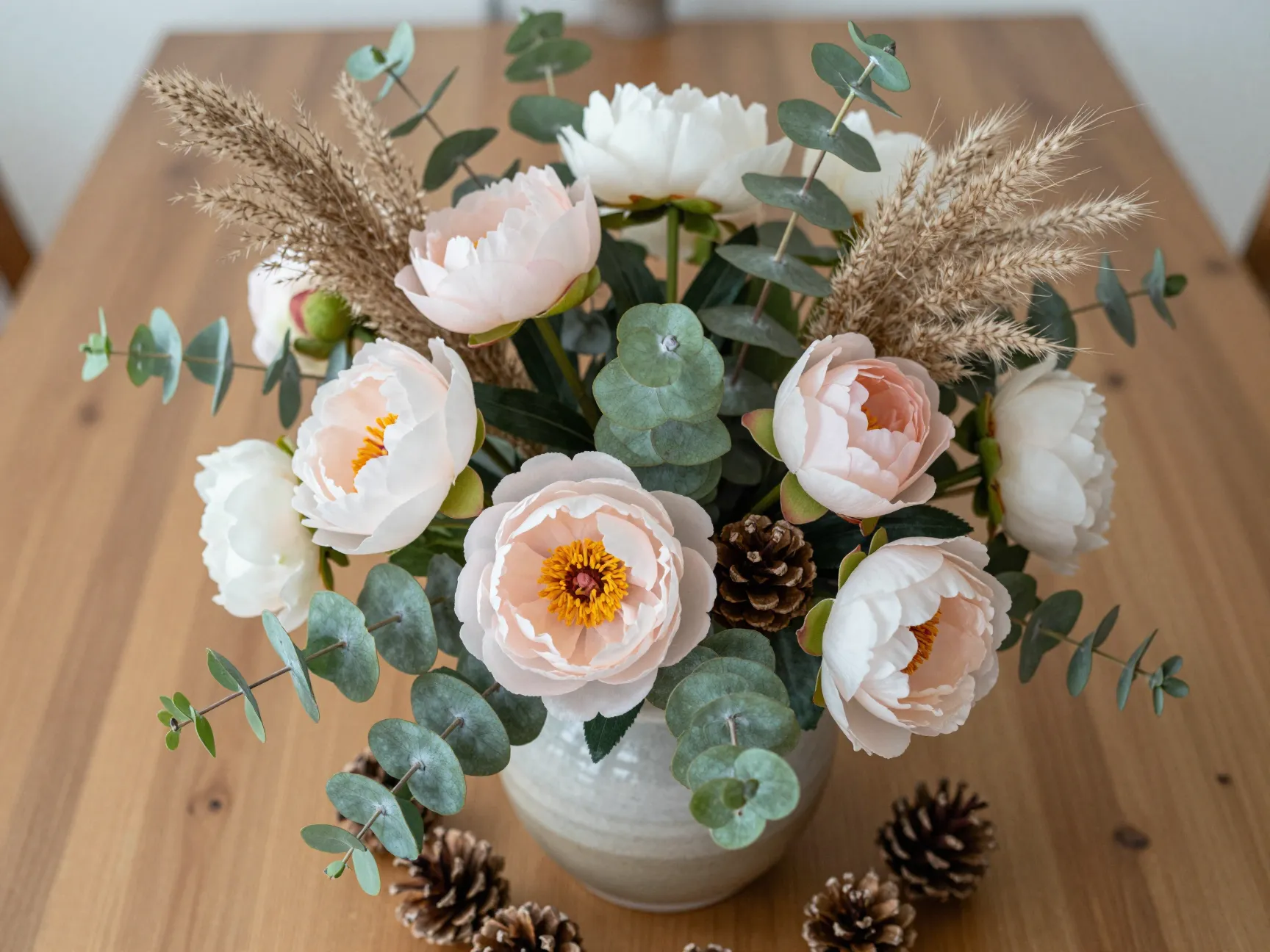
This is the single most powerful trick in the artificial flower decorator’s toolkit, and it is recommended consistently by professional stylists [1][5]. When you combine faux blooms with genuinely natural elements, the eye is naturally drawn to the real textures and the artificial flowers benefit from the association.
Effective natural elements to mix in:
- Fresh eucalyptus or greenery from a garden
- Real dried grasses, pampas, or seed pods
- Actual branches, bare, budding, or leafy
- Pinecones, stones, or moss placed at the base of an arrangement
Even a single fresh stem tucked into a faux bouquet introduces a natural fragrance and a slightly different texture that makes the whole arrangement feel authentic. This technique works especially well in transitional seasons when fresh flowers are expensive or hard to source [1].
A practical tip: replace the fresh elements every week or two while keeping the faux blooms in place. This gives you the best of both worlds, the longevity of artificial flowers with the periodic freshness of real botanicals.
3. Use Real Water in Clear Glass Vases
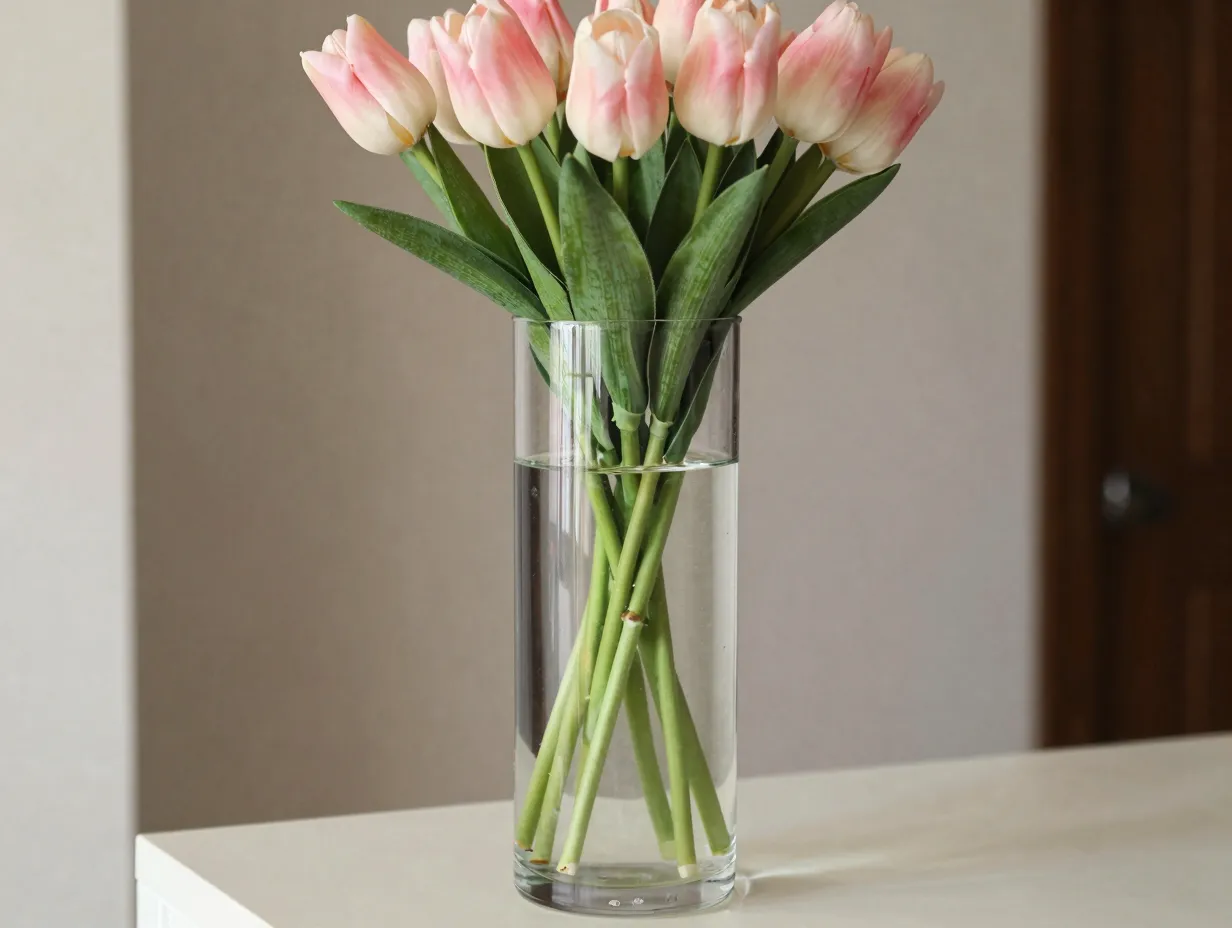
This is one of the most underused tricks in faux floral styling, and it works remarkably well. When artificial flowers are placed in an opaque or textured container, the viewer has no way to verify whether the stems are real. But when you use a clear glass vase, the obvious giveaway is the absence of water and the visible wire or plastic stems.
The solution is elegant: simply pour real water into the clear vase before arranging your faux stems [1][5]. The water creates the visual impression of a fresh arrangement and the light refracts naturally through the glass, adding a sense of life to the display.
A few practical notes:
- Change the water every week to prevent algae growth
- Trim any visible wire or plastic stem ends so they look like natural cut stems
- Avoid fully submerging stems that have fabric or paper components, as these can degrade over time
- For a cleaner look, choose stems with realistic-looking cut ends
This technique is particularly effective with long-stemmed varieties like tulips, roses, and calla lilies displayed in tall cylindrical vases.
4. Conceal Stems With Thoughtful Container Choices
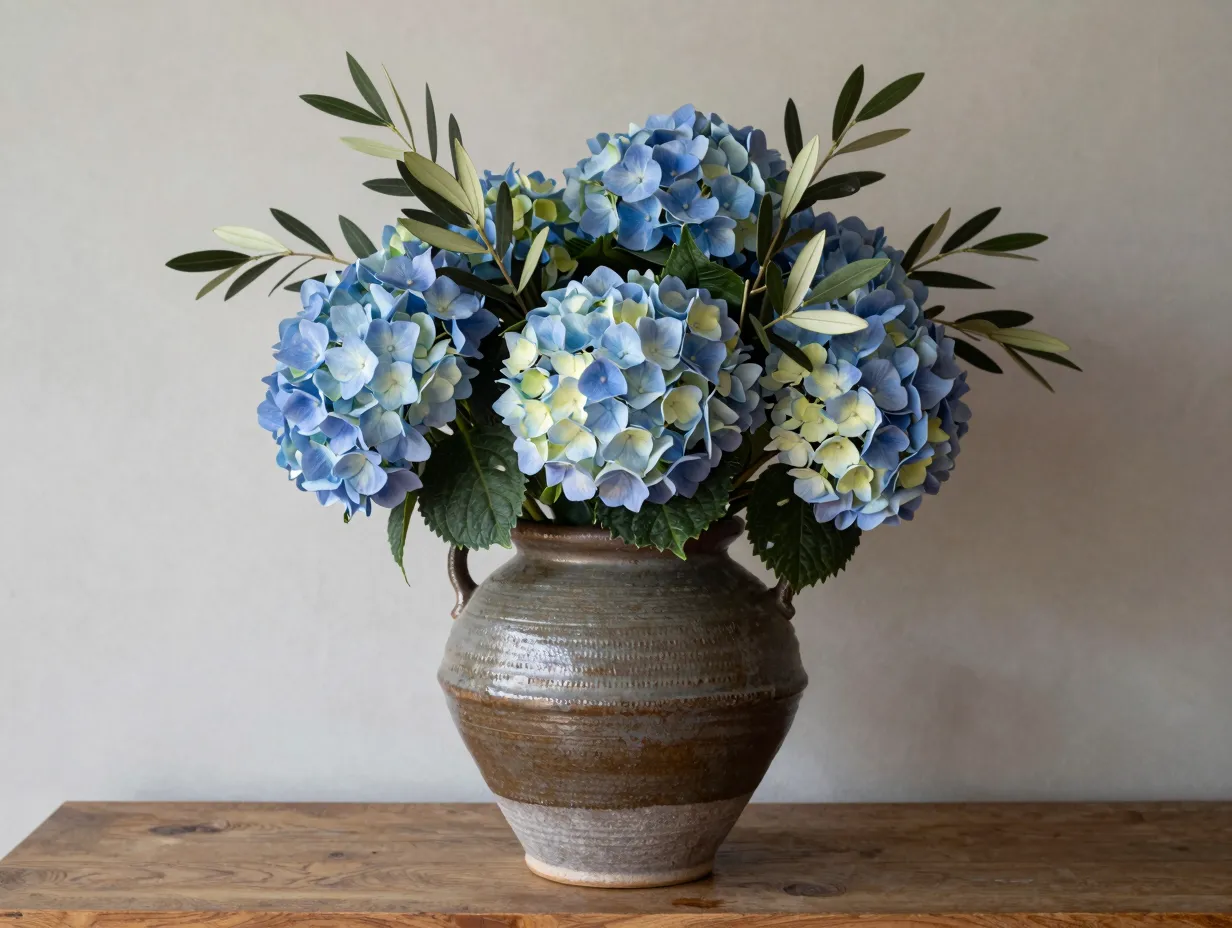
The container you choose does as much work as the flowers themselves. A poorly chosen vase can expose every artificial tell, visible wire, plastic connectors, or unnaturally uniform stem spacing. A well-chosen container conceals all of that and lets the blooms take center stage.
Container strategies that work:
- Opaque ceramic or stoneware pots hide stems entirely and add a natural, artisan feel
- Woven baskets with a liner create a rustic, organic look that suits wildflower-style arrangements
- Textured terracotta pairs beautifully with Mediterranean-style faux arrangements featuring olive branches and lavender
- Dark-tinted glass obscures stem details while still suggesting the transparency of a fresh arrangement
Beyond concealment, the right container also communicates a design intention. A rough-hewn ceramic vessel signals intentional, considered styling. A clear plastic pot signals the opposite, no matter how good the flowers are [3][7].
Scale matters too. An arrangement that is too small for its container looks lost; one that is too large looks forced. A general rule: the arrangement should be roughly one and a half times the height of the container.
5. Vary Stem Heights and Avoid Perfect Symmetry
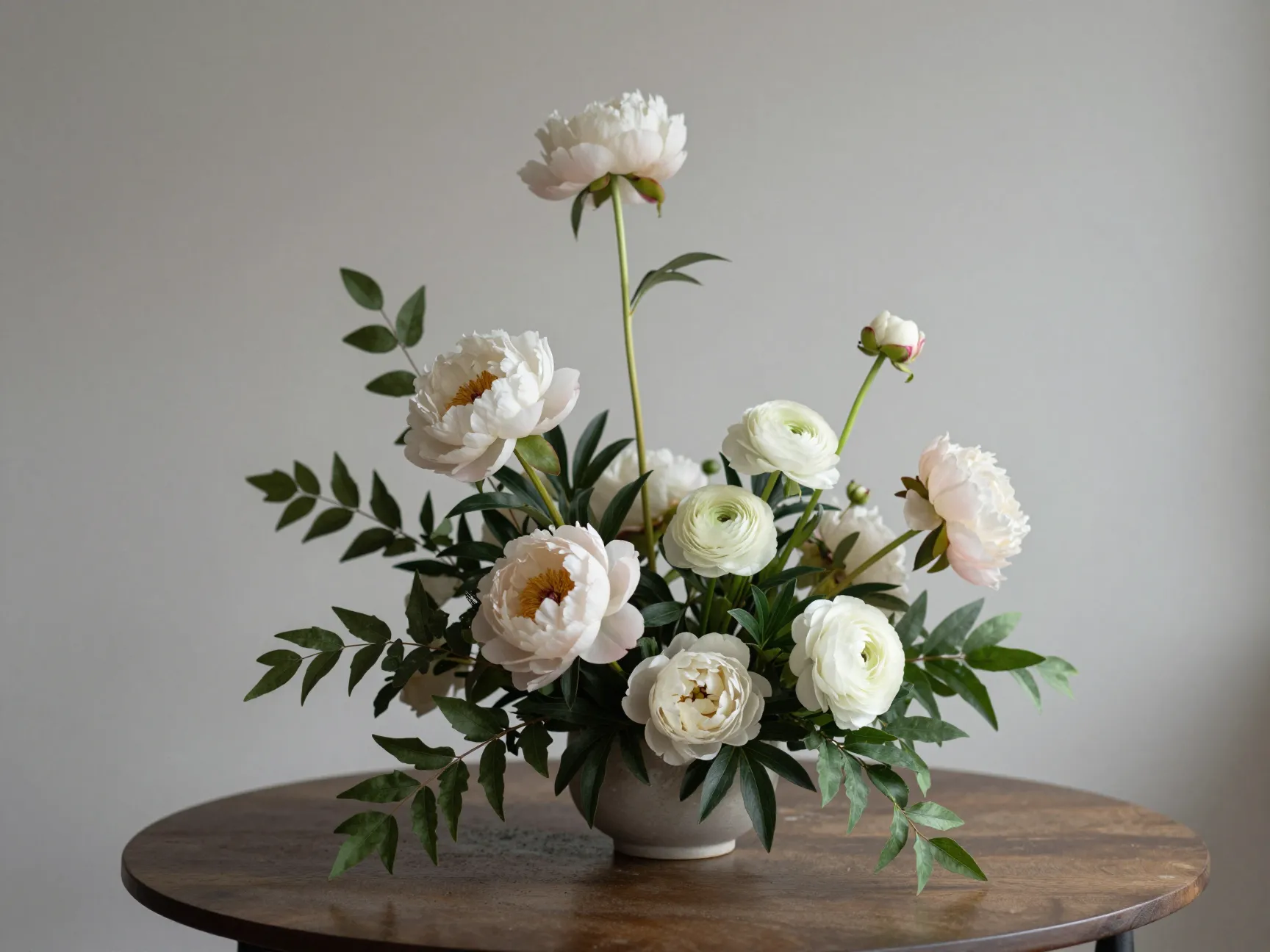
One of the clearest signs of an artificial arrangement is rigid, perfectly uniform stem heights. Fresh flowers in a vase naturally settle at different levels, lean slightly, and create an organic, asymmetrical silhouette. Replicating that imperfection is essential for a convincing display.
When building an arrangement, work in odd numbers and vary the height of each stem deliberately. Place taller stems slightly off-center rather than directly in the middle. Allow some blooms to face sideways or slightly downward, as they would naturally in a fresh arrangement.
A simple height-layering approach:
- Anchor the arrangement with the tallest stems first, placed slightly off-center
- Add medium-height stems to fill the middle volume
- Tuck shorter blooms and foliage at the base to cover the container rim
- Step back and remove any stems that create an overly symmetrical line
This approach is endorsed by professional floral stylists who note that the “too perfect” quality of artificial arrangements is the primary reason they look fake [6]. Embrace asymmetry. It is your friend.
6. Layer Textures by Combining Different Flower Types and Foliage
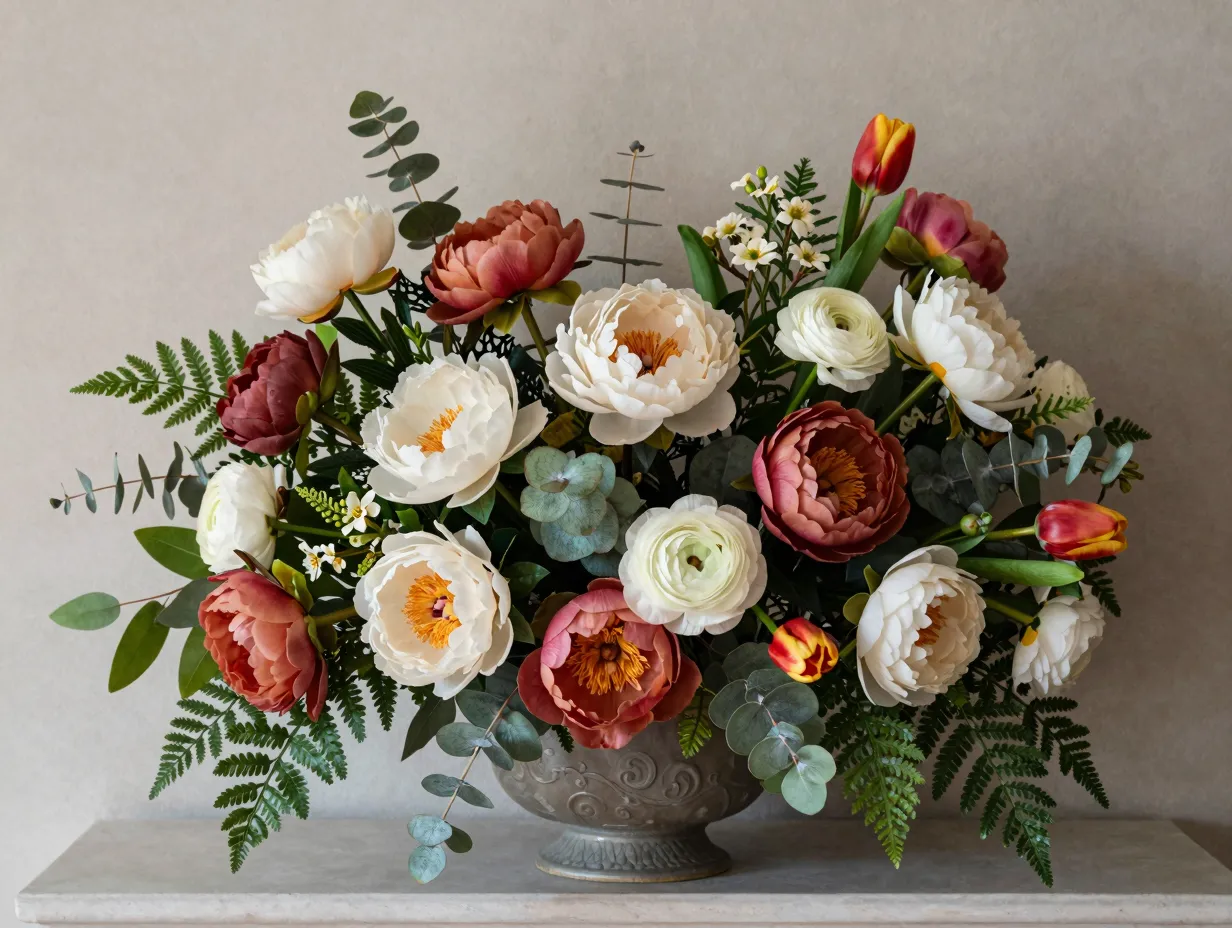
A single-variety arrangement, say, twelve identical faux roses, will almost always look artificial, regardless of quality. Fresh arrangements in nature and in professional floristry always include a mix of bloom types, foliage, fillers, and textural contrasts.
Building a layered arrangement means combining:
- Hero blooms (peonies, roses, orchids) as the visual focal point
- Secondary flowers (ranunculus, anemones, tulips) to add depth
- Filler flowers (baby’s breath, wax flower, small daisies) to create density
- Foliage (eucalyptus, fern, magnolia leaves) to add green contrast and movement
The interplay of different textures, smooth petals against rough leaves, open blooms next to tight buds, creates the visual complexity that makes an arrangement feel alive [8]. This is exactly what a florist does when building a fresh bouquet, and it translates directly to faux arrangements.
Trend data for 2026 highlights trailing and cascading arrangements as particularly popular, where faux ivy, wisteria, or jasmine vines are allowed to spill naturally over the edge of a shelf or container [9]. This style is especially forgiving because the movement of the trailing stems draws the eye away from any artificial details.
7. Style Arrangements in Context-Appropriate Locations
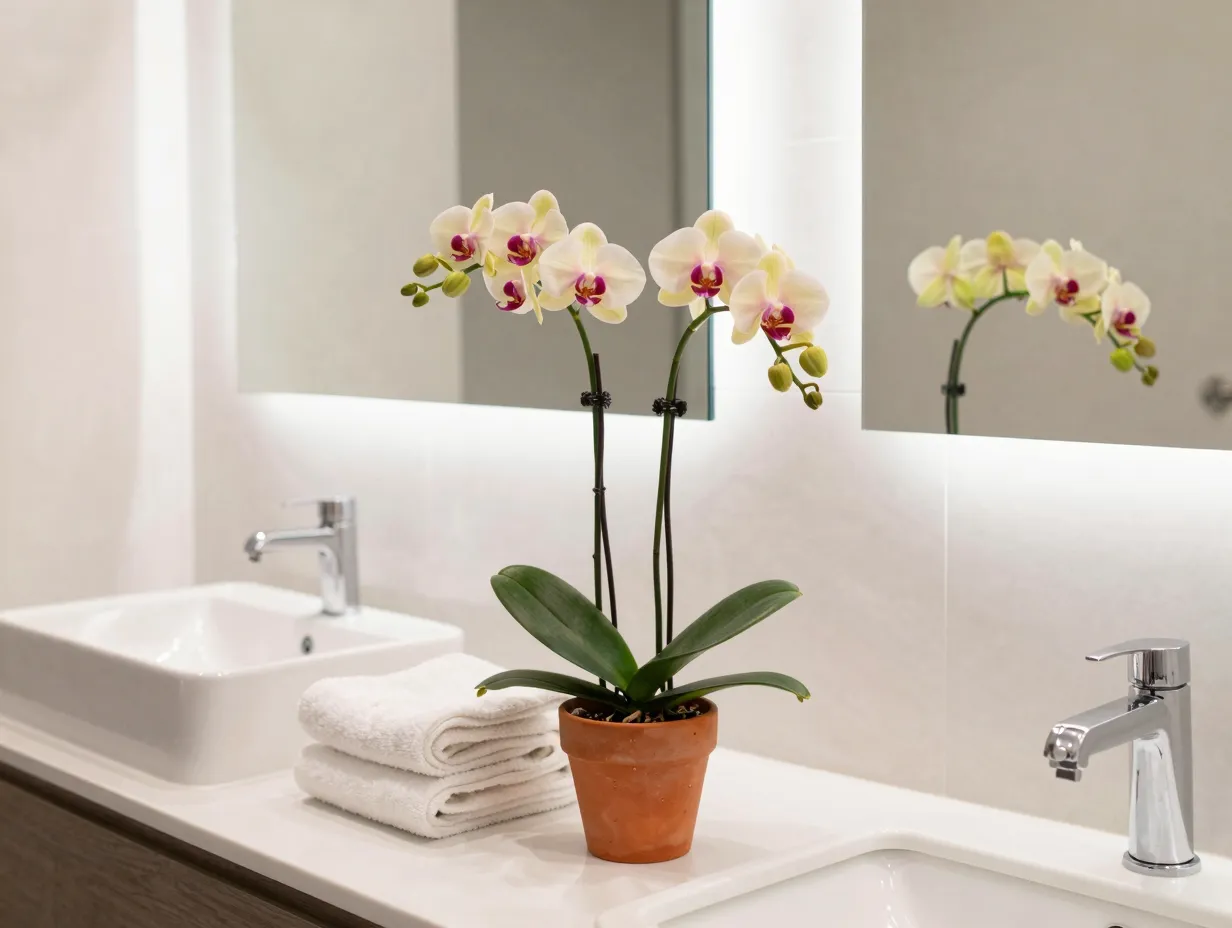
Even the most convincing faux arrangement will look suspicious if it is placed somewhere fresh flowers would never survive. Conversely, placing artificial flowers in locations where fresh blooms thrive, near natural light, on dining tables, in entryways, reinforces the illusion.
High-impact locations for faux florals:
- Entryways and hallways: First impressions matter, and a lush arrangement near the front door sets a welcoming tone [3]
- Dining tables: A centerpiece arrangement at eye level is one of the most scrutinized spots in a home, use your best quality blooms here
- Bathrooms: Humidity and low light make fresh flowers difficult; faux florals thrive here and add a spa-like quality [7]
- Home offices and shelving: Trailing faux vines or small potted arrangements add life to work-from-home spaces without requiring maintenance
- Commercial spaces: Restaurants, reception areas, and retail displays benefit enormously from high-quality faux arrangements that maintain their appearance regardless of traffic or temperature [4]
One styling note: avoid placing faux arrangements in direct, harsh sunlight for extended periods. Even high-quality silk and polyester flowers can fade over time with prolonged UV exposure, which is both a practical concern and a visual one [1].
8. Maintain and Refresh Arrangements Regularly
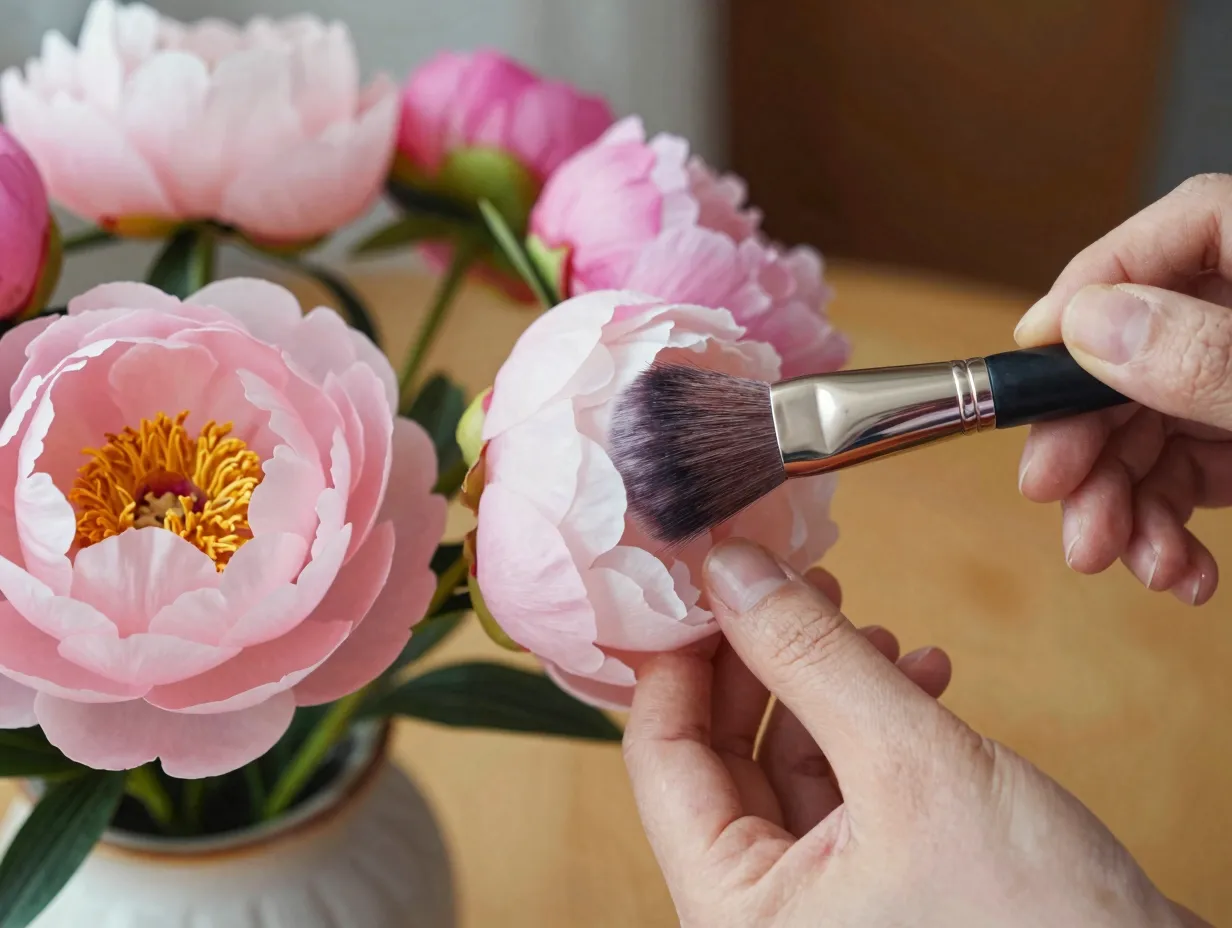
The difference between a faux arrangement that looks real and one that looks neglected often comes down to maintenance. Dust accumulation is the enemy of convincing artificial flowers, a dusty bloom immediately reads as fake, regardless of its quality.
A simple maintenance routine:
- Dust blooms gently with a soft makeup brush or a can of compressed air every two to three weeks
- For washable varieties, a gentle rinse under cool water and air-drying can restore the original appearance
- Periodically reshape petals and leaves that have been compressed or flattened
- Rotate the arrangement slightly each week so all sides receive equal light exposure and wear
Beyond cleaning, refreshing an arrangement every few months keeps it feeling current. This might mean swapping in a few new stems, changing the container, or rearranging the composition entirely [7]. The investment in a quality faux arrangement pays off over years, but only if it is treated with the same care you would give a piece of furniture or artwork.
Viral styling content in 2026 consistently shows faux florals being restyled seasonally, the same stems rearranged in autumn-toned containers, then moved to a spring palette, then styled minimally for summer [10]. This flexibility is one of the genuine advantages of artificial flowers over fresh ones.
Choosing the Right Faux Florals for Each Room
Not every artificial flower works in every space. The scale, color palette, and style of a room should guide your choices as much as any trend forecast.
| Room | Best Faux Flower Types | Recommended Container |
|---|---|---|
| Living Room | Peonies, hydrangeas, garden roses | Ceramic, stoneware, or frosted glass |
| Dining Table | Tulips, ranunculus, mixed bouquet | Clear glass with real water |
| Bathroom | Orchids, lavender, small succulents | Terracotta or small ceramic pots |
| Home Office | Trailing ivy, small wildflowers | Woven basket or minimalist bud vase |
| Entryway | Large-scale peonies, branches, greenery | Tall floor vase or statement ceramic |
Common Mistakes That Make Faux Flowers Look Fake
Understanding what not to do is just as important as knowing the right techniques. Here are the most common errors to avoid:
Mistake 1: Buying budget flowers for high-visibility spots. Save money on faux arrangements in low-traffic areas, but invest in quality for your dining table, entryway, and living room.
Mistake 2: Leaving arrangements untouched for months. Dust, fading, and compressed petals are the fastest routes to a fake-looking display.
Mistake 3: Using a container that is too large or too small. Scale mismatch is immediately noticeable and undermines even the best quality stems.
Mistake 4: Choosing colors that are too saturated or too uniform. Real flowers have color variation. If every petal is an identical, vivid hue, the arrangement will read as artificial from across the room.
Mistake 5: Overcrowding the arrangement. More is not always more. A few well-placed, high-quality stems in a beautiful container will always outperform a dense cluster of mediocre ones [6].
A Note on Sustainability
One argument in favor of high-quality artificial flowers that is gaining traction in 2026 is the sustainability angle. Fresh-cut flowers have a significant environmental footprint, they are often flown internationally, require refrigeration throughout the supply chain, and are discarded after a week or two.
A well-made faux arrangement, properly maintained, can last for years and even decades, reducing the ongoing demand for fresh-cut imports [2]. This does not mean artificial flowers are without environmental cost, manufacturing processes and synthetic materials have their own impact, but the longevity argument is a meaningful one for conscious consumers.
Conclusion
The 8 tasteful artificial flower decoration ideas that look real outlined in this guide share a common thread: intentionality. Convincing faux arrangements are not the result of buying the most expensive stems and hoping for the best. They come from thoughtful choices about material quality, container selection, composition, placement, and maintenance.
Your actionable next steps:
- Audit your current artificial arrangements and identify which of the five common mistakes apply.
- Invest in two or three high-quality real-touch stems in a variety that suits your home’s palette, peonies, orchids, or garden roses are excellent starting points [4].
- Try the real-water-in-clear-glass technique for your next dining table arrangement.
- Add one natural element, a fresh eucalyptus stem, a real branch, or a handful of dried grass, to your next faux arrangement and observe the difference it makes [1].
- Establish a simple monthly maintenance routine to keep your arrangements looking fresh year-round.
The best artificial flower arrangements are the ones that make people stop and look twice. With the right approach, yours will do exactly that.
References
[1] Ultimate Guide To Home Decor Artificial Flowers – https://www.eden-vert.com/news/ultimate-guide-to-home-decor-artificial-flowers/
[2] pt.slideshare – https://pt.slideshare.net/slideshow/13-must-try-eco-friendly-artificial-flower-trends-for-2026-sustainable-home-decor-ideas/287075733
[3] Artificial Flower Decor – https://www.homelane.com/design-ideas/home-interior-design/artificial-flower-decor/
[4] The Best Artificial Spring Flower Arrangements For Your Business – https://luminflora.com/the-best-artificial-spring-flower-arrangements-for-your-business/
[5] Watch – https://www.youtube.com/watch?v=pwD7SOLiWlg
[6] Artificial Flower Arrangement – https://www.funkyjunkinteriors.net/artificial-flower-arrangement/
[7] Top Artificial Flowers Plants Home Decoration Ideas 2026 – https://www.ywceramic.com/blog/top-artificial-flowers-plants-home-decoration-ideas-2026/
[8] Decorative Flower Digest – https://buildingandinteriors.com/decorative-flower-digest/
[9] Top Artificial Flower Trends For Modern Home Decor In 2026 – http://propowerwash.com/board/upload/threads/top-artificial-flower-trends-for-modern-home-decor-in-2026.72525/
[10] Top Viral Faux Flowers For Home Styling – https://decoratorswarehouse.com/blog/top-viral-faux-flowers-for-home-styling/