9 Rustic Vase Ideas to Style Your Mantel, Shelf, or Entryway Console
Fewer than 12 percent of homeowners say they feel confident styling a mantel or entryway console on their own, yet the fix is often as simple as placing the right vase in the right spot. If you have ever stared at a bare shelf and felt stuck, you are not alone. The good news is that rustic vases are one of the most forgiving and versatile decorating tools available, and the 9 rustic vase ideas to style your mantel, shelf, or entryway console in this guide will give you a clear, actionable roadmap to transform any surface in your home.
Disclosure: This post contains affiliate links. As an Amazon Associate, we earn from qualifying purchases, and at no extra cost to you.
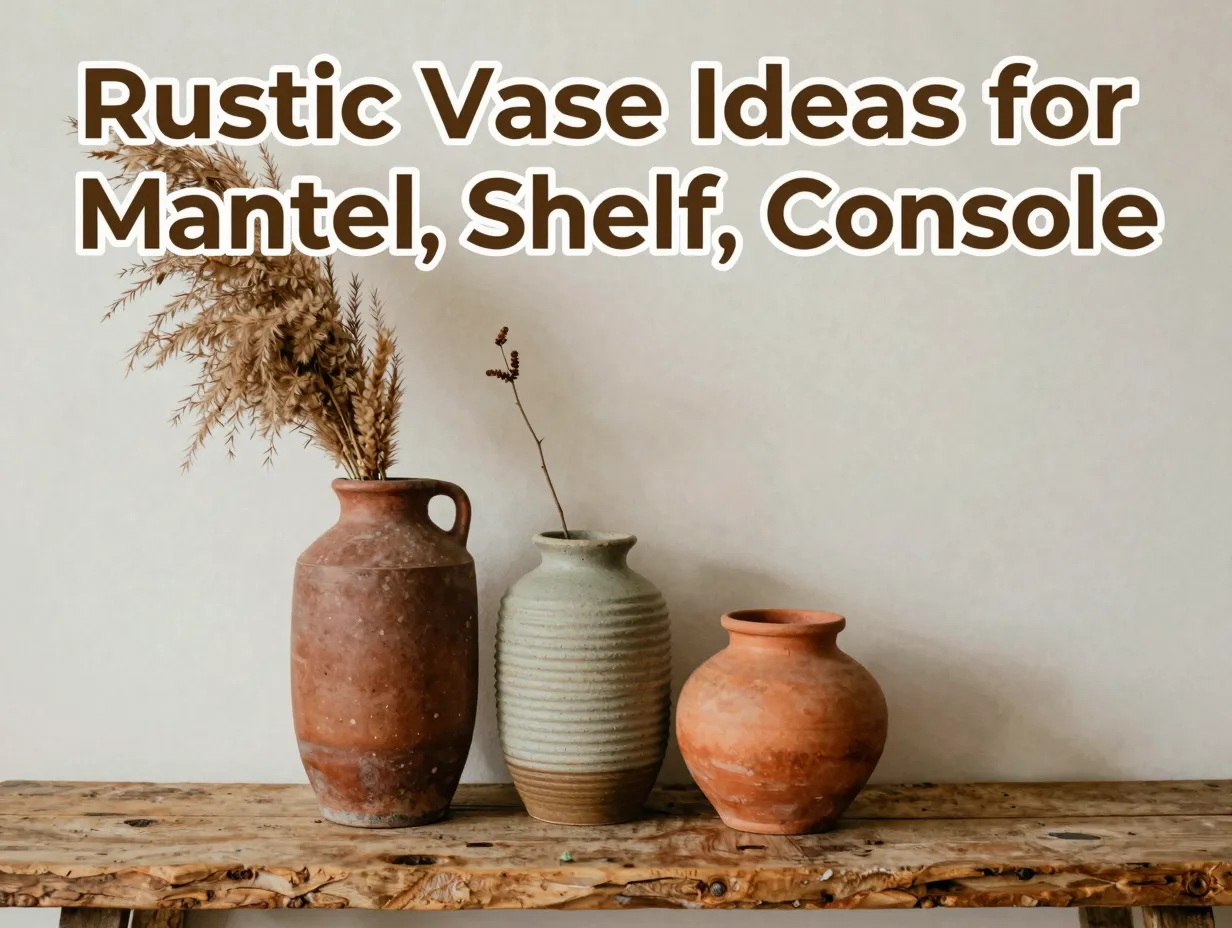
I have spent years testing different styling approaches in my own home, from a narrow farmhouse entryway to a wide living room mantel, and the lessons I have learned along the way are baked into every idea below. Whether you are drawn to wabi-sabi minimalism, warm cottagecore layering, or clean modern-rustic lines, there is a strategy here for you.
Key Takeaways
- Mixing vase heights and shapes is the single most effective way to create visual interest on any surface.
- Rustic materials like terracotta, aged ceramics, and ribbed stoneware add warmth and organic texture that polished surfaces simply cannot replicate.
- Matching your vase placement strategy to the specific surface, mantel, shelf, or console, produces a more intentional, designer-quality result.
- Seasonal updates to your vase arrangements keep your decor feeling fresh without requiring a full redesign.
- Avoiding common mistakes such as straight-line placement, too many small vases, and color overload is just as important as choosing the right pieces.
Why Rustic Vases Work on Almost Every Surface
Before diving into the 9 rustic vase ideas to style your mantel, shelf, or entryway console, it helps to understand why rustic vases are such reliable styling tools. Unlike highly polished or overly ornate vessels, rustic vases carry an inherent warmth. Their imperfect glazes, earthy tones, and handmade textures make them feel lived-in rather than staged.
Rustic vases work because they:
- Complement both modern and traditional interiors without clashing
- Introduce organic shapes that soften hard architectural lines
- Age gracefully, meaning a piece you buy today will look even better in five years
- Pair naturally with dried botanicals, fresh greenery, and seasonal branches
The key is knowing how to deploy them. Surface type matters enormously. A tall, slim ceramic jug that looks stunning on an entryway console might feel overpowering on a narrow floating shelf. The ideas below are organized around real placement strategies so you can apply them immediately.
9 Rustic Vase Ideas to Style Your Mantel, Shelf, or Entryway Console
1. Anchor Your Mantel with a Tall Statement Vase
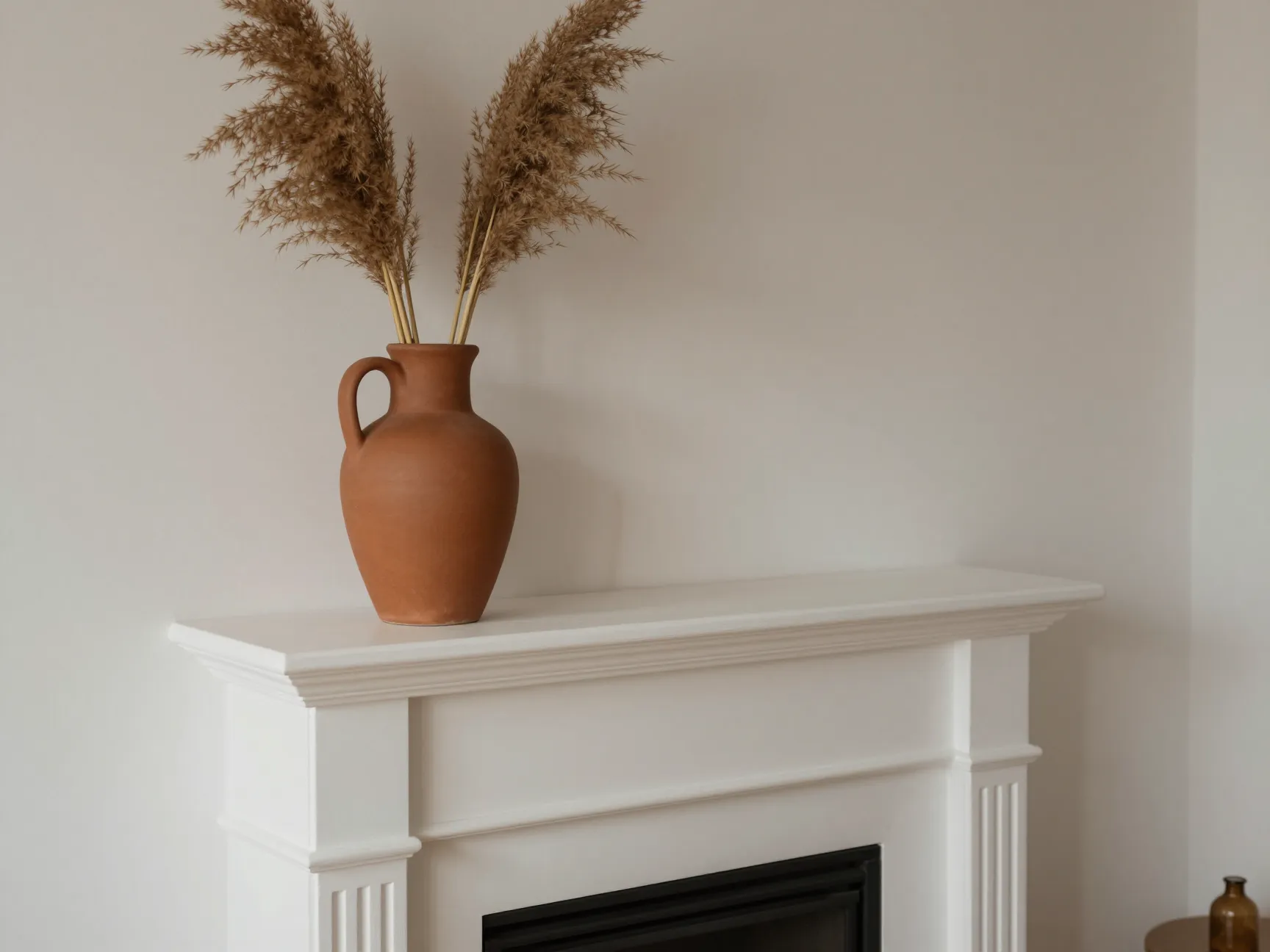
Every strong mantel arrangement needs an anchor, a single dominant piece that establishes height and draws the eye first. A tall rustic vase, ideally between 18 and 24 inches, serves this role perfectly. Choose a matte stoneware jug, a hand-thrown terracotta vessel, or a textured ceramic floor vase in a neutral tone.
Place the anchor vase at one end of the mantel rather than dead center. This asymmetrical positioning creates a natural visual flow that guides the eye across the entire surface [1]. Fill it with dried pampas grass, tall eucalyptus stems, or bare winter branches to reinforce the rustic aesthetic without adding clutter.
Pro tip: If your mantel is painted white or light gray, choose a vase in a warm earthy tone, rust, ochre, or sage, to create contrast and prevent the arrangement from looking washed out.
2. Mix Heights and Shapes for Dynamic Shelf Styling
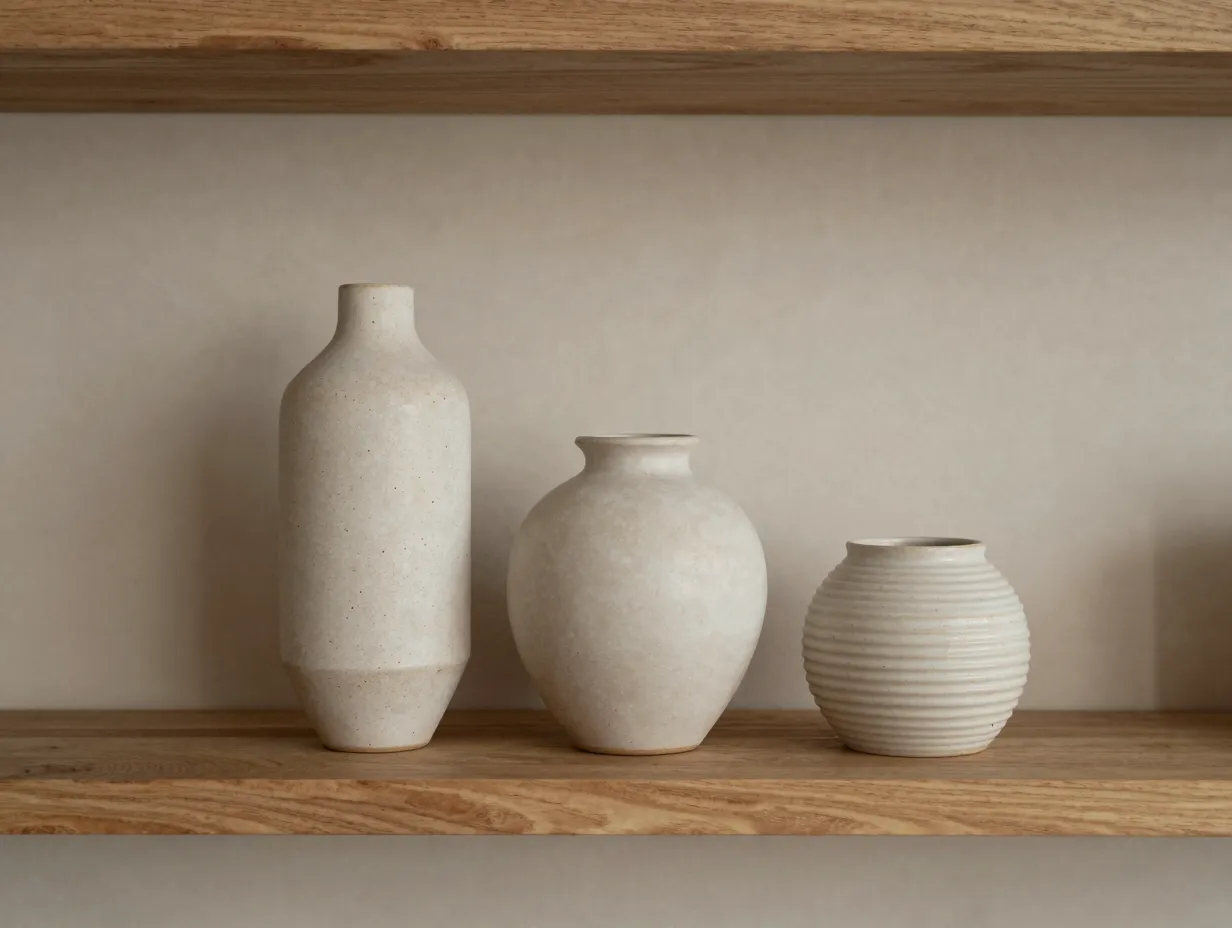
One of the most reliable principles in interior styling is the rule of three: group objects in odd numbers, vary their heights, and vary their shapes. This applies directly to shelf vase arrangements.
Pair a tall sculptural vase with a mid-height rounded vessel and a short, squat pot. The contrast between vertical and horizontal forms, between smooth and textured surfaces, creates depth that a row of identical vases simply cannot achieve [1]. I once replaced four matching white ceramic vases on my living room shelf with three mismatched rustic pieces in varying heights, and the shelf instantly looked like something out of a design magazine.
A simple height guide for shelf styling:
| Vase Height | Best Role in Arrangement | Ideal Material |
|---|---|---|
| Tall (12+ inches) | Vertical anchor | Stoneware, terracotta |
| Medium (6-11 inches) | Supporting piece | Matte ceramic, aged clay |
| Short (under 6 inches) | Base layer accent | Ribbed ceramic, raw clay |
3. Use a Rustic Vase as a Bookend on Open Shelving
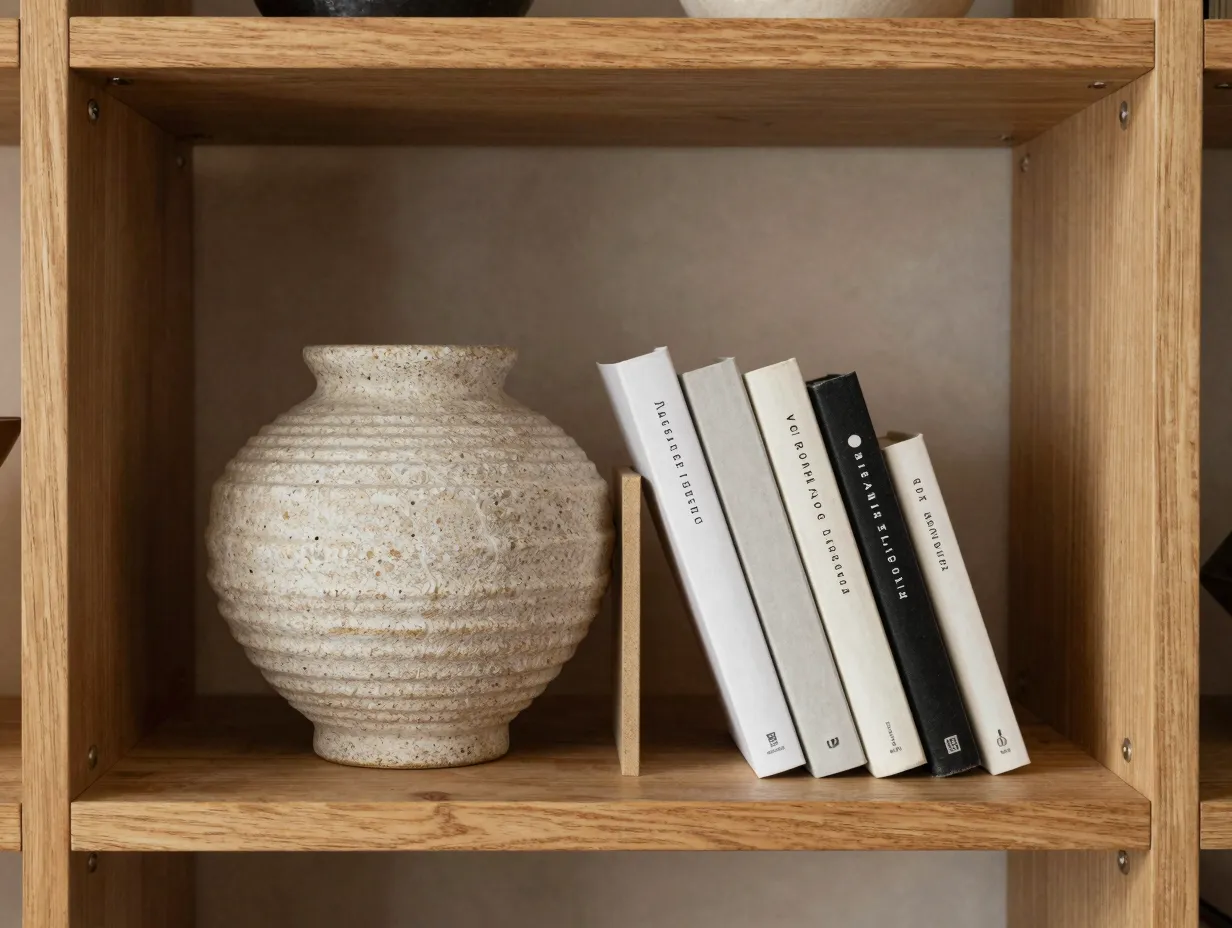
Open shelving in kitchens, living rooms, and home offices often suffers from the same problem: rows of books that look flat and utilitarian. Placing a rustic vase beside a stack of books, or using it as a soft bookend, breaks up the linear arrangement and introduces an organic shape that makes the shelf feel curated rather than functional [1].
Choose a vase with a wide, stable base for this role. A chunky ribbed stoneware vessel or a squat terracotta pot works especially well. You do not need to fill it with anything; an empty rustic vase beside a leaning stack of hardcovers reads as intentional and editorial.
What to avoid: Do not use a tall, narrow vase as a bookend. It will look precarious and may tip if books shift.
4. Embrace Wabi-Sabi with a Single Imperfect Vase and a Dried Branch
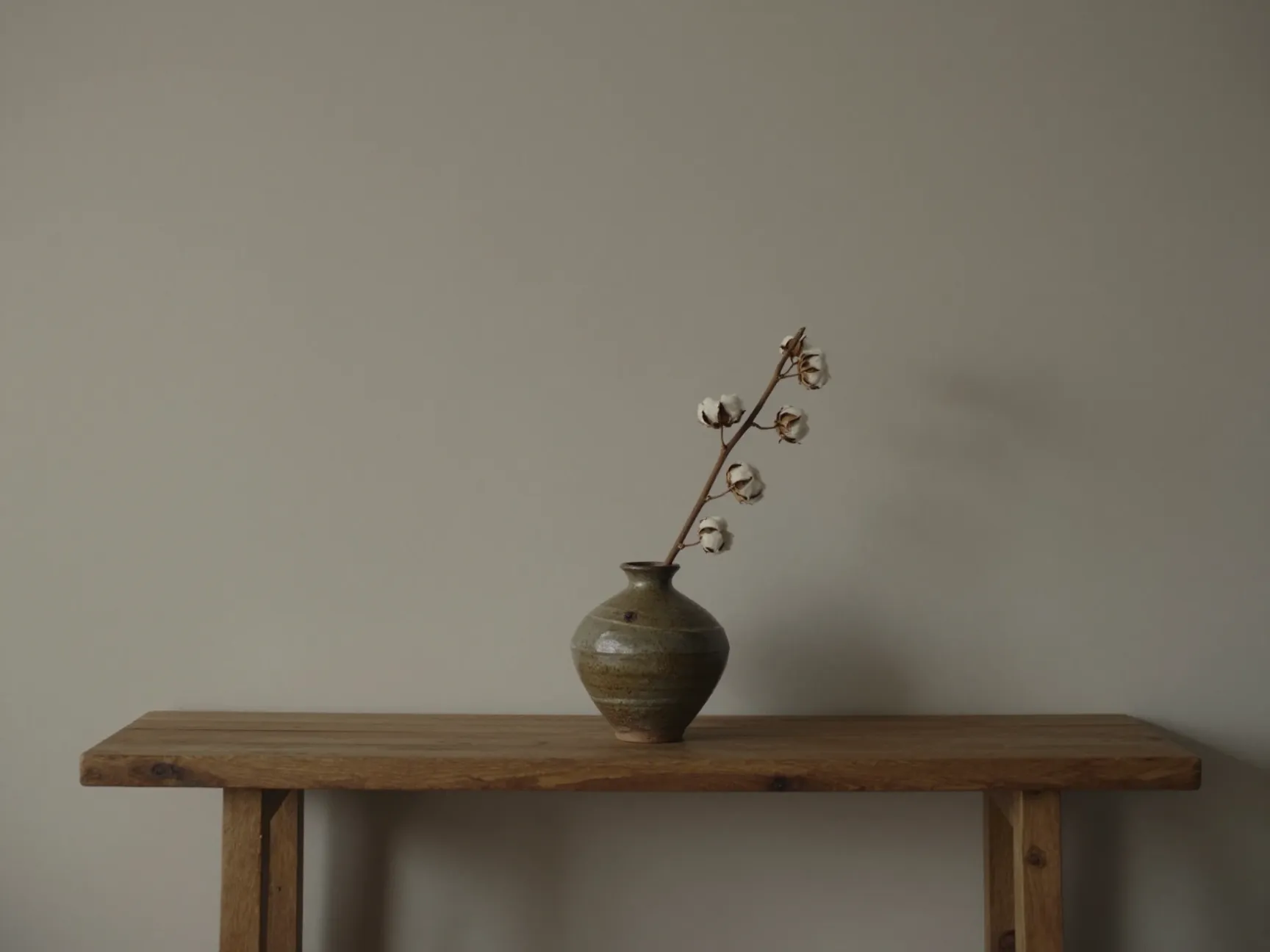
The Japanese philosophy of wabi-sabi celebrates imperfection, transience, and the beauty of natural aging. It is one of the most powerful frameworks for rustic vase styling, particularly in entryways and on shelves where you want to create a sense of calm [2].
The approach is deliberately minimal: place a single rustic vase, one with an uneven glaze, a slightly asymmetrical form, or visible throwing marks, on a shelf or entryway console. Insert a single dried branch, a stem of cotton bolls, or a spray of dried seed pods. Nothing more.
“A single imperfect vase with a dried branch can say more about a space than a shelf full of carefully matched accessories.”
This restraint is harder than it sounds. Our instinct is to keep adding. Resist it. The negative space around the vase is part of the composition. This approach is particularly effective in entryways, where the first impression of your home is formed within seconds of stepping through the door.
5. Layer Terracotta Vases with Mirrors and Lamps on an Entryway Console
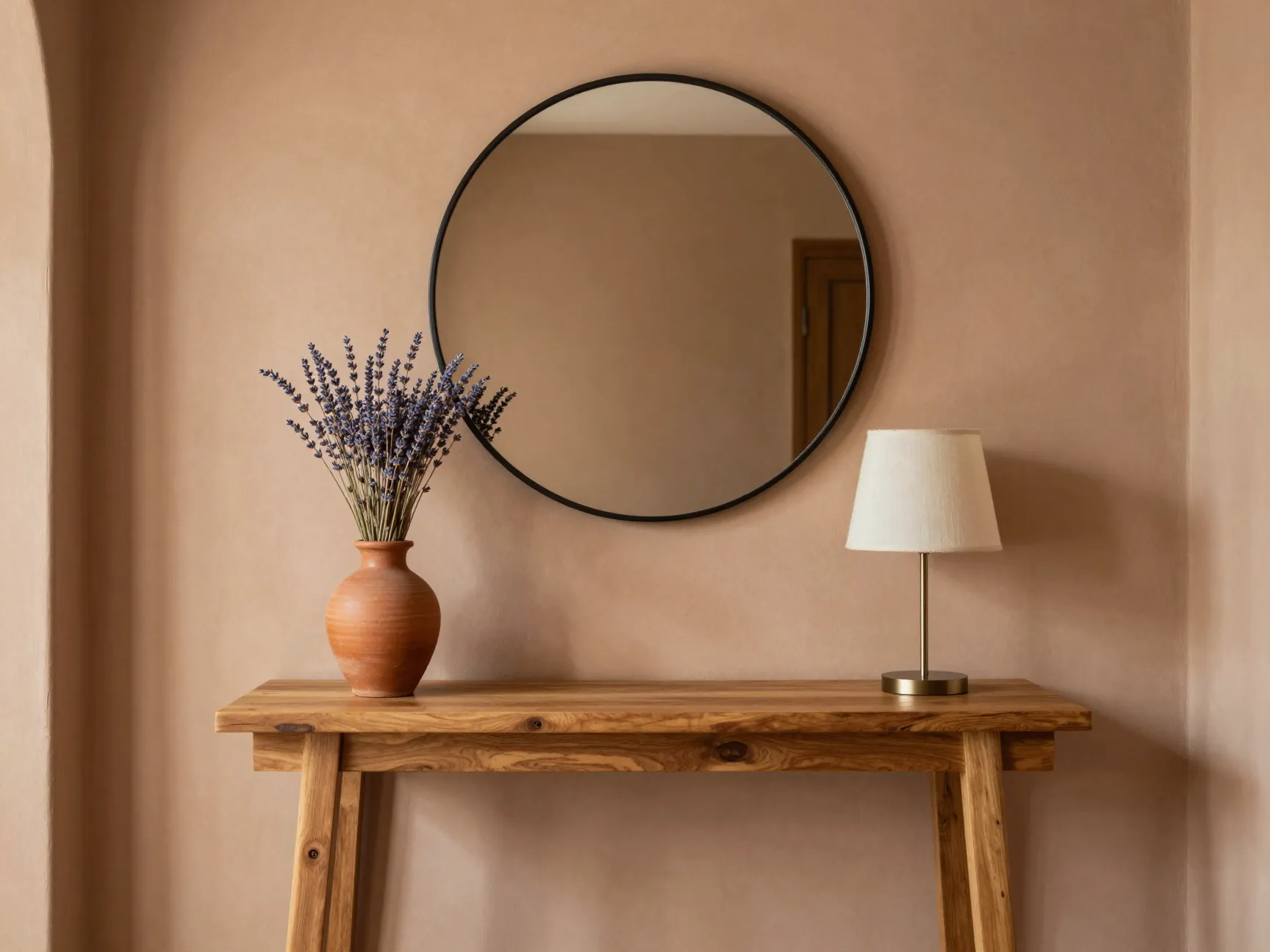
An entryway console is one of the most high-impact surfaces in a home because it is the first thing guests see. The challenge is that consoles are often narrow, which limits how much you can place on them. The solution is to layer vertically rather than horizontally.
Start with a mirror or piece of artwork on the wall above the console. Then place a tall, slim terracotta vase on one side of the console surface. Add a lamp on the opposite side for balance. The vase and lamp create symmetry at different heights, while the mirror amplifies the depth of the arrangement [4].
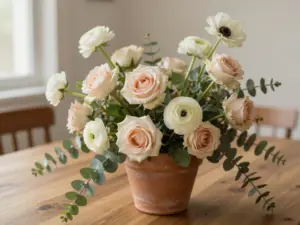
Terracotta is an ideal material for entryway consoles because its warm, earthy tone is welcoming without being loud. A terracotta vase filled with dried lavender, olive branches, or seasonal greenery reinforces the organic, rustic feel while adding a subtle sensory element [3].
Functional reminder: In high-traffic entryways, make sure your vase placement does not obstruct movement. Keep the center of the console clear for keys, mail, and everyday items [6].
6. Create Asymmetrical Symmetry on a Console Table
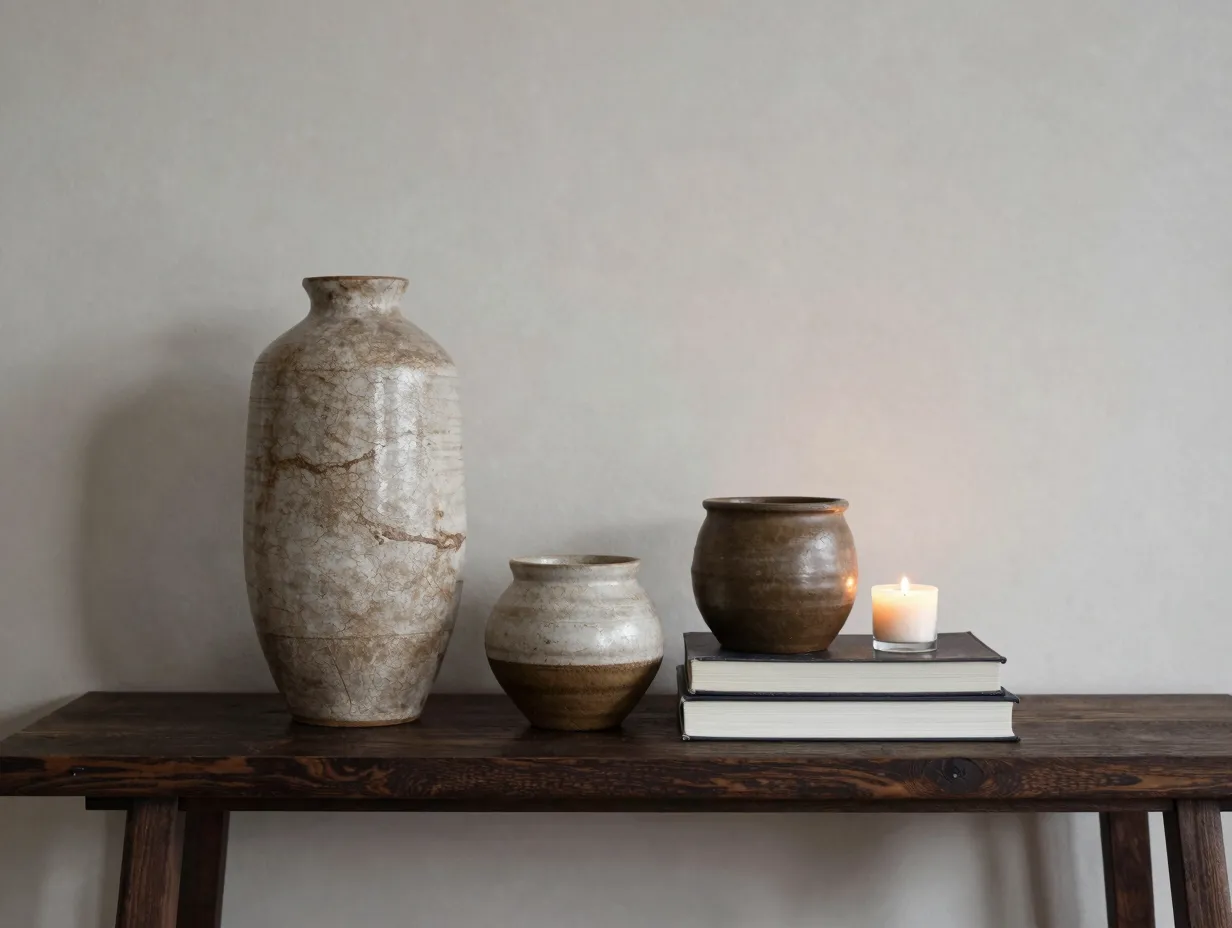
True symmetry, identical objects placed at equal distances on either side of a central point, can feel stiff and formal. Asymmetrical symmetry is the designer’s preferred alternative: balanced but not identical.
To achieve this on a console table, place a tall rustic vase on the left side and balance it with a cluster of two or three smaller objects on the right, a short ceramic pot, a stack of books, and a small candle, for example [1]. The visual weight on each side is roughly equal, but the arrangement feels dynamic and personal rather than staged.
This technique works especially well on entryway consoles and sideboards where you want the surface to feel intentional without looking like a showroom display.
7. Incorporate Textured Vases to Add Depth and Prevent Flat Displays
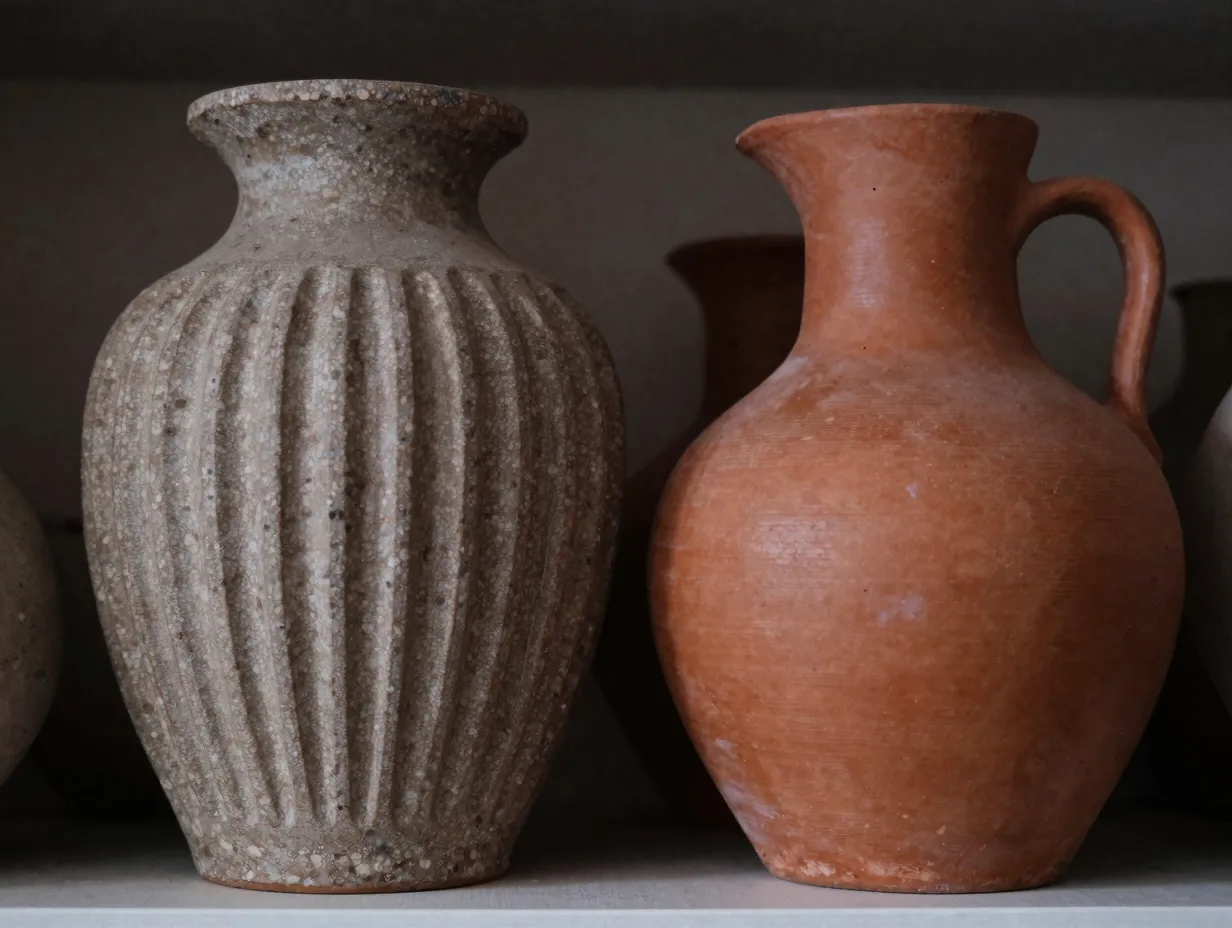
Texture is the element that most home decorators underestimate. A shelf or mantel styled entirely with smooth, matte surfaces, even beautiful ones, can look flat and one-dimensional. Introducing vases with surface texture breaks this monotony immediately.
Look for vases with these textural qualities:
- Ribbed or fluted exteriors in stoneware or ceramic
- Rough, unglazed terracotta with visible clay grain
- Hammered or dimpled surfaces in aged metal or ceramic
- Woven or wrapped exteriors in natural fiber or rattan
- Crackle-glaze finishes that catch light differently at different angles
Mixing two or three of these textures within a single arrangement creates a richness that smooth vases alone cannot deliver [1]. I keep a ribbed stoneware vase next to an unglazed terracotta jug on my kitchen shelf, and the contrast between them is more interesting than any single statement piece I have tried.
8. Update Your Vase Arrangements Seasonally
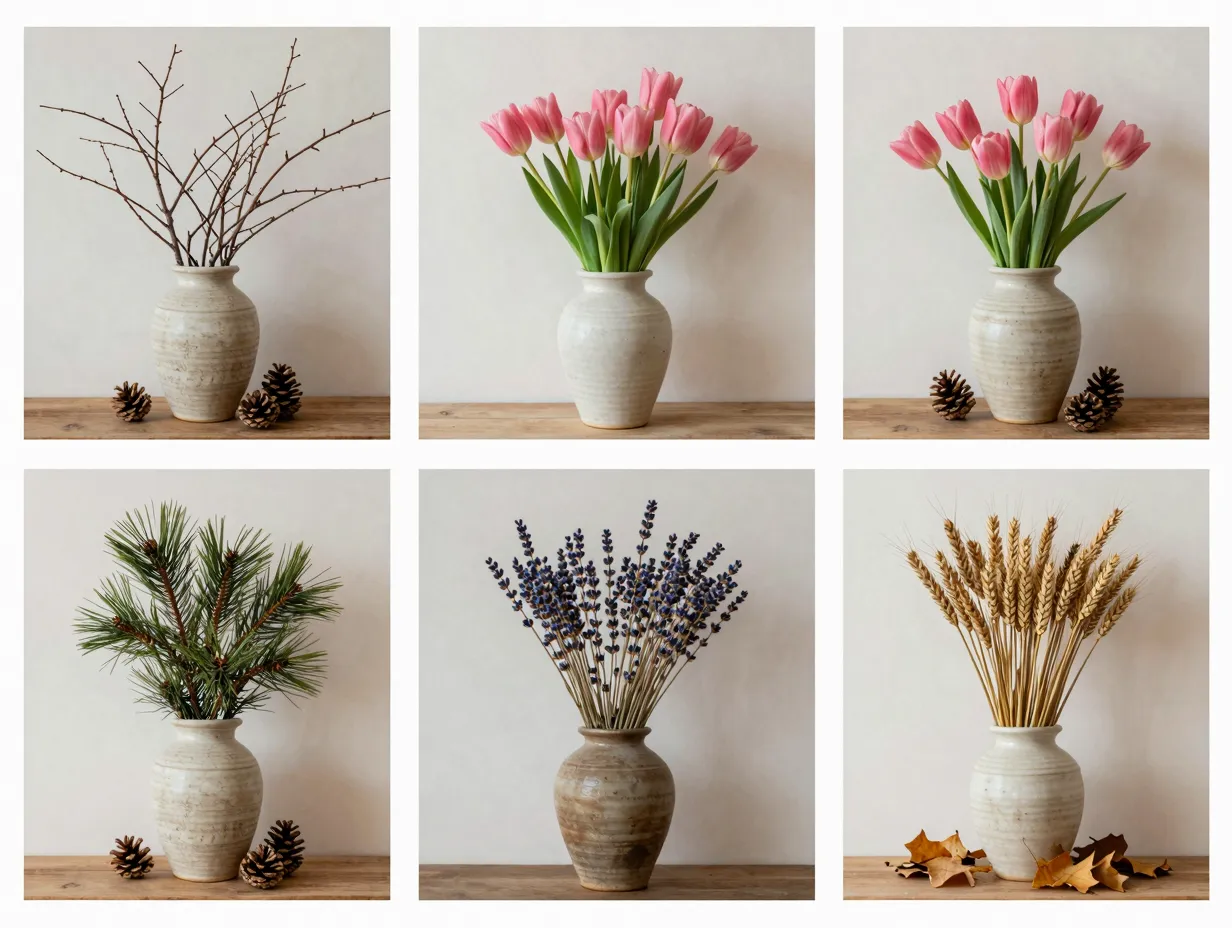
One of the easiest ways to keep your rustic vase styling feeling fresh throughout 2026 is to treat your vases as permanent fixtures and swap out what goes inside them, or around them, with the seasons [5].
A simple seasonal rotation guide:
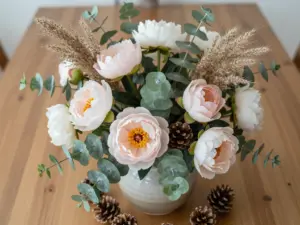
- Winter: Bare branches, dried cotton stems, pinecones tucked around the base of the vase
- Spring: Fresh tulips, cherry blossom branches, small bundles of herbs like rosemary or thyme
- Summer: Dried grasses, sunflowers, lavender bunches, or simple greenery
- Fall: Dried wheat stalks, orange Chinese lantern stems, preserved autumn leaves
The vases themselves stay in place. Only the fillings and surrounding accents change. This approach costs very little, most dried botanicals are inexpensive or free if you forage them, and it keeps your mantel, shelf, or entryway console feeling current and connected to the natural world outside your window.
9. Choose the Right Vase Size and Shape for Each Specific Surface
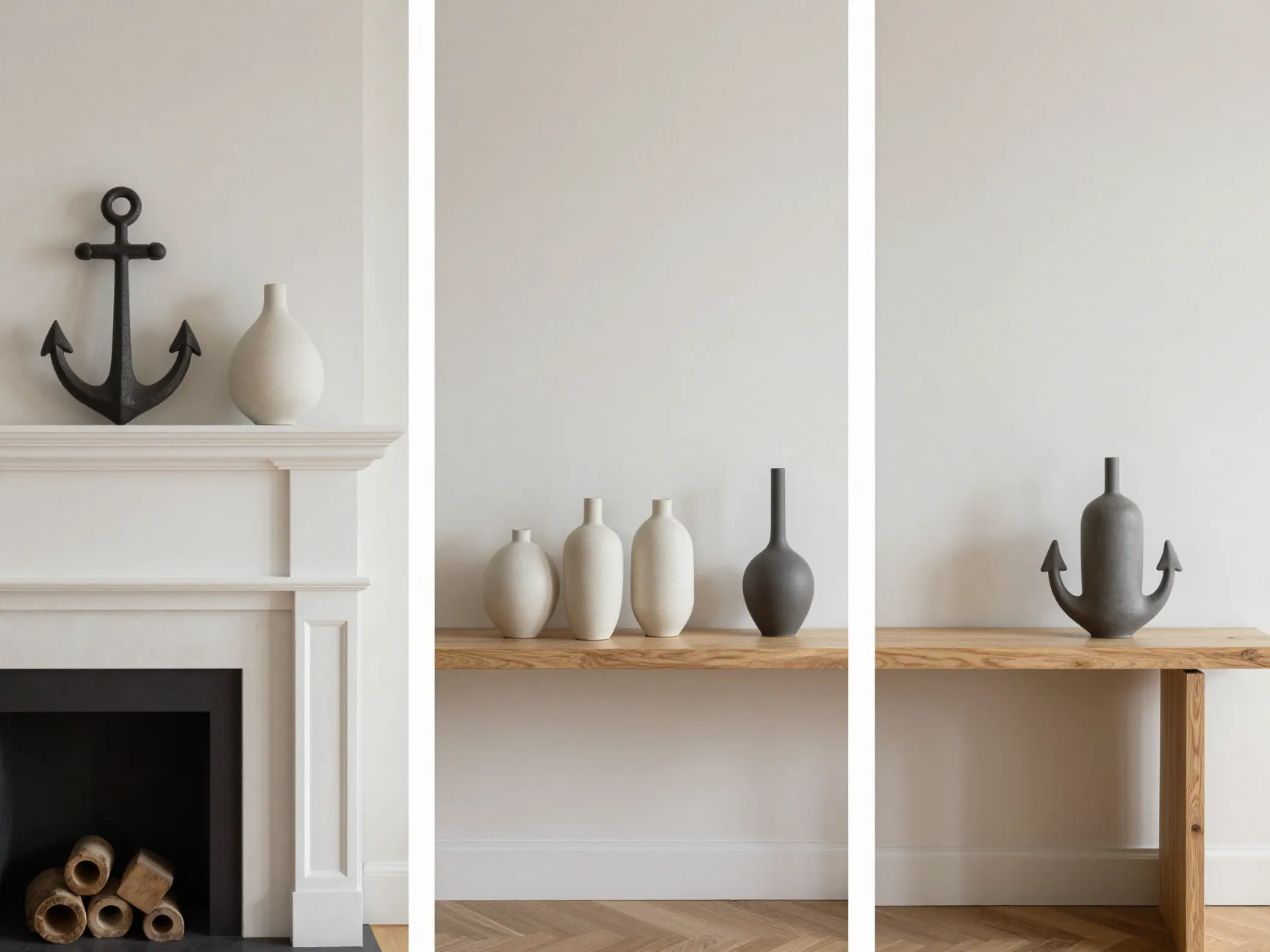
The final idea in this guide to 9 rustic vase ideas to style your mantel, shelf, or entryway console is perhaps the most practical: match your vase selection to the specific surface you are styling. Using the wrong scale is the most common mistake I see in home styling, and it is entirely avoidable.
Surface-specific vase selection guide:
Mantel:
- Mantels are wide and benefit from tall anchor vases (18 to 24 inches) at one or both ends
- Medium supporting vases (8 to 12 inches) fill the middle ground
- Avoid vases that are too short, they get lost against the fireplace surround
Floating or built-in shelves:
- Small to medium vases (4 to 10 inches) with sculptural shapes work best
- Choose vases with textured finishes that read well at eye level
- Avoid oversized vases that crowd the shelf and block other objects [1]
Entryway console:
- Tall, slim vases (14 to 20 inches) add height without consuming surface area
- Sculptural shapes with organic silhouettes complement the transitional nature of entryways
- Ensure the vase does not extend beyond the depth of the console to prevent tipping [6]
Sideboard or credenza:
- Tall anchor vases at one end, medium supporting vases in the middle
- Leave intentional negative space, do not fill every inch of the surface [1]
Common Styling Mistakes to Avoid
Even with the best vases, a few recurring errors can undermine an otherwise strong arrangement. Being aware of them is half the battle.
Avoid these pitfalls:
- Placing all vases in a straight line, stagger them front to back as well as side to side
- Using too many small vases, they create visual noise rather than impact
- Ignoring height variation, a flat arrangement reads as an afterthought
- Mixing too many colors, limit your palette to two or three tones per arrangement
- Overfilling surfaces, negative space is a design element, not wasted space [1]
A useful self-check: step back three to four feet from your arrangement and squint slightly. If your eye travels naturally across the surface and lands on a clear focal point, the arrangement is working. If everything looks equally weighted and your eye does not know where to go, you need more height variation or a stronger anchor piece.
How to Shop for Rustic Vases in 2026
The market for rustic home accessories has expanded significantly, and finding quality pieces is easier than ever. Here are the most reliable sources:
- Artisan markets and craft fairs, the best source for genuinely handmade, one-of-a-kind pieces with authentic imperfections
- Thrift stores and estate sales, excellent for aged terracotta, vintage stoneware, and ceramic pieces with character
- Online ceramic studios, many independent potters sell directly through their own websites or platforms like Etsy
- Home decor retailers, stores like Pottery Barn, West Elm, and McGee & Co carry curated rustic vase collections
- Antique shops, for truly aged pieces with provenance and patina that cannot be replicated
When shopping, prioritize pieces with visible handmade qualities: slight asymmetry, varied glaze depth, visible throwing marks, or uneven rims. These imperfections are not flaws, they are the characteristics that give rustic vases their warmth and longevity in a styled space.
Conclusion
The 9 rustic vase ideas to style your mantel, shelf, or entryway console in this guide share a common thread: intentionality. Every idea, from anchoring a mantel with a tall statement vase to embracing wabi-sabi minimalism in your entryway, is built on the principle that a well-placed rustic vase does more than fill space. It tells a story about the people who live in the home.
Your actionable next steps:
- Walk through your home today and identify the one surface, mantel, shelf, or console, that feels the most unfinished.
- Apply the height rule immediately: if every vase on that surface is the same height, swap one out for a taller piece.
- Add one textured vase, ribbed stoneware, unglazed terracotta, or crackle glaze, to your next shopping list.
- Plan one seasonal update for the current season using dried botanicals or fresh greenery.
- Step back and edit ruthlessly, remove one item from your arrangement and notice how the remaining pieces breathe.
Rustic vases are not a trend. They are a timeless design tool that rewards patience, experimentation, and a willingness to leave some space empty. Start with one surface, one anchor vase, and one good dried stem. The rest will follow naturally.
References
[1] How To Style Vases On Shelves Sideboards And Console Tables – https://shades4seasons.com/blogs/news/how-to-style-vases-on-shelves-sideboards-and-console-tables?utm_source=openai
[2] Wabi Sabi Vase Styling Ideas For A Calm Entryway Or Shelf – https://innerunionhome.com/en-ususd/blogs/news/wabi-sabi-vase-styling-ideas-for-a-calm-entryway-or-shelf?utm_source=openai
[3] Big Vases Decor Living Room – https://livingroomedit.com/big-vases-decor-living-room/?utm_source=openai
[4] Entryway Table Decor Ideas Vases Mirrors Lamps – https://thegatheringgarden.com/blogs/the-gathering-garden-dried-flower-wreaths/entryway-table-decor-ideas-vases-mirrors-lamps?utm_source=openai
[5] Rustic Console Table Hallway Style – https://trendyhomehacks.com/rustic-console-table-hallway-style/?utm_source=openai
[6] How To Style A Console Table In An Entryway Like A Designer – https://houlte.com/blogs/news/how-to-style-a-console-table-in-an-entryway-like-a-designer?utm_source=openai