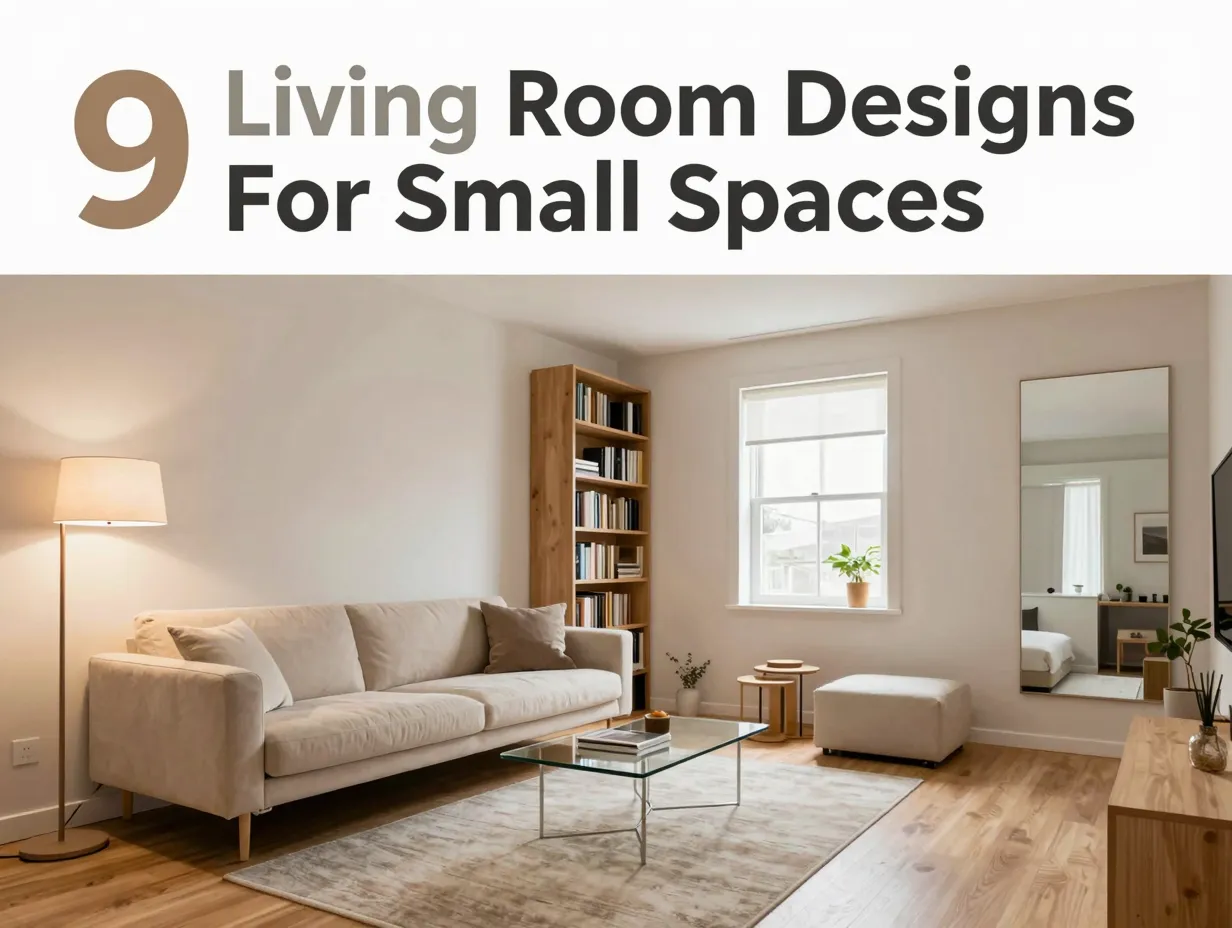
9 Living Room Designs For Small Spaces In Your Apartment
The average studio apartment in New York City measures just 550 square feet, and the living room often claims less than a third of that. Yet some of the most beautifully designed interiors in the world exist within those tight walls. The secret is not square footage. It is strategy. This guide breaks down 9 living room designs for small spaces in your apartment, drawing on the latest 2026 interior design research, real-world tested techniques, and expert advice from leading home publications. Whether you are working with a 120-square-foot corner or a narrow rectangular layout, these approaches will help you make every inch count.
Disclosure: This post contains affiliate links. As an Amazon Associate, we earn from qualifying purchases, and at no extra cost to you.
Key Takeaways
- Precise layout planning, including mapping furniture with painter’s tape, is the essential first step before buying any piece [1]
- Light tones on large surfaces visually expand a small living room, while accents add depth without crowding the space [1]
- Multifunctional, storage-rich furniture allows compact rooms to perform like much larger ones [3]
- Vertical storage and floating units free up floor space and draw the eye upward [2]
- Layered lighting from three sources creates warmth and depth in small apartment living rooms
Why These 9 Living Room Designs For Small Spaces Work
Before diving into the specific designs, it helps to understand the principles behind them. Small living rooms fail not because they are small, but because they are treated like large ones. Oversized furniture, dark walls, single overhead lighting, and cluttered surfaces all compress the visual field and make a room feel like a closet.
The 9 living room designs for small spaces in your apartment covered in this article each address a specific pain point, layout confusion, lack of storage, poor lighting, or visual clutter. Together, they form a complete toolkit.
I once helped a friend redesign her 140-square-foot apartment living room in Chicago. She had a massive sectional sofa that ate up 70% of the floor. After swapping it for a compact armless sofa and adding two nesting tables, the room felt twice as large. Nothing structural changed. The strategy changed.
Let us get into the designs.
9 Living Room Designs For Small Spaces In Your Apartment, Explained
1. The Layout-First Design
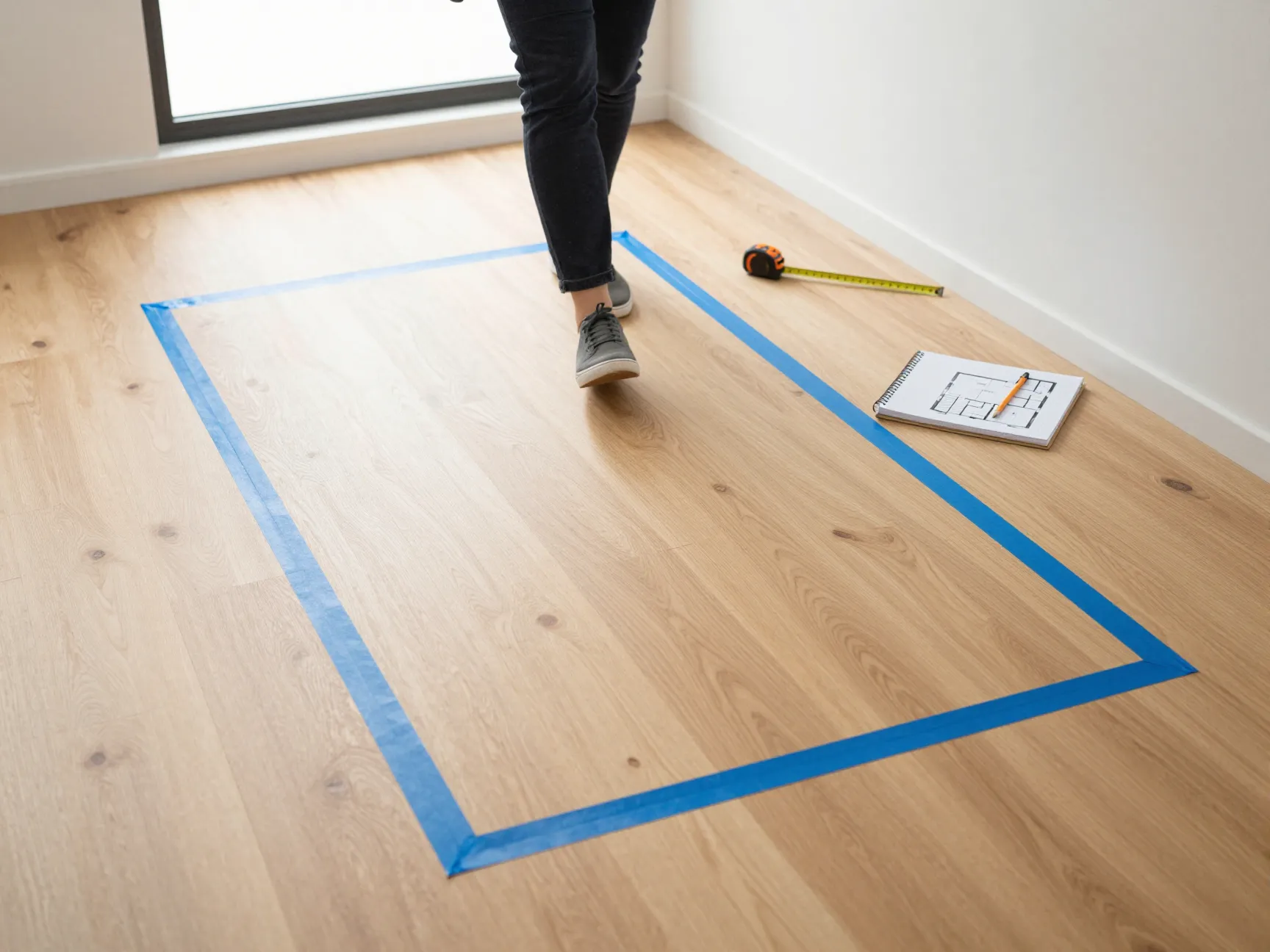
The most overlooked starting point in small apartment design is the floor plan itself. According to 2026 guides, main walkways should maintain 24 to 30 inches of clearance, and homeowners are advised to map out furniture placement using painter’s tape on the floor before purchasing any pieces [1].
This approach, sometimes called the “tape test”, prevents the most common mistake: buying furniture that looks right in a showroom but physically blocks movement in your actual space.
How to apply it:
- Measure your room precisely, including doorways, windows, and outlets
- Use painter’s tape to outline each furniture piece on the floor
- Walk through the layout and check that all pathways remain clear
- Adjust the tape before committing to any purchase
This design philosophy treats the floor plan as the foundation. Every other decision, furniture, lighting, color, flows from it.
2. The Light Palette Design
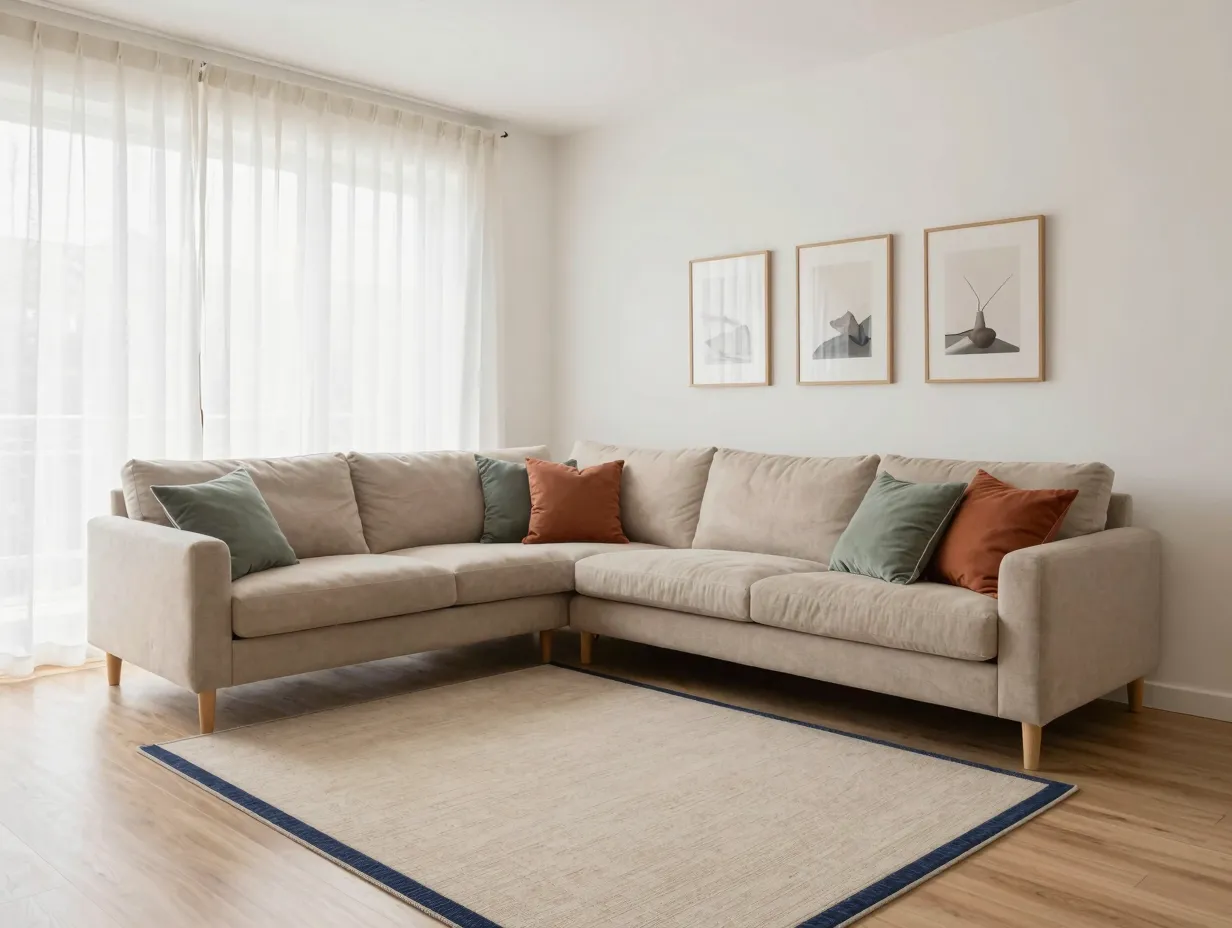
Color is one of the most powerful tools in small-space design, and it costs less than almost any other change you can make. Current small-space advice stresses keeping large surfaces, walls, sofa, and curtains, in light tones such as warm whites, oatmeal, beige, or greige to visually expand the room [1].
The key word here is “large surfaces.” The walls, the sofa, and the window treatments together represent the majority of what the eye sees when it scans a room. When those surfaces are light and unified, the room reads as open. When they are dark or mismatched, the room contracts visually.
Depth and personality come from accents: throw pillows, art frames, rug borders, and small decorative objects. This layering approach gives you visual interest without visual noise [1].
Recommended light palette combinations:
| Surface | Recommended Tone |
|---|---|
| Walls | Warm white or soft greige |
| Sofa | Oatmeal, cream, or light beige |
| Curtains | Sheer white or linen natural |
| Rug | Light base with colored border |
| Accents | Deep navy, terracotta, or sage |
3. The Multifunctional Furniture Design
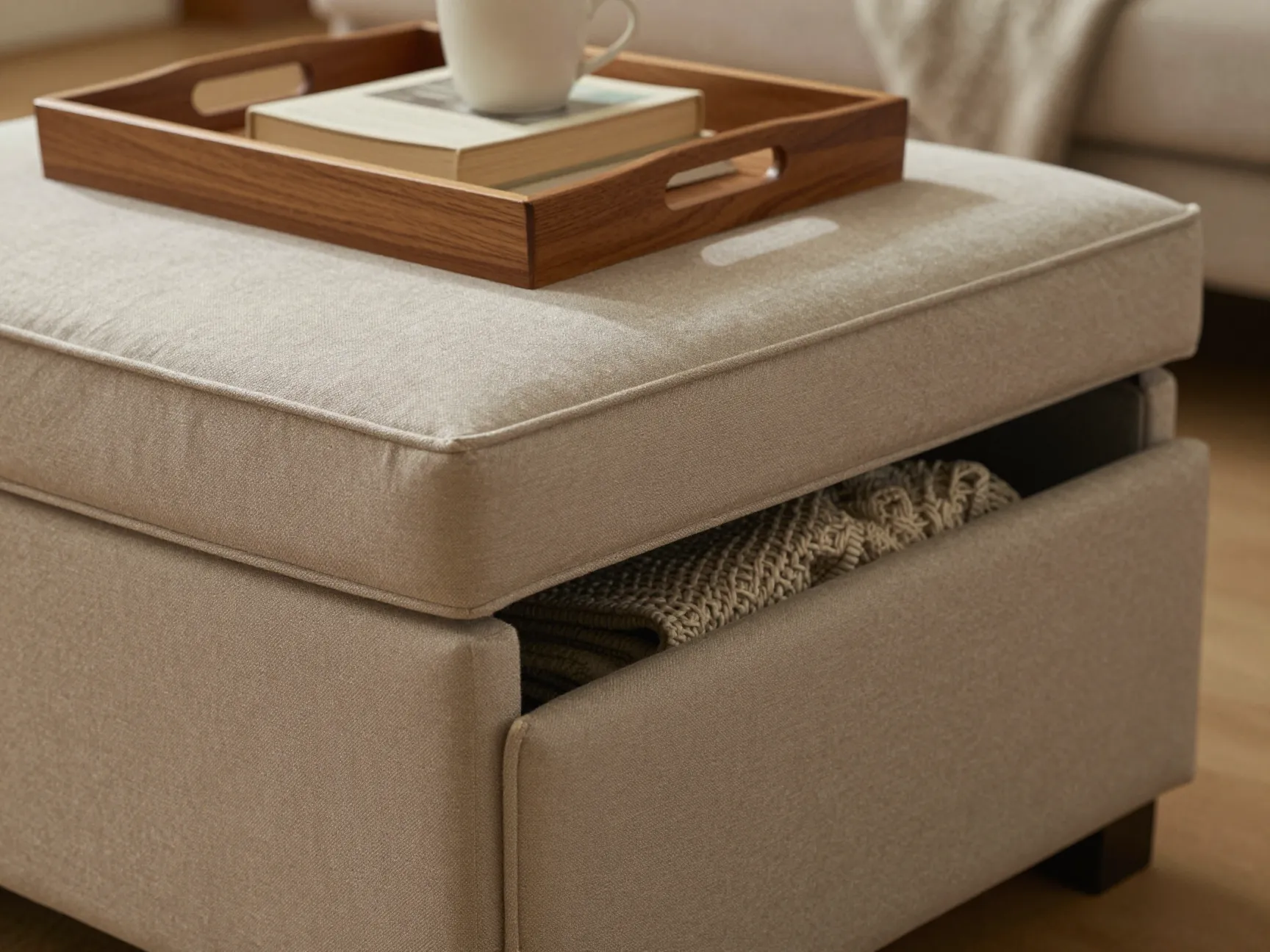
Leading interiors outlets for small apartments consistently highlight multifunctional, storage-rich furniture as essential. Examples include compact sofas with hidden storage, coffee tables with concealed compartments, nesting tables, storage ottomans that double as seating, and side tables that integrate lamp bases [3][6].
Good Housekeeping describes this approach as allowing small rooms to “function exactly like bigger rooms” [3]. The logic is straightforward: every piece of furniture in a small apartment must earn its place by doing more than one job.
Top multifunctional furniture picks for small living rooms:
- Compact sofa with under-seat storage drawers
- Lift-top coffee table with interior compartment
- Storage ottoman that serves as a seat, footrest, and blanket storage
- Nesting tables that tuck away when not in use
- Wall-mounted desk that folds flat when not needed
The storage ottoman deserves special mention. I have seen it transform living rooms on its own. It replaces the need for a separate blanket chest, provides extra seating for guests, and can double as a coffee table with a tray on top.
4. The Vertical Storage Design
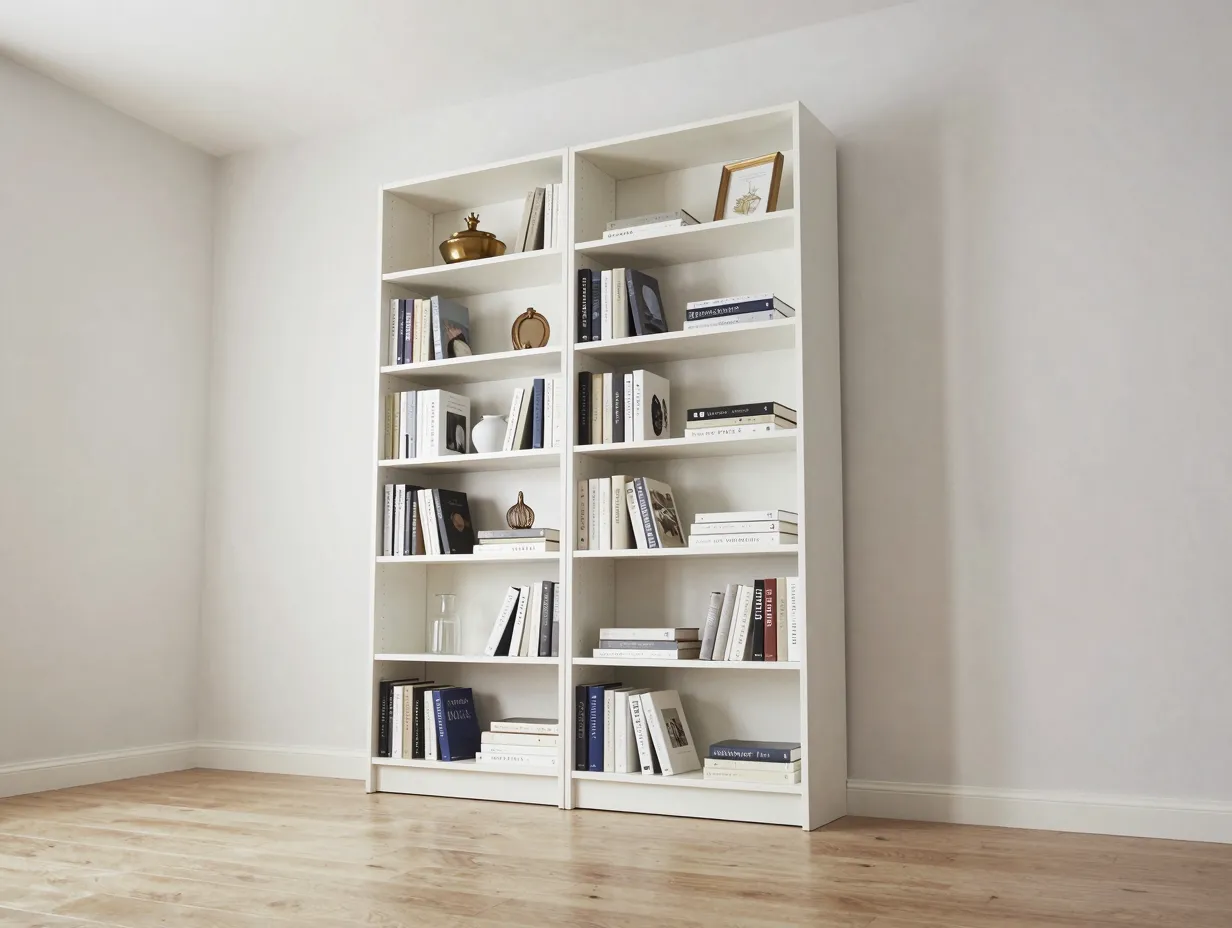
When floor space is limited, the answer is to go up. Vertical and floating storage has become a key 2025 to 2026 strategy, with design experts recommending tall shelving, wall-mounted TV units, floating consoles, and slim vertical cabinets to free up floor space while drawing the eye upward in very small apartments [2][8][9].
This design approach works on two levels simultaneously. Practically, it moves storage off the floor and onto the walls, which frees up the ground plane and makes the room easier to move through. Visually, tall vertical elements draw the gaze upward, which makes ceilings feel higher and rooms feel larger.
Vertical storage ideas for apartment living rooms:
- Floor-to-ceiling bookshelves on one accent wall
- Wall-mounted TV unit with floating media console below
- Slim vertical cabinet (12 to 14 inches deep) for books and decor
- Pegboard or grid wall panel for flexible display storage
- Hanging planters or wall-mounted plant shelves
“The moment you stop treating your walls as decoration and start treating them as storage, your small apartment becomes a completely different place.”, A principle echoed across multiple 2026 design guides [8]
5. The Low-Profile Furniture Design
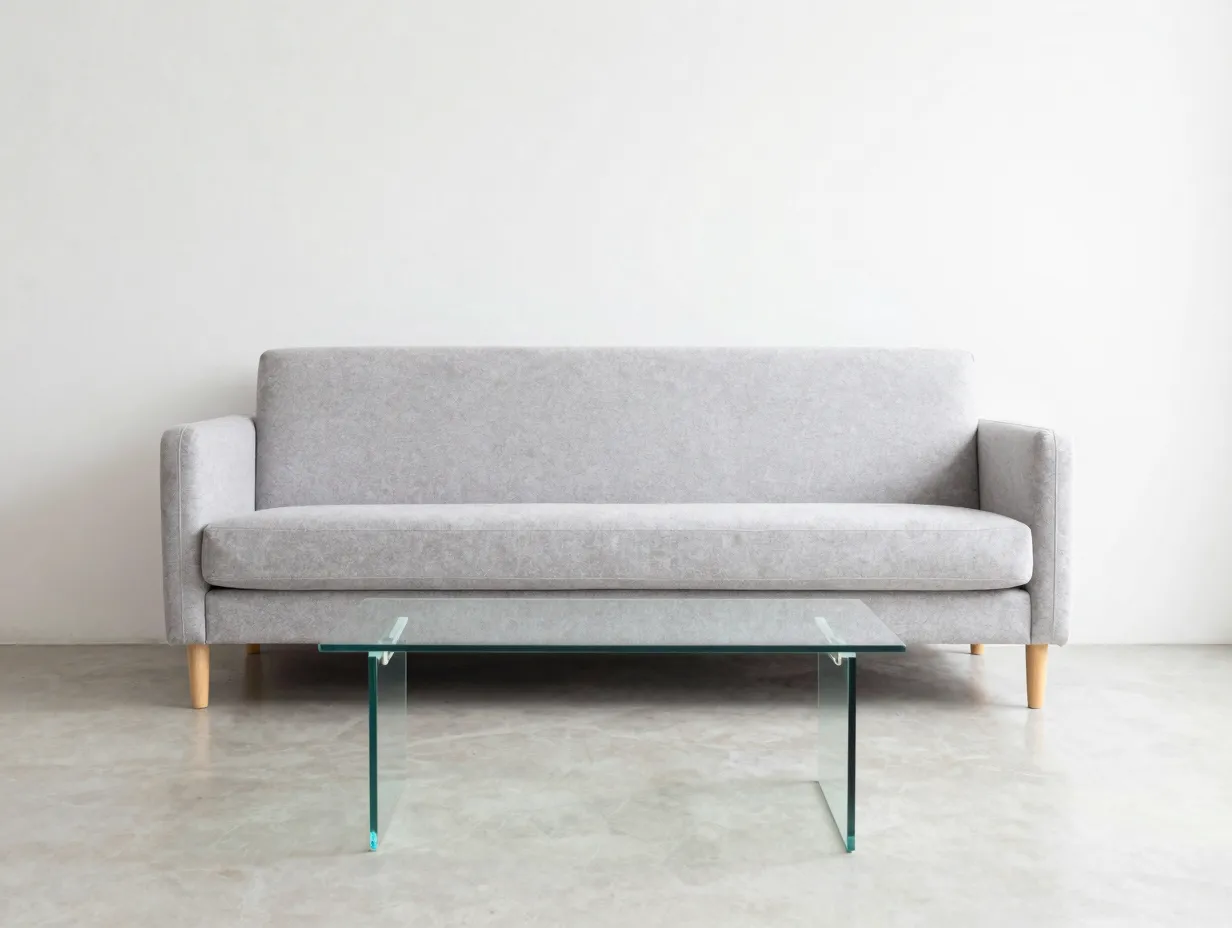
Designers now favor visually light, low-profile furniture, such as armless sofas, pieces on slim legs, glass or acrylic tables, and low-back sectionals, because they expose more floor and wall area, which makes compact living rooms feel less congested [5][7].
The principle here is visual weight. A chunky, skirted sofa sitting flush on the floor reads as heavy and space-consuming. The same sofa on slim tapered legs, with floor visible beneath it, reads as lighter and less dominant. Glass and acrylic tables take this further, they occupy physical space while remaining nearly invisible to the eye.
Low-profile furniture characteristics to look for:
- Sofa seat height between 15 and 17 inches
- Legs that are visible and at least 4 to 6 inches tall
- Armless or low-arm sofa profiles
- Acrylic or glass coffee tables and side tables
- Low-back sectionals that do not block sightlines
House Beautiful, Cosmopolitan, and Homes and Gardens all pointed to this approach as one of the most effective single changes for small apartment living rooms in 2024 and into 2026 [5][7].
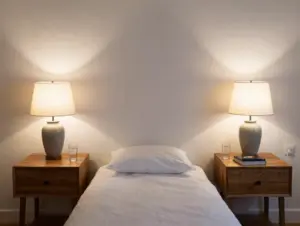
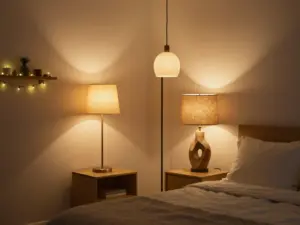
6. The Layered Lighting Design
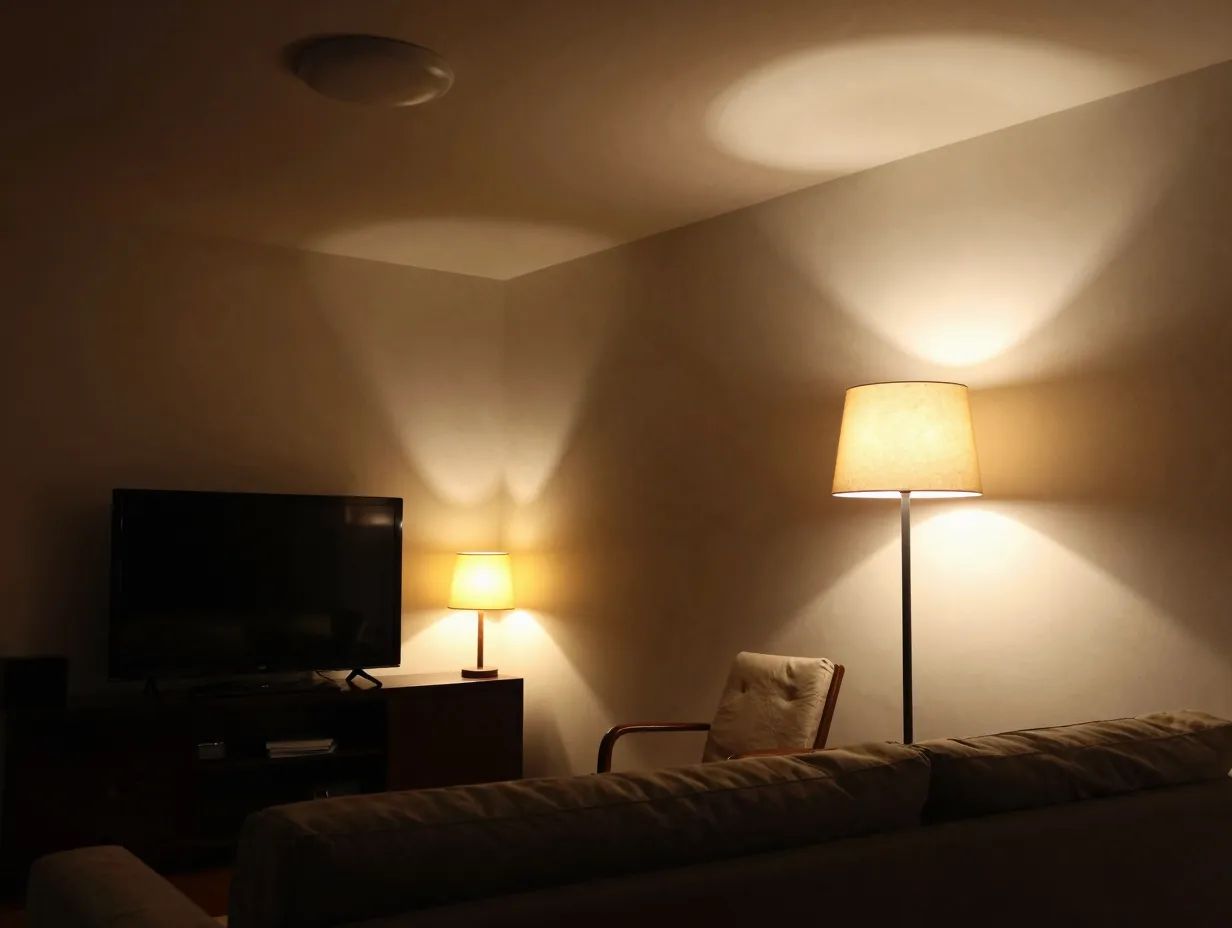
Single overhead lighting is one of the most common mistakes in small apartment living rooms. A bare bulb or flat ceiling fixture casts harsh shadows, flattens the room, and eliminates depth. The 2026 approach is layered, warm lighting from three sources: ambient, task, and accent, in the 2700 to 3000 Kelvin range.
The three-layer lighting formula:
- Ambient lighting, A ceiling fixture or recessed lights for general illumination
- Task lighting, A floor lamp or table lamp positioned near reading or work areas
- Accent lighting, LED strip lights behind the TV, shelf lighting, or a small table lamp in a corner
This combination creates depth and a cozy atmosphere without glare. The warm 2700 to 3000K range is critical, cooler bulbs make a small room feel clinical and stark, while warm tones make it feel inviting and larger.
A practical tip: use smart bulbs with dimmer capability in all three layers. Being able to shift from full brightness during the day to low ambient lighting in the evening gives a small living room remarkable versatility.
7. The Mirror and Reflection Design
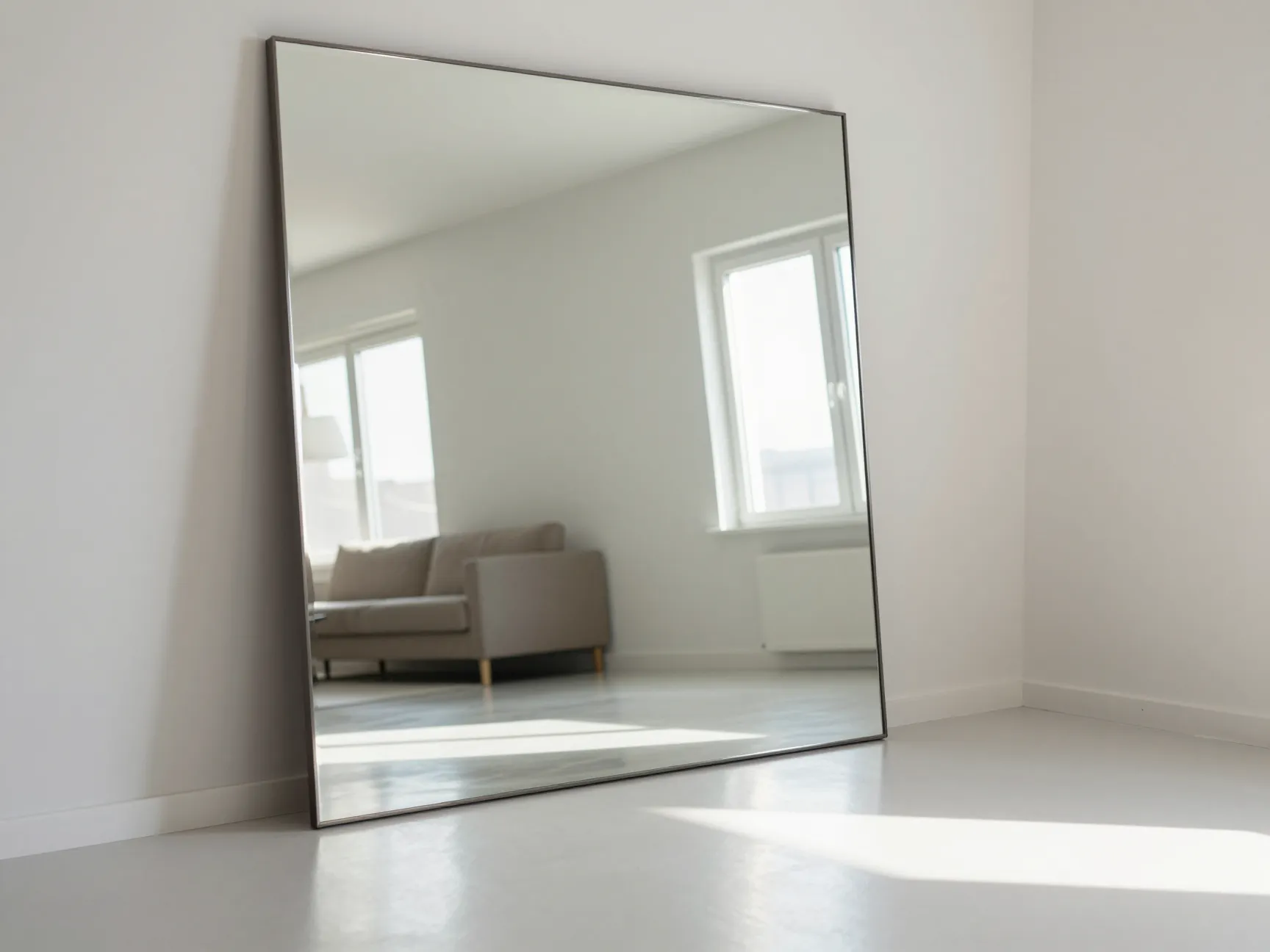
Mirrors are among the oldest tricks in interior design, and they remain one of the most effective for small spaces. A well-placed large mirror can visually double the perceived depth of a room by reflecting light and the opposite wall.
Mirror placement strategies for small living rooms:
- Position a large mirror on the wall opposite a window to reflect natural light
- Use a full-length leaning mirror in a corner to add depth without wall mounting
- Choose a mirror with a slim or minimal frame to keep the visual weight low
- Consider a mirrored console table or mirrored cabinet doors for double duty
The key is intentional placement. A mirror that reflects a cluttered corner amplifies the clutter. A mirror that reflects a window or a well-styled shelf amplifies the light and the design.
Apartment Therapy notes that reflective surfaces, including mirrors, glass tabletops, and metallic accents, are particularly effective in apartments where natural light is limited [8].
8. The Zone Definition Design
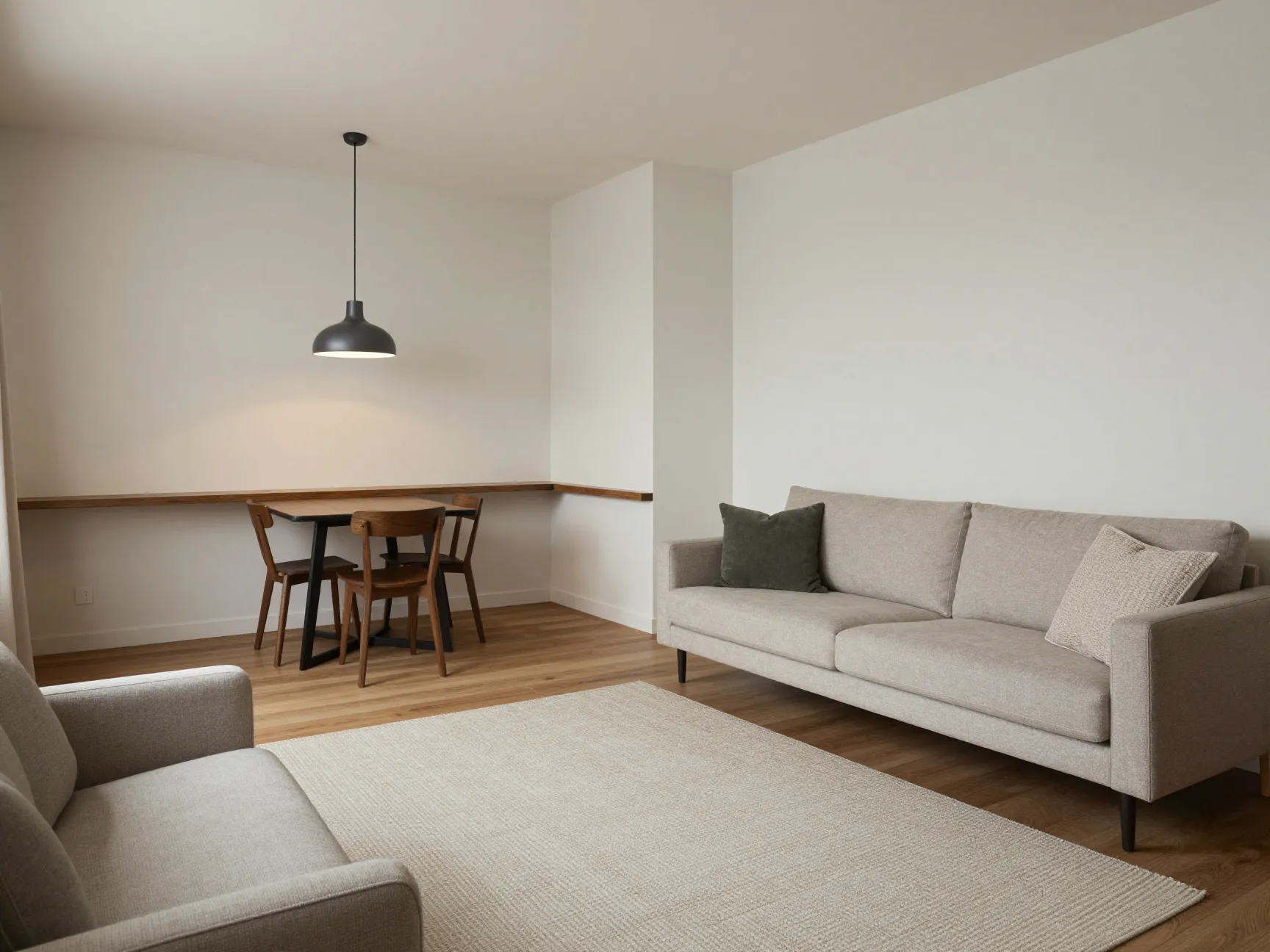
One challenge unique to small apartment living rooms is that they often serve multiple functions: lounging, working, dining, and sometimes sleeping. Without clear zone definition, the room feels chaotic and undefined.
Zone definition does not require walls or dividers. It uses furniture arrangement, rugs, and lighting to create distinct areas within a single open space.
How to define zones in a small living room:
- Use a rug to anchor the seating area and separate it visually from other zones
- Position a sofa with its back to the dining or work area as a soft divider
- Use a narrow console table behind the sofa as a visual boundary
- Apply different lighting to each zone, a pendant over the dining area, a floor lamp in the lounge zone
- Use a bookshelf or open shelving unit as a partial room divider
This approach is especially effective in studio apartments where the living room, dining area, and workspace share a single open floor plan. By giving each zone its own visual identity, the entire space feels more organized and intentional [7].
9. The Decluttered Minimalist Design
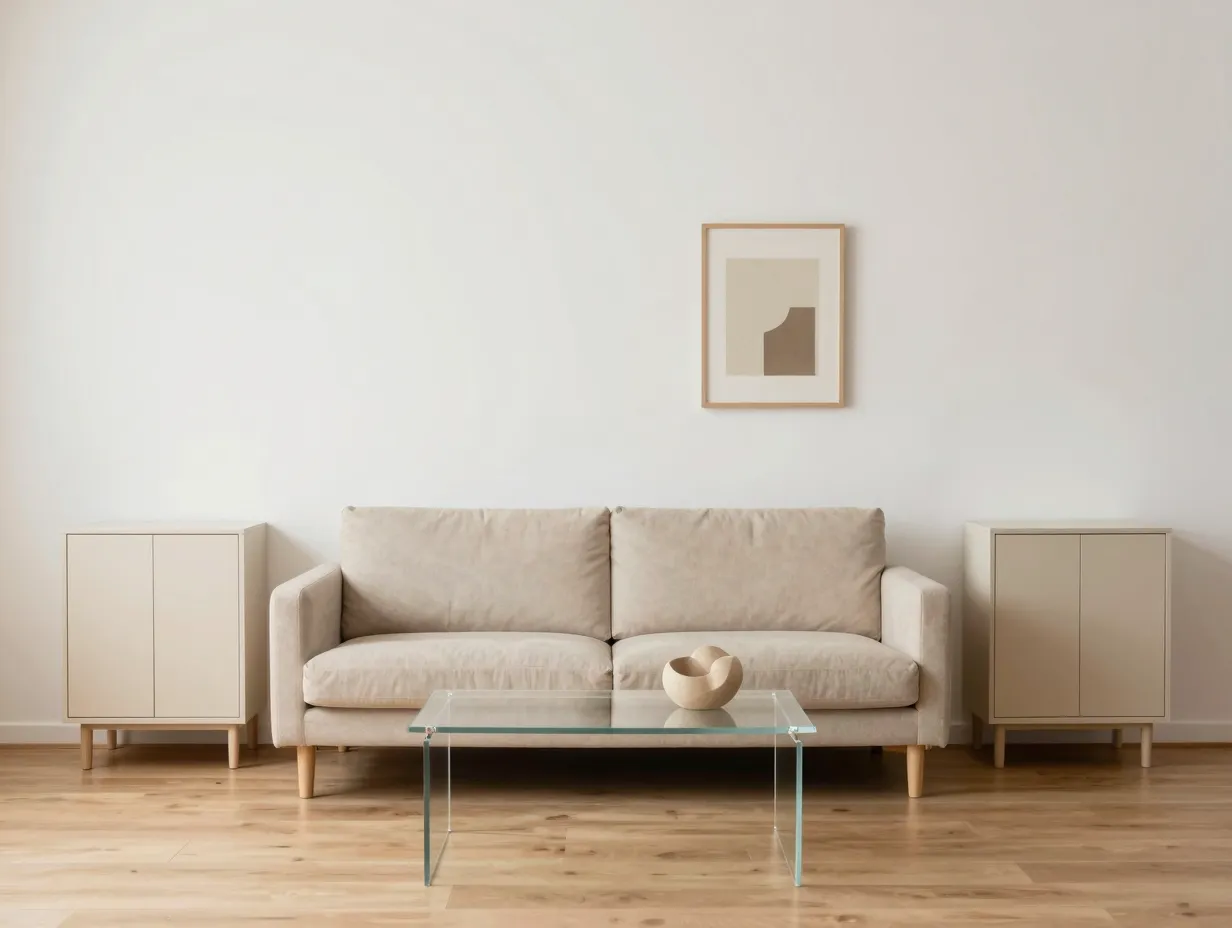
The final design in our list of 9 living room designs for small spaces in your apartment is perhaps the most powerful: strategic minimalism. In a small room, every object is visible. There is nowhere to hide clutter, and clutter is the single fastest way to make a small space feel smaller.
Minimalism in a small apartment living room does not mean empty or cold. It means intentional. Every object on display should be chosen deliberately, and storage should be built into the furniture so that day-to-day items, remotes, books, blankets, chargers, have a home out of sight.
Minimalist design principles for small living rooms:
- Apply the “one in, one out” rule: every new item requires removing an existing one
- Use closed storage (cabinets, ottomans, drawers) rather than open shelves for everyday items
- Limit decorative objects to three to five curated pieces per surface
- Keep the floor completely clear of objects, even small items on the floor compress a room visually
- Choose furniture in a cohesive color family to reduce visual noise
Yahoo Shopping’s roundup of small living room ideas reinforces that reducing visual clutter is as important as any furniture choice or color decision in compact apartment spaces [6].
Putting It All Together: A Quick Reference
The 9 designs above work individually, but they are most powerful in combination. Here is a quick reference summary:
| Design | Primary Benefit | Key Element |
|---|---|---|
| 1. Layout-First | Prevents overcrowding | Painter’s tape floor plan |
| 2. Light Palette | Visual expansion | Warm whites on large surfaces |
| 3. Multifunctional Furniture | Storage and function | Ottomans, nesting tables |
| 4. Vertical Storage | Floor space freedom | Tall shelves, floating units |
| 5. Low-Profile Furniture | Less visual weight | Slim legs, glass tables |
| 6. Layered Lighting | Depth and warmth | Three-source 2700K setup |
| 7. Mirror and Reflection | Perceived depth | Opposite-window placement |
| 8. Zone Definition | Organized multi-use | Rugs, lighting, console tables |
| 9. Decluttered Minimalism | Reduced visual noise | Closed storage, curated decor |
Common Mistakes to Avoid in Small Apartment Living Rooms
Even with the best designs in mind, a few common errors can undermine the result.
Avoid these pitfalls:
- Buying furniture before measuring and taping the floor plan
- Using a single overhead light source as the only lighting
- Choosing a sofa that is too large for the room because it “looks comfortable”
- Leaving the floor cluttered with items that belong in storage
- Using too many competing colors on large surfaces
- Hanging curtains at window height rather than ceiling height (always hang curtains as high as possible to make ceilings feel taller)
- Ignoring vertical wall space while complaining about lack of storage
Conclusion
Small apartment living rooms are not a design problem. They are a design opportunity. The 9 living room designs for small spaces in your apartment covered in this guide, from layout-first planning and light palettes to vertical storage and strategic minimalism, give you a complete, actionable framework for transforming even the most compact space into a room that feels open, functional, and genuinely beautiful.
Your next steps:
- Measure your living room today and create a scale floor plan on paper or a free app like Planner 5D
- Use painter’s tape to map out your current furniture and identify where clearance is too tight
- Identify the one or two designs from this list that address your biggest pain points
- Start with the light palette and declutter, both cost nothing and deliver immediate visual impact
- Invest in one piece of multifunctional furniture as your next purchase
The transformation does not require a renovation budget or a design degree. It requires the right strategy applied consistently. Start with one change this week, and you will be surprised how quickly a small living room begins to feel like the most inviting room in your home.
References
[1] Small Living Room Ideas Makeover – https://www.povison.com/blog/inspiration/small-living-room-ideas-makeover.html
[2] Watch – https://www.youtube.com/watch?v=Pi1FCSEpWRE&vl=hi
[3] Apartment Living Room Ideas – https://www.goodhousekeeping.com/home/decorating-ideas/g45551391/apartment-living-room-ideas/
[5] Very Small Apartment Living Room Ideas – https://www.cosmopolitan.com/lifestyle/a62931180/very-small-apartment-living-room-ideas/
[6] 30 Living Room Ideas Smallest 233000719 – https://shopping.yahoo.com/home-garden/home-decor/articles/30-living-room-ideas-smallest-233000719.html
[7] Small Living Room Ideas For Apartments 223045 – https://www.homesandgardens.com/spaces/decorating/small-living-room-ideas-for-apartments-223045
[8] Small Living Room Home Design Ideas 254768 – https://www.apartmenttherapy.com/small-living-room-home-design-ideas-254768
[9] Watch – https://www.youtube.com/watch?v=V2w4wc6uePw