9 Large Potted Plants for Outdoor Spaces That Make a Major Statement
A single well-chosen container plant can do more for an outdoor space than an entire border of mixed shrubs. That is not an opinion, garden designers in 2026 are actively recommending “one large statement container with a sculptural centerpiece” as the primary design anchor for terraces and patios, replacing the old habit of scattering dozens of small pots across a space [10]. If you have been wondering why your patio feels busy but somehow flat, the answer is almost always scale. The 9 large potted plants for outdoor spaces that make a major statement covered in this guide solve that problem directly.
Disclosure: This post contains affiliate links. As an Amazon Associate, we earn from qualifying purchases, and at no extra cost to you.
Whether you are working with a compact balcony, a generous deck, or a sprawling garden terrace, choosing the right oversized specimen plant transforms the entire atmosphere. I have spent years advising homeowners on container planting, and the single most common mistake I see is thinking small. The plants below are chosen for visual impact, container suitability, and the kind of bold personality that stops people mid-step.
Key Takeaways
- Large architectural plants in oversized containers create stronger visual impact than multiple small pots combined
- Tropical specimens like Canna lilies and Banana plants deliver dramatic scale on patios during warm months
- Hardy evergreen choices such as Phormium and Yucca provide year-round structure with minimal maintenance
- Matching pot size, material, and plant form is as important as the plant selection itself
- The current 2026 design trend favors one bold statement container over cluttered multi-pot arrangements [10]
Why Scale and Structure Matter in Outdoor Container Planting
Before diving into the specific plants, it helps to understand why large potted specimens outperform their smaller counterparts as focal points. A plant that fills a 60-centimeter or larger container commands attention in a way that a 20-centimeter pot simply cannot. The visual weight anchors the space, gives the eye a resting point, and creates a sense of intention, the feeling that someone made a deliberate design decision rather than just filling a corner.
Container gardening trends in recent years have moved steadily toward bolder, more architectural choices [7]. The minimalist-but-impactful approach that dominates interior design has crossed over into outdoor spaces, and the results are striking. A single Banana plant or a mature Olive tree in a statement pot does more for a terrace than a row of petunias ever could.
There is also a practical argument. Large containers hold more soil volume, which means they retain moisture longer, support bigger root systems, and generally require less frequent watering than small pots [2]. For busy homeowners, that is a genuine advantage.
What makes a plant a “statement” choice?
- Unusual leaf size or shape
- Strong vertical or architectural form
- Bold color, either foliage or flower
- Year-round presence, not just seasonal interest
- Ability to thrive in a container long-term
With those criteria in mind, here are the 9 large potted plants for outdoor spaces that make a major statement.
The 9 Large Potted Plants for Outdoor Spaces That Make a Major Statement
1. Phormium (New Zealand Flax)
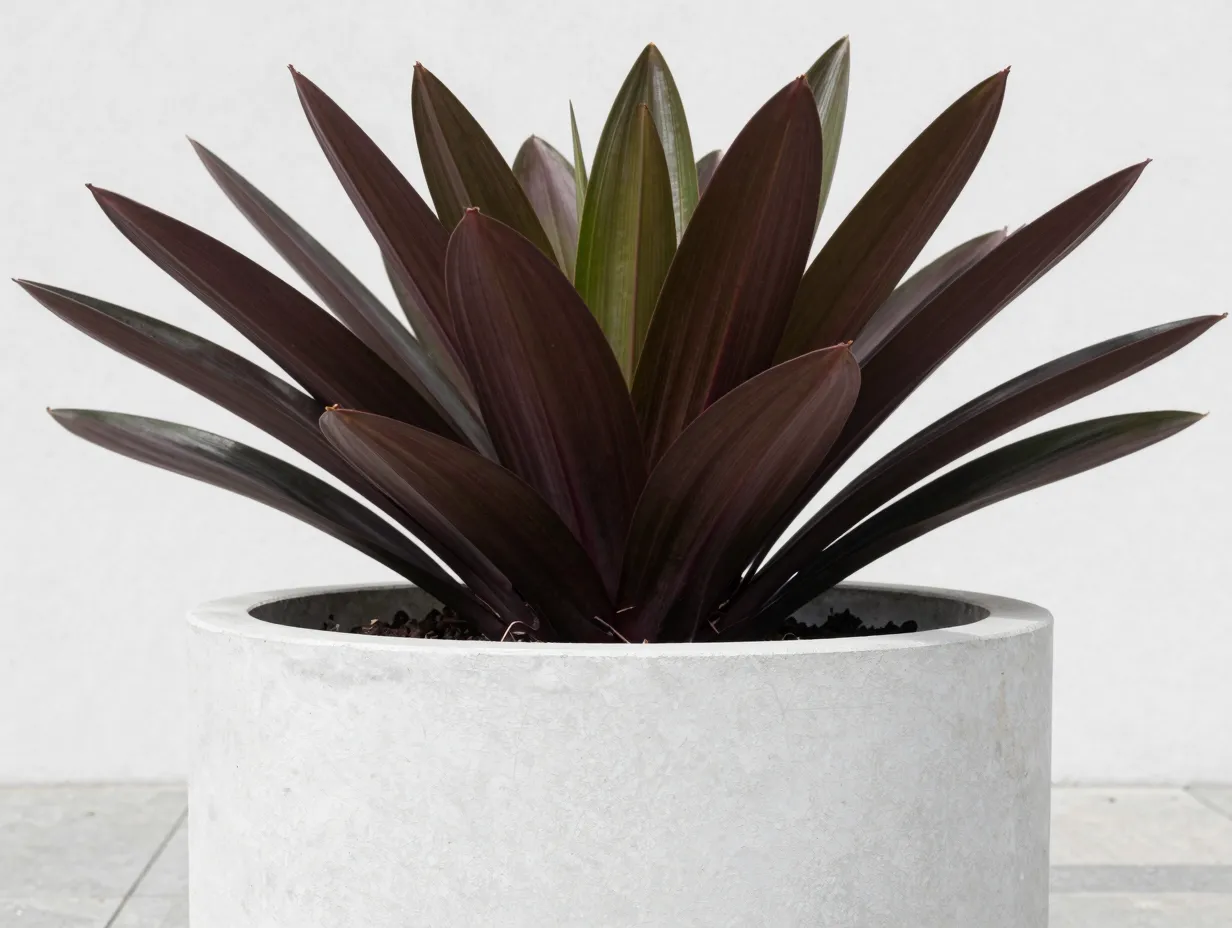
Phormium is the workhorse of architectural container planting. Its long, sword-shaped leaves fan outward in a bold, upright spray that reads as dramatic from a distance and refined up close. Available in colors ranging from deep burgundy to bronze-green to cream-striped green, there is a cultivar for nearly every design palette.
What sets Phormium apart is its reliability. A May 2026 update from a leading UK gardening authority specifically lists compact Phormium cultivars as top choices for feature plants in large pots, praising their low-maintenance architectural structure that performs year-round [14]. Unlike many statement plants that require overwintering or special care, most Phormium varieties are hardy enough to stay outdoors in temperate climates through all four seasons.
Best container size: 50 cm diameter minimum; 60-70 cm preferred for mature plants
Light: Full sun to partial shade
Maintenance level: Low
For maximum impact, pair a dark-leaved Phormium with a pale concrete or matte white pot. The contrast between the organic, spiky form and the clean geometry of the container is exactly the kind of tension that makes outdoor spaces feel designed rather than assembled.
2. Canna Lily
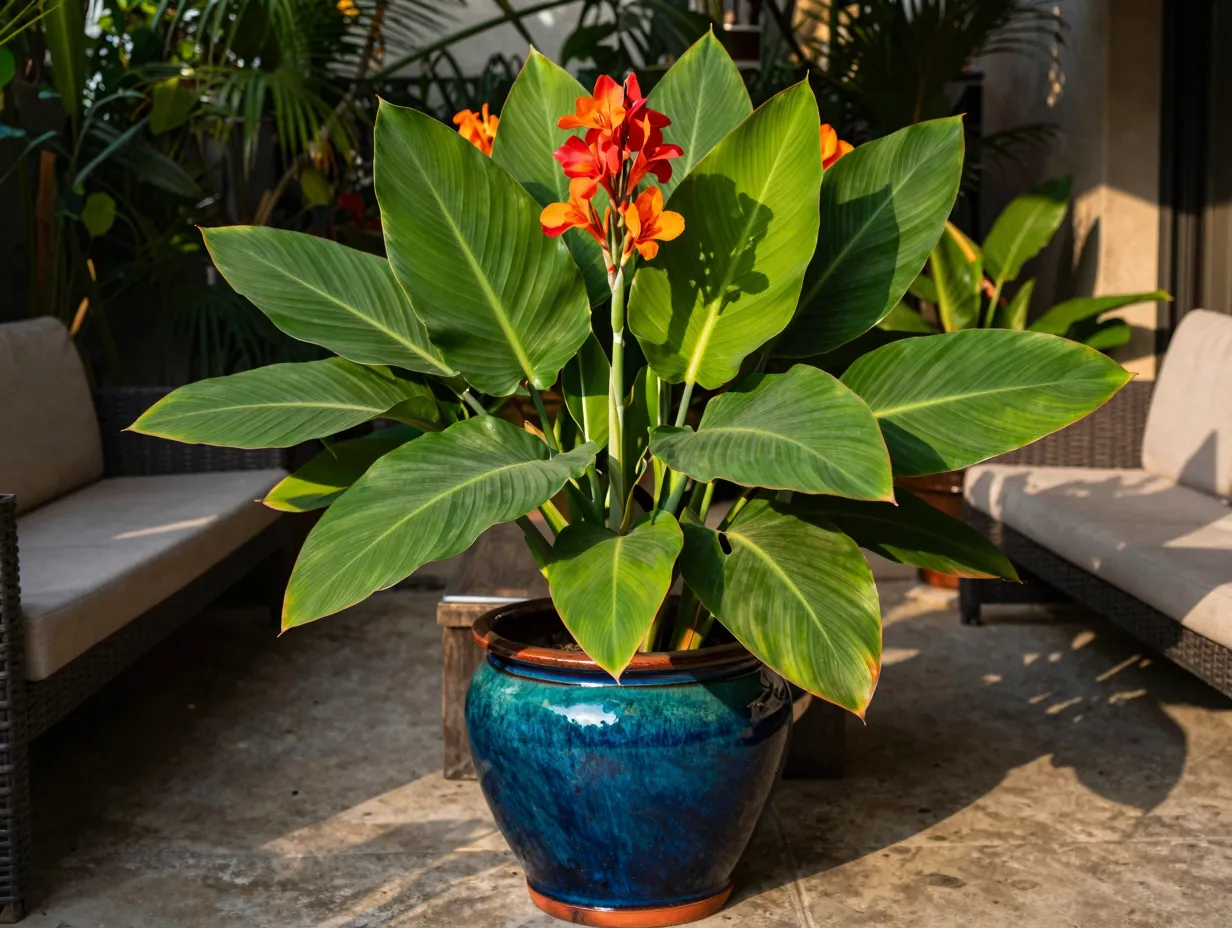
Few plants deliver the combination of tropical drama and ease of growing that Canna lilies offer. Their enormous paddle-shaped leaves, sometimes reaching 60 centimeters in length, create an instant jungle atmosphere, and the flower spikes in red, orange, yellow, and coral add a second layer of visual interest through summer and into early autumn.
Cannas are among the best potted plants for upgrading a patio quickly [1]. They grow fast, fill a large container within a single season, and respond well to regular feeding. In colder climates, the rhizomes can be lifted and stored over winter, making them a reusable investment rather than an annual expense.
Best container size: 45-60 cm diameter, at least 40 cm deep
Light: Full sun
Maintenance level: Moderate (lift rhizomes in frost-prone areas)
A single Canna in a large glazed pot, deep teal, cobalt, or terracotta, becomes an instant focal point on any patio. I once helped a client transform a bare concrete balcony with nothing more than two large Canna containers flanking a seating area. The effect was immediate and genuinely impressive.
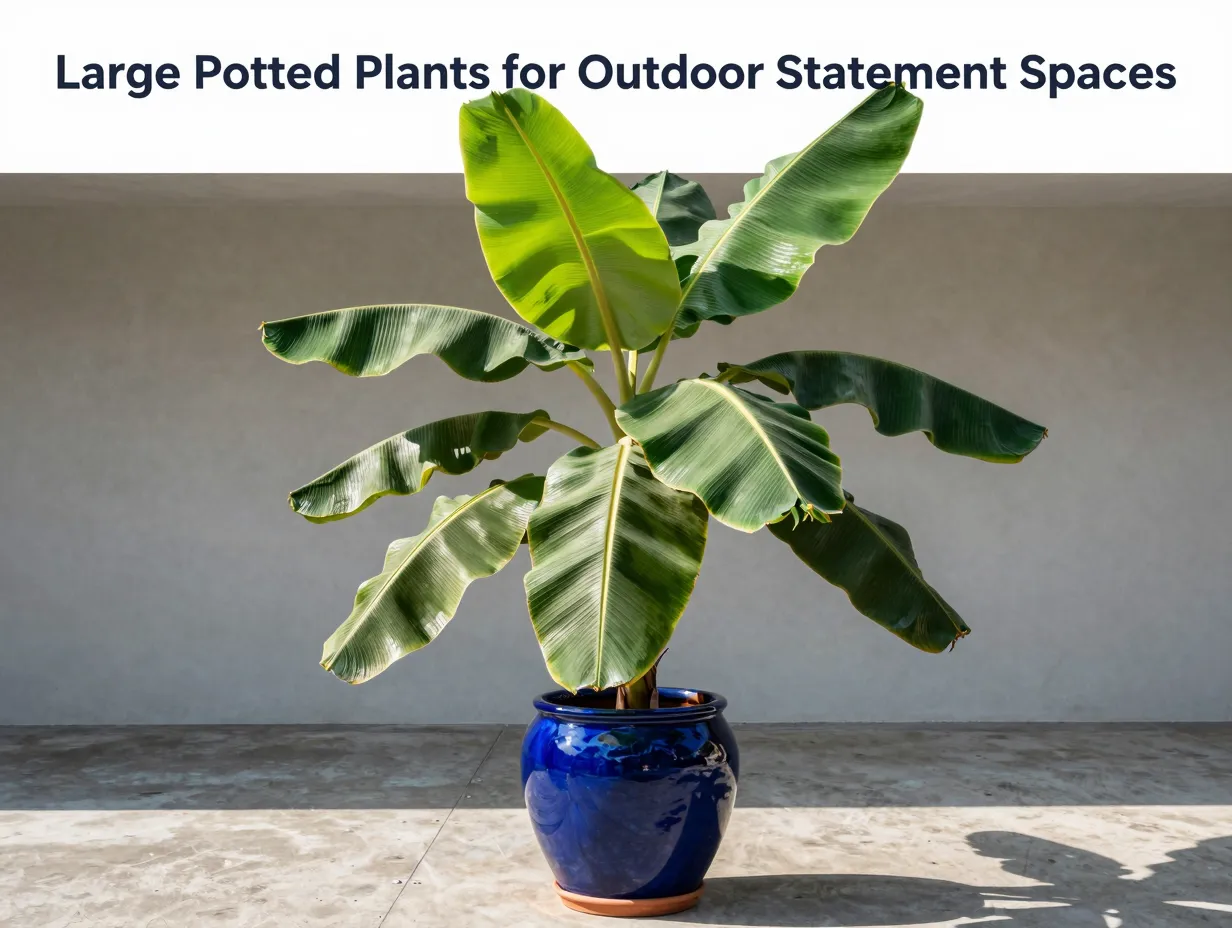
3. Banana Plant (Musa)
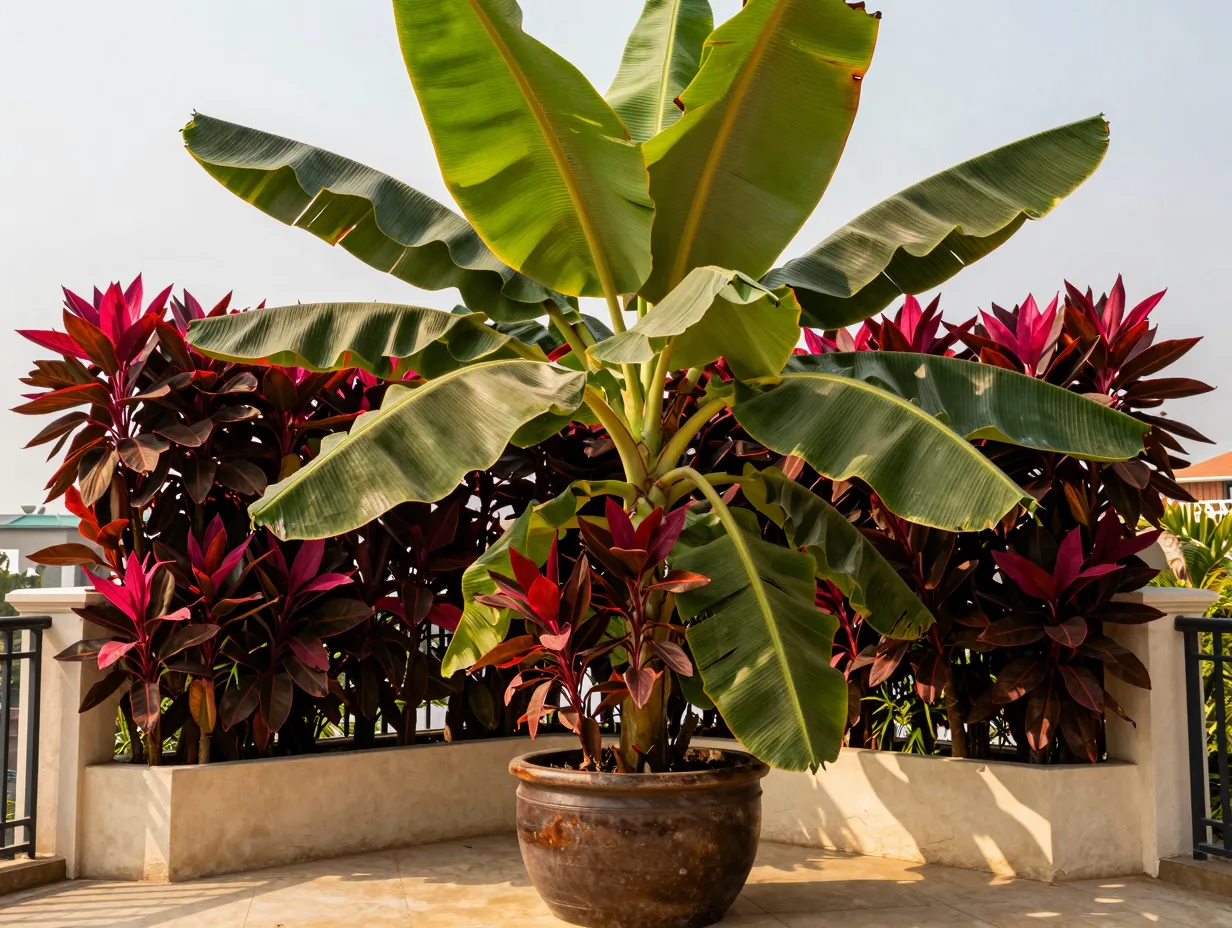
The Banana plant is the definition of bold. Its enormous, paddle-like leaves, which can reach over a meter long on mature specimens, create an unmistakably tropical atmosphere that no other container plant replicates. Even in a temperate climate, a Banana plant in a large pot signals warmth, leisure, and a confident design sensibility.
Musa basjoo is the hardiest species and can survive mild winters outdoors with some protection. For purely decorative use in warmer months, Ensete ventricosum ‘Maurelii’ (the Red Abyssinian Banana) offers stunning dark-red foliage that is even more dramatic than the standard green form.
Best container size: 60-90 cm diameter; large half-barrel planters work well
Light: Full sun, sheltered from strong wind
Maintenance level: Moderate to high (protect or overwinter in cold climates)
Tall potted plants like the Banana are particularly effective at creating privacy screens on open terraces and balconies, a function that has become increasingly valued in urban outdoor spaces [5].
4. Olive Tree (Olea europaea)
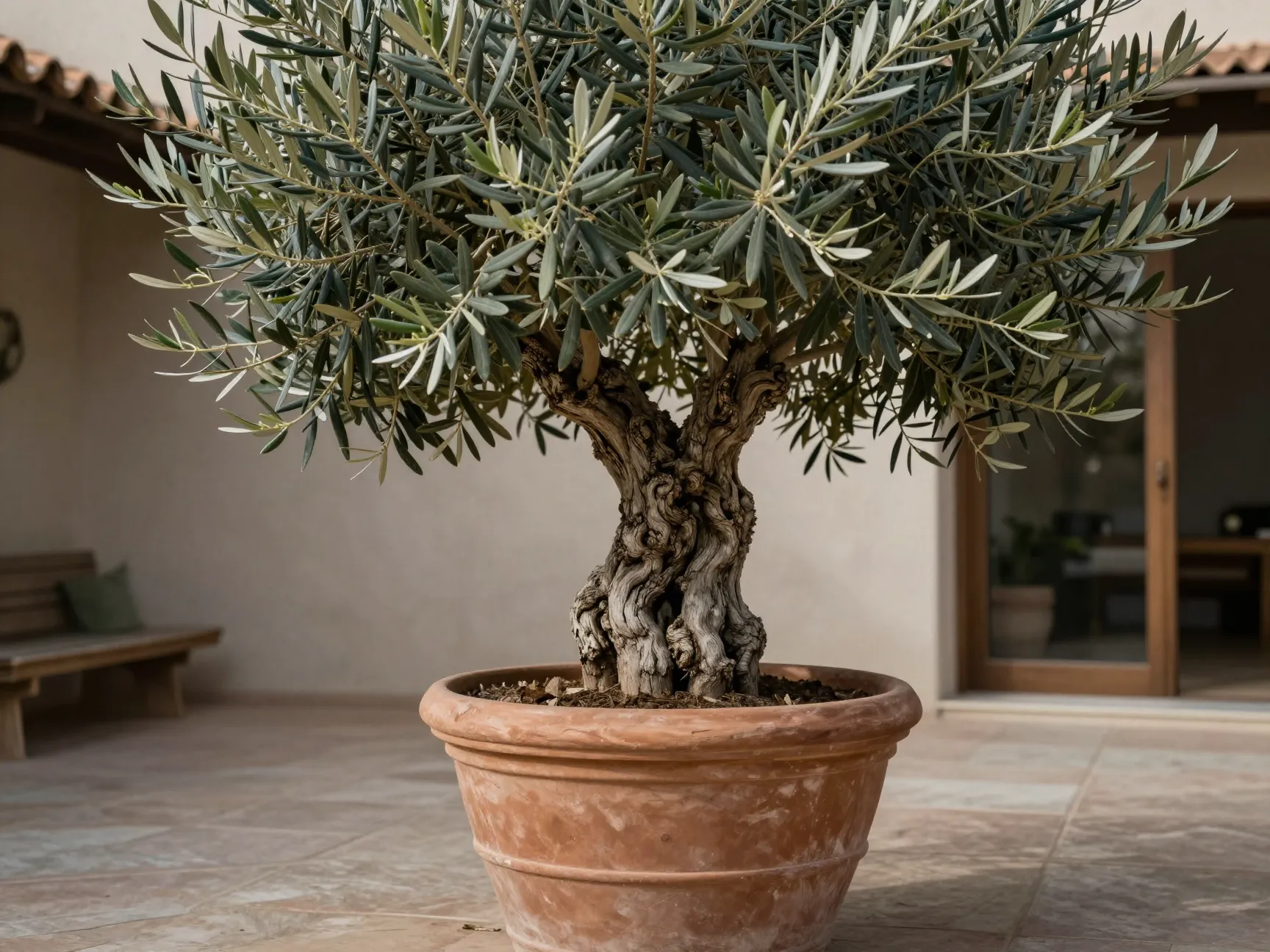
The Olive tree is arguably the most sophisticated choice on this list. A mature specimen in a large terracotta or stone pot brings centuries of Mediterranean character to any outdoor space. The gnarled trunk, silver-green foliage, and evergreen presence make it a year-round asset rather than a seasonal feature.
Olive trees are slow-growing, which means a specimen large enough to make a statement represents a genuine investment, but also one that holds its value. They are drought-tolerant once established, making them one of the lower-maintenance options for large container planting [2].
Best container size: 60 cm diameter minimum; larger is better for long-term health
Light: Full sun
Maintenance level: Low once established
“An Olive tree in a large terracotta pot is the single most versatile statement plant I recommend to clients. It works in modern, rustic, and Mediterranean settings equally well.”
For 2026 patios, the Olive tree fits perfectly within the current design direction toward sculptural centerpieces that anchor a space with quiet authority [10].
5. Hydrangea
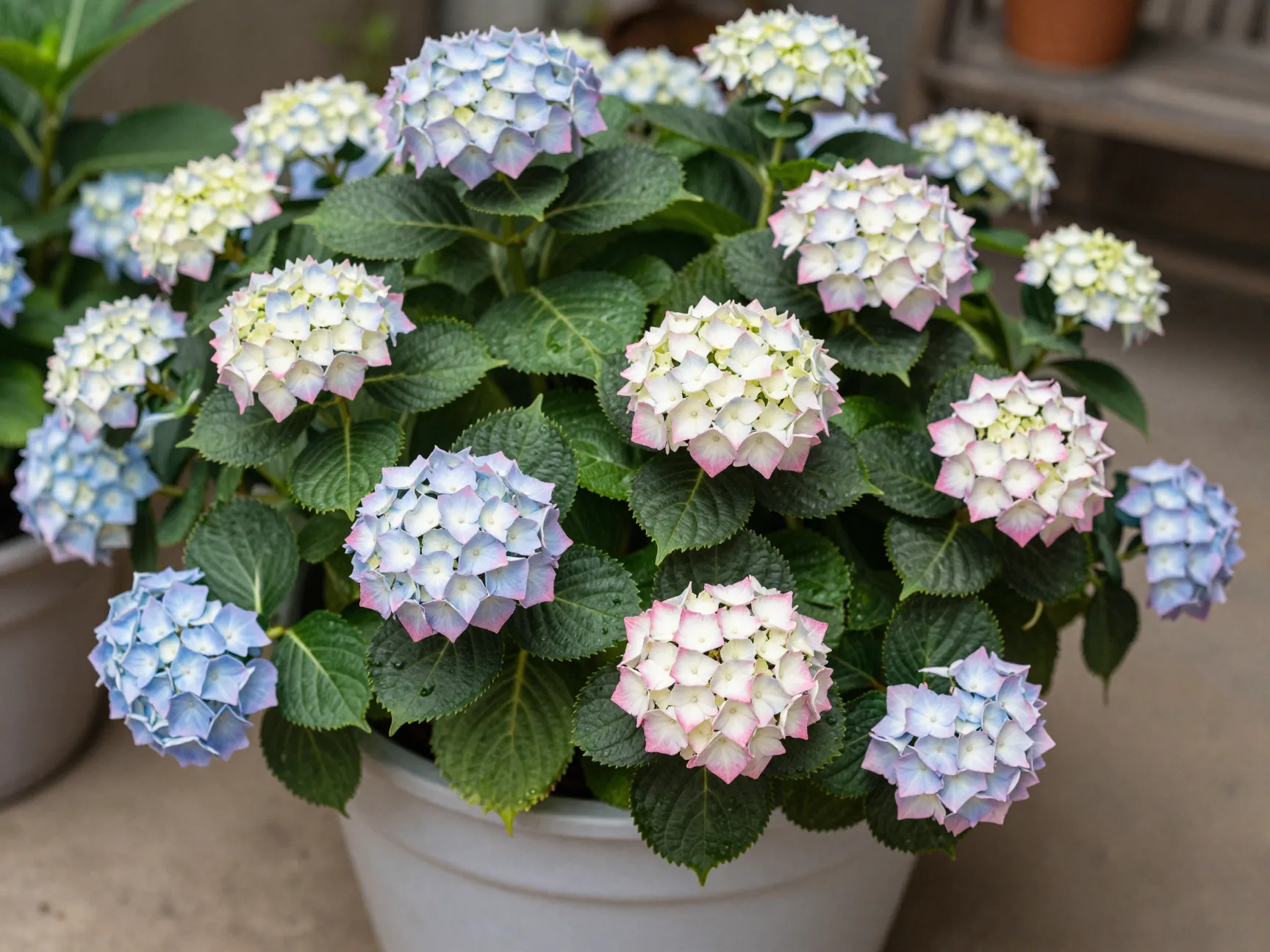
Hydrangeas are having a significant moment in container planting, and the newer compact cultivars have made them genuinely practical for large pots. Varieties such as ‘Miss Saori’ (with white flowers edged in deep pink) and ‘Early Blue’ (a reliable mophead in soft blue) are specifically recommended for large containers in partial shade [14].
The appeal of Hydrangeas in containers goes beyond their famous flower heads. The large, lush foliage creates a full, generous silhouette that reads as abundant and welcoming. In autumn, many varieties develop attractive dried flower heads that persist through winter, extending the season of interest.
Best container size: 50-60 cm diameter
Light: Partial shade; protect from harsh afternoon sun
Maintenance level: Moderate (regular watering essential)
Hydrangeas are among the top-performing potted plants for garden spaces because they reward attentive care with genuinely spectacular displays [3]. The key is consistent moisture, large containers help, but these plants will signal stress quickly if allowed to dry out.
6. Japanese Maple (Acer palmatum)
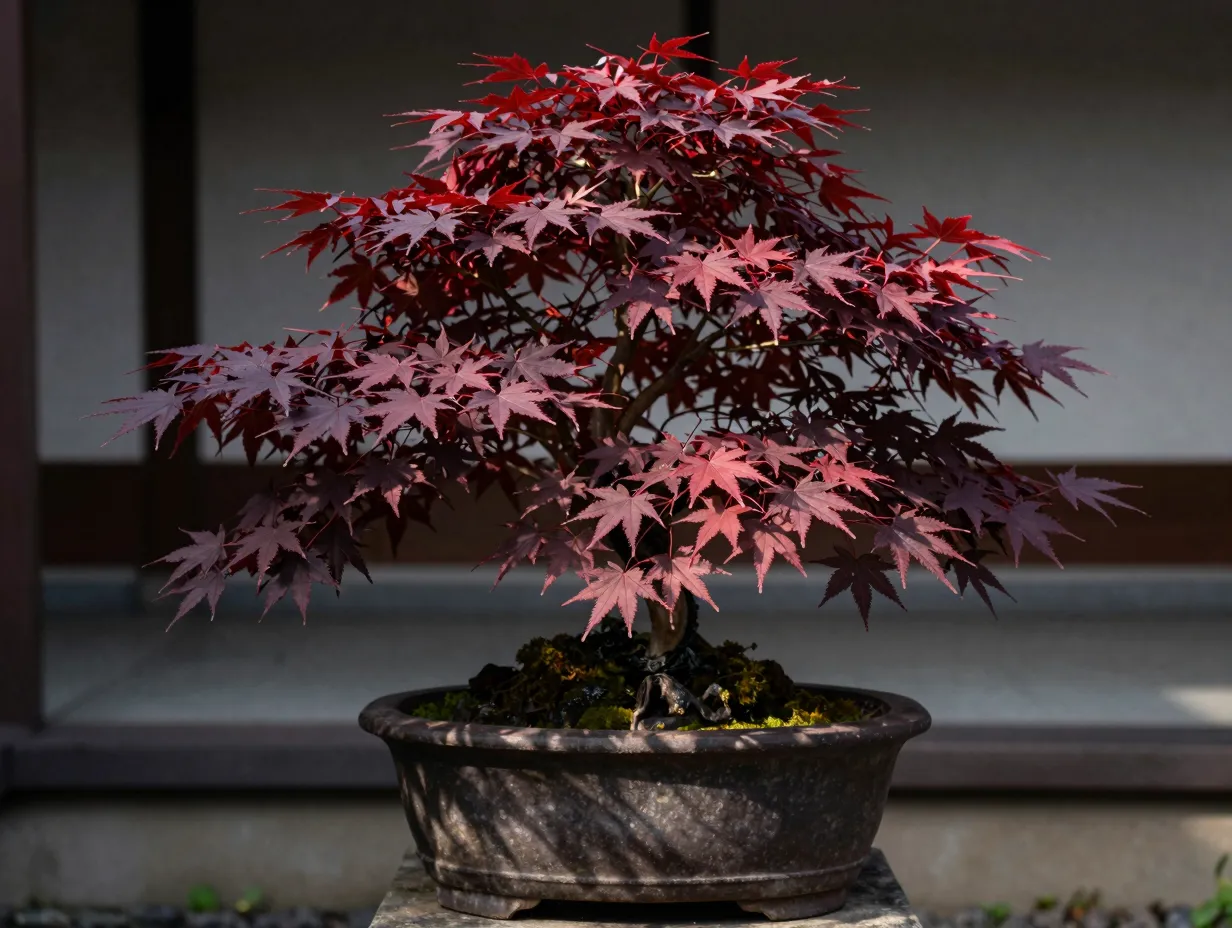
A Japanese Maple in a large container is a living sculpture. The delicate, deeply cut foliage, available in greens, reds, oranges, and near-blacks, shifts through the seasons in a way that makes the plant endlessly interesting. Spring brings fresh new growth, summer offers full canopy presence, autumn delivers a fiery color display, and winter reveals the elegant branching structure.
Dwarf and weeping cultivars such as ‘Crimson Queen’ and ‘Garnet’ are particularly well-suited to container life, staying compact enough to remain manageable while still creating genuine impact [2].
Best container size: 50-70 cm diameter; ensure excellent drainage
Light: Dappled shade to partial sun; protect from harsh midday sun and drying winds
Maintenance level: Moderate (protect roots from frost in containers)
The Japanese Maple rewards patience. A specimen that has been in a large container for three or four years develops a character and presence that no newly purchased plant can match.
7. Yucca
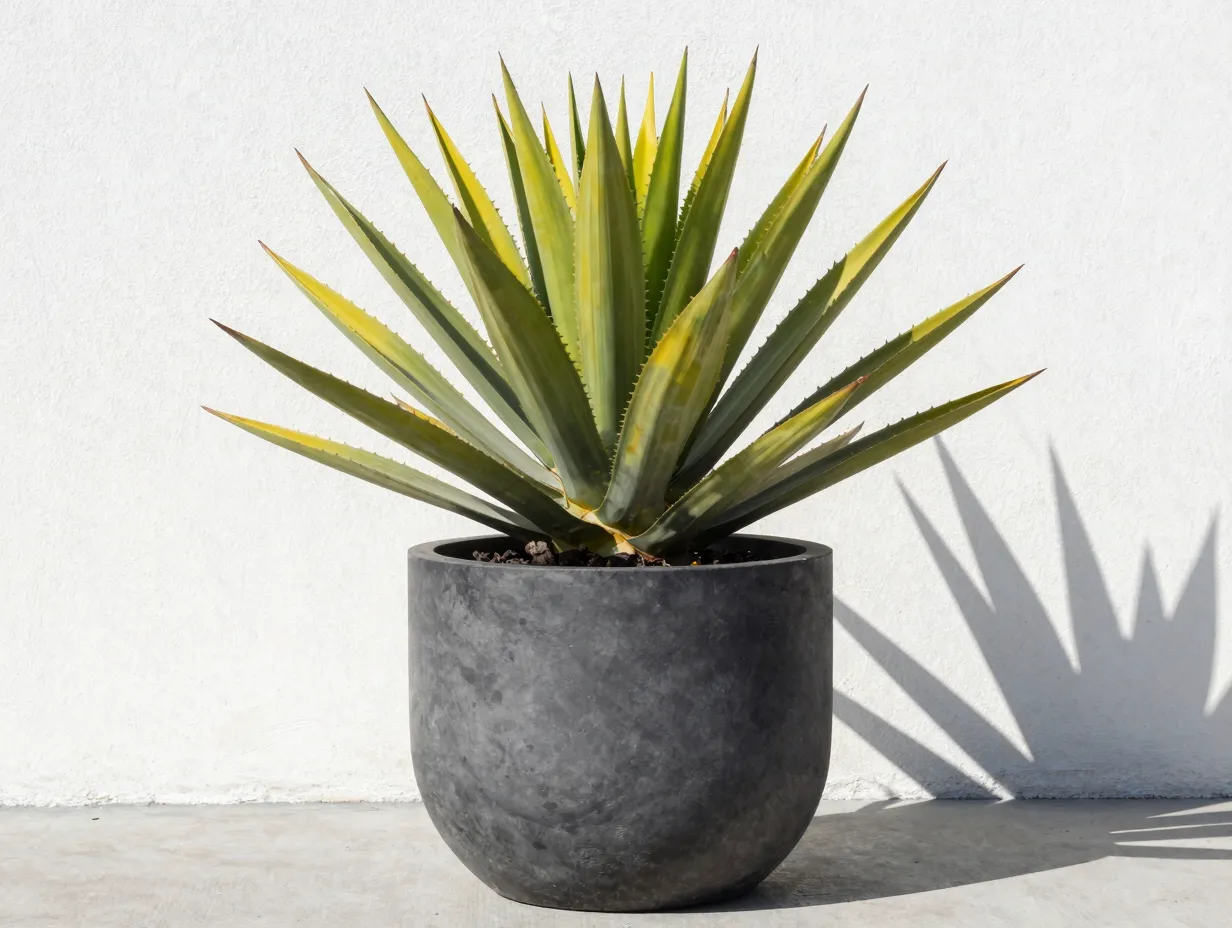
Yucca is one of the most architecturally striking plants available for large outdoor containers. Its rosette of stiff, pointed leaves creates a form that looks almost sculptural, like something a designer drew rather than something that grew. In late summer, established plants may send up a dramatic flower spike covered in creamy white bells, adding a seasonal spectacle to the year-round structure.
Hardy evergreen foliage plants like Yucca are specifically highlighted as among the best choices for pots that must look good all year [14]. They are also exceptionally drought-tolerant, making them ideal for containers in sunny, exposed positions where other plants would struggle.
Best container size: 50-60 cm diameter
Light: Full sun
Maintenance level: Very low
Yucca pairs particularly well with contemporary and industrial-style outdoor spaces. A large Yucca in a matte black or dark grey concrete planter against a white rendered wall is a combination that photographs beautifully and looks even better in person.
8. Cordyline (Cabbage Palm)
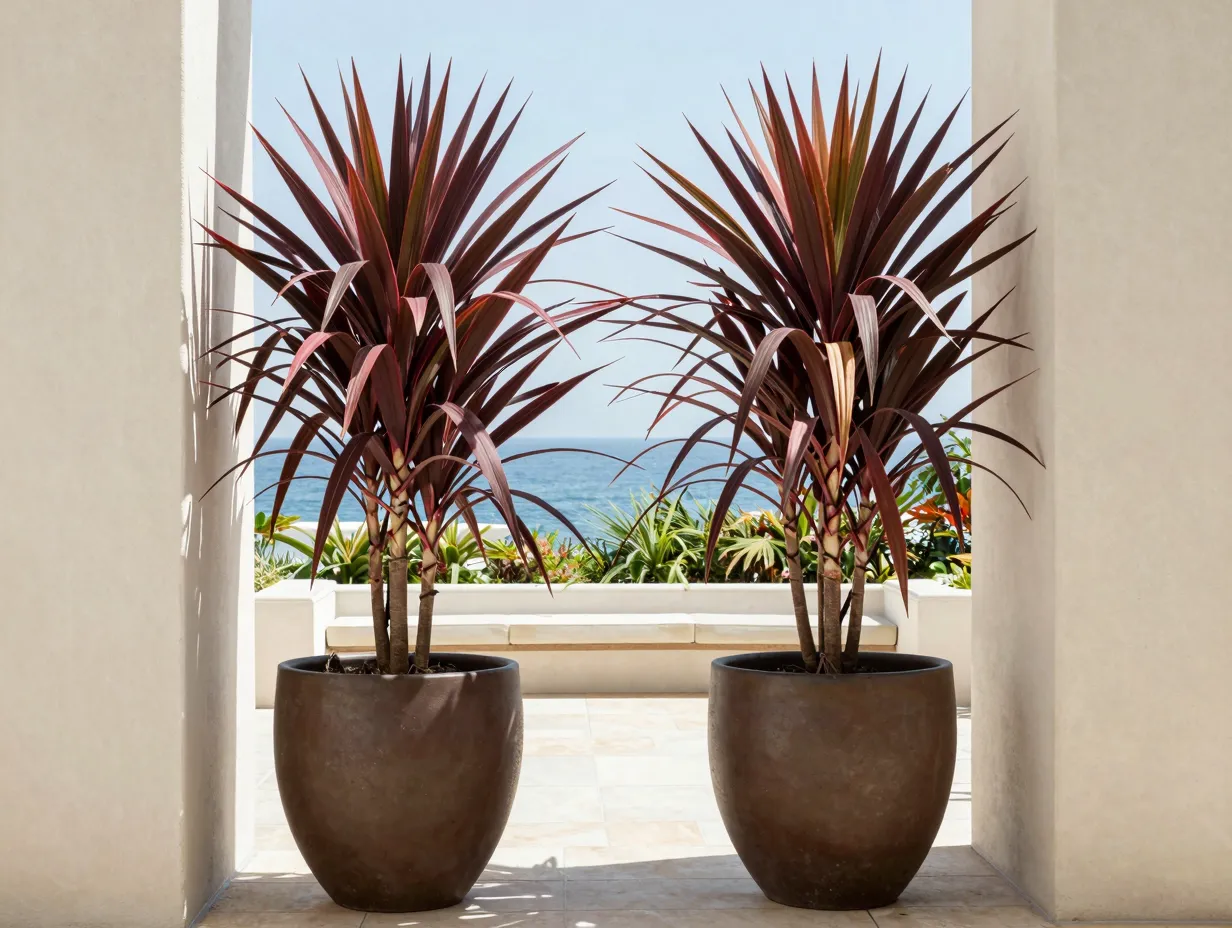
Cordyline australis, commonly called the Cabbage Palm, is a staple of coastal and contemporary garden design for good reason. Its long, arching leaves radiate from a central stem in a fountain-like form that is both dramatic and elegant. Varieties range from green to deep burgundy to striped cream-and-pink, offering significant design flexibility.
Tall potted plants like Cordyline are highly effective at adding vertical interest and a sense of privacy to open outdoor spaces [6]. A pair of large Cordylines flanking a gate, doorway, or seating area creates a formal sense of arrival that is hard to achieve with any other plant at a comparable price point.
Best container size: 50-60 cm diameter
Light: Full sun to partial shade
Maintenance level: Low
Cordylines are among the most reliable large container plants for coastal gardens, tolerating salt spray and wind better than most tropical-looking alternatives. For inland gardens, they are equally effective and considerably more forgiving than true tropicals.
9. Fatsia japonica (Japanese Aralia)
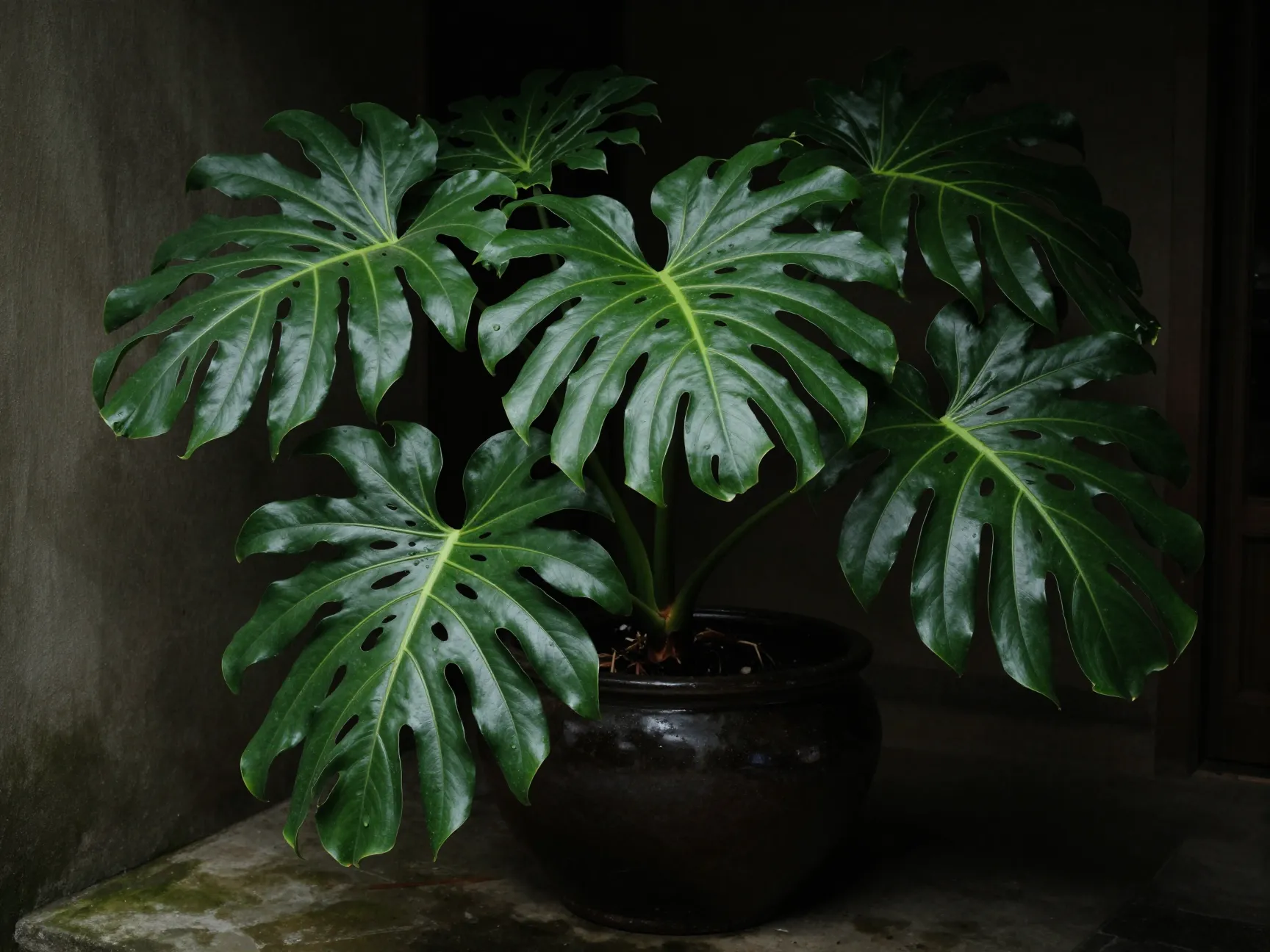
Fatsia japonica closes this list of 9 large potted plants for outdoor spaces that make a major statement with a plant that thrives where others struggle. Its enormous, deeply lobed leaves, which can reach 40 centimeters across on a well-fed specimen, create a lush, tropical atmosphere in shaded and semi-shaded positions where most statement plants would fail.
This is the plant I recommend most often for north-facing walls, shaded courtyards, and covered outdoor dining areas. It is evergreen, fast-growing, and genuinely dramatic. In autumn, it produces clusters of small white flowers that attract late-season pollinators, adding ecological value to its considerable aesthetic appeal.
Best container size: 50-70 cm diameter
Light: Shade to partial shade; tolerates deep shade
Maintenance level: Low
Container garden patio plants that perform in difficult conditions are genuinely valuable, and Fatsia is one of the most dependable options available [8]. A large specimen in a wide, shallow glazed pot in a shaded corner can completely transform what would otherwise be a dead zone in an outdoor space.
Choosing the Right Container: A Quick Reference Guide
The plant is only half the equation. The container, its size, material, and color, determines whether the combination reads as intentional or accidental.
| Plant | Minimum Pot Size | Best Pot Material | Style Match |
|---|---|---|---|
| Phormium | 50 cm | Concrete, glazed ceramic | Contemporary, industrial |
| Canna Lily | 45 cm | Glazed ceramic, terracotta | Tropical, eclectic |
| Banana Plant | 60 cm | Half-barrel, large glazed | Tropical, resort-style |
| Olive Tree | 60 cm | Terracotta, stone | Mediterranean, rustic, modern |
| Hydrangea | 50 cm | Glazed ceramic, fibreglass | Cottage, classic |
| Japanese Maple | 50 cm | Stone, weathered ceramic | Japanese, naturalistic |
| Yucca | 50 cm | Concrete, dark ceramic | Contemporary, desert-modern |
| Cordyline | 50 cm | Fibreglass, glazed ceramic | Coastal, contemporary |
| Fatsia japonica | 50 cm | Glazed ceramic, stone | Shaded, urban, eclectic |
Essential Care Tips for Large Potted Plants Outdoors
Getting the plant right is step one. Keeping it healthy and looking its best over multiple seasons requires attention to a few key principles.
Watering: Large containers retain moisture better than small ones, but they still need consistent watering during dry spells. Check soil moisture at a depth of 5-7 cm rather than relying on surface appearance. Most of the plants on this list prefer to dry out slightly between waterings rather than sitting in consistently wet soil, except Hydrangeas, which need reliably moist conditions [3].
Feeding: Container plants rely entirely on what you provide. A slow-release granular fertilizer applied in spring, supplemented with a liquid feed every two to four weeks through the growing season, keeps large specimens performing at their best [1].
Drainage: Every large pot must have adequate drainage holes. Sitting in waterlogged soil is the most common cause of failure in container plants. Raise pots slightly off the ground using pot feet or bricks to prevent drainage holes from becoming blocked.
Repotting: Large statement plants should be moved to a slightly larger container every two to three years, or top-dressed with fresh compost annually if repotting is impractical due to size. Refreshing the top 10-15 cm of compost each spring makes a significant difference to plant health and vigor [2].
Winter protection: For marginally hardy plants like Banana and Canna, move containers to a sheltered position or unheated greenhouse before the first frost. Hardy evergreens like Phormium, Yucca, and Cordyline can typically remain outdoors but benefit from fleece protection in severe cold.
Designing With Large Potted Plants: Layout Principles
Understanding how to position large statement containers is as important as choosing the right plants. A few principles make the difference between a space that looks designed and one that looks decorated.
The focal point rule: Place the largest, most dramatic container where the eye naturally lands first, at the end of a sightline, framing a doorway, or at the center of a seating arrangement. This is the core principle behind the 2026 design trend toward single statement containers rather than multiple smaller ones [10].
Odd numbers work: When using more than one statement container, odd numbers (three, five) tend to feel more natural and dynamic than even groupings. A trio of containers at different heights creates a composition that reads as intentional.
Vary the heights: Combine a tall architectural plant like Cordyline or Phormium with a mid-height specimen like Hydrangea and a lower trailing plant at the base. This layering creates depth and visual richness without requiring a large number of containers.
Consider the backdrop: A dark-leaved Phormium or Japanese Maple reads most powerfully against a pale wall. A silver-leaved Olive tree pops against dark timber or dark stone. Think about the plant as a piece of art and the wall behind it as the gallery wall.
Conclusion
The 9 large potted plants for outdoor spaces that make a major statement covered in this guide represent the full range of what container planting can achieve, from the tropical exuberance of Banana plants and Canna lilies to the quiet, year-round authority of Olive trees and Phormiums. Each one is capable of transforming an outdoor space when given the right container, position, and care.
The most important action you can take right now is to resist the temptation to buy many small plants and instead invest in one or two genuinely large specimens. Choose a plant whose form and character genuinely excite you, pair it with a container that complements both the plant and your outdoor space, and give it the care it needs to thrive. The results will speak for themselves.
Actionable next steps:
- Assess your outdoor space for the primary focal point, where does the eye naturally land?
- Choose one plant from this list that suits your light conditions and climate
- Select a container at least 50-60 cm in diameter in a material that suits your style
- Prepare a rich, free-draining potting mix and establish a regular feeding routine
- Revisit the space after one full growing season and consider adding a second statement container if the space supports it
Large potted plants are not a quick fix, they are a long-term investment in the quality and character of your outdoor living space. Start with one. Do it well. The impact will justify every decision.
References
[1] 10 Best Potted Plants To Instantly Upgrade Your Patio In 2026 – https://www.dripworks.com/blog/10-best-potted-plants-to-instantly-upgrade-your-patio-in-2026
[2] Best Large Outdoor Plants For Pots – https://www.gardeningknowhow.com/special/containers/best-large-outdoor-plants-for-pots
[3] Top Performing Potted Plants For Your Garden 2183 – https://www.homestolove.com.au/outdoor-gardening/gardening/top-performing-potted-plants-for-your-garden-2183/
[5] Reimagine Your Outdoor Living Area With Tall Potted Plants That Offer Optimal Privacy – https://gardeningmillhill.co.uk/blog/reimagine-your-outdoor-living-area-with-tall-potted-plants-that-offer-optimal-privacy
[6] Discover The Best Tall Potted Plants To Enhance Your Outdoor Privacy And Style – https://lawnmowinghanwell.co.uk/blog/discover-the-best-tallpotted-plants-to-enhance-your-outdoor-privacy-and-style
[7] Trends In Container Gardening 2025 – https://www.containedcreations.com/blog/trends-in-container-gardening-2025
[8] Container Garden Patio Plants – https://plantcaretoday.com/container-garden-patio-plants.html
[10] Container Planting Trends – https://www.livingetc.com/ideas/container-planting-trends