8 Creative Herb Garden Ideas For Cooking, Beauty, And Convenience
Nearly 35 million American households grew food at home in 2023, and herbs consistently rank as the most popular starting point for first-time growers. That statistic never surprises me. The first time I snipped fresh basil over a bowl of pasta and tasted the difference compared to dried flakes from a jar, I understood immediately why herbs have anchored home gardens for thousands of years. Whether you have a sprawling backyard, a single sunny windowsill, or a blank kitchen wall, the 8 creative herb garden ideas for cooking, beauty, and convenience in this guide will help you grow something genuinely useful and genuinely beautiful.
Disclosure: This post contains affiliate links. As an Amazon Associate, we earn from qualifying purchases, and at no extra cost to you.
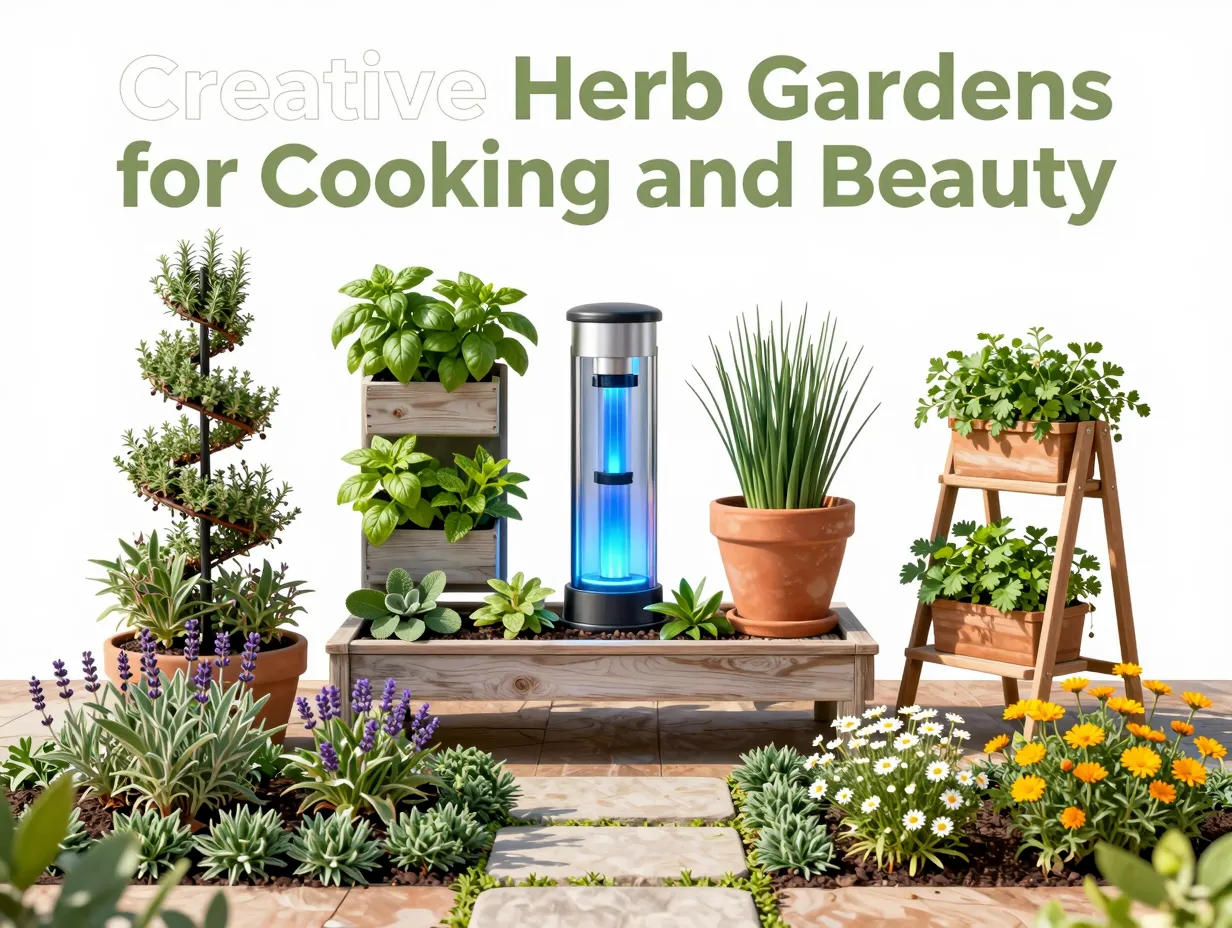
These ideas are not just about planting a pot of parsley. They cover design approaches that serve multiple purposes at once: feeding your kitchen, elevating your home’s appearance, simplifying your daily routine, and even supplying ingredients for natural beauty routines. Each idea is practical, scalable, and adaptable to different spaces and budgets.
Key Takeaways
- Herb gardens can serve cooking, beauty, and convenience goals simultaneously when designed with intention.
- Small spaces are no barrier, vertical, tiered, and windowsill setups make herb growing accessible to apartment dwellers and homeowners alike.
- Choosing the right design for your space increases yield, reduces maintenance time, and adds lasting visual appeal.
- Upcycled containers and decorative planters transform herb growing into functional home decor.
- Formal raised beds and structured layouts significantly improve harvest efficiency and long-term plant health.
Why Herb Garden Design Matters More Than You Think
Most people start their herb journey by buying a few plastic pots, cramming them onto a windowsill, and wondering why the plants look stressed within two weeks. The problem is rarely the herbs themselves. It is almost always the design.
A well-designed herb garden accounts for sunlight requirements, water drainage, access for harvesting, and the visual relationship between plants. When those factors align, herbs thrive with minimal intervention. When they do not, even the most experienced gardener ends up with leggy, bitter, or root-bound plants that produce little and look worse.
Design also determines how convenient your garden actually is. A herb garden tucked at the back of a large yard sounds romantic until you are standing in the rain trying to snip chives for a weeknight dinner. Proximity, accessibility, and layout all shape how often you actually use what you grow [4].
Beyond the kitchen, thoughtful design turns a functional herb patch into a sensory experience. The scent of lavender along a garden path, the silver shimmer of artemisia catching afternoon light, the low hum of bees working through a bed of flowering thyme, these are the details that make a garden worth spending time in [1].
With that foundation in mind, here are the 8 creative herb garden ideas for cooking, beauty, and convenience that I recommend most often.
8 Creative Herb Garden Ideas For Cooking, Beauty, And Convenience
1. The Herb Spiral: Maximum Variety in Minimum Space
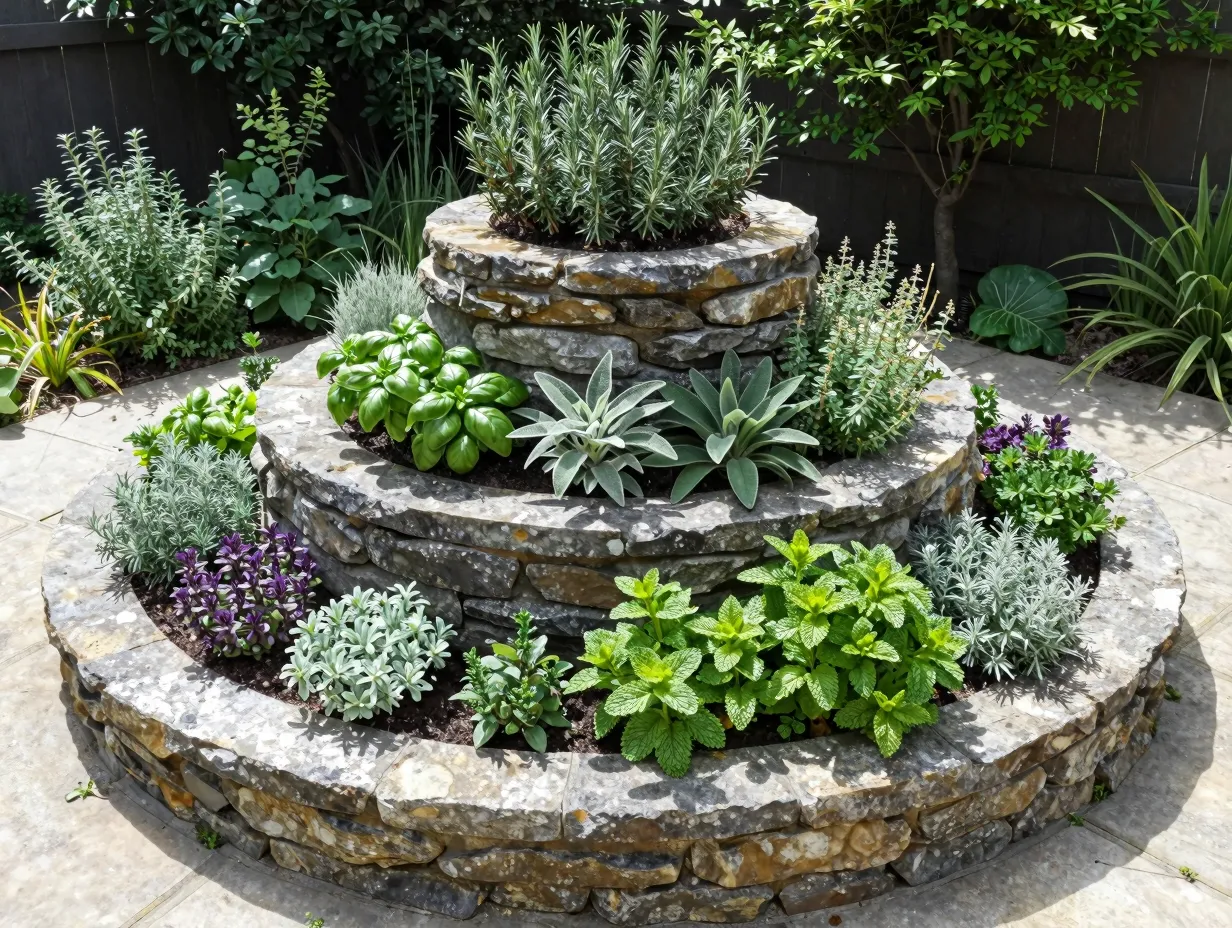
The herb spiral is one of the most intelligent small-garden designs ever developed. Built by stacking stones, bricks, or timber in a rising spiral from a wide base to a central peak, it creates multiple distinct microclimates within a single compact structure.
The top of the spiral receives the most sun and drains fastest, making it ideal for drought-tolerant Mediterranean herbs like rosemary, thyme, and oregano. The middle tiers suit basil, sage, and marjoram. The base, which retains more moisture, works beautifully for mint, chives, and parsley [1].
Why it works for cooking: A single spiral can house eight to twelve different culinary herbs within arm’s reach. You can harvest multiple varieties in under two minutes, which genuinely changes how you cook on busy weeknights.
Why it works for beauty: The sculptural form of a herb spiral is visually striking in any garden. Stone spirals develop a natural patina over time, and the layered foliage creates texture and color contrast that looks intentional and designed [3].
Why it works for convenience: Because every herb is accessible from the outside of the spiral, there is no need to reach across beds or disturb neighboring plants. Maintenance is straightforward and the raised structure reduces bending.
“The spiral structure is not just decorative, it is a functional microclimate machine that gives each herb the precise conditions it needs.”
2. Vertical Herb Gardens and Wall-Mounted Planters
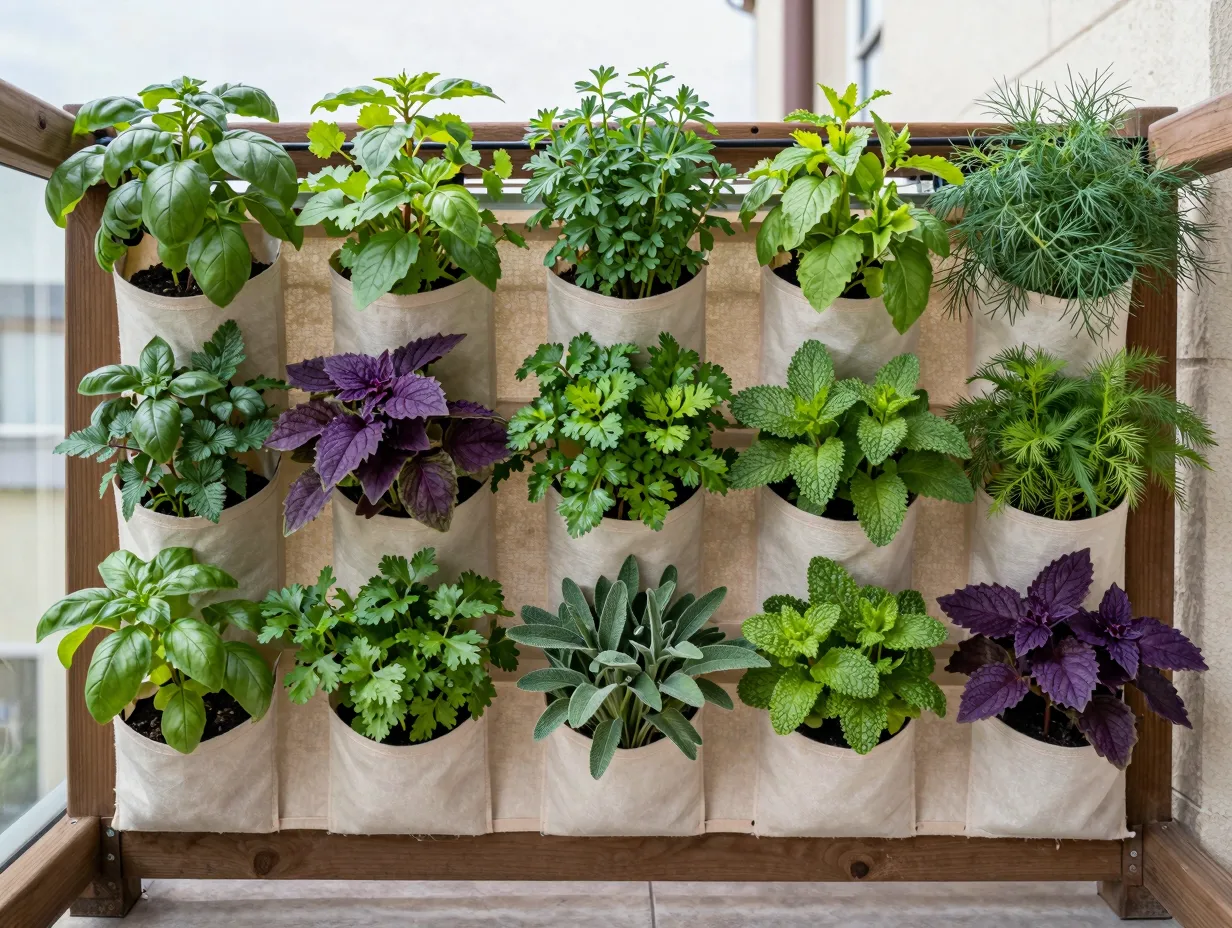
If floor space is your limiting factor, going vertical is the single most effective strategy available. Wall-mounted planters, pocket organizers, pallet gardens, and modular panel systems can turn a bare fence, balcony wall, or exterior house wall into a productive and attractive herb display [2].
Vertical gardens work particularly well for fast-growing, regularly harvested herbs like basil, cilantro, mint, and flat-leaf parsley. These plants benefit from frequent cutting, and a wall-mounted setup makes that harvesting quick and intuitive.
Key considerations for vertical herb gardens:
- Ensure the wall or fence receives at least four to six hours of direct sunlight daily
- Use lightweight growing media (coconut coir mixed with perlite) to reduce structural load
- Install a drip irrigation line or self-watering pockets to prevent the rapid drying that wall planters are prone to
- Group herbs with similar water needs in the same horizontal row [7]
For beauty purposes, a well-planted vertical herb wall is genuinely stunning. Mixing the deep green of basil with the feathery texture of dill, the purple tones of opal basil, and the silver-grey of sage creates a living tapestry effect that no purchased wall art can replicate [4].
3. Indoor Windowsill and Hydroponic Smart Herb Gardens
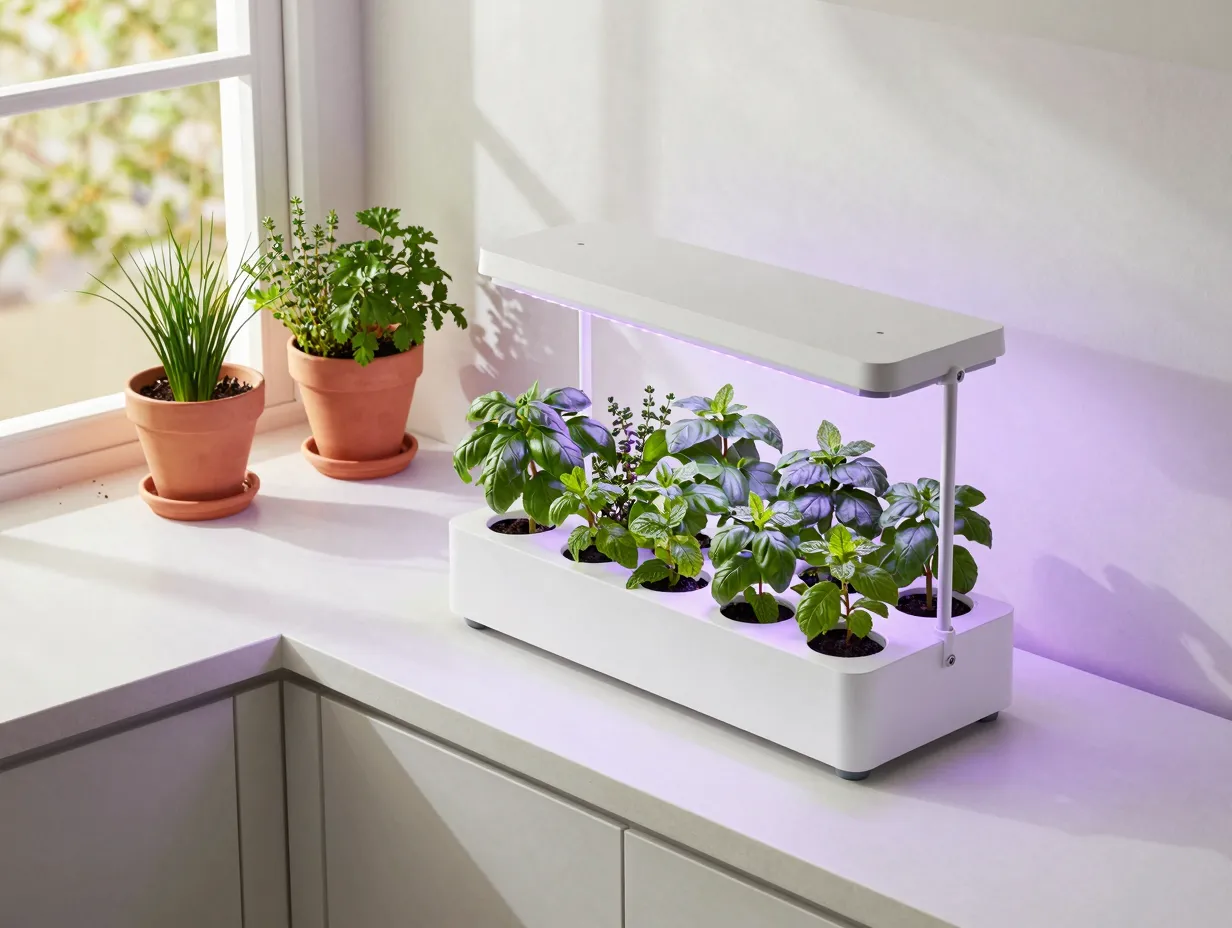
Not everyone has outdoor space, and not everyone wants to wait for a growing season. Indoor herb gardens, from simple windowsill pots to sophisticated hydroponic smart systems, solve both problems simultaneously.
A south or southwest-facing windowsill can support a productive collection of culinary herbs year-round. Basil, chives, mint, thyme, and parsley all perform well indoors with adequate light. The key is using terracotta pots with drainage holes, rotating plants every few days to prevent leaning, and feeding with a diluted liquid fertilizer every two weeks during active growth [9].
For those who want greater reliability and zero guesswork, smart hydroponic herb gardens have become genuinely impressive. Systems like countertop pod gardens use LED grow lights calibrated to plant growth spectra, automated watering cycles, and pre-seeded nutrient pods. They produce harvest-ready herbs in as little as three to four weeks and require almost no horticultural knowledge to operate [7].
Herbs well-suited to indoor and hydroponic growing:
| Herb | Light Need | Hydroponic Performance | Primary Use |
|---|---|---|---|
| Basil | High | Excellent | Cooking |
| Mint | Medium | Excellent | Cooking, beauty |
| Chives | Medium | Good | Cooking |
| Parsley | Medium | Good | Cooking |
| Lavender | High | Moderate | Beauty, cooking |
| Lemon balm | Medium | Good | Beauty, tea |
The beauty argument for indoor herb gardens is equally strong. A row of matching terracotta pots on a kitchen windowsill, or a sleek countertop hydroponic unit with glowing grow lights, adds warmth and life to a kitchen in a way that few decorative objects can match [8].
4. Upcycled and Decorative Containers as Functional Decor
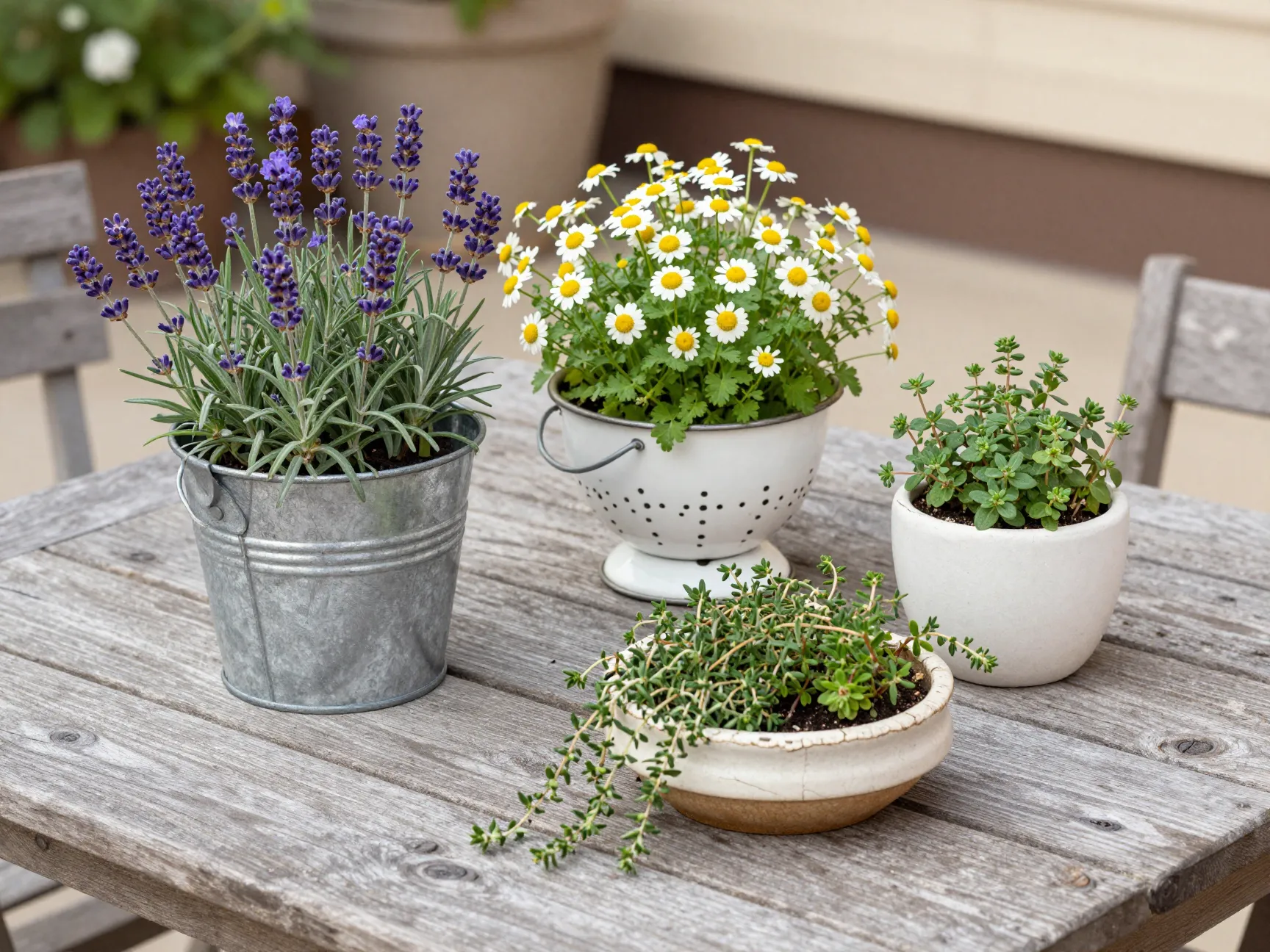
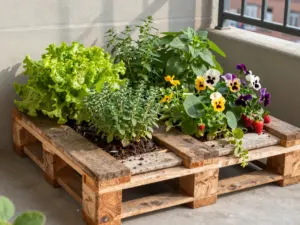
One of the most creative directions in modern herb gardening involves treating the container itself as a design statement. Old colanders, vintage wooden crates, repurposed wine barrels, galvanized metal buckets, cracked ceramic bowls, and even worn leather boots have all been successfully converted into herb planters [6].
This approach serves the convenience goal directly: you can place a decorative herb container anywhere in your home or garden, moving it as light conditions change or as your needs shift. A galvanized trough on a patio table keeps culinary herbs within reach during outdoor cooking. A set of matching terracotta pots on a kitchen island functions as both a spice rack and a living centerpiece.
Practical tips for upcycled herb containers:
- Always drill or punch drainage holes in the base, regardless of the container material
- Line wooden containers with burlap or landscape fabric to slow moisture loss and prevent rot
- Group containers in odd numbers (three or five) for a more visually balanced arrangement
- Choose containers in a consistent color palette or material family for a cohesive look [3]
For beauty applications specifically, growing herbs like lavender, chamomile, rose geranium, and calendula in decorative containers gives you a dual-purpose plant: attractive in the garden and useful in homemade skincare preparations, bath soaks, and facial steams [1].
5. Raised Beds and Formal Herb Layouts
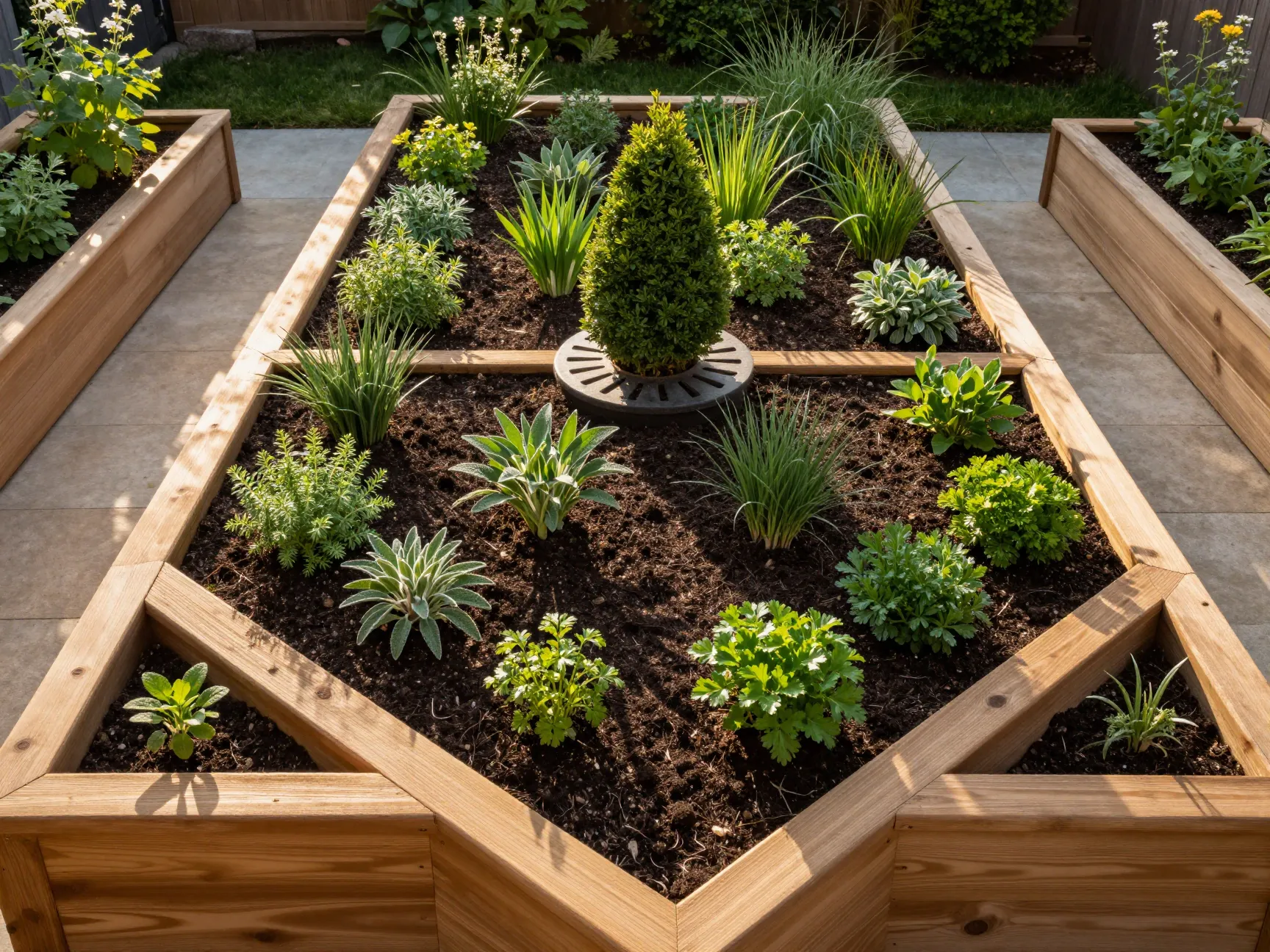
Raised beds represent the gold standard for serious herb growers who want maximum yield, easier maintenance, and a polished visual result. A raised bed filled with quality growing medium, typically a blend of topsoil, compost, and horticultural grit, gives herbs the drainage and fertility they need to produce abundantly [8].
Formal herb layouts within raised beds take this further by organizing plants into geometric patterns: quadrant designs, knot garden arrangements, or simple grid systems that make harvesting and maintenance intuitive. The classic four-quadrant design, with a central focal point (a small topiary, a sundial, or a tall structural herb like bronze fennel), has been used in kitchen gardens for centuries and remains one of the most satisfying approaches available [1].
Raised bed dimensions that work best:
- Width: no more than 1.2 meters (four feet) so you can reach the center from either side without stepping in
- Length: two to four meters is manageable for most gardeners
- Height: 30 to 45 centimeters provides adequate root depth and reduces back strain during harvesting [9]
For cooking, a well-organized raised bed means you always know exactly where each herb is. There is no hunting through a tangled border for that one sprig of tarragon. For beauty, a formal raised bed with clipped edges and structured planting looks impressive from any angle and adds genuine value to an outdoor space [4].
6. Tiered Pots, Stacked Towers, and Ladder Planters
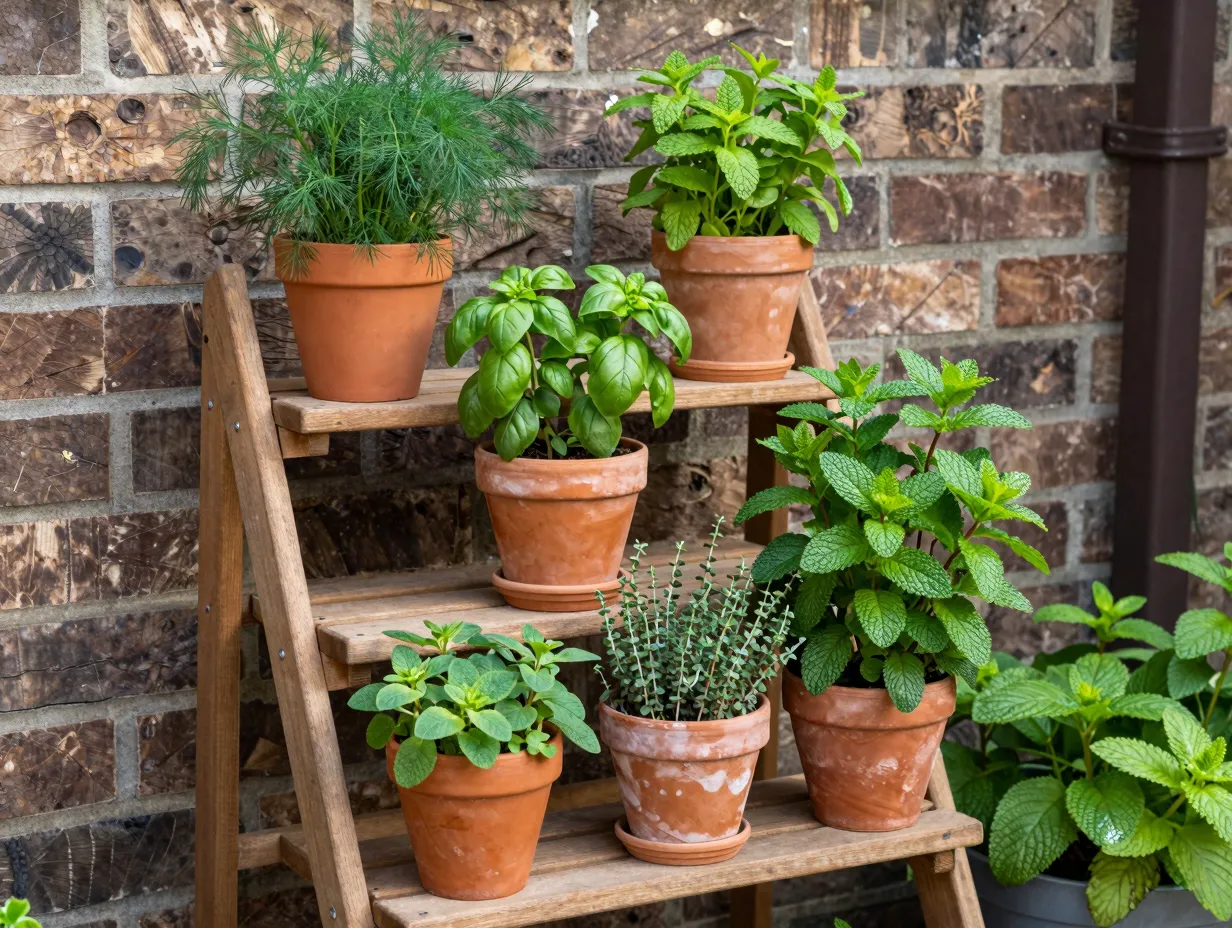
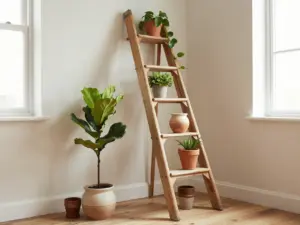
Tiered and multi-level herb displays occupy a satisfying middle ground between the simplicity of a single pot and the commitment of a raised bed. Stacked terracotta tower planters, wooden ladder shelves, and purpose-built tiered stands all allow you to grow a significant variety of herbs in a compact footprint while creating genuine visual interest [6].
A three-tier wooden ladder planter, for example, can hold nine to twelve individual pots across its shelves. Arranged by height preference, taller herbs like dill and fennel at the back, medium herbs like basil and sage in the middle, trailing herbs like thyme and oregano at the front, it becomes both a productive kitchen garden and an attractive garden feature [2].
Stacked tower planters work particularly well for a single herb variety grown in quantity. A tower of strawberry pots planted entirely with mint, for example, gives you a generous and contained supply of one of the most invasive herbs in the garden, keeping its spreading habit completely under control while looking attractive [3].
Best herbs for tiered and tower displays:
- Trailing varieties: thyme, oregano, nasturtium, creeping rosemary
- Compact upright varieties: basil, chives, parsley, marjoram
- Statement plants for top tiers: bay laurel, lemon verbena, tall basil varieties [7]
7. Herb Hedges, Pathways, and Groundcover Herbs
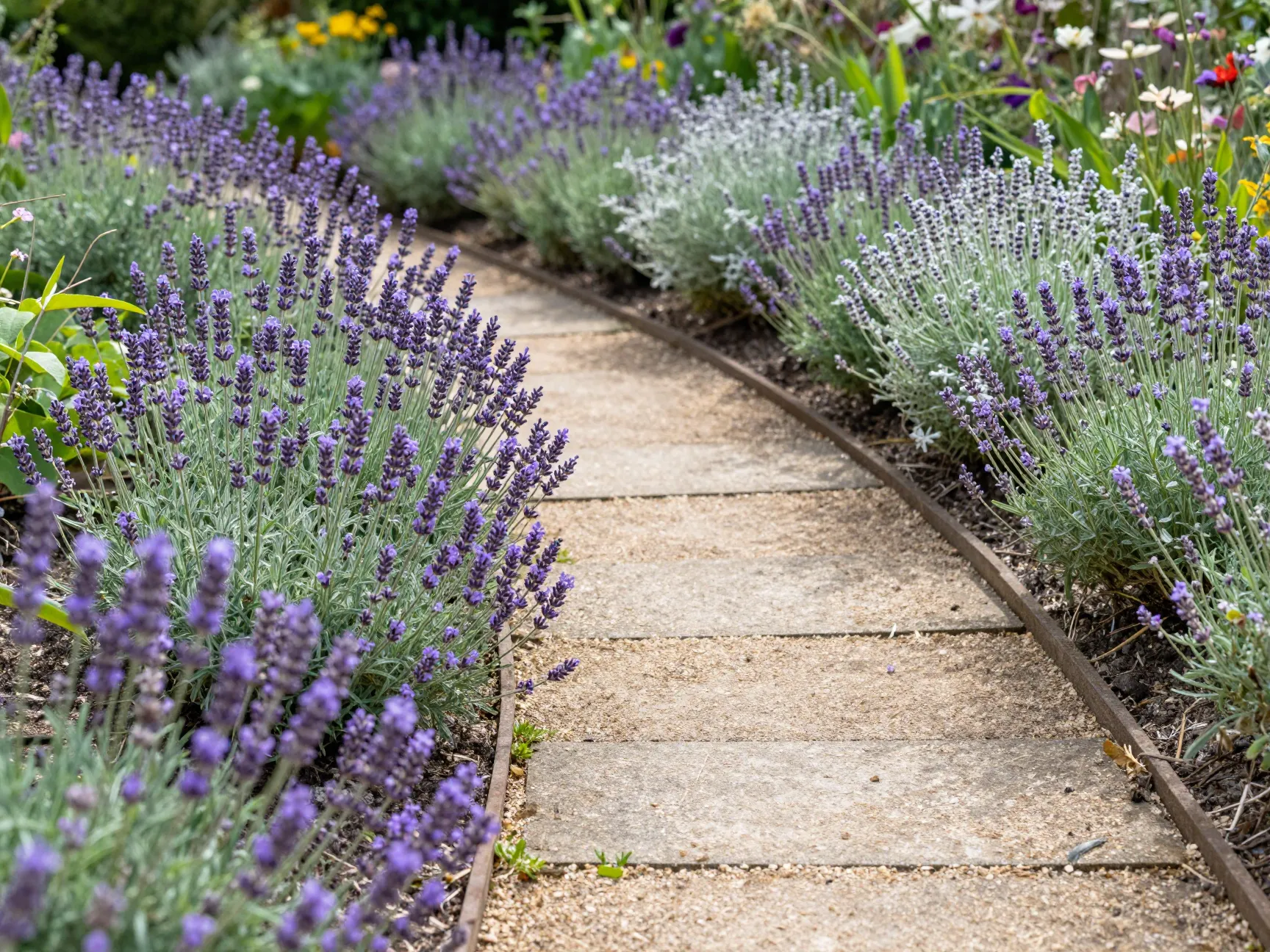
Moving beyond the contained planter or bed, some of the most beautiful and functional herb garden ideas involve integrating herbs directly into the landscape as structural or groundcover elements.
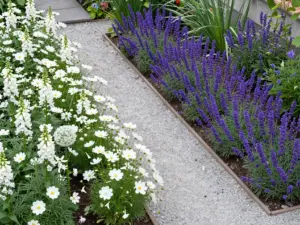
Lavender hedges are the most well-known example. A low lavender hedge bordering a garden path delivers year-round silver-green foliage, spectacular summer flowering, intense fragrance that brushes off onto your hands as you pass, and a continuous supply of flowers for culinary use, dried arrangements, and homemade beauty products [1].
Rosemary makes an equally effective low hedge in warmer climates, with the added benefit of being one of the most useful culinary herbs available. A clipped rosemary hedge along a kitchen garden border is both a structural design element and a year-round harvest source [8].
For pathways and groundcover, creeping thyme is exceptional. Planted between stepping stones or allowed to spread across a low-traffic path, it releases a powerful herbal scent when walked on, suppresses weeds effectively, and produces a carpet of tiny flowers in summer that pollinators adore [9].
Herbs that work as landscape elements:
- Hedging: lavender, rosemary, hyssop, catmint
- Groundcover and path edging: creeping thyme, chamomile, pennyroyal, corsican mint
- Border and pathway plants: chives (with attractive purple flowers), bronze fennel (structural and striking), lemon balm [6]
The sensory dimension of this approach is significant. A garden path edged with scented herbs engages smell, touch, and sight simultaneously, creating an experience that a conventional border planting simply cannot replicate.
8. The Dedicated Beauty and Wellness Herb Garden
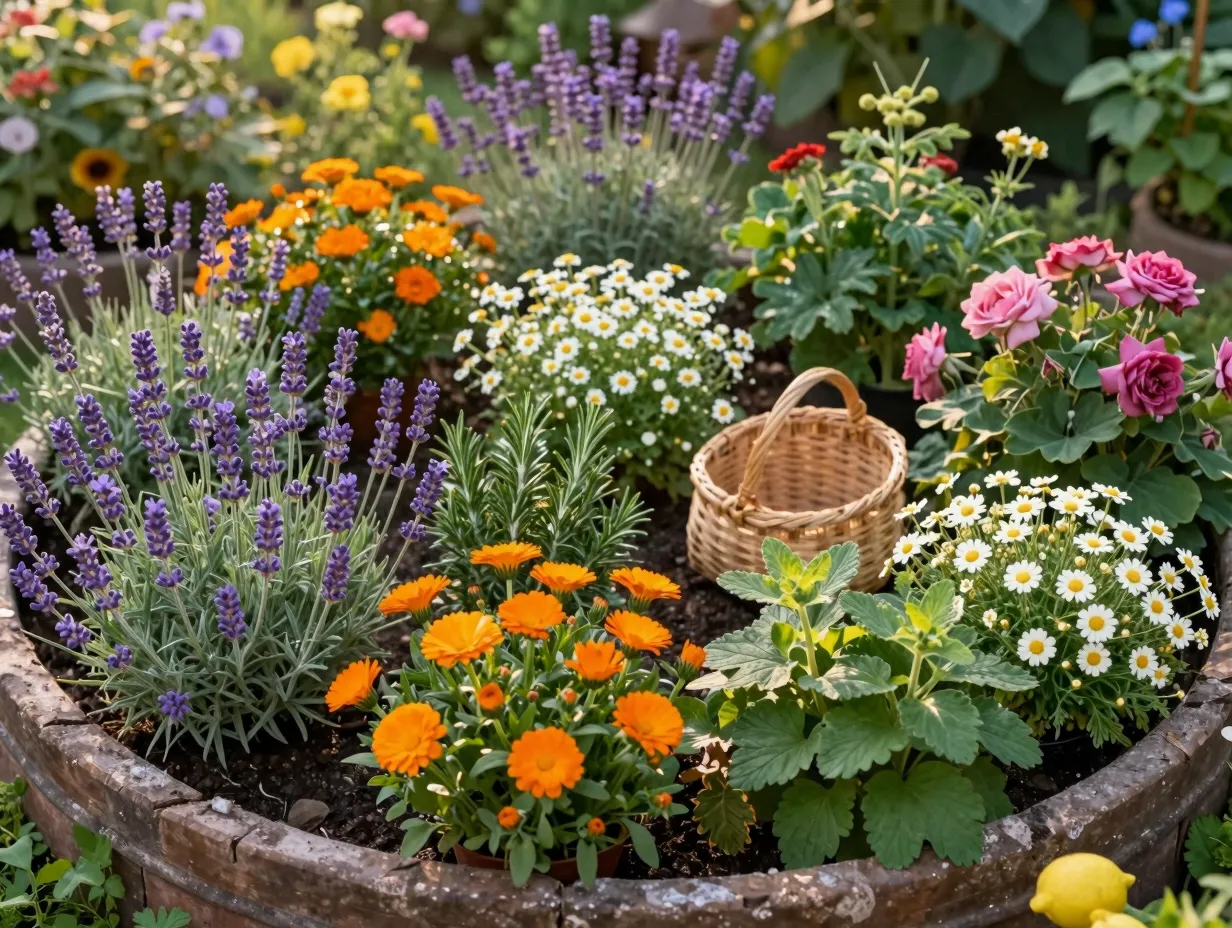
The final idea in this list of 8 creative herb garden ideas for cooking, beauty, and convenience is perhaps the most underexplored: a garden designed specifically around herbs used for skincare, haircare, wellness, and natural home products.
While most culinary herb gardens include a few plants with beauty applications, a dedicated beauty herb garden takes a more intentional approach. It selects plants based on their active compounds and traditional uses in natural beauty routines, then organizes them in a way that makes harvesting and processing convenient [1].
Core plants for a beauty and wellness herb garden:
- Lavender: anti-inflammatory, calming, used in facial toners, bath soaks, and sleep pillows
- Calendula: skin-soothing, wound-healing, used in salves, oils, and facial steams
- Chamomile: anti-inflammatory, brightening, used in hair rinses and facial toners
- Rose geranium: balancing for oily skin, used in facial mists and bath products
- Rosemary: stimulates circulation, used in hair rinses and scalp treatments
- Lemon balm: antiviral, calming, used in teas and facial steams
- Comfrey: cell-regenerating, used in salves and poultices (external use only) [3]
A beauty herb garden can be designed as a formal circular bed with a central focal point, a dedicated raised bed near a garden shed where you process your harvest, or even a collection of matching containers on a patio. The key is grouping plants that you will harvest together for similar purposes, which makes the workflow from garden to product intuitive and enjoyable [2].
From a design perspective, beauty herbs are often among the most visually attractive plants available. Lavender, calendula, chamomile, and rose geranium all produce abundant flowers in warm tones that look spectacular from late spring through autumn. A beauty herb garden is, almost by definition, a beautiful garden [4].
Practical Tips for Getting Started With Any of These Ideas
Regardless of which of these 8 creative herb garden ideas for cooking, beauty, and convenience appeals most to you, a few universal principles apply.
Start smaller than you think you need to. A single well-maintained herb spiral or a tidy tiered ladder planter will give you more usable herbs than a large, neglected bed. Scale up once you understand your harvesting habits.
Prioritize the herbs you actually use. Before buying plants, spend a week noting which herbs appear in your cooking and beauty routines. Buy those first. Novelty herbs that sit unused are wasted space and effort.
Invest in good growing medium. Herbs in poor soil underperform dramatically. A quality potting mix or homemade raised bed blend (one-third topsoil, one-third compost, one-third horticultural grit) makes a measurable difference in plant health and yield [9].
Harvest regularly. This is the single most counterintuitive fact about herb growing: the more you harvest, the more the plant produces. Regular cutting prevents flowering (which makes most culinary herbs bitter), encourages bushy growth, and keeps plants productive for longer [8].
Group by water needs. Placing drought-tolerant Mediterranean herbs (rosemary, thyme, oregano, sage) together and moisture-loving herbs (mint, parsley, chives, basil) in a separate area simplifies watering significantly and prevents the most common cause of herb garden failure: overwatering drought-tolerant species [7].
Conclusion
Herb gardening rewards intention. The difference between a collection of struggling pots and a thriving, beautiful, genuinely useful herb garden almost always comes down to design choices made at the beginning. The 8 creative herb garden ideas for cooking, beauty, and convenience covered in this guide offer a range of approaches suited to different spaces, budgets, and goals, from the elegant efficiency of a herb spiral to the sensory richness of a lavender-edged pathway to the focused purpose of a dedicated beauty herb garden.
Your actionable next steps:
- Identify your primary goal: cooking convenience, visual beauty, wellness and beauty products, or a combination.
- Assess your available space honestly, measure it, note its sun exposure, and decide whether you are working indoors, outdoors, or both.
- Choose one idea from this list that fits your space and goal. Start with that single project rather than attempting multiple approaches at once.
- Select five to eight herbs that you will genuinely use, and source them from a reputable nursery or seed supplier.
- Plant, label, and harvest regularly from the first week. The habit of regular harvesting is the single most important factor in long-term success.
A well-designed herb garden is not a luxury. It is one of the most practical, beautiful, and satisfying investments you can make in your home and daily life.
References
[1] Creative Design Ideas For A Stunning Herb Garden – https://gardenersvauxhall.org.uk/blog/creative-design-ideas-for-a-stunning-herb-garden/
[2] Best Herb Garden Ideas – https://www.archfoundation.org/d/best-herb-garden-ideas/
[3] Herb Garden Ideas – https://www.seedparade.co.uk/news/growing-herbs/herb-garden-ideas/
[4] Herb Garden Ideas – https://www.homesandgardens.com/ideas/herb-garden-ideas
[6] Backyard Herb Garden Ideas – https://www.136home.com/blog/backyard-herb-garden-ideas
[7] Herb Garden Ideas For Indoors And Outdoors – https://dillongarden.com/herb-garden-ideas-for-indoors-and-outdoors/
[8] Herb Garden Ideas – https://horticulture.co.uk/herb-garden-ideas/
[9] Herb Garden Ideas 7370817 – https://www.thespruce.com/herb-garden-ideas-7370817