8 Balcony Garden DIY Ideas To Maximize Your Tiny Outdoor Space
Urban renters with balconies smaller than a parking space grow more food per square foot than the average suburban backyard gardener. That is not a motivational claim, it is a documented outcome of vertical and layered growing strategies that small-space gardeners have been refining for years. If your balcony feels too cramped to bother with plants, you are likely measuring its potential by floor space alone, which is the wrong metric entirely.
Disclosure: This post contains affiliate links. As an Amazon Associate, we earn from qualifying purchases, and at no extra cost to you.
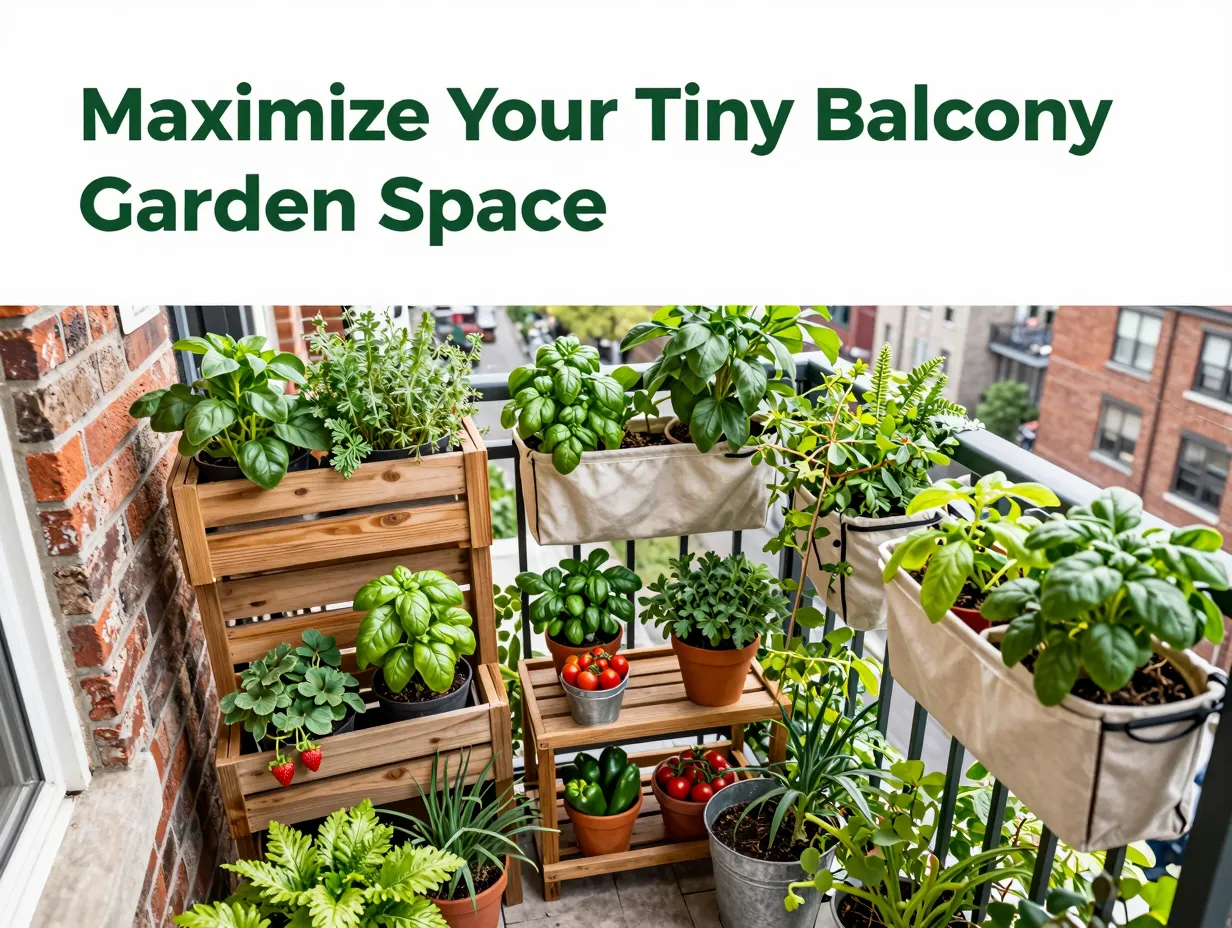
This guide covers 8 balcony garden DIY ideas to maximize your tiny outdoor space with practical, low-cost methods you can start this weekend. Whether you have a narrow Juliet balcony or a modest apartment terrace, these strategies will help you grow more, waste less space, and create an outdoor area that genuinely improves your daily life in 2026.
Key Takeaways
- Vertical surfaces, walls, railings, and ceilings, are your most underused real estate on any small balcony
- A single 3×4 ft wall section fitted with a modular vertical system can hold 20 to 40 plants without touching the floor [6][8]
- Lightweight, multi-tiered planters and railing boxes let you layer growing space without adding structural load
- Repurposed materials like wooden pallets, PVC pipes, and fabric pockets dramatically cut DIY costs
- Choosing the right plants for your light conditions is as important as any structural DIY project
Why Small Balconies Deserve Big Garden Ambitions
Most people look at a 6×8 ft balcony and see a place for a folding chair. I used to do the same thing with my third-floor apartment terrace in the city. Then I started treating every vertical inch as potential growing space, and within one season I had herbs, salad greens, cherry tomatoes, and a small pollinator corner, all without a single pot touching the floor.
The shift in thinking is simple: stop measuring your balcony by its footprint and start measuring it by its total surface area, including walls, railings, ceilings, and the vertical space above every shelf. When you do that math, even a tiny balcony becomes surprisingly generous. [6]
Modern small-space gardening guidance consistently reinforces this point. Attaching pots, shelves, and trellises to walls, using balcony ceilings for hanging baskets, and covering railings with mesh to support climbers are all recognized as core strategies for maximizing a compact outdoor area. [6][8]
8 Balcony Garden DIY Ideas To Maximize Your Tiny Outdoor Space
1. Build a Vertical Pallet Garden
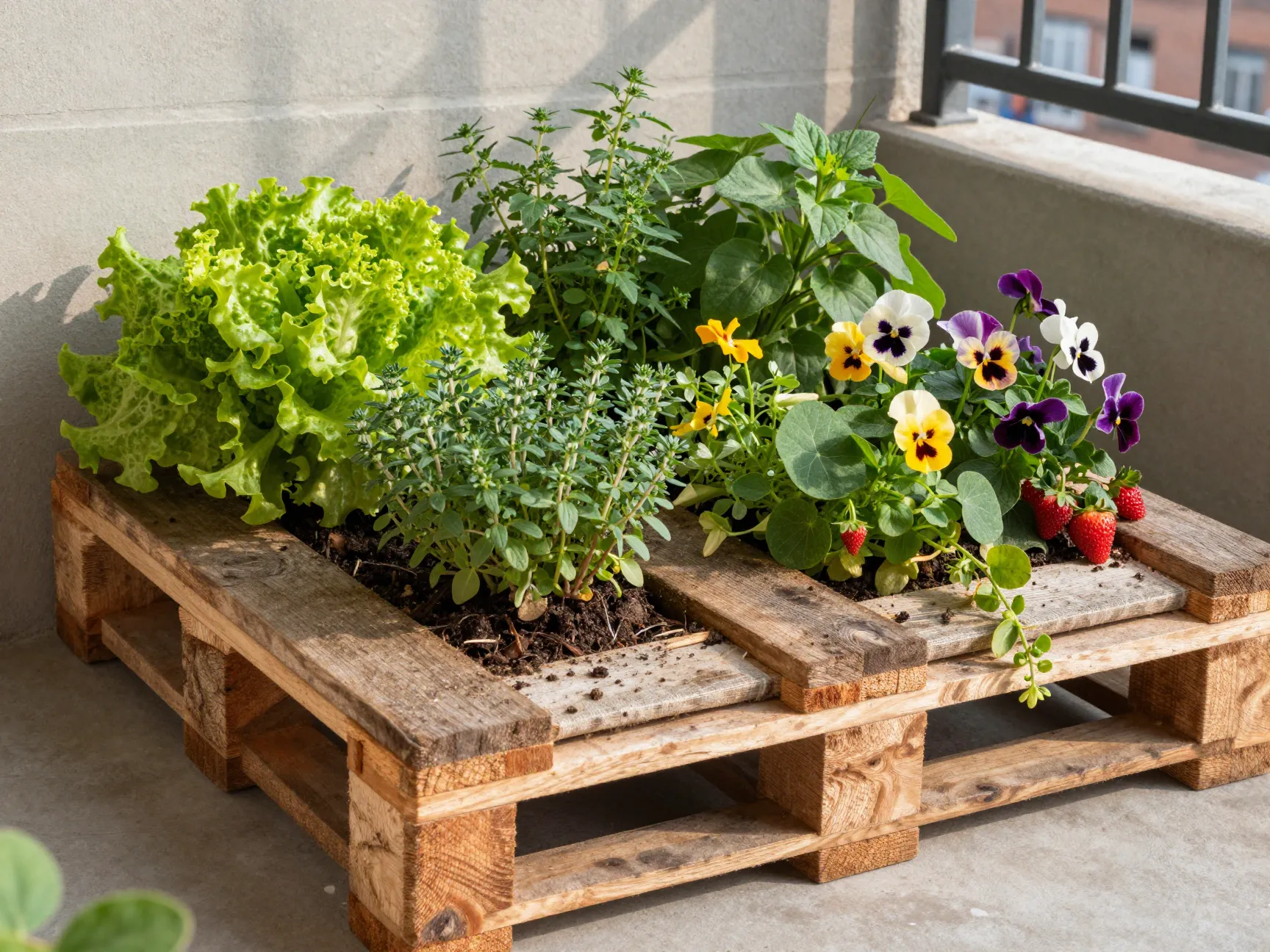
A wooden pallet leaned against a balcony wall is one of the most cost-effective DIY projects in small-space gardening. Pallets are often free from hardware stores, garden centers, or online marketplaces. Sand the wood lightly, staple landscape fabric to the back and bottom sections to create planting pockets, fill with potting mix, and plant herbs or trailing flowers in each slat gap.
A standard pallet measuring roughly 40×48 inches gives you six to eight planting rows. That translates to 12 to 18 individual plants in a footprint of less than four square feet against the wall. [8] For best results, let the pallet lay flat for two weeks after planting so roots establish before you stand it upright.
Best plants for pallet gardens: Lettuce, thyme, oregano, strawberries, pansies, and trailing nasturtiums.
Pro tip: Seal the wood with a non-toxic outdoor wood sealant to extend the pallet’s life by two to three seasons.
2. Install Fabric Pocket Planters on Your Railing or Wall
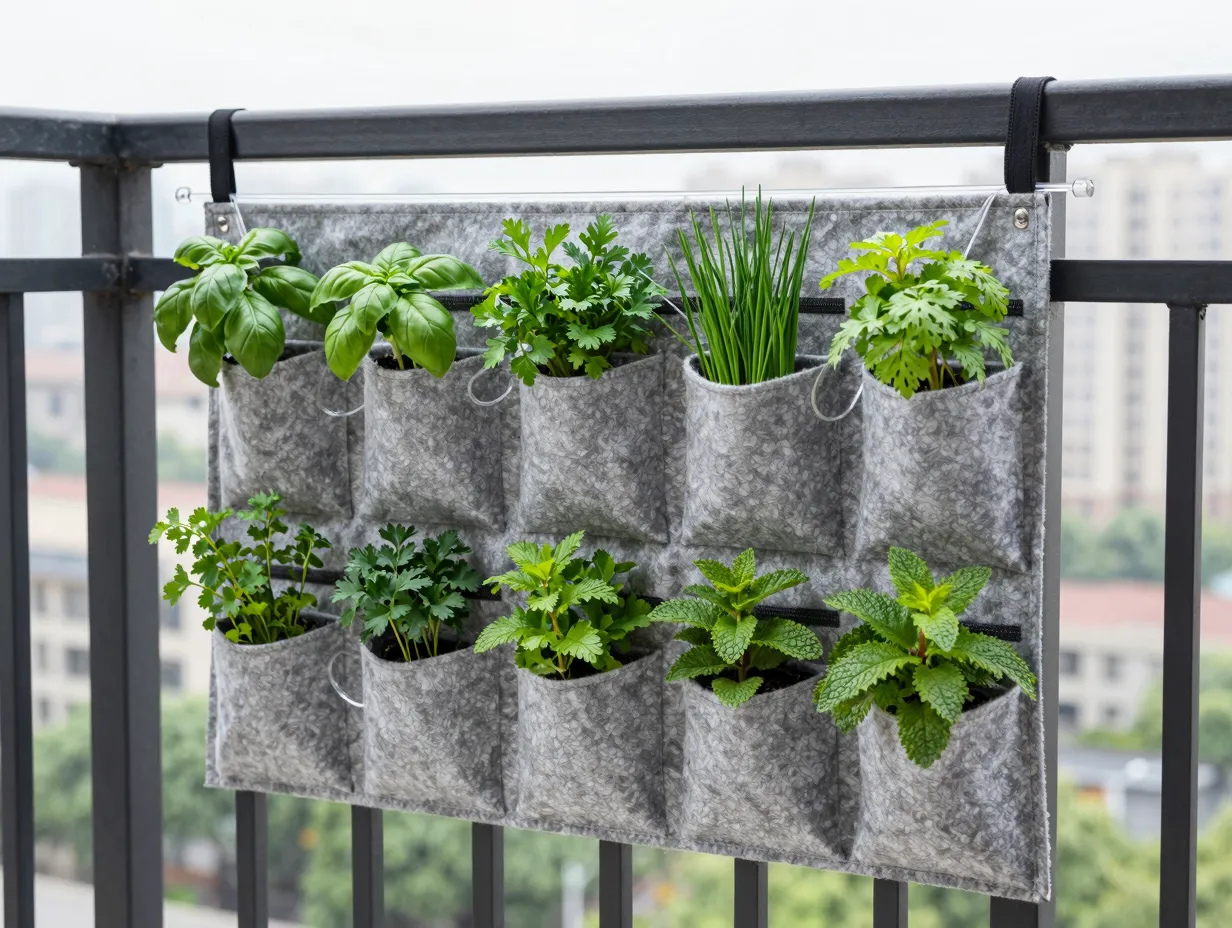
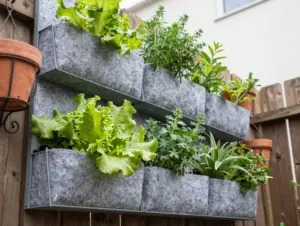
Fabric pocket planters, sometimes called felt planters or wall pockets, are lightweight, inexpensive, and surprisingly productive. A single 36-inch wide panel typically holds 12 to 20 individual pockets, each large enough for herbs, succulents, or compact flowering plants. [6]
Hang them from balcony railings using zip ties or S-hooks, or mount them directly to a wall with screws and washers. Because the fabric breathes, it prevents the waterlogging that kills plants in solid containers. The material is also lightweight enough to avoid structural concerns on most apartment balconies.
I hung two panels on my east-facing wall and grew an entire herb kitchen garden, basil, parsley, chives, mint, and cilantro, within arm’s reach of the door. The total cost was under twenty dollars.
What to watch: Fabric pockets dry out faster than solid pots in hot weather. Check moisture levels daily during summer and consider a simple drip irrigation line threaded through the pockets.
3. Use Tiered Shelf Planters to Layer Your Floor Space
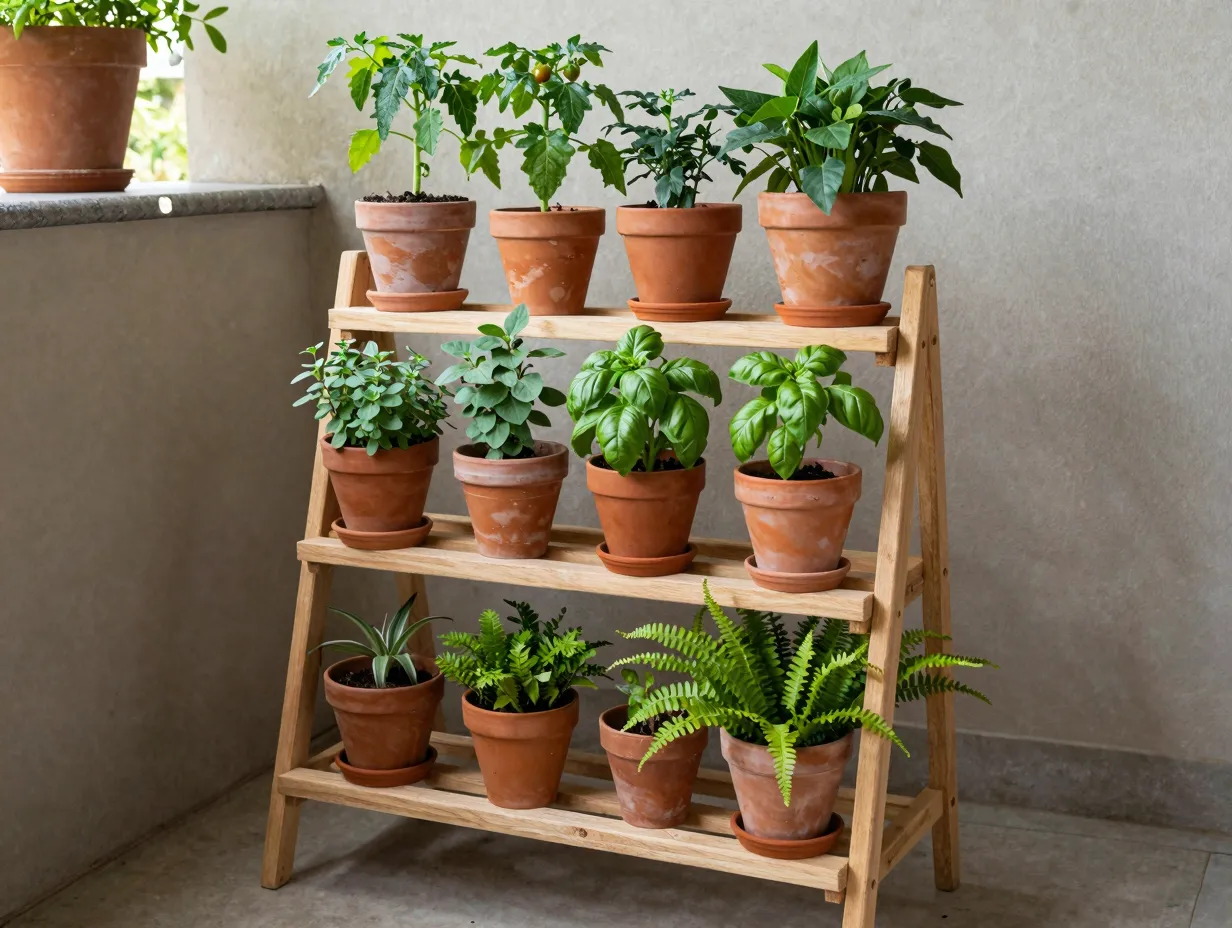
If you do use floor space, make it work harder with tiered plant stands or DIY ladder shelves. A three-tier wooden shelf measuring 24 inches wide and 48 inches tall holds nine to twelve medium pots while occupying only two square feet of floor space. [9]
You can build a basic ladder shelf from two 2×4 lumber pieces and three wooden dowels for under fifteen dollars in materials. Sand, stain, and seal it for weather resistance. Alternatively, repurpose an old wooden step ladder, the kind found at thrift stores for a few dollars, as an instant tiered planter stand.
Arrangement strategy:
- Place tall, sun-loving plants like tomatoes or peppers on the top tier
- Put medium herbs and flowers on the middle tier
- Reserve the bottom tier for shade-tolerant plants like ferns or impatiens
This layering approach mirrors how plants grow in natural ecosystems, with taller plants providing partial shade for more sensitive ones below. [5]
4. Mount Railing Planter Boxes for Edible Crops
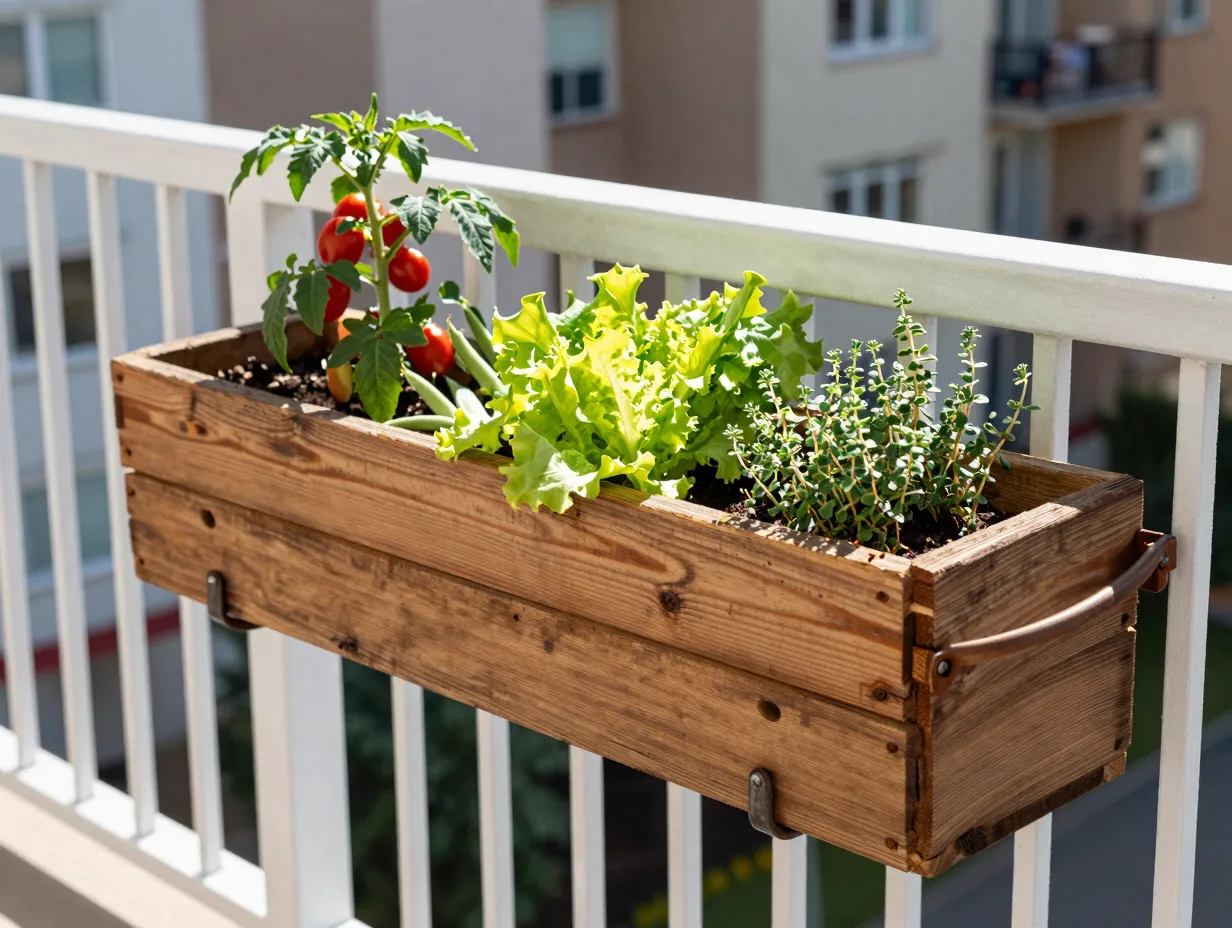
Railing planter boxes are one of the most popular and practical solutions for balcony gardening, and for good reason. They attach directly to your existing railing, hang over the outside edge, and add zero footprint to your floor space. [3][10]
A standard 24-inch railing box holds three to four medium plants. String four boxes along a 96-inch railing and you have space for 12 to 16 plants growing at waist height, the ideal ergonomic level for regular harvesting.
For a DIY version, cut cedar planks to your railing width, assemble a simple rectangular box with deck screws, drill drainage holes in the base, and attach with adjustable metal railing hooks. Cedar is the preferred wood because it naturally resists rot and insects without chemical treatment.
Best crops for railing boxes: Cherry tomatoes, bush beans, lettuce, radishes, chives, and trailing herbs like thyme.
“The railing is not a barrier, it is a planting surface. Every linear foot of railing you have is a linear foot of growing opportunity.”
Always check your lease agreement and building rules before mounting anything to railings. Most buildings permit hook-style mounts that do not require drilling into the structure.
5. Create a DIY Vertical Trellis for Climbing Plants
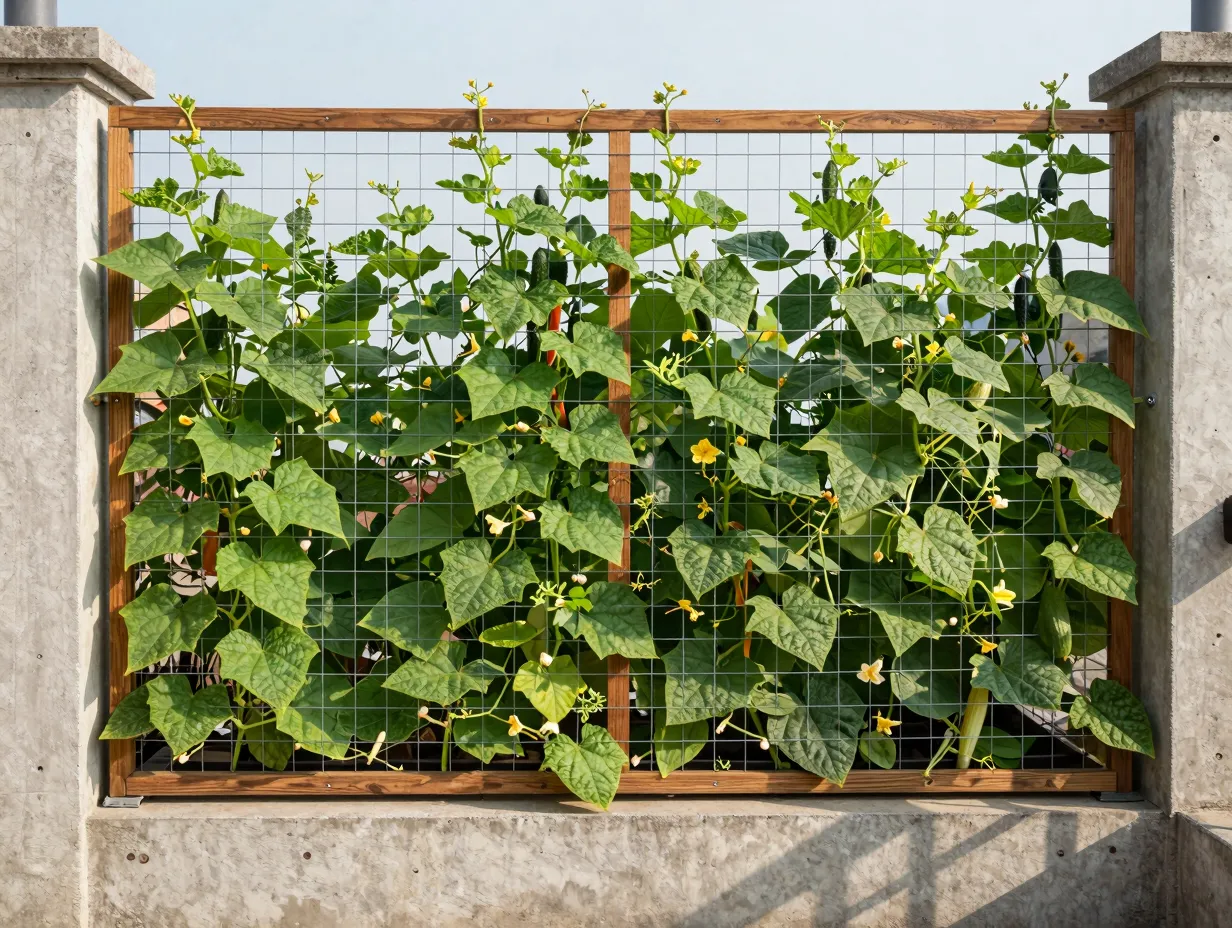
A trellis mounted to a balcony wall transforms a flat, unused surface into a productive growing zone. Climbing plants like pole beans, cucumbers, small-variety squash, and flowering vines use vertical space naturally, they want to grow up, and a trellis simply gives them a path to do it. [1][6]
Simple DIY trellis options:
- Stretch horizontal rows of garden twine between two wall-mounted hooks, spaced six inches apart
- Attach a section of galvanized wire mesh or chicken wire to a wooden frame and mount it to the wall
- Repurpose a wooden picture frame by weaving jute twine in a grid pattern across it
A 4×6 ft trellis section on a south- or west-facing wall can support four to six climbing plants simultaneously. As the plants grow upward, they also create a natural privacy screen, a significant bonus on balconies that face neighboring units. [8]
For structural security, use wall anchors rated for at least twice the expected plant weight. A mature cucumber vine loaded with fruit can weigh more than you expect.
6. Hang Ceiling Baskets to Exploit Overhead Space
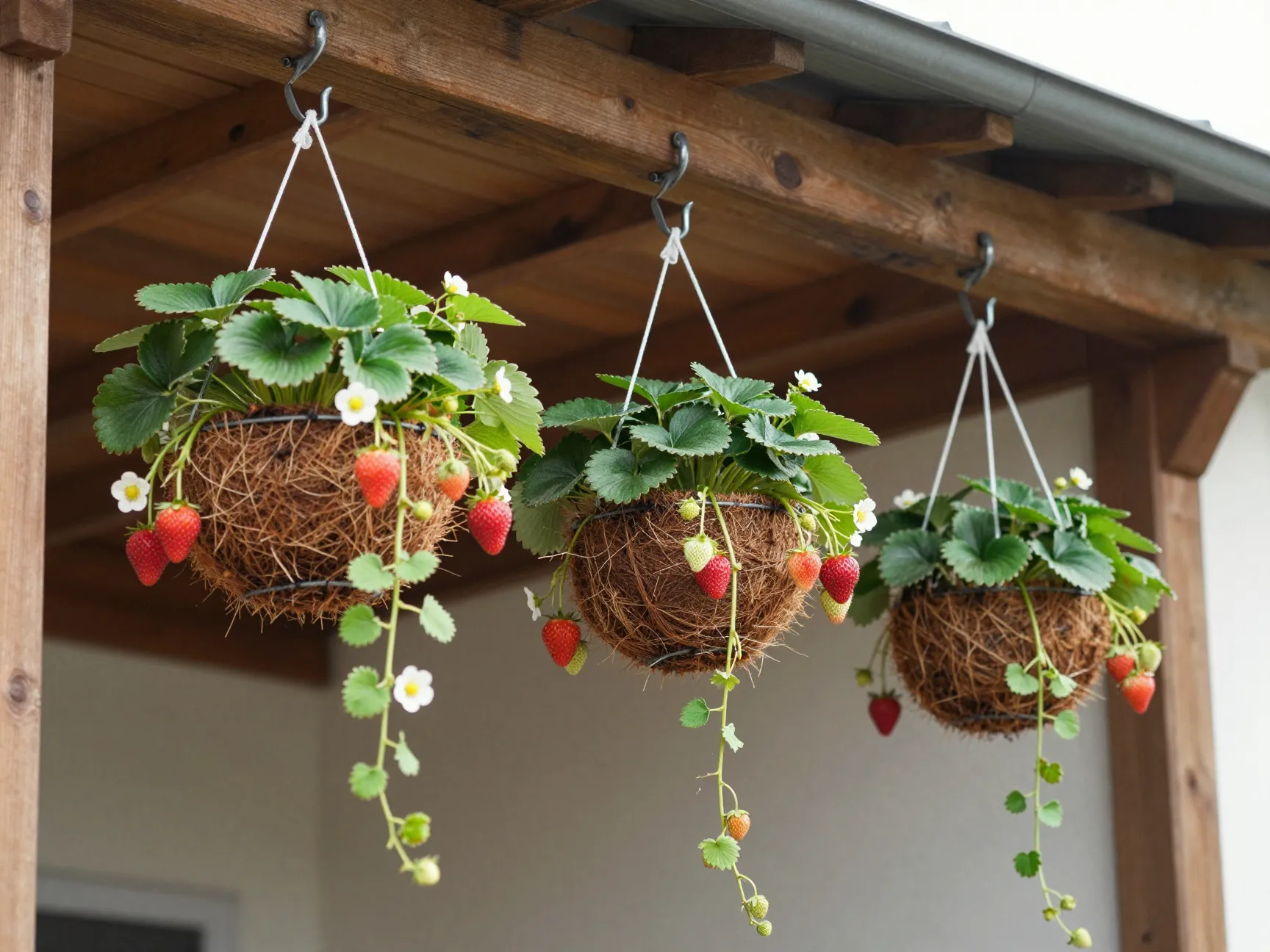
The ceiling of a covered balcony is almost always ignored. A single ceiling hook rated for 25 to 30 pounds can support a hanging basket large enough for trailing strawberries, cherry tomatoes, herbs, or cascading flowers. Three hooks spaced evenly across a 10-foot ceiling adds meaningful growing area without touching walls or floor. [6]
For a DIY hanging planter, drill a hook into a ceiling joist (never into drywall alone), hang a coco-lined wire basket, and plant trailing varieties that will spill downward attractively. Strawberries are particularly well-suited to this method, the runners hang naturally, and harvesting is effortless.
Weight management is critical. A fully watered 12-inch basket can weigh 15 to 20 pounds. Always use a hook and anchor rated well above that limit, and inspect the mounting point at the start of each season.
Best plants for ceiling baskets: Trailing strawberries, cherry tomatoes (Tumbling Tom variety), sweet potato vine, trailing petunias, and creeping thyme.
7. Build a DIY Self-Watering Container System
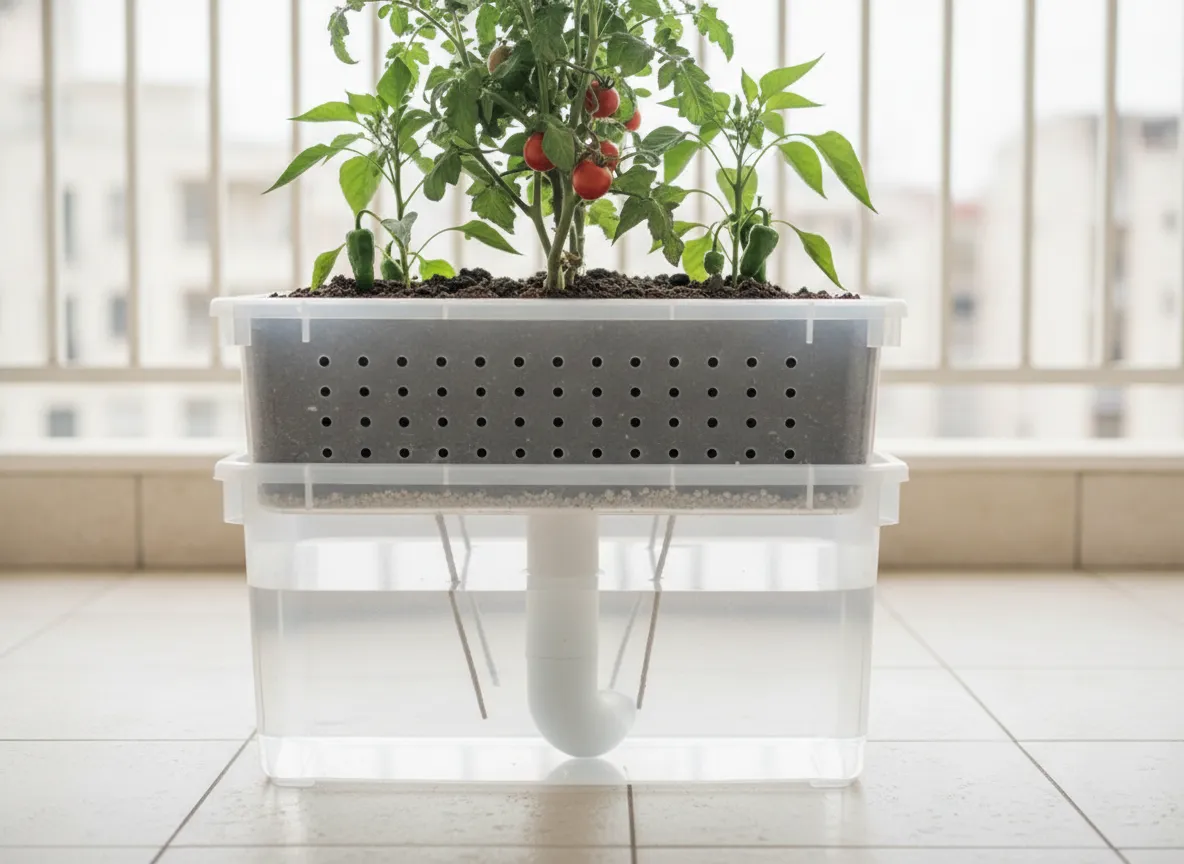
Watering is the most common reason balcony gardens fail. Pots on exposed balconies dry out fast, and missing a day in midsummer heat can kill seedlings. A self-watering container system solves this problem at low cost and dramatically improves plant health. [2][9]
The basic design involves a two-layer container: an outer reservoir holds water, and an inner pot sits above it with a wick or perforated base that draws moisture upward as the soil dries. Plants take what they need when they need it, reducing both overwatering and underwatering.
DIY self-watering container, basic build:
- Take two plastic storage bins of similar size, one slightly smaller than the other
- Drill a series of small holes in the base of the inner bin
- Cut a fill tube from PVC pipe and insert it through both bins so you can refill the reservoir from the top
- Fill the inner bin with potting mix and plant as normal
- Fill the outer reservoir through the PVC tube every three to five days
This system is particularly effective for tomatoes, peppers, and leafy greens, which are sensitive to inconsistent watering. [2] A single reservoir fill can sustain plants for three to five days depending on weather conditions.
8. Repurpose Everyday Items as Lightweight Planters
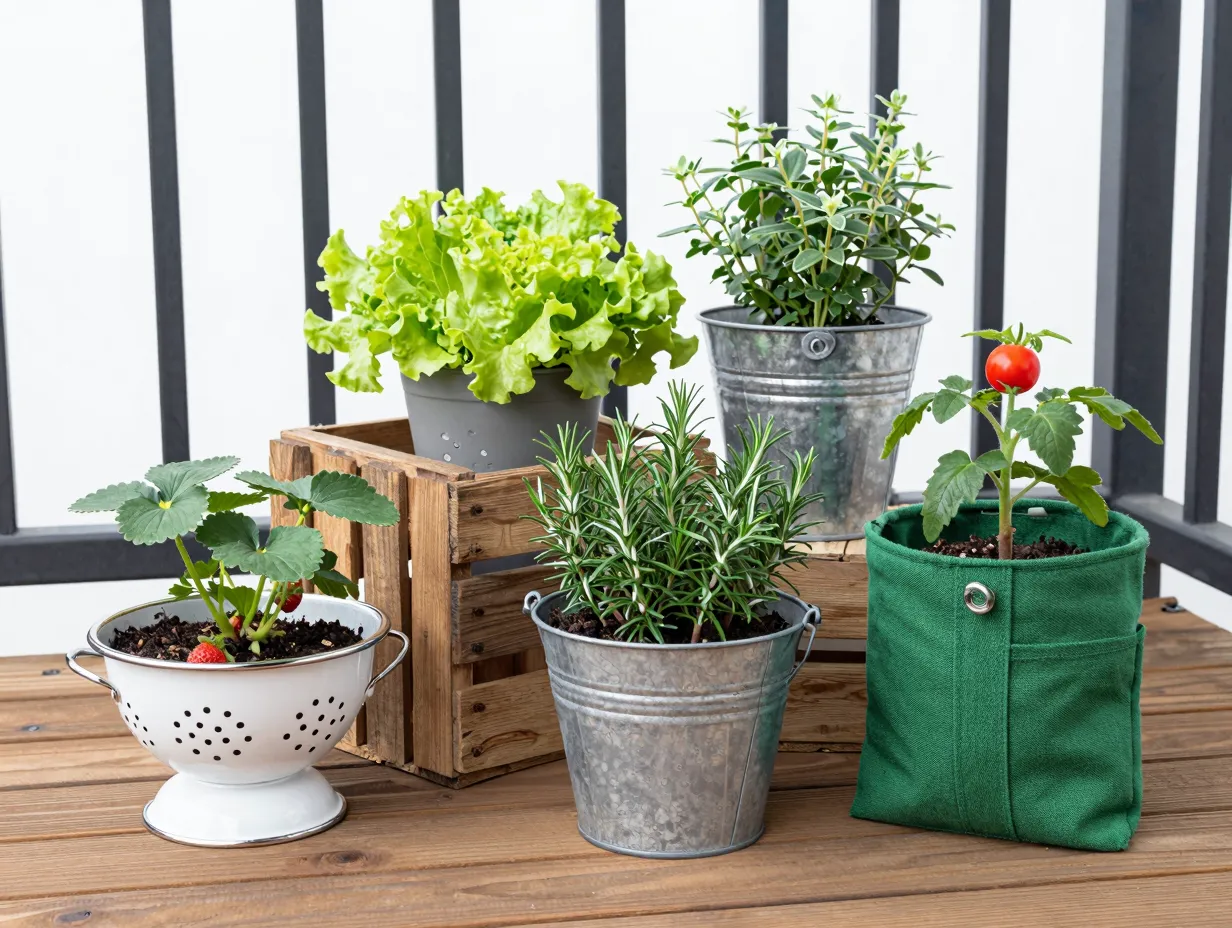
One of the most creative aspects of balcony garden DIY is the opportunity to repurpose household items as planters. This approach cuts costs, reduces waste, and often produces more visually interesting results than standard plastic pots. [5][10]
High-performing repurposed planters:
- Colanders: Excellent drainage, ideal for herbs and strawberries; the handles make them easy to hang
- Wooden wine crates: Deep enough for root vegetables; seal the interior with plastic sheeting to extend life
- Galvanized metal buckets: Durable, attractive, and widely available at hardware stores for a few dollars each
- Fabric grow bags: Lightweight, foldable for off-season storage, and available in sizes from 1 to 25 gallons
- PVC pipe sections: Cut vertically and mounted horizontally on a wall frame, each section becomes an individual planting channel ideal for strawberries or herbs [8]
The key requirement for any repurposed container is adequate drainage. Drill or punch at least three to five holes in the base of any solid container before planting. Without drainage, roots suffocate and plants fail regardless of how well you water them.
Weight consideration: Balcony structural load limits vary by building. As a general rule, keep individual containers under 40 pounds when fully watered, and distribute weight evenly across the space rather than concentrating it in one corner. [3]
Choosing the Right Plants for Your Balcony Conditions
The eight DIY ideas above will only succeed if you match your plant selection to your actual growing conditions. Before buying a single seed or seedling, assess these three factors:
| Condition | What to Measure | Best Plant Choices |
|---|---|---|
| Full sun (6+ hours) | South or west facing | Tomatoes, peppers, basil, beans |
| Partial sun (3-6 hours) | East facing or shaded | Lettuce, spinach, parsley, chives |
| Low light (under 3 hours) | North facing or heavily shaded | Ferns, mint, impatiens, hostas |
| High wind exposure | Upper floors, open aspect | Low-growing herbs, sedums, ornamental grasses |
Wind is a frequently overlooked factor on upper-floor balconies. Strong, consistent wind desiccates plants rapidly and can topple tall planters. If your balcony is exposed, prioritize low-profile planters, use heavier containers for stability, and choose compact or trailing plant varieties over tall, leggy ones. [3][6]
Essential Tips for Balcony Garden Success in 2026
Beyond the eight core DIY ideas, a few practical habits separate thriving balcony gardens from struggling ones:
Use lightweight potting mix, not garden soil. Garden soil is too dense for containers, it compacts, drains poorly, and adds unnecessary weight. A quality potting mix with perlite or vermiculite keeps roots aerated and containers manageable. [9]
Feed consistently. Container plants exhaust their soil nutrients faster than in-ground plants. A balanced slow-release fertilizer applied at planting, supplemented with liquid feed every two weeks during the growing season, keeps plants productive. [2]
Group plants by water needs. Placing drought-tolerant herbs like rosemary and thyme together, and moisture-loving crops like tomatoes and basil together, makes watering more efficient and reduces the risk of over- or under-watering individual plants.
Plan for off-season storage. Fabric grow bags fold flat. Wooden shelves can be disassembled and stored. Pallet planters can be leaned flat against a wall. Thinking about storage before you build saves significant frustration when the growing season ends. [10]
Start small and expand. The most common mistake in balcony gardening is attempting too much in the first season. Start with two or three of the eight DIY ideas above, learn what works in your specific conditions, and add complexity in subsequent seasons.
Conclusion
A small balcony is not a limitation, it is a design challenge with a clear solution set. The 8 balcony garden DIY ideas to maximize your tiny outdoor space covered in this guide, from vertical pallet gardens and fabric pocket planters to self-watering containers and repurposed everyday items, give you a complete toolkit for transforming even the most cramped outdoor space into a productive, beautiful garden.
The most important action you can take right now is to walk out onto your balcony and look at it differently. Count the wall space. Measure the railing length. Look up at the ceiling. Every one of those surfaces is an opportunity you have not yet used.
Your actionable next steps:
- Assess your balcony’s sun exposure and wind conditions this week
- Choose two or three of the eight DIY ideas that best fit your space and budget
- Source materials, many can be found free or cheaply through local buy-nothing groups or hardware store offcuts
- Plant in the next available planting window for your climate zone
- Document what works and what does not so you can refine your approach next season
The best balcony garden is not the most elaborate one. It is the one you actually build and maintain. Start with one wall, one railing box, or one hanging basket, and let it grow from there.
References
[1] Balcony Garden Ideas – https://www.gardeningetc.com/design/balcony-garden-ideas
[2] Apartment Balcony Garden – https://www.gardeneros.com/blog/apartment-balcony-garden
[3] 8 Tips To Turn Your Tiny Balcony Into A Lush Garden 1 – https://www.cbc.ca/life/home/8-tips-to-turn-your-tiny-balcony-into-a-lush-garden-1.4226500
[5] 40 Best Garden Ideas 2025 For Small Spaces Patio Balcony Backyard Rooftop Diy And More – https://nestmood.com/40-best-garden-ideas-2025-for-small-spaces-patio-balcony-backyard-rooftop-diy-and-more/
[6] Balcony Garden – https://www.gardendesign.com/small/balcony-garden.html
[8] Balcony Garden Ideas – https://yardcast.ai/blog/balcony-garden-ideas
[9] 20 Balcony Small Space Gardening Ideas For Beginners – https://www.homeaswemakeit.com/20-balcony-small-space-gardening-ideas-for-beginners/
[10] Space Saving Ideas For Balcony Gardens 8 Beginner Friendly Tips – https://livinator.com/space-saving-ideas-for-balcony-gardens-8-beginner-friendly-tips/