9 Patio Decorating Ideas to Create Your Perfect Outdoor Oasis
A 2023 survey by the American Institute of Architects found that outdoor living spaces ranked among the top five most requested home features for the fourth consecutive year, and spending on patio improvements has only accelerated since. That number tells a story most homeowners already feel in their bones: the patio is no longer an afterthought. It is a room.
Disclosure: This post contains affiliate links. As an Amazon Associate, we earn from qualifying purchases, and at no extra cost to you.
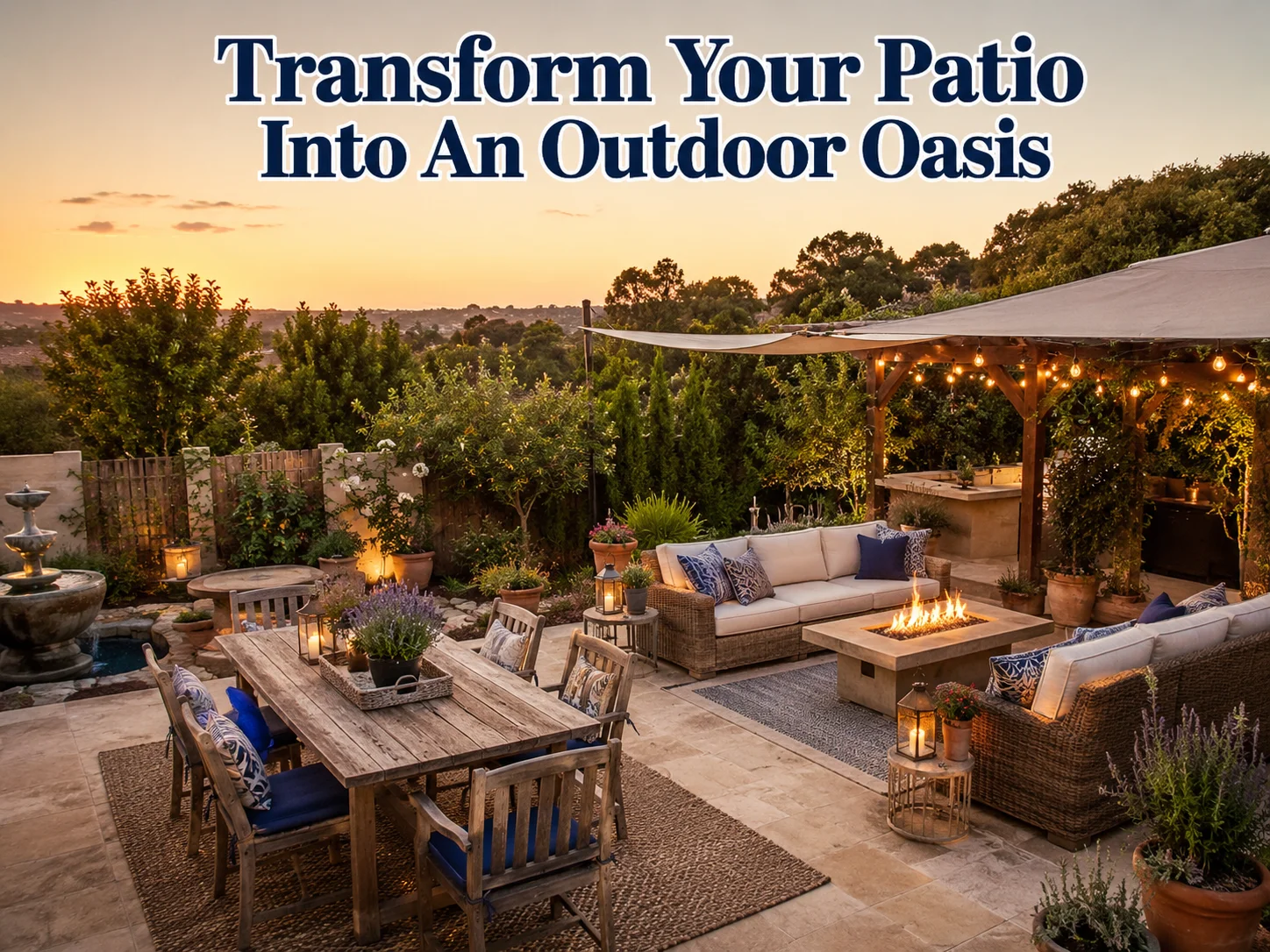
When I finally tackled my own neglected concrete slab a few summers ago, I had no blueprint. I had a folding lawn chair, a citronella candle, and a vague sense of disappointment every time I looked out the back door. What I discovered through trial, error, and a lot of weekend trips to the garden center is that transforming an outdoor space does not require a landscape architect or a five-figure budget. It requires a clear plan and the right ideas in the right order.
These 9 Patio Decorating Ideas to Create Your Perfect Outdoor Oasis are the result of that journey, refined, tested, and organized so you can apply them to any space, any budget, and any climate.
Key Takeaways
- Defining your patio’s function before buying a single piece of furniture saves money and prevents clutter.
- Layering lighting transforms the atmosphere of an outdoor space more than almost any other single investment.
- Weather-resistant materials are non-negotiable for longevity, but they no longer mean sacrificing style.
- Plants, textiles, and personal accessories are the fastest and most affordable way to add personality.
- Small patios benefit from vertical thinking, walls, trellises, and hanging elements multiply usable space dramatically.
Why Your Patio Deserves a Decorating Strategy
Most people approach patio decorating the same way they approach a garage sale: they grab what looks good in the moment and figure out placement later. The result is a space that feels busy but not cohesive, furnished but not comfortable.
A strategy changes everything. Before we walk through the 9 Patio Decorating Ideas to Create Your Perfect Outdoor Oasis, it helps to understand the three foundational questions every outdoor decorating plan should answer.
1. How will you actually use the space?
A patio used primarily for morning coffee requires different furniture, lighting, and plant placement than one designed for evening entertaining or weekend family meals. Write down your top two or three intended uses before you spend a dollar.
2. What is your climate reality?
A humid coastal environment will destroy untreated wood and certain metal finishes within a season. A dry desert climate fades fabric quickly. Knowing your climate steers every material decision you will make.
3. What is your maintenance tolerance?
Teak furniture is beautiful but requires annual oiling. A lush container garden is stunning but demands consistent watering. Be honest with yourself. A low-maintenance setup you actually keep up looks far better than a high-maintenance one you abandon by August.
With those three questions answered, the following ideas become much easier to apply with precision.
The 9 Patio Decorating Ideas to Create Your Perfect Outdoor Oasis
1. Define Zones Before You Decorate
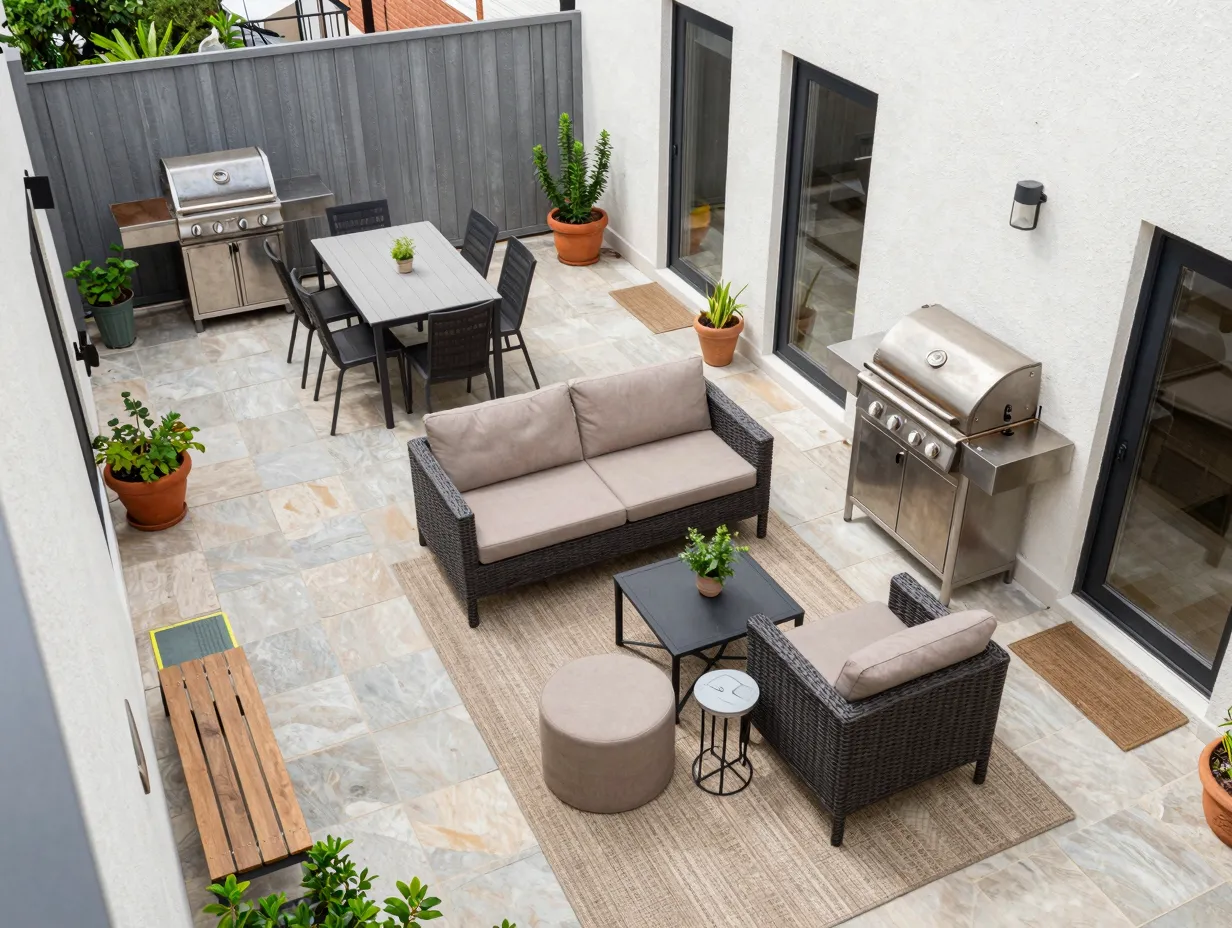
The single most common patio mistake is treating the entire space as one undifferentiated area. Even a small 10-by-12-foot patio benefits from intentional zones.
Zone types to consider:
- Dining zone: a table and chairs positioned for easy access from the kitchen or grill
- Lounging zone: deep-seat furniture, ottomans, and side tables for relaxed conversation
- Cooking or grilling zone: a dedicated area with heat-safe surfaces and storage
- Transition zone: a small area near the door for removing shoes, storing umbrellas, or holding potted herbs
Outdoor rugs are the most effective tool for defining zones without building walls. A rug placed under a seating arrangement signals that this area has a specific purpose, just as it would indoors. Choose rugs made from polypropylene or recycled PET plastic, both resist moisture, mildew, and UV fading.
“The patio that tries to do everything in one undivided space ends up doing nothing particularly well.”
2. Invest in a Focal Point
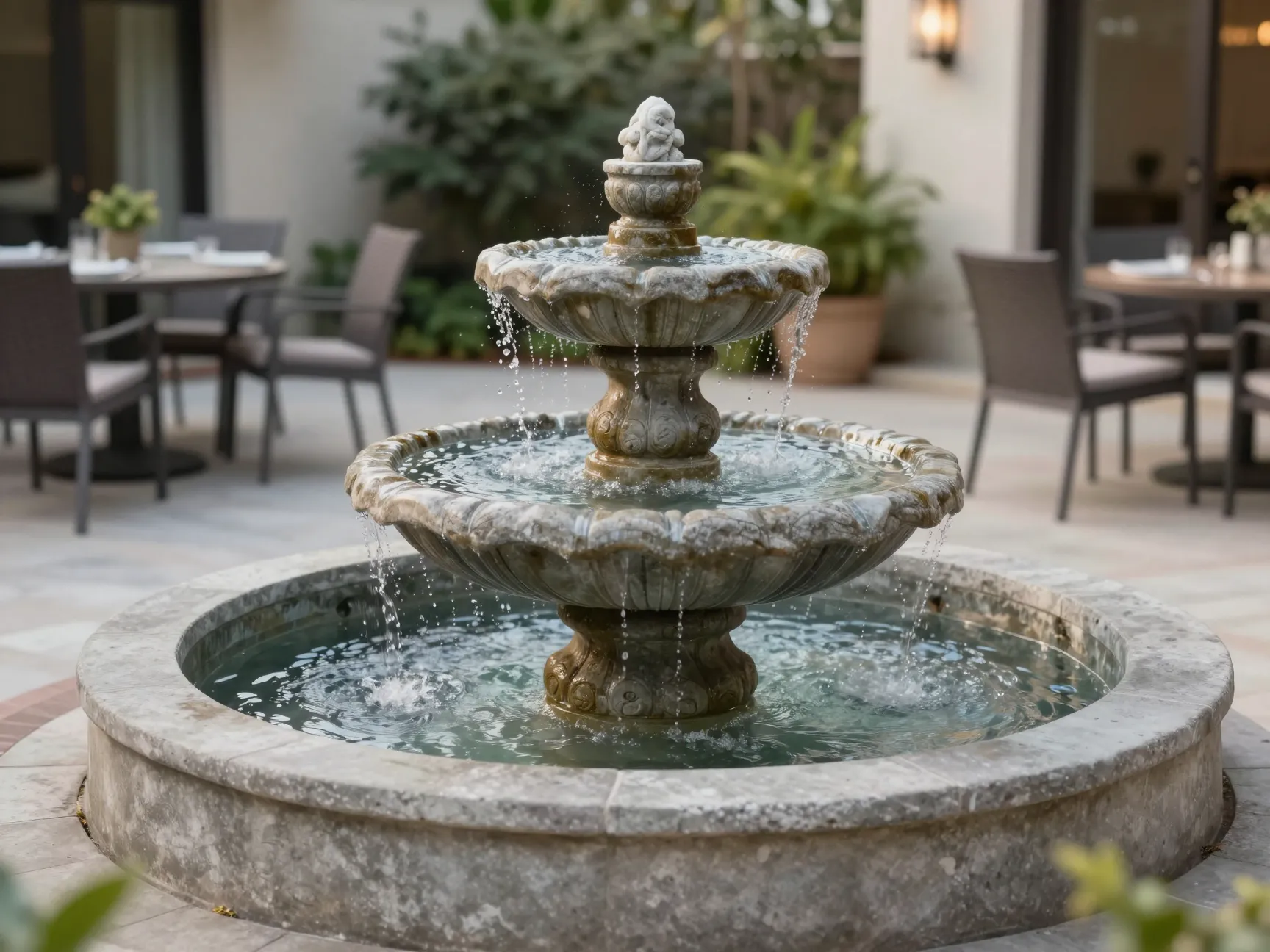
Every well-designed room, indoor or outdoor, has a focal point. On a patio, this is the element your eye travels to first when you step outside. Without one, the space feels directionless.
Strong focal point options include:
- A fire pit or fire table (functional and visually magnetic)
- A water feature such as a wall fountain or small freestanding fountain
- A statement planter or large-scale sculpture
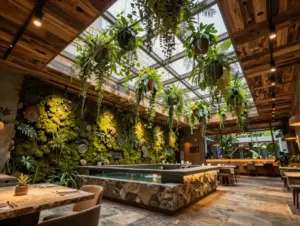
- A bold accent wall using weather-resistant paint, outdoor tile, or a living plant wall
I added a simple cast-concrete fountain to a corner of my own patio two seasons ago. The sound of moving water changed the entire atmosphere of the space, it masked street noise, attracted birds, and gave the eye somewhere to land. The cost was under $200. The impact was disproportionate.
3. Layer Your Lighting for Maximum Atmosphere
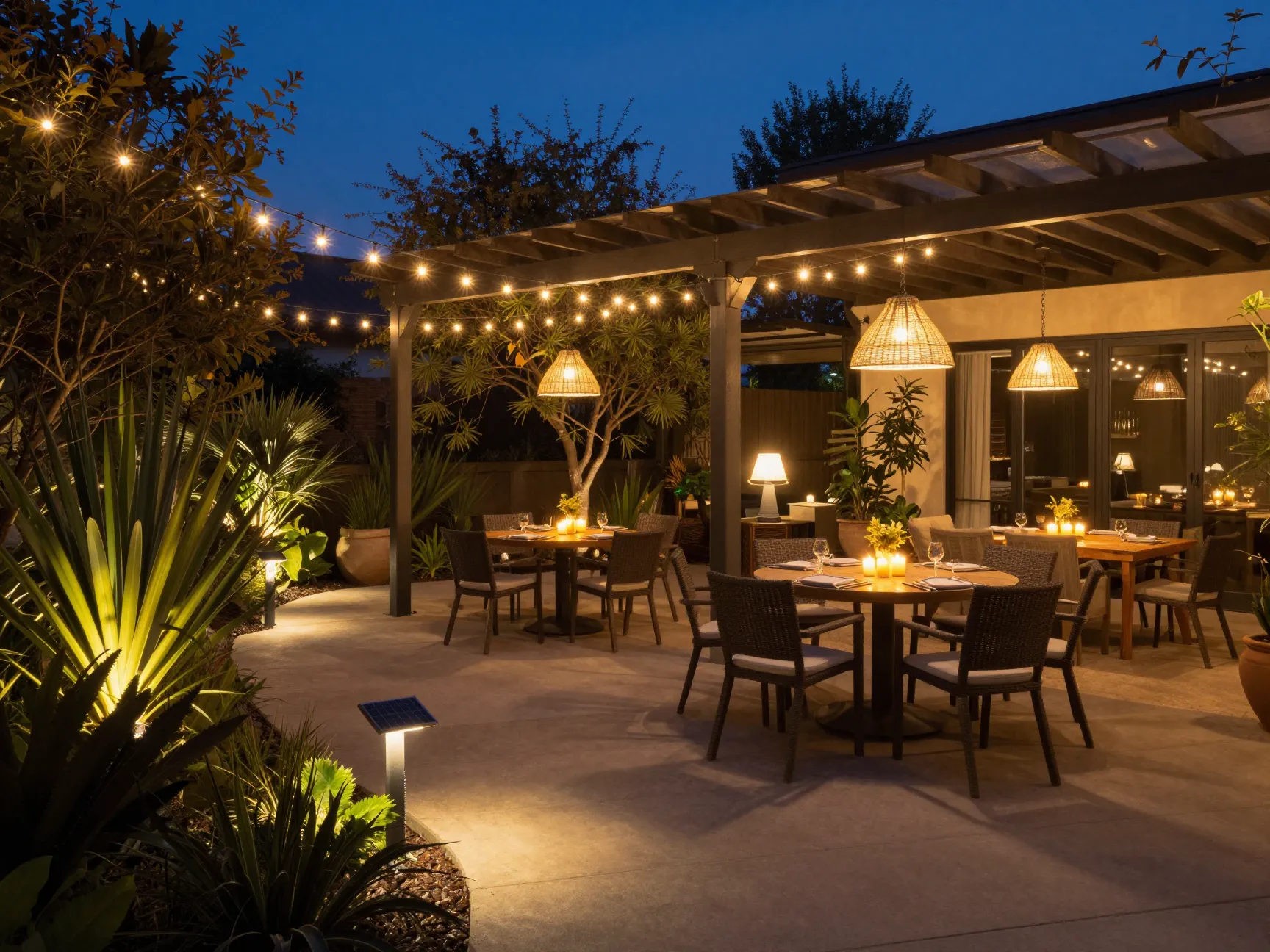
Lighting is the most underutilized tool in outdoor decorating. Most patios rely on a single overhead fixture or a floodlight mounted to the house, functional, but flat.
Layered lighting uses multiple light sources at different heights to create depth, warmth, and versatility.
| Lighting Layer | Examples | Best For |
|---|---|---|
| Overhead (ambient) | String lights, pendant lights, lanterns on pergola | General illumination, atmosphere |
| Task lighting | Grill lights, table lamps, step lights | Cooking, dining, safety |
| Accent lighting | Uplights on plants, solar path lights, candles | Drama, highlighting features |
| Portable lighting | Rechargeable table lanterns, flameless candles | Flexibility, intimate settings |
Solar-powered string lights have improved dramatically in quality and brightness. For a more polished look, hardwired low-voltage LED systems are worth the one-time installation cost. Warm white bulbs (2700K, 3000K color temperature) create the most inviting outdoor ambiance.
4. Choose Furniture That Earns Its Place
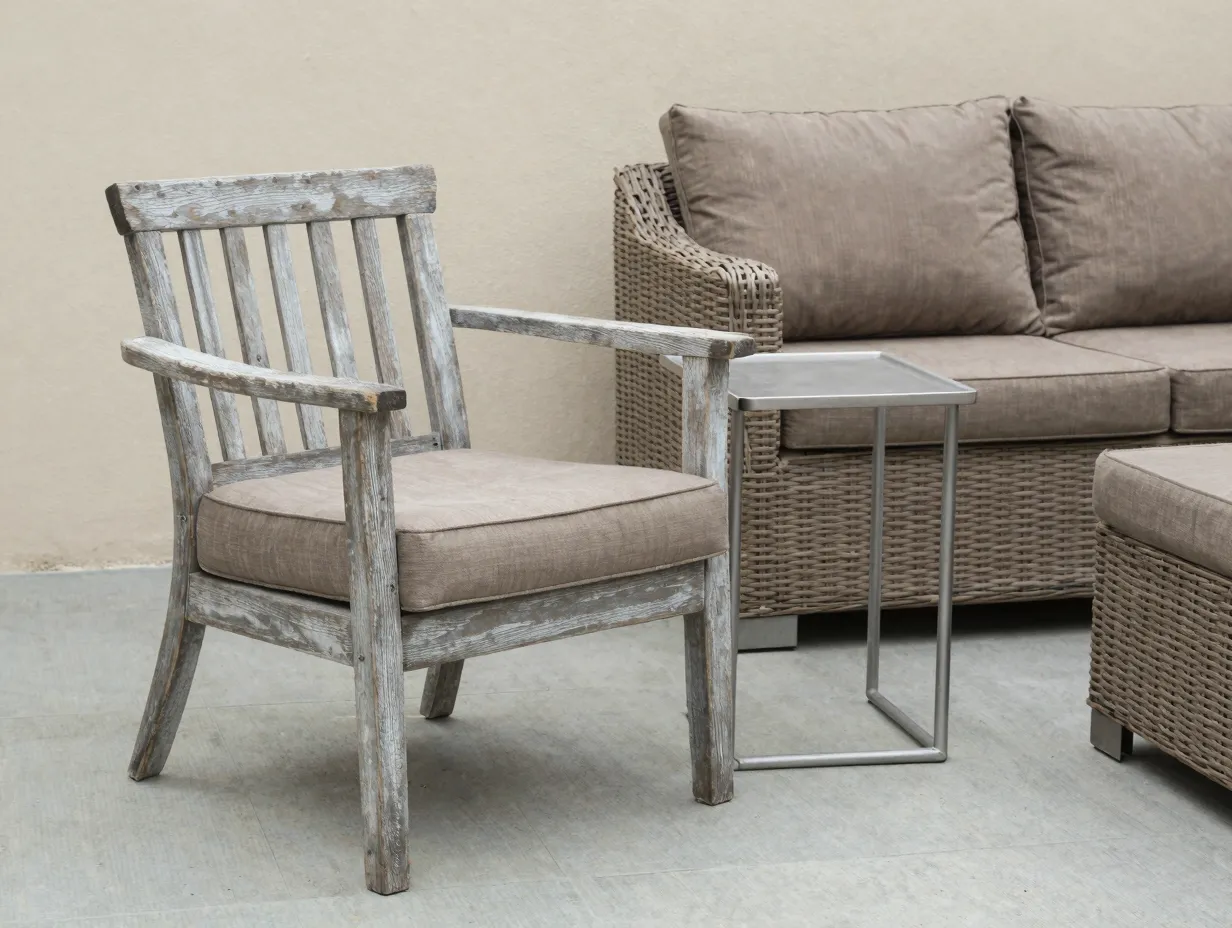
Outdoor furniture has to work harder than indoor furniture. It faces rain, UV radiation, temperature swings, and the occasional spilled drink. Choosing the wrong materials means replacing pieces every two or three years.
Material comparison at a glance:
- Teak: Extremely durable, naturally weather-resistant, ages to a silver-grey patina. Higher upfront cost, requires occasional oiling to maintain color.
- Powder-coated aluminum: Lightweight, rust-resistant, low maintenance. Wide range of styles. Can feel less substantial than wood.
- All-weather wicker (resin): Warm, traditional look. UV-stabilized resin resists cracking and fading. Avoid natural wicker outdoors.
- Concrete: Extremely durable and modern. Heavy, which is actually an advantage in windy areas. Cold to the touch in cooler months.
- Recycled plastic lumber: Eco-friendly, virtually maintenance-free, available in many colors. Less premium aesthetic than teak.
Comfort matters as much as durability. Before purchasing, sit in the furniture if possible. Outdoor seating with a seat height between 16 and 18 inches tends to suit the widest range of adults comfortably.
5. Add Shade and Shelter
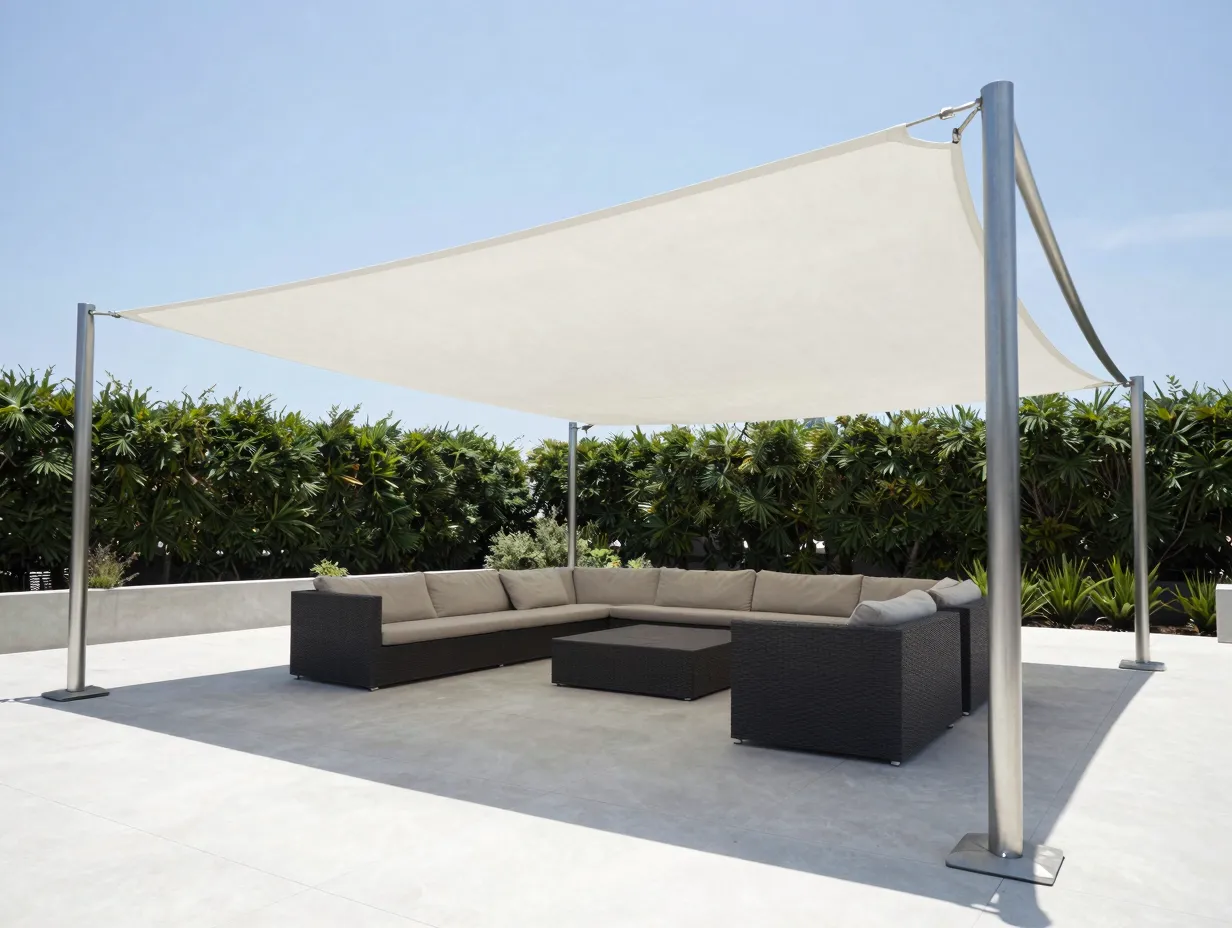
A patio without shade is a patio that goes unused during the hottest parts of the day. Shade also defines space, adds architectural interest, and can dramatically reduce the surface temperature of your patio floor.
Shade options by permanence:
- Pergola: Semi-permanent structure that can support climbing plants, string lights, and retractable shade cloth. Adds significant property value.
- Sail shade: Modern, affordable, and easy to install between anchor points. Available in UV-blocking fabric.
- Market umbrella: Portable and versatile. Choose a base weight of at least 50 pounds to prevent tipping in wind.
- Retractable awning: Motorized or manual, attached to the house. Excellent for controlling sun at specific times of day.
- Pergola with polycarbonate roof: Provides rain protection as well as shade, extending the usable season in wet climates.
I installed a 10-by-12-foot sail shade over my main seating area using three stainless steel posts. The total project took one afternoon and cost approximately $180 in materials. The patio went from being unusable between 11 a.m. and 4 p.m. in summer to being comfortable all day.
6. Bring in Plants Strategically
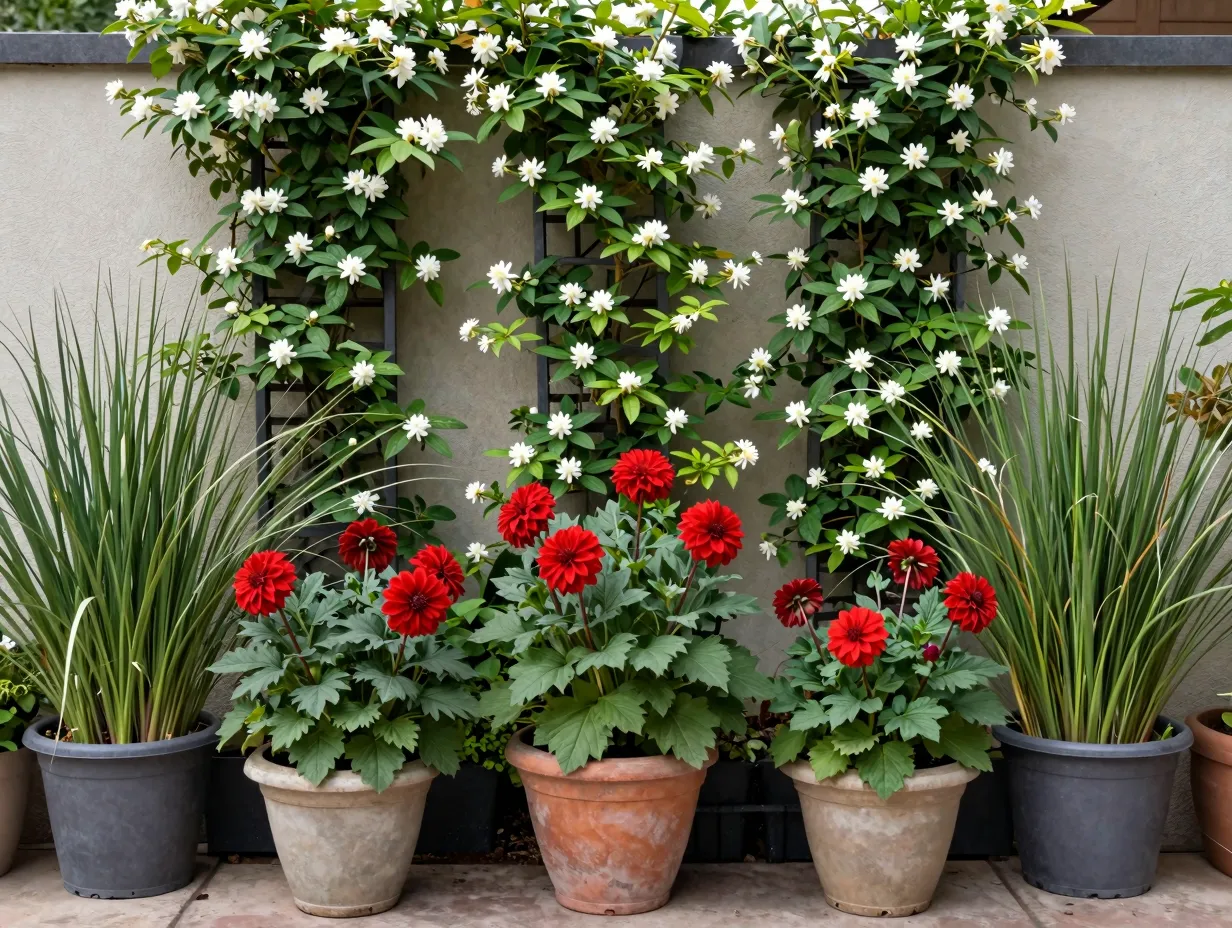
Plants are the fastest way to make a patio feel alive. But random plant placement creates visual noise rather than beauty. Strategic plant use serves multiple purposes simultaneously: it adds color, defines boundaries, provides privacy, and softens hard surfaces.
Four strategic plant roles on a patio:
- Privacy screening: Tall grasses, bamboo in containers, or columnar evergreens placed along the perimeter block sightlines from neighbors or the street.
- Vertical interest: Climbing plants on a trellis or wall (jasmine, clematis, climbing roses) draw the eye upward and make the space feel larger.
- Fragrance: Lavender, gardenia, and rosemary planted near seating areas engage the senses and enhance the experience of being outside.
- Color anchoring: Large statement planters with bold seasonal flowers (petunias, dahlias, cannas) provide color that can be changed with the season.
Container gardening is the most practical approach for most patios. Choose containers with adequate drainage holes and use a high-quality potting mix designed for containers, not garden soil. Group containers in odd numbers, threes and fives, for the most visually balanced arrangements.
7. Layer Textiles for Comfort and Color
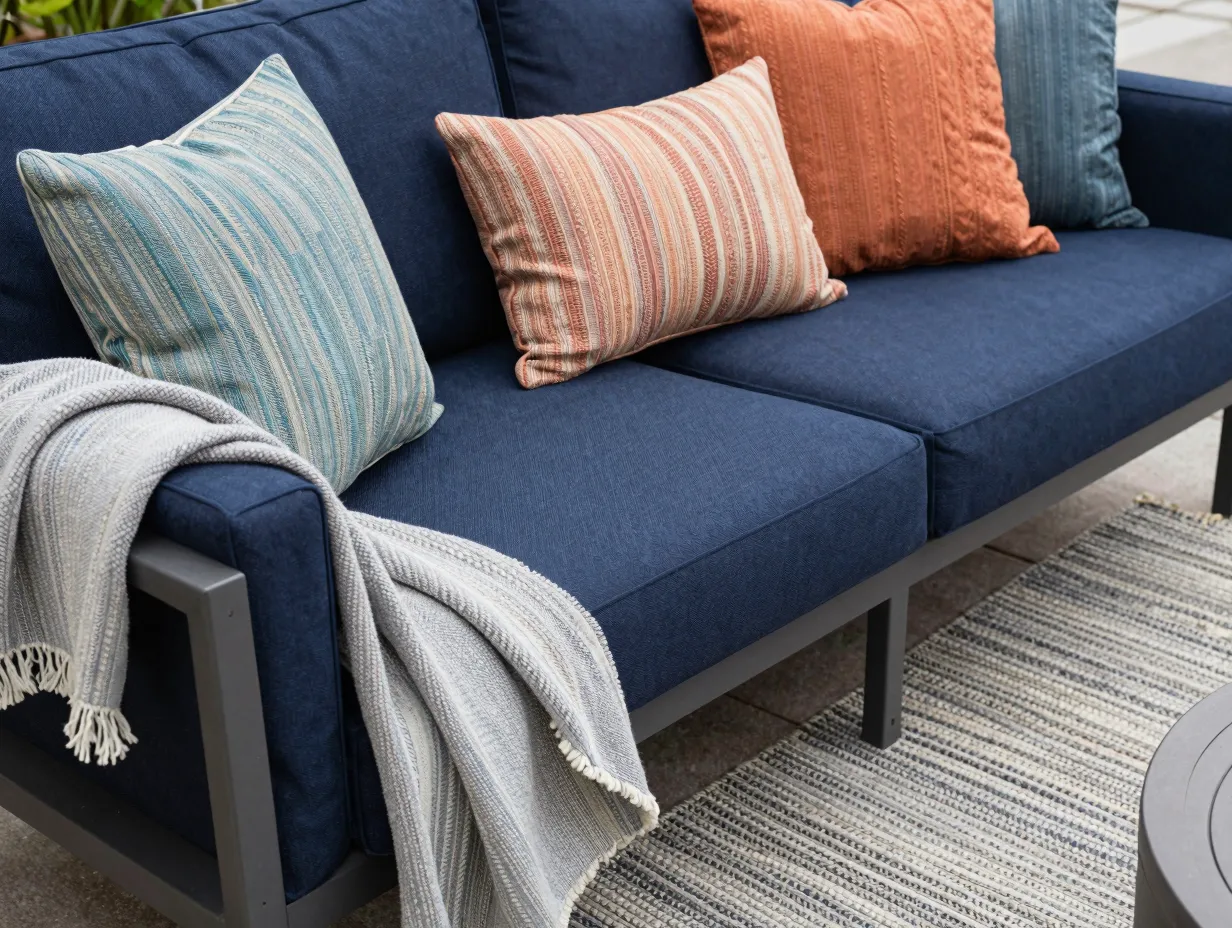
Outdoor textiles have undergone a quiet revolution in the past decade. Solution-dyed acrylic fabrics (Sunbrella is the most recognized brand, but many quality alternatives exist) resist fading, mildew, and moisture in ways that standard fabric cannot.
Textile layers to consider:
- Cushions and pillows: The fastest way to introduce color and pattern. Mix a solid base cushion with patterned throw pillows for depth.
- Outdoor rugs: As noted in the zone-defining section, rugs anchor furniture groupings and add warmth underfoot.
- Throws: On cooler evenings, a weather-resistant throw draped over a chair invites people to stay longer.
- Table linens: An outdoor tablecloth or placemats elevate a simple dining setup significantly.
A practical approach I use: choose one dominant color from your home’s interior palette and repeat it outside. This creates visual continuity between indoor and outdoor spaces and makes the patio feel like a genuine extension of the home rather than a separate, disconnected area.
“Outdoor textiles are the quickest, most affordable lever you can pull to transform a patio’s personality.”
8. Incorporate Personal Accessories and Decor
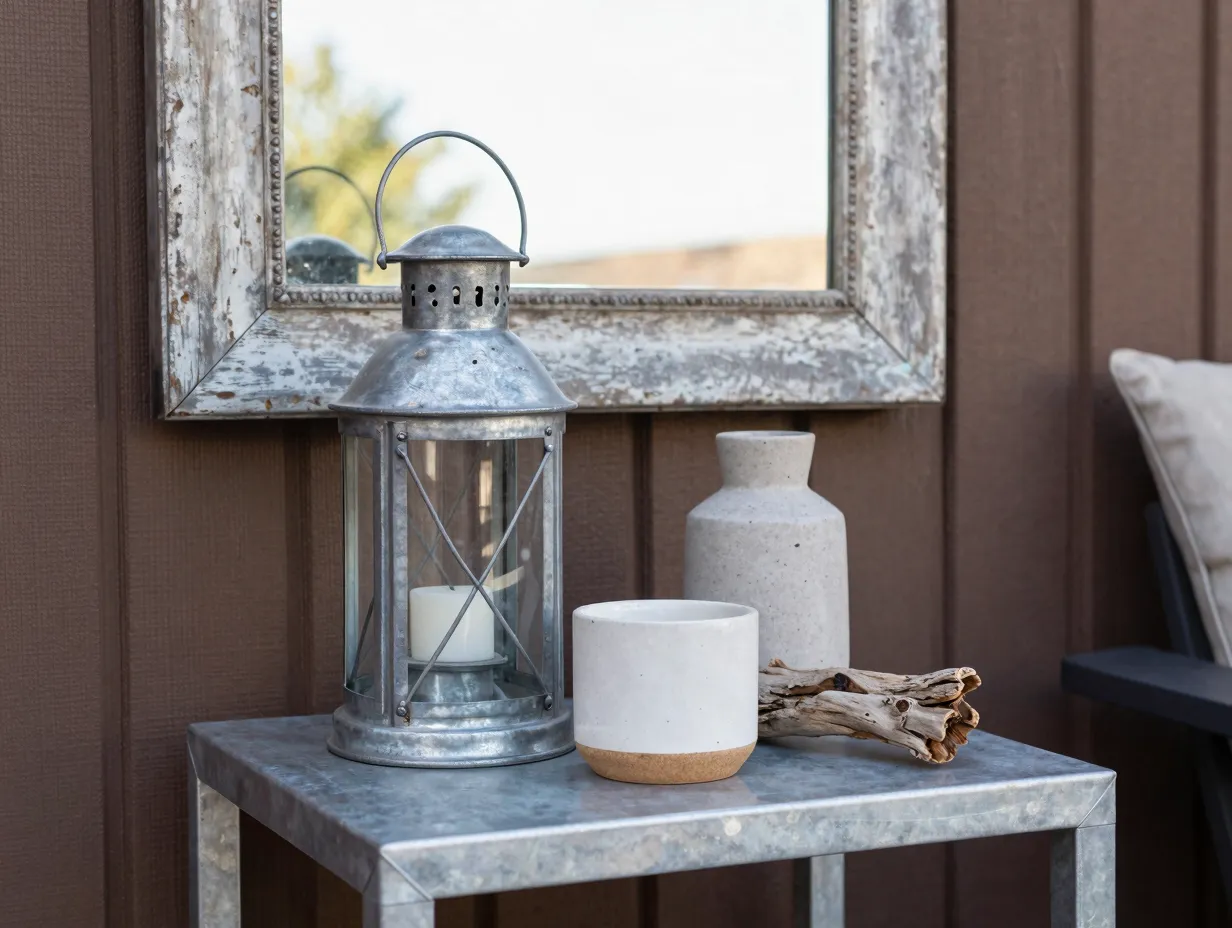
This is where a patio stops looking like a showroom floor and starts feeling like yours. Personal accessories are the finishing layer, the details that communicate something about the people who live there.
Accessory categories that work well outdoors:
- Lanterns and candle holders: Available in materials from galvanized steel to ceramic. Group them at different heights for visual interest.
- Outdoor art: Weather-resistant metal wall art, ceramic tiles, or mosaic pieces mounted on a fence or exterior wall.
- Mirrors: A large outdoor mirror on a fence or wall creates the illusion of more space and reflects light and greenery.
- Decorative objects: Driftwood, smooth river stones, ceramic sculptures, or vintage finds sealed with outdoor varnish.
- Functional decor: A stylish outdoor storage bench, a bar cart on wheels, or a potting bench that doubles as a display surface.
The key is restraint. Outdoor spaces feel cluttered more quickly than indoor spaces because they have fewer walls to absorb visual complexity. Choose accessories with intention and leave breathing room between them.
9. Plan for Year-Round Use
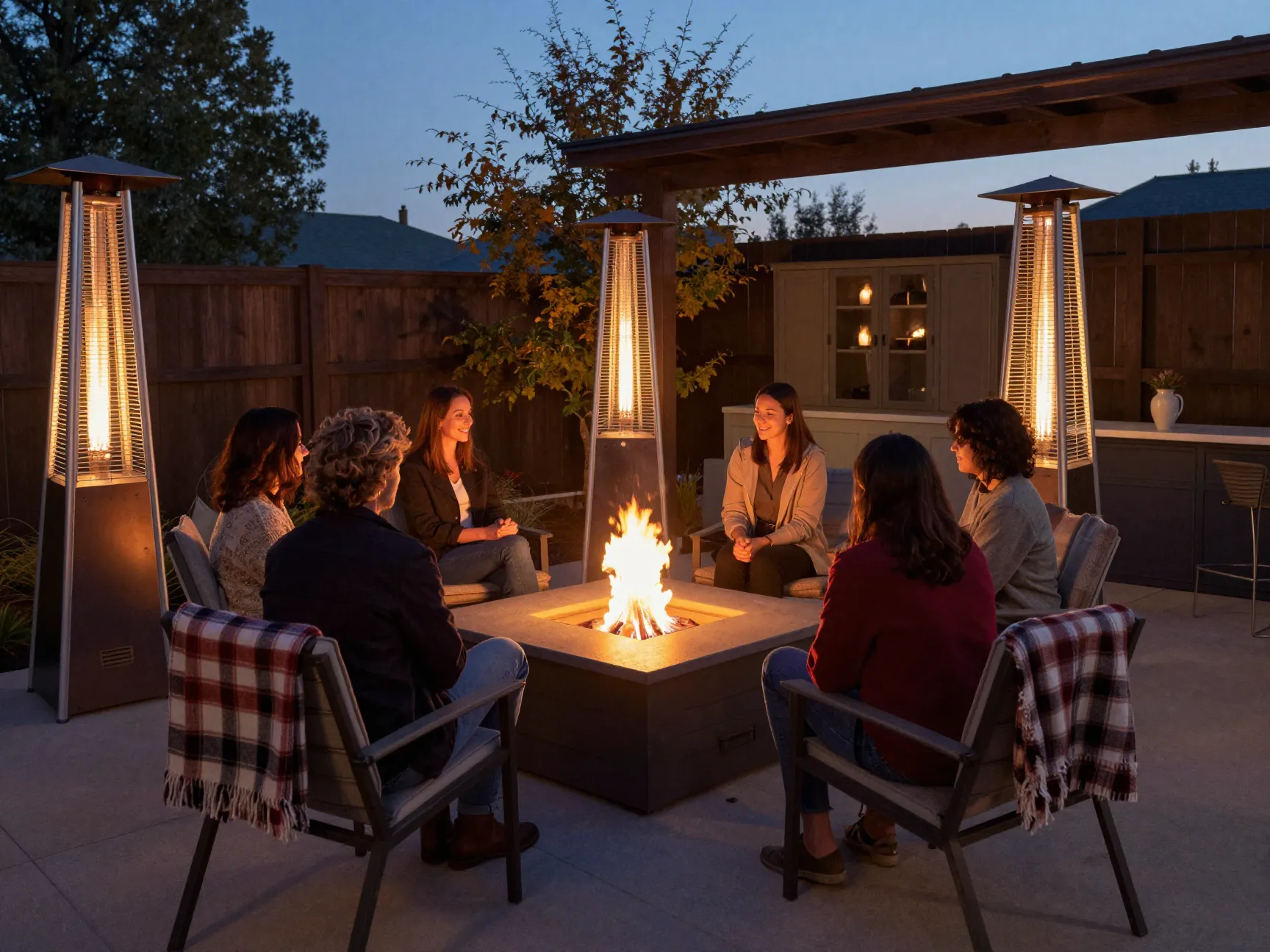
The most sophisticated patio decorating idea is also the most practical: design for multiple seasons from the start. A patio that is only usable three months of the year represents a significant underutilization of space and investment.
Strategies for extending patio season:
- Outdoor heating: Propane or natural gas patio heaters, electric infrared heaters, or a built-in fire pit extend comfortable use well into autumn and even winter in mild climates.
- Weather-resistant storage: A deck box or outdoor storage cabinet keeps cushions and accessories protected during off-season months and makes seasonal transitions easy.
- Windbreaks: Lattice panels, outdoor curtains on a pergola, or dense plantings on the windward side reduce wind chill significantly.
- Seasonal decor swaps: Keep the furniture and structure consistent year-round but swap textiles, plants, and accessories seasonally. Summer linen pillows become autumn plaid throws; summer annuals become ornamental kale and mums.
In 2026, outdoor living season extension is one of the fastest-growing categories in home improvement retail, driven partly by the continued popularity of remote work and the desire to maximize every square foot of living space.
Bringing It All Together: How the 9 Ideas Work as a System
The reason these 9 Patio Decorating Ideas to Create Your Perfect Outdoor Oasis work is that they build on each other. Zone definition (idea 1) informs furniture placement (idea 4). Shade structure (idea 5) determines where overhead lighting (idea 3) can be anchored. Plant placement (idea 6) reinforces the privacy and boundary work established in the zoning phase.
Think of the nine ideas in three layers:
Foundation layer (structure and function):
- Idea 1: Define zones
- Idea 4: Choose durable furniture
- Idea 5: Add shade and shelter
Atmosphere layer (light and nature):
- Idea 2: Create a focal point
- Idea 3: Layer lighting
- Idea 6: Bring in plants
Personality layer (comfort and character):
- Idea 7: Layer textiles
- Idea 8: Add personal accessories
- Idea 9: Plan for year-round use
Working through the layers in order prevents the most common decorating mistake: buying beautiful accessories for a space that lacks structural logic. A gorgeous lantern collection cannot compensate for furniture that faces the wrong direction or a patio that bakes in afternoon sun with no relief.
Common Patio Decorating Mistakes to Avoid
Even with a solid plan, a few pitfalls catch many homeowners off guard.
Buying furniture too small for the space. Outdoor furniture almost always looks smaller in a showroom or on a product page than it does in context. Measure your patio and tape out the footprint of furniture on the ground before purchasing. Leave at least 36 inches of clearance for walking paths.
Ignoring scale in plant selection. A small patio overwhelmed by a single massive tree in a container loses its sense of proportion. Match plant scale to container scale to patio scale.
Underestimating lighting needs. One string of lights over a 400-square-foot patio will feel dim and incomplete. Plan for more light sources than you think you need and use dimmers where possible for flexibility.
Choosing style over weather-appropriateness. That beautiful untreated wood side table may look perfect in the catalog. After one rainy season in a humid climate, it will look like driftwood. Match materials to your specific climate, not to the aspirational lifestyle photography.
Neglecting the floor surface. Cracked concrete, weathered decking, or bare dirt undermines even the most carefully chosen furniture and accessories. Resurfacing, staining, or laying outdoor tile or pavers is often the highest-impact single investment you can make.
Conclusion
The patio is one of the most personal spaces a home can offer. It sits at the intersection of indoors and outdoors, private and social, functional and beautiful. Getting it right does not require unlimited resources, it requires a clear sequence of decisions and the willingness to treat the space with the same seriousness you would give any room inside your home.
The 9 Patio Decorating Ideas to Create Your Perfect Outdoor Oasis outlined here give you that sequence. Start with structure, zones, furniture, and shade. Build atmosphere through lighting and plants. Finish with the personal touches that make the space unmistakably yours. Then plan deliberately for the seasons beyond summer, so the investment you make pays dividends for ten months of the year rather than three.
Your actionable next steps:
- Walk your patio today and answer the three foundational questions: function, climate, and maintenance tolerance.
- Sketch a rough zone plan on paper before purchasing anything.
- Identify the one element your patio most needs right now, shade, lighting, furniture, or plants, and address that first.
- Set a realistic budget across the three layers (foundation, atmosphere, personality) so spending stays proportional.
- Revisit the space at the end of each season and make one targeted improvement.
A patio worth spending time on does not happen in a single weekend. It evolves. The best outdoor spaces I have seen were built incrementally, with intention, over two or three seasons. Start today, stay consistent, and the oasis you want is closer than you think.
References
- American Institute of Architects. (2023). Home Design Trends Survey. AIA.
- Sunset Magazine Editors. (2022). Outdoor Rooms: Ideas and Inspiration for Patios, Decks, and Gardens. Sunset Publishing.
- Relf, D., & McDaniel, A. (2020). Outdoor Living Spaces: Design and Horticulture. Virginia Cooperative Extension.
- Penick, P. (2021). The Water-Saving Garden. Ten Speed Press.
- National Association of Home Builders. (2023). What Home Buyers Really Want. NAHB Research Center.