9 Mid Century Modern Living Room Moodboard Ideas for Retro Charm
Fewer than 15% of homeowners who attempt a mid century modern redesign feel confident about their color and furniture choices before buying a single piece, and that hesitation costs both time and money. [8] The solution that professional interior designers rely on is the moodboard: a curated visual plan that lets you test combinations of wood tones, accent colors, silhouettes, and lighting before committing to anything permanent. This guide walks through 9 Mid Century Modern Living Room Moodboard Ideas for Retro Charm so you can approach your own space with the same clarity a seasoned designer brings to every project.
Disclosure: This post contains affiliate links. As an Amazon Associate, we earn from qualifying purchases, and at no extra cost to you.
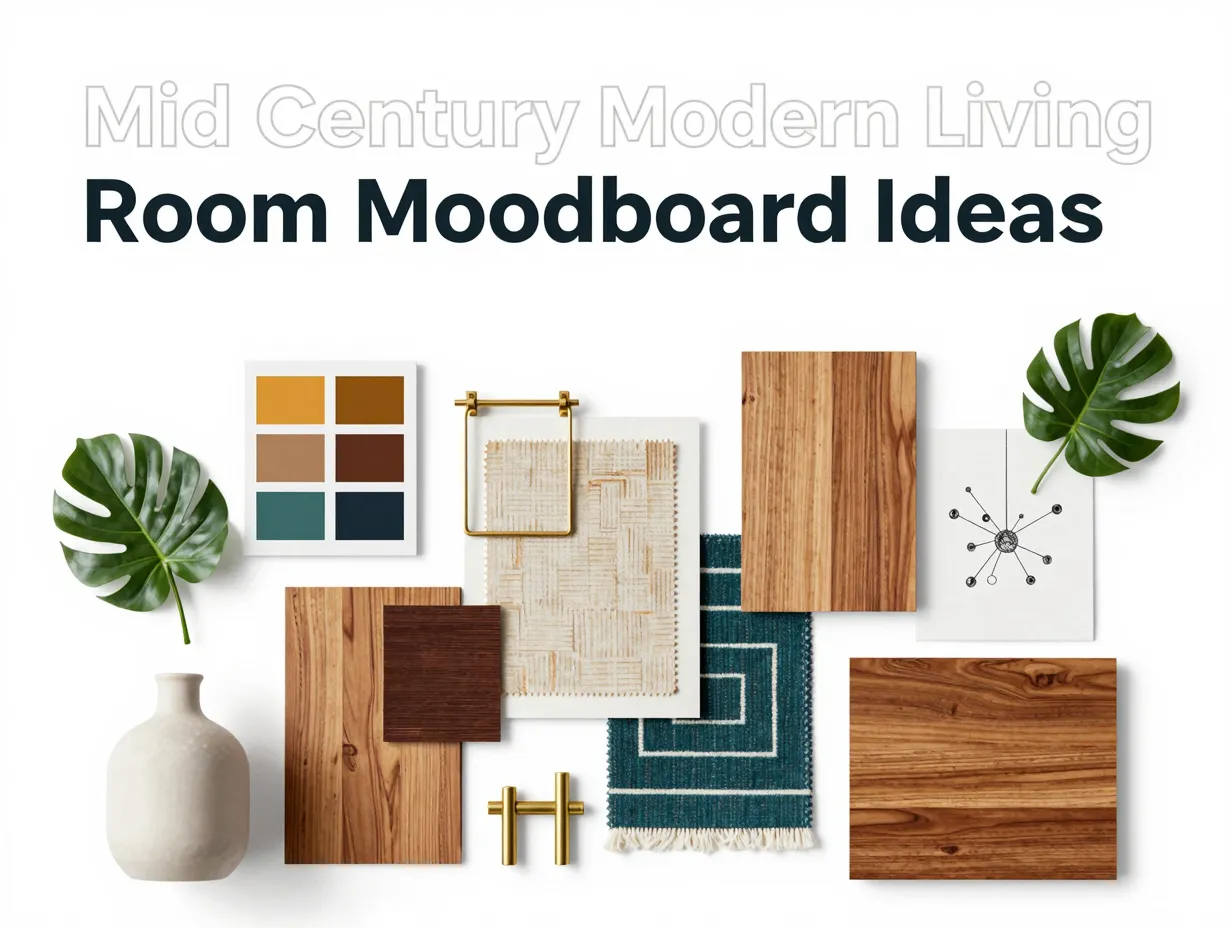
Whether you are starting from scratch or refreshing an existing room, these nine moodboard concepts cover the full spectrum of the style, from bold mustard-and-walnut drama to soft, nature-inspired calm. Each idea is grounded in current 2026 design thinking and backed by real-world guidance from interior design experts and communities.
Key Takeaways
- A moodboard lets you test wood tones, accent colors, and furniture silhouettes before spending money on real pieces.
- The classic mid century modern formula is warm wood plus a neutral base, then two or three retro accent colors repeated across pillows, art, and small objects. [4]
- An 80/20 ratio of vintage-inspired to modern elements keeps the look sophisticated rather than theme-heavy. [5]
- Statement lighting, sputnik pendants, starburst chandeliers, curved floor lamps, is one of the fastest ways to signal the style. [1] [2]
- Bold colors work best introduced through soft furnishings and art rather than full wall coverage, especially when exploring ideas at the moodboard stage. [8]
What Is a Mid Century Modern Moodboard and Why You Need One
A moodboard is a single visual document, digital or physical, that collects paint chips, fabric swatches, furniture silhouettes, lighting references, and material samples into one cohesive picture. For mid century modern living rooms specifically, it is an essential planning tool because the style depends on precise balance: too much retro and the room feels like a museum; too little and the character disappears entirely. [3]
When I first tackled a mid century refresh in my own living room, I skipped the moodboard step and bought a walnut credenza before settling on a wall color. The result was three rounds of paint sampling and one returned lamp. A moodboard would have saved weeks. The process of building one forces you to answer the hard questions, which wood tone anchors the room, which accent color repeats across at least two or three spots, and which single vintage statement piece earns its place, before any money changes hands. [3] [5]
Mid century modern as a design language is defined by slim tapered legs, clean lines softened by organic curves, and a strong indoor-outdoor connection through large windows and plants. [4] Its color palette runs from warm neutrals (off-white, stone, muted grey-green) to bold retro accents (mustard, teal, olive, burnt orange) that are slightly softer than the original 1960s hues, giving the look a contemporary edge while preserving retro charm. [4] A well-built moodboard captures all of these elements in relationship to each other before a single piece of furniture is moved.
9 Mid Century Modern Living Room Moodboard Ideas for Retro Charm
The nine concepts below are organized from foundational to adventurous. Start with the one that matches your current room conditions and comfort level, then use it as a springboard.
1. The Classic Walnut-and-Mustard Anchor
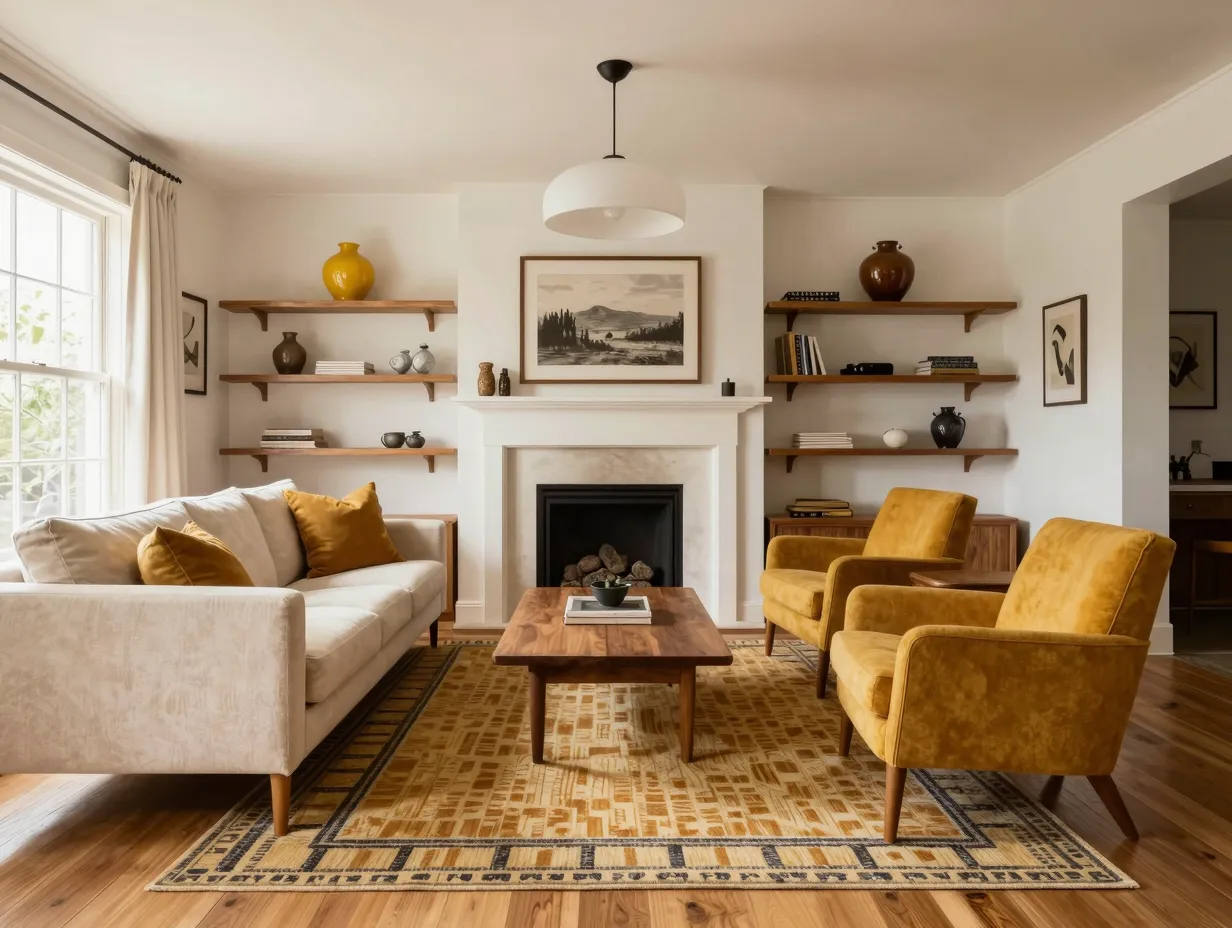
Core palette: Walnut wood, off-white walls, mustard yellow accents.
This is the entry point for most mid century modern projects, and for good reason, it works in almost every room size and light condition. The moodboard centers on a low-slung walnut-legged sofa in off-white or cream, pulled forward from the wall so it faces a clear focal point such as a fireplace or media wall. [3] Two mustard accent chairs sit at angles to the sofa, creating an open conversation triangle.
Key moodboard elements to include:
- Walnut wood veneer sample (furniture and floating shelves)
- Off-white or warm stone wall paint chip
- Mustard fabric swatch for chairs and throw pillows
- Geometric rug in ochre and charcoal
- Sputnik or globe pendant lamp reference image
The mustard accent should appear in at least three places, chairs, a pillow on the sofa, and one piece of art or a ceramic object, so the color reads as intentional rather than accidental. [4] This repetition is what separates a polished mid century modern room from a random collection of retro furniture.
2. Teal Velvet Against Wood-Paneled Walls
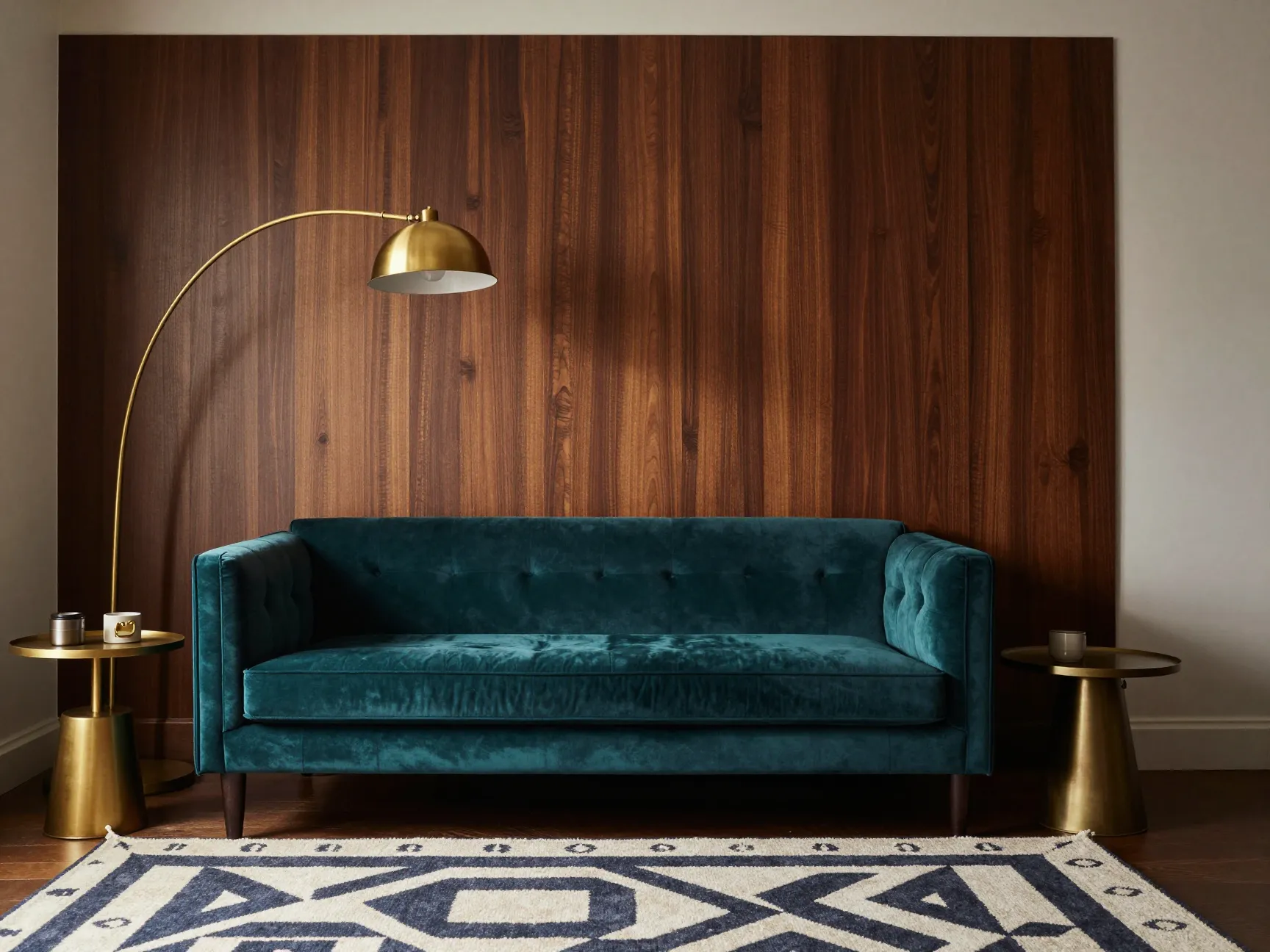
Core palette: Warm wood paneling, teal velvet seating, brass hardware.
Wood-paneled accent walls are one of the strongest signals of peak retro energy, and pairing them with a teal velvet sofa creates an immediately recognizable mid century modern atmosphere. [6] The moodboard for this concept is rich and dramatic: strip-wood cladding or walnut veneer panels on one wall, a deep teal tufted sofa as the room’s anchor, and brass or gold hardware on lighting and side tables.
| Element | Specification |
|---|---|
| Wall treatment | Walnut strip-wood cladding or veneer panels |
| Sofa color | Deep teal velvet, low profile, tapered legs |
| Accent color | Brass / warm gold hardware |
| Rug | Geometric pattern, navy and cream |
| Lighting | Globe pendant or arc floor lamp in brass |
The key discipline here is restraint on the remaining walls. Keep them off-white or a very light warm grey so the paneled wall and teal sofa carry the visual weight without the room feeling dark or heavy. [5] Brass hardware on a floor lamp, side table, and one or two decorative objects ties the warm wood tones to the cool teal in a way that feels cohesive rather than conflicted.
3. Burnt Orange and Charcoal for Bold Retro Energy
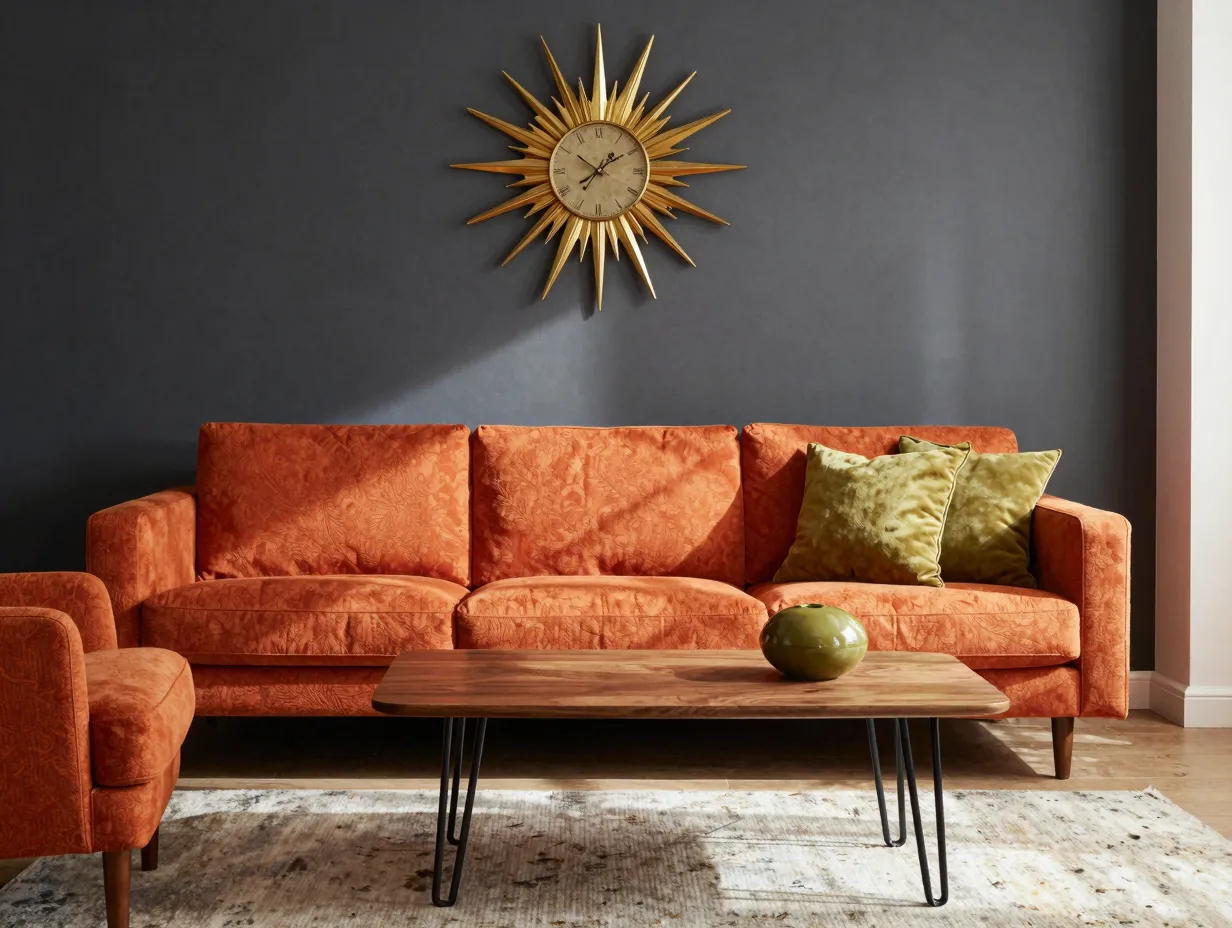
Core palette: Burnt orange seating, charcoal grey, warm walnut.
Burnt orange is one of the most distinctly mid century modern colors in existence, and placing it against a charcoal or dark grey backdrop produces a high-contrast moodboard that reads as both retro and sophisticated. [6] This combination works especially well in rooms with strong natural light, where the orange reads as warm and energizing rather than overwhelming.
The moodboard should include:
- Burnt orange fabric swatch (sofa or a pair of lounge chairs)
- Charcoal grey wall paint chip or dark upholstery reference
- Walnut coffee table with hairpin or tapered legs
- Starburst or sunburst wall clock reference
- Mustard or olive green secondary accent (pillow, small ceramic)
A note on balance: burnt orange is a dominant color. Keep it to one major upholstered piece, a sofa or two lounge chairs, and let charcoal and walnut do the heavy lifting everywhere else. [6] A sunburst clock in gold or brass on the charcoal wall is a classic finishing touch that anchors the retro reference without tipping into kitsch.
4. Earthy Greens and Natural Wood for a Calm Retro Look
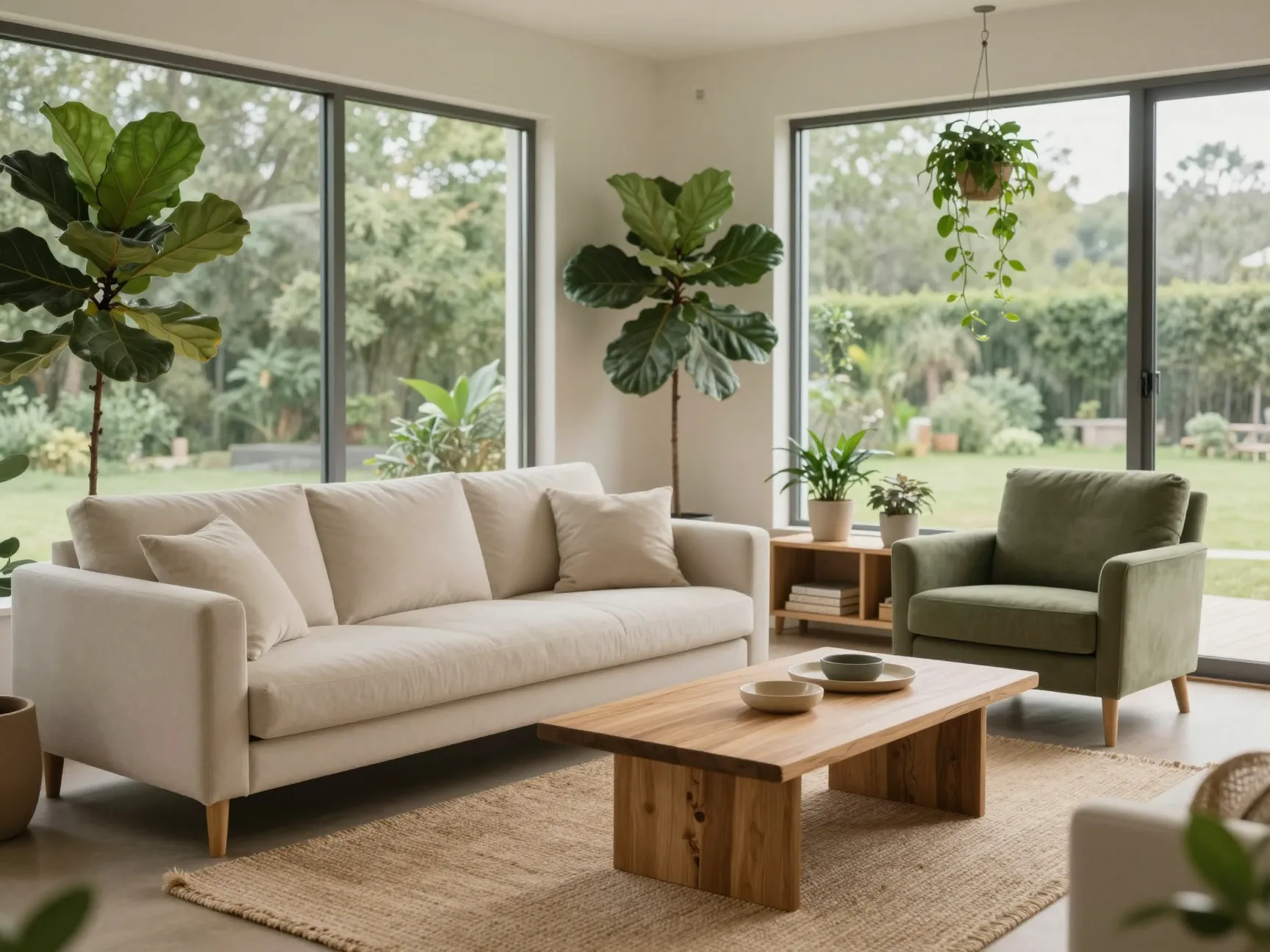
Core palette: Muted olive or sage green, natural oak or teak, warm cream.
Not every mid century modern moodboard needs to be bold. This concept draws on the style’s strong connection to nature, large windows, indoor plants, and organic materials, to create a calm, livable version of retro charm. [4] [8] The palette is grounded in earthy browns, muted greens, and soft neutrals that feel warm and inviting rather than dramatic.
The moodboard centers on a cream or oatmeal sofa with tapered oak legs, olive green accent chairs or a single statement armchair, and a jute or wool rug in natural tones. Plants are not decorative afterthoughts here, a large fiddle-leaf fig or a cluster of trailing pothos directly references the indoor-outdoor philosophy that defines the style. [4]
“The best mid century modern rooms feel like they grew organically from the landscape outside the window, the palette, the materials, and the plants all point in the same direction.”
Floating low storage in oak or teak keeps the floor visible and the room feeling light, which is essential in this quieter version of the style. [1] [2]
5. Navy Blue and Brass for a Sophisticated Retro Scheme
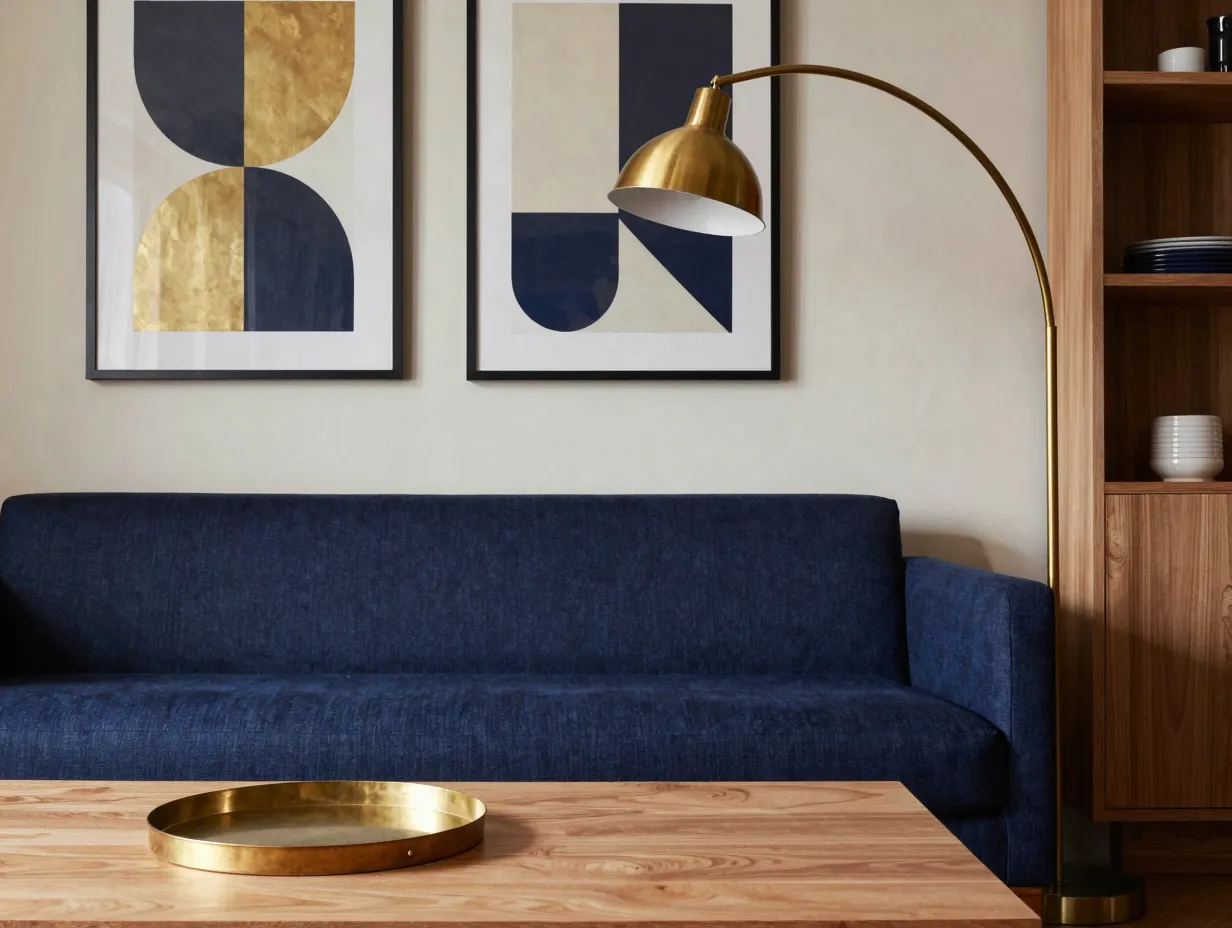
Core palette: Navy blue upholstery, brass accents, light walnut or ash wood.
Navy blue is a mid century modern color that often gets overlooked in favor of mustard and teal, but it produces one of the most refined and timeless moodboards in the style. [8] Paired with brass hardware and light walnut or ash wood, it creates a scheme that feels both retro and contemporary, exactly the balance that makes mid century modern so enduringly popular.
Key moodboard elements:
- Navy blue fabric swatch (sofa or two accent chairs)
- Brass floor lamp or pendant lamp reference
- Light walnut or ash wood sample (coffee table, shelving)
- Cream or warm white wall paint chip
- Abstract geometric art print in navy, brass, and cream
The brass accent should appear in at least two lighting pieces and one or two decorative objects, a vase, a tray, or a bar cart, to create the repetition that makes a moodboard feel designed rather than assembled. [3] This is one of the most versatile of the 9 Mid Century Modern Living Room Moodboard Ideas for Retro Charm because it suits both smaller apartments and larger open-plan spaces equally well.
6. The 80/20 Vintage-Modern Blend
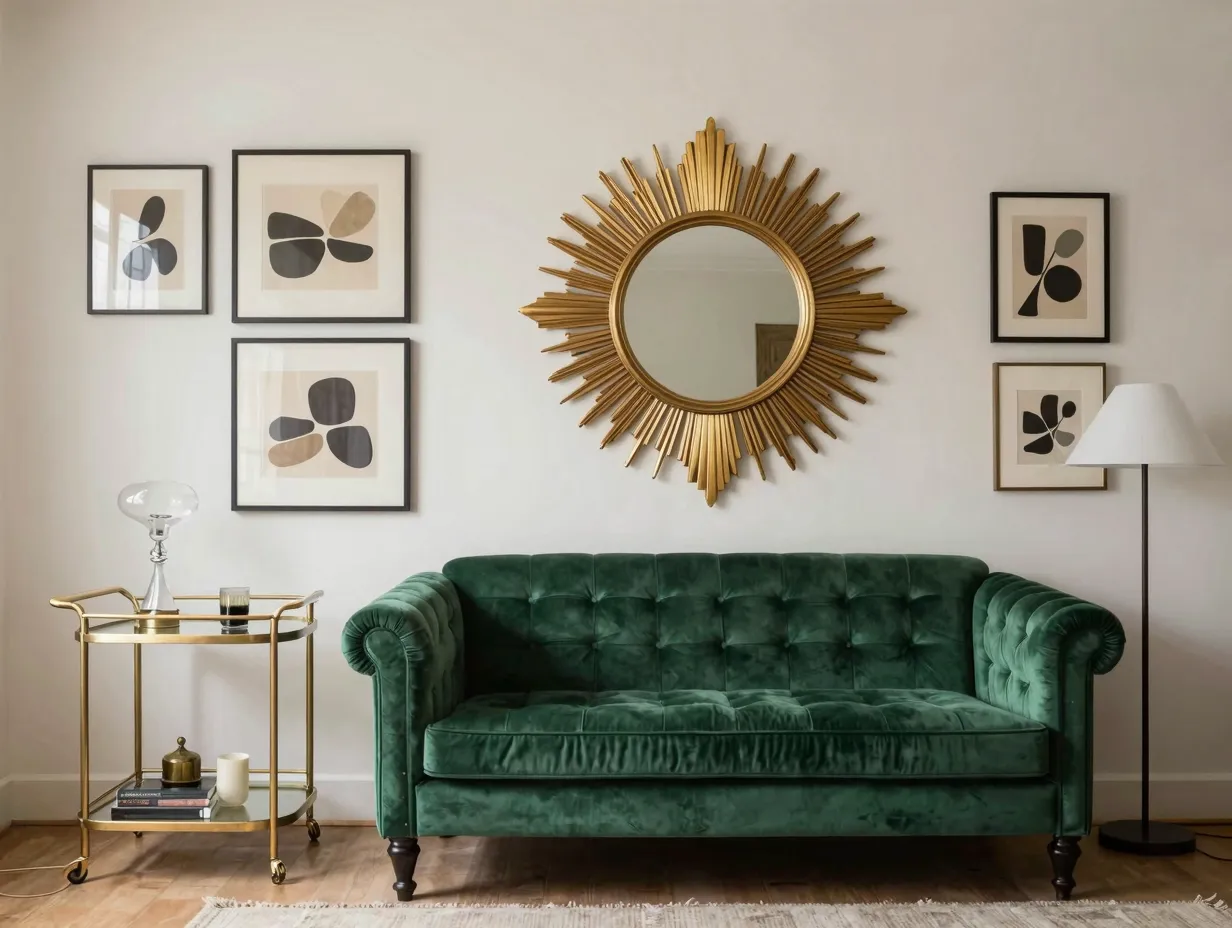
Core palette: Neutral modern base, two or three vintage anchor pieces, retro accent colors.
This moodboard concept is built around a specific ratio: 80% modern or contemporary elements providing a clean, neutral backdrop, and 20% genuine vintage or vintage-inspired pieces that carry the retro character. [5] The result is a room that feels curated and personal rather than costume-like.
The vintage anchor pieces to feature in the moodboard might include:
- A tufted leather or velvet sofa in a retro silhouette
- A bar cart in brass or chrome
- An antique or vintage-style mirror with a sunburst or starburst frame
- Murano glass or ceramic table lamps
- A gallery wall of vintage travel or abstract prints
The remaining 80% of the room, walls, floors, architectural finishes, and secondary furniture, stays deliberately neutral and modern so the vintage pieces stand out clearly. [5] This approach is particularly useful for renters or homeowners who cannot make structural changes, since the retro character comes entirely from movable objects and soft furnishings.
7. Mustard and Charcoal with Statement Lighting
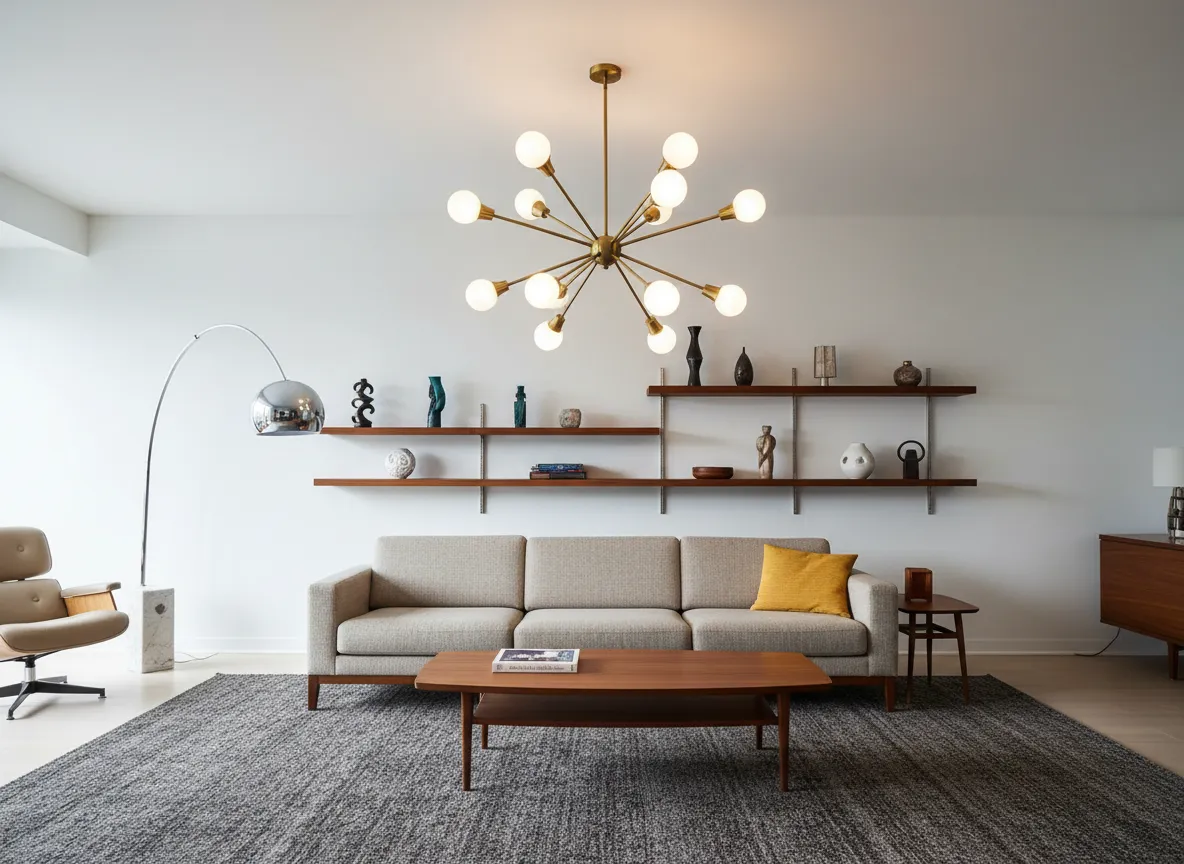
Core palette: Mustard yellow, charcoal, walnut, statement pendant or floor lamp.
Lighting is one of the fastest and most cost-effective ways to signal mid century modern style, and this moodboard puts it front and center. [1] [2] The concept pairs the classic mustard-and-charcoal color combination with a single dramatic lighting piece, a curved arc floor lamp, a sputnik chandelier, or a retro globe pendant, that becomes the room’s visual centerpiece.
| Lighting Type | Best Use Case |
|---|---|
| Sputnik / starburst chandelier | High ceilings, dining-adjacent living rooms |
| Arc floor lamp | Low-ceiling rooms, reading corners |
| Globe pendant | Open-plan kitchens and living rooms |
| Retro table lamp (ceramic base) | Side tables, console tables |
| Curved tripod floor lamp | Dark corners, beside accent chairs |
The moodboard should show the lighting piece in scale with the rest of the room, oversized pendants work best in rooms with ceilings above 2.7 meters, while arc floor lamps are ideal for standard-height ceilings. [2] Mustard pillows and a charcoal rug anchor the color story, while a walnut coffee table and floating shelves provide the wood warmth the style requires. [1]
8. Soft Neutrals with Retro Pops of Color Through Art and Accessories
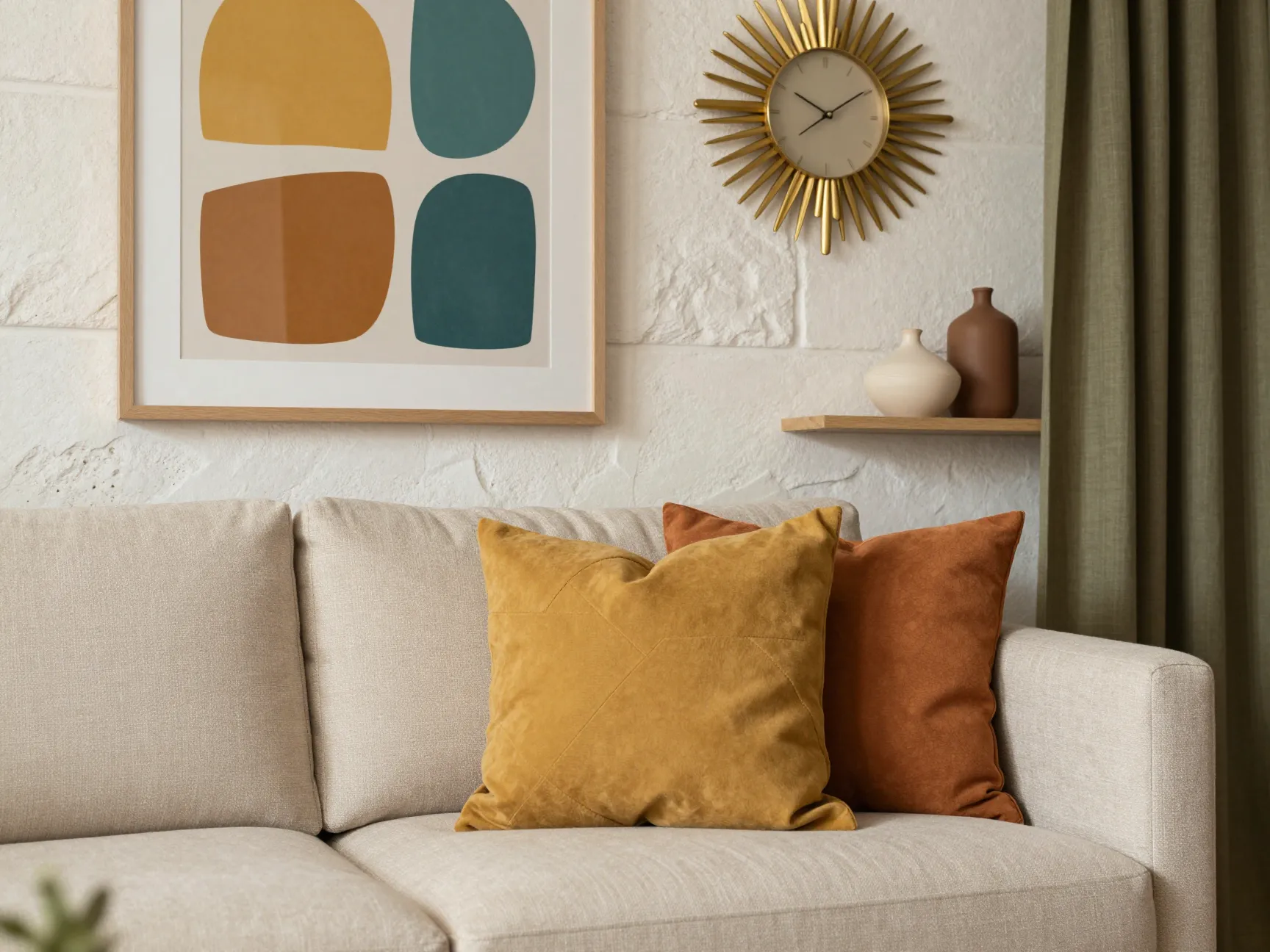
Core palette: Warm white or stone walls, neutral upholstery, bold retro accents in art and accessories only.
This moodboard is designed for homeowners who love the mid century modern look but feel cautious about committing to bold wall colors or brightly upholstered furniture. [8] The strategy is to keep all large surfaces, walls, sofa, rug, in warm neutrals, then introduce retro color through art, pillows, curtains, and small objects that can be changed easily.
The moodboard elements that carry the retro character here are:
- Abstract art prints in mustard, teal, or burnt orange
- Throw pillows in retro geometric patterns
- A sunburst or starburst wall clock in gold or brass
- Ceramic objects in earthy retro tones on floating shelves
- Curtains in a muted olive or mustard linen
This approach aligns perfectly with the moodboard exploration process itself: by testing bold colors in small doses through accessories before committing to paint or upholstery, you build confidence in the palette gradually. [8] It is also one of the most budget-friendly of the 9 Mid Century Modern Living Room Moodboard Ideas for Retro Charm, since accessories are far less expensive to swap than sofas or wall paint.
9. The Full Retro Maximalist Moodboard
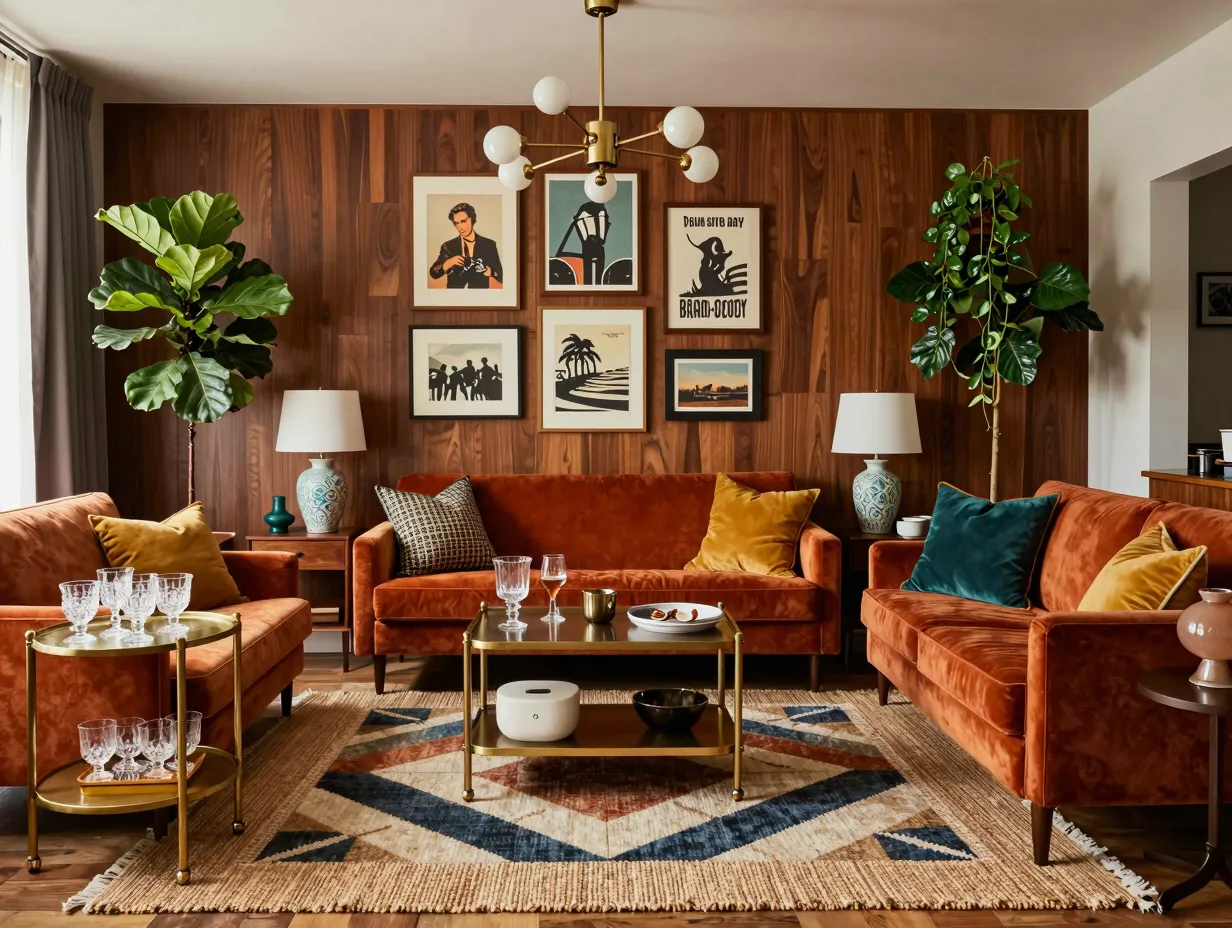
Core palette: Wood paneling, bold upholstery, gallery wall, statement lighting, layered textiles.
This final concept is for those who want to lean fully into retro charm without apology. It combines multiple elements from the previous eight moodboards into a layered, maximalist scheme that is still disciplined enough to feel designed rather than chaotic. [6] [5]
The anchoring principle is the same as always, one dominant wood tone, one neutral base, and accent colors repeated in three or more places, but the maximalist version adds layers: a gallery wall of vintage prints, a bar cart styled with retro glassware, layered rugs, and multiple lighting sources working together. [3]
Key disciplines to maintain even in a maximalist scheme:
- Stick to one dominant wood tone throughout (walnut, teak, or oak, not all three). [3]
- Repeat each accent color at least three times across the room.
- Keep the floor as clear as possible to maintain the visual lightness that defines mid century modern. [1]
- Use plants generously, they are both authentic to the style and effective at softening the visual density of a maximalist arrangement. [4]
The maximalist moodboard is the most ambitious of the nine, but it is also the most rewarding when executed with discipline. It rewards careful planning at the moodboard stage more than any other approach.
How to Build Your Own Mid Century Modern Moodboard
Building a moodboard does not require expensive software. A physical pinboard, a free digital tool, or even a folder of saved images works perfectly well. The process matters more than the medium.
Step 1: Choose your anchor layout. Start with a pulled-forward sofa facing a clear focal point, fireplace, large window, or media wall, then add two supporting seats at angles to create an open, organized rhythm. [3] Sketch this layout roughly before adding any color or material decisions.
Step 2: Select your dominant wood tone. Choose one, walnut, teak, oak, or ash, and apply it consistently to the largest wood surfaces in the room (coffee table, credenza, shelving). [3] [1] Mixing wood tones is possible but requires experience; at the moodboard stage, commit to one.
Step 3: Set your wall color. Off-white, warm stone, or muted grey-green are the most reliable choices for mid century modern living rooms. [3] They recede behind the furniture and let the wood and accent colors do the work.
Step 4: Choose your accent color. Pick one primary retro accent, mustard, teal, burnt orange, olive, or navy, and plan to repeat it in two to three places: upholstery, pillows, and one piece of art or a decorative object. [4]
Step 5: Add statement lighting. Select one dominant lighting piece (sputnik pendant, arc floor lamp, or starburst chandelier) and note where it sits in the room. [2] Secondary lighting, ceramic table lamps, wall sconces, supports the main piece.
Step 6: Apply the 80/20 test. Review your moodboard and check that roughly 80% of the visual weight comes from clean, contemporary elements and 20% from distinctly vintage or retro pieces. [5] If the retro elements dominate, pull back on one or two.
Common Moodboard Mistakes to Avoid
Even experienced designers make these errors when planning mid century modern living rooms. Knowing them in advance saves significant time and money.
Mixing too many wood tones. Walnut, teak, and oak in the same room create visual noise that undermines the clean lines the style depends on. [3] Choose one and stay with it.
Ignoring scale. A sputnik chandelier that looks perfect on a moodboard can overwhelm a room with standard ceiling height. Always note dimensions when adding lighting or furniture references to a moodboard.
Overloading retro accents. A sunburst clock, a sputnik pendant, a bar cart, and a tufted velvet sofa all in the same room can tip the balance from curated to costume. [5] The 80/20 rule is a genuine discipline, not just a guideline.
Choosing accent colors that are too saturated. The 2026 approach to mid century modern uses slightly softer versions of the original 1960s hues, mustard rather than chrome yellow, burnt orange rather than fire engine orange, to keep the look contemporary rather than theatrical. [4]
Skipping the plant layer. Plants are not optional in an authentic mid century modern scheme. They reinforce the indoor-outdoor connection that is fundamental to the style and add organic softness to rooms that might otherwise feel too geometric. [4] [8]
Conclusion
The nine moodboard concepts in this guide cover the full range of mid century modern living room possibilities, from the accessible walnut-and-mustard classic to the fully layered maximalist scheme. Each one is built on the same foundational principles: one dominant wood tone, a neutral base, two or three retro accent colors repeated with intention, statement lighting, and the 80/20 balance between contemporary and vintage elements. [3] [4] [5]
Actionable next steps:
- Choose the moodboard concept from this list that most closely matches your existing room conditions and personal comfort with bold color.
- Build a physical or digital moodboard using paint chips, fabric swatches, and furniture reference images before purchasing anything.
- Apply the 80/20 test to your moodboard before finalizing it, if the retro elements feel dominant, remove one and replace it with something cleaner and more contemporary.
- Start with the accent color in a low-commitment form (a throw pillow or a small ceramic object) before investing in upholstered furniture.
- Add at least one plant to the moodboard, it will remind you to include greenery in the final room, which is one of the most cost-effective ways to complete the mid century modern look.
The moodboard is where the real design work happens. Spend time there, and the actual room will almost build itself.
References
[1] Mid Century Modern Mood Board – https://www.pinterest.com/gretchenholzgang/mid-century-modern-mood-board/
[2] Mid Century Modern Living Room – https://www.littlehouseoffour.com/2023/05/mid-century-modern-living-room.html
[3] How To Make A Mood Board For Your Mid Century – https://midinmod.blog/post/775560359774961664/how-to-make-a-mood-board-for-your-mid-century
[4] Im A New Interior Designer Building My Portfolio – https://www.reddit.com/r/interiordecorating/comments/1mpo2ep/im_a_new_interior_designer_building_my_portfolio/
[5] Mid Century Modern – https://moodboardai.com/ai/living-room/earthy-tones/mid-century-modern
[6] Midcentury Living Rooms – https://www.elledecor.com/design-decorate/room-ideas/g84/midcentury-living-rooms/
[8] Mid Century Living Room Ideas – https://mossandmain.co/mid-century-living-room-ideas/