9 Terrace Garden Ideas To Create A Green Retreat Above The City
Urban residents who garden on rooftops report measurably lower stress levels than those who do not, and a 2019 study published in the journal Landscape and Urban Planning found that access to green space in dense cities reduces cortisol levels by up to 21%. Yet millions of city dwellers look out at bare concrete terraces and assume there is nothing they can do. That assumption is wrong. These 9 terrace garden ideas to create a green retreat above the city prove that even a modest rooftop or balcony can become a thriving outdoor sanctuary, no matter the square footage or building height.
Disclosure: This post contains affiliate links. As an Amazon Associate, we earn from qualifying purchases, and at no extra cost to you.
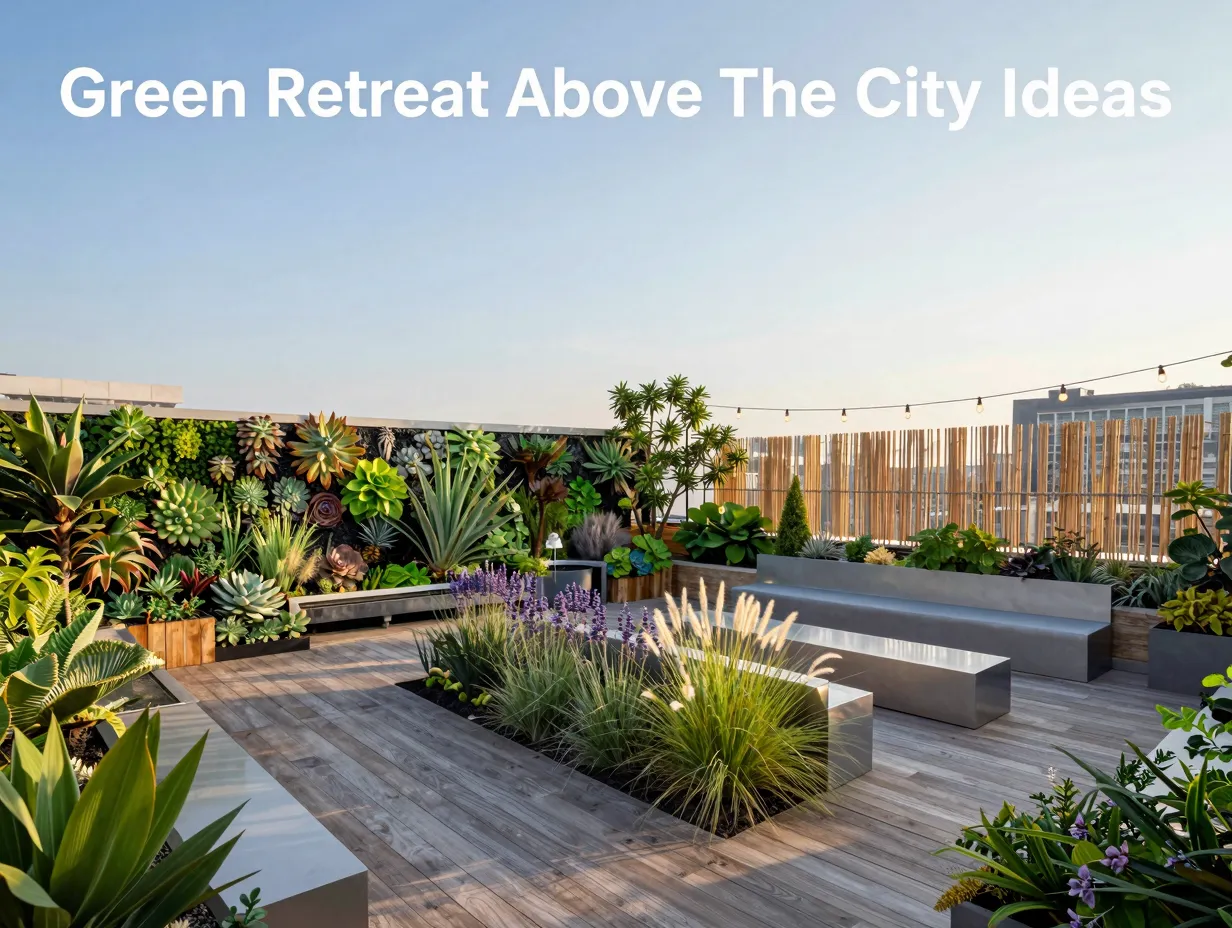
Whether you are working with a compact apartment balcony or a sprawling penthouse terrace, the principles are the same: choose the right plants, manage weight and drainage carefully, and layer greenery, furniture, and lighting with intention. I have spent time researching and testing many of these approaches, and the results consistently surprise people who thought city living meant giving up on nature.
Key Takeaways
- Vertical gardening and wall-mounted planters are the most space-efficient way to add greenery to a small terrace.
- Plant selection is critical, wind-resistant, drought-tolerant species survive and thrive in rooftop conditions far better than standard garden plants.
- Structural safety matters before aesthetics: always assess weight load and drainage before adding containers or hardscaping.
- Lighting, privacy screens, and multi-use furniture transform a terrace from a daytime space into an all-hours retreat.
- Zoning your terrace into distinct areas for dining, lounging, and gardening makes even a small space feel purposeful and generous.
The Foundation: Planning Your Rooftop Green Retreat
Before diving into the nine ideas themselves, it is worth spending a moment on the groundwork. A terrace garden is not simply a ground-level garden lifted six floors into the air. Wind speeds are higher, sun exposure is more intense, and the structural load of soil, containers, and water adds up faster than most people expect. Skipping the planning stage is the single most common reason rooftop gardens fail within their first year.
Start by consulting your building manager or a structural engineer to confirm the maximum load your terrace can bear. As a general rule, lightweight containers, perlite-amended potting mixes, and raised deck tiles distribute weight more evenly than heavy stone planters filled with dense garden soil [5]. Once you know your limits, the creative work becomes genuinely exciting.
9 Terrace Garden Ideas To Create A Green Retreat Above The City
1. Go Vertical With Wall-Mounted Planters and Climbing Plants
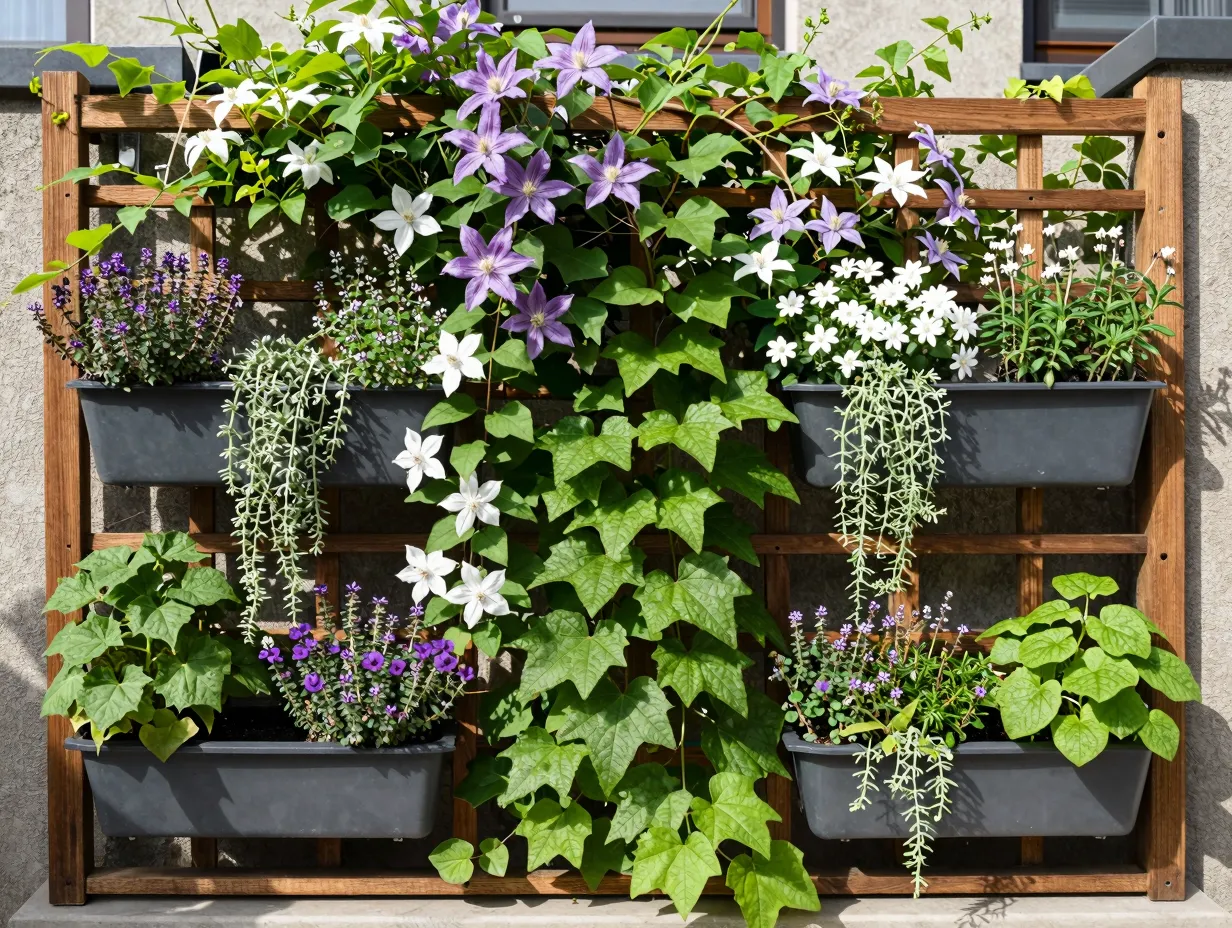
The most transformative move you can make on a small terrace is to stop thinking horizontally. Vertical gardening, using wall-mounted planters, pocket systems, trellises, and climbing plants, multiplies your growing surface without adding a single square foot of floor space [1].
Best climbing plants for rooftop conditions:
- Clematis (tolerates wind and full sun)
- Jasmine (fragrant, fast-growing, relatively lightweight)
- Virginia Creeper (drought-tolerant once established)
- Climbing roses on a sturdy trellis
A trellis fixed to a south-facing wall can support a dense green screen within one growing season. Pair it with wall-mounted modular planters filled with trailing herbs like thyme and oregano, and you create both a visual feature and a working kitchen garden. The key is anchoring everything securely, rooftop winds can dislodge poorly fixed fittings with surprising force.
2. Choose Plants That Actually Thrive Up High
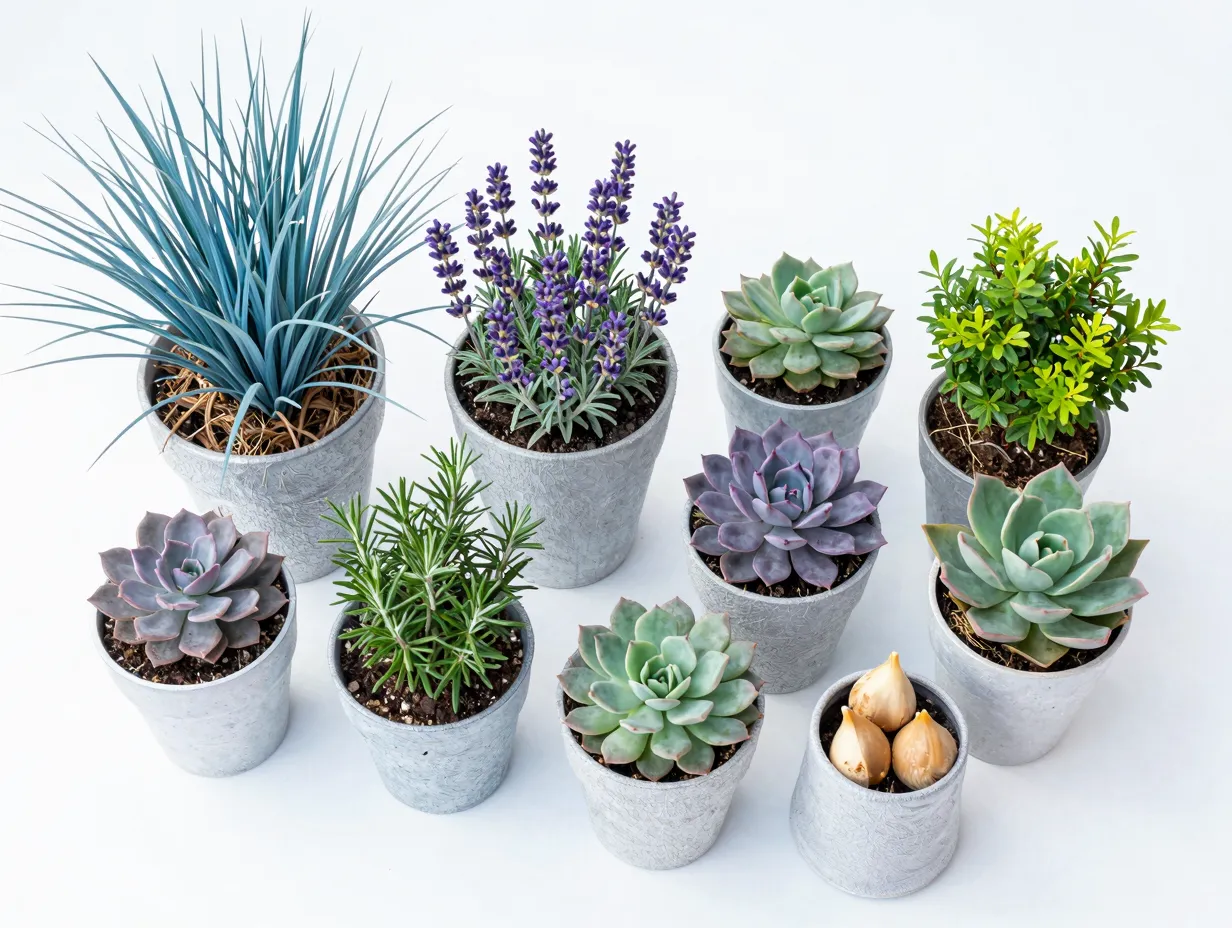
One of the most common mistakes I see is people buying beautiful nursery plants that are simply not suited to rooftop conditions. Exposed terraces experience stronger winds, faster soil drying, and more intense UV radiation than sheltered ground-level gardens. Choosing the wrong plants leads to frustration, wasted money, and a terrace that looks worse after a season than it did before.
The right plant palette makes everything easier [3]:
| Plant Type | Recommended Species | Why It Works |
|---|---|---|
| Ornamental Grasses | Festuca glauca, Stipa tenuissima | Wind-resistant, low water needs |
| Herbs | Lavender, rosemary, thyme | Drought-tolerant, aromatic |
| Succulents | Sedum, Echeveria | Minimal water, lightweight containers |
| Small Shrubs | Pittosporum, Euonymus | Structure without excessive weight |
| Bulbs | Allium, Tulipa | Seasonal color, easy to manage |
Lavender deserves special mention. It tolerates dry, exposed conditions, produces beautiful purple flowers from late spring through summer, and attracts pollinators even twelve floors above street level. I planted a row of lavender along a low terrace wall three years ago and it has required almost no intervention since.
3. Add a Water Feature for Calm and Character
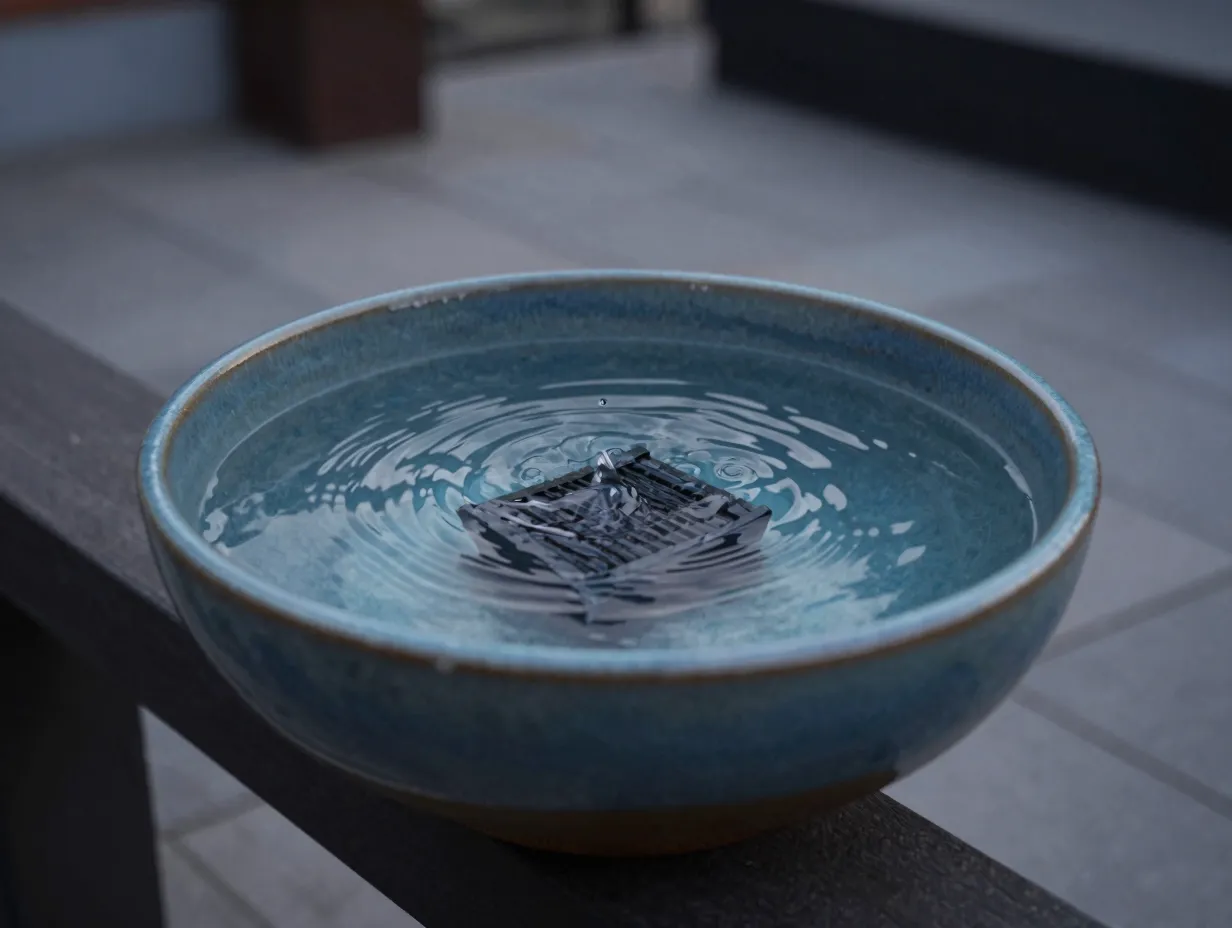
A small water feature does something no plant can do on its own: it introduces sound. The gentle sound of moving water masks traffic noise, creates a psychological sense of distance from the city below, and adds a meditative quality to the space [2].
You do not need a large pond or a complex installation. Options that work well on terraces include:
- Self-contained tabletop fountains (plug-in, no plumbing required)
- Wall-mounted water blades that recirculate via a small pump
- Glazed ceramic bowl fountains with a solar-powered pump
A word of caution: water adds significant weight. A large ceramic pot filled with water can weigh over 150 kg. Always position water features directly above a structural beam or load-bearing wall, and choose lightweight fiberglass or resin vessels over stone or ceramic where possible [5].
4. Create a Tropical Ambiance With Bold Foliage Plants
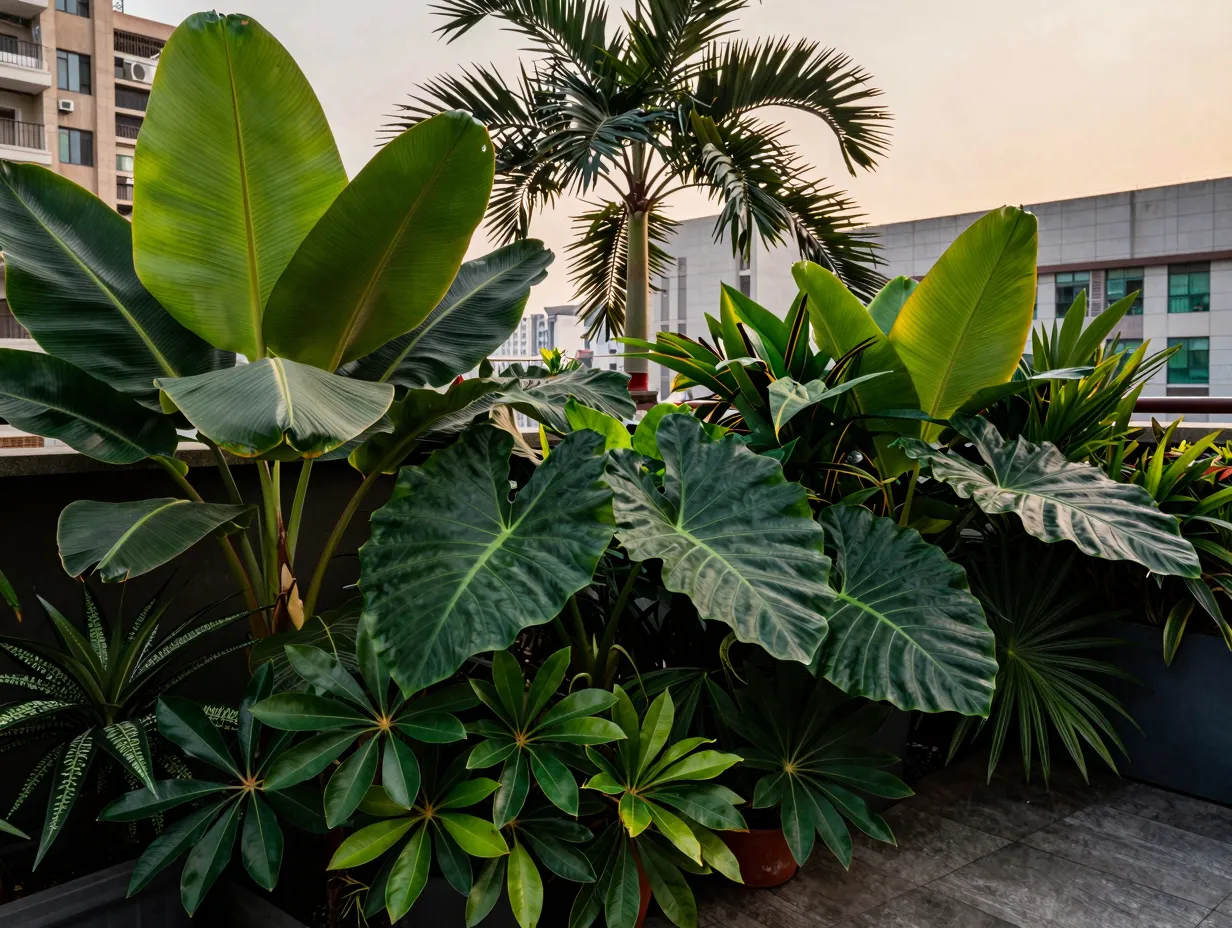
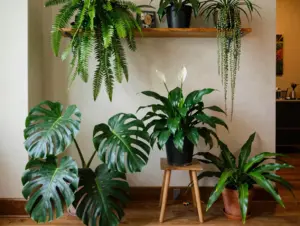
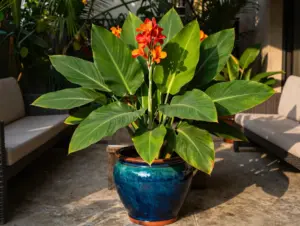
There is a particular magic to stepping onto a city terrace and feeling, for a moment, that you are somewhere entirely different. A tropical-themed terrace garden achieves exactly that. The trick is layering plants with bold, dramatic foliage rather than relying on flowers alone [4].
Recommended tropical plants for temperate climates:
- Windmill Palm (Trachycarpus fortunei): Hardy to -15°C, architectural silhouette, handles wind well
- Hardy Banana (Musa basjoo): Enormous paddle-shaped leaves, dies back in winter but re-shoots vigorously
- Taro (Colocasia esculenta): Dramatic heart-shaped leaves, thrives in containers with consistent moisture
- Fatsia japonica: Glossy, deeply lobed leaves, tolerates shade and wind
Layer these plants from tall at the back or perimeter to low and trailing at the front. The result is a sense of depth and lushness that makes a small terrace feel like a genuine escape. I visited a rooftop in central London last summer that used exactly this layering technique, standing in the middle of it, the city felt genuinely far away.
5. Prioritize Drainage and Weight Management
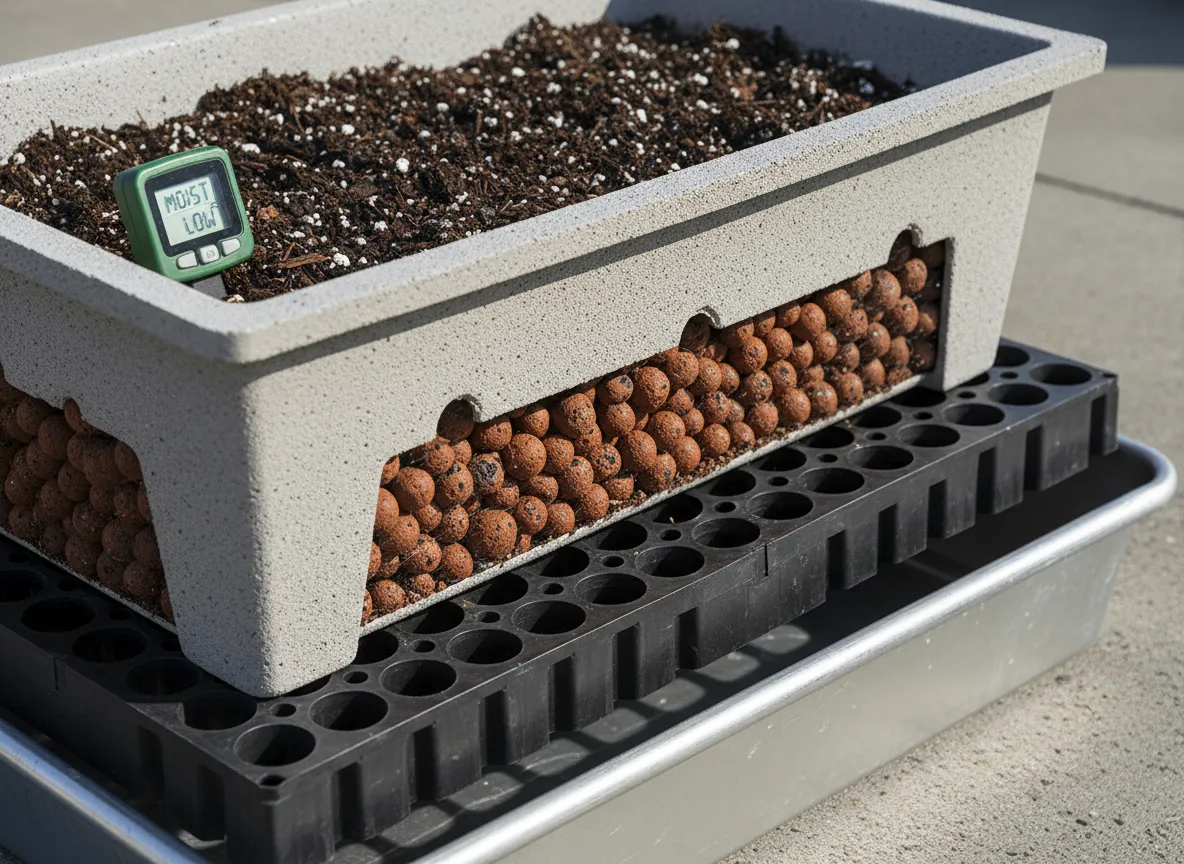
This idea is less glamorous than the others, but it is arguably the most important. Poor drainage is the leading cause of structural damage in rooftop gardens, and excess weight is a genuine safety risk. Getting both right from the start protects your investment and your building [5].
Practical drainage and weight tips:
- Use lightweight expanded clay aggregate (LECA) or perlite in the bottom third of large containers instead of gravel
- Choose fiberglass, resin, or fabric grow bags over terracotta or stone planters
- Install a drainage mat or egg-crate panel beneath container groupings to allow water to run freely
- Never allow standing water to pool on the terrace surface, it adds weight and accelerates surface degradation
- Use a moisture meter to avoid overwatering, which is the primary cause of excess weight buildup in containers
A well-draining terrace garden is also a healthier garden. Most rooftop-suitable plants, lavender, ornamental grasses, succulents, actively dislike waterlogged roots. Good drainage serves both the structure and the plants simultaneously.
6. Furnish With Multi-Functional, Space-Saving Pieces
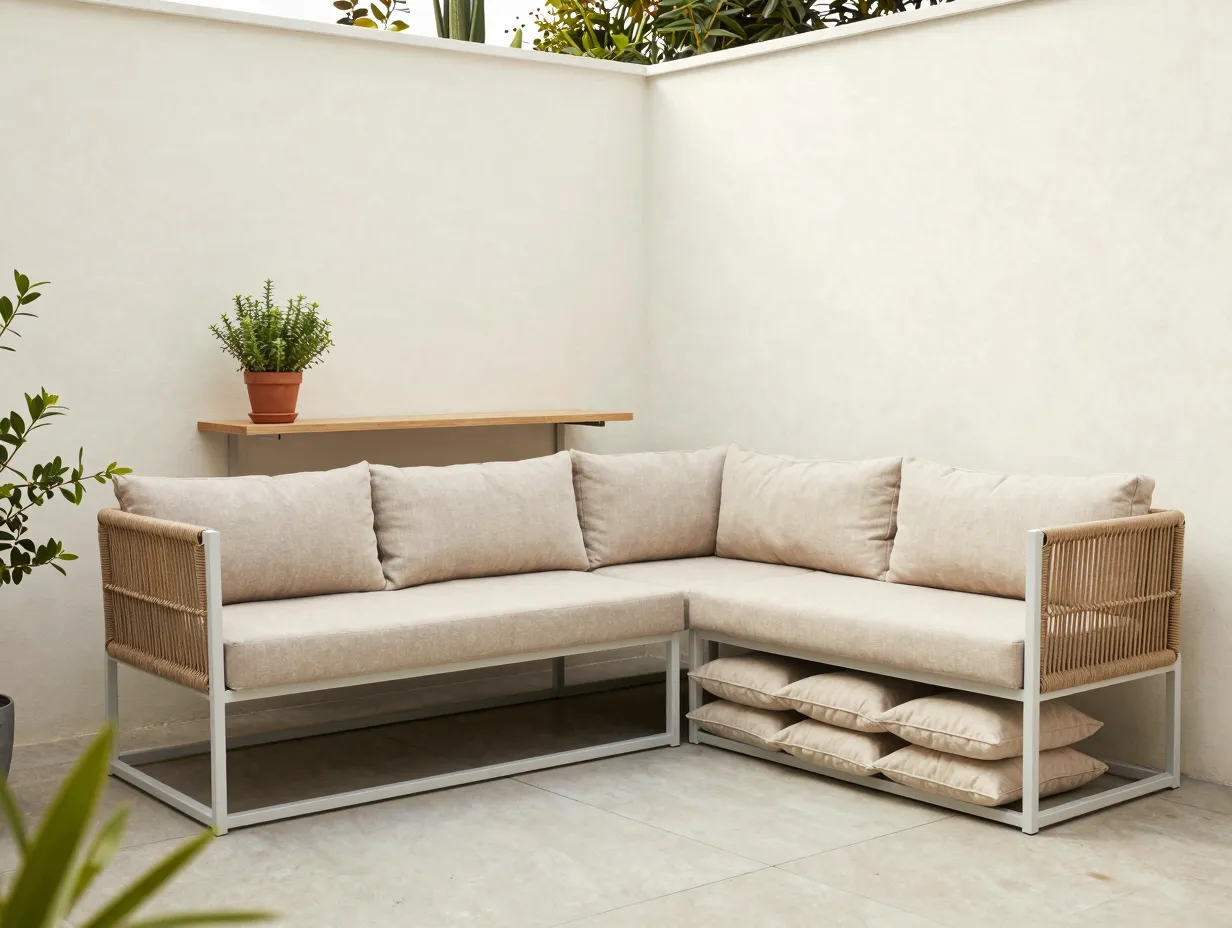
The furniture you choose shapes how the terrace feels to live in on a daily basis. Oversized, heavy furniture makes a small terrace feel cramped and difficult to navigate. The right furniture, lightweight, modular, and multi-functional, makes the same space feel open and versatile [5].
Furniture principles for terrace gardens:
- Benches with built-in storage serve as seating, footrests, and a place to stow cushions, tools, and pots
- Folding or stackable chairs free up floor space when not in use
- Modular sectional sofas can be reconfigured to suit different occasions, a dinner party versus a quiet morning coffee
- Narrow console tables against walls double as potting benches and outdoor dining surfaces
Material matters too. Powder-coated aluminium is lightweight, rust-resistant, and durable. Teak weathers beautifully but is heavy, use it sparingly. Synthetic rattan over aluminium frames offers the warmth of natural materials without the weight penalty.
“The best terrace furniture disappears into the garden. You notice the plants, the sky, the view, not the chairs.”
7. Design for Privacy Without Blocking Your View
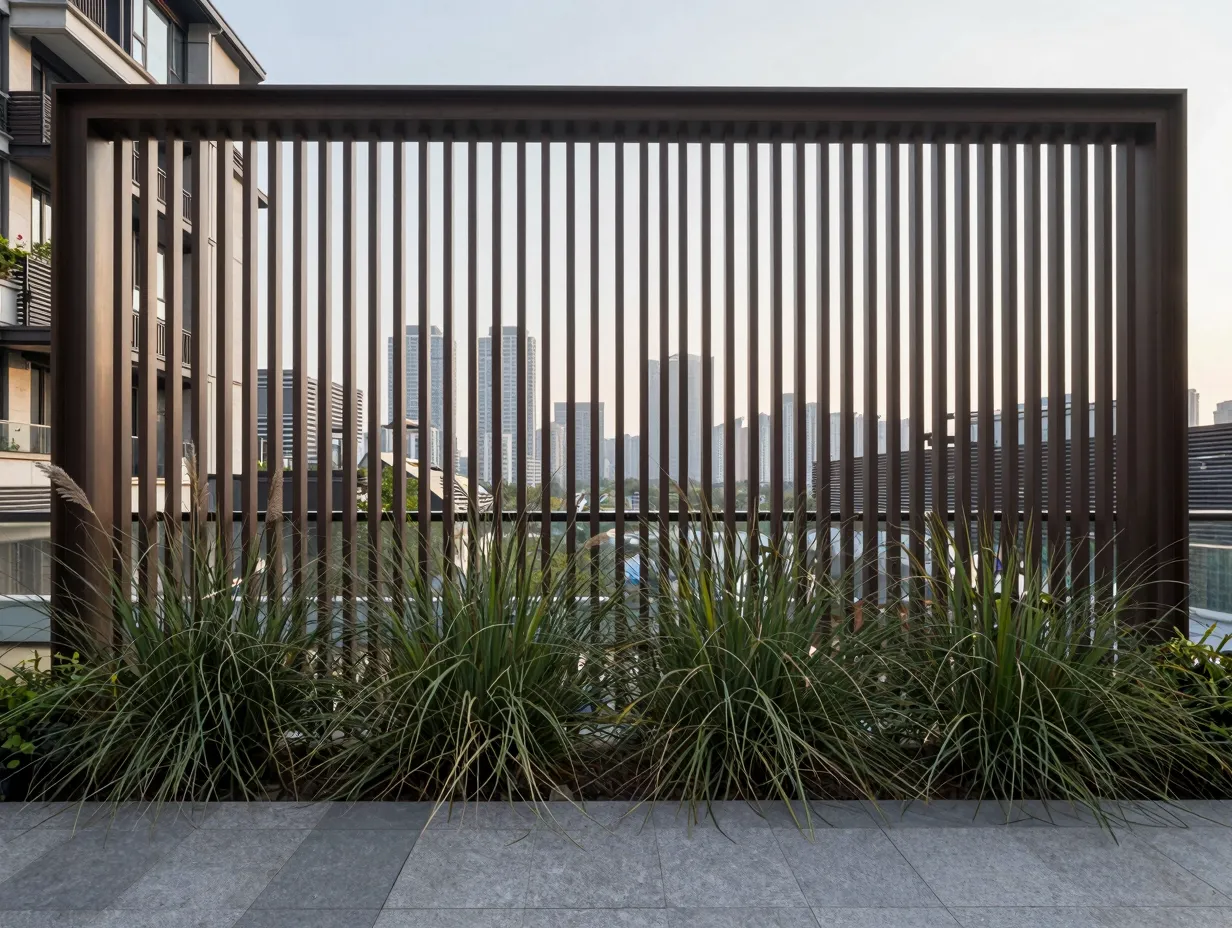
One of the most common tensions in terrace garden design is the desire for privacy versus the desire to enjoy the view. The good news is that these goals are not mutually exclusive. With careful plant placement and the right screening materials, you can create genuine seclusion without walling yourself in [5].
Effective privacy strategies:
- Tall ornamental grasses (Miscanthus sinensis, Pennisetum) create a soft, moving screen that filters rather than blocks
- Bamboo in deep containers grows quickly and provides dense screening, choose clumping varieties like Fargesia to avoid invasive spread
- Slatted timber or powder-coated steel screens provide structural privacy while allowing air circulation and partial views
- Trellis panels with climbing plants offer a living screen that improves with each growing season
The key is positioning. Place your tallest screening elements at the points where you feel most overlooked, typically from neighboring buildings at the same height or slightly above. Leave lower sections open toward the horizon to preserve the sky view that makes rooftop living special.
8. Layer Lighting for Evening Ambiance
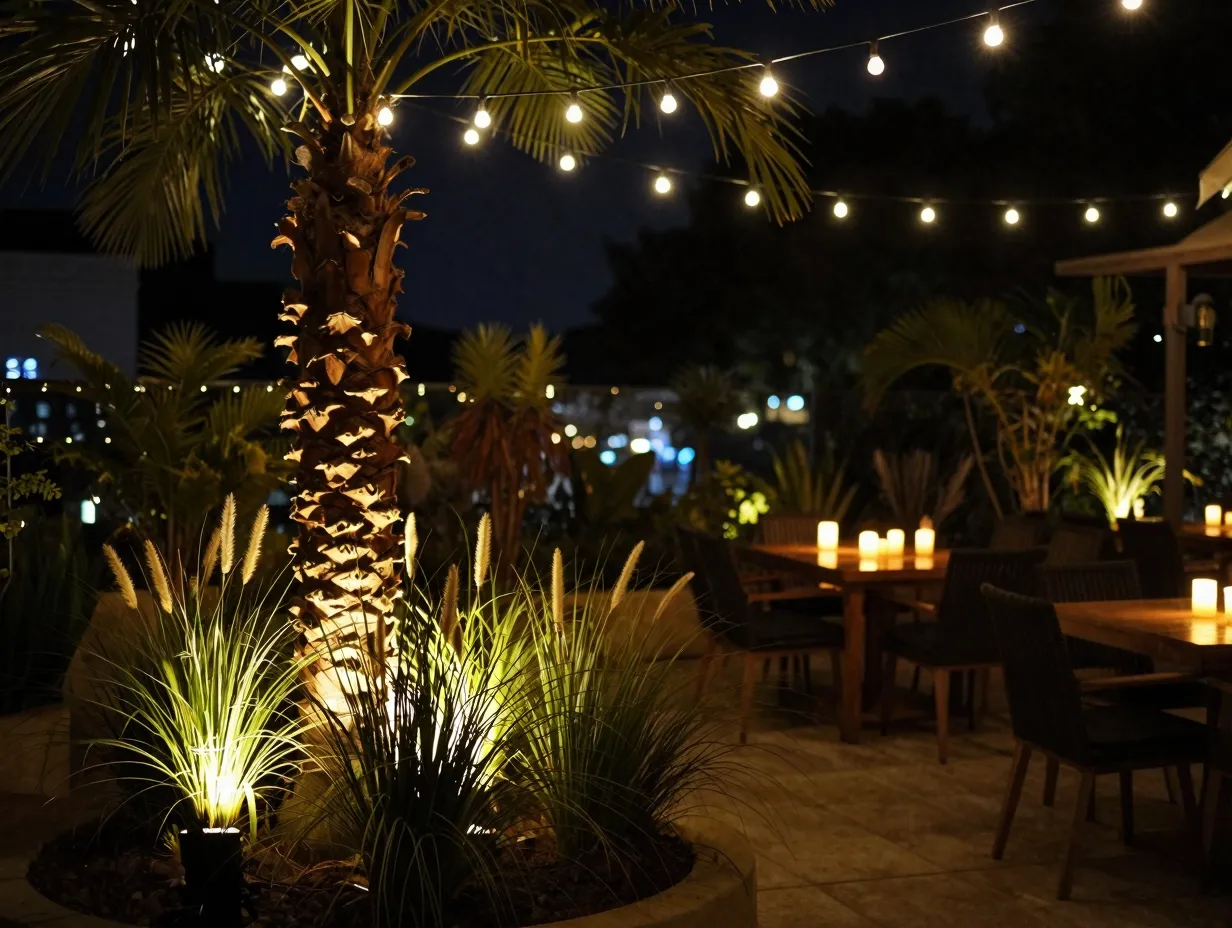
A terrace garden that looks beautiful at noon but feels cold and uninviting after dark is only doing half its job. Thoughtful lighting extends the usable hours of your outdoor space and creates an atmosphere that no amount of daytime planting can replicate [5].
A layered lighting approach:
- Overhead string lights, warm white LED festoon lights strung between anchor points create instant atmosphere and are the single highest-impact lighting addition per pound spent
- Uplighters at plant bases, small spike-mounted LED uplighters directed at architectural plants (palms, tall grasses, bamboo) create dramatic shadows and depth
- Step and path lighting, low-level lights along raised planter edges or deck steps improve safety and add a polished finish
- Candles and lanterns, for dining occasions, grouped pillar candles or storm lanterns on the table add warmth that electric lighting rarely matches
Solar-powered options have improved dramatically in recent years and work well for string lights and spike uplighters where running cables is impractical. For permanent installations, low-voltage outdoor LED systems wired by a qualified electrician offer the most reliable and energy-efficient solution.
9. Zone Your Terrace Into Multi-Use Areas
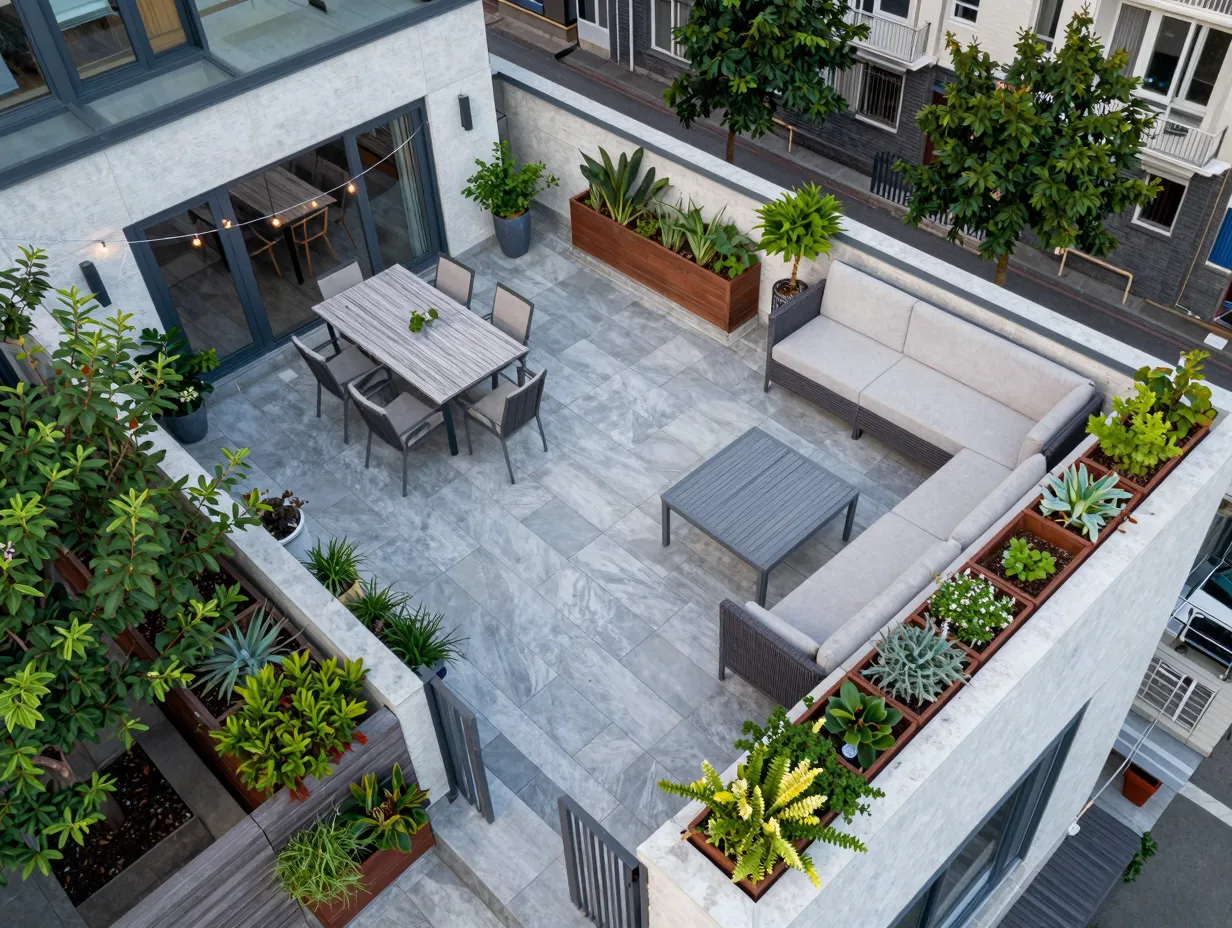
The final idea ties all the others together. A terrace garden that functions as a single undifferentiated space rarely feels as satisfying as one that is thoughtfully divided into distinct zones, even when the total area is small [6].
Common terrace zones and how to define them:
| Zone | Purpose | Defining Elements |
|---|---|---|
| Dining Area | Outdoor meals, entertaining | Table, chairs, overhead lighting, nearby herb planters |
| Lounge Area | Relaxation, reading, morning coffee | Sectional seating, side tables, soft planting around perimeter |
| Garden Area | Active growing, container veg, herbs | Raised beds or deep containers, tool storage nearby |
| Feature Zone | Visual focal point | Water feature, specimen plant, sculpture |
Zones do not need physical barriers between them. A change in flooring material, from decking to stone tiles, for example, signals a transition. A shift in planting height or density achieves the same effect. The goal is to give each part of the terrace a clear identity and purpose, so that the whole space feels considered and intentional [6].
When I redesigned a friend’s 25-square-meter terrace using this zoning approach, the result felt like three separate outdoor rooms rather than one crowded space. The dining area, the lounge corner, and the raised herb garden each had their own character, and the terrace became the most-used room in the apartment.
Bringing It All Together: A Practical Checklist
Before you begin any terrace garden project, run through this checklist to make sure you have covered the essentials:
- Confirm structural load capacity with a building professional
- Assess drainage and plan for water runoff management
- Identify the aspect (north, south, east, west) and wind exposure of your terrace
- Select plants suited to your specific rooftop conditions
- Choose lightweight containers and growing media
- Plan your zones before buying furniture or plants
- Source outdoor-rated lighting and check cable routing options
- Check building regulations or lease terms regarding permanent structures (pergolas, screens, overhead fittings)
Taking an hour to work through this list before spending a single penny on plants or furniture will save significant time, money, and frustration later.
Conclusion
These 9 terrace garden ideas to create a green retreat above the city are not theoretical concepts, they are practical, tested approaches that work in real urban conditions. The common thread running through all nine is intentionality: every decision, from plant selection to furniture choice to lighting, should serve the goal of creating a space that genuinely feels like an escape from the city below.
Your actionable next steps:
- Start with a structural assessment, confirm your terrace’s load capacity before anything else.
- Choose two or three of these nine ideas that fit your space, budget, and lifestyle, rather than attempting all nine at once.
- Begin with plants, a vertical wall planter or a row of wind-resistant ornamental grasses will transform the feel of a bare terrace faster than any other single change.
- Add lighting next, even a single string of warm LED festoon lights changes the evening character of the space entirely.
- Refine over time, the best terrace gardens evolve across seasons and years, not in a single weekend.
The city is not going anywhere. But with the right approach, your terrace can feel like it has.
References
[1] Terrace Garden Ideas – https://www.vrafortoday.org/terrace-garden-ideas/?utm_source=openai
[2] Terrace Garden Ideas – https://loknam.com/viral/terrace-garden-ideas/?utm_source=openai
[3] Rooftop Terrace Design Ideas – https://dwellmuse.com/rooftop-terrace-design-ideas/?utm_source=openai
[4] Tropical Plants For Small Spaces – https://www.homesandgardens.com/gardens/tropical-plants-for-small-spaces?utm_source=openai
[5] Terrace Garden Design Ideas For Urban And Suburban Homes – https://www.obgardendesign.com/post/terrace-garden-design-ideas-for-urban-and-suburban-homes?utm_source=openai
[6] 10 Creative Terrace Garden Design Ideas For Urban Spaces – https://greengardenguide.com/10-creative-terrace-garden-design-ideas-for-urban-spaces/?utm_source=openai