8 Flower Garden Aesthetic Ideas To Create A Visually Stunning Display
A 2026 survey from the Philadelphia Flower Show found that nearly 74 percent of home gardeners now rank visual impact as their top priority when redesigning outdoor spaces, overtaking practicality for the first time in recorded show history [7]. That single statistic tells you everything about where garden culture is heading. People are no longer content with a few random plants dotted along a fence. They want their outdoor spaces to stop visitors in their tracks.
Disclosure: This post contains affiliate links. As an Amazon Associate, we earn from qualifying purchases, and at no extra cost to you.
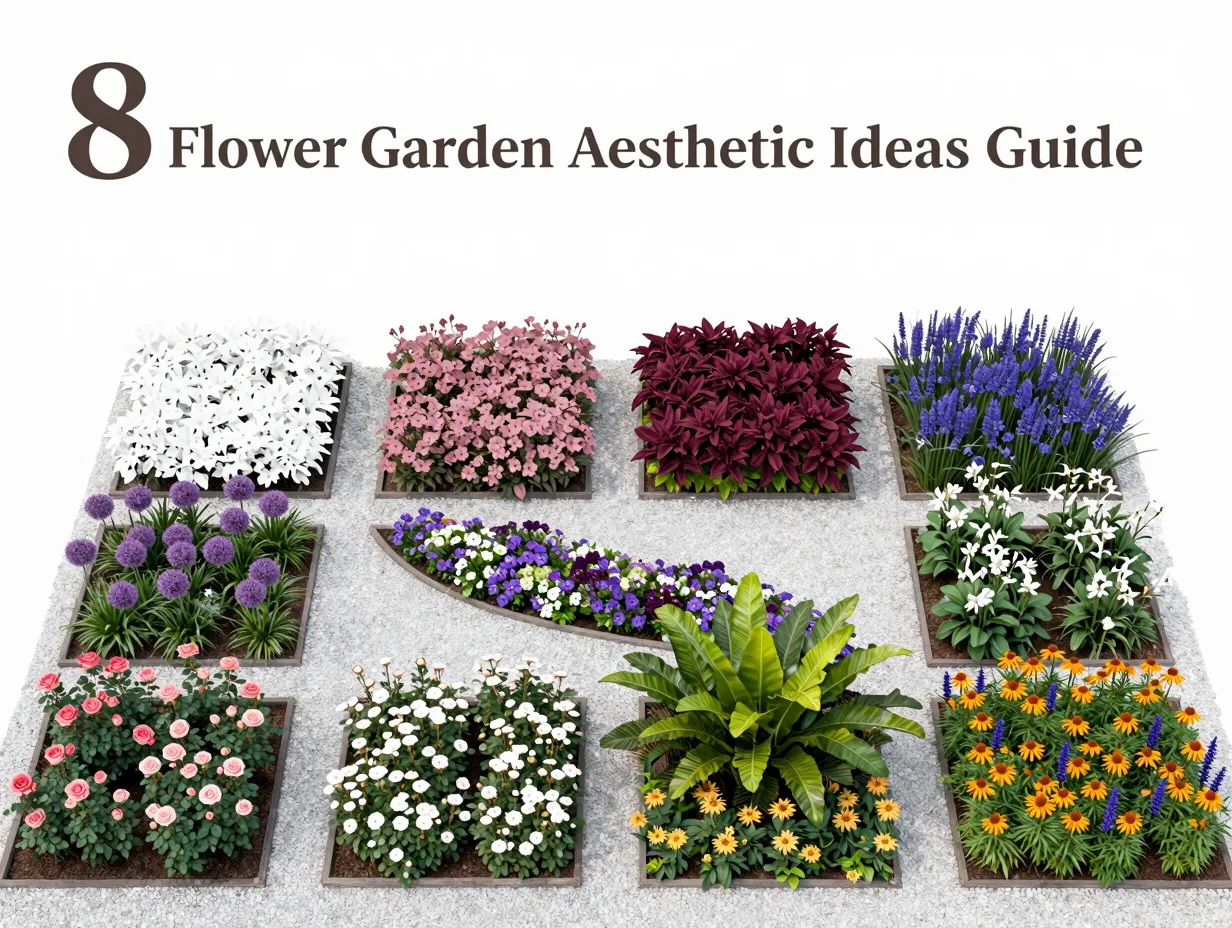
This guide covers 8 flower garden aesthetic ideas to create a visually stunning display, drawing on the most current design intelligence available in 2026. Whether you are starting from bare soil or refreshing an existing bed, each idea here is grounded in real design principles and backed by current trend research. I have personally tested several of these approaches in my own half-acre garden, and the results have been transformative.
Key Takeaways
- Color blocking and monochrome planting deliver the fastest, most dramatic visual payoff in any garden size.
- Soft “archival” palettes and jewel-tone drama represent two distinct but equally powerful aesthetic directions for 2026.
- Sculptural, massed plantings function as living garden art and require less maintenance than mixed borders.
- Water-wise and gravel gardens prove that restraint in planting can produce extraordinary texture and beauty.
- Pollinator-friendly displays are no longer a compromise, they are one of the most visually dynamic styles available today.
Why Flower Garden Aesthetics Matter More Than Ever in 2026
The word “aesthetic” gets thrown around loosely, but in garden design it carries real weight. An aesthetic is a coherent visual language, a set of choices about color, form, texture, and rhythm that work together to produce an emotional response. Without a guiding aesthetic, even the most expensive plants look like a garage sale.
According to current flower bed trend research, the gardens generating the most attention in 2026 share one common trait: intentionality [3]. Every plant, every path edge, every color combination was chosen on purpose. That deliberateness is what separates a stunning display from a pleasant one.
The 8 flower garden aesthetic ideas to create a visually stunning display outlined in this article are not passing fads. They are rooted in enduring design principles, proportion, contrast, repetition, focal points, applied through a contemporary lens.
The 8 Flower Garden Aesthetic Ideas To Create A Visually Stunning Display
1. Color-Blocked and Monochrome Flower Beds
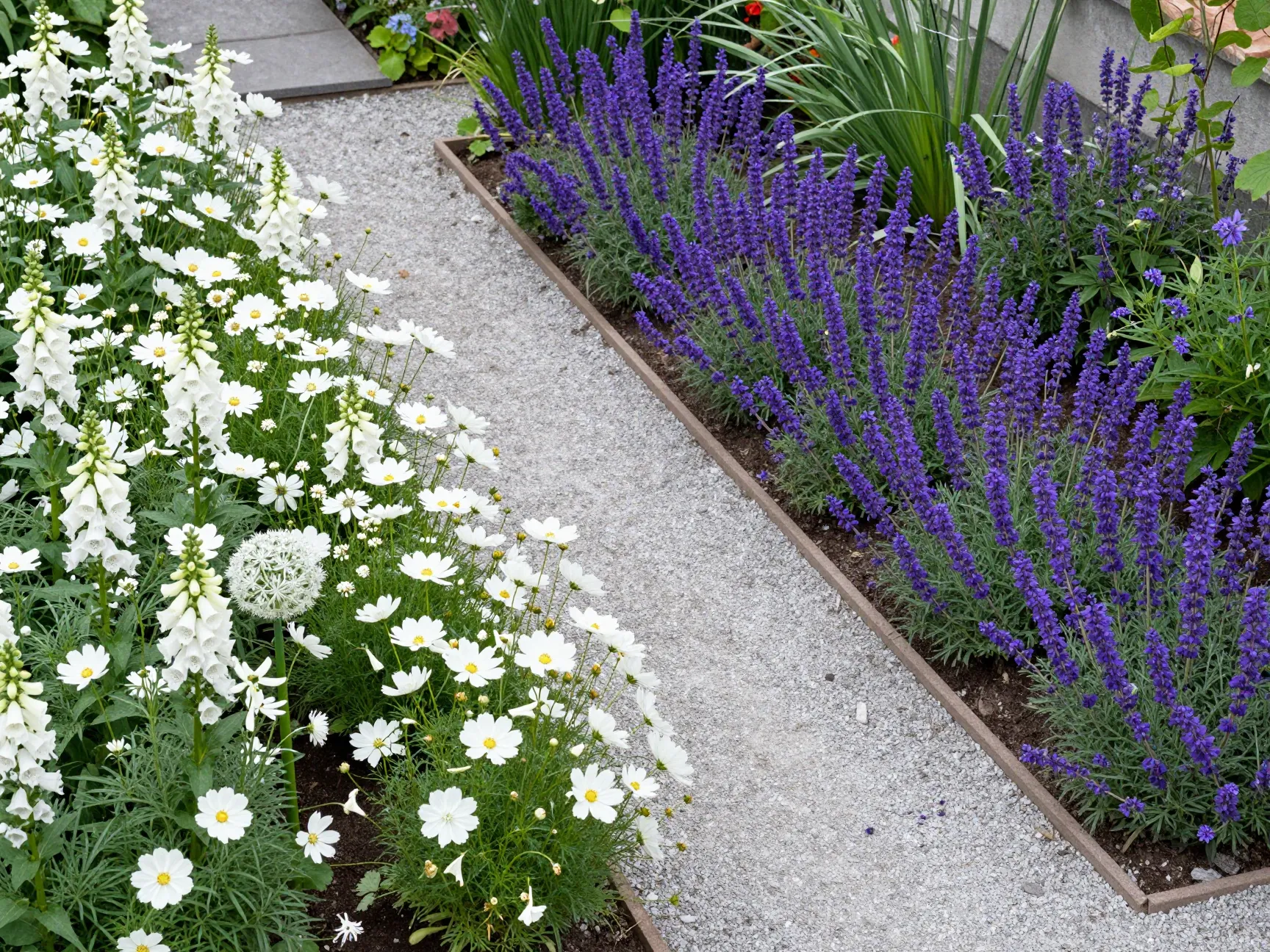
Color blocking is the single most powerful tool available to a home gardener who wants immediate, high-impact results. The concept is borrowed directly from fashion and fine art: you dedicate entire sections of a bed to one color, or one color family, rather than mixing freely.
A monochrome white garden, think white cosmos, white foxgloves, white alliums, and silver artemisia, creates a sense of calm sophistication that is almost impossible to achieve with a mixed palette. Conversely, a solid block of deep violet, catmint, salvia, allium ‘Purple Sensation’, and lavender, reads as a bold, confident statement from thirty feet away.
How to execute it well:
- Choose three to five plants in the same color family but with different flower forms (spikes, globes, daisies, plumes).
- Vary the heights within each block so the color appears to cascade rather than sit flat.
- Use a neutral edge, gravel, clipped box, or bare soil, between blocks to prevent colors from bleeding visually.
Current trend data confirms that color-blocked beds are among the most searched garden styles heading into 2026 [8]. The key is committing fully. Half-hearted color blocking looks like a mistake. Done with conviction, it looks like art.
2. Soft Archival Palettes for a Timeless, Romantic Feel
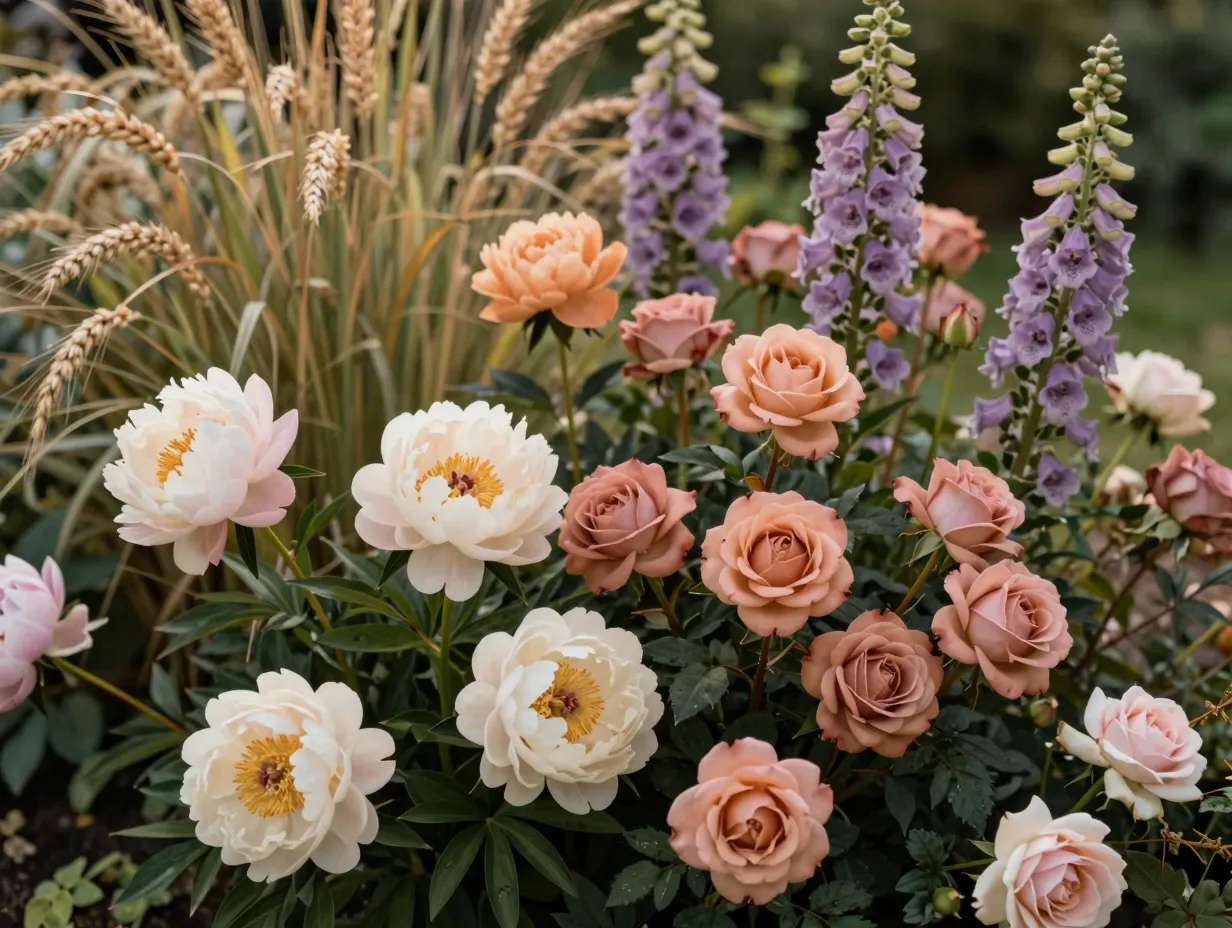
Not every gardener wants drama. Some of the most visually stunning displays I have ever seen were built entirely from what designers now call “archival” colors, dusty pinks, faded terracotta, antique ivory, sage green, and muted plum. These are the colors you find in old botanical prints and sun-bleached linen.
The archival palette trend has gained significant momentum in 2026 floral design circles, with leading forecasters noting a move away from saturated brights toward tones that feel “aged, storied, and emotionally resonant” [6]. Think peonies in blush and cream, roses in apricot and dusty rose, foxgloves in pale lavender, and ornamental grasses in wheat and bronze.
“The most enduring garden aesthetics are the ones that look as though they have always been there.”, a principle echoed across multiple 2026 design forecasts [2].
Plants that anchor an archival palette:
| Plant | Color | Height |
|---|---|---|
| Rosa ‘Distant Drums’ | Dusty mauve-apricot | 90 cm |
| Digitalis ‘Camelot Cream’ | Ivory with blush | 120 cm |
| Salvia nemorosa ‘Caradonna’ | Deep violet-purple | 60 cm |
| Stipa tenuissima | Wheat blonde | 50 cm |
| Echinacea ‘Magnus’ | Muted rose-pink | 80 cm |
The archival approach rewards patience. These gardens look their best in their second or third year, when plants have settled and the palette has knitted together naturally.
3. Jewel-Tone Drama for Maximum Visual Impact
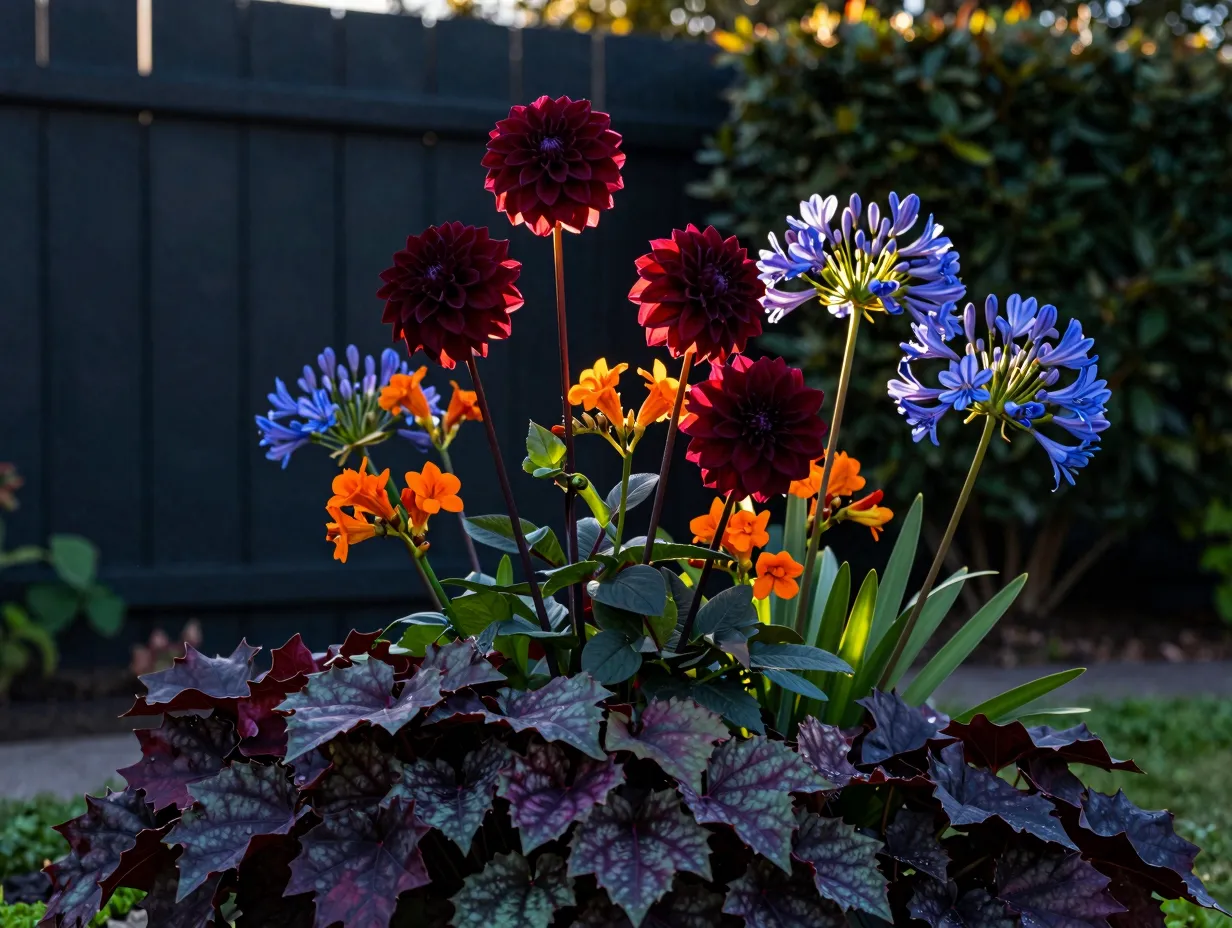
At the opposite end of the spectrum sits the jewel-tone aesthetic, and it is not for the timid. Emerald, sapphire, ruby, amethyst: these are colors that demand attention and refuse to apologize for it.
Floral trend forecasters have described 2026 as “a year of fearless design,” with jewel tones appearing prominently across both cut flower and garden planting trends [6]. The key plants driving this look include deep burgundy dahlias, electric orange crocosmia, cobalt agapanthus, magenta phlox, and near-black ‘Queen of Night’ tulips.
What makes the jewel-tone garden work is contrast. These colors need a dark, neutral backdrop, a yew hedge, a painted fence in deep charcoal, or a stone wall, to truly ignite. Against a pale fence or open sky, they can look muddy. Against darkness, they glow.
Design tips for jewel-tone beds:
- Anchor the scheme with one dominant jewel tone (say, deep burgundy) and use two accent tones (copper and cobalt) in smaller quantities.
- Introduce dark-leaved plants, Sambucus nigra ‘Black Lace’, Heuchera ‘Obsidian’, to deepen the drama.
- Keep foliage choices deliberate. Bright green leaves will dilute the effect. Reach for bronze, black, and dark green instead.
This is the aesthetic that photographs best at golden hour. If social media visibility matters to you, jewel tones are your strongest play.
4. Sculptural Planting and Massed Blooms as Living Art
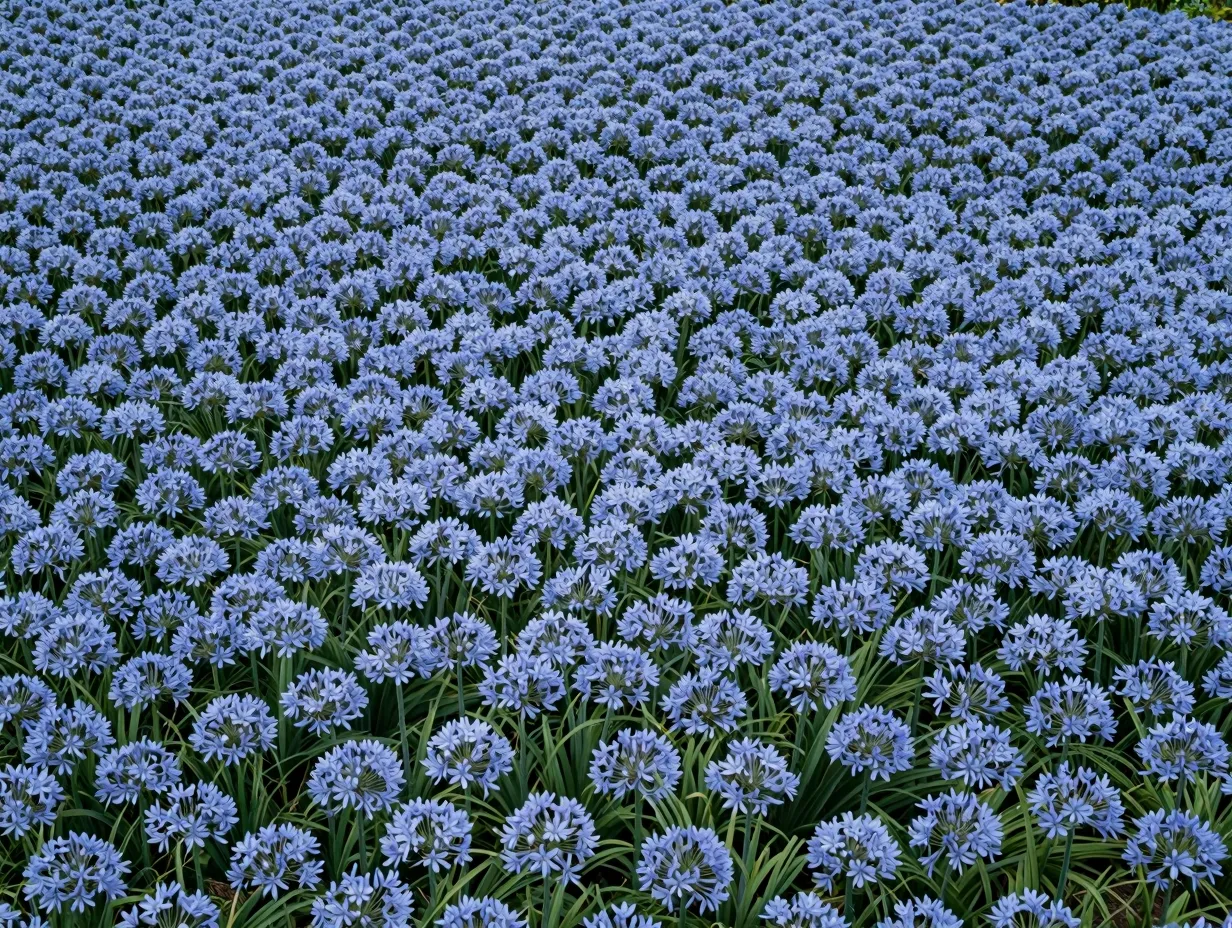
One of the most exciting shifts in contemporary garden design is the treatment of plants as sculptural objects. Rather than mixing many different species in a traditional border, sculptural planting uses large masses of a single species, or a very small number of species, to create bold, three-dimensional forms that read as garden art.
Think of a hillside planted entirely with blue agapanthus. Or a formal rectangular bed filled with nothing but white alliums at identical heights, creating a cloud of spheres. Or a sweeping river of ornamental grass punctuated at intervals by the vertical exclamation marks of Verbena bonariensis.
This approach has roots in the work of Dutch garden designer Piet Oudolf, whose influence on contemporary planting continues to grow. Current garden trend coverage notes that massed, repeated plantings are among the defining aesthetics of 2026 [5].
Why massed planting works:
- Repetition creates rhythm, and rhythm creates beauty.
- Large masses of one plant are easier to maintain than complex mixed borders.
- The visual impact scales up dramatically with garden size, the bigger the mass, the more powerful the effect.
I converted a struggling mixed border in my own garden to a mass planting of Salvia ‘Caradonna’ and Allium hollandicum two seasons ago. The result was so striking that three neighbors asked for the plan within a week of it blooming.
5. Organic, Free-Flowing Layouts Instead of Rigid Symmetry
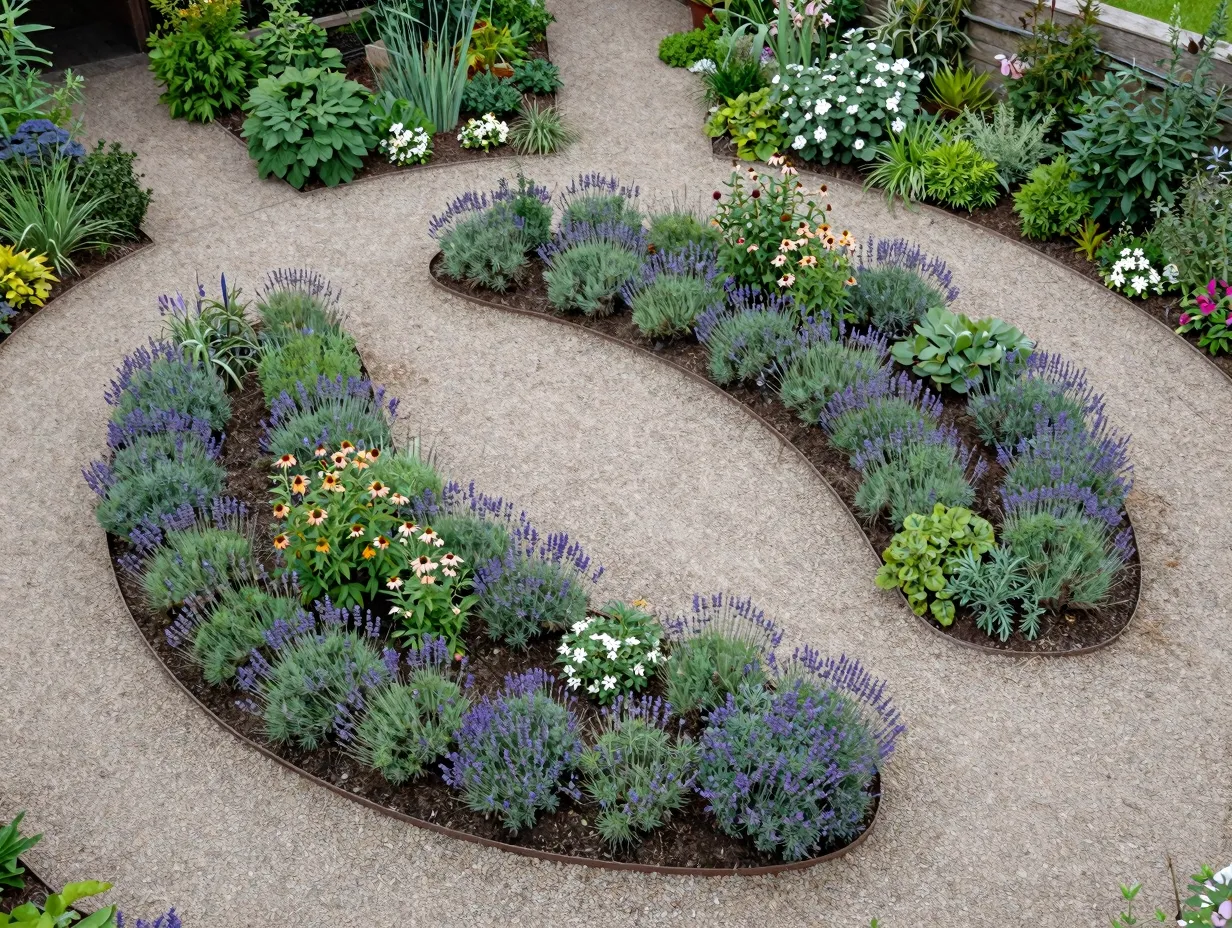
Formal, symmetrical gardens have their place, but they are not the only path to a visually stunning display. In fact, some of the most beautiful gardens I have visited deliberately reject straight lines and mirror-image planting in favor of organic, free-flowing shapes that feel discovered rather than designed.
This aesthetic draws inspiration from natural landscapes: the way wildflowers colonize a meadow, the way a stream meanders. Beds with curved, irregular edges. Planting that drifts and overlaps. Paths that wind rather than march.
Trend research confirms that organic layouts are gaining ground in 2026 as gardeners push back against the rigidity of formal design [4]. The key is that “free-flowing” does not mean “unplanned.” Every curve, every drift, every overlap should be intentional.
Principles for organic garden layouts:
- Use a garden hose to lay out bed edges before cutting, curves look more natural when drawn freehand at full scale.
- Plant in odd-numbered groups (3, 5, 7) and allow them to drift diagonally rather than in straight rows.
- Let some plants self-seed and move, the garden will find its own logic over time.
- Avoid perfectly round beds. Kidney shapes, teardrop shapes, and irregular ovals read as more natural.
The organic layout aesthetic pairs beautifully with cottage-style planting, meadow mixes, and the archival palette described earlier.
6. Heritage, Biodynamic, and Ancestral Flower Beds
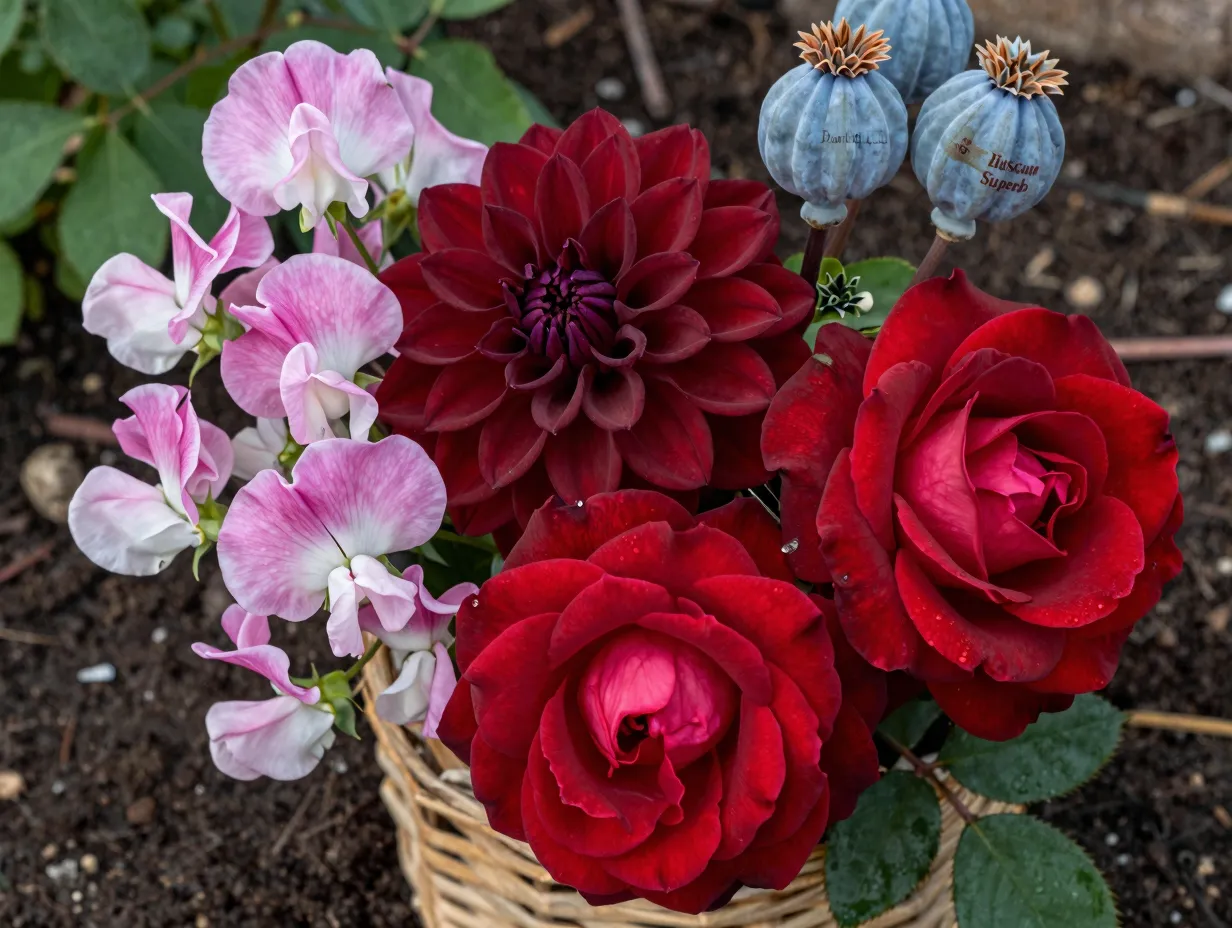
One of the most meaningful garden trends of 2026 is the return to heritage and ancestral planting, a deliberate choice to grow flowers that connect us to history, culture, and ecological memory [3]. This means seeking out old rose varieties, heirloom sweet peas, heritage dahlias, and open-pollinated annuals that have been grown for generations.
The biodynamic dimension adds another layer: growing in harmony with lunar cycles, building soil health through composting and minimal intervention, and treating the garden as a living ecosystem rather than a production system. This is not mysticism, it is a practical philosophy that produces visibly healthier, more resilient plants.
Bold claim: heritage flower beds consistently outperform modern hybrid beds in long-term visual interest, because old varieties have complexity, fragrance, petal texture, color variation, that modern breeding has often sacrificed for uniformity.
Heritage plants worth growing in 2026:
- Rosa ‘Tuscany Superb’ (Gallica, pre-1848)
- Lathyrus odoratus ‘Painted Lady’ (sweet pea, circa 1737)
- Dahlia ‘Bishop of Llandaff’ (1924, still unmatched for drama)
- Calendula ‘Indian Prince’ (rich copper-orange, open-pollinated)
- Nigella damascena ‘Miss Jekyll’ (cottage classic, self-seeds freely)
Growing heritage varieties also supports seed-saving networks and genetic diversity, a quiet act of ecological stewardship embedded in a beautiful garden.
7. Tropical, Balinese, and Chaparral-Inspired Displays for Drama
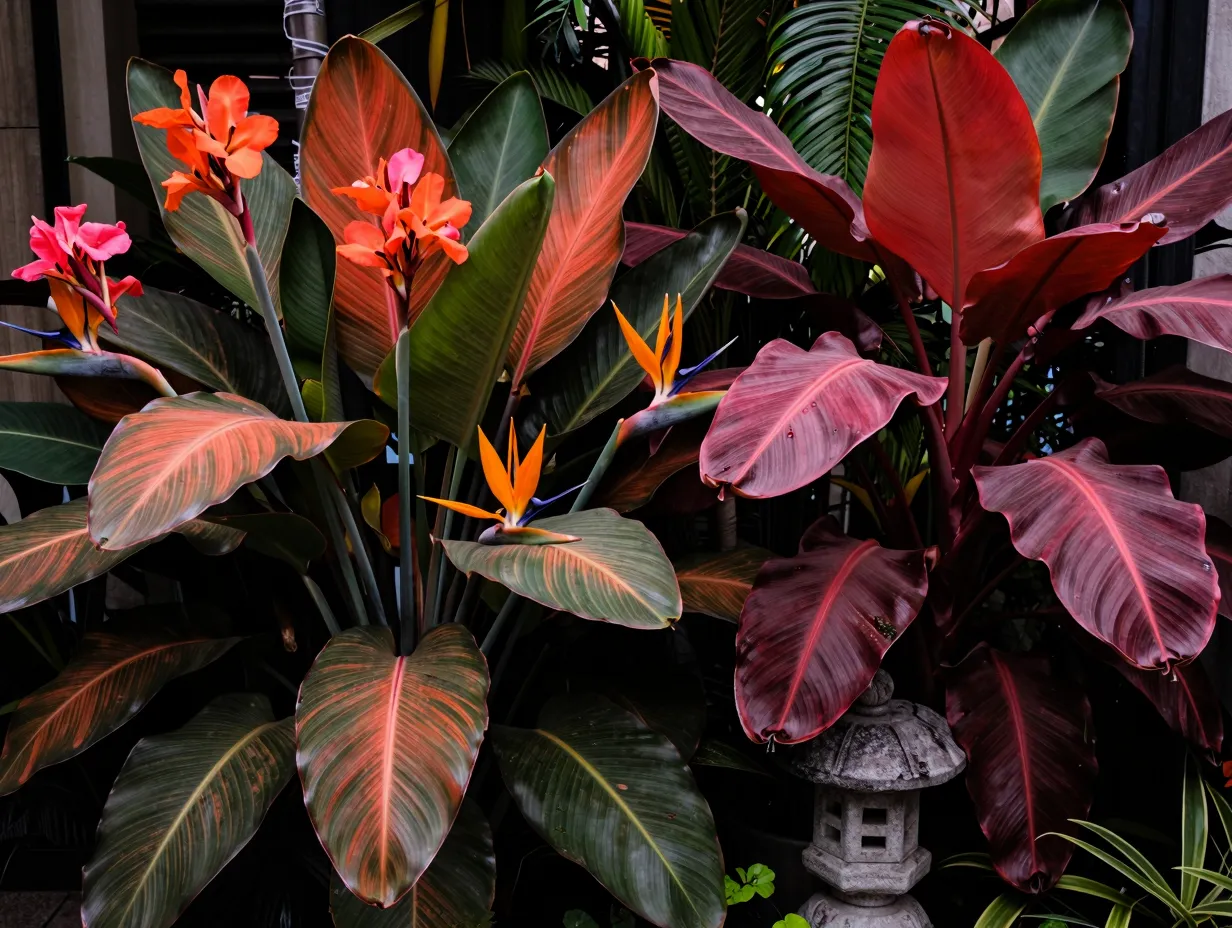
Not all stunning flower gardens look like English cottage borders. Some of the most visually arresting displays in 2026 draw inspiration from tropical, Balinese, and Mediterranean chaparral landscapes, places where plants grow with an exuberance and scale that feels almost theatrical.
The tropical aesthetic relies on bold foliage as much as flowers: giant elephant ears, cannas with striped leaves, banana plants, and bird-of-paradise. Flowers in this scheme are vivid punctuation marks, orange strelitzia, red ginger, hot pink bougainvillea, against a backdrop of enormous, architectural leaves.
The Balinese interpretation is more curated: water features, stone lanterns, and dense layered planting that creates a sense of lush enclosure. The chaparral aesthetic, inspired by California and Mediterranean scrubland, uses drought-adapted plants, cistus, lavender, agave, penstemon, in a palette of silver, purple, and terracotta that is both wild and refined.
Current trend forecasts highlight tropical and bold architectural planting as a major direction for 2026 gardens [7], particularly in urban settings where gardeners want maximum impact from limited space.
Key plants for a tropical-inspired display:
- Canna ‘Tropicanna’ (striped orange-red foliage, vivid orange flowers)
- Hedychium gardnerianum (ginger lily, fragrant yellow flowers)
- Ensete ventricosum ‘Maurelii’ (red Ethiopian banana, architectural)
- Strelitzia reginae (bird-of-paradise, iconic orange and blue)
- Dahlia imperialis (tree dahlia, can reach 4 meters)
8. Pollinator-Friendly and Ecologically Minded Flower Displays
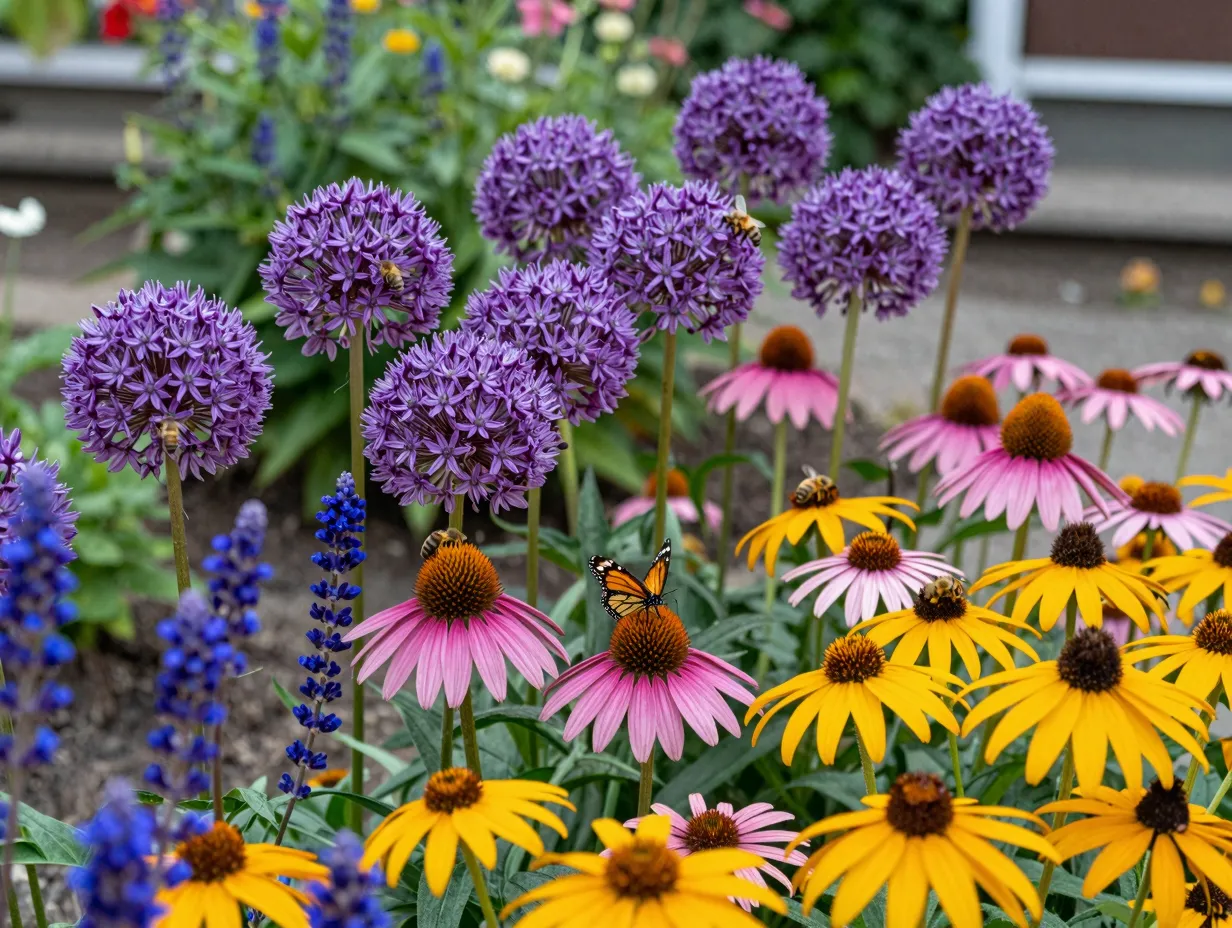
The final idea in this collection of 8 flower garden aesthetic ideas to create a visually stunning display is also, arguably, the most important one for 2026 and beyond. Pollinator-friendly gardening has moved from niche interest to mainstream priority, and the visual results are extraordinary.
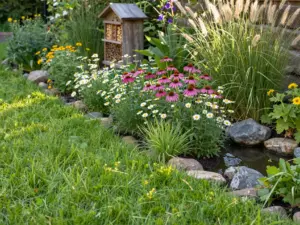
A well-designed pollinator garden is not a scrappy wildflower patch. It is a carefully curated display of plants chosen for their ecological value and their beauty, arranged with the same design intelligence as any formal border. Echinacea, rudbeckia, agastache, salvia, verbena, allium, and native grasses can be combined into displays of genuine drama and sophistication.
Research and trend coverage consistently place ecological gardening at the top of the 2026 agenda [4] [5]. The Philadelphia Flower Show’s 2026 theme centered on ecological connection, reflecting a broader cultural shift toward gardens that give back as much as they take [7].
Design principles for a stunning pollinator display:
- Aim for continuous bloom from early spring to late autumn, stagger flowering times deliberately.
- Include plants from multiple families (Asteraceae, Lamiaceae, Apiaceae) to support the widest range of pollinators.
- Leave some bare soil patches and hollow stems for ground-nesting and cavity-nesting bees.
- Use drifts of single species rather than scattered individuals, pollinators forage more efficiently in masses.
High-impact pollinator plants by season:
| Season | Plant | Visual Feature |
|---|---|---|
| Spring | Allium hollandicum | Purple globes, 80 cm |
| Early summer | Salvia nemorosa | Blue-violet spikes |
| Midsummer | Echinacea purpurea | Pink daisies, bold centers |
| Late summer | Rudbeckia fulgida | Golden yellow, dark eye |
| Autumn | Aster x frikartii | Lavender-blue daisies |
The pollinator aesthetic also benefits from a design secret that many gardeners overlook: seedheads. Leaving the spent flowers of echinacea, rudbeckia, and allium standing through winter creates extraordinary structural beauty, frosted globes and dark silhouettes that make the garden worth visiting even in January.
How To Choose the Right Aesthetic for Your Garden
With 8 flower garden aesthetic ideas to create a visually stunning display now laid out, the natural question is: which one is right for you? The honest answer is that most successful gardens combine elements from two or three of these approaches rather than committing to just one.
A few guiding questions:
What is your light situation? Jewel tones and tropical displays need full sun to perform. Archival palettes and heritage beds can handle partial shade.
How much time can you invest? Massed sculptural planting and pollinator meadows are lower maintenance than complex mixed borders. Tropical displays require more intervention in colder climates.
What is your existing architecture? A formal house suits color blocking and geometric massed planting. A cottage or farmhouse suits archival palettes, organic layouts, and heritage beds.
What is your climate? Water-wise gravel gardens and chaparral-inspired displays are the intelligent choice for dry regions. Tropical aesthetics work best in warm, humid zones or with seasonal tender planting.
The most important rule is consistency. Pick a direction and follow it with conviction. A garden that tries to be everything at once ends up being nothing in particular.
Conclusion
The 8 flower garden aesthetic ideas to create a visually stunning display covered in this guide represent the full spectrum of what is possible in contemporary garden design, from the bold simplicity of color blocking to the ecological richness of a pollinator meadow. Each approach is grounded in real design principles and supported by current trend intelligence from 2026.
Here are your actionable next steps:
- Choose one primary aesthetic from this list that matches your site conditions and personal taste.
- Sketch your bed layout before buying a single plant, even a rough pencil drawing will save you from costly mistakes.
- Start with three anchor plants that define your chosen aesthetic, then build outward from there.
- Visit gardens, nurseries, and flower shows in your region this season to see these aesthetics in person before committing.
- Document your garden photographically from the start, progress photos are invaluable for refining your design year on year.
A visually stunning garden does not happen by accident. It happens because someone made a series of deliberate, informed choices and then had the patience to let those choices grow. Start with one idea from this list, execute it with full commitment, and the results will speak for themselves.
References
[1] Garden Trends 2025 – https://sunset.com/home-garden/garden-basics/garden-trends-2025
[2] Top 10 Floral Trends For 2026 – https://www.fleursdevilles.com/post/top-10-floral-trends-for-2026
[3] Flower Bed Trends 2026 – https://www.homesandgardens.com/gardens/flower-bed-trends-2026
[4] Top Gardening Trends 2026 – https://phsonline.org/for-gardeners/gardeners-blog/top-gardening-trends-2026
[5] Garden Trends 2025 – https://www.gardeningknowhow.com/ideas-inspiration/garden-trends/garden-trends-2025
[6] Floral Trends Forecast 2026 A Year Of Fearless Design – https://floristsreview.com/floral-trends-forecast-2026-a-year-of-fearless-design/
[7] Phs Names Top Global Gardening Trends From The 2026 Philadelphia Flower Show – https://lgrmag.com/news/phs-names-top-global-gardening-trends-from-the-2026-philadelphia-flower-show/
[8] Flower Bed Trends – https://www.homesandgardens.com/gardens/flower-bed-trends