9 Modern Water Features For Your Garden To Add Serenity And Style
A 2026 survey of homeowners found that gardens with a water feature are valued up to 5% higher than comparable properties without one, yet fewer than one in five UK and US gardens currently include any form of moving or still water. That gap represents a significant missed opportunity, both for everyday wellbeing and for long-term property appeal.
Disclosure: This post contains affiliate links. As an Amazon Associate, we earn from qualifying purchases, and at no extra cost to you.
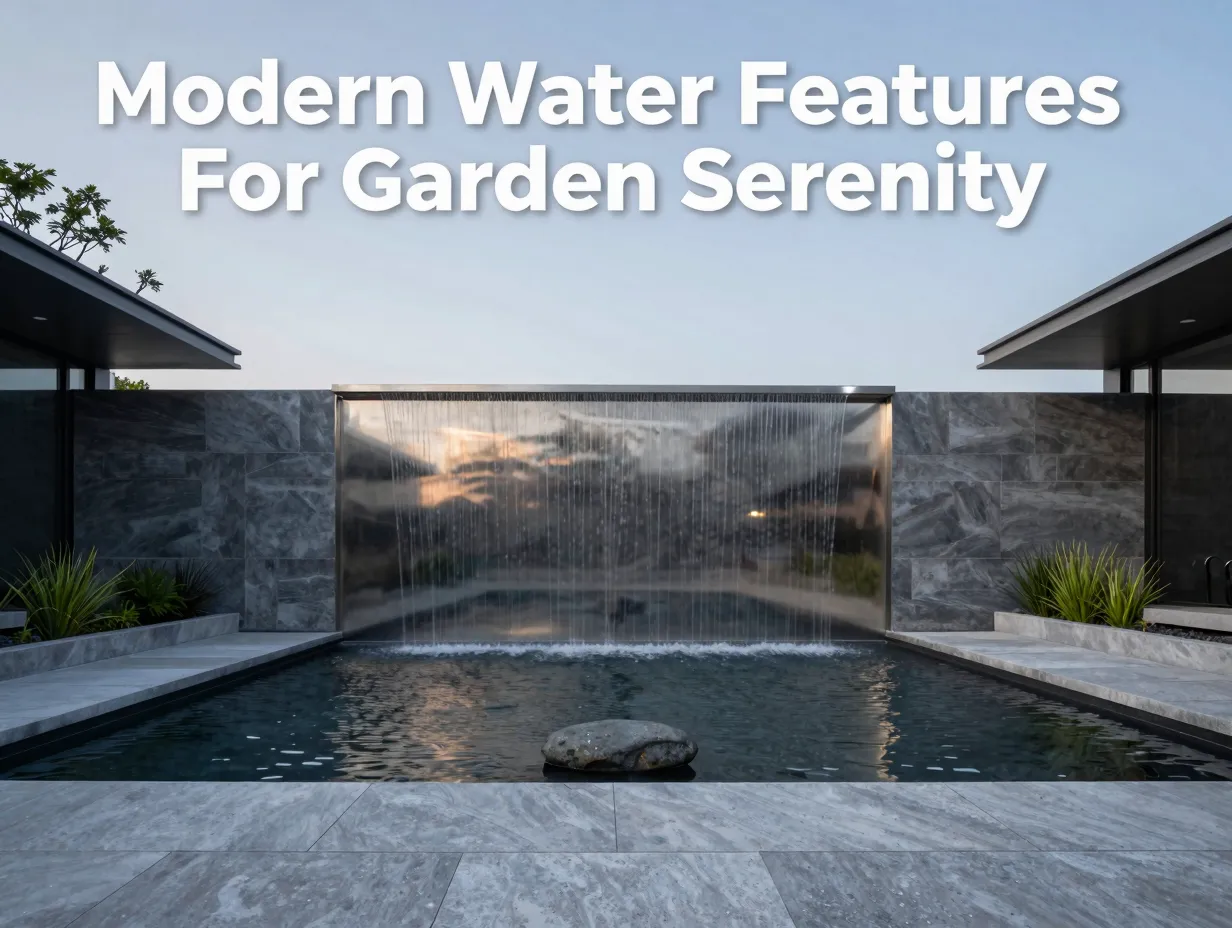
Whether you have a sprawling suburban plot or a compact urban courtyard, the right water feature can transform the way your outdoor space feels and functions. This guide covers 9 modern water features for your garden to add serenity and style, drawing on the latest design trends, practical maintenance realities, and material innovations shaping outdoor living in 2026. Each option has been selected to suit a range of budgets, skill levels, and garden sizes, so there is genuinely something here for everyone.
Key Takeaways
- Modern water features range from low-maintenance birdbaths and bubblers to dramatic water walls and koi ponds, matching the right type to your space is essential.
- Industrial materials such as corten steel, stainless steel, concrete, and glass are defining the contemporary water feature aesthetic in 2026.
- Solar-powered and recirculating pump systems make eco-friendly water features more accessible and affordable than ever before.
- Integrating a water feature with existing decking, raised planters, or patio structures creates a seamless, calming transition between indoor and outdoor living.
- Small-scale features, including bowl fountains, compact bubblers, and vertical water walls, deliver strong sensory impact without requiring large garden footprints.
Why Modern Water Features Belong in Every Garden
There is a reason landscape designers consistently list water features among the first elements they recommend to clients. The sound of moving water has a measurable effect on the nervous system, lowering cortisol levels and creating a sense of calm that is difficult to replicate with planting or lighting alone. Beyond the sensory benefits, a well-chosen water feature acts as a visual anchor, giving the eye a focal point and lending structure to spaces that might otherwise feel unresolved.
The 2026 design landscape has moved decisively away from fussy, ornate fountains in favour of clean lines, industrial materials, and features that complement minimalist planting schemes [2][4]. At the same time, there is growing interest in features that support local biodiversity, wildlife ponds, shallow ecological basins, and koi ponds that attract birds, insects, and aquatic life into the garden [8][9].
The nine options below reflect both of these directions. They are ordered from the most architectural and statement-making to the most compact and DIY-friendly, so you can find your entry point regardless of budget or experience.
The 9 Modern Water Features For Your Garden To Add Serenity And Style
1. Vertical Water Wall
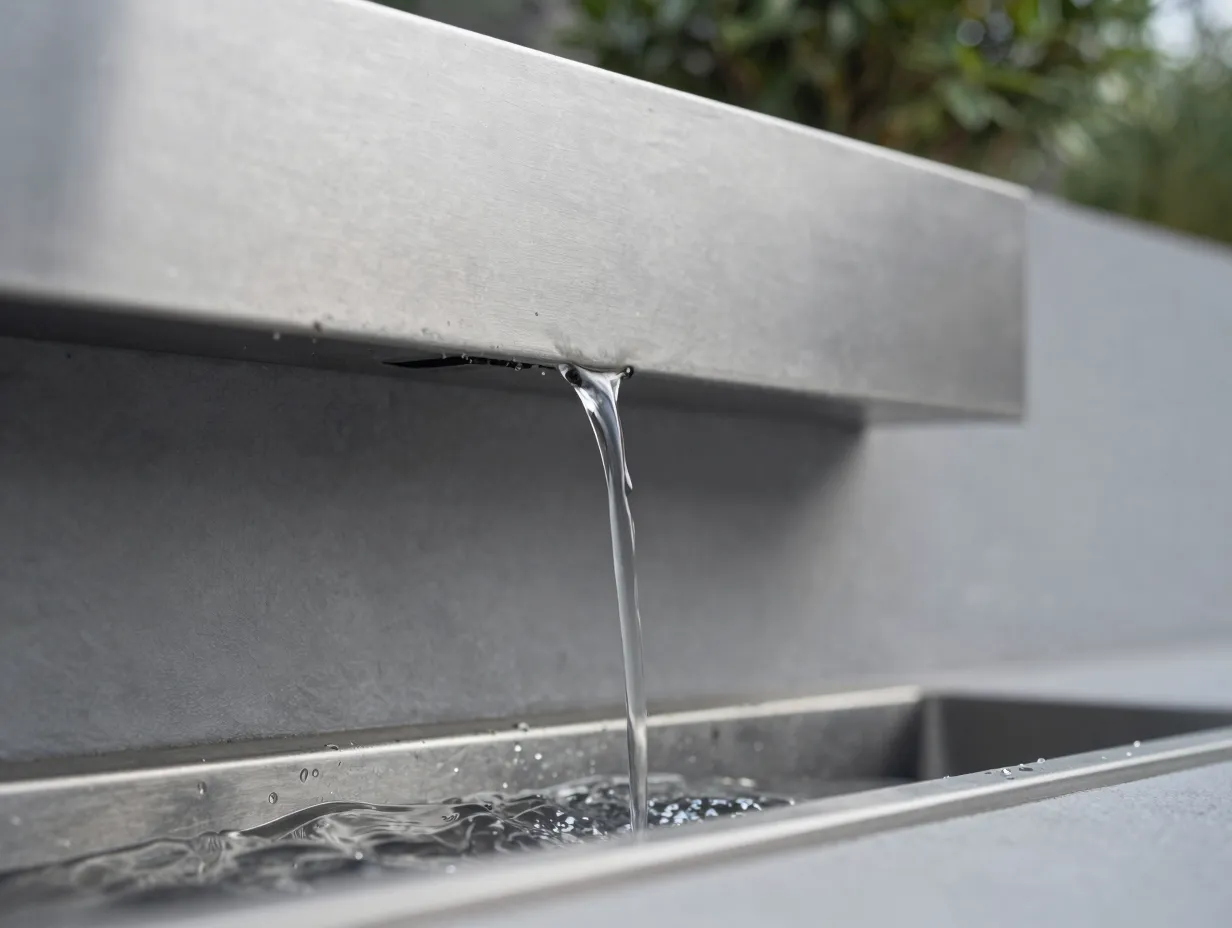
Few features make as immediate an architectural statement as a vertical water wall. A thin, continuous sheet of water slides down a smooth panel, typically fabricated from stainless steel, polished concrete, or tempered glass, and collects in a narrow trough at the base before being recirculated by a pump [4][7].
Water walls work particularly well against rendered garden walls or timber fence panels, where the contrast between the hard surface and the moving water creates a striking focal point. Because they are vertical rather than horizontal, they suit narrow or small gardens where ground space is limited. The sound they produce is a consistent, soft white noise, ideal for masking urban traffic or neighbour noise [4].
Key considerations:
- Choose stainless steel for a sleek, industrial look or corten steel for a warmer, weathered finish that develops a rust-like patina over time [1][8].
- A recirculating pump system means water consumption is minimal, you are simply topping up for evaporation.
- Professional installation is advisable for larger walls, but modular DIY kits are now widely available for smaller versions [7].
2. Blade Fountain
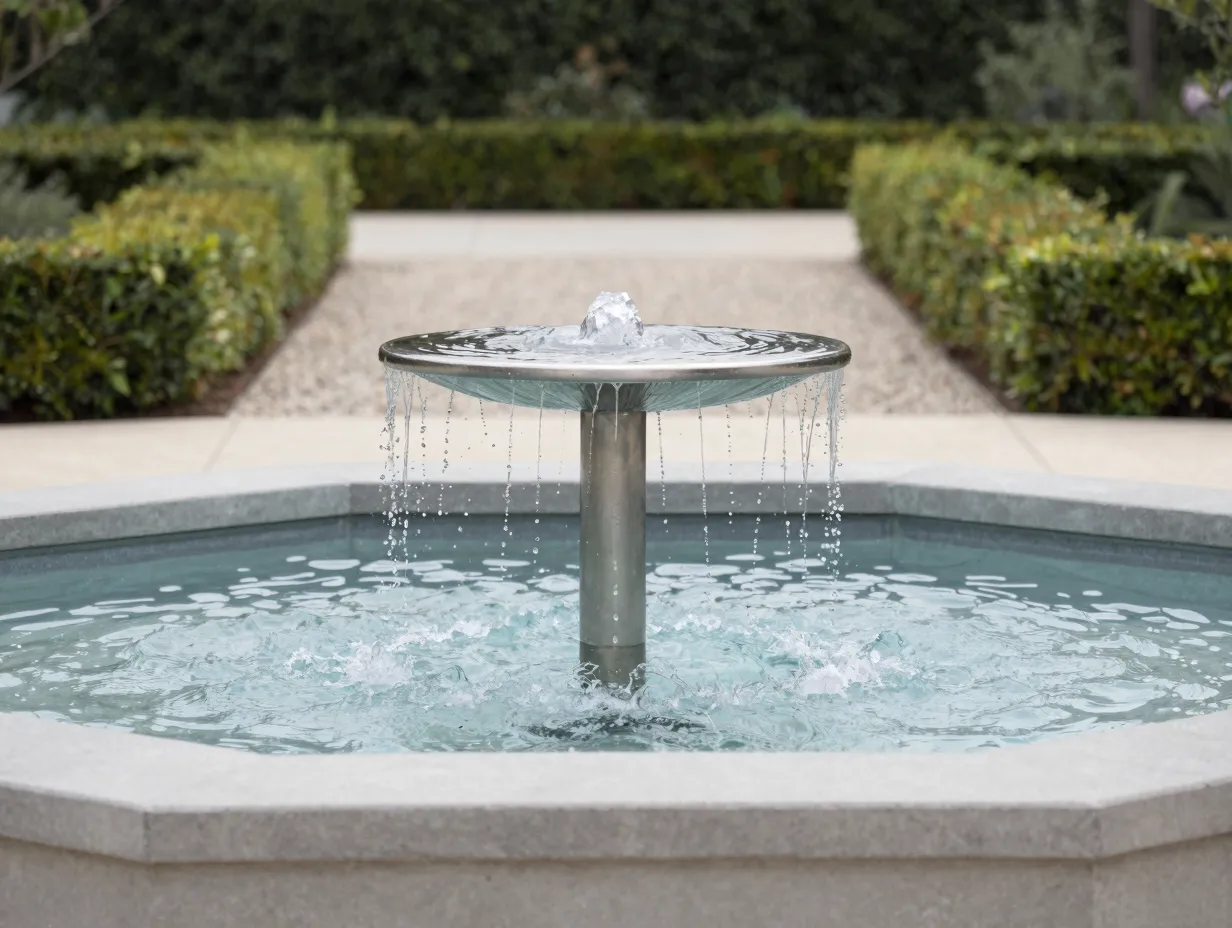
A blade fountain is essentially a refined, contemporary evolution of the traditional garden fountain. Water is pumped up through a narrow stainless steel or concrete column and then falls in a precise, flat sheet, or “blade”, into a basin or pond below [2][7].
The appeal of the blade fountain lies in its precision. The water sheet is thin and controlled, producing a gentle, consistent sound without the splashing unpredictability of older fountain styles. Multiple blades can be arranged in a row to create a curtain effect, which works beautifully as a dividing element between a seating area and a lawn [4].
I have seen blade fountains used to particularly good effect in gardens where the rest of the planting is deliberately restrained, clipped hedges, gravel paths, and a single specimen tree. In that context, the blade fountain does not compete with the planting; it completes it.
Best suited to: Structured, minimalist gardens with geometric hardscaping [2][4].
3. Reflecting Pond
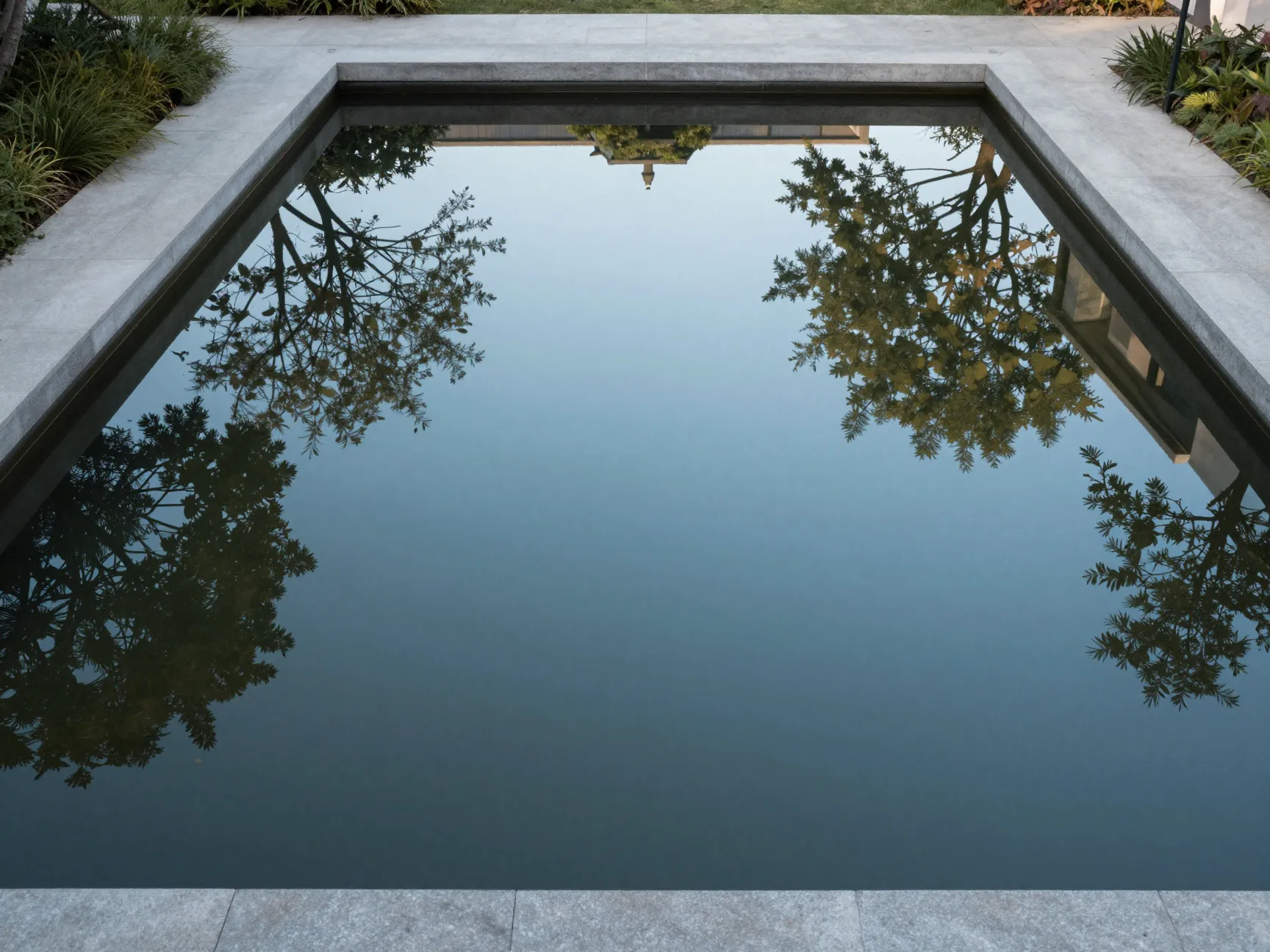
Still water has a different quality to moving water. Where fountains and waterfalls create sound and movement, a reflecting pond creates silence and depth. On a calm day, the sky, surrounding trees, and architectural elements appear doubled in the water’s surface, an effect that makes even a modest garden feel considerably larger and more considered [2][8].
Modern reflecting ponds are typically framed in brick, corten steel, or poured concrete to give them a clean, geometric edge. The rectangular or square format is most common in contemporary design, though circular ponds are gaining ground as a softer alternative [8].
“A reflecting pond is not just a water feature, it is a mirror for the sky. It brings the infinite into a finite space.”
Practical note: Reflecting ponds require relatively little maintenance compared to ponds with fish or planting, but they do need occasional cleaning to prevent algae build-up. A simple recirculating pump with a UV filter will keep the water clear with minimal effort [8].
4. Staircase Waterfall
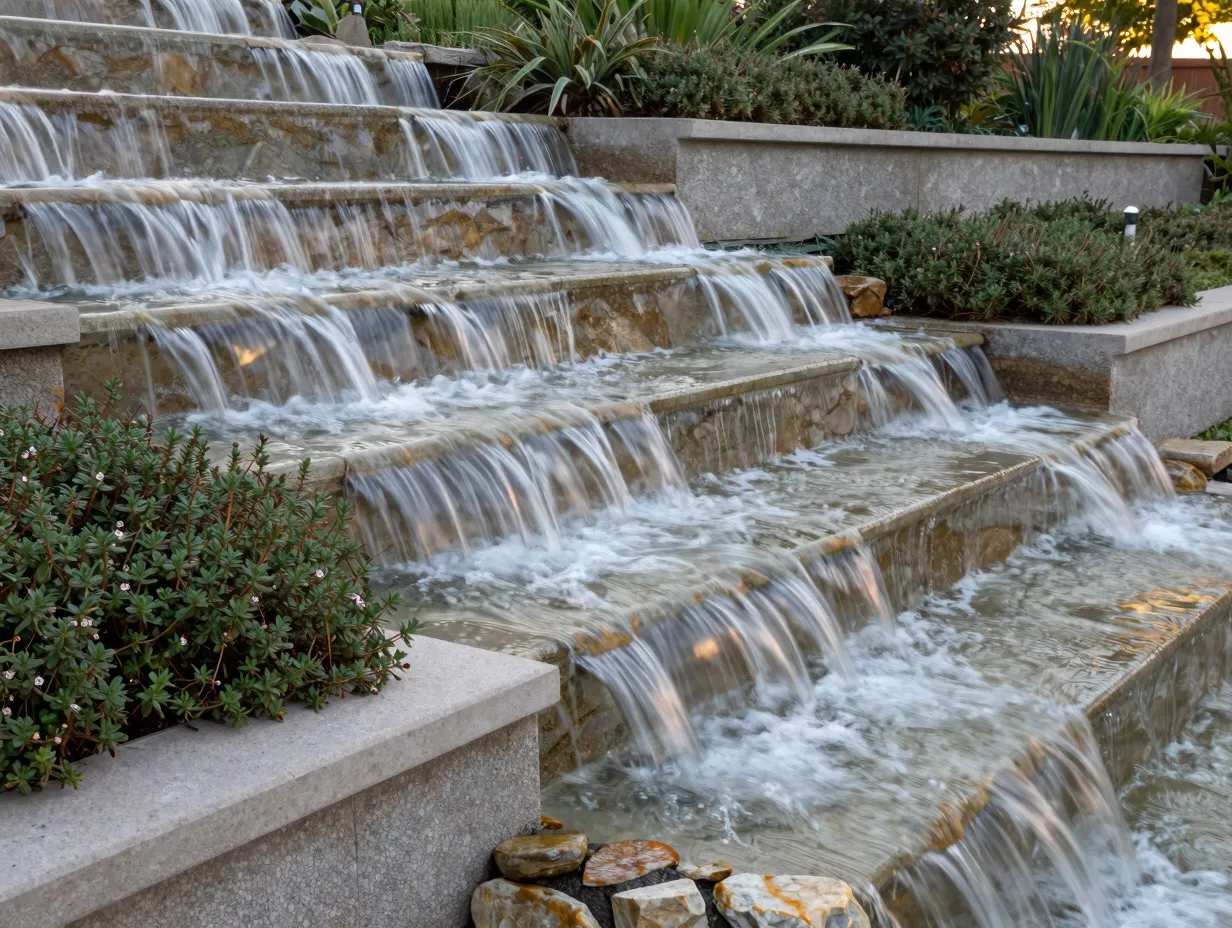
A staircase waterfall, sometimes called a cascade or stepped waterfall, channels water down a series of flat, horizontal steps before collecting in a pool or basin at the base. The stepped structure slows the water’s descent, creating a rhythmic, layered sound that many people find deeply relaxing [4][8].
In contemporary garden design, staircase waterfalls are often built from the same materials as the surrounding hardscaping, natural stone, slate, or concrete, so that the feature feels integrated rather than added on. When positioned against a raised bank or retaining wall, they can also serve a practical function, managing water runoff while adding visual interest [7].
Design tip: Pair a staircase waterfall with low, spreading planting along its edges, creeping thyme, mind-your-own-business, or small ferns, to soften the hard lines and create a more naturalistic effect.
5. Bowl or Bubbling Fountain
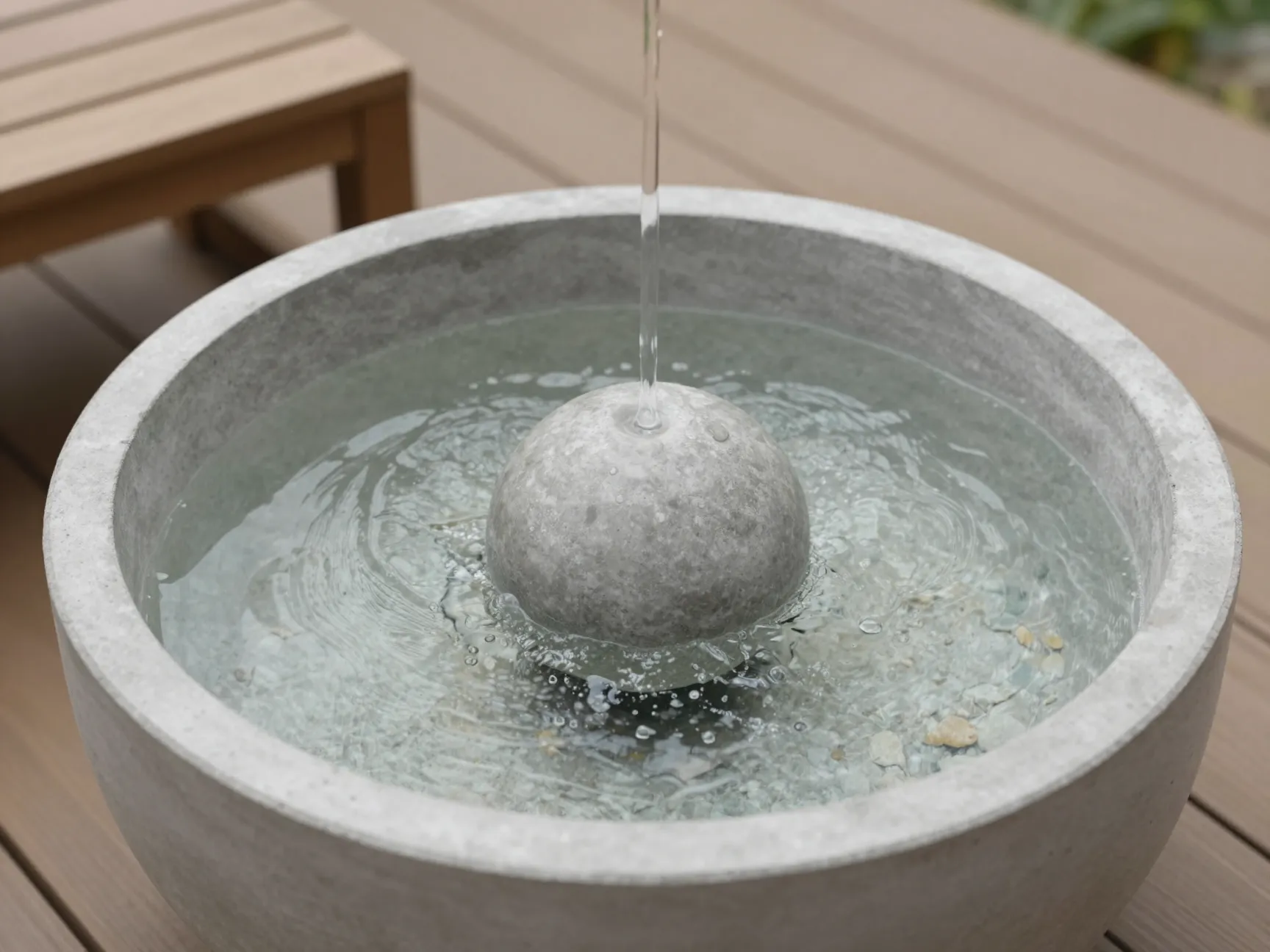
If you are working with a small courtyard, a townhouse garden, or a patio, a bowl or bubbling fountain is one of the most effective and accessible options available. Water rises gently from a central point, often through a stone, concrete, or ceramic sphere, and flows over the surface of a shallow bowl before being recirculated [5][10].
The scale of these features is their greatest strength. A well-chosen bowl fountain can sit on a deck, beside a bench, or in a planted border without dominating the space. The sound is subtle, a soft, continuous gurgle rather than a dramatic rush, which makes it ideal for spaces where you want background calm rather than a bold statement [5].
Materials to consider:
- Concrete bowls offer a modern, industrial aesthetic and weather well outdoors [7].
- Ceramic pots glazed in neutral tones suit Mediterranean or contemporary cottage styles.
- Stone basins develop a natural patina over time and blend seamlessly with planted borders [9].
These features are also among the most DIY-friendly options. A ceramic pot, a small submersible pump, and a bag of aquatic gravel are all you need to get started [5][9].
6. Koi Pond
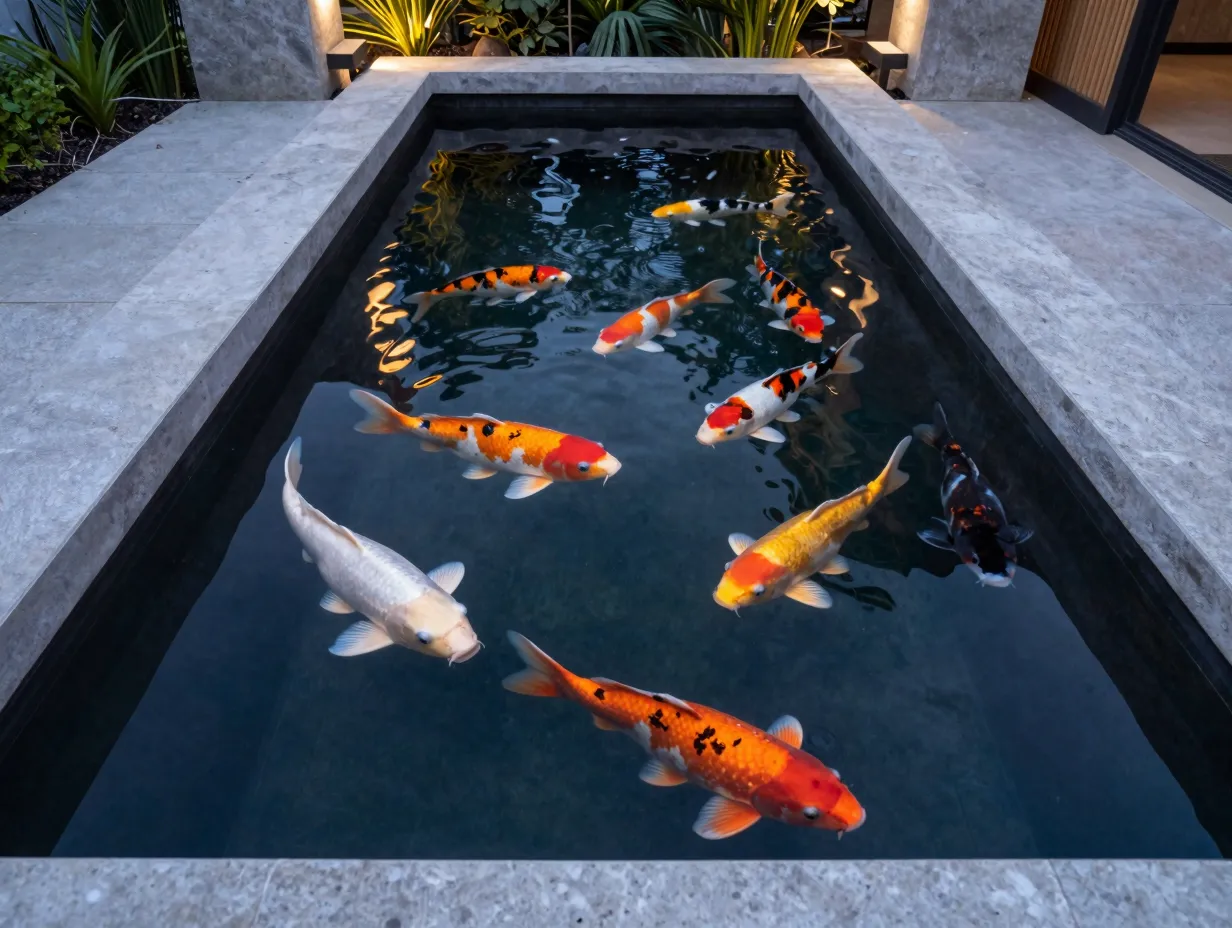
A koi pond sits at the intersection of water feature and living ecosystem. Beyond the visual appeal of the fish themselves, their colours ranging from pure white to deep black, with every combination of orange, red, and gold between, a koi pond introduces genuine biodiversity into the garden [8][9].
Modern koi ponds have moved away from the informal, kidney-shaped designs of previous decades. Today’s versions are more likely to be rectangular or square, framed in corten steel or smooth concrete, with clean edges that align with contemporary hardscaping [8]. Underwater lighting adds a dramatic evening dimension, and the fish themselves become a focal point that draws visitors to the water’s edge.
Important considerations:
- Koi require good water quality and a reliable filtration system, this is not a low-maintenance option.
- Minimum recommended depth is around 1.2 metres to protect fish from temperature extremes and predators.
- A well-maintained koi pond can become a genuine long-term garden feature; koi can live for 20 to 30 years with proper care [9].
7. Solar-Powered Fountain
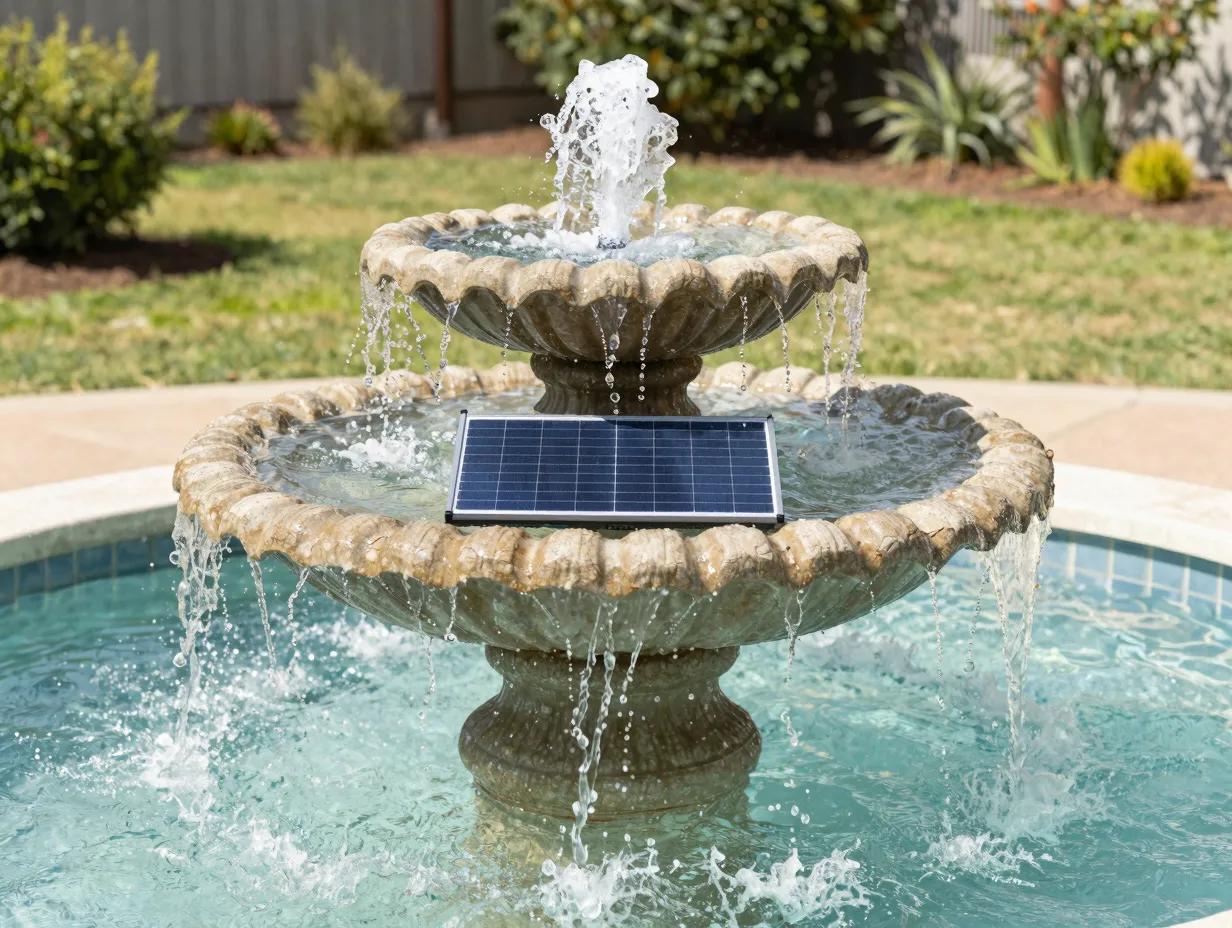
The rise of affordable, efficient solar technology has made solar-powered fountains one of the fastest-growing categories in garden water features for 2026 [7][8]. These features use a small photovoltaic panel, either integrated into the feature itself or positioned nearby, to power a submersible pump, eliminating the need for mains electricity and significantly reducing running costs.
Solar fountains are available in a wide range of styles, from simple floating disc fountains for wildlife ponds to more substantial tiered or blade designs. Their eco-friendly credentials are genuine: no electricity consumption, no trailing cables, and a recirculating water system that uses very little water overall [7].
Where they work best:
- Open, south-facing gardens where the solar panel receives consistent direct sunlight.
- Wildlife ponds and birdbaths where a gentle, intermittent flow is sufficient.
- Rental properties or temporary garden setups where permanent electrical installation is not practical [8].
One honest caveat: solar fountains perform less reliably in overcast conditions, so if you live in a region with frequent cloud cover, a battery-backup model is worth the additional investment.
8. Wildlife Pond
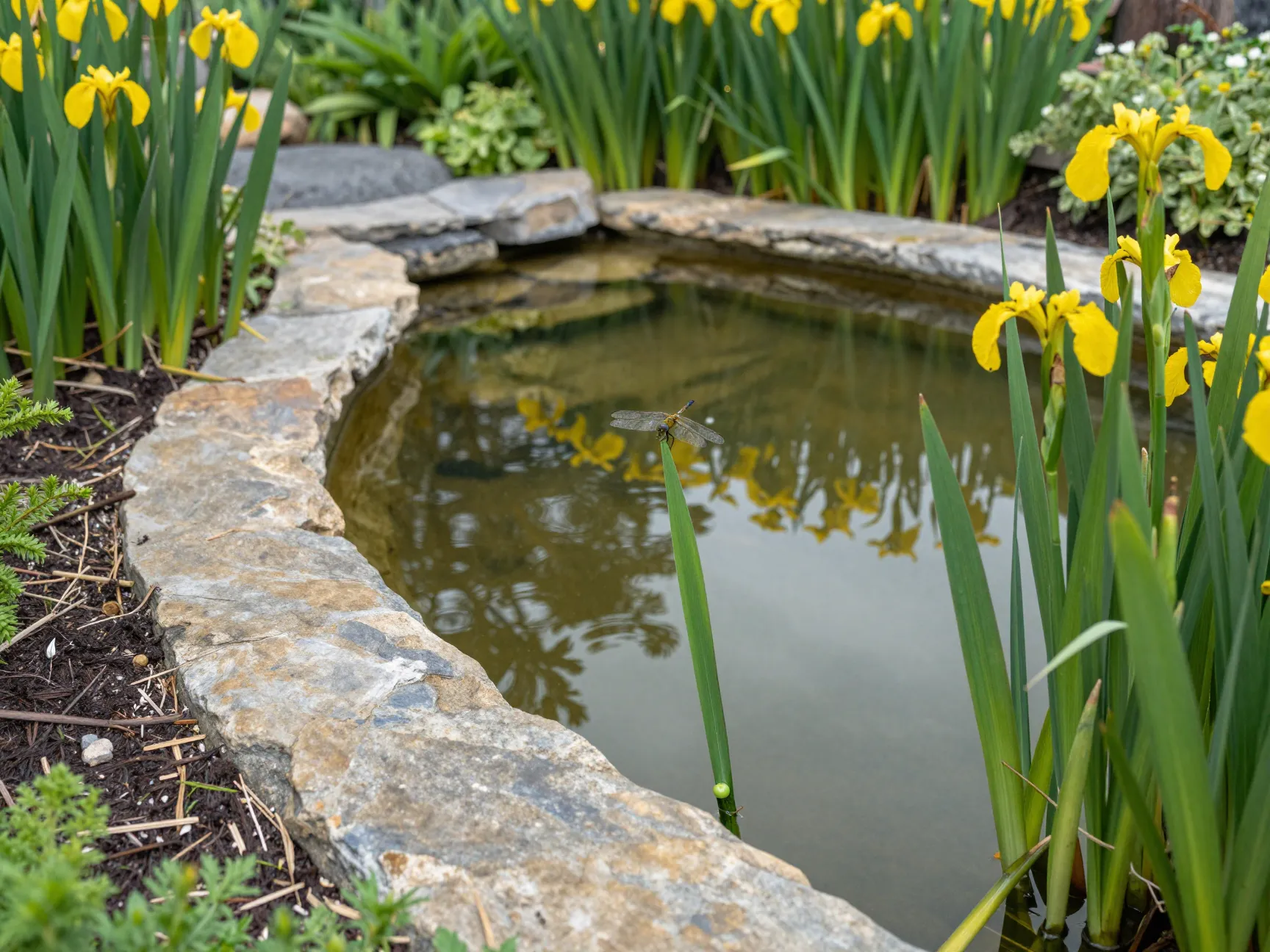
A wildlife pond is perhaps the most ecologically valuable water feature you can add to a modern garden. Unlike koi ponds or ornamental fountains, a wildlife pond is designed to attract and support native species, frogs, newts, dragonflies, water beetles, and birds that come to drink and bathe [8][10].
The design principles for a contemporary wildlife pond balance ecological function with clean aesthetics. A shallow, sloping edge at one end allows small animals to enter and exit safely, while the deeper central section provides habitat for aquatic plants and overwintering species. Framing the pond in corten steel or natural stone maintains a modern look without compromising its ecological purpose [8].
“A wildlife pond does not just add serenity to your garden, it makes your garden part of something larger. Within a single season, you will have visitors you never expected.”
Planting suggestions: Native marginal plants such as yellow flag iris, water mint, and marsh marigold provide cover, food, and oxygen while reinforcing the naturalistic aesthetic [8].
Maintenance is genuinely low once the pond is established. Removing excess plant growth in autumn and topping up water during dry spells are typically all that is required [10].
9. Fire and Water Feature
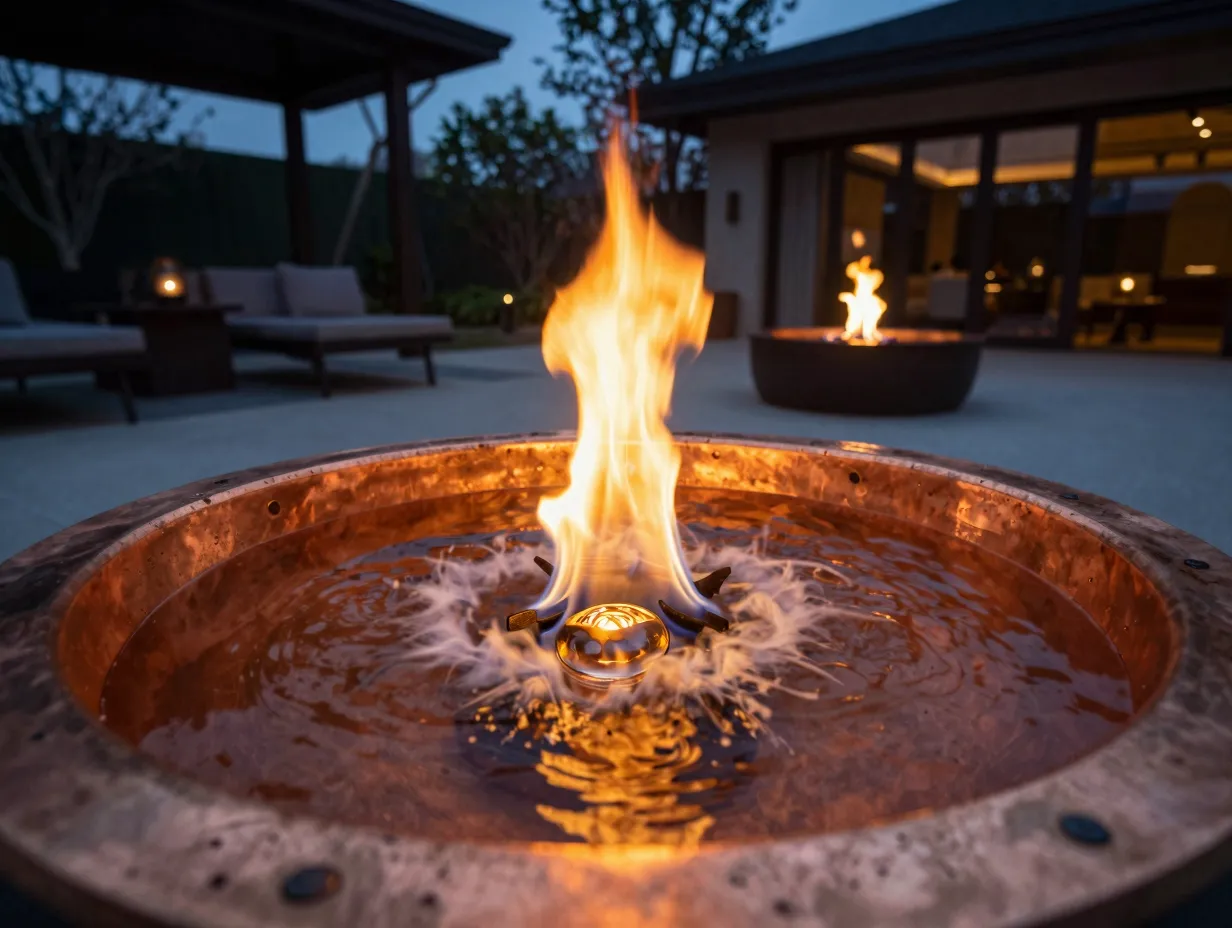
The combination of fire and water might seem counterintuitive, but it is one of the most compelling focal points available to the contemporary garden designer. A fire-and-water feature typically pairs a recirculating water element, a shallow basin, a copper pipe fountain, or a river stone arrangement, with an integrated gas burner or fire glass display [1][7].
The visual effect is dramatic: the movement and sound of water combined with the warmth and glow of fire creates a sensory experience that is genuinely unlike anything else in garden design. Despite the drama, these features can be surprisingly calming, the flickering light and the sound of water together produce a meditative quality that makes them ideal for evening entertaining spaces [1].
Design considerations:
- Gas-powered fire elements require a professional installation and a gas supply connection.
- Fire glass, small, tumbled pieces of tempered glass in amber, clear, or cobalt blue, is a popular contemporary alternative to traditional fire pits, and pairs beautifully with copper or stainless steel water elements [1][7].
- Position fire-and-water features away from overhanging planting or structures, and ensure the water basin is large enough to contain any wind-blown embers.
How to Choose the Right Water Feature for Your Garden
With so many options available, the decision can feel overwhelming. The table below offers a quick reference guide to help match each feature type to the most relevant garden context.
| Feature Type | Best Garden Size | Maintenance Level | Key Strength |
|---|---|---|---|
| Vertical Water Wall | Small to Large | Low to Medium | Architectural impact |
| Blade Fountain | Medium to Large | Low | Precision and elegance |
| Reflecting Pond | Medium to Large | Low to Medium | Visual depth and calm |
| Staircase Waterfall | Medium to Large | Medium | Sound and drama |
| Bowl or Bubbling Fountain | Any size | Very Low | Compact and DIY-friendly |
| Koi Pond | Medium to Large | High | Living focal point |
| Solar-Powered Fountain | Any size | Very Low | Eco-friendly and flexible |
| Wildlife Pond | Small to Large | Low (once established) | Biodiversity and ecology |
| Fire and Water Feature | Medium to Large | Medium | Evening entertainment |
Integrating Water Features With Your Existing Garden Design
One of the most common mistakes homeowners make is treating a water feature as a standalone object rather than an integrated element of the overall garden design. The most successful installations I have seen treat the water feature as a structural component, something that relates directly to the surrounding hardscaping, planting, and architecture of the house.
Decks and patios: Sunken decks paired with adjacent ponds, or decking built around integrated square water features, create a seamless indoor-outdoor transition that feels genuinely luxurious without requiring a large budget [3][5]. A simple recirculating bowl fountain set into a deck surface, for example, can be installed over a weekend with basic carpentry skills.
Raised planters and corner features: Compact corner waterfalls combined with raised timber or corten steel planters are a particularly effective solution for small urban gardens, where every square metre counts [5]. The vertical planting draws the eye upward while the water feature anchors the corner and adds sound.
Material matching: Wherever possible, use the same or complementary materials for your water feature and your existing hardscaping. A corten steel water wall beside a corten steel raised bed creates a sense of intentional design coherence that elevates the whole garden [1][8]. Similarly, a concrete bowl fountain on a concrete patio feels considered rather than arbitrary.
Maintenance Realities: What to Expect
No guide to modern water features would be complete without an honest discussion of maintenance. The good news is that most contemporary features, particularly those with recirculating pump systems, require far less upkeep than their reputation suggests.
- Birdbaths and shallow basins typically need refilling every two to four days in warm weather and a weekly rinse to prevent algae [4][10].
- Recirculating fountain features (bowl fountains, blade fountains, water walls) need their pump filters checked monthly and a full clean two to three times per year [7].
- Reflecting ponds and wildlife ponds benefit from a UV filter to manage algae, plus an annual partial water change and removal of excess plant material in autumn [8].
- Koi ponds are the most demanding, requiring daily feeding, regular water quality testing, and a robust filtration system, but the reward is a living feature that genuinely transforms the garden [9].
The single most important maintenance step for any water feature is keeping the pump clear of debris. A blocked pump is the most common cause of feature failure, and a monthly check takes less than five minutes.
Conclusion
The 9 modern water features for your garden to add serenity and style covered in this guide represent a genuinely diverse range of options, from the bold architectural drama of a stainless steel water wall to the quiet ecological richness of a wildlife pond. What unites them is the capacity to transform the way a garden feels: adding sound, movement, reflection, and life to spaces that might otherwise feel static.
Your actionable next steps:
- Assess your garden’s size, sun exposure, and existing materials before choosing a feature type, use the comparison table above as a starting point.
- Start small if you are new to water features. A solar-powered bowl fountain or a simple birdbath will give you a feel for the maintenance commitment before you invest in something larger.
- Think about integration from the outset. Sketch how the feature will relate to your decking, planting, and boundary treatments before you buy or build anything.
- If you are considering a koi pond or a fire-and-water feature, consult a professional installer, the upfront cost is justified by the long-term reliability and safety of a properly engineered system.
- Visit show gardens and design exhibitions in 2026 to see current water feature trends in person. Photographs are useful, but nothing replaces standing beside a well-designed water feature and experiencing its sound and scale directly.
Water is one of the oldest and most reliable tools in the garden designer’s kit. Used well, it earns its place in any outdoor space, however large or small.
References
[1] Water Feature Ideas – https://www.thespruce.com/water-feature-ideas-8635547
[2] Water Feature In The Garden Ideas For 2026 – https://www.thecoolist.com/water-feature-in-the-garden-ideas-for-2026/
[3] Watch – https://www.youtube.com/watch?v=23NiJhqrlsk
[4] Outdoor Water Feature Ideas For Backyards Gardens Patios – https://www.extraspace.com/blog/home-organization/outdoor-water-feature-ideas-for-backyards-gardens-patios/
[5] Backyard Water Feature Ideas For 2026 Where Inflatable Pools Are No Longer Part Of The Setup – https://www.homedit.com/backyard-water-feature-ideas-for-2026-where-inflatable-pools-are-no-longer-part-of-the-setup/
[6] Modern Backyard Ideas With Water Feature Or Decorative Pond – https://www.colourmyliving.com/interior-design/modern-backyard-ideas-with-water-feature-or-decorative-pond/
[7] From Cascading Streams To Modern Fountains 70 Inspiring Water Feature Designs – https://inspiration-for-home.com/from-cascading-streams-to-modern-fountains-70-inspiring-water-feature-designs/
[8] Water Feature Garden Ideas – https://www.countryliving.com/uk/homes-interiors/gardens/a36034489/water-feature-garden-ideas/
[9] Watch – https://www.youtube.com/watch?v=d6GhVBkel0A
[10] Water Features Designs Photos – https://www.housebeautiful.com/room-decorating/g61878636/water-features-designs-photos/