8 Master Bedrooms Decor Ideas For A Cozy And Relaxing Retreat
The average person spends roughly one-third of their entire life in their bedroom, yet most master bedrooms are decorated as an afterthought, filled with mismatched furniture and a color palette chosen in five minutes at a paint store. That disconnect between how much time we spend in this room and how little care we give it is striking. If your bedroom currently feels more like a storage unit than a sanctuary, these 8 master bedrooms decor ideas for a cozy and relaxing retreat are exactly what you need in 2026.
Disclosure: This post contains affiliate links. As an Amazon Associate, we earn from qualifying purchases, and at no extra cost to you.
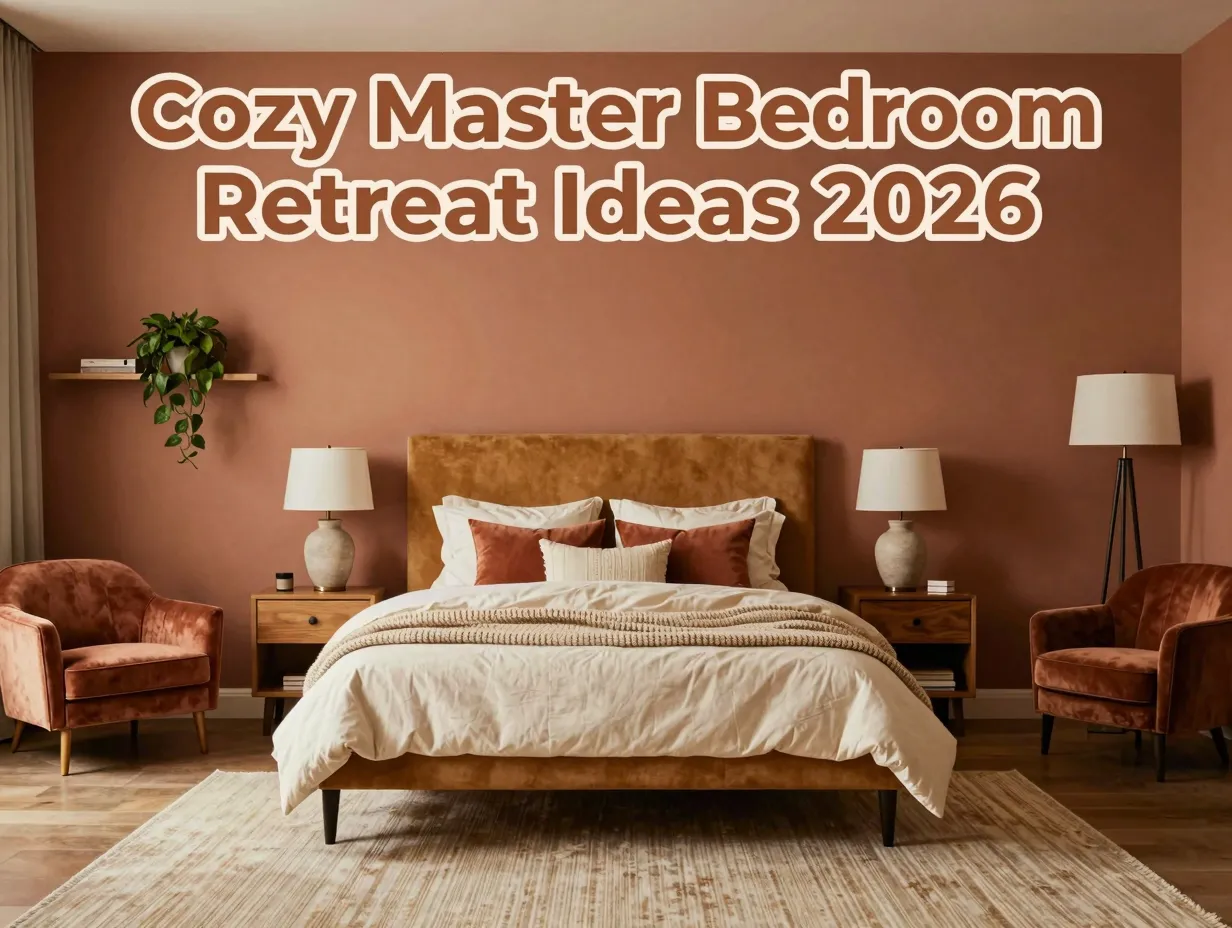
Interior designers across the industry are reporting a decisive shift away from cold, clinical spaces toward rooms that feel genuinely restorative [1]. The concept of the “cocooning” bedroom, a space designed to wrap you in warmth, calm your nervous system, and help you sleep better, is no longer a luxury trend reserved for five-star hotels. It is becoming the standard for thoughtful home design. Whether you are starting from scratch or refreshing an existing room, these ideas will help you build a retreat you actually look forward to coming home to.
Key Takeaways
- Warm, enveloping color palettes outperform cool greys for creating genuine bedroom comfort in 2026
- Layered textiles, soft lighting, and natural materials are the three pillars of a cozy master bedroom
- A cocooning, sanctuary-style layout prioritizes flow, calm, and sensory comfort over pure aesthetics
- Small changes, a new rug, warmer bulbs, or a canopy element, can dramatically shift the feel of a room
- Mixing textures and natural elements brings life and depth to any master bedroom design
The Core Principles Behind 8 Master Bedrooms Decor Ideas For A Cozy And Relaxing Retreat
Before diving into the specific ideas, it helps to understand the philosophy driving modern master bedroom design. In 2026, the dominant theme is what designers call “restorative design”, spaces built around the human need for rest, sensory calm, and emotional safety [2]. This goes beyond picking pretty colors. It is about how a room makes you feel the moment you walk in.
Three principles anchor every idea on this list:
Warmth over coolness. Cool greys and stark whites dominated bedrooms for over a decade. Designers are now moving firmly toward warmer tones, terracotta, warm taupe, dusty rose, deep amber, because these shades trigger a psychological sense of safety and comfort [3].
Layering over minimalism. A single flat duvet on a bare bed looks clean in a photo but feels sterile in real life. Layering textiles, throws, cushions, quilts, and area rugs, creates the tactile richness that makes a room feel genuinely inviting.
Intention over impulse. Every element in a cozy master bedroom should earn its place. Clutter creates visual noise that disrupts rest. Thoughtful curation, a few meaningful objects, quality over quantity, is what separates a hotel-worthy retreat from a crowded room.
With those principles in mind, let’s move through each of the eight ideas in detail.
1. Build a Cocooning, Sanctuary-Style Layout
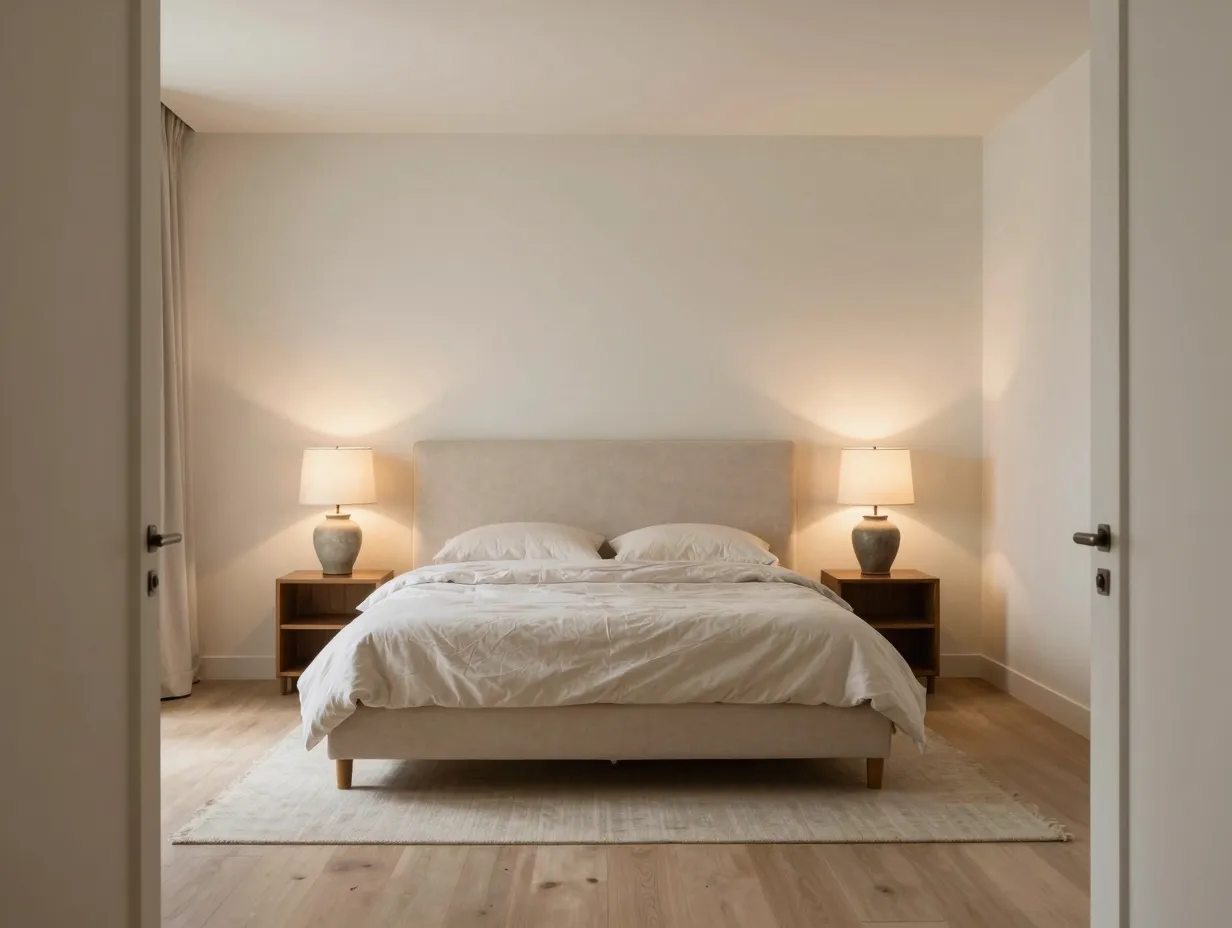
The layout of your master bedroom is the foundation everything else rests on. A cocooning layout is designed around one central idea: the bed should feel like the most protected, enveloped spot in the room.
Start by positioning your bed against a solid wall, ideally the one directly opposite the door, so you have a clear sightline to the entrance. This placement satisfies a deep psychological need for security. Avoid floating the bed in the middle of the room unless the space is very large and you are using a canopy or curtain element to create enclosure.
Next, think about symmetry. Matching bedside tables and lamps on either side of the bed create a sense of balance and calm. You do not need expensive matching sets, even two similar wooden stools with identical lamps will do the job.
Finally, consider traffic flow. A cozy room is not cramped. Leave at least 24 inches of walking space on each side of the bed and keep the path from the door to the bed clear. When a room flows well, it feels restful before you even lie down [4].
“The bedroom layout should guide you naturally toward rest, every step from the door to the pillow should feel like a slow exhale.”
2. Swap Cool Greys for Warm, Enveloping Color Palettes
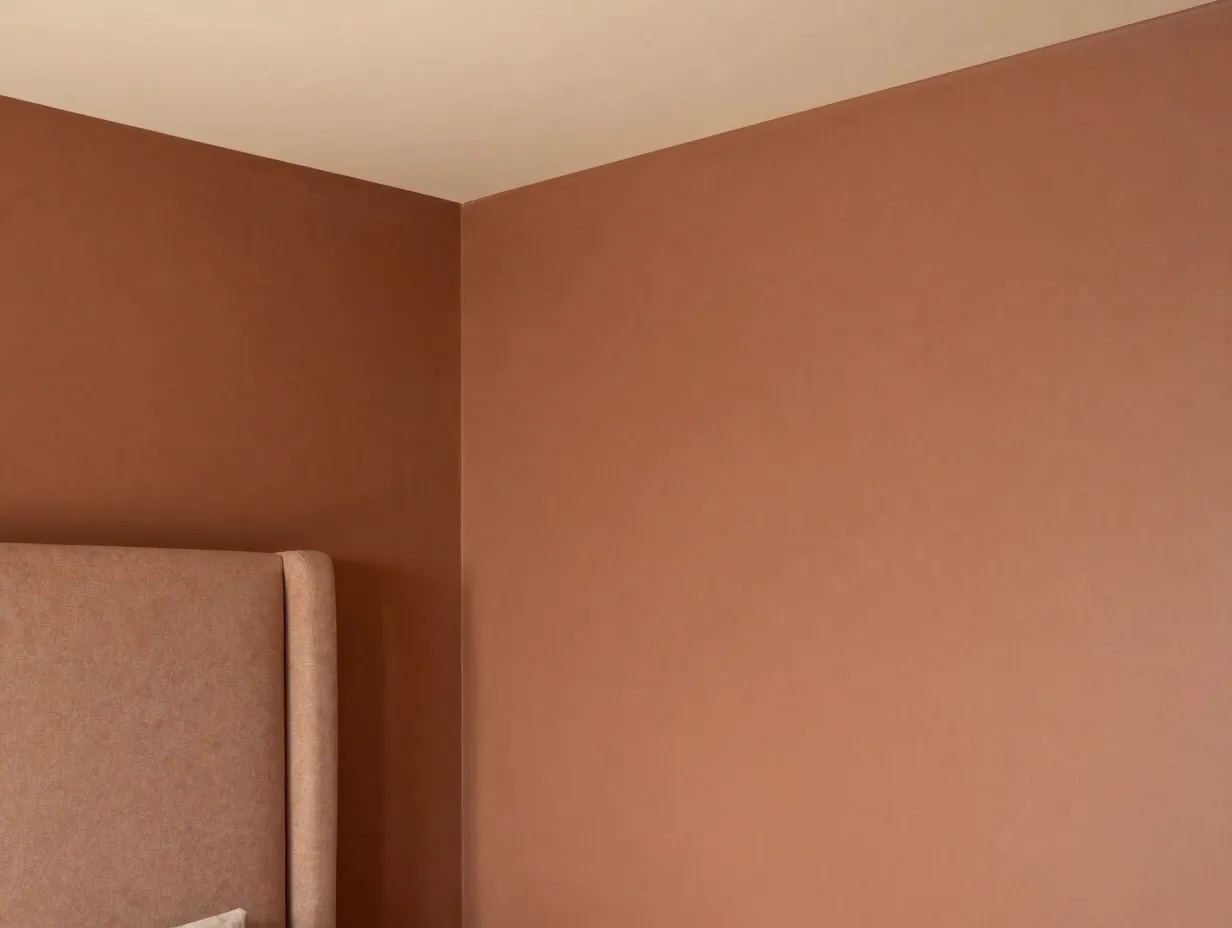
This is perhaps the single most impactful change you can make. Cool grey walls, once the default choice for modern bedrooms, have been widely identified by designers as one of the leading causes of bedrooms that feel cold and uninviting despite expensive furniture [5].
Warm alternatives to consider in 2026:
- Terracotta and clay tones, earthy, grounding, and deeply cozy
- Warm taupe and greige, versatile neutrals that read as warm rather than cold
- Dusty rose and blush, soft and enveloping without feeling overly feminine
- Deep forest green or teal, rich and cocoon-like when paired with warm wood tones
- Warm cream and ivory, clean but soft, a better alternative to stark white
You do not need to paint all four walls. A single warm-toned accent wall behind the headboard can transform the entire feel of the room. Pair it with warm-white ceiling paint rather than bright white to avoid the ceiling feeling like a cold lid over the space [6].
I once helped a friend repaint her master bedroom from a cool blue-grey to a soft warm terracotta. The furniture did not change. The bedding did not change. But the room went from feeling like a waiting room to feeling like a boutique hotel suite. Color is that powerful.
3. Invest in a Statement Headboard
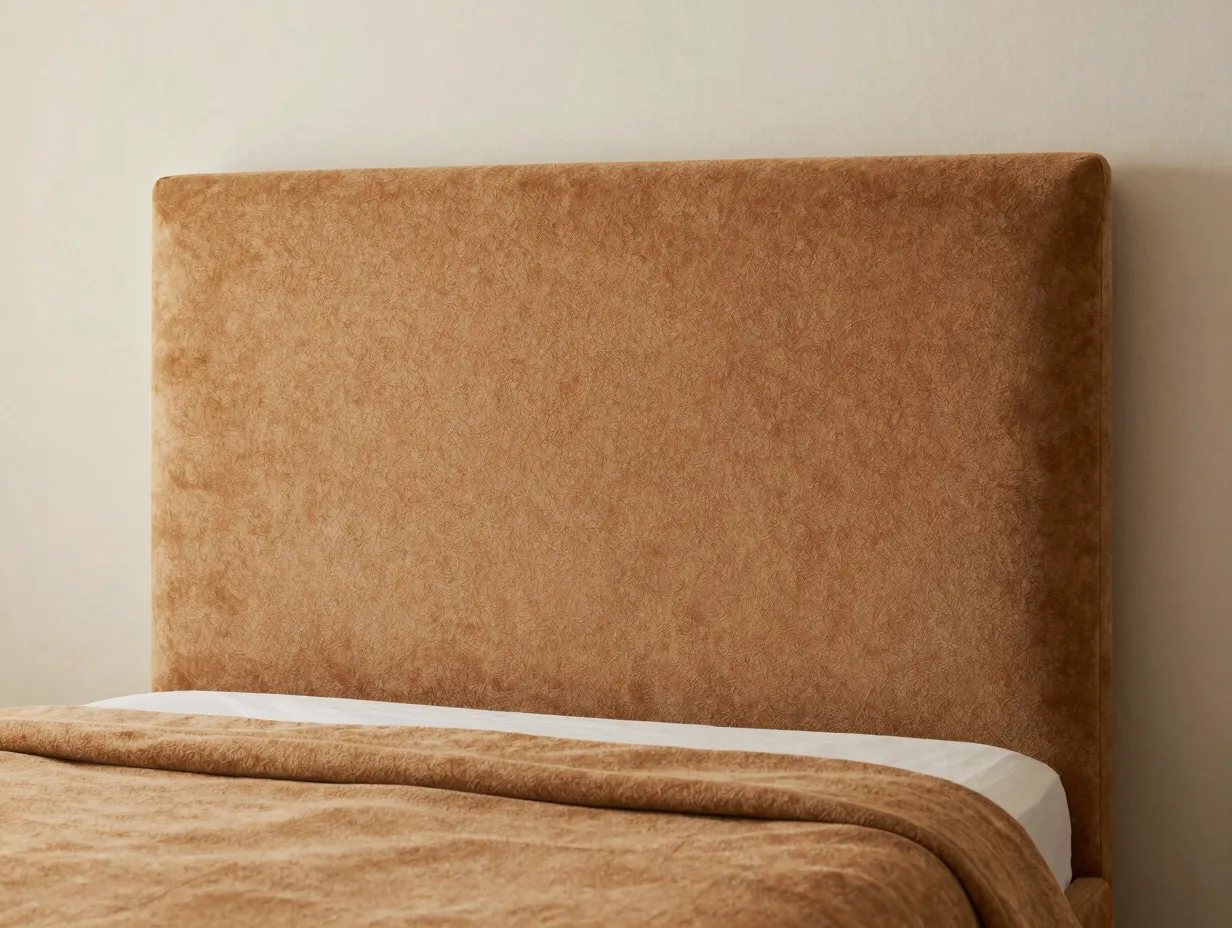
A headboard is the visual anchor of any master bedroom. It draws the eye, sets the tone for the entire room, and, when chosen well, adds a significant sense of luxury and comfort.
In 2026, upholstered headboards in warm, tactile fabrics are leading the trend [7]. Think:
- Boucle in warm cream or caramel
- Velvet in deep teal, forest green, or dusty rose
- Linen in natural oatmeal or warm sand
- Leather or faux leather in cognac or warm tan
The size of the headboard matters too. A tall, floor-to-ceiling headboard creates a dramatic sense of enclosure that reinforces the cocooning effect. Even if you are working with a smaller budget, a DIY padded headboard using plywood and foam covered in fabric can look genuinely high-end.
Avoid headboards with sharp geometric edges or cold metallic finishes if your goal is warmth and coziness. Soft curves, rounded corners, and fabric textures will always feel more inviting than hard lines.
4. Layer Textiles for Depth and Warmth
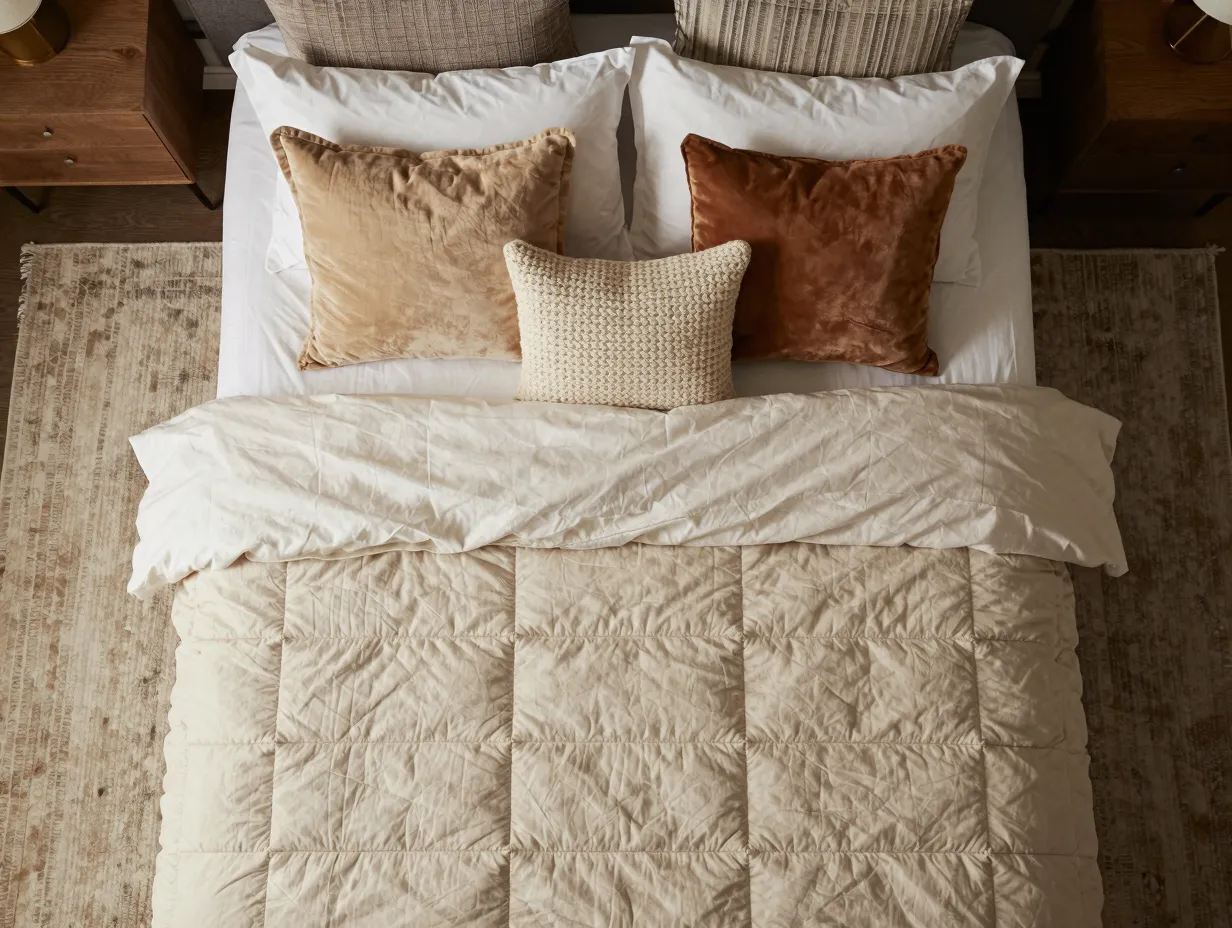
No single element transforms a master bedroom faster than layered textiles. This is the technique that makes hotel beds look so irresistible, and it is entirely achievable at home.
A well-layered bed typically includes:
- A fitted sheet in a soft, breathable fabric (Egyptian cotton or bamboo work beautifully)
- A flat sheet or lightweight blanket as the first layer
- A main duvet or comforter in a warm, medium-weight fill
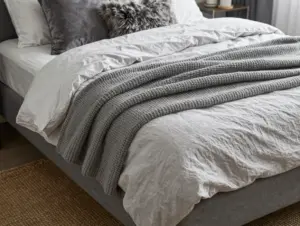
- A folded quilt or chunky knit throw at the foot of the bed
- A mix of sleeping pillows and decorative cushions at the head
The key to making this look intentional rather than messy is to work within a cohesive color palette. Choose two to three colors that complement each other and vary the textures, smooth cotton next to chunky knit next to velvet, rather than varying the colors wildly.
Beyond the bed, layer textiles throughout the room. A large area rug under the bed (extending at least 18 inches on each side) adds warmth underfoot and visually anchors the space. Linen curtains that pool slightly on the floor add softness and height. A throw draped over a reading chair completes the picture [8].
5. Design Warm, Layered Lighting
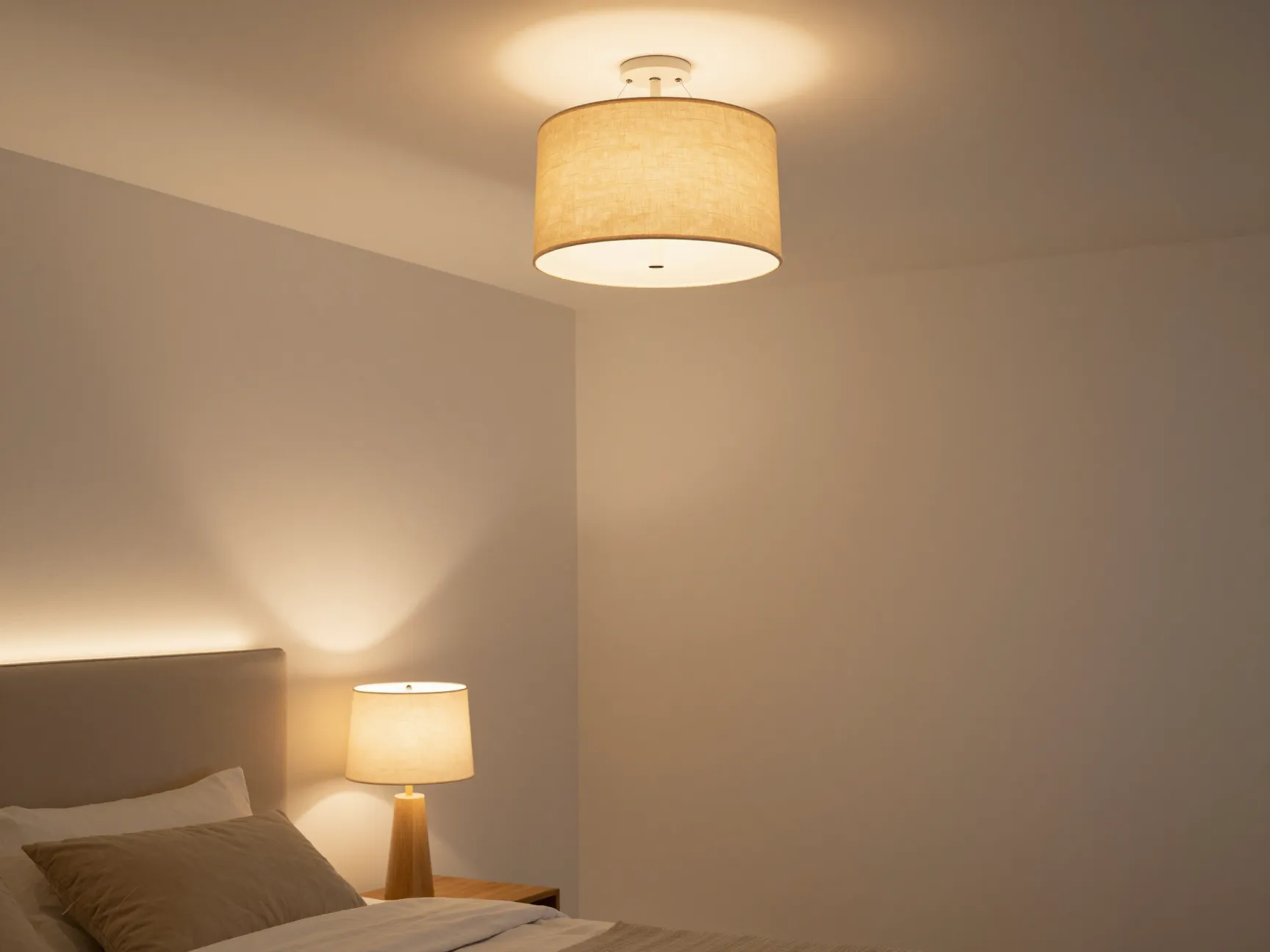
Lighting is one of the most underestimated elements in bedroom design. Most bedrooms rely on a single overhead light, typically a harsh, bright fixture that is completely wrong for a relaxing retreat.
A cozy master bedroom uses at least three layers of light:
Ambient light, the overall illumination of the room. This should be warm (2700K-3000K color temperature) and dimmable. A flush-mount ceiling fixture with a warm-toned shade or a simple dimmer switch on your existing light can make an enormous difference.
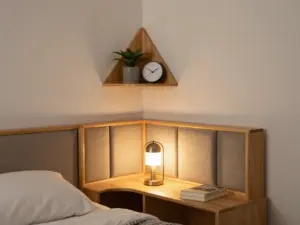
Task light, for reading and specific activities. Bedside lamps or wall-mounted sconces at reading height are ideal. Choose shades that diffuse light softly rather than directing a harsh beam.
Accent light, for atmosphere. This includes LED strip lights behind the headboard, a small table lamp on a dresser, or candles on a bedside table. Accent lighting creates depth and warmth that overhead lights simply cannot replicate [9].
One practical tip: replace any cool-white or daylight bulbs in your bedroom immediately. Warm-white LED bulbs (look for 2700K on the packaging) cost the same but create a dramatically cozier atmosphere.
6. Bring in Natural Materials and Organic Textures
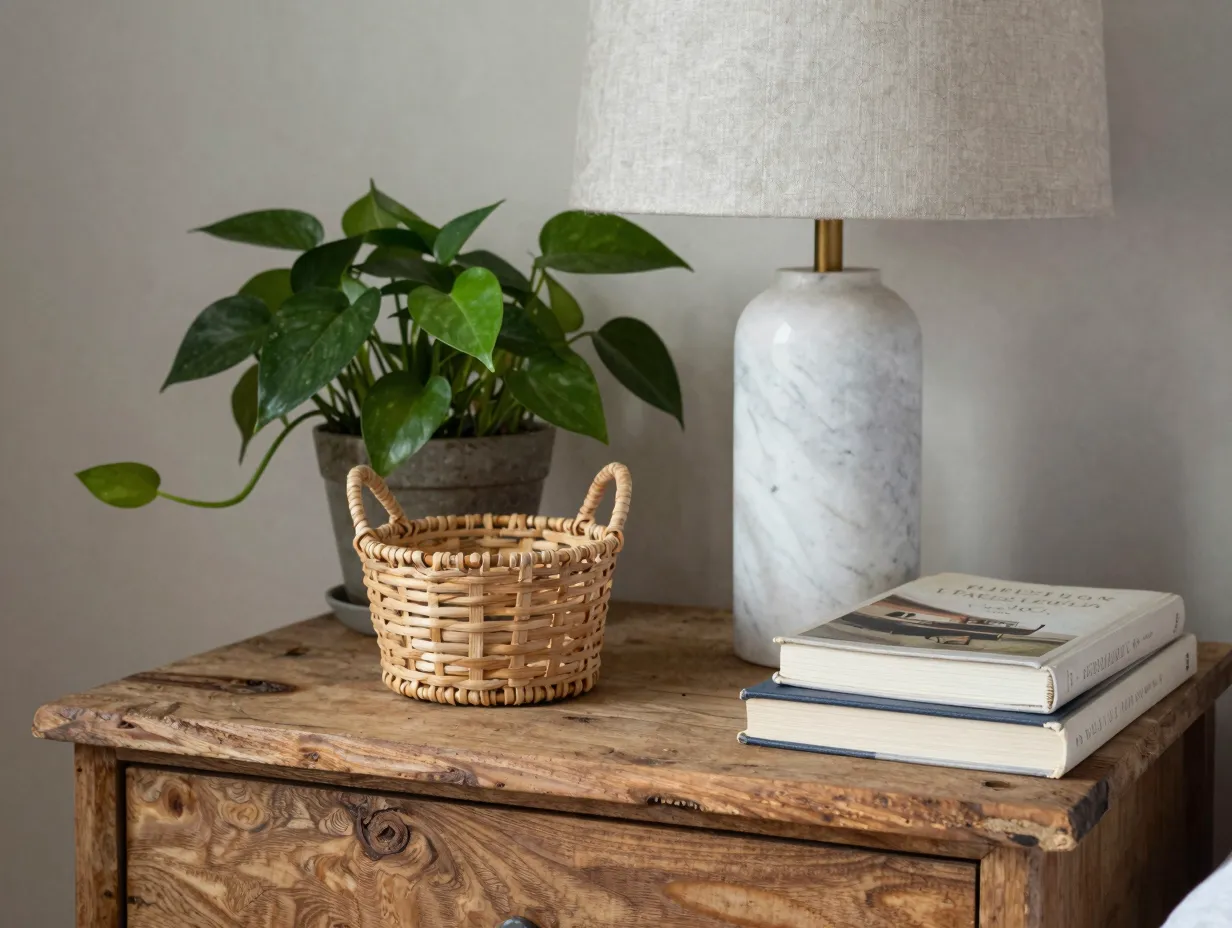
In 2026, the movement toward natural materials in bedroom design is stronger than ever. Synthetic surfaces and mass-produced furniture can make a room feel impersonal and cold. Natural materials, wood, stone, rattan, linen, wool, cotton, jute, bring a warmth and authenticity that no synthetic can replicate [1].
Practical ways to incorporate natural materials:
- Wooden furniture, a reclaimed wood bedside table, a solid oak dresser, or a low platform bed frame in walnut
- Rattan or wicker accents, a pendant light, a small chair, or a decorative basket
- Stone elements, a marble or travertine lamp base, a stone tray on the dresser
- Live plants, a large fiddle-leaf fig in the corner, trailing pothos on a shelf, or a simple vase of dried pampas grass
- Linen and wool textiles, as discussed in the layering section above
The goal is not to turn your bedroom into a forest. One or two well-chosen natural elements alongside warm textiles will create the organic, grounded feeling that makes a room feel like a true retreat.
7. Create a Dedicated Relaxation Zone Within the Room
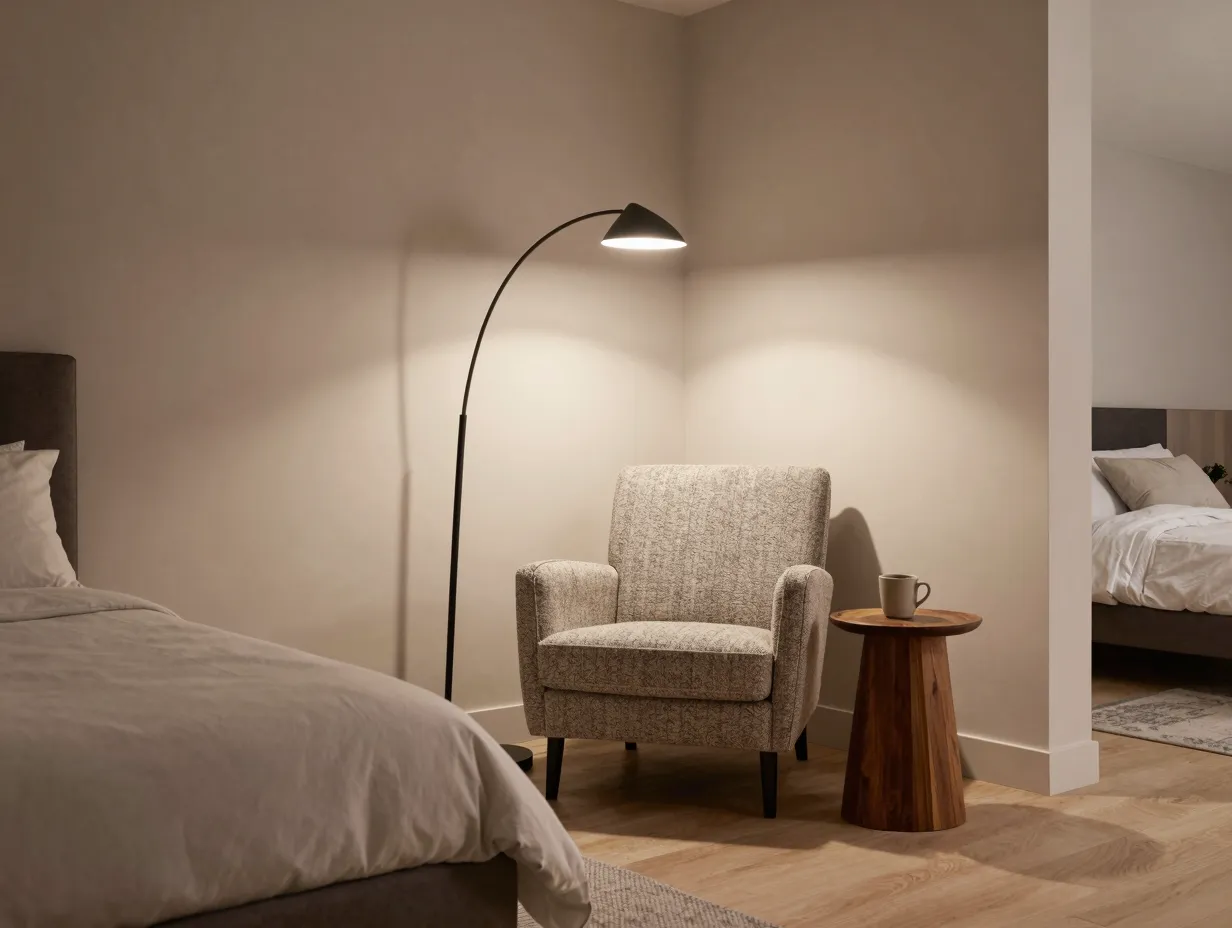
The most luxurious master bedrooms do not use every square foot for sleeping. They carve out a small secondary zone, a reading corner, a meditation spot, or a simple seating area, that gives the room a sense of purpose beyond just the bed.
Even in a smaller master bedroom, a single armchair in a corner with a floor lamp and a small side table creates this effect. The chair does not need to be large. A compact accent chair in a warm fabric, boucle, velvet, or textured linen, positioned near a window or in a corner creates an invitation to slow down, read, or simply sit quietly.
For larger rooms, a small loveseat or a pair of chairs at the foot of the bed creates a more formal seating area. Add a low coffee table or ottoman and the zone becomes a genuinely functional space for morning coffee or evening reading.
This secondary zone also serves a design purpose: it breaks up the visual monotony of a room dominated by the bed and adds a layer of sophistication that elevates the entire space [2].
8. Edit Ruthlessly and Add Meaningful Personal Touches
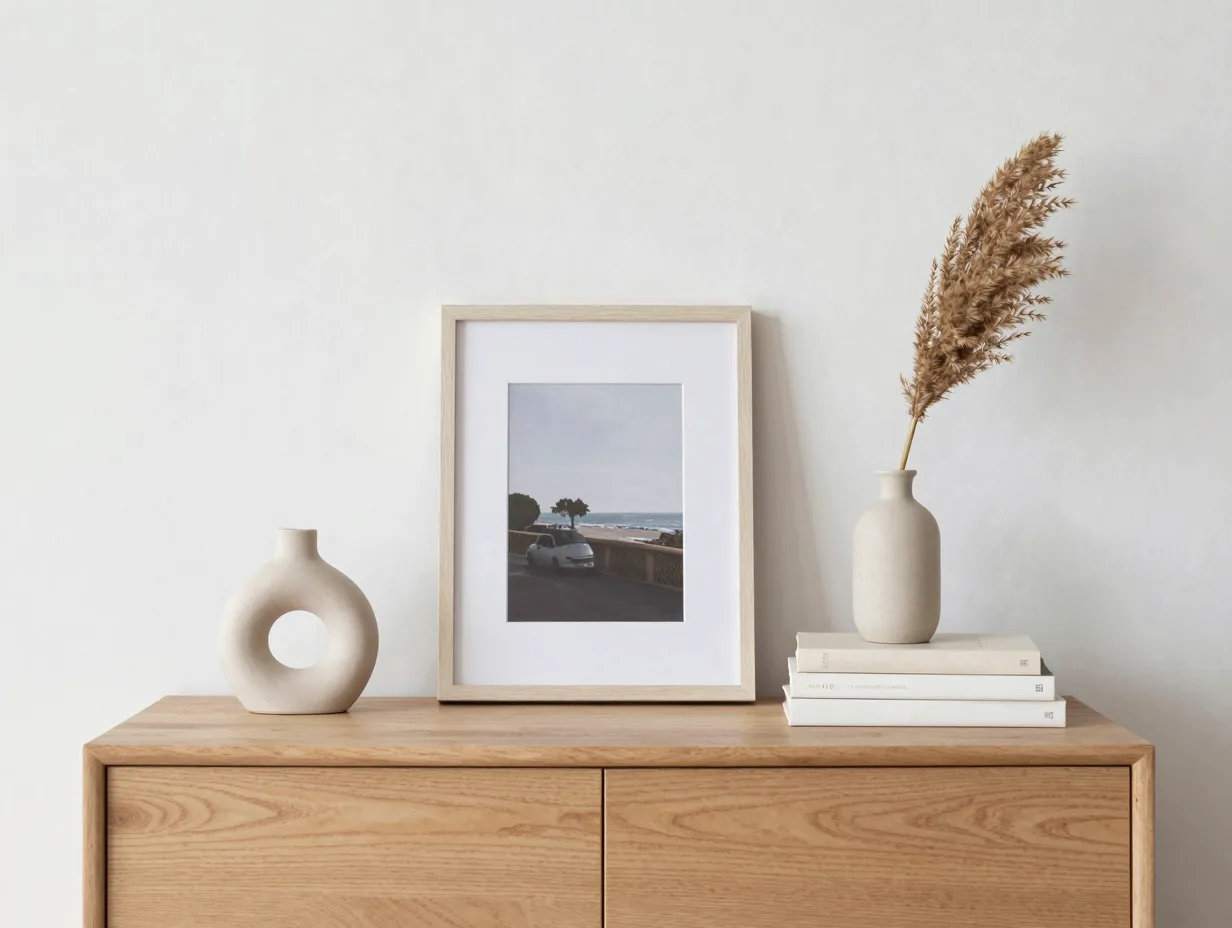
The final idea in these 8 master bedrooms decor ideas for a cozy and relaxing retreat is perhaps the most important and the most overlooked: editing.
A cozy bedroom is not a maximalist bedroom. It is a curated one. Every surface, every shelf, every corner should be intentional. Clutter, even attractive clutter, creates visual noise that the brain processes as stress, which is the opposite of what a relaxing retreat should do.
The editing process involves three steps:
- Remove everything from the room that does not belong there (work equipment, exercise gear, piles of laundry)
- Assess what remains and ask honestly whether each item adds beauty, function, or meaning
- Reintroduce only what passes that test, arranged with care and breathing room
Once the room is edited, add personal touches that are genuinely meaningful to you. A framed photograph from a trip you loved. A small sculpture you bought at a local market. A stack of three or four books you are actually reading. A ceramic vase in a color that makes you happy.
These personal elements are what transform a well-designed room into your room. They are the difference between a beautiful hotel suite and a home [3].
Putting It All Together: A Quick Reference
| Idea | Key Action | Impact Level |
|---|---|---|
| 1. Cocooning Layout | Position bed for security and flow | High |
| 2. Warm Color Palette | Replace cool greys with terracotta, taupe, or blush | Very High |
| 3. Statement Headboard | Choose upholstered in warm fabric | High |
| 4. Layered Textiles | Build bed in 5 layers, add rug and curtains | Very High |
| 5. Warm Lighting | Use three light layers, switch to 2700K bulbs | High |
| 6. Natural Materials | Add wood, rattan, stone, and live plants | Medium-High |
| 7. Relaxation Zone | Add a reading chair and floor lamp | Medium |
| 8. Edit and Personalize | Remove clutter, add meaningful objects | High |
Frequently Asked Questions About Master Bedroom Decor
What is the most important element in a cozy master bedroom?
Lighting and color palette have the greatest impact on how a room feels. Switching from cool-white bulbs to warm-white (2700K) and replacing cool grey walls with a warmer tone can transform a room without changing a single piece of furniture.
How do I make a small master bedroom feel cozy without feeling cramped?
Use a warm, light color on the walls to keep the space feeling open. Choose furniture with legs (which creates visual space underneath), use mirrors to reflect light, and keep the floor as clear as possible. A single large rug is better than multiple small ones.
What colors are trending for master bedrooms in 2026?
Warm terracotta, soft clay, dusty rose, warm taupe, and deep forest green are all strongly favored by designers in 2026 [5]. The shift is decisively away from cool, grey-toned neutrals toward warmer, more enveloping hues.
Do I need to spend a lot of money to achieve a cozy master bedroom?
Not at all. The highest-impact changes, switching light bulbs, repainting a wall, layering existing bedding with a new throw, and editing clutter, cost very little. Thoughtful arrangement and curation matter more than expensive furniture.
Conclusion
Transforming your master bedroom into a cozy, relaxing retreat is not about a complete renovation or an unlimited budget. These 8 master bedrooms decor ideas for a cozy and relaxing retreat demonstrate that the most meaningful changes come from understanding how a room makes you feel, and then making deliberate choices to support rest, warmth, and calm.
Start with the highest-impact changes: swap your light bulbs to warm white, move your bed to the most secure wall position, and add one warm-toned throw to your existing bedding. These three actions alone will shift the energy of your room noticeably. From there, work through the remaining ideas at your own pace, a new headboard when the budget allows, a reading chair when you find the right one, a plant when you are ready to care for it.
Your bedroom should be the best room in your home. In 2026, the design world is fully aligned on this: a bedroom that genuinely restores you is not a luxury. It is a necessity. Start today with one small change and build from there.
References
[1] Bedroom Trends 2026 – https://www.homesandgardens.com/interior-design/bedrooms/bedroom-trends-2026
[2] Designers Bedroom Trends 2026 – https://www.goodhousekeeping.com/home/decorating-ideas/g70839014/designers-bedroom-trends-2026/
[3] Bedroom Design Trends 2026 – https://www.elledecor.com/design-decorate/a70001124/bedroom-design-trends-2026/
[4] Bedroom Design Trends 2026 – https://www.housebeautiful.com/design-inspiration/a69619733/bedroom-design-trends-2026/
[5] 2026 Bedroom Trends Ideas – https://www.decorilla.com/online-decorating/2026-bedroom-trends-ideas
[6] Bedroom Trends 2026 – https://www.marthastewart.com/bedroom-trends-2026-11828783
[7] Bedroom Trends 2026 – https://www.idealhome.co.uk/all-rooms/bedroom/bedroom-trends-2026
[8] Master Bedroom Ideas For 2026 – https://www.thecoolist.com/master-bedroom-ideas-for-2026/
[9] Bedroom Trends 2026 – https://www.bhg.com/bedroom-trends-2026-11840579