9 Beautiful Ways To Use Dry Flowers For Home Decoration
Dried flowers now account for a significant share of the global floral market, with consumer interest in long-lasting botanical decor growing steadily as people seek sustainable, low-maintenance alternatives to fresh blooms. If you have ever tossed a wilting bouquet after just one week, you already understand the frustration. The good news is that those same flowers, properly dried, can become stunning home decor pieces that last for years. This guide walks you through 9 beautiful ways to use dry flowers for home decoration, covering everything from simple vase arrangements to intricate shadow box art. Whether you are a seasoned crafter or a complete beginner, these ideas are accessible, affordable, and genuinely transformative for any living space.
Disclosure: This post contains affiliate links. As an Amazon Associate, we earn from qualifying purchases, and at no extra cost to you.
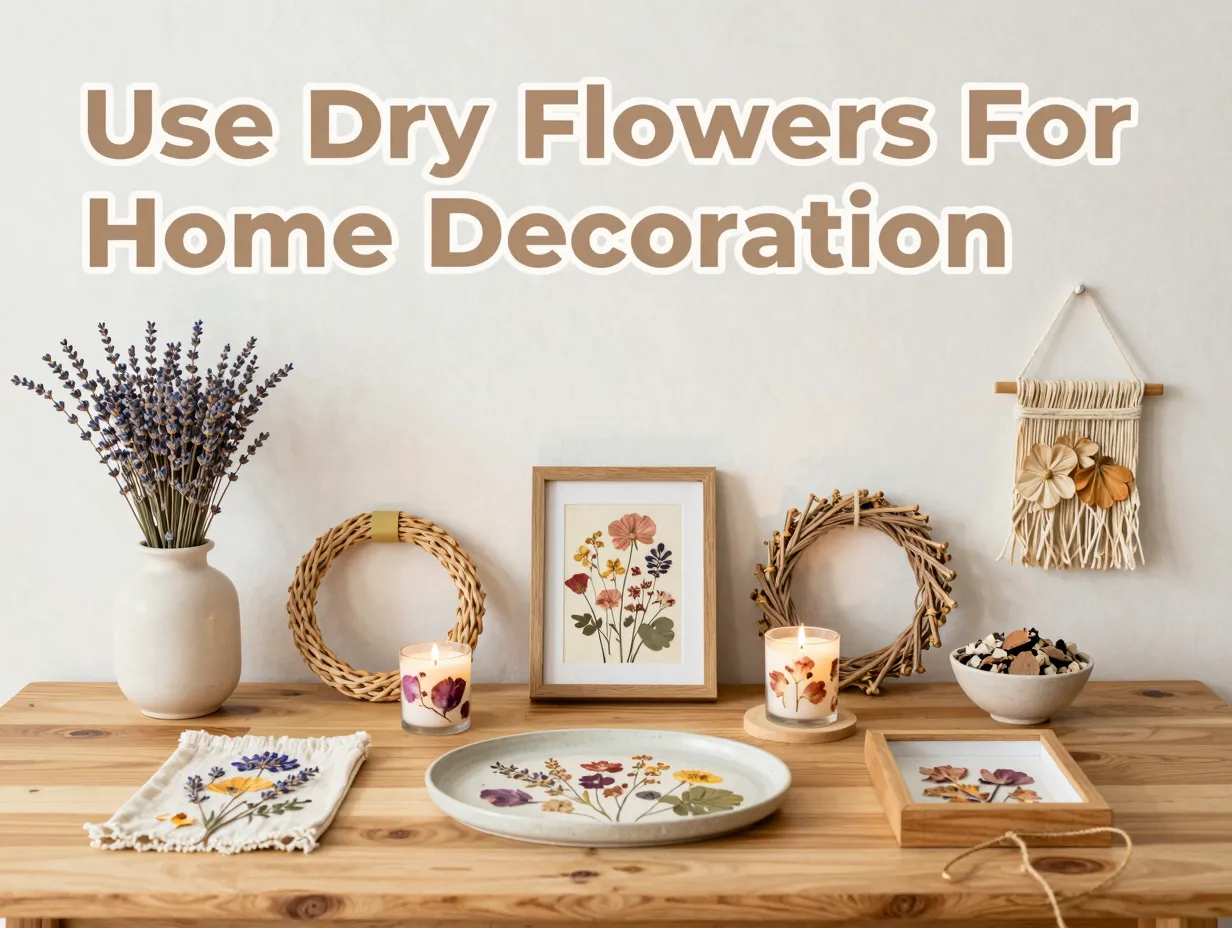
Key Takeaways
- Dried flowers are a sustainable, long-lasting alternative to fresh blooms and can serve as permanent decor elements throughout your home.
- There are at least 9 beautiful ways to use dry flowers for home decoration, ranging from wreaths and garlands to candles and shadow boxes.
- Most dried flower projects require minimal tools and can be completed by beginners with no prior crafting experience.
- Choosing the right flowers, such as lavender, pampas grass, eucalyptus, and dried roses, makes a significant difference in the final aesthetic.
- Proper placement, away from direct sunlight and high humidity, extends the life of your dried flower decor considerably.
Why Dried Flowers Are Having a Major Moment in Home Decor
Before diving into the specific ideas, it is worth understanding why dried floral decor has surged in popularity in 2026. Interior designers and lifestyle bloggers alike have embraced the trend for several compelling reasons.
Longevity is the most obvious advantage. A well-maintained dried flower arrangement can last anywhere from one to three years, compared to a fresh bouquet that wilts within a week [1]. That makes dried flowers an excellent investment for anyone decorating on a budget.
Sustainability is another driving factor. Preserving flowers that would otherwise be discarded reduces waste and aligns with the broader movement toward eco-conscious living [4]. Many people now dry flowers from their own gardens or repurpose gifted bouquets rather than buying new arrangements each month.
Versatility rounds out the appeal. Dried flowers work across nearly every interior design style, from bohemian and farmhouse to minimalist Scandinavian and maximalist eclectic. The earthy tones of dried botanicals complement almost any color palette.
Best Flowers to Dry for Home Decoration
Not all flowers dry equally well. Here is a quick reference guide:
| Flower | Drying Method | Best Use |
|---|---|---|
| Lavender | Air drying | Bundles, potpourri, garlands |
| Pampas grass | Air drying | Vase arrangements, wall hangings |
| Roses | Air drying or silica gel | Wreaths, shadow boxes, candles |
| Eucalyptus | Air drying | Garlands, centerpieces |
| Statice | Air drying | Wreaths, pressed art |
| Hydrangea | Air drying | Centerpieces, wreaths |
| Chamomile | Air drying | Potpourri, candles |
With that foundation in place, let us explore the 9 beautiful ways to use dry flowers for home decoration in detail.
9 Beautiful Ways To Use Dry Flowers For Home Decoration
1. Dried Floral Arrangements in Vases
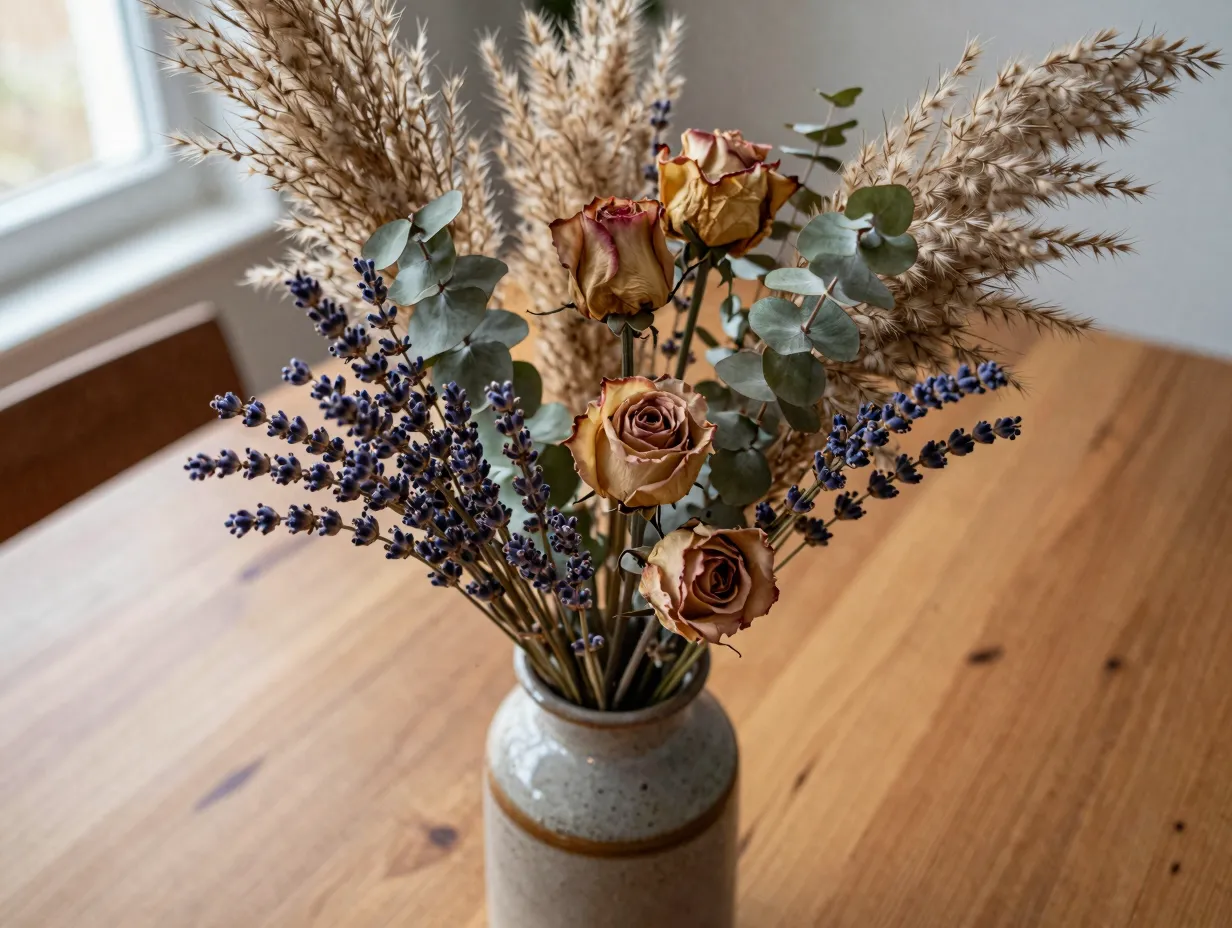
The simplest and most accessible starting point is a classic dried floral arrangement. Gather a mix of dried lavender, eucalyptus, pampas grass, and roses, then place them in a ceramic vase, glass jar, or woven basket. The key is layering, start with taller stems like pampas grass at the back, then add medium-height flowers like dried roses in the middle, and finish with shorter accent pieces like lavender at the front [1].
I tried this approach last autumn using a bundle of roses from a birthday bouquet I had air-dried for three weeks. The result was a warm, textured centerpiece that my guests consistently commented on. Unlike fresh arrangements, there is no water to change, no wilting to manage, and no weekly trips to the florist.
Pro tips for dried vase arrangements:
- Use an odd number of stems for a more natural, organic look.
- Choose a vase with a narrow neck to keep stems upright without floral foam.
- Dust gently with a soft brush every few weeks to maintain vibrancy.
- Keep the arrangement away from direct sunlight to prevent fading.
2. Dried Flower Wreaths
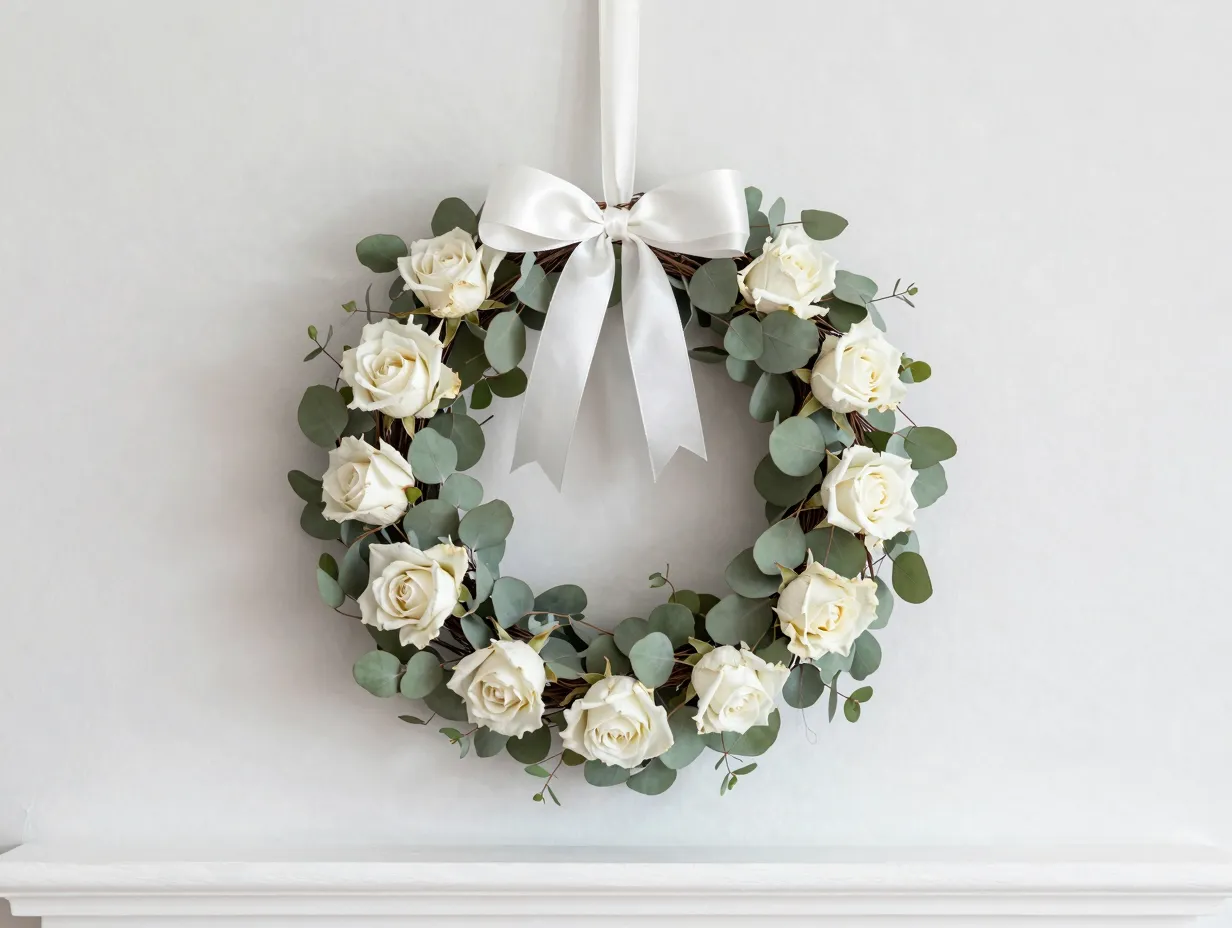
A dried flower wreath is one of the most visually impactful ways to use botanical decor. Hang one on your front door, above a fireplace, or on a blank wall, and it instantly becomes a focal point. Wreaths made from dried flowers and foliage can be customized for different seasons or occasions, a wreath of dried sunflowers and wheat feels distinctly autumnal, while one made from dried white roses and eucalyptus reads as elegant and year-round [2].
To make a basic wreath, you will need a wire or grapevine base, floral wire, and your chosen dried botanicals. Work in small sections, attaching clusters of flowers and foliage as you move around the base. Overlap each cluster slightly to create a full, layered look.
What makes a great dried flower wreath:
- Vary textures by mixing delicate flowers with sturdy foliage and seed pods.
- Add ribbon or twine for a finishing touch that also serves as a hanging loop.
- Seal with a light coat of hairspray or floral sealant to reduce shedding.
3. Pressed Flower Art
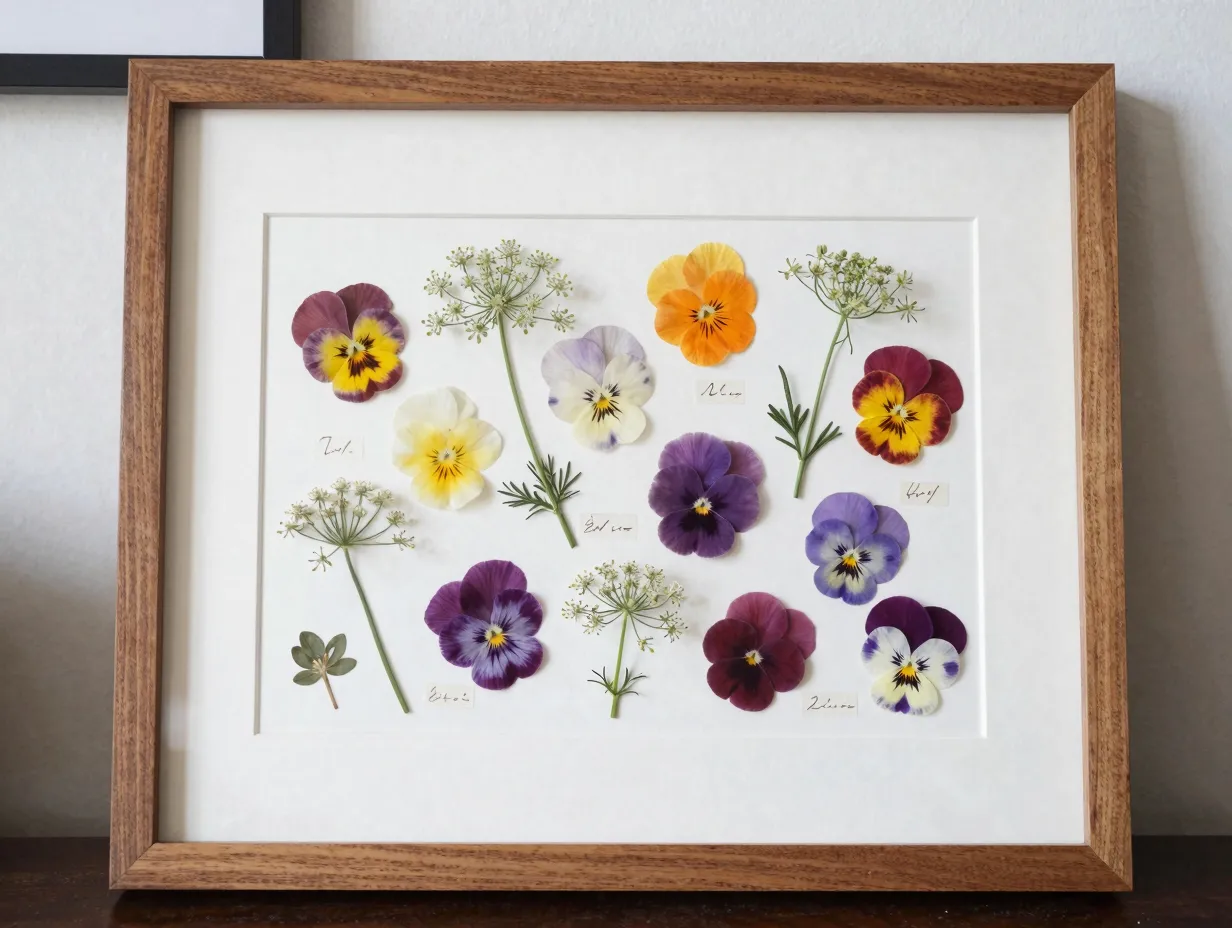
Pressed flower art transforms dried botanicals into framed wall pieces that look like they belong in a botanical museum. The process is straightforward: place fresh flowers between sheets of absorbent paper inside a heavy book, leave them for two to four weeks, then arrange the pressed specimens on card stock and frame them [3].
The results can be breathtaking. Delicate flowers like pansies, violas, and Queen Anne’s lace press particularly well, retaining much of their original color. Arrange them symmetrically for a formal, gallery-wall look, or scatter them organically for a more casual, artistic feel.
“Pressed flower art is one of the most affordable ways to create genuinely unique wall decor. No two pieces are ever identical, which gives your home a one-of-a-kind quality that mass-produced art simply cannot replicate.”
Framing ideas for pressed flower art:
- Use a white or cream mat board to make colors pop.
- Choose a frame with UV-protective glass to slow color fading.
- Create a series of three or five matching frames for a cohesive gallery wall.
- Label each specimen in small handwritten text for a botanical illustration effect.
4. Dried Flower Candles
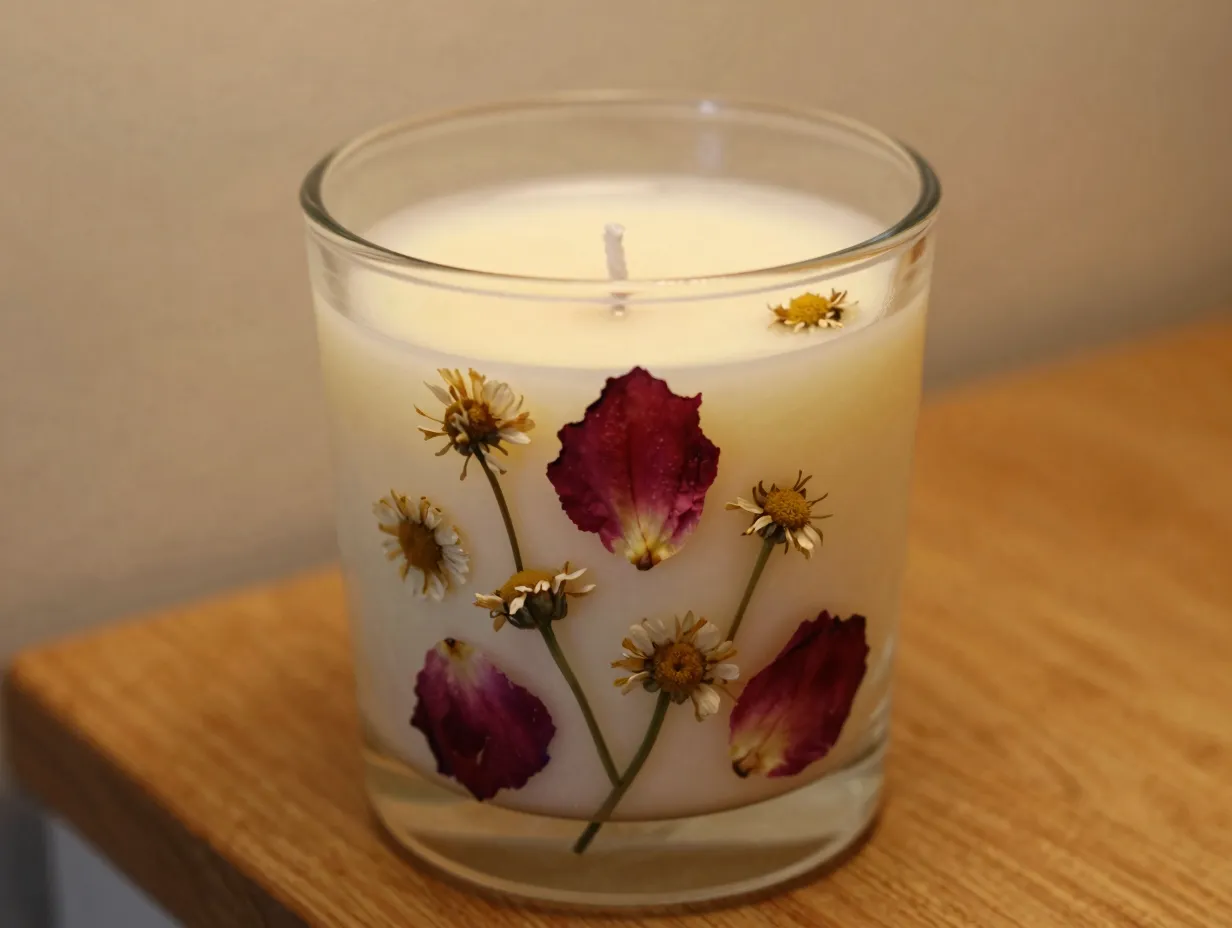
Embedding dried flowers into homemade candles is one of the most creative and functional uses of dried botanicals. The flowers become visible through the wax, creating a lantern-like glow when the candle is lit [1]. This project combines home fragrance with visual decoration in a way that few other crafts can match.
To make dried flower candles, melt soy or beeswax, pour a thin base layer into a glass container, and press dried flower petals against the inner walls before the wax sets. Pour the remaining wax carefully to lock the flowers in place. Chamomile, rose petals, and lavender buds are particularly beautiful choices because they retain their color well in wax.
Safety note: Keep dried flowers away from the wick area to prevent fire hazards. Decorative dried flower candles are best used as visual accents with the flame kept low, or displayed unlit as pure decor pieces.
5. Dried Flower Garlands
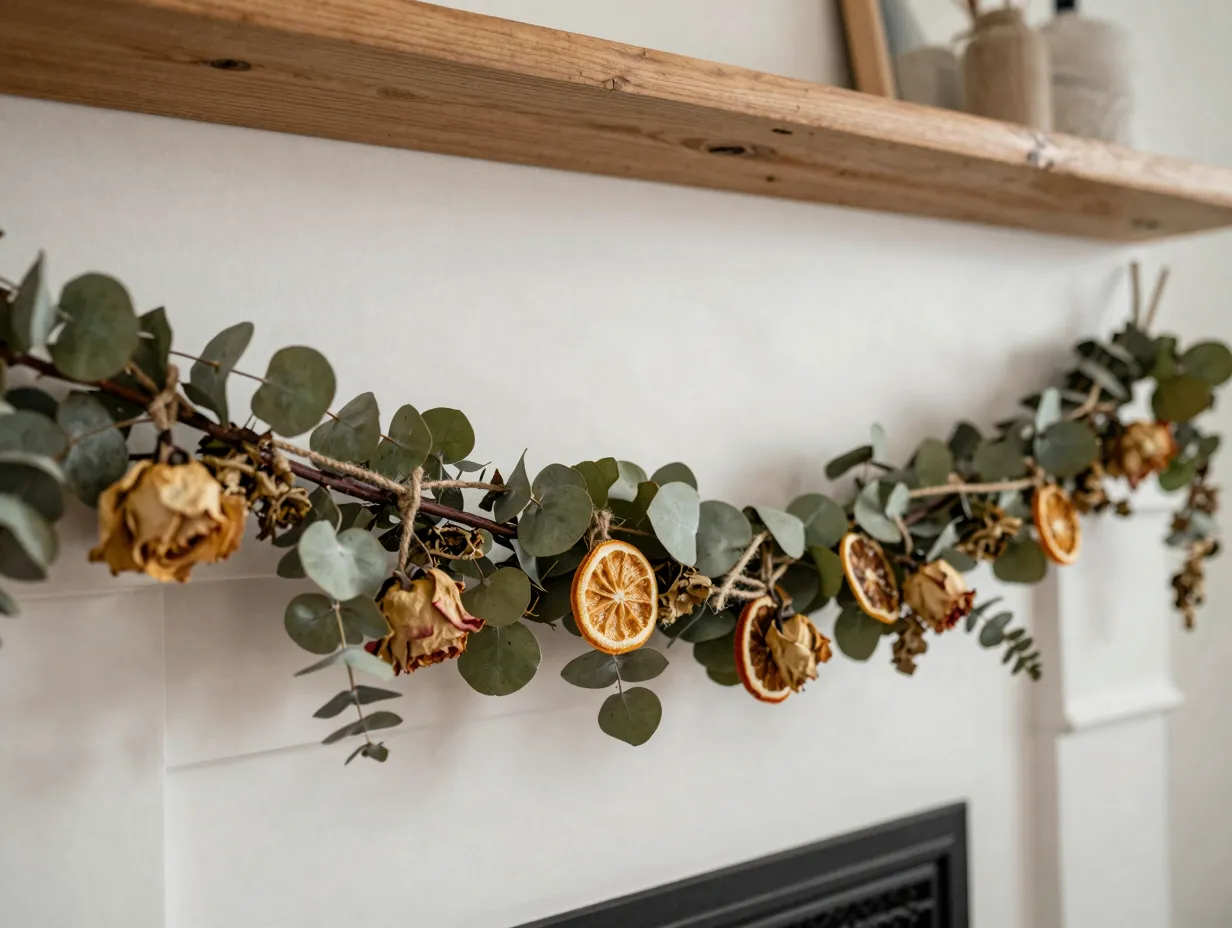
A dried flower garland adds a romantic, rustic quality to any room. Drape one over a mantelpiece, along a staircase banister, above a headboard, or across a window frame for an effortlessly charming effect [1]. Garlands work especially well in bedrooms and living rooms where you want to create a cozy, layered atmosphere.
Making a garland is simpler than it looks. Thread dried flower stems and foliage onto a length of jute twine or thin wire, tying each stem securely as you go. Eucalyptus, dried roses, and small dried citrus slices make a particularly fragrant and visually appealing combination.
Garland styling ideas by room:
- Bedroom: Drape above the headboard for a dreamy, botanical canopy effect.
- Living room: Hang above the fireplace mantel as a seasonal alternative to fresh greenery.
- Dining room: Lay along the center of a long dining table as a horizontal centerpiece.
- Entryway: Drape over a mirror or coat rack to welcome guests with natural beauty.
6. Dried Flower Potpourri
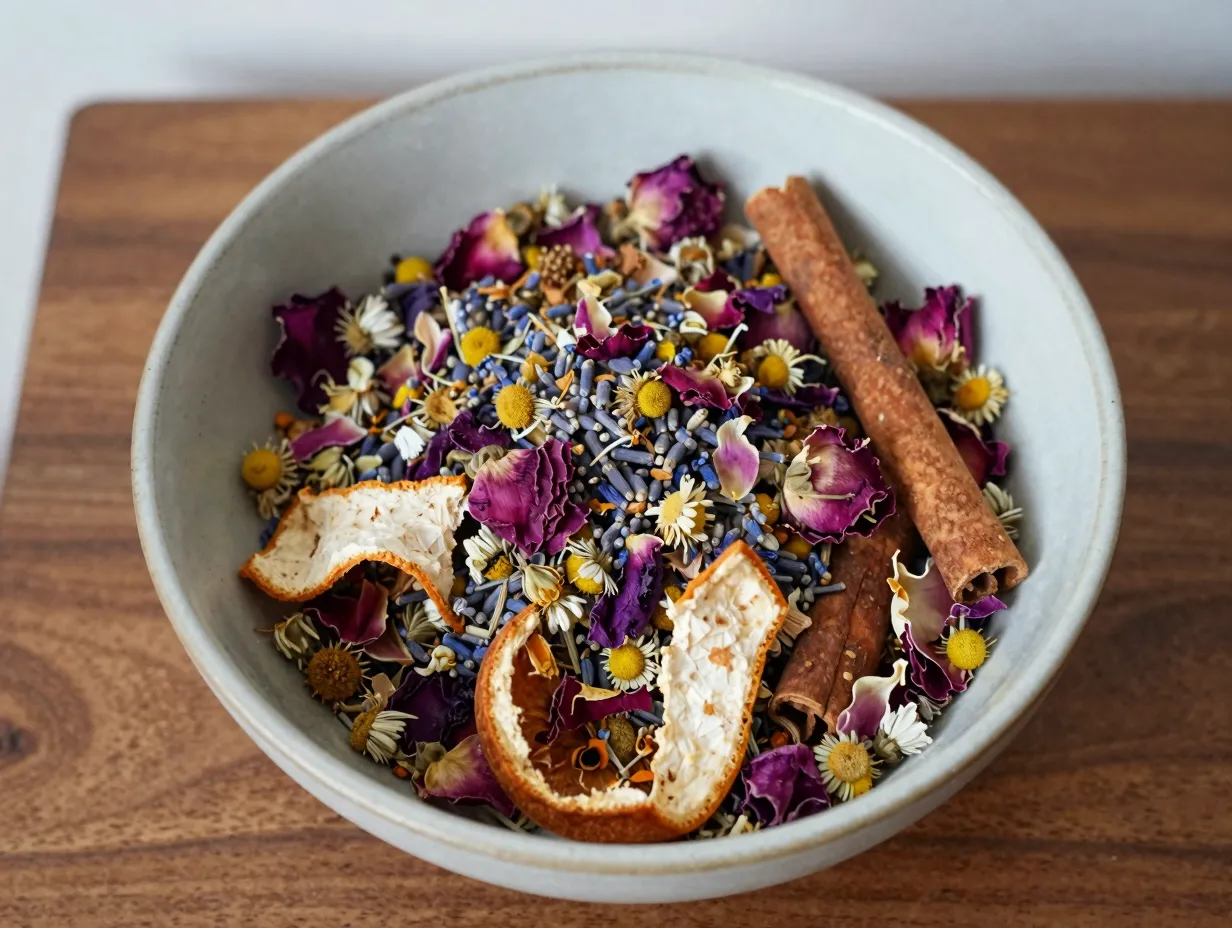
Potpourri may feel like a relic of the 1990s, but the modern version is a far cry from the synthetic-scented bowls of the past. Today’s dried flower potpourri uses real botanicals, rose petals, lavender, chamomile, dried citrus peel, and cinnamon sticks, combined with a few drops of pure essential oil to create a genuinely natural home fragrance [4].
Display potpourri in a wide ceramic bowl, a glass apothecary jar, or a woven basket. Place it in bathrooms, bedrooms, or entryways where you want a subtle, continuous scent. Refresh the fragrance every few weeks by adding a few more drops of essential oil and gently stirring the mixture.
A simple dried flower potpourri recipe:
- 2 cups dried rose petals
- 1 cup dried lavender buds
- 1/2 cup dried chamomile flowers
- Dried peel of one orange, broken into small pieces
- 2 cinnamon sticks, broken
- 10 drops lavender essential oil
- 5 drops rose absolute or rose otto essential oil
Mix all dry ingredients, add the essential oils, seal in a bag for one week to let the scent develop, then display in your chosen vessel.
7. Dried Flower Wall Hangings
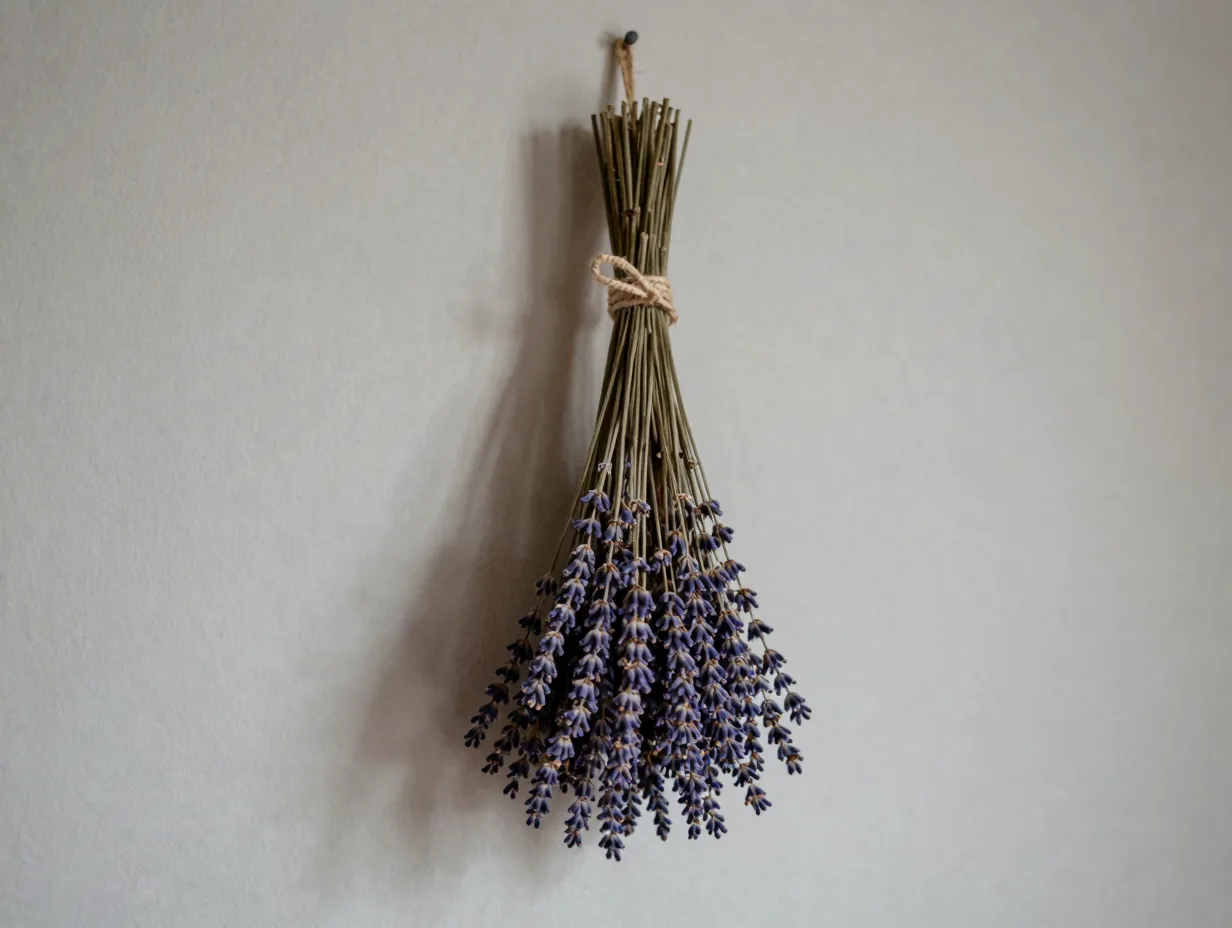
Hanging dried flower bouquets upside down on walls is both a drying technique and a finished decor statement [3]. A cluster of upside-down dried lavender, pampas grass, or eucalyptus tied with a ribbon creates an earthy, artistic display that suits bohemian, farmhouse, and Scandinavian interiors equally well.
The beauty of this approach is its simplicity. You do not need a frame, a vase, or any special equipment. Tie a bundle of stems together with twine, loop the twine over a nail or hook, and the arrangement is complete. The flowers continue to dry in place if they are not fully dried yet, which means the display actually improves over time as the stems stiffen and the colors deepen.
Best flowers for upside-down wall hangings:
- Lavender bundles (classic and aromatic)
- Pampas grass (dramatic and textural)
- Dried wheat or oat stalks (rustic and golden)
- Eucalyptus branches (fragrant and long-lasting)
- Dried alliums (architectural and striking)
8. Dried Flower Table Centerpieces
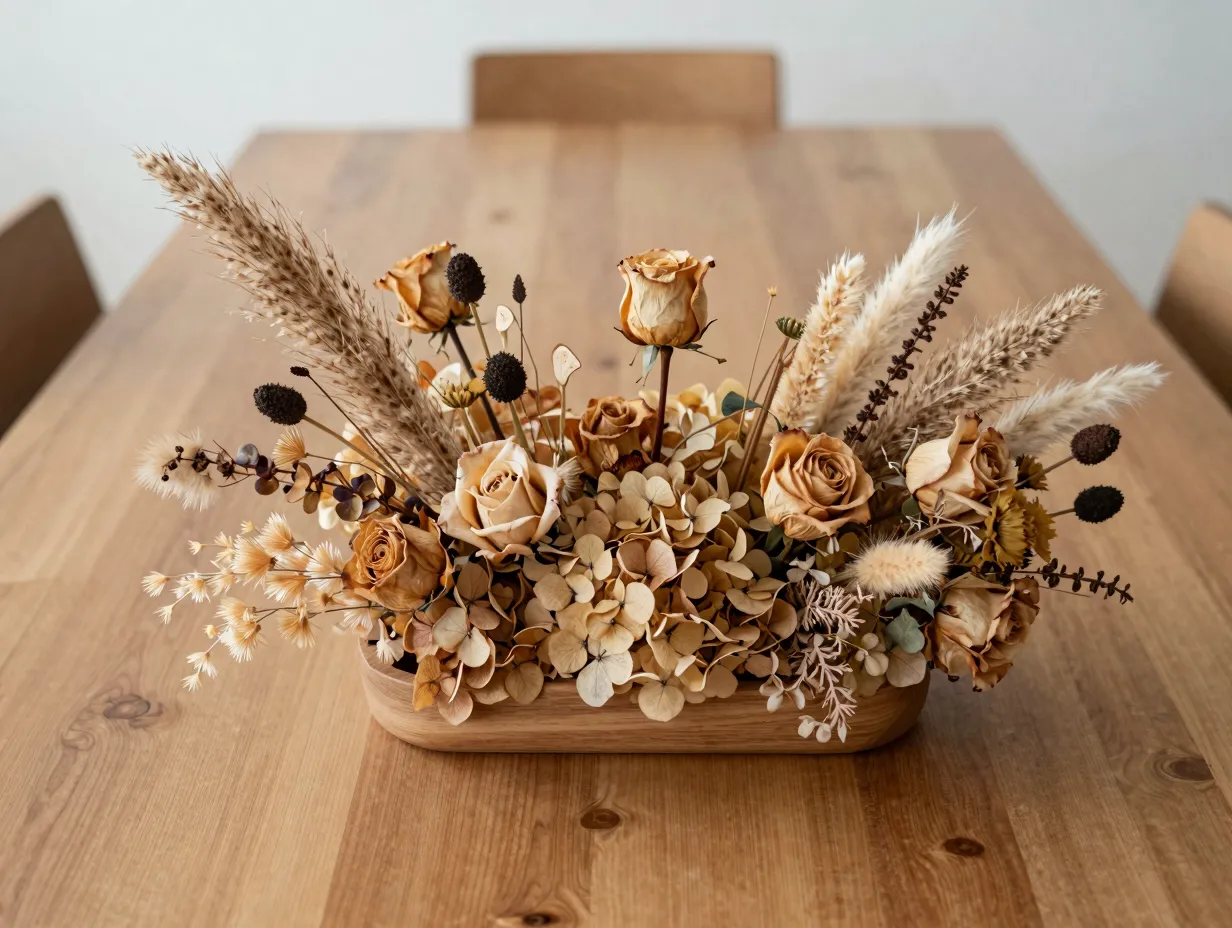
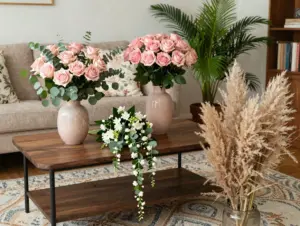
A well-designed dried flower centerpiece elevates any dining or coffee table from functional to genuinely beautiful [2]. Unlike fresh flower centerpieces, dried arrangements require no water, no daily maintenance, and no replacement every few days. Set one up once and enjoy it for months.
For a dining table centerpiece, choose a low, wide arrangement so guests can see each other across the table. A shallow wooden tray or a cluster of small bud vases at varying heights works well. Mix dried roses, dried hydrangeas, pampas grass, and seed pods for a rich, layered look.
For a coffee table, a single statement piece in a tall ceramic vase, perhaps a dramatic bundle of dried pampas grass or a sculptural arrangement of dried proteas, creates a focal point without overwhelming the space.
“The secret to a great dried flower centerpiece is treating it like a sculpture. Think about height, volume, texture, and negative space, not just which flowers to include.”
9. Dried Flower Shadow Boxes
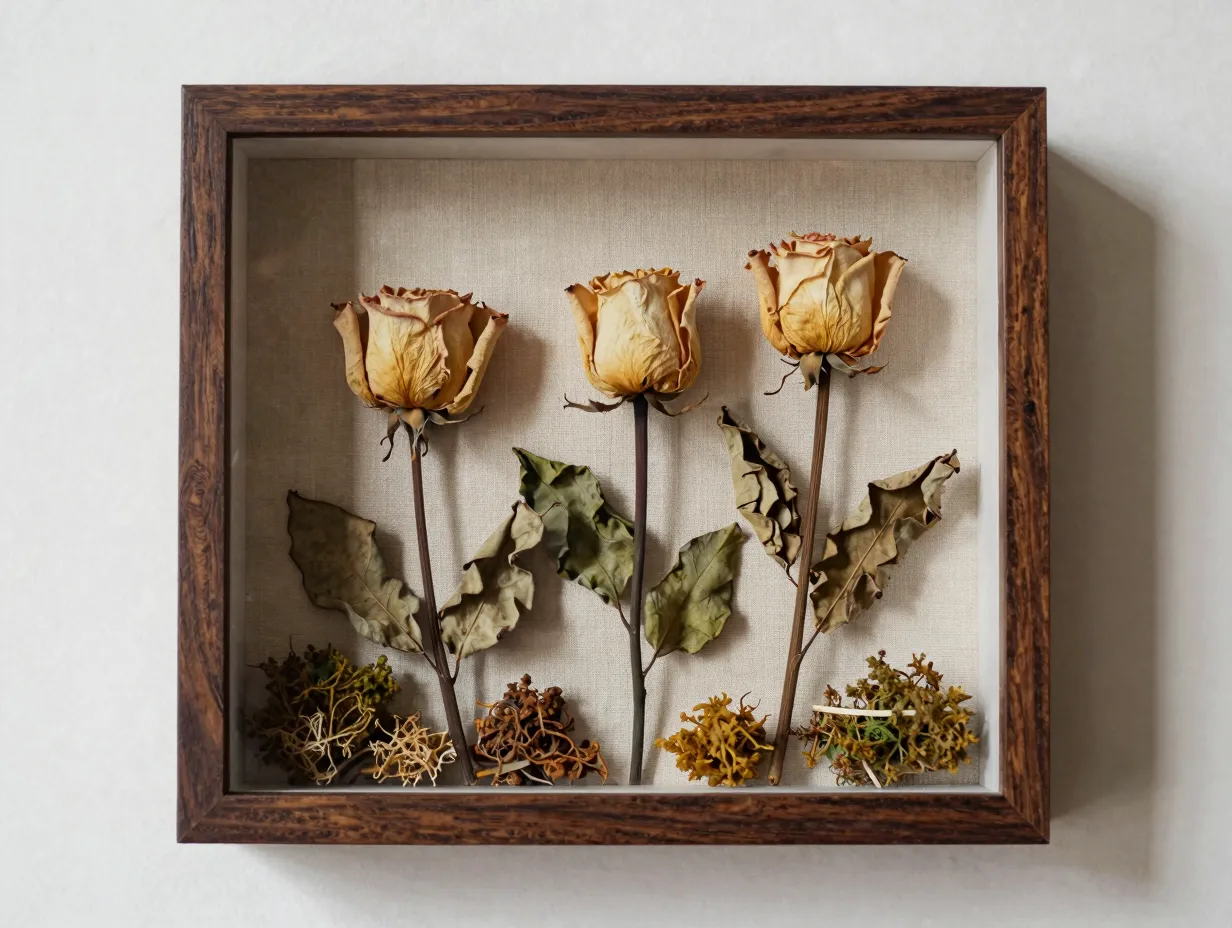
Shadow boxes represent perhaps the most sophisticated of all the 9 beautiful ways to use dry flowers for home decoration. A shadow box is a deep frame that allows you to arrange three-dimensional objects, including dried flower heads, seed pods, pressed leaves, and small branches, in a way that flat frames cannot accommodate [5].
The depth of a shadow box gives dried flowers room to retain their natural shape rather than being pressed flat. Arrange a cluster of dried rose heads at varying depths, add some dried moss or lichen as a base layer, and include a few pressed leaves for contrast. The result is a piece of botanical art that looks like it belongs in a natural history museum.
Steps to create a dried flower shadow box:
- Choose a shadow box frame at least 2 inches deep.
- Line the back panel with card stock, fabric, or decorative paper in a complementary color.
- Arrange your dried botanicals on the backing before gluing to test the composition.
- Use a hot glue gun or strong craft glue to secure each element.
- Close the frame and hang on the wall or display on a shelf.
Shadow boxes also make exceptional personalized gifts. A shadow box filled with dried flowers from a wedding bouquet, a garden, or a meaningful occasion becomes a keepsake that preserves a memory in a tangible, beautiful form.
How to Make Your Dried Flower Decor Last Longer
Investing time in any of these projects means you want the results to last. Here are the most important care principles to follow:
Avoid direct sunlight. UV rays are the primary cause of color fading in dried flowers. Place arrangements in bright but indirect light for the best longevity.
Control humidity. High humidity can cause dried flowers to reabsorb moisture, leading to mold and drooping. Avoid placing dried flower decor in bathrooms or kitchens where steam is frequent.
Dust regularly. Use a soft makeup brush or a can of compressed air to gently remove dust from delicate petals and stems. Never use water or damp cloths.
Seal when appropriate. A light mist of hairspray or dedicated floral sealant can help preserve color and reduce shedding, particularly for wreaths and wall hangings.
Handle gently. Dried flowers are brittle. Move arrangements as infrequently as possible, and when you must handle them, support the stems from below rather than gripping the flower heads.
Sourcing and Preparing Dried Flowers
You do not need to buy pre-dried flowers to get started. Drying your own is straightforward and far more economical.
Air drying is the most common method. Bundle five to ten stems together, secure with a rubber band, and hang upside down in a warm, dry, well-ventilated space for two to four weeks. This works well for lavender, roses, eucalyptus, and most sturdy flowers.
Silica gel drying preserves color and shape better than air drying, particularly for delicate flowers like peonies and dahlias. Bury the flower heads in a container of silica gel crystals for three to seven days.
Pressing requires nothing more than heavy books and absorbent paper. Place flowers between layers of paper, stack books on top, and wait two to four weeks.
Purchasing pre-dried flowers is also a perfectly valid option. Many online retailers and local florists now stock a wide range of dried botanicals, from common lavender and pampas grass to more exotic dried proteas and preserved palm leaves.
Conclusion
The 9 beautiful ways to use dry flowers for home decoration covered in this guide represent just the beginning of what is possible with dried botanicals. From a simple vase arrangement assembled in ten minutes to an intricate shadow box that takes an afternoon to create, there is a project here for every skill level, every budget, and every interior style.
Your actionable next steps:
- Start with one project this week. Choose the simplest option, a dried vase arrangement or an upside-down wall hanging, and build your confidence before moving on to more complex ideas.
- Gather your materials. Check your garden, ask friends for unwanted bouquets, or browse an online dried flower retailer for affordable starter bundles.
- Choose a room to transform. Pick one space in your home that feels bare or uninspired and commit to adding at least one dried flower element within the next two weeks.
- Experiment with seasonal updates. Dried flower decor is easy to swap out as seasons change. Keep a small stock of dried botanicals on hand so you can refresh your arrangements without significant expense.
- Share your results. Documenting your projects and sharing them with others is a great way to stay motivated and discover new ideas from fellow dried flower enthusiasts.
Dried flowers are not a compromise or a second-best alternative to fresh blooms. They are a distinct, beautiful, and sustainable decorating medium in their own right. Once you start incorporating them into your home, it is very hard to stop.
References
[1] Uses For Dried Flowers – https://www.realhomes.com/advice/uses-for-dried-flowers?utm_source=openai
[2] 8 Home Decor Ideas Using Dried Florals – https://housing.com/news/8-home-decor-ideas-using-dried-florals/?utm_source=openai
[3] How To Decorate With Dried Flowers – https://www.livingetc.com/advice/how-to-decorate-with-dried-flowers?utm_source=openai
[4] Repurpose A Bouquet – https://www.organicauthority.com/live-grow/repurpose-a-bouquet?utm_source=openai
[5] Creative Ways To Use Dried Flowers In Your Home Decor – https://amongbeautifulcrafts.com/creative-ways-to-use-dried-flowers-in-your-home-decor/?utm_source=openai