8 Simple Garden Ideas For The Front Of Your House To Boost Curb Appeal
A well-designed front garden can add up to 12% to a home’s perceived value, according to real estate research, and yet most homeowners spend the majority of their renovation budget on the interior, leaving the front of the house as an afterthought. That disconnect is a missed opportunity. In 2026, front yard design has evolved far beyond a strip of lawn and a few petunias. These 8 simple garden ideas for the front of your house to boost curb appeal draw on the latest design thinking, sustainable planting trends, and budget-conscious strategies to help you create a front garden that genuinely turns heads.
Disclosure: This post contains affiliate links. As an Amazon Associate, we earn from qualifying purchases, and at no extra cost to you.
I have spent years watching neighbors transform tired front yards into welcoming, high-impact spaces with surprisingly modest effort. The common thread in every success story? Intentional choices made in the right order. Whether you rent a small townhouse or own a sprawling suburban plot, these ideas scale to your situation.
Key Takeaways
- Layered, naturalistic planting with a limited color palette creates a modern, cohesive front garden without requiring a large budget.
- Replacing or reducing traditional lawn with native plants, ornamental grasses, and gravel dramatically cuts maintenance and water use.
- A statement entrance, bold door color, sculptural shrubs, or specimen tree, delivers one of the highest returns on curb appeal investment.
- Hardscaping elements like large-format pavers and defined edging make small front yards feel larger and more polished.
- Outdoor lighting and vertical garden features are low-effort additions that transform the front of the house after dark and in tight spaces.
Why Front Yard Design Matters More Than Ever in 2026
Before diving into the specific ideas, it is worth understanding what is driving the shift in front yard design right now. In 2026, curb appeal is no longer just about impressing buyers during a home sale. It is about creating an outdoor space that reflects how you live, supports local ecology, and reduces the time you spend on maintenance.
Design publications and landscape experts have noted a clear move away from the perfectly manicured, water-hungry lawn toward what some are calling “perfectly imperfect” front gardens, spaces that feel alive, layered, and connected to the local environment [2]. This shift is practical as much as it is aesthetic. Water restrictions, rising maintenance costs, and a growing awareness of pollinator decline have pushed homeowners and designers alike toward planting schemes that work with nature rather than against it [2][3].
The good news is that this direction aligns perfectly with simplicity. Naturalistic gardens are, by design, lower maintenance once established. That means the 8 simple garden ideas for the front of your house to boost curb appeal outlined below are not just visually effective, they are genuinely manageable for the average homeowner.
8 Simple Garden Ideas For The Front Of Your House To Boost Curb Appeal
1. Layer Your Planting for a Naturalistic Look
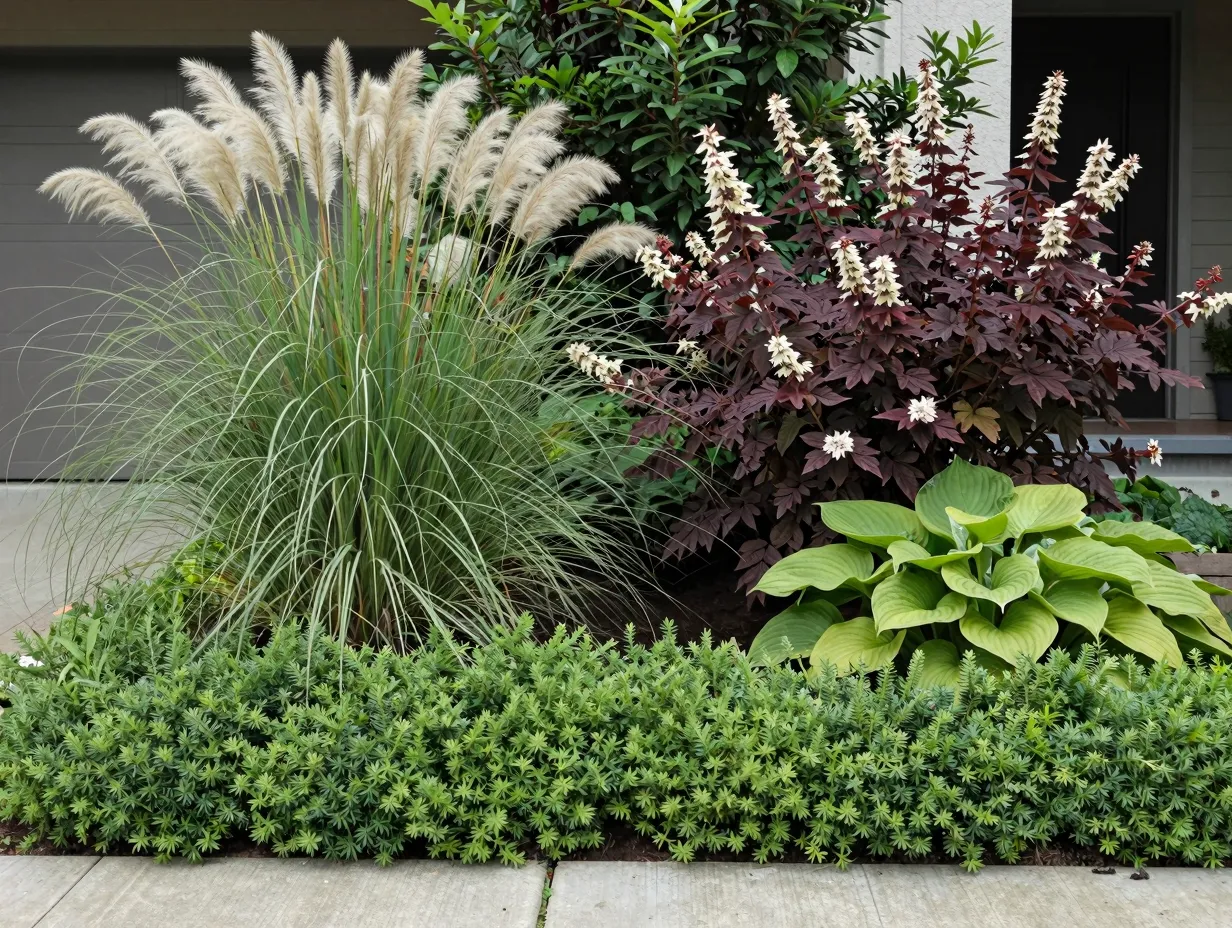
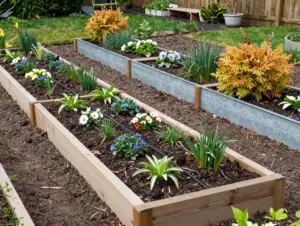
The single most transformative thing you can do in a front garden is to think in layers. Professional designers consistently recommend mixing tall structural plants at the back or center of a bed, mid-height shrubs in the middle zone, and low cascading groundcovers at the edges [1][3]. This approach mimics how plants grow in the wild and creates visual depth that a flat row of identical shrubs simply cannot achieve.
In 2026, the emphasis is on contrasting textures rather than contrasting colors [1]. Pairing bold, architectural foliage, think the broad leaves of a hosta or the graphic form of a yucca, with wispy ornamental grasses creates a dynamic composition that reads beautifully from the street. Designers recommend keeping the color palette to roughly three complementary tones so the overall effect feels balanced rather than chaotic [1][3].
A practical starting point:
- Tall layer: ornamental grasses such as Karl Foerster feather reed grass, or a compact Japanese maple
- Mid layer: flowering shrubs like spirea, knockout roses, or native viburnums
- Low layer: creeping thyme, sedum, or native groundcovers like ajuga
This three-tier structure works in beds of almost any size and is one of the most cost-effective ways to elevate the front of your house [3].
2. Reduce Lawn and Introduce Native Planting
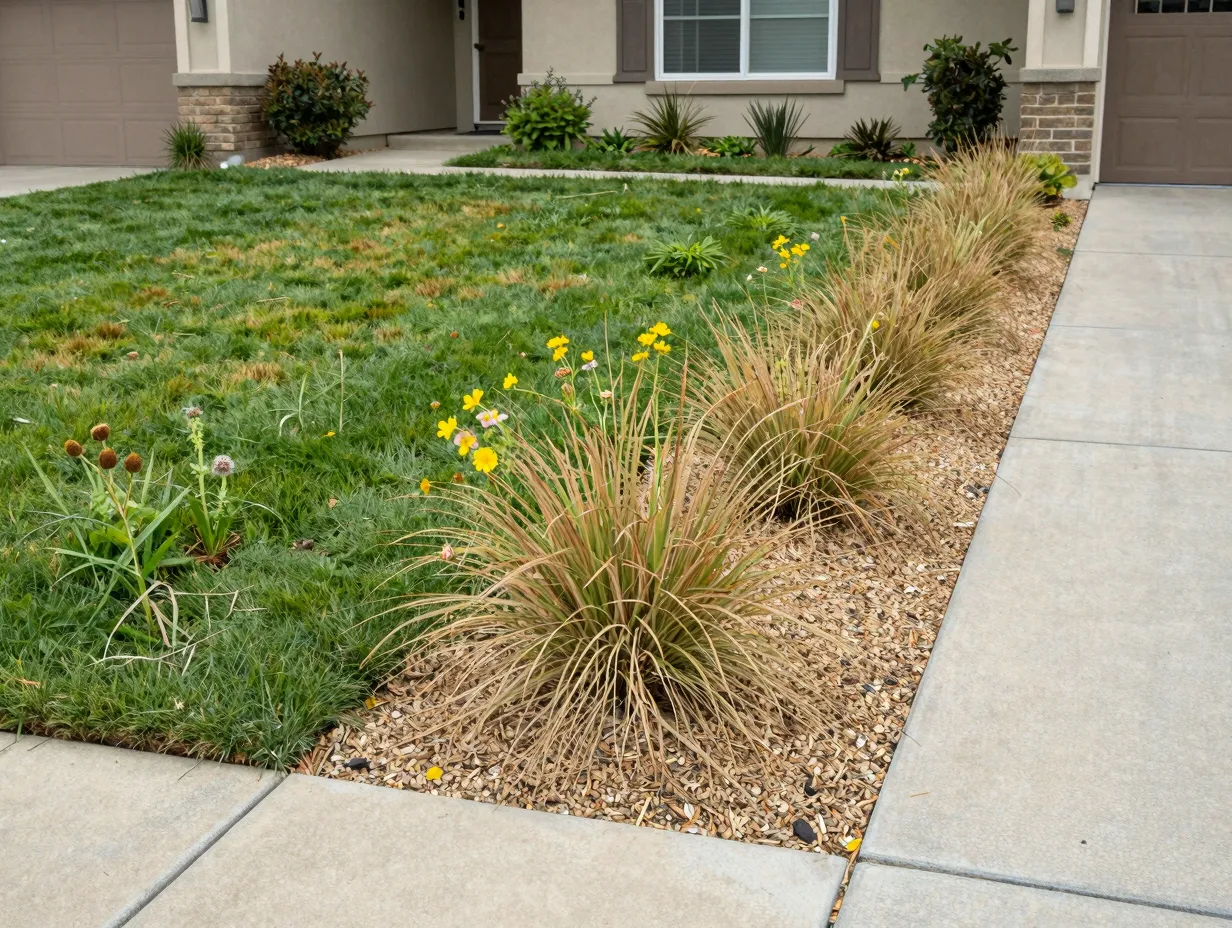
One of the strongest curb appeal trends for 2026 is the deliberate reduction of traditional lawn area in favor of mixed native plantings, wildflowers, and pollinator-friendly species [2][3][5]. This is not simply a design preference, it is a response to real pressures including water scarcity, fertilizer costs, and the well-documented decline of native bee populations.
Replacing even a portion of your front lawn with native grasses, low wildflower meadow planting, or a gravel mulch bed with drought-tolerant shrubs can cut your outdoor water use significantly while creating a front garden that looks intentional and contemporary [2][5]. Better Homes and Gardens notes that region-specific native plants are a key curb appeal recommendation for 2026 precisely because they require less intervention once established [5].
“The best front garden is one that looks great and asks very little of you after the first season.”
If removing the entire lawn feels too drastic, start by converting the border strips along paths and driveways. Replace turf with a mix of native ornamental grasses and low perennials. This creates a clear visual frame around the property without requiring a full lawn removal project.
3. Create a Statement Entrance
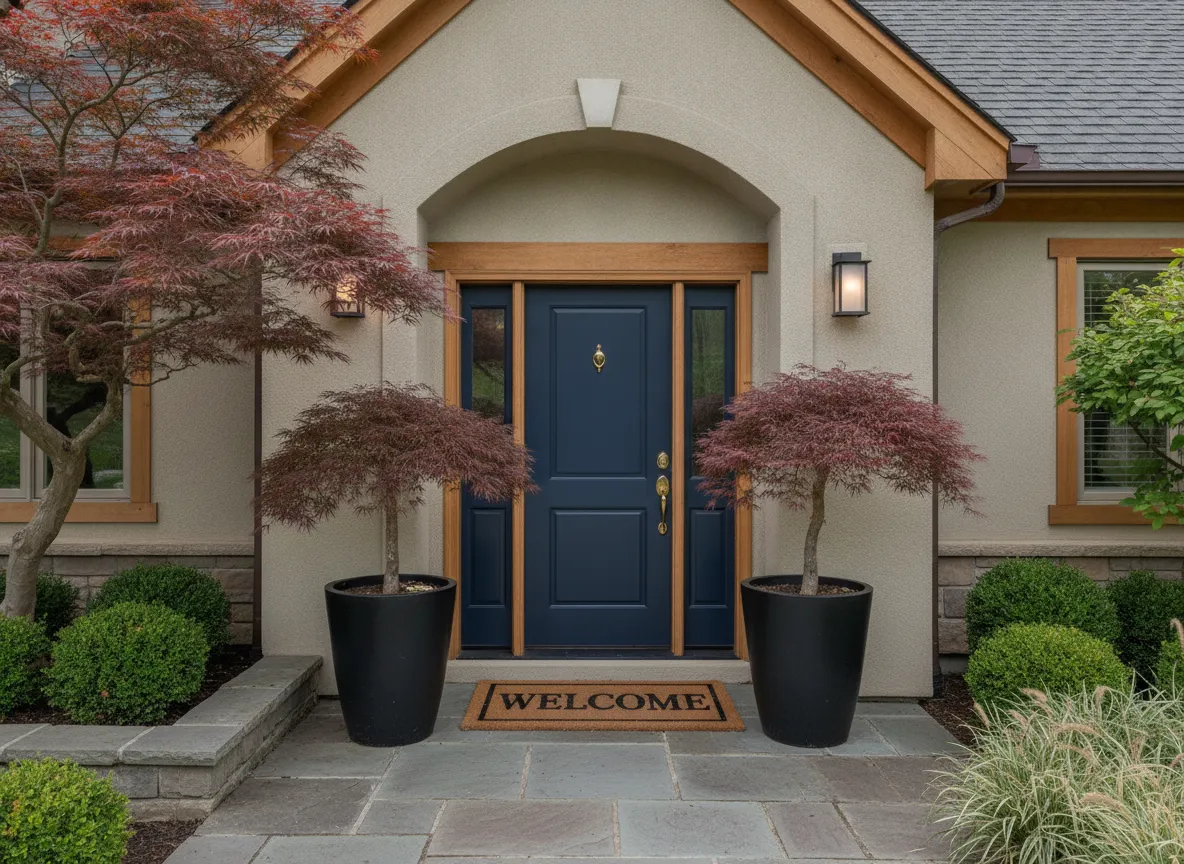
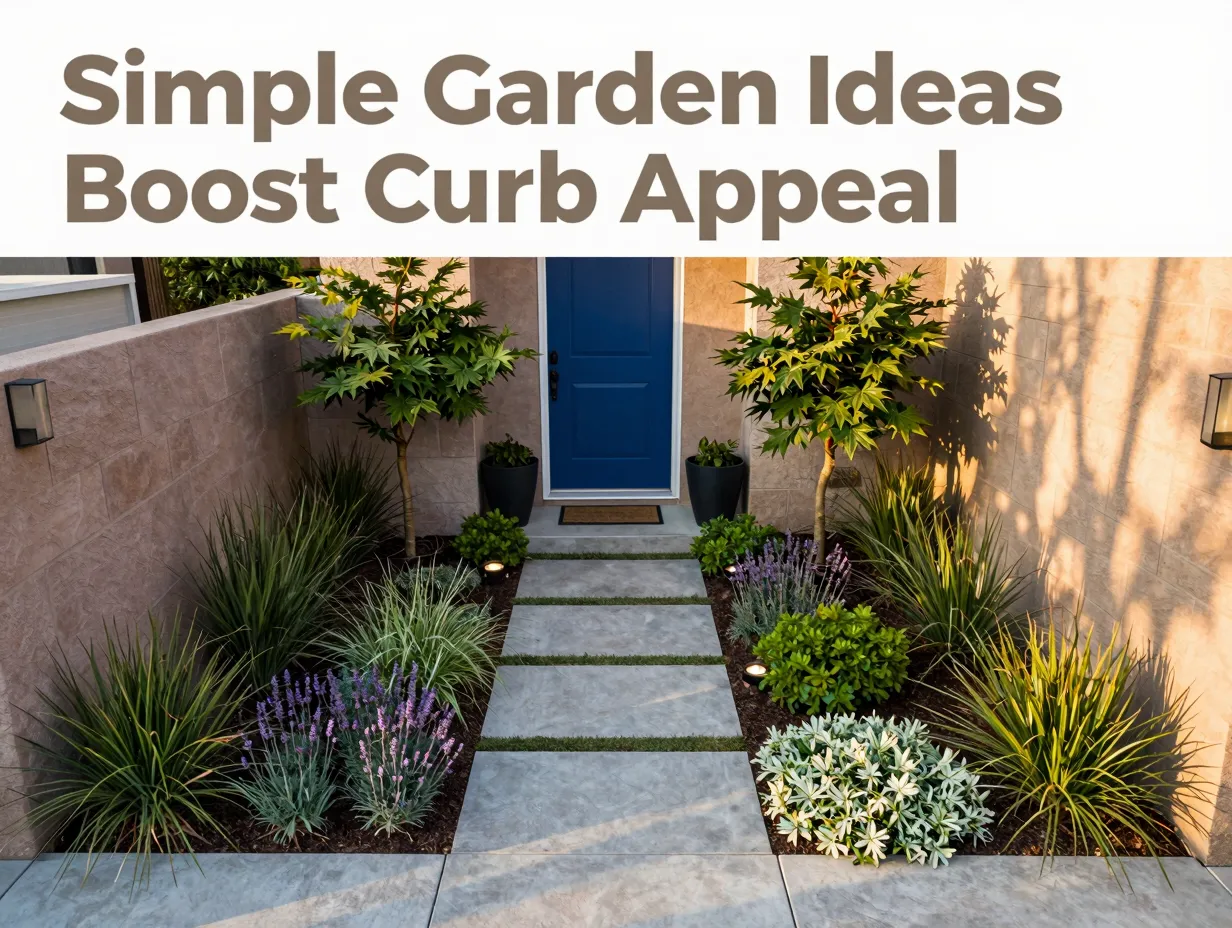
The front entrance is the focal point of any home’s exterior, and in 2026, designers are pushing homeowners to treat it as a genuine design statement rather than a functional afterthought [1][3][5]. This does not require a major renovation. Some of the highest-impact changes are also the simplest.
High-impact entrance upgrades to consider:
- A bold front door color, deep navy, forest green, matte black, or terracotta all perform well against neutral facades
- Statement planters flanking the door, ideally in matte black, aged terracotta, or natural stone
- A sculptural specimen shrub or small tree, a Japanese maple, multi-trunk crape myrtle, or clipped topiary ball adds architectural presence [1][5]
- A fresh, oversized welcome mat that complements the door color
Even budget-conscious advice from leading home design sources highlights that a colorful front door combined with a few well-chosen containers can significantly upgrade perceived value without touching the garden beds at all [5][11]. I have seen a single Japanese maple planted beside a repainted front door turn a forgettable brick semi-detached into a house people slow down to look at.
4. Upgrade Your Path and Hardscaping
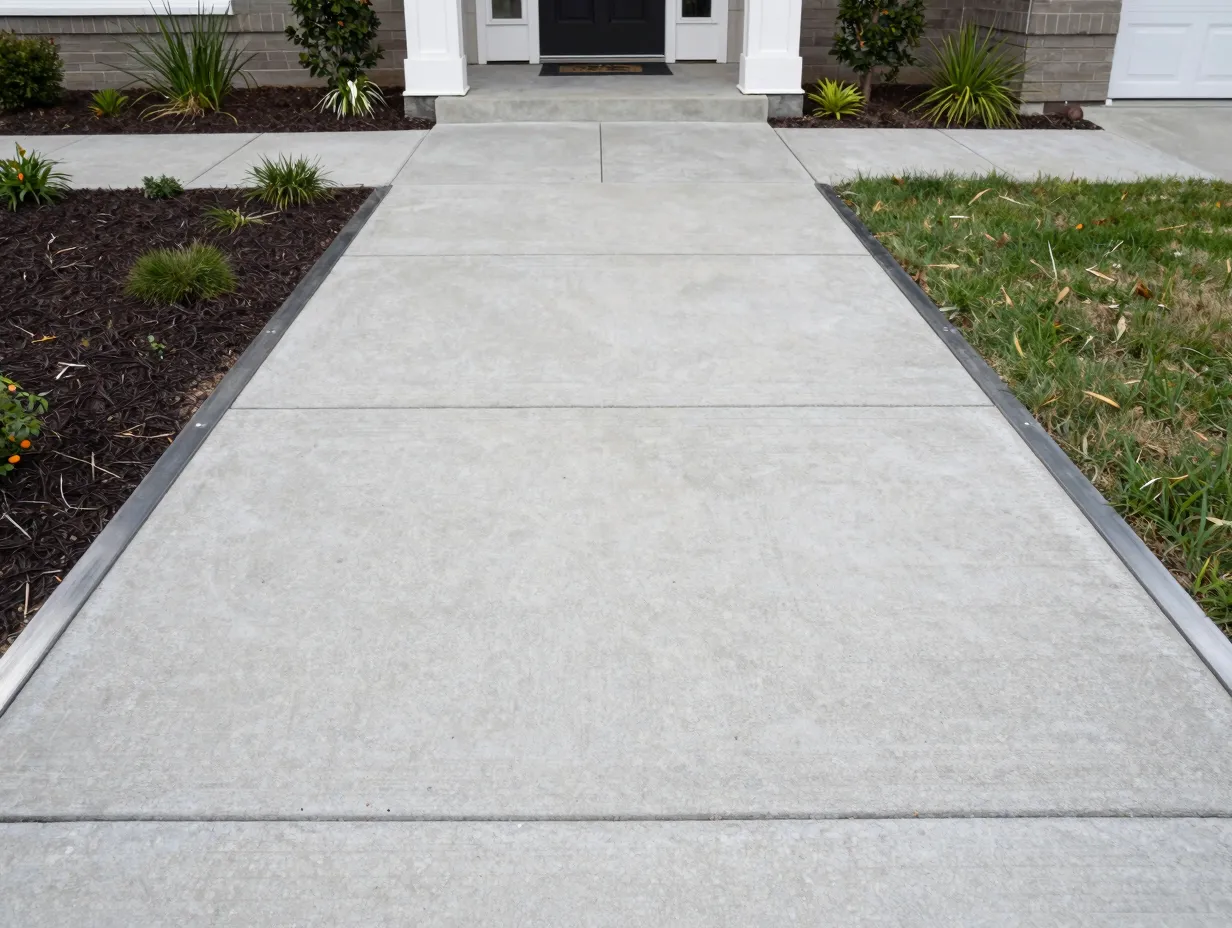
Clear, well-designed circulation is a fundamental principle of good front yard design, and it is one that many homeowners overlook. In 2026, hardscaping trends favor large-format concrete pavers, often 24 inches by 24 inches or larger, winding flagstone paths, and decomposed granite or pea gravel as lawn alternatives [1][3][7][8].
A defined path does several things at once. It guides visitors clearly to the front door, it creates a strong geometric or organic line that anchors the planting beds on either side, and it makes a small front yard feel more considered and spacious [3][7].
| Material | Best For | Maintenance Level |
|---|---|---|
| Large concrete pavers | Contemporary, geometric layouts | Low |
| Flagstone | Cottage, naturalistic gardens | Low to medium |
| Decomposed granite | Drought-tolerant, modern schemes | Very low |
| Pea gravel | Informal, cottage, or Japanese styles | Low |
Defined edging, steel, stone, or even a neatly cut lawn edge, is equally important. It separates the path from the planting beds with a clean line that makes the whole front garden look more intentional [3][7].
5. Add Vertical Garden Elements
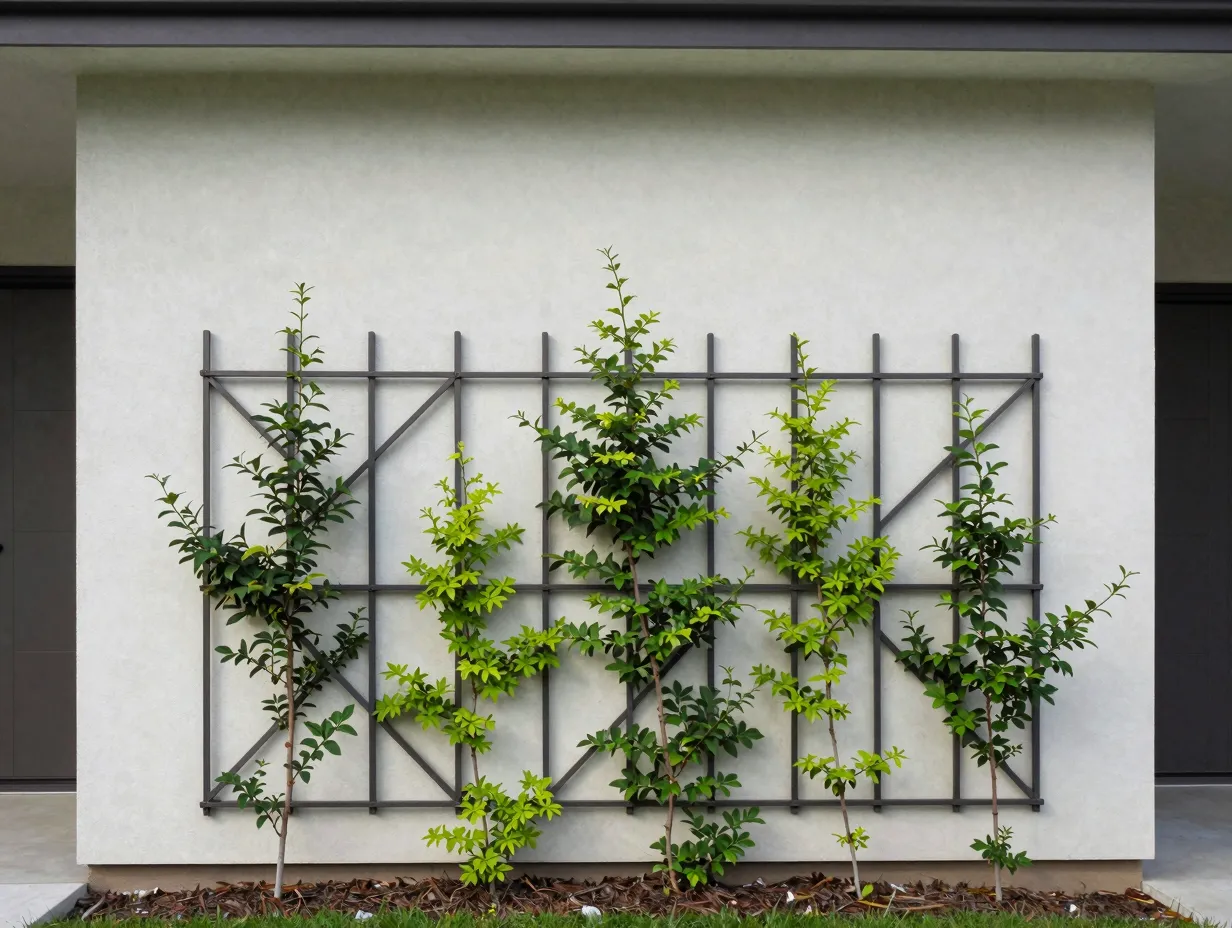
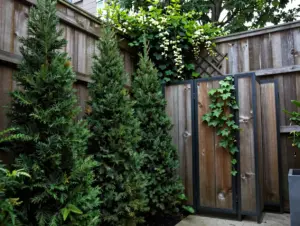
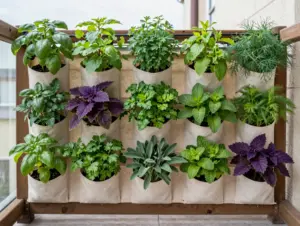
Vertical space is one of the most underused dimensions in front yard design, particularly for homes with narrow plots or blank wall sections. Trellises, arbors, climbing vines, and wall-mounted planters are all highlighted in 2026 design guidance as simple ways to add drama and soften the facade of a house [8][10].
A timber or metal trellis fixed to a side wall and planted with a climbing rose, clematis, or jasmine creates an instant focal point that draws the eye upward and makes the house feel more established. For a more contemporary look, a geometric metal trellis with a single-species climber, such as a star jasmine for fragrance, reads as architectural rather than cottage-style.
Living wall systems, where modular planters are mounted directly to a wall, are another option gaining traction in 2026 for smaller front gardens where ground space is limited [10]. These work particularly well beside front doors or flanking garage walls, turning an otherwise blank surface into a living, textured feature.
Vertical element options by style:
- Traditional: timber arbor over the front path with climbing roses
- Contemporary: powder-coated steel trellis with star jasmine or climbing hydrangea
- Compact: wall-mounted terracotta or matte-black planters in a grid arrangement
- Naturalistic: self-clinging Virginia creeper or climbing hydrangea on a rendered wall
6. Use Outdoor Lighting Strategically
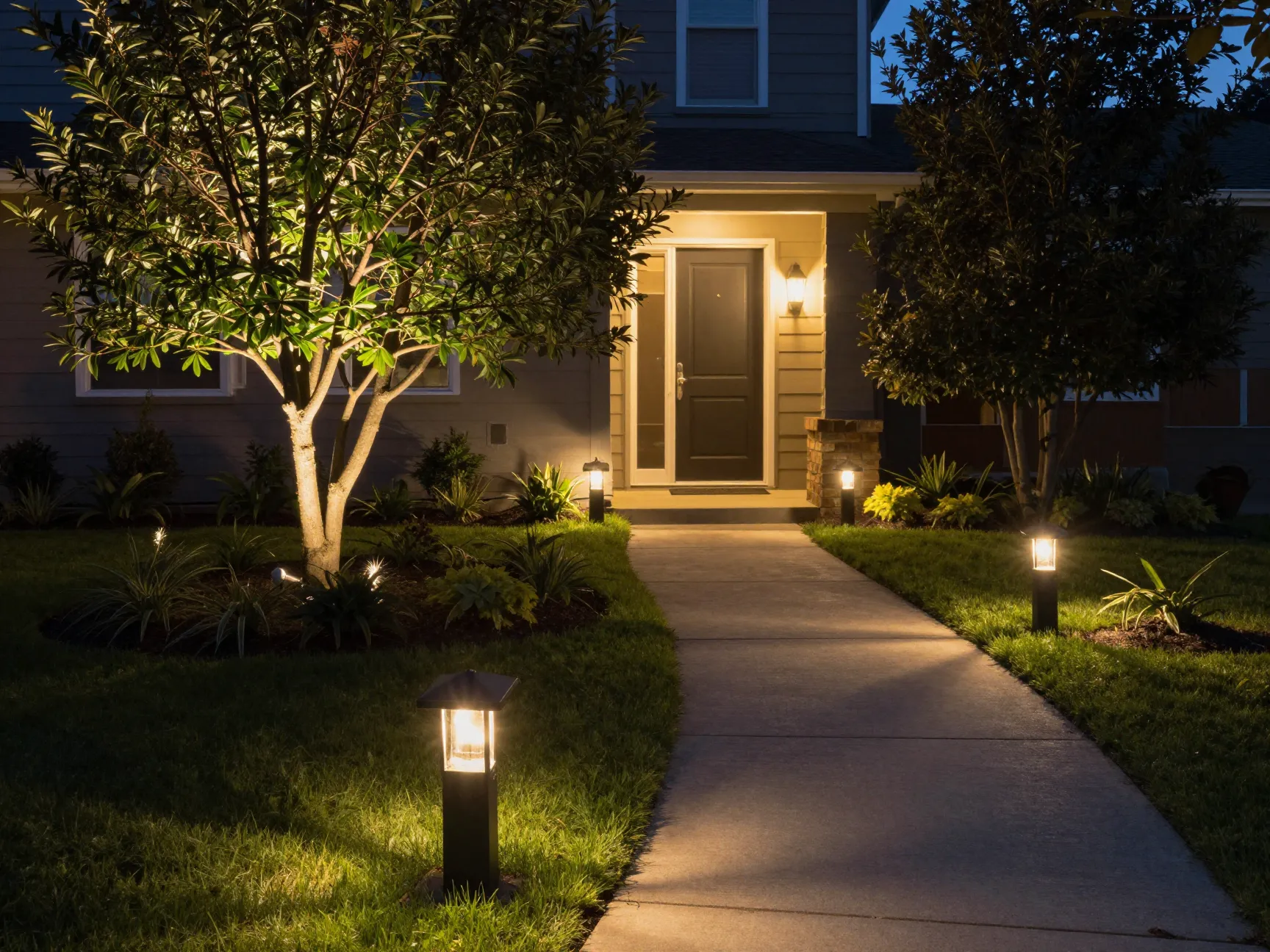
Outdoor lighting is consistently cited as one of the highest-impact, lowest-effort curb appeal upgrades available [7][8]. Yet most front gardens are completely dark after sunset, which means the home makes no impression at all during evening hours, and for a large portion of the year in northern climates, that is most of the time people arrive home or pass by.
In 2026, the recommended approach combines three types of lighting for a layered effect [7]:
- Path lighting: low-profile solar or low-voltage fixtures spaced evenly along the front path to guide visitors safely and define the walkway
- Uplighting: directional spotlights aimed at a specimen tree, architectural shrub, or the house facade itself to create drama and depth
- Accent lighting: soft illumination around steps, the front door surround, or a feature planter to highlight key design elements
Solar-powered fixtures have improved dramatically in quality and are now a practical choice for most front garden applications. They require no wiring, making them genuinely simple to install. For a more polished result, low-voltage LED systems wired to a timer offer greater control and consistency [7].
The goal is not to flood the front garden with light but to create a series of warm, inviting pools of illumination that reveal the garden’s structure after dark.
7. Choose a Cohesive Color Palette for Plants and Materials
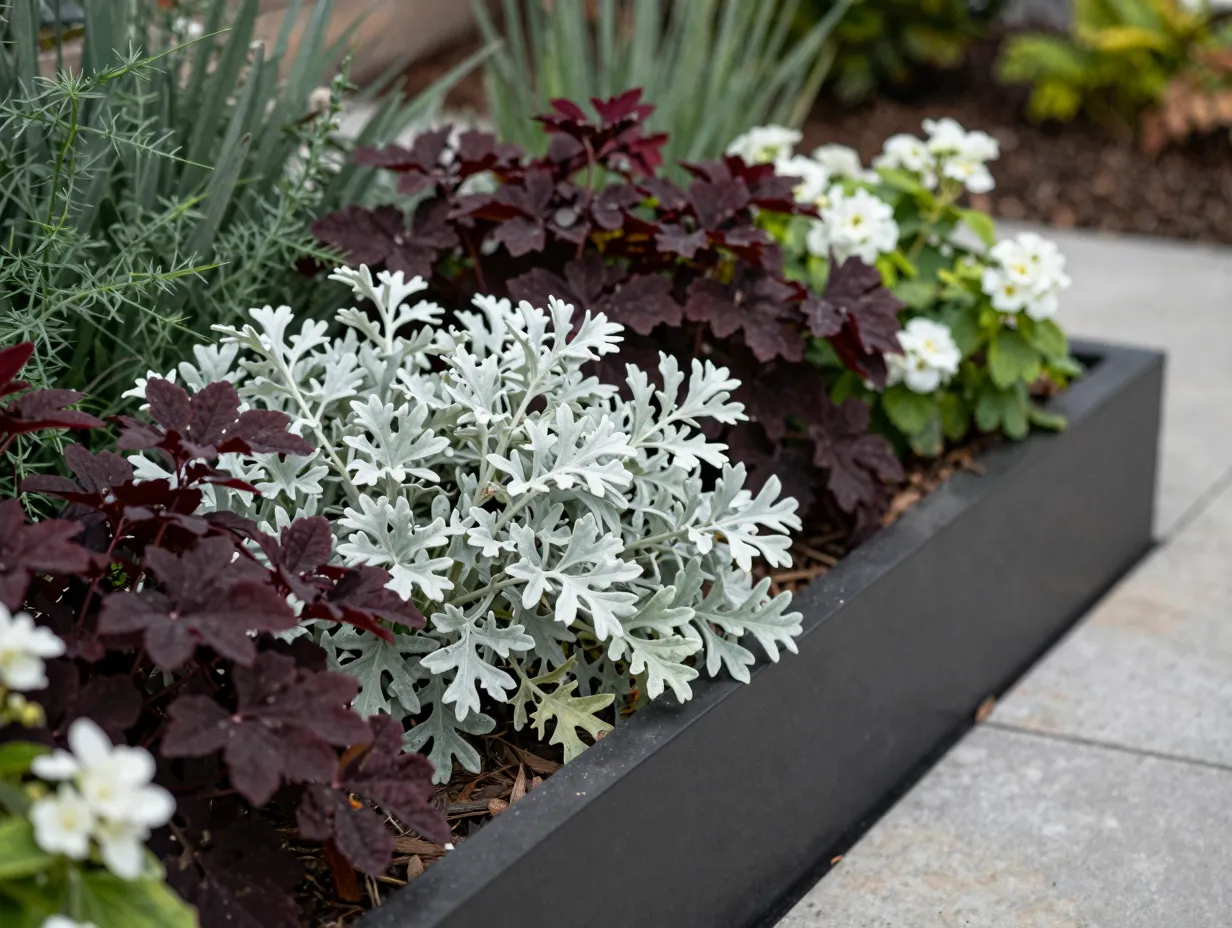
One of the most common mistakes in front yard planting is choosing plants based on individual appeal rather than how they work together. The result is a garden that looks busy and unresolved from the street, regardless of how beautiful each individual plant might be.
In 2026, the dominant direction in front garden design is toward neutral, earthy tones, warm beige, soft gray, olive green, and natural wood, combined with dark accents such as matte black planters, edging, or trim to frame the greenery [1][2][3]. This palette feels simultaneously contemporary and timeless, and it works with a wide range of architectural styles.
“Limit your plant color palette to three complementary tones. Use accent pieces, door color, cushions, pots, for bolder hues so the garden reads as cohesive rather than busy.” [1]
A practical approach is to choose one dominant foliage tone (such as silver-green), one contrasting foliage tone (such as deep burgundy), and one flowering accent color (such as soft white or pale lavender). All hard materials, path, edging, planters, should sit within the same neutral range. This discipline is what separates a garden that looks professionally designed from one that simply looks planted.
8. Commit to Low-Maintenance, Sustainable Planting
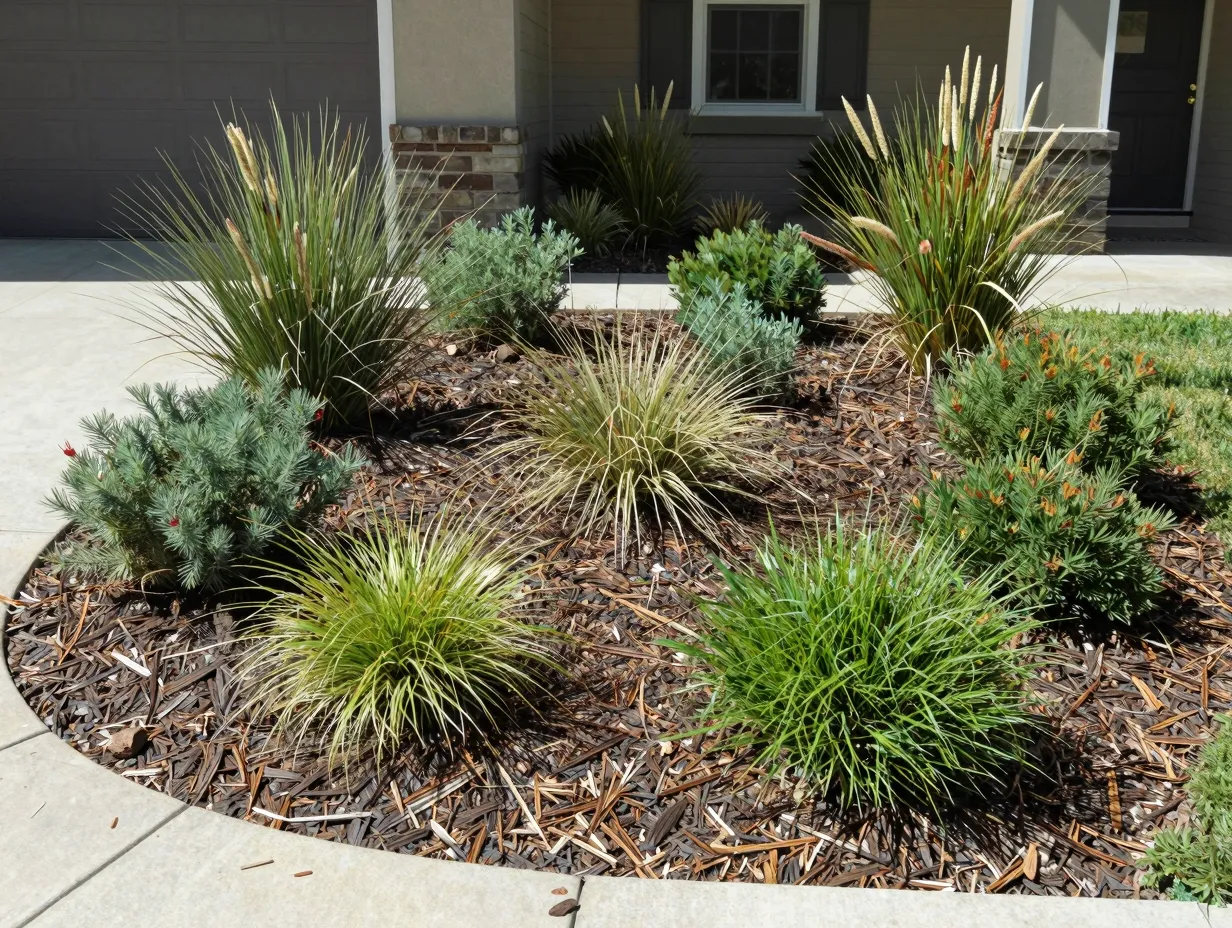
The final idea in these 8 simple garden ideas for the front of your house to boost curb appeal is arguably the most important for long-term success: choose plants and systems that sustain themselves with minimal intervention. A front garden that looks beautiful in June but requires weekly attention to stay that way is not a practical solution for most households.
In 2026, leading design and gardening publications consistently recommend native plants, drought-tolerant shrubs, ornamental grasses, and succulents as the backbone of a low-maintenance front garden [2][3][5]. These plants are adapted to local conditions, require less water once established, and support local wildlife including pollinators [2][5].
Sustainable planting principles to apply:
- Choose at least 50% native species for your region
- Use a thick layer of organic mulch (3 to 4 inches) to suppress weeds and retain moisture
- Install drip irrigation if your budget allows, it delivers water directly to roots and reduces waste significantly
- Select shrubs and trees that will reach their mature size without requiring constant pruning
- Group plants with similar water needs together to simplify irrigation
At lower budget levels, the most impactful move is simply to reduce lawn area, add a gravel mulch bed, and plant three to five hardy native shrubs. At higher budget levels, regrading for better drainage and installing a full drip system will pay dividends for years [3].
The principle is the same at every budget: design for the garden you will actually maintain, not the one you imagine you will tend every weekend.
Putting It All Together: A Phased Approach
One of the most common questions I hear is: where do I start? The honest answer is that you do not need to implement all 8 simple garden ideas for the front of your house to boost curb appeal at once. A phased approach is both more manageable and more financially sensible.
Phase 1 (Immediate, low cost):
Repaint the front door in a bold, complementary color. Add two statement planters flanking the entrance. Install solar path lights along the existing walkway. These three changes alone will produce a noticeable improvement within a weekend.
Phase 2 (Short term, moderate investment):
Convert one lawn border strip to a layered native planting bed. Add steel or stone edging to define the bed cleanly. Choose plants in a cohesive three-tone palette.
Phase 3 (Medium term, higher investment):
Replace or reduce the main lawn area with a combination of gravel mulch, groundcovers, and specimen plantings. Install a trellis or arbor if the architecture supports it. Consider a low-voltage lighting system for greater consistency and control.
This phased model means you can start seeing results immediately while building toward a more complete design over time.
Conclusion
The front of your house is the first thing the world sees, and in 2026 there has never been a better moment to make it genuinely impressive. These 8 simple garden ideas for the front of your house to boost curb appeal, from layered naturalistic planting and native species to statement entrances, strategic lighting, and cohesive color palettes, give you a clear, actionable framework regardless of your budget or experience level.
The most important step is simply to start. Choose one idea from this list that fits your current situation and take one concrete action this week: buy two statement planters, plant a specimen shrub beside your front door, or install a set of solar path lights. Small, intentional changes compound quickly in a front garden, and the satisfaction of a well-designed exterior is something you will notice every single time you come home.
Your front garden is not just about impressing others. It is about creating a space that feels welcoming, alive, and genuinely yours from the moment you arrive at the gate.
References
[1] Front Yard Trends 2026 – https://www.marthastewart.com/front-yard-trends-2026-11879228
[2] Curb Appeal Trends 2026 – https://www.veranda.com/home-decorators/design-trends/a65913943/curb-appeal-trends-2026/
[3] Front Yard Landscaping Ideas – https://dgfloors.com/front-yard-landscaping-ideas/
[5] 2026 Curb Appeal Trends – https://www.bhg.com/2026-curb-appeal-trends-11932989
[7] Watch – https://www.youtube.com/watch?v=vAJWrCQI1Xk
[8] Watch – https://www.youtube.com/watch?v=cLk2ciGAFmY
[10] Front Yard – https://www.gardendesign.com/landscape-design/front-yard.html