9 Inspiring Primary Bedroom Ideas to Design a Relaxing and Personal Main Suite
Adults who sleep in well-designed bedrooms report falling asleep faster and waking up more refreshed than those who sleep in cluttered, poorly lit spaces, yet most homeowners spend less than two hours total planning their primary bedroom layout. That gap between intention and execution is exactly why so many main suites feel like afterthoughts rather than sanctuaries.
Disclosure: This post contains affiliate links. As an Amazon Associate, we earn from qualifying purchases, and at no extra cost to you.
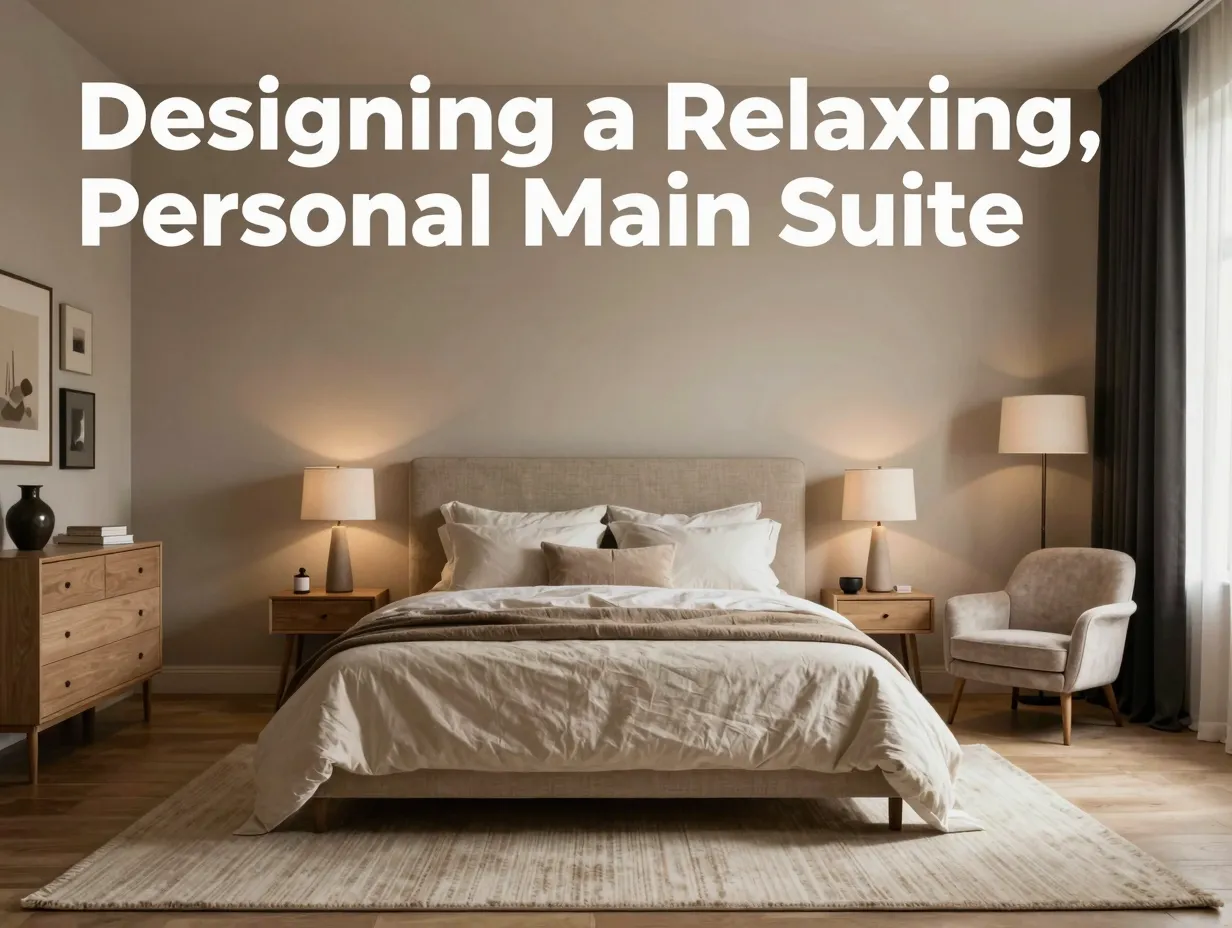
This guide presents 9 inspiring primary bedroom ideas to design a relaxing and personal main suite that truly works for you. Whether you are starting from scratch, refreshing an existing space, or simply looking for one transformative change, these ideas draw on the strongest 2026 interior design research and real-world designer wisdom. Each idea is practical, actionable, and grounded in how people actually live.
Key Takeaways
- Placing the bed as the undisputed focal point of the room is the single most impactful layout decision you can make.
- Layered lighting, ambient, task, and accent, transforms the mood of a primary bedroom more than almost any other upgrade.
- Soft, neutral color palettes with warm undertones consistently outperform bold colors for promoting rest and relaxation.
- Clear activity zones (sleeping, dressing, reading) make even a modest-sized suite feel intentional and luxurious.
- Rich, tactile textiles are the most affordable way to add immediate comfort and visual warmth to any main suite.
The Foundation: Why Your Primary Bedroom Deserves Intentional Design
Before diving into the specific ideas, it helps to understand why the primary bedroom is worth this level of attention. The average person spends roughly one-third of their life in this room. It is where the day begins and ends, where stress either dissolves or compounds, and where the body does its most important recovery work.
In 2026, interior designers are increasingly treating the main suite not as a simple sleeping room but as a restorative sequence, a layered environment that supports physical rest, mental decompression, and personal identity [8]. Veranda’s 2026 bedroom design trend report describes the best primary bedrooms as “restful recovery zones” that borrow principles from hospitality design and apply them to everyday home life [8].
The 9 inspiring primary bedroom ideas to design a relaxing and personal main suite covered below are organized to build on each other. Start with layout and focal point, then layer in color, lighting, textiles, and finally the personal touches that make a space unmistakably yours.
9 Inspiring Primary Bedroom Ideas to Design a Relaxing and Personal Main Suite
1. Make the Bed the Undisputed Focal Point
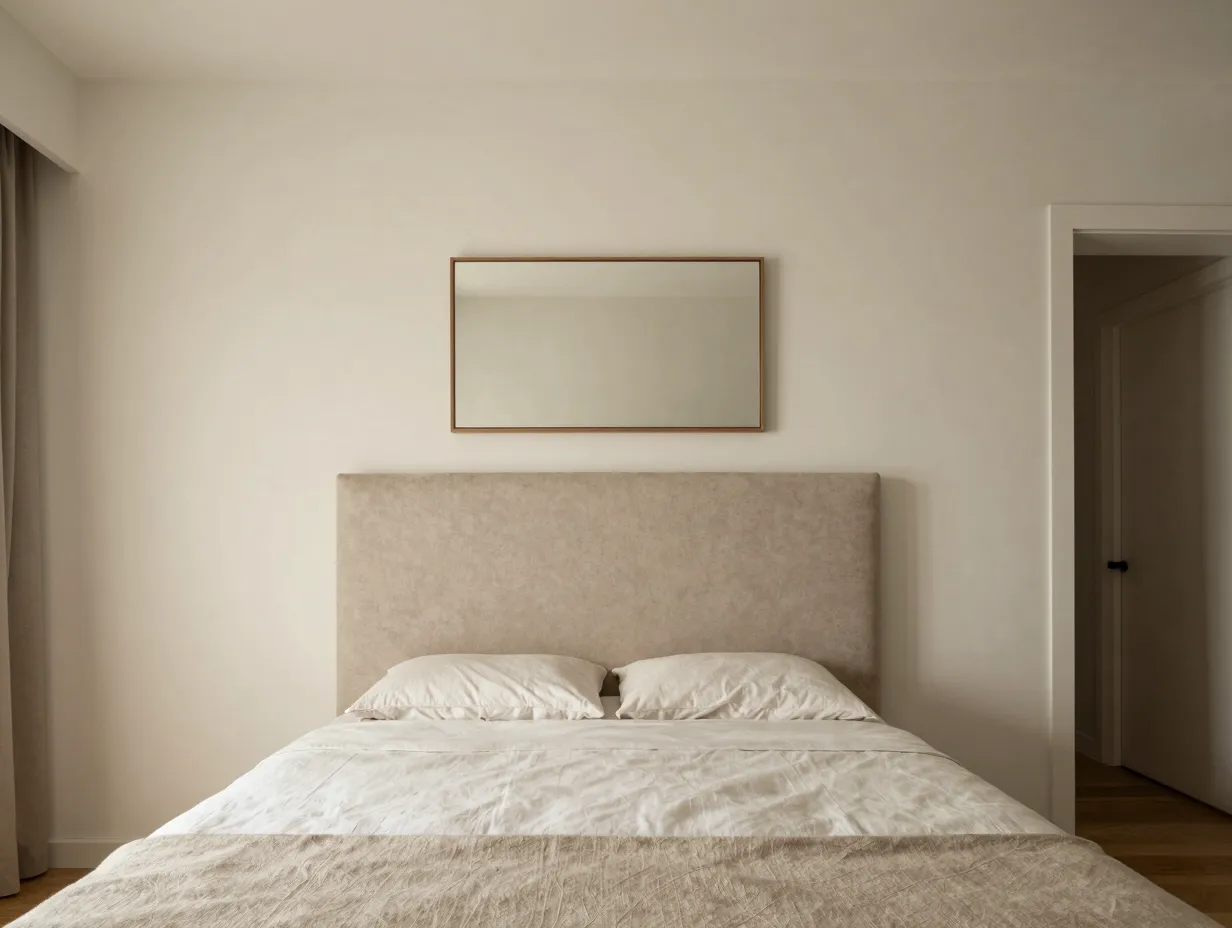
Every strong primary bedroom design begins with one decision: where does the bed live, and does it command the room?
Architectural Digest’s guide to bedroom design recommends positioning the bed so it is the first thing a person sees upon entering the room, typically centered on the main wall, facing the door [9]. This is not just an aesthetic choice. When the bed anchors the room visually, the entire space signals rest from the moment you walk in.
Practical steps:
- Center the bed on the longest solid wall, ideally opposite or adjacent to the entry door.
- Choose a headboard that is proportional to the wall, taller ceilings call for taller headboards.
- Add art or a large mirror above the headboard to extend the focal point vertically.
- Keep the wall behind the bed relatively simple so the bed itself does the talking.
A soft, upholstered headboard in a neutral fabric such as linen, bouclé, or velvet is one of the most recommended choices across 2026 design guides because it adds warmth, absorbs sound, and anchors the space emotionally [9].
2. Build Symmetry Around the Bed
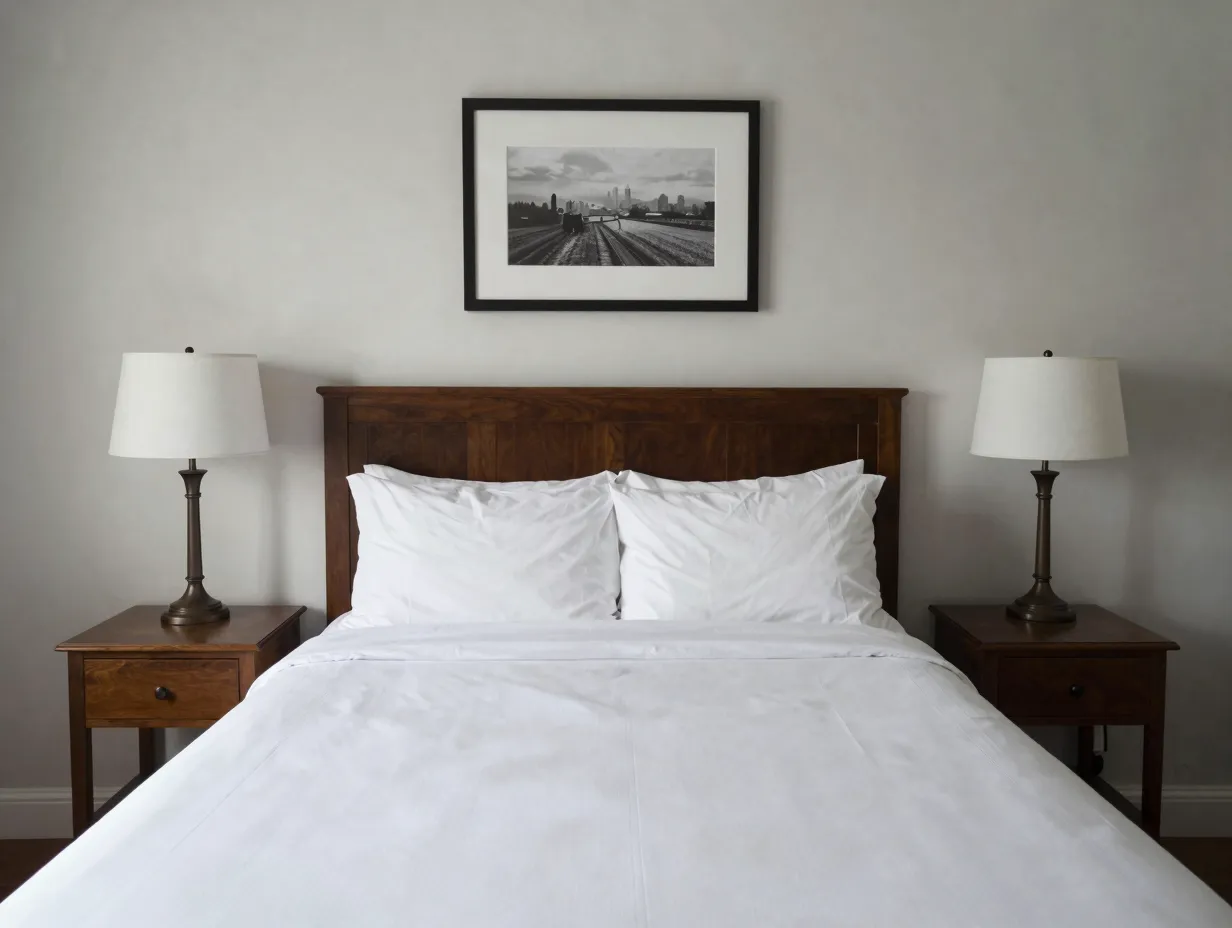
Once the bed is positioned as the focal point, symmetry becomes your most powerful tool for creating calm.
Matching nightstands, paired lamps, and balanced accessories on each side of the bed create a sense of visual order that the brain interprets as restful [2][5]. Decorilla’s primary bedroom design research highlights this as one of the most consistent recommendations from professional interior designers: flanking the bed with identical or closely matched bedside elements produces a grounded, organized look that feels genuinely relaxing [5].
Symmetry does not mean identical. Two nightstands of the same height but slightly different materials, say, one wood and one painted, can create pleasing symmetry while avoiding a showroom feel. The key is that the visual weight on each side of the bed feels balanced.
| Element | Symmetrical Approach | Why It Works |
|---|---|---|
| Nightstands | Same height, similar scale | Grounds the bed visually |
| Lamps | Matching pair or near-match | Creates even, balanced light |
| Art or mirrors | Centered above headboard | Reinforces the focal axis |
| Bedding | Centered arrangement | Signals order and calm |
3. Choose a Soft, Layered Neutral Palette
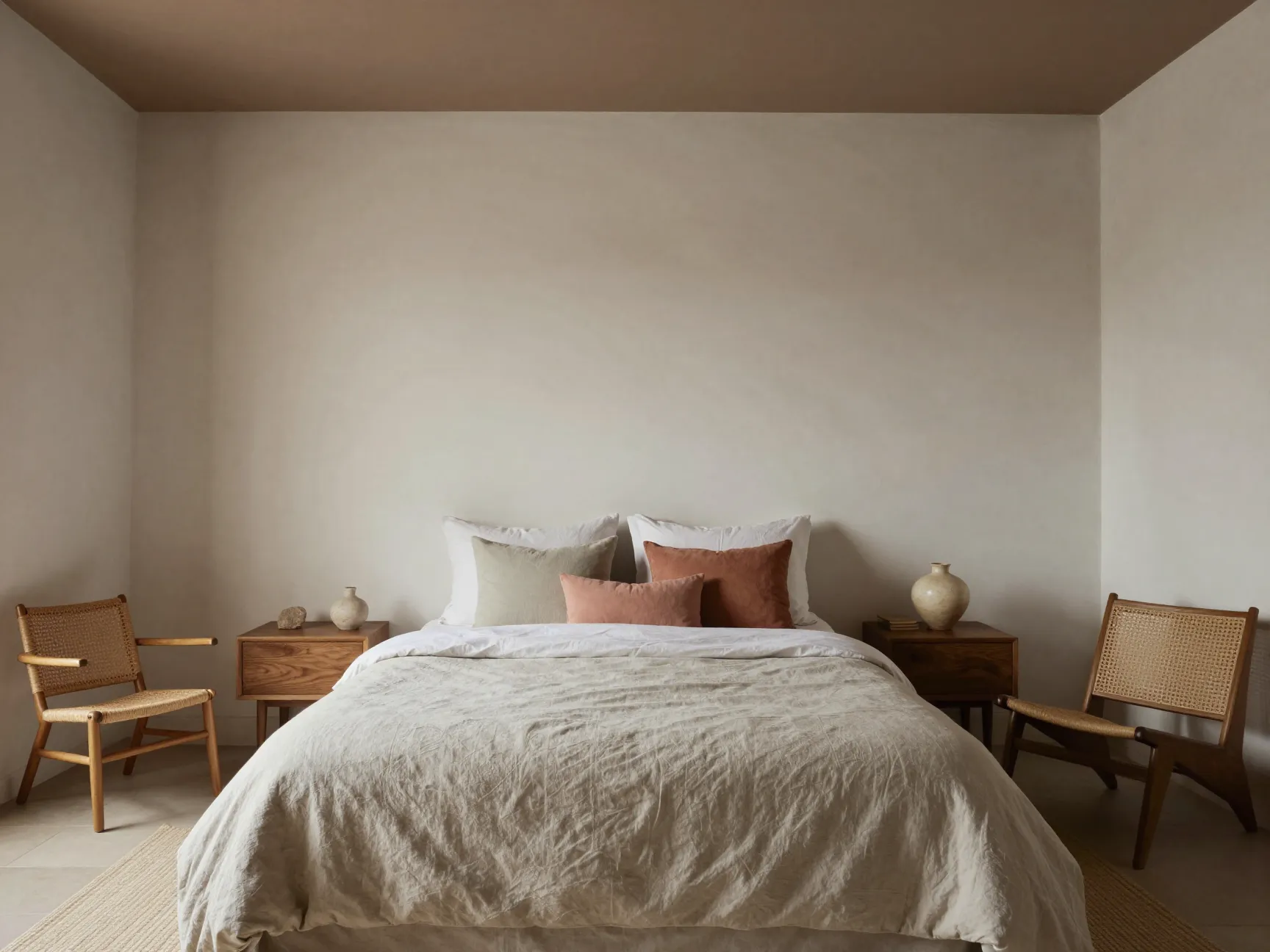
Color is one of the fastest ways to shift the emotional tone of a room, and the 2026 design consensus is remarkably clear on this point: soft, warm neutrals win in the primary bedroom.
Omni Home Ideas‘ 2026 master suite trend overview identifies warm, earthy color palettes, soft whites, beiges, taupes, and muted sand tones, as the dominant approach for main suites this year [3]. The logic is straightforward: cool, saturated colors stimulate the nervous system, while warm neutrals encourage the body to downshift [3][6].
How to layer neutrals without making the room feel flat:
- Start with a warm white or soft taupe on the walls.
- Introduce a slightly deeper tone on the ceiling or a single accent wall to add depth.
- Layer in natural materials, wood, linen, rattan, stone, to add texture without adding visual noise.
- Use one or two muted accent colors (dusty sage, soft terracotta, pale blush) in textiles or accessories.
Cozymoodliving’s 2026 bedroom trend guide reinforces this approach, noting that depth without visual clutter is the goal, a room that feels rich and considered rather than stark or overwhelming [6].
“The best primary bedroom palettes feel like a deep exhale. Nothing competes for your attention. Everything supports rest.”
4. Design a Layered Lighting Strategy
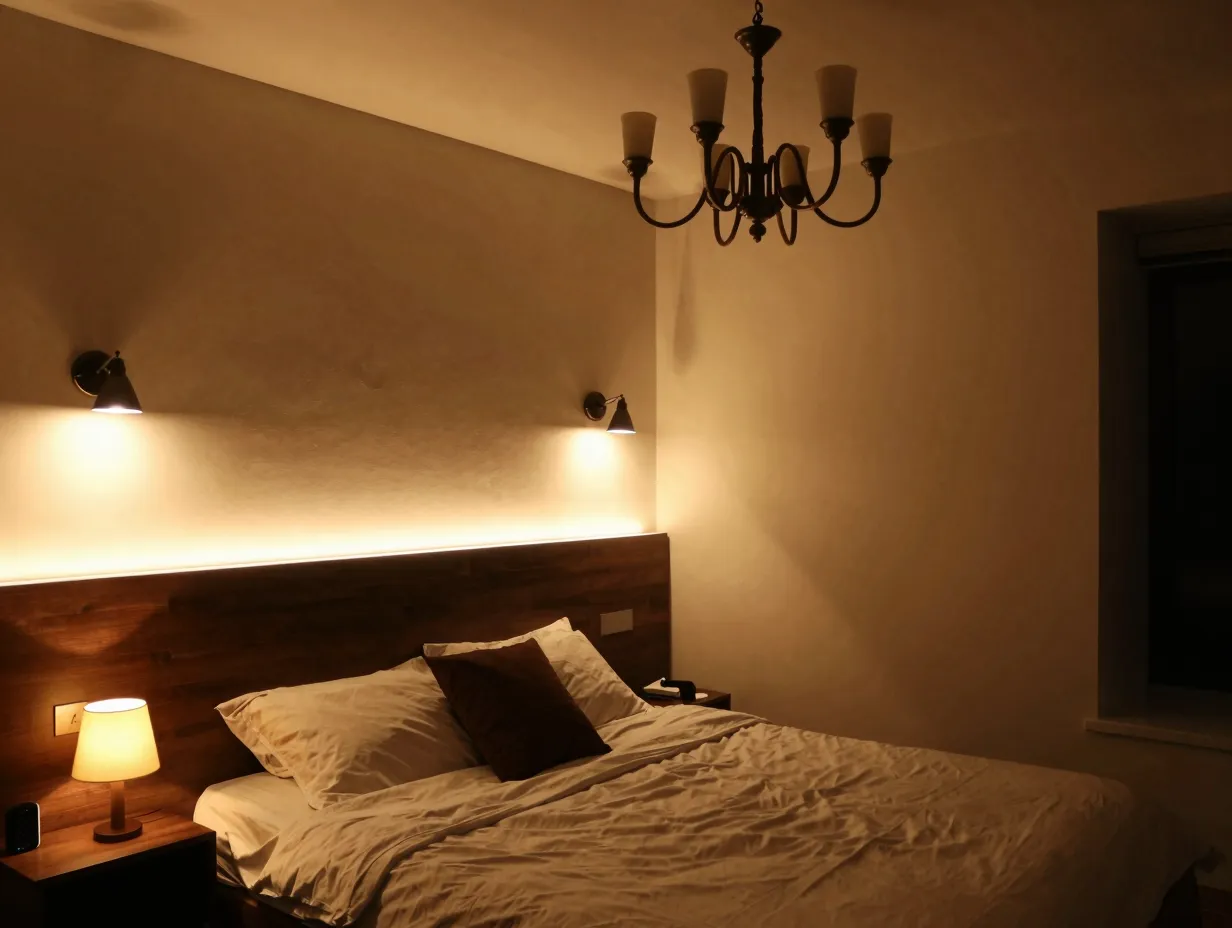
Lighting is the single most underestimated element in primary bedroom design. Most homeowners install one overhead fixture and call it done. That approach produces a flat, institutional feel that works against relaxation.
A truly restorative main suite uses at least three layers of light [5][7][9]:
Ambient lighting provides overall illumination. A statement chandelier, flush-mount pendant, or cove lighting creates the room’s baseline glow. Dimmers are non-negotiable here, the ability to lower ambient light in the evening signals to the body that it is time to wind down.
Task lighting serves specific functions. Bedside sconces or table lamps allow reading without flooding the room with light. Wall-mounted swing-arm sconces are particularly popular in 2026 because they free up nightstand surface space.
Accent lighting adds depth and drama. LED strip lighting behind a floating headboard, a small picture light above art, or a low lamp in a reading corner creates pools of warm light that make the room feel layered and intimate.
Remodr’s roundup of primary bedroom designs describes lighting as “the jewelry of any room”, the detail that elevates everything around it [7]. Architectural Digest echoes this, noting that a well-chosen statement fixture above the bed can anchor the room as powerfully as the headboard itself [9].
5. Invest in Rich, Tactile Textiles
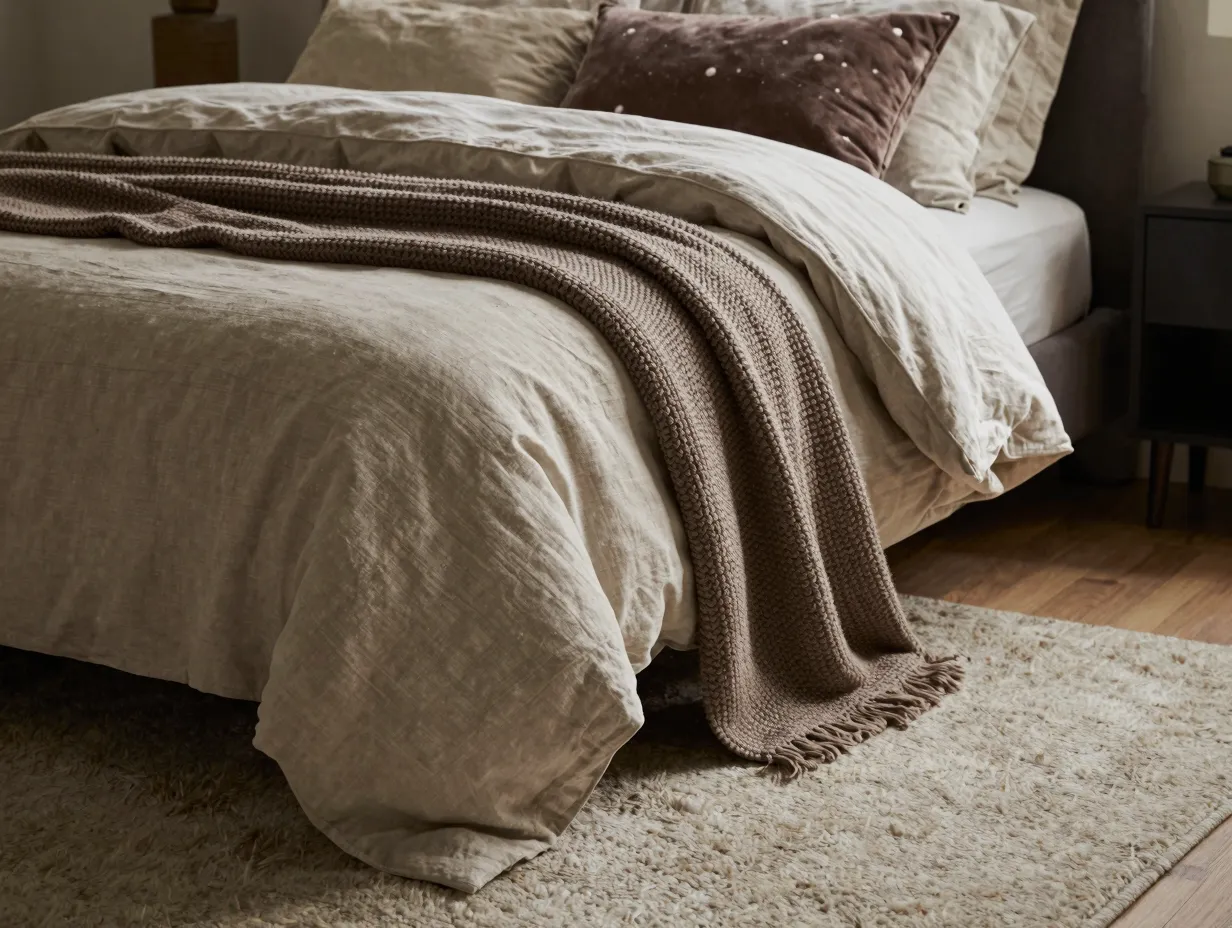
If there is one upgrade that delivers the most immediate sensory impact in a primary bedroom, it is the quality and layering of textiles.
High-thread-count sheets, a plush duvet, a weighted throw at the foot of the bed, and multiple pillow layers transform a bed from a piece of furniture into an experience. The Spruce’s master bedroom design guide emphasizes that tactile comfort, how things feel, not just how they look, is central to a bedroom that people genuinely want to spend time in [1].
A practical textile layering formula:
- Start with a fitted sheet and flat sheet in a breathable natural fiber (cotton, linen, or bamboo).
- Add a duvet or comforter in a weight appropriate for your climate.
- Layer a textured throw, chunky knit, waffle weave, or velvet, across the foot of the bed.
- Use a mix of sleeping pillows and decorative euro shams to build visual depth.
- Place a soft area rug underfoot so the first step out of bed is warm and comfortable.
The rug is often overlooked, but it plays a crucial role. A large area rug that extends at least 18 inches beyond each side of the bed grounds the entire sleeping zone and adds acoustic softness to the room.
6. Create Clear Activity Zones Within the Suite
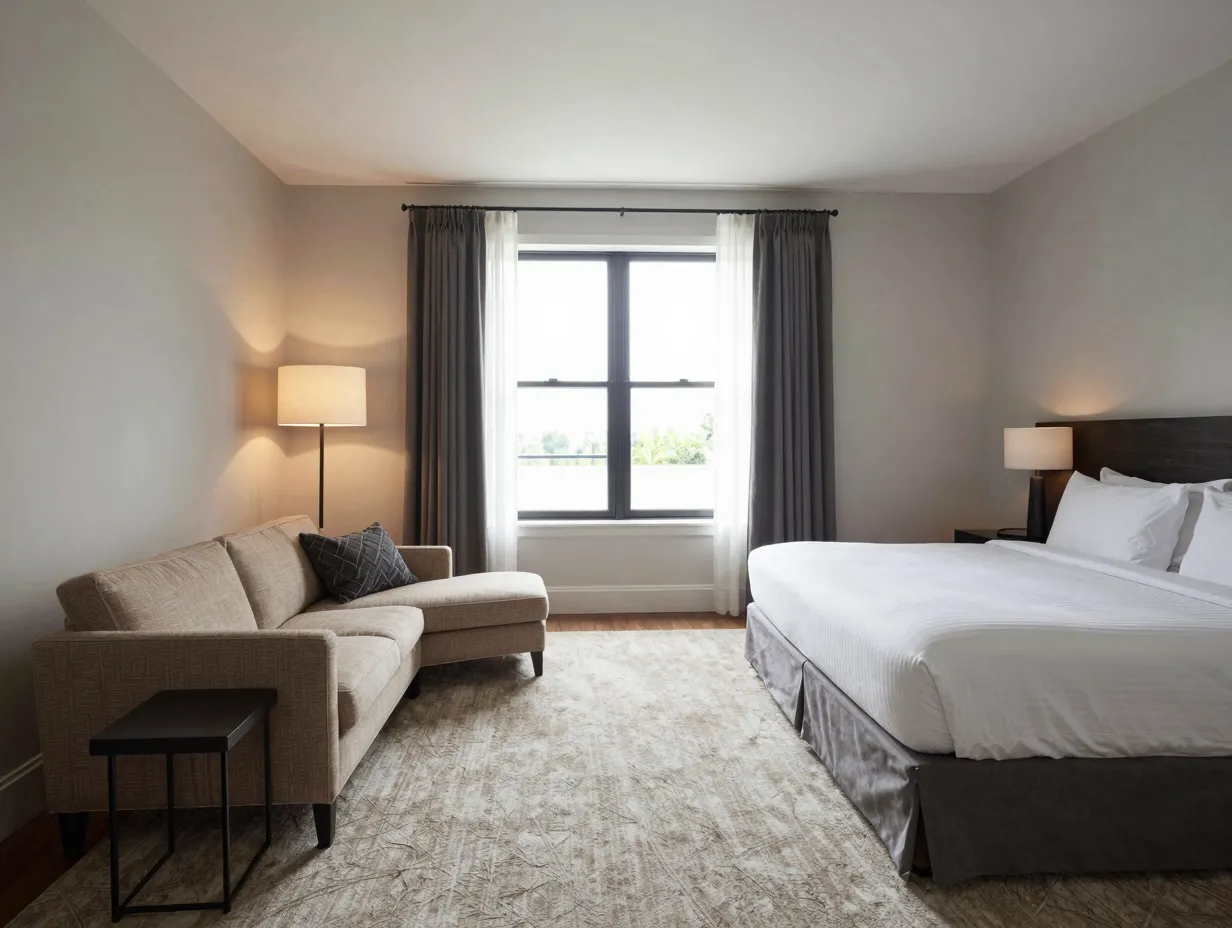
One of the strongest 2026 trends for primary bedrooms is the deliberate separation of activities within the suite. Rather than treating the room as a single undifferentiated space, designers are carving out distinct zones for sleeping, dressing, reading, and quiet reflection [4][5][10].
House Beautiful’s 2026 interior design trend report highlights dedicated seating areas as a key differentiator between a bedroom and a true suite [4]. A chaise lounge near a window, a small armchair in a corner, or a compact sofa at the foot of the bed creates a place for activities that are not sleep, reading before bed, morning coffee, quiet meditation, without those activities happening in the bed itself.
Why this matters for sleep quality: Sleep experts consistently recommend reserving the bed for sleep and intimacy only. When the bed becomes the default spot for reading, working, or watching television, the brain stops associating it exclusively with rest. A dedicated seating zone solves this problem elegantly.
Zone ideas by room size:
- Small suite (under 200 sq ft): A single armchair and floor lamp in one corner.
- Medium suite (200-300 sq ft): A chaise lounge near the window plus a small vanity area.
- Large suite (300+ sq ft): A full reading nook, a dressing area with a full-length mirror, and a small sofa grouping.
HomeLane’s 2026 master bedroom design guide also recommends a dedicated dressing zone, even if it is just a well-organized clothing rack and a mirror, to keep the sleeping area visually clear and calm [10].
7. Integrate Wellness-Focused Amenities
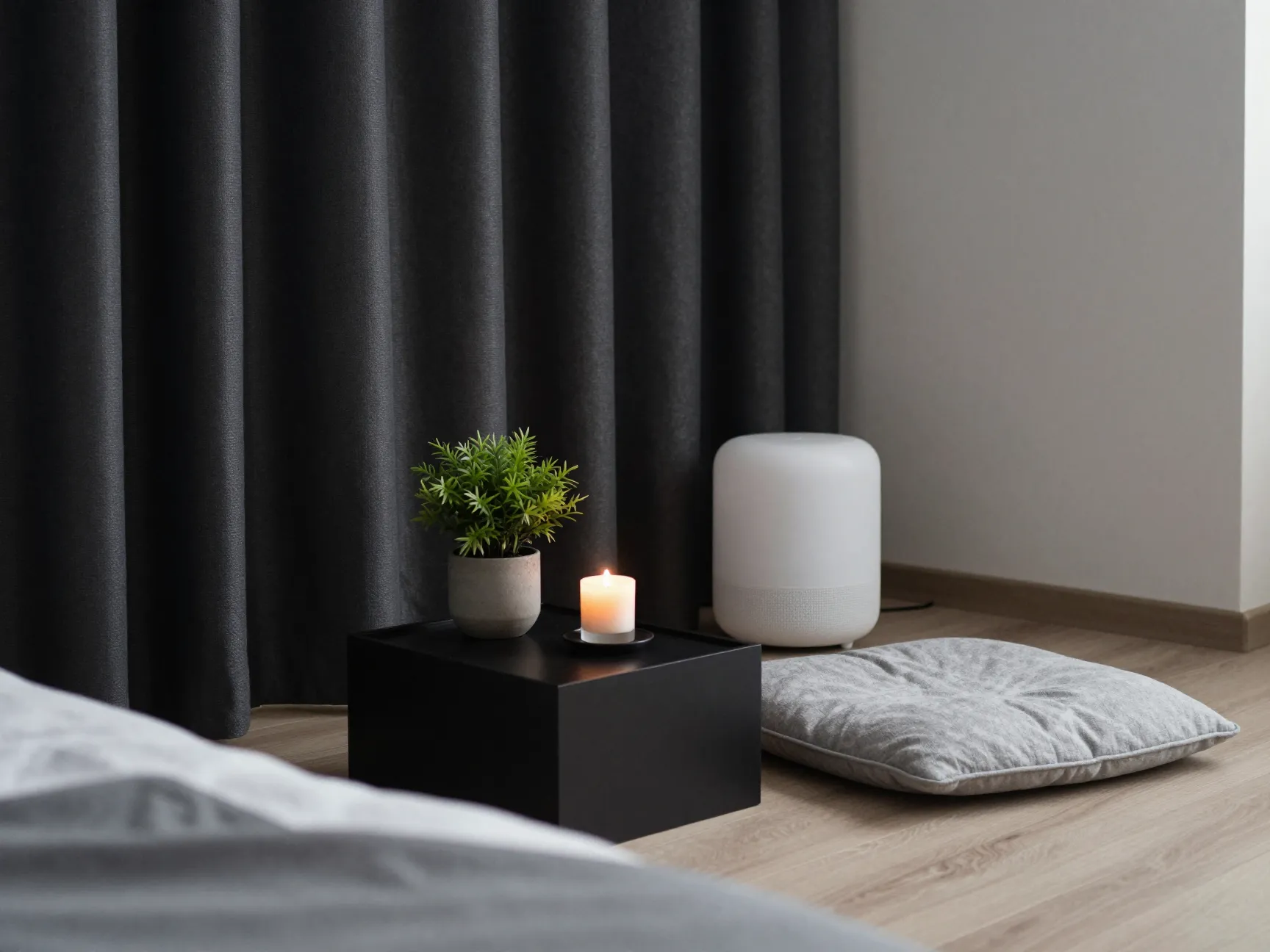
The primary bedroom is evolving into something larger than a sleeping room. In 2026, the most forward-thinking suite designs incorporate wellness amenities that extend the room’s restorative function throughout the day [8].
Veranda’s June 2026 bedroom design trend report documents a growing movement toward integrating petite saunas, meditation corners, aromatherapy stations, and even direct access to a private garden or terrace into the primary suite [8]. The bedroom becomes part of a larger restorative sequence rather than a standalone room.
Accessible wellness additions for any budget:
- A meditation corner with a floor cushion, a small plant, and a candle or diffuser.
- Blackout curtains or motorized shades to support deep, uninterrupted sleep.
- A white noise machine or small speaker system for sleep soundscapes.
- A small side table dedicated to a sleep ritual, herbal tea, a journal, a book.
- Indoor plants that improve air quality and add a calming natural element.
Blackout window treatments deserve special mention. Multiple 2026 design guides identify them as one of the highest-impact, lowest-cost upgrades for a primary bedroom [3][6][8]. Light pollution is a significant disruptor of sleep quality, and a well-fitted blackout curtain or shade can transform sleep depth noticeably.
8. Personalize With Art, Objects, and Meaningful Details
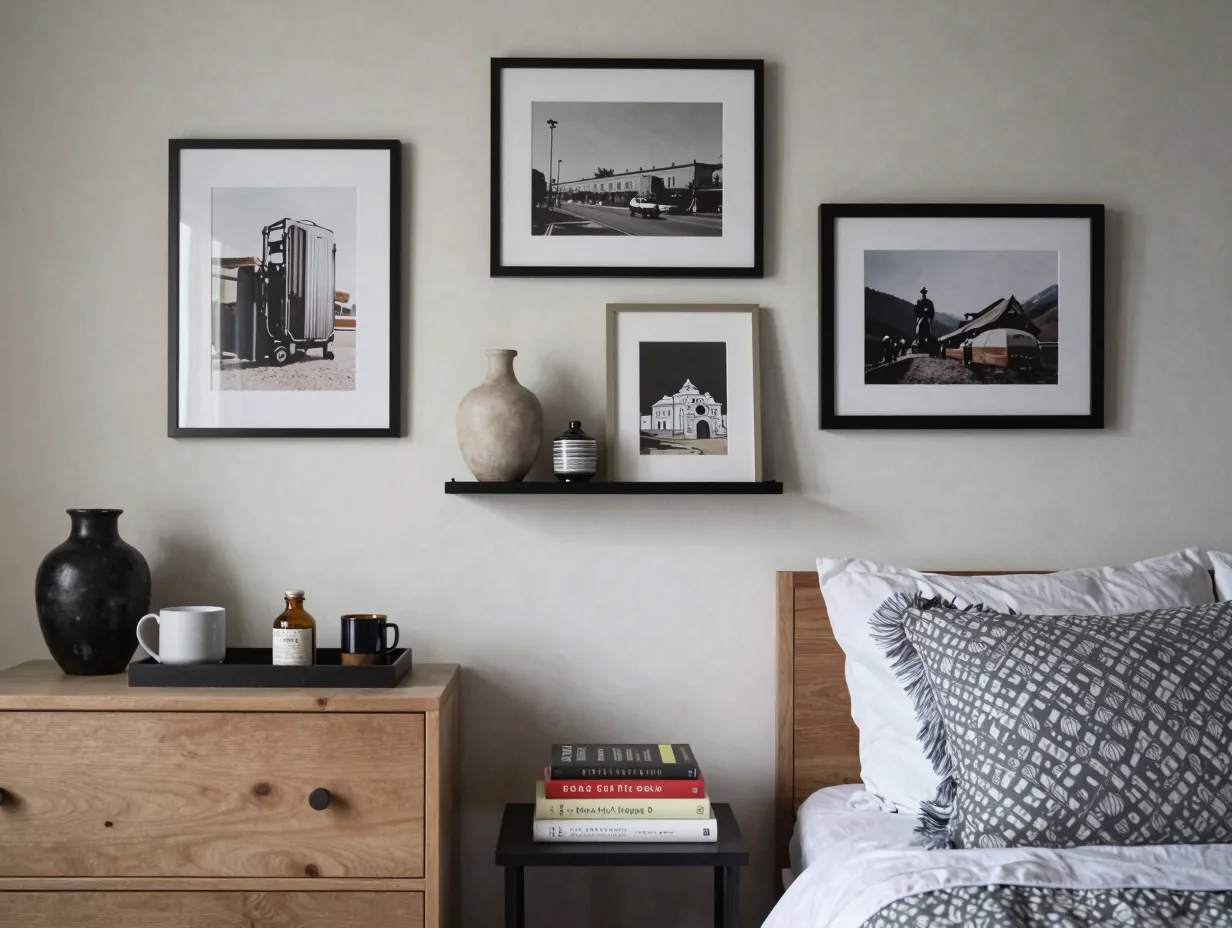
A primary bedroom that looks like a hotel room but feels like no one lives there has missed the point. The most successful main suites balance visual calm with genuine personal expression.
This is where art, collected objects, family photographs, travel souvenirs, and meaningful textiles come in. The key is curation rather than accumulation. Choose a small number of objects that genuinely matter to you and display them intentionally rather than covering every surface.
Personalization strategies that work:
- A gallery wall above a dresser or in a reading nook, kept to a cohesive palette or frame style.
- One or two pieces of original art that have personal significance.
- A collection of objects from travel displayed on a single shelf or tray.
- Bedding or textiles in a pattern or color that reflects your personal taste, even within a neutral palette.
- A meaningful book stack on the nightstand.
I have found that the most personal primary bedrooms I have encountered are not the ones with the most objects, they are the ones where every object has a reason to be there. That intentionality communicates itself to anyone who enters the room, and more importantly, it communicates it to the person who lives there every day.
The Spruce’s master bedroom design guide reinforces this, noting that personal touches are what distinguish a designed space from a lived-in sanctuary [1].
9. Optimize Storage to Protect Visual Calm
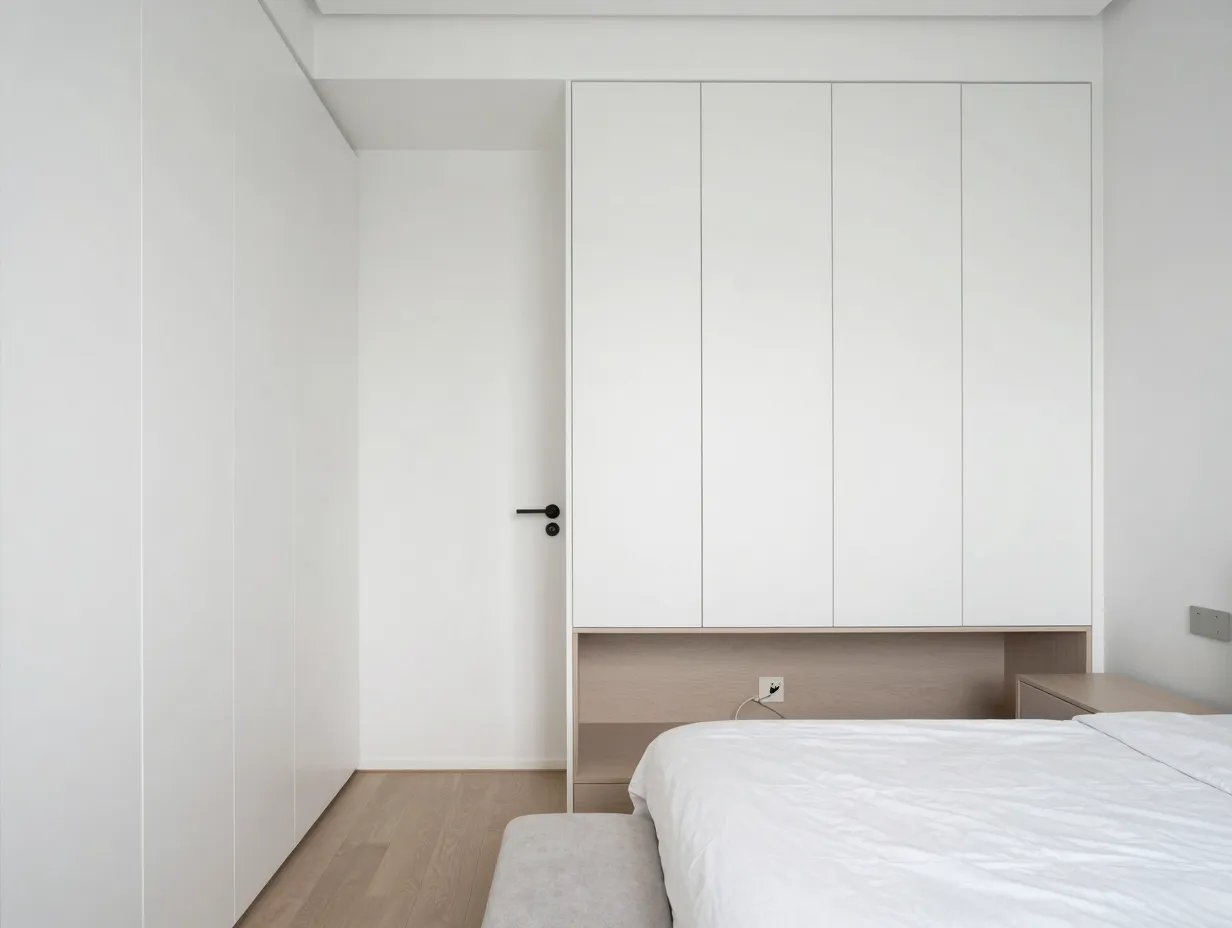
No matter how beautifully a primary bedroom is designed, visual clutter will undermine every other effort. Storage is not a glamorous topic, but it is one of the most practical contributors to a relaxing main suite.
The goal is to give everything a home so that surfaces stay clear and the room maintains its calm, uncluttered feeling day to day.
Storage solutions that protect the bedroom’s visual calm:
- Built-in wardrobes or a walk-in closet that keeps clothing entirely out of the sleeping zone.
- Nightstands with drawers or shelves rather than open surfaces only.
- Under-bed storage for seasonal items, keeping the floor clear.
- A storage ottoman at the foot of the bed that doubles as a seating surface.
- A dedicated charging station inside a drawer to eliminate cable clutter on the nightstand.
Decorilla’s primary bedroom design guide emphasizes that a clutter-free environment is not just aesthetically pleasing, it actively reduces cognitive load and supports the mental transition into rest [5]. When the last thing you see before closing your eyes is an orderly, beautiful space, the body follows the visual cue.
Bringing It All Together: A Room That Reflects You
The 9 inspiring primary bedroom ideas to design a relaxing and personal main suite covered above are most powerful when they work together as a system. The bed anchors the room. Symmetry organizes it. Color and lighting set the emotional tone. Textiles deliver comfort. Zones create function. Wellness elements deepen the restorative experience. Personal details make it yours. Storage protects it all.
No single idea will transform a primary bedroom on its own, but layering two or three of these principles, even in a modest space, produces a noticeable shift in how the room feels and functions.
Conclusion
Designing a primary bedroom that genuinely supports rest, recovery, and personal identity is one of the most worthwhile investments a homeowner can make. The research is clear, the principles are accessible, and the impact on daily life is real.
Start with the bed. Position it as the focal point, build symmetry around it, and let every other decision, color, lighting, textiles, zones, wellness elements, personal objects, and storage, serve that central anchor. You do not need a large budget or a complete renovation to make meaningful progress.
Actionable next steps:
- Walk into your primary bedroom today and identify the single biggest friction point, clutter, poor lighting, an awkward bed position, or a color that feels wrong.
- Choose one of the nine ideas above that addresses that friction point directly.
- Set a realistic timeline and budget for that one change before moving to the next.
- Revisit the room after each change and notice how the cumulative effect builds.
The primary bedroom you deserve is not a distant renovation project. It is a series of intentional decisions, made one at a time, that add up to a space that genuinely restores you.
References
[1] Stunning Master Bedroom Design Ideas – https://www.thespruce.com/stunning-master-bedroom-design-ideas-4125545
[2] Watch – https://www.youtube.com/watch?v=YAEqNrKUJkU
[3] What Are 2026s Top Interior Design Trends For Modernizing Your Master Suite – https://www.omnihomeideas.com/design/what-are-2026s-top-interior-design-trends-for-modernizing-your-master-suite/
[4] 2026 Interior Design Trends – https://www.housebeautiful.com/design-inspiration/a69484298/2026-interior-design-trends/
[5] Primary Bedroom Ideas – https://www.decorilla.com/online-decorating/primary-bedroom-ideas/
[6] Bedroom Ideas Trendy Modern Designs – https://cozymoodliving.com/bedroom-ideas-trendy-modern-designs/
[7] 20 Primary Bedroom Designs That Exude Comfort And Style – https://remodr.com/20-primary-bedroom-designs-that-exude-comfort-and-style/
[8] Bedroom Design Trends 2026 – https://www.veranda.com/home-decorators/design-trends/a69514496/bedroom-design-trends-2026/
[9] Bedroom Design Ideas – https://www.architecturaldigest.com/story/bedroom-design-ideas
[10] Master Bedroom Designs – https://www.homelane.com/design-ideas/bedroom-design/master-bedroom-designs/