9 Stunning Wooden Wall Panels to Transform Any Room
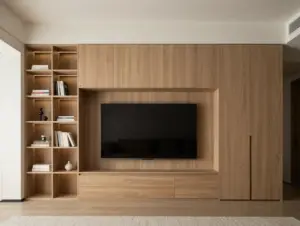
Roughly 68% of interior designers surveyed in 2026 named wood wall paneling as their top material recommendation for residential renovations, and after spending years watching bare drywall dominate new builds, that number feels long overdue. If you have been staring at flat, lifeless walls and wondering how to add character without a full gut renovation, the answer has been hiding in plain sight. The 9 stunning wooden wall panels to transform any room covered in this guide represent the best of what the current design landscape has to offer: warmth, texture, sustainability, and a surprising range of styles that suit everything from a minimalist studio apartment to a sprawling family home.
Disclosure: This post contains affiliate links. As an Amazon Associate, we earn from qualifying purchases, and at no extra cost to you.
Wood paneling has shed its dated reputation entirely. What once conjured images of dark, oppressive 1970s dens has evolved into one of the most versatile and sought-after design elements in contemporary interiors [1]. Whether you are drawn to the clean geometry of vertical slats or the organic character of reclaimed timber, there is a panel style here that will change how you experience your own home.
Key Takeaways
- Wood wall panels are experiencing a major resurgence in 2026, appearing in everything from high-end residences to commercial restaurants and open-plan offices.
- Slatted and perforated wood panels offer measurable acoustic benefits, making them practical as well as beautiful in open-concept spaces.
- Responsibly sourced hardwood and engineered wood options make it easier than ever to choose sustainable materials without sacrificing aesthetics.
- The right panel style can visually alter a room’s proportions, vertical designs add height, wide planks add drama, and geometric patterns add depth.
- Installation complexity varies widely; some panels are genuine DIY projects while others require professional fitting for best results.
Why Wooden Wall Panels Are Dominating Interior Design in 2026
Before diving into the specific panel types, it helps to understand why wood has reclaimed its place at the center of interior design conversation. The shift is not accidental, it reflects several converging trends that have reshaped how people think about their living spaces.
Biophilic design is perhaps the most significant driver. The principle that human beings feel calmer, more focused, and more content when surrounded by natural materials has moved from academic theory into mainstream practice [3]. Wood is the most accessible natural material available for wall treatments, and its grain patterns, warmth, and organic variation deliver exactly the sensory connection that biophilic design promises.
At the same time, the open-concept floor plans that dominated the 2010s have created a practical problem: noise. Hard surfaces in large, undivided spaces create echo and reverberation that makes everyday living genuinely uncomfortable. Slatted wood panels have emerged as a stylish solution, absorbing and diffusing sound in ways that painted drywall simply cannot [1].
Sustainability is another key factor. Consumers in 2026 are asking harder questions about where their materials come from. Responsibly sourced hardwood and engineered wood products, including those made from fast-growing species or reclaimed timber, offer a dramatically smaller environmental footprint than many synthetic alternatives [1]. Research into the thermal performance of wood-frame walls has also confirmed that wood-based assemblies can contribute meaningfully to a building’s energy efficiency when combined with appropriate insulation and finishing materials [6].
Finally, there is the influence of high-profile design choices. When celebrities like Jennifer Aniston incorporate rich, dark wood paneling into their living spaces and those rooms are photographed for major publications, the style gains an aspirational quality that filters down into the broader market [4]. Design is, in part, a social phenomenon, and wood paneling has the right advocates right now.
“The 2026 design landscape favors textured, warm, and layered walls, with wood panels playing a central role in transforming flat rooms into inviting spaces.” [7]
9 Stunning Wooden Wall Panels to Transform Any Room
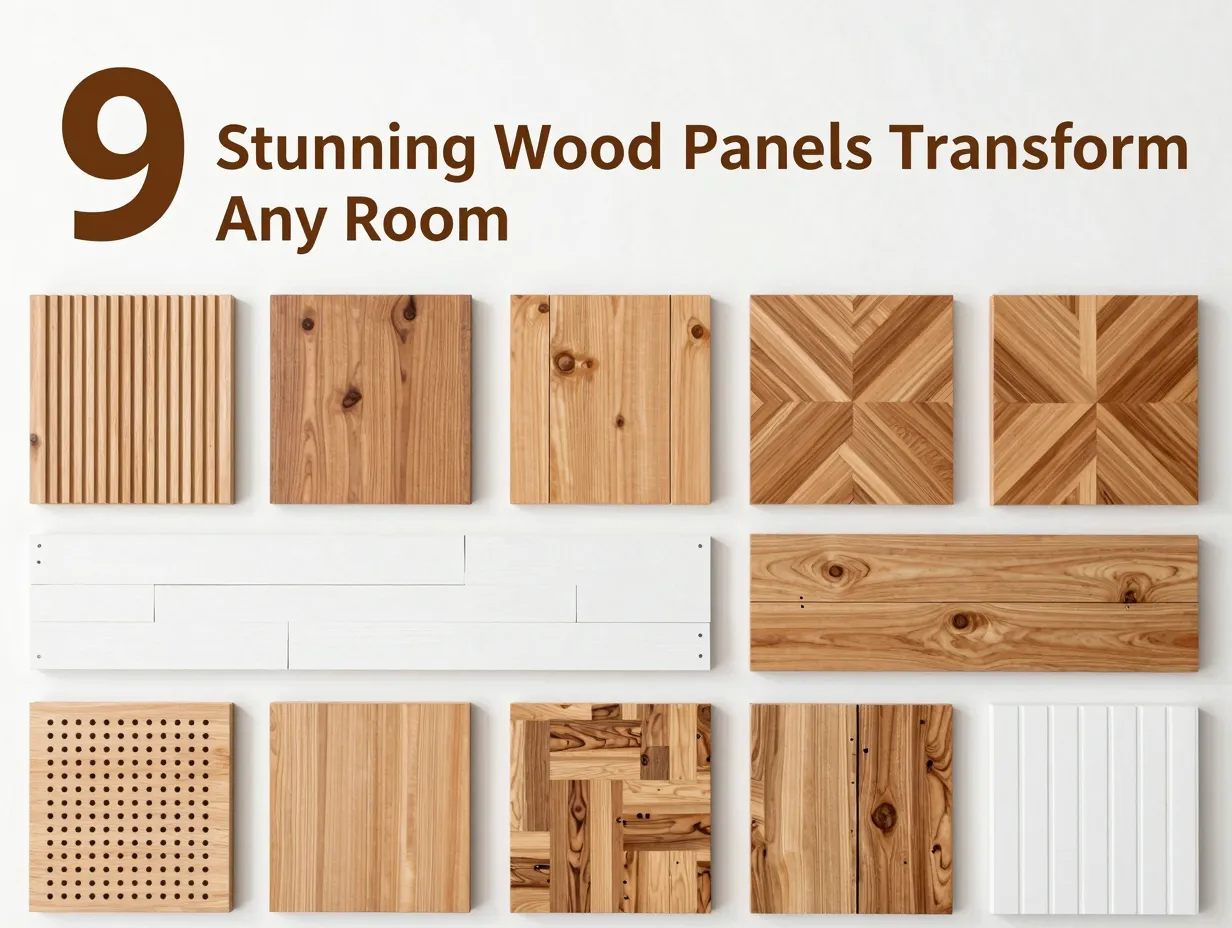
The following nine panel styles represent the full range of what is available today, from budget-friendly DIY options to investment-grade architectural statements. Each entry covers the visual effect, practical considerations, and the rooms where it performs best.
1. Vertical Slat Panels
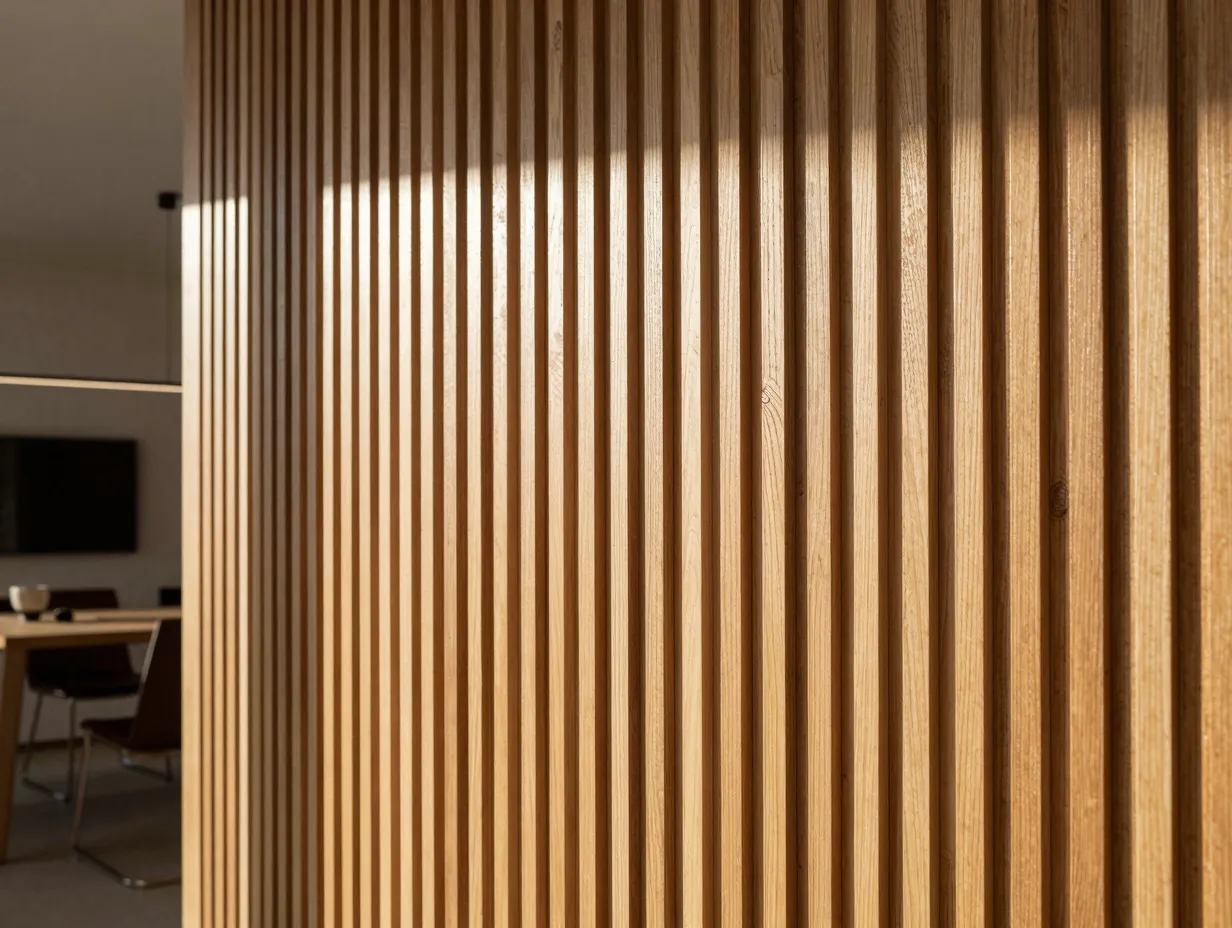
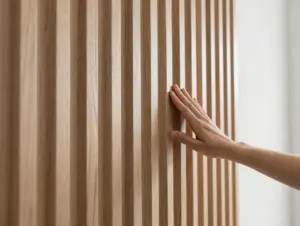
Vertical slat panels are the defining aesthetic of 2026 residential design. Thin strips of wood, typically between 20mm and 60mm wide, are mounted vertically with consistent gaps between them, creating a rhythmic, linear pattern that draws the eye upward and makes any room feel taller than it actually is [1].
The gaps between slats serve a dual purpose. Visually, they add depth and shadow play that changes throughout the day as natural light shifts. Practically, those gaps allow sound to pass through to an acoustic backing layer, making slatted panels one of the most effective tools for managing noise in open-plan kitchens, home offices, and living rooms [1].
Best rooms: Living rooms, home offices, open-plan dining areas.
Wood species to consider: Oak, walnut, ash.
DIY difficulty: Moderate, requires accurate spacing and a level baseline.
2. Wide-Plank Statement Walls
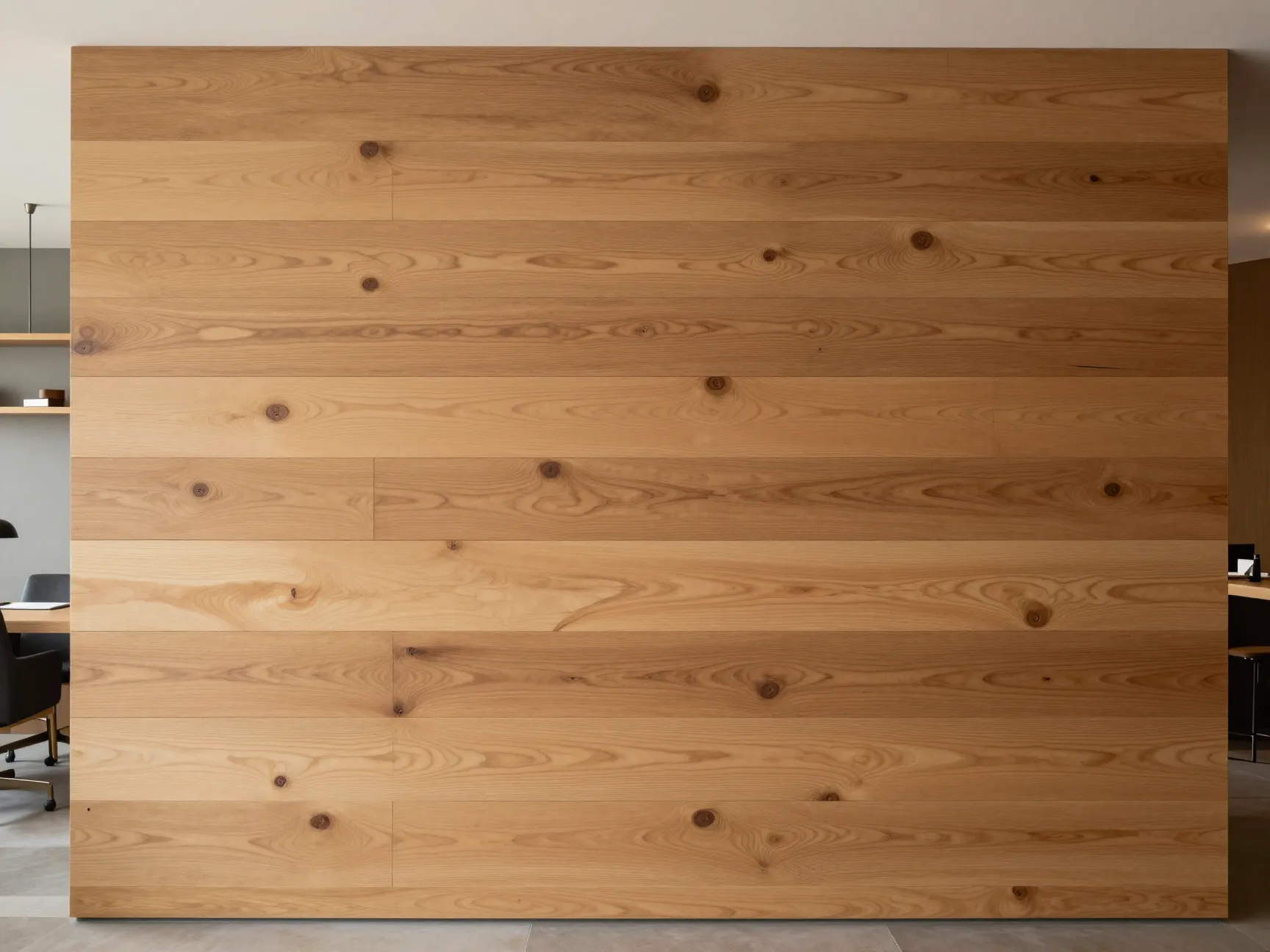
A single accent wall clad in wide-plank timber boards makes an immediate, unambiguous statement. Planks ranging from 150mm to 300mm wide showcase the full character of the wood, its grain, knots, color variation, and natural imperfections, in a way that narrower formats simply cannot.
Wide-plank walls work particularly well with warm oak and honey-toned species, which align with the current preference for warm, organic palettes over the cool gray tones that dominated the previous decade [8]. The effect is deliberately rustic in some applications and sleekly architectural in others, depending on the finish and the surrounding decor.
I installed a wide-plank oak feature wall in my own home office two years ago, and the single most common comment from visitors is that the room feels like it belongs in a boutique hotel. The investment was modest, a single wall, perhaps 12 square meters, but the visual return was disproportionate.
Best rooms: Bedrooms, home offices, entryways.
Wood species to consider: Oak, pine, cedar.
DIY difficulty: Low to moderate, wide planks are forgiving and fast to install.
3. Herringbone Pattern Panels
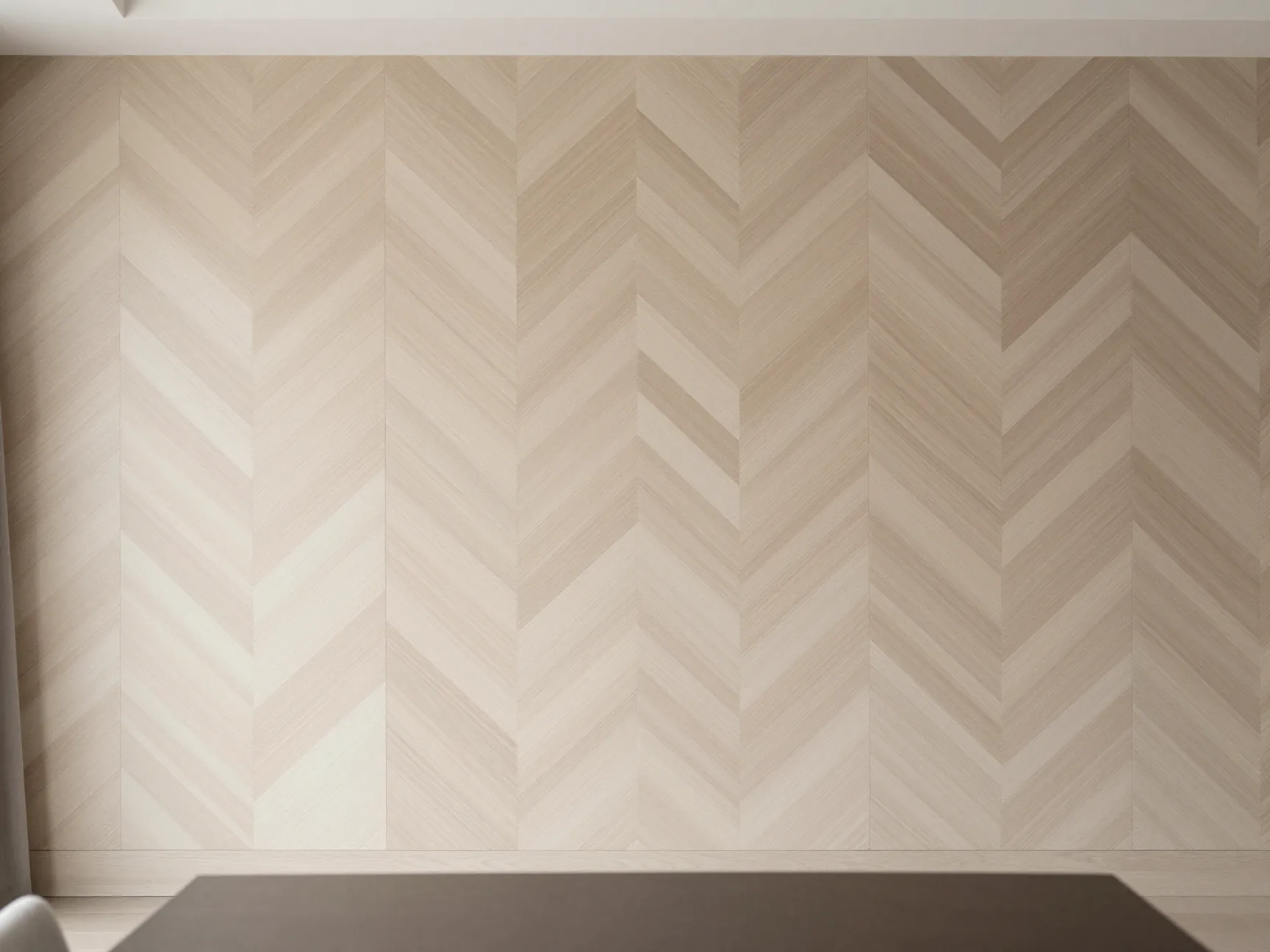
Herringbone is one of the oldest geometric patterns in decorative arts, and its application to wall panels brings a level of visual sophistication that few other formats can match. Individual timber strips are cut at 45-degree angles and laid in alternating directions, creating a chevron-like zigzag that draws the eye across the entire wall surface.
The pattern works in both traditional and contemporary settings. In a modern context, a herringbone wall in pale ash or whitewashed oak reads as graphic and architectural. In a more traditional room, the same pattern in dark walnut feels rich and classical. The versatility is one of its greatest strengths [2].
Best rooms: Dining rooms, feature bedroom walls, reception hallways.
Wood species to consider: Ash, walnut, maple.
DIY difficulty: High, precise angle cuts and careful layout planning are essential.
4. 3D Geometric Relief Panels
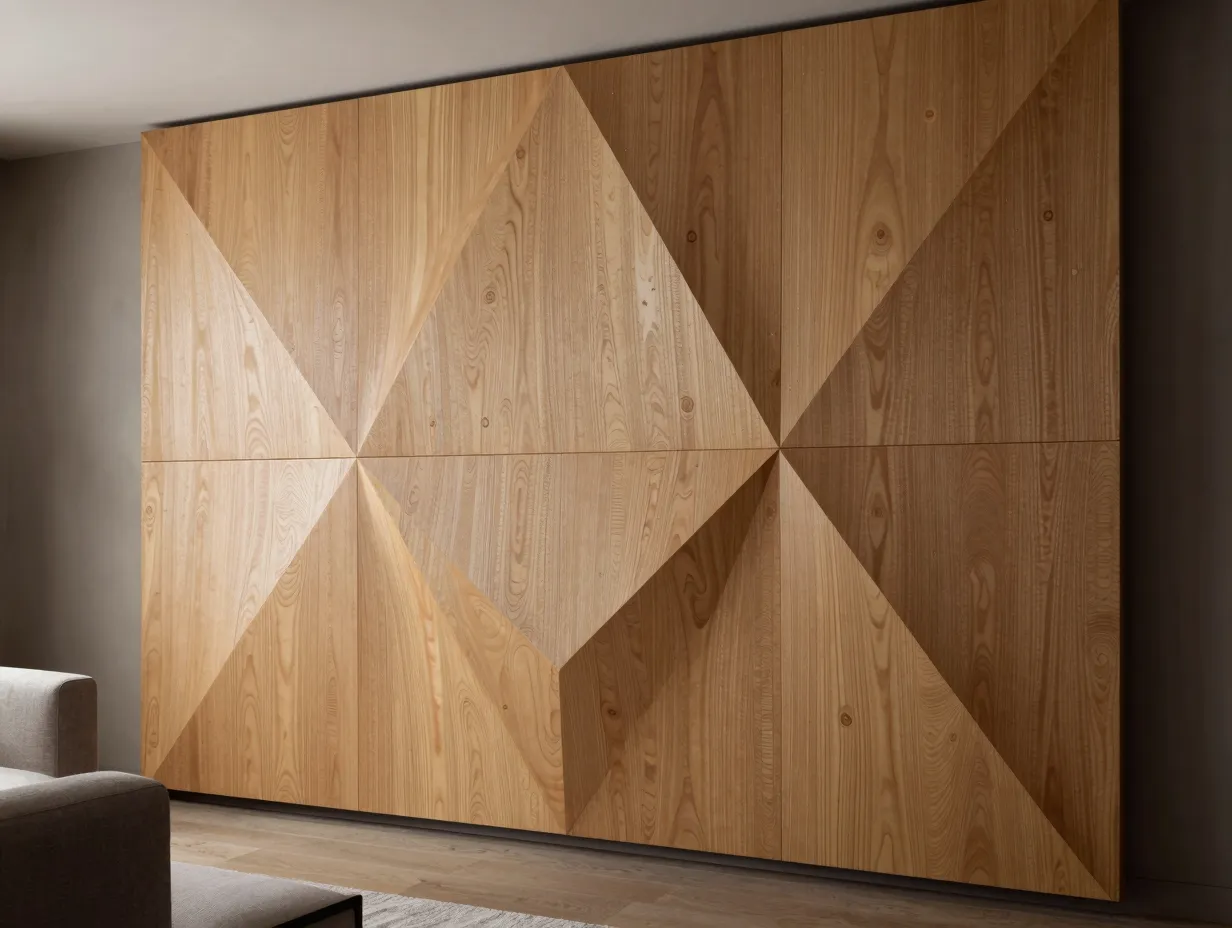
Three-dimensional relief panels move wood from a flat surface treatment into genuine sculptural territory. Machined or hand-carved geometric forms, pyramids, diamonds, waves, and interlocking hexagons, project from the wall surface, creating shadows and highlights that shift dramatically with changes in lighting.
These panels are manufactured with increasing precision thanks to advances in wood panel production technology, including automated defect detection systems that ensure consistent quality across large production runs [5]. The result is a product that delivers architectural-grade visual impact with reliable consistency.
3D relief panels are best used sparingly, a single feature wall rather than an entire room, because their visual intensity can overwhelm a space if overused. Pair them with simple, neutral furnishings to let the panel do the talking.
Best rooms: Living room feature walls, hotel-style bedroom headboard walls.
Wood species to consider: MDF with wood veneer, solid oak, teak.
DIY difficulty: Low, most 3D panels are pre-formed and clip or glue into place.
5. Shiplap Panels

Shiplap has earned its place as a perennial favorite by being genuinely useful as well as attractive. The overlapping horizontal boards create a clean, linear pattern with a subtle shadow line between each plank that adds texture without visual complexity.
Originally a construction technique for weatherproofing exterior walls, shiplap migrated into interior design and has stayed there because it suits an exceptionally wide range of styles, from coastal and farmhouse aesthetics to clean Scandinavian minimalism. Painted white, it brightens and expands a space. Left in its natural wood tone, it adds warmth and organic character [2].
Shiplap is also one of the most DIY-accessible panel formats. The boards are widely available, the installation technique is straightforward, and mistakes are easy to correct during the process.
Best rooms: Bathrooms, kitchens, bedrooms, living rooms.
Wood species to consider: Pine, spruce, cedar.
DIY difficulty: Low, one of the most beginner-friendly panel installations available.
6. Reclaimed Timber Panels
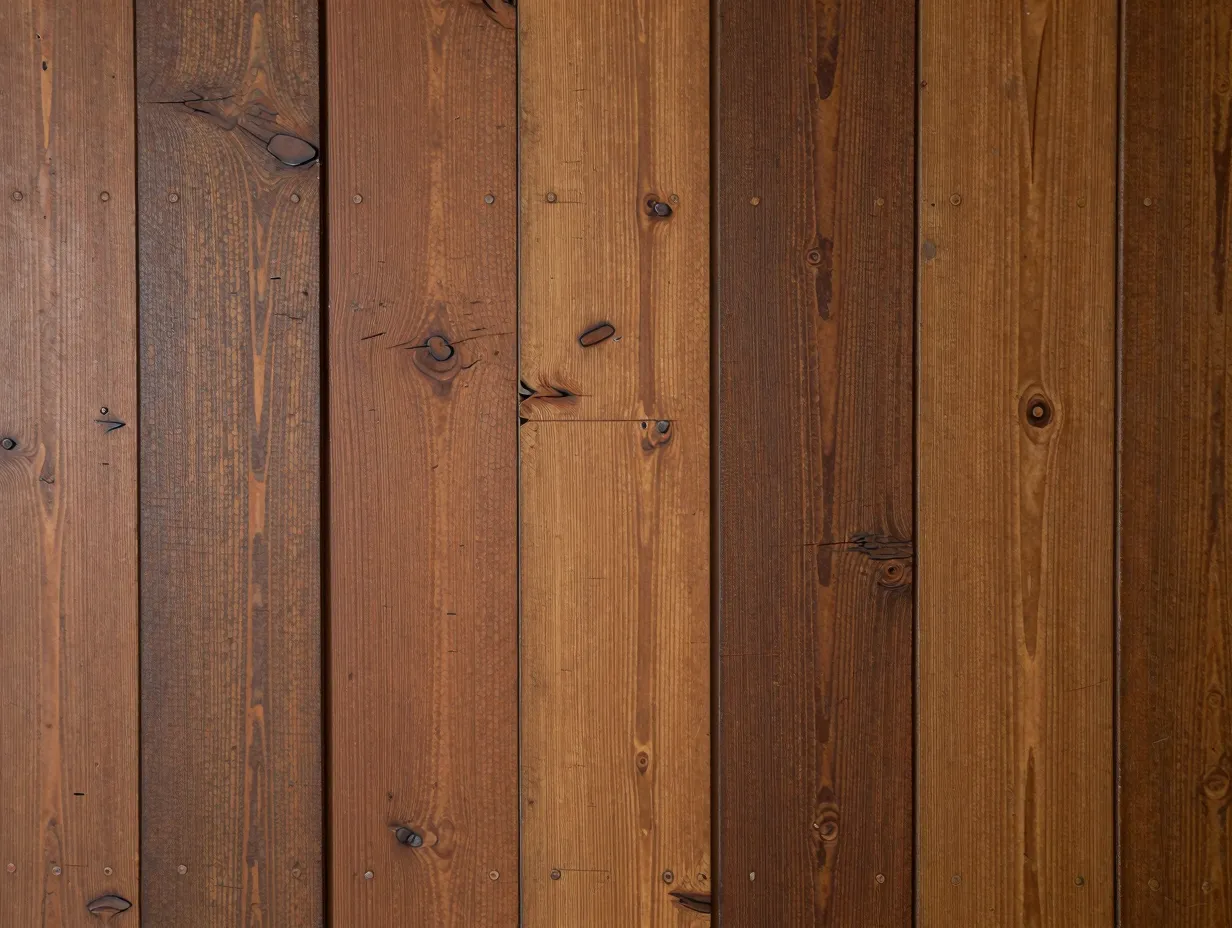
Reclaimed timber panels carry something that no new material can replicate: history. Boards salvaged from old barns, factories, warehouses, and demolished structures arrive with a patina of age, nail holes, saw marks, color variation, and surface texture that took decades to develop naturally.
From a sustainability standpoint, reclaimed timber is the gold standard. No new trees are felled, no new manufacturing energy is consumed, and the material is diverted from landfill [1]. The environmental argument aligns perfectly with the aesthetic one: reclaimed panels look extraordinary precisely because they are imperfect.
The practical consideration is consistency. Because reclaimed boards vary in thickness, color, and surface condition, installation requires more care and planning than uniform manufactured panels. Professional installation is often worth the investment for large-scale reclaimed timber projects.
Best rooms: Living rooms, restaurants, feature bedroom walls, entryways.
Wood species to consider: Oak, elm, pine, chestnut (species depend on salvage source).
DIY difficulty: Moderate to high, surface preparation and thickness variation require careful handling.
7. Acoustic Perforated Wood Panels
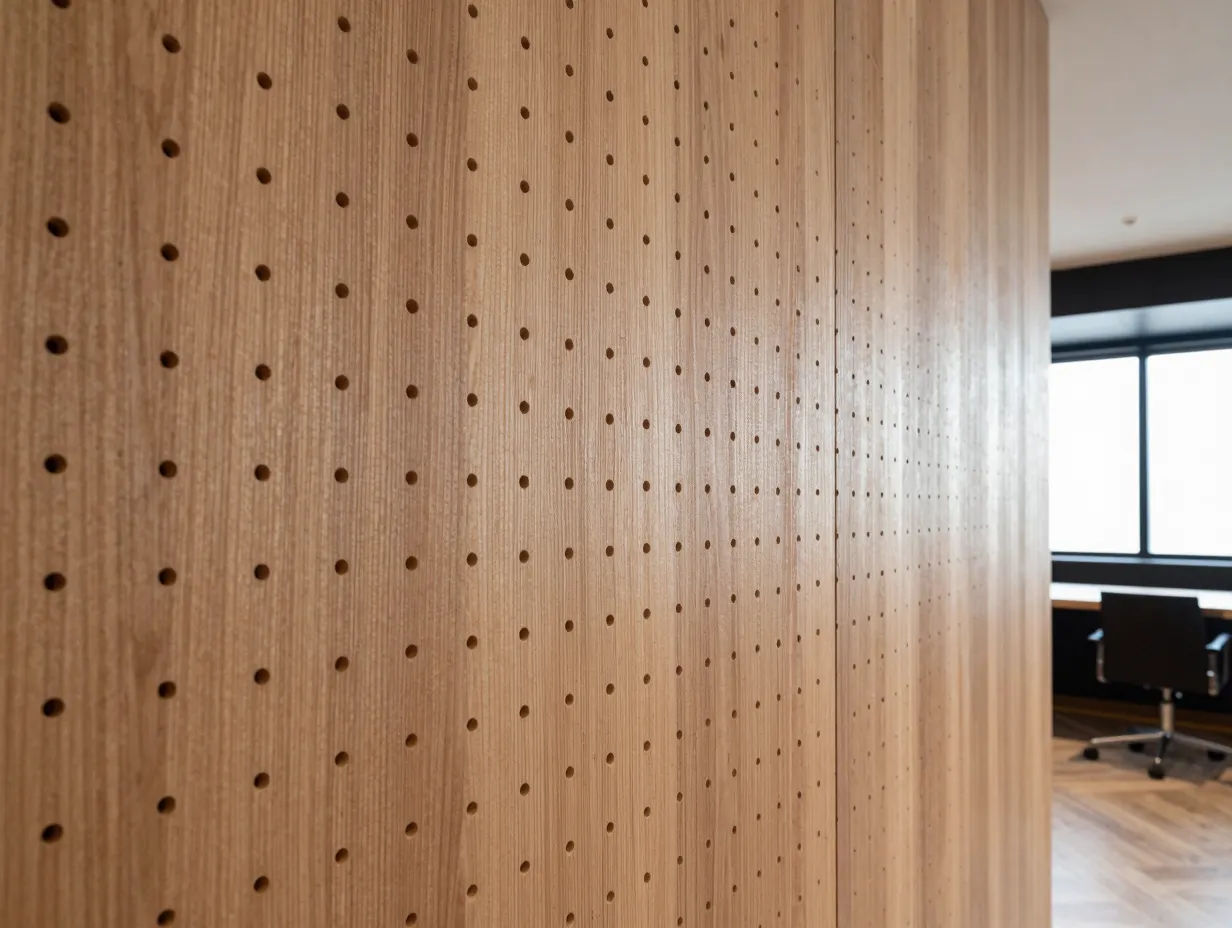
Acoustic perforated panels sit at the intersection of function and design. A regular pattern of small holes drilled through the face of each panel allows sound waves to pass through to an absorbent backing material, dramatically reducing echo and reverberation in hard-surfaced rooms.
The holes themselves become a design element, fine perforation patterns read as subtle texture from a distance while delivering measurable acoustic performance up close. These panels are increasingly specified for home cinemas, recording spaces, open-plan offices, and any room where sound quality matters [1].
The finish options are broad. Perforated panels are available in natural timber veneers, painted MDF, and engineered wood, meaning the acoustic function does not come at the cost of aesthetic flexibility.
Best rooms: Home cinemas, music rooms, open-plan offices, living rooms.
Wood species to consider: Oak veneer, walnut veneer, painted MDF.
DIY difficulty: Moderate, acoustic backing installation adds a step but is not technically demanding.
8. Patterned Veneer Panels
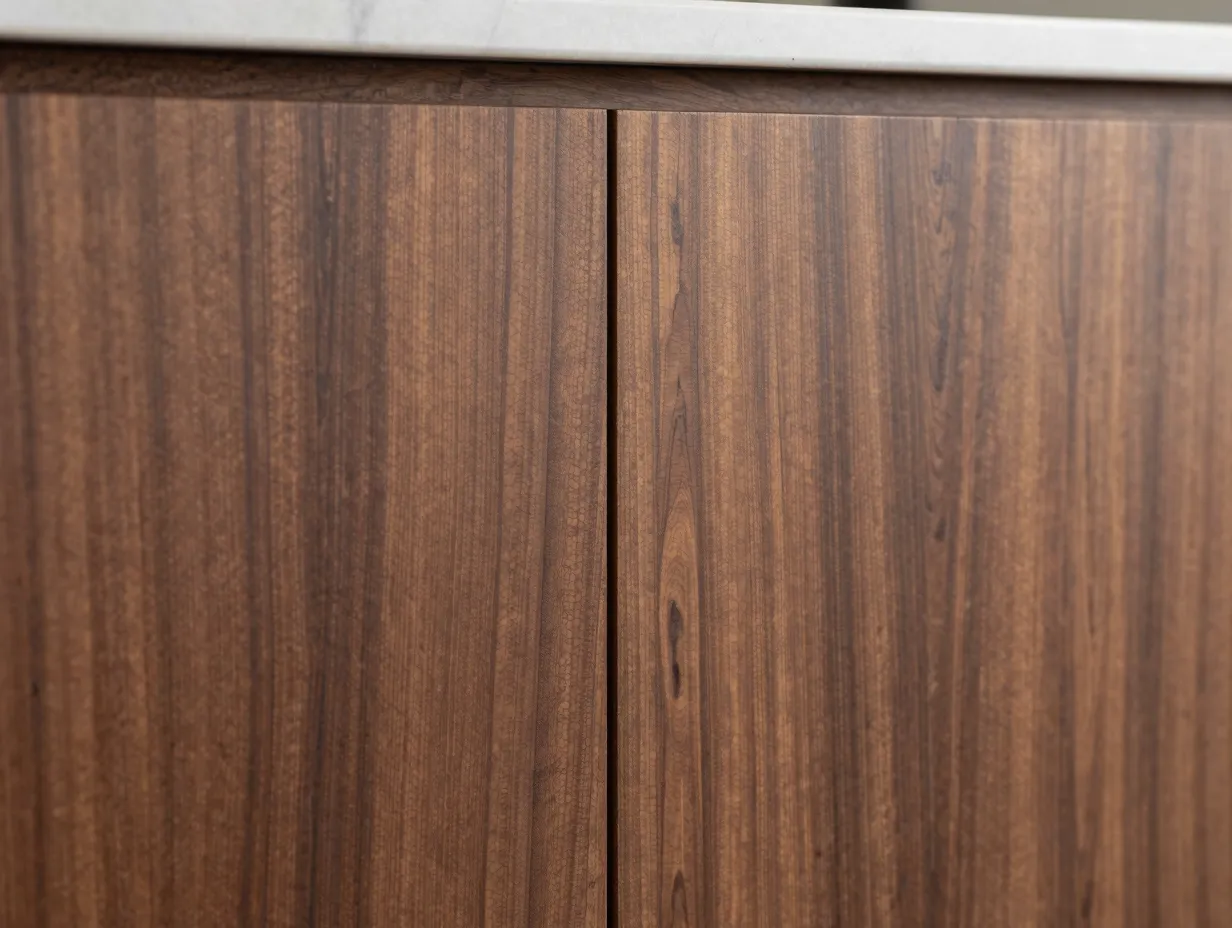
Patterned wood veneers represent the most design-forward application of wood on this list. Ultra-thin slices of timber, sometimes as thin as 0.5mm, are cut, matched, and arranged into complex patterns: bookmatched symmetry, radial burr figures, parquetry-style geometric compositions, and abstract flame figures that look more like painting than woodwork.
Patterned veneers are gaining significant traction in kitchen design, where they are replacing basic flat-front timber cabinets with surfaces that have genuine artistic depth [9]. The same approach applied to wall panels transforms a flat surface into something that rewards close inspection.
Because the veneer layer is thin, the substrate can be engineered wood or MDF, making patterned veneer panels more dimensionally stable than solid timber and less susceptible to movement with changes in humidity.
Best rooms: Kitchens, dining rooms, master bedrooms, feature living room walls.
Wood species to consider: Walnut burl, figured maple, zebrano, ebony veneer.
DIY difficulty: High, veneer work requires precision and the right adhesive system.
9. Painted Beadboard Panels
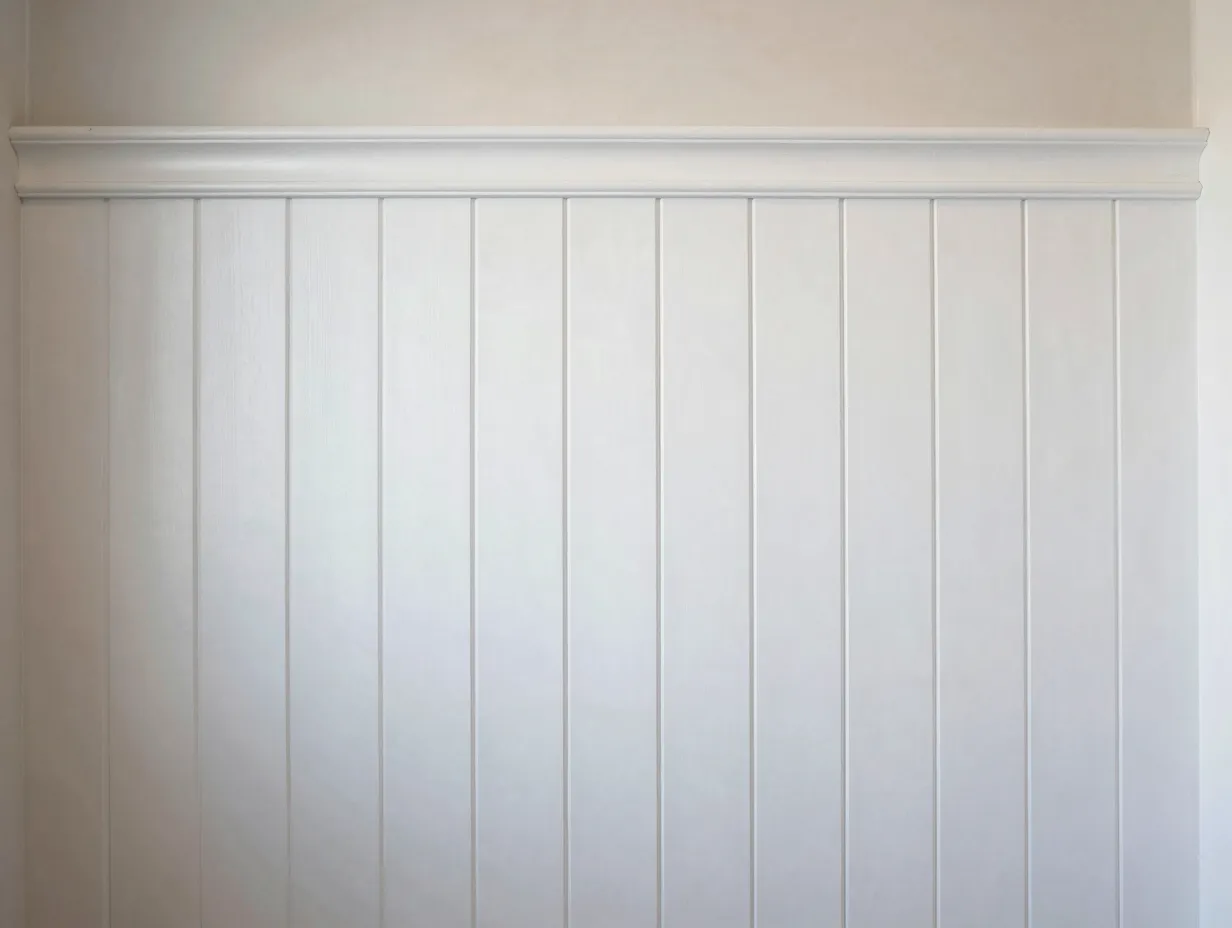
Beadboard, the classic wainscoting panel with its vertical grooves and raised bead detail, deserves its place on this list not despite its familiarity but because of it. In a design moment that sometimes prioritizes novelty over livability, beadboard offers something genuinely valuable: proven, timeless character that works in almost any room.
Painted white or in soft heritage tones, beadboard adds architectural interest to walls that would otherwise be plain. It is particularly effective in bathrooms and kitchens, where it provides a durable, easy-to-clean surface that also looks considered and intentional [10]. Applied as a half-height wainscot with a contrasting upper wall color, it creates a visual break that makes rooms with high ceilings feel more human in scale.
The nostalgia factor is real, beadboard evokes a sense of craftsmanship and permanence that resonates strongly in 2026’s design culture, which has grown weary of disposable, trend-driven interiors [10].
Best rooms: Bathrooms, kitchens, hallways, children’s bedrooms.
Wood species to consider: MDF (most common for painted applications), pine.
DIY difficulty: Low, beadboard panels are widely available in pre-formed sheets.
Choosing the Right Panel for Your Space
With nine strong options on the table, the selection process can feel overwhelming. The following framework simplifies the decision.
| Panel Style | Best Visual Effect | Key Practical Benefit | DIY Friendly |
|---|---|---|---|
| Vertical Slat | Height and rhythm | Acoustic absorption | Moderate |
| Wide-Plank | Drama and warmth | Fast installation | Low, Moderate |
| Herringbone | Geometric sophistication | Works in any style | High difficulty |
| 3D Geometric Relief | Sculptural depth | Easy clip installation | Low |
| Shiplap | Clean, versatile texture | Widest style range | Low |
| Reclaimed Timber | Authentic character | Maximum sustainability | Moderate, High |
| Acoustic Perforated | Subtle texture | Sound management | Moderate |
| Patterned Veneer | Artistic, high-end finish | Dimensional stability | High difficulty |
| Painted Beadboard | Classic architectural detail | Durable, easy to clean | Low |
Three questions to guide your choice:
- What is the primary goal, aesthetic transformation, acoustic improvement, or sustainability?
- How much of the room do you want the panel to cover, a single accent wall or the full perimeter?
- What is your realistic budget and installation skill level?
Answering these three questions honestly will narrow the field from nine options to two or three that genuinely fit your situation.
Installation and Maintenance Essentials
Even the most beautiful panel choice will underperform if it is installed carelessly or maintained poorly. A few principles apply across all nine panel types.
Acclimatization matters. Solid timber panels should be left in the room where they will be installed for at least 48 to 72 hours before fitting. Wood expands and contracts with changes in humidity, and panels installed without acclimatization can buckle or gap as they adjust to their new environment.
Moisture is the primary enemy. In bathrooms and kitchens, choose species and finishes rated for higher humidity environments. Cedar, teak, and properly sealed oak are all good choices. Untreated MDF will swell and delaminate if exposed to persistent moisture.
Fixing method affects the finish. Face-fixing with visible screws or nails is the most DIY-accessible approach but leaves hardware visible. Secret-fixing systems, where fixings are hidden behind the panel face, produce a cleaner result but require more precise installation.
Maintenance is generally low. Most finished wood panels require nothing more than periodic dusting and an occasional wipe with a slightly damp cloth. Oiled finishes benefit from a fresh coat of oil every one to three years depending on traffic and exposure to light.
Conclusion
The 9 stunning wooden wall panels to transform any room covered in this guide offer something for every budget, skill level, and design sensibility. From the acoustic practicality of slatted and perforated panels to the artistic ambition of patterned veneers, wood remains the most versatile and rewarding wall treatment available in 2026.
The resurgence of wood paneling is not a passing trend. It is rooted in a genuine shift toward biophilic design, acoustic comfort, and sustainable material choices, forces that are not going away [3][7]. Whether you are renovating a single room or rethinking an entire home, the right wooden wall panel will add warmth, character, and lasting value.
Actionable next steps:
- Identify one room in your home where a feature wall would have the greatest visual impact.
- Use the comparison table above to match your goals and skill level to the most suitable panel style.
- Request samples from at least two or three suppliers before committing, wood looks different under artificial and natural light, and samples are the only reliable way to judge.
- If your budget allows only one wall, make it the wall you face most often, the one visible from your primary seating position or the one you see when you enter the room.
- For complex installations (herringbone, patterned veneer, reclaimed timber), get at least two professional quotes before deciding whether to DIY.
The transformation that 9 stunning wooden wall panels can bring to any room is not just visual, it is felt. Rooms with wood on the walls feel quieter, warmer, and more intentional. That is an investment worth making.
References
[1] Why Wood Paneling For Walls Is Trending In 2026 – https://www.havwoods.com/us/news/why-wood-paneling-for-walls-is-trending-in-2026/?utm_source=openai
[2] Best Wooden Wall Panels – https://www.hscsdecor.com/best-wooden-wall-panels/?utm_source=openai
[3] Wood Wall Panels Everything You Need To Know 2026 – https://www.thepanelhub.com/blogs/news/wood-wall-panels-everything-you-need-to-know-2026?utm_source=openai
[4] Jennifer Aniston Living Room Dark Wood Paneling – https://www.homesandgardens.com/celebrity-homes/jennifer-aniston-living-room-dark-wood-paneling?utm_source=openai
[5] arxiv – https://arxiv.org/abs/2306.12113?utm_source=openai
[6] arxiv – https://arxiv.org/abs/2512.05596?utm_source=openai
[7] Interior Design Trends 2026 Wood Panels – https://www.thepanelhub.com/blogs/news/interior-design-trends-2026-wood-panels?utm_source=openai
[8] Outdated Flooring Trends 2026 – https://www.livingetc.com/advice/outdated-flooring-trends-2026?utm_source=openai
[9] Kitchens With Patterned Veneers – https://www.livingetc.com/ideas/kitchens-with-patterned-veneers?utm_source=openai
[10] Nostalgic 80s Interior Design Trends Worth Revisiting – https://www.womanandhome.com/homes/decor-advice/nostalgic-80s-interior-design-trends-worth-revisting/?utm_source=openai