9 Living Room Half Wall Paneling Ideas to Define Your Space
A single design decision, adding paneling to just the lower half of your living room walls, can transform a flat, forgettable room into a space that feels intentional, layered, and architecturally rich. Interior design experts writing for a leading UK homes magazine confirmed in January 2026 that wall panelling “is still very much on trend in 2026,” with half-height treatments ranking among the most versatile options available [3]. If you have been searching for ways to add character to your living room without a full renovation, these 9 living room half wall paneling ideas to define your space offer practical, high-impact solutions for every style and budget.
Disclosure: This post contains affiliate links. As an Amazon Associate, we earn from qualifying purchases, and at no extra cost to you.
I have spent time researching and testing these approaches, some in my own home, others through client consultations, and the results consistently surprise people. Half wall paneling does not just add visual texture. It defines zones, protects walls from everyday wear, and creates a finished look that full-height paint alone simply cannot achieve.
Key Takeaways
- Half wall paneling adds architectural depth and visual interest to living rooms without requiring a full renovation
- Combining paneling with contrasting paint or wallpaper above the panel line creates a dramatic, designer-level finish
- Vertical slat and board-and-batten styles are among the most popular choices for modern and transitional living rooms in 2026
- Half wall paneling can serve a functional purpose, protecting high-traffic wall areas while elevating the overall aesthetic
- Most styles can be achieved as a DIY project or through a professional installer, with a range of material price points available
Why Half Wall Paneling Works So Well in Living Rooms
Before diving into the specific ideas, it helps to understand why this treatment is so effective in a living room setting. Unlike bedrooms or hallways, living rooms carry a dual burden: they need to feel welcoming and relaxed while also looking polished enough for guests.
Half wall paneling solves this tension elegantly. By treating only the lower portion of the wall, typically from the floor to roughly 90-120 cm (about 36-48 inches) high, you create a visual anchor that grounds the room [7]. The upper wall remains open for paint, wallpaper, or artwork, giving you creative flexibility without visual overwhelm.
A March 2026 wall-panel manufacturer report noted that the living room remains the most popular room for panel installations, with designers using feature walls behind sofas, around fireplaces, and as floor-to-ceiling timber accents to ground the space [9]. Half-height treatments are particularly effective because they mimic traditional wainscoting found in period homes, lending a sense of craftsmanship and permanence.
Key benefits at a glance:
- Adds architectural character to plain, builder-grade walls
- Protects lower wall surfaces from scuffs, furniture marks, and pet damage
- Creates a natural visual break that makes ceilings feel taller
- Provides a design framework for layering color, texture, and pattern above the panel line
- Works in both small and large living rooms without overwhelming the space
The 9 Living Room Half Wall Paneling Ideas to Define Your Space
Below, I walk through nine distinct approaches, from classic to contemporary, each with practical guidance on materials, height, color, and styling.
1. Classic Shaker-Style Wainscoting
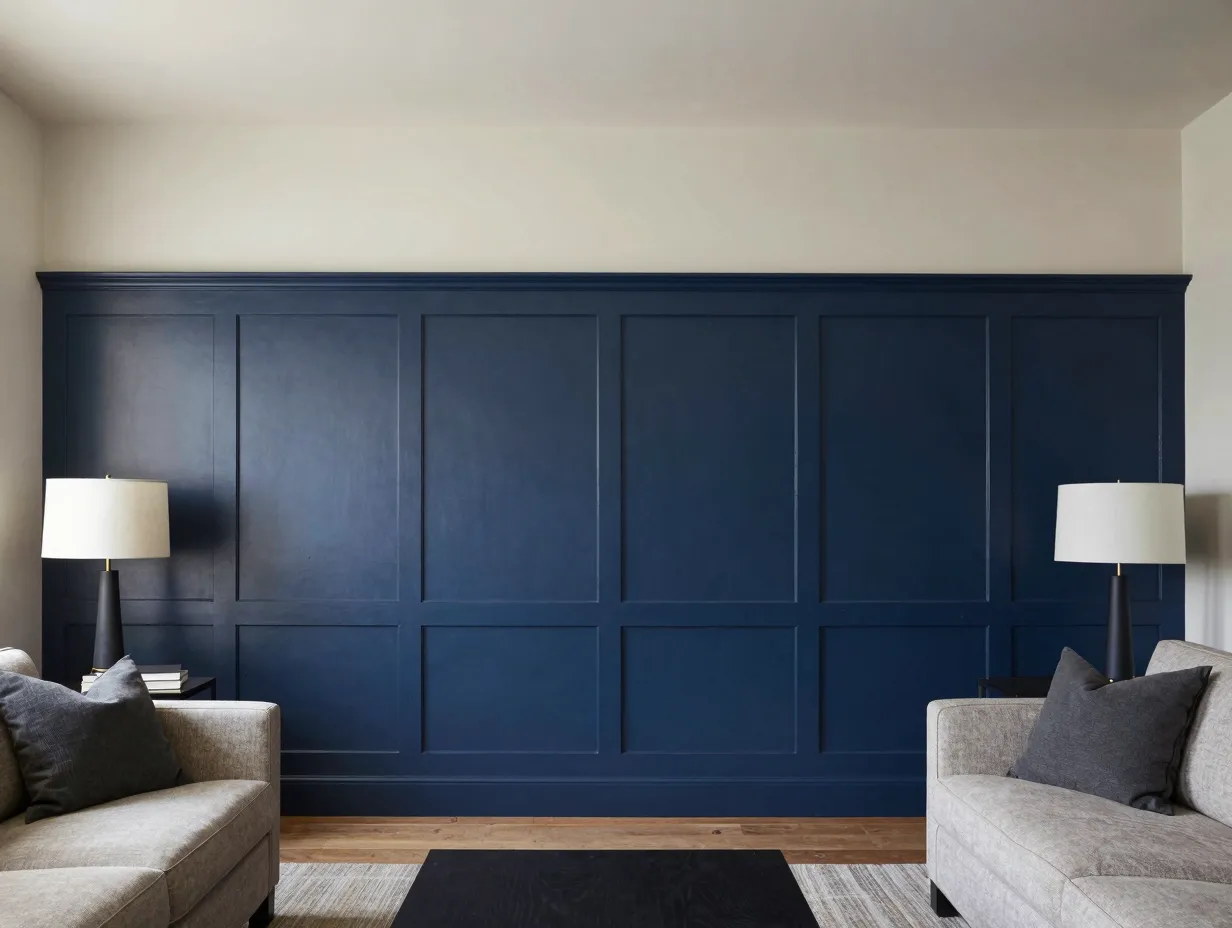
Shaker-style wainscoting is the foundational half wall paneling idea that most homeowners recognize immediately. It features flat, recessed panels framed by a top rail, bottom rail, and vertical stiles, creating a grid-like pattern that reads as both traditional and clean.
This style works exceptionally well in living rooms that blend classic and contemporary furnishings. Paint the panels the same color as your upper wall for a subtle, tone-on-tone effect, or go bold with a contrasting deep hue on the lower section [1]. Navy, forest green, and charcoal are particularly strong choices in 2026.
Best for: Traditional, transitional, and Hamptons-style living rooms
Recommended height: 90-100 cm from the floor
Material options: MDF (most affordable), solid wood (premium), PVC (moisture-resistant)
“Shaker paneling is the little black dress of interior design, it works with almost everything and never goes out of style.”
2. Board and Batten for a Modern Farmhouse Feel
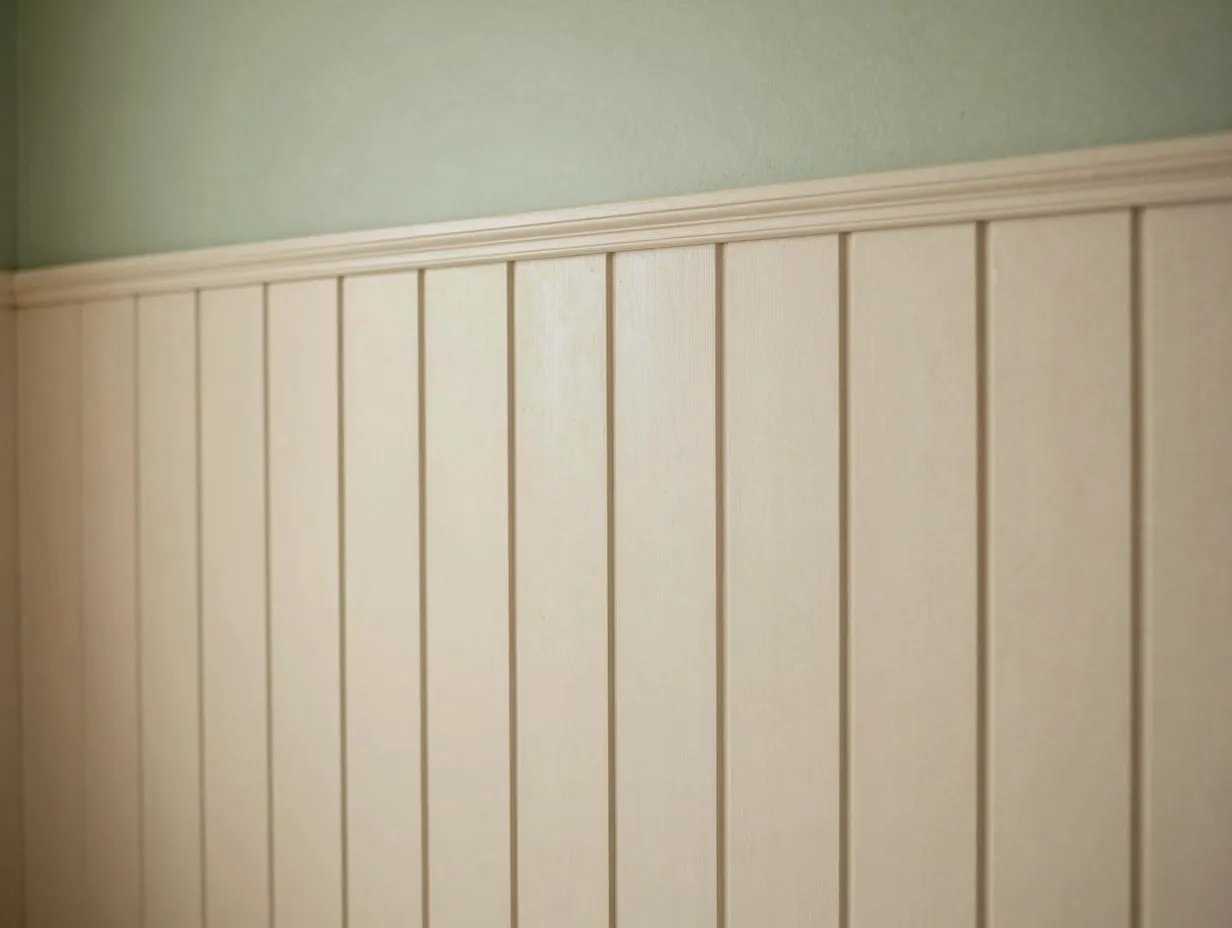
Board and batten paneling consists of wide, flat boards (the “boards”) separated by narrow vertical strips (the “battens”). The result is a rhythmic, textured surface that adds strong vertical lines to a room, a trick that visually stretches ceiling height [2].
This style gained enormous popularity through the farmhouse-interior movement and has since evolved into a cleaner, more modern form. When painted in a single matte color, particularly warm whites, soft greiges, or deep earthy tones, board and batten paneling looks contemporary rather than rustic [6].
I installed board and batten in my own living room a few years ago, painting it a warm off-white against a pale sage upper wall. The transformation was immediate. The room felt more structured and finished without losing any of its relaxed character.
Best for: Modern farmhouse, Scandinavian, and casual contemporary living rooms
Recommended height: 100-120 cm from the floor
Spacing tip: Keep battens evenly spaced at 30-40 cm intervals for a balanced, proportional look
3. Vertical Slat Paneling for a Contemporary Edge
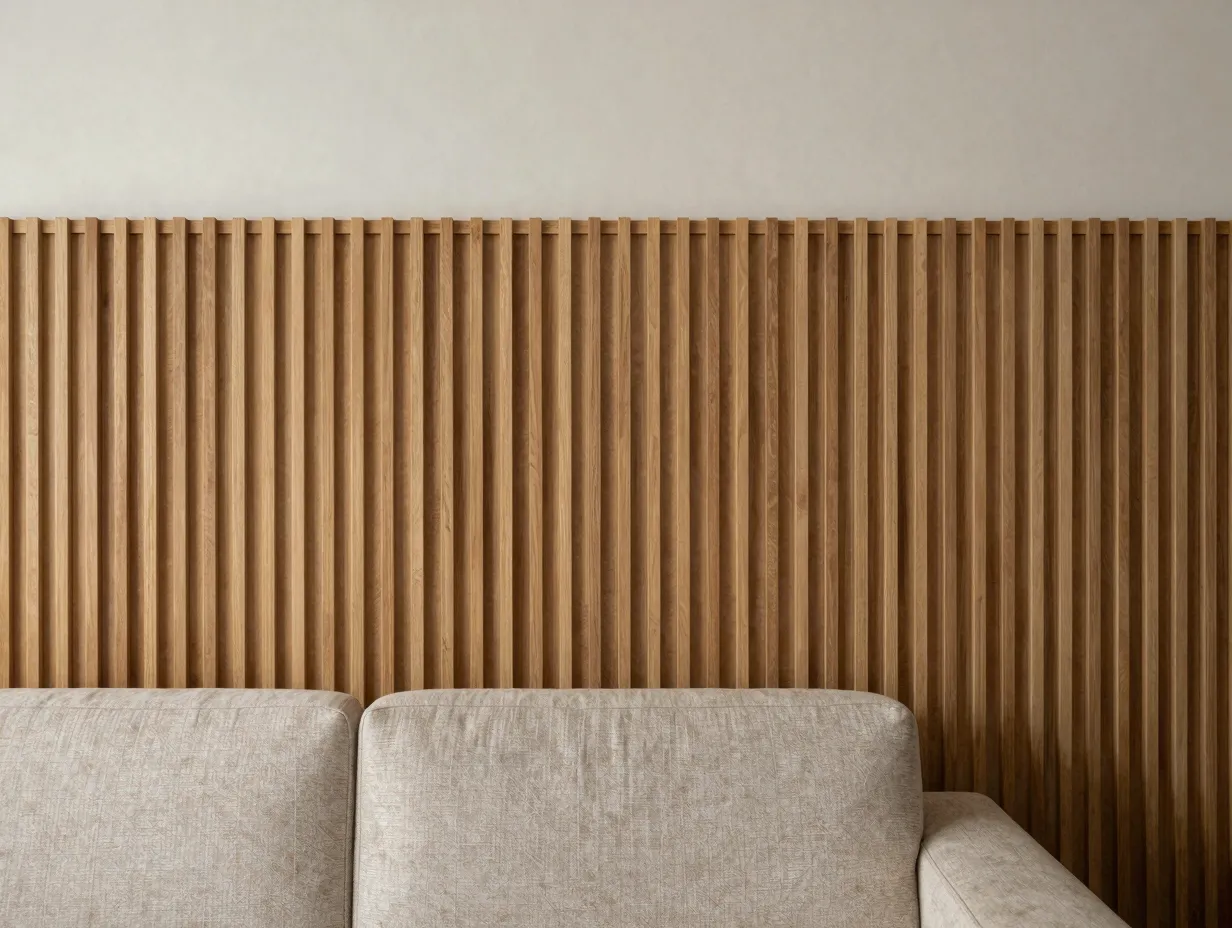
Vertical slat paneling, sometimes called slatted or ribbed paneling, has emerged as one of the defining interior trends of the mid-2020s. Thin, evenly spaced vertical slats create a tactile, almost rhythmic surface that catches light beautifully and adds depth without visual clutter [3].
Design experts specifically highlighted “vertical, understated slats for a modern feel” as one of the three key looks defining wall paneling in 2026 [3]. At half-wall height, slat paneling is particularly effective behind a sofa, where it creates a backdrop that feels curated and intentional.
Material options:
- Timber slats: Warmest look, works well in natural or stained finishes
- MDF slats: Paintable, more affordable, consistent finish
- Acoustic slat panels: A growing option that combines aesthetic appeal with sound absorption, useful in open-plan living rooms [9]
Best for: Contemporary, Japandi, and minimalist living rooms
Color direction: Natural wood tones, matte black, or warm white
4. Tongue and Groove Paneling for Timeless Texture
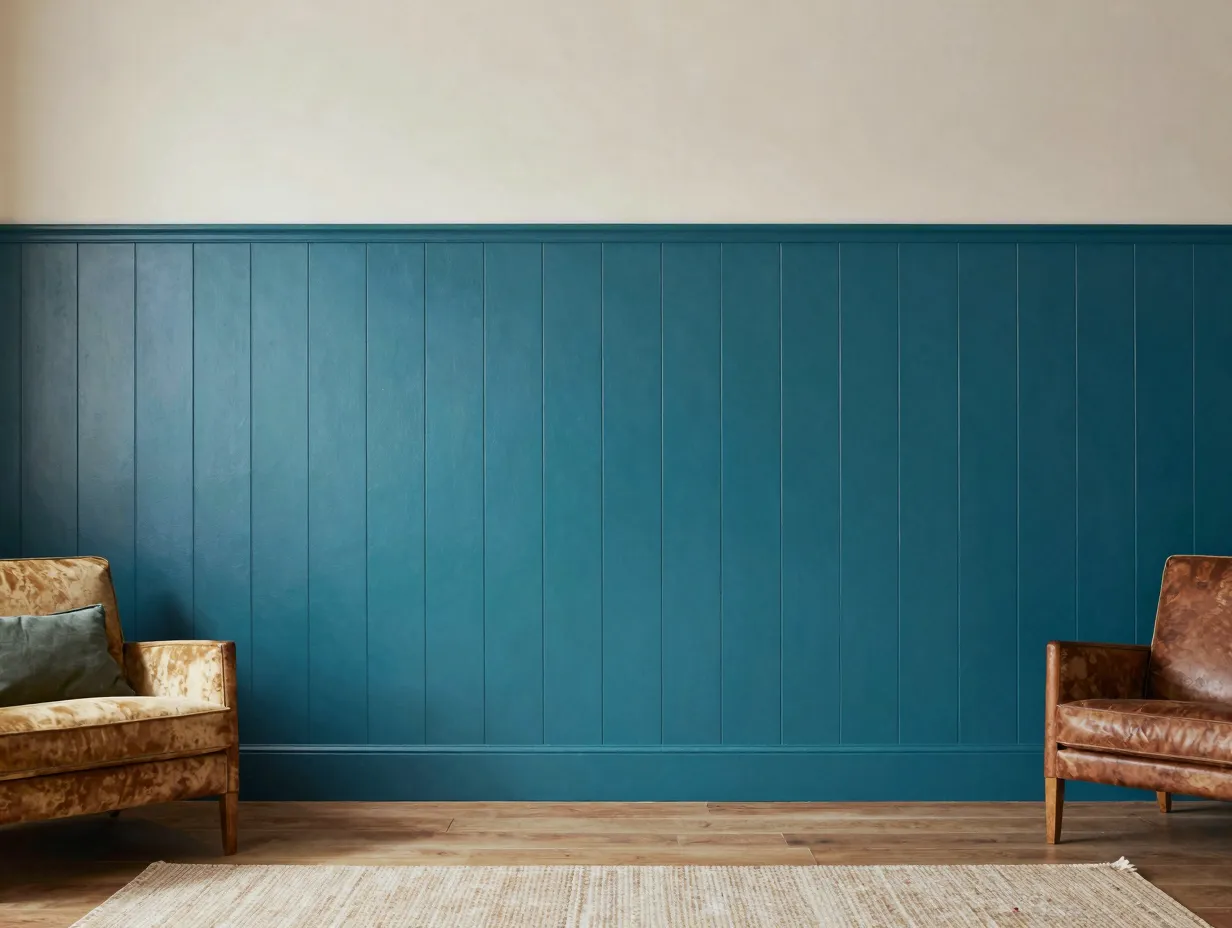
Tongue and groove paneling, where each board slots into the next via a tongue-and-groove joint, creates a seamless, continuous surface with fine vertical lines. It is one of the most traditional paneling methods and remains highly relevant because of its versatility [4].
At half-wall height, tongue and groove paneling works beautifully in both painted and natural wood finishes. Painted versions in period homes often appear in soft heritage colors: duck egg blue, sage green, or warm cream. In more contemporary settings, a single bold color, like deep teal or burnt terracotta, can make the paneling feel graphic and current [5].
Practical note: Tongue and groove is one of the more DIY-friendly options because the boards interlock cleanly and do not require complex cutting or framing in most applications.
Best for: Cottage, coastal, period, and eclectic living rooms
Recommended height: 85-100 cm from the floor
5. Geometric Grid Paneling for a Statement Wall
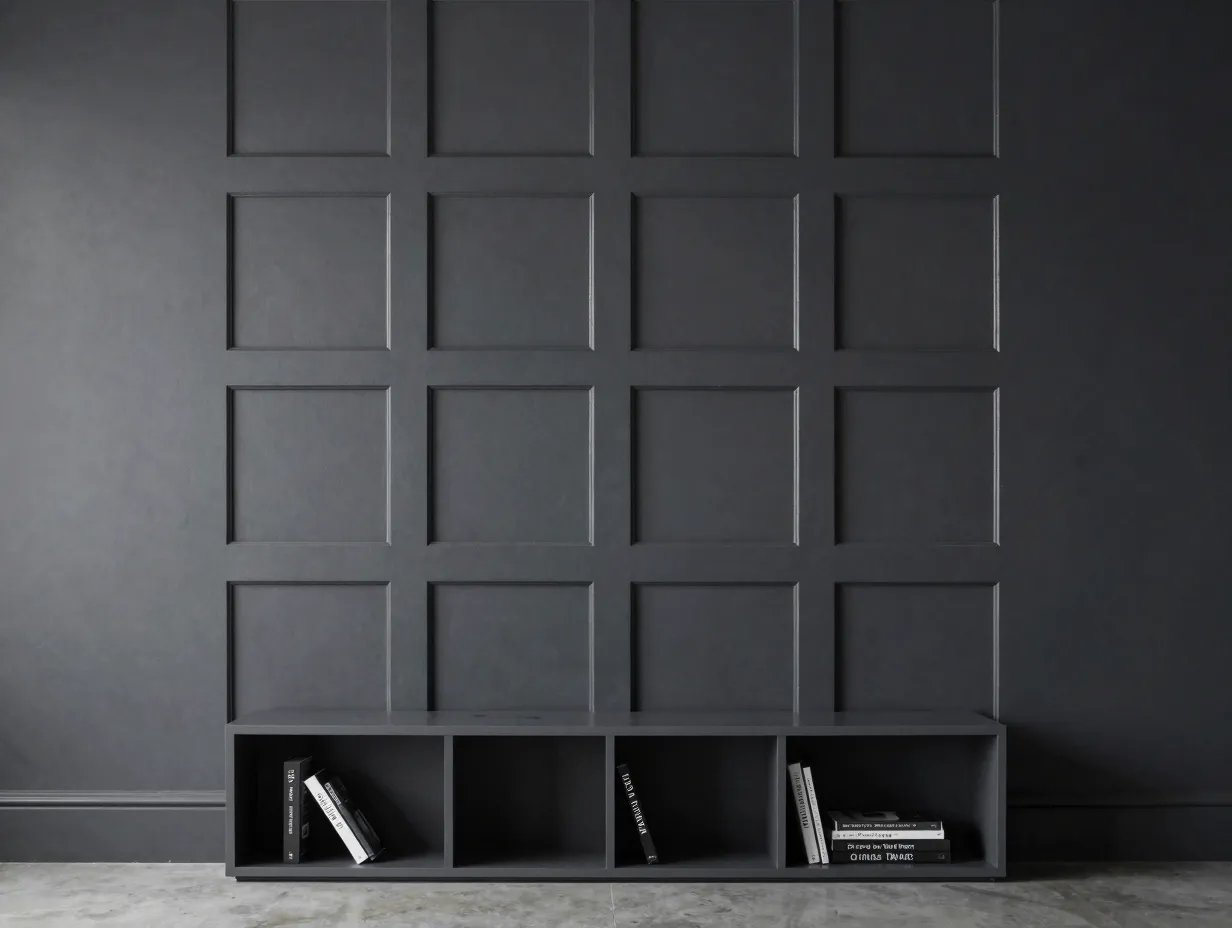
If you want your half wall paneling to function as a true focal point, geometric grid paneling delivers maximum visual impact. This style uses applied moldings or routed MDF to create a grid of squares or rectangles across the lower wall surface [6].
The key to making geometric grid paneling feel sophisticated rather than busy is restraint in color. Most designers recommend painting the panels and the wall behind them in the same color, or using a tone-on-tone approach, so the geometry reads through shadow and texture rather than contrast [10].
Styling tip: Position a console table, sideboard, or low bookcase against a geometric grid panel wall to reinforce the layered, architectural feel.
Best for: Contemporary, maximalist, and art-deco-influenced living rooms
Color direction: Monochromatic, same color throughout for a subtle, high-end effect
6. Rustic Shiplap for Casual, Lived-In Warmth
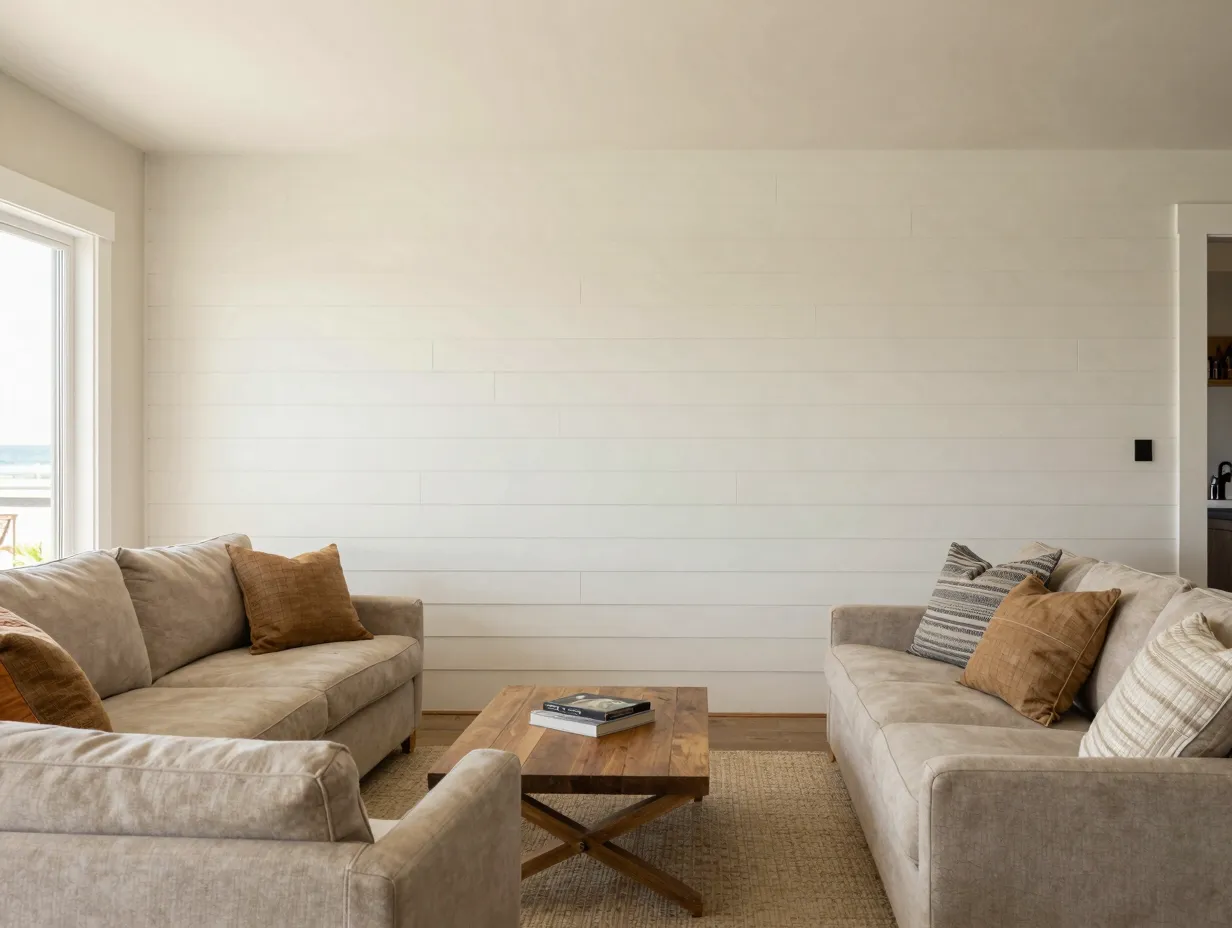
Shiplap, horizontal boards with a small reveal gap between each plank, brings a relaxed, casual warmth to living rooms that few other paneling styles can match. Originally a construction technique, shiplap became a design staple and has remained popular because of its honest, unpretentious character [7].
At half-wall height, shiplap works particularly well in open-plan living areas where the paneling helps define the living zone without using physical dividers. The horizontal lines also create a grounding effect that makes large, open rooms feel more intimate [5].
Finish options:
- Painted white or cream: Bright, airy, coastal feel
- Painted in a deep color: Dramatic and contemporary
- Natural or lightly stained wood: Warm, organic, and tactile
Best for: Coastal, rustic, open-plan, and relaxed contemporary living rooms
Recommended height: 90-110 cm from the floor
7. Beadboard Paneling for Cottage Charm
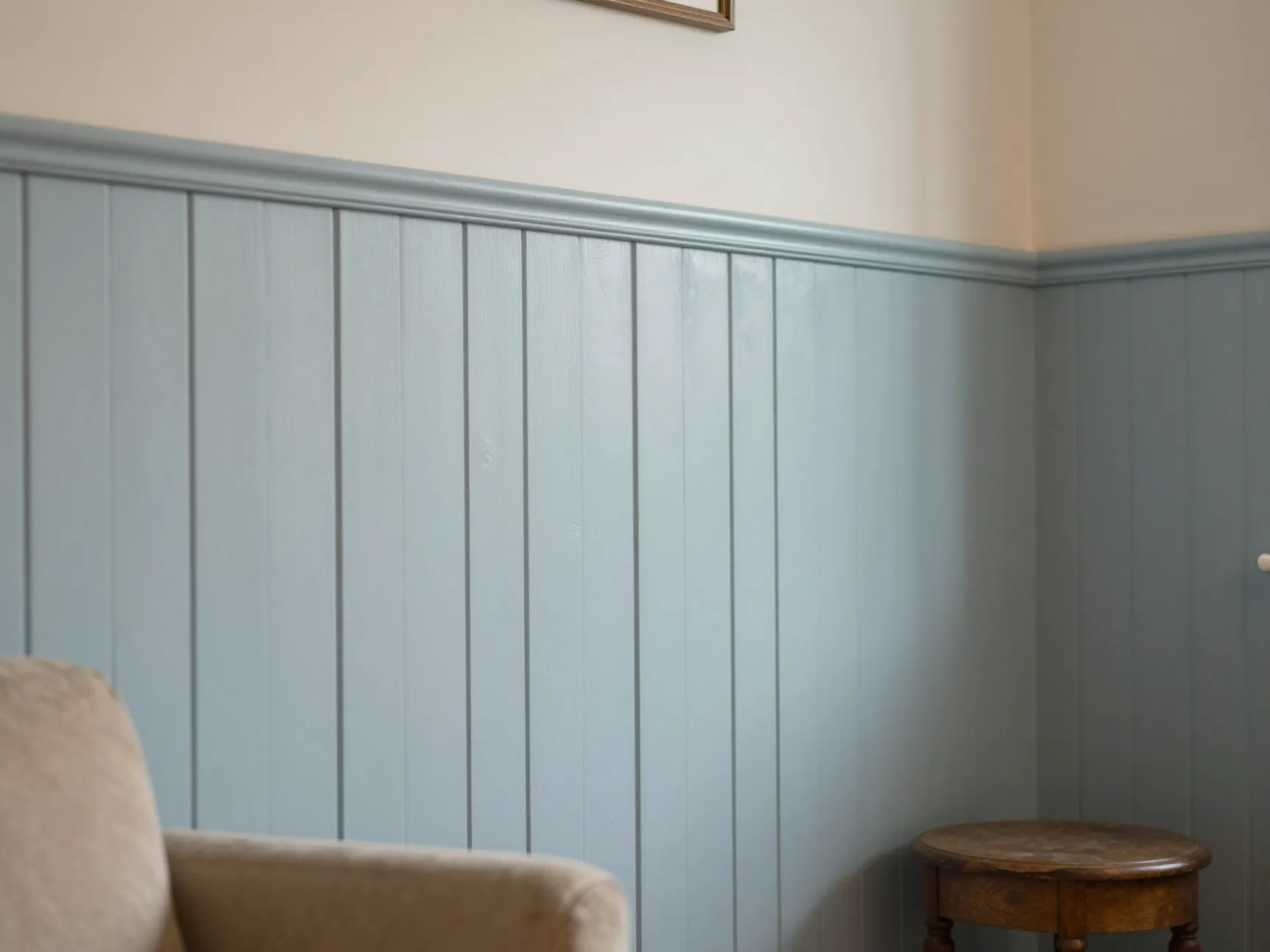
Beadboard consists of narrow vertical planks separated by small rounded ridges (the “beads”). It is one of the most recognizable paneling styles and carries strong associations with cottage, country, and traditional interiors [1].
At half-wall height, beadboard adds texture and character without dominating a room. It is particularly effective in smaller living rooms where a full-height treatment might feel heavy. Painted in soft, chalky tones, linen, pale blue, warm white, beadboard paneling creates a relaxed, inviting atmosphere [4].
A practical advantage: Beadboard is available in large sheet form (rather than individual planks), making it one of the fastest and most affordable paneling options to install. Sheets can be cut to height and attached directly to the wall with adhesive and finishing nails.
Best for: Cottage, country, eclectic, and traditional living rooms
Budget note: One of the most cost-effective paneling options available
8. Painted MDF Raised Panel Molding for a Luxury Look
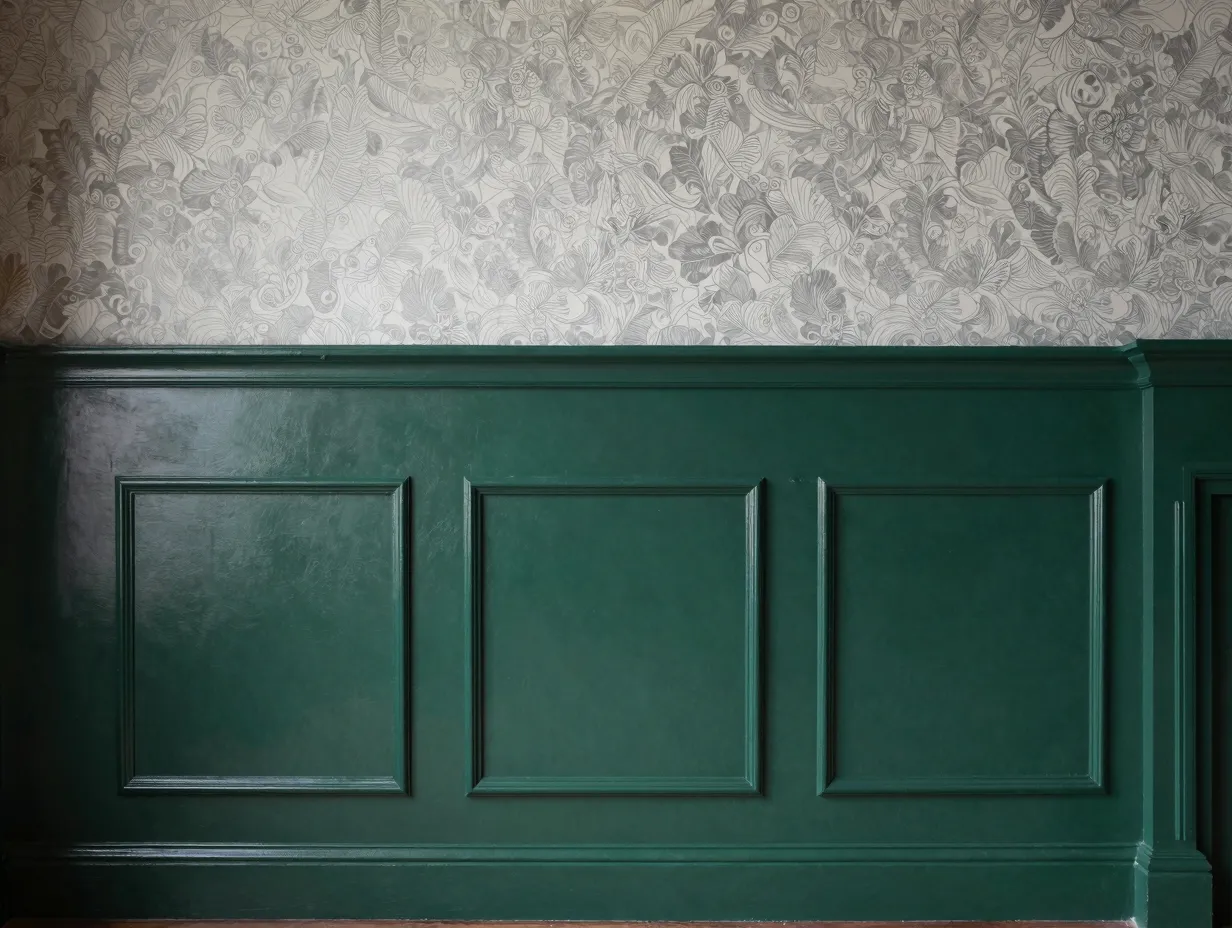
Raised panel molding, where the central panel element sits proud of the surrounding frame, creates a sense of depth and craftsmanship that reads as genuinely luxurious [6]. When executed in painted MDF and finished with a semi-gloss or satin sheen, it mimics the look of expensive millwork at a fraction of the cost.
This is the style most commonly associated with high-end traditional interiors, grand townhouses, and formal living rooms. However, it translates surprisingly well into contemporary spaces when painted in a single bold color, deep charcoal, forest green, or inky navy, and paired with modern furniture [8].
Design pairing: Interior design experts in 2026 specifically highlighted pairing half-height panels with statement wallpaper above the panel line as one of the key looks of the year [3]. Raised panel molding is the ideal base for this treatment because its structured geometry creates a clear visual boundary between the paneled lower wall and the patterned upper wall.
Best for: Traditional, formal, and transitional living rooms
Finish direction: Semi-gloss or satin paint for maximum depth and light reflection
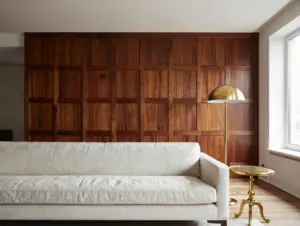
9. Mixed-Material Paneling for a Custom, Designer Finish
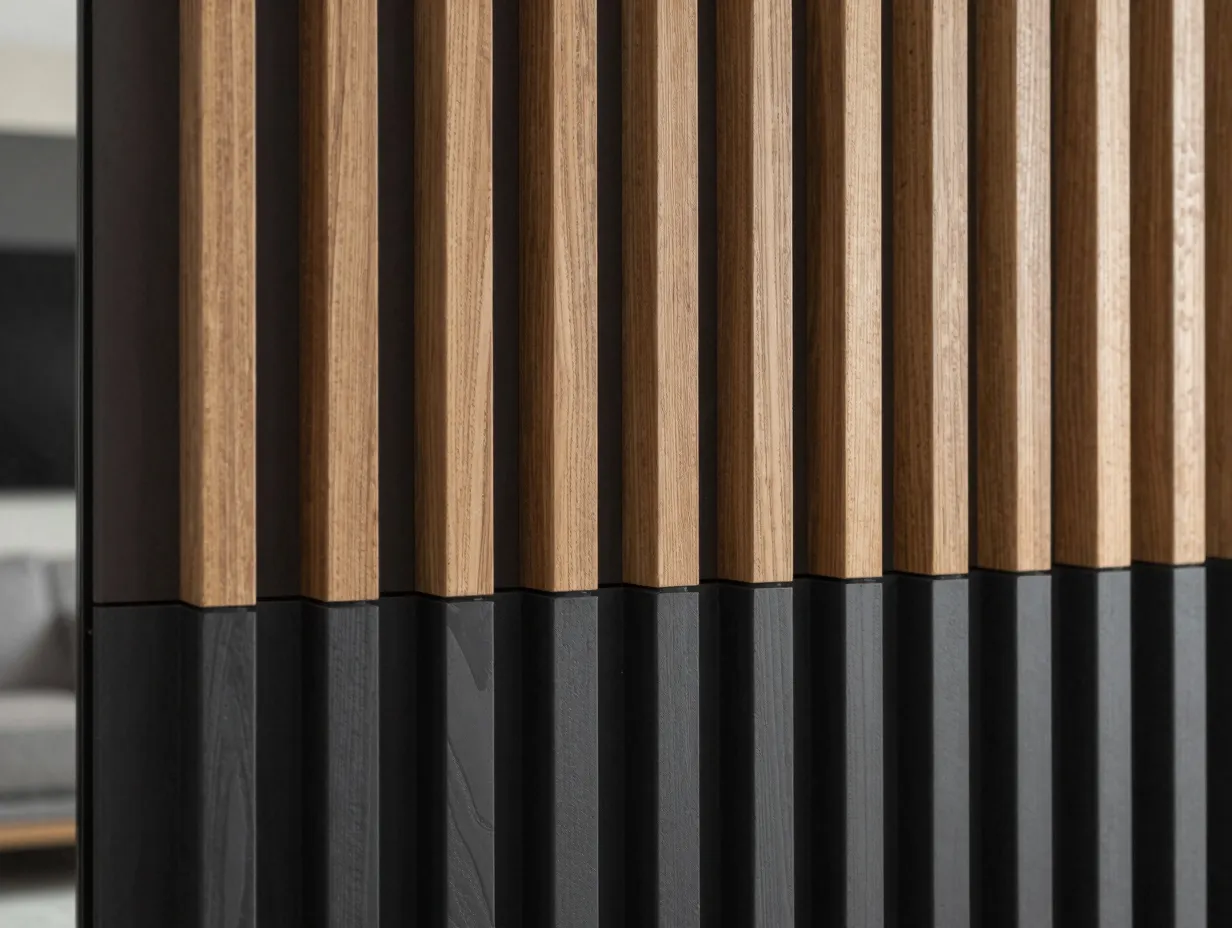
The most forward-looking entry in these 9 living room half wall paneling ideas to define your space is the mixed-material approach, combining two or more paneling materials or textures within the same half-wall treatment [9].
Common combinations include:
- Timber slats over a painted MDF backing panel: The slats cast shadows on the backing, creating a layered, three-dimensional effect
- Stone-effect panels alongside timber: Particularly effective in living rooms with a fireplace, where the contrast between materials reinforces the room’s focal point
- Fabric-wrapped panels within a shaker frame: An upholstered approach that adds acoustic benefit and a soft, luxurious texture [10]
Mixed-material paneling requires more planning and, in most cases, professional installation. However, the result is a genuinely custom finish that cannot be replicated with off-the-shelf products alone.
Best for: High-end contemporary, eclectic, and bespoke living rooms
Budget note: The most expensive option on this list, plan for a higher material and labor budget
Choosing the Right Height for Your Half Wall Paneling
One of the most common questions I hear is: how high should half wall paneling go? The answer depends on your ceiling height, your furniture, and the visual effect you want to achieve.
| Ceiling Height | Recommended Panel Height | Effect |
|---|---|---|
| 240 cm (standard) | 85-100 cm | Balanced, classic proportion |
| 260-270 cm | 100-120 cm | Grounded, anchored feel |
| 300 cm+ | 120-150 cm | Grand, architectural statement |
A general rule: the panel cap rail (the horizontal trim at the top of the paneling) should sit at or slightly above the top of your door frames or window sills when possible. This creates a visual alignment that makes the room feel more cohesive [7].
Color and Finish Strategies That Work
Color choice is where half wall paneling shifts from a construction decision to a design decision. Here are the approaches that consistently deliver strong results:
Tone-on-tone: Paint the paneling and the upper wall in the same color family, just different shades. This creates a subtle, sophisticated effect where the paneling reads through texture rather than contrast.
Bold lower, neutral upper: Paint the paneling in a deep, saturated color (navy, forest green, charcoal) and keep the upper wall in a light neutral. This grounds the room and makes furniture pop [2].
Neutral lower, statement upper: Pair white or off-white paneling with bold wallpaper or a deep paint color above the panel line. Design experts identified this as one of the defining looks of 2026 [3].
Natural wood finish: Leave timber paneling in a natural or lightly stained finish for warmth and organic texture. This works especially well with vertical slat and tongue-and-groove styles [8].
DIY vs. Professional Installation: What to Consider
Most of the nine styles described here can be approached as a DIY project with intermediate carpentry skills. Beadboard sheets, board and batten, and shiplap are the most beginner-friendly options. Geometric grid paneling and raised panel molding require more precision and are better suited to confident DIYers or professionals.
Key questions to ask before starting:
- Are your walls flat and plumb? Uneven walls require additional prep work before paneling can be applied cleanly.
- Do you have the right tools? A miter saw, level, nail gun, and coping saw cover most paneling projects.
- Are there electrical outlets or switches in the panel zone? These require careful planning and potentially an electrician.
- What is your timeline? A single feature wall can typically be completed in a weekend; a full-room installation may take three to five days.
For mixed-material paneling or any style involving bespoke joinery, I strongly recommend professional installation. The investment pays off in a finish that looks genuinely custom rather than handmade [10].
Conclusion
These 9 living room half wall paneling ideas to define your space represent a spectrum of styles, budgets, and skill levels, from the accessible simplicity of beadboard sheets to the bespoke luxury of mixed-material installations. What they share is the ability to transform an ordinary living room into a space that feels considered, layered, and genuinely well-designed.
Actionable next steps to move forward:
- Measure your living room walls and ceiling height to determine the ideal panel height for your space.
- Choose a style from the nine options above that aligns with your existing furniture and overall design direction.
- Gather material samples, most timber merchants and panel suppliers offer sample packs, and test them against your existing wall colors before committing.
- Decide honestly whether this is a DIY project or one that benefits from professional installation, and budget accordingly.
- Start with a single feature wall, typically the wall behind your sofa or fireplace, before committing to a full-room treatment.
Half wall paneling is one of the highest-impact, most reversible design upgrades available to homeowners. Whether you choose classic shaker wainscoting or contemporary vertical slats, the result is a living room that feels more finished, more personal, and more distinctly yours.
References
[1] Half Wall Paneling Ideas 8380367 – https://www.thespruce.com/half-wall-paneling-ideas-8380367
[2] Half Wall Paneling Ideas – https://dreamyhomestyle.com/half-wall-paneling-ideas/
[3] Is Wall Panelling Still On Trend In 2026 – https://www.idealhome.co.uk/all-rooms/is-wall-panelling-still-on-trend-in-2026
[4] Half Wall Paneling Ideas – https://www.sleek-chic.co.uk/2022/12/half-wall-paneling-ideas.html
[5] Inspiring Half Wall Paneling Ideas For Living Rooms – https://www.homestyler.com/article/inspiring-half-wall-paneling-ideas-for-living-rooms
[6] 25 Half Wall Paneling Ideas To Update Any Space In A Home – https://classicstylemag.com/25-half-wall-paneling-ideas-to-update-any-space-in-a-home/
[7] Half Wall Paneling Ideas For A Stylish Home Transformation – https://trusscore.com/blog/half-wall-paneling-ideas-for-a-stylish-home-transformation.html
[8] Top Wall Panelling Trends – https://skirtingking.co.uk/top-wall-panelling-trends/
[9] Modern Wall Panel Ideas 2026 – https://www.floorstowalls.co.uk/blogs/modern-wall-panel-ideas-2026/
[10] Half Wall Paneling Ideas – https://homebriefings.com/half-wall-paneling-ideas/