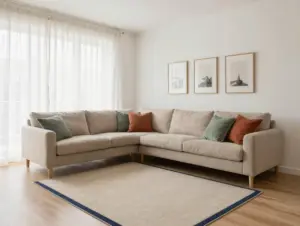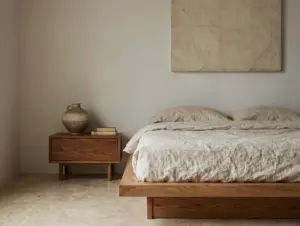
8 Small Room Decoration Ideas For Tiny Spaces That Feel Big
The average new apartment in the United States measures just 941 square feet, down nearly 50 square feet from a decade ago. Yet some of the most stunning interiors I have ever walked into were under 400 square feet. The secret was never a renovation budget or a sledgehammer. It was a set of deliberate, repeatable design decisions that manipulated how the eye reads space.
Disclosure: This post contains affiliate links. As an Amazon Associate, we earn from qualifying purchases, and at no extra cost to you.
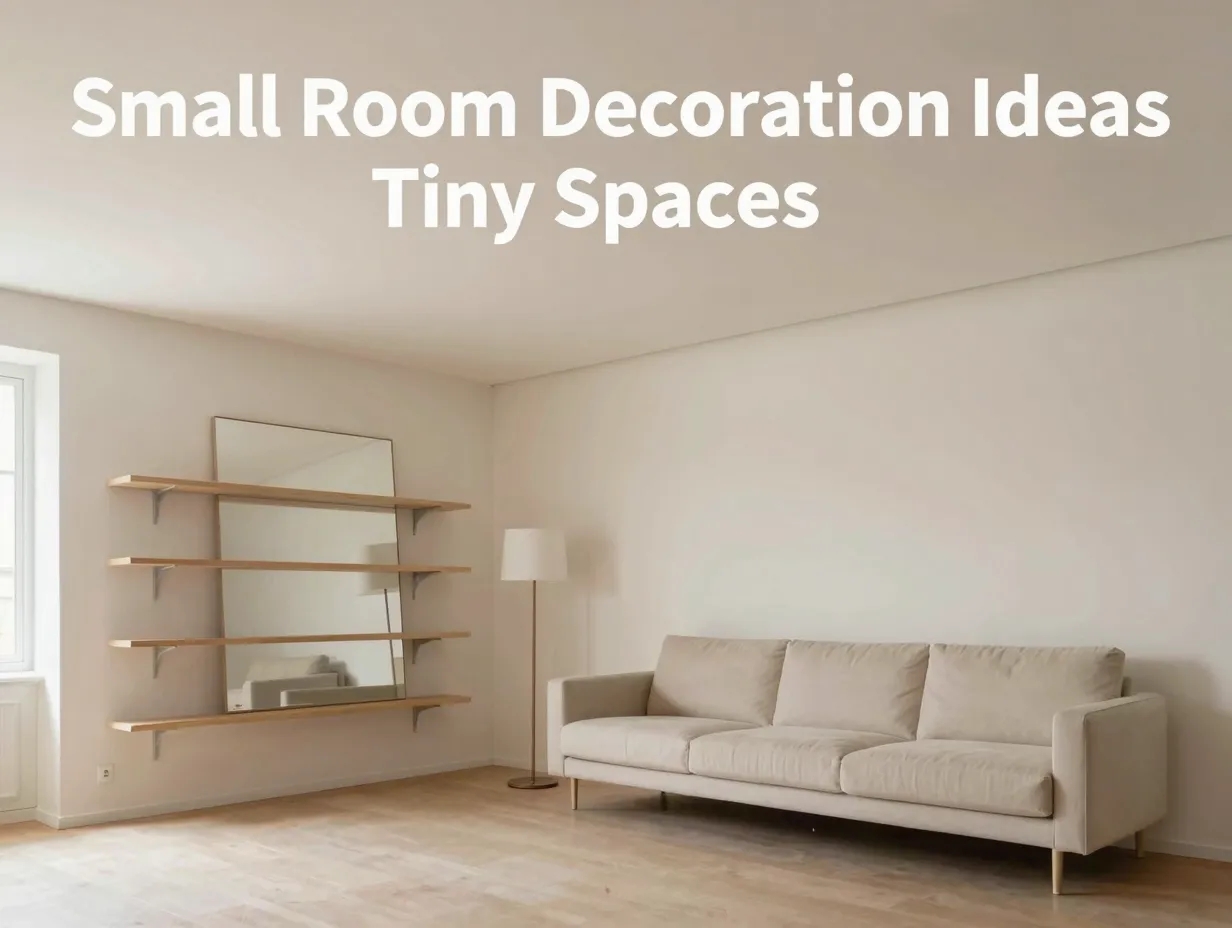
This guide covers the 8 small room decoration ideas for tiny spaces that feel big, strategies backed by professional interior designers and tested in real homes. Whether you are working with a studio apartment, a narrow bedroom, or a cramped living room, these ideas will help you unlock the full visual potential of every square inch you own.
Key Takeaways
- Fewer, larger furniture pieces reduce visual clutter and make small rooms read as more spacious than many small items scattered around
- Vertical strategies, tall shelving, high-hung curtains, floor-to-ceiling built-ins, add perceived height without touching a single wall structurally
- Painting walls, ceilings, and trim the same color blurs boundaries and creates a continuous, expansive visual envelope
- Mirrors placed opposite windows can visually double a room’s depth and bounce natural light throughout the space
- Zoning with rugs, lighting, and furniture groupings creates the feeling of multiple distinct areas within one small footprint
Why Most Small Room Advice Gets It Wrong
Before diving into the 8 small room decoration ideas for tiny spaces that feel big, it is worth addressing the most common mistake people make: buying small. The instinct when decorating a tiny room is to scale everything down, tiny sofa, tiny coffee table, tiny art. The result is a room that looks like a catalog of miniatures rather than a real, livable space.
Professional designers have known for years that this approach backfires. When every item is small, the eye has nowhere to rest. It bounces from object to object, registering each one as a separate visual interruption. The room feels busier, not bigger.
The 8 ideas below are built around a different principle: control what the eye sees, and you control how large the room feels.
The 8 Small Room Decoration Ideas For Tiny Spaces That Feel Big
1. Choose Fewer, Larger Pieces of Furniture
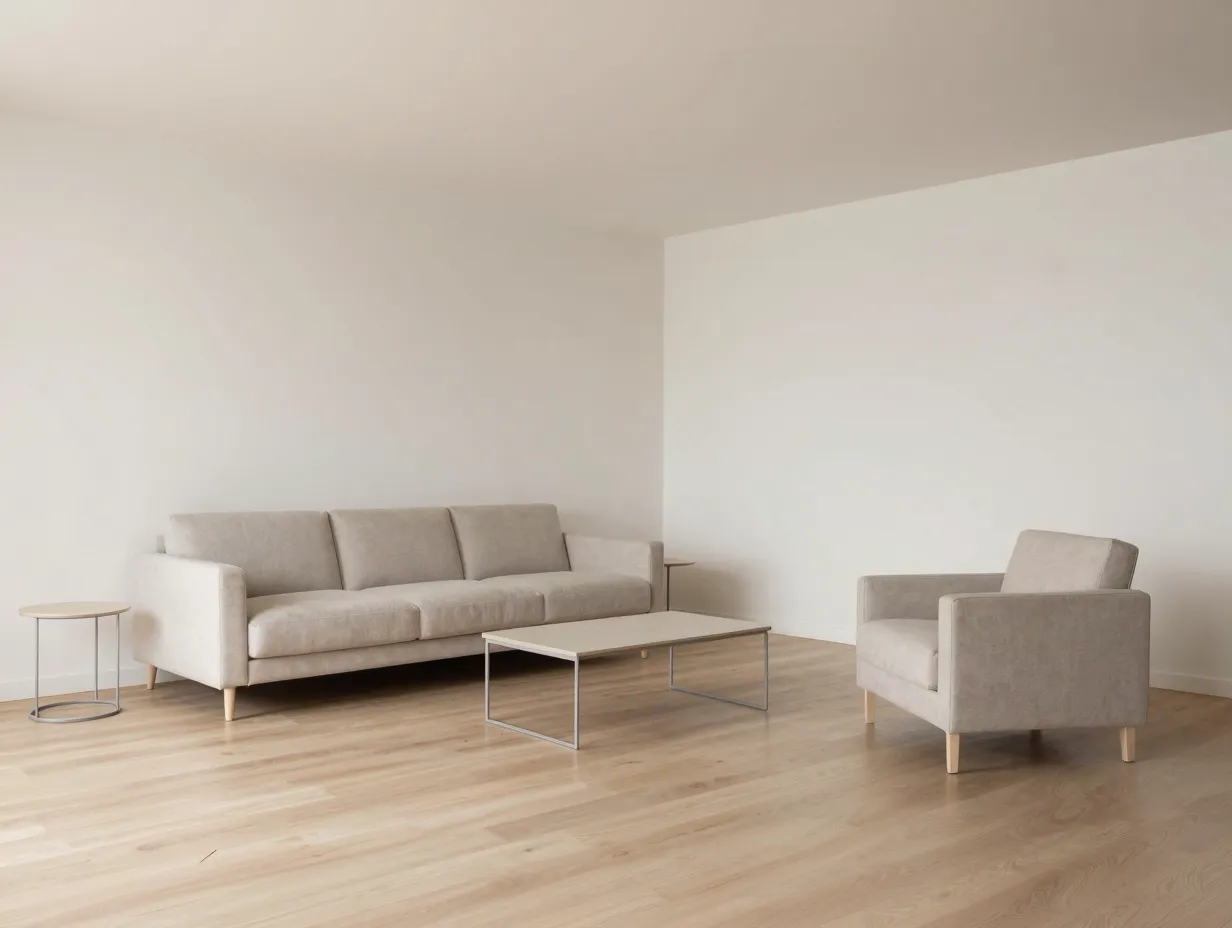
The single most counterintuitive move in small-space design is also the most effective. Instead of filling a room with many small items, choose a handful of substantial, well-proportioned pieces and let them breathe.
One Kings Lane’s small-space guide makes this point directly: opting for fewer, larger pieces makes a space feel bigger and less cluttered [9]. Realestate.com.au’s interior expert roundup lists this as a primary strategy for making small spaces feel instantly larger [8].
Here is why it works: a large sofa with clean lines reads as one visual element. Three small chairs, a loveseat, and two side tables read as six. The room with the large sofa feels calmer and more open even if the total square footage of furniture is identical.
Practical rules to follow:
- Anchor the room with one dominant furniture piece (a sofa, a bed, a dining table)
- Limit accent pieces to two or three items that serve a clear function
- Leave negative space intentionally, empty floor is not wasted space, it is breathing room
- Avoid matching sets of small decorative objects that multiply visual noise
I once helped a friend restyle her 280-square-foot studio. She had seven pieces of seating. We removed five, replaced them with one generous two-seater sofa and a single armchair, and the room immediately felt like it had grown by a third.
2. Use Leggy Furniture to Float the Floor
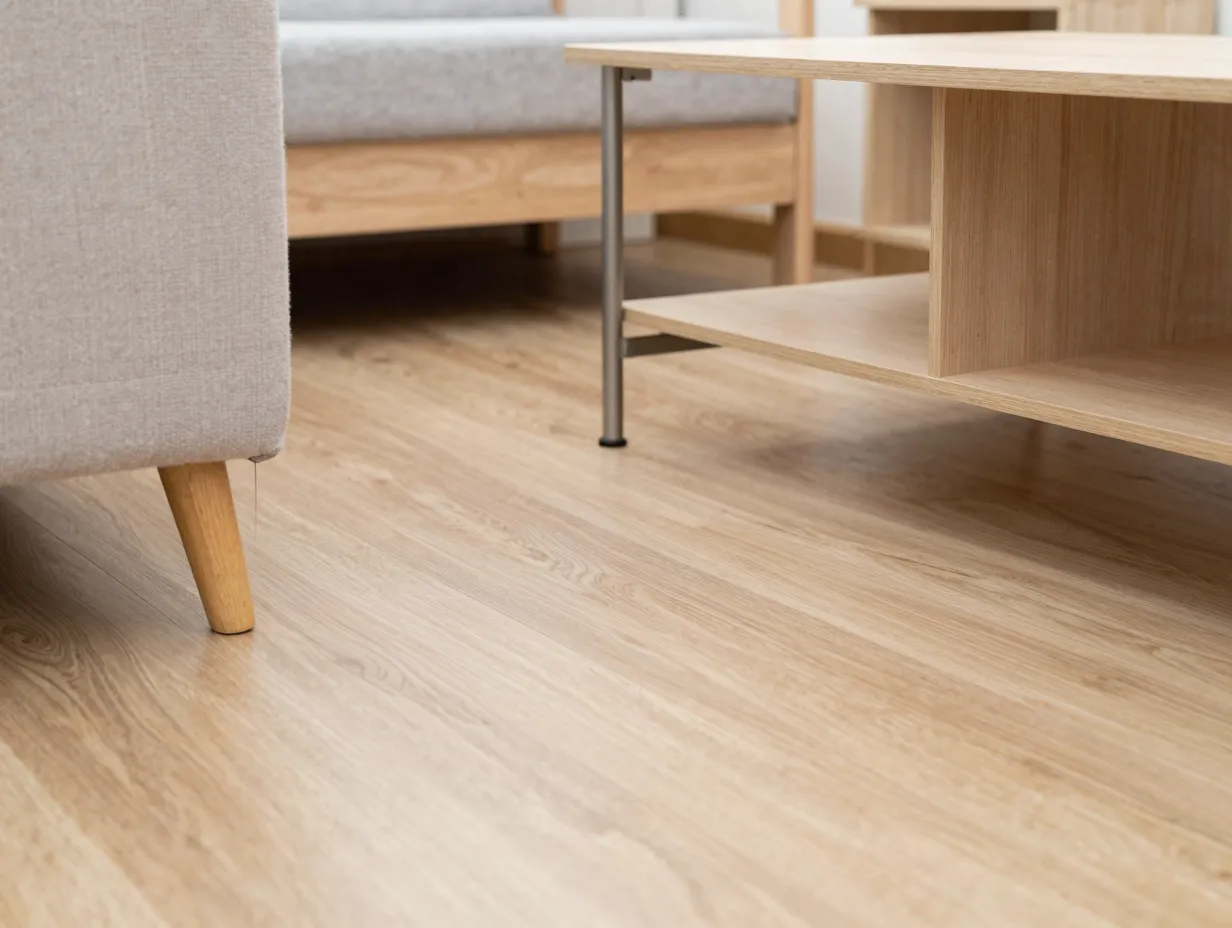
The amount of visible floor in a room has a direct relationship with how spacious it feels. Furniture that sits directly on the ground creates a heavy, grounded look that visually shrinks a space. Furniture with exposed legs, even just four inches of clearance, lets the eye travel underneath and across the floor, creating a sense of openness.
JJones Design Co. advises choosing pieces with visible legs and clearance underneath to create a more airy look [4]. The same source recommends maintaining clear walkways of at least 30 to 36 inches between large furniture pieces to keep movement comfortable and the room feeling well-organized [4].
A 2025 design tutorial updated in 2026 suggests leaving roughly 60 centimeters between large furniture pieces to maintain comfortable walkways in small rooms, noting that this directly impacts how spacious the room feels [6].
Best leggy furniture choices for small rooms:
| Furniture Type | What to Look For |
|---|---|
| Sofa | Tapered wooden or metal legs, at least 4 inches high |
| Bed frame | Platform or four-post with visible clearance |
| Coffee table | Slim metal or wood legs, glass or open-shelf top |
| Storage unit | Raised base or feet, not flush to the floor |
| Accent chair | Slim legs, no skirt or upholstered base |
Avoid platform sofas, upholstered bed bases that reach the floor, and storage cabinets with solid plinths. These create a visual weight that anchors the room downward rather than letting it breathe.
3. Exploit Vertical Space With Floor-to-Ceiling Storage
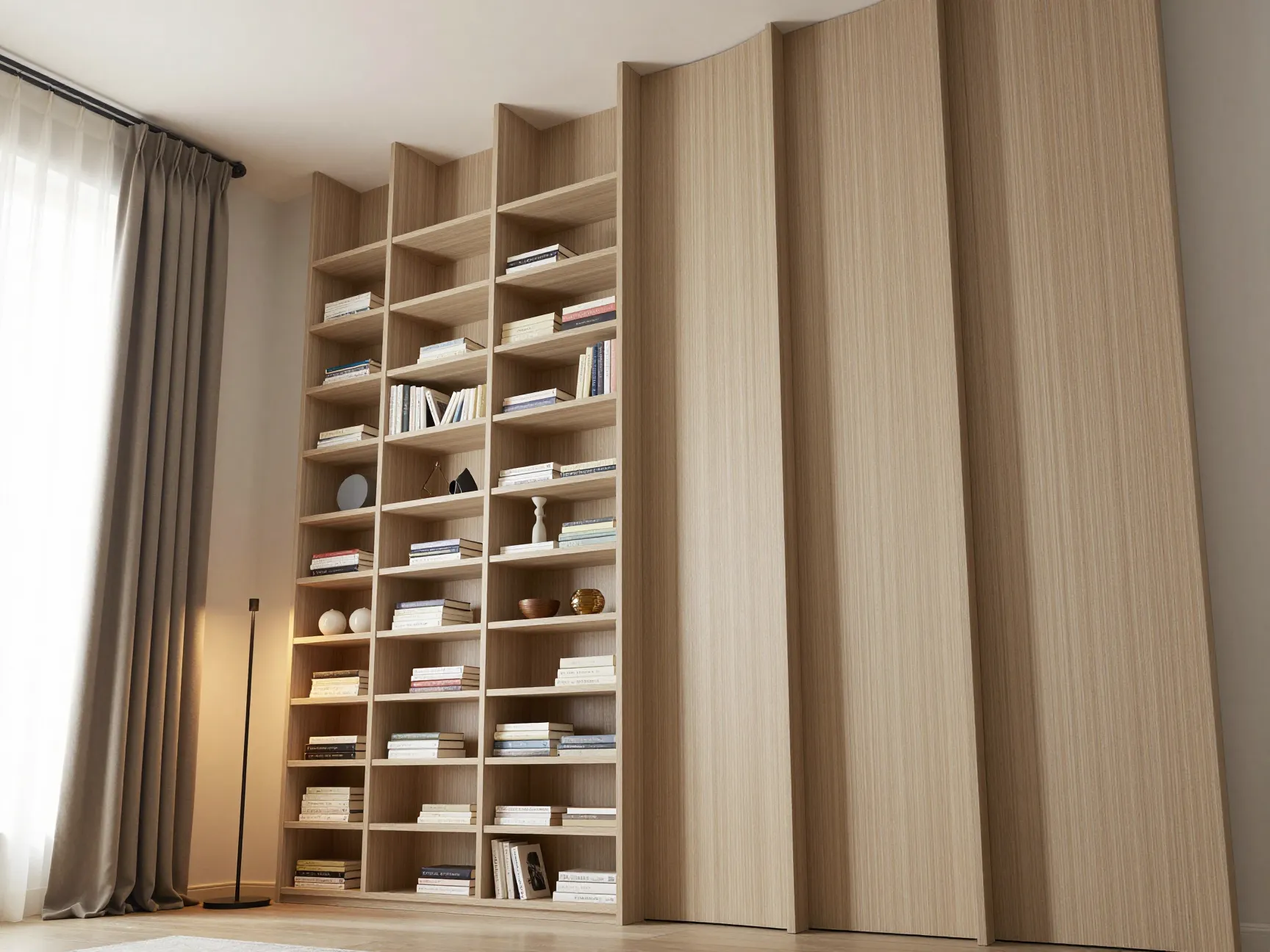
Most people decorate horizontally. They fill the floor and ignore everything above eye level. In a small room, the vertical dimension is your greatest untapped asset.
Floor-to-ceiling built-in wardrobes are identified as a leading small-room solution in 2026 small bedroom trend analysis, praised for combining high-capacity storage with a sleek continuous vertical surface that reduces visual clutter [2]. JJones Design Co. recommends floor-to-ceiling shelving, vertical paneling or molding, and slim tall floor lamps to emphasize vertical lines and make walls feel taller [4]. One Kings Lane’s guide advises taking bookcases and cabinets all the way to the ceiling and hanging drapery close to the ceiling to create the impression of taller ceilings and larger windows [9].
Vertical strategies that work:
- Install open shelving from floor to ceiling along one full wall
- Hang curtain rods as close to the ceiling as possible, even if the window is much lower
- Choose a tall, slim floor lamp rather than a short table lamp
- Add vertical paneling or board-and-batten to draw the eye upward
- Stack books and storage vertically rather than spreading them horizontally
The curtain trick alone is one of the most dramatic transformations available at low cost. A curtain hung two inches below the ceiling and pooling slightly at the floor makes a standard 8-foot ceiling read like it is 10 or 11 feet tall.
4. Unify Color Across Walls, Ceiling, and Trim
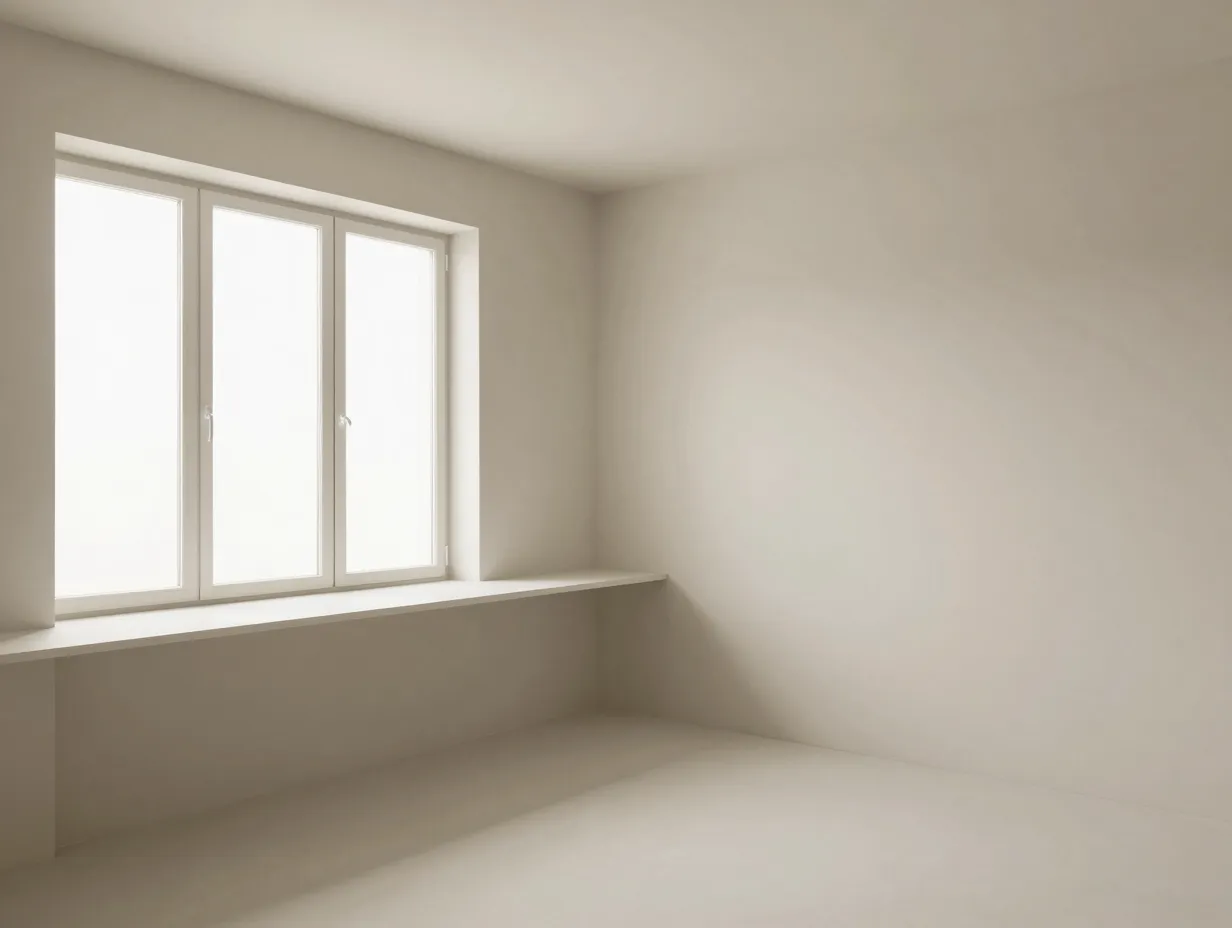
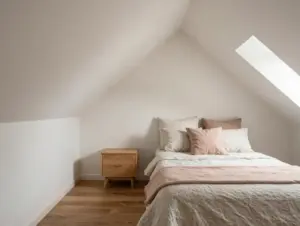
This idea surprises most people. The instinct is to keep ceilings white to make them feel higher. But in a small room, a white ceiling against colored walls creates a visual “lid”, a hard horizontal line that caps the room and emphasizes its limited height.
A May 2026 feature from House Beautiful reports that designers are increasingly painting ceilings, trim, built-ins, windows, and doors the same color to reduce visual breaks and create a more continuous envelope, making rooms feel more expansive [5]. This technique, sometimes called color drenching, works because it removes the lines that define where one surface ends and another begins. Without those lines, the room reads as a single, larger volume [5].
Food52’s expert roundup highlights painting the ceiling the same color as the walls to avoid the boxing-in effect of contrasting ceilings, especially in small rooms [10].
Color drenching done right:
- Choose a mid-tone or light neutral (warm white, soft greige, pale sage) and apply it everywhere
- Include the ceiling, all four walls, window frames, door frames, and built-in shelving
- Use the same finish or a slightly higher sheen on the ceiling to add subtle depth
- Avoid high-contrast trim colors, they chop the room into smaller visual sections
“When you remove the lines between surfaces, you remove the evidence of the room’s boundaries. The space stops feeling like a box.”, House Beautiful, 2026 [5]
5. Layer Lighting and Maximize Natural Light
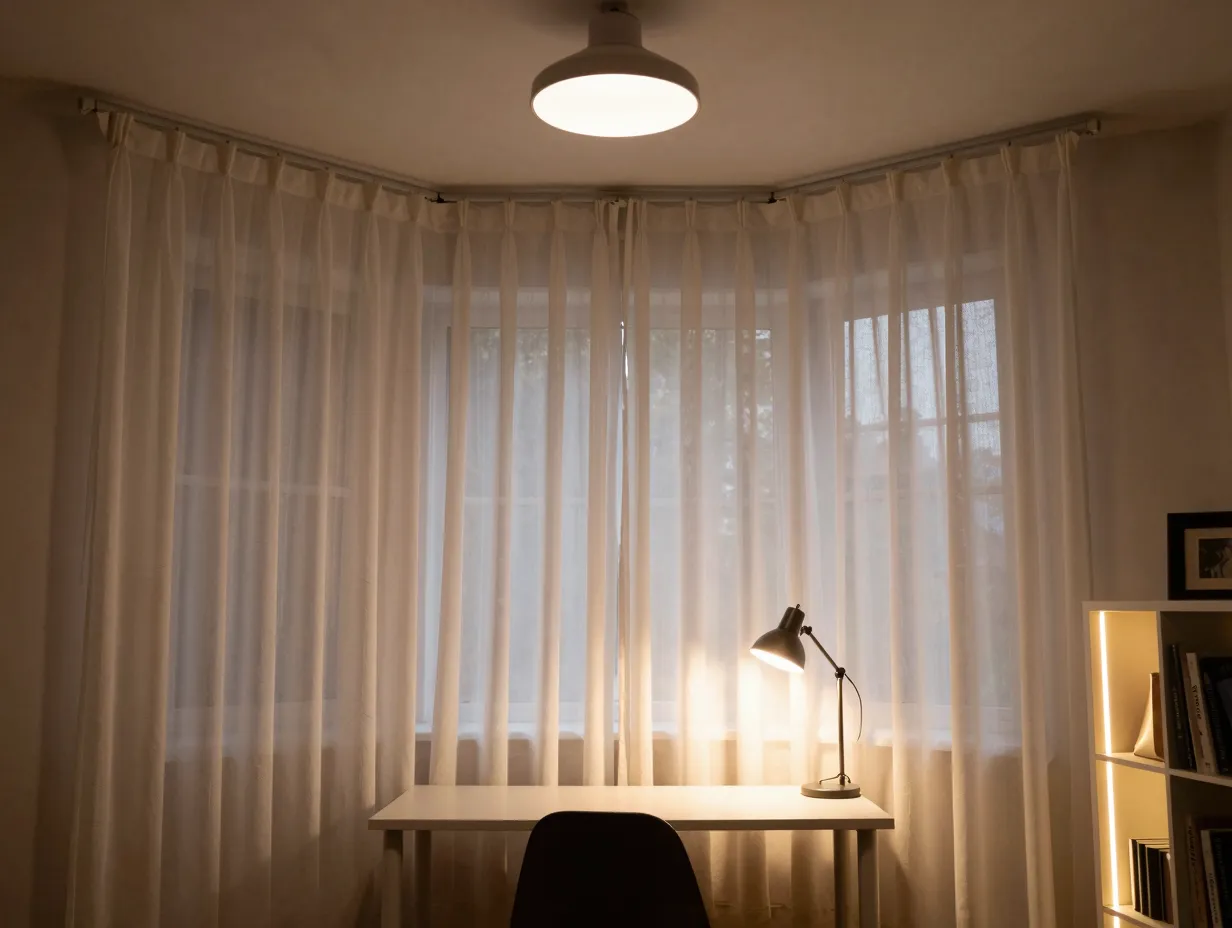
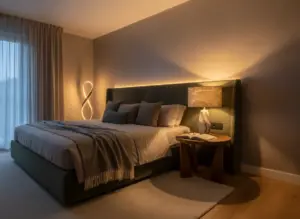
A room with a single overhead light source will always feel smaller than it is. Overhead lighting casts shadows in corners and along walls, making those areas recede visually. Layered lighting, combining ambient, task, and accent sources, fills the room with light from multiple angles, eliminating dark zones that shrink the perceived space.
Recent small-space design content emphasizes using multiple types of lighting to avoid dark corners that visually shrink the room [3][6]. A tutorial updated in July 2026 recommends floor lamps, wall sconces, and table lamps to create ambient light and vertical emphasis while freeing surface space [6]. One Kings Lane suggests sconces to add brightness without consuming horizontal surfaces [9].
For natural light, the key is to stop blocking it. Urban Rhythm’s article advises minimalist window treatments such as roller blinds in the same fabric or tone as the walls, and cautions against heavy dark curtains that absorb light and make spaces feel smaller [12]. Gauzy, sheer curtains that allow diffused daylight to pass through are consistently recommended for small rooms [9].
A simple layered lighting plan for a small room:
- Ambient: One overhead fixture or recessed lights for general illumination
- Task: A focused lamp at the desk or reading chair
- Accent: LED strip lights inside shelving, or a small spotlight on artwork
- Natural: Sheer curtains or roller blinds that do not block the glass
Replace any single-bulb overhead fixture with a fixture that spreads light broadly, or supplement it with at least two floor or table lamps placed in opposite corners.
6. Use Mirrors Strategically to Double Perceived Depth
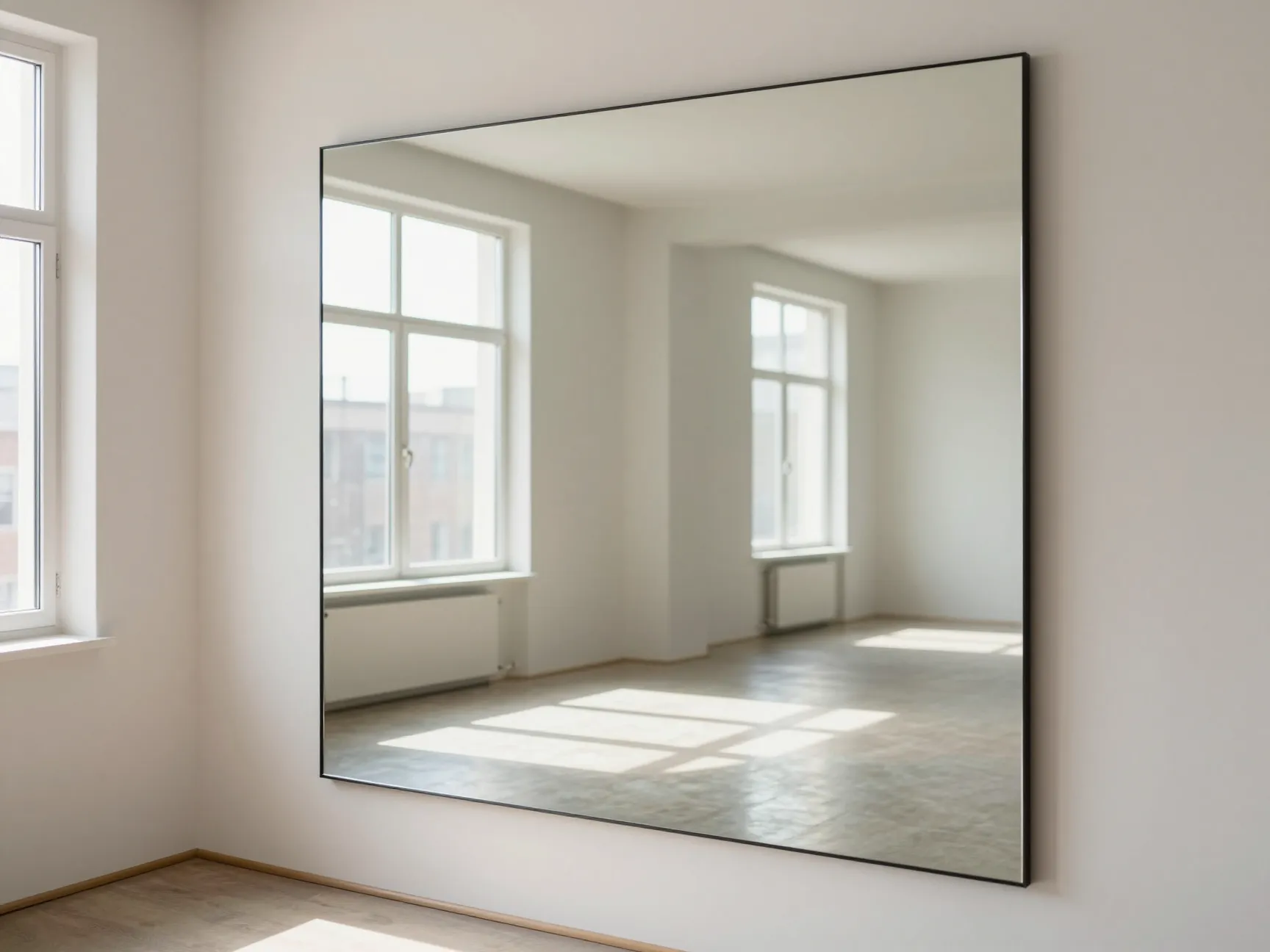
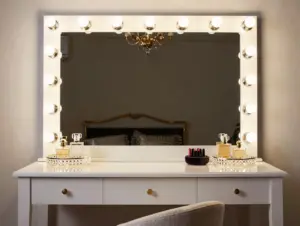
Mirrors are the oldest trick in the small-space playbook, but most people use them wrong. A small decorative mirror hung at eye level adds a reflective surface but does little for the room’s perceived size. The impact comes from scale and placement.
Updated small-space guides note that large mirrors placed directly across from windows can dramatically increase perceived room size by reflecting natural light and extending the sightline [6][9]. A 2025 to 2026 video tutorial explains that placing a mirror at the end of a long, narrow corridor can visually double its length, making the space feel significantly larger [6]. One Kings Lane recommends mirrors throughout small spaces to bounce light and expand views [9].
High-impact mirror placements:
- A full-length or oversized mirror mounted directly opposite the main window
- A large mirror at the end of a narrow hallway or corridor
- Mirrored wardrobe doors along one full wall of a small bedroom
- A mirror positioned to reflect a visually interesting part of the room (a plant, a lamp, a piece of art)
The mirror should be large enough to feel intentional, at least 24 by 36 inches for a standard room, and ideally larger. A cluster of small mirrors creates decorative interest but does not produce the same spatial illusion as one substantial piece.
7. Create Functional Zones With Rugs and Lighting
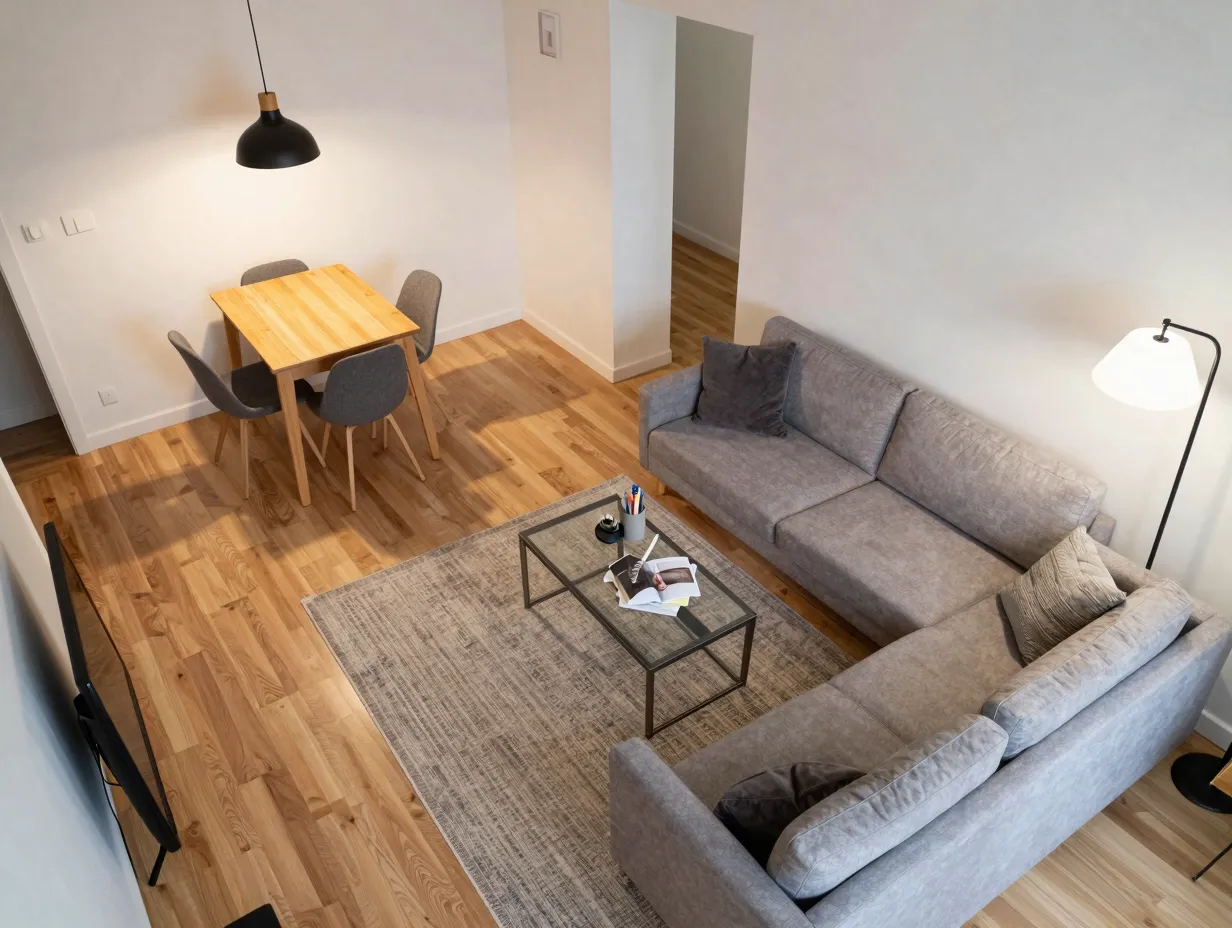
One of the most powerful 8 small room decoration ideas for tiny spaces that feel big is also one of the least obvious: make the room feel like more than one room. In a small multipurpose space, a studio apartment, a bedroom that doubles as a home office, a living room that also serves as a dining area, zoning creates the perception of dedicated, organized areas without adding walls or square footage.
An April 2025 small-space video updated in July 2026 emphasizes zoning using separate rugs, targeted lighting, and furniture groupings to divide a small living room into reading, dining, lounging, and work areas without adding physical barriers [11]. This approach makes the space feel more intentional and can trick the eye into perceiving multiple distinct areas within one footprint [11]. JJones Design Co. echoes the importance of furniture placement that guides movement naturally and avoids blocking pathways or windows [4].
How to zone a small room effectively:
- Place a rug under the seating group to define the living area
- Use a pendant light or floor lamp to mark the reading or work zone
- Position a small dining table and chairs in a corner with its own overhead light
- Keep each zone’s furniture grouped tightly rather than spread across the room
- Use consistent color or material within each zone to reinforce the separation
The key insight here is that defined zones make a room feel larger because they give it purpose and structure. A room where furniture is scattered randomly feels chaotic and small. A room with clear, intentional zones feels organized and surprisingly spacious.
8. Integrate Concealed and Under-Furniture Storage
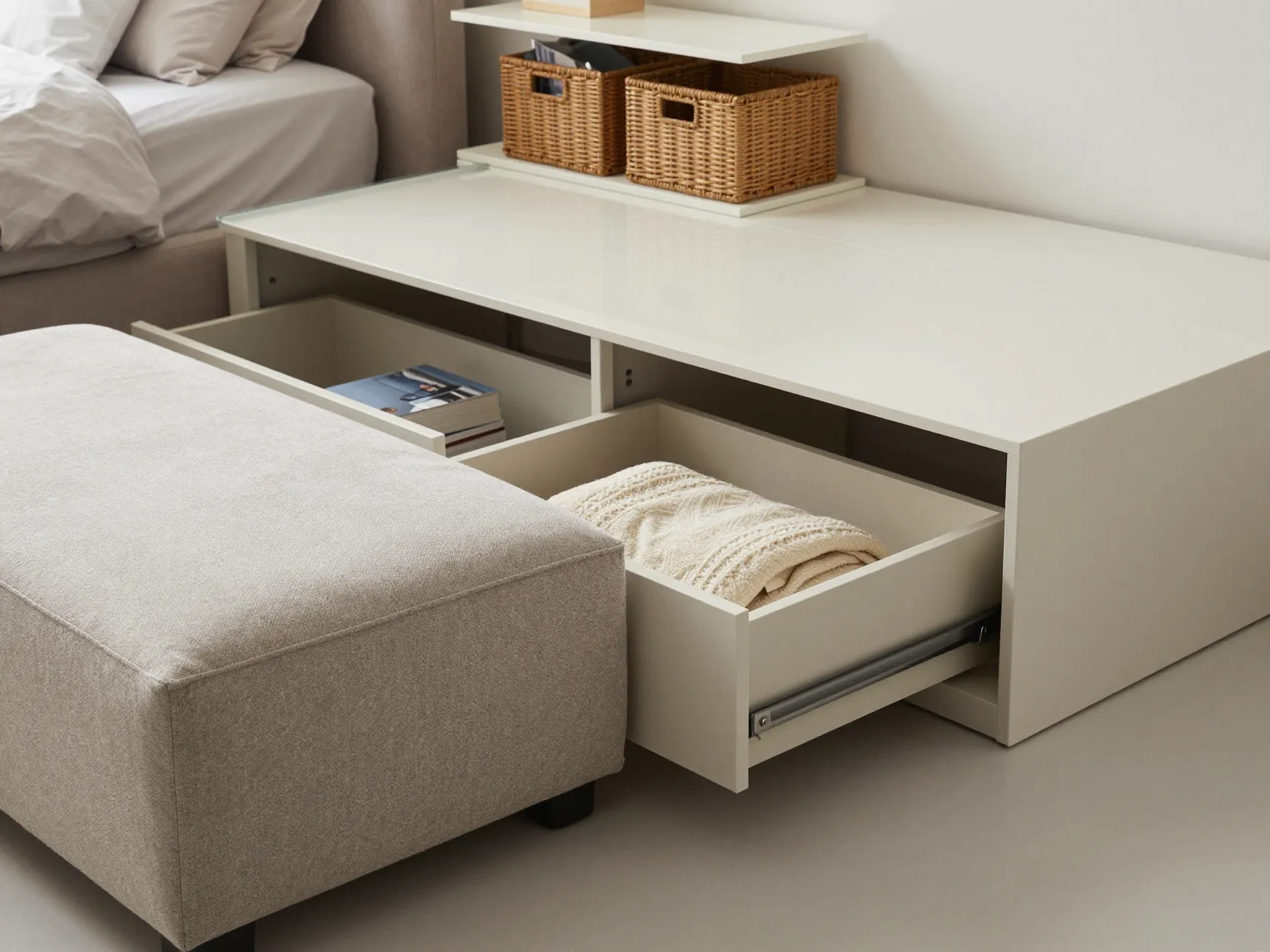
Clutter is the enemy of perceived space. Every object sitting on a surface, a stack of books, a pile of remotes, a collection of decorative items, is a visual interruption that makes the room feel busier and smaller. The solution is not to own less (though that helps) but to store smarter.
Recent small-space design content highlights using the space under beds, sofas, and coffee tables with sliding bins, baskets, or drawers to store items that would otherwise clutter surfaces [11]. Designers recommend multifunctional furniture, storage ottomans, platform beds with built-in drawers, cabinets that double as desks, to minimize the number of objects needed in the room while preserving all necessary functions [11][2]. Homeluxefit’s 2026 small bedroom ideas article points to integrated, floor-to-ceiling wardrobes as a major trend because they hide belongings behind flush doors and maintain a clean visual line [2].
Concealed storage solutions that work:
- Bed frames with built-in drawers or lift-up storage platforms
- Ottoman coffee tables with removable lids for blanket and remote storage
- Built-in window seats with hinged tops and storage underneath
- Floating shelves with doors or baskets to hide items while maintaining vertical storage
- Slim rolling carts that slide under desks or into closets when not in use
The goal is to keep every horizontal surface, floors, countertops, tabletops, as clear as possible. When surfaces are clear, the eye reads the room as open and controlled rather than cramped and overloaded.
Bonus Strategy: Choose a Tone-on-Tone Palette
While the numbered list above covers the core 8 small room decoration ideas for tiny spaces that feel big, one additional strategy deserves mention because it amplifies every other idea on this list.
One Kings Lane’s guidance recommends light colors, neutral schemes, and tone-on-tone furniture, choosing upholstery and finishes in a similar color to the walls, so that pieces visually recede instead of standing out and breaking up the room [9]. When the sofa, the walls, and the rug are all in the same family of warm neutrals, the room reads as a single cohesive volume rather than a collection of competing objects.
This does not mean the room must be beige from floor to ceiling. It means that the dominant palette should be unified, with contrast introduced deliberately and sparingly, a dark throw pillow, a single piece of bold artwork, a plant, rather than scattered throughout.
Quick Reference: The 8 Ideas at a Glance
| Idea | Core Principle | Effort Level |
|---|---|---|
| 1. Fewer, larger pieces | Reduce visual noise | Medium |
| 2. Leggy furniture | Open the floor plane | Medium |
| 3. Vertical storage | Add perceived height | High |
| 4. Unified color | Blur boundaries | Low |
| 5. Layered lighting | Eliminate dark corners | Low |
| 6. Strategic mirrors | Double depth and light | Low |
| 7. Functional zones | Create perceived rooms | Low |
| 8. Concealed storage | Clear surfaces | Medium |
Conclusion
Small rooms do not need to feel small. The 8 small room decoration ideas for tiny spaces that feel big outlined in this guide are not about illusion tricks or expensive renovations. They are about understanding how the human eye reads space, and designing with that understanding in mind.
Here are your actionable next steps:
- Walk through your room and count every piece of furniture. If you have more than five or six items, identify which ones you can remove or consolidate.
- Check whether any furniture sits flush to the floor. If so, research leggy alternatives or add furniture risers as a temporary fix.
- Look at your ceiling. If it is a different color from your walls, consider painting it the same tone on your next weekend project, this is the lowest-cost, highest-impact change on this list.
- Hang one large mirror opposite your main window and observe the difference in perceived depth and light.
- Replace your single overhead light with a layered setup: add one floor lamp and one table lamp to start.
Start with two or three of these ideas rather than attempting all eight at once. The changes compound. A room with unified color, leggy furniture, and a large mirror already feels dramatically different from where it started, and you have not touched a single wall.
Small spaces, designed well, are not a compromise. They are a discipline. And once you learn it, you will never look at a room the same way again.
References
[1] Watch – https://www.youtube.com/watch?v=MJmSO03M8Qw
[2] 22 Small Bedroom Ideas 2026 Layout Inspo – https://homeluxefit.com/22-small-bedroom-ideas-2026-layout-inspo/
[3] Watch – https://www.youtube.com/watch?v=uy2gXpKpYZw
[4] How To Make A Small Room Look Bigger Without Knocking Down Walls – https://www.jjonesdesignco.com/blogs/how-to-make-a-small-room-look-bigger-without-knocking-down-walls
[5] Make Small Space Look Bigger – https://www.housebeautiful.com/design-inspiration/a71293246/make-small-space-look-bigger/
[6] Watch – https://www.youtube.com/watch?v=ODcMUUGJQ9g
[7] Watch – https://www.youtube.com/watch?v=o2QxJsSyg6Q
[8] 7 Ways To Make A Small Space Instantly Feel Bigger According To An Interior Expert – https://www.realestate.com.au/advice/7-ways-to-make-a-small-space-instantly-feel-bigger-according-to-an-interior-expert/
[9] How To Make Small Space Feel Bigger – https://blog.onekingslane.com/how-to-make-small-space-feel-bigger/
[10] 27272 How To Make A Small Room Look Bigger – https://food52.com/story/27272-how-to-make-a-small-room-look-bigger