9 Modern Luxury Living Room Designs That Exude Sophistication
A single design decision, choosing the wrong sofa scale, can make a luxury living room feel like a hotel lobby rather than a curated sanctuary. That gap between expensive and sophisticated is exactly where most high-end interiors fall short. The 9 Modern Luxury Living Room Designs That Exude Sophistication explored in this guide close that gap with precision, offering nine distinct approaches that transform a living space from merely costly into genuinely compelling.
Disclosure: This post contains affiliate links. As an Amazon Associate, we earn from qualifying purchases, and at no extra cost to you.
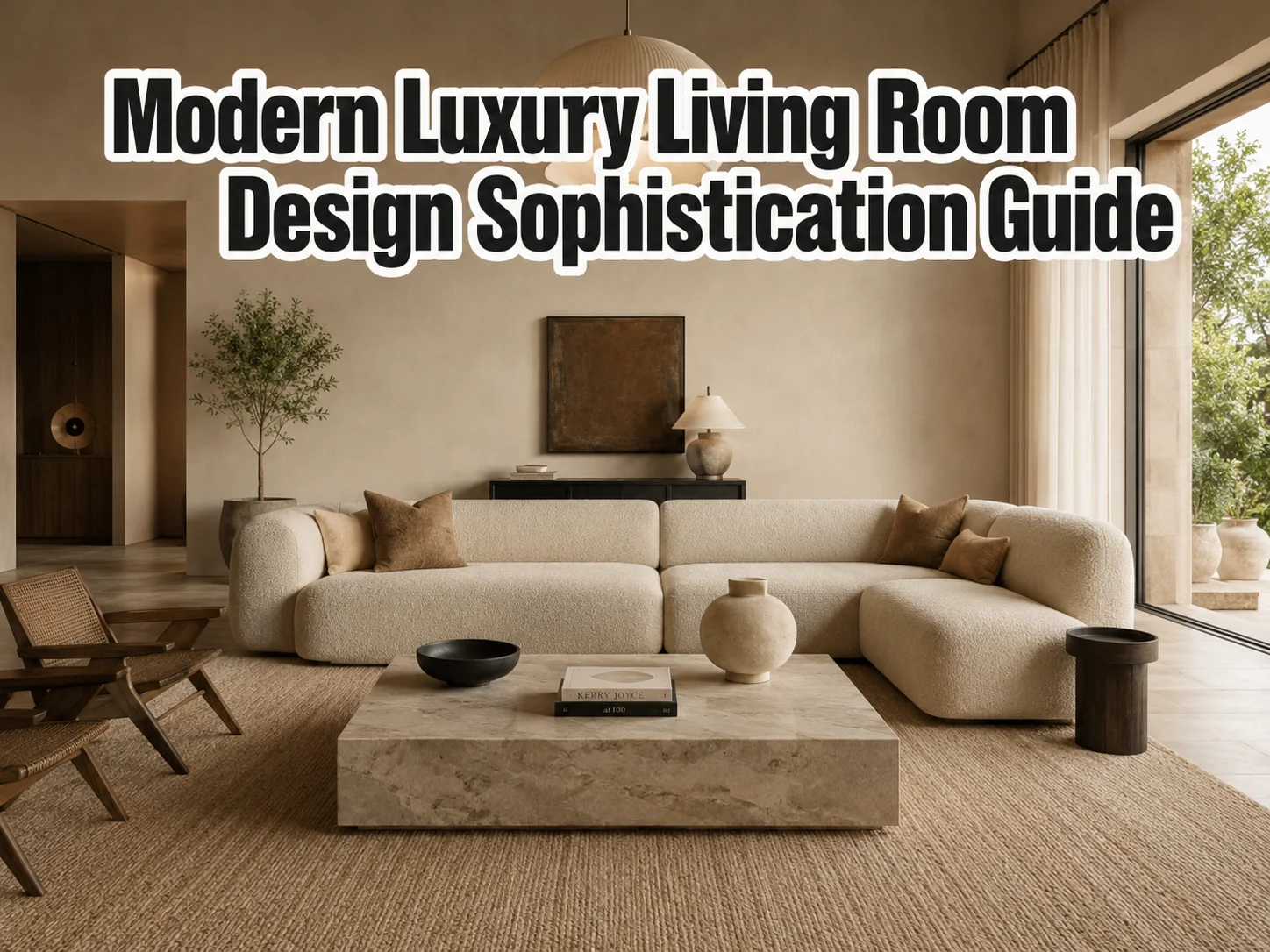
In 2026, the definition of luxury in interior design has shifted. It is no longer about maximalism or overt displays of wealth. Instead, it centers on restraint, material intelligence, and spatial confidence [2]. Whether you are renovating a penthouse or refreshing a suburban family room, these nine design concepts offer a clear, actionable path to a living room that feels both elevated and livable.
Key Takeaways
- Modern luxury living rooms prioritize material quality and spatial restraint over ornate decoration
- Low-profile, grounded furniture arrangements are the defining signature of sophisticated contemporary interiors in 2026
- Bouclé, travertine, and warm neutrals dominate the material palette for high-end living spaces
- Floating furniture layouts and integrated living-dining zones maximize both function and visual elegance
- A monochrome material palette, when executed correctly, reads as far more luxurious than a busy, multi-color scheme
What Makes a Living Room Truly Luxurious in 2026
Before diving into the 9 Modern Luxury Living Room Designs That Exude Sophistication, it helps to understand what separates a genuinely luxurious space from one that simply costs a lot of money. I have walked through showrooms and private residences where six-figure budgets produced rooms that felt cold, cluttered, or strangely forgettable. The common thread in those failures was always the same: money spent on individual pieces rather than on a cohesive spatial language.
According to design research and current trend reporting, the most sophisticated living rooms in 2026 share three core qualities [1] [2]:
- Material integrity: Every surface, from upholstery to flooring, is chosen for how it interacts with adjacent materials
- Spatial confidence: Furniture is placed with intention, not just arranged to fill space
- Sensory layering: Texture, light, and scale work together to create a room that feels different at different times of day
“The most luxurious thing a living room can do is make you want to stay in it.”, a principle echoed across every design in this guide.
With that foundation in place, here are the nine designs that best embody modern sophistication.
1. The Grounded Sectional
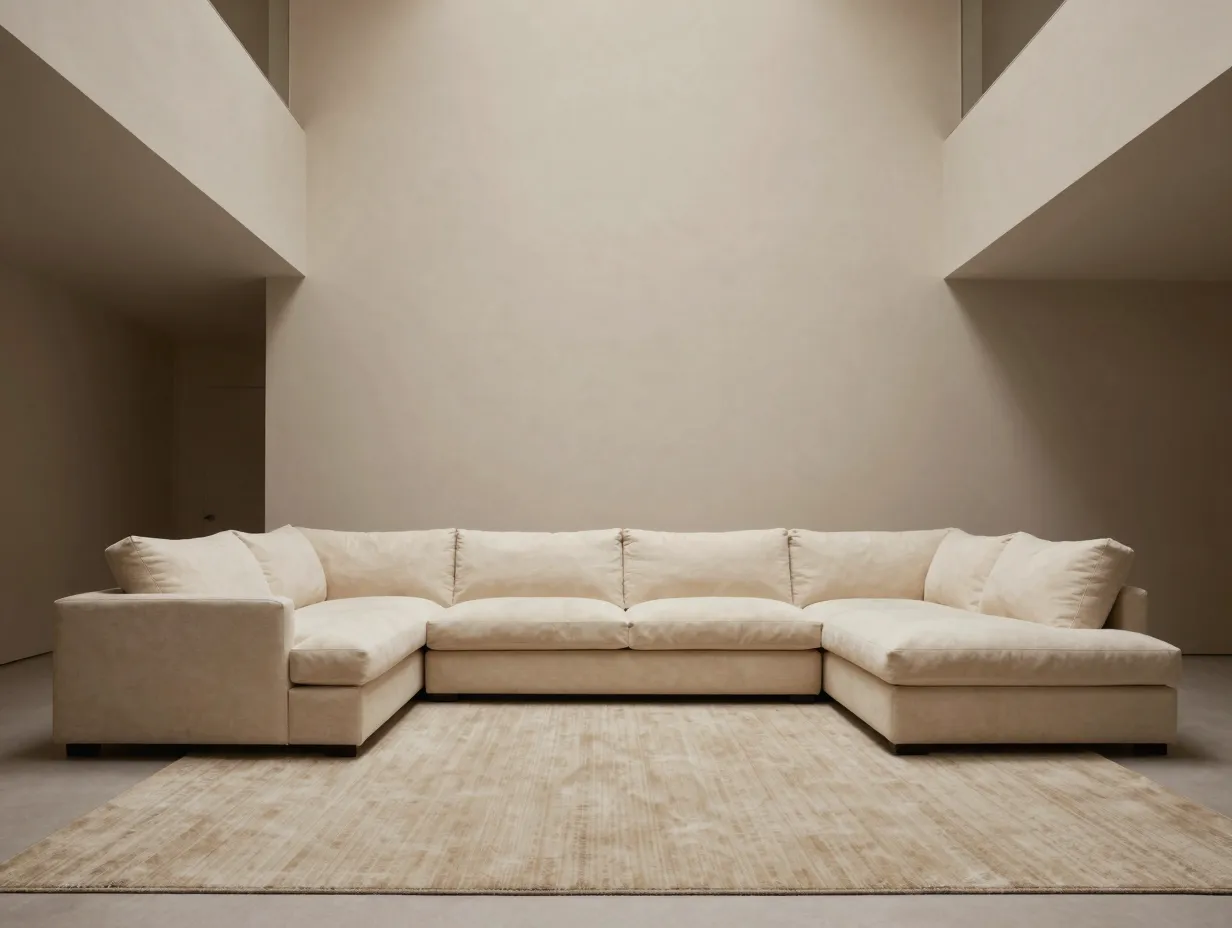
The grounded sectional has become the organizing principle of the modern luxury living room. This configuration features a low-profile, horizontally oriented sectional that sits close to the floor, visually anchoring the room while keeping the sightlines open and calm [2].
What makes this design work is proportion. A sectional that sits too high fragments the room. One that sits too low, without the right depth of seat, becomes impractical. The sweet spot, typically 28 to 32 inches in seat height, creates a room that feels both expansive and intimate [3].
Key elements of the grounded sectional design:
- Seat height between 28 and 32 inches
- Deep seating (24 inches or more from front to back)
- Modular configuration to allow flexible arrangement
- Upholstery in a single, high-quality fabric, no mixed patterns
- Placement on a large area rug that extends well beyond the sectional’s footprint
The grounded sectional works best in rooms with high ceilings, where the low horizontal line of the sofa creates a dramatic counterpoint to the vertical space above [2].
2. Bouclé as a Defining Texture
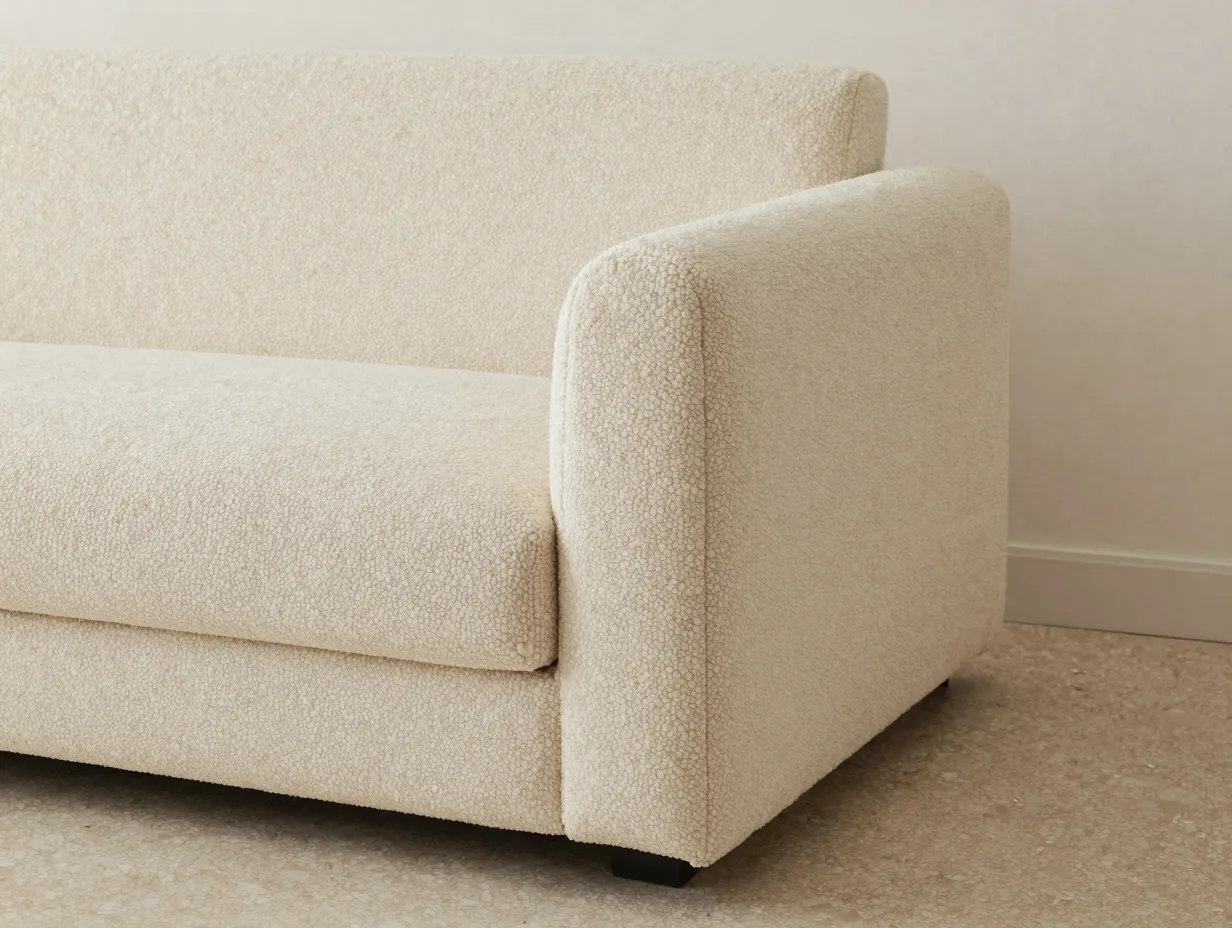
Few materials have had as sustained a moment in luxury interiors as bouclé. This looped, textured fabric, originally associated with mid-century Scandinavian design, has re-emerged as the defining upholstery choice for sophisticated living rooms in 2025 and 2026 [2].
Bouclé’s appeal is tactile and visual simultaneously. It catches light differently at different angles, giving a sofa or armchair a quiet visual complexity without introducing pattern or color contrast. In a monochrome room, a bouclé sofa in cream or warm white reads as both refined and inviting, a combination that is genuinely difficult to achieve [7].
Why bouclé works in luxury spaces:
| Quality | Effect in the Room |
|---|---|
| Looped texture | Adds depth without pattern |
| Neutral colorways | Harmonizes with any palette |
| Tactile warmth | Softens hard architectural surfaces |
| Durability | Maintains appearance over time |
The key to using bouclé well is scale. A single large bouclé sofa in an otherwise spare room is sophisticated. Bouclé on every upholstered surface becomes visually noisy. Restraint is the rule [2] [8].
3. The Monochrome Material Palette
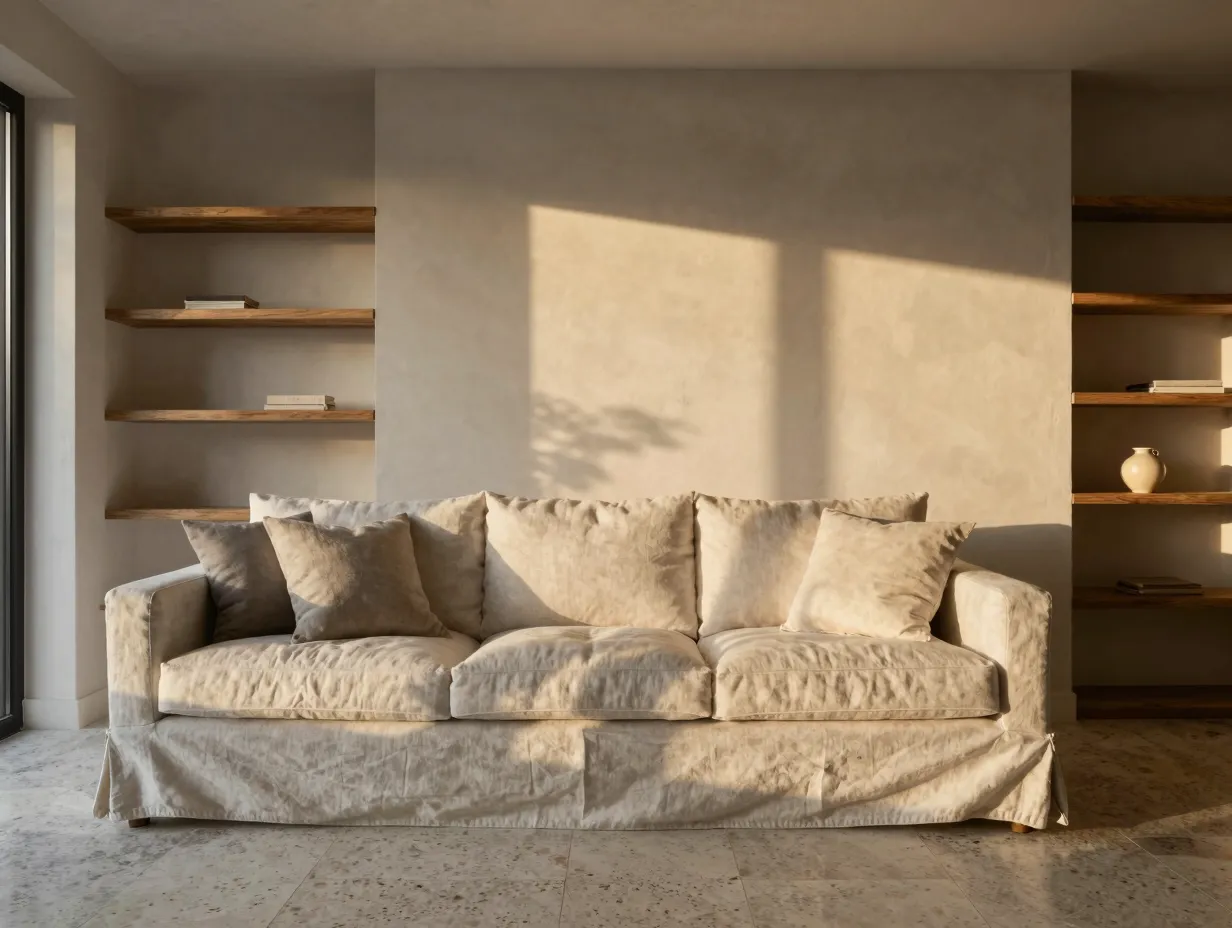
A monochrome material palette does not mean a room painted entirely in one color. It means selecting materials across a narrow tonal range, say, ivory through warm sand to pale greige, and varying the visual interest through texture and finish rather than color contrast [2].
This approach is one of the most reliable paths to a room that reads as expensive. When every material in a room shares a tonal family, the eye moves smoothly across the space rather than jumping between competing focal points. The result is a sense of calm that is the hallmark of true luxury [1].
Building a monochrome palette:
- Choose a base tone (warm white, soft greige, deep charcoal)
- Select three to five materials within that tonal range
- Vary the finishes: matte plaster, polished stone, brushed metal, woven fabric
- Introduce a single accent in a closely related tone, not a contrasting color
- Let natural light do the work of creating variation throughout the day
I once visited a Milan apartment where the entire living room was executed in shades of warm white, plaster walls, linen sofa, travertine floor, bleached oak shelving. At noon it felt airy and minimal. By evening, with the lamps on, it felt deeply warm and layered. The palette had not changed. The light had [8].
4. The Statement Sofa
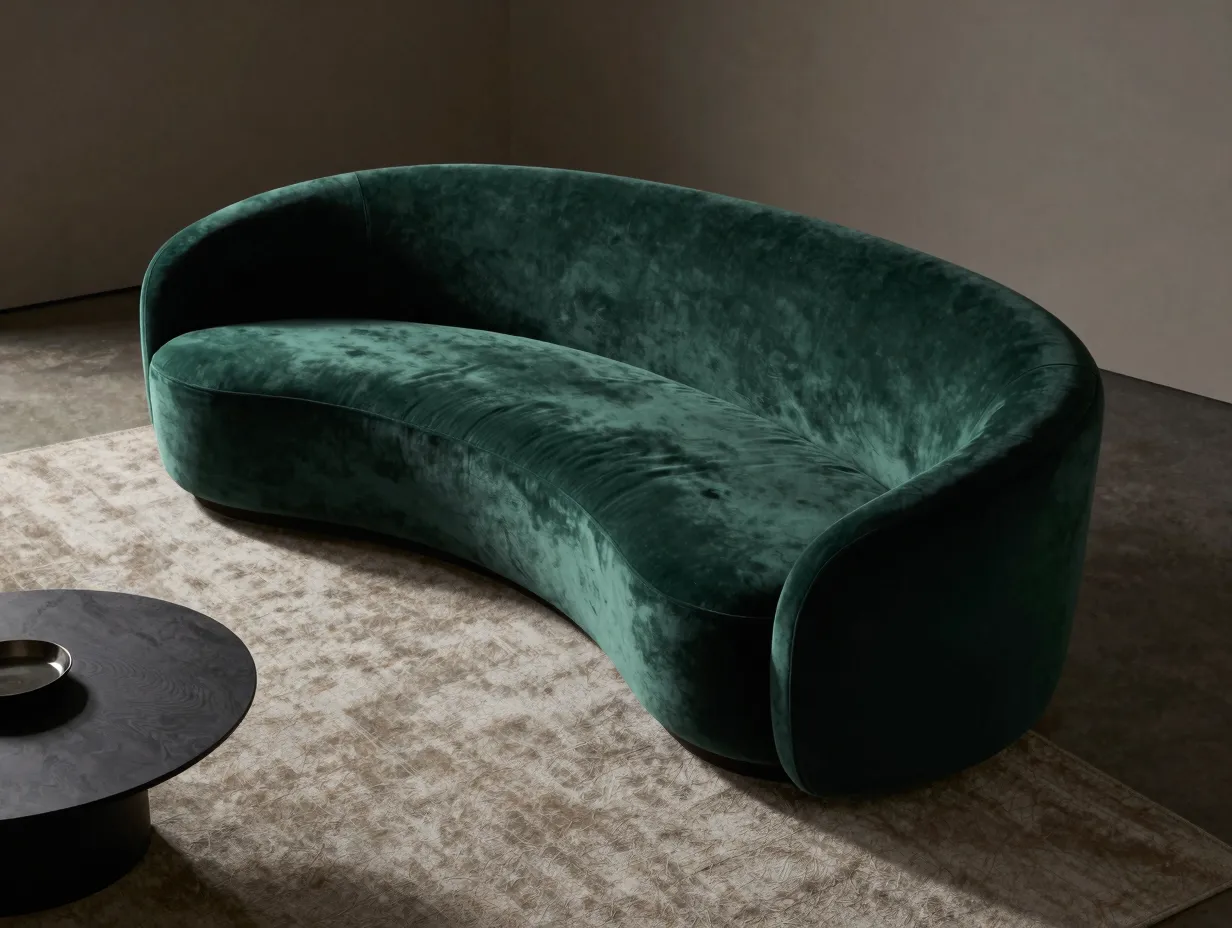
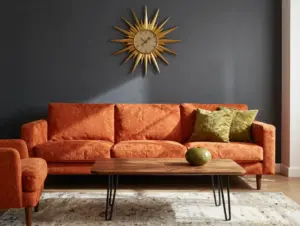
Where the grounded sectional is about spatial organization, the statement sofa is about focal drama. This design concept centers the entire room around a single, architecturally significant sofa, one that commands attention through scale, silhouette, or material [2].
A statement sofa is not simply an expensive sofa. It is a sofa with a strong point of view: an oversized curved form in deep forest green velvet, or a low-slung piece in hand-stitched leather with visible seaming, or a sculptural three-seater with an asymmetric back profile [7].
Characteristics of an effective statement sofa:
- A silhouette that reads clearly from across the room
- A single, strong material choice, no mixed upholstery
- Scale that is slightly larger than conventional expectations
- Placement that allows the sofa to be seen from multiple angles
- Surrounding furniture that supports rather than competes with it
The supporting cast matters enormously here. A statement sofa surrounded by equally assertive furniture becomes chaotic. Pair it with low, understated side tables, a simple area rug, and restrained lighting to let the sofa carry the room [2].
5. The Floating Living Room
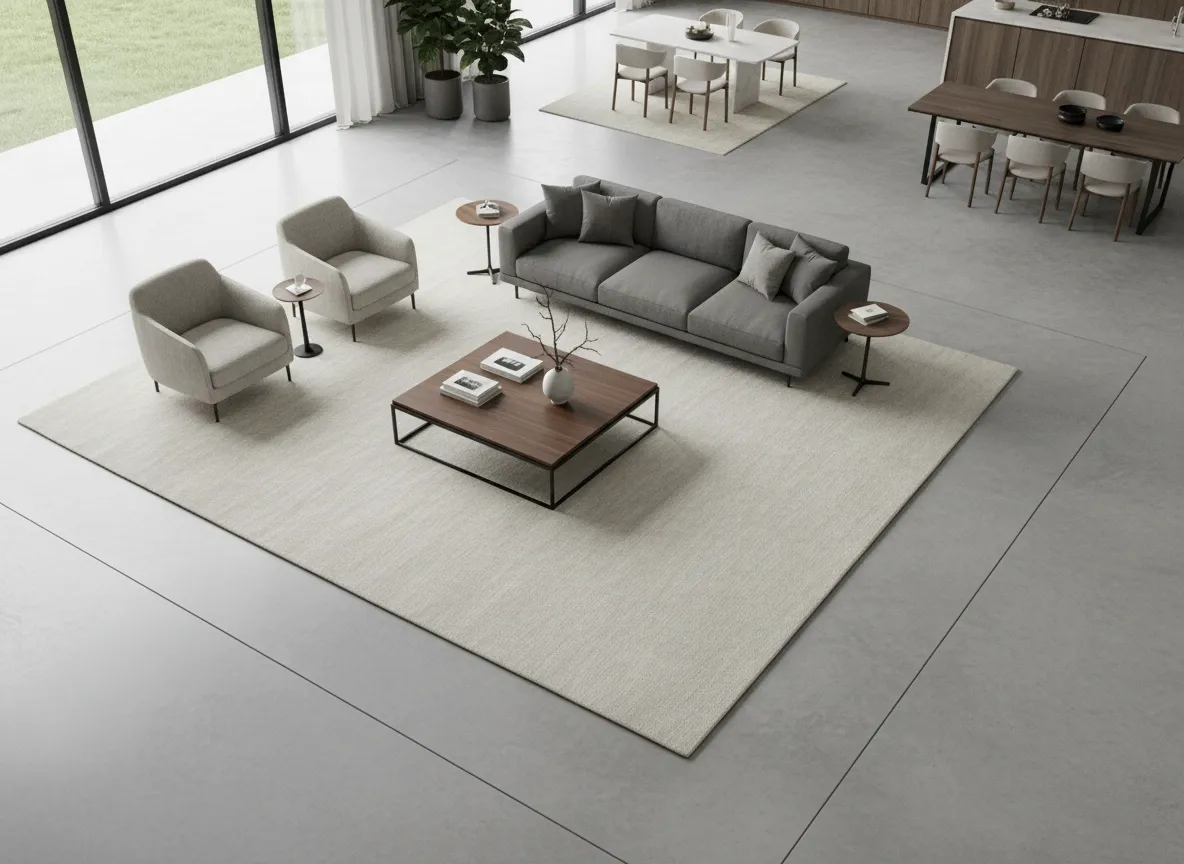
The floating living room is a layout concept rather than a style. It describes a furniture arrangement where all pieces are pulled away from the walls and grouped together in the center of the room, creating an island of living space within a larger floor plan [2].
This arrangement is counterintuitive for many homeowners who instinctively push furniture to the perimeter to “maximize space.” In reality, floating furniture makes a room feel larger and more intentional. It signals that the space has been designed, not just furnished [3].
How to execute a floating living room:
- Pull all seating at least 18 inches from the walls
- Anchor the arrangement with a large area rug that defines the zone
- Ensure the grouping is tight enough for conversation, no more than 8 feet between facing seats
- Use a substantial coffee table at the center to ground the arrangement
- Leave clear circulation paths of at least 36 inches around the perimeter
The floating arrangement works particularly well in open-plan spaces, where it defines the living zone without the need for walls or dividers [2] [7].
The Final Four Designs in the 9 Modern Luxury Living Room Designs That Exude Sophistication
The second half of this collection moves into more nuanced territory, designs that require a stronger editorial eye and a willingness to edit aggressively. These four concepts reward patience and restraint more than any others.
6. Layered Surfaces
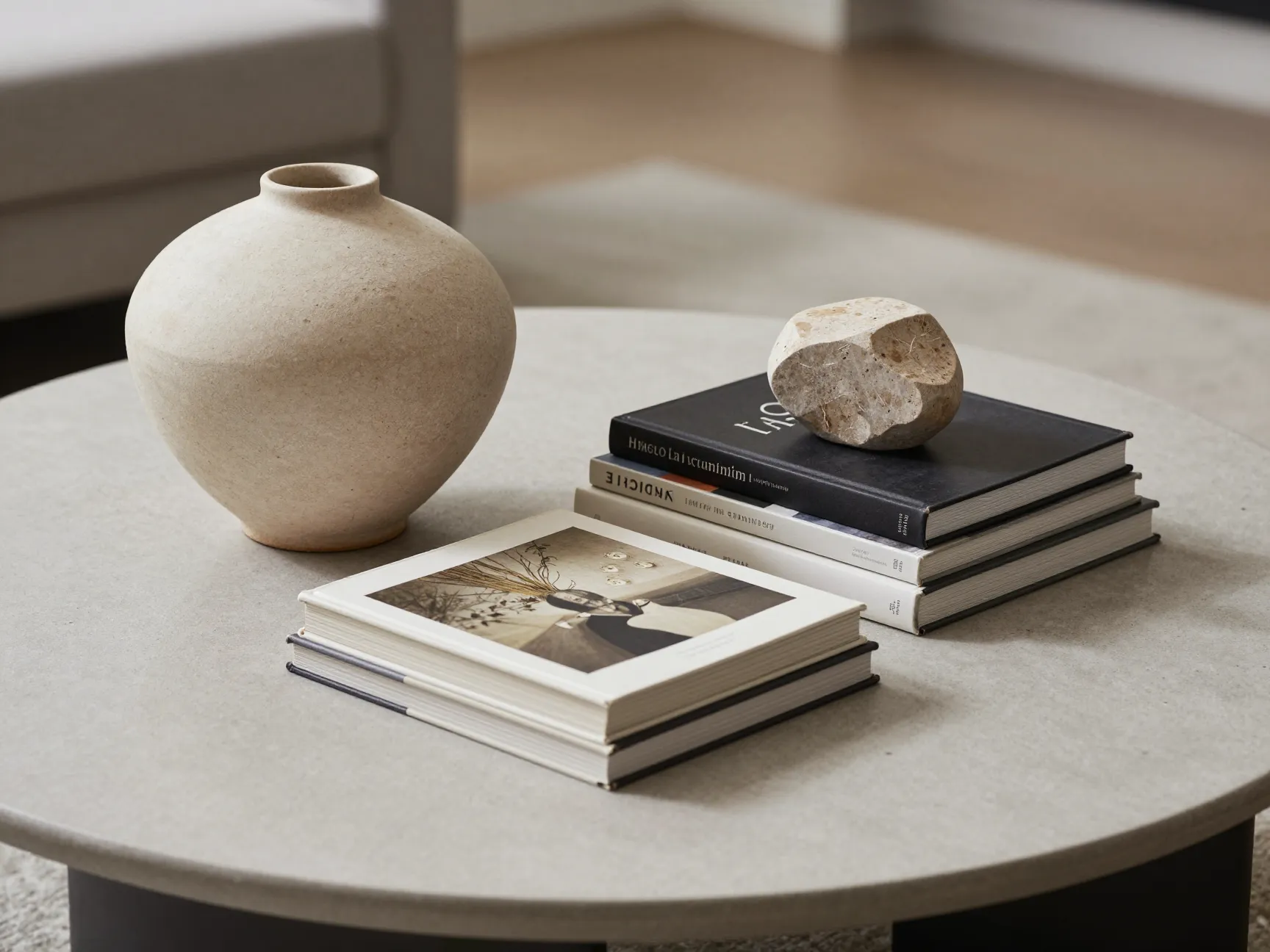
Layered surfaces is the design principle of placing objects on horizontal surfaces, coffee tables, side tables, console tables, shelving, with the same care given to the furniture itself. In a luxury living room, no surface is an afterthought [2].
The discipline here is curation. A layered surface is not a cluttered surface. It is a surface where every object has been chosen for its form, material, and relationship to the objects beside it. A stack of three books, a low ceramic vessel, and a single sculptural object, that is a layered surface. Ten decorative objects arranged without hierarchy is just clutter [8].
The rule of three for surface styling:
- Group objects in odd numbers (three or five, not two or four)
- Vary the height within each grouping
- Maintain a consistent material language, stone, ceramic, and natural fiber work together; plastic does not belong
7. The Quiet Neutral Interior
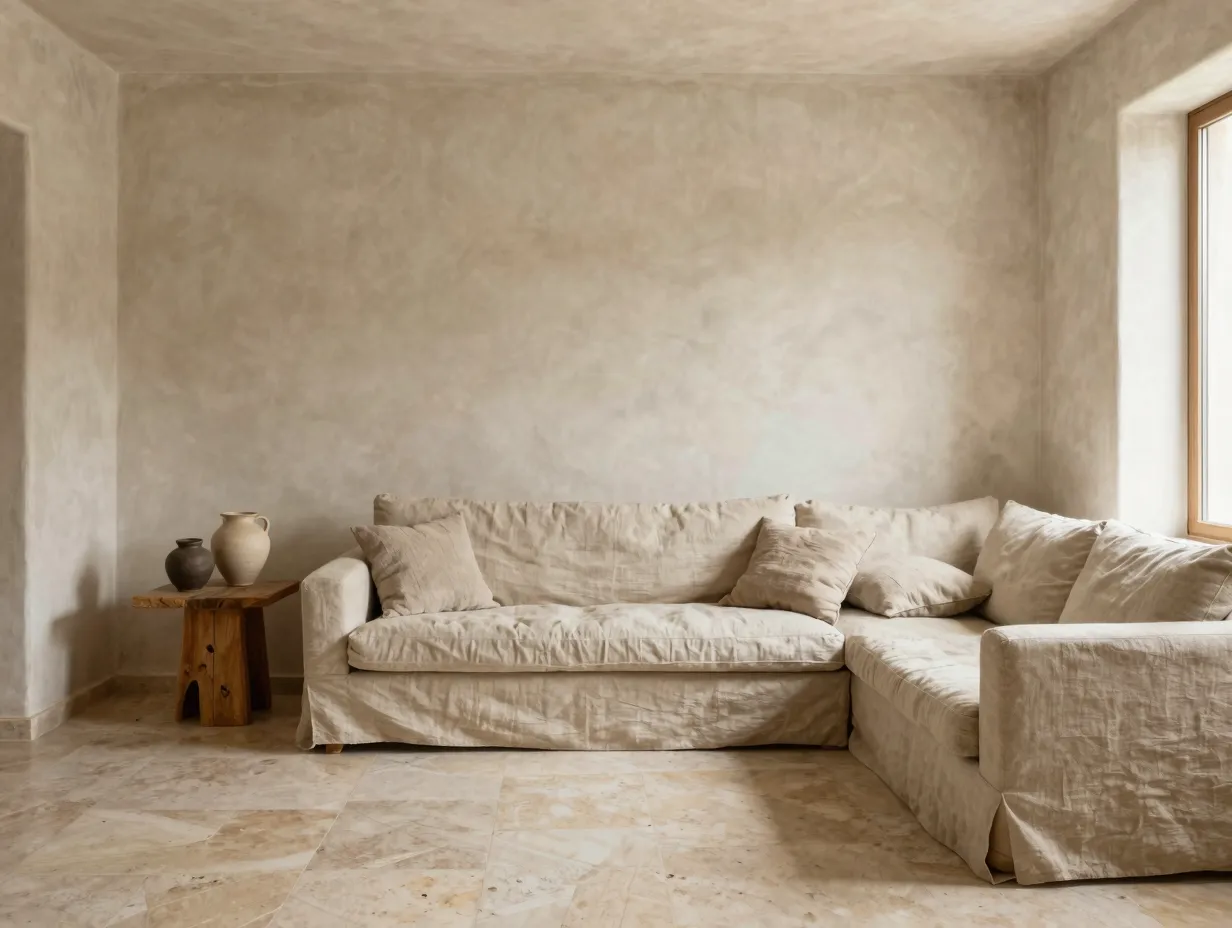
The quiet neutral interior takes the monochrome palette concept further, stripping back even the textural variation to create a room of near-total visual stillness. This is the hardest design on this list to execute well, and the most impressive when it works [2].
The key to a quiet neutral interior is that the neutrality must be warm, not cold. Cool grays and stark whites read as institutional. Warm whites, soft linens, aged plasters, and natural stone create a neutral room that feels inhabited and human [1].
Materials that define the quiet neutral interior:
- Aged or limewash plaster walls
- Natural linen or undyed cotton upholstery
- Travertine or limestone flooring and surfaces
- Unfinished or lightly oiled wood
- Handmade ceramic objects in muted earth tones
This design rewards natural light above all others. A quiet neutral interior in a north-facing room with limited daylight will feel flat and lifeless. In a south or west-facing room with generous windows, it becomes transcendent [7] [8].
8. Integrated Living and Dining
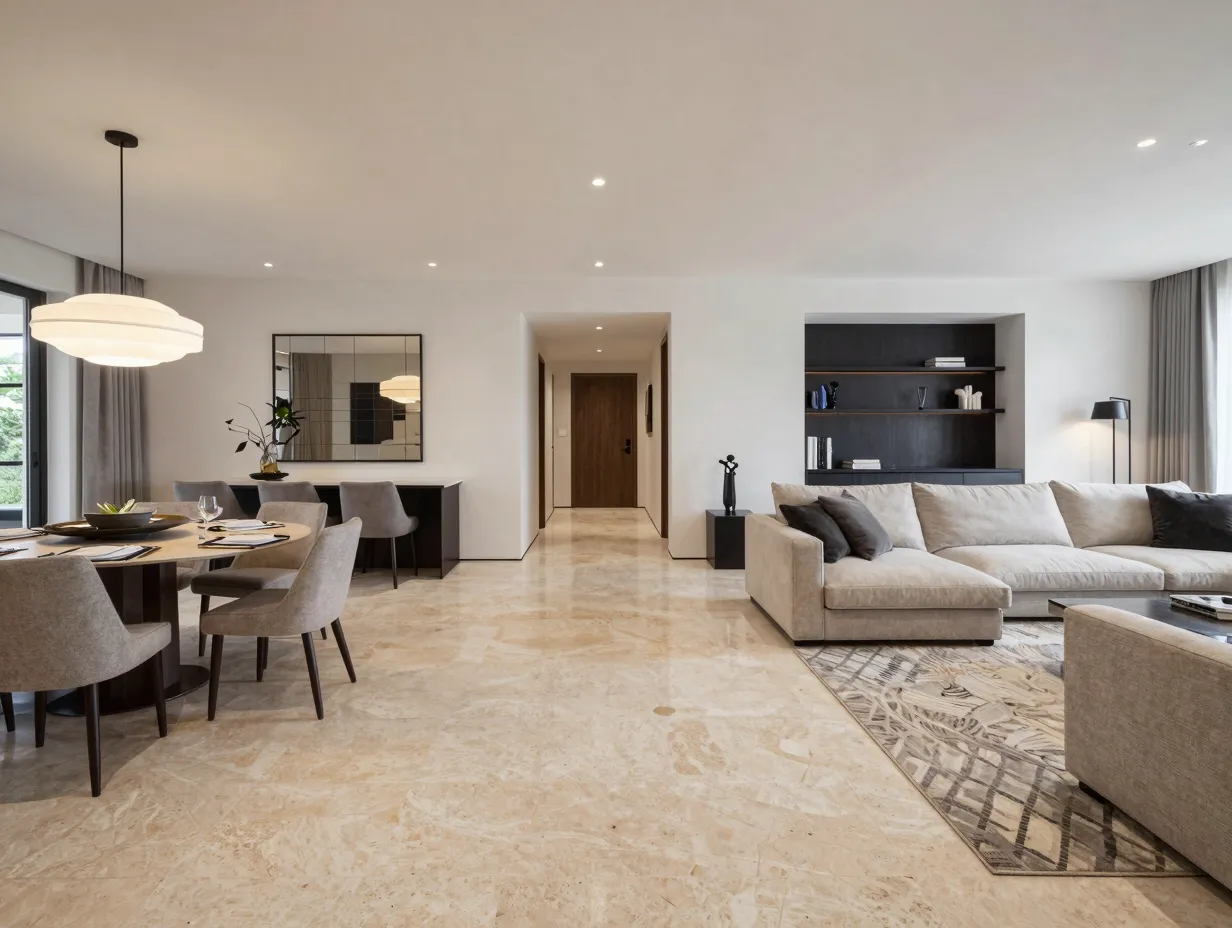
The integrated living and dining design treats the living room and dining area not as two separate zones but as a single, continuous spatial experience. This approach has become increasingly prominent in luxury residential design as open-plan living matures beyond its early, often awkward iterations [2].
The sophistication here lies in how the two zones relate to each other. They should share a material language, the same flooring, the same tonal palette, the same quality of light. But they should also have distinct identities, achieved through furniture scale, lighting zones, and rug placement [2].
Creating a successful integrated living and dining space:
- Use a single continuous flooring material across both zones
- Define each zone with a separate area rug
- Ensure the dining lighting (typically a pendant) is distinct from the living room lighting
- Choose dining chairs that echo, but do not match, the living room upholstery
- Create a visual connection between the two zones through a shared color accent or material detail
The integrated approach works best when the dining table is positioned so that it is visible from the primary seating in the living area, creating a sense of spatial depth and layered activity [2] [7].
9. Material-Led Composition
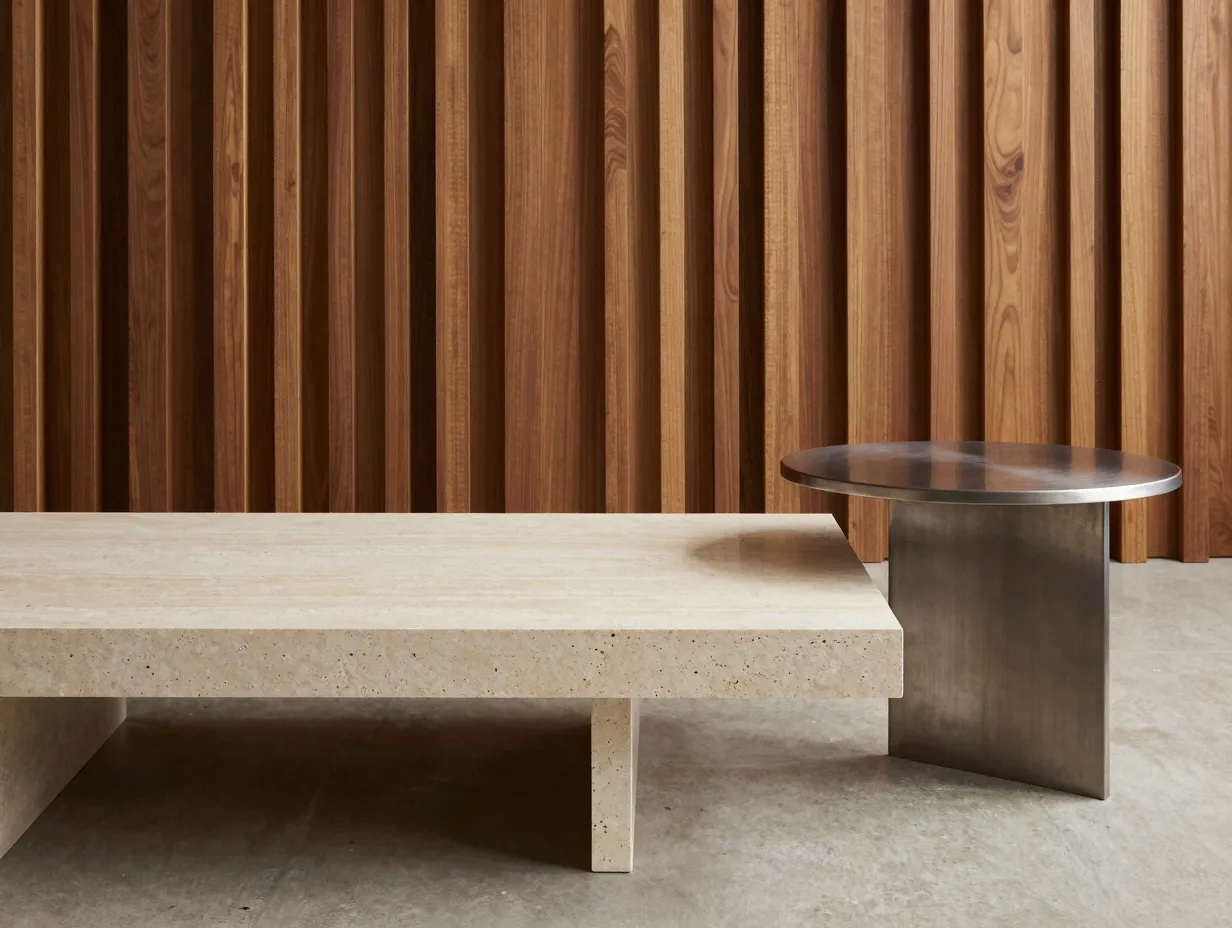
The material-led composition is the most conceptually advanced design on this list. Rather than starting with a furniture layout or a color scheme, this approach begins with a single material, travertine, smoked oak, aged brass, raw concrete, and builds the entire room outward from that choice [2].
The material becomes the room’s organizing logic. Every subsequent decision, upholstery, lighting, flooring, accessories, is evaluated against the primary material. Does it complement it? Does it create the right kind of contrast? Does it maintain the material hierarchy?
Building a material-led composition:
| Step | Action |
|---|---|
| 1 | Choose one hero material with strong visual character |
| 2 | Select a secondary material that complements without competing |
| 3 | Add a third material for textural contrast |
| 4 | Limit the total material count to five or fewer |
| 5 | Ensure the hero material appears in at least three locations in the room |
The material-led approach produces rooms that feel authored rather than assembled, spaces where every element seems to belong because it genuinely does [2] [8].
How to Apply These Designs in Your Own Space
Understanding the 9 Modern Luxury Living Room Designs That Exude Sophistication is one thing. Applying them to a real room with real constraints, budget, existing architecture, family life, requires a different kind of thinking.
Here is a practical framework for moving from inspiration to execution:
Step 1: Audit your current space. Before adding anything, identify what is working against sophistication. Usually it is scale (furniture too small for the room), material inconsistency (too many competing finishes), or surface clutter (too many objects without hierarchy).
Step 2: Choose one primary design concept. Do not try to combine all nine. Pick the concept that best fits your room’s architecture and your lifestyle. A family with young children might find the grounded sectional and layered surfaces more practical than the quiet neutral interior.
Step 3: Start with the largest surface. In most living rooms, that is the sofa. Getting the sofa right, scale, material, placement, resolves more than half of the room’s design challenges automatically [1] [7].
Step 4: Edit before you add. For every new object or piece of furniture you consider adding, remove something first. Luxury is largely the result of subtraction.
Step 5: Invest in lighting. No design on this list works without considered lighting. Recessed ambient light, a statement pendant or chandelier, and at least two table or floor lamps at different heights create the layered light quality that makes luxury interiors feel alive at every hour [8].
Conclusion
The 9 Modern Luxury Living Room Designs That Exude Sophistication share a single underlying principle: every decision serves the whole. Whether it is the grounded sectional anchoring a room’s spatial logic, bouclé adding tactile depth to a monochrome palette, or a material-led composition building an entire room from a single hero surface, the sophistication comes from coherence rather than cost.
My strongest recommendation is to start with one concept and apply it completely before introducing elements from another. The rooms that fail at luxury almost always do so because they tried to do too much. The rooms that succeed do so because they committed fully to a clear design idea and edited everything else away.
Actionable next steps for 2026:
- Identify the single design concept from this list that best fits your room’s existing architecture
- Audit your current furniture for scale and material consistency, remove anything that does not belong to the chosen concept
- Invest in one high-quality hero piece (a grounded sectional, a statement sofa, or a hero material surface) before purchasing anything else
- Consult a lighting designer or use a layered lighting plan before finalizing any other decorative decisions
- Return to this guide after your first round of changes and reassess which of the remaining eight concepts could be layered in subtly
Sophistication is not a destination. It is a practice of continuous refinement, and these nine designs give you a clear framework to practice it.
References
[1] Luxury Living Room 8416336 – https://www.thespruce.com/luxury-living-room-8416336
[2] hauteliving – https://hauteliving.com/2026/04/9-living-room-designs-defining-modern-luxury/787840/
[3] Watch – https://www.youtube.com/watch?v=cTYeu8figpI
[7] Modern Luxury Living Room Ideas – https://roomyretreat.com/modern-luxury-living-room-ideas/
[8] Luxury Living Rooms – https://www.hello-hayley.com/luxury-living-rooms/