9 Bedroom Decor Ideas That Will Transform Your Space Into a Relaxing Retreat
The average adult spends roughly one-third of their life in the bedroom, yet most people invest far less thought in that space than they do in their living room or kitchen. That disconnect is worth examining. A bedroom that functions as a true sanctuary does not happen by accident; it is the result of deliberate choices about color, texture, light, and what you choose to leave out. These 9 bedroom decor ideas that will transform your space into a relaxing retreat are drawn from current designer guidance, wellness research, and real-world styling principles that hold up well beyond any single trend cycle.
Disclosure: This post contains affiliate links. As an Amazon Associate, we earn from qualifying purchases, and at no extra cost to you.
I have spent years studying how interior design affects daily mood and sleep quality. The ideas below are not abstract theory. They are practical, actionable, and grounded in what leading designers are recommending right now in 2026.
Key Takeaways
- Warm, intentional color palettes, not cool grays, are the foundation of a bedroom that feels genuinely restful in 2026.
- Layered textiles, a statement bed frame, and strategic lighting work together to create a cocoon-like retreat effect.
- Personalized, “collected” decor with meaningful objects outperforms mass-produced matching sets for emotional comfort.
- Decluttering surfaces and limiting technology in the bedroom reduces visual and mental noise, directly supporting better sleep.
- Natural materials, greenery, and tactile textures connect the room to the outside world and reinforce a sense of calm.
Why the Right Bedroom Decor Matters More Than You Think
Before diving into the specific ideas, it helps to understand why bedroom design carries so much weight. Sleep researchers consistently link environmental factors, light levels, visual clutter, temperature, and sound, to sleep onset and sleep quality. When a room feels chaotic or impersonal, the brain struggles to shift into a restful state. When a room feels ordered, warm, and intentional, that transition becomes far easier.
Design editors updating their guidance through mid-2026 describe the ideal bedroom as a “recovery zone”, a space engineered to feel enveloping and restorative from the moment you walk in [8]. That framing is useful. It shifts the question from “What looks good?” to “What helps me recover?” The two answers often overlap, but the second question leads to better decisions.
The 9 bedroom decor ideas that will transform your space into a relaxing retreat below are organized to build on each other. Start with color and structure, then layer in textiles, light, and personal touches. By the end, you will have a clear roadmap for a room that genuinely restores you.
9 Bedroom Decor Ideas That Will Transform Your Space Into a Relaxing Retreat
1. Shift to a Warm, Intentional Color Palette
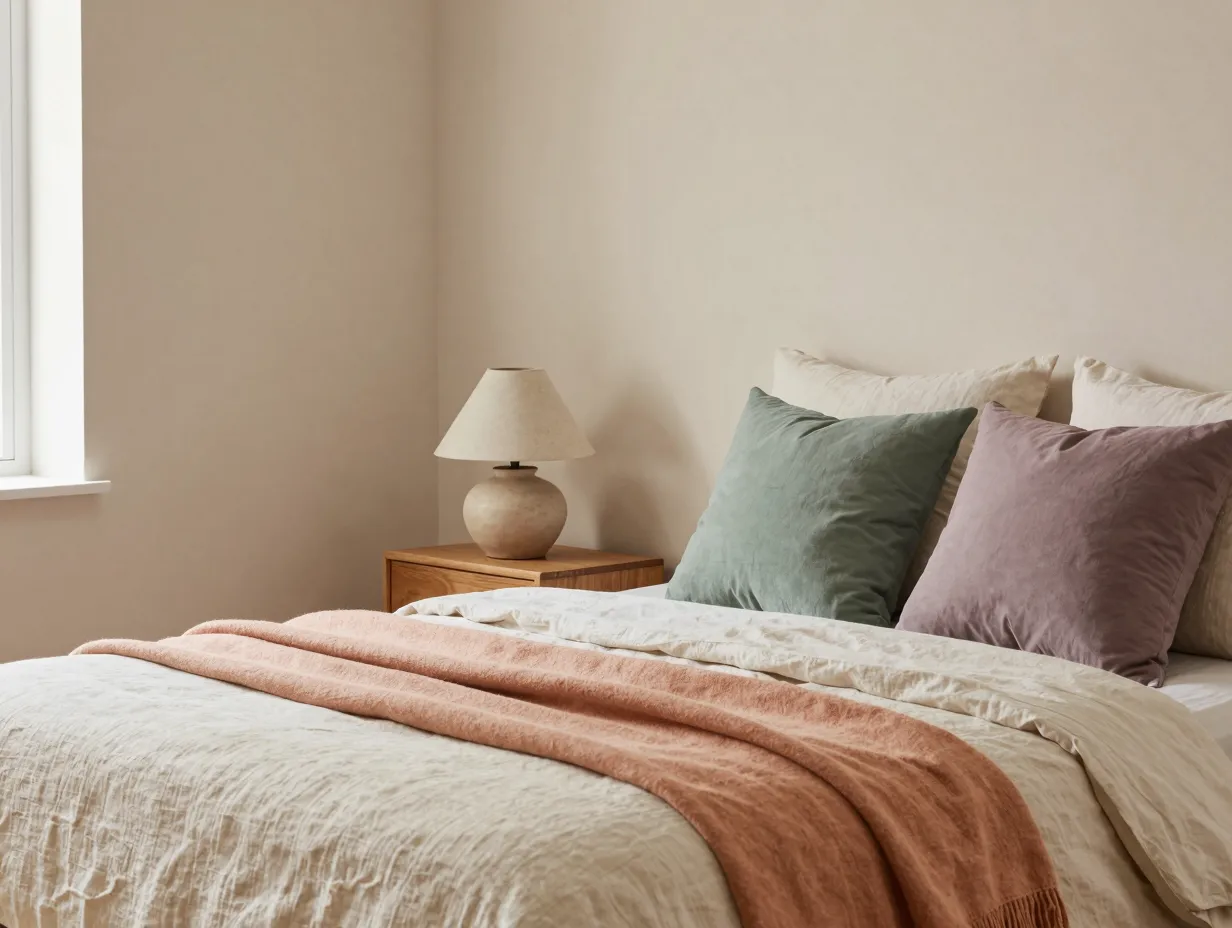
Color is the single fastest way to change how a room feels. For years, cool grays dominated bedroom design. That era is over. Design editors report that the “new neutral” for bedrooms has moved firmly toward warm, intentional tones: creamy taupes, clay beiges, soft caramels, and chalky off-whites that read cozy rather than austere [9].
The reasoning is straightforward. Cool grays can feel clinical and flat under artificial light, especially in the evening. Warm neutrals, by contrast, absorb and reflect warm-spectrum light in a way that makes a room feel immediately more inviting.
Recommended base colors for 2026:
- Creamy taupe
- Clay beige
- Chalky off-white
- Soft caramel
Accent colors that complement without overstimulating:
- Sage green
- Muted olive
- Dusty mauve
- Soft lavender
- Warm peach
- Muted blue
Color specialists recommend pairing these soft neutrals with gentle accent shades that connect the room to nature without creating visual noise [9]. A clay beige wall with sage green textiles and a warm peach throw, for example, feels grounded and calm without being boring.
“The goal is not a perfect color match, it is a cohesive emotional temperature across every surface in the room.”
If you are not ready to repaint, start with textiles and soft furnishings. A new duvet cover, a throw blanket, and two accent pillows in a warm neutral palette can shift the mood of a room dramatically without a single drop of paint.
2. Build a Statement Bed as Your Room’s Focal Point
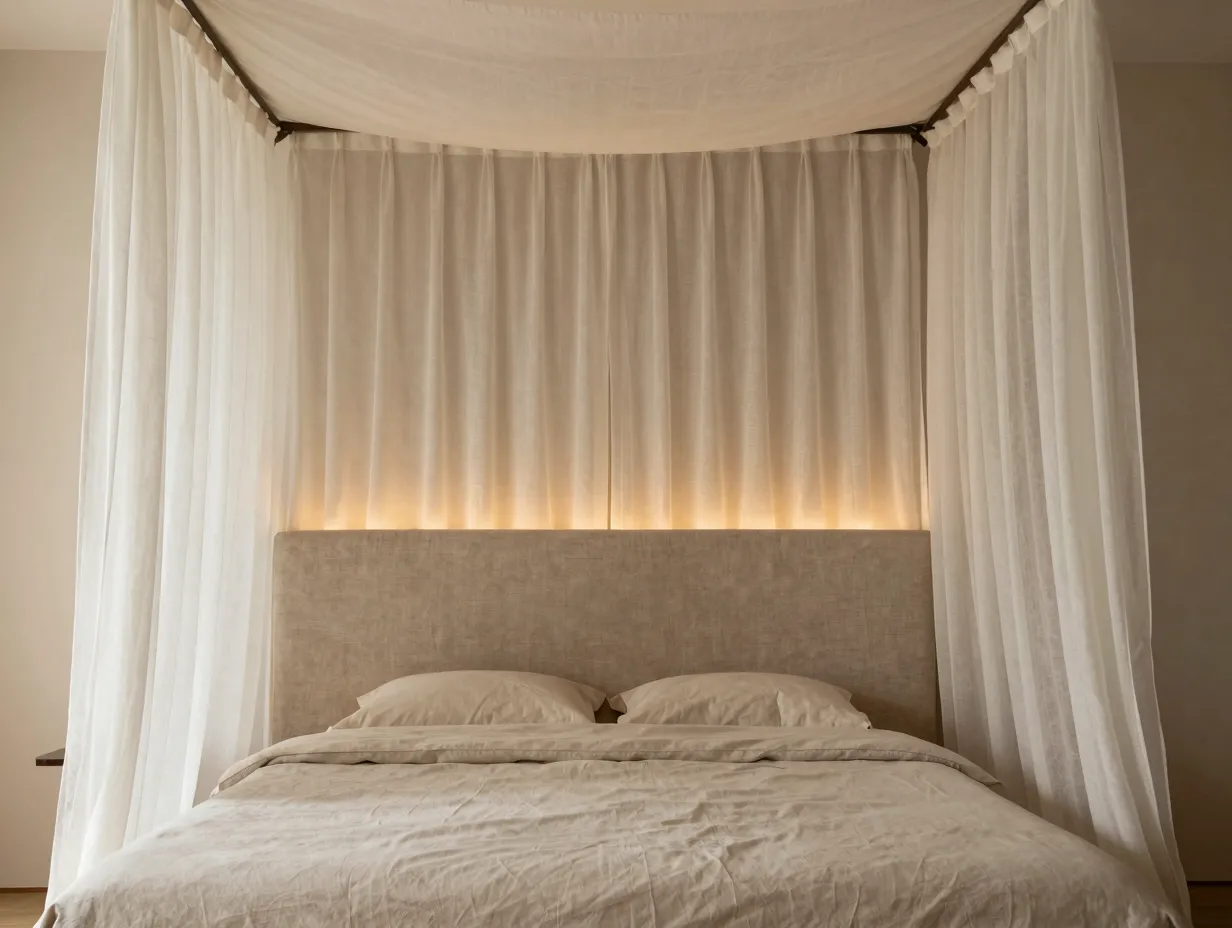
Every well-designed bedroom has a visual anchor, and in 2026 that anchor is almost always the bed itself. Designers across multiple publications highlight dramatic headboards, canopy beds with modern, softer lines, and upholstered frames with extended headboards as both focal points and comfort boosters [1][7][9].
A statement headboard does several things at once. It frames the bed as the primary retreat zone, which is exactly what it should be. It adds visual weight and architectural interest to what is often the largest blank wall in the room. And when paired with drapery or wall treatments, it creates a genuine cocoon effect that supports the sense of being enveloped and protected [1][9].
Statement bed options worth considering:
- Upholstered headboard in velvet, boucle, or linen
- Canopy frame with sheer or semi-sheer drapery panels
- Arched or curved headboard in a warm neutral fabric
- Low-profile platform bed with an oversized extended headboard
- Wooden or cane-detailed frame for a natural, organic feel
I replaced a basic metal frame in my own bedroom with a floor-to-ceiling upholstered headboard two years ago. The change was transformative, not just visually, but in how the room felt to be in. The bed became a destination rather than just a piece of furniture.
One practical note: if budget is a constraint, a DIY upholstered headboard using plywood, foam, and fabric can achieve a similar effect for a fraction of the cost of a designer piece.
3. Layer Your Bedding with Mixed Textiles
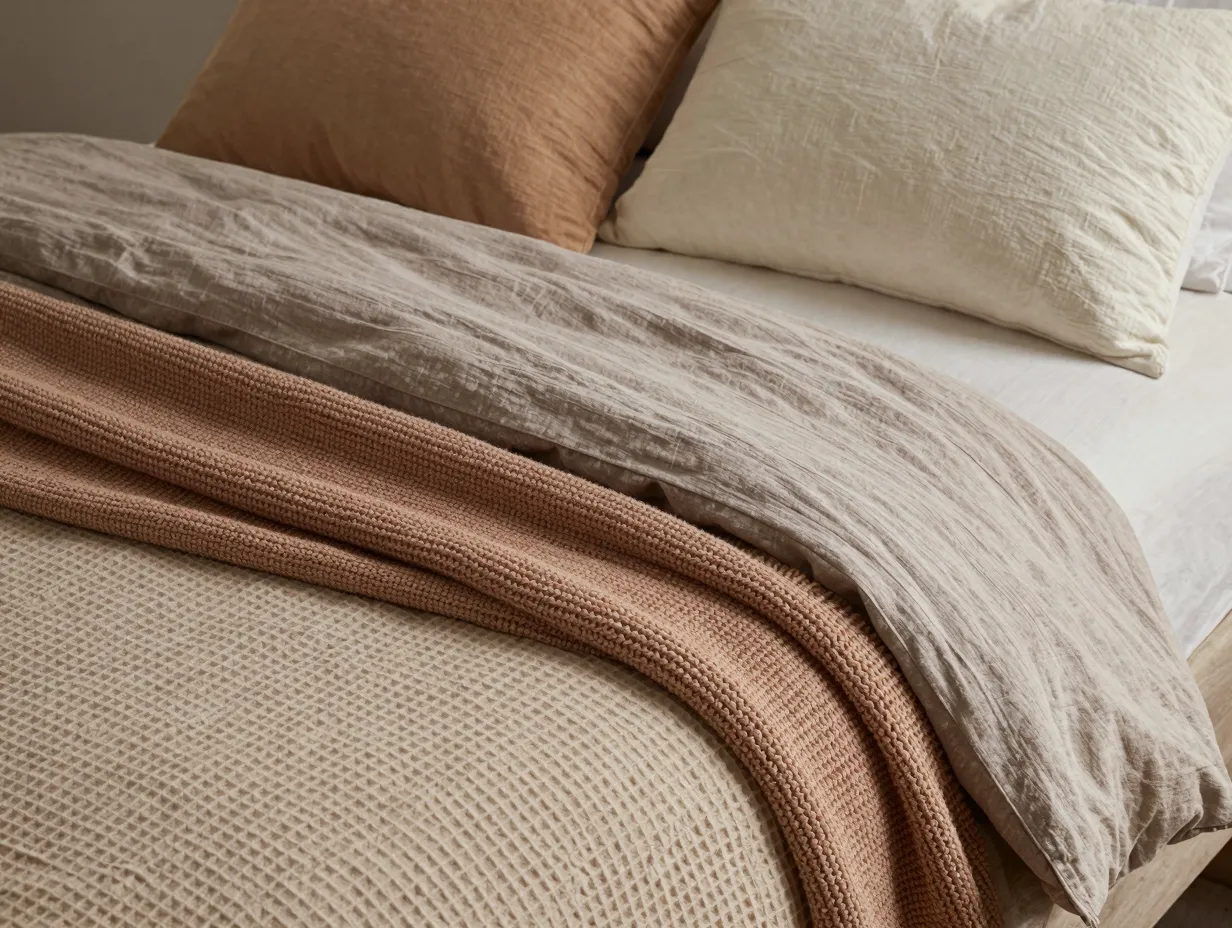
Matching bedding sets are convenient, but they rarely produce the layered, lived-in warmth that defines a true retreat. In 2026, stylists advocate for mixing linens, quilts, and varied textures in warm or cool neutrals to create depth and visual calm simultaneously [5][8].
The principle is simple: contrast in texture, cohesion in color. A linen duvet cover in ivory, layered with a cotton waffle-weave blanket in warm sand, topped with a chunky-knit throw in oatmeal creates visual richness without color chaos. Each layer adds tactile interest and also serves a practical purpose, you can adjust warmth throughout the night without disrupting the overall look.
A practical layering formula:
| Layer | Material | Color Suggestion |
|---|---|---|
| Base sheet set | Percale or linen cotton blend | Ivory or pale stone |
| Duvet or quilt | Linen blend or viscose | Warm sand or taupe |
| Mid-layer blanket | Cotton waffle or matelasse | Oatmeal or pale gray |
| Accent throw | Wool, chunky knit, or cashmere | Clay, sage, or dusty mauve |
Sleep-oriented designers also prefer breathable fabrics, linen blends, viscose, and cotton, to keep the bed physically comfortable across seasons [9]. Avoid synthetic materials that trap heat, particularly if you run warm at night.
4. Design Your Lighting as a Wellness Feature
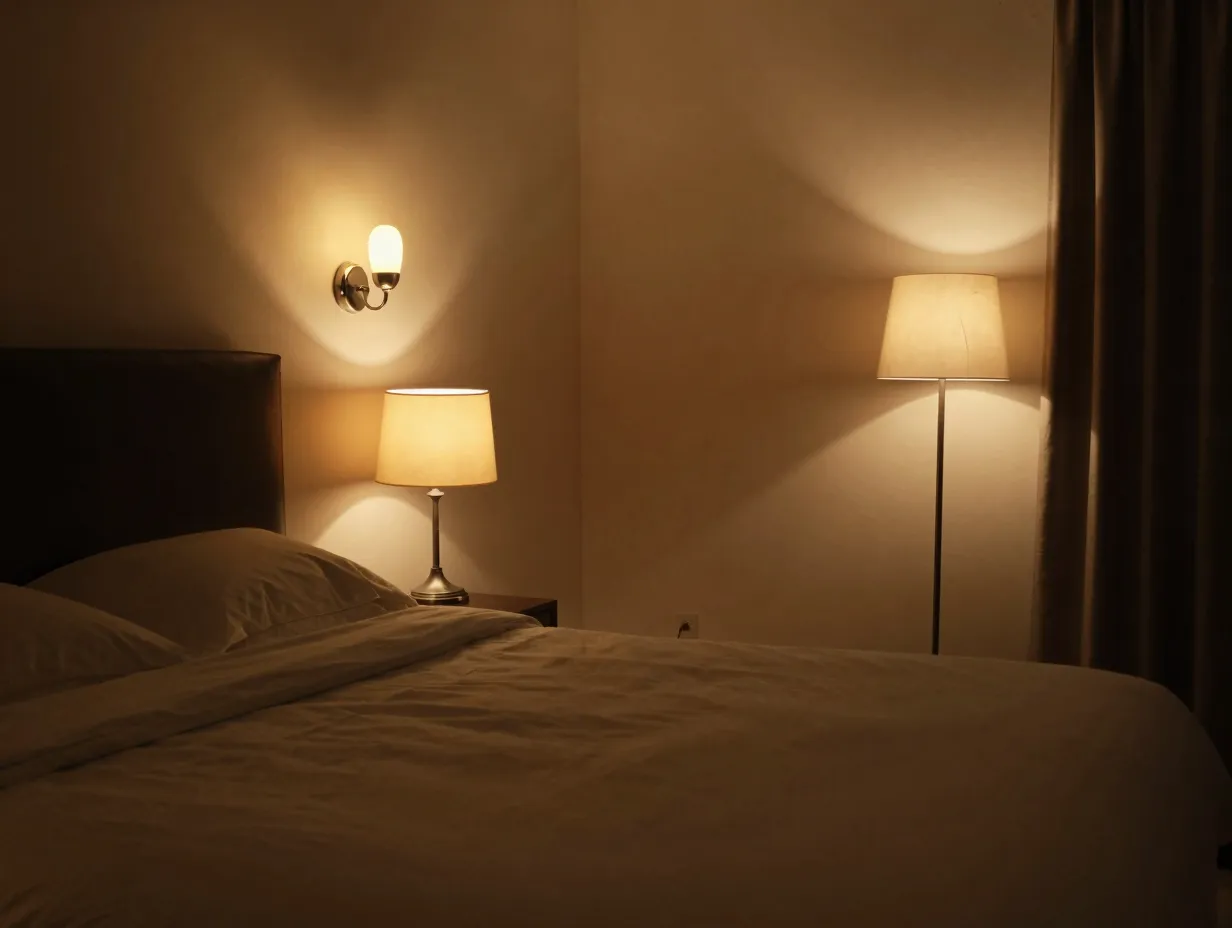
Most bedrooms are lit incorrectly. A single overhead fixture with a bright white bulb is the enemy of relaxation. Expert guidance from mid-2026 treats lighting design as a wellness feature rather than a purely aesthetic one [8].
The recommended approach is a layered scheme: multiple light sources at different heights and intensities, all using warm bulbs in the 2,700 to 3,000 Kelvin range [8]. This color temperature mimics the warm glow of late-afternoon sun and signals to the brain that it is time to wind down.
A layered bedroom lighting plan:
- Bedside table lamps (primary reading and ambient light)
- Wall sconces flanking the headboard (soft, directional glow)
- A floor lamp in a reading corner (warm ambient fill)
- Dimmable overhead fixture used only for cleaning or dressing
- Candles or battery-powered flameless candles for evening wind-down
Minimize reliance on overhead canned lighting for evening use [8]. If your bedroom has recessed lights, put them on a dimmer and use them only at low settings after 7 PM. The shift in ambiance when you rely on lamps instead of overhead lights is immediate and significant.
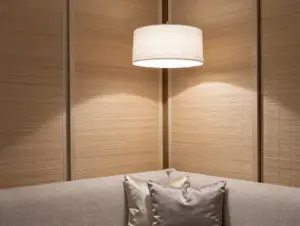
One detail that is easy to overlook: the lampshade material matters. Opaque shades direct light downward and create pools of warm glow. Translucent shades diffuse light more broadly. Both work well in a bedroom; the choice depends on how much ambient fill you want versus focused task light.
5. Treat Your Walls as a Design Opportunity
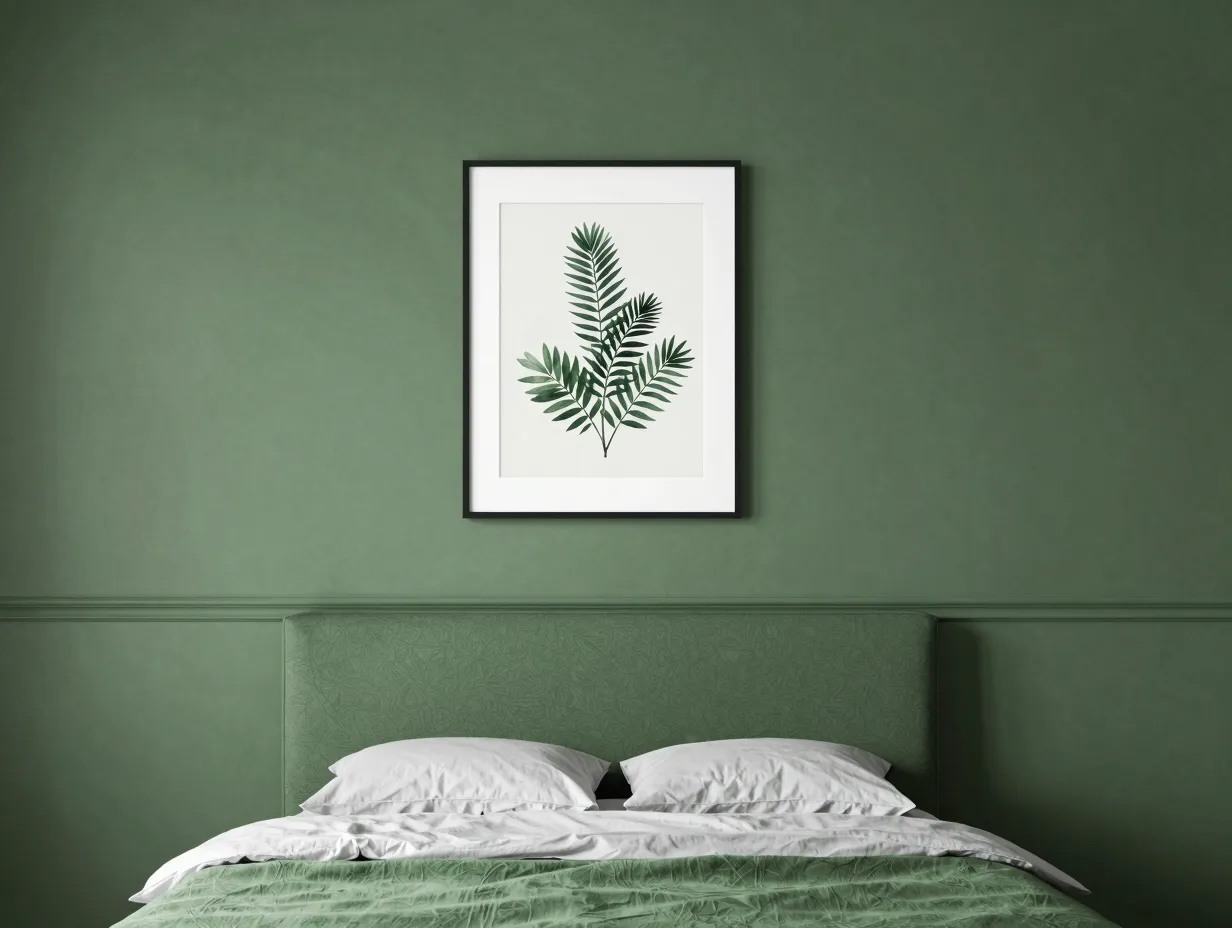
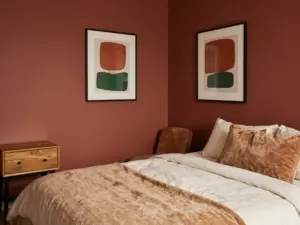
Walls are the largest surface area in any room, and leaving them as a plain afterthought is a missed opportunity. In 2026, designers are predicting saturated single-hue rooms, clay pinks, dusty plums, and deep sages, applied across walls, textiles, and furniture for a unified cocoon effect [6].
This “enveloping” approach, where the wall color flows into the bedding and soft furnishings, creates a sense of immersive calm that a white room with colorful accents simply cannot match. It feels intentional, considered, and deeply personal.
For those who prefer pattern over solid color, patterned wallpapers, grasscloth textures, and botanical motifs are all strong choices that add character while remaining soothing when kept within a cohesive palette [8][10]. Decorative moldings and wall paneling, board-and-batten, shiplap, or simple picture-rail molding, add architectural texture without requiring wallpaper or paint expertise.
Wall treatment options by commitment level:
- Low commitment: Removable peel-and-stick wallpaper in a botanical or grasscloth pattern
- Medium commitment: Painting one accent wall in a saturated deep sage or clay pink
- High commitment: Full-room paint in a warm enveloping tone, carried into textiles and soft furnishings
- Architectural: Adding board-and-batten paneling to the lower half of walls for texture and depth
6. Bring in Natural Materials and Greenery
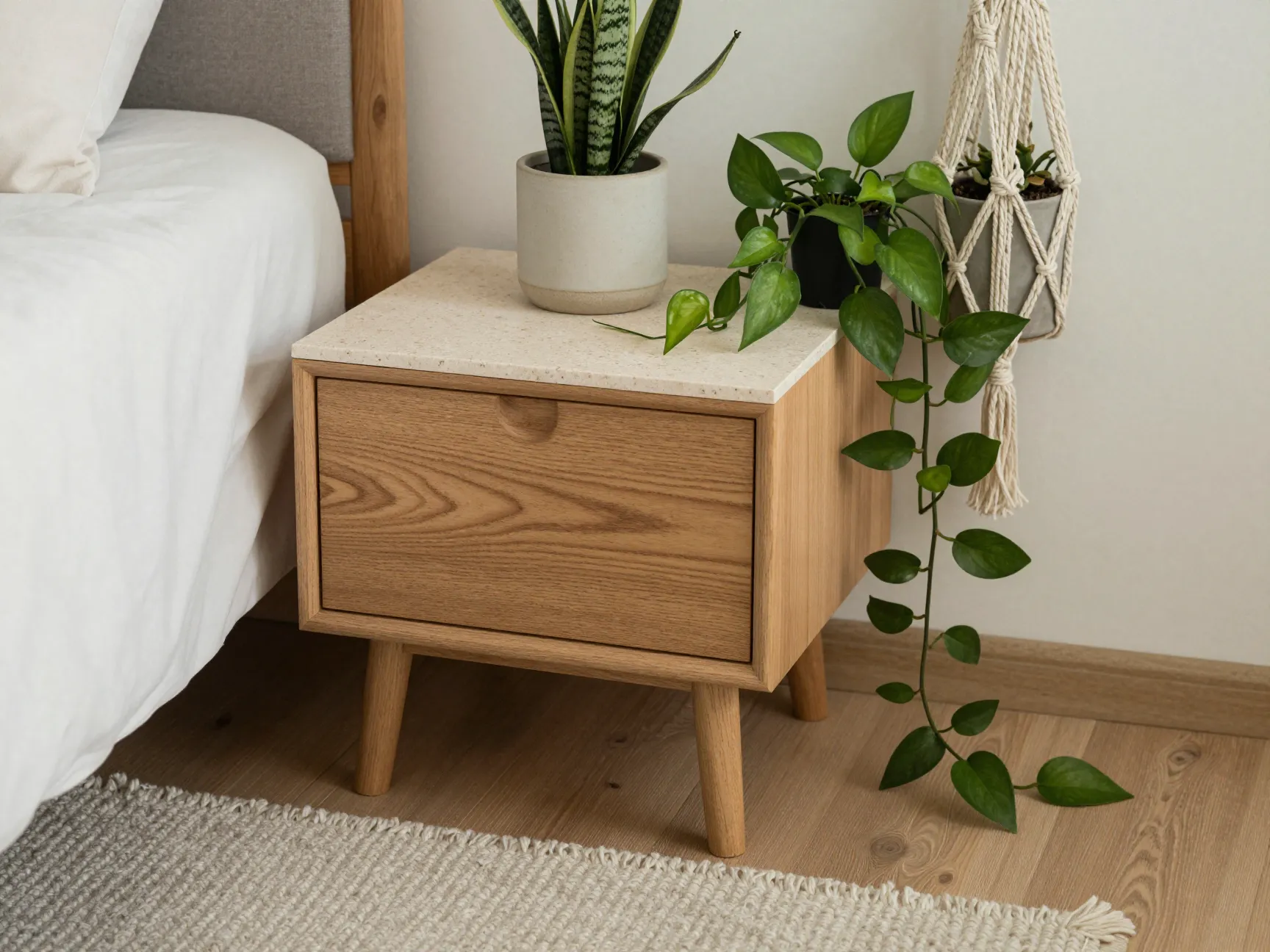
A bedroom that feels like a retreat almost always has a connection to the natural world. Trend reports for 2026 consistently highlight natural wood floors, soft wool rugs, and stone or travertine details in nightstands and headboards as essential components of a retreat-like bedroom [10].
The logic is sensory. Natural materials, wood grain, stone texture, woven fibers, engage the eye and hand in a way that synthetic surfaces do not. They feel grounded and timeless rather than trend-dependent.
Greenery is equally important. Wellness-oriented guides suggest low-maintenance plants such as snake plants, succulents, or simple vine cuttings to bring the outside in, subtly improve air quality, and support mood [9]. You do not need an elaborate indoor garden. A single well-placed plant on a nightstand or a trailing pothos on a shelf is enough to shift the feel of a room.
Best low-maintenance bedroom plants:
- Snake plant (tolerates low light, improves air quality)
- Pothos (trailing vine, very forgiving)
- ZZ plant (thrives in low light and infrequent watering)
- Succulents (need bright light but minimal care)
- Peace lily (tolerates shade, adds a soft floral element)
Natural materials also extend to rugs. A soft wool rug beside the bed, the first thing your feet touch in the morning, makes a tangible difference in how the room feels to inhabit. Choose a texture that feels genuinely good underfoot rather than one that simply photographs well.
7. Curate Art and Rugs as Statement Pieces
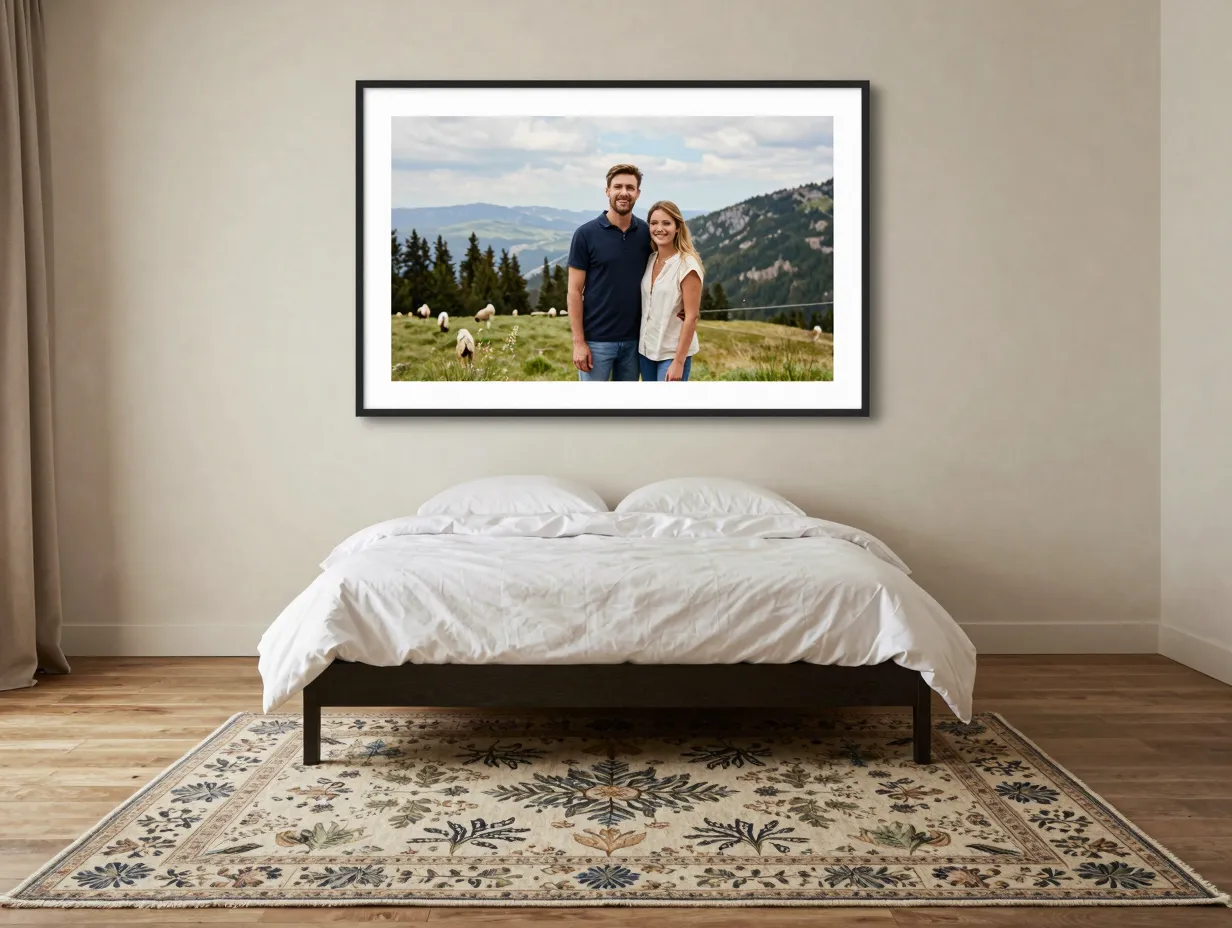
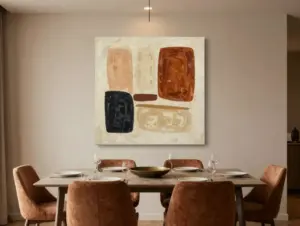
One of the most common mistakes in bedroom decorating is filling the room with many small decorative objects. The result is visual noise, the opposite of calm. Recent trend reports call out illustrated statement rugs and large artworks hung above the bed as powerful tools for giving a room character without clutter [3].
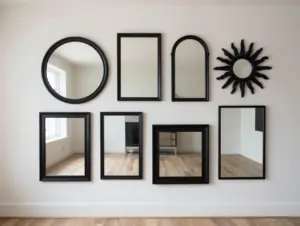
The principle is “fewer, larger, more meaningful.” One oversized artwork above the bed makes a stronger statement than a gallery wall of twelve small prints. One large area rug anchors the room more effectively than several smaller accent rugs layered together.
When choosing art for the bedroom, personal meaning matters more than stylistic perfection. A photograph from a meaningful trip, a print by an artist whose work genuinely moves you, or even a framed textile with personal significance will contribute more to the retreat feeling than a generic canvas chosen because it matches the duvet.
“The bedroom is not a showroom. It is a sanctuary. The art on the walls should mean something to the person sleeping beneath it.”
For rugs, illustrated or patterned designs in muted, nature-inspired tones, botanical motifs, abstract organic shapes, soft geometric patterns, add visual interest at floor level without competing with the rest of the room [3].
8. Personalize with Collected, Meaningful Objects
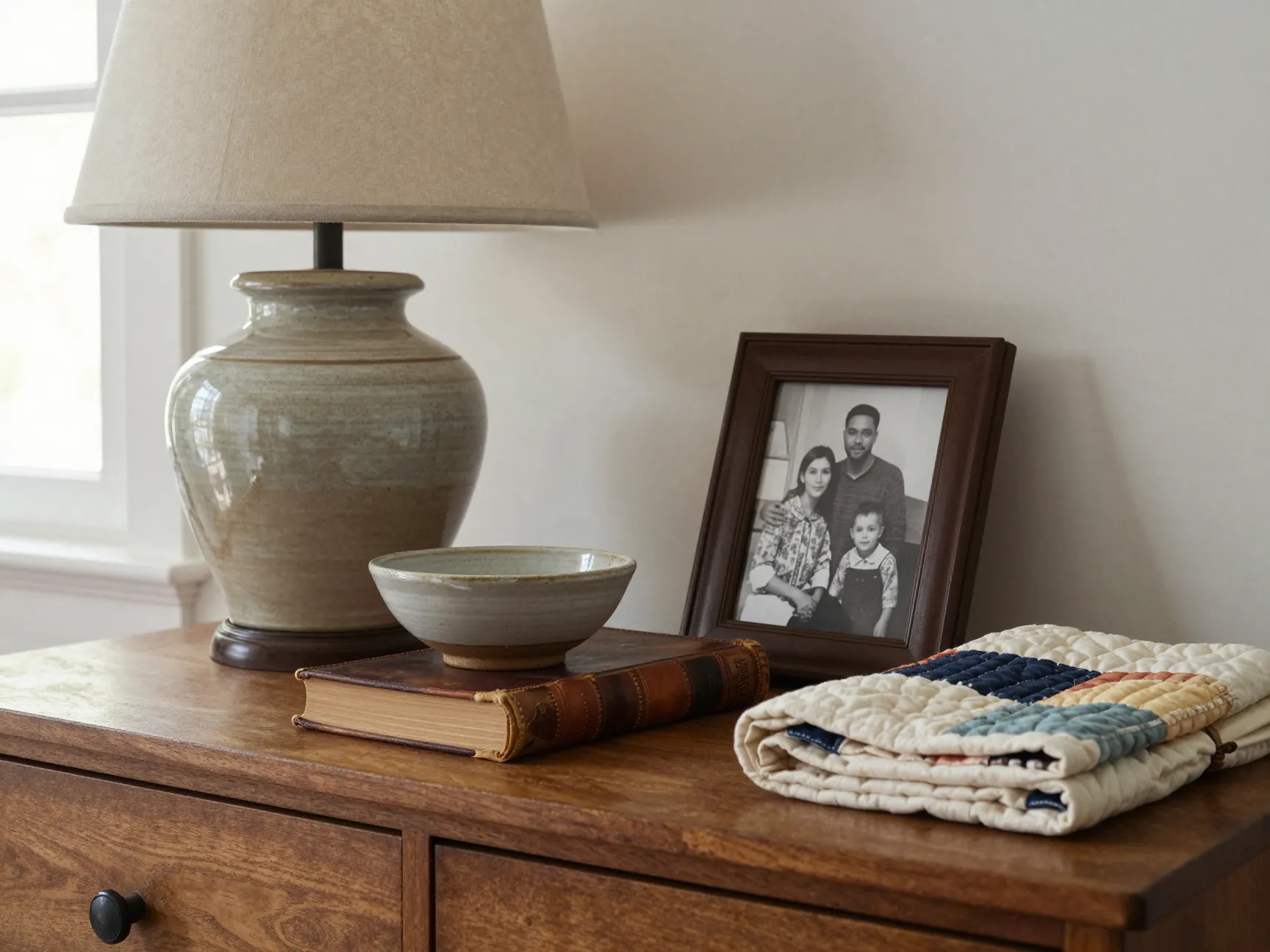
The shift away from mass-produced matching decor sets is one of the clearest trends in bedroom design for 2026. Designers across multiple publications favor antique furniture, meaningful art, and travel-collected objects to make the bedroom feel like a deeply personal sanctuary [4][6].
This “collected” look, built over time from pieces with genuine stories behind them, creates emotional comfort in a way that a perfectly coordinated room from a single retailer simply cannot replicate. A vintage lamp found at a flea market, a ceramic bowl brought back from a trip, a quilt handed down through a family: these objects carry meaning that mass-produced items lack [6].
Practically, this means resisting the urge to buy everything at once. A bedroom built gradually, with each piece chosen for its quality or personal significance, will always feel more authentic than one assembled in a single shopping session.
How to build a “collected” bedroom:
- Start with one or two pieces you genuinely love and build around them
- Mix antique or vintage items with contemporary pieces for depth
- Display objects that tell a story, travel souvenirs, inherited items, handmade pieces
- Edit ruthlessly: if an object does not add meaning or beauty, remove it
- Prioritize quality over quantity in every category
9. Declutter Surfaces and Set Technology Boundaries
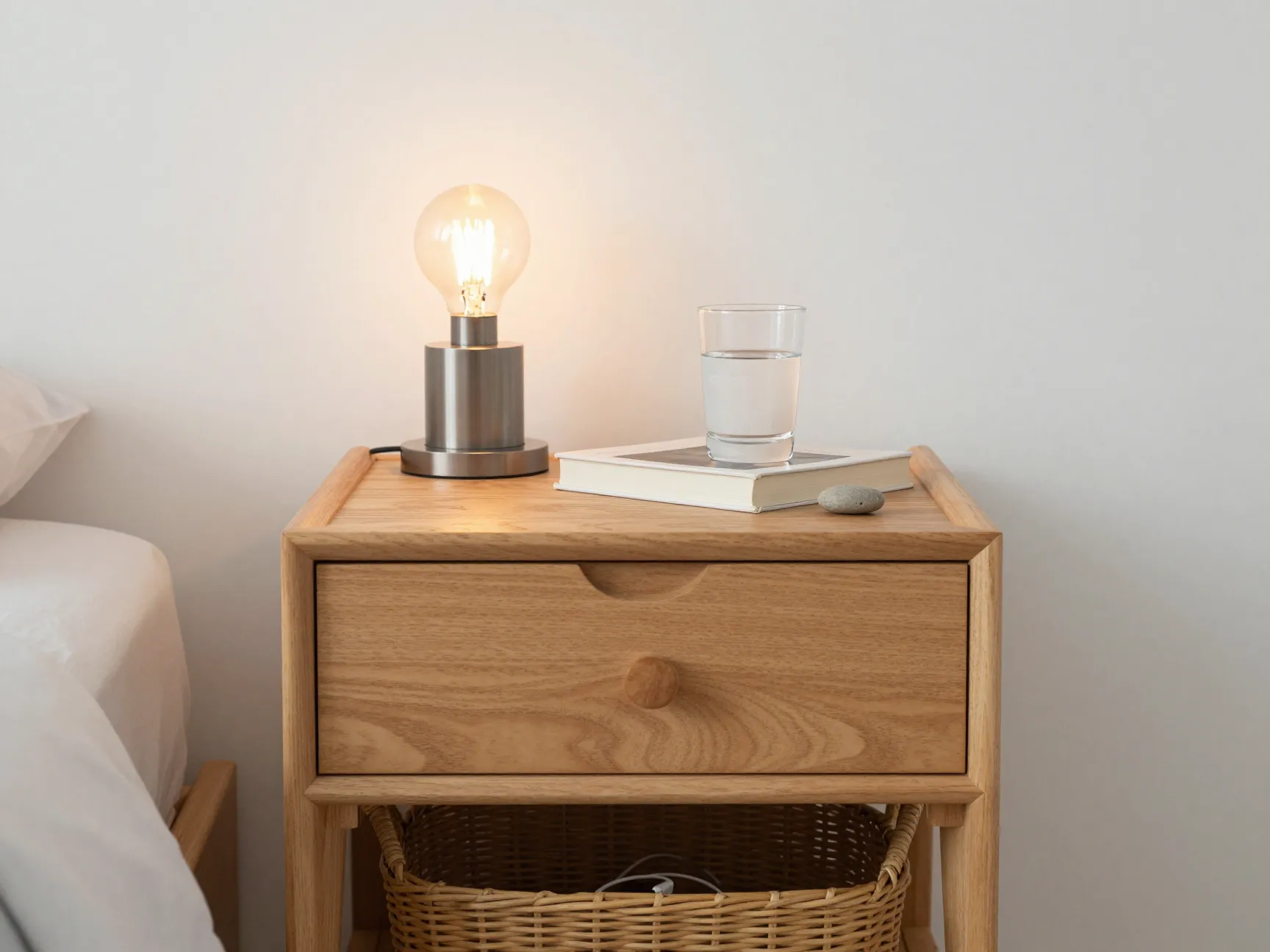
The final idea in these 9 bedroom decor ideas that will transform your space into a relaxing retreat is also the most underestimated. Decluttering surfaces and limiting devices in the bedroom are consistently recommended by sanctuary-style designers as essential steps for reducing visual and mental noise [8].
A room can have perfect colors, beautiful textiles, and excellent lighting, and still feel restless if the nightstand is piled with objects, the dresser is covered in products, and a television dominates the wall opposite the bed. Visual clutter activates the brain’s problem-solving instincts, which is the last thing you want in a space designed for rest.
A practical decluttering protocol for the bedroom:
- Clear every surface completely, then return only what is essential or beautiful
- Limit the nightstand to three to five items maximum (lamp, book, water glass, one personal object)
- Store all technology, phones, tablets, laptops, outside the bedroom or in a drawer overnight
- Use closed storage (drawers, baskets, armoires) rather than open shelving for everyday items
- Reassess every item on display: does it add calm, or does it add noise?
The technology boundary is worth taking seriously. Multiple experts recommend limiting devices in the bedroom not just for sleep quality but for the overall sense of the space as a retreat [8]. When the bedroom is associated with scrolling and notifications rather than rest and recovery, it loses its restorative power regardless of how well it is decorated.
Putting It All Together: A Room That Restores You
These nine ideas work best when they reinforce each other. Warm colors pair naturally with warm lighting. Natural materials complement greenery. A statement bed gains power when the walls, textiles, and lighting all support it as the room’s focal point. Meaningful, collected objects feel at home in a room that has been deliberately edited rather than filled.
The most important thing to remember is that a relaxing retreat bedroom is not about spending a lot of money. It is about making intentional choices. A $30 linen throw in the right color, a single well-chosen plant, and a dimmer switch on an existing lamp can shift a room’s atmosphere more effectively than an expensive furniture purchase made without a clear vision.
Start with one idea from this list. Make that change well before moving to the next. A bedroom transformed gradually, with attention and care, will always outperform one redesigned in a single frantic weekend.
Conclusion
The 9 bedroom decor ideas that will transform your space into a relaxing retreat outlined here share a common thread: they all prioritize how the room feels to be in over how it looks in a photograph. That distinction matters. A bedroom that photographs beautifully but feels impersonal or chaotic when you are actually lying in it has failed at its primary job.
Your actionable next steps:
- Choose one color, a warm neutral or a deeper enveloping tone, and test it on a single wall or in a new textile before committing fully.
- Audit your current lighting. Replace any cool-white bulbs in the bedroom with warm 2,700 K alternatives this week.
- Clear your nightstand completely. Return only the items that genuinely serve you.
- Identify one meaningful object, a piece of art, a travel find, an inherited item, and give it a prominent place in the room.
- Set a technology boundary: charge your phone outside the bedroom for one week and notice the difference.
These are small steps, but each one moves the room closer to the retreat it should be. The bedroom you sleep in shapes the person you wake up as. It deserves the same care and intention you give every other space in your life.
References
[1] Bedroom Design Trends 2026 – https://www.housebeautiful.com/design-inspiration/a69619733/bedroom-design-trends-2026/
[3] 2026 Bedroom Trends Ideas – https://www.decorilla.com/online-decorating/2026-bedroom-trends-ideas
[4] Designers Bedroom Trends 2026 – https://www.goodhousekeeping.com/home/decorating-ideas/g70839014/designers-bedroom-trends-2026/
[5] Master Bedroom Ideas – https://www.kingliving.com/blog/master-bedroom-ideas
[6] Bedroom Trends 2026 11828783 – https://www.marthastewart.com/bedroom-trends-2026-11828783
[7] Bedroom Trends 2026 11840579 – https://www.bhg.com/bedroom-trends-2026-11840579
[8] Bedroom Design Trends 2026 – https://www.veranda.com/home-decorators/design-trends/a69514496/bedroom-design-trends-2026/
[9] Bedroom Trends 2026 – https://www.homesandgardens.com/interior-design/bedrooms/bedroom-trends-2026
[10] Bedroom Trends 109028 – https://www.archiproducts.com/en/news/bedroom-trends_109028