8 College Dorm Room Ideas to Maximize Space and Personal Style
The average American college dorm room measures just 130 square feet, roughly the size of a walk-in closet in a suburban home. Yet students are expected to sleep, study, socialize, and decompress in that same cramped rectangle for an entire academic year. That tension between limited space and the very human need for personal expression is exactly why the right dorm room strategy matters so much.
Disclosure: This post contains affiliate links. As an Amazon Associate, we earn from qualifying purchases, and at no extra cost to you.
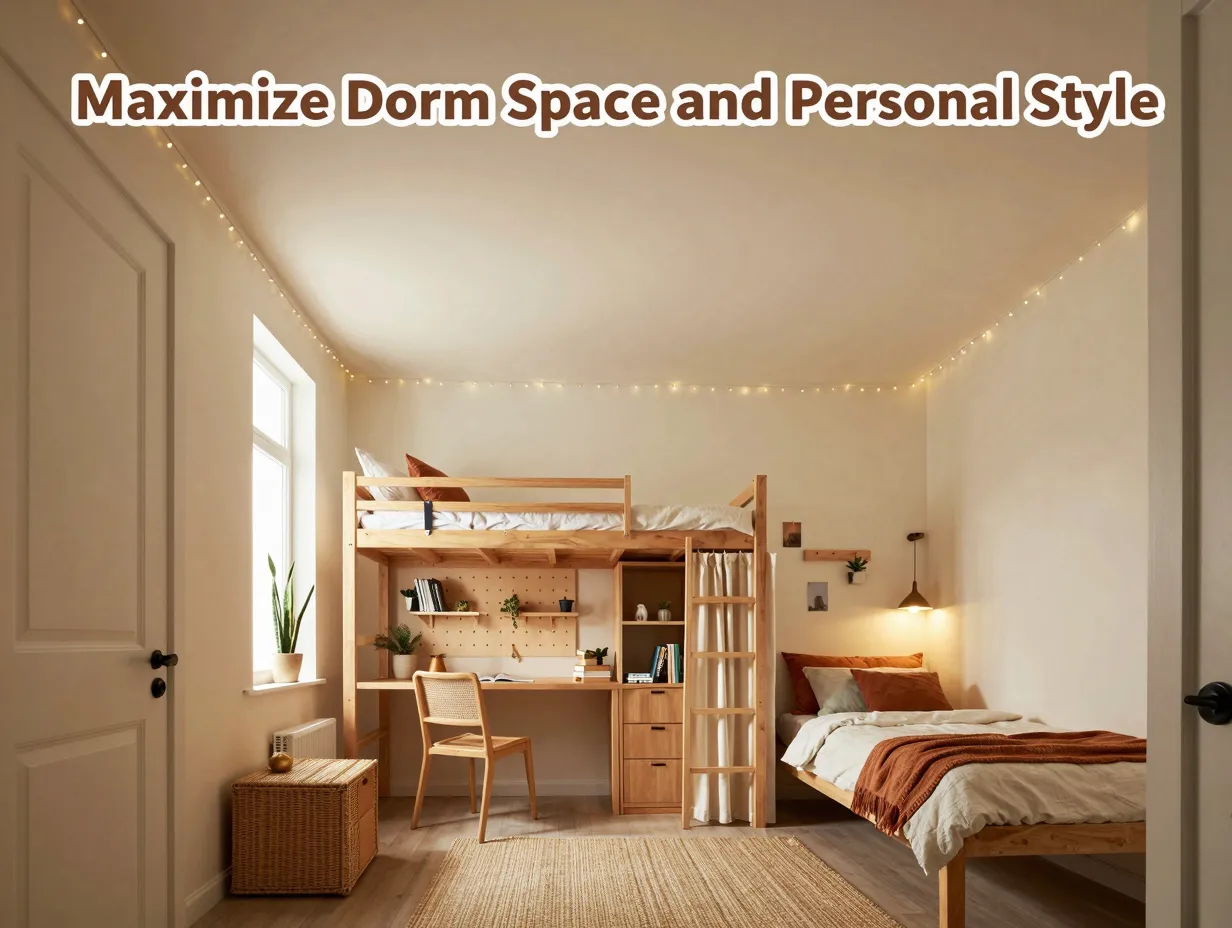
These 8 college dorm room ideas to maximize space and personal style are built around one core principle: every square foot should work harder. Whether you are moving into a shared double or a solo suite, the ideas below will help you carve out a functional, aesthetically intentional space that actually feels like yours. From vertical storage systems and dual-purpose furniture to temporary wallpaper and strategic lighting, each idea is practical, renter-friendly, and budget-conscious [1][3].
Key Takeaways
- Vertical space is the most underused asset in any dorm room, wall-mounted shelving and lofted beds can double your usable floor area.
- Dual-purpose and modular furniture eliminates the need to choose between function and style.
- Temporary, peel-and-stick decor solutions let you personalize without risking your security deposit.
- Strategic lighting transforms the mood of a small room more effectively than almost any other single change.
- Color zoning and privacy dividers are essential tools in shared dorm rooms to create distinct personal territories.
Why These 8 College Dorm Room Ideas to Maximize Space and Personal Style Actually Work
Before diving into the list, it helps to understand the framework behind these ideas. Most dorm room advice focuses on aesthetics alone, cute throw pillows, matching bedding, a few posters. That approach ignores the underlying problem: a poorly organized small space will feel chaotic no matter how pretty the accessories are.
The ideas below address both dimensions simultaneously. They solve a functional problem (too little space, too little storage) while also advancing a personal style goal (a room that reflects who you are). That dual focus is what separates genuinely useful dorm room advice from content that just looks good on a mood board [7][10].
I remember my own freshman move-in day vividly. My roommate and I stood in the doorway of our 12-by-11-foot room with two full carloads of stuff and absolutely no plan. By October, we had stacks of boxes under the bed, a desk buried under laundry, and a general sense of low-level stress that we could never quite explain. It was not until winter break, when I reorganized the room using several of the strategies below, that the space finally felt livable. The lesson stuck.
The Complete List: 8 College Dorm Room Ideas to Maximize Space and Personal Style
1. Go Vertical With Wall-Mounted Storage and Stacked Shelving
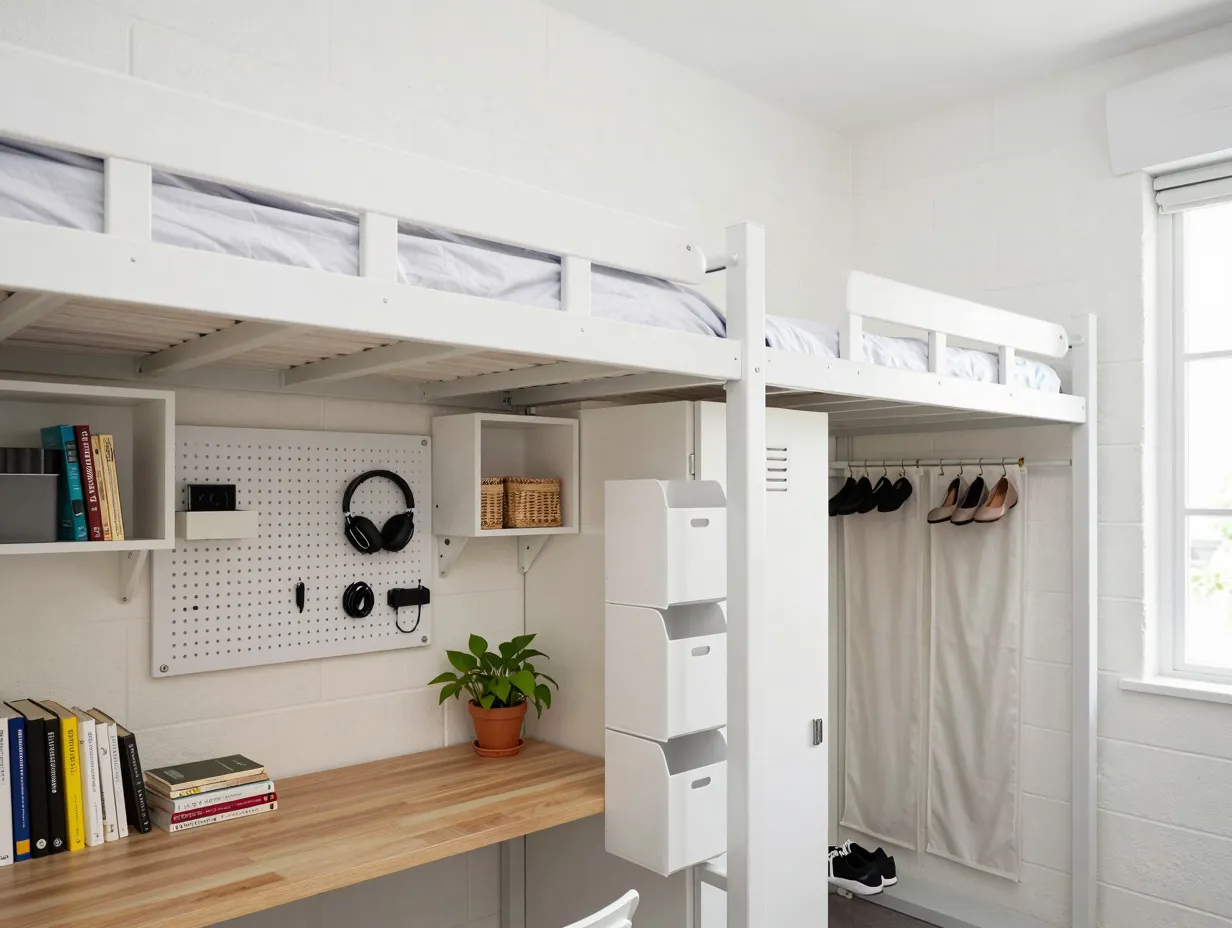
The single biggest mistake most students make is treating the floor as the only usable surface. In a 130-square-foot room, the floor fills up fast. The walls, however, are almost entirely unused, and they extend all the way to the ceiling.
What to do:
- Install floating shelves above the desk for books, supplies, and decorative objects.
- Use over-door organizers on closet and bathroom doors for shoes, toiletries, and accessories.
- Mount a pegboard above the desk to hold headphones, charging cables, scissors, and small baskets.
- Stack cube organizers vertically rather than spreading them horizontally across the floor.
Most dorms prohibit nails or screws, but modern adhesive mounting strips rated for 5 to 16 pounds per strip make wall-mounted shelving genuinely viable [3]. Brands like Command offer strips specifically designed for smooth painted walls, and they remove cleanly at the end of the year.
Going vertical is not just a storage hack, it also draws the eye upward, which makes a small room feel taller and more open. That is a visual trick interior designers use in full-size apartments, and it works just as well in a dorm [8].
2. Choose Dual-Purpose and Modular Furniture to Multiply Functions
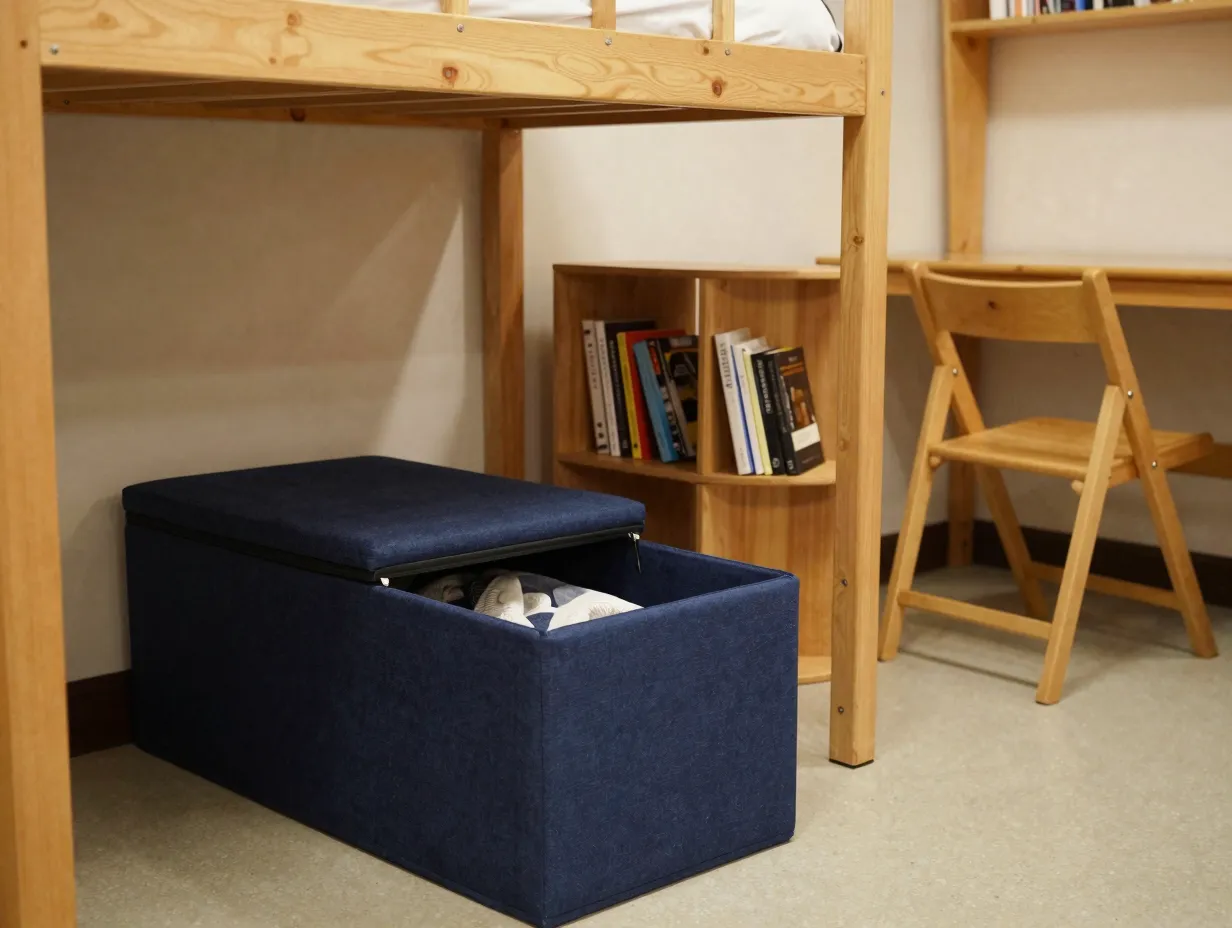
Every piece of furniture in a dorm room should do at least two things. A storage ottoman serves as seating, a footrest, and a place to stash extra blankets. A lofted bed frees up the floor beneath it for a desk, a mini-sofa, or a wardrobe. A folding desk chair tucks away when not in use.
High-impact dual-purpose pieces to consider:
| Furniture Piece | Primary Function | Secondary Function |
|---|---|---|
| Storage ottoman | Seating | Hidden storage |
| Lofted bed frame | Sleeping | Under-bed workspace or wardrobe |
| Folding desk | Study surface | Folds flat against wall when not in use |
| Cube bookshelf | Storage | Room divider between two sides |
| Bed with drawers | Sleeping | Drawer storage replaces dresser |
Modular furniture, pieces that can be reconfigured as your needs change, is especially valuable in a shared room where spatial negotiations happen constantly [5]. A set of stackable cubes can serve as a bookshelf in September and a room divider by November if your relationship with your roommate requires a bit more visual separation.
“The best dorm furniture is furniture that solves two problems at once. If a piece only does one thing, it probably does not earn its floor space.”
3. Use Under-Bed Storage and Command Hook Systems for Hidden, High-Capacity Organization
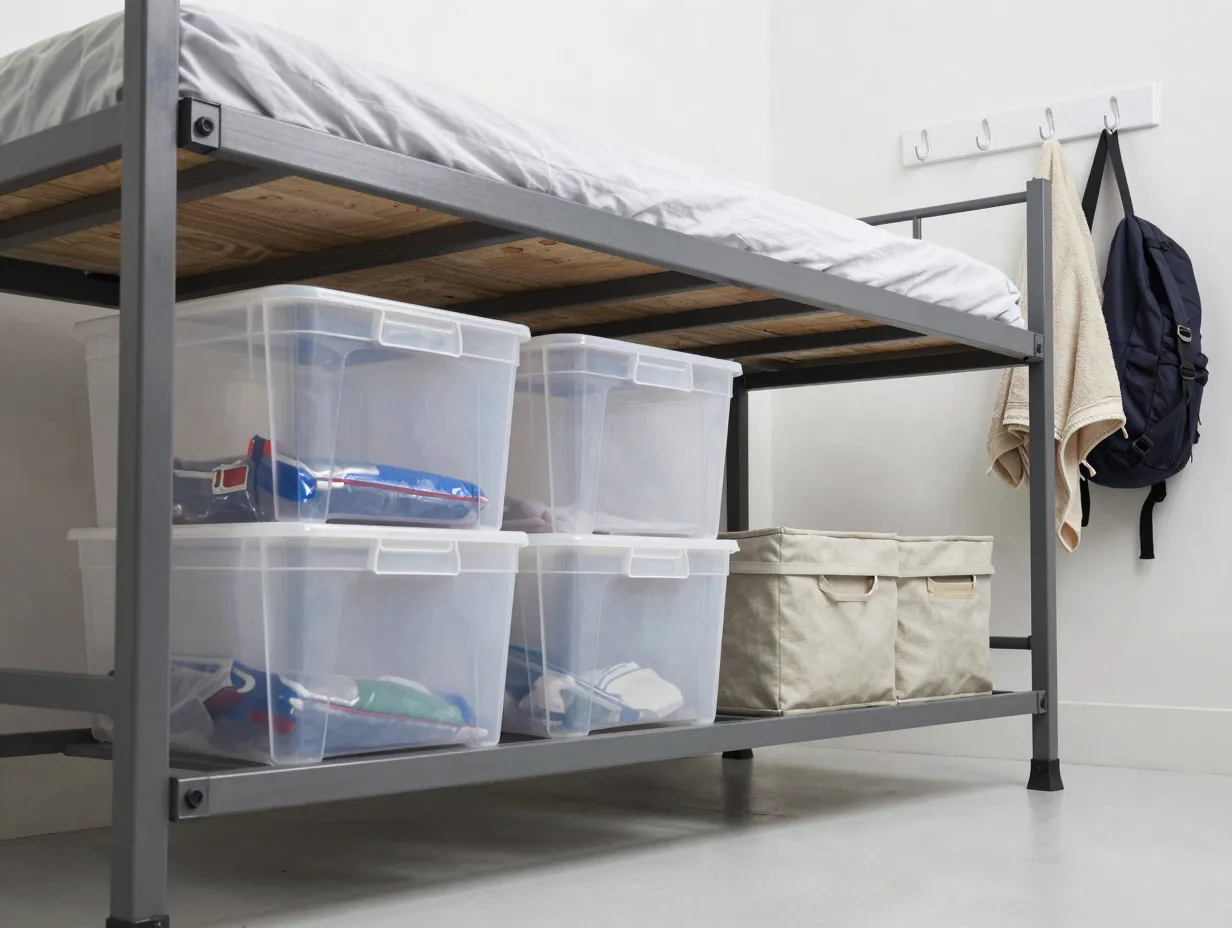
Under the bed is prime real estate. In most dorms, the bed frame can be raised on bed risers to create 12 to 18 inches of clearance, enough for rolling storage bins, flat storage bags, and even small drawers on wheels.
What works best under the bed:
- Vacuum-seal bags for out-of-season clothing (a single queen-size vacuum bag can compress a winter coat and three sweaters into a 2-inch-thick package).
- Rolling plastic drawers for everyday items you want accessible but not visible.
- Flat, lidded bins for shoes, extra bedding, or textbooks not currently in rotation.
Command hooks deserve their own mention here. They are one of the most versatile tools in the dorm room arsenal, and most students underuse them dramatically. A row of Command hooks on the back of the door can hold bags, jackets, towels, and umbrellas. Hooks on the side of a wardrobe can hold jewelry, scarves, and lanyards. A single large hook near the desk can keep a backpack off the floor and off the chair [6].
The combination of under-bed storage and a well-planned Command hook system can effectively eliminate the need for a standalone dresser in many dorm rooms, freeing up significant floor space for other uses [3].
4. Transform Walls With Peel-and-Stick Murals, Temporary Backsplashes, and Digital Wallpaper
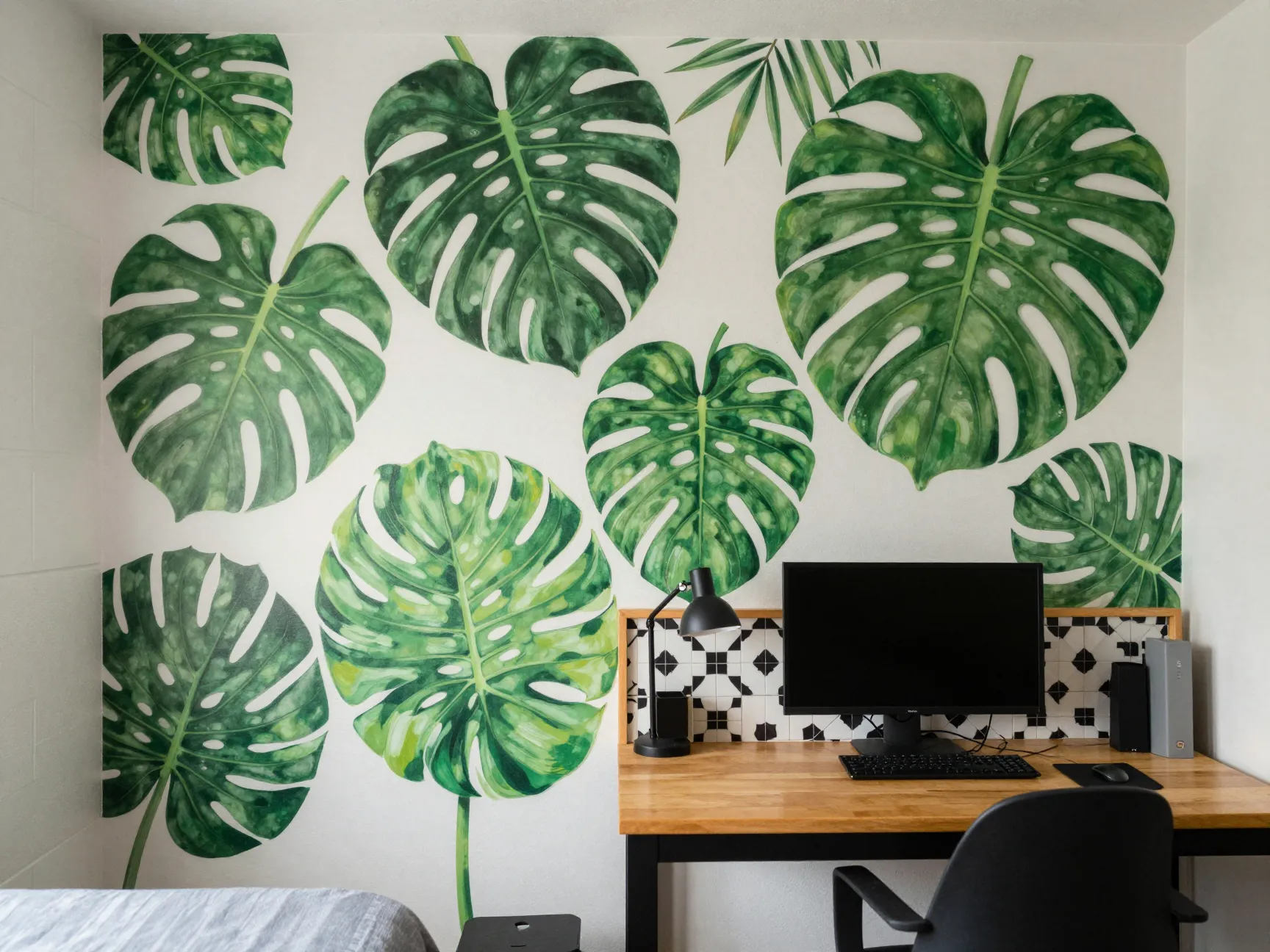
Bare cinder-block walls are the defining aesthetic of the uninspired dorm room. The good news is that the temporary decor market has expanded enormously in recent years, and there are now genuinely beautiful, renter-safe options for every style preference [4].
Temporary wall decor options by style:
- Boho and nature-inspired: Large peel-and-stick botanical murals or forest scenes that cover an entire accent wall.
- Minimalist and modern: Geometric peel-and-stick tiles in black, white, and terracotta for a clean, architectural look.
- Maximalist and expressive: Gallery walls built from removable adhesive frames holding prints, photos, and artwork.
- Tech-forward: Projectors that display digital wallpaper or ambient scenes on a blank wall, no adhesive required.
Peel-and-stick murals have become one of the defining trends in dorm decor, with students using them to create immersive accent walls that serve as both decor and a backdrop for video calls and social media content [1][2]. The key is to measure carefully before ordering and to follow the manufacturer’s instructions for application on painted walls, most require a clean, dry surface and a 30-day cure time after painting.
Temporary backsplash tiles work particularly well around a desk area or a mini-fridge station, adding a design-forward detail that makes the space feel intentional rather than improvised [9].
5. Use Strategic Lighting to Transform Mood and Function

Overhead fluorescent lighting is the enemy of a comfortable dorm room. It is harsh, unflattering, and impossible to dim. The solution is to layer multiple light sources at different heights and color temperatures to create a space that can shift from study mode to relaxation mode with a few switches.
A practical dorm room lighting plan:
- Task lighting: A focused desk lamp with adjustable color temperature (warm for evenings, cool white for studying) is non-negotiable.
- Ambient lighting: String lights draped along the ceiling perimeter or behind a headboard add warmth and visual interest without taking up any surface space.
- Accent lighting: LED strip lights mounted under the bed frame or behind a monitor create a soft backlight that reduces eye strain during late-night screen time.
- Wellness lighting: A light therapy lamp on the desk provides simulated daylight during winter months, which research consistently links to improved mood and focus, particularly relevant in northern climates where winter daylight is limited [10].
Smart LED bulbs that fit standard lamp bases and connect to a phone app allow full color and brightness control without any hardwiring. A warm amber tone in the evening signals to the brain that it is time to wind down, which can meaningfully improve sleep quality in a high-stress academic environment [7].
“Lighting is the fastest, cheapest way to change how a room feels. A $15 set of string lights and a $25 desk lamp can make a cinder-block cell feel like a cozy studio apartment.”
6. Apply Color Zoning and a Curated Aesthetic to Organize Space Visually
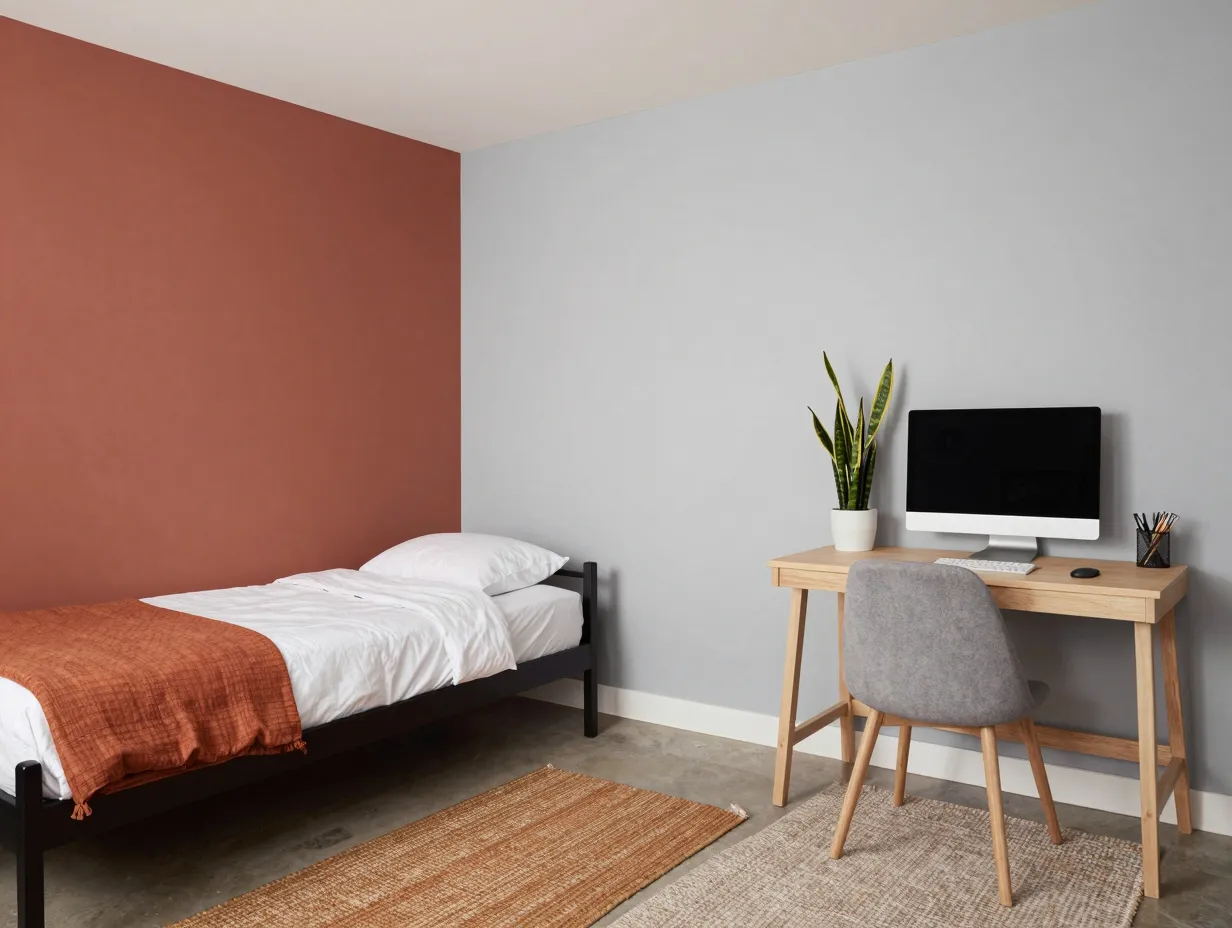
Color zoning is a technique borrowed from interior design where distinct areas of a room are given their own color palette or visual identity. In a dorm room, this serves two purposes: it makes the space feel larger by creating visual depth, and it helps define functional zones (study, sleep, relaxation) even when those zones are only a few feet apart.
How to apply color zoning in a dorm:
- Use a bold accent color on the wall behind the bed (via temporary wallpaper or a fabric tapestry) to anchor the sleep zone.
- Keep the desk area in cooler, more neutral tones, white, light gray, or soft blue, to promote focus.
- Use warm tones (rust, terracotta, amber) in the relaxation corner to signal comfort and downtime.
The “dormcore” aesthetic that has dominated dorm design trends recently leans into this idea of intentional curation [1][2]. Rather than mixing random items, dormcore emphasizes a cohesive visual story, a specific palette, a recurring texture (linen, rattan, velvet), and a consistent mood that runs through every element of the room.
Choosing a single aesthetic framework before you shop prevents the visual chaos that comes from mixing too many styles. Whether your preference is minimalist Scandinavian, warm boho, maximalist eclectic, or clean modern, committing to a direction early saves money and creates a more satisfying result [5].
7. Create Privacy and Flexible Dividers in Shared Rooms
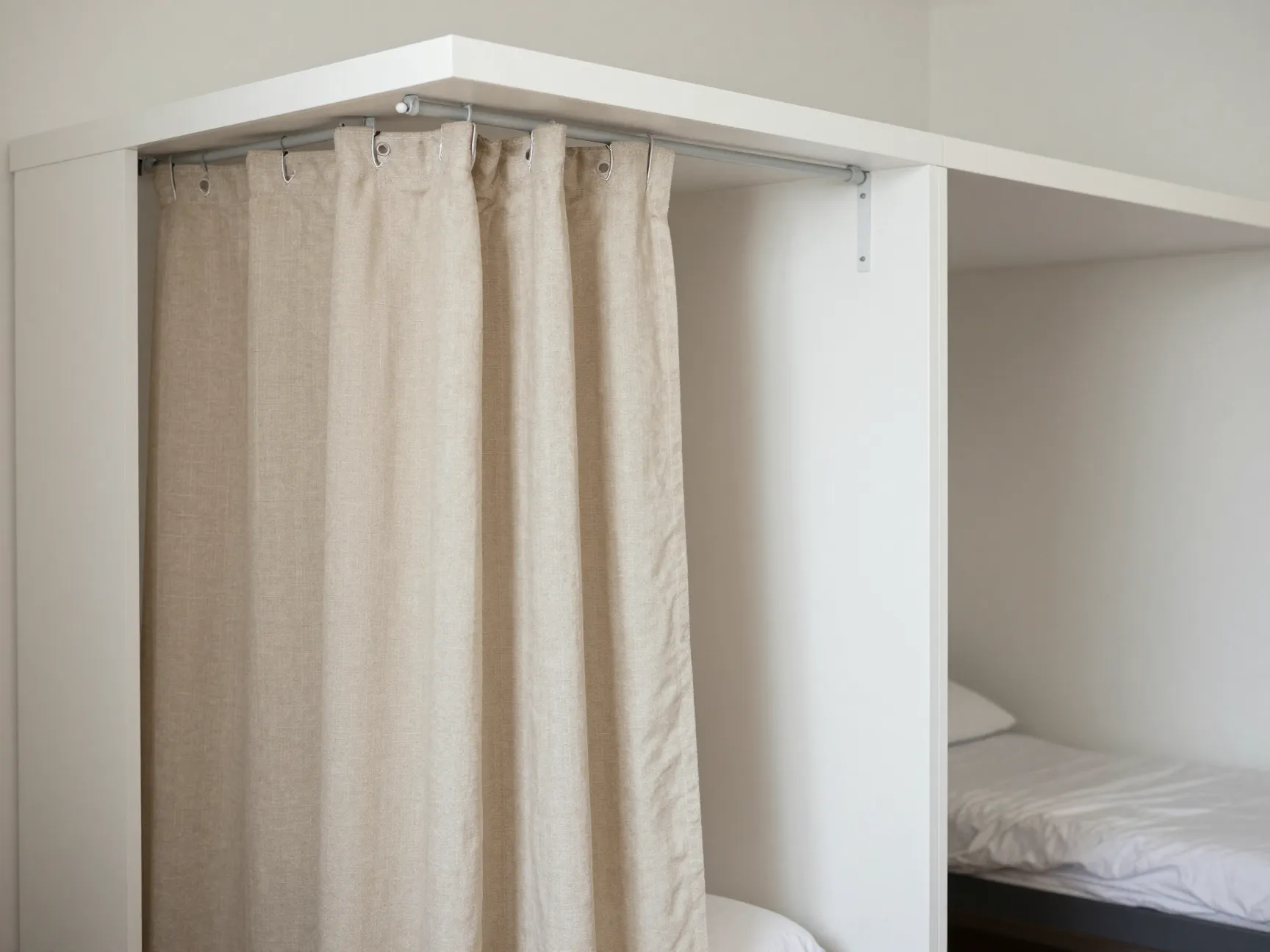
Shared dorm rooms present a unique design challenge: two people with different schedules, different sleep habits, and different aesthetic preferences are expected to coexist in a space barely large enough for one. Privacy solutions are not a luxury in this context, they are a practical necessity.
Effective privacy and divider solutions:
- Curtain dividers: A tension rod mounted near the ceiling with a floor-length curtain panel creates a soft visual and acoustic barrier between two sides of the room. This is one of the most popular solutions among students in shared doubles [8][9].
- Bookshelf dividers: A tall cube shelf placed between the two desk areas creates both a visual barrier and additional storage for both roommates.
- Canopy bed curtains: A canopy frame over the bed with light curtains creates a semi-private sleeping enclosure that blocks light from a roommate’s desk lamp during late-night study sessions.
- Area rugs: Defining each roommate’s zone with a distinct area rug is a low-commitment way to establish visual boundaries without any installation.
The conversation about room division is also a social one. Establishing clear zones early in the semester, and having an honest conversation with your roommate about boundaries, schedules, and shared spaces, prevents the kind of low-grade tension that derails academic performance. The physical design of the room can actually support that conversation by making each person’s territory visually legible [6].
8. Bring in Greenery and Natural Elements for Wellbeing and Style
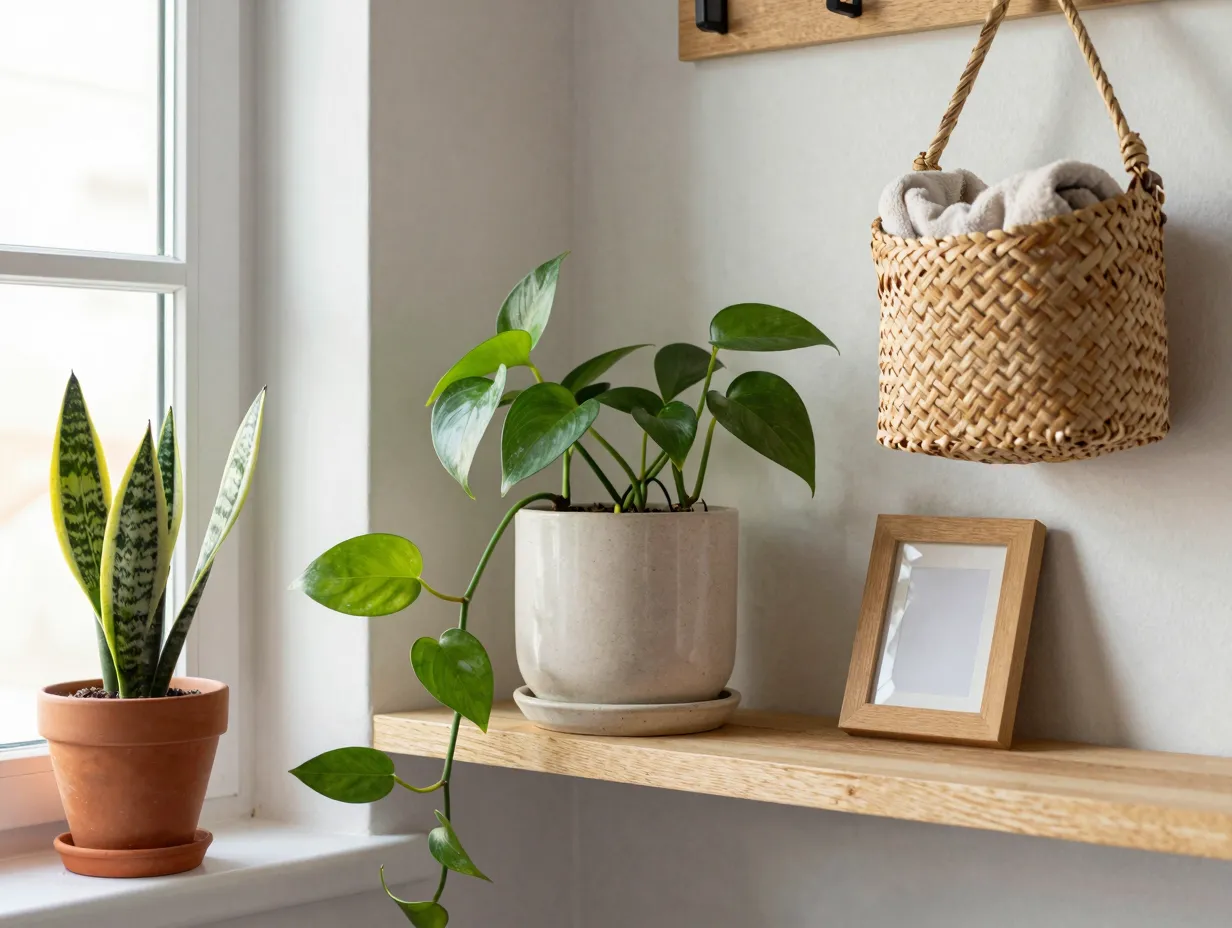
Plants are one of the most consistently underrated dorm room additions. Beyond their obvious aesthetic appeal, research on biophilic design, the idea that humans have an innate need for connection with nature, suggests that even small amounts of indoor greenery can reduce stress, improve air quality, and increase feelings of wellbeing [7][10].
Best plants for dorm rooms:
- Pothos: Nearly indestructible, tolerates low light and irregular watering, and trails beautifully from a shelf.
- Snake plant (Sansevieria): Thrives on neglect, tolerates fluorescent light, and has a clean architectural form.
- Succulents: Small, low-maintenance, and available in dozens of varieties that work well on a windowsill.
- Air plants (Tillandsia): Require no soil, minimal water, and can be displayed in creative ways, hung from a Command hook, nestled in a small bowl, or tucked into a wall-mounted holder.
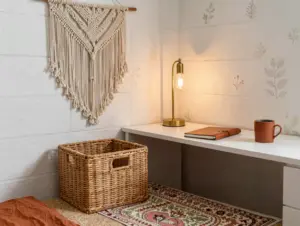
Beyond live plants, natural materials, rattan baskets, wooden frames, linen textiles, jute rugs, add warmth and organic texture that softens the hard edges of a typical dorm room [4][5]. A woven wall hanging above the bed, a wooden desk organizer, and a rattan storage basket under the desk can collectively shift the feel of a room from institutional to intentional without a significant investment.
Natural elements also photograph beautifully, which matters for students who use their room as a background for video calls, content creation, or simply sharing their space on social media [2].
Putting It All Together: A Room That Works and Reflects You
The 8 college dorm room ideas to maximize space and personal style outlined above are most powerful when combined. Vertical storage frees up floor space for modular furniture. Modular furniture supports color zoning. Color zoning is enhanced by strategic lighting. Lighting and greenery together create a biophilic atmosphere that supports academic performance and mental health.
None of these ideas require a large budget or professional installation. Most can be executed with items available at major retailers, and many can be sourced secondhand or DIY’d for a fraction of the retail cost [3][6].
The key is to approach the room as a design problem with two equal constraints: function and identity. A room that is perfectly organized but feels like a hotel will not support the kind of deep rest and focused work that college demands. A room that is beautifully decorated but chronically disorganized will generate low-level stress that compounds over a semester.
The goal is both at once, a space that works hard and feels like home.
Conclusion
Moving into a dorm room does not have to mean surrendering comfort, style, or sanity. The 8 college dorm room ideas to maximize space and personal style covered in this article, from vertical storage and dual-purpose furniture to temporary wallpaper, strategic lighting, and biophilic greenery, give you a complete toolkit for transforming even the smallest, most institutional space into something genuinely livable.
Your actionable next steps:
- Measure your dorm room dimensions before you shop and map out your zones on paper.
- Identify your aesthetic direction (one word: minimalist, boho, modern, maximalist) and let it guide every purchase.
- Prioritize vertical storage first, it has the highest return on investment in a small space.
- Invest in a quality desk lamp with adjustable color temperature before anything decorative.
- Have the room-division conversation with your roommate early, and use physical design elements to reinforce the boundaries you agree on.
- Add at least one live plant, start with a pothos or snake plant if you have never kept plants before.
The best dorm room is not the one with the most stuff. It is the one that makes you feel capable, comfortable, and genuinely at home, even 800 miles from where you grew up.
References
[1] 69 Dorm Room Trend 2025 Modern Dormcore Ideas – https://my-inspo.com/69-dorm-room-trend-2025-modern-dormcore-ideas/
[2] 64 Dorm Room Aesthetic Designs 2025 Modern College – https://my-inspo.com/64-dorm-room-aesthetic-designs-2025-modern-college/
[3] 45 Best Dorm Room Ideas 2025 Trendy Cozy Aesthetic Styles For College Decor Storage Design – https://nimorix.com/45-best-dorm-room-ideas-2025-trendy-cozy-aesthetic-styles-for-college-decor-storage-design/
[4] Dorm Decor Trends – https://1075koolfm.com/dorm-decor-trends/
[5] 34 Dorm Room Decor Ideas 2025 For College Apartments Boho Vintage Diy And Budget Styles – https://nimorix.com/34-dorm-room-decor-ideas-2025-for-college-apartments-boho-vintage-diy-and-budget-styles/
[6] Decorate College Dorm Room Adorable Easy – https://grownandflown.com/decorate-college-dorm-room-adorable-easy/
[7] Dorm Room Ideas 2025 Creative Themes – https://inspiration-for-home.com/dorm-room-ideas-2025-creative-themes/
[8] 61 Dorm Room Designs 2025 Student Style – https://my-inspo.com/61-dorm-room-designs-2025-student-style/
[9] 64 Unique Dorm Room Design 2025 Modern Decor – https://my-inspo.com/64-unique-dorm-room-design-2025-modern-decor/
[10] Dorm Room Decorating Ideas Fall 2025 – https://homeandtexture.com/dorm-room-decorating-ideas-fall-2025/