8 LED Panel Design Ideas to Illuminate Your Living Rooms
A single lighting decision can raise a home’s perceived value by thousands of dollars, yet most homeowners still rely on one flat overhead bulb to carry the entire room. That gap between what lighting can do and what most living rooms actually have is exactly where LED panel design steps in. This guide on 8 LED Panel Design Ideas to Illuminate Your Living Rooms walks you through the most effective, trend-forward approaches that designers are specifying in 2026, from warm cove installations to smart tunable systems that shift with your daily rhythm.
Disclosure: This post contains affiliate links. As an Amazon Associate, we earn from qualifying purchases, and at no extra cost to you.
Whether you are renovating a dated space or simply tired of harsh overhead glare, these ideas will give you a clear, practical roadmap.
Key Takeaways
- Warm white LED panels in the 2700-3000K range create a cozy, residential feel that cold office-style lighting cannot replicate [1][2]
- Indirect cove and perimeter LED installations reduce glare, emphasize architecture, and make ceilings appear taller [1][4]
- Tunable white LED panels that shift color temperature throughout the day support both wellness and versatile scene-setting [2][7]
- High CRI (90+) is non-negotiable for living areas where skin tones and furnishing colors must look their best [1][3]
- Layering multiple LED panel types, ambient, accent, and task, produces the richest, most professional result
Why LED Panels Are Transforming Living Room Lighting in 2026
Walk into any well-lit living room designed in the last two years and you will notice something immediately: the light feels warm, diffused, and intentional. It does not come from one source. It wraps around the room. That quality is almost always the result of thoughtful LED panel placement combined with a layered lighting strategy.
Multiple 2026 trend reports confirm that the defining characteristic of modern living room lighting is warmth, specifically, warm white LEDs in the 2700-3000K color temperature range that create a lived-in, cozy atmosphere rather than the cold, institutional brightness of older fluorescent or cool-white LED fixtures [1][2][4]. Designers are also insisting on a Color Rendering Index (CRI) of 90 or above for living spaces, so that fabrics, artwork, and skin tones all look natural and vibrant under LED light [1][3].
The shift is also functional. Overhead LED panels are now used at a low ambient level and kept dimmable, while lamps and accent fixtures carry the visual focus [1][2][7]. The result is a room that feels alive at every hour of the day.
The 8 LED panel design ideas to illuminate your living rooms covered below build on these principles. Each idea is grounded in current design practice and can be adapted to a range of budgets and room sizes.
8 LED Panel Design Ideas to Illuminate Your Living Rooms
1. Warm Ambient Flush LED Ceiling Panels
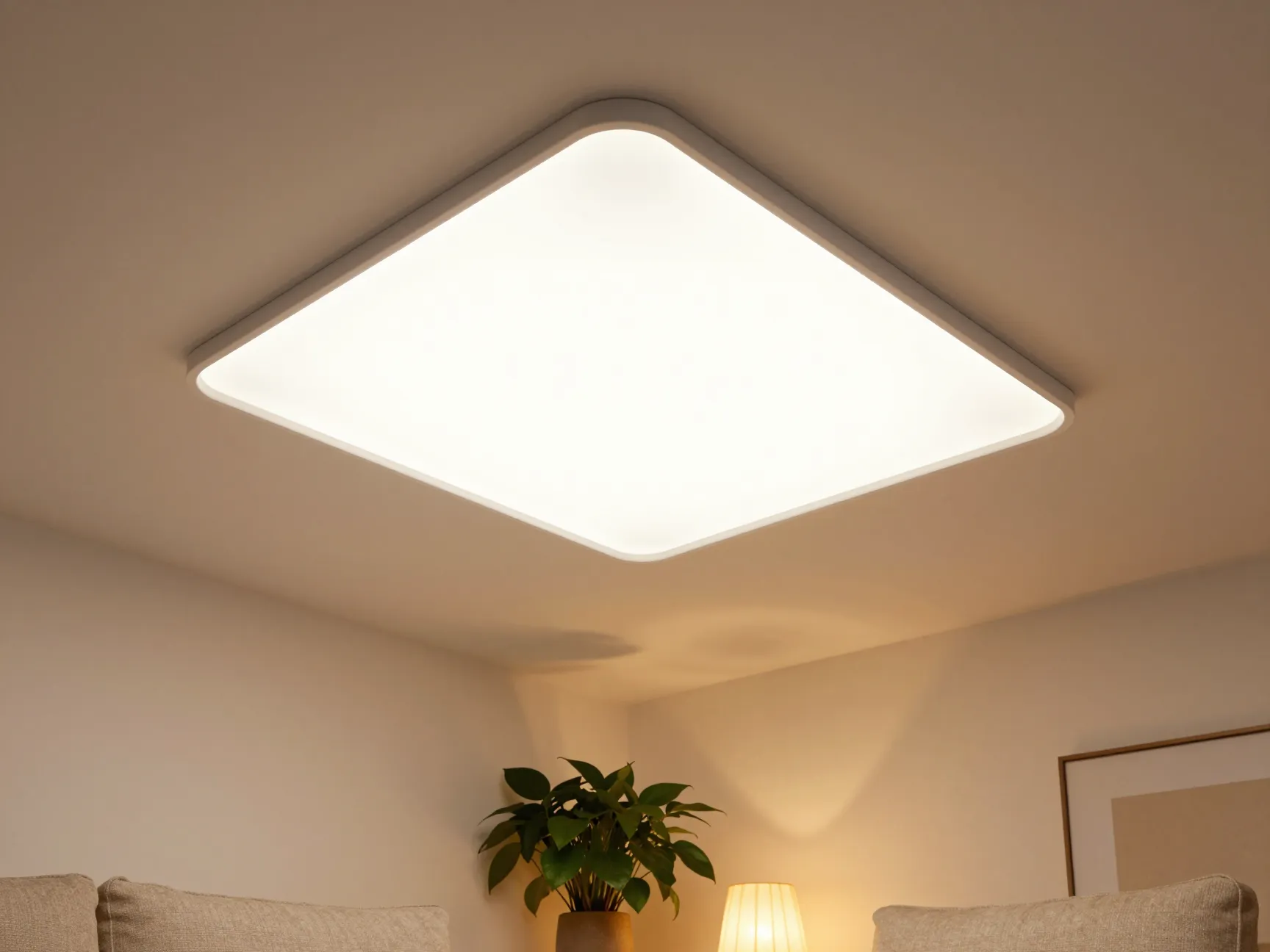
The foundation of any well-lit living room is a quality ambient layer, and warm flush LED ceiling panels are the most straightforward way to achieve it. Choose panels rated between 2700K and 3000K for a glow that feels residential rather than commercial [1][2][10]. Pair them with a CRI of 90 or higher so the colors in your room, your sofa upholstery, your artwork, your plants, all render accurately under the light [1][3].
The key upgrade most homeowners overlook is dimmability. A panel that dims smoothly from 100% down to 10% gives you full control over the mood of the room at any time of day. Designers consistently recommend keeping overhead panels at a low ambient level during evenings and letting floor lamps and accent lights do the heavy lifting [1][2][7].
What to look for:
- Color temperature: 2700K, 3000K
- CRI: 90 or above
- Dimmer compatibility: trailing-edge or universal dimmer
- Panel finish: matte white or brushed metal to reduce glare
I replaced a single 4000K overhead fixture in my own living room with a 2800K dimmable flush panel and the difference was immediate. The room felt ten degrees warmer without changing a single piece of furniture.
2. Indirect Cove LED Panels for a Soft Ceiling Glow
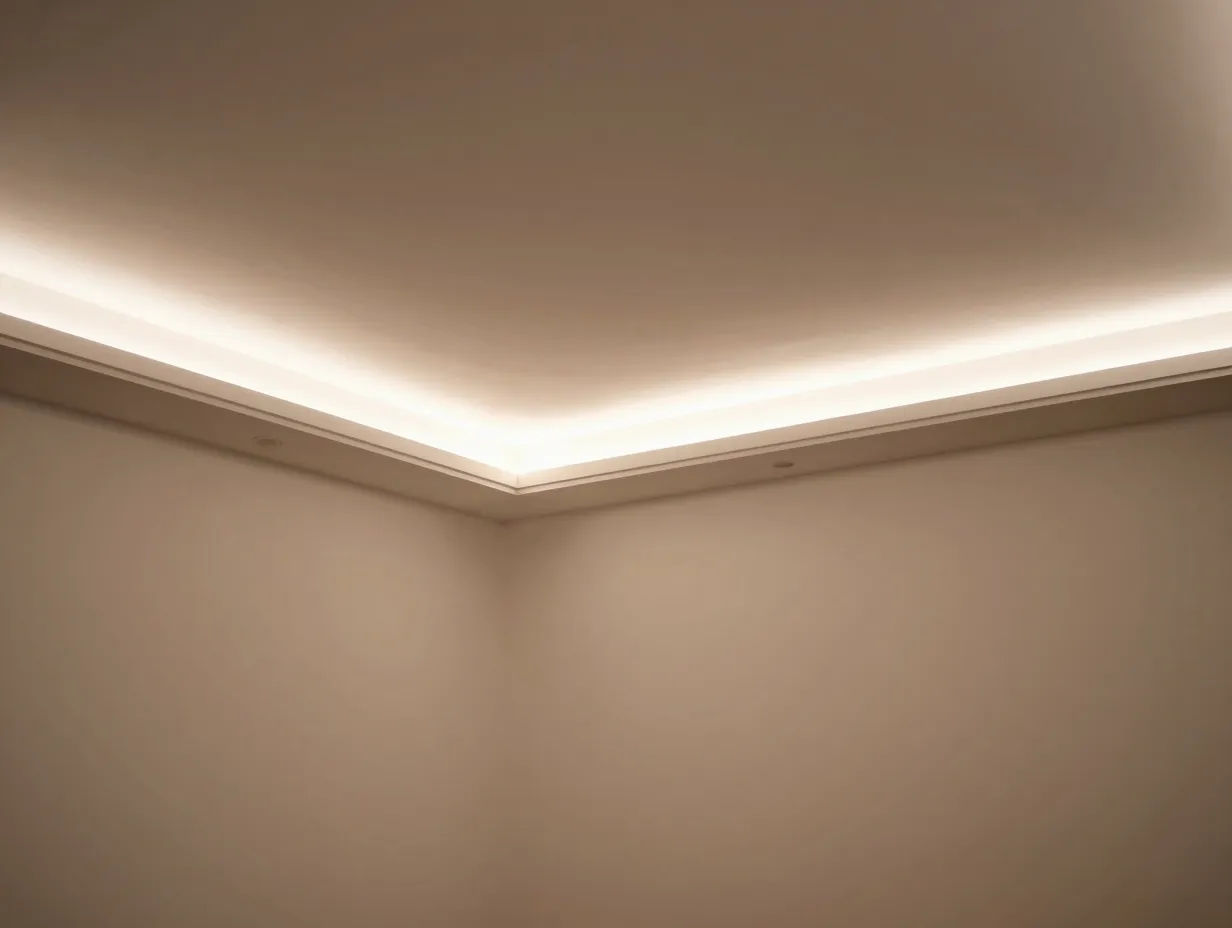
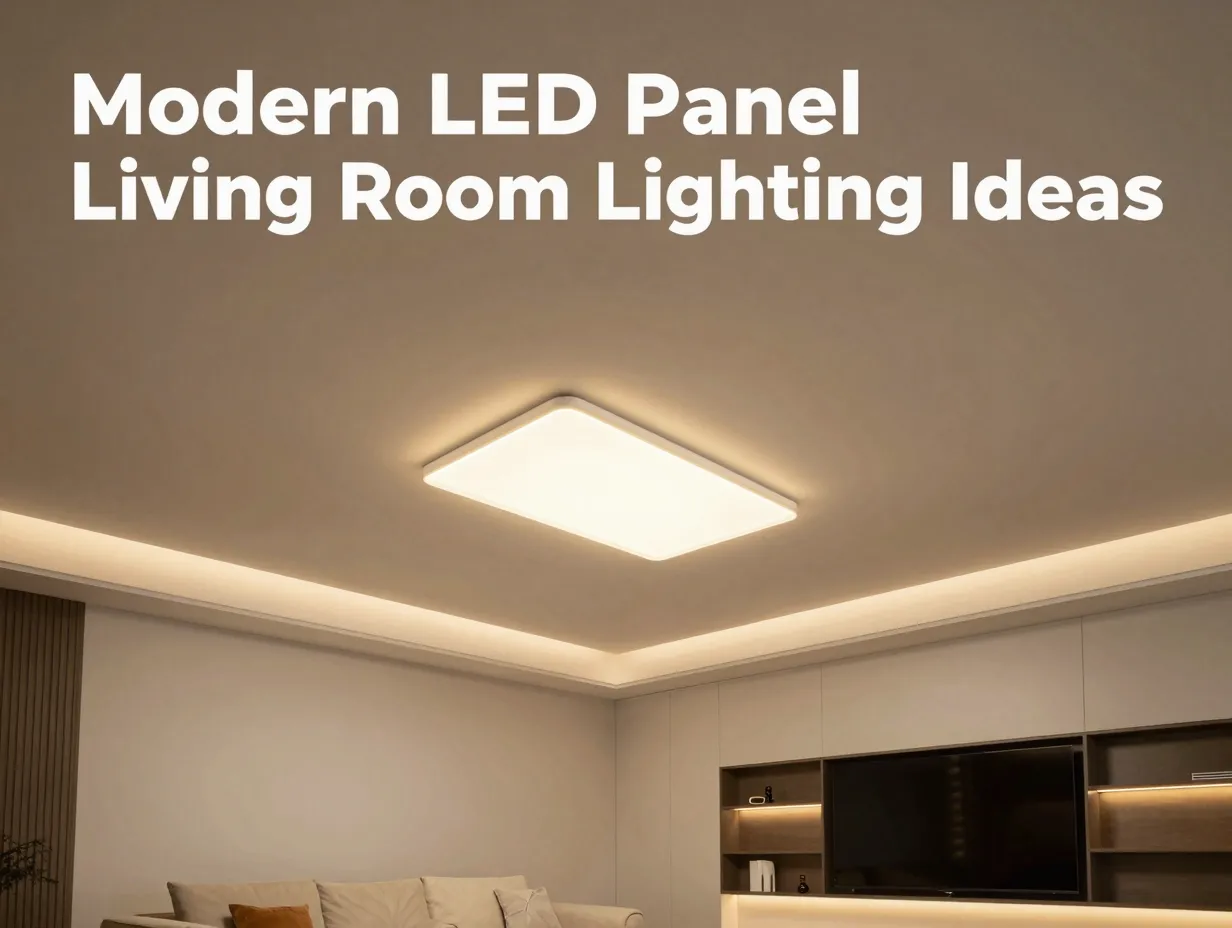
Hidden LED channels and panel-like linear strips installed inside ceiling coving or behind crown molding are one of the most powerful tools available to living room designers in 2026 [2][4]. The light source itself is never visible. Instead, you see a continuous, soft band of glow that wraps the perimeter of the ceiling, making the room feel larger and the ceiling feel higher [1][2][4][7].
This indirect panel approach eliminates glare almost entirely. Because the LED strip or linear panel faces upward or outward toward the wall rather than downward toward your eyes, there is no harsh point of light to squint at. The architecture of the room is emphasized instead, cornices, ceiling planes, and wall textures all gain subtle definition [1][4].
“Indirect cove lighting is one of the most underused tools in residential design. Once homeowners experience it, they never go back to bare overhead fixtures.”, A sentiment echoed across multiple 2026 design guides [2][4]
Installation tips:
- Use a continuous LED strip or linear panel rated at 2700K for the warmest possible glow
- Set the channel depth so the strip is hidden from normal viewing angles
- Add a dedicated dimmer circuit so cove lighting can be adjusted independently from other fixtures
- For a seamless look, use aluminum extrusion channels with diffuser covers
3. Tunable White LED Panels for Circadian Wellness
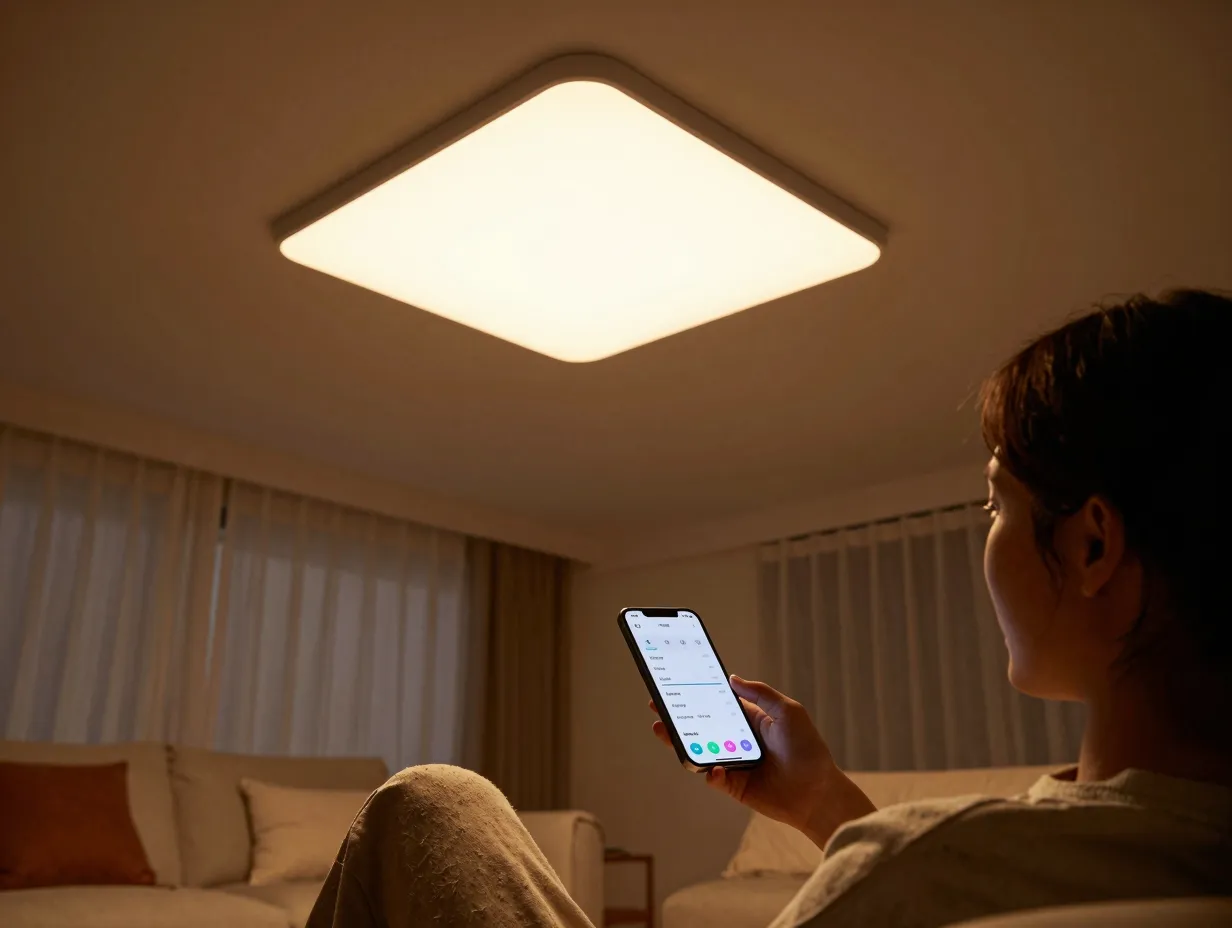
Tunable white LED technology is one of the most significant living room lighting developments of 2026 [2][7][11]. These panels and strips can shift their color temperature across a wide range, from a brisk 3000K in the morning to a deeply warm 1800-2200K in the evening, mimicking the natural arc of daylight and candlelight [2][7].
The wellness benefits are real. Cooler color temperatures in the morning and early afternoon support alertness and daytime activity. As the evening approaches and you shift the panel to 2000K or below, the warm amber tone signals to your body that it is time to wind down [2][7]. This is not a gimmick; it is backed by circadian lighting research and increasingly specified by interior designers who work on health-conscious residential projects.
From a design standpoint, tunable panels also give you scene flexibility without adding more fixtures. A single ceiling panel can serve as a bright working light at noon, a neutral hosting light at 6 PM, and a near-candlelight ambient source at 10 PM, all controlled from one app or wall panel [1][2][7].
Tunable white LED panel schedule example:
| Time of Day | Recommended Color Temp | Mood / Activity |
|---|---|---|
| 7 AM, 12 PM | 3000K | Morning energy, focus |
| 12 PM, 5 PM | 2700K | Relaxed daytime activity |
| 5 PM, 8 PM | 2400K | Hosting, dinner, social |
| 8 PM, 11 PM | 1800-2200K | Wind-down, movie night |
4. Recessed LED Panel Grids for a Clean, Minimalist Ceiling
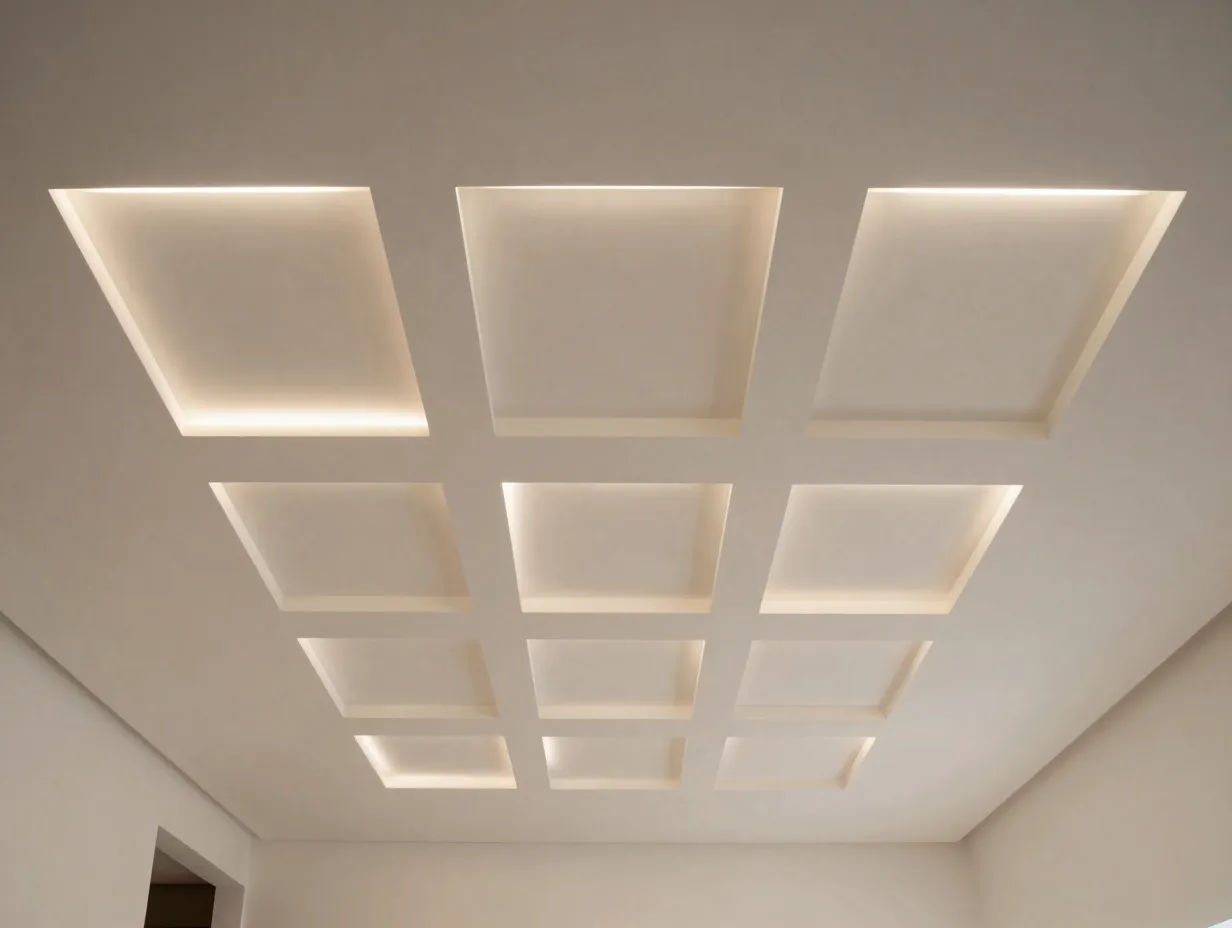
For living rooms with a contemporary or minimalist aesthetic, a recessed LED panel grid offers a clean, architectural solution. Instead of one large central fixture, a series of slim recessed panels are distributed evenly across the ceiling, creating a uniform wash of light without any single dominant source.
The visual effect is calm and uncluttered. The ceiling reads as a flat, uninterrupted plane punctuated only by the subtle geometry of the panel frames. When all panels are set to the same warm color temperature and dimmed to a low ambient level, the room feels curated and intentional [1][2].
Design considerations:
- Space panels evenly, typically 4 to 6 feet apart, to avoid hot spots
- Use square or rectangular panels with flush, trimless frames for the cleanest look
- Ensure all panels are on the same dimmer circuit for consistent control
- Select panels with an integrated diffuser to prevent visible LED dots or stripes
This approach works especially well in open-plan living and dining spaces where a single overhead fixture would be inadequate for the square footage.
5. Geometric Backlit LED Wall Panels as Accent Features
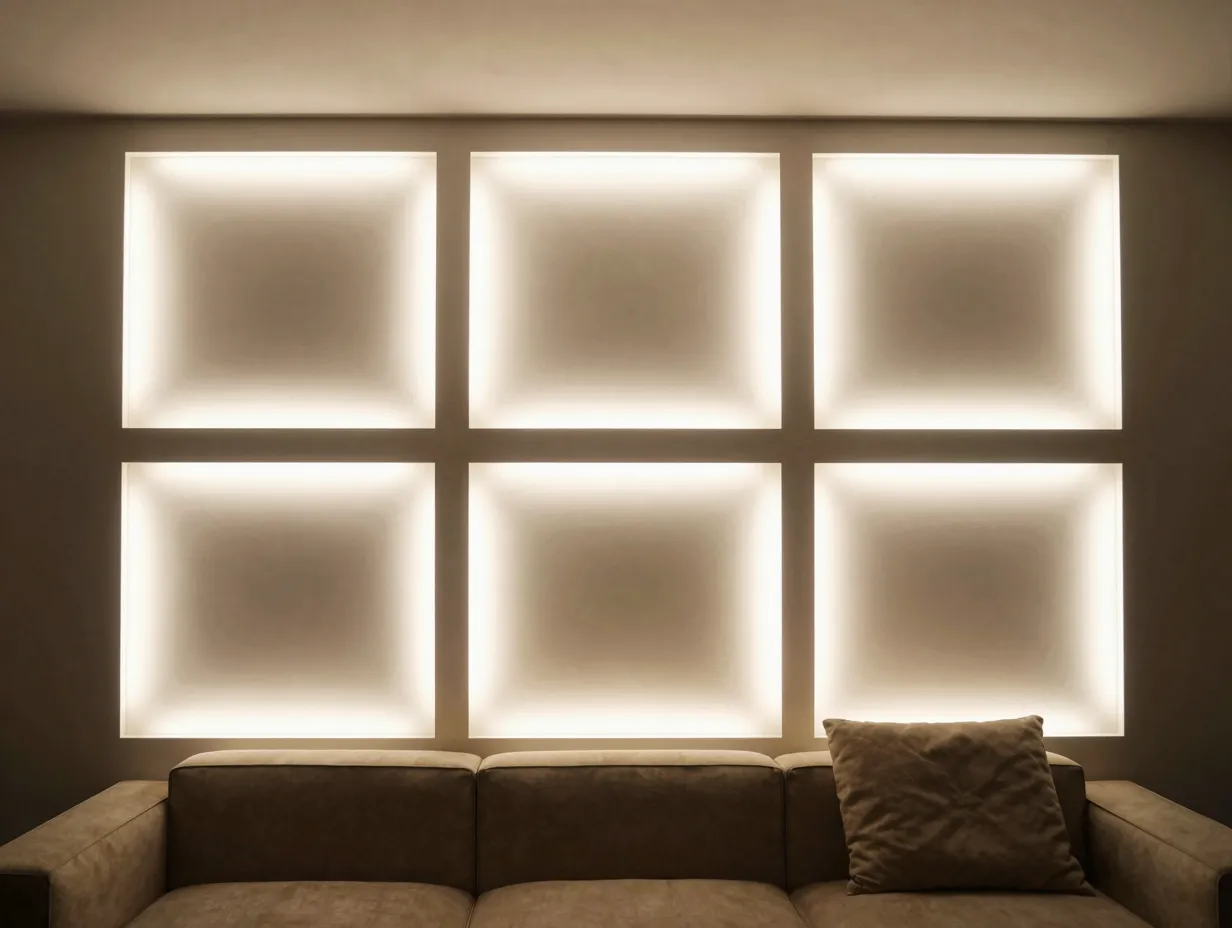
LED panels are not limited to ceilings. Geometric backlit wall panels have become a statement design element in 2026 living rooms, functioning simultaneously as artwork, accent lighting, and architectural detail [3][8].
These panels, typically rectangular or square modules arranged in a grid or asymmetric composition, are mounted flush to the wall with LED strips behind frosted acrylic or glass. The result is a glowing, sculptural surface that adds depth and visual interest to an otherwise flat wall.
The design flexibility is considerable. You can arrange panels in a symmetrical grid behind a sofa for a dramatic focal point, or create an asymmetric composition along a feature wall. Color temperature should match the rest of the room’s ambient lighting, 2700K to 3000K, so the accent panels feel integrated rather than jarring [1][2].
Where to use geometric backlit panels:
- Behind the sofa on the main feature wall
- Flanking a fireplace or media unit
- Along a hallway wall that opens into the living room
- As a headboard alternative in open-plan loft spaces
6. Linear LED Panel Strips Along Shelving and Media Units
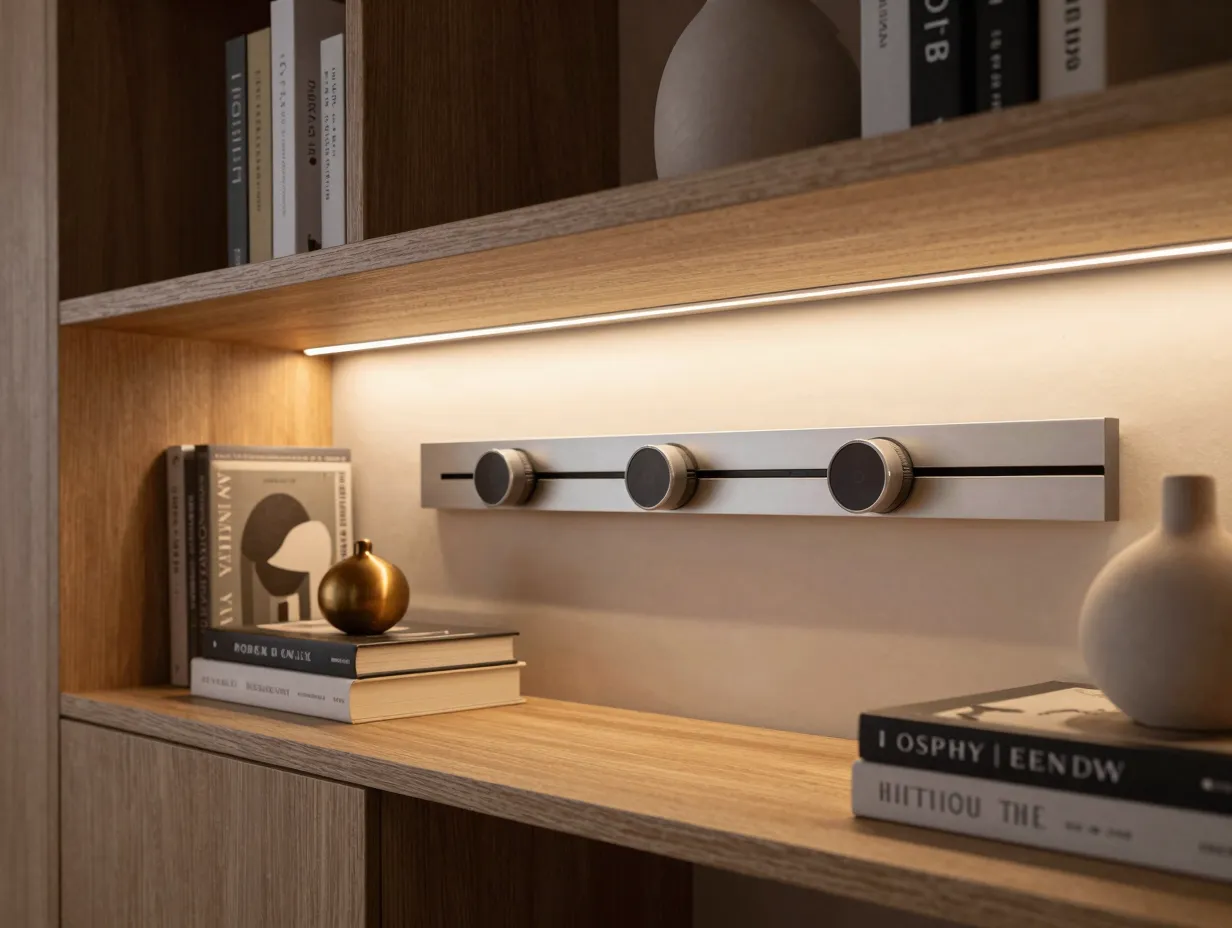
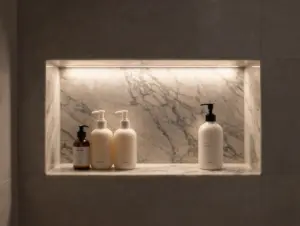
Built-in shelving, media units, and entertainment walls offer a natural opportunity to integrate LED panel strips as both task and accent lighting. Linear LED panels mounted along the underside of shelves or inside recessed niches cast a warm, directed glow onto the objects below, books, plants, decorative objects, and media equipment all benefit from this treatment.
This approach is practical as well as decorative. The LED strips provide enough light to see shelf contents clearly without needing to turn on overhead fixtures, which is particularly useful during evening viewing sessions when you want the room dim but still functional [1][7].
From a design perspective, the warm glow emanating from shelving units adds a layered, three-dimensional quality to the room. The light draws the eye to curated objects and creates a sense of depth that flat overhead lighting cannot achieve [1][2][4].
Specification tips:
- Use a slim aluminum extrusion channel with a frosted diffuser for a clean, professional finish
- Choose a strip rated at 2700K to match the room’s ambient panels
- Add individual dimmer control so shelf lighting can be adjusted independently
- For media units, ensure the strip is positioned to avoid screen glare
7. Smart LED Panel Systems with Scene Control
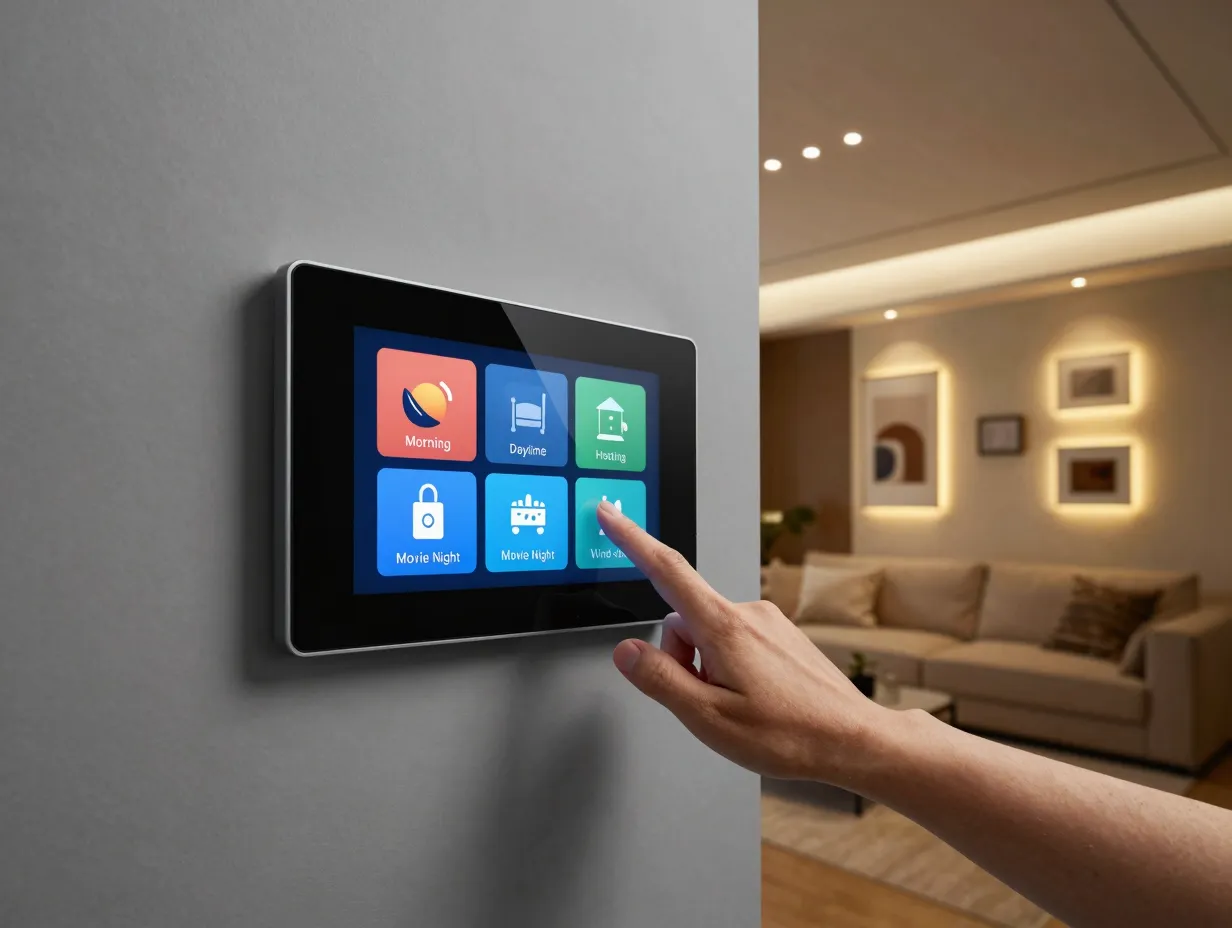
The most versatile living room lighting setups in 2026 combine multiple LED panel types, ambient ceiling panels, cove strips, accent wall panels, and shelf strips, into a single smart control system [1][2][7]. Scene control allows you to switch between pre-programmed lighting configurations with one tap, one voice command, or an automated schedule.
Common scenes for a living room include:
- Morning, ceiling panels at 3000K and 70% brightness, cove lighting off
- Daytime, ceiling panels at 2700K and 50%, shelf strips on for task use
- Hosting, all panels at 2700K and 60%, cove lighting on at 40%
- Movie night, ceiling panels off, cove lighting at 10%, backlit wall panels at 20%
- Wind-down, tunable panels shifted to 1800K at 15%, all accents off
Integrating tunable drivers into ceiling panels and linear accents means users can change scenes without touching individual fixtures [1][2][7]. Most smart LED systems are compatible with major home automation platforms, making them straightforward to add to an existing setup.
A single smart LED panel system can replace the need for four or five separate fixtures while giving you more scene flexibility than any combination of traditional lights could offer.
8. LED Panel Coffers and Tray Ceiling Installations
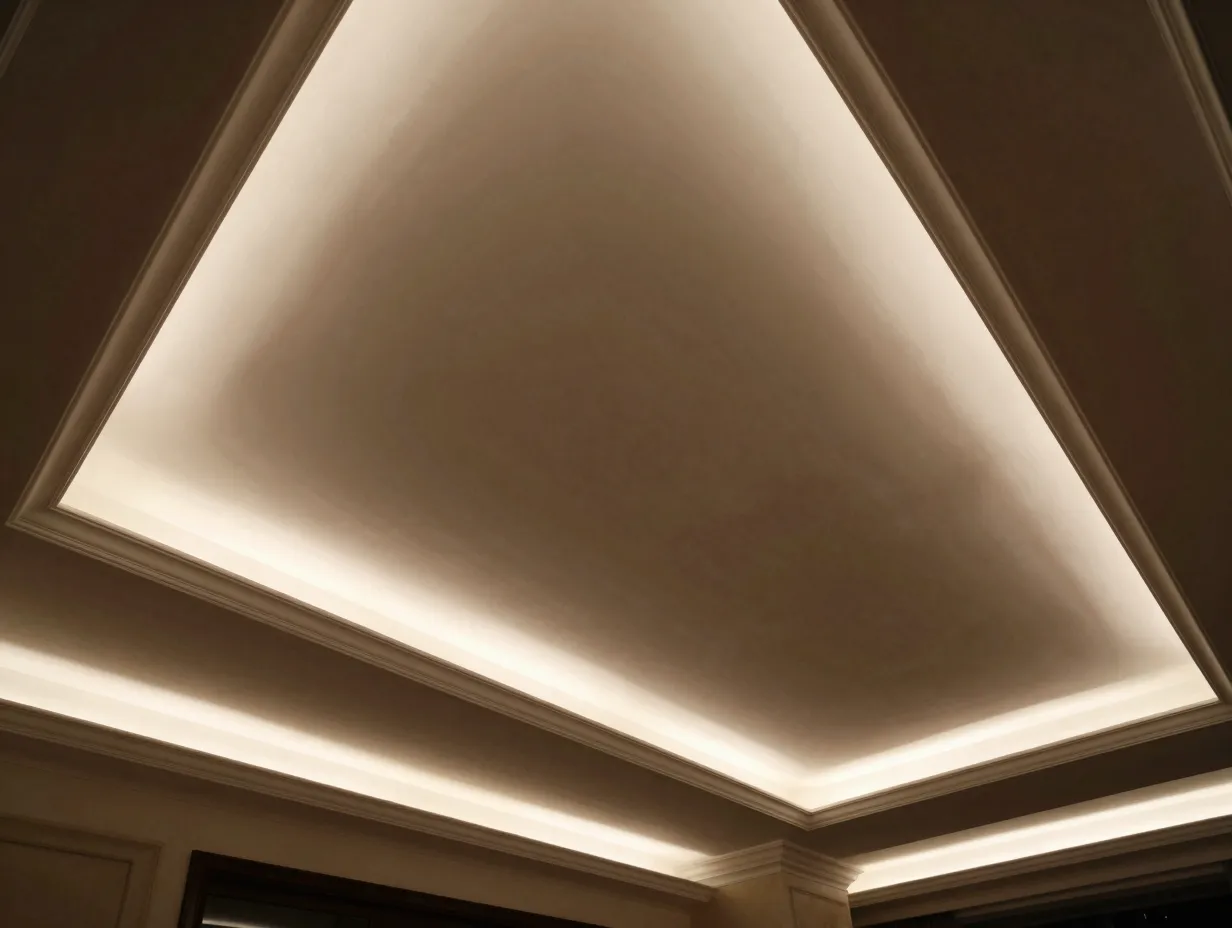
Coffered and tray ceilings are architectural features that LED panels were practically made for. By installing LED strips or slim linear panels inside the recessed channels of a coffered ceiling or along the inner ledge of a tray ceiling, you create a layered, glowing ceiling plane that adds enormous visual depth to a living room.
The light from a tray ceiling installation travels upward and outward, bouncing off the upper ceiling plane and returning as a diffused, shadow-free ambient glow [1][2][4]. The effect is similar to cove lighting but more architectural, the ceiling itself becomes the light source, and the structural geometry of the coffer or tray is dramatically emphasized.
This idea works at multiple budget levels. A simple single-level tray ceiling with a warm LED strip along the inner ledge is an achievable weekend project for a confident DIYer. A full coffered ceiling with integrated linear panels in every channel is a more involved installation but produces a result that rivals high-end hotel lobbies and designer showrooms.
Key design choices:
- Use 2700K strips for the warmest, most residential atmosphere [1][10]
- Add a dimmer so the ceiling glow can be adjusted from subtle to dramatic
- Consider a diffuser channel to prevent visible LED hotspots along the strip
- For coffered ceilings, ensure each coffer channel is wired to the same dimmer circuit for a uniform effect
How to Layer These 8 LED Panel Design Ideas Effectively
Using one of these ideas in isolation will improve your living room. Using three or four together, layered intentionally, will transform it.
The standard approach recommended by lighting designers is to think in three layers:
- Ambient layer, warm flush panels or cove installations providing the base level of light (Ideas 1, 2, 8)
- Accent layer, geometric wall panels, shelf strips, and tray ceiling installations adding depth and visual interest (Ideas 5, 6, 8)
- Task layer, directed LED panels or strips providing functional light for reading, working, or media use (Ideas 4, 6)
Tunable white panels (Idea 3) and smart scene control (Idea 7) operate across all three layers, allowing the entire system to shift in response to the time of day and the activity at hand [1][2][7].
A practical layering sequence:
- Start with the ambient layer: install warm dimmable ceiling panels first
- Add cove or tray ceiling lighting as the secondary ambient source
- Introduce accent panels on the feature wall or behind shelving
- Connect everything to a smart dimmer system with pre-set scenes
- Fine-tune color temperature and brightness levels over several evenings until the room feels right
The goal is not maximum brightness. It is maximum control, the ability to make the room feel exactly right for every moment of the day.
Common Mistakes to Avoid
Even well-intentioned LED panel installations can go wrong. Here are the most frequent errors and how to sidestep them:
- Choosing the wrong color temperature. A 4000K or 5000K panel in a living room will feel clinical and cold. Stick to 2700K, 3000K for all ambient and accent panels [1][2][10].
- Skipping the dimmer. A non-dimmable LED panel is a fixed, inflexible light source. Always specify dimmable drivers and compatible dimmers.
- Ignoring CRI. Low-CRI panels (below 80) make colors look flat and skin tones look sallow. Specify CRI 90+ for all living room panels [1][3][11].
- Installing only one circuit. If all your LED panels are on a single switch, you lose the ability to layer light independently. Wire ambient, accent, and cove lighting on separate circuits.
- Overlooking glare. Panels without diffusers or panels mounted at the wrong angle can create uncomfortable glare. Use frosted diffusers and position panels carefully relative to seating areas.
Conclusion
The 8 LED panel design ideas to illuminate your living rooms covered in this guide share a common thread: they all prioritize warmth, control, and intentionality over raw brightness. The best-lit living rooms in 2026 are not the brightest ones. They are the ones where every light source has a purpose, every panel is set to the right temperature, and the entire system responds fluidly to how the room is being used.
Your actionable next steps:
- Audit your current living room lighting. Identify whether you have an ambient layer, an accent layer, and a task layer, or just one overhead fixture trying to do all three jobs.
- Replace any cool-white (4000K+) panels with warm 2700K, 3000K alternatives and add dimmable drivers.
- Choose one of the eight ideas above that fits your room’s architecture, cove lighting for high ceilings, tray ceiling strips for coffered spaces, geometric wall panels for feature walls.
- Wire all new panels to independent dimmer circuits and, if budget allows, connect them to a smart scene control system.
- Evaluate the result over several evenings at different times and adjust color temperature and brightness until the room feels exactly right.
Lighting is the one design element that changes every other element in the room. Get the LED panels right, and everything else, the furniture, the art, the architecture, will look better for it.
References
[1] Living Room Lighting Trends 2026 Warm Layered Dimmable Light – https://lumencorner.com/blog/living-room-lighting-trends-2026-warm-layered-dimmable-light
[2] Living Room Lighting Trends 2026 – https://lumencorner.com/blog/living-room-lighting-trends-2026
[3] Whats The 2026 Living Room Lighting Trend Bold Metallics And Sculptural Layers – https://www.reimaginehome.ai/blogs/whats-the-2026-living-room-lighting-trend-bold-metallics-and-sculptural-layers
[4] Modern Living Room Lighting Trends 2026 – https://www.simplelighting.co.uk/blogs/guides/modern-living-room-lighting-trends-2026
[7] Lighting Trends 2026 – https://www.veranda.com/decorating-ideas/advice-from-designers/a69514939/lighting-trends-2026/
[8] Lighting Trends 2026 Match Modern Furniture – https://www.povison.com/blog/inspiration/lighting-trends-2026-match-modern-furniture.html
[10] Top Lighting Trends Of 2026 You Ll Actually Want In Your Space – https://sunco.com/blogs/sunco-blog/top-lighting-trends-of-2026-you-ll-actually-want-in-your-space
[11] (Referenced via lumencorner.com sources above)