9 Front Wall Tiles Design Ideas for Your House Exterior
A home’s front wall is the first thing every visitor, neighbor, and potential buyer sees, and research consistently shows that curb appeal can influence perceived property value by up to 10 percent before anyone steps through the door. Yet most homeowners spend months agonizing over interior finishes while treating the exterior facade as an afterthought. That gap in attention is exactly where the biggest visual gains are hiding.
Disclosure: This post contains affiliate links. As an Amazon Associate, we earn from qualifying purchases, and at no extra cost to you.
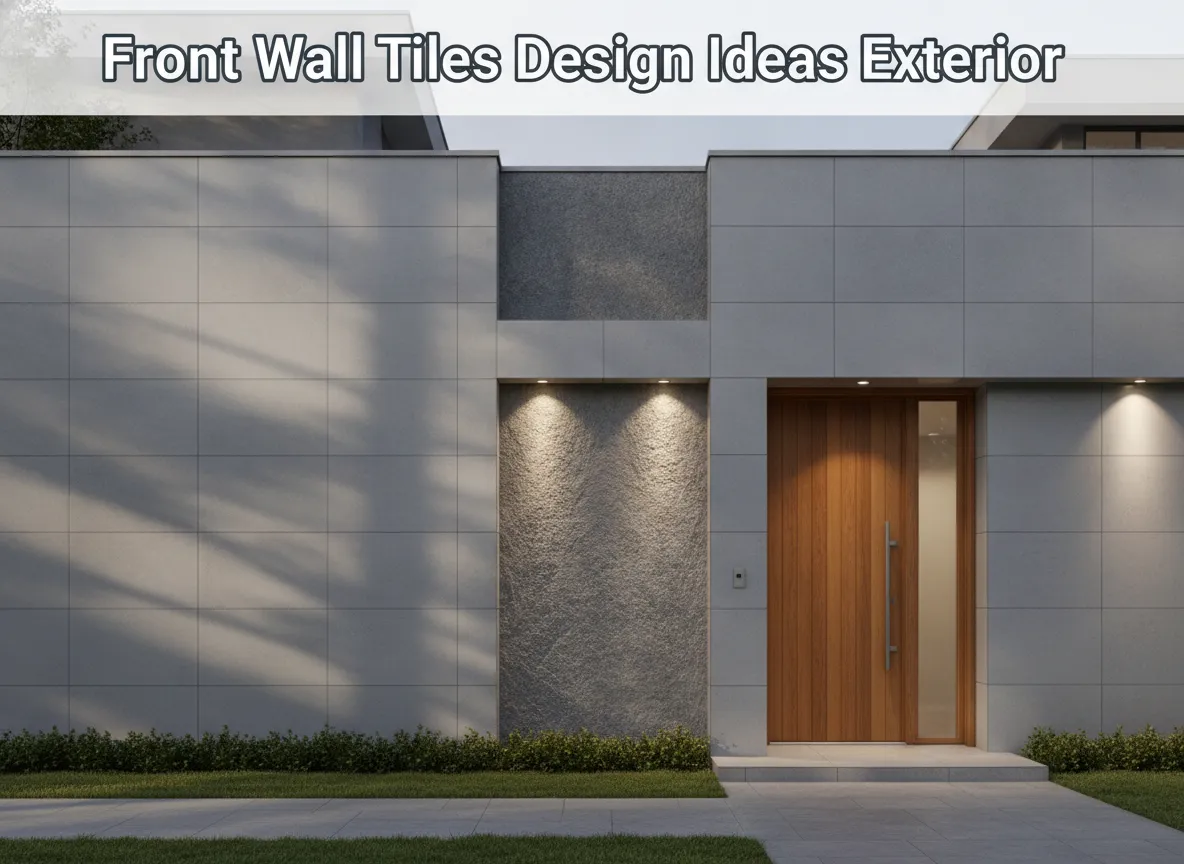
Exploring 9 front wall tiles design ideas for your house exterior is one of the most practical ways to close that gap. Tiles are durable, weather-resistant, low-maintenance, and available in an enormous range of textures, colors, and formats. Whether you are building from scratch, renovating a dated facade, or simply looking for a weekend upgrade that delivers outsized impact, the right tile choice can transform a plain concrete wall into a genuine architectural statement.
In this guide, I walk through nine proven design directions, drawing on current industry trends and real-world application insights, so you can make a confident, informed decision for your own home.
Key Takeaways
- Tile material choice, natural stone, porcelain, ceramic, or mixed materials, directly shapes both the visual character and the long-term maintenance demands of your facade.
- Large-format tiles and strategic color combinations are among the fastest ways to modernize an exterior without a full structural renovation.
- Lighting integration and tile pattern orientation are low-cost levers that dramatically amplify the visual impact of any tile design.
- Mixing tile with complementary materials such as exposed brick or raw concrete creates layered depth that single-material facades cannot achieve.
- Smart design tools and accent tile strategies allow homeowners to achieve high-end results while keeping costs under control.
Why Front Wall Tiles Matter More Than You Think
Before diving into the nine ideas, it is worth understanding why tile specifically outperforms paint, render, or cladding boards for many homeowners.
Durability is the primary argument. Quality porcelain and ceramic tiles are rated for freeze-thaw cycles, UV exposure, and heavy rain, conditions that cause paint to peel and timber cladding to warp within a few years. A properly installed tile facade can last 30 to 50 years with minimal intervention [6].
Maintenance is the second factor. Unlike painted surfaces that require recoating every five to seven years, tiles need little more than an occasional wash. Porcelain tiles in particular resist staining and moisture absorption, making them ideal for exterior facades exposed to the elements [1].
Design flexibility is the third. Tiles come in formats ranging from small 10 cm mosaics to massive 120 cm slabs, in finishes from matte stone-look to high-gloss polished, and in colors spanning every palette imaginable. That range means tiles can serve virtually any architectural style, from heritage cottage to ultra-modern box house.
With that foundation in place, here are the nine design ideas worth considering.
9 Front Wall Tiles Design Ideas for Your House Exterior, Explored in Full
1. Natural Stone Tiles for Rustic Charm
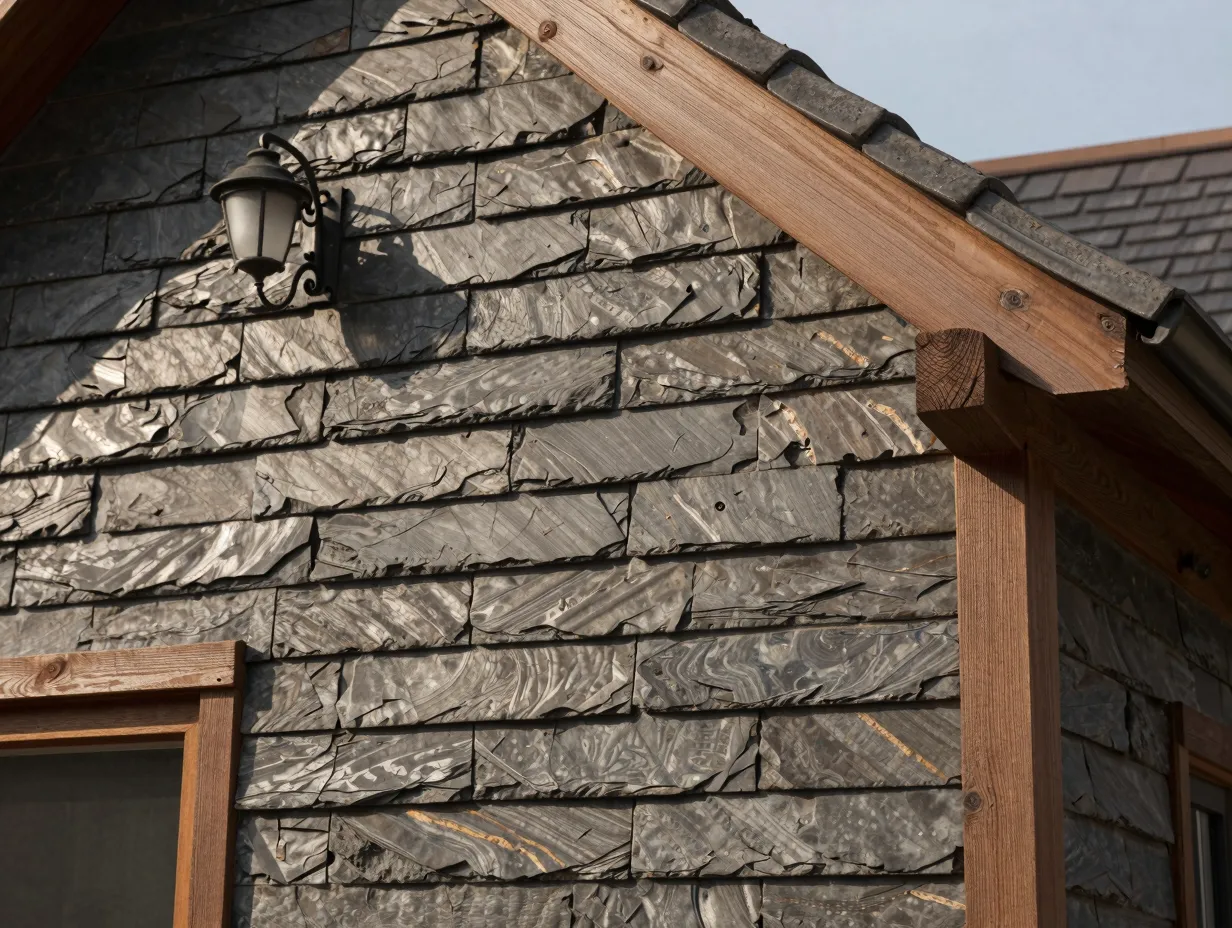
Natural stone tiles, slate, granite, limestone, and sandstone, remain one of the most enduring choices for exterior facades. Each piece is genuinely unique, carrying natural veining, color variation, and surface texture that no manufactured product can fully replicate.
Slate works particularly well on homes with pitched roofs and traditional architectural detailing. Its dark, layered surface absorbs light beautifully and pairs naturally with timber accents and wrought iron fixtures. Limestone, by contrast, carries a softer, warmer tone that suits Mediterranean and Tuscan-inspired designs.
Key advantages of natural stone:
- Authentic, one-of-a-kind appearance
- Excellent thermal mass, helping regulate wall temperature
- Ages gracefully, often looking better with time
- High perceived value among buyers and appraisers [1]
The trade-off is cost and maintenance. Natural stone requires sealing every two to three years to prevent water ingress, and the material itself is more expensive per square meter than porcelain or ceramic alternatives. For homeowners willing to invest, however, the payoff in character and longevity is difficult to match.
2. Porcelain Tiles for Contemporary Minimalism
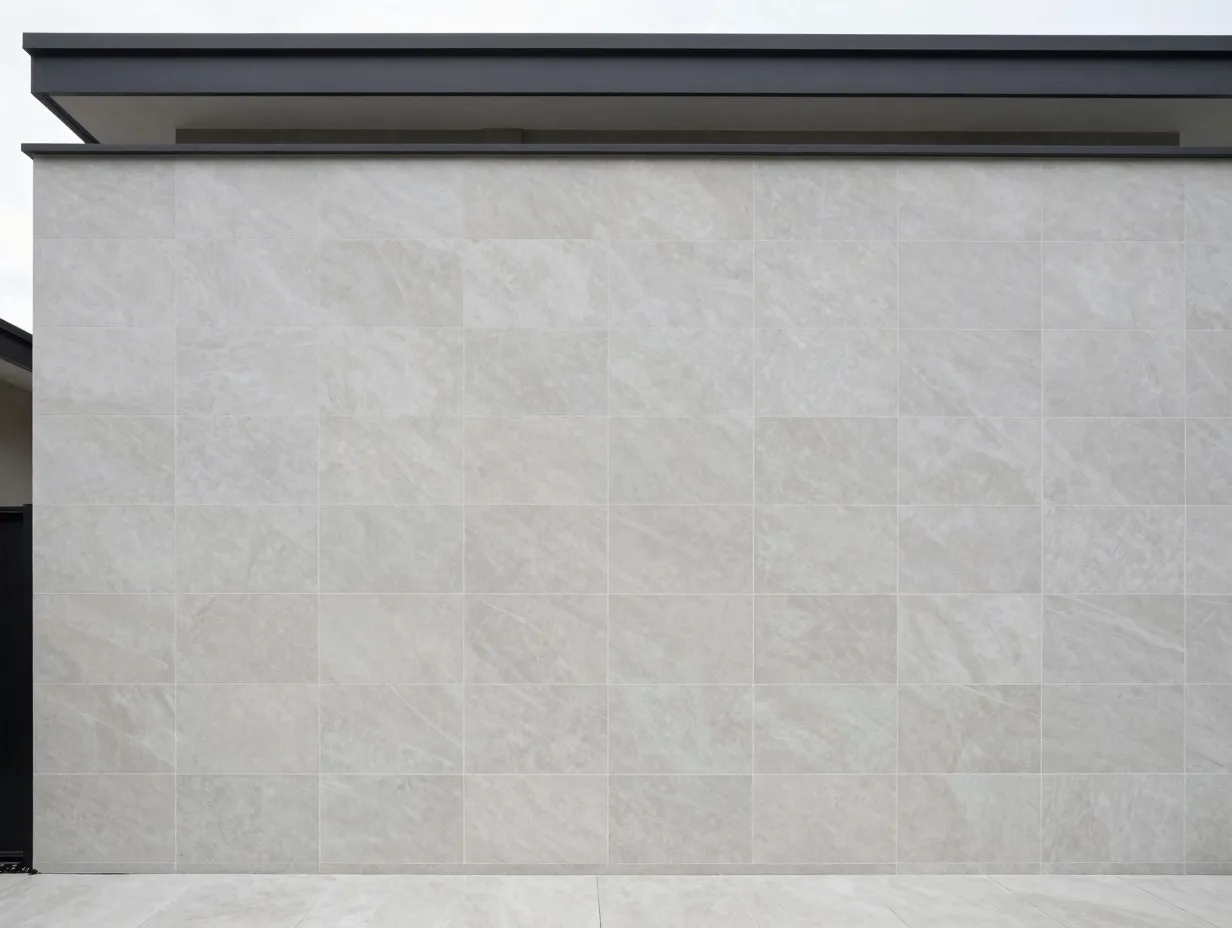
If natural stone represents the heritage end of the spectrum, porcelain tiles occupy the opposite pole, clean, precise, and unmistakably modern. Porcelain is fired at higher temperatures than standard ceramic, producing a dense, non-porous tile that resists moisture, staining, and frost damage with minimal upkeep [1].
For contemporary homes with flat or low-pitched roofs, large-format porcelain tiles in neutral tones, cloud white, warm grey, anthracite, create a facade that reads as intentional and sophisticated. The smooth surface reflects light evenly, giving the exterior a polished, almost architectural quality.
“Porcelain tiles bring the precision of interior design thinking to the exterior of a home, and that shift in mindset changes everything about how a facade is perceived.”
Porcelain also excels at mimicking other materials. Wood-effect, concrete-effect, and stone-effect porcelain tiles deliver the aesthetic of premium natural materials at a fraction of the cost and with significantly lower maintenance requirements.
3. Textured Tiles for Visual Interest and Depth
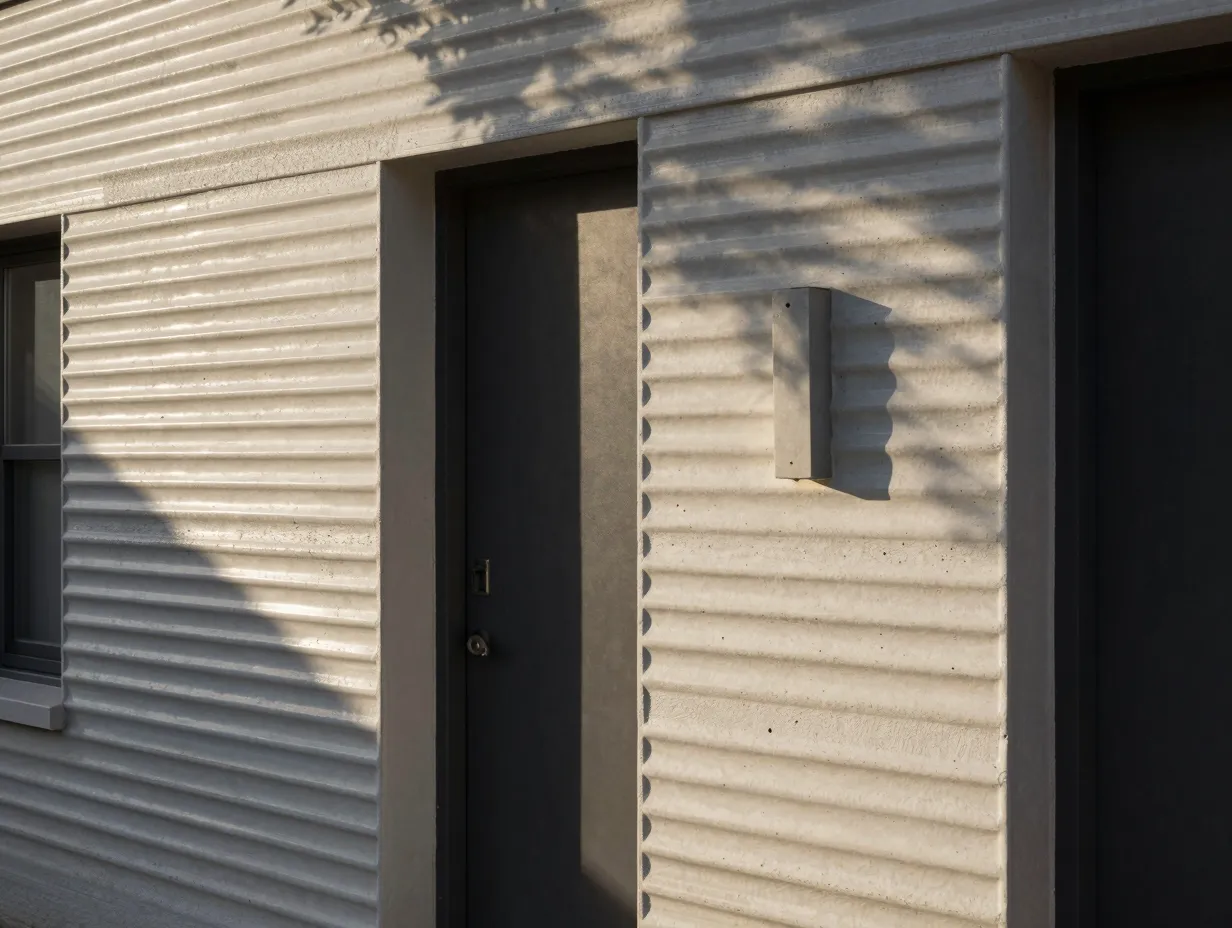
A flat, smooth facade can look elegant, but it can also look flat, literally and figuratively. Textured tiles solve this problem by introducing shadow lines, tactile variation, and visual movement that a smooth surface simply cannot provide.
Grooved ceramics, ribbed concrete-look tiles, split-face stone mosaics, and fluted porcelain panels are all strong options in this category. When sunlight moves across a textured wall throughout the day, the tile surface appears to shift and animate, creating a dynamic quality that makes the home look genuinely alive [2].
Textured tile formats worth considering:
- Split-face stone mosaics: stacked natural stone chips that create a highly three-dimensional surface
- Ribbed or fluted porcelain: parallel channels that catch directional light
- Grooved ceramic: geometric surface cuts that add rhythm without overwhelming the design
- Rough-hewn slate effect: irregular surface that mimics hand-cut stone
Textured tiles work especially well on feature walls, the section of facade immediately surrounding the entrance, where the close-up interaction between visitor and wall is most intense.
4. Large-Format Tiles for a Seamless, Modern Look
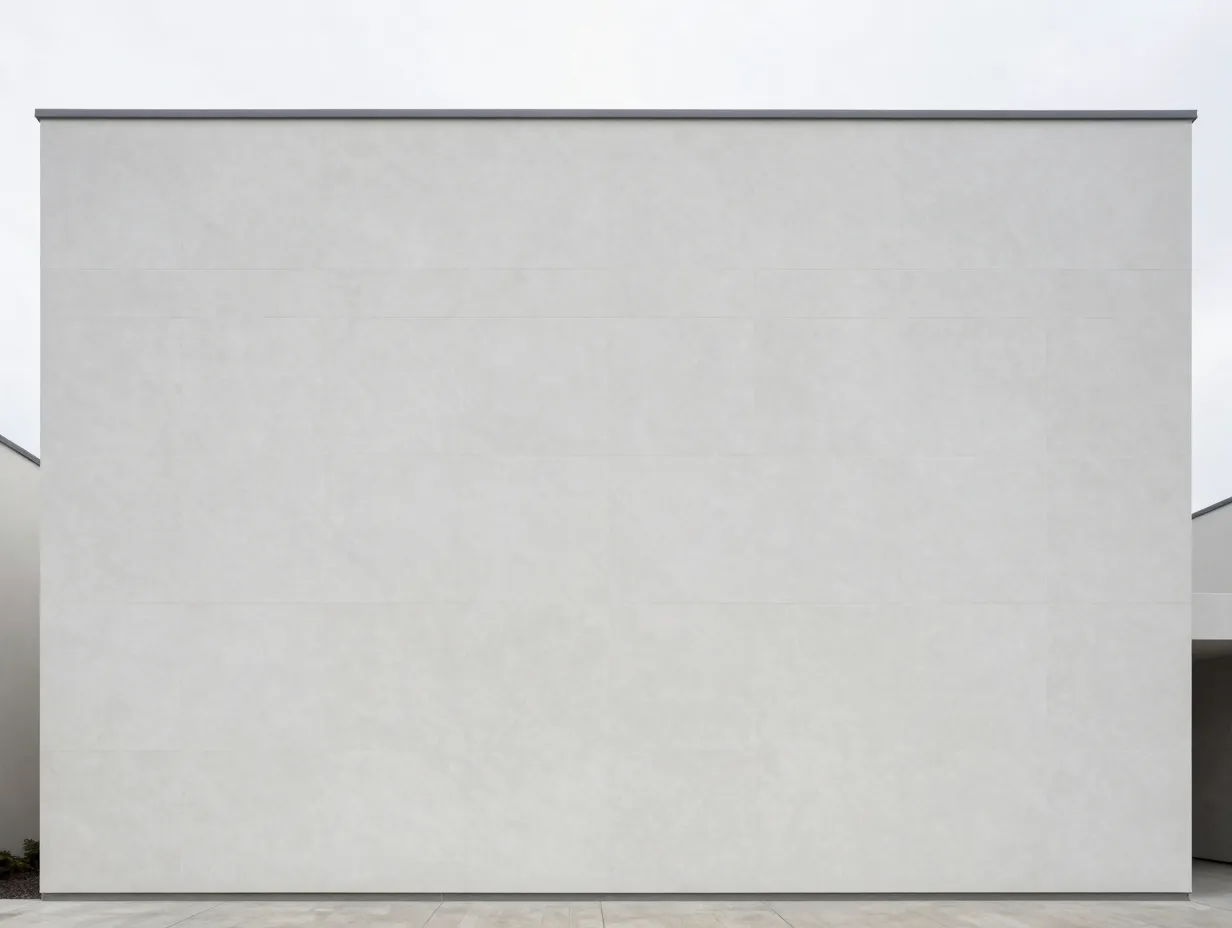
One of the clearest trends in exterior tile design right now is the move toward larger and larger tile formats. Tiles measuring 60 x 120 cm, 80 x 160 cm, or even 120 x 240 cm are increasingly common on residential facades, and the reason is straightforward: fewer grout lines mean a cleaner, more continuous surface [3].
A wall clad in large-format tiles reads almost like a single material rather than an assembly of individual pieces. This seamless quality is particularly effective on modern homes where the design language values restraint and visual calm.
Practical considerations for large-format exterior tiles:
| Factor | Detail |
|---|---|
| Substrate preparation | Must be perfectly flat; any deviation causes hollow spots |
| Adhesive selection | Requires flexible, high-strength adhesive rated for exterior use |
| Handling and cutting | Heavier and more fragile during installation; professional fitting recommended |
| Grout joint width | Typically 3-5 mm; narrower joints reinforce the seamless effect |
The investment in professional installation pays off here. A poorly fitted large-format tile looks worse than a well-fitted small tile, so cutting corners on labor is false economy.
5. Mixed Materials for a Layered, Textured Facade
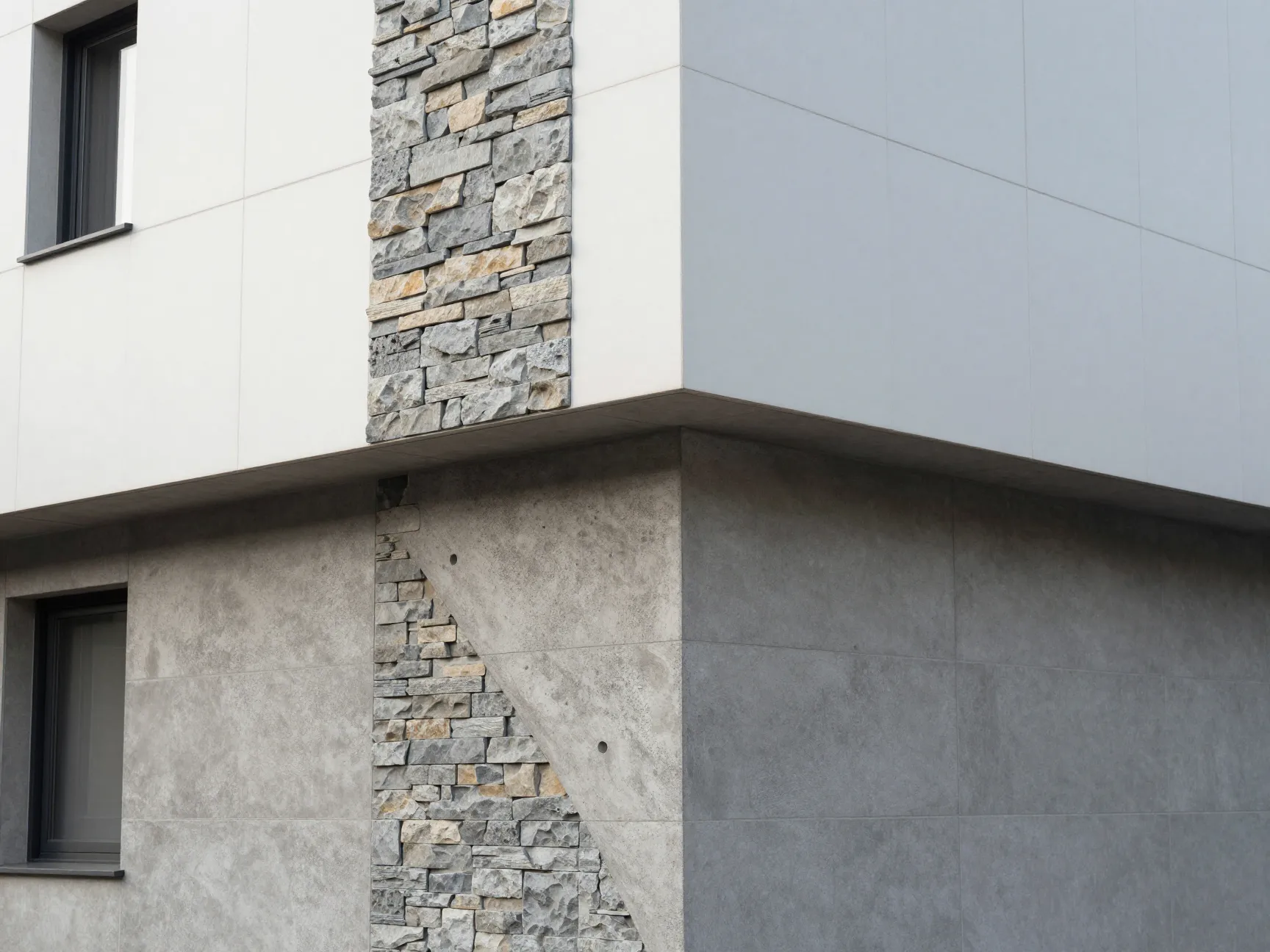
Some of the most visually compelling house exteriors in 2026 do not rely on a single tile type. Instead, they combine tiles with other materials, exposed brick, raw concrete panels, weathered timber, or metal screens, to create a facade with genuine depth and narrative [2].
A common approach is to use smooth porcelain tiles as the primary cladding material, then introduce a band of split-face stone around the entrance or a section of board-formed concrete on a feature wall. The contrast between smooth and rough, between manufactured and natural, creates a tension that makes the facade interesting from multiple distances.
Effective material pairings:
- Porcelain tiles + exposed brick: industrial warmth
- Limestone tiles + raw concrete: brutalist softened
- Slate tiles + weathered timber: organic and grounded
- Large-format ceramic + Corten steel panels: contemporary drama
The key to making mixed materials work is restraint. Limiting the palette to two or three materials prevents the facade from feeling busy or unresolved.
6. Strategic Color Combinations to Set the Mood
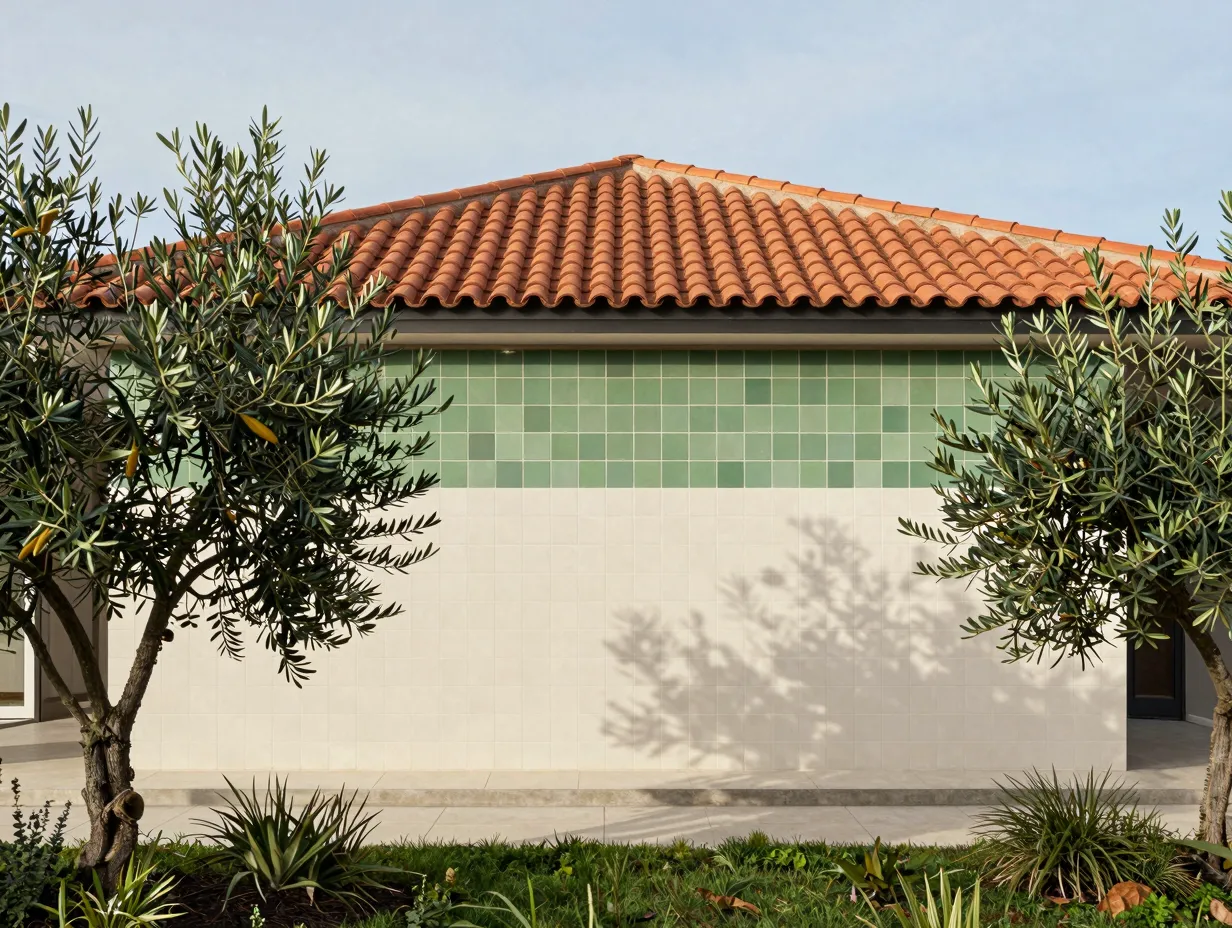
Color is arguably the most powerful tool in any tile design decision, and it is also the one most likely to be underestimated. The color of a front wall does not exist in isolation, it interacts with the roof color, the driveway material, the landscaping palette, and the colors of neighboring properties [4].
Common color strategies and their effects:
- White and grey: crisp, modern, and universally appealing; works with almost any roof color
- Beige and brown: warm, welcoming, and grounded; suits traditional and transitional architecture
- Charcoal and black: bold and dramatic; best suited to contemporary homes with strong geometric forms
- Terracotta and sand: Mediterranean warmth; pairs naturally with terracotta roof tiles and olive or lavender plantings
- Off-white and sage green: fresh and organic; increasingly popular in 2026 as biophilic design influences exterior choices
A practical rule I have found useful: pull one color from the roof and one from the landscaping, then choose a tile that bridges those two. The result is a facade that feels coherent rather than arbitrarily chosen [6].
7. Tile Patterns and Layouts to Influence Perception
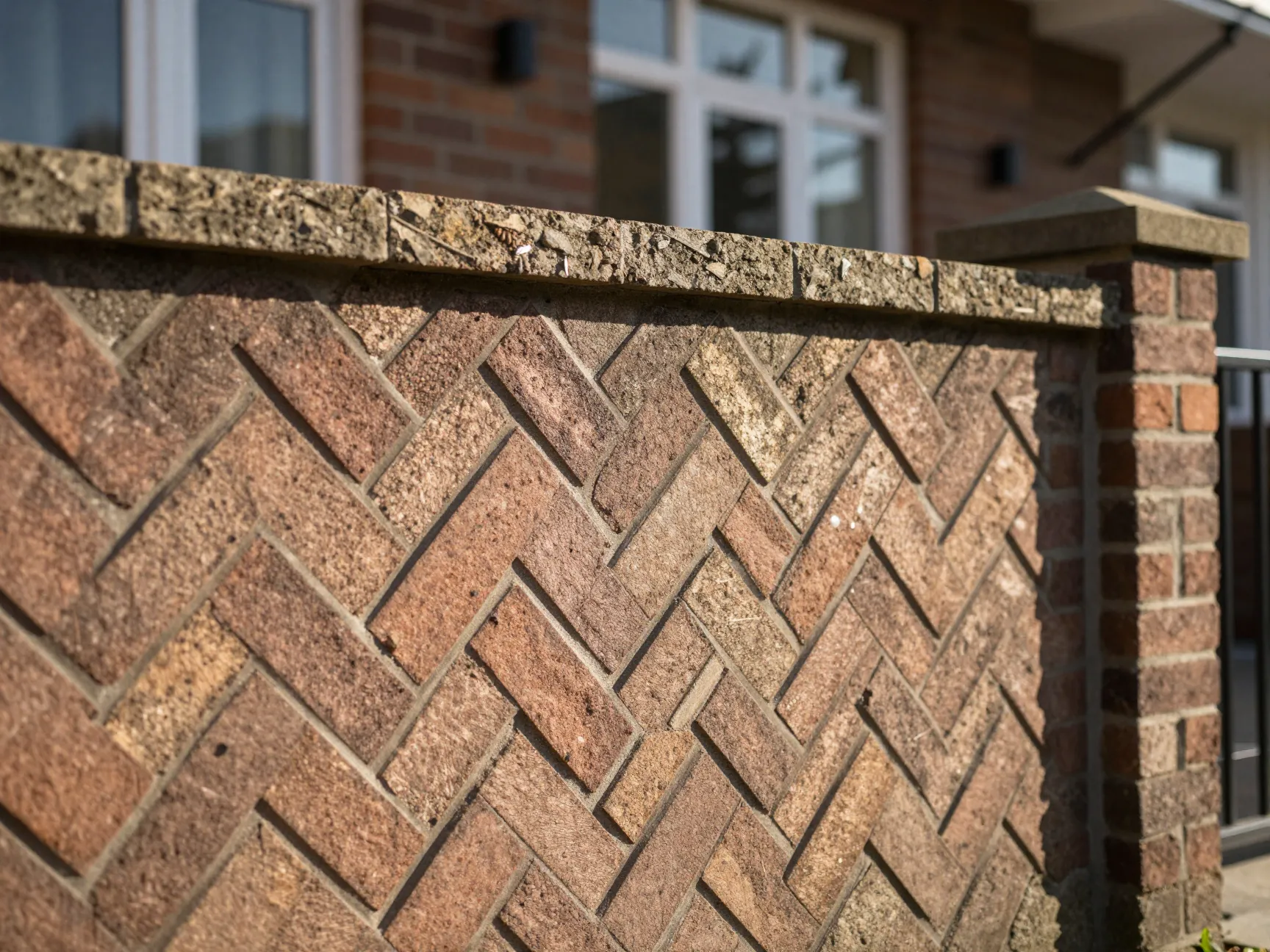
The same tile, laid in different patterns, can make a wall look wider, taller, more dynamic, or more restrained. Pattern and layout are free design tools, they cost nothing beyond the planning, yet they are frequently overlooked in favor of material and color decisions [4].
How layout affects visual perception:
- Horizontal stack bond: emphasizes width; makes a low, wide house feel grounded and expansive
- Vertical stack bond: draws the eye upward; adds perceived height to a single-story home
- Diagonal or 45-degree layout: creates energy and movement; works well on feature sections rather than entire facades
- Herringbone: traditional yet dynamic; suits natural stone and brick-effect tiles particularly well
- Random ashlar: mimics the irregular coursing of natural stone; adds authenticity to stone-look tiles
For most residential facades, I recommend keeping the primary wall in a straightforward horizontal or vertical stack, then using a more expressive pattern on a feature section such as the entrance surround or a low boundary wall. This approach delivers visual interest without overwhelming the overall composition.
8. Integrating Exterior Lighting with Tile Design
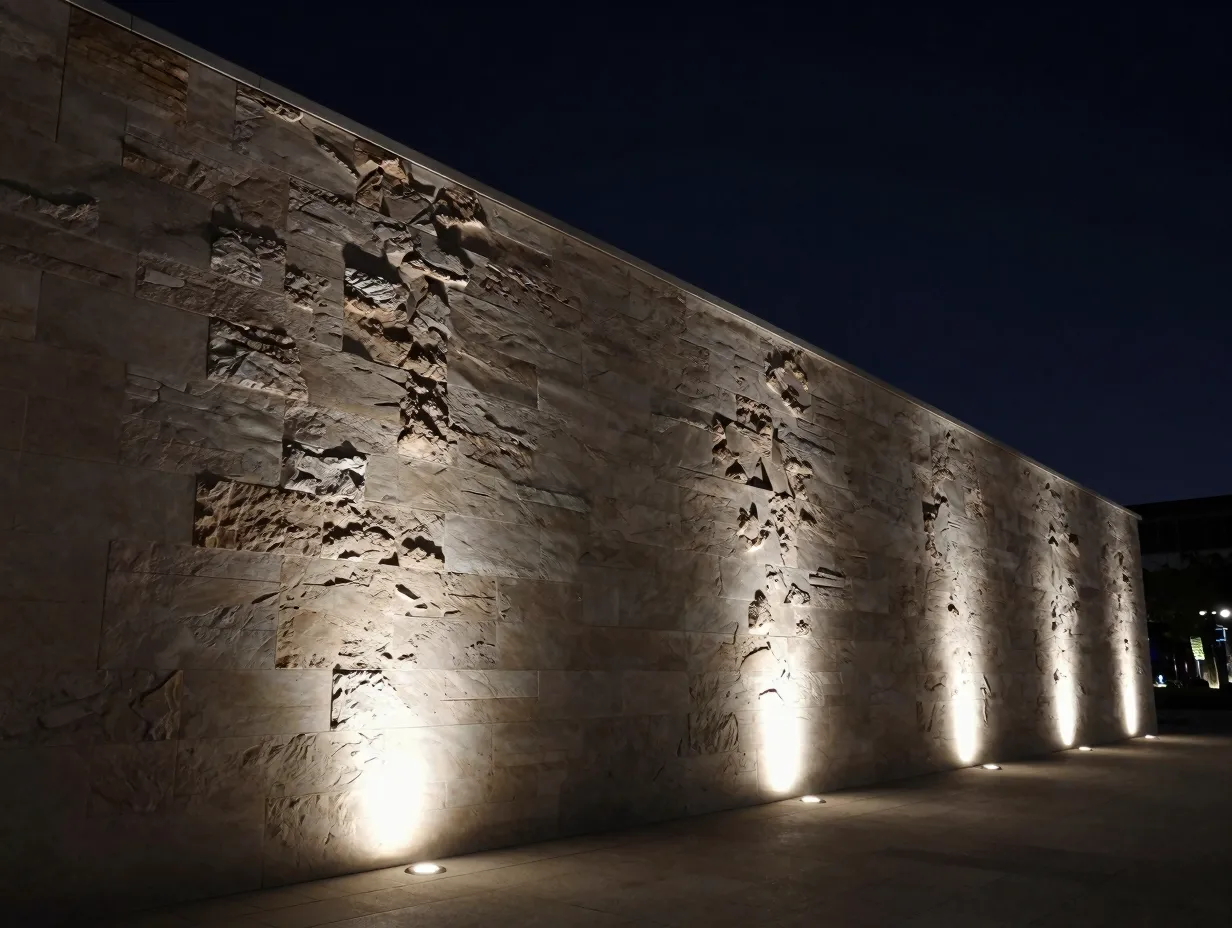
Tile design does not stop when the sun goes down, or at least, it should not. Thoughtfully planned exterior lighting can highlight tile textures, reveal surface depth, and transform a daytime facade into an evening focal point that is just as compelling [5].
The principle is simple: directional light grazing across a textured surface creates shadow lines that amplify the three-dimensional quality of the tile. A split-face stone wall lit with low-angle uplighters at dusk looks dramatically different, and more impressive, than the same wall under flat ambient light.
Lighting approaches that work well with exterior tiles:
- Recessed ground uplighters: positioned 30-50 cm from the wall base, casting light upward across the tile surface
- Linear LED strip lighting: concealed in horizontal reveals or behind overhangs, creating a wash of light across large tile panels
- Spotlights on feature sections: focused on a stone or textured tile feature wall to create a focal point after dark
- Backlit tile panels: translucent onyx or thin-stone tiles over a light source create a dramatic glowing effect reserved for high-end projects
When planning a tile design, I strongly recommend sketching the lighting scheme at the same time rather than treating it as an afterthought. The two systems work together, and decisions made in tile selection, particularly around texture and finish, directly affect how lighting will perform [5].
9. Budget-Smart Accent Tile Strategies
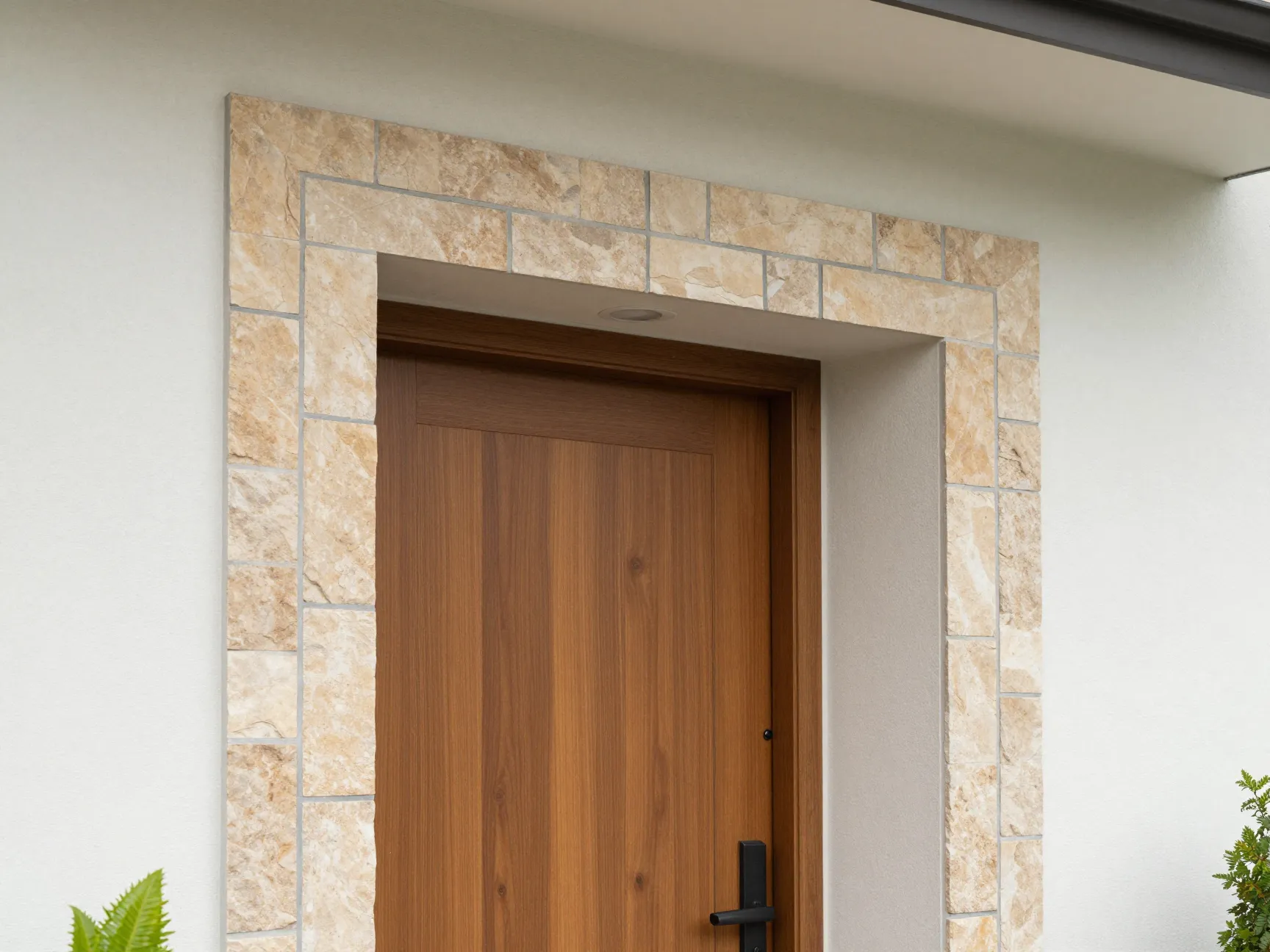
Not every homeowner has the budget to reclad an entire facade in premium natural stone or large-format porcelain. The good news is that strategic use of accent tiles can deliver a high-impact result at a fraction of the cost of a full reclad [6].
The logic is straightforward: the human eye is drawn to points of transition, doorways, window surrounds, corners, and base courses. Concentrating tile investment at these high-attention zones while using a simpler, more economical finish on the broader wall surface creates a facade that reads as considered and intentional without requiring a premium budget across every square meter.
Cost-effective accent tile strategies:
- Frame the entrance with a contrasting tile material, natural stone against a rendered wall, for example
- Use mosaic tile borders around window openings to add detail at low material cost
- Repurpose leftover tiles from other projects to create a feature panel or mosaic section
- Apply a single course of decorative tile at eye level on a boundary or garden wall
- Use large-format tiles on the most visible central section of the facade, with simpler tiles on side returns
This approach also allows homeowners to test a tile material or color on a small section before committing to a full facade application, a practical benefit that is easy to overlook when enthusiasm for a new design runs high [6].
Practical Tips for Choosing and Applying Front Wall Tiles
Beyond the nine design directions above, a few cross-cutting principles apply regardless of which idea you pursue.
Match tile slip resistance to location. Exterior tiles should carry a minimum R10 slip resistance rating for vertical wall applications, and R11 or higher for any horizontal surface such as steps or a porch floor.
Account for thermal movement. Exterior tiles expand and contract with temperature changes. Movement joints, soft joints filled with flexible sealant rather than grout, must be incorporated at regular intervals, typically every 3-4 meters and at all internal corners.
Use AI-powered design tools to visualize before you commit. Several home design platforms now offer photorealistic rendering of tile designs applied to uploaded photos of your own home. This technology has matured significantly and can save considerable time and money by revealing combinations that look wrong before any material is purchased [6].
Coordinate with your roof and landscaping palette. The most common mistake I see is homeowners selecting tiles in isolation, without reference to the fixed elements of the property. The roof, driveway, boundary walls, and established planting all have colors and textures that the tile design must work with, not against [6].
Hire a specialist installer for exterior work. Interior tile installation skills do not fully transfer to exterior facades. Substrate preparation, adhesive selection, and movement joint placement all require specific exterior experience. A failed exterior tile installation is expensive to remediate and can cause structural water damage if adhesive failure allows moisture ingress.
Conclusion
The nine front wall tiles design ideas for your house exterior covered in this guide span a wide range of styles, budgets, and technical approaches, from the timeless authenticity of natural stone to the precision of large-format porcelain, from budget-smart accent strategies to the drama of integrated lighting design. What they share is a common principle: the front wall of a home deserves the same level of design attention as any interior space, because it is the one element every person who encounters your home will see and judge.
Actionable next steps:
- Walk around your home and photograph the front facade at different times of day. Note which sections attract the eye and which feel flat or unresolved.
- Identify your architectural style and shortlist two or three tile ideas from this guide that align with it.
- Use an AI-powered home design tool to render your shortlisted tile options against a photo of your actual facade before purchasing any material.
- Request physical tile samples and hold them against your facade in both daylight and artificial light before making a final decision.
- Obtain quotes from at least two specialist exterior tile installers, and ask specifically about their approach to movement joints and substrate preparation.
The investment in getting the front wall right pays dividends every single day, in personal satisfaction, in neighborhood presence, and in long-term property value.
References
[1] Exterior Wall Tile Design Ideas To Elevate Your Homes Curb Appeal – https://www.tileprint.co.in/blog/exterior-wall-tile-design-ideas-to-elevate-your-homes-curb-appeal?utm_source=openai
[2] Modern Front Wall Tile Design Suggestions To Keep Up Your Homes Curb Appeal In 2025 – https://tilebathkitchen.com/modern-front-wall-tile-design-suggestions-to-keep-up-your-homes-curb-appeal-in-2025/?utm_source=openai
[3] Modern Front Wall Tiles Design – https://www.infrala.com/blog/modern-front-wall-tiles-design/?utm_source=openai
[4] House Front Tiles Design – https://expressbuildersltd.com/blog/house-front-tiles-design/?utm_source=openai
[5] Front Wall Tiles Design – https://www.wiproconsumerlighting.com/blog/front-wall-tiles-design?utm_source=openai
[6] Tiles Design For Front Wall Of House Modern Looks Endless Options – https://www.coohom.com/article/tiles-design-for-front-wall-of-house-modern-looks-endless-options?utm_source=openai
[7] Watch – https://www.youtube.com/watch?v=bySqc2oDO4w&utm_source=openai