8 Cozy Living Room Design Tips for Your Ultimate Comfort Zone
A 2023 survey by the American Institute of Architects found that homeowners rank the living room as the single most important space to get right, yet most people admit theirs feels more like a waiting room than a true sanctuary. The gap between a forgettable room and one that wraps you like a warm blanket comes down to a handful of deliberate choices. These 8 Cozy Living Room Design Tips for Your Ultimate Comfort Zone are drawn from real design principles, celebrity home inspiration, and practical styling wisdom that anyone can apply, whether you rent a studio apartment or own a sprawling family home.
Disclosure: This post contains affiliate links. As an Amazon Associate, we earn from qualifying purchases, and at no extra cost to you.
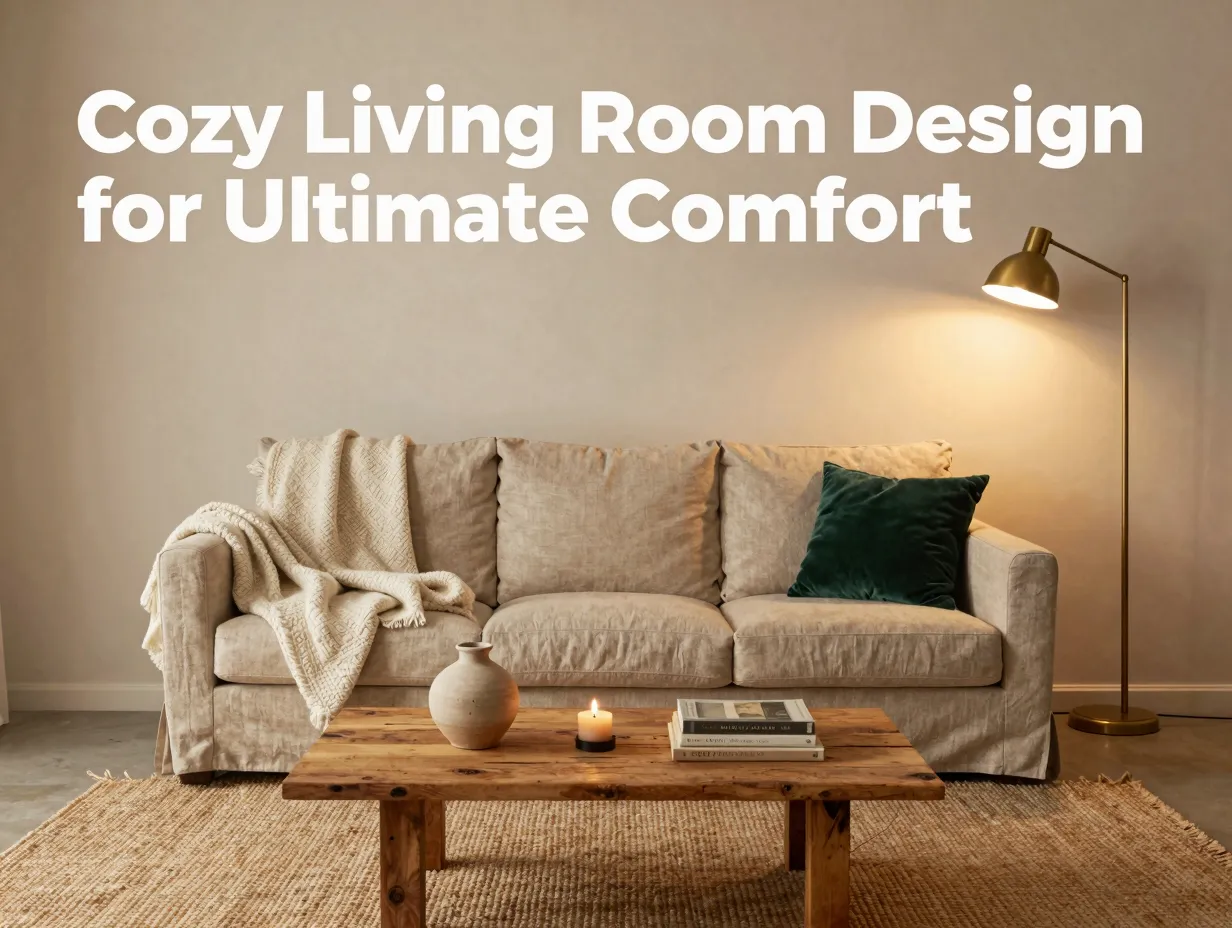
I remember the first apartment I decorated on my own. I had a flat-pack sofa, bare bulbs, and zero rugs. The space looked fine in photos but felt hollow in person. It took me years to understand that coziness is not about spending more money, it is about layering the right elements intentionally. That lesson is the backbone of every tip in this guide.
Key Takeaways
- Warm, neutral color palettes form the foundation of any cozy living room, with jewel tones added as strategic accents
- Layered lighting, combining floor lamps, table lamps, and sconces, does more for comfort than any single overhead fixture
- Natural materials like reclaimed wood and organic textiles add authentic warmth that synthetic alternatives cannot replicate
- Furniture should prioritize deep comfort and human scale, inviting people to sit down and stay
- Personal, meaningful decor transforms a styled room into a lived-in home
Why Coziness Is a Design Strategy, Not an Accident
Many people treat coziness as something that happens by luck, a happy accident of the right candle or a well-placed blanket. In reality, cozy living rooms are engineered. Every element from wall color to furniture height plays a role in how a space feels when you walk into it.
The Danish concept of “hygge” (pronounced hoo-gah) has influenced interior design globally over the past decade. At its core, hygge is about creating an atmosphere of comfort, warmth, and togetherness. Designers have translated this philosophy into concrete, repeatable techniques. The 8 Cozy Living Room Design Tips for Your Ultimate Comfort Zone outlined in this article are rooted in exactly that kind of intentional thinking.
Before diving into each tip, it helps to understand one foundational rule: coziness is sensory. It is not just visual. A room feels cozy when it appeals to sight, touch, and even smell. Keep that in mind as you work through each recommendation.
The 8 Cozy Living Room Design Tips for Your Ultimate Comfort Zone
1. Choose a Warm, Neutral Color Palette as Your Foundation
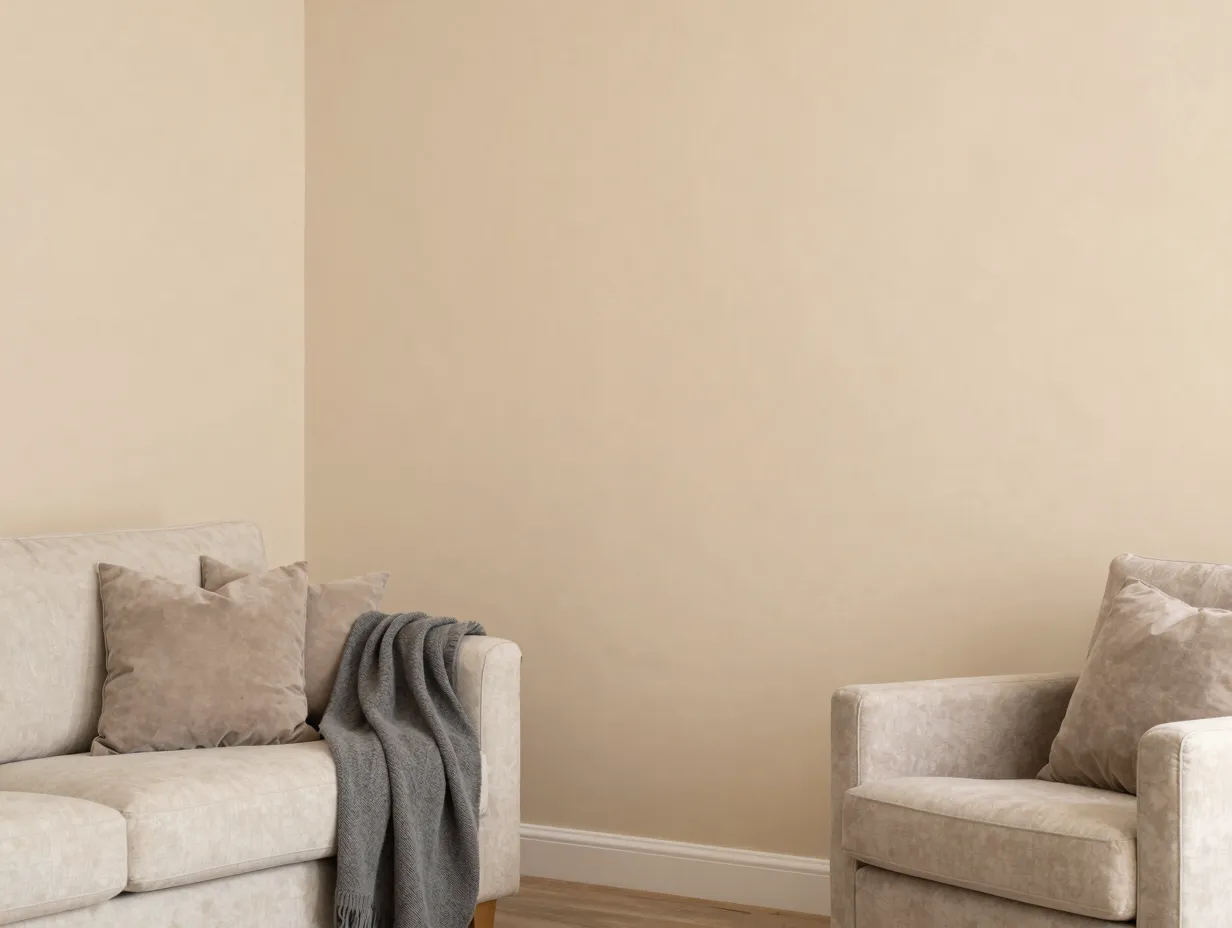
Color is the first thing your brain registers when you enter a room. Warm neutrals, think beige, cream, soft taupe, and warm gray, create a calm, welcoming backdrop that immediately signals safety and comfort [4].
The key is to avoid going too cool. Stark white walls and gray-blue tones can feel clinical rather than cozy. Instead, reach for whites with yellow or pink undertones, and grays that lean toward greige (gray-beige).
How to build your palette:
- Start with one dominant neutral for walls and large furniture (roughly 60% of the room)
- Add a secondary tone for upholstery or rugs (about 30%)
- Reserve the final 10% for accent colors introduced through pillows, artwork, and accessories
This 60-30-10 rule is a classic interior design framework, and it works because it creates visual harmony without monotony. Your warm neutral foundation becomes the canvas on which every other cozy element shines.
2. Add Jewel Tones to Elevate Neutral Spaces
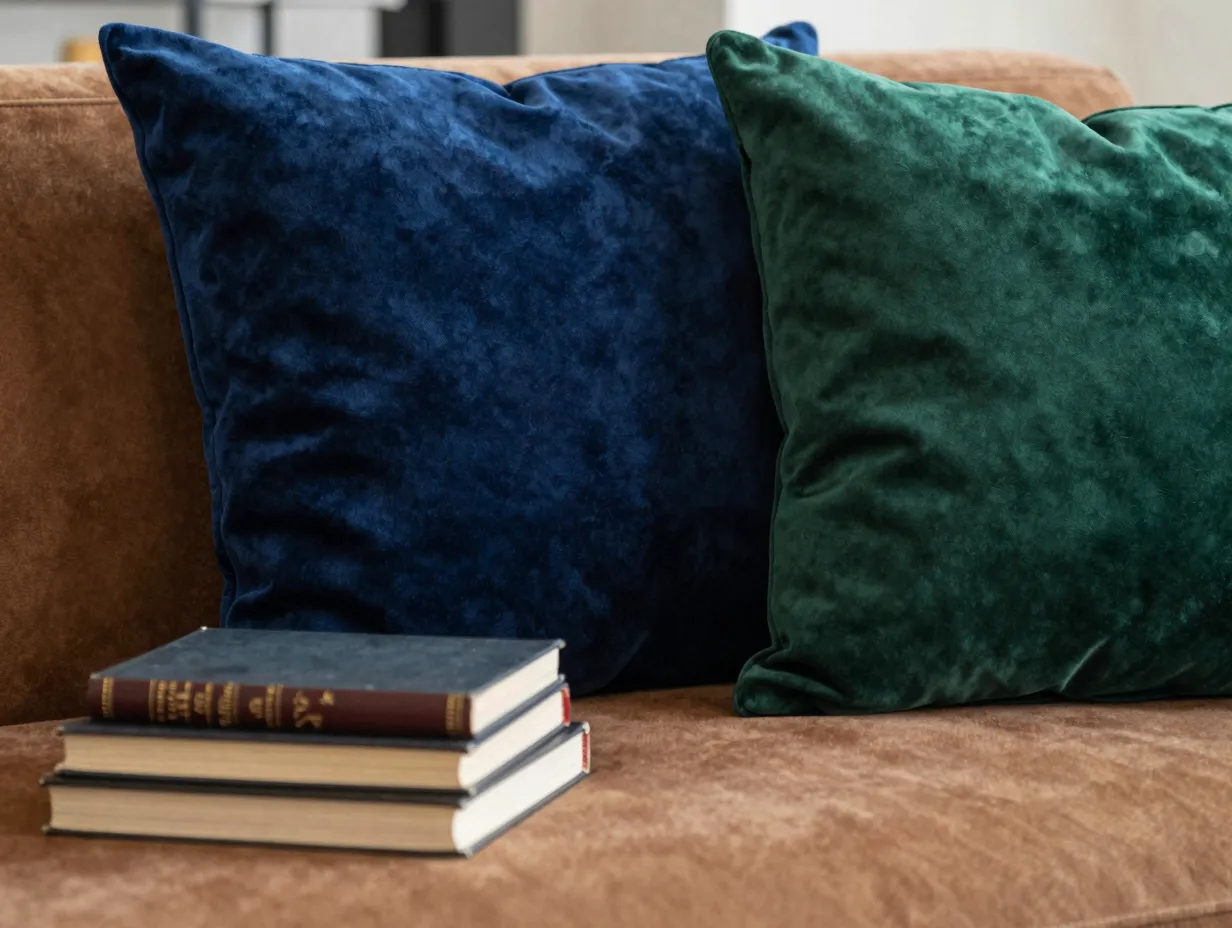
A fully neutral room can tip from serene into flat. The solution is strategic pops of jewel tones, rich, saturated colors like sapphire blue, emerald green, deep plum, and burnt amber.
TV personality Andy Cohen’s Hamptons home is a masterclass in this approach. His living room pairs a warm, brown-toned base with jewel-toned accents that add depth and visual richness without overwhelming the space [2]. The result feels both sophisticated and deeply inviting.
Best ways to introduce jewel tones:
- Velvet throw pillows in emerald or sapphire
- A single upholstered armchair in deep plum
- Artwork with rich, saturated color fields
- A jewel-toned area rug as a room anchor
The beauty of using jewel tones as accents rather than primary colors is flexibility. You can swap out a set of pillows seasonally and completely transform the mood of the room without repainting a wall.
“Color does not add a pleasant quality to design, it reinforces it.”, Pierre Bonnard
3. Incorporate Natural Materials for Authentic Warmth
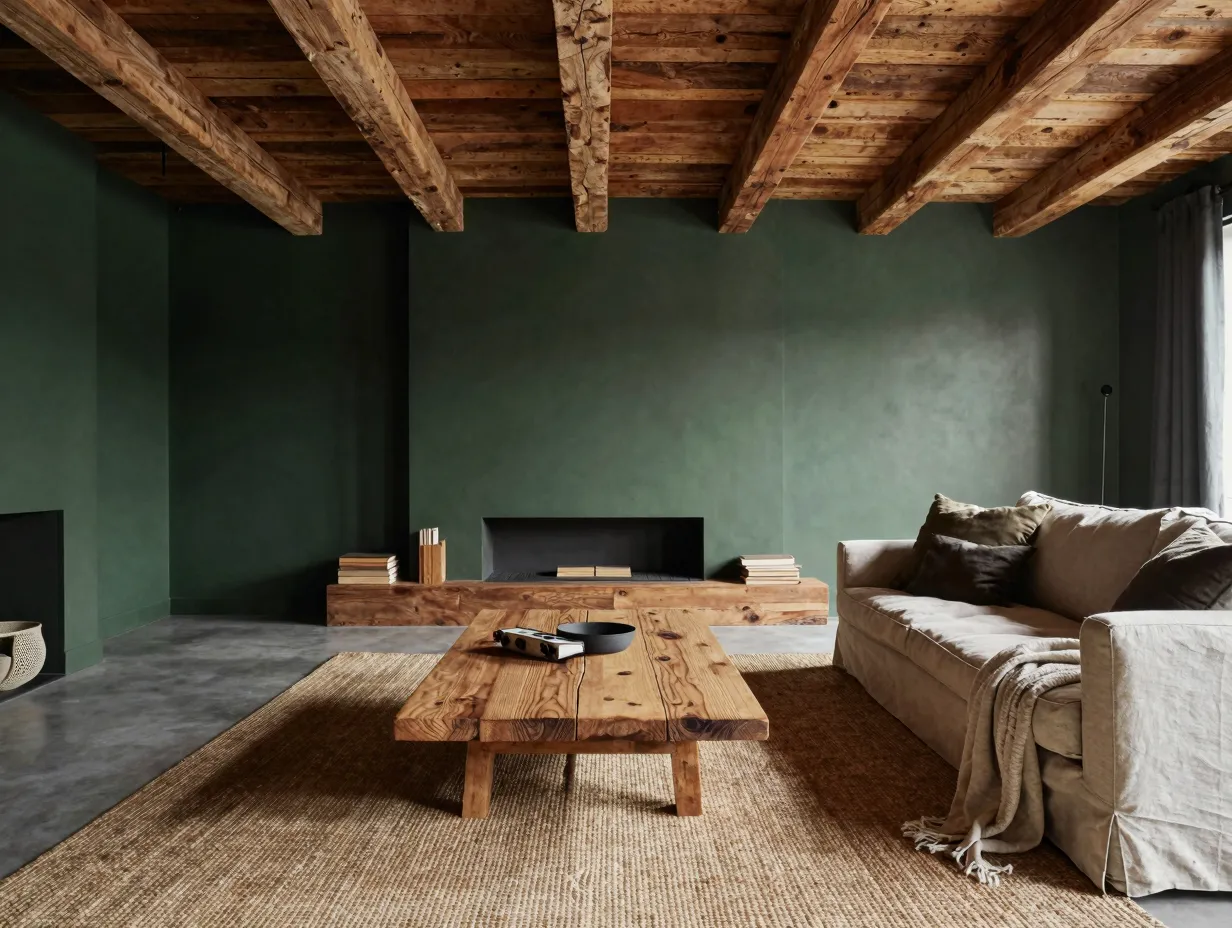
Synthetic materials have their place, but nothing replicates the warmth of natural elements. Reclaimed wood, linen, jute, rattan, stone, and natural wool all carry an organic quality that makes a room feel grounded and alive [1].
Victoria and David Beckham’s Cotswolds living room is one of the most-cited examples of this principle done right. The space features exposed wooden beams and dark green walls, blending rustic authenticity with refined modern elegance [1]. The wood does not just look warm, it communicates history, craft, and permanence.
Natural materials to consider:
| Material | Best Application | Warmth Level |
|---|---|---|
| Reclaimed wood | Coffee tables, shelving, beams | Very high |
| Jute or sisal | Area rugs, baskets | High |
| Linen | Upholstery, curtains, pillows | Medium-high |
| Natural wool | Throws, rugs | Very high |
| Rattan or cane | Side chairs, light fixtures | Medium |
Even one or two natural material elements can shift the entire energy of a room. A reclaimed wood coffee table paired with a jute rug creates a warmth that a glass table and synthetic rug simply cannot match.
4. Layer Soft Textures Throughout the Space
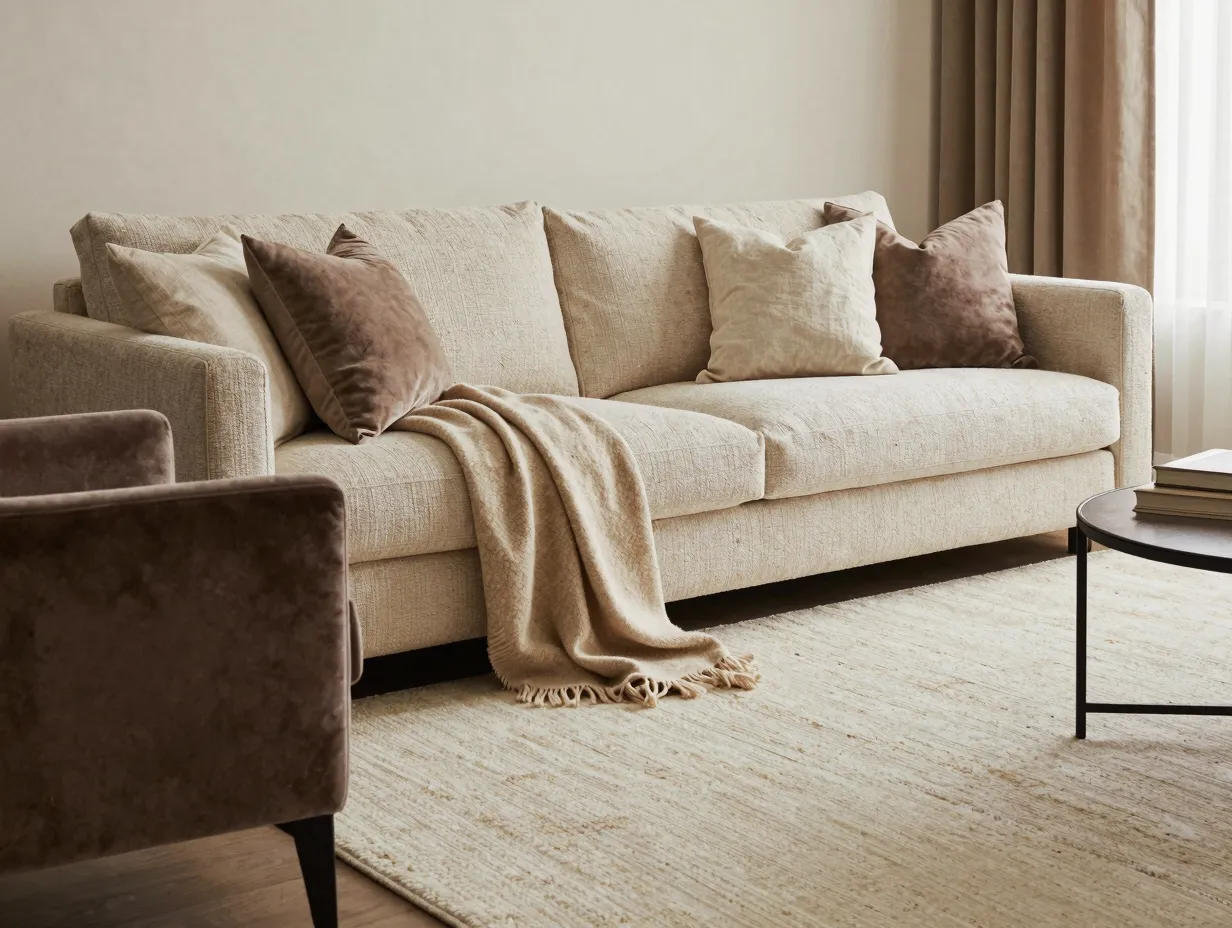
Texture is the secret weapon of cozy design. A room with varied textures engages the sense of touch even before you sit down, creating an anticipation of comfort [4].
The technique is called layering, and it means combining multiple textile types in a single space. Think of it like dressing for cold weather: one layer is never enough.
A practical texture-layering formula:
- Base layer: A large, plush area rug that anchors the seating area
- Middle layer: Upholstered furniture in a tactile fabric like bouclé, velvet, or linen
- Top layer: Throw blankets draped over sofas and chairs, plus an assortment of pillows in varying sizes and fabrics
Mixing materials like cotton, wool, and velvet creates a relaxed and inviting space that feels curated rather than chaotic [4]. The key is to vary texture while keeping color relatively cohesive, too many competing patterns alongside too many competing textures creates visual noise rather than warmth.
I once helped a friend restyle her living room without buying a single new piece of furniture. We simply added a wool throw, two velvet pillows, and a jute rug. The transformation was immediate and striking. Texture truly does the heavy lifting.
5. Design a Layered Lighting Scheme
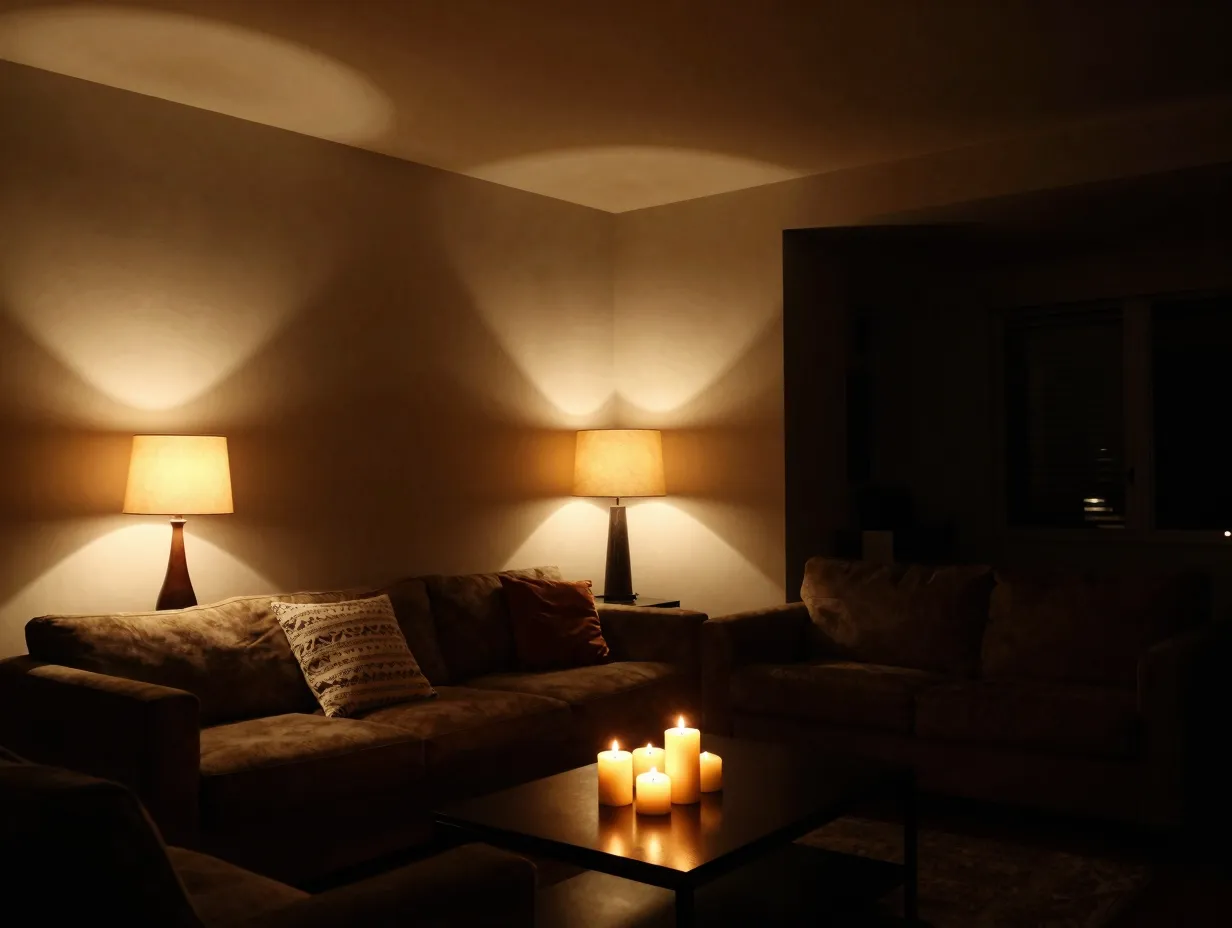
Lighting is arguably the most underestimated element in residential design. Most living rooms rely on a single overhead fixture, which creates flat, unflattering light that drains warmth from even the most beautifully decorated space [4].
A cozy living room uses multiple light sources at different heights, all working together to create a warm, ambient glow.
The three-layer lighting approach:
- Ambient lighting: Soft overhead light or recessed lighting dimmed to a low setting
- Task lighting: Table lamps beside sofas and chairs for reading
- Accent lighting: Wall sconces, floor lamps, and candles that add visual depth
Always choose bulbs with a color temperature between 2700K and 3000K. This range produces a warm, golden light that mimics candlelight and is far more flattering and comfortable than the cool, blue-toned light of 4000K+ bulbs.
Dimmer switches are one of the highest-return investments you can make in a living room. The ability to lower the lights by 30% in the evening transforms the entire atmosphere of a space at virtually no ongoing cost.
6. Choose Furniture That Prioritizes Deep Comfort
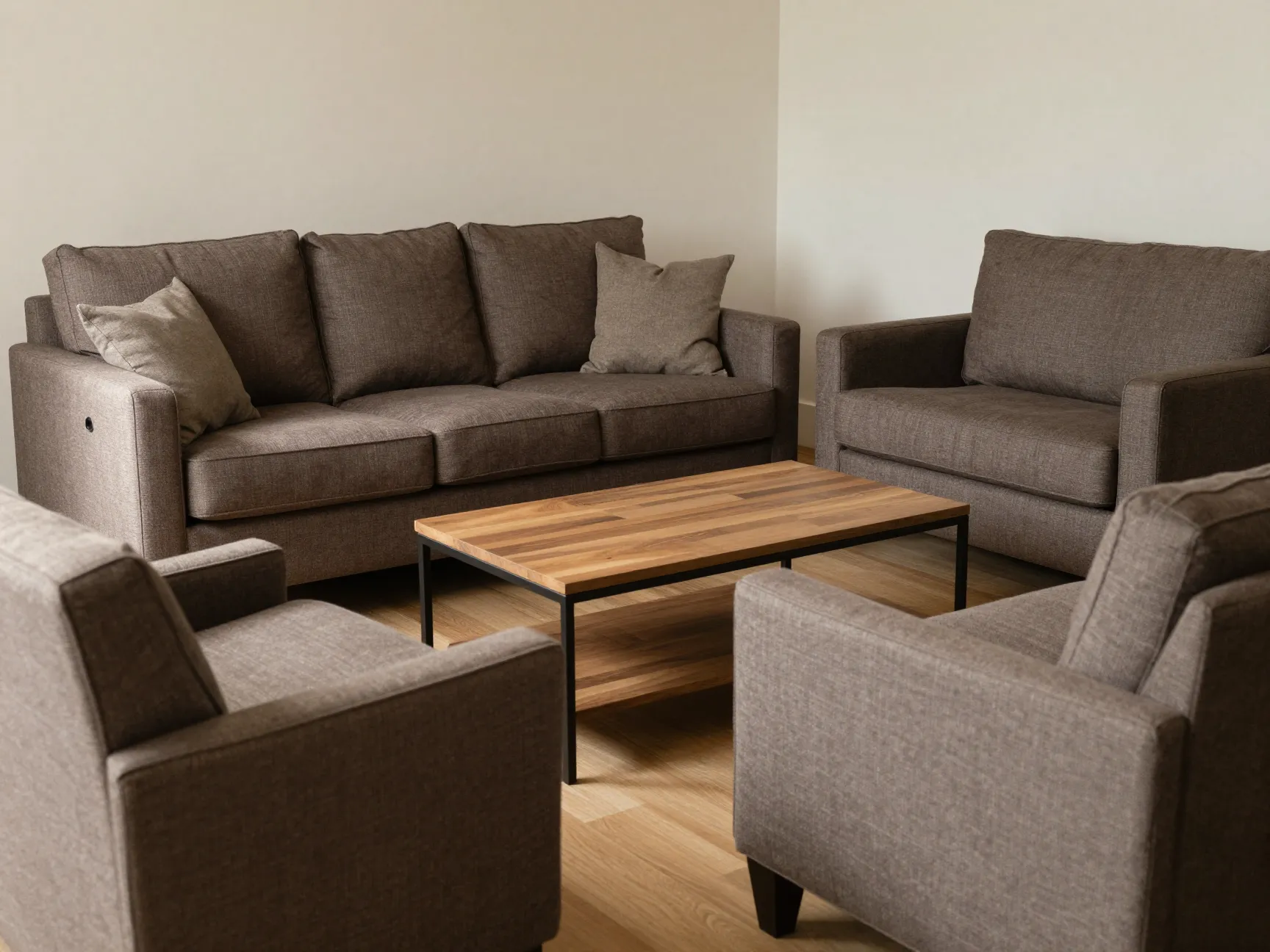
Beautiful furniture that is uncomfortable to sit in defeats the entire purpose of a cozy living room. Comfort must be the primary criterion, with aesthetics following closely behind [4].
What to look for in cozy furniture:
- Sofas: Deep seats (at least 22 inches), high-density foam cushions, and back cushions that support without being rigid
- Armchairs: Upholstered with padded arms, ideally with an ottoman or footrest nearby
- Ottomans: Versatile pieces that serve as footrests, coffee tables, and extra seating
Scale matters enormously. Furniture that is too small for a room makes the space feel sparse and cold. Furniture that is too large crowds the room and creates anxiety. Aim for pieces that feel human-scale, sized to the people who will actually use them.
Arrangement is equally important. Pull furniture away from walls and create a conversation cluster. When sofas and chairs face each other at a comfortable distance (roughly 6 to 10 feet apart), the room naturally invites people to sit, talk, and stay longer.
7. Add Conversation Starters and Unexpected Pieces
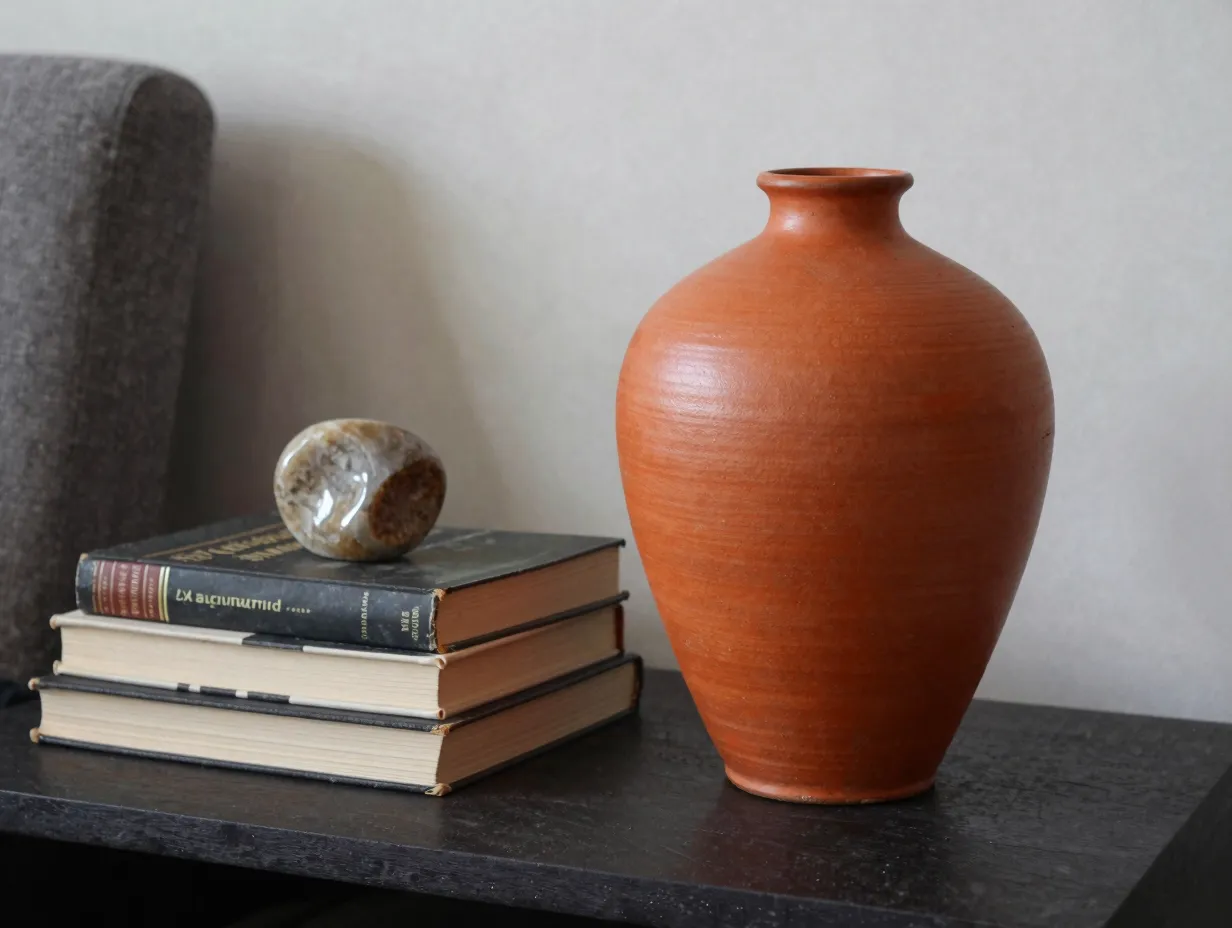
A cozy room is also an interesting room. When a space has unique elements that draw the eye and invite curiosity, it creates a sense of personality that generic, catalog-perfect rooms lack [3].
Sculptural stools, handwoven tapestries, an unusual lamp base, or a striking piece of art all serve as conversation starters. These are the pieces guests notice and ask about, and they are often the details that make a home feel genuinely lived-in rather than staged [3].
Ideas for conversation-starting pieces:
- A hand-thrown ceramic vase in an unexpected color
- A vintage or antique side table with visible history
- A woven wall hanging or textile art piece
- A sculptural floor lamp with an organic, asymmetric form
- A stack of well-loved books with interesting spines visible
The goal is not to fill every surface with objects, but to choose a few pieces that carry genuine meaning or visual interest. Restraint is important here. One truly remarkable piece has far more impact than ten forgettable ones.
8. Style with Personal and Meaningful Decor
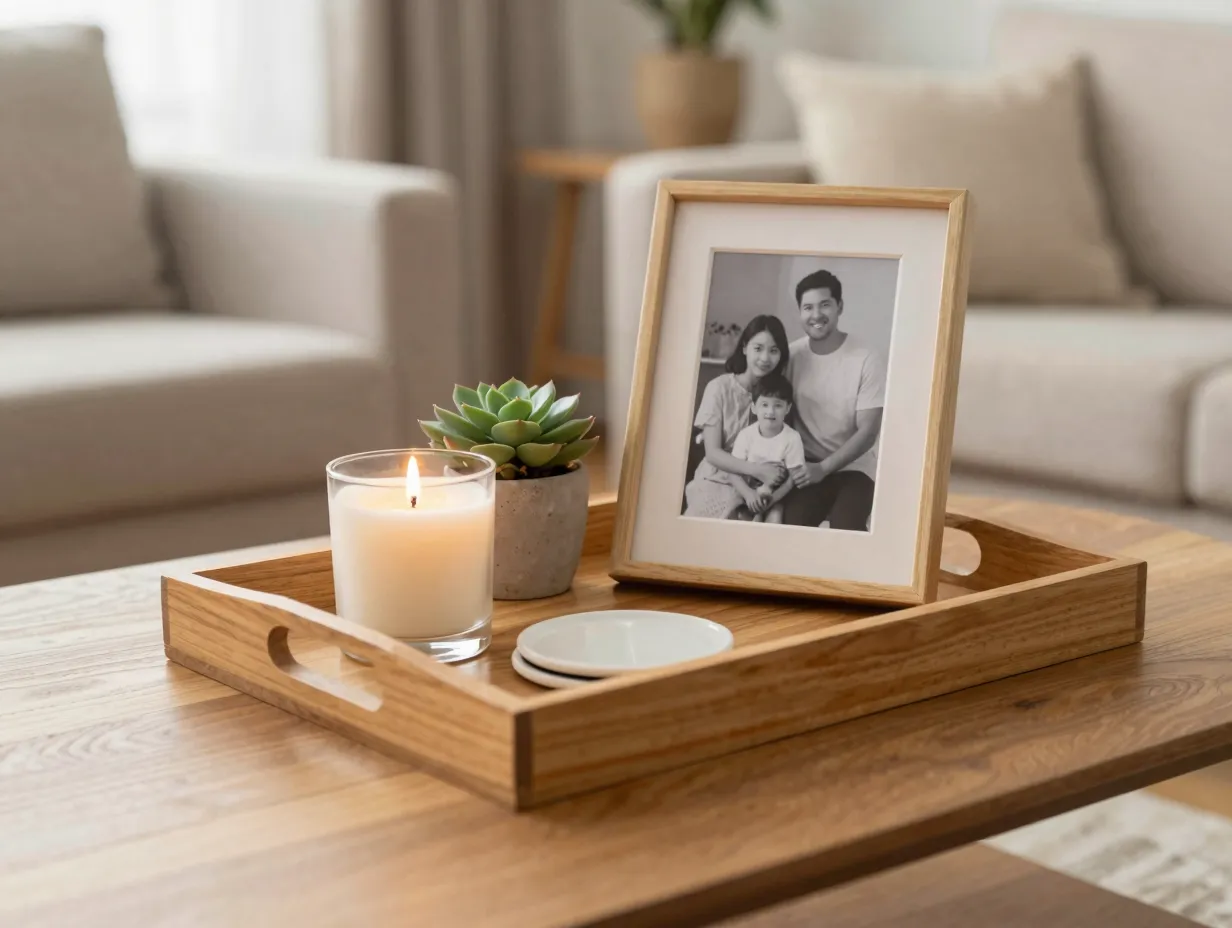
The final tip is also the most personal. A room can have perfect lighting, beautiful textures, and ideal furniture, but if it contains nothing that reflects the people who live in it, it will always feel like a hotel lobby rather than a home [4].
Personal decor is not about clutter. It is about intention. Choose items that carry meaning: framed family photographs, a collection of books you have actually read, a handmade piece from a local artisan, a plant you have nurtured from a cutting, or a candle in a scent that makes you feel at ease.
A simple personal decor checklist:
- At least one framed photograph or piece of personal artwork
- Books displayed on a shelf or coffee table (not just for decoration, actually read them)
- One or two plants that you care for regularly
- A candle or diffuser with a scent that feels like home
- One handmade or vintage item with a story attached to it
Decorative trays are a practical tool here. A well-styled tray on a coffee table or ottoman can hold a candle, a small plant, a coaster, and a meaningful object, creating a curated vignette that feels personal without looking cluttered [4].
Common Mistakes That Undermine a Cozy Living Room
Even with the best intentions, certain habits consistently work against coziness. Being aware of them is half the battle.
Avoid these common errors:
- Over-lighting with harsh overhead fixtures: Replace or supplement with warm, layered alternatives
- Choosing furniture for looks over comfort: Always sit in a sofa before buying it
- Leaving walls completely bare: Even one or two pieces of art significantly warm a space
- Using too many cool-toned colors: Cool grays, stark whites, and blue-greens create distance rather than warmth
- Ignoring scale: Tiny rugs that do not extend under furniture make rooms feel disconnected and cold
- Eliminating all clutter without adding warmth: Minimalism and coziness can coexist, but a room stripped of all personality feels sterile
The most common mistake I see is the “floating rug” problem, a rug so small that no furniture legs sit on it. This makes the seating area feel unanchored and cold. As a general rule, your rug should be large enough for at least the front legs of every major seating piece to rest on it.
How to Prioritize These Tips on a Budget
Not every tip requires a major investment. Here is a practical breakdown of which changes deliver the most impact per dollar spent:
High impact, low cost:
- Swap light bulbs to warm 2700K options (under $20)
- Add a throw blanket and two accent pillows ($30-$80)
- Rearrange existing furniture into a conversation cluster (free)
Medium investment, high return:
- Purchase a larger area rug to properly anchor the seating area ($100-$400)
- Add a floor lamp or table lamp for layered lighting ($50-$200)
- Introduce one natural material element like a jute basket or wooden tray ($20-$80)
Longer-term investments:
- Replace uncomfortable furniture with deep-cushioned alternatives
- Install dimmer switches on existing light fixtures
- Commission or purchase one meaningful piece of art
The beauty of the 8 Cozy Living Room Design Tips for Your Ultimate Comfort Zone framework is that you do not need to implement all eight at once. Start with the changes that cost the least and deliver the most immediate sensory impact, typically lighting and texture, and build from there.
Conclusion
Creating a cozy living room is not a single project with a finish line. It is an ongoing process of refinement, personal expression, and sensory awareness. The 8 Cozy Living Room Design Tips for Your Ultimate Comfort Zone covered in this guide give you a clear, actionable roadmap: start with a warm neutral palette, introduce jewel-toned accents, layer natural materials and soft textures, build a multi-source lighting scheme, choose furniture for genuine comfort, add conversation-starting pieces, and finally, fill the space with decor that means something to you.
Your next steps:
- Walk through your current living room and identify the one element that feels coldest or most impersonal
- Choose one tip from this list that addresses that gap and implement it this week
- Photograph the room before and after, the visual comparison will motivate you to keep going
- Revisit the list every few months and add one new layer of warmth
A living room that truly functions as a comfort zone does not happen by accident. It is built, layer by layer, with intention and care. Start today, even with one throw blanket and a warmer light bulb. The difference will surprise you.
References
[1] Victoria David Beckham Luxe Wood Living – https://www.homesandgardens.com/celebrity-homes/victoria-david-beckham-luxe-wood-living?utm_source=openai
[2] Andy Cohen Jewel Toned Living Room – https://www.homesandgardens.com/celebrity-homes/andy-cohen-jewel-toned-living-room?utm_source=openai
[3] Unexpected Living Room Pieces Collection – https://www.livingetc.com/shopping/unexpected-living-room-pieces-collection?utm_source=openai
[4] Cozy Living Room Ideas – https://cozyedendecor.com/living-room-decor/cozy-living-room-ideas/?utm_source=openai