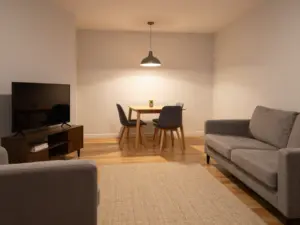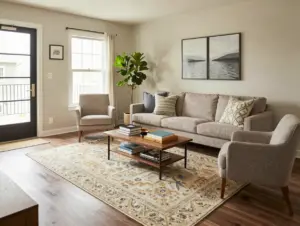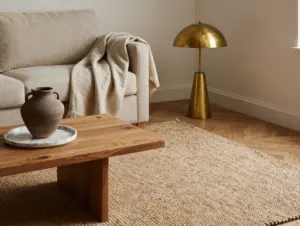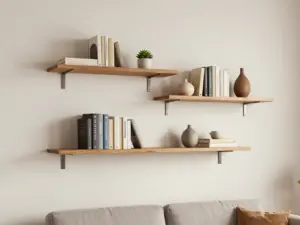
9 One Bedroom Apartment Decor Strategies For A Unified Look
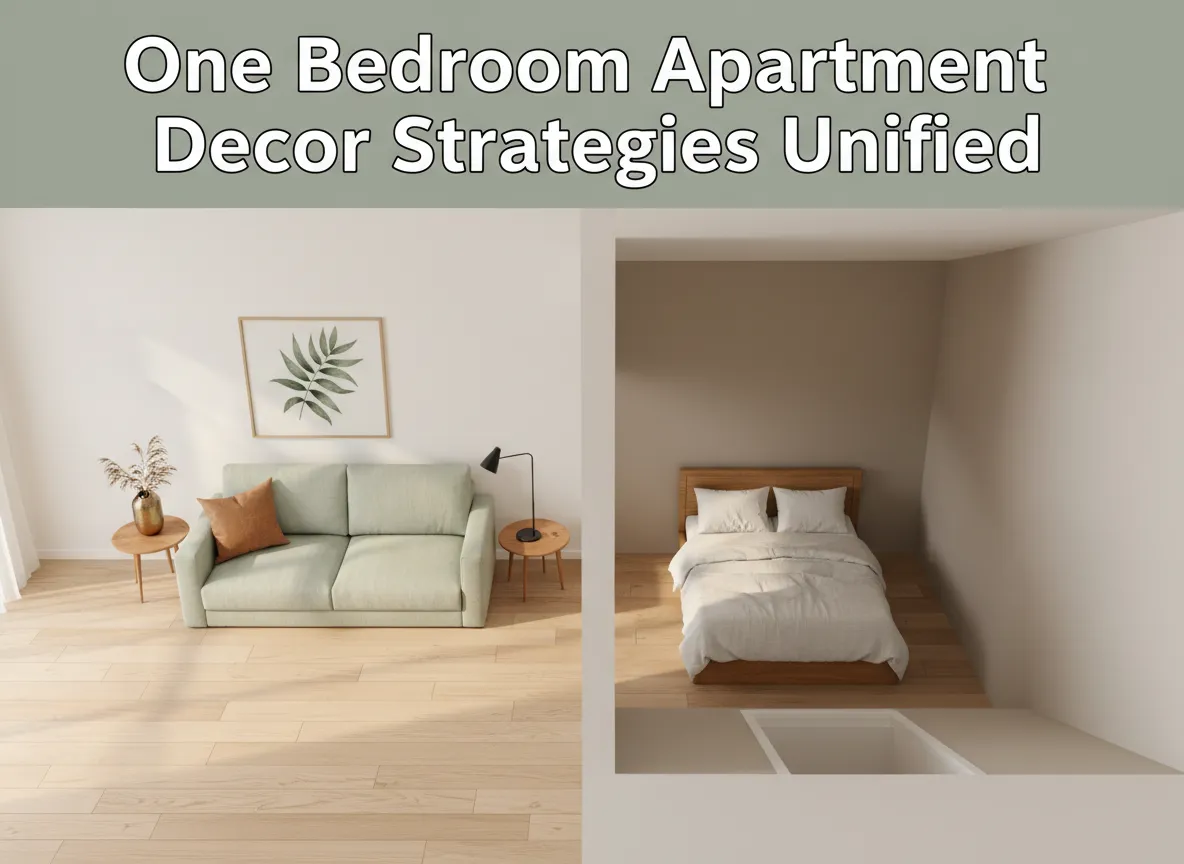
Only 37% of renters say they are satisfied with how their apartment looks, yet most of the fixes that create a pulled-together home cost nothing more than a clear plan. If you have ever walked into a one bedroom apartment and felt instantly at ease, chances are the designer behind it was using a handful of deliberate, repeatable strategies. This guide breaks down the 9 One Bedroom Apartment Decor Strategies For A Unified Look so you can apply each one step by step, whether you are starting from scratch or refreshing a space you have lived in for years.
Disclosure: This post contains affiliate links. As an Amazon Associate, we earn from qualifying purchases, and at no extra cost to you.
Key Takeaways
- Limiting your palette to three colors and following a 60/30/10 ratio is the single fastest way to create visual harmony in a small space.
- Standardizing to one wood tone and one metal finish eliminates the most common source of decorating chaos.
- Continuous flooring and related wall colors trick the eye into seeing a larger, more connected apartment.
- Multi-functional furniture and consistent textiles do double duty, they save space and reinforce your chosen style.
- Small details like matching hardware, unified lighting, and a single art theme tie every room together without a full renovation.
Why a Unified Look Matters in a One Bedroom Apartment
A one bedroom apartment presents a unique decorating challenge. Unlike a larger home where each room can tell its own visual story, a compact floor plan means every choice you make in the living area is visible from the kitchen, and the bedroom bleeds into the hallway. Clashing styles, mismatched finishes, and random color choices amplify the feeling of disorder and shrink the perceived size of the space.
When I first moved into a 540-square-foot apartment, I made every mistake in the book. I bought a gray sofa, a brown wooden coffee table, a black metal floor lamp, and a white bookshelf, all from different stores, all “neutral,” all somehow fighting each other. The room felt busy despite being nearly empty. It was not until I committed to the 9 One Bedroom Apartment Decor Strategies For A Unified Look outlined below that the space finally started to breathe.
Research consistently shows that visual cohesion in a small space reduces perceived clutter and increases the sense of square footage [3]. The strategies below are not about spending more money. They are about making intentional decisions that compound on each other.
The 9 One Bedroom Apartment Decor Strategies For A Unified Look
1. Commit to a Three-Color Palette and the 60/30/10 Rule
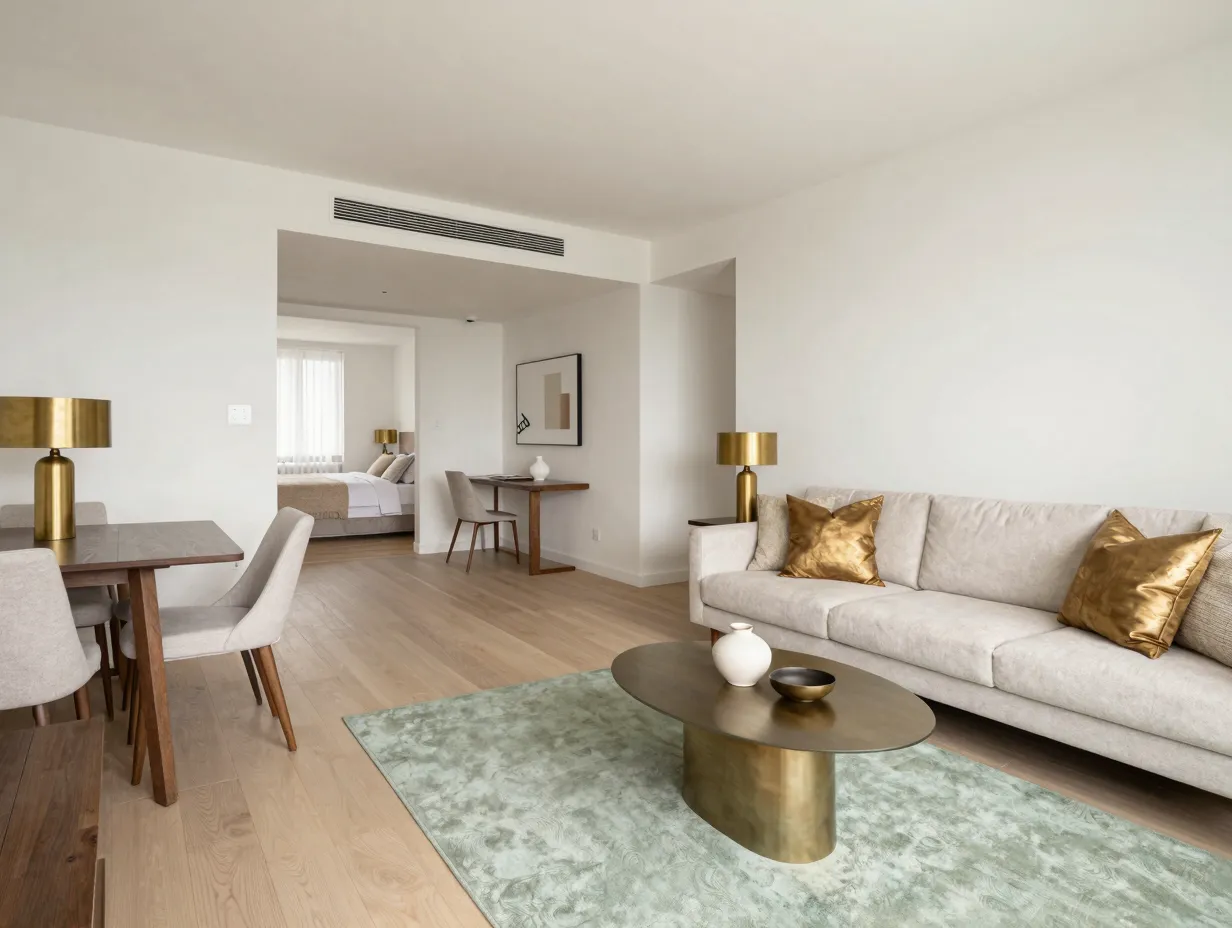
The most powerful tool in any decorator’s kit is color discipline. Choose exactly three colors: one dominant, one secondary, and one accent. Then distribute them in a 60/30/10 ratio across your entire apartment.
How the ratio works:
- 60% dominant color: walls, large furniture, flooring
- 30% secondary color: upholstery, curtains, rugs
- 10% accent color: throw pillows, art, small accessories
This framework prevents the visual noise that comes from too many competing hues [2]. For a one bedroom apartment, a practical example might be warm white (60%), soft sage green (30%), and brushed brass (10%). Every purchase you make should pass the test: does this item fit one of my three colors?
“Color is the first thing your eye registers when entering a room. Get the palette right, and everything else becomes easier.”, Interior design principle cited across multiple sources [6]
Keep the same palette flowing from the living area into the bedroom. This is especially important in open-plan layouts where the eye travels across zones without interruption [4].
2. Standardize to One Wood Tone and One Metal Finish
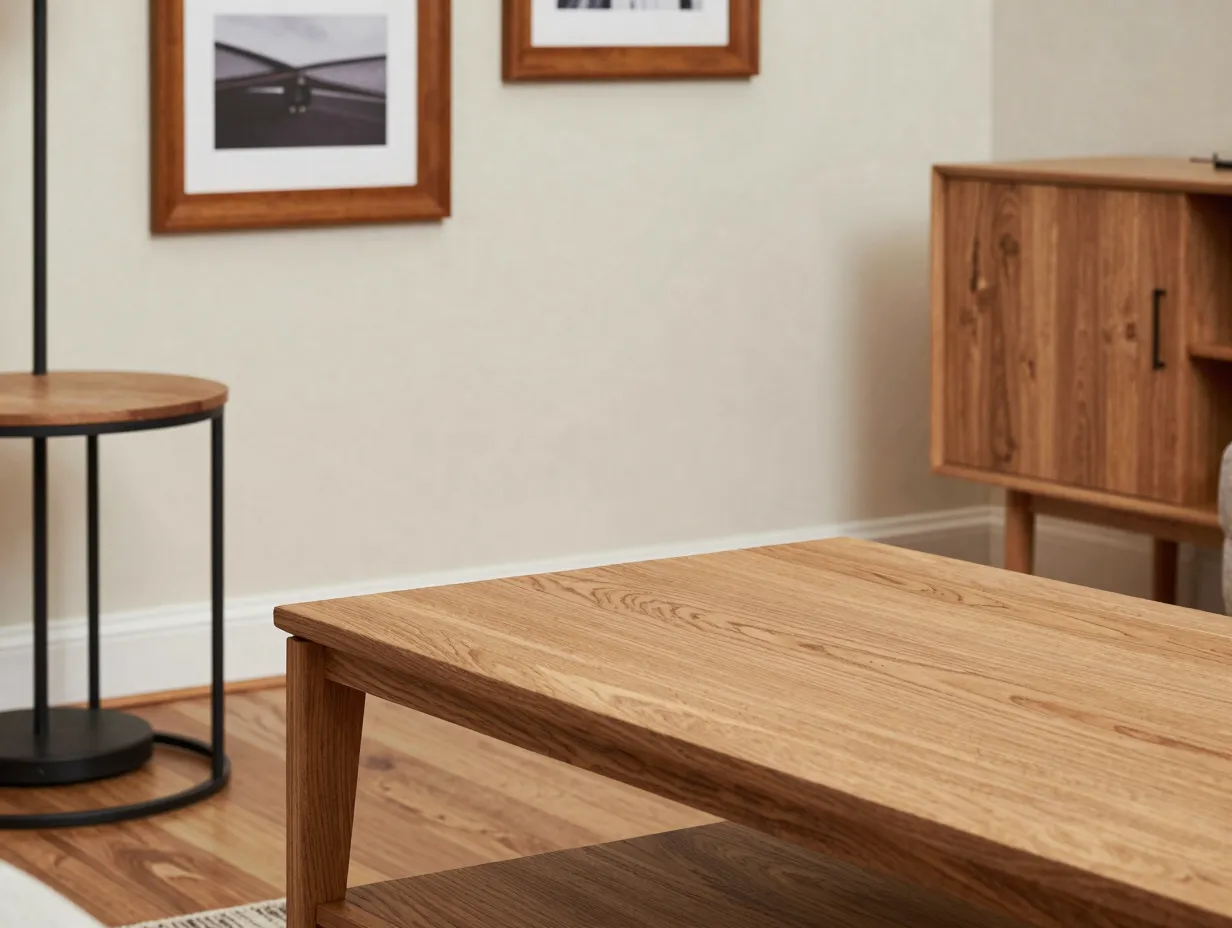
Mixed materials are the silent killer of a unified look. Walk through most apartments and you will find light pine shelves next to a dark walnut dining table, silver cabinet pulls next to a gold floor lamp, and a black iron curtain rod above a chrome towel bar. Each individual choice seemed fine at the time. Together, they create visual noise.
The fix is simple: pick one wood tone and one metal finish, then stick to them everywhere [1].
| Material Category | Unified Choice Example | Where It Appears |
|---|---|---|
| Wood tone | Medium warm oak | Floors, furniture, frames |
| Metal finish | Matte black | Lamps, hardware, curtain rods |
This does not mean everything must match perfectly. Variation in texture, grain, and shade within the same family is natural and desirable. What you are eliminating is the jarring contrast between, say, cool-toned silver and warm-toned gold appearing in the same sightline [7].
When shopping, carry a small swatch or photo of your chosen wood tone on your phone. Before buying any new piece, hold it up to the swatch. This one habit alone will save you from dozens of costly mismatches.
3. Use Continuous Flooring to Connect Every Zone
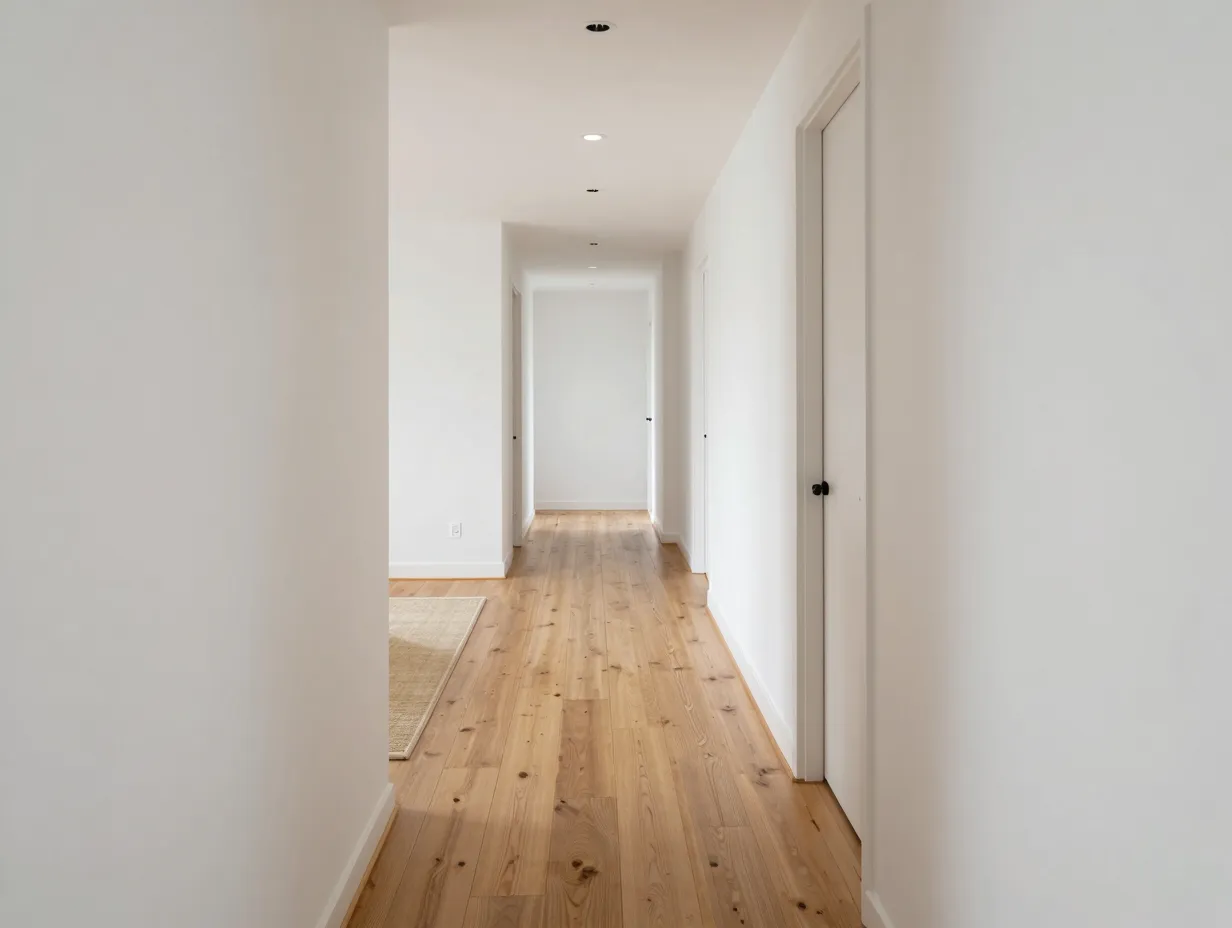
Flooring is the largest surface in any apartment, and it is the one element that physically connects every room. Interrupting it with multiple materials, tile in the kitchen, carpet in the living room, laminate in the bedroom, fragments the space and makes it feel smaller and more chaotic.
Where possible, run a single flooring material throughout the entire apartment [5]. Light oak hardwood or a warm-toned luxury vinyl plank are popular choices because they read as neutral, work with most color palettes, and visually expand a small floor plan.
If you are renting and cannot change the flooring, use large area rugs in the same color family to create the illusion of continuity. A rug in the living area and a matching or complementary rug in the bedroom, both in your dominant 60% color, will tie the zones together even when the underlying floor material changes [9].
Quick tip: Lay rugs at the same angle as the room’s longest wall. Diagonal placement fragments the eye’s path and undermines the unified effect you are building.
4. Align Wall Colors Across Zones Using a Tonal Progression
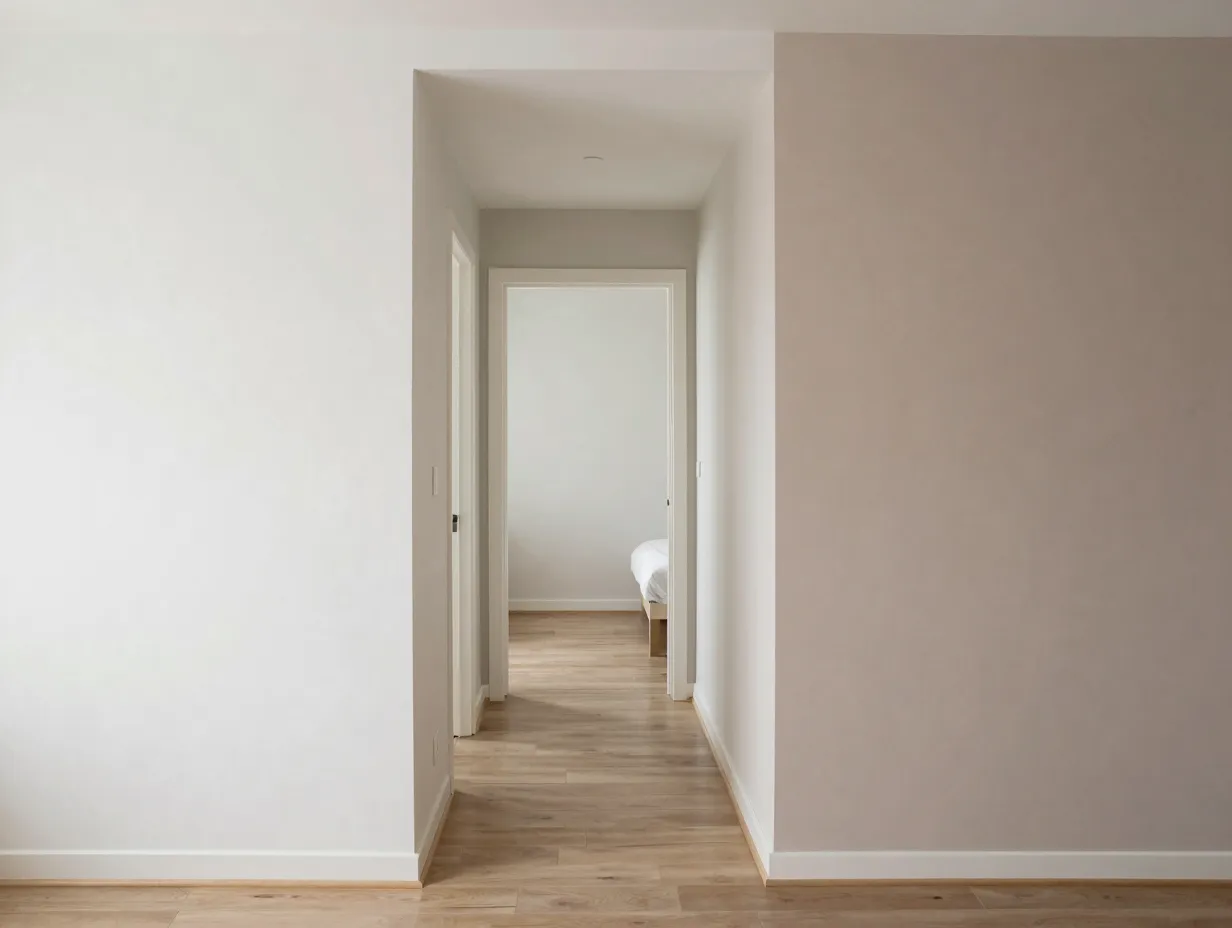
Paint colors are one of the cheapest and most impactful tools available to any decorator. In a one bedroom apartment, the goal is not to paint every wall the same color, that can feel flat and institutional, but to use tonal progressions that guide the eye smoothly from one zone to the next.
A tonal progression means choosing colors from the same family that shift slightly in depth or warmth as you move through the space [3]. For example:
- Living area: warm white (lightest)
- Hallway: pale greige (mid-tone)
- Bedroom: soft taupe (deepest)
This creates the feeling of a deliberate journey through the apartment rather than a series of disconnected rooms. The colors are clearly related, which reinforces the unified look without making the space feel monotonous.
If you have an open-plan layout with no walls separating the kitchen and living area, keep those surfaces in the same color. Introducing a different hue on the kitchen wall immediately breaks the visual flow [4].
5. Choose Multi-Functional Furniture in a Consistent Style
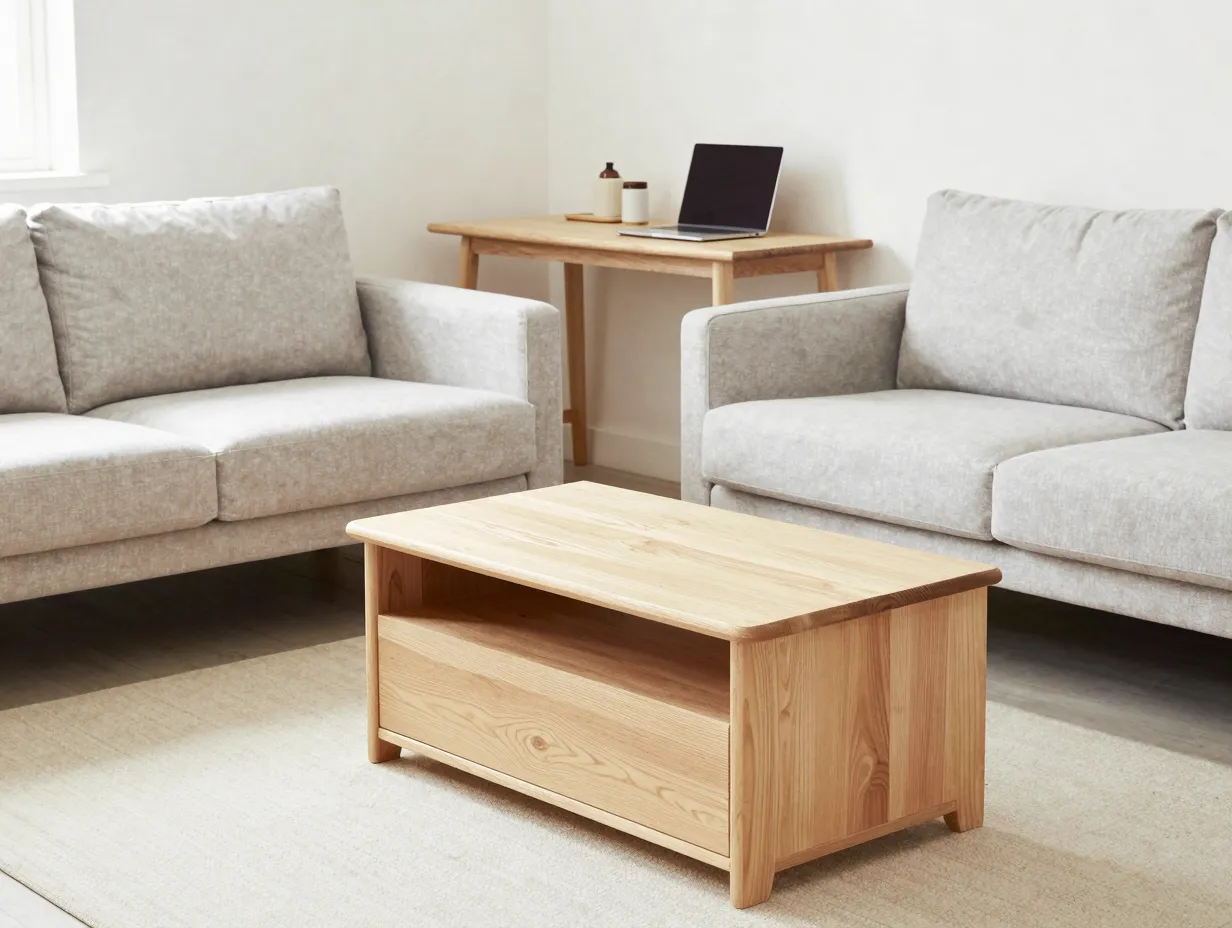
In a one bedroom apartment, every piece of furniture must earn its place. But beyond function, every piece must also speak the same visual language. A sleek mid-century modern sofa next to a rustic farmhouse dining table creates a style conflict that no amount of clever accessorizing can resolve.
Before buying any furniture, define your style in one or two words: “modern minimalist,” “warm Scandinavian,” “eclectic bohemian.” Then filter every purchase through that lens [10].
Multi-functional pieces are especially valuable in small spaces:
- A storage ottoman doubles as a coffee table and seating.
- A daybed or sofa bed transforms the living room into a guest room.
- A dining table with folding leaves expands for entertaining and compresses for daily use.
- A bed frame with built-in drawers eliminates the need for a separate dresser.
- A console table behind the sofa serves as a desk and display surface.
The key is that all of these pieces share the same style DNA [5]. If your style is “warm Scandinavian,” every multi-functional piece should feature clean lines, light wood, and minimal ornamentation.
6. Layer Textiles in the Same Color Family
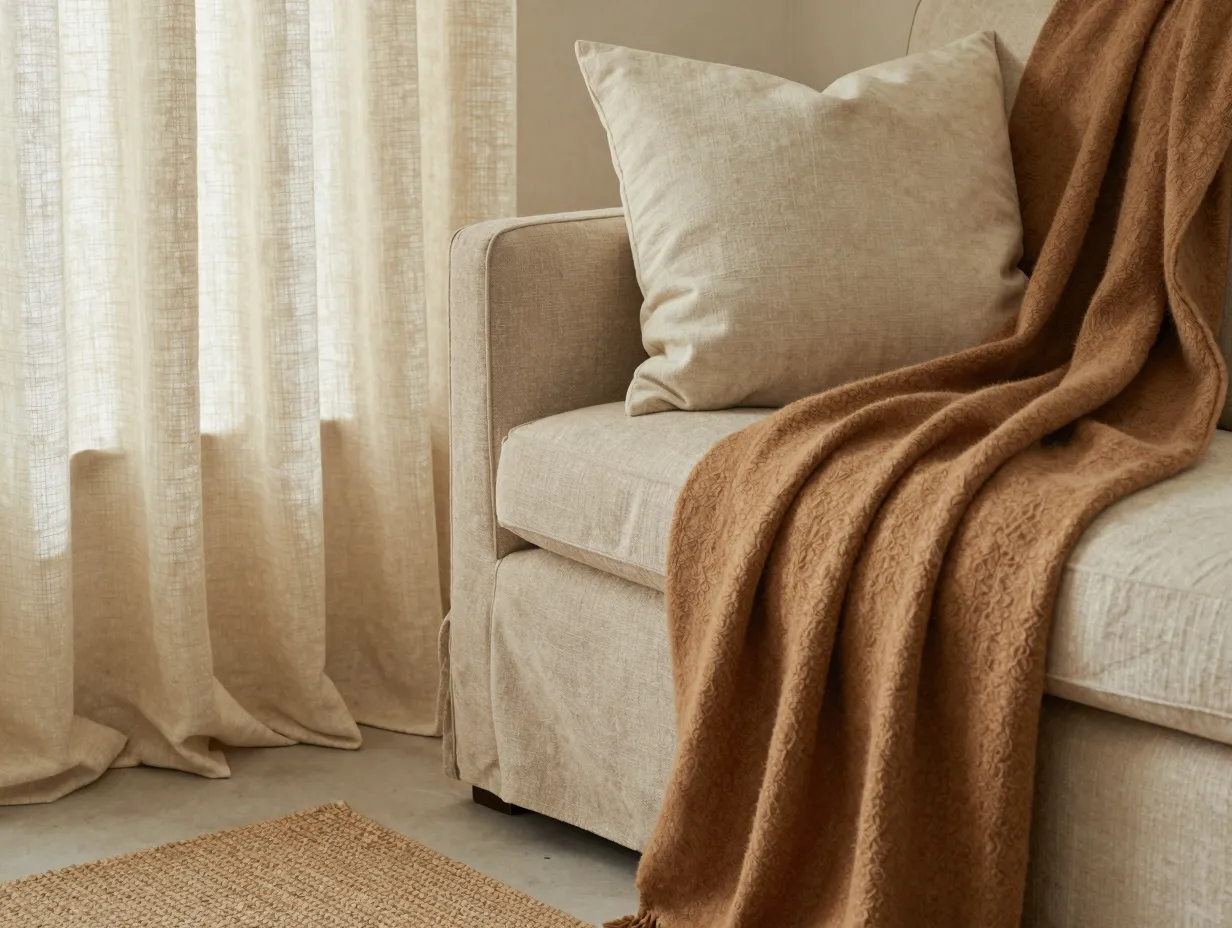
Textiles, rugs, curtains, throw pillows, blankets, and upholstery, are the easiest elements to swap out and the most powerful for creating warmth and cohesion. The mistake most people make is treating each textile as an independent purchase rather than as part of a coordinated system.
The rule I follow: every textile in the apartment should belong to the same color family, even if the shades and textures vary [6]. In a warm neutral palette, this might mean:
- Cream linen curtains
- Ivory cotton throw pillows
- Caramel wool blanket
- Oatmeal jute rug
None of these are the same color, but they all belong to the same warm, earthy family. The variation in texture, linen, cotton, wool, jute, adds visual interest without introducing color conflict.
Extend this principle into the bedroom. The bedding, the window treatment, and any decorative pillows should all pull from the same palette you established in the living area [2]. This is the detail that makes a one bedroom apartment feel like it was designed rather than assembled.
7. Establish a Single Art and Decor Theme
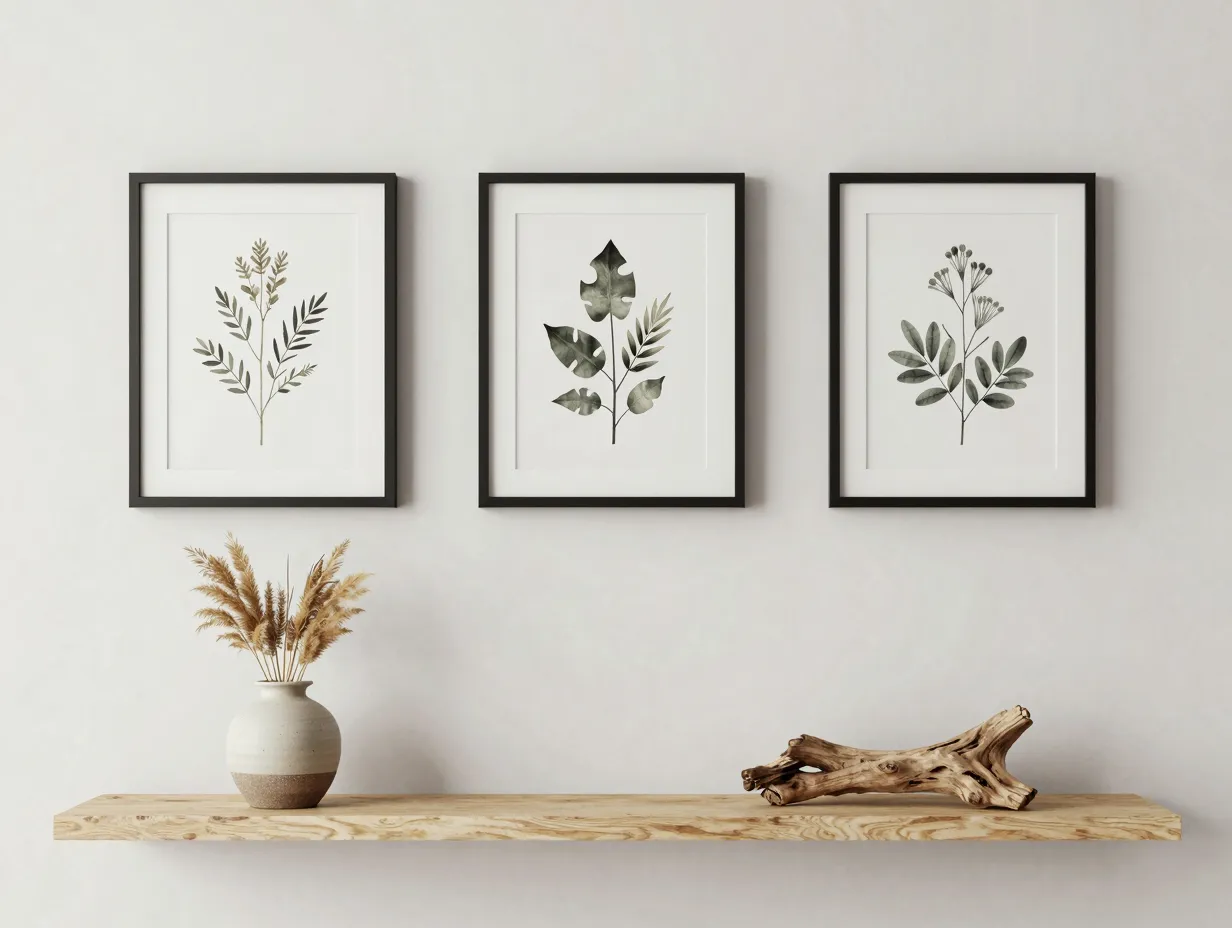
Artwork and decorative objects are where most people’s unified vision falls apart. A gallery wall of mismatched frames, a shelf crowded with souvenirs from different decades, a collection of candles in every color, these are the visual equivalent of static on a radio signal.
Choose one overarching theme for your art and decor. This does not mean everything must be identical. It means every object should feel like it belongs to the same family [7]. Some examples:
- Nature-inspired: botanical prints, ceramic vases, driftwood, linen textures
- Geometric modern: abstract prints, angular sculptures, metallic accents
- Travel and culture: maps, handcrafted textiles, earthy tones, layered patterns
Once you have your theme, edit ruthlessly. Remove anything that does not fit. Display fewer objects with more intention rather than crowding every surface. In a small apartment, negative space is not emptiness, it is breathing room that makes your curated pieces stand out [9].
For gallery walls, use frames in the same finish (all black, all natural wood, all white) and leave consistent spacing between pieces. This single change transforms a random collection into a deliberate display.
8. Unify Lighting Fixtures Across the Apartment
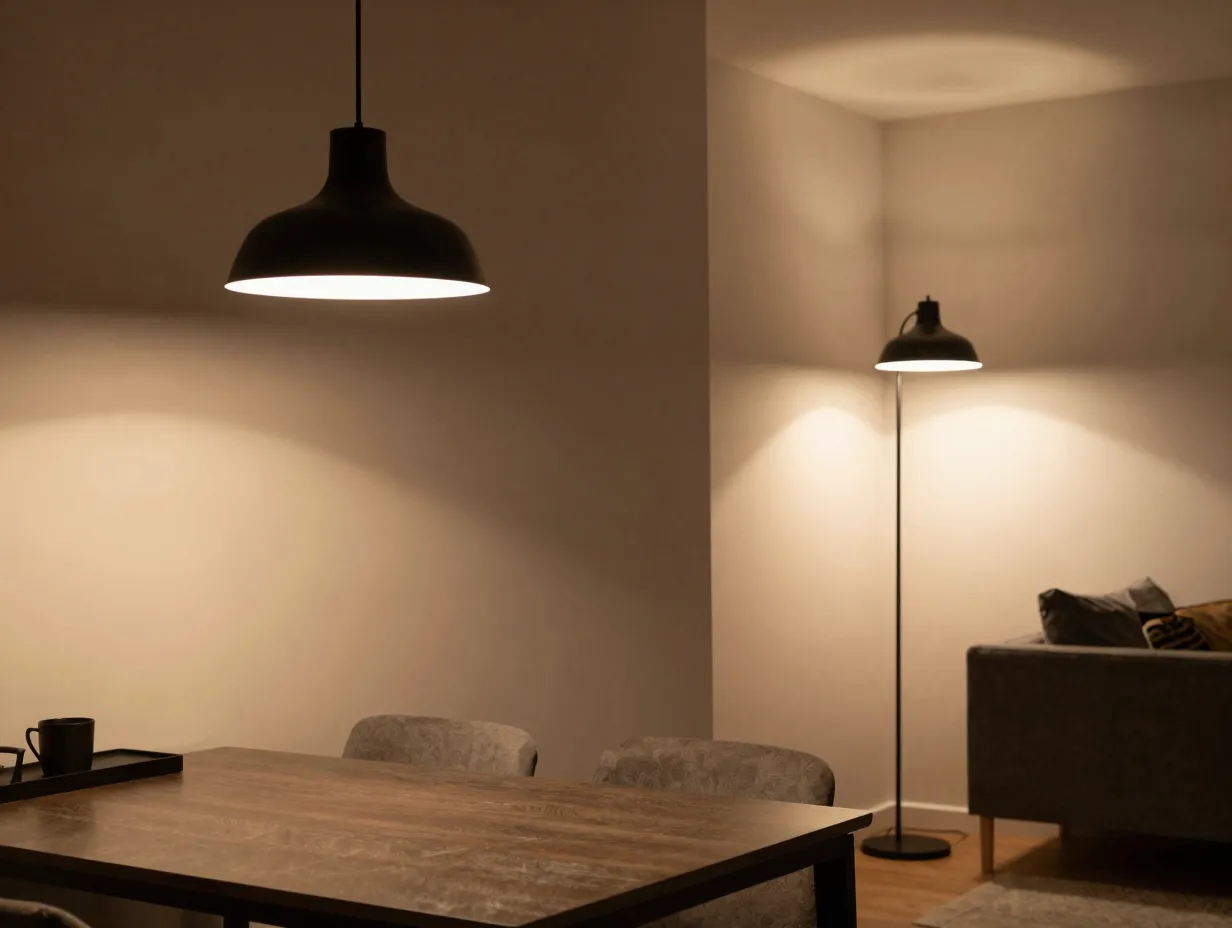
Lighting is the element that ties a room together at night, and it is one of the most overlooked aspects of apartment decorating. When every light fixture is a different style, a brushed nickel ceiling fan, a black iron floor lamp, a chrome desk lamp, a gold pendant over the dining table, the apartment feels like a showroom floor rather than a home.
Apply the same metal finish rule from Strategy 2 to your lighting [1]. If you chose matte black as your metal finish, every light fixture should be matte black or as close to it as possible. If you chose brushed brass, let that carry through from the bedroom sconce to the kitchen pendant.
Beyond finish, consider the quality of light:
- Warm white bulbs (2700K-3000K) create a cozy, residential feel that suits most one bedroom apartments.
- Cool white bulbs (4000K+) feel clinical and can make a small space feel sterile.
- Dimmable fixtures allow you to shift the mood from bright and functional to soft and relaxing without changing any decor.
Layer your lighting with at least three sources per zone: ambient (overhead), task (desk or reading lamp), and accent (shelf lighting or candles). This layering creates depth and warmth that a single overhead fixture can never achieve [3].
9. Repeat Key Elements Throughout the Space for Visual Rhythm
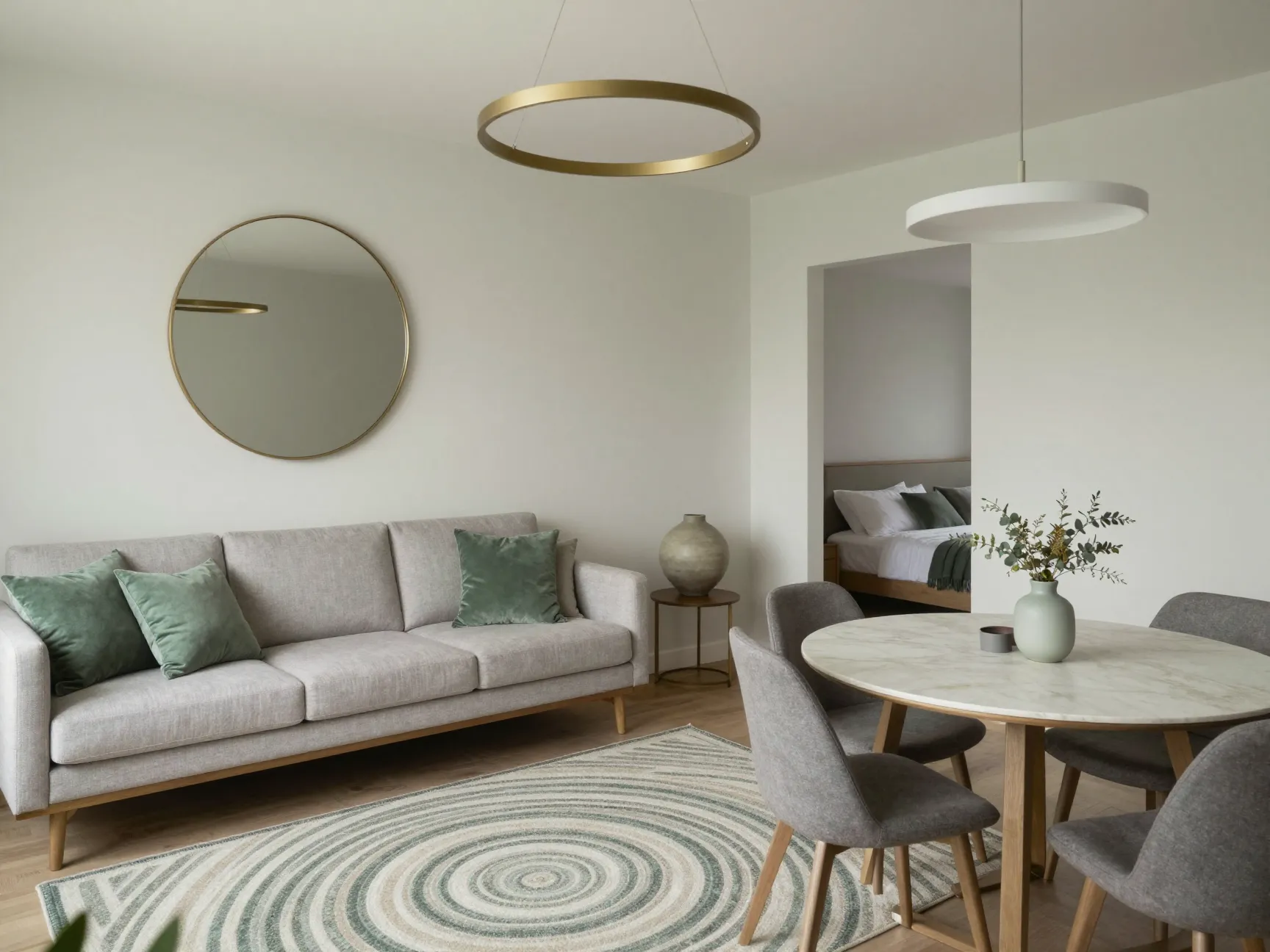
The final strategy is the one that pulls everything together: repetition. When a color, material, shape, or texture appears in multiple places throughout the apartment, the eye reads it as intentional. This creates visual rhythm, the design equivalent of a recurring melody in music.
Practical ways to create repetition in a one bedroom apartment:
- Use the same throw pillow fabric on the sofa and the bedroom chair.
- Repeat your accent color (the 10% from Strategy 1) in three to five places: a vase, a candle, a book cover, a small sculpture.
- Echo a geometric shape, say, a circle, in your mirror, your rug pattern, and your pendant light.
- Place the same plant species (or same pot style) in both the living area and the bedroom.
Repetition does not mean duplication. You are not placing identical objects everywhere. You are allowing certain visual notes to recur so that the eye feels a sense of recognition and calm as it moves through the space [10].
This strategy is especially effective in a one bedroom apartment because the floor plan is compact enough for repetition to register immediately. In a larger home, you might need to repeat an element six or seven times before it reads as intentional. In a small apartment, three well-placed repetitions are enough to create a coherent visual story [8].
Putting the 9 Strategies Together: A Practical Checklist
Before you shop for a single new item, work through this checklist:
- Have I chosen my three colors and assigned them to the 60/30/10 ratio?
- Have I selected one wood tone and one metal finish?
- Is my flooring (or rug strategy) creating visual continuity across zones?
- Are my wall colors in a tonal progression from the same family?
- Does every furniture piece share the same style direction?
- Do all my textiles belong to the same color family?
- Have I chosen a single art and decor theme and edited to match it?
- Are all my light fixtures in the same metal finish with warm-white bulbs?
- Am I repeating at least three key visual elements throughout the space?
Print this list. Take it shopping. Refer to it every time you are tempted by a beautiful object that does not fit the system you have built.
Common Mistakes That Break a Unified Look
Even with the best intentions, certain habits undermine cohesion. Watch out for these:
- Buying furniture from a single store set: Matching sets look coordinated in the showroom but often feel generic and flat at home. Mix pieces within the same style family instead.
- Ignoring the ceiling: A white ceiling in a warm-toned apartment can feel jarring. Consider painting it one shade lighter than your dominant wall color.
- Over-accessorizing: More objects do not create more personality. They create more noise. Edit down to the pieces that genuinely matter.
- Mismatched scale: A tiny rug under a large sofa, or an oversized artwork above a small console, breaks the visual balance that unified decor depends on [5].
- Neglecting the bedroom: Many people focus all their decorating energy on the living area and treat the bedroom as an afterthought. In a one bedroom apartment, the bedroom is half the story. Give it equal attention [2].
Conclusion
The 9 One Bedroom Apartment Decor Strategies For A Unified Look are not about following rigid rules. They are about making decisions that compound. When your colors, materials, textiles, furniture, lighting, and art all speak the same language, the result is a space that feels intentional, calm, and larger than its square footage suggests.
Start with Strategy 1, your three-color palette and the 60/30/10 ratio. Everything else flows from that foundation. Once your colors are locked in, move to materials (Strategy 2), then flooring (Strategy 3), and work your way through the list. You do not need to execute all nine strategies at once. Even applying three or four of them will produce a noticeable transformation.
Your next steps:
- Photograph every room in your apartment today. Print the photos and lay them side by side. Look for the mismatches you have been ignoring.
- Choose your three colors this week. Write them down and post them somewhere visible.
- Identify the one change that would have the biggest impact, for most people, it is standardizing the metal finish or committing to a single art theme, and make that change first.
- Revisit the checklist above before every future purchase.
A unified apartment does not happen by accident. It happens because you decided, before buying a single thing, what story you wanted your home to tell.
References
[1] Apartment Furnishing 101 T732 – https://www.wayfair.com/sca/ideas-and-advice/guides/apartment-furnishing-101-T732
[2] 1 Bedroom Apartment Decorating Ideas – https://sundayflat.com/blog/1-bedroom-apartment-decorating-ideas/
[3] Innovative Design Ideas To Transform Your Onebedroom Apartme – https://www.homestyler.com/article/floorplanner/innovative-design-ideas-to-transform-your-onebedroom-apartme
[4] Designing The Perfect Onebedroom Apartment – https://www.homestyler.com/article/designing-the-perfect-onebedroom-apartment
[5] 21 How To Furnish A 1 Bedroom Apartment And Maximize Space – https://chicincubicles.com/21-how-to-furnish-a-1-bedroom-apartment-and-maximize-space/
[6] Small Apartment Decorating Ideas – https://framehouse.design/small-apartment-decorating-ideas
[7] 1 Bedroom Apartment Decor Ideas – https://thedecoruncle.com/1-bedroom-apartment-decor-ideas/
[8] Watch – https://www.youtube.com/watch?v=XwY2rZLw0uE
[9] 1 Bedroom Apartment Design Ideas – https://thehomeatlas.com/1-bedroom-apartment-design-ideas/
[10] Furnishing 1 Bedroom Apartments Best Tips Ideas – https://www.tukadubai.com/furnishing-1-bedroom-apartments-best-tips-ideas/