8 Bedroom Decor Ideas For Small Rooms To Maximize Style And Space
The average American bedroom measures just 132 square feet, yet most people spend nearly a third of their lives in that room. That gap between how much we use our bedrooms and how little space we often have is exactly why these 8 bedroom decor ideas for small rooms to maximize style and space matter so much in 2026.
Disclosure: This post contains affiliate links. As an Amazon Associate, we earn from qualifying purchases, and at no extra cost to you.
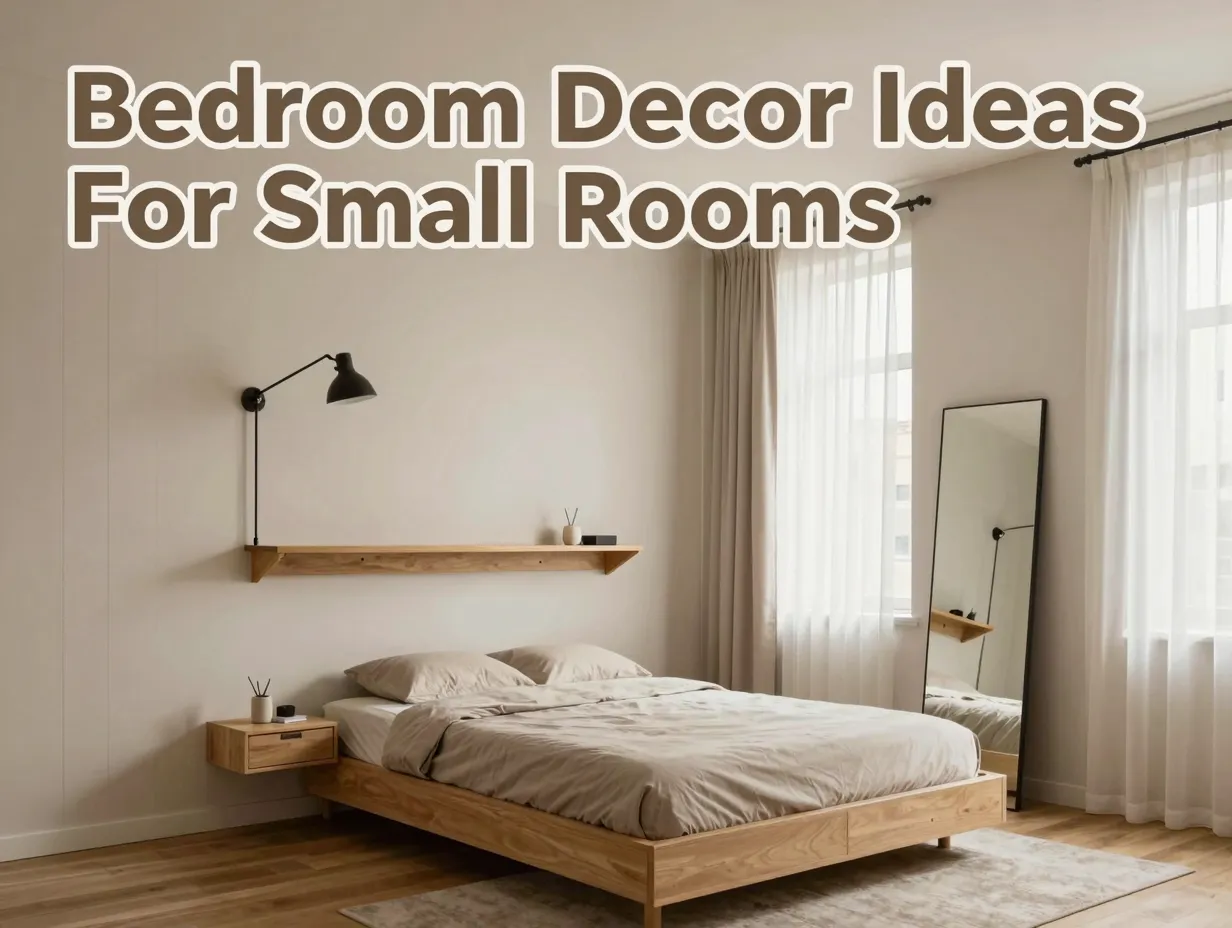
A small bedroom does not have to feel like a compromise. With the right design choices, even the tightest room can look intentional, feel restful, and function like a much larger space. I have spent time researching the latest guidance from top design platforms, home improvement retailers, and interior architecture sources to bring you a focused, practical guide that goes well beyond “just add mirrors.”
Whether you are dealing with a studio apartment, a guest room that doubles as an office, or a children’s bedroom that needs to do a lot of heavy lifting, this guide covers the most effective strategies available right now.
Key Takeaways
- Light, neutral color palettes remain the gold standard for visually expanding a small bedroom, but intentional deep-color “cocoon” schemes are a credible alternative in 2026.
- Floating and wall-mounted furniture frees floor space and makes rooms feel more open without sacrificing storage or function.
- Vertical storage, especially floor-to-ceiling cabinetry framing the bed, is one of the highest-impact changes you can make in a small room.
- Low-profile furniture combined with strategic bed positioning preserves sightlines and circulation space.
- Layered lighting from multiple sources, including wall-mounted fixtures, removes the need for bulky floor and table lamps that eat into precious floor area.
The Design Principles Behind Small Bedroom Transformation
Before diving into the individual ideas, it helps to understand why certain strategies work. Small rooms feel cramped for two main reasons: visual clutter and blocked sightlines. When your eye cannot travel freely across a room, your brain registers the space as smaller than it actually is. Every design idea in this guide addresses one or both of those problems.
The goal is not to make your room look like a showroom, it is to make it feel genuinely livable while looking polished. These principles apply whether your style leans minimalist, maximalist, bohemian, or traditional.
8 Bedroom Decor Ideas For Small Rooms To Maximize Style And Space
1. Start With a Space-Expanding Color Palette
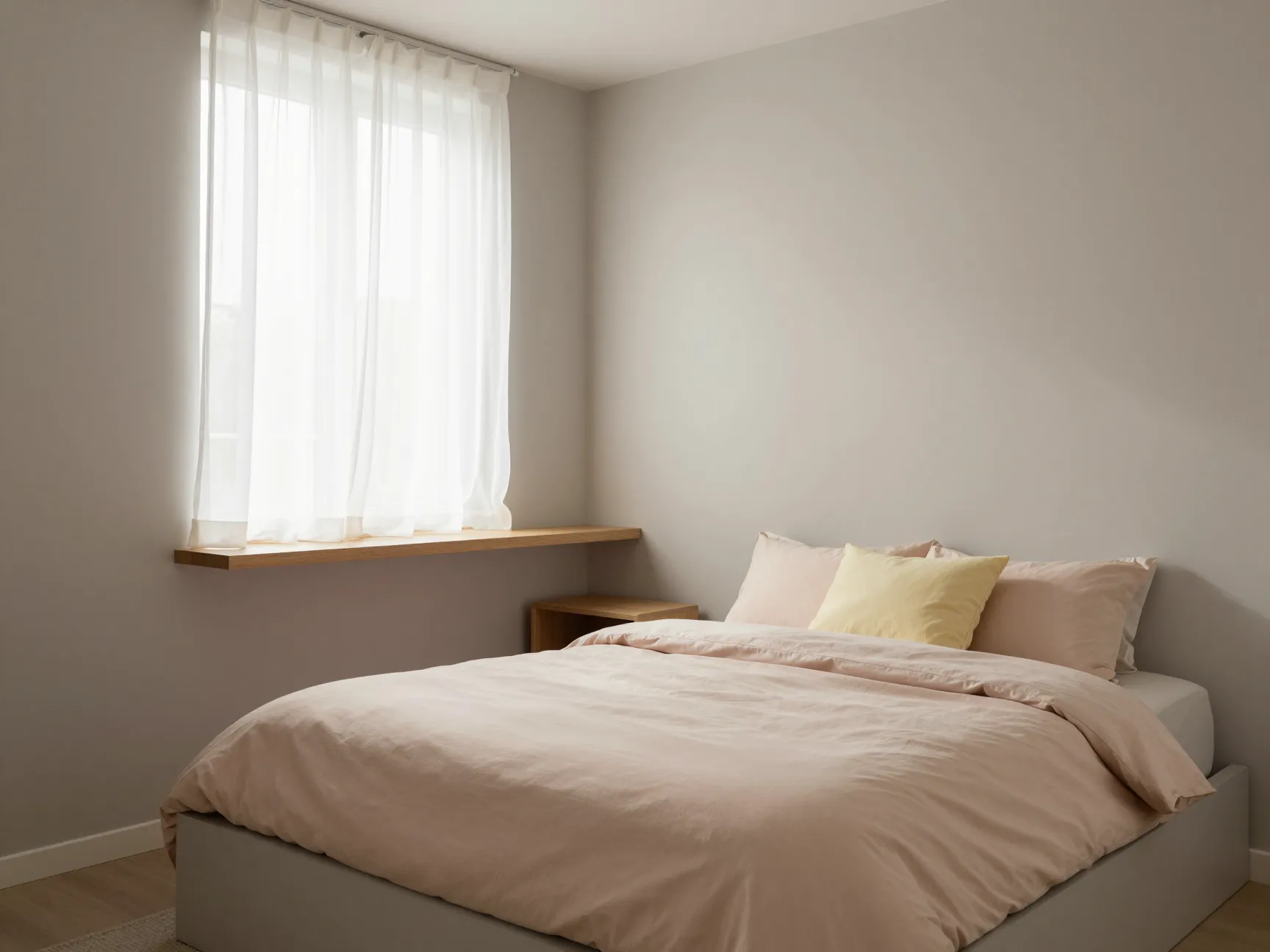
Color is the single fastest and most affordable lever you can pull in a small bedroom. Light, neutral tones, whites, warm grays, beige, blush, and soft pastels, reflect natural light and push walls visually outward [3][7][10]. Major design platforms and home retailers consistently recommend this approach as the primary starting point for any small bedroom refresh in 2026 [7][10].
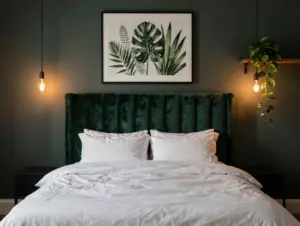
However, there is a compelling alternative worth knowing: the color-drenched cocoon. This approach uses deep, enveloping hues, think dusty teal, charcoal, or rich terracotta, applied consistently across walls, trim, and textiles to create a boutique-hotel atmosphere [3][11]. The key is consistency. When the same deep color wraps every surface, the eye stops registering boundaries and the room feels immersive rather than oppressive.
Quick color guide for small bedrooms:
| Palette Type | Best For | Example Tones |
|---|---|---|
| Light and neutral | Maximizing perceived space | White, warm gray, blush |
| Tonal pastels | Soft, airy feel | Sage, lavender, pale yellow |
| Color-drenched cocoon | Cozy, boutique atmosphere | Charcoal, terracotta, deep teal |
| Monochromatic | Visual continuity | One hue in multiple shades |
Whatever palette you choose, carry it consistently across walls, bedding, and soft furnishings. Contrast creates visual breaks that chop a room into smaller sections.
2. Replace Bulky Furniture With Floating and Wall-Mounted Pieces
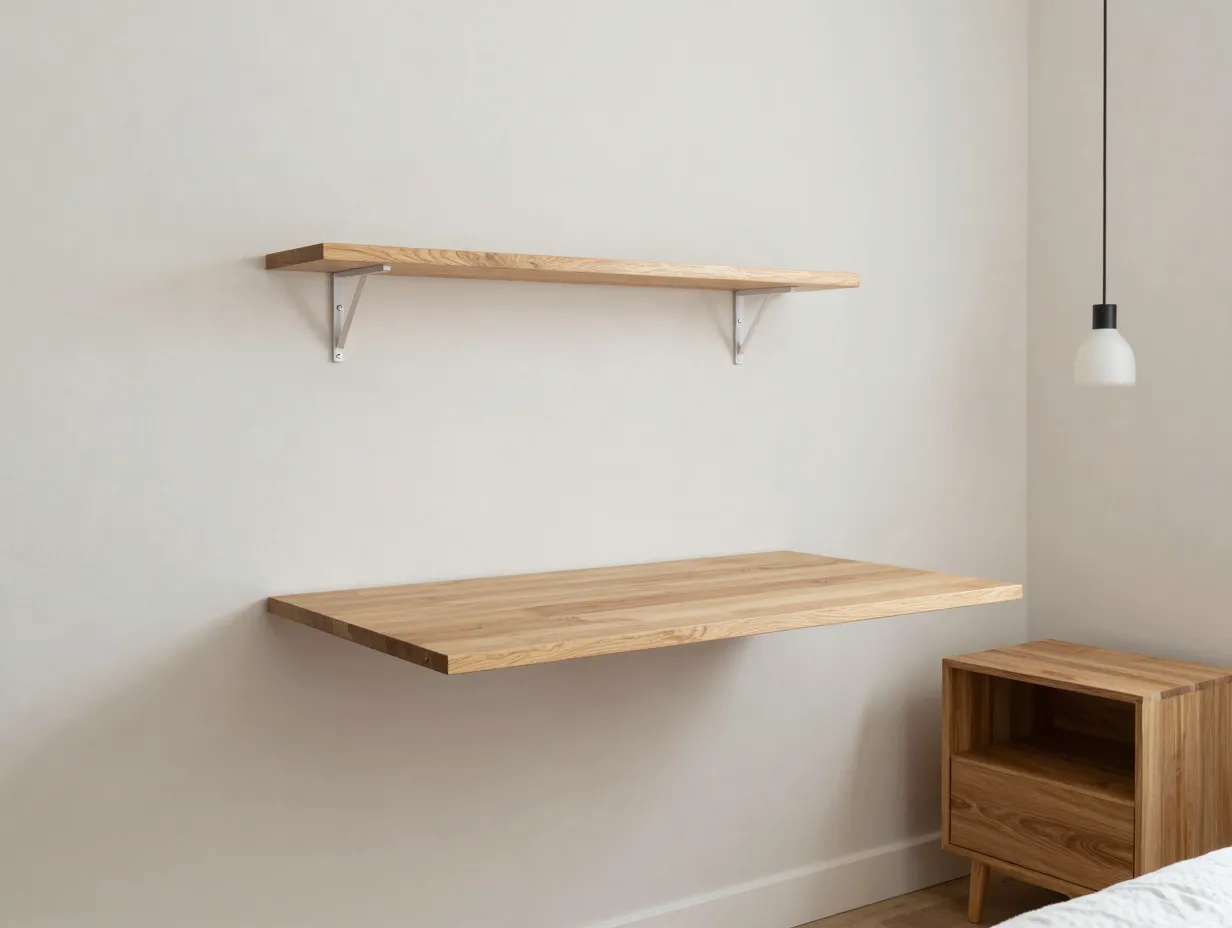
Floating furniture is one of the most effective small-bedroom trends of 2026 [1][3][7][9]. The logic is straightforward: when furniture sits on legs or mounts directly to the wall, the floor beneath it remains visible. That visible floor area makes the room feel larger, lighter, and more breathable.
In practice, this means replacing heavy wooden nightstands with wall-mounted shelves or narrow floating ledges [3][7]. It means considering a wall-mounted desk that folds flat when not in use, a game-changer for rooms that double as home offices [3][9]. Even a floating media console in a bedroom with a television can recover several square feet of visual floor space.
I once helped a friend redesign her 110-square-foot bedroom in a Brooklyn apartment. The single biggest change was swapping her two solid nightstands for wall-mounted oak shelves. The room immediately felt like it had gained a foot of width on each side, without moving a single wall.
What to float or wall-mount:
- Bedside shelves or narrow floating ledges
- Desk surfaces with fold-down brackets
- Media consoles and television mounts
- Bookshelves positioned at waist height and above
- Pendant lights or swing-arm sconces instead of table lamps
3. Build Vertical Storage Around the Bed
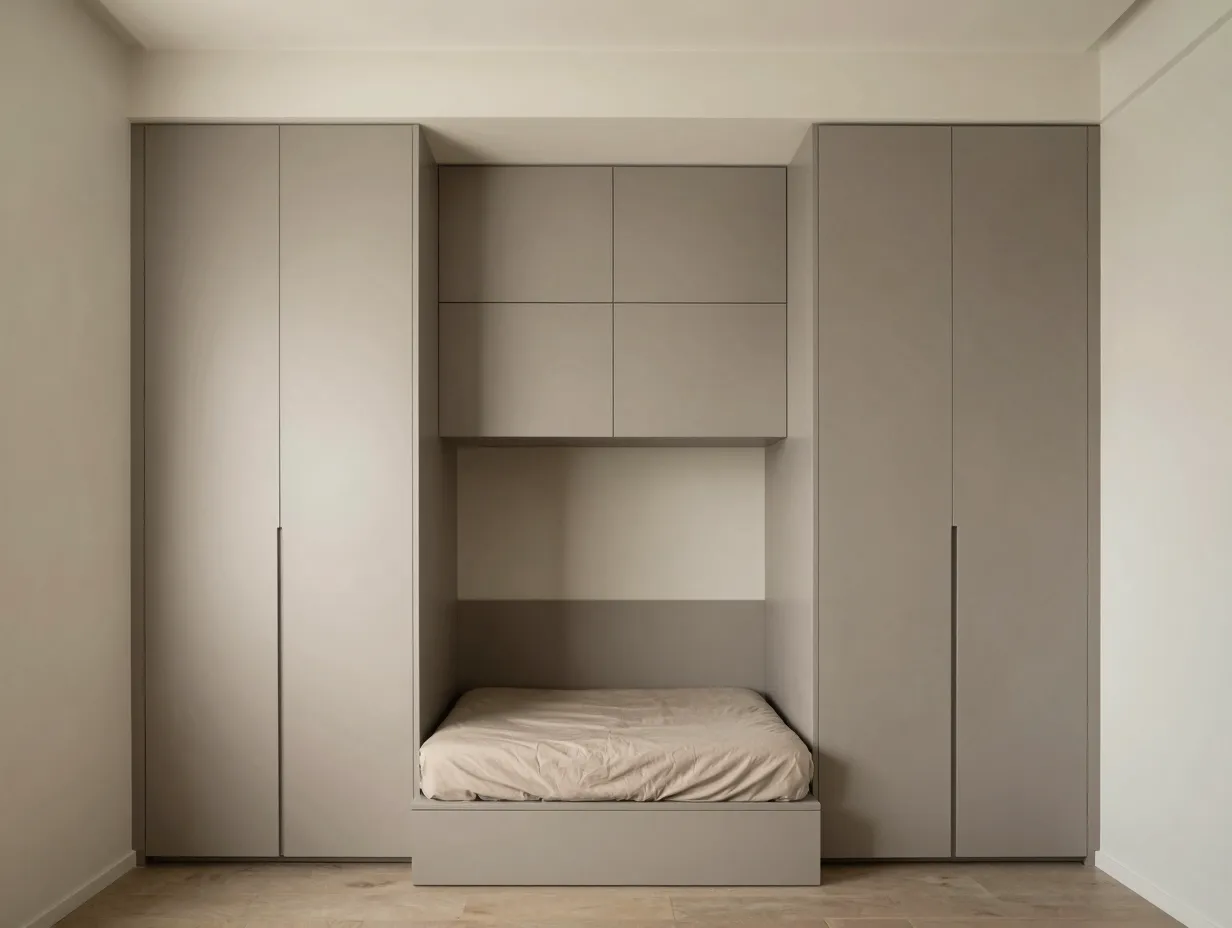
If floating furniture is about freeing floor space, vertical storage is about claiming ceiling space. Floor-to-ceiling cabinetry framing the bed is one of the most powerful design moves in a small bedroom [2][3][4][11].
A 2026 small-bedroom design guide describes framing the bed with full-height cabinets on both sides and overhead, using push-to-open doors and paint matched to the wall color so the units visually recede rather than dominate [3]. The result is a sleeping nook that holds clothing, books, electronics, and seasonal items, all without adding any visual bulk to the room.
Beyond built-ins, vertical real estate can be claimed with:
- Full walls of floating shelves running from waist height to ceiling [3][11]
- Tall, narrow wardrobes positioned in corners
- Pegboards or grid panels for accessories and small items
- Vertical paneling or shiplap that draws the eye upward and makes ceilings feel higher [3]
Pro tip: Paint built-in cabinetry the exact same color as the surrounding wall. This “disappearing act” is one of the most recommended tricks in current design writing for making storage feel like part of the architecture rather than furniture added to a room [3].
4. Choose Low-Profile, Slim Furniture and Position Your Bed Strategically
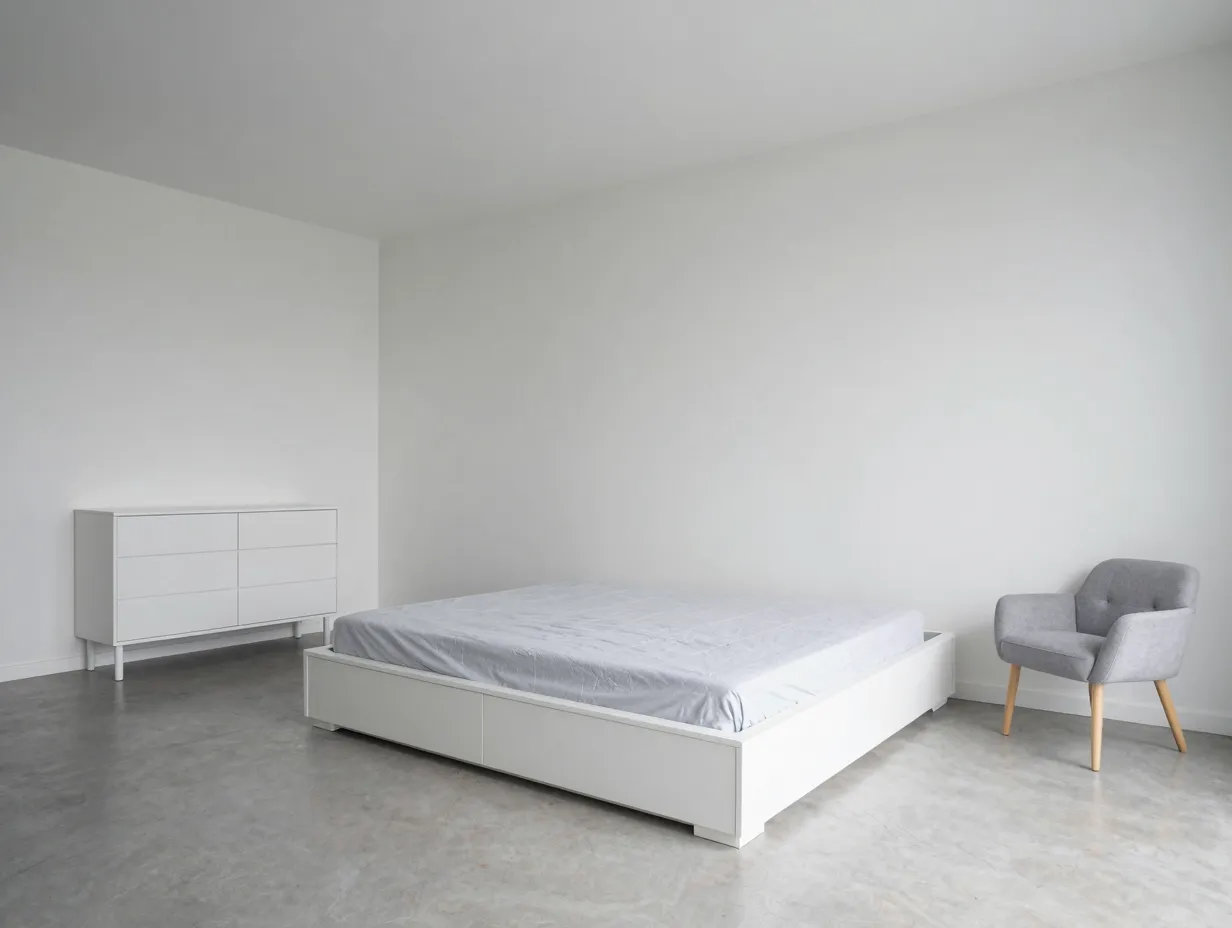
The height and scale of your furniture matters as much as the quantity. Low-profile pieces, platform beds, slim-legged chairs, shallow-depth dressers, maintain open sightlines across the room and keep the upper half of the space clear [2][7][11].
Platform beds with built-in drawers or headboard shelving solve two problems at once: they sit close to the floor for a streamlined look, and they provide hidden storage that eliminates the need for additional furniture [2][7]. When choosing a bed size, one widely cited design guideline recommends leaving approximately 70 to 90 centimeters (about 28 to 35 inches) of walking space on at least two sides of the bed for comfortable circulation [9].
Bed positioning also matters more than most people realize. Placing the bed against the longest wall, rather than centering it under a window or floating it in the middle of the room, typically frees the most usable floor space [2][7]. In very narrow rooms, pushing the bed into a corner and treating it like a daybed with cushions along the wall can recover significant square footage.
Furniture sizing checklist for small bedrooms:
- Bed frame: platform style, no more than 14 inches off the floor
- Nightstands: maximum 18 inches wide, legged or wall-mounted
- Dresser: no deeper than 18 inches; consider a tall, narrow chest instead
- Desk: fold-down wall-mounted or a slim console style (max 20 inches deep)
- Seating: a single slipper chair or bench at the foot of the bed rather than two chairs
5. Use Mirrors to Double the Visual Space
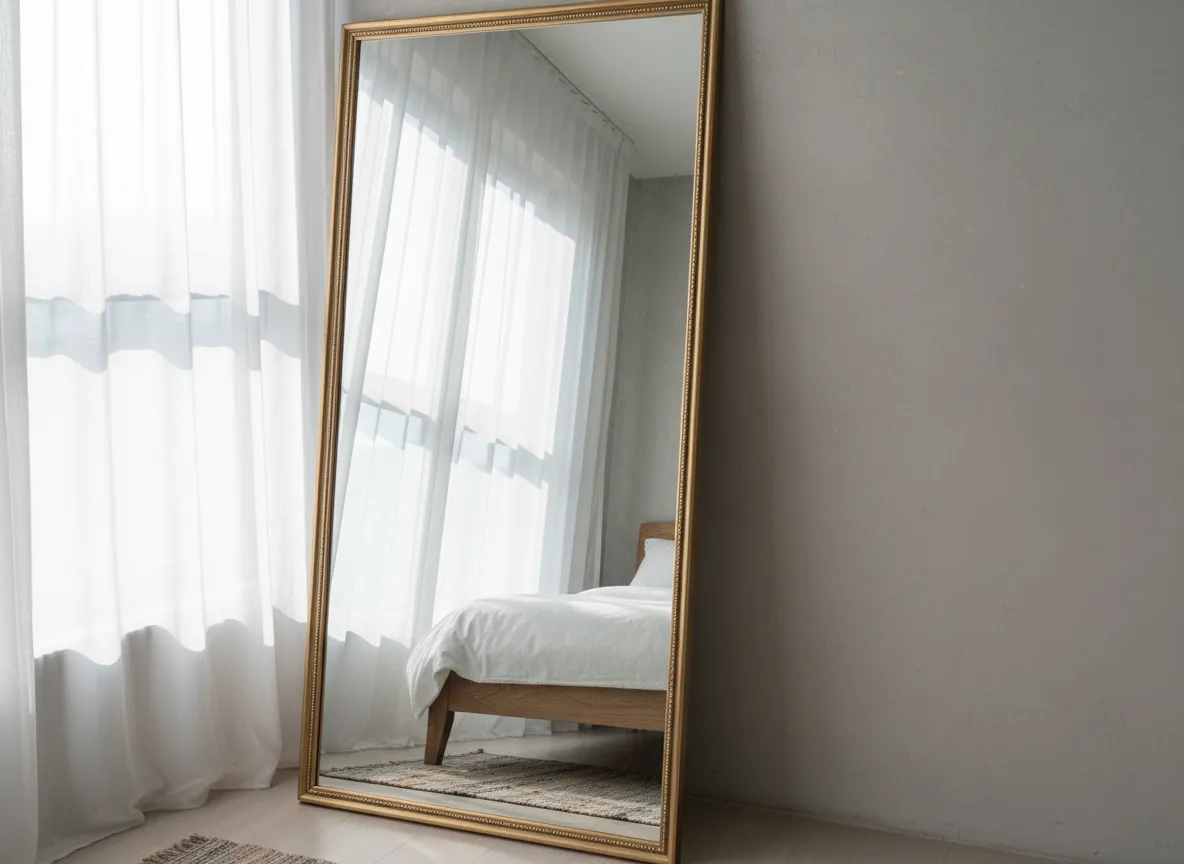
Mirrors are one of the oldest tricks in the small-room playbook, but their effectiveness has not diminished. A well-placed mirror reflects both natural and artificial light, creates the illusion of depth, and makes a room feel significantly larger than it is [5][6][8].
The most impactful placement is opposite or adjacent to a window, where the mirror captures and bounces daylight back into the room. A full-length mirror leaning against a wall or mounted behind a door adds height and depth without taking up floor space [5][8].
In 2026, designers are also using mirrored wardrobe doors as a dual-purpose solution: the doors serve their functional purpose while acting as a large reflective surface that visually expands the room [6][8]. Mirrored furniture, bedside tables, dressers with mirrored fronts, can achieve a similar effect on a smaller scale.
Where to place mirrors for maximum impact:
- Directly opposite a window to reflect natural light
- On the back of a closet or bedroom door
- As wardrobe sliding doors
- Above a low dresser to extend the vertical line of the room
- A large floor mirror leaning in a corner to create depth
6. Layer Your Lighting From Multiple Sources
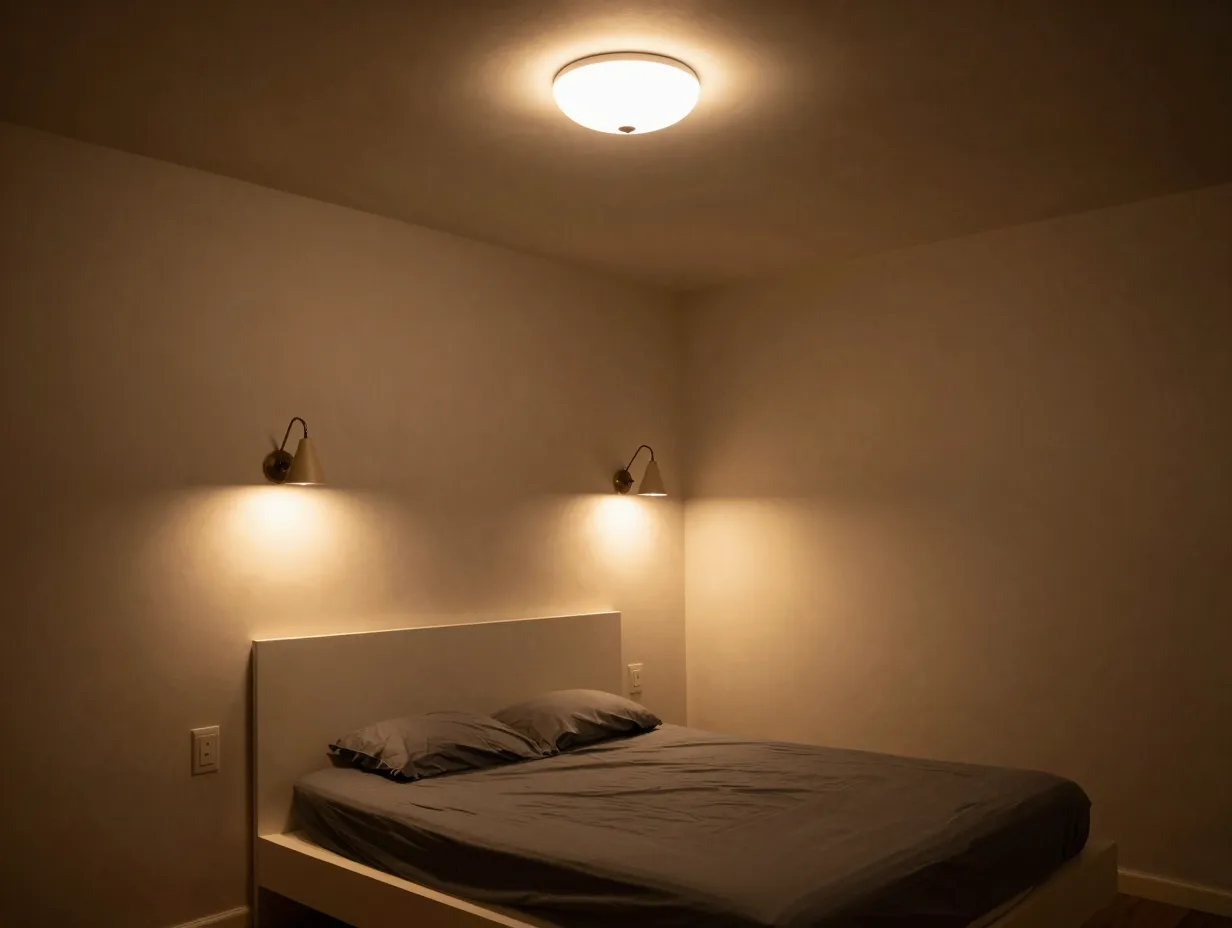
Overhead lighting alone flattens a room and creates harsh shadows that make small spaces feel even more confined. Layered lighting, combining ambient, task, and accent sources, adds depth, warmth, and a sense of dimension that a single ceiling fixture simply cannot achieve [4][5][7].
For small bedrooms specifically, wall-mounted fixtures are strongly preferred over floor and table lamps because they free up surface and floor space [3][7]. Swing-arm sconces mounted beside the bed replace nightstand lamps entirely. A small pendant light hung from the ceiling at a lower-than-standard height draws the eye upward and creates a focal point without consuming any surface area.
A layered lighting plan for a small bedroom:
- Ambient: A flush-mount or semi-flush ceiling fixture, or recessed lighting if the ceiling allows
- Task: Wall-mounted swing-arm sconces on either side of the bed
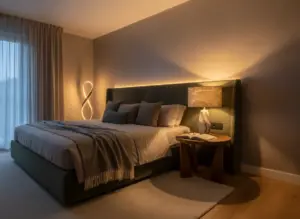
- Accent: LED strip lighting behind a floating headboard or beneath a platform bed frame
- Natural: Sheer curtains that allow maximum daylight while maintaining privacy
Dimmer switches on all circuits give you full control over the mood and perceived warmth of the room at any time of day.
7. Choose Multipurpose Furniture That Earns Its Floor Space
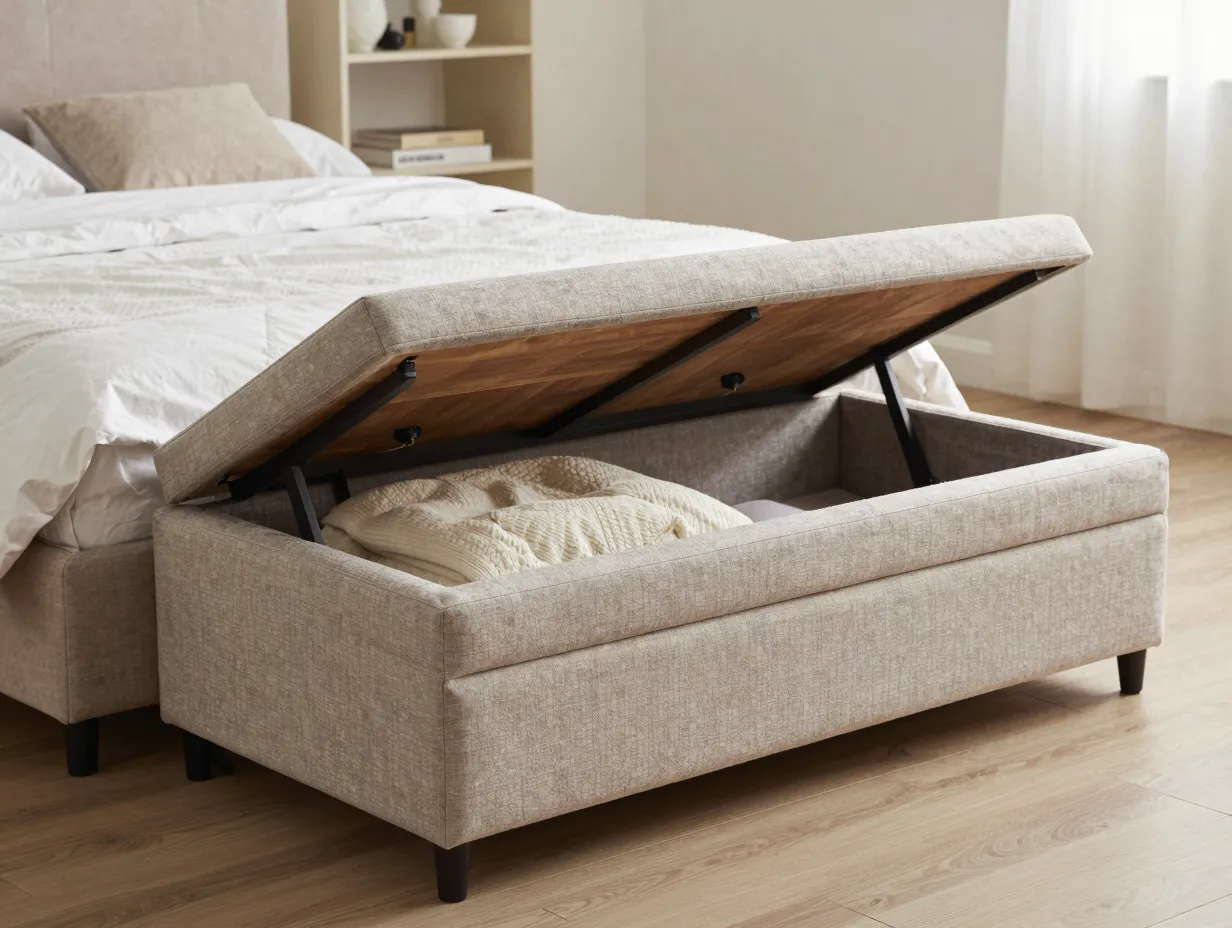
In a small bedroom, every piece of furniture must justify its presence. Multipurpose furniture, pieces that serve two or more functions, is the most efficient way to maintain comfort and style without overcrowding the room [3][4][8].
The most useful multipurpose pieces for small bedrooms include:
- Ottoman with storage: Functions as seating, a footrest, and a place to store extra blankets or pillows
- Platform bed with drawers: Replaces a separate dresser for clothing storage
- Headboard with shelving: Built-in shelves or cubbies in the headboard eliminate the need for nightstands
- Bench with lift-top storage: Sits at the foot of the bed and holds seasonal items
- Murphy bed with integrated desk: For rooms that double as a home office, this combination is the gold standard [3][9]
When evaluating any piece of furniture for a small bedroom, ask one question: does this do more than one job? If the answer is no, look for an alternative that does.
8. Use Textiles, Curtains, and Vertical Lines to Stretch the Room
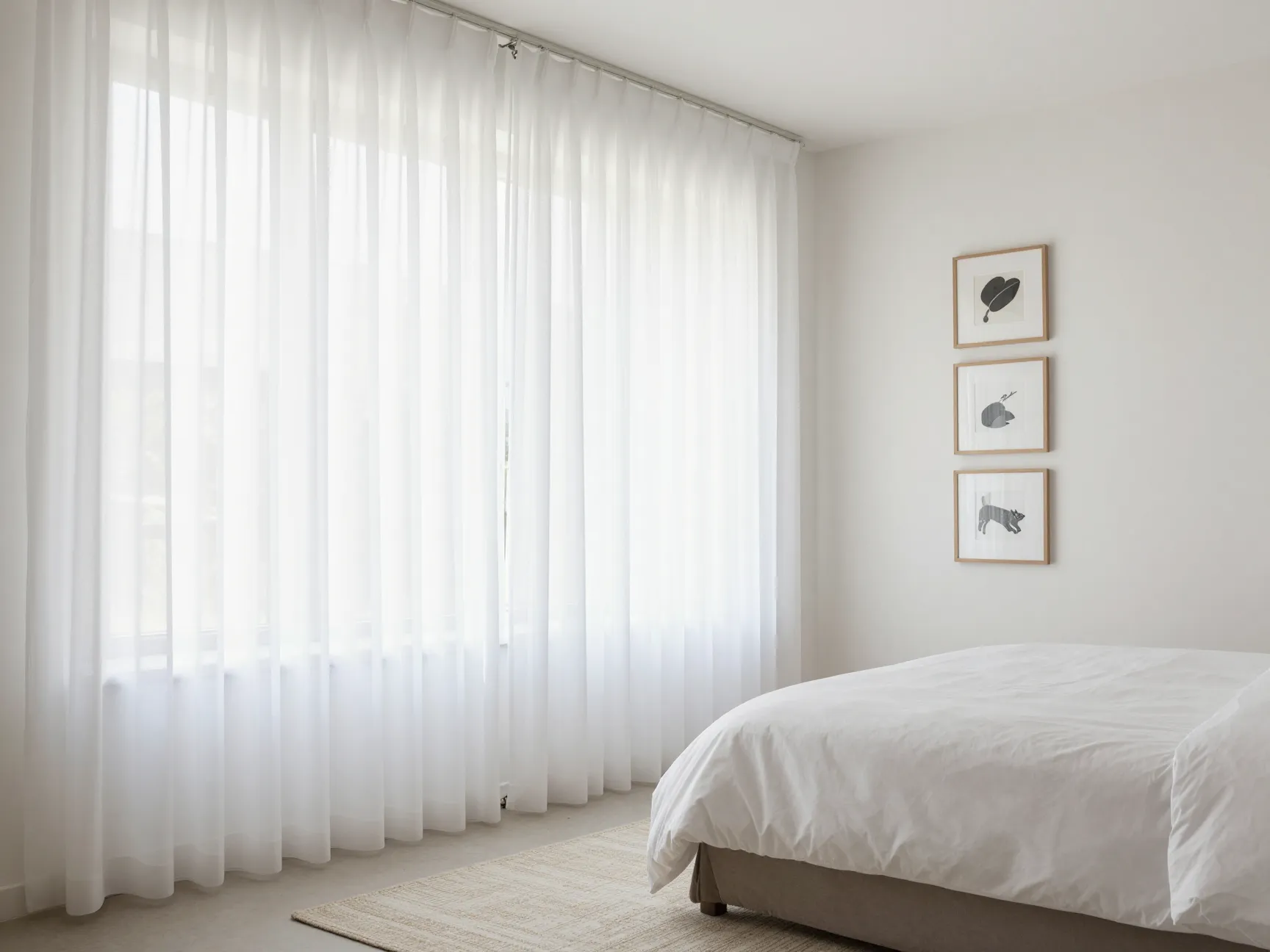
The final idea in these 8 bedroom decor ideas for small rooms to maximize style and space is about perception, specifically, using visual tricks built into textiles and architectural details to make the room feel taller and wider than it is.
Curtains are one of the most underused tools in small-bedroom design. Hanging curtain rods as close to the ceiling as possible, rather than just above the window frame, and letting curtains fall to the floor creates a dramatic vertical line that draws the eye upward and makes ceilings feel higher [3][11]. Use sheer or lightweight fabrics to maintain light flow.
Vertical patterns and paneling work on the same principle. Vertical stripes on wallpaper or bedding, vertical shiplap paneling, or tall, narrow artwork arranged in a column all reinforce the upward visual movement that makes a room feel more spacious [3][11].
Textiles for a small bedroom:
- Bedding in a single solid color or subtle tone-on-tone pattern to avoid visual fragmentation
- Lightweight, floor-length curtains hung from ceiling height
- A single area rug that defines the bed zone without covering the entire floor (leaving visible floor at the edges reinforces the sense of space)
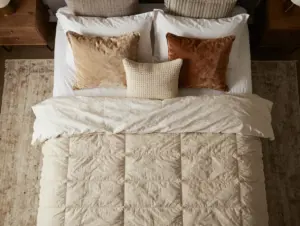
- Throw pillows in two or three coordinating tones rather than many competing patterns
A note on rugs: A rug that is too small makes furniture look like it is floating awkwardly. In a small bedroom, choose a rug large enough that the front legs of all furniture pieces sit on it, or go slightly larger to anchor the entire bed area.
Putting It All Together: A Room-by-Room Approach
These eight ideas work best when combined thoughtfully rather than applied all at once. A useful starting framework is to work in three phases:
Phase 1, Foundation (color and layout): Choose your color palette and reposition the bed for maximum floor space. These two changes alone will transform how the room feels before you spend a dollar on new furniture.
Phase 2, Furniture and storage: Replace or supplement existing furniture with floating, low-profile, and multipurpose alternatives. Add vertical storage around the bed if the budget allows.
Phase 3, Finishing layers (lighting, textiles, mirrors): Layer in lighting from multiple sources, hang curtains from ceiling height, add a well-sized rug, and position mirrors to maximize light reflection.
This phased approach keeps the project manageable and lets you evaluate the impact of each change before moving to the next.
Conclusion
Small bedrooms are not a design problem, they are a design challenge, and one that rewards thoughtful planning. The 8 bedroom decor ideas for small rooms to maximize style and space covered in this guide, from color palette choices and floating furniture to vertical storage, layered lighting, and strategic use of mirrors and textiles, give you a complete toolkit for transforming even the most constrained space.
Your actionable next steps:
- Measure your bedroom and calculate the current walking clearance around your bed. If it is less than 28 inches on two sides, repositioning the bed is your first move.
- Identify the two largest pieces of furniture in the room and ask whether a floating, wall-mounted, or multipurpose alternative could replace them.
- Audit your lighting. If you have only one overhead source, add at least one wall-mounted fixture before investing in any other change.
- Choose a consistent color palette and apply it to walls, bedding, and curtains in one coordinated update.
- Hang your curtains from ceiling height, this is the single fastest, most affordable visual trick in the entire guide.
A small bedroom done well does not just look bigger. It feels calmer, more intentional, and more like the restful retreat it is supposed to be.
References
[1] 22 Small Bedroom Ideas 2026 Layout Inspo – https://homeluxefit.com/22-small-bedroom-ideas-2026-layout-inspo/
[2] Small Bedroom Layout Ideas – https://www.homesandgardens.com/interior-design/small-bedroom-layout-ideas
[3] Small Bedroom 2026 41 Smart Storage Decor And Design Ideas For Tiny Spaces – https://inspirecaptions.com/small-bedroom-2026-41-smart-storage-decor-and-design-ideas-for-tiny-spaces/
[4] Small Bedroom Design Tips – https://www.elledecor.com/design-decorate/room-ideas/g63205507/small-bedroom-design-tips/
[5] Small Bedroom Design Tips – https://www.housebeautiful.com/room-decorating/bedrooms/g2231/small-bedroom-design-tips/
[6] Best Small Bedroom Ideas – https://www.architecturaldigest.com/gallery/best-small-bedroom-ideas
[7] Small Bedroom Design Ideas – https://www.lowes.com/n/ideas-inspiration/small-bedroom-design-ideas
[8] Small Bedroom Design Ideas – https://www.redfin.com/blog/small-bedroom-design-ideas/
[9] Watch – https://www.youtube.com/watch?v=mHXGPyrQKQI
[10] 10 Tiny Bedroom Ideas For 2020 – https://www.partylite.com/blogs/culture/10-tiny-bedroom-ideas-for-2020