8 Small Backyard Garden Design Ideas To Create A Private Paradise
Less than 20% of urban homeowners in the United States have a backyard larger than 500 square feet, yet the desire for a personal outdoor retreat has never been stronger. A tight footprint does not have to mean a compromised garden. With the right design strategy, even the most modest patch of outdoor space can become a layered, lush, and deeply private sanctuary that feels far removed from the noise of daily life.
Disclosure: This post contains affiliate links. As an Amazon Associate, we earn from qualifying purchases, and at no extra cost to you.
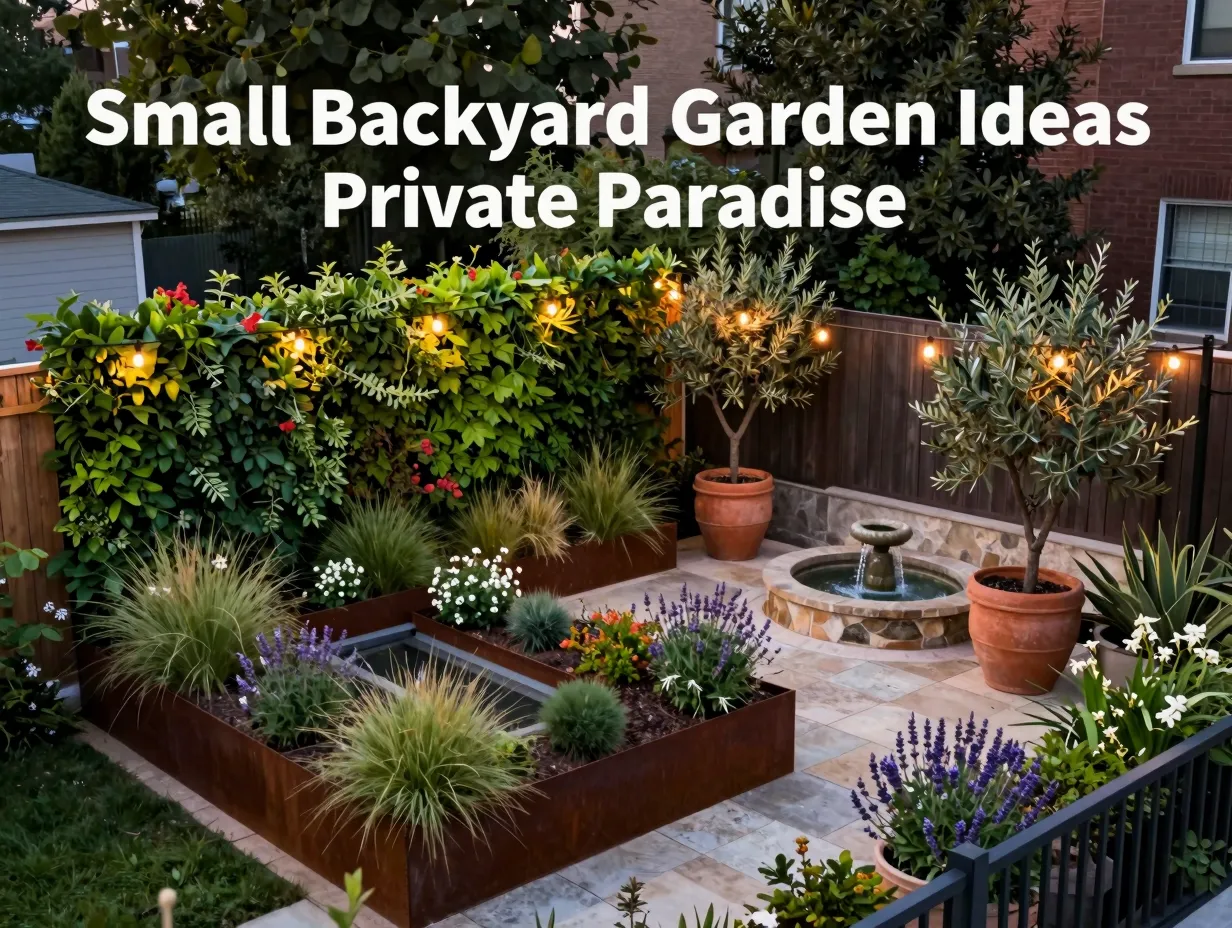
That is exactly what these 8 Small Backyard Garden Design Ideas To Create A Private Paradise are designed to help you achieve. Whether you are working with a narrow city lot, a compact suburban yard, or a townhouse patio, each idea in this guide is grounded in current design trends, practical execution, and the kind of sensory richness that turns a plain outdoor space into somewhere you genuinely want to spend time. [1][2]
Key Takeaways
- Vertical gardening and layered planting are among the most effective ways to add privacy and lushness to a small backyard without consuming floor space.
- Strategic use of water features, lighting, and scent creates a multi-sensory experience that makes a small garden feel expansive.
- In 2026, the strongest garden design trends lean toward naturalistic planting, sustainable materials, and spaces that serve both relaxation and food production. [8][9]
- Container gardening and raised beds give small-space gardeners flexibility, portability, and high visual impact with minimal square footage.
- Thoughtful zoning, dividing even a tiny yard into distinct “rooms”, dramatically increases how useful and inviting the space feels.
Why Small Backyard Gardens Are Having a Major Moment in 2026
The post-pandemic shift toward home-centered living has not faded. If anything, it has deepened. Homeowners are investing more intentionally in their outdoor spaces, and the design industry has responded with a wave of ideas tailored specifically to compact yards. [5]
According to current garden trend reporting, small-space gardening in 2026 is defined by three core values: privacy, sustainability, and sensory richness. [8] People want their backyards to feel like a destination, a place that offers genuine escape rather than just a strip of grass behind the house.
The good news is that small gardens have a structural advantage: they are easier to make feel intimate and enclosed than large, open landscapes. Every design decision lands with more weight. A single well-placed tree, a climbing plant on a fence, or a small water feature can transform the entire character of the space.
“A small garden forces you to be intentional. Every plant, every material, every seat earns its place, and that discipline almost always produces something more beautiful than a large garden designed without constraint.”
With that in mind, let us walk through the eight ideas that will help you build your own private paradise, regardless of how many square feet you are starting with.
8 Small Backyard Garden Design Ideas To Create A Private Paradise
1. Build Upward With Vertical Gardens and Living Walls
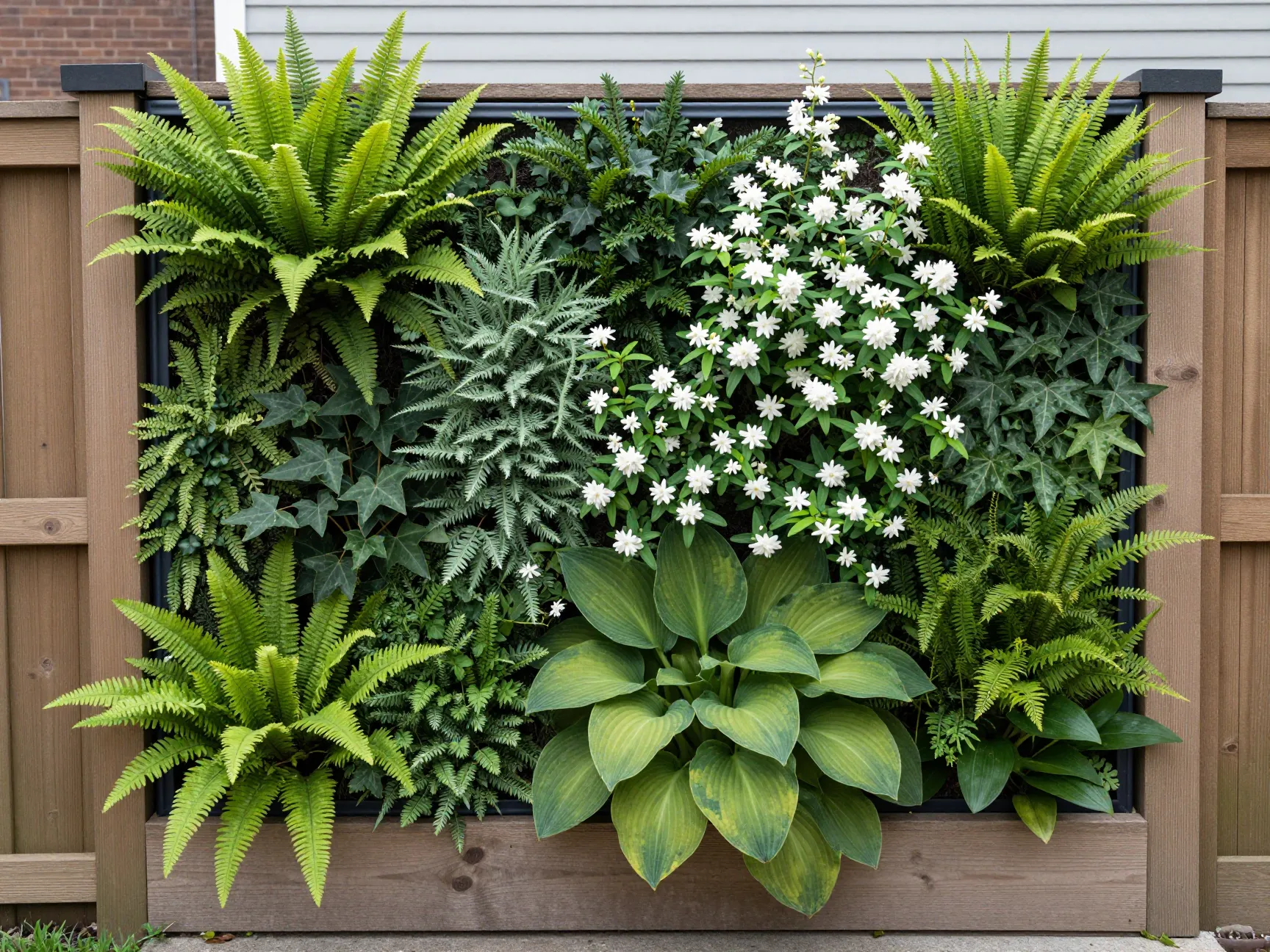
When floor space is limited, the most powerful move you can make is to shift your thinking from horizontal to vertical. Vertical gardens, sometimes called living walls, allow you to cover fences, exterior walls, and purpose-built frames with dense, layered planting that creates instant privacy and a striking visual backdrop.
In 2026, vertical gardening has evolved well beyond the simple trellis. Modular pocket systems, hydroponic wall panels, and stacked planter frames now make it possible to grow everything from ferns and trailing ivy to herbs and strawberries on a vertical surface. [5]
How to execute it well:
- Choose a mix of evergreen and seasonal plants so the wall looks full year-round.
- Combine textures: large-leaved plants like hostas alongside fine-textured ferns create depth.
- Use a drip irrigation system attached to the frame to reduce maintenance significantly.
- For privacy specifically, fast-growing climbers like clematis, jasmine, and climbing hydrangea are highly effective on a trellis or wire frame fixed to an existing fence.
A neighbor of mine installed a modular living wall system along a 12-foot boundary fence last spring. By midsummer, the wall was dense enough to completely block the sightline from the adjacent property, and it smelled extraordinary thanks to a row of jasmine at eye level.
2. Define Zones With Strategic Planting and Low Dividers
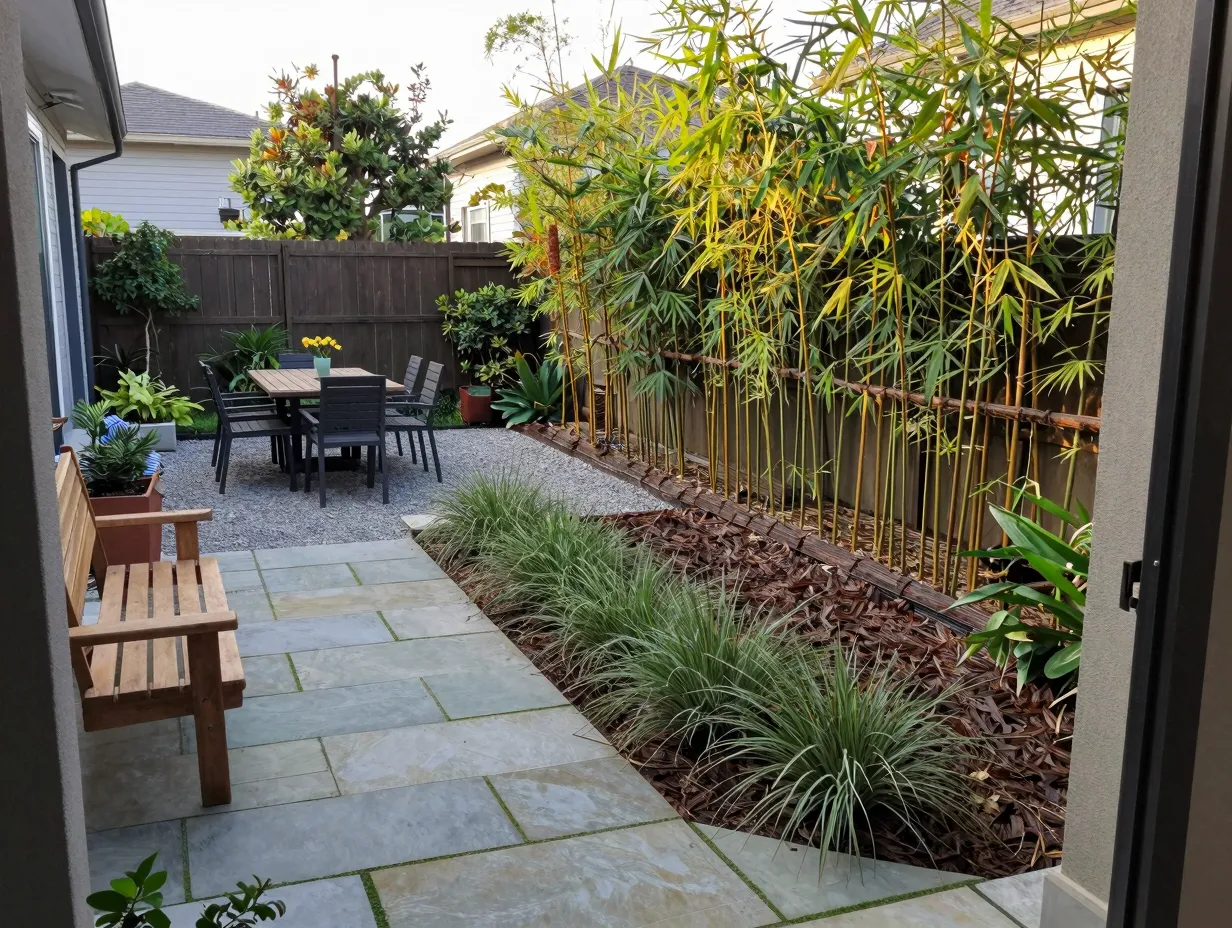
One of the most common mistakes in small garden design is treating the entire space as a single undifferentiated area. Even in a yard measuring 15 by 20 feet, you can create distinct zones, a seating area, a planting bed, a small dining space, that make the garden feel larger and more purposeful.
The key is to use soft dividers rather than hard walls. Low hedges, ornamental grasses, raised bed borders, and changes in ground material (from paving to gravel to lawn) all signal a transition from one zone to the next without physically blocking the space or making it feel smaller.
Current design trends favor a naturalistic approach to zoning, using flowing plant borders rather than rigid geometric lines. [1] This creates a garden that feels organic and layered rather than chopped up.
Practical zoning tips for small backyards:
- Use a single large ornamental grass or a clump of bamboo (in a root barrier) as a soft screen between a seating area and a planting bed.
- Vary paving materials to define zones: natural stone for the dining area, gravel for a pathway, bark mulch for the planting beds.
- Keep each zone to a single primary function so the space does not feel cluttered.
- Allow planting to spill slightly over zone boundaries, this softens the transitions and creates a lush, abundant feel.
3. Install a Water Feature for Privacy and Sensory Escape
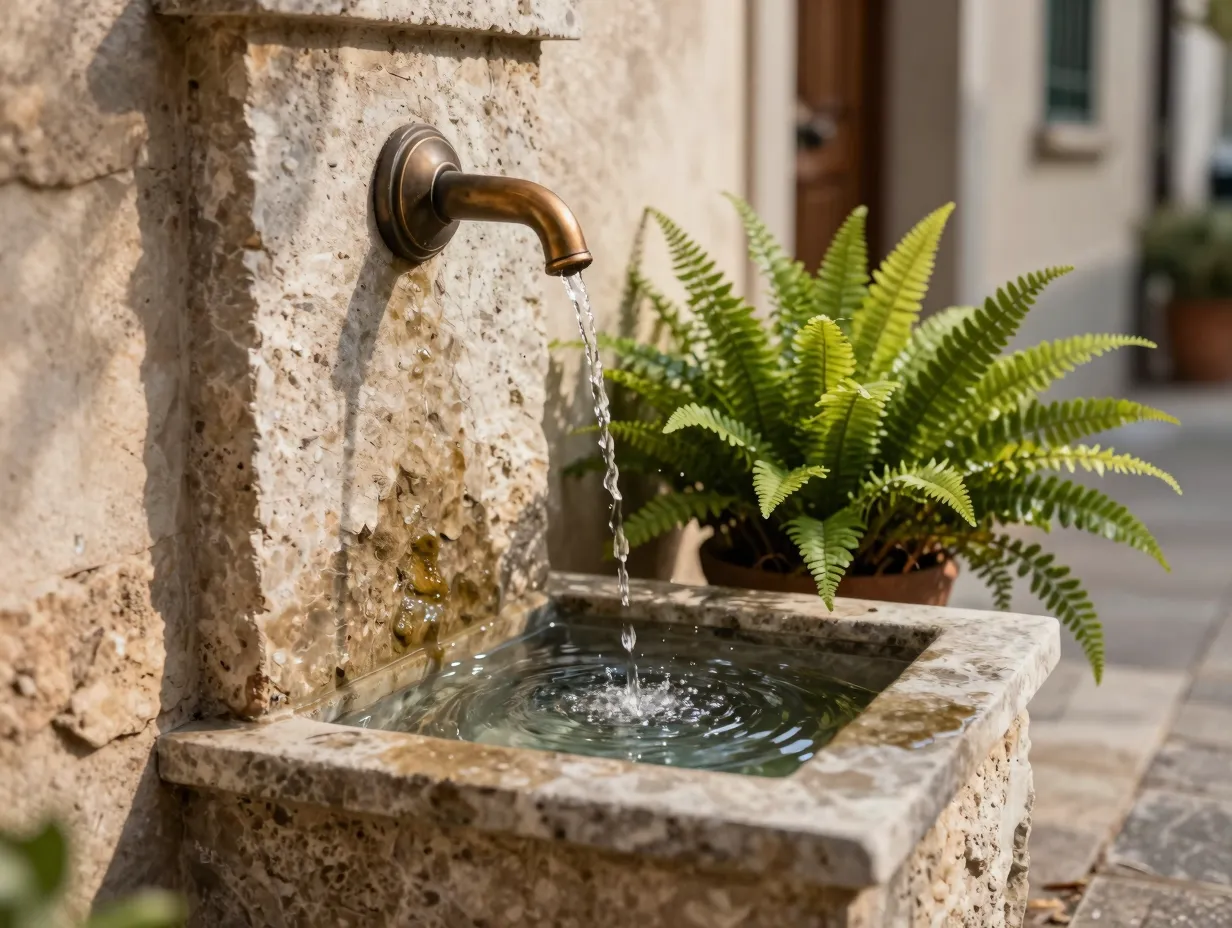
Sound is one of the most underused tools in small garden design. A water feature does not just look beautiful, it actively masks ambient noise from neighbors, traffic, and the general hum of urban life. In a small backyard, this acoustic privacy can be just as valuable as visual screening.
In 2026, the most popular water features for compact gardens are self-contained recirculating units, wall-mounted spouts, millstone fountains, and small rill channels that require no external water supply and can be installed in a single afternoon. [2] These are particularly well-suited to small spaces because they take up minimal footprint while delivering maximum sensory impact.
Choosing the right water feature for your space:
| Feature Type | Best For | Approximate Footprint |
|---|---|---|
| Wall-mounted spout | Narrow side passages, fence walls | Minimal, mounts flat |
| Millstone or boulder fountain | Central focal point in a patio | 2-3 sq ft |
| Small rill channel | Dividing two zones along a path | Variable, typically 1 ft wide |
| Container pond | Wildlife habitat, relaxed aesthetic | 4-6 sq ft |
The sound of moving water also creates a psychological sense of enclosure and calm that is disproportionate to the physical size of the feature. Even a modest wall spout trickling into a small basin can make a compact patio feel like a courtyard in a Mediterranean villa.
4. Use Raised Beds to Maximize Productivity and Visual Structure
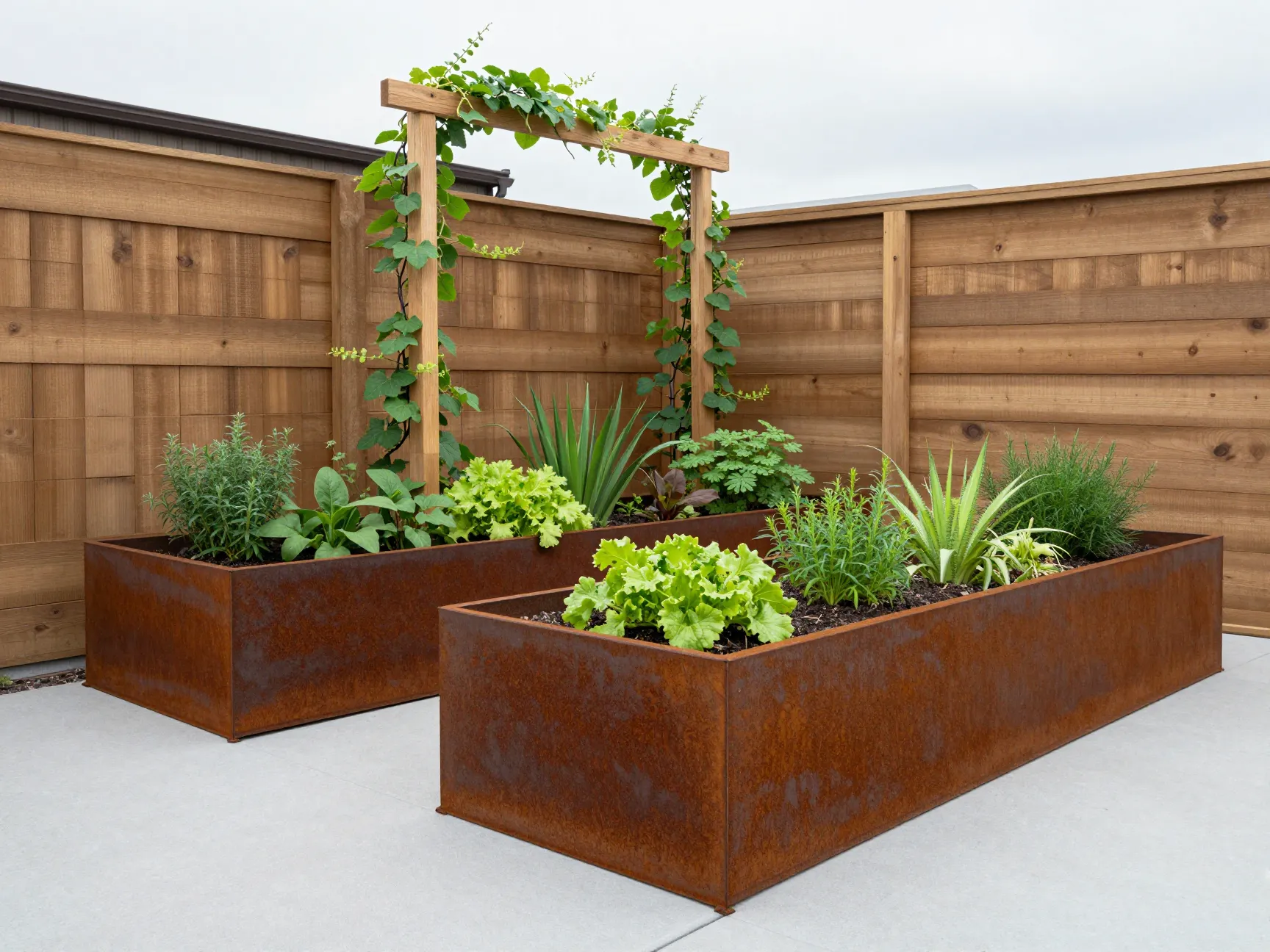
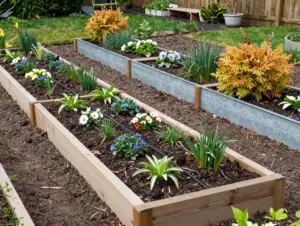
Raised beds are one of the most versatile elements you can introduce into a small backyard garden. They serve multiple functions simultaneously: they add height and visual structure, they define planting zones, they improve drainage and soil quality, and they make the garden far more productive per square foot than in-ground planting.
In 2026, raised bed design has moved decisively away from the utilitarian timber box toward more considered materials and forms. Corten steel, painted hardwood, and natural stone-faced beds are all prominent in current design work. [9] The raised bed is no longer just a vegetable patch, it is a design feature in its own right.
Design principles for raised beds in small backyards:
- Keep individual beds no wider than 4 feet so you can reach the center without stepping in.
- Vary the heights of adjacent beds, a 12-inch bed next to a 24-inch bed creates visual rhythm and allows you to grow plants with different root depths.
- Use the vertical space above beds: install a simple arch or frame over a bed and train climbing beans, cucumbers, or sweet peas upward.
- Choose a material that complements your existing fencing and paving, cohesion in materials makes a small garden feel designed rather than assembled.
A well-placed pair of raised beds along the back fence of a small yard can anchor the entire design, providing structure in winter and abundant planting interest from spring through autumn.
5. Create Privacy With Layered Planting and Living Screens
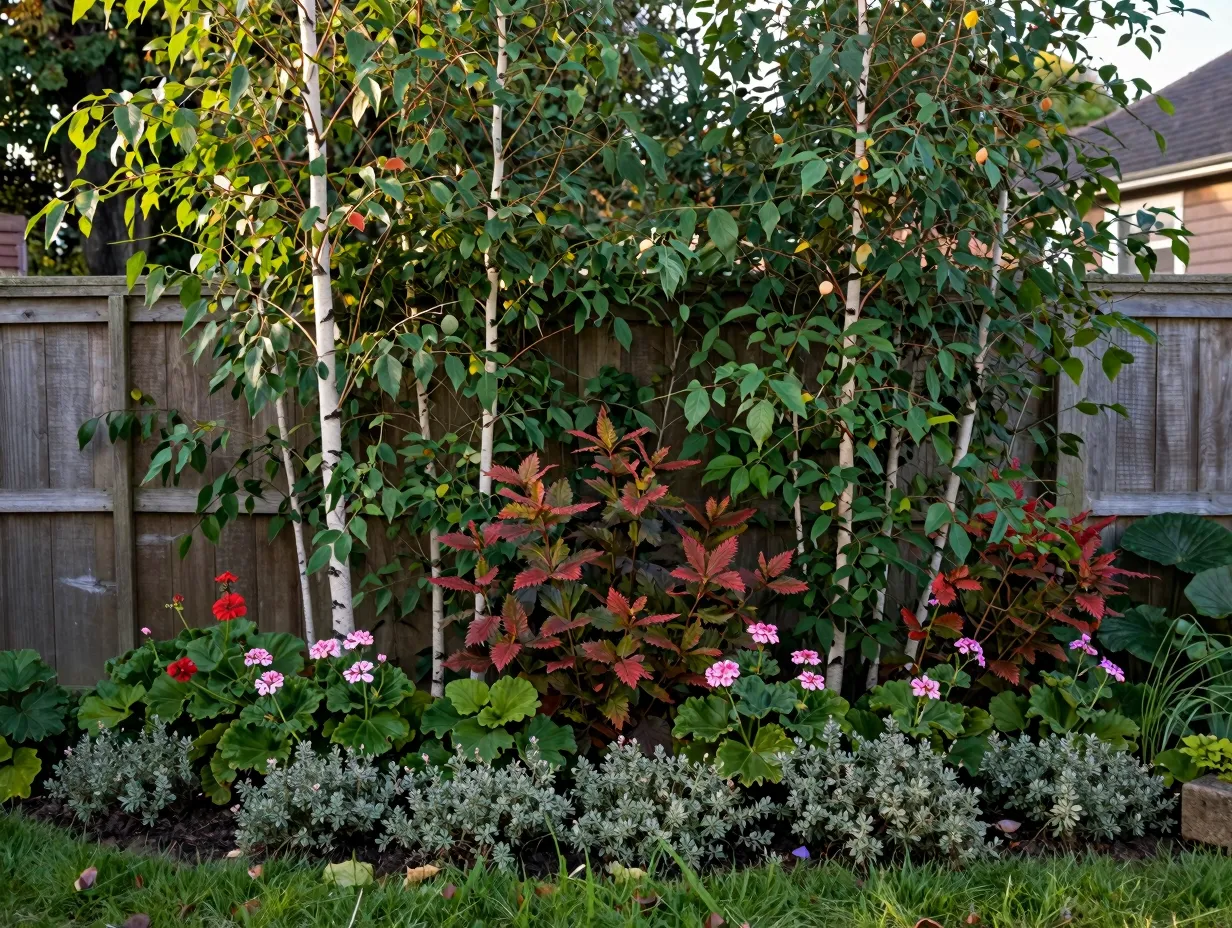
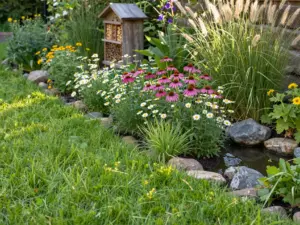
True garden privacy is rarely achieved with a single fence or wall. The most effective, and most beautiful, approach is layered planting: combining tall structural plants at the back, medium-height shrubs in the middle, and low ground-cover plants at the front to create a dense, naturalistic screen that feels like a garden rather than a barrier.
This layered approach is central to the naturalistic planting movement that is dominating garden design in 2026. [8] The goal is to mimic the structure of a natural woodland edge, where plants at different heights create a sense of depth and enclosure.
Plants that work well in a layered privacy screen:
- Tall layer (6-15 ft): Bamboo (in root barrier), pleached hornbeam, multi-stem birch, tall ornamental grasses like Miscanthus.
- Mid layer (3-6 ft): Photinia, viburnum, pittosporum, tall lavender, Rosa rugosa.
- Low layer (under 3 ft): Epimedium, hardy geraniums, heuchera, low ornamental grasses, creeping thyme.
The layered screen does more than block sightlines, it creates habitat for birds and insects, provides seasonal interest through flower, foliage, and berry, and gives the garden a sense of depth that makes it feel considerably larger than it is.
6. Maximize Impact With Container Gardening and Portable Planting
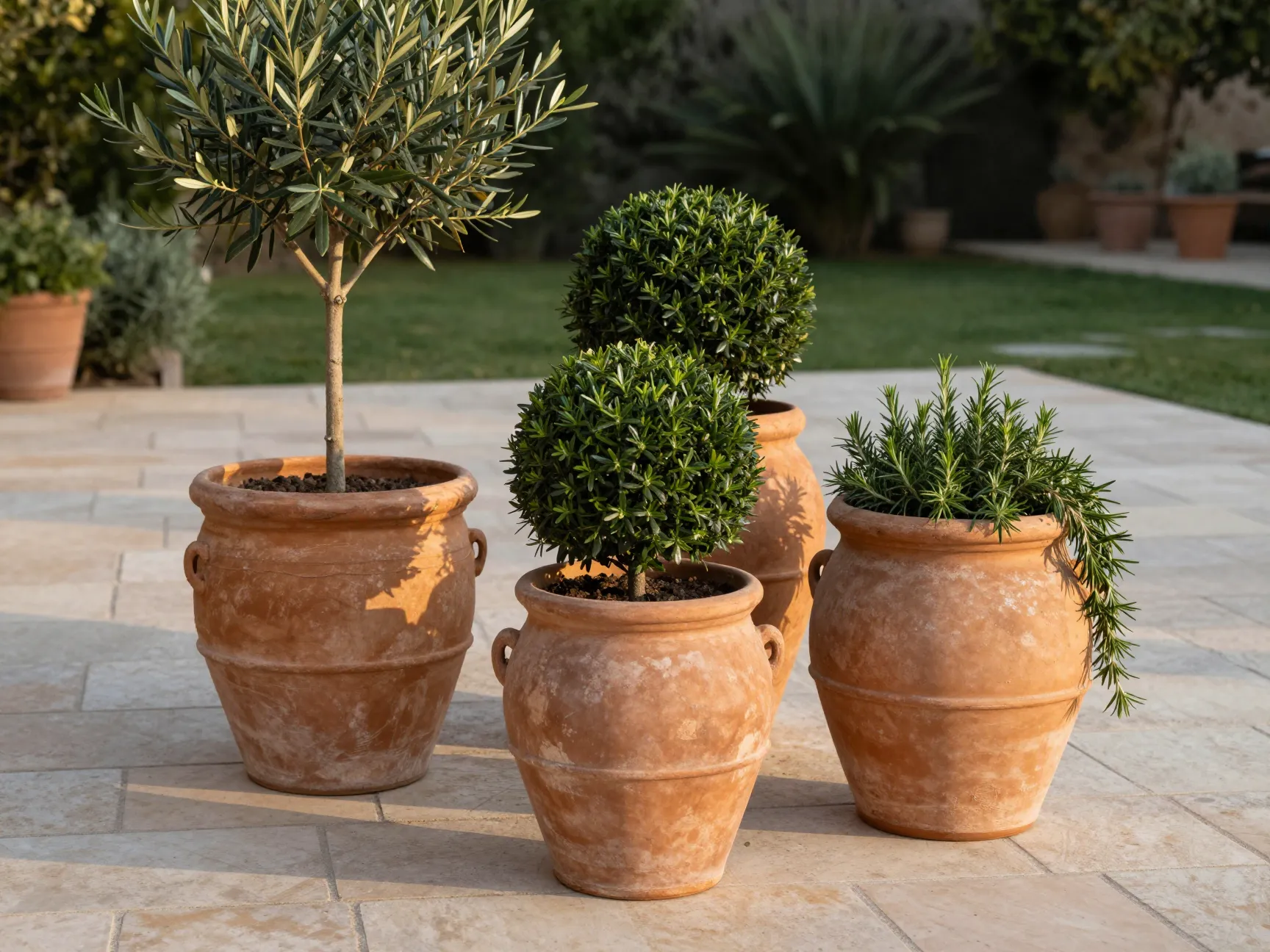
Container gardening is the ultimate tool for small backyard design. It gives you the ability to place planting exactly where you need it, to soften a hard corner, frame a seating area, flank a doorway, or add height to a flat terrace, and to move it as your needs change.
In 2026, container gardening trends are moving toward large-scale, statement containers rather than collections of small pots. [5] A single large container planted with a bold architectural plant, a standard olive tree, a clipped topiary ball, a dramatic agave, makes a far stronger design statement than a cluster of small pots and is considerably easier to maintain.
Container gardening principles for small backyards:
- Use odd numbers of containers grouped together, three or five pots of varying heights create a more natural, dynamic composition than pairs.
- Choose containers in a consistent material palette: all terracotta, all concrete, or all glazed ceramic. Mixing materials in a small space creates visual noise.
- Ensure every container has adequate drainage, waterlogged roots are the primary cause of container plant failure.
- In a small space, consider self-watering containers with built-in reservoirs to reduce the frequency of watering during dry periods.
One of the most effective small garden transformations I have seen involved nothing more than three large terracotta pots, one planted with a standard olive, one with a clipped bay ball, and one with trailing rosemary, placed at the corners of a simple stone patio. The effect was immediate, structured, and deeply Mediterranean in character.
7. Design a Lighting Plan That Extends Your Garden Into the Evening
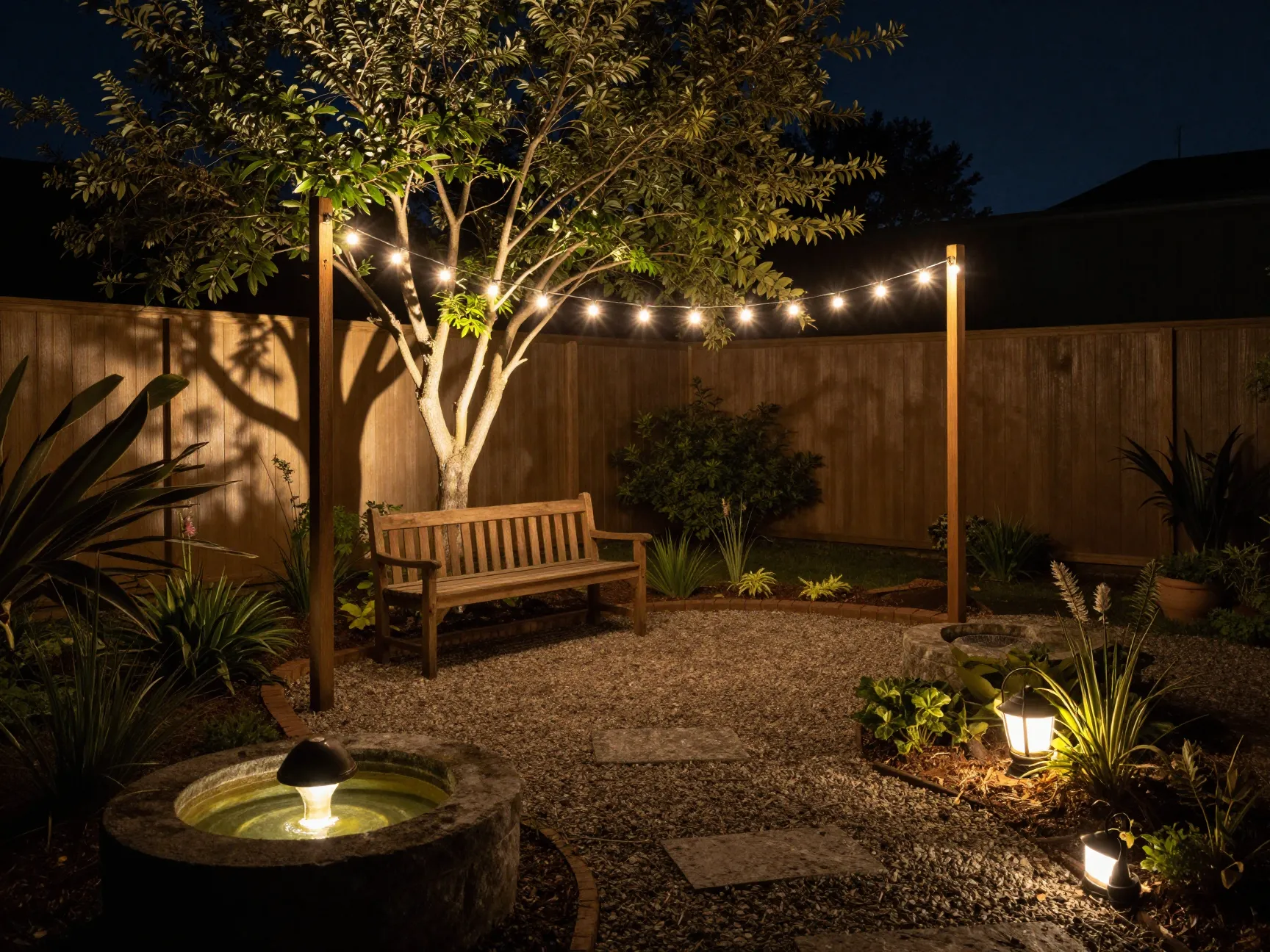
A garden that is only usable in daylight is, in effect, only half a garden. Thoughtful lighting design transforms a small backyard into an evening destination, and it is one of the most cost-effective upgrades you can make to an existing outdoor space.
The best small garden lighting plans work on three levels: ambient light (general illumination of the space), accent light (highlighting specific plants or features), and task light (functional lighting for pathways and seating areas).
In 2026, solar-powered and low-voltage LED systems have become sophisticated enough to deliver genuinely beautiful garden lighting without the cost and disruption of laying cable. [1] Warm white LEDs (2700K-3000K color temperature) are the standard for garden lighting because they render plant colors accurately and create a warm, inviting atmosphere.
Lighting ideas for small backyard gardens:
- Uplighting: Place a spike spotlight at the base of a feature tree or large shrub and angle it upward to cast dramatic shadows on a fence or wall.
- String lights: Warm white festoon lights strung between two posts or along a pergola create an instant sense of enclosure and celebration.
- Path lights: Low-level stake lights along a pathway provide safety without overwhelming the planting.
- Water feature lighting: A submersible LED in a fountain or container pond creates a glowing focal point after dark.
Avoid the common mistake of over-lighting a small garden. Pools of light and shadow are far more atmospheric, and more flattering to the planting, than uniform brightness across the entire space.
8. Incorporate Scent and Texture to Complete the Sensory Experience
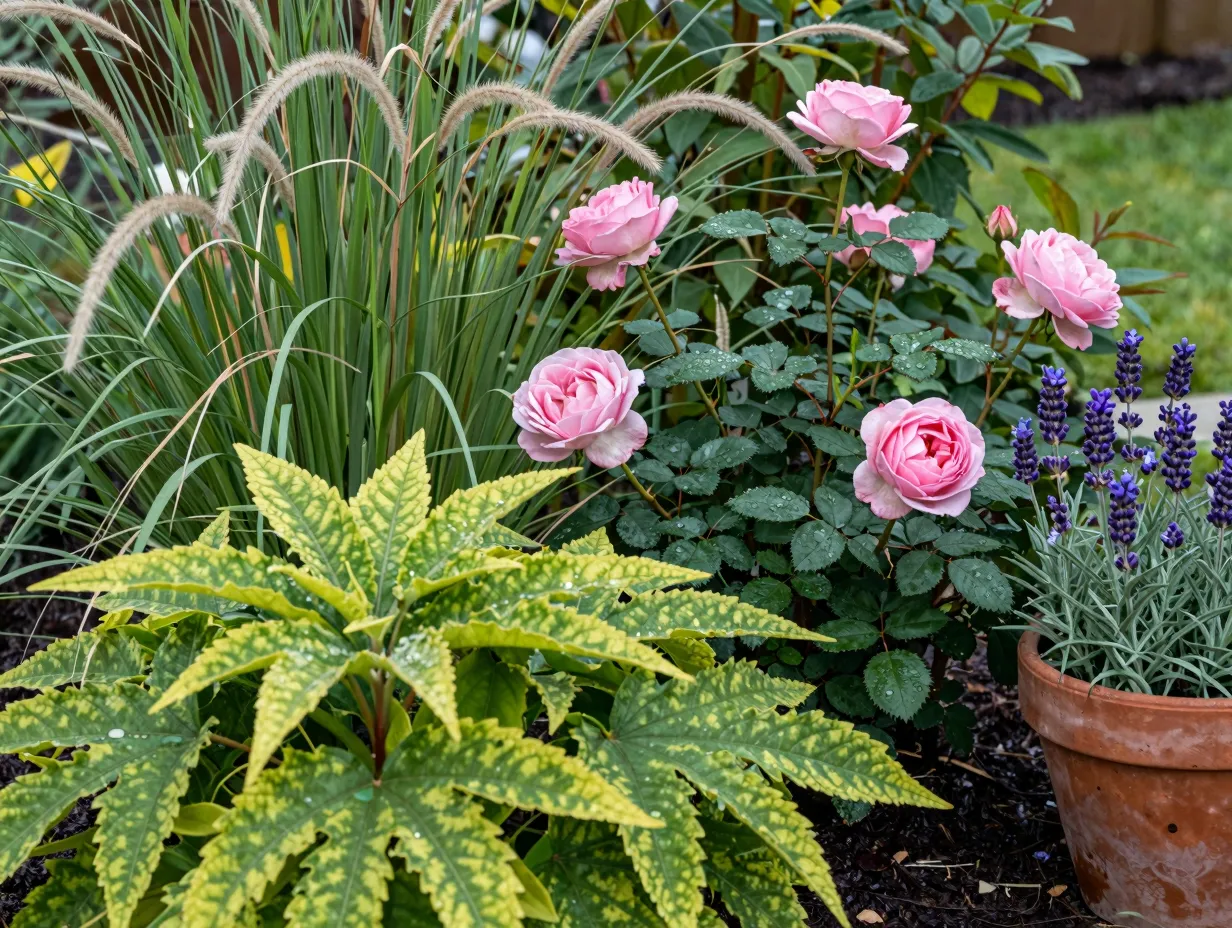
The final element that elevates a small backyard garden from pleasant to genuinely paradise-like is sensory richness, and specifically, the combination of fragrance and tactile texture that makes a garden feel alive and immersive.
Scent is particularly powerful in enclosed spaces. A small, walled garden traps fragrance in a way that a large open landscape cannot, and the right combination of scented plants can make even a modest backyard feel like somewhere extraordinary. [2]
Top scented plants for small backyard gardens in 2026:
- Roses: David Austin varieties like ‘Gertrude Jekyll’ and ‘Olivia Rose’ offer exceptional fragrance in a compact form.
- Jasmine: Common jasmine (Jasminum officinale) is a fast-growing climber with intense evening fragrance.
- Lavender: Drought-tolerant, bee-friendly, and strongly aromatic, ideal for edging paths and patio borders.
- Sweet peas: Annual climbers that deliver extraordinary fragrance from late spring through summer.
- Herbs: A raised bed or container of rosemary, thyme, mint, and basil adds culinary fragrance and utility simultaneously.
Texture works alongside scent to create a garden that engages the senses beyond sight. Planting combinations that mix fine-textured grasses with bold, architectural leaves, think Stipa tenuissima alongside Fatsia japonica, create visual movement and depth that makes a small garden feel rich and complex. [9]
“The best small gardens are designed for all five senses. Sight is just the beginning.”
Putting It All Together: A Framework for Your Private Paradise
The eight ideas above work best when they are combined rather than applied in isolation. A complete small backyard garden design might layer a vertical living wall along the back fence (idea 1), define a seating zone with raised beds on either side (ideas 2 and 4), add a small wall-mounted water feature at the end of the seating area (idea 3), frame the space with large containers (idea 6), install warm string lights overhead (idea 7), and plant the entire scheme with fragrant, textured planting (ideas 5 and 8).
The result is a space that is private, productive, beautiful, and genuinely immersive, a garden that earns the description “private paradise” rather than simply aspiring to it.
A simple planning checklist before you begin:
- Measure your space accurately and draw it to scale before purchasing anything.
- Identify your primary goal: privacy, relaxation, food production, or entertaining.
- Establish your material palette (two or three materials maximum) before choosing plants.
- Plan your lighting alongside your planting, not as an afterthought.
- Budget for soil and compost, the quality of your growing medium determines the success of everything planted in it.
Conclusion
The 8 Small Backyard Garden Design Ideas To Create A Private Paradise outlined in this guide are not theoretical concepts, they are practical, proven strategies that work in real small spaces, with real constraints, and deliver real results. The common thread running through all eight is intentionality: every element earns its place, every decision serves the goal of creating a space that feels private, lush, and genuinely restorative.
Your actionable next steps:
- Walk your backyard today and identify your single biggest challenge, lack of privacy, lack of structure, or lack of sensory interest, and choose the idea from this list that addresses it most directly.
- Start with one raised bed, one large container, or one climbing plant on your fence. Momentum in garden design comes from beginning, not from planning perfectly.
- Revisit your lighting plan as the days shorten. A garden that disappears at dusk is an opportunity missed.
- Research which scented plants are suited to your climate zone and add at least two to your scheme this season.
A small backyard is not a limitation. It is a canvas, and with the right ideas, it becomes one of the most rewarding design projects a homeowner can undertake.
References
[1] 2026 Garden Trends Youll Actually Want To Try – https://www.freshdesignblog.com/2026/05/2026-garden-trends-youll-actually-want-to-try/
[2] Small Garden Design Ideas 2026 Trends Layouts Plans – https://gardenornaments.com/blog/Small-Garden-Design-Ideas-2026-Trends-Layouts-Plans/
[5] 2026 Small Space Gardening Trends – https://lifetips.alibaba.com/plant-care/2026-small-space-gardening-trends
[8] Garden Trends 2026 – https://www.countryliving.com/gardening/garden-ideas/a70160525/garden-trends-2026/
[9] Top Gardening Trends 2026 – https://phsonline.org/for-gardeners/gardeners-blog/top-gardening-trends-2026