9 TV Room Design Strategies for the Ultimate Home Entertainment Hub
The average American household watches more than four hours of television per day, yet most TV rooms are designed as an afterthought, a sofa pointed at a screen with no thought given to acoustics, lighting, or layout. That gap between how much time we spend in these spaces and how little design attention we give them is exactly why applying the 9 TV Room Design Strategies for the Ultimate Home Entertainment Hub can feel so transformative.
Disclosure: This post contains affiliate links. As an Amazon Associate, we earn from qualifying purchases, and at no extra cost to you.
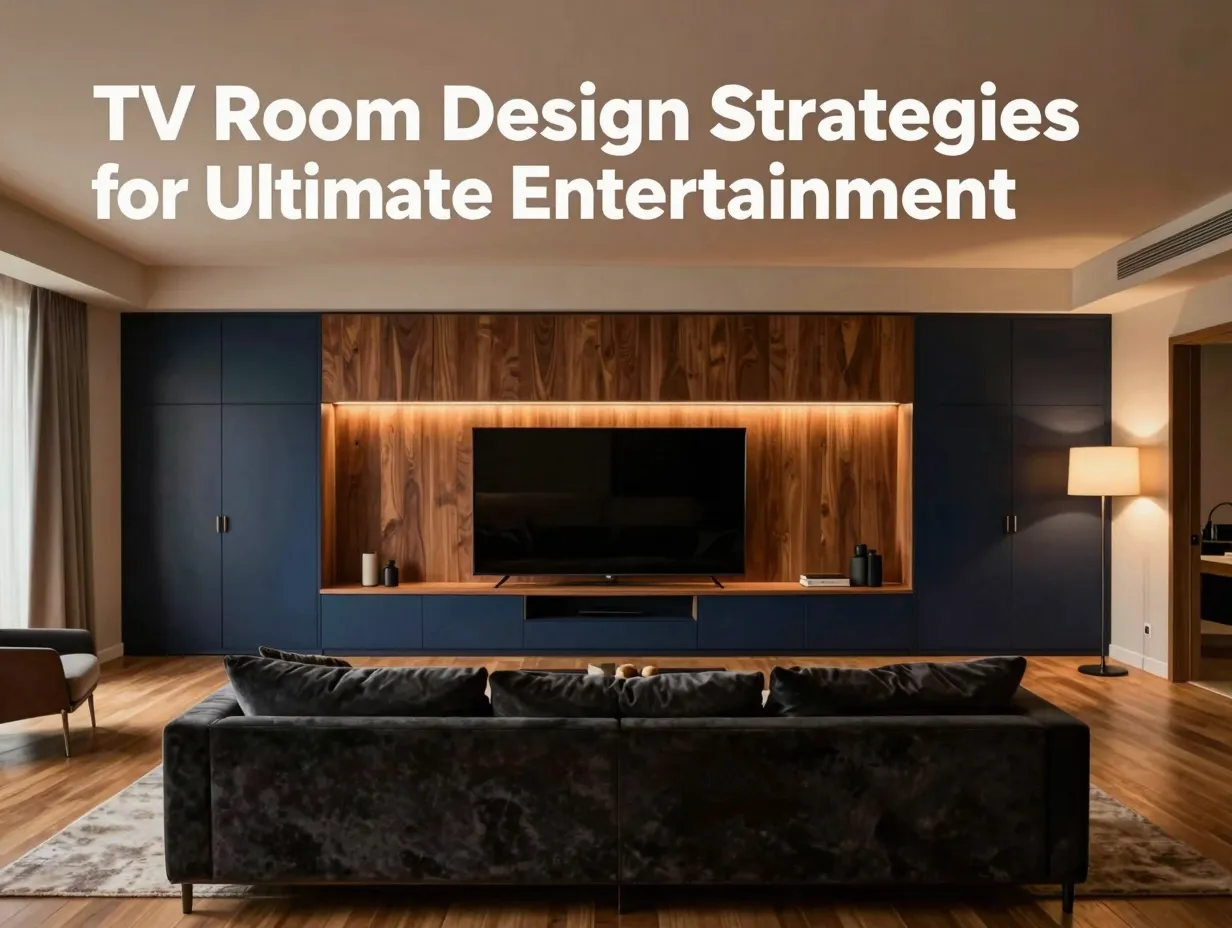
I have worked with homeowners who spent thousands on a premium OLED screen only to place it in a room that washed out the picture with overhead glare and bounced sound off bare walls like a gymnasium. The result was a disappointing experience regardless of the hardware. Getting the room right matters as much as the technology inside it.
This guide walks through nine proven strategies, from full-wall media units to smart layered lighting, that turn any ordinary living space into a purpose-built entertainment destination.
Key Takeaways
- A well-designed media wall anchors the entire room and dramatically improves both aesthetics and function.
- Lighting is not decorative, it is a core performance element that affects picture quality and viewer comfort.
- Acoustic treatment does not require a dedicated home theater; smart material choices work in everyday living rooms.
- Floating TV units and minimalist walls solve small-space challenges without sacrificing style.
- The “new heritage” design trend blends natural woods and rich cabinetry finishes for a warm, sophisticated look in 2026.
The Foundation: Understanding What Makes a Great Entertainment Hub
Before diving into individual strategies, it helps to understand what separates a great entertainment hub from a room that simply contains a TV. Three pillars define the difference: visual performance, acoustic quality, and comfort. Every strategy below serves at least one of these pillars, and the best strategies serve all three simultaneously.
The 9 TV Room Design Strategies for the Ultimate Home Entertainment Hub covered in this article are drawn from current design trends, professional home theater principles, and real-world applications that work in both dedicated media rooms and open-plan living spaces [2][3].
9 TV Room Design Strategies for the Ultimate Home Entertainment Hub
1. Build a Full-Wall Media Unit as Your Anchor Point
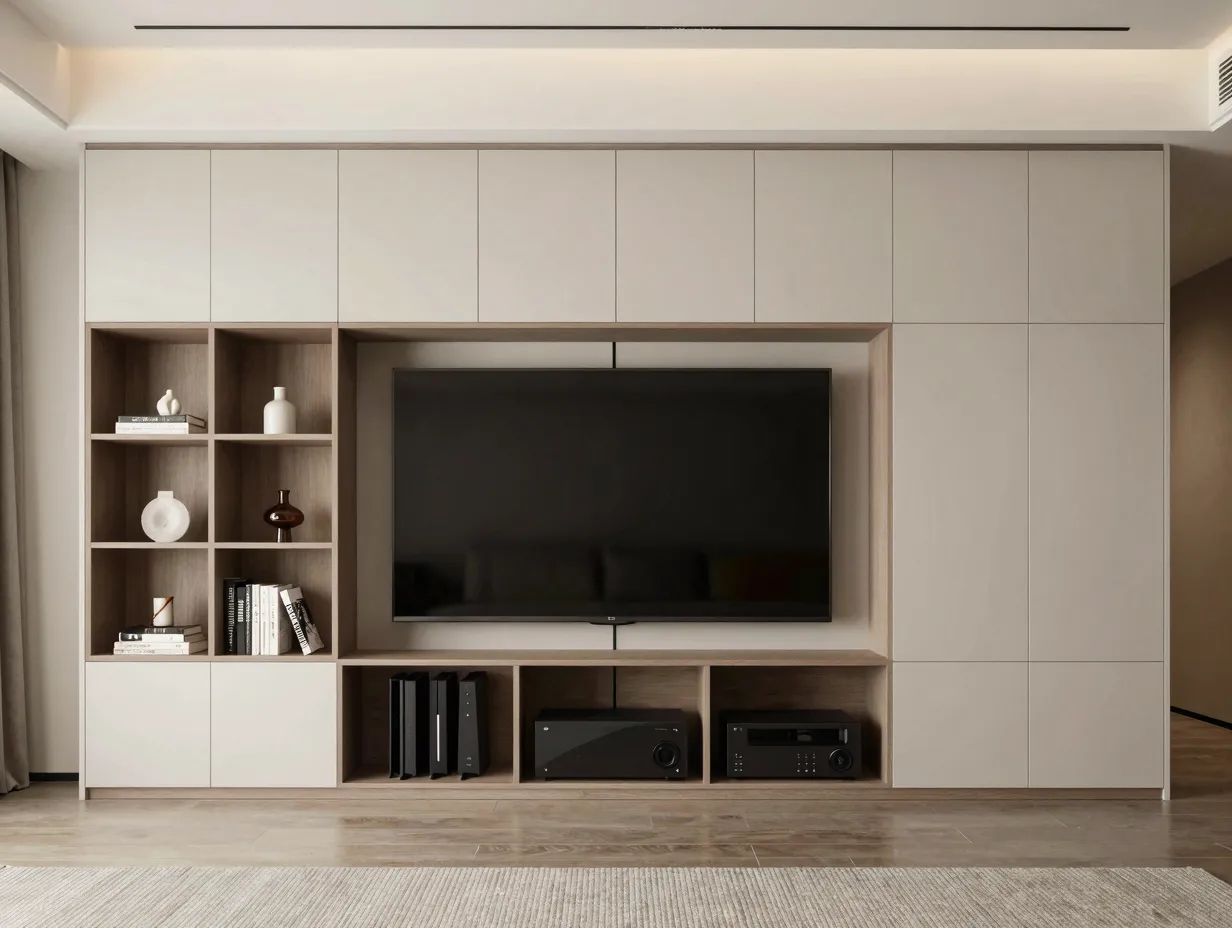
The single most impactful change you can make to a TV room is replacing a freestanding TV stand with a full-wall media unit. In 2026, media walls have become the dominant design feature in high-performance TV rooms, and for good reason [10].
A full-wall unit does several things at once. It frames the screen so the eye reads the TV as part of a cohesive composition rather than an object floating on a bare wall. It provides integrated storage that eliminates visible clutter, cables, streaming boxes, gaming consoles, and remotes all disappear behind doors or into dedicated compartments. It also creates an opportunity to incorporate acoustic panels, ambient lighting, and decorative elements into a single unified design.
What to look for in a media wall:
- Deep enough shelving (at least 18 inches) to house AV components with proper ventilation
- A dedicated cable management channel running vertically behind the unit
- Mixed open and closed storage to balance display and concealment
- Material consistency with the rest of the room’s design language [4]
When I helped a friend redesign her living room last year, replacing a basic TV console with a floor-to-ceiling media wall was the single change that made the room feel intentional. The TV went from looking like a piece of office equipment to becoming the centerpiece of a designed space.
2. Choose Floating TV Units for Small and Modern Spaces
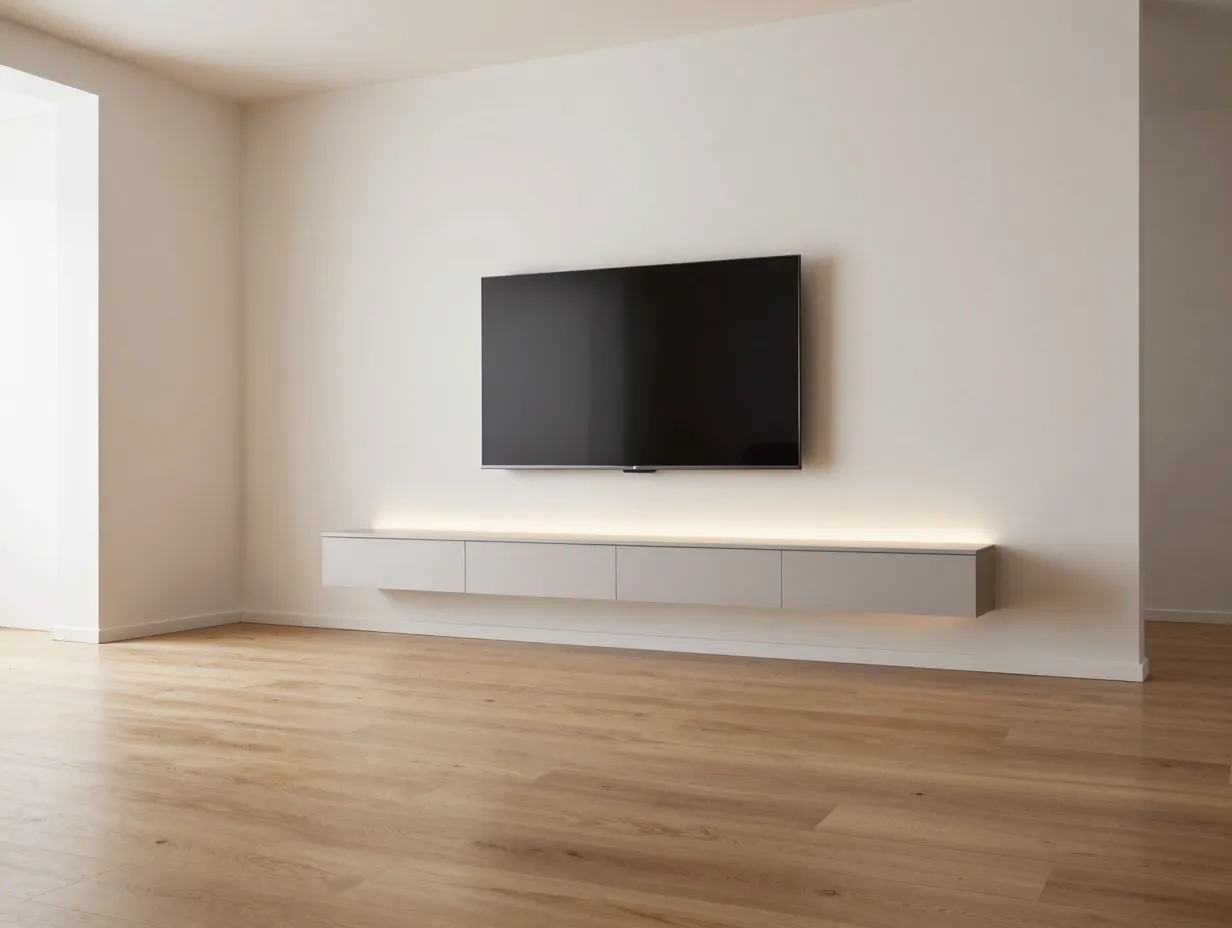
Not every home can accommodate a full-wall installation. In smaller apartments, open-plan spaces, or rooms where a heavy built-in would feel oppressive, a floating TV unit delivers a clean, contemporary look with a surprisingly light footprint [5].
Floating units, wall-mounted consoles that appear to hover above the floor, create visual breathing room. The exposed floor beneath the unit makes the room feel larger, and the absence of legs gives the piece a modern, architectural quality that suits minimalist and Scandinavian-influenced interiors particularly well.
Key advantages of floating TV units:
- Floor space remains visually open, making rooms feel larger
- Easier cleaning underneath the unit
- Height is fully adjustable during installation to match your seated eye line
- Works well with under-unit LED strip lighting for a floating glow effect [7]
The ideal mounting height places the center of the screen at seated eye level, roughly 42 to 48 inches from the floor for most standard sofa heights. Many homeowners mount screens too high, which causes neck strain over long viewing sessions and degrades the perceived picture quality.
3. Embrace the “New Heritage” Style with Natural Woods and Rich Finishes
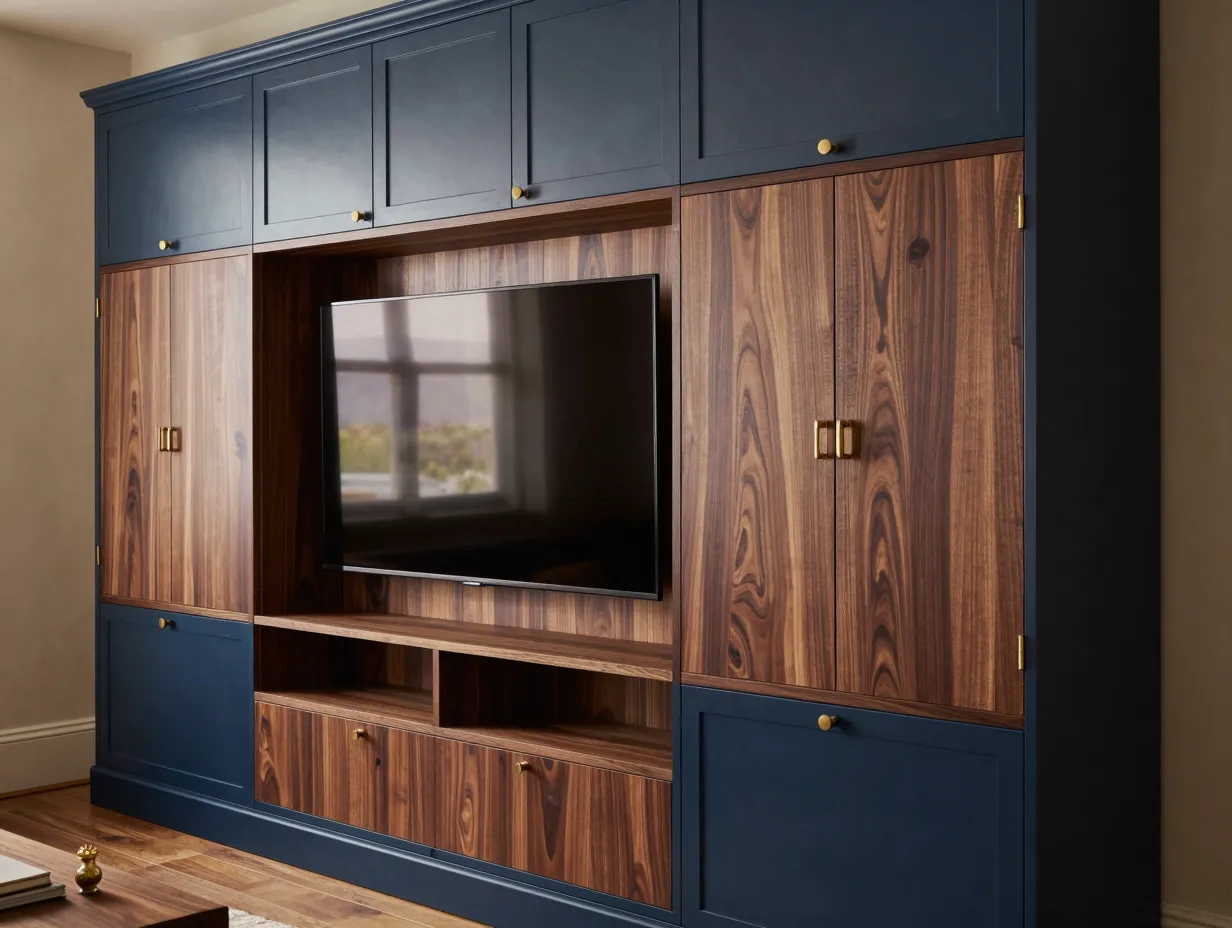
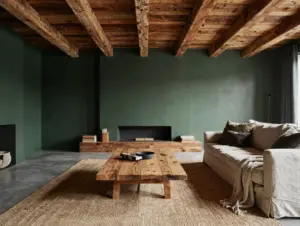
One of the most compelling design directions of 2026 is what designers are calling “new heritage”, a warm, grounded aesthetic that combines natural wood grains, richer stain tones, and deep cabinetry colors like navy blue, forest green, and charcoal [10][5].
This trend is a direct reaction to the cold, all-white minimalism that dominated the previous decade. New heritage TV rooms feel lived-in and sophisticated rather than sterile. The key is pairing warm wood tones, think walnut, oak with a medium-dark stain, or even reclaimed timber, with painted cabinetry in a saturated, muted color.
New heritage material combinations that work:
| Wood Tone | Cabinetry Color | Hardware Finish |
|---|---|---|
| Dark walnut | Navy blue | Brushed brass |
| White oak | Forest green | Matte black |
| Reclaimed pine | Charcoal grey | Aged bronze |
| Medium oak | Slate blue | Satin nickel |
The result is a TV room that feels curated and personal rather than showroom-generic. This approach also ages well, rich, natural materials tend to look better over time than trendy finishes that date quickly.
4. Layer Your Lighting for Both Performance and Atmosphere
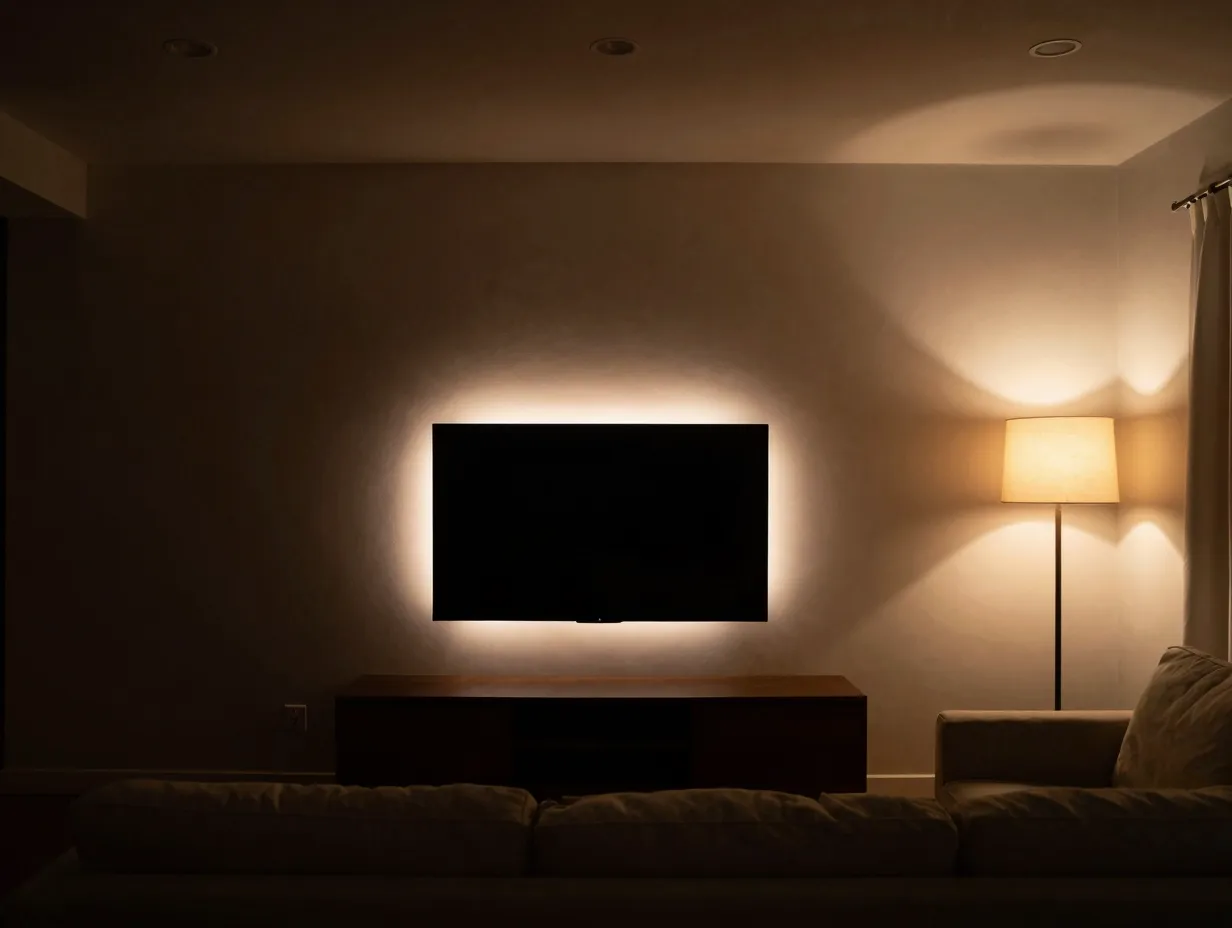
Lighting is the most underestimated element in TV room design. Most people rely on a single overhead fixture, which creates glare on the screen, flattens the room visually, and produces eye strain during long viewing sessions. A layered lighting approach solves all of these problems simultaneously [3][9].
Effective TV room lighting operates on three levels:
Ambient lighting provides the base level of illumination. Recessed ceiling lights on a dimmer are ideal, they allow you to dial down brightness during viewing without eliminating light entirely. Avoid placing recessed lights directly in front of the screen, where they will reflect off the display surface.
Task lighting serves specific functional needs, reading, gaming, or working in the space. Wall sconces or floor lamps positioned to the sides of the seating area work well without interfering with the viewing experience.
Accent and bias lighting is where the real magic happens for entertainment hubs. Bias lighting, LED strips mounted behind the TV on the wall, reduces the perceived contrast between the bright screen and the dark surrounding wall, which measurably reduces eye fatigue during extended viewing. Bias lighting also adds a cinematic quality to the room that is difficult to achieve any other way [2].
“The right lighting setup does not just make a room look better, it makes the screen look better. Bias lighting behind the TV changes how your eyes perceive on-screen contrast and color.”
Smart lighting systems that respond to content, dimming automatically when a film starts and brightening during credits, are increasingly accessible and affordable in 2026, and they represent one of the highest-impact upgrades available for any entertainment hub [3].
5. Integrate Acoustic Treatment Without Sacrificing Style
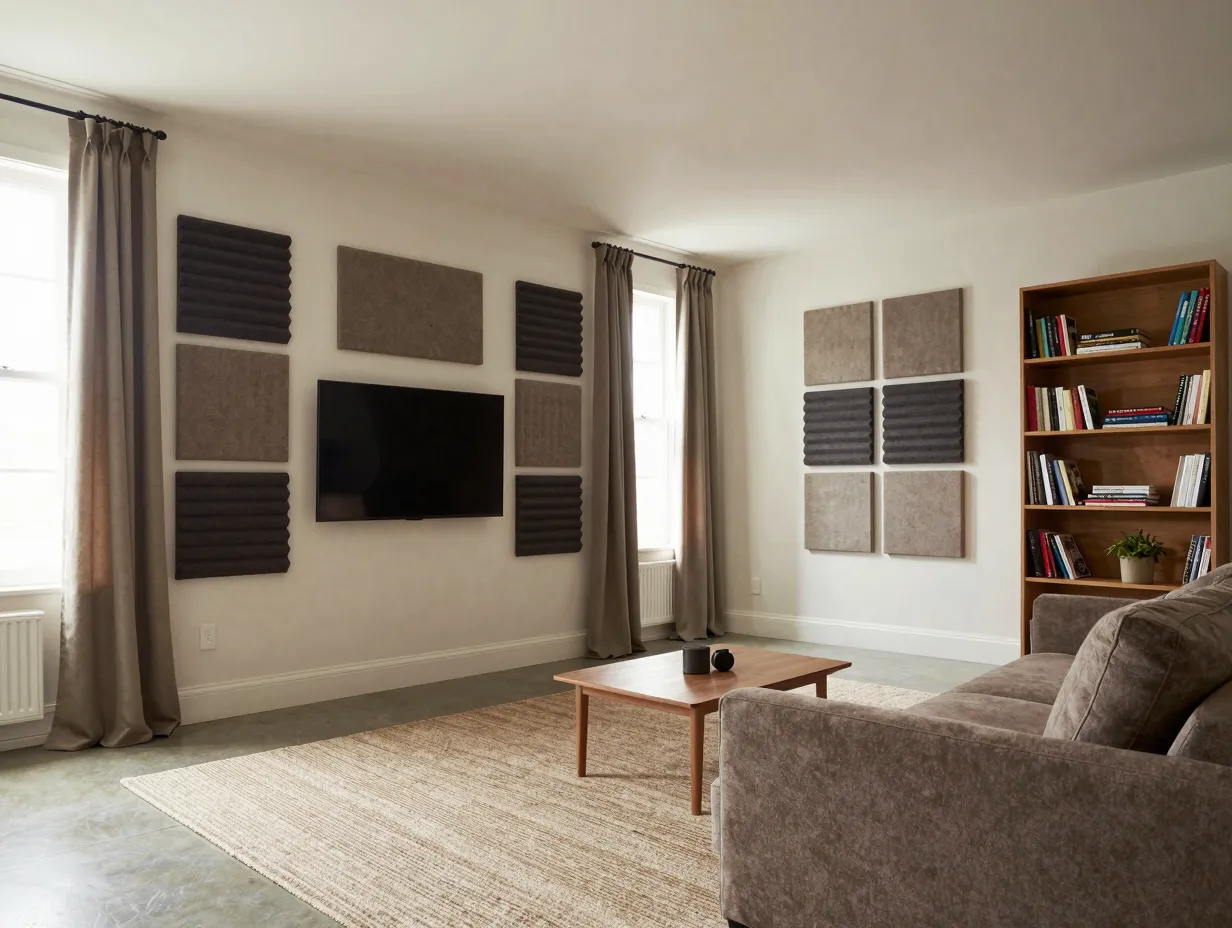
Bare walls, hard floors, and glass surfaces are the enemies of great sound. They reflect audio waves in ways that create echo, muddiness, and a loss of dialogue clarity. Professional home theaters use dedicated acoustic treatment to manage these reflections, and the same principles apply in living room entertainment hubs, they just need to be applied with more design sensitivity [2].
The good news is that acoustic treatment in 2026 has evolved far beyond the ugly foam tiles of the recording studio. Several stylish options are now available:
- Fabric-fronted cabinetry panels flanking the TV absorb mid-frequency reflections while looking like intentional design elements
- Upholstered wall panels in the style of traditional wainscoting add texture and absorption simultaneously
- Heavy drapes on windows and sliding doors provide significant low-frequency absorption
- Area rugs on hard floors break up the largest reflective surface in the room
- Bookshelves filled with books act as natural diffusers, scattering sound rather than reflecting it directly [9]
The goal is not to deaden the room completely but to reduce harsh reflections while maintaining a natural, lively acoustic character. A room that is too acoustically dead sounds unpleasant in a different way, voices become thin and the sound loses its sense of space.
6. Design Your Seating Layout Around the Screen, Not the Room
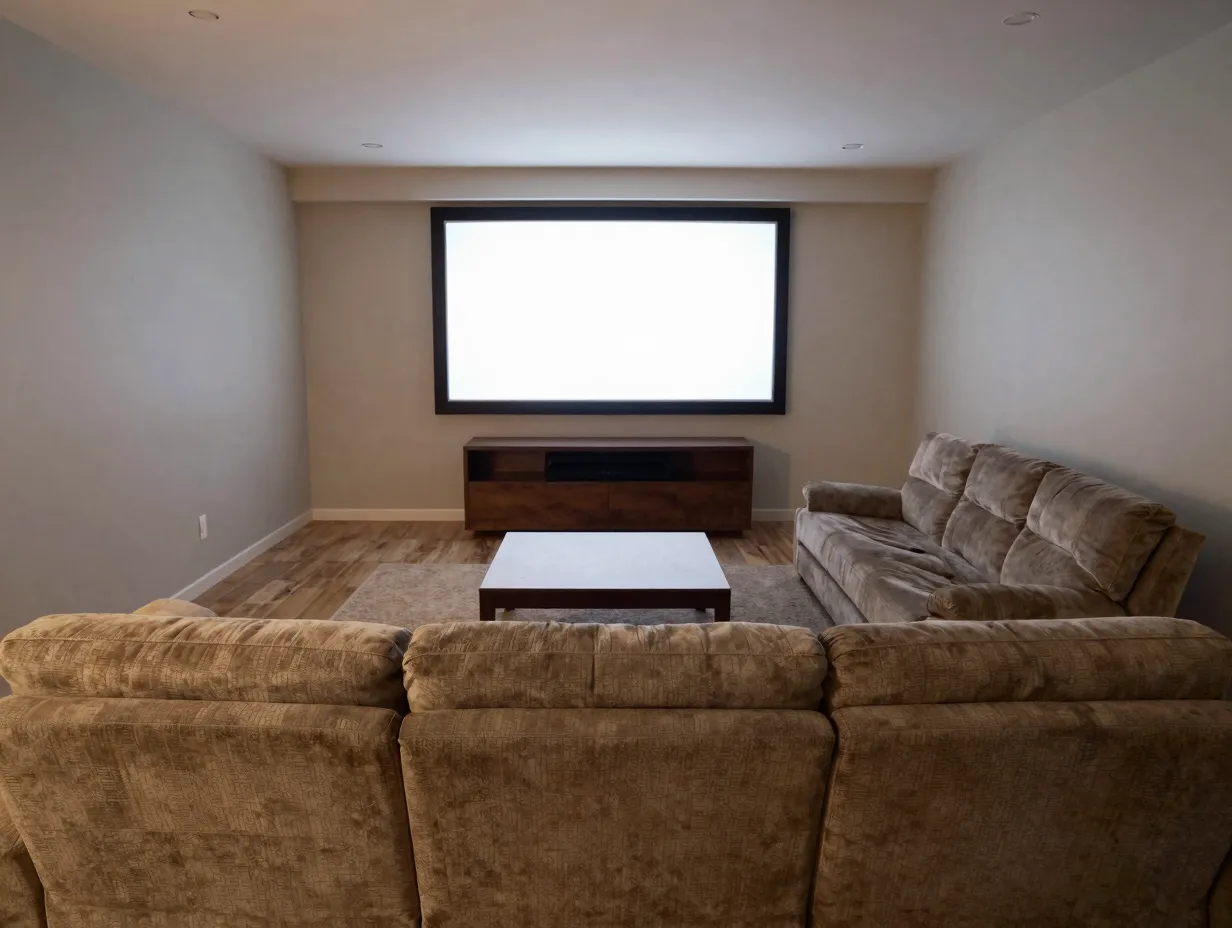
Most people place furniture based on the shape of the room and then position the TV wherever it fits. This is backwards. In a purpose-built entertainment hub, the screen position is fixed first, and the seating layout is designed around it.
The optimal viewing distance for a 4K display is approximately 1.5 times the screen’s diagonal measurement. For a popular 75-inch screen, that works out to roughly 9 to 10 feet. Sitting closer than this on a 4K panel does not degrade the image, in fact, it can reveal more detail, but it does increase the visual field angle, which some viewers find fatiguing.
Seating layout principles for entertainment hubs:
- The primary seating position should be directly centered on the screen, not offset to one side
- Side seats should be within a 30-degree angle from the screen centerline for acceptable viewing quality
- Reclining seating dramatically improves comfort for long viewing sessions, consider sectionals with built-in recline rather than traditional sofas
- Leave at least 18 inches of clearance between the front edge of the sofa and any coffee table to allow comfortable movement [9]
A common mistake I see in open-plan homes is placing the TV on an exterior wall and seating the viewer with their back to the kitchen or hallway traffic. This creates constant peripheral distraction. Where possible, orient the seating so the viewer faces away from high-traffic areas of the home.
7. Solve Cable Management Before It Becomes a Problem
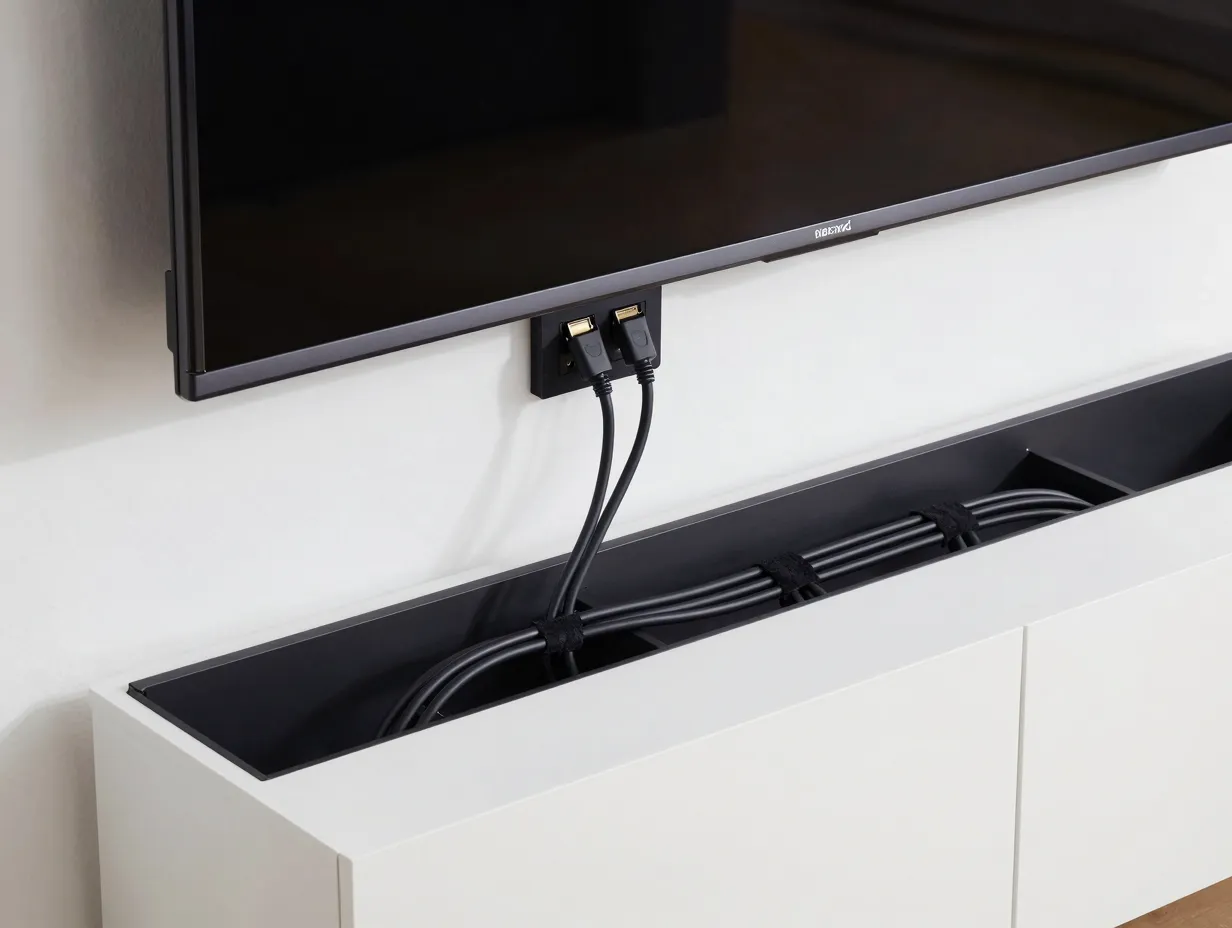
Nothing undermines a beautifully designed TV room faster than a tangle of visible cables. Cable management is one of those details that is cheap and easy to address during a renovation or installation and extremely disruptive to fix after the fact.
Effective cable management strategies:
- Run power and signal cables inside the wall between the TV mounting point and the media unit below, this requires a licensed electrician in most jurisdictions but produces a completely clean result
- Use a structured cable raceway channel on the wall surface if in-wall routing is not possible, modern raceways are paintable and nearly invisible when finished correctly
- Install a dedicated power outlet behind the TV mounting position rather than running a power cable down the wall
- Label all cables at both ends during installation, this simple step saves hours of troubleshooting later [4]
For AV components housed in the media unit, use a cable management tray or spine inside the cabinet to keep connections organized. Group cables by type, power, HDMI, optical, and use Velcro ties rather than zip ties so the arrangement can be adjusted without cutting anything.
8. Incorporate Smart Home Technology as a Native Feature
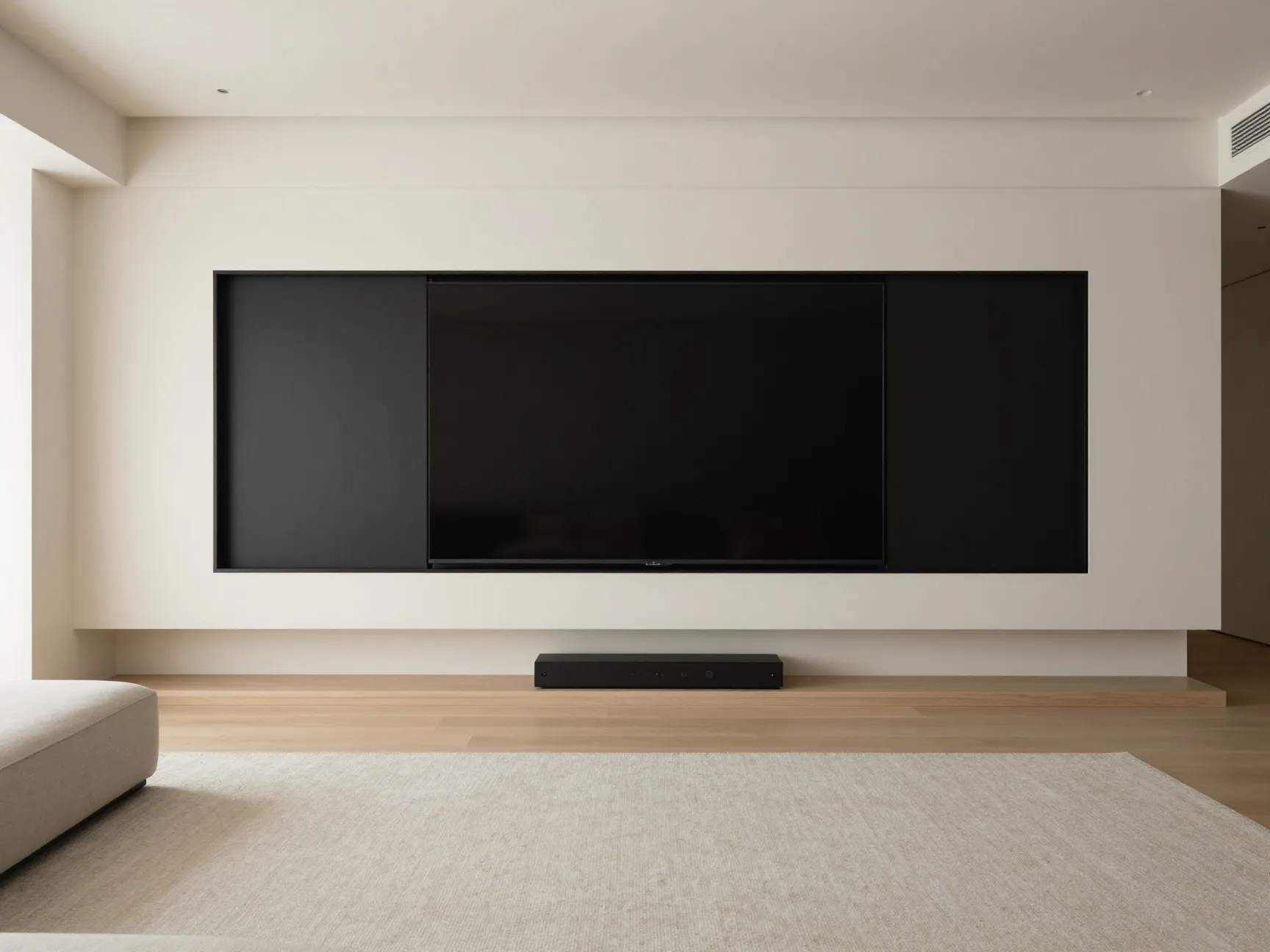
The most capable entertainment hubs in 2026 treat smart home technology not as an add-on but as a native design feature, integrated into the room from the start rather than retrofitted with visible sensors, hubs, and cables [3].
This means planning for smart lighting control, motorized window treatments, multi-room audio, and streaming device management during the design phase. A few specific integrations that deliver the highest impact:
Voice and app control allows a single command to dim lights, lower motorized shades, power on the TV and AV receiver, and switch to the correct input, eliminating the four-remote juggling act that frustrates most households.
Motorized blackout shades are particularly valuable in rooms with large windows. Ambient light control is critical for daytime viewing quality, and motorized shades can be programmed to close automatically when a film starts.
Distributed audio extends the entertainment experience beyond the main screen, music plays in the kitchen while the TV is on in the living room, managed from a single app [2].
The key design principle here is that all of this technology should be invisible when not in use. Sensors should be recessed or integrated into ceiling fixtures. Control panels should be flush-mounted and finished to match the wall. The room should look like a beautifully designed living space, not a technology showroom.
9. Personalize with Art, Texture, and Collected Objects
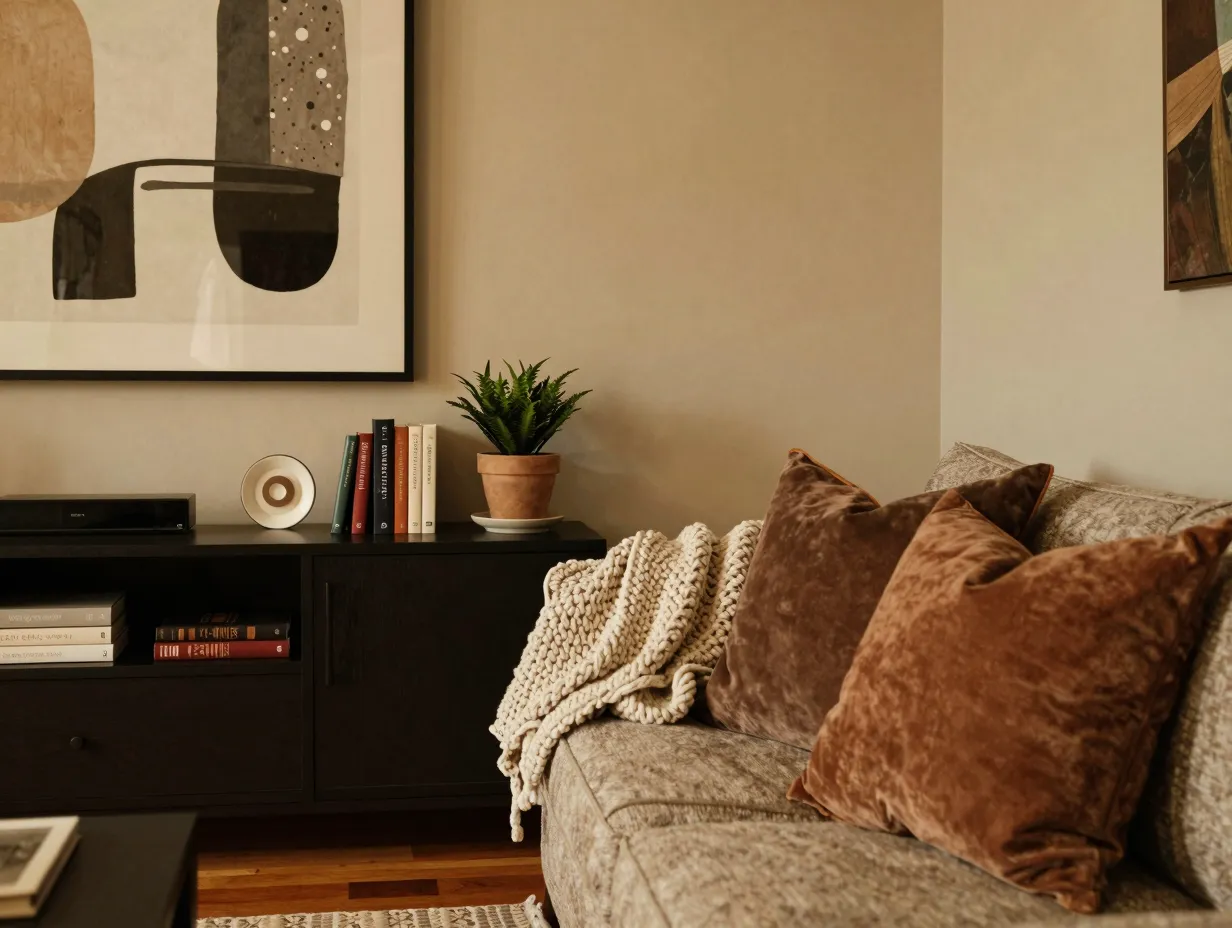
The final strategy is the one most often neglected in pursuit of technical perfection: making the room feel like yours. An entertainment hub that looks like a hotel lobby or a showroom floor is not a space people want to spend hours in. Personal warmth, expressed through art, books, plants, collected objects, and meaningful textiles, is what turns a well-designed room into a beloved one.
In new heritage-style rooms, this personalization layer is especially important. Dark cabinetry and rich wood tones provide a sophisticated backdrop, but they need the warmth of personal objects to feel inviting rather than formal [10].
Practical personalization ideas:
- Use the open shelving sections of your media wall to display a curated mix of books, art objects, and plants rather than filling them with AV equipment
- Choose throw pillows and blankets in textures that invite touch, bouclé, velvet, and chunky knit all work well in media room contexts
- Commission or select a single large-format artwork for the wall adjacent to the TV, this gives the eye a focal point when the screen is off
- Use plants strategically near the seating area; they add life, soften hard edges, and have a mild acoustic benefit by adding surface irregularity to the room
The goal is a room that functions at the highest level when the screen is on and feels genuinely comfortable and beautiful when it is off.
Common Mistakes to Avoid
Even with the best intentions, certain errors appear repeatedly in TV room projects. Being aware of them in advance saves significant time, money, and frustration.
Mounting the TV too high is the most common mistake. Eye-level viewing is always more comfortable than looking upward, and the instinct to mount screens high, often driven by a desire to see the TV from across a large room, consistently produces neck strain and a less immersive experience.
Ignoring ventilation for AV components is a technical error with real consequences. AV receivers, streaming devices, and gaming consoles generate significant heat. Enclosed cabinetry without ventilation cuts component life dramatically. Build open-back cabinets or install a small exhaust fan in enclosed media units.
Choosing a screen size based on room size alone misses the more important variable: seating distance. A 65-inch screen in a room where seating is 12 feet away will feel small. Calculate the optimal size based on your actual viewing distance, not the room’s square footage.
Overlooking acoustic treatment entirely is particularly common in open-plan homes where the TV room flows into other spaces. Even partial treatment, a large rug, heavy drapes, and an upholstered sofa, makes a meaningful difference in dialogue clarity and overall sound quality.
Conclusion
Applying the 9 TV Room Design Strategies for the Ultimate Home Entertainment Hub is not about spending more money, it is about spending attention in the right places. A full-wall media unit, thoughtful lighting layers, acoustic-aware material choices, and smart technology integration all work together to create a space that performs better and feels more inviting than any collection of premium hardware placed in an unconsidered room.
Actionable next steps to move forward:
Start by assessing your current room against the nine strategies above. Identify the two or three areas where the gap between your current setup and the ideal is largest, for most homes, that will be lighting, cable management, and seating position. Address those first, since they deliver the highest impact per dollar invested.
If you are planning a full renovation or new build, bring these strategies into the design conversation early. Cable management, in-wall power, and acoustic treatment are all dramatically easier and cheaper to address during construction than after the fact.
The best entertainment hub is not the one with the largest screen or the most expensive speakers. It is the one where every element, from the bias lighting behind the TV to the texture of the cushions on the sofa, has been chosen with intention. That room is worth building.
References
[1] Watch – https://www.youtube.com/watch?v=c121Z6XjDDw
[2] Build Home Cinemas Without Trying – https://stageandcinema.com/2026/04/03/build-home-cinemas-without-trying/
[3] How To Create A Home Theater A Complete 2026 Guide – https://www.elitehts.com/post/how-to-create-a-home-theater-a-complete-2026-guide
[4] Latest Tv Unit Design – https://www.srvinteriors.com/latest-tv-unit-design.html
[5] Modern Tv Unit Design Ideas Living Room 2026 – https://tinttoneandshade.com/blog/modern-tv-unit-design-ideas-living-room-2026
[6] Watch – https://www.youtube.com/watch?v=WtRAkkT1-k8
[7] 14 Tv Stand Design Trends For 2025 – https://belleze.com/blogs/news/14-tv-stand-design-trends-for-2025
[8] Watch – https://www.youtube.com/watch?v=uEuxTVOtYpg
[9] How To Transform Modern Living Room Into Home Theater – https://www.spacejoy.com/interior-designs-blog/how-to-transform-modern-living-room-into-home-theater
[10] Tv Unit Design Ideas 2026 Stylish Living Room Trends That Instantly Transform Your Home – https://lifeandtrendz.com/lifestyle/tv-unit-design-ideas-2026-stylish-living-room-trends-that-instantly-transform-your-home/