8 Foundational Principles To Guide Your Interior Design At Home
Only 12% of homeowners who attempt a full room redesign report being satisfied with the result, and most cite the same root cause: they skipped the fundamentals. Interior design is not a matter of taste alone. It is a discipline with a clear, learnable structure. The 8 foundational principles to guide your interior design at home are not abstract rules invented by academics. They are practical tools that professional designers use every single day to turn ordinary rooms into spaces that feel intentional, comfortable, and alive.
Disclosure: This post contains affiliate links. As an Amazon Associate, we earn from qualifying purchases, and at no extra cost to you.
I have spent years studying how rooms succeed and fail, talking to designers, and testing ideas in my own home. What I have learned is that when a space feels “off” but you cannot explain why, it almost always traces back to one of these eight principles being ignored or misapplied. Understanding them does not require a design degree. It requires curiosity and a willingness to look at your home with fresh eyes [9].
Key Takeaways
- Interior design excellence is built on eight learnable principles, not innate talent
- Balance, scale, proportion, rhythm, emphasis, contrast, harmony, and unity work together as a system
- Applying even two or three of these principles consistently can transform a room
- Current 2026 design trends, including wellness-focused and biophilic interiors, are most effective when grounded in these foundational rules
- You do not need to redesign everything at once; start with one principle per room
Why the 8 Foundational Principles To Guide Your Interior Design At Home Actually Matter
Most people approach home decorating the way they approach packing a suitcase, they keep adding things until the space is full, then wonder why it feels chaotic. Professional interior designers work in the opposite direction. They start with structure.
The 8 foundational principles to guide your interior design at home provide that structure. They are the grammar of a visual language. Just as you can write grammatically correct sentences without being a novelist, you can apply these principles without being a professional designer. The results speak for themselves.
A growing body of design research supports the idea that well-designed spaces directly affect mood, productivity, and even physical health [1][3]. In 2026, wellness architecture and biophilic design are among the most discussed trends in the industry, but both movements are only effective when they are built on solid foundational principles [8]. A room full of plants and natural light still feels uncomfortable if its proportions are wrong or its focal point is missing.
“Good design is not about perfection. It is about intention. When every element in a room has a reason to be there, the space communicates confidence.”
Let us walk through each principle in detail.
The 8 Foundational Principles To Guide Your Interior Design At Home, Explained
1. Balance
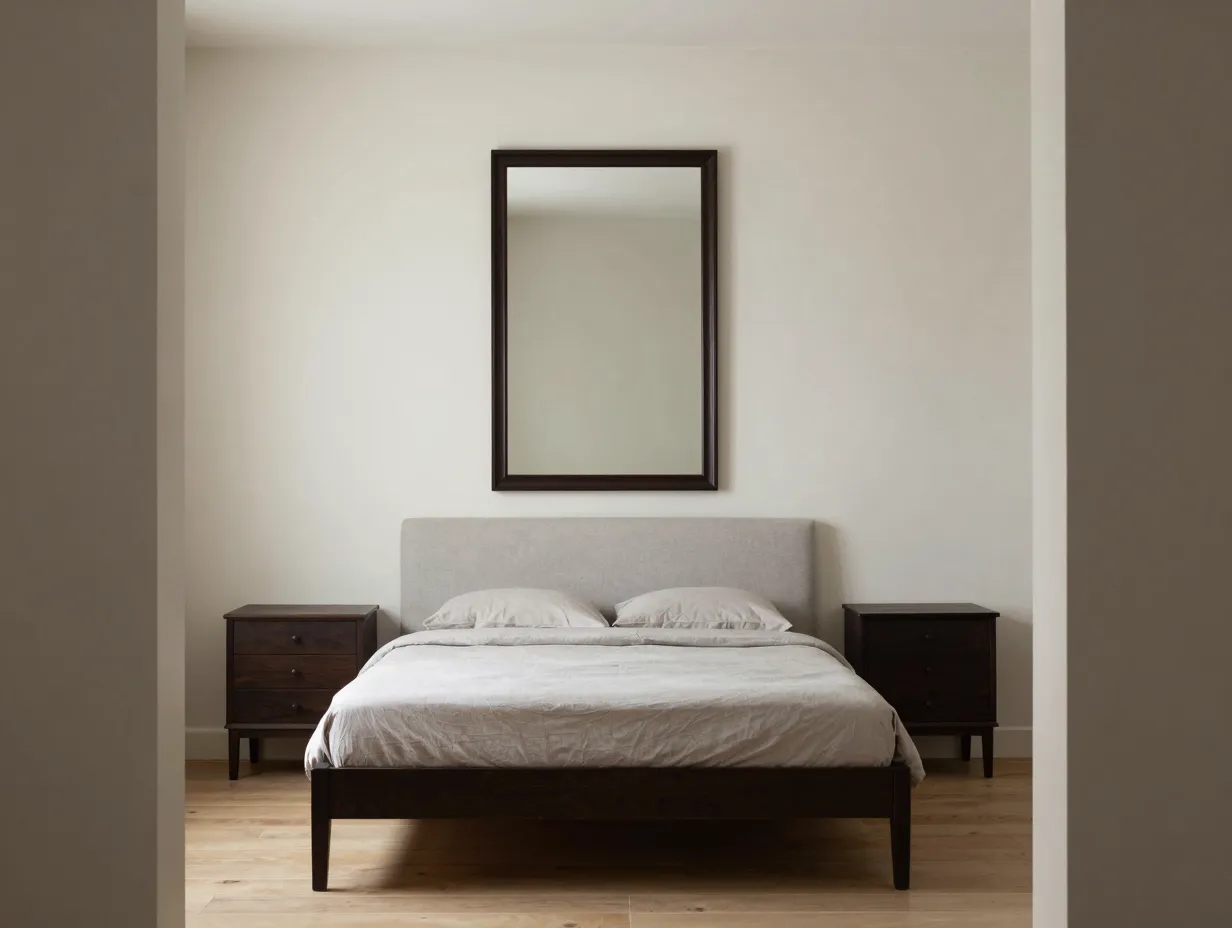
Balance is the visual distribution of weight in a room. When a space feels “heavy” on one side or oddly lopsided, balance is the culprit.
There are three types of balance to understand:
- Symmetrical balance places identical or near-identical elements on either side of a central axis. Think matching nightstands flanking a bed, or two identical armchairs facing a sofa. It reads as formal and calm.
- Asymmetrical balance uses different objects of similar visual weight to create equilibrium. A large sofa on one side might be balanced by a tall bookcase and a floor lamp on the other. It feels more dynamic and contemporary.
- Radial balance arranges elements around a central point, like chairs around a circular dining table or a sunburst mirror as a room’s focal anchor.
In my own living room, I spent months wondering why the space felt restless. The problem was simple: I had placed all my heavy, dark furniture on one wall and left the opposite wall bare. Once I introduced a tall, dark-framed mirror on the lighter side, the room immediately settled [5].
Quick tip: Stand at the doorway of any room and squint. If your eye is pulled immediately to one corner and stays there, the room lacks balance.
2. Scale and Proportion
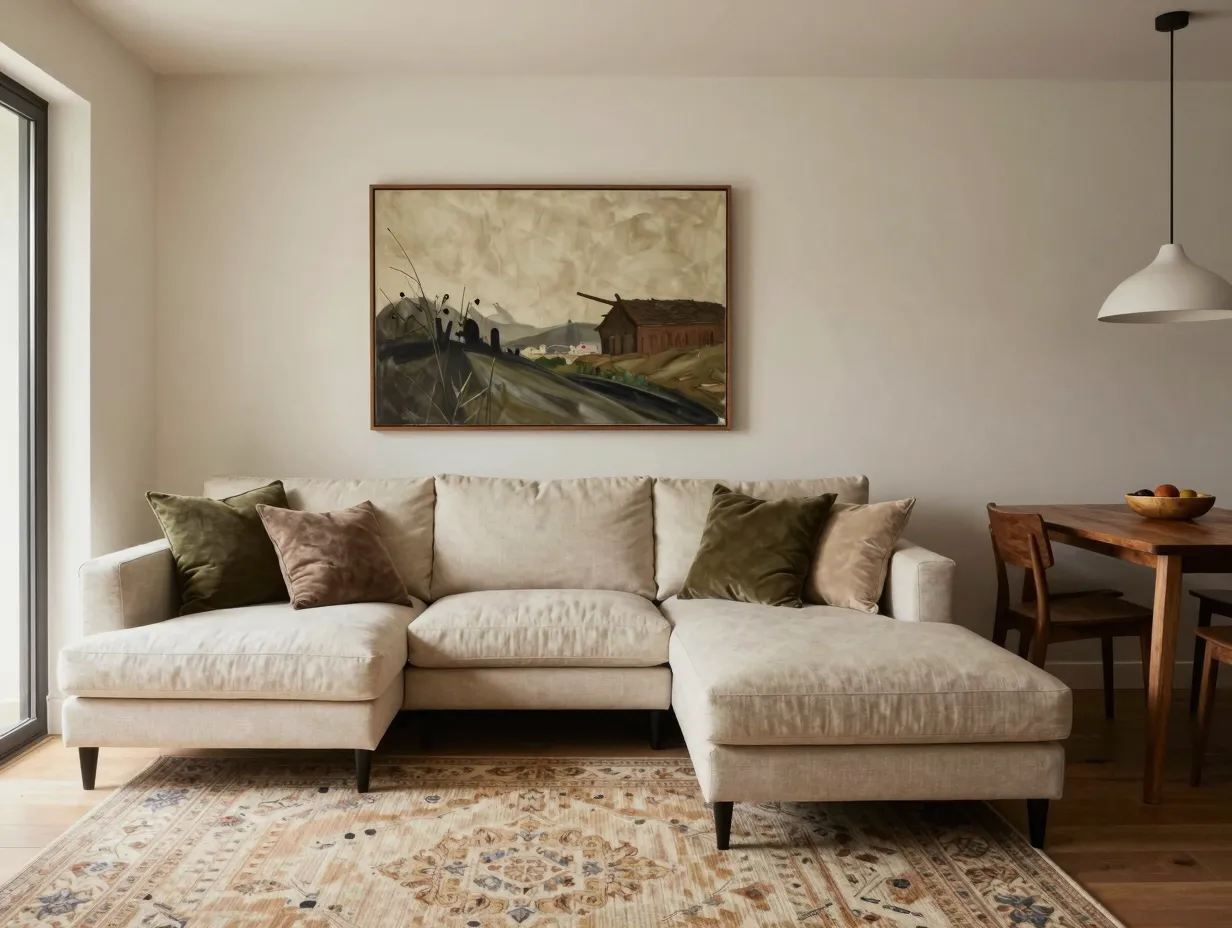
Scale refers to the size of objects relative to the room. Proportion refers to the size of objects relative to each other. These two principles are closely linked, and getting them wrong is one of the most common mistakes in home design [6].
A tiny rug under a large sectional sofa is a proportion problem. A massive chandelier in a low-ceilinged hallway is a scale problem. Both create visual discomfort that most people feel but cannot name.
| Furniture Piece | Common Scale Mistake | Better Approach |
|---|---|---|
| Area rug | Too small, floats under furniture | Front legs of all seating on the rug |
| Artwork | Too small, hung too high | Eye-level center, sized to furniture below |
| Pendant light | Too low or too high | 30-36 inches above dining table surface |
| Sofa | Oversized for the room | Leave 18 inches of walking clearance |
3. Rhythm
In music, rhythm creates movement and keeps your attention engaged. In interior design, rhythm does the same thing, it guides the eye through a space and creates a sense of flow.
Rhythm in design is achieved through:
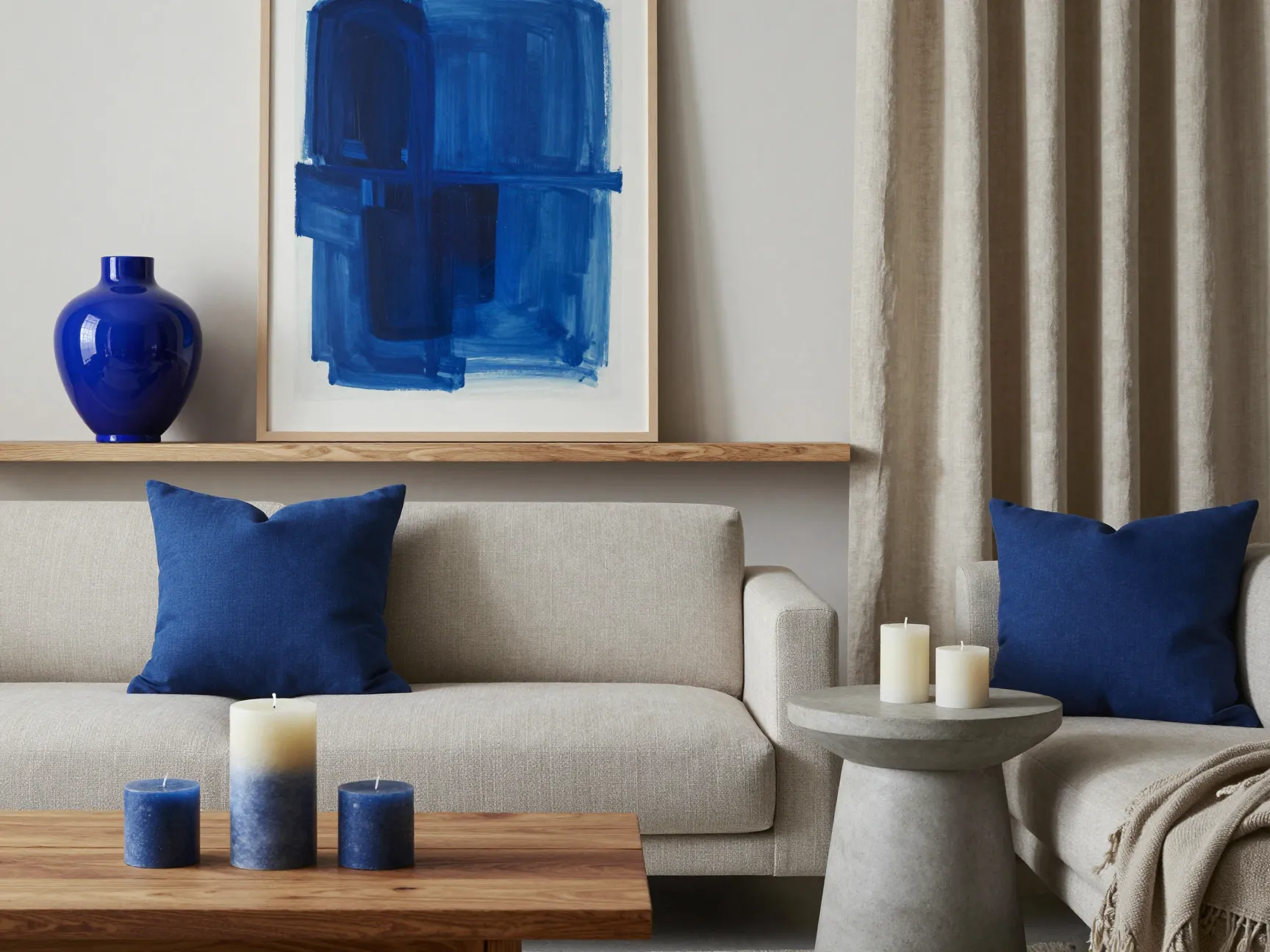
- Repetition: Using the same color, shape, or texture multiple times. A blue throw pillow, a blue ceramic vase, and a blue-tinted artwork create a visual beat.
- Transition: Gradually changing an element, moving from dark flooring to a lighter rug to pale walls creates a smooth visual journey.
- Progression: Grouping objects of graduating sizes, like a cluster of candles in three different heights.
- Contrast: Placing opposing elements, rough next to smooth, dark next to light, to create visual punctuation.
Rhythm is what makes a room feel curated rather than cluttered. Without it, even expensive furniture can look like it was arranged by chance [6].
4. Emphasis and Focal Point
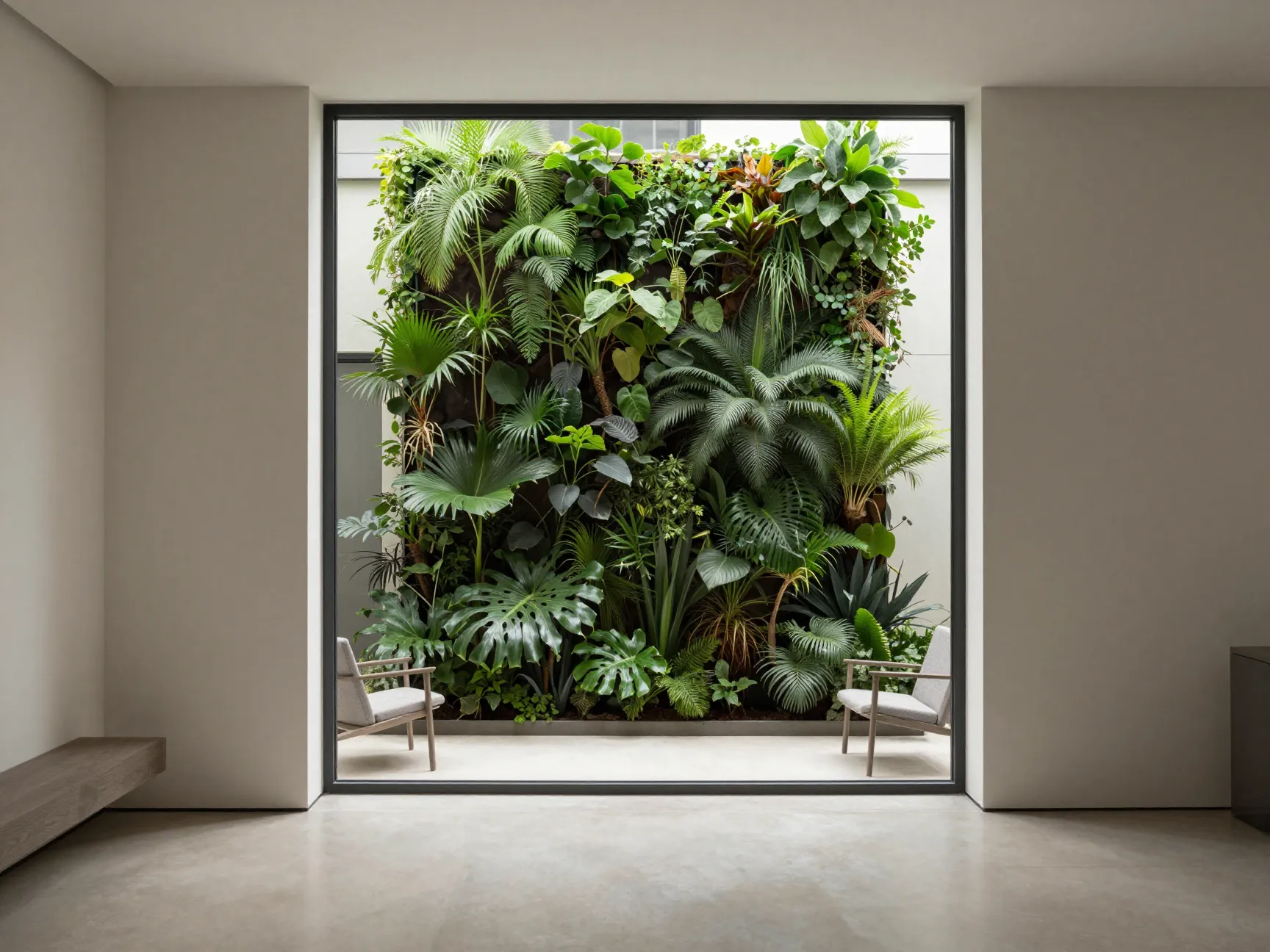
Every well-designed room has one element that commands attention first. This is the focal point, and creating it deliberately is the principle of emphasis.
A focal point can be architectural, a fireplace, a large window with a view, an exposed brick wall. Or it can be created, a bold piece of artwork, a statement sofa in a contrasting color, a dramatic light fixture.
The mistake most people make is having too many focal points, or none at all. When everything competes for attention, nothing wins. The room feels visually exhausting.
How to create a focal point:
- Identify the strongest existing architectural feature in the room
- Draw attention to it with lighting, color, or furniture arrangement
- Ensure all other elements support rather than compete with it
- Keep the surrounding area relatively calm to let the focal point breathe
In 2026, designers are increasingly using a single dramatic biophilic element, a living wall, an oversized natural stone feature, or a floor-to-ceiling window, as the room’s primary focal point [8][4]. This approach works precisely because it applies the principle of emphasis with clarity and confidence.
5. Contrast
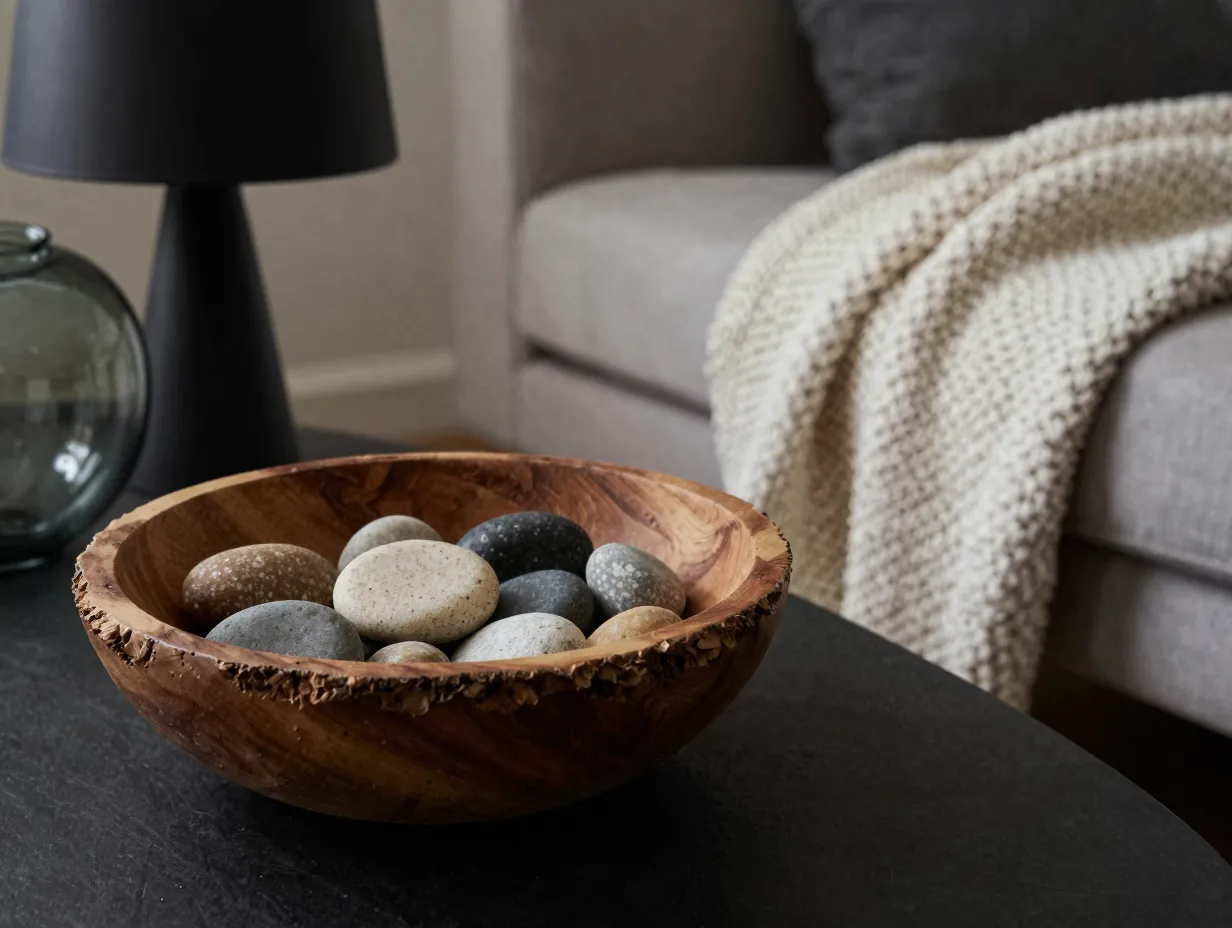
Contrast is the deliberate juxtaposition of opposing elements to create visual interest and prevent monotony. Without contrast, a room becomes flat and forgettable. With too much contrast, it becomes chaotic.
Contrast operates across several dimensions:
- Color contrast: Dark against light, warm against cool
- Texture contrast: Smooth against rough, matte against glossy
- Shape contrast: Curved against angular, organic against geometric
- Material contrast: Natural against industrial, soft against hard
A room decorated entirely in beige and cream is a classic example of insufficient contrast. It may feel safe, but it rarely feels alive. The solution is not to introduce a jarring accent color, it is to add subtle textural contrast through linen, rattan, stone, or aged wood [10].
“Contrast is the spice of a room. A little transforms the dish. Too much overwhelms it.”
Current 2026 wellness design trends favor the pairing of raw natural materials, stone, unfinished wood, clay, against softer textiles like boucle and linen. This material contrast creates rooms that feel both grounded and inviting [3][2].
6. Harmony and Unity
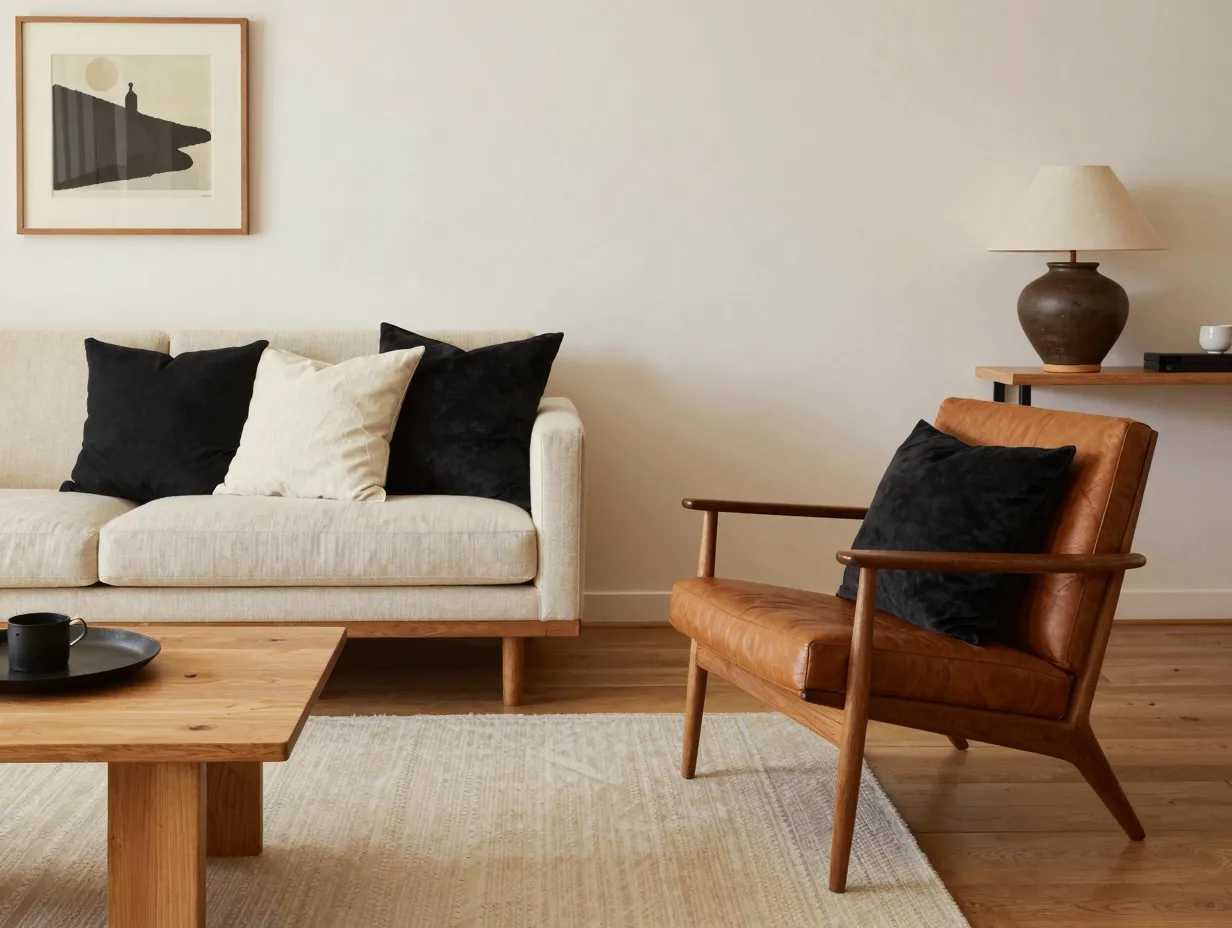
If emphasis is about making one thing stand out, harmony is about making everything belong together. Unity is the sense that a room has been designed as a whole rather than assembled from unrelated parts.
Harmony does not mean everything must match. It means everything must relate. A mid-century modern chair, a Scandinavian side table, and a Japanese ceramic lamp can coexist beautifully if they share a common thread, perhaps a warm wood tone, a restrained palette, or a shared commitment to clean lines.
Three ways to create unity in a room:
- Choose a consistent color palette of three to five colors and repeat them throughout the space in varying proportions
- Select a dominant design style and allow supporting pieces to complement rather than contradict it
- Use a single material, wood, metal, stone, as a repeating thread across multiple pieces
The concept of “curated living” that is gaining traction in 2026 design circles is essentially an application of harmony [10]. It is the idea that every object in a home should be chosen with intention, and that the overall effect should feel cohesive rather than collected [7].
7. Details and Texture
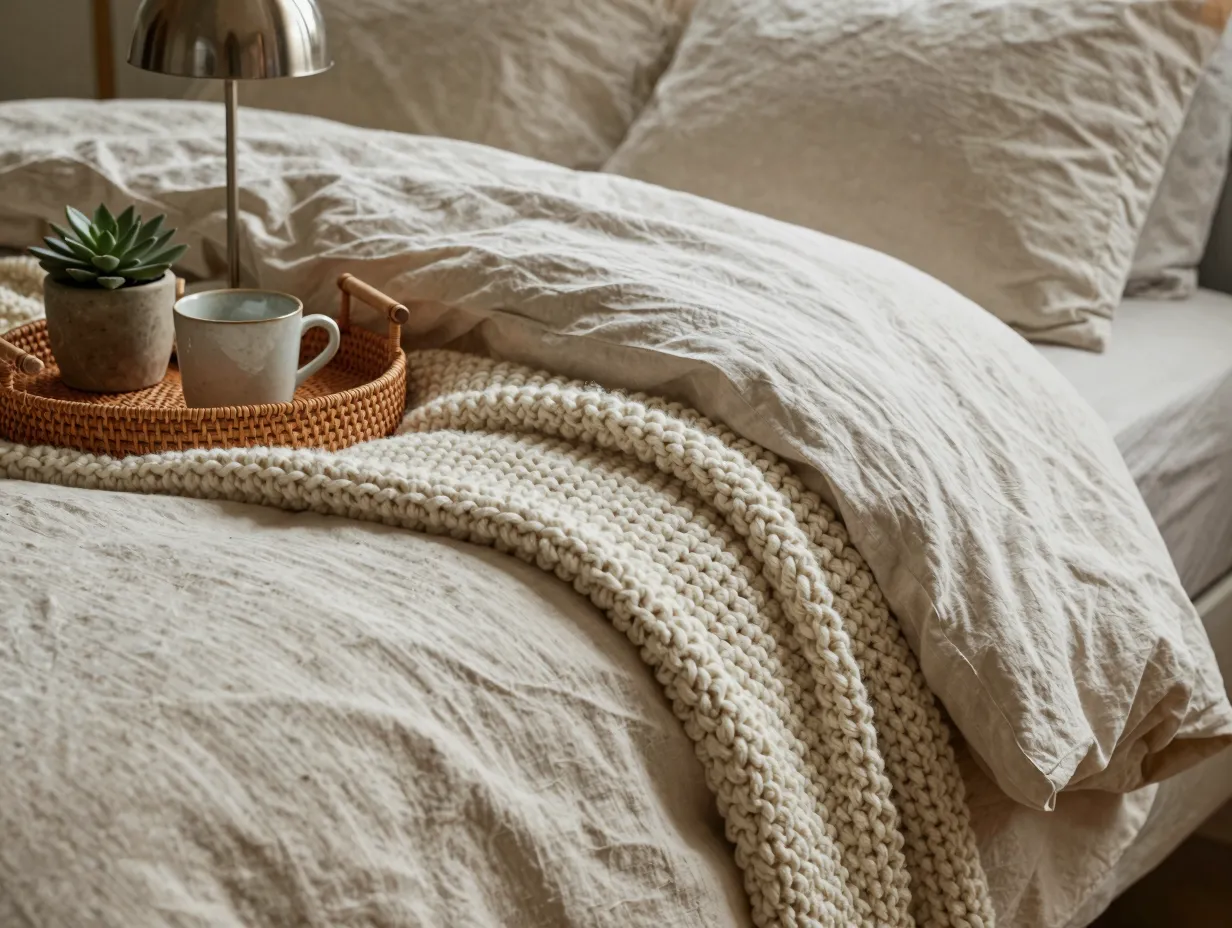
Details are the finishing touches that elevate a room from functional to memorable. Texture is the quality of a surface, how it looks and how it feels, and it is one of the most underused tools in home design.
Texture adds depth to a room without adding visual clutter. A smooth concrete wall paired with a chunky knit throw, a glossy lacquered cabinet next to a rough linen curtain, these combinations create what designers call “tactile interest.” The eye reads the variation and finds it satisfying.
Details operate at a smaller scale: the hardware on cabinet doors, the fringe on a cushion, the grain of a wooden bowl on a coffee table. These elements are easy to overlook in planning but impossible to ignore in the finished room.
In 2026, the trend toward wellness-focused interiors has brought texture to the forefront. Designers are specifying materials that feel good to touch, warm wood, soft stone, natural fiber, because research increasingly links tactile comfort to psychological wellbeing [1][3].
Texture checklist for any room:
- At least two contrasting surface textures in soft furnishings
- One natural material (wood, stone, rattan, linen)
- One reflective surface (mirror, glass, polished metal) to bounce light
- One matte surface to ground the composition
8. Functionality and Flow
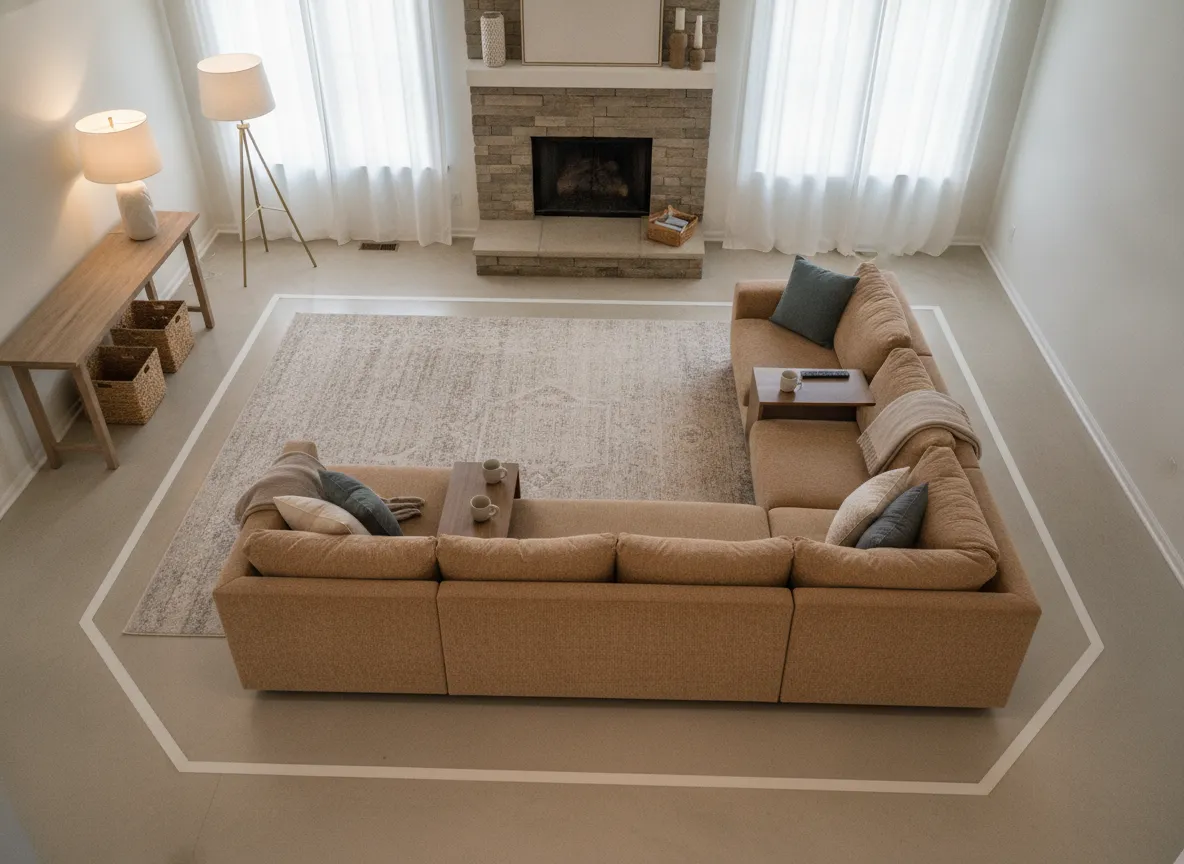
The final principle is the one that makes all the others worth applying: a room must work for the people who live in it. Functionality is not the enemy of beauty, it is its foundation.
Flow refers to how people move through a space. A room with beautiful proportions and perfect balance still fails if you have to squeeze past the sofa to reach the bookcase, or if the dining table is so close to the wall that pulling out a chair requires a gymnastics move.
Key functionality questions to ask before finalizing any room layout:
- Is there a clear, unobstructed path through the room?
- Can every seat in the room comfortably reach a surface to set down a drink?
- Is the lighting layered, ambient, task, and accent, to support different activities?
- Does the furniture arrangement encourage conversation or discourage it?
- Is storage integrated in a way that keeps the room tidy without effort?
Professional designers increasingly describe functionality as a learnable discipline built on feasibility, material behavior, furniture usability, and real-world execution [9]. The most beautiful room in a design magazine is irrelevant if it cannot survive daily life.
The 2026 shift toward wellness architecture reinforces this point. Designers are now explicitly designing for how spaces make people feel, prioritizing natural light access, acoustic comfort, air quality, and ease of movement as core functional requirements [1][4].
How To Apply These Principles Without Starting From Scratch
One of the most common misconceptions about interior design principles is that applying them requires a complete overhaul. It does not. These principles can be introduced incrementally, one room and one principle at a time.
Here is a practical starting framework:
Step 1, Audit one room. Walk through it with fresh eyes and identify which of the eight principles feels most absent. Is it balance? Focal point? Texture?
Step 2, Make one targeted change. If balance is the issue, rearrange furniture or add a single anchoring element on the lighter side. If texture is missing, introduce one natural material through a cushion, a throw, or a plant.
Step 3, Live with it for two weeks. Design changes take time to settle into your perception. What feels unfamiliar at first often reveals itself as correct after a few days of living with it.
Step 4, Layer in the next principle. Once one principle feels solid, address the next. Over time, the cumulative effect is transformative.
This incremental approach aligns with what leading designers describe as “the curated living reset”, the idea that a home evolves through thoughtful, intentional additions rather than wholesale reinvention [10].
Conclusion
The 8 foundational principles to guide your interior design at home, balance, scale and proportion, rhythm, emphasis, contrast, harmony, details and texture, and functionality, are not a checklist to complete once and forget. They are an ongoing conversation between you and your space.
What I find most liberating about these principles is that they remove the pressure of “good taste.” You do not need to have been born with an eye for design. You need to understand why a room works, and then apply that understanding deliberately. Every room in your home is a problem waiting to be solved with these tools.
Your actionable next steps:
- Choose one room in your home and identify its weakest design principle
- Make one targeted, low-cost change to address that principle this week
- Study rooms you admire, in magazines, online, or in friends’ homes, and identify which principles they apply most effectively
- Return to this framework every time a space feels “off”, the answer will almost always be here
The principles do not change. Trends come and go, biophilic design, wellness architecture, curated minimalism, but the rooms that stand the test of time are always the ones built on this foundation [2][8]. Start there, and everything else follows.
References
[1] Wellness Architecture Design Initiative Trends For 2026 – https://globalwellnessinstitute.org/global-wellness-institute-blog/2026/04/07/wellness-architecture-design-initiative-trends-for-2026/
[2] 2026 Interior Design Trends According To Wgsns Head Of Interiors – https://a-d.com.au/buying-living/lifestyle/2026-interior-design-trends-according-to-wgsns-head-of-interiors
[3] Wellness Design Trends 2026 – https://www.housebeautiful.com/design-inspiration/a69607505/wellness-design-trends-2026/
[4] 10 Interior Design Trends That Will Dominate 2026 – https://www.livehomes.in/blog-details/10-Interior-Design-Trends-That-Will-Dominate-2026
[5] Thelivedesignproject Interiordesign Designprinciples Balancedinteriors Activity 7424028895026384896 Jmw – https://www.linkedin.com/posts/thelivedesignproject_interiordesign-designprinciples-balancedinteriors-activity-7424028895026384896-JMW_
[6] Interior Design Decorating Principles – https://archive.curbed.com/2016/7/21/12228858/interior-design-decorating-principles
[7] House N Home 1a5a38200 5 Interior Design Trends To Transform Your Activity 7425773432295858176 Dwps – https://www.linkedin.com/posts/house-n-home-1a5a38200_5-interior-design-trends-to-transform-your-activity-7425773432295858176-DWPs
[8] Biophilic Interior Design Trends – https://stylesourcebook.com.au/style-edit/biophilic-interior-design-trends
[9] Fundamentals Of Interior Design 2025 Key Principles Every Beginner Should Know – https://blogs.foaidindia.in/articles/fundamentals-of-interior-design-2025-key-principles-every-beginner-should-know/
[10] The Curated Living Reset 2026 – https://www.theresetedit.com/curated-living/the-curated-living-reset-2026