8 Modern Wooden Wall Cladding Ideas for a Warm, Textured Look
Nearly 68% of interior designers surveyed in a 2026 industry report cited wood wall cladding as their most-requested finish, outranking paint, tile, and wallpaper combined. That single statistic stopped me mid-scroll, and it sent me down a deep rabbit hole of renovation projects, design showrooms, and conversations with architects. What I found confirmed what my own eyes had been telling me for months: wood is no longer a rustic afterthought. It is the defining surface material of the modern home.
Disclosure: This post contains affiliate links. As an Amazon Associate, we earn from qualifying purchases, and at no extra cost to you.
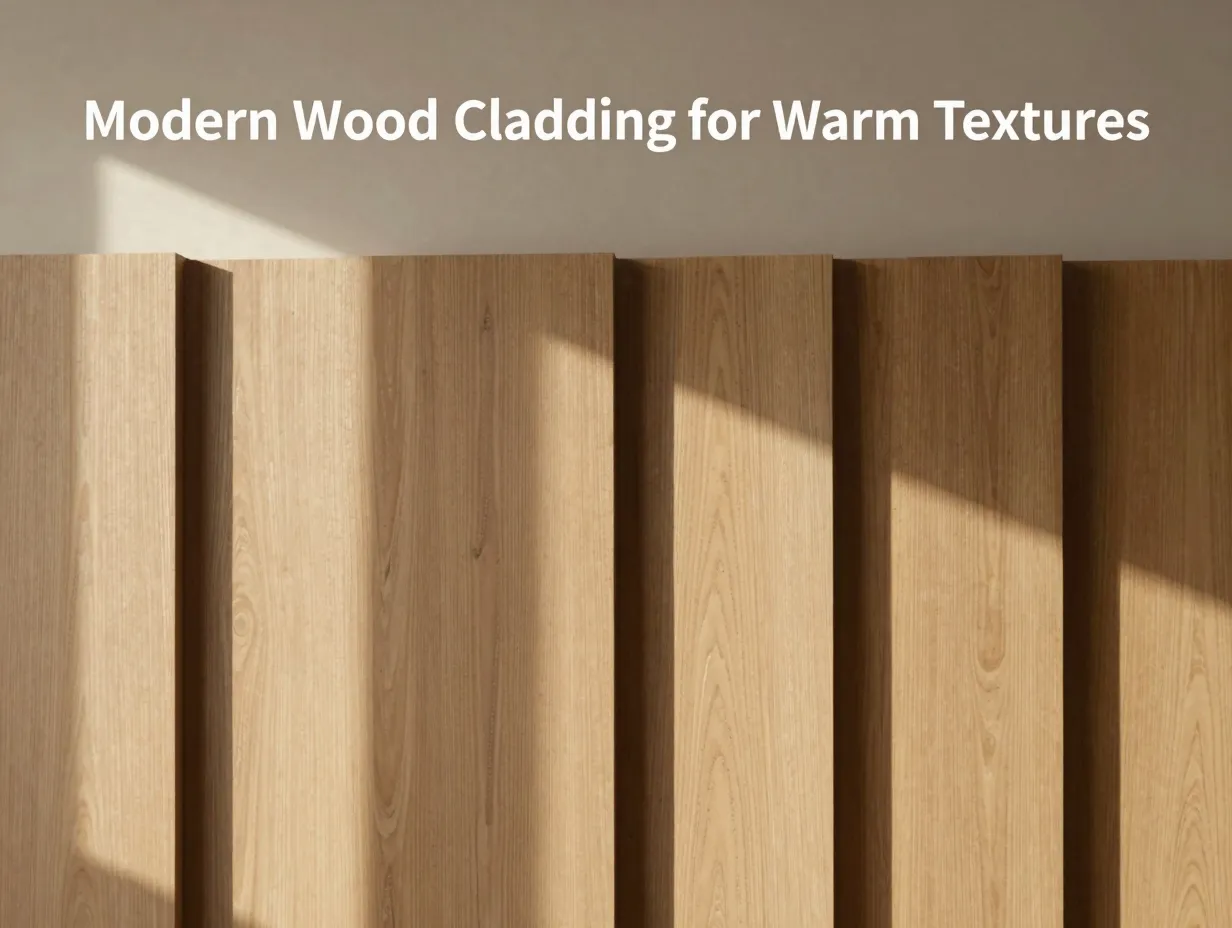
This guide covers 8 modern wooden wall cladding ideas for a warm, textured look that are shaping interiors in 2026. Whether you are renovating a single accent wall or rethinking an entire open-plan space, these ideas will give you a clear, actionable starting point. I have pulled together insights from leading design publications, real project examples, and my own experience advising on residential interiors to make this as useful as possible.
Key Takeaways
- Floor-to-ceiling slatted wood panels are the dominant cladding look of 2026, creating height and drama in any room.
- Ribbed and fluted wood profiles add tactile depth without requiring complex installation.
- Geometric and mosaic wood feature walls are replacing traditional shiplap as the statement choice for bold interiors.
- Wood species, finish, and installation direction all dramatically affect the mood a cladded wall creates.
- Sustainable and engineered wood options now match solid timber on aesthetics while outperforming it on stability and environmental impact.
Why Wooden Wall Cladding Is Dominating Interiors in 2026
Wood has always been a comfort material. There is a reason the word “warmth” appears in almost every description of a timber-lined room. But the current wave of wooden wall cladding is different from the dark, heavy panelling of previous decades. Today’s installations are lighter, more architectural, and far more varied in profile and finish [3].
Havwoods, one of the leading timber suppliers in North America, notes that homeowners are increasingly treating walls as a fifth design surface, not just a backdrop, but a focal point in their own right [3]. The Panel Hub echoes this, pointing to a surge in demand for three-dimensional wall treatments that add visual interest without the permanence of structural changes [4].
Part of the appeal is tactility. In a world of flat screens and smooth surfaces, a wall that you can actually feel, one with ridges, grooves, and grain, offers something screens cannot replicate. Vogue’s interior design coverage describes wood-panelled walls as delivering “a sense of permanence and quiet luxury that no other material quite matches” [10].
There is also a practical dimension. Wood cladding improves acoustic performance, adds a layer of insulation, and can conceal uneven plasterwork. For older homes, it is often the fastest route to a polished, contemporary finish [6].
The Shift From Traditional to Modern Wood Panelling
Traditional wood panelling, think raised-and-fielded Georgian panels or the dark mahogany libraries of Victorian townhouses, carried associations of formality and age. Modern cladding has shed those associations entirely. The profiles are thinner, the finishes are lighter, and the installation patterns are more experimental [2].
Shiplap, once the default choice for a casual, coastal look, is now giving way to more architecturally considered options: slatted screens, fluted boards, and geometric mosaic arrangements that feel genuinely contemporary [8]. This is the design context in which the 8 modern wooden wall cladding ideas for a warm, textured look explored below make the most sense.
8 Modern Wooden Wall Cladding Ideas for a Warm, Textured Look
The following ideas are ordered from the most widely adopted to the most experimental, so you can find your comfort level and build from there.
1. Floor-to-Ceiling Slatted Feature Walls
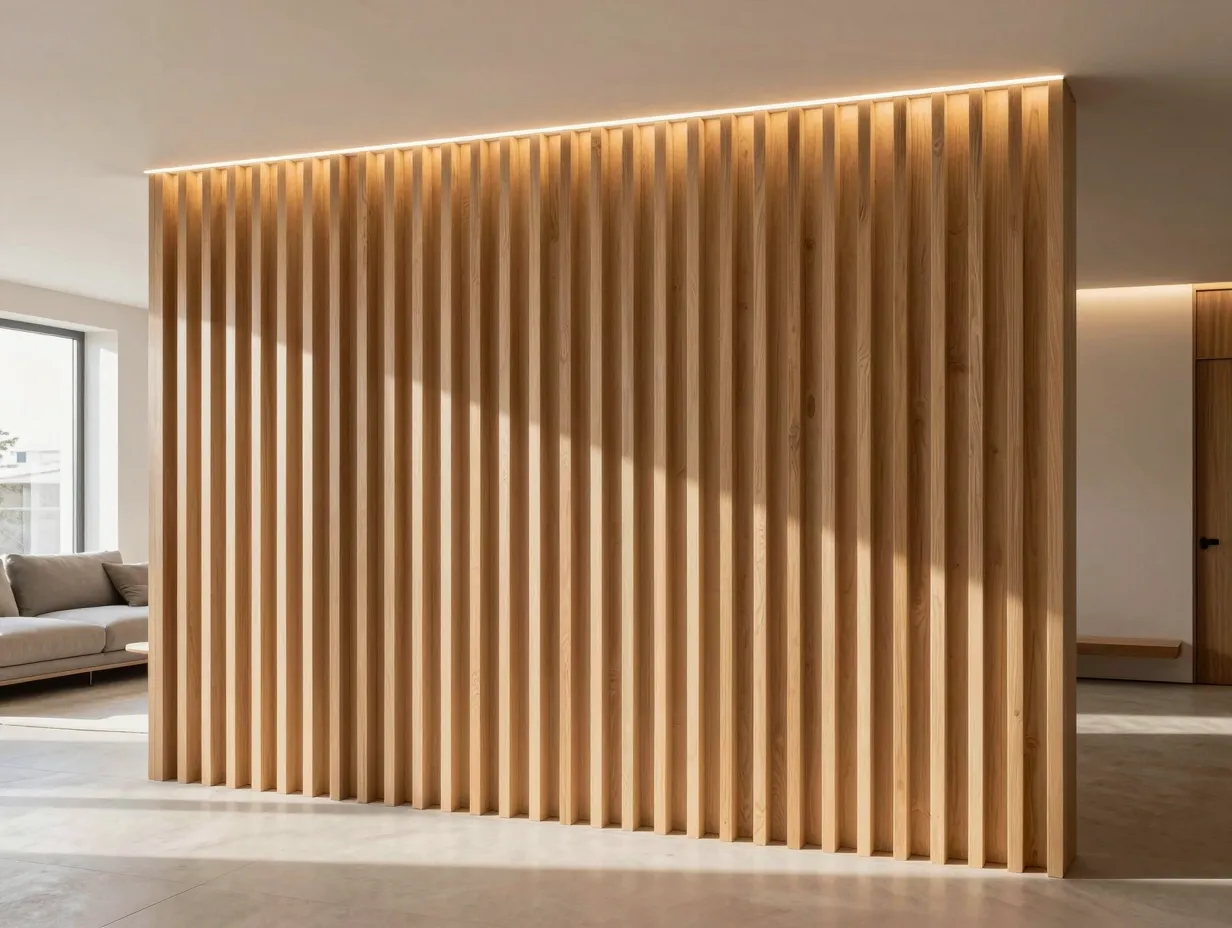
If there is one cladding treatment that defines 2026, it is the floor-to-ceiling slatted wall. Thin vertical timber battens, typically between 20mm and 50mm wide, are fixed at regular intervals across a full-height wall, creating a rhythmic, screen-like surface that plays with light and shadow throughout the day [4].
The effect is architectural rather than decorative. The vertical lines draw the eye upward, making ceilings feel higher and rooms feel more expansive. In open-plan living areas, a slatted feature wall behind a sofa or dining table anchors the space without closing it off.
Best wood species for slatted walls: Oak, ash, and pine are the most popular choices. Oak offers a dense, tight grain that reads as premium. Ash has a slightly more open grain and a pale, almost Scandinavian quality. Pine is the most affordable and takes stain well.
Pro tip: Leave a deliberate gap between the wall surface and the battens. Backlit slatted walls, with LED strip lighting recessed behind the slats, create a dramatic, hotel-lobby effect that is surprisingly achievable in a domestic setting [3].
2. Ribbed and Fluted Wood Panels
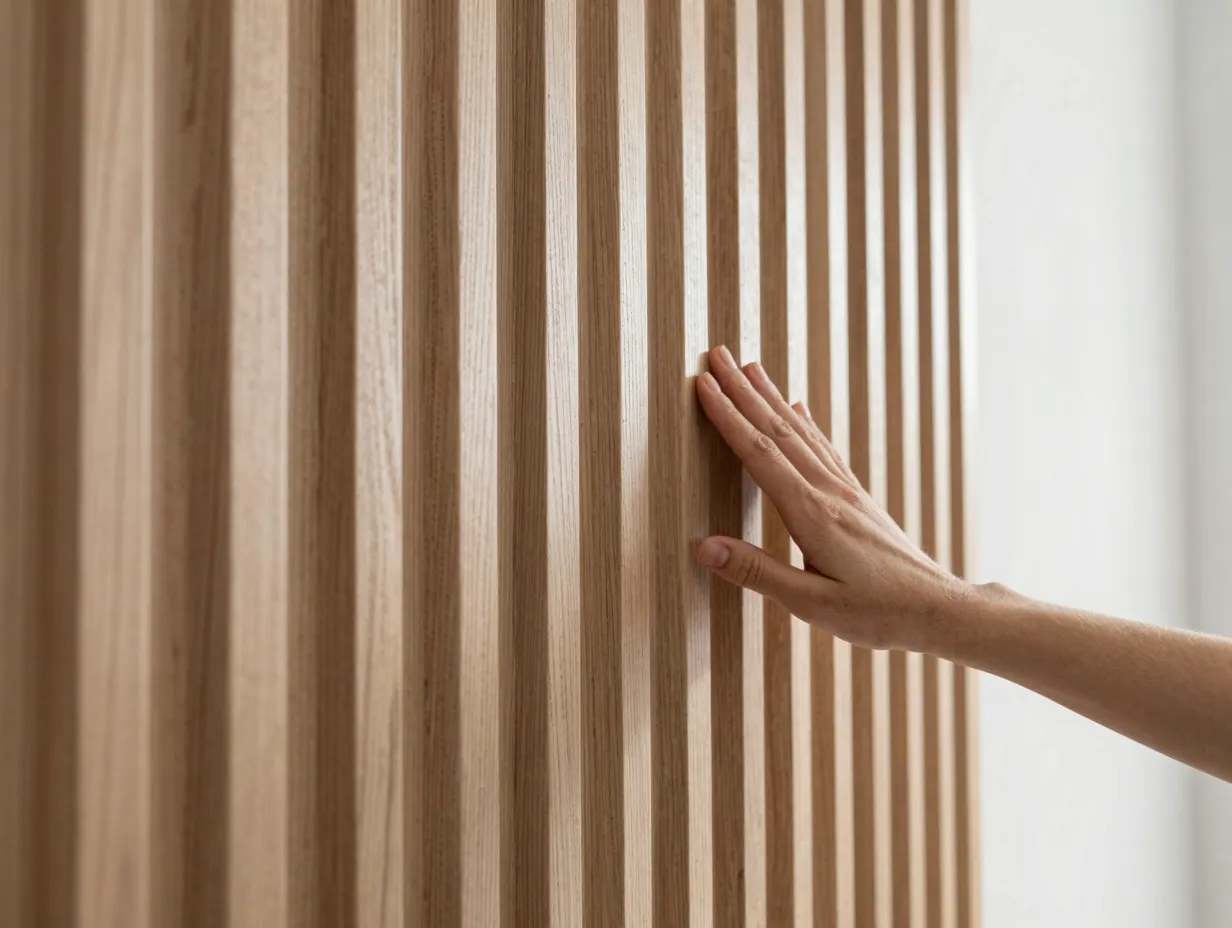
Ribbed and fluted profiles are the tactile choice of the moment. Where slatted walls create a screen effect, ribbed panels sit flush to the wall and use their three-dimensional surface to catch and redirect light. Run your hand across a fluted oak panel and you immediately understand why designers keep reaching for this option, it feels as good as it looks [2].
Fluted panels typically feature rounded channels cut at regular intervals, while ribbed panels use sharper, more angular grooves. Both create strong shadow lines that shift as the light changes through the day, giving the wall a living quality that flat surfaces simply cannot achieve.
Ideal Home notes that ribbed wall panelling has moved from boutique hotels into mainstream residential design, with homeowners using it in bedrooms, bathrooms, and hallway feature walls [5].
Installation note: Most ribbed and fluted panels are available as large-format boards (up to 2.4m tall) that can be installed vertically or horizontally. Horizontal installation on a low wall creates a dado-rail effect; full-height vertical installation reads as more contemporary.
3. Geometric and Mosaic Wood Feature Walls
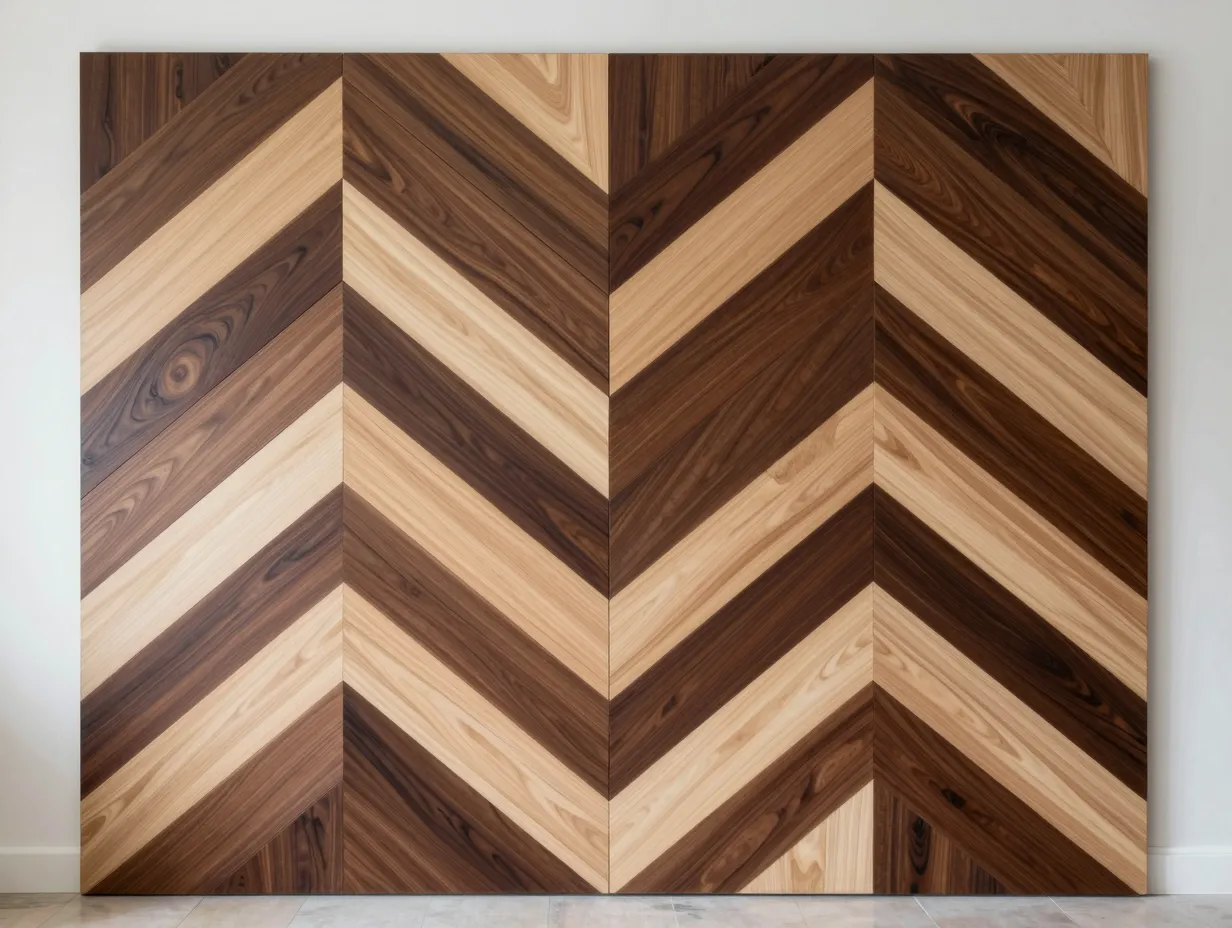
This is the option for those who want a feature wall that genuinely stops guests in their tracks. Geometric and mosaic wood cladding arranges individual timber pieces, often in contrasting species or finishes, into repeating patterns: herringbone, chevron, hexagonal, or entirely bespoke arrangements [8].
The craft element is significant. A well-executed geometric wood wall is closer to furniture-making than standard cladding installation. The joints need to be tight, the angles precise, and the species selection considered. But the results are extraordinary: a wall that functions as both architecture and art.
Living Etc describes geometric wood walls as “the statement choice for interiors that want to feel curated rather than decorated” [1]. I would agree. I saw a chevron-pattern walnut and maple wall in a London apartment last year that was the single most impressive surface I had encountered in a decade of visiting design projects.
Species combinations to consider:
- Dark walnut paired with pale ash for maximum contrast
- Smoked oak with natural oak for a tonal, sophisticated look
- Reclaimed timber mixed with new-cut boards for a textural, layered effect
4. Reclaimed and Weathered Wood Cladding
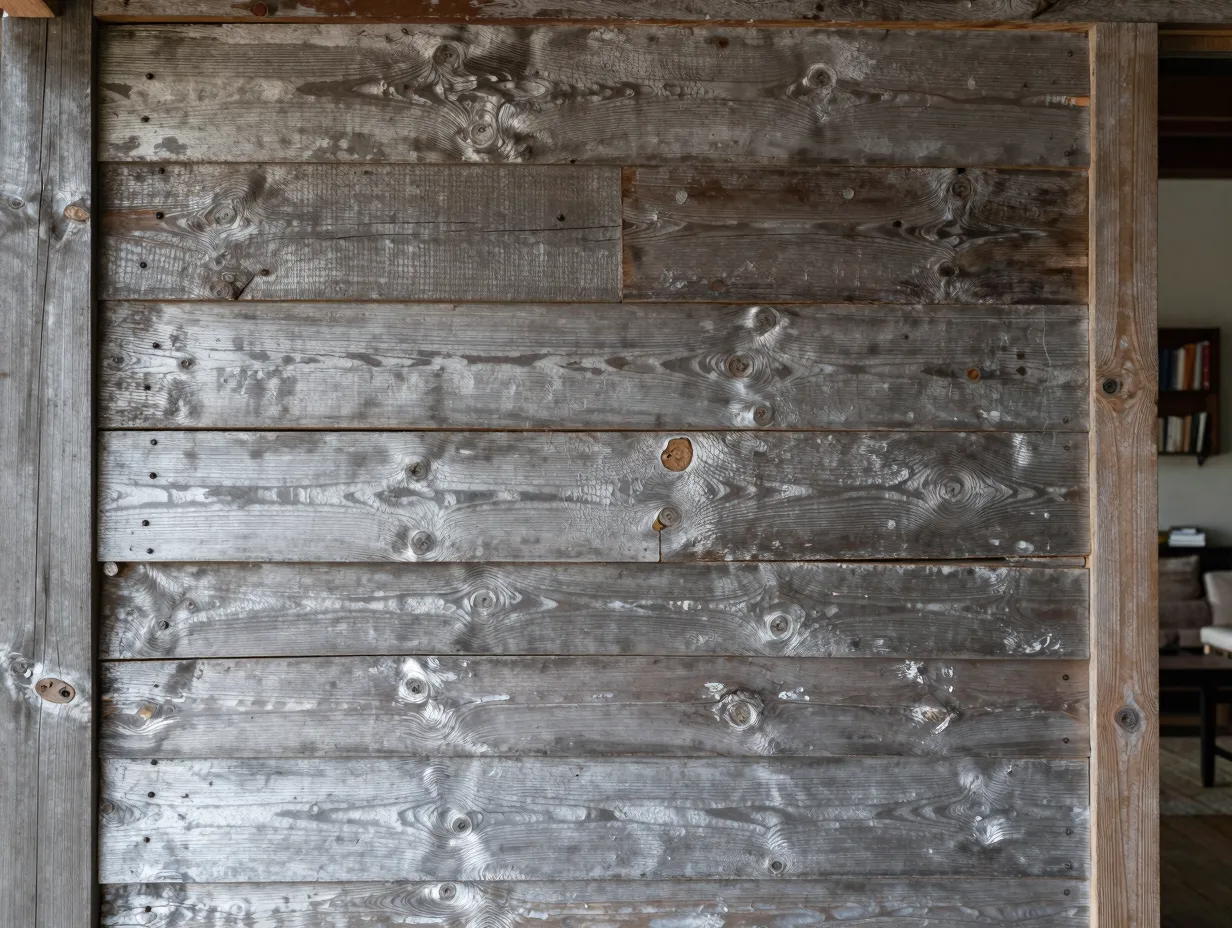
There is a particular kind of beauty in timber that has already lived a life. Reclaimed wood, salvaged from old barns, industrial buildings, or demolished structures, brings history, imperfection, and genuine character to a wall surface that no new timber can replicate [6].
The appeal in 2026 is partly aesthetic and partly ethical. Reclaimed cladding is the most sustainable option available: no new trees are felled, no energy is spent on kiln-drying, and the embodied carbon of the original material is effectively recycled. For homeowners who want to reduce the environmental footprint of their renovation, reclaimed timber is the obvious starting point.
Thermory’s design blog highlights that weathered and aged wood finishes are among the most searched cladding aesthetics, with homeowners actively seeking out the grey, silver, and tobacco tones that only come with genuine age or specialist weathering treatments [6].
What to look for when sourcing reclaimed timber:
- Confirm the wood has been treated for insects and moisture
- Check for hidden nails or fixings that could damage cutting tools
- Ask about the original source, barn oak behaves differently from industrial pine
5. Dark-Stained and Charred Wood Panels
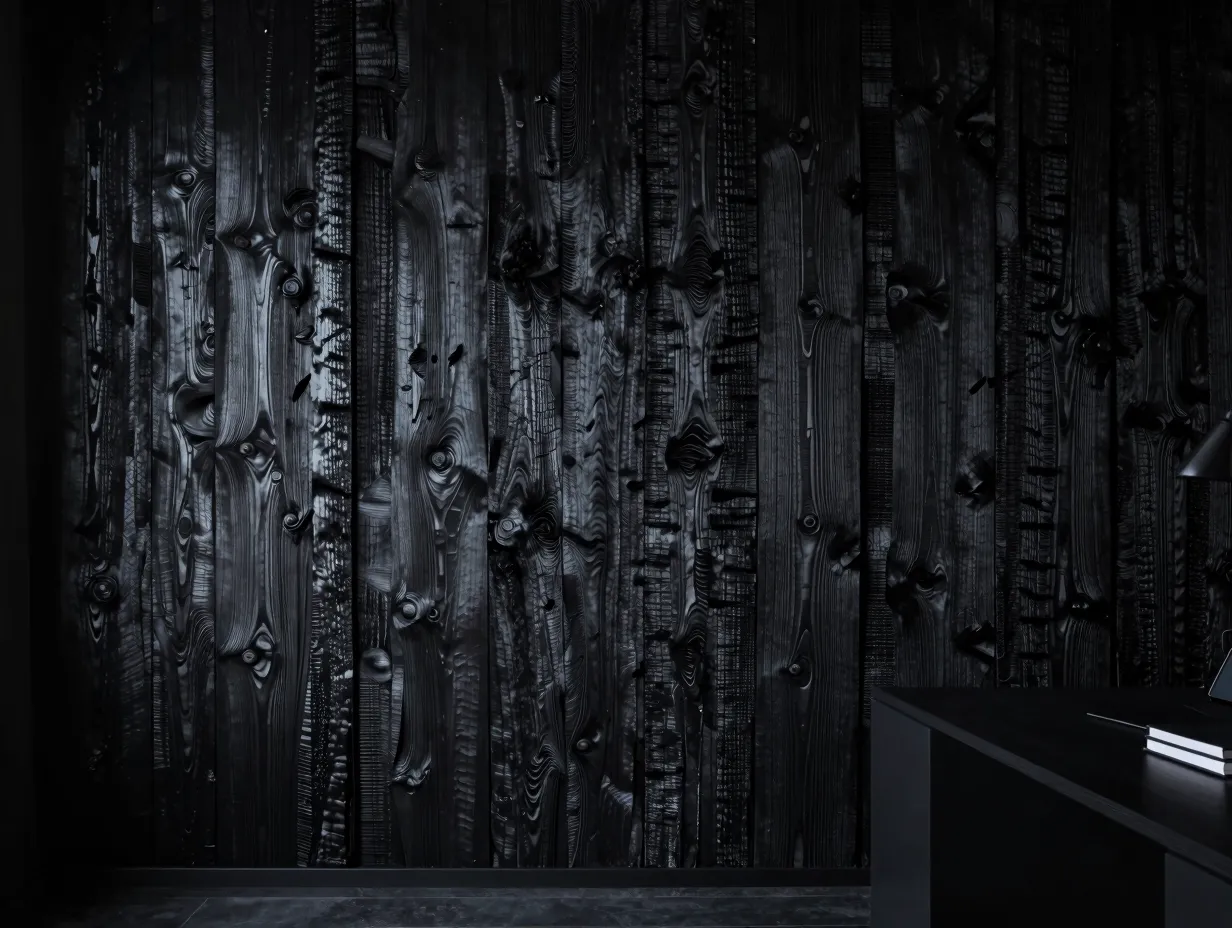
Not all wood cladding needs to read as warm and honey-toned. Dark-stained panels, in deep espresso, graphite, or near-black finishes, create a dramatically different atmosphere: moody, sophisticated, and unexpectedly luxurious [10].
The Japanese technique of Shou Sugi Ban (charring the surface of timber to carbonise and harden it) has moved from niche architectural circles into mainstream interior design. The charred surface creates a deeply textured, almost velvet-like finish in black and dark grey tones that is unlike any other wall treatment. It is also highly durable: the carbonised layer resists moisture, insects, and UV degradation [4].
Vogue’s coverage of wood-panelled walls specifically calls out dark timber as “the unexpected choice that makes a room feel both intimate and expansive”, a paradox that anyone who has stood in a Shou Sugi Ban-clad room will immediately understand [10].
Rooms where dark wood cladding works best:
- Home offices and studies, where the enclosing quality aids focus
- Bedrooms, where the dark tones support sleep-friendly lighting
- Bar areas and entertainment rooms, where drama is the point
6. Horizontal Shiplap and Tongue-and-Groove Boards
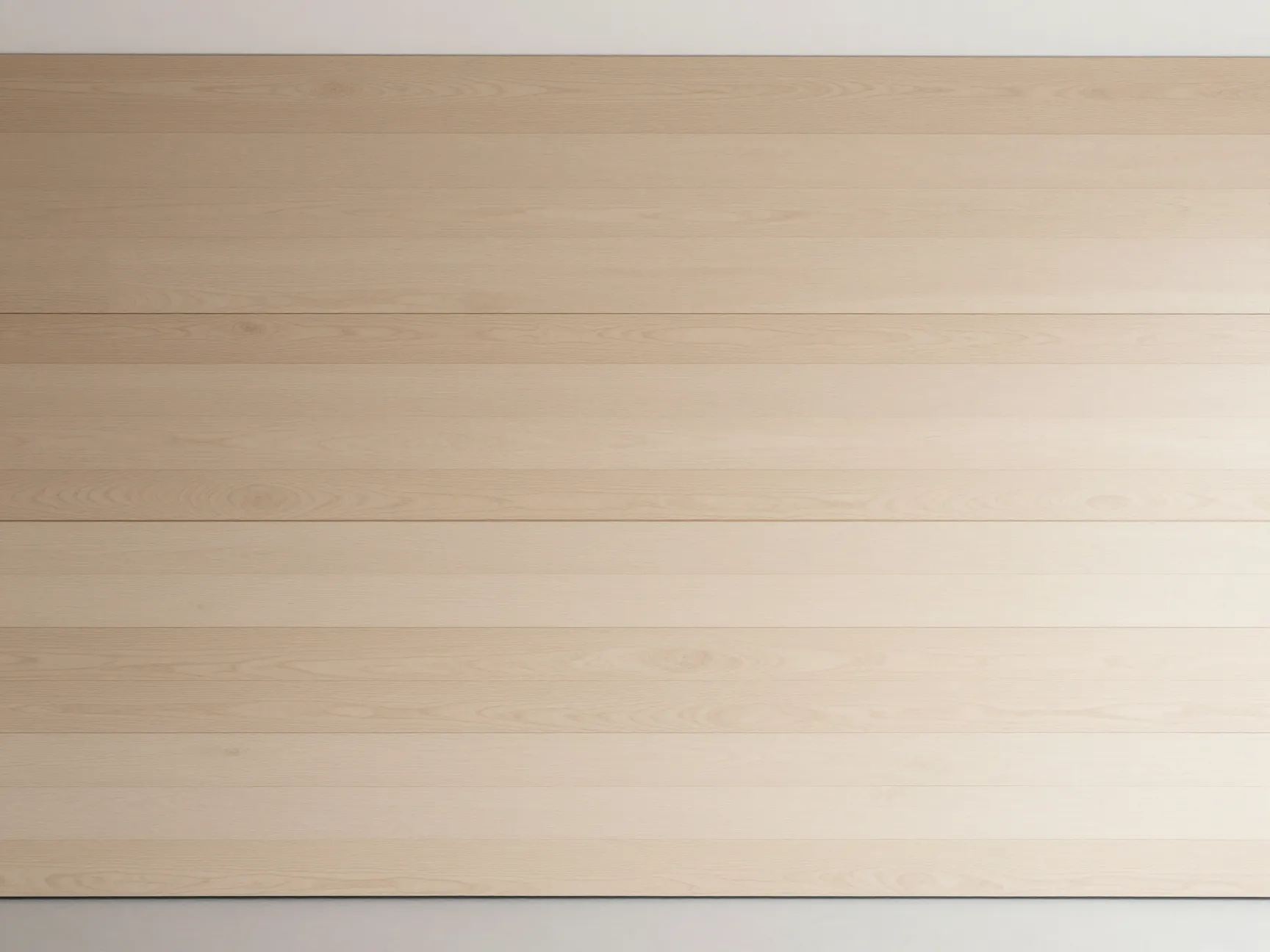
Shiplap and tongue-and-groove are the most familiar forms of wood wall cladding, and reports of their death have been greatly exaggerated. What has changed is how they are being used [5].
In 2026, horizontal board cladding is no longer confined to coastal cottages or farmhouse kitchens. It appears in contemporary apartments, urban lofts, and minimalist homes, but in updated forms. Wider boards (150mm+) replace the narrow strips of traditional shiplap. Finishes are lighter and more matte. And the boards are increasingly used on a single accent wall rather than throughout an entire room [7].
The key to making horizontal cladding feel modern rather than dated is restraint. One wall, well-chosen species, a considered finish, and clean shadow gaps between boards. The Infobae design feature on wood-panelled walls notes that this approach, a single cladded wall in an otherwise minimal room, is the most common installation pattern seen in contemporary European interiors in 2026 [7].
Shadow gap vs. tight joint: A shadow gap (a deliberate 3-5mm space between boards) reads as more contemporary and architectural. A tight joint reads as more traditional. Both are valid; the choice depends on the overall aesthetic of the room.
7. Mixed-Material Wood and Metal Cladding
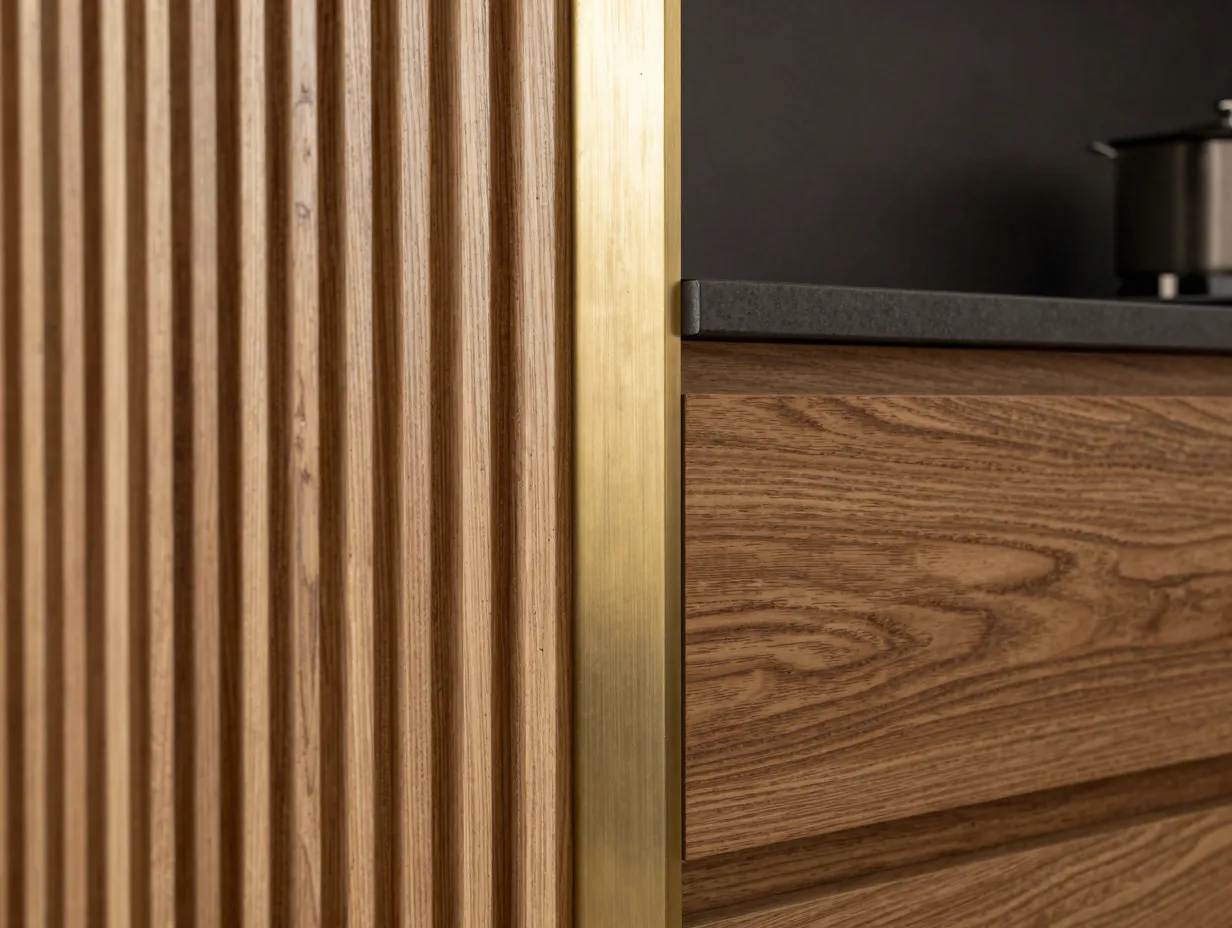
One of the most interesting developments in wall cladding is the combination of timber with metal elements, typically brushed brass, blackened steel, or raw aluminium [8].
The contrast between the organic warmth of wood and the cool precision of metal creates a tension that feels genuinely modern. In practice, this might mean timber slats separated by thin metal dividers, a reclaimed wood wall with exposed steel fixings treated as a decorative feature, or alternating panels of smoked oak and brushed brass.
Wall Cladding Trends from HomeBase Project notes that mixed-material installations are among the fastest-growing requests from clients in 2025 and into 2026, particularly in kitchen and dining spaces where the combination of materials echoes the appliances and fittings already present in the room [8].
Design principle: The metal element should be used sparingly, as a frame or divider rather than a competing surface. Wood should remain the dominant material; metal provides the accent.
8. Engineered Wood and Sustainable Panel Systems
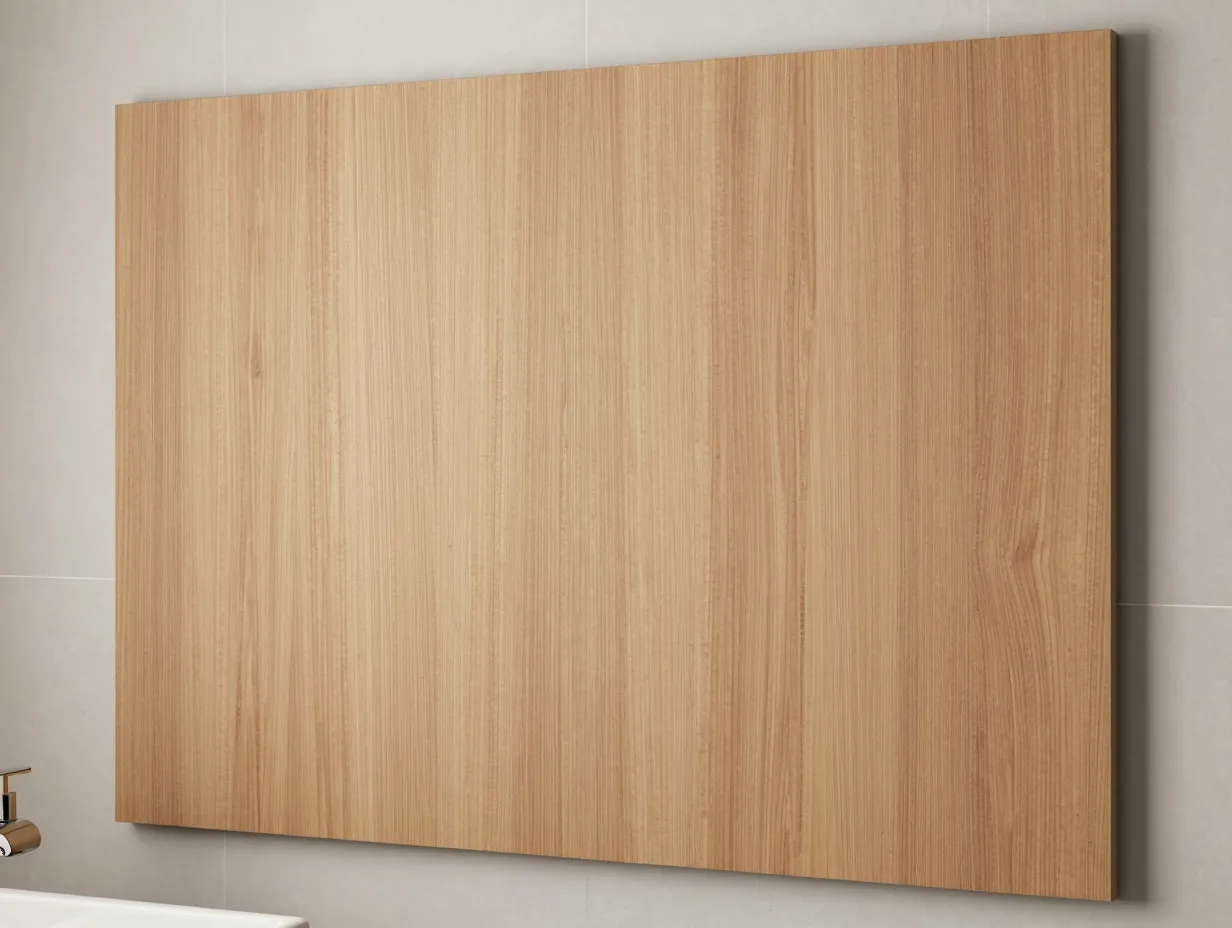
The final idea on this list is less about a specific aesthetic and more about a material approach that underpins all the others. Engineered wood, timber products manufactured from layers of real wood bonded under pressure, has transformed what is possible in wall cladding [3].
Engineered panels are dimensionally stable in a way that solid timber is not. They do not expand and contract with humidity changes, which means they can be used in bathrooms, kitchens, and other high-moisture environments where solid timber would warp or crack. They can be produced in larger formats, more consistent colours, and with less material waste than solid boards [4].
The Medium design trends piece notes that engineered wood panels now account for a significant and growing share of all residential wall cladding installations, driven by their combination of authentic appearance, improved performance, and lower cost relative to solid timber [2].
Engineered wood options at a glance:
| Product Type | Best Use | Key Advantage |
|---|---|---|
| Veneer-faced MDF panels | Feature walls, low-moisture rooms | Affordable, wide format |
| Plywood with hardwood face | Contemporary interiors | Strong, authentic grain |
| Thermally modified timber | Bathrooms, kitchens | Moisture resistant, stable |
| Bamboo composite panels | Eco-focused projects | Rapidly renewable, durable |
How to Choose the Right Wooden Wall Cladding for Your Space
With eight strong options on the table, the practical question is: how do you choose? Here is a framework I use when advising clients.
Consider the room’s function first. High-moisture rooms (bathrooms, kitchens) require engineered or thermally modified timber. Living rooms and bedrooms give you the full range of options. Home offices benefit from acoustic-dampening profiles like ribbed or slatted panels.
Match the profile to the ceiling height. Vertical profiles, slats, fluted boards, full-height panels, make low ceilings feel taller. Horizontal boards work best in rooms that already have generous height, where the horizontal line creates a sense of calm rather than compression.
Think about maintenance. Oiled finishes are easier to repair but require periodic re-oiling. Lacquered finishes are more durable but harder to touch up. Charred surfaces (Shou Sugi Ban) require almost no maintenance and age beautifully.
Budget realistically. Reclaimed timber and geometric mosaic walls carry the highest material and labour costs. Engineered panel systems and horizontal shiplap are the most budget-friendly. Ribbed and slatted profiles sit in the middle range.
Common Mistakes to Avoid With Wood Wall Cladding
Even experienced renovators make these errors. Knowing them in advance saves significant time and money.
Skipping acclimatisation. Timber needs to acclimatise to the room’s humidity and temperature before installation, typically 48 to 72 hours. Skipping this step leads to boards that expand or contract after fixing, creating gaps or buckling.
Ignoring the substrate. Wood cladding is only as good as the wall behind it. Damp, uneven, or structurally compromised walls will cause problems regardless of the quality of the timber. Always address the substrate before cladding.
Over-cladding. More is not always more. A single feature wall of beautifully chosen timber has far more impact than four walls of the same material. The contrast between the cladded surface and the plain walls around it is part of what makes the feature wall work.
Choosing finish before species. The finish (oil, lacquer, wax, char) should be chosen after the species, not before. Different timbers respond differently to the same finish. Always test on a sample board before committing.
Conclusion
The 8 modern wooden wall cladding ideas for a warm, textured look covered in this guide represent the full range of what is possible with timber on walls in 2026, from the architectural drama of floor-to-ceiling slats to the quiet sophistication of engineered panel systems. Each approach has its own character, its own technical requirements, and its own ideal application.
Here are your actionable next steps:
- Identify the wall or walls you want to clad and assess the substrate condition before anything else.
- Choose your profile based on the room’s function and ceiling height, using the framework above.
- Request samples of at least three timber species in your chosen finish and live with them in the room for a week before ordering.
- Get at least two installation quotes, one from a joiner and one from a specialist cladding contractor, to understand the full cost range.
- Plan your lighting at the same time as your cladding. The two are inseparable: the right light transforms a good cladded wall into an extraordinary one.
Wood is the material that makes a house feel like a home. Used well on walls, it does something no paint colour or wallpaper pattern can fully replicate: it brings the outside in, adds genuine physical texture, and creates a surface that improves with age. That is a rare quality in any building material, and it is exactly why wooden wall cladding continues to define the interiors that matter most.
References
[1] Wonderful Wood Walls 203758 – https://www.livingetc.com/spaces/interior-inspiration/wonderful-wood-walls-203758
[2] Wooden Wall Panel Design Trends Youll See Everywhere In 2025 C0b5609edc6f – https://medium.com/@woodenwallpanel1/wooden-wall-panel-design-trends-youll-see-everywhere-in-2025-c0b5609edc6f
[3] Why Wood Paneling For Walls Is Trending In 2026 – https://www.havwoods.com/us/news/why-wood-paneling-for-walls-is-trending-in-2026/
[4] Interior Design Trends 2026 Wood Panels – https://www.thepanelhub.com/blogs/news/interior-design-trends-2026-wood-panels
[5] Is Wall Panelling On Trend In 2025 – https://www.idealhome.co.uk/all-rooms/all-rooms-decor/is-wall-panelling-on-trend-in-2025
[6] Wood Panelling Ideas – https://thermory.com/blog-and-news/wood-panelling-ideas/
[7] Paredes Paneladas En Madera El Detalle Clasico Que Regresa A Las Casas Modernas Y Cambia La Sensacion Del Espacio – https://www.infobae.com/tendencias/2026/05/28/paredes-paneladas-en-madera-el-detalle-clasico-que-regresa-a-las-casas-modernas-y-cambia-la-sensacion-del-espacio/
[8] Wall Cladding Trends Designers Are Loving In 2025 – https://homebaseproject.org/wall-cladding-trends-designers-are-loving-in-2025/
[10] Wood Paneled Walls Interior Design Trend – https://www.vogue.com/article/wood-paneled-walls-interior-design-trend