9 Stunning Crepe Paper Flowers To Brighten Your Home Decor
A single handmade flower placed on a bookshelf can stop a visitor mid-sentence. That is not an exaggeration, interior designers have documented how one well-crafted botanical accent shifts the entire mood of a room. In 2026, crepe paper flowers have moved well beyond craft fairs and children’s birthday parties. High-end media outlets are now profiling paper artists the same way they cover painters and sculptors [6]. If you have been searching for a low-cost, high-impact way to refresh your living space, the 9 stunning crepe paper flowers to brighten your home decor covered in this guide will give you everything you need to get started.
Disclosure: This post contains affiliate links. As an Amazon Associate, we earn from qualifying purchases, and at no extra cost to you.
Key Takeaways
- Crepe paper flowers are now recognized as serious interior design elements, not just craft projects.
- The right material grade and grain direction make the difference between a flat-looking bloom and a realistic one.
- Structural supports such as floral wire, couplers, and weighted bases allow large installations to last for years.
- Finishing techniques, stretching, curling, and dry-brushing color, are what separate amateur results from professional ones.
- All nine flower types in this guide can be adapted for wall art, table centerpieces, or full room installations.
Why Crepe Paper Flowers Are Dominating Home Decor in 2026
The home decor market has a longevity problem. Fresh flowers die within a week. Silk flowers collect dust and look artificial under close inspection. Dried botanicals are fragile and fade. Crepe paper flowers solve all three problems at once.
Durability is the headline advantage. A well-constructed crepe paper bloom, built on a floral wire armature and stored away from direct sunlight, can look pristine for three to five years. That longevity has made them a favorite among interior stylists who need photo-ready setups that hold up over time.
The material has also improved dramatically. Professional makers in 2025 and 2026 have shifted away from standard craft-store rolls toward imported Italian and German crepe paper, which offers a finer grain, richer pigmentation, and more stretch. The stretch factor is critical, a high-quality crepe sheet can expand up to 60 percent before tearing, allowing makers to cup and shape petals with a realism that cheaper paper simply cannot achieve [5].
Scale is the other big shift. Large, sculptural crepe paper flowers, some spanning 18 to 24 inches across, have become a dominant trend for accent walls, entryways, and event backdrops. Techniques for building these giant statement pieces have been refined and widely shared by professional studios [5], making them accessible to motivated home crafters.
“Paper flowers are no longer a craft, they are a medium.” This shift in perception, documented in major design publications [6], explains why crepe paper blooms now appear in luxury hotel lobbies, editorial photo shoots, and high-end residential interiors.
The nine flowers below represent a range of difficulty levels, visual styles, and decorating applications. Whether you want a single statement piece above a mantle or a full wall installation, there is an option here for you.
The 9 Stunning Crepe Paper Flowers To Brighten Your Home Decor
1. Giant Peony
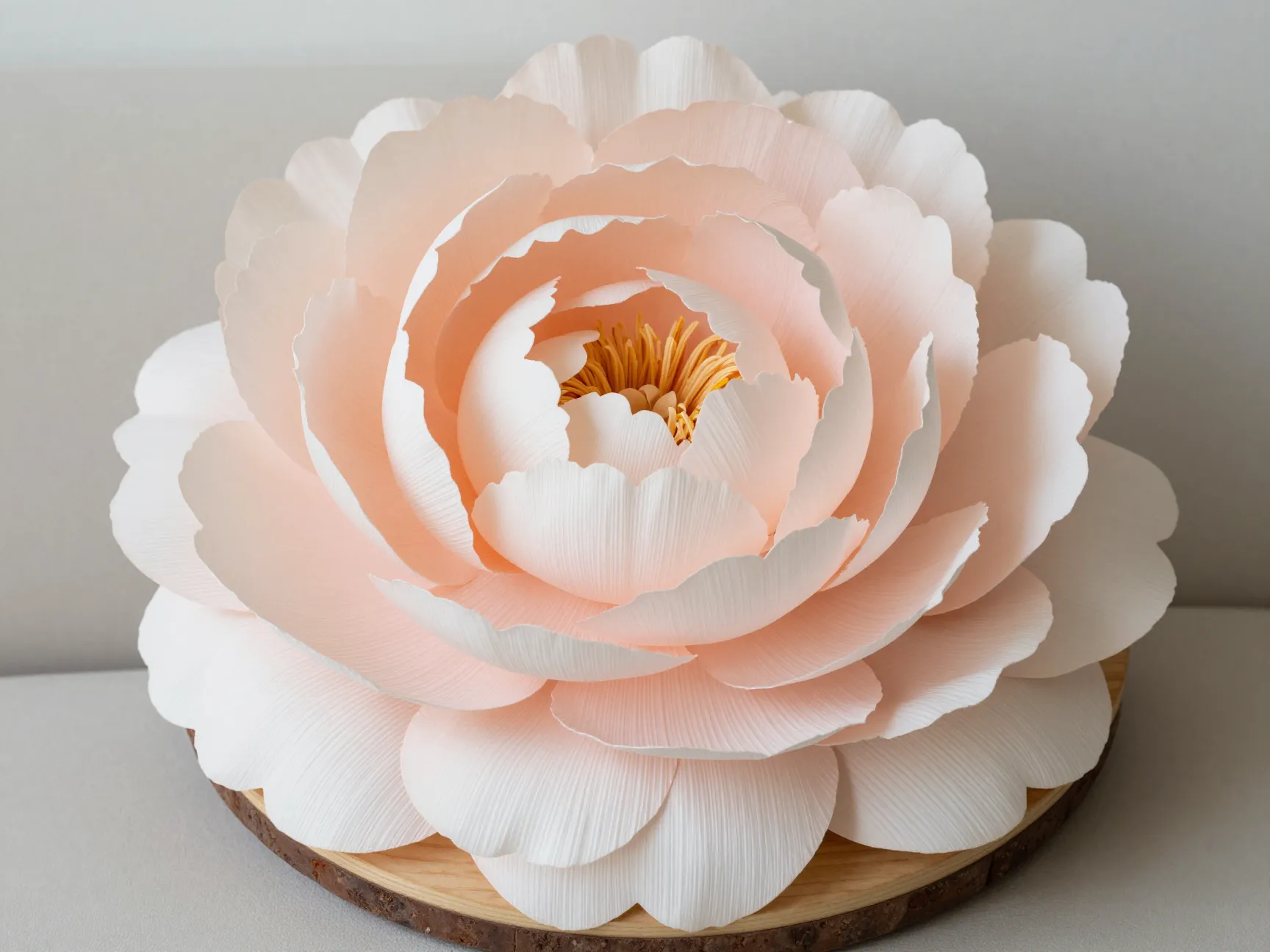
The peony is the undisputed queen of the crepe paper world, and for good reason. Its layered, ruffled structure translates beautifully into paper because each petal layer can be cut, stretched, and cupped independently before assembly.
What makes it work: Professional tutorials recommend cutting petals in at least five graduating sizes, from a small inner cup to wide outer petals [5]. The grain of the crepe should run vertically on each petal so that stretching creates a natural cup shape rather than a flat disc.
Decor application: A single giant peony in blush or ivory, mounted on a 12-inch wooden disc, makes a commanding wall accent above a bed or sofa. Pair three in varying sizes for a gallery-wall effect.
Difficulty level: Intermediate. The petal count is high (typically 40 to 60 petals per bloom), but the individual steps are straightforward once you understand grain direction.
2. Oversized Poppy
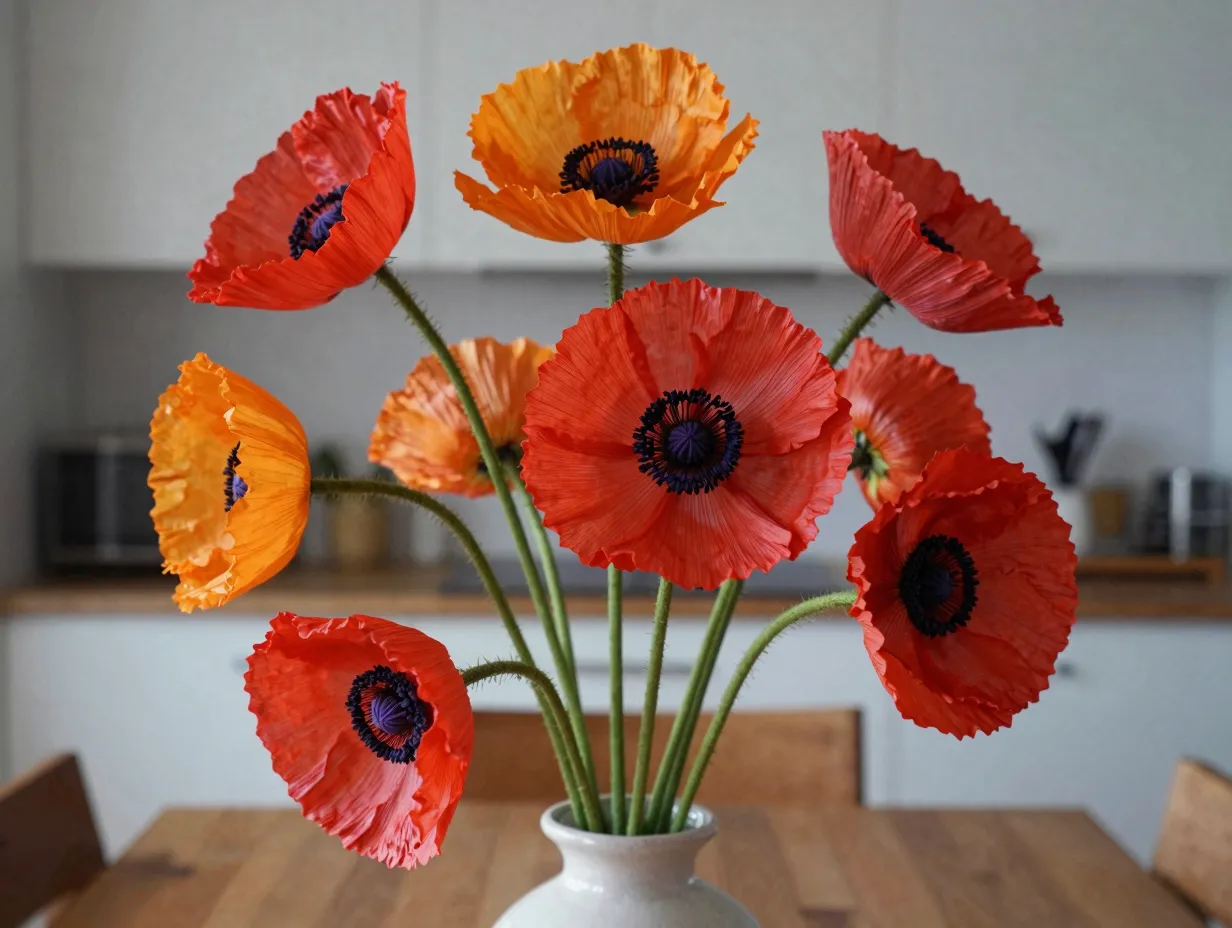
The poppy’s simple silhouette, four to six broad, crepe-thin petals surrounding a dark center, makes it one of the fastest large-scale flowers to construct. Its visual impact, however, is anything but simple.
What makes it work: The key to a realistic poppy is the contrast between the delicate, slightly translucent petals and the dense, textured center. Makers achieve this by layering fine crepe paper for the petals and using tightly gathered black or dark purple paper for the seed pod [3].
Decor application: A cluster of red and orange poppies in a tall ceramic vase creates a bold kitchen or dining room centerpiece. Because the stems can be wired to any length, the arrangement height is fully customizable.
Difficulty level: Beginner to intermediate. The low petal count makes this a good first project for anyone new to large-scale crepe paper work.
3. Sculptural Dahlia
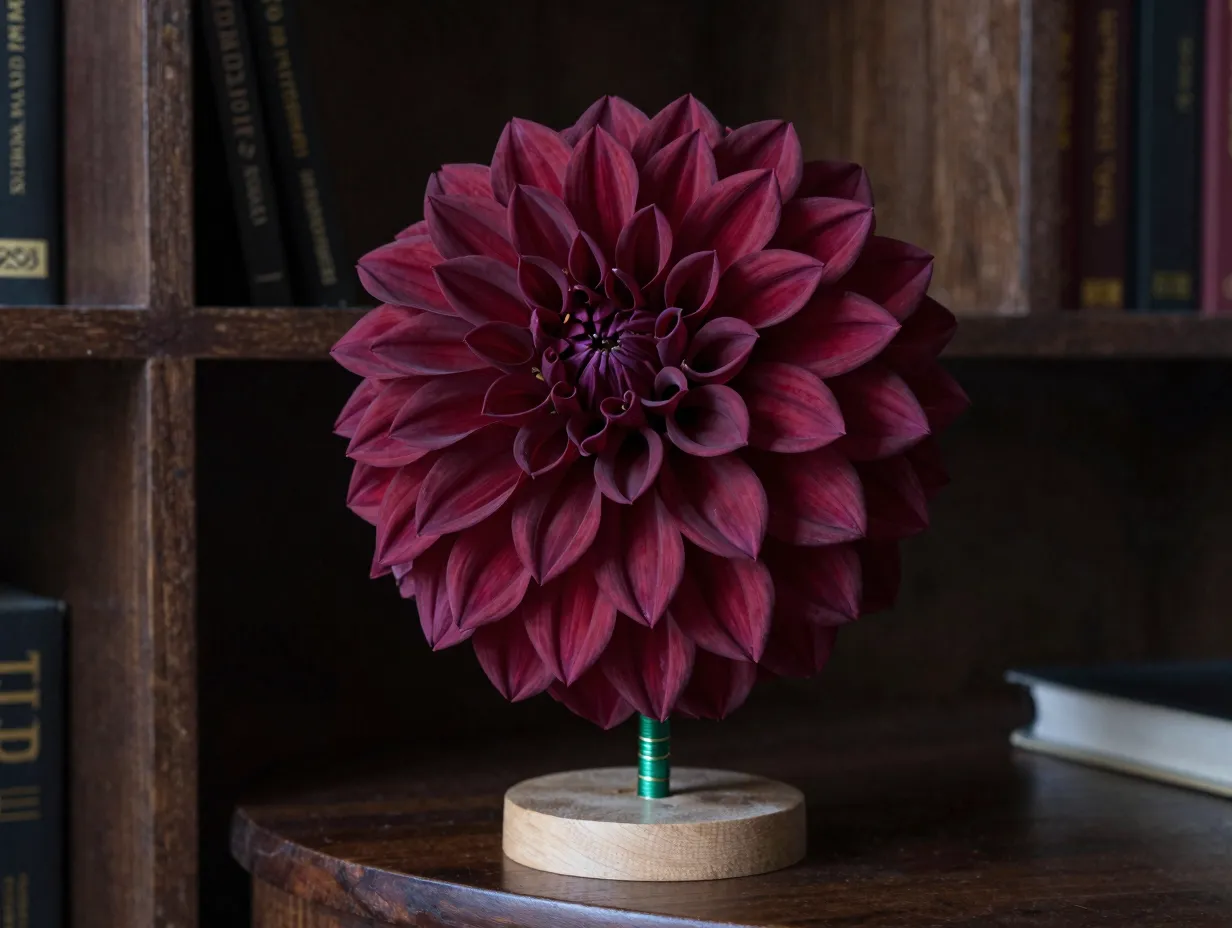
The dahlia is a technical showcase. Its dozens of tightly spiraling petals demand precision cutting and consistent sizing, but the finished result is one of the most photogenic flowers in any home decor setting.
What makes it work: Structural engineering matters here more than in almost any other bloom. Because dahlias are dense and heavy when built at scale, a strong central wire armature and a stable base are non-negotiable [5]. Professional makers use floral stem wire wrapped in green floral tape, inserted into a foam or wooden base, to keep large dahlias upright and display-ready.
Decor application: A deep burgundy or midnight purple dahlia placed on a side table or bookshelf shelf adds a dramatic, jewel-toned accent that photographs beautifully in both natural and artificial light.
Difficulty level: Advanced. The petal count can exceed 80 for a full-sized bloom, and consistent sizing across all petals is essential for the spiral pattern to read correctly.
4. Anemone
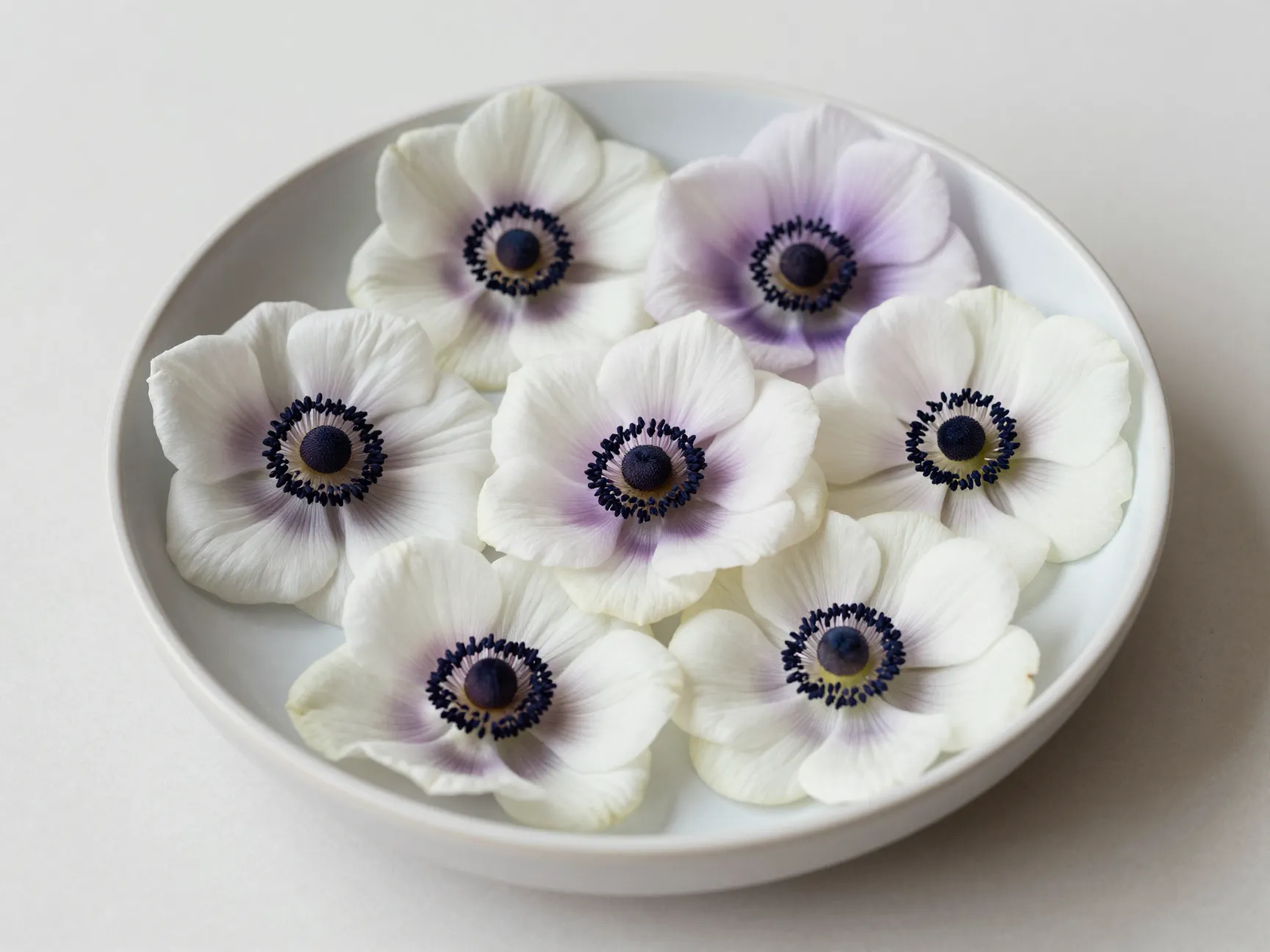
The anemone is the minimalist’s choice. Its clean lines, five to eight broad petals, a flat face, and a distinctive dark center ringed with stamens, make it one of the most elegant flowers in this collection.
What makes it work: The stamens are the detail that elevates an anemone from good to extraordinary. Professional makers create them by cutting thin strips of black crepe paper, twisting each strip tightly, and fanning them around a small paper disc center [2]. This process is time-consuming but produces a result that is nearly indistinguishable from a real flower at arm’s length.
Decor application: White or pale lavender anemones arranged in a low, wide bowl make a sophisticated dining table centerpiece. They also work beautifully as individual stems in bud vases grouped along a windowsill.
Difficulty level: Beginner. The low petal count and simple petal shape make this one of the most accessible flowers in the guide.
5. Ranunculus
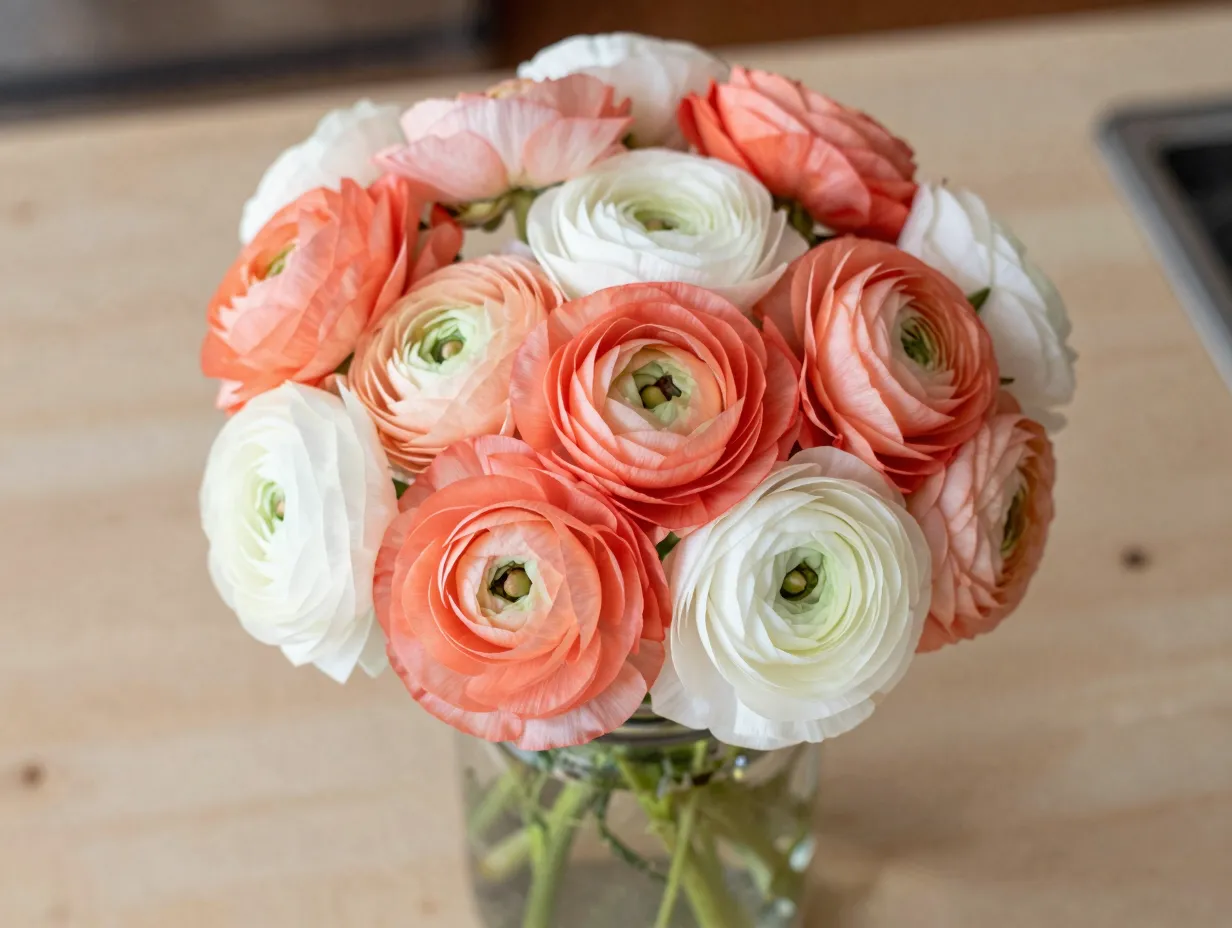
The ranunculus is a layering exercise. Its tightly packed, paper-thin petals build outward from a tiny, button-like center to a full, rounded bloom that looks almost edible.
What makes it work: The secret is starting small and building outward in very gradual size increments. Each petal layer should increase by only a few millimeters in width. Rushing the size progression creates a flower that looks lumpy rather than smooth and rounded [1]. High-quality, fine-grain crepe paper is especially important here because the inner petals are tiny and require a paper that holds a curl without cracking.
Decor application: Ranunculus flowers work exceptionally well in mixed arrangements. A cluster of coral, peach, and white ranunculus in a vintage tin or mason jar creates a farmhouse-style centerpiece that suits kitchens, bathrooms, and entryway tables equally well.
Difficulty level: Intermediate. The gradual size progression requires patience, but the technique itself is not complicated.
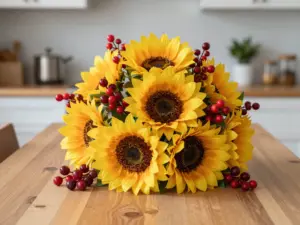
6. Sunflower
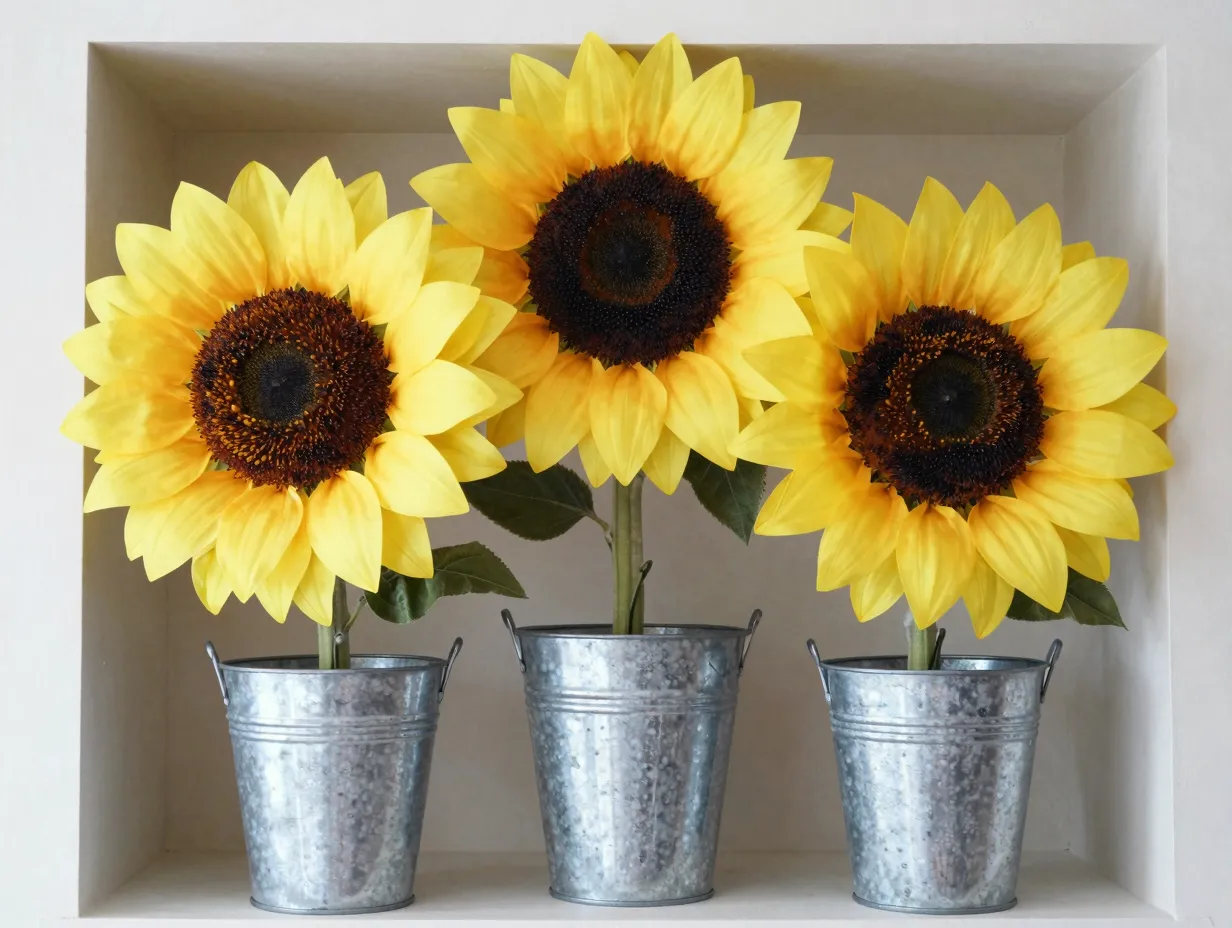
The sunflower is the cheerful outlier in this collection, bold, graphic, and instantly recognizable. It is also one of the most structurally straightforward large-scale flowers to build.
What makes it work: The key is the center disc. A flat, painted paper center does not do justice to a real sunflower’s textured seed head. Professional makers build a dimensional center by layering small, tightly gathered circles of dark brown and black crepe paper, creating a raised, textured surface that catches light and shadow [4].
Decor application: A trio of large sunflowers in a galvanized metal bucket makes a striking entryway or mudroom display. Single stems also work well in tall, narrow vases for a graphic, modern look.
Difficulty level: Beginner. The petal shape is simple, the color palette is limited, and the assembly process is logical and fast.
7. Gardenia
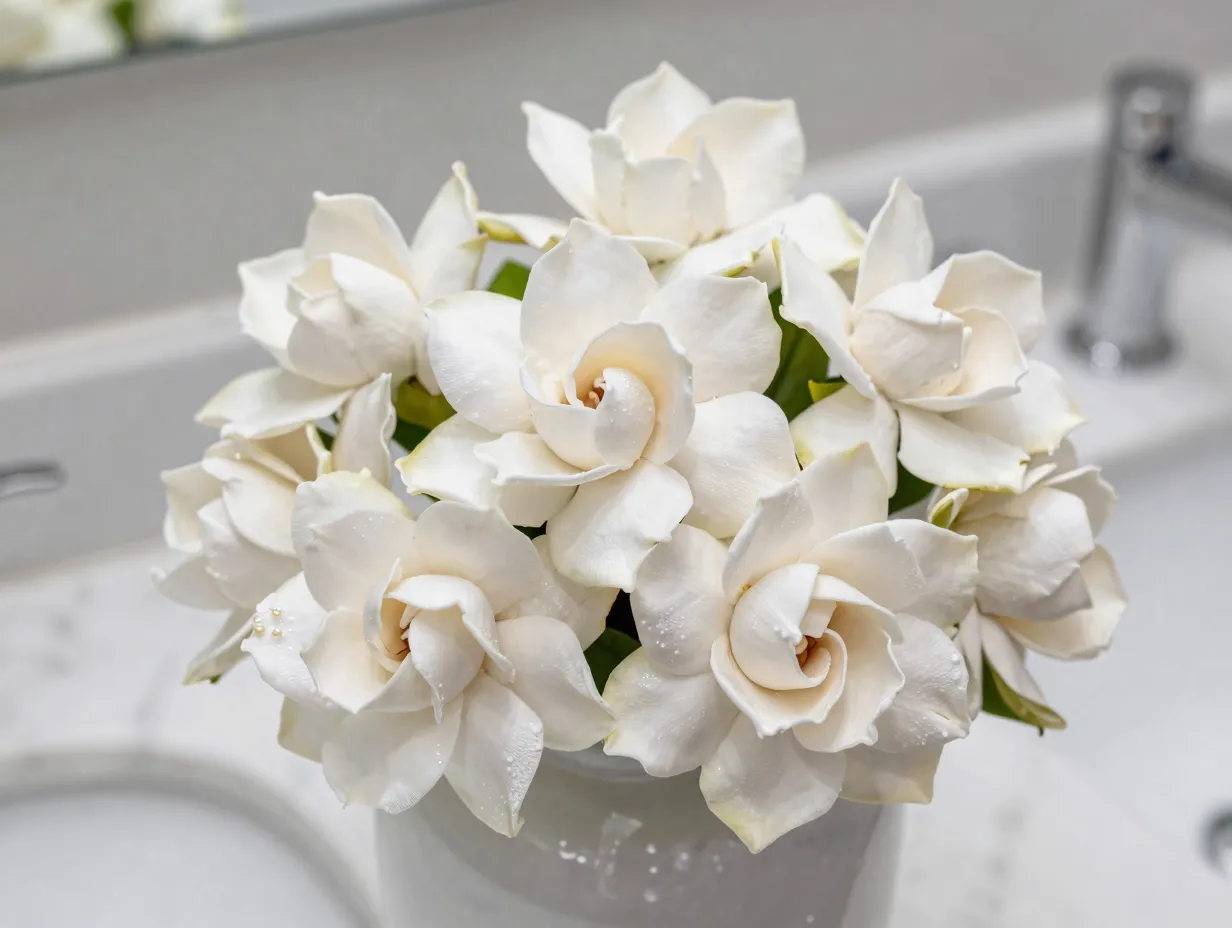
The gardenia is the sophisticate of the group. Its creamy white, tightly spiraling petals and waxy appearance present a unique challenge: how do you make paper look like it has a slight sheen?
What makes it work: The answer is a light application of white or pearl wax crayon rubbed gently across the surface of each petal after shaping. This technique, used by professional paper artists, creates a subtle luminosity that mimics the waxy surface of a real gardenia [6]. The petals themselves are shaped by stretching the crepe paper along the grain to create a gentle, cupped curve.
Decor application: Gardenias are at their best in monochromatic arrangements. A cluster of white gardenias in a white ceramic vase on a bathroom vanity or bedroom dresser creates a serene, spa-like atmosphere.
Difficulty level: Intermediate. The wax finishing technique requires a light touch, and the tight spiral assembly demands careful petal placement.
8. Cosmos
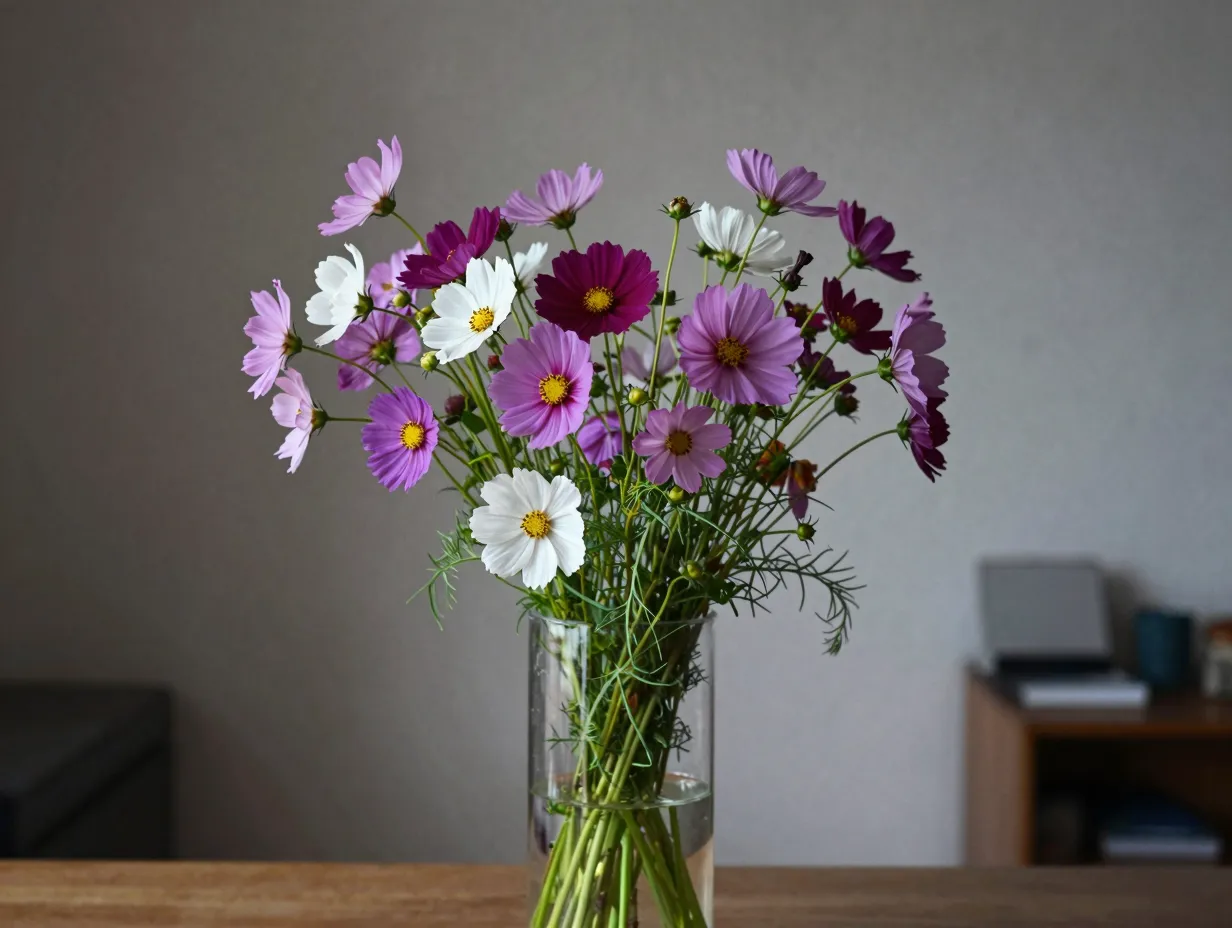
The cosmos is the free spirit of this collection. Its delicate, slightly irregular petals and slender stem give it an airy, wildflower quality that contrasts beautifully with the more structured blooms in this guide.
What makes it work: The irregularity is intentional. Unlike the dahlia or ranunculus, where consistency is the goal, a cosmos looks best when the petals are slightly varied in width and angle. Professional makers deliberately cut petals freehand rather than using a template, then curl the tips backward using a skewer or pencil to create a natural, windswept look [3].
Decor application: Cosmos flowers are ideal for tall, loose arrangements that evoke a garden-gathered aesthetic. A mix of violet, pink, and white cosmos in a tall glass cylinder vase suits living rooms, home offices, and dining rooms equally well.
Difficulty level: Beginner. The forgiving, irregular form means small imperfections actually improve the final result.
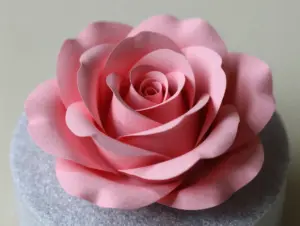
9. Large-Scale Rose
The rose is the most requested crepe paper flower, and also the most technically demanding to execute at a large scale. A well-made large crepe paper rose, however, is one of the most breathtaking objects you can place in a room.
What makes it work: Scale changes everything with a rose. At a standard size, the spiral petal assembly is manageable. At 12 to 18 inches across, the weight of the petals can cause the outer layers to droop unless each petal is individually wired and the central armature is reinforced [5]. Professional makers use 18-gauge floral wire for the main stem and 24-gauge wire for individual petal reinforcement, connecting them with floral tape and small metal couplers for stability.
Decor application: A single oversized rose, in deep red, blush, or burnt orange, mounted on a wall or displayed in a wide-mouthed vase becomes the focal point of any room. It is the kind of piece that guests photograph and ask about immediately.
Difficulty level: Advanced. The wiring and structural reinforcement steps require practice, but the payoff is a statement piece that can last for years with proper care.
Essential Materials and Techniques for All Nine Flowers
Before you begin any of the nine stunning crepe paper flowers to brighten your home decor listed above, a brief overview of shared materials and techniques will save you significant time and frustration.
Choosing the Right Crepe Paper
Not all crepe paper is equal. The standard rolls sold in most craft stores are fine for basic projects, but they lack the stretch and pigment depth needed for realistic, large-scale blooms. For serious work, look for Italian crepe paper (often listed as 180 gsm or 60 gsm depending on the brand) or German doublette crepe, which is two layers bonded together for extra body [5].
| Paper Type | Best For | Stretch Level |
|---|---|---|
| Standard craft store roll | Beginner projects, sunflowers, cosmos | Low (20-30%) |
| Italian crepe 180 gsm | Peonies, roses, dahlias | High (50-60%) |
| German doublette | Ranunculus, gardenias, anemones | Medium (35-45%) |
Grain Direction
Always cut petals so the grain (the direction of the crepe folds) runs from the base of the petal to the tip. This orientation allows you to stretch the center of the petal outward to create a natural cup shape. Cutting against the grain produces flat, lifeless petals that no amount of curling will fix [5].
Structural Supports
For any flower larger than six inches across, wire is not optional. Use 18-gauge green floral wire for main stems, 24-gauge for individual petals that need reinforcement, and floral tape to bind everything together. For wall-mounted installations, a wooden disc or foam base with a pre-drilled hole provides the stability needed for long-term display [5].
Finishing Techniques
Three finishing techniques separate professional results from amateur ones:
- Stretching, gently pulling the center of each petal outward to create a three-dimensional cup shape.
- Curling, rolling petal tips backward over a skewer or pencil to add natural movement.
- Color blending, using chalk pastels, watercolor, or diluted ink to add depth and shadow at petal bases, mimicking the natural color variation found in real flowers [2].
How to Display Your Crepe Paper Flowers for Maximum Impact
Making the flowers is only half the work. How you display them determines whether they read as a thoughtful design choice or a craft project left on a shelf.
Wall installations are the most dramatic option. A grid of nine to twelve large blooms in a tonal color palette, all blush pinks, or all warm whites, creates a wallpaper-like effect that transforms a blank wall into a focal point. Use small adhesive hooks or picture-hanging strips to mount individual flower bases without damaging walls.
Vase arrangements work best when you vary stem heights. Cut wire stems to three different lengths, short, medium, and tall, and arrange them in a loose, asymmetrical cluster rather than a tight, symmetrical bunch. This mimics the natural randomness of a real garden arrangement.
Tabletop styling benefits from mixing flower sizes. Pair one large statement bloom (a peony or rose) with two or three smaller accent flowers (anemones or cosmos) and a few loose leaves cut from green crepe paper. This layering creates visual depth and makes the arrangement look curated rather than assembled.
Seasonal rotation is one of the great advantages of crepe paper flowers over fresh botanicals. Store unused flowers in a lidded box lined with tissue paper, away from direct sunlight, and swap them out as the seasons change. A warm-toned arrangement of sunflowers and dahlias for autumn, replaced by white gardenias and pale peonies for winter, keeps your decor feeling fresh year-round.
Conclusion
The 9 stunning crepe paper flowers to brighten your home decor covered in this guide represent a genuine upgrade to how most people think about botanical accents in the home. These are not temporary decorations or craft-fair novelties. Built with quality materials, proper structural support, and professional finishing techniques, they are durable, customizable, and visually compelling in ways that fresh flowers and silk alternatives simply cannot match.
Here are your actionable next steps:
- Start with one beginner-level flower, the cosmos or sunflower, to build confidence with grain direction and basic petal shaping.
- Invest in at least one roll of high-quality Italian or German crepe paper before moving to intermediate projects. The material difference is immediately visible.
- Practice the three finishing techniques, stretching, curling, and color blending, on scrap paper before applying them to finished petals.
- Plan your display location before you begin building. Knowing whether a flower will be wall-mounted, vase-displayed, or used as a centerpiece determines the stem length, base type, and structural reinforcement you will need.
- Revisit the video tutorials linked in the references below for step-by-step visual guidance on specific techniques, particularly for the more advanced blooms like the large-scale rose and sculptural dahlia.
The investment of time and materials is modest. The return, a home filled with handcrafted, long-lasting botanical beauty, is anything but.
References
[1] Watch – https://www.youtube.com/watch?v=dPjzCh-wcy4
[2] Watch – https://www.youtube.com/watch?v=CdeTepYwUEY
[3] Watch – https://www.youtube.com/watch?v=OvszeadksAo
[4] Watch – https://www.youtube.com/watch?v=di0geLmoAek
[5] How To Make Huge Crepe Paper Flowers – https://ohyaystudio.com/how-to-make-huge-crepe-paper-flowers/
[6] Paper Flowers Sourabh Gupta – https://www.nytimes.com/2026/07/07/t-magazine/paper-flowers-sourabh-gupta.html