9 Secret Garden Aesthetic Ideas to Create Your Own Private Sanctuary
A study cited by the Royal Horticultural Society found that spending as little as 30 minutes in a private green space can reduce cortisol levels by up to 21 percent, yet most homeowners never design their outdoor space with true privacy in mind. That gap between what a garden could offer and what it actually delivers is exactly why the concept of the secret garden has surged in popularity in 2026. These 9 Secret Garden Aesthetic Ideas to Create Your Own Private Sanctuary are not about grand budgets or sprawling estates. They are about intention, enclosure, and the quiet art of making a space feel entirely your own.
Disclosure: This post contains affiliate links. As an Amazon Associate, we earn from qualifying purchases, and at no extra cost to you.
I have spent years studying garden design, and the single most common mistake I see is treating a garden as an extension of the house rather than a destination in itself. The ideas below change that. Whether you have a quarter-acre suburban lot or a narrow urban courtyard, these principles will help you build a genuine retreat.
Key Takeaways
- Enclosure is the foundation of every successful secret garden, walls, hedges, or tall plantings must come first
- A hidden or intriguing entrance creates the psychological threshold between everyday life and sanctuary
- Sensory layering through scent, sound, and light transforms a garden from pleasant to truly restorative
- Personal objects and meaningful focal points are what separate a generic retreat from a private sanctuary
- Even very small gardens can achieve all nine of these ideas with careful planning and layered planting
The Foundation of Every Secret Garden: Enclosure, Entrance, and Structure
Before any single plant goes into the ground, the structure of a secret garden must be established. The three structural pillars, enclosure, a hidden entrance, and a defined seating destination, are non-negotiable. Get these right and everything else falls into place naturally.
1. Build Enclosure First
Garden Design’s updated 2026 framework is unambiguous on this point: enclosure is the foundation of the secret garden aesthetic [1]. Without it, no amount of beautiful planting will create the cocooned, private feeling that defines this style.
Enclosure does not have to mean expensive masonry. The most effective approaches layer multiple elements:
- Walls and fences provide the structural backbone and an immediate sense of boundary
- Tall shrubs and trees soften hard edges and add naturalistic depth
- Mixed planting beds of varying heights, ground covers, mid-height perennials, and canopy trees, create a lush, three-dimensional envelope around the space [1]
“The goal is not to block the world out but to draw the garden in, to make the space feel complete in itself.”
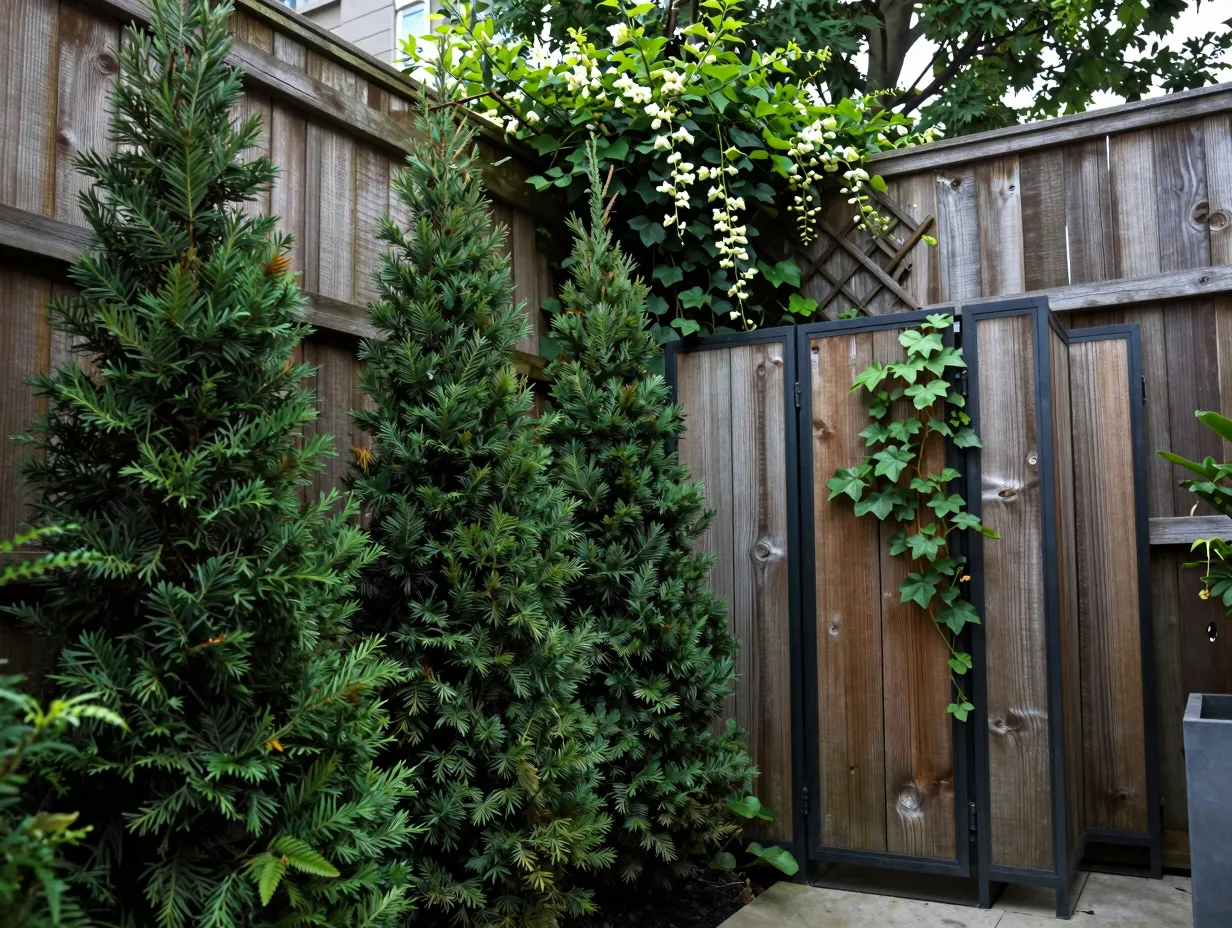
In my own experience designing small urban gardens, I have found that a single row of evergreen shrubs planted at 1.5 to 2 meters tall can transform an exposed patio into something that genuinely feels hidden. Combine that with a climbing plant on a trellis fence and the transformation is remarkable.
For urban gardens with limited boundary space, freestanding modern screens placed within the garden, not just at its edges, are an increasingly popular 2026 trend for carving out private micro-zones [9][10]. Bamboo, ornamental grasses, and evergreen hedges all work well in this role [1][6].
2. Design a Hidden or Intriguing Entrance
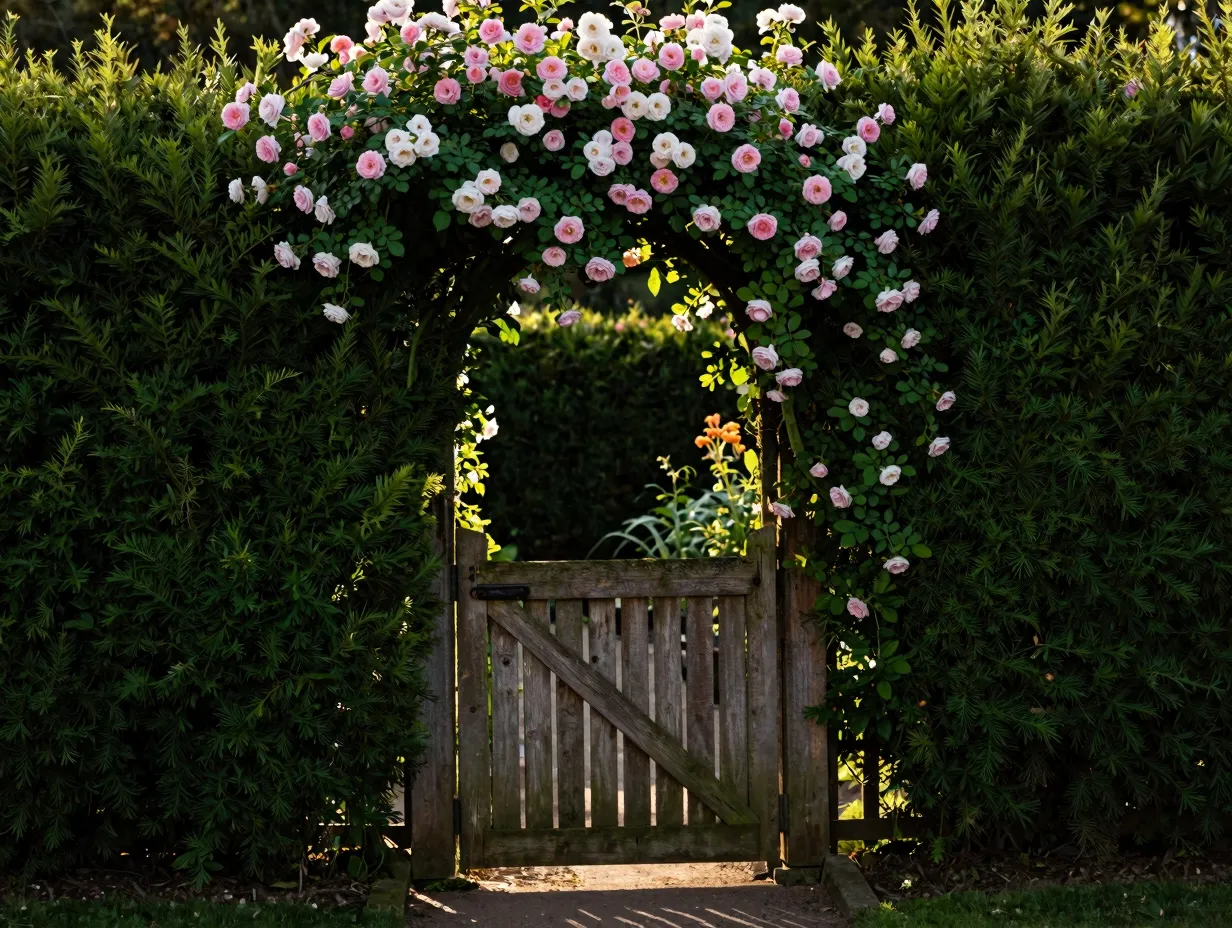
The entrance is the single most powerful aesthetic move in secret garden design. Every major source on this topic, from Garden Design to Fox News’s expert garden feature, identifies a hidden or intriguing entrance as the defining element that separates a secret garden from a merely attractive one [1][5].
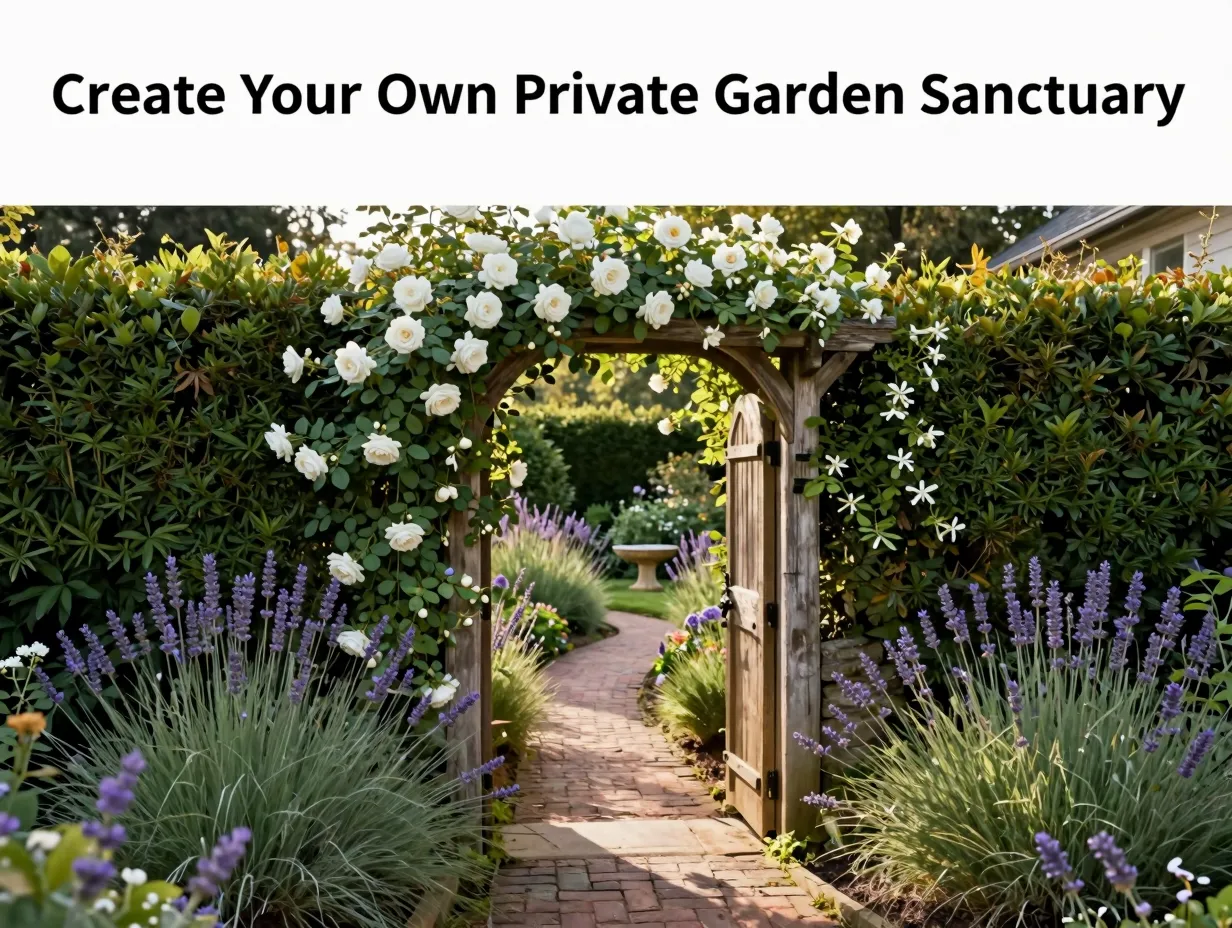
The mechanics are straightforward. An arbor, gate, trellised arch, or door blocks direct sightlines into the space. The visitor must pass through a threshold. That act of crossing, ducking under a rose-draped arch, pushing open a weathered wooden gate, stepping through a gap in a tall hedge, is what creates the psychological shift from public to private [3][5].
Practical options for creating this effect include:
- A wooden or wrought-iron gate set into a hedge or fence
- A trellised arch covered in climbing roses, jasmine, or wisteria
- A moon gate (a circular opening in a wall or hedge) for a more architectural look
- A gap path through tall ornamental grasses that parts just wide enough for one person
The key design rule is that the entrance should block the view completely from outside. If you can see the entire garden from the street or from the house, the sense of mystery collapses immediately [3][5].
3. Create a Destination Seating Area
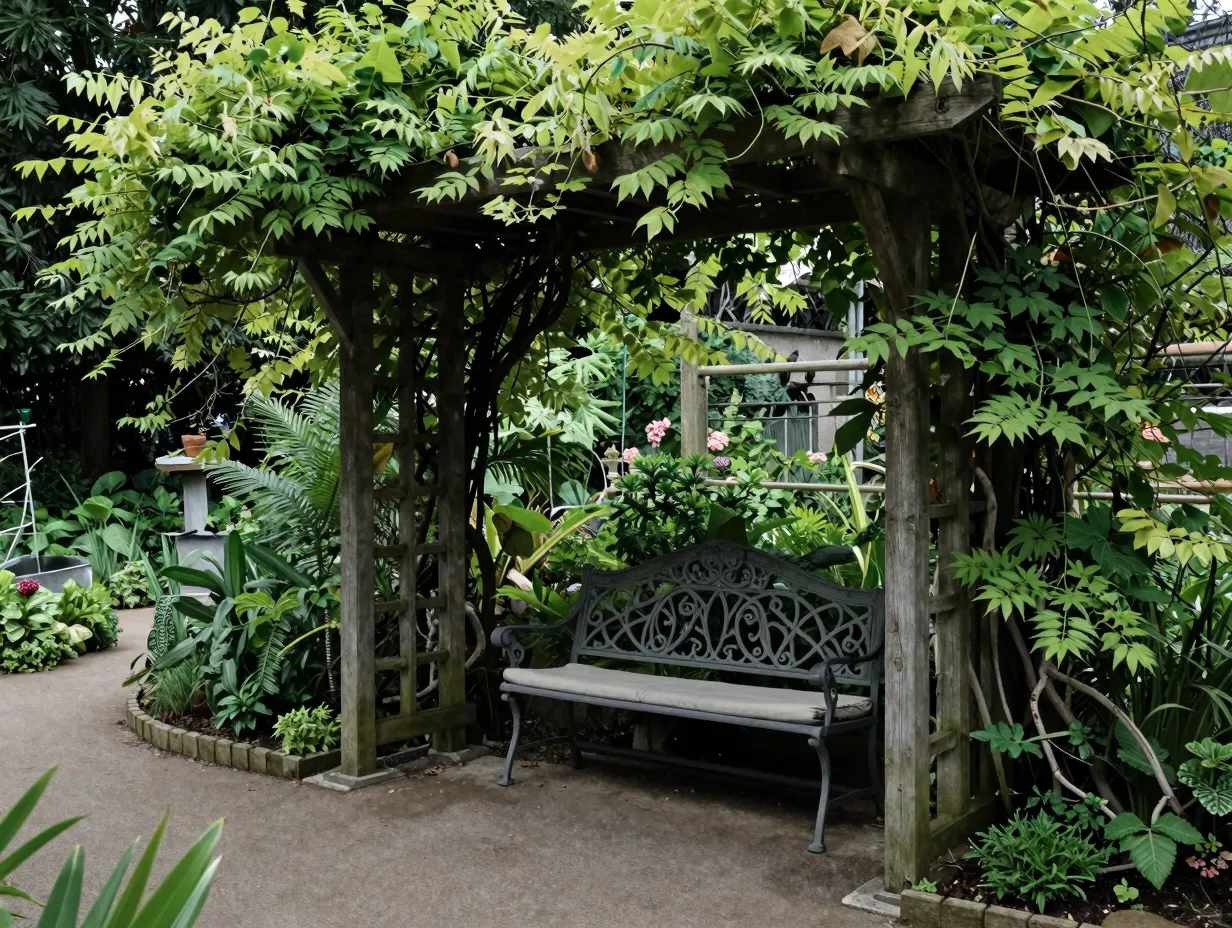
Every secret garden needs an emotional center, a spot that pulls you in and makes you want to stay. Experts consistently identify a clearly defined seating area as this anchor [2][5][6].
This does not need to be elaborate. A single bench tucked under a pergola draped in climbing plants, a cafe table and two chairs screened by a wall of lavender, or a hammock strung between two mature trees all achieve the same effect. The critical element is that the seating area feels sheltered, by shade, by planting, or by both [2][5].
For very small urban gardens, 2026 guidance recommends tucking a chair and small table into an underused corner and screening it with climbing plants on a simple trellis [2][6]. The corner does the structural work; the plants do the aesthetic work.
Design tip: Place the seating area so it cannot be seen from the entrance. The visitor should discover it only after entering the garden. This single move, the hidden reveal of the sitting spot, is one of the most effective techniques in the entire secret garden toolkit.
Planting, Sensory Experience, and Personal Meaning
With structure in place, the second layer of the secret garden aesthetic is built through planting choices, sensory design, and the personal objects that make a space uniquely yours. These are the elements that transform a well-designed garden into a genuine sanctuary.
4. Embrace Loose, Naturalistic Planting
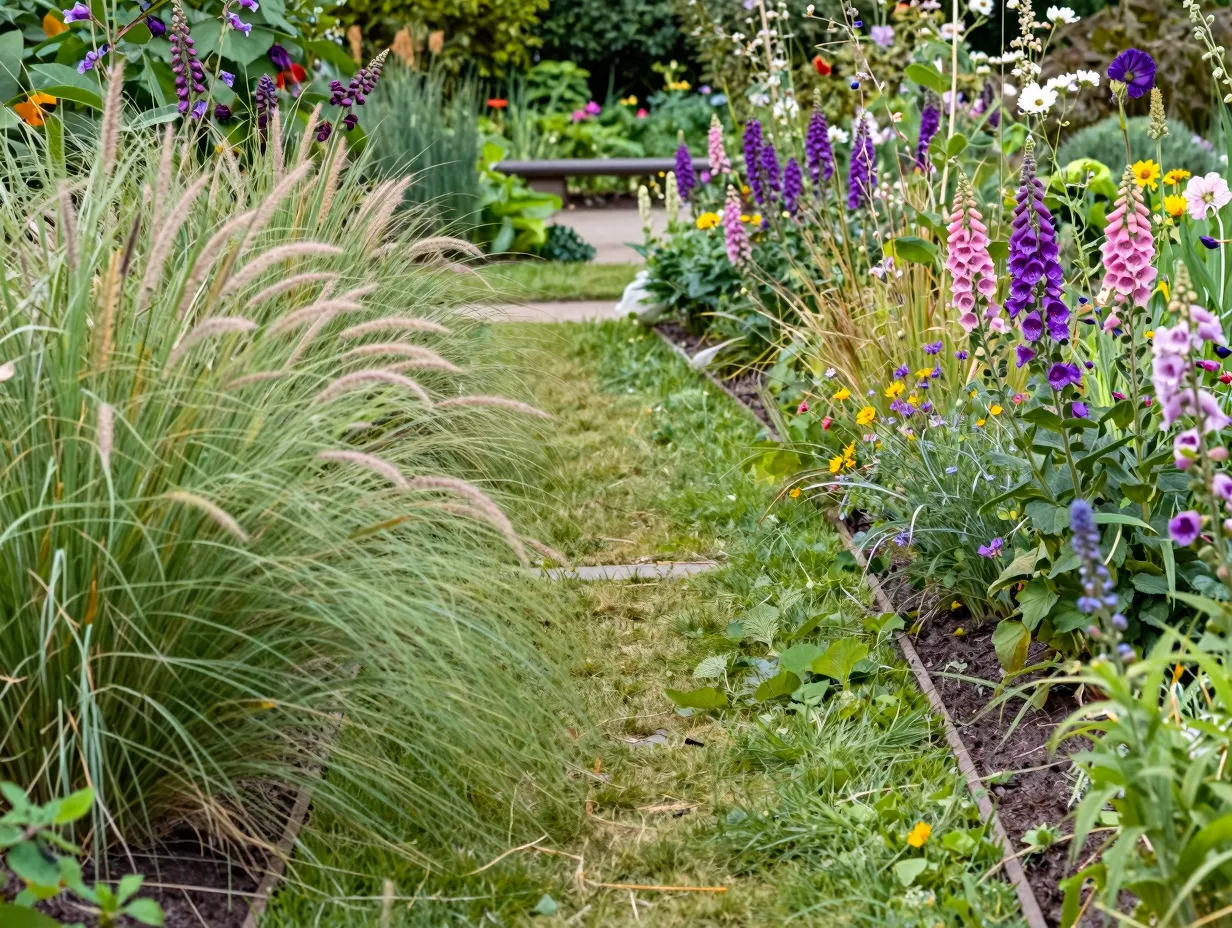
The planting style of a secret garden is deliberately informal. Contemporary secret garden aesthetics favor loose, naturalistic plantings arranged around a more structured backbone of paths, hedges, or seating areas [2][5][8].
The palette typically includes:
- Billowing ornamental grasses such as Miscanthus or Pennisetum for movement and texture
- Wildflower meadow sections that develop semi-naturally with a mown circle and a single narrow path cutting through them [2]
- Native perennials that support local wildlife while requiring minimal maintenance
- Cottage-style blooms, foxgloves, hollyhocks, sweet peas, and old roses, that soften hard edges and signal retreat from everyday formality [5][8]
The semi-wild meadow idea is particularly powerful in larger gardens. Allowing a portion of the space to grow with minimal intervention, with just enough structure to signal intention, heightens the sense of discovery that is central to the secret garden experience [2].
I once visited a garden in rural England where the owner had done exactly this: a mown path curved through a thigh-high wildflower meadow to a hidden bench. The journey through the meadow, even though it took only 30 seconds, felt like a genuine expedition. That is the power of naturalistic planting.
5. Layer Sensory Experience: Water, Scent, and Light
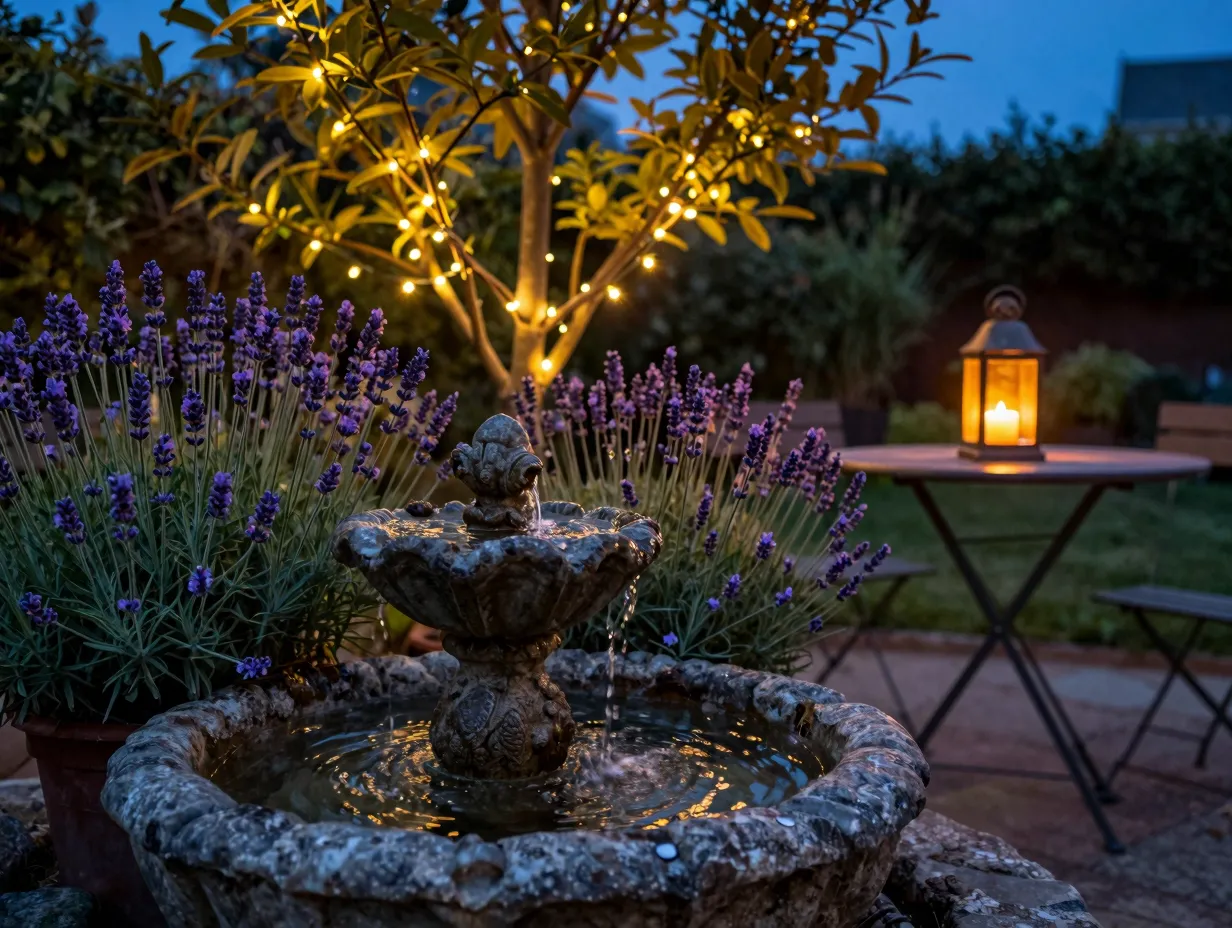
A secret garden engages all the senses, not just sight. Multiple authoritative sources emphasize sensory layering, particularly water, sound, and scent, as central to the sanctuary feeling [1][4][8].
Water features serve a dual purpose: they provide therapeutic sound that masks urban noise, and they support wildlife. Options range from a simple birdbath to a small recirculating fountain, a shallow pond, or a wall-mounted water feature. Even a modest fountain producing a gentle trickle creates a psychological buffer against street noise that is disproportionate to its size [4][8].
Fragrant plants are equally important. HGTV’s guidance recommends specific plants for both daytime and nocturnal scent [8]:
| Daytime Fragrance | Evening and Night Fragrance |
|---|---|
| Lavender | Night-blooming jasmine |
| Antique roses | Moonflower |
| Lilacs | Nicotiana (tobacco plant) |
| Hyacinths | Evening primrose |
| Sweet peas | Four o’clocks |
Lighting extends the garden’s usability into evening hours and transforms its atmosphere entirely. String lights woven through overhead pergolas, solar-powered path lights set low to the ground, and candle lanterns placed on tables or hung from branches all contribute to the intimate, enclosed feeling that defines this aesthetic [4][8].
6. Use Screening to Create Private Micro-Zones
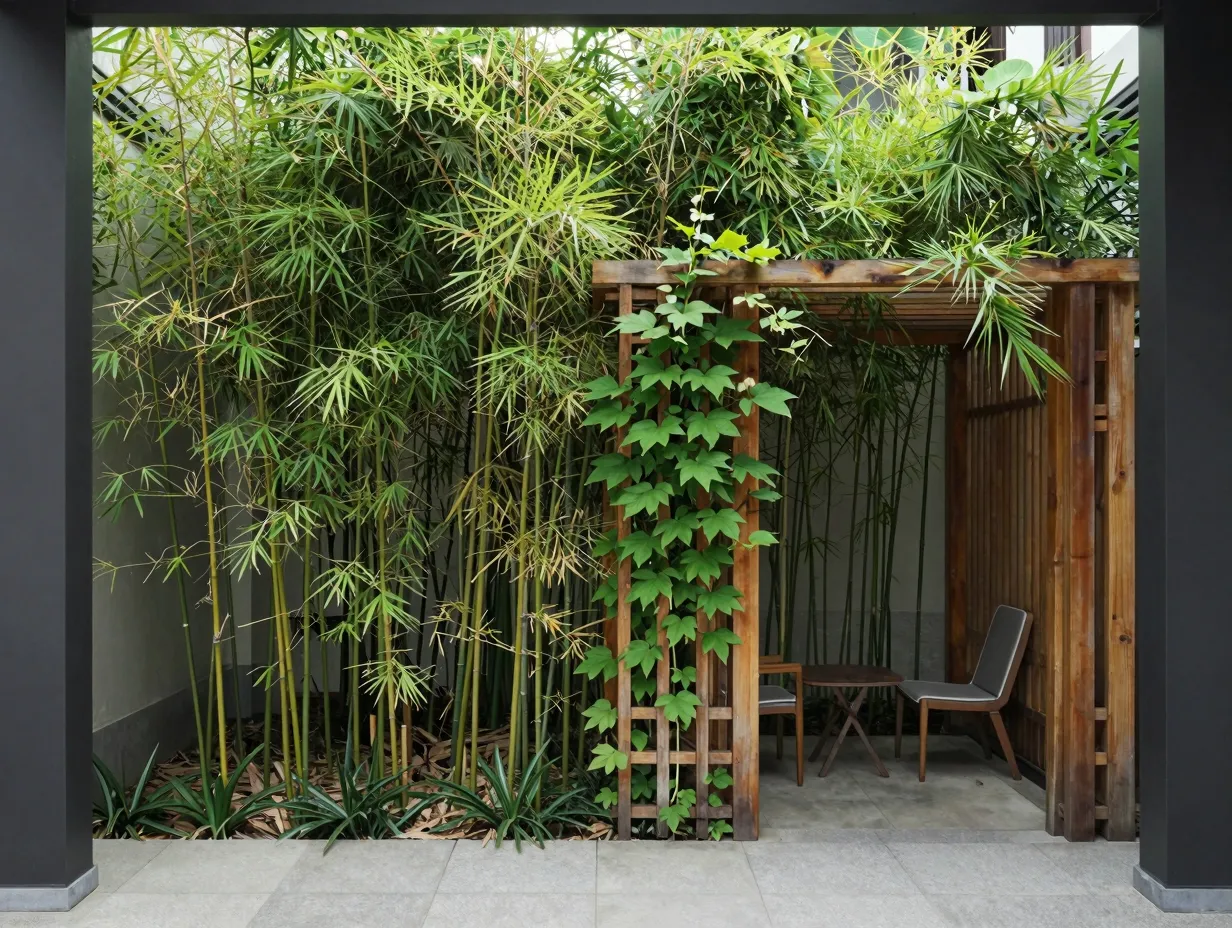
Screening is not just a boundary tool, it is an interior design technique for gardens. The 2026 trend identified across multiple sources is using screening elements within the garden to carve out multiple private pockets, each with its own character [9][10].
This approach is especially valuable in open-plan outdoor spaces and dense urban settings where a single large private area may not be achievable [9][10]. Instead of one enclosed garden, you create a series of connected but visually distinct spaces:
- A reading nook screened by a tall bamboo planting
- A dining area separated from a play zone by an ornamental grass border
- A meditation corner tucked behind a freestanding trellis panel covered in climbing plants
Bamboo is particularly effective for this because it grows quickly, provides year-round screening, and has a naturalistic quality that suits the secret garden aesthetic [1][6]. However, it must be contained with a root barrier to prevent invasive spread.
Modern freestanding screens, powder-coated steel, weathered timber, or living willow panels, offer a more architectural option that works well in contemporary garden styles [6].
7. Design for Wildlife
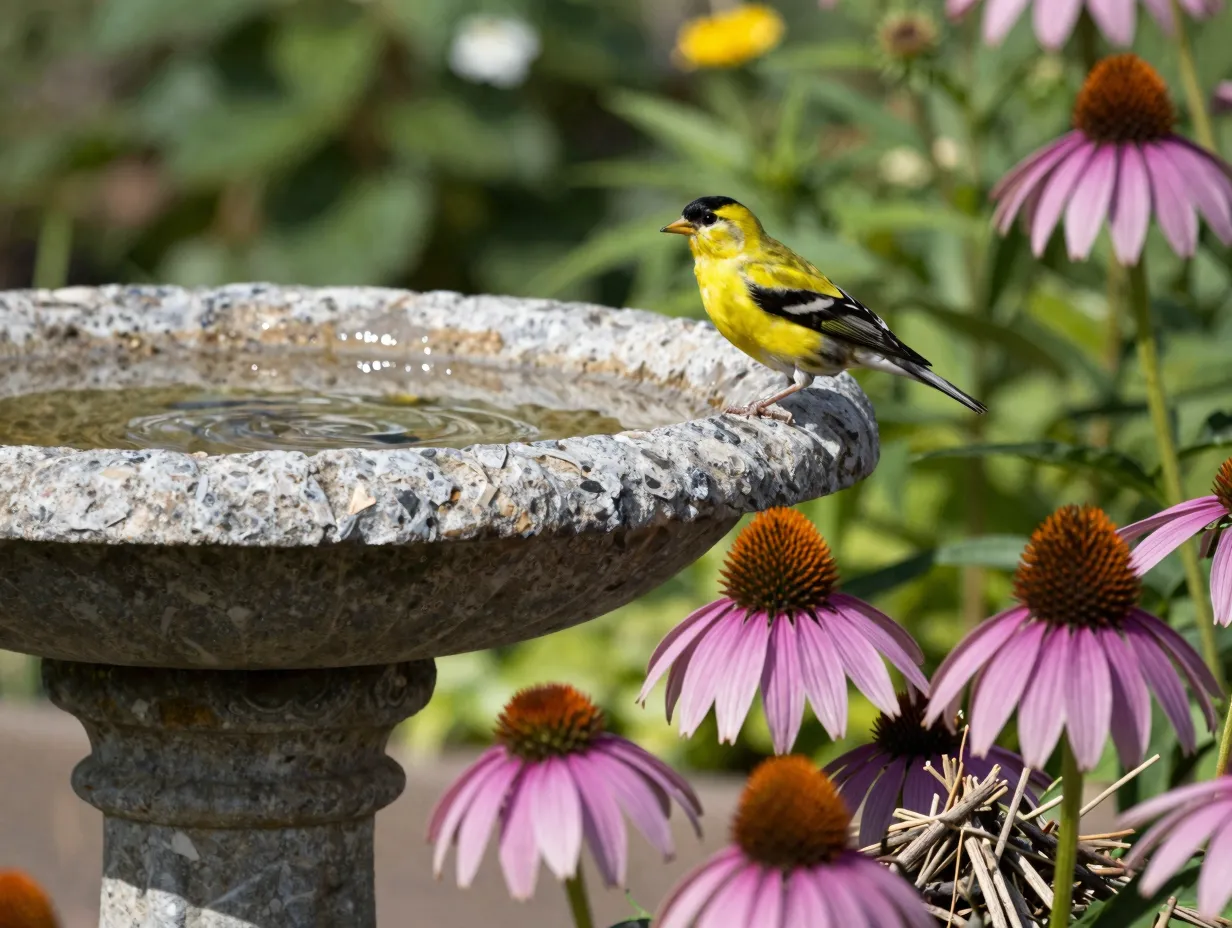
Wildlife-friendly design is now a standard part of secret garden best practice, and for good reason: a garden that supports birds, butterflies, bees, and other small creatures feels genuinely alive in a way that no amount of beautiful planting alone can replicate [1][8].
Recommendations from HGTV and Garden Design include [1][8]:
- A birdbath or shallow pond providing water for birds and insects year-round
- Seed-bearing perennials such as coneflowers (Echinacea) to attract finches through autumn and winter
- Nectar-rich flowers, lavender, verbena, scabiosa, for butterflies and bees
- Red or tubular blooms such as salvias, honeysuckle, and crocosmia to attract hummingbirds in appropriate climates
- A small brush pile or log stack in an unobtrusive corner to provide shelter for hedgehogs, beetles, and other beneficial creatures
The presence of wildlife adds an unpredictable, living quality to the garden that deepens the sanctuary feeling. Watching a goldfinch work through a stand of coneflowers on a quiet morning is, in my experience, one of the most genuinely restorative things a garden can offer.
8. Plan for Seasonal Interest and Change
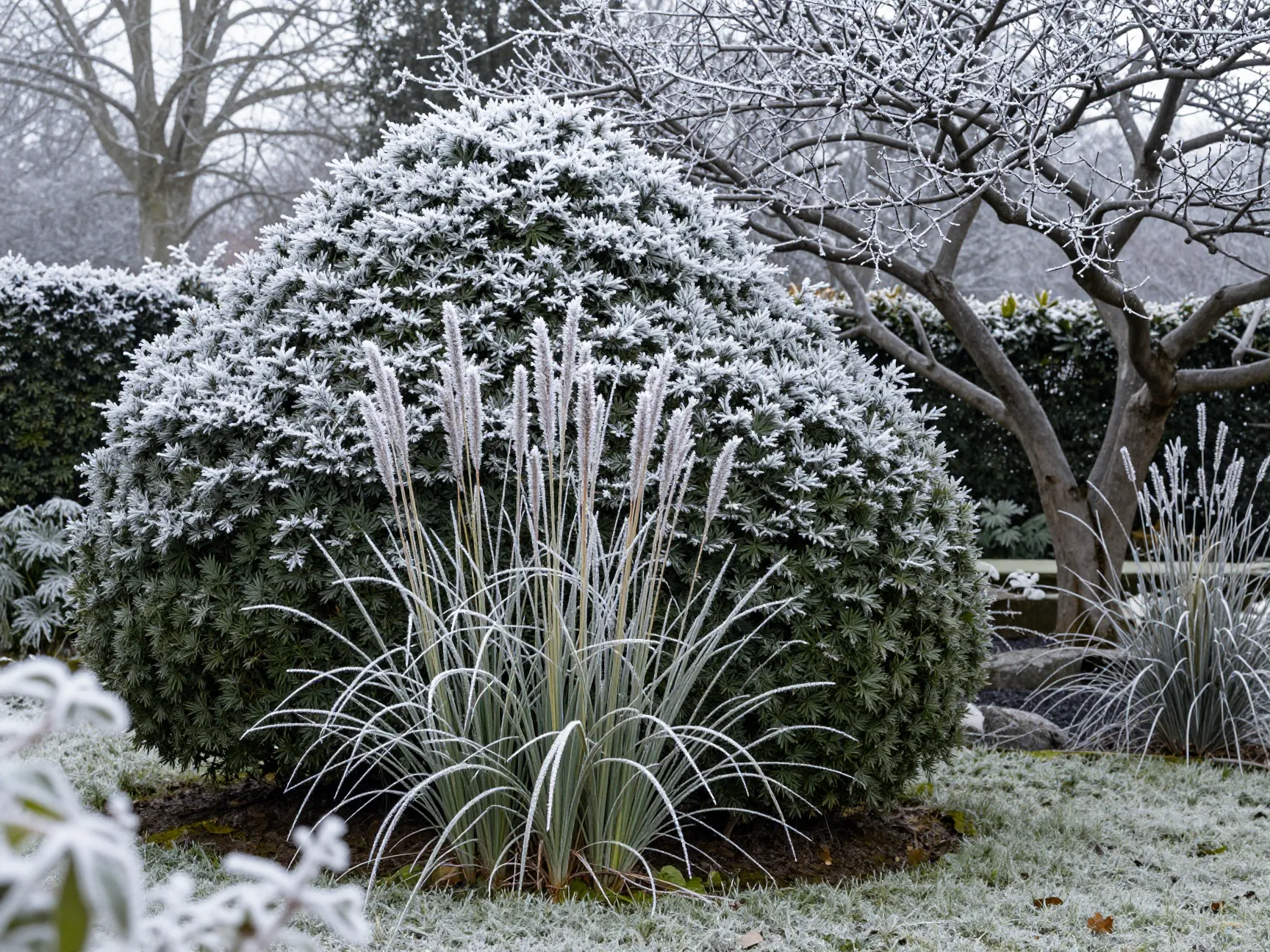
A secret garden that looks spectacular in June but bare in February has failed at one of its core purposes: being a place you return to across the entire year. Seasonal interest is not just an aesthetic nicety, it is what makes the garden feel like a living narrative rather than a static backdrop [1][5].
Fox News’s nine-idea framework explicitly includes seasonal change as a core element, recommending plant choices that mark transitions and enhance the secret garden narrative across all four seasons [5].
A practical seasonal planting framework:
Spring: Bulbs planted in autumn, tulips, alliums, narcissus, push through the soil before perennials emerge, providing the first evidence that the garden is waking up. This sense of emergence is particularly powerful in an enclosed space where the bulbs seem to appear from nowhere.
Summer: The main show of perennials, climbing plants, and annuals. This is when fragrance, color, and wildlife activity peak.
Autumn: Foliage that turns vivid colors, Japanese maples, Euonymus, Parthenocissus, combined with seed heads left standing on perennials for wildlife and visual texture [1].
Winter: Evergreen structure becomes the backbone. Holly, box, yew, and architectural grasses hold the garden’s form when deciduous plants have retreated. A light dusting of frost on evergreen hedges in an enclosed garden is one of the most quietly beautiful sights in all of garden design.
9. Integrate Personal Objects and Meaningful Focal Points
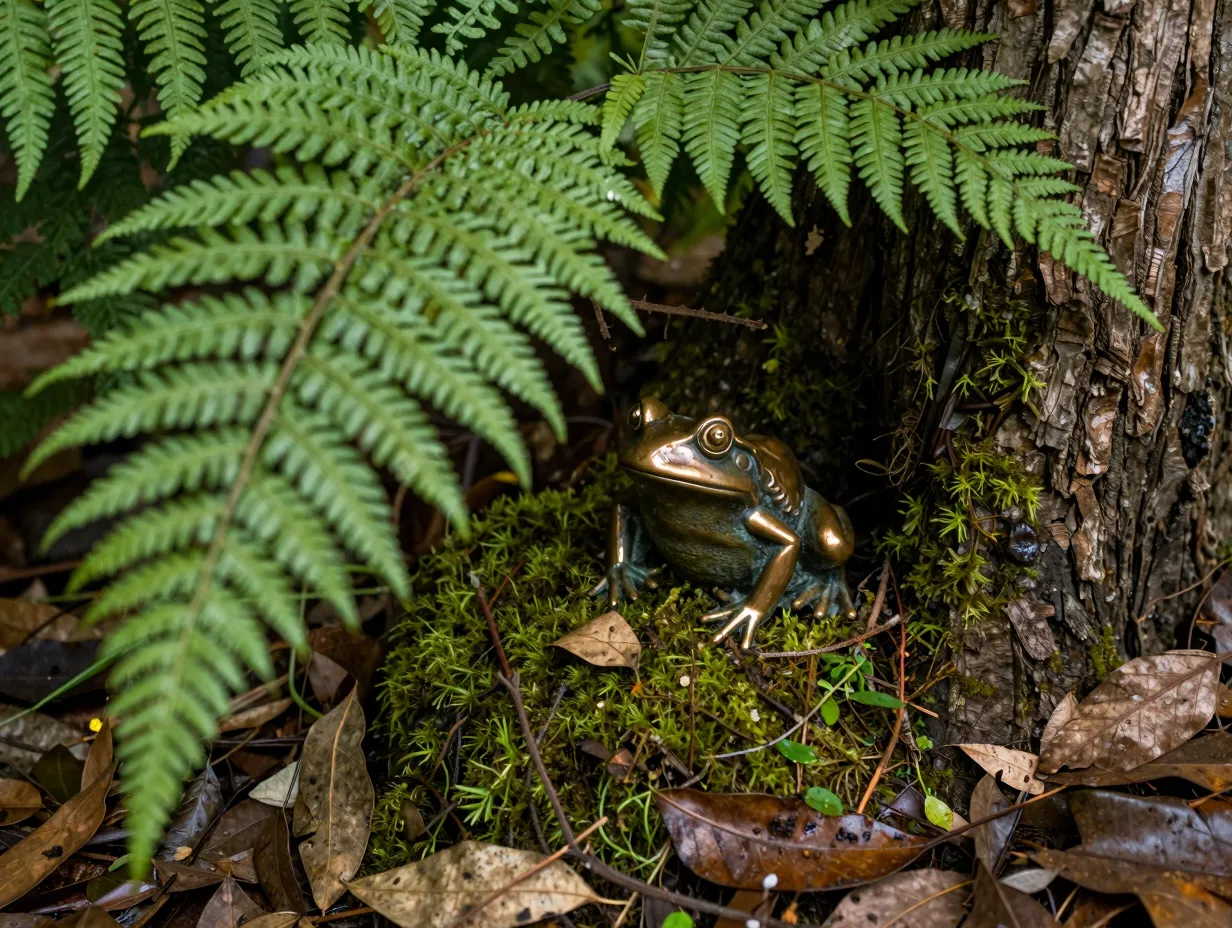
This is the idea that most garden design guides mention last, but it may be the most important of all. Personal objects, sculptures, religious or spiritual symbols, heirloom pieces, found objects, or art, are what transform a hidden garden from a generic retreat into a truly private sanctuary [1][4][5].
Updated 2026 guidance proposes integrating these items subtly: in nooks, at the terminus of a path, near the seating area, or partially obscured by planting so they are discovered rather than immediately seen [1]. This placement strategy serves two purposes. First, it creates focal points that draw the eye and the body through the garden. Second, it gives the space a layer of personal meaning that no amount of professional design can manufacture.
Examples of meaningful focal points that work well in the secret garden context [4][5]:
- A stone or bronze sculpture of a figure, animal, or abstract form placed at the end of a path
- A sundial or armillary sphere as a central focal point in a circular planting bed
- An heirloom object, a grandmother’s birdbath, a piece of salvaged ironwork, a painted tile panel, mounted on a wall or set into planting
- A small altar or meditation space incorporating natural materials, candles, and personal symbols for those who use the garden for spiritual practice
- Commissioned or found art that references something personally significant, a place, a person, a memory
“The objects you place in a garden tell its story. A garden without personal meaning is a beautiful room that belongs to no one.”
The placement of these objects should feel discovered, not displayed. Tuck a small bronze frog under a fern. Set a meaningful stone at the base of the most important tree. Let the garden reveal its personal layer slowly, the way a good book reveals its themes.
Conclusion
The 9 Secret Garden Aesthetic Ideas to Create Your Own Private Sanctuary explored in this article share a single underlying logic: a secret garden is not built, it is composed. Each element, enclosure, hidden entrance, destination seating, naturalistic planting, sensory layering, interior screening, wildlife design, seasonal planning, and personal focal points, contributes to a whole that is greater than the sum of its parts.
The most important actionable step you can take right now is to start with structure. Before you buy a single plant or choose a color palette, walk your outdoor space and identify where enclosure can be created, where an entrance threshold could be placed, and where a seating destination could be tucked. Those three decisions will determine everything that follows.
If your space is very small, do not be discouraged. The 2026 guidance from multiple sources makes clear that even a narrow urban courtyard can achieve all nine of these ideas with careful layering [2][6]. Scale is irrelevant. Intention is everything.
Begin this season. Plant the hedge that will become your enclosure. Hang the gate that will become your threshold. Place the chair that will become your destination. The garden you create will not be finished for several years, and that is precisely the point. A secret garden grows into itself, season by season, year by year, becoming more itself with every passing winter and every returning spring.
References
[1] Secret Garden – https://www.gardendesign.com/ideas/secret-garden.html
[2] Secret Garden Ideas – https://growgardenly.com/secret-garden-ideas/
[3] Secret Outdoor Garden Designs Ideas – https://smallandlovely.com/blog/secret-outdoor-garden-designs-ideas/
[4] 19 Luxury Secret Garden Escape Inspirations And Ideas – https://www.homespir.com/outdoors/gardens/19-luxury-secret-garden-escape-inspirations-and-ideas/
[5] How To Design A Secret Garden – https://www.foxnews.com/real-estate/how-to-design-a-secret-garden
[6] Small Secret Garden Ideas – https://homedecorleafy.com/garden-ideas/small-secret-garden-ideas/
[8] Create A Secret Garden – https://www.hgtv.com/outdoors/gardens/garden-styles-and-types/create-a-secret-garden
[9] Watch – https://www.youtube.com/watch?v=tSFWghhiUik
[10] Top Tips To Create A Private Paradise In Your Garden – https://www.bbc.co.uk/programmes/articles/5SdFMwlSMCpmwmySMlK56dJ/top-tips-to-create-a-private-paradise-in-your-garden