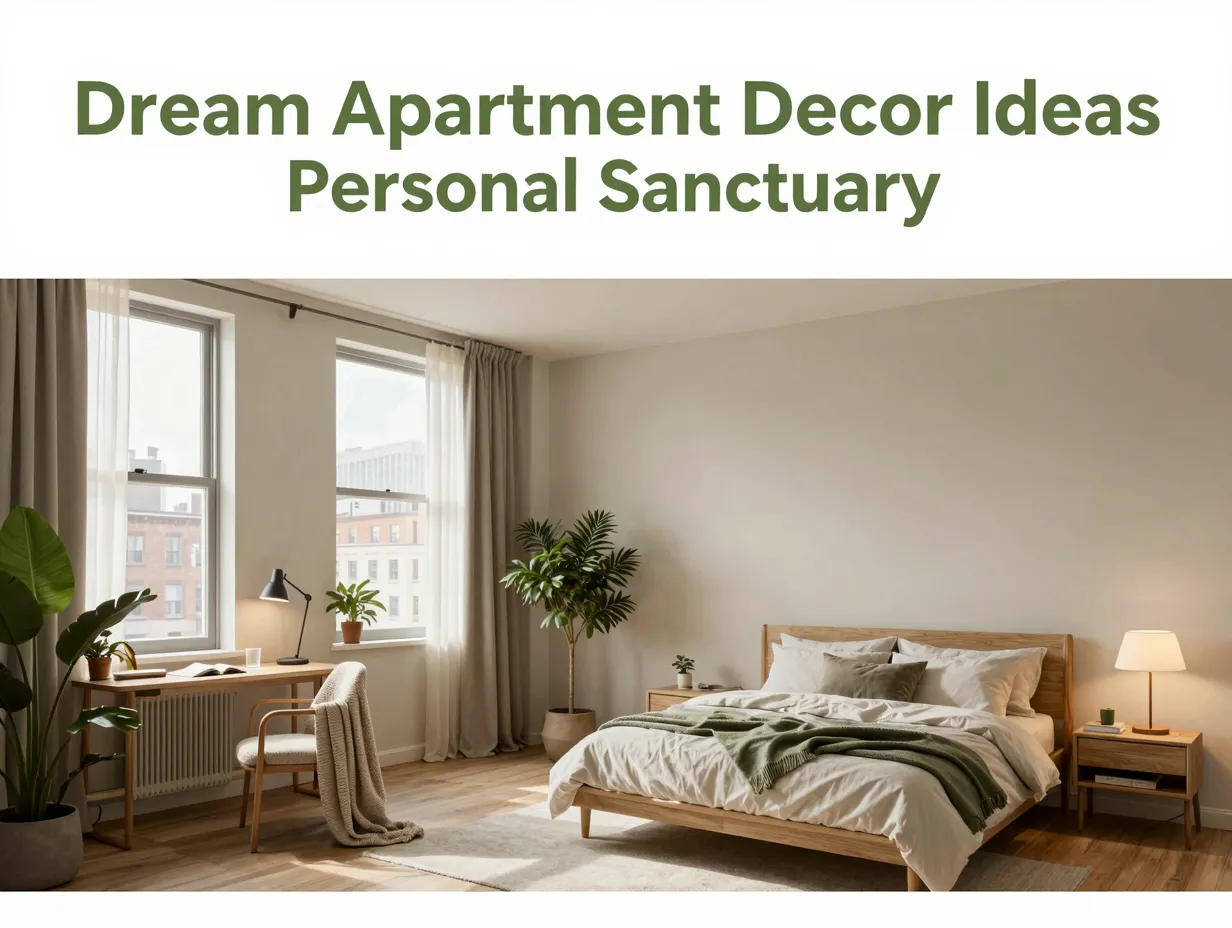
9 Dream Apartment Decor Ideas To Create Your Personal Sanctuary
Nearly 70% of urban renters report that their home environment directly affects their stress levels, yet most apartments look nothing like a place of rest. That gap between where you live and how you want to feel is exactly what these 9 dream apartment decor ideas to create your personal sanctuary are designed to close.
Disclosure: This post contains affiliate links. As an Amazon Associate, we earn from qualifying purchases, and at no extra cost to you.
I spent months testing, researching, and rearranging my own 650-square-foot apartment before I understood one core truth: a sanctuary is not about square footage or budget. It is about intentional choices. Whether you rent a studio or a two-bedroom, the right decor decisions transform an ordinary space into a retreat you genuinely look forward to coming home to.
This guide walks you through nine proven, actionable ideas, drawn from leading interior design resources and real apartment-living experience, to help you build that calm, restorative space in 2026.
Key Takeaways
- Decluttering and smart storage are the non-negotiable first step before any decor change can truly work
- Calming, nature-inspired color palettes such as sage green, dusty blue, and warm beige set the emotional tone of a sanctuary
- Layered lighting, not just overhead fixtures, is one of the most powerful and affordable tools available to renters
- Biophilic elements like indoor plants and maximized natural light reduce stress and improve air quality
- Defining distinct functional zones within a small apartment reduces mental clutter and supports healthy daily routines
The Foundation: Why These 9 Dream Apartment Decor Ideas Work
Before diving into the list, it helps to understand why certain decor choices create a sanctuary feeling while others fall flat. The answer comes down to sensory input. Your brain constantly processes visual noise, light quality, and spatial organization. When those inputs are chaotic, your nervous system stays alert. When they are calm and ordered, your body shifts into a restorative state.
The 9 dream apartment decor ideas to create your personal sanctuary listed below target each of those sensory inputs in a deliberate sequence. They build on one another, which is why the order matters.
9 Dream Apartment Decor Ideas To Create Your Personal Sanctuary
1. Start With a Ruthless Declutter and Smart Storage Plan
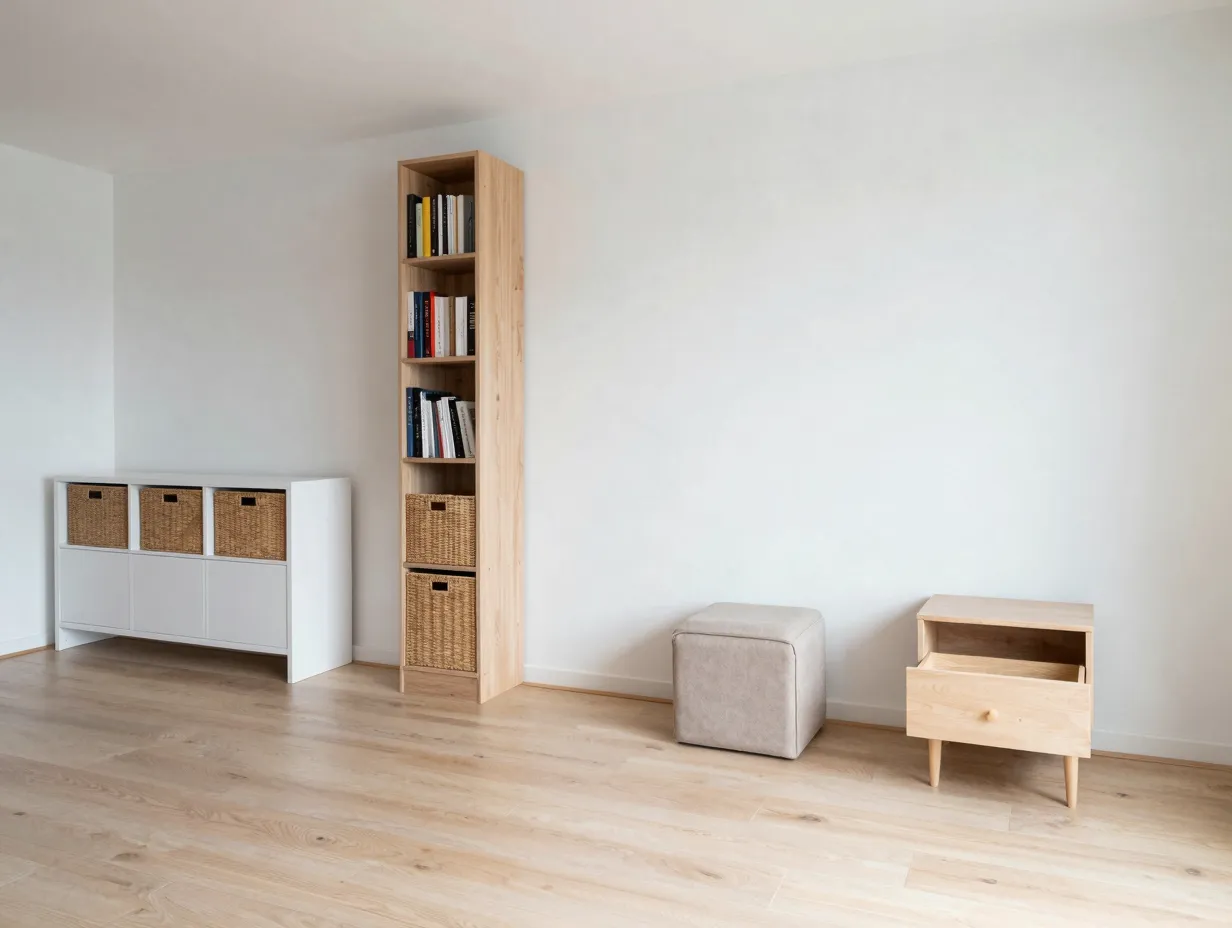
Every credible apartment sanctuary guide agrees on this: you cannot decorate your way out of clutter. Clearing surfaces, donating unused items, and keeping only what serves a purpose or brings genuine joy is the non-negotiable first step. [1][4]
Why it matters: Visual clutter signals unfinished business to your brain. Even the most beautiful throw pillow cannot compete with a pile of unopened mail on the counter.
Smart storage solutions that work well in small apartments include:
- Closed cabinets and baskets that hide items from view
- Vertical shelving that draws the eye upward and maximizes wall space
- Furniture with built-in storage, such as ottomans with lids or beds with drawers
- Drawer organizers that prevent the “junk drawer” effect from spreading [1][6]
A practical rule I follow: if an item does not have a designated home, it does not belong in the space. Once you establish that discipline, every subsequent decor upgrade has room to breathe.
2. Choose a Calming, Nature-Inspired Color Palette
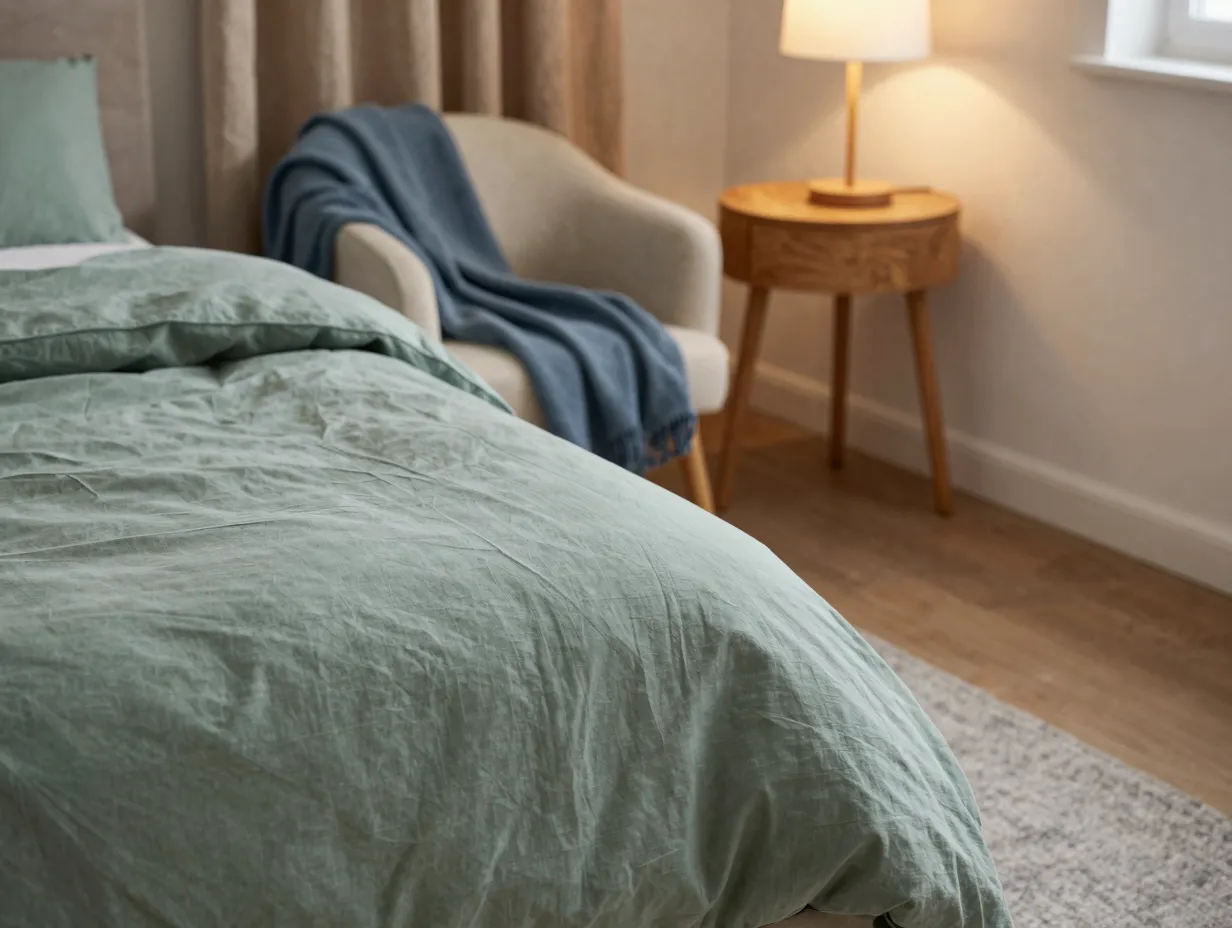
Color is the fastest way to change how a room feels without changing its structure. For a sanctuary apartment, the research consistently points toward soft, muted, nature-inspired tones. [1][4]
Top sanctuary color choices for 2026:
| Color | Mood Effect | Best Used In |
|---|---|---|
| Sage green | Grounding, refreshing | Living room, bedroom |
| Dusty or pale blue | Calming, expansive | Bedroom, bathroom |
| Warm beige | Cozy, neutral | Any room |
| Creamy white | Clean, airy | Walls, trim |
| Light gray | Sophisticated, restful | Office nook, living area |
| Warm wood tones | Earthy, stable | Furniture, accents |
Bedroom-focused designers recommend anchoring the entire scheme with neutrals, whites, creams, and warm woods, to create a cocoon-like retreat that feels restorative rather than stimulating. [9]
“The palette of a sanctuary is not about being boring. It is about removing competition so that your mind can finally stop working.”
If you rent and cannot repaint, use color through large textiles: curtains, rugs, throw blankets, and pillow covers. These carry significant visual weight and can shift a room’s mood dramatically at low cost.
3. Layer Your Lighting for Warmth and Flexibility
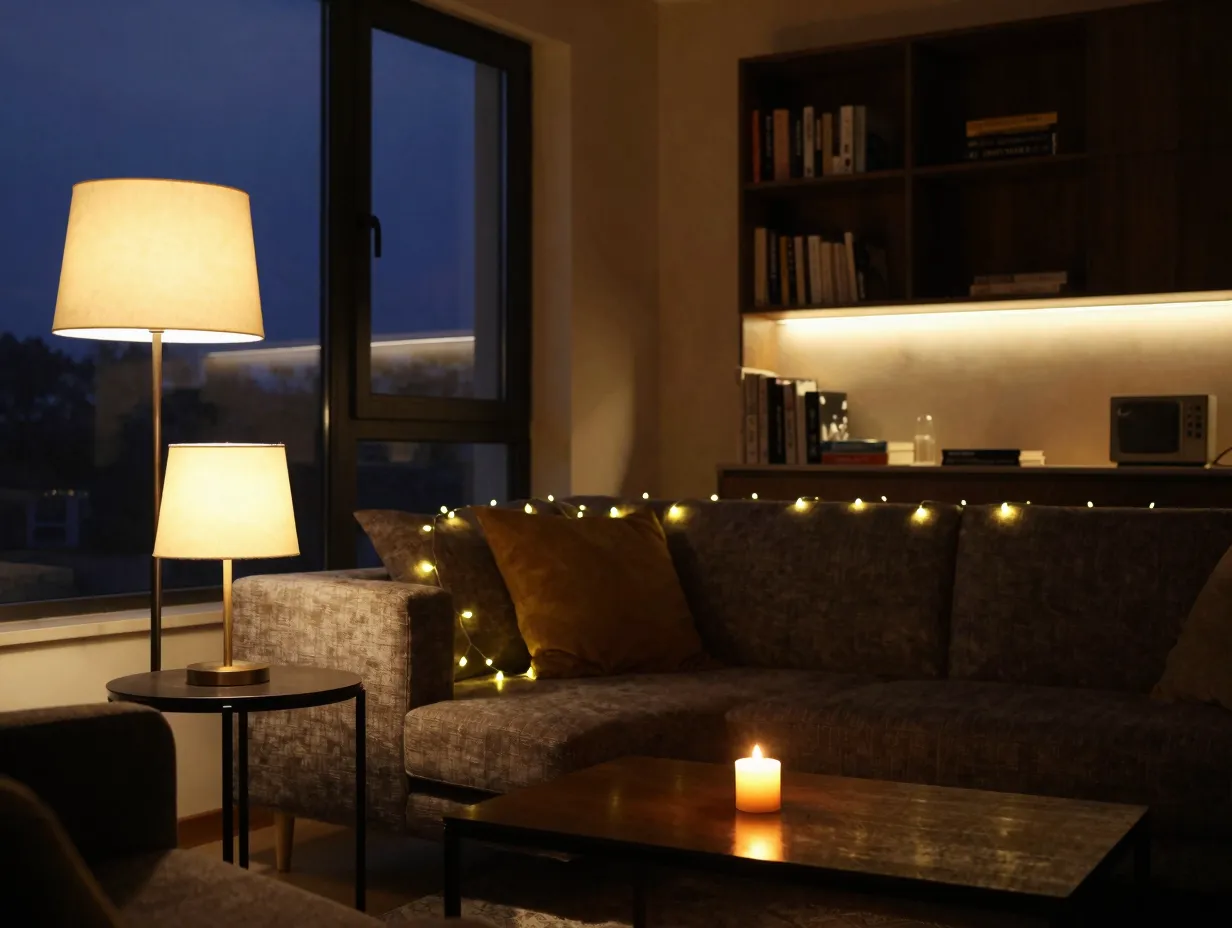
Overhead lighting is the enemy of sanctuary living. A single harsh ceiling fixture flattens a room and signals “office” or “hospital” to your brain, not rest. [4][5]
The layered lighting approach uses multiple light sources at different heights and intensities:
- Ambient light: Soft floor lamps and table lamps replace or supplement overhead fixtures
- Accent light: String lights, LED strips, or uplighting along ceilings create architectural depth [3][5]
- Task light: A dedicated desk or reading lamp keeps work light contained to one zone
- Mood light: Candles or dimmable bulbs allow you to dial down intensity in the evening [7]
Recent interior trend content for 2026 highlights concealed LED cove lighting and ceiling uplighting as accessible ways to achieve a high-end, hotel-like atmosphere in a small apartment without major renovation. [3][5]
A practical tip: replace any bulbs over 3000K (cool white) in your living and sleeping areas with bulbs in the 2700K, 2200K range (warm white to amber). This single change costs under $15 and immediately shifts the emotional register of a room.
4. Bring Nature Indoors With Biophilic Touches
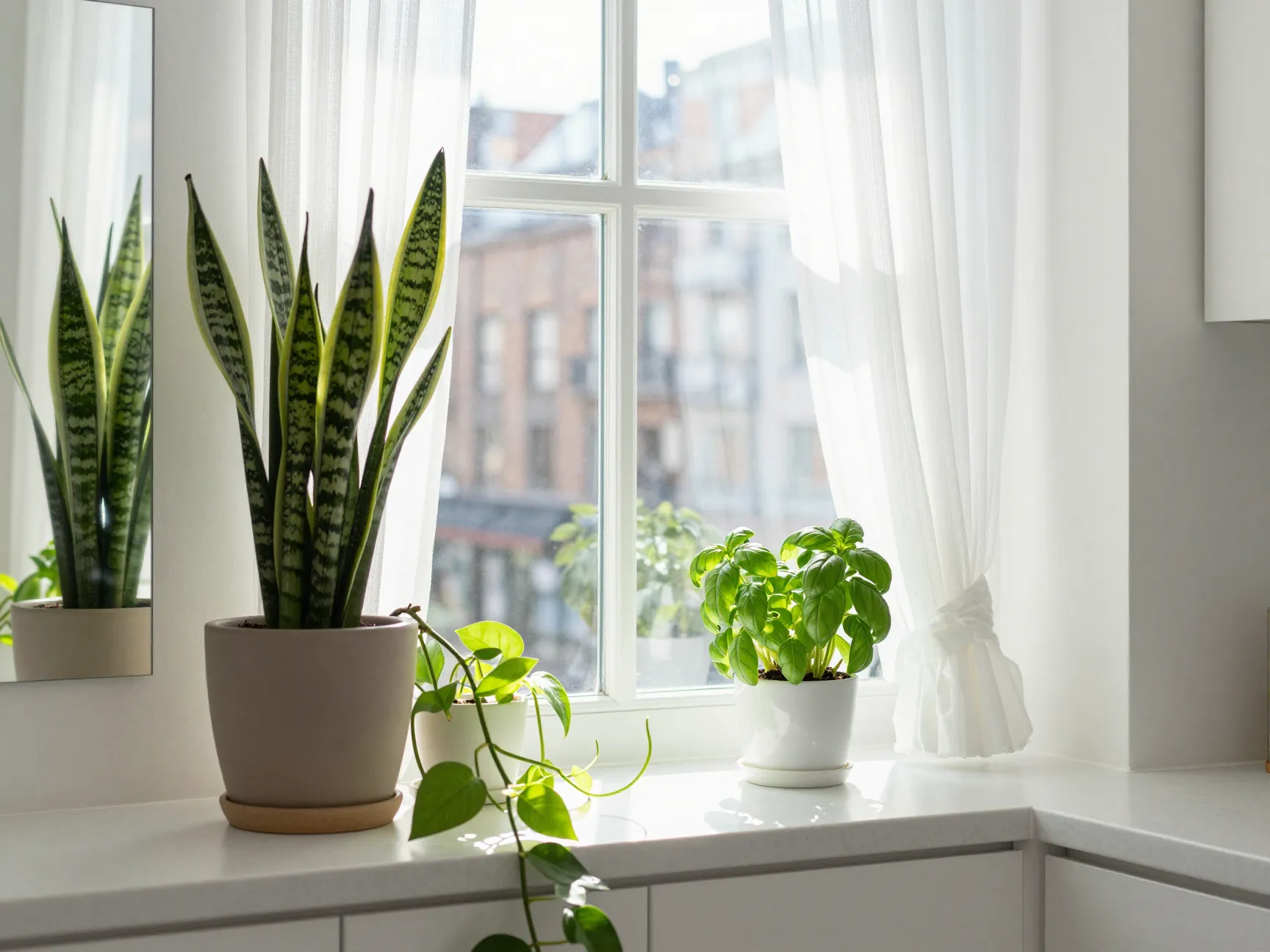
Biophilic design, the practice of connecting interior spaces to nature, is not a trend. It is grounded in decades of research showing that contact with natural elements lowers cortisol, improves focus, and enhances mood.
For apartment dwellers, biophilic design translates into three practical moves:
Indoor plants: Low-maintenance varieties that thrive in typical apartment light conditions include snake plants, pothos, peace lilies, and ZZ plants. Even a single plant on a windowsill makes a measurable difference in how a room feels. [4][8]
Fresh herbs: A small herb garden on a kitchen counter or windowsill adds living color, pleasant scent, and practical utility. Basil, mint, and rosemary are reliable starters.
Maximized natural light: Keep window areas clear of heavy furniture. Use sheer curtains rather than blackout panels in living areas to allow diffused daylight. Natural light is the most powerful mood regulator available in any apartment. [1][4]
If your apartment has limited natural light, full-spectrum bulbs and mirrors strategically placed to reflect available light can compensate meaningfully.
5. Define Functional Zones Within Your Layout
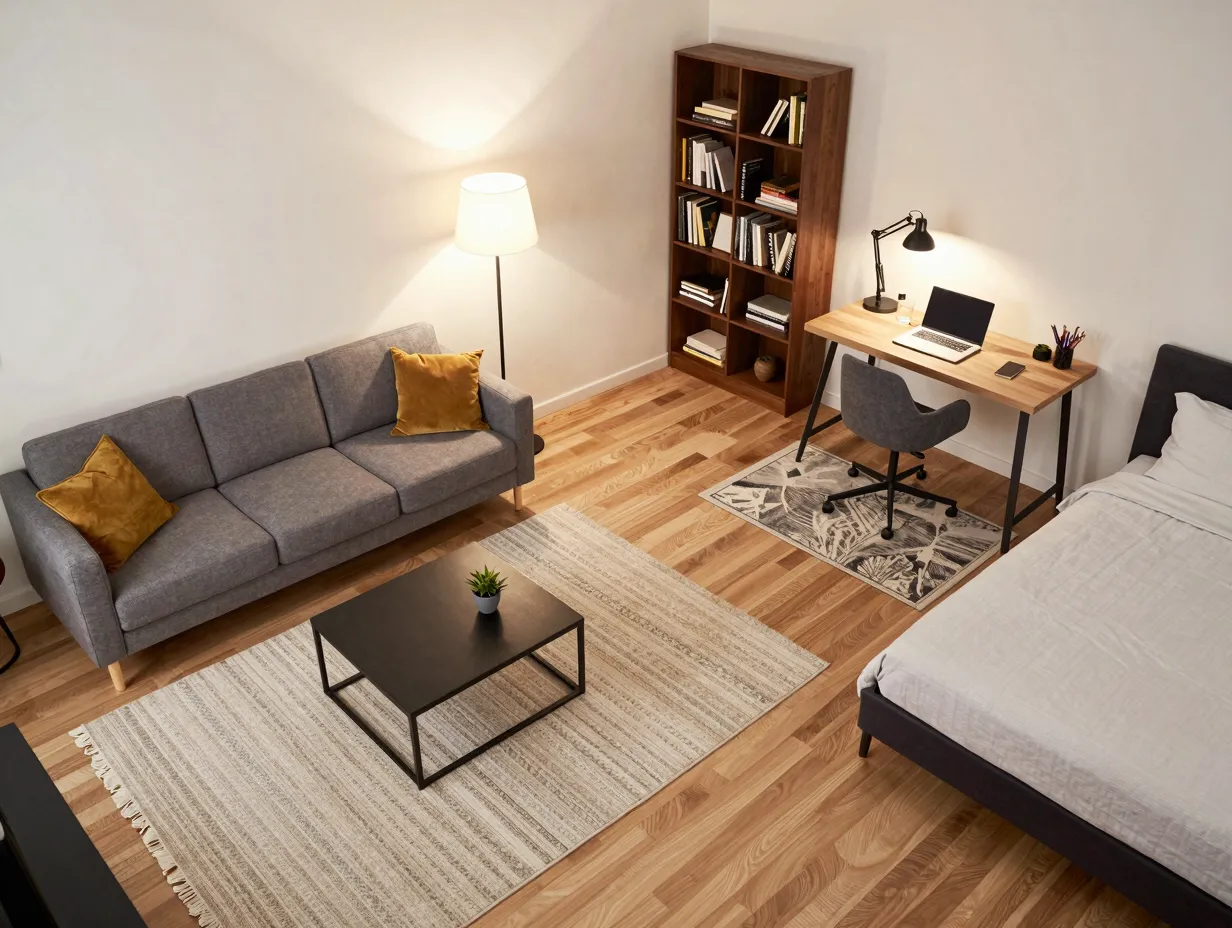
One of the most common mistakes in small apartment living is treating the entire space as one undifferentiated room. When your bed, your desk, and your sofa all occupy the same visual field with no separation, your brain never fully transitions between work mode and rest mode.
Zoning strategies that work in open-plan and studio apartments: [1][4][6]
- Use area rugs to anchor each zone, a rug under the sofa group defines the living area; a rug under the desk defines the work area
- Position furniture with its back to adjacent zones to create implicit walls
- Use a bookshelf, curtain panel, or open shelving unit as a soft room divider
- Apply dedicated lighting to each zone so the work lamp stays in the work corner and the reading lamp stays in the relaxation corner
Recent quiet-luxury decor content for Spring 2026 reinforces this approach, specifically recommending a defined sleep zone with layered bedding, a relaxation corner anchored by a comfortable chair, and a task area with its own lamp. [5][6]
The psychological payoff is significant. When you sit in your reading chair, your brain knows it is time to relax. When you sit at your desk, it knows it is time to work. That clarity reduces the mental friction that makes apartments feel exhausting rather than restorative.
6. Invest in Textiles That Invite You to Slow Down
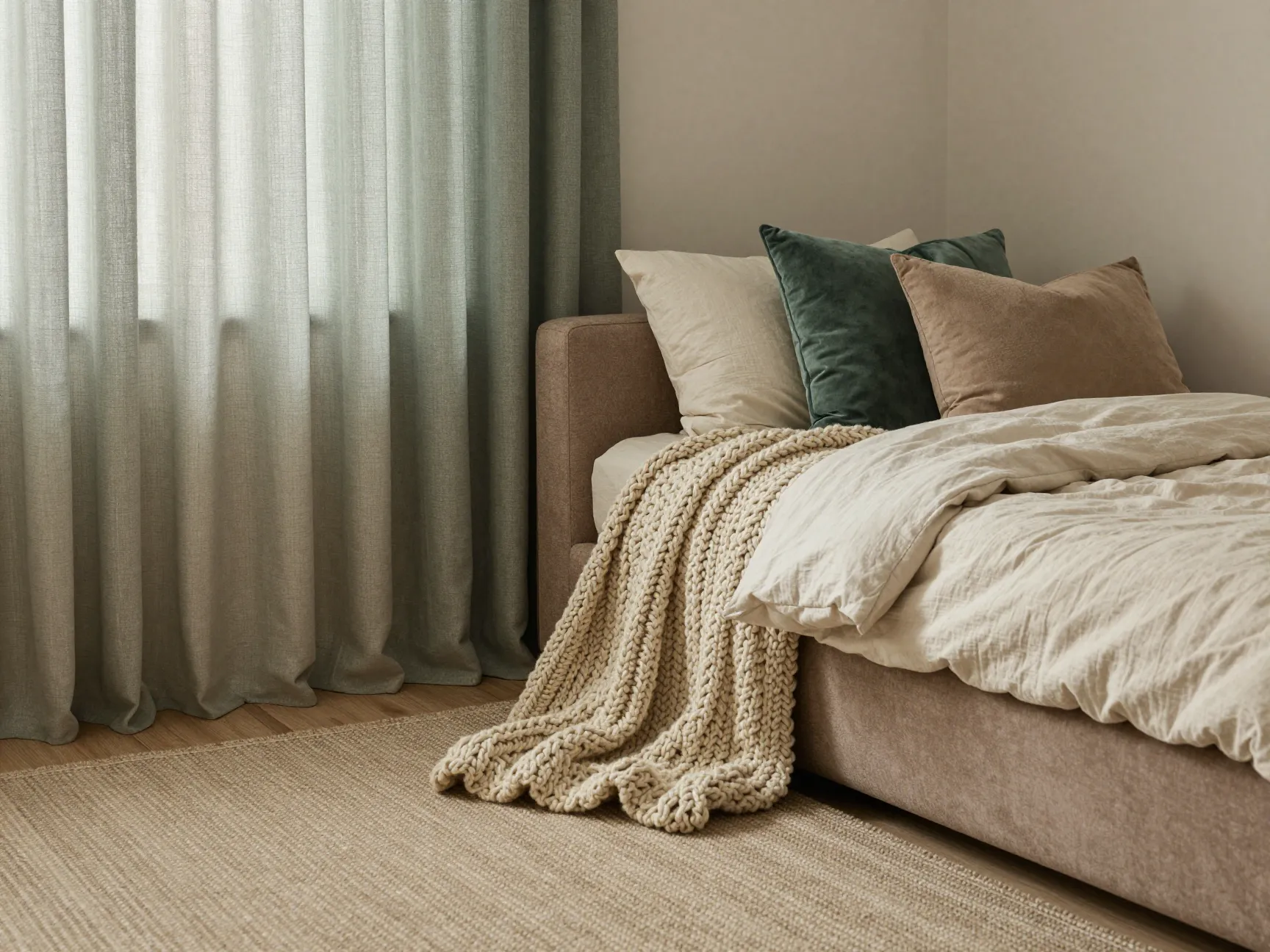
Textiles are the most underestimated category in apartment decor. They affect how a space looks, sounds, and feels, literally. Hard surfaces create echo and visual coldness. Layered textiles absorb sound, add warmth, and signal comfort at a subconscious level.
High-impact textile choices for a sanctuary apartment:
- Curtains: Floor-to-ceiling panels in linen or velvet make ceilings feel higher and rooms feel more finished
- Throw blankets: Draped over a sofa or chair, a chunky knit or soft fleece throw is a standing invitation to rest
- Layered bedding: Multiple textures, a fitted sheet, a duvet, a coverlet, and two or three throw pillows, create the hotel-bed effect that makes sleep feel like an event [9]
- Area rugs: A rug in the right size (larger than you think you need) anchors furniture and softens the acoustic environment
- Cushions: Mix textures, velvet, linen, cotton, rather than matching sets for a curated, lived-in look
A note on color consistency: your textiles do not need to match, but they should belong to the same palette family you established in step two. A sage green throw, a warm beige rug, and cream curtains create cohesion without feeling rigid.
7. Personalize With Meaningful Art and Objects
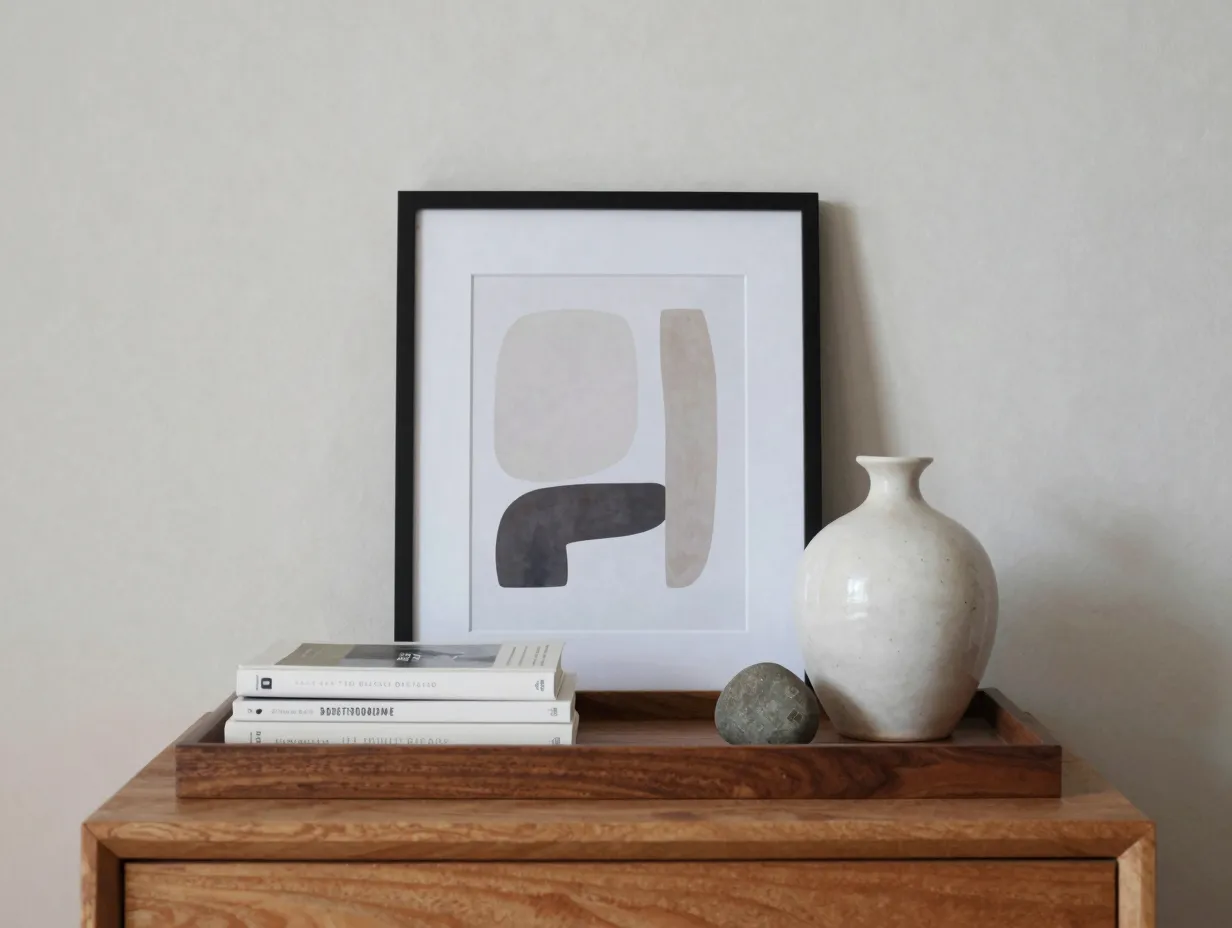
A sanctuary is not a showroom. It should feel unmistakably like yours. The difference between a beautiful apartment and a personal sanctuary often comes down to the presence of objects that carry meaning.
How to personalize without creating clutter:
- Choose three to five pieces of art or photography that genuinely move you, and display them with intention rather than covering every wall
- Group small meaningful objects, a travel souvenir, a favorite book, a handmade ceramic, on a single tray or shelf to create a curated “moment” rather than scattered noise [2]
- Use framed prints or canvas art to reinforce your color palette while adding personal narrative
- Rotate seasonal items so the space feels alive and evolving without accumulating permanently [2]
The key discipline here is editing. Every object you add should earn its place. Ask: does this bring me genuine pleasure when I see it, or am I keeping it out of habit? That question, applied consistently, keeps personalization from sliding back into clutter.
8. Incorporate Scent as a Sensory Anchor
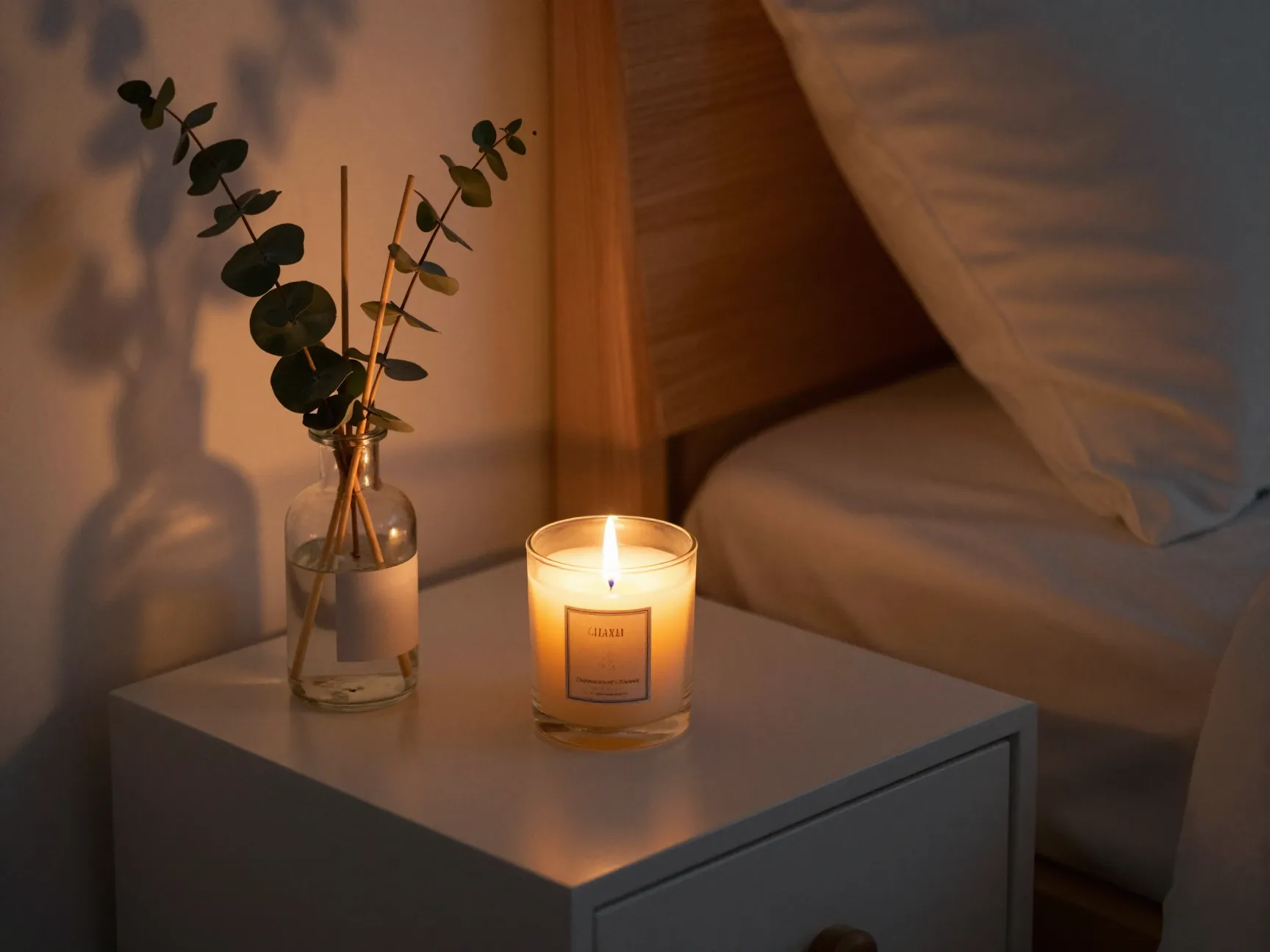
Scent is the most direct pathway to emotional memory and mood, and it is almost entirely absent from most apartment decor conversations. Yet it costs very little to implement and has an immediate, powerful effect on how a space feels.
Scent tools for a sanctuary apartment:
- Candles: Soy or beeswax candles in calming scents (lavender, sandalwood, cedar, vanilla) create both olfactory and visual warmth
- Reed diffusers: A low-maintenance option that provides consistent, subtle scent without requiring active attention
- Essential oil diffusers: Ultrasonic diffusers allow you to adjust scent intensity and change blends by mood or time of day
- Fresh flowers or herbs: The most natural option, a small bunch of eucalyptus or fresh lavender provides scent, color, and biophilic texture simultaneously [8]
A personal practice I recommend: choose one signature scent for your bedroom and use it only there. Over time, that scent becomes a conditioned cue for rest. When you smell it, your body begins to wind down before you have even gotten into bed.
9. Establish a Maintenance Ritual to Preserve the Sanctuary
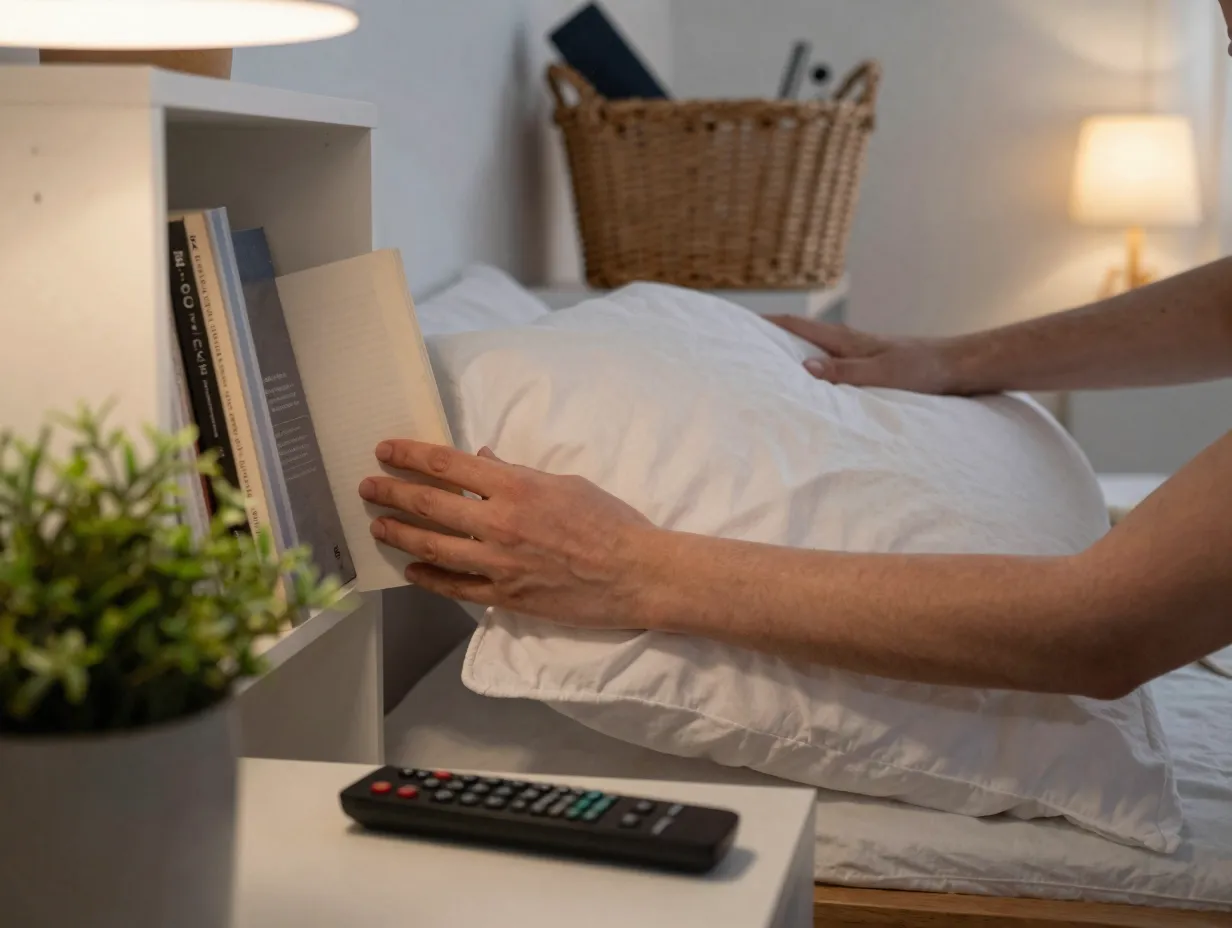
The most overlooked element of apartment sanctuary design is not a decor item at all. It is the habit that keeps everything else working. A beautifully designed space degrades within days if there is no system to maintain it.
A simple sanctuary maintenance ritual:
- A 10-minute “reset” each evening: return items to their designated homes, clear surfaces, and prepare the space for the next morning
- A weekly 20-minute deep reset: wipe surfaces, refresh textiles (fluff pillows, refold throws), water plants, and replace or light a candle
- A monthly edit: walk through each zone and ask whether anything has accumulated that does not belong [1][4]
This ritual is not about perfectionism. It is about preserving the investment you made in your space. A sanctuary that requires two hours of emergency cleaning before you can relax in it is not functioning as a sanctuary.
“The ritual of maintaining your space is itself a form of self-care. The act of tending to your environment tells your nervous system that this place is safe and cared for.”
Common Mistakes to Avoid When Creating Your Apartment Sanctuary
Even with the best intentions, certain patterns consistently undermine the sanctuary effect:
Buying decor before decluttering. New items added to a cluttered space make the clutter worse, not better. Always clear before you add.
Choosing decor for how it photographs rather than how it feels. A trendy piece that does not suit your actual lifestyle creates friction every time you interact with it.
Neglecting the ceiling and upper walls. Most people decorate at eye level and below. Uplighting, hanging plants, or a statement ceiling fixture draws the eye upward and makes rooms feel larger and more intentional. [3]
Underestimating the power of smell and sound. Scent and acoustic comfort (rugs and textiles absorb echo) are as important as visual design in creating a genuinely restorative environment. [8]
Trying to implement everything at once. Sanctuary design is most effective when done in phases. Start with decluttering and lighting, then layer in color, textiles, and plants over weeks or months.
Conclusion
The 9 dream apartment decor ideas to create your personal sanctuary outlined in this guide are not about spending more money or acquiring more things. They are about making deliberate, layered choices that align your environment with the way you want to feel.
Start today with the first idea: spend 30 minutes clearing one surface in your home, a counter, a coffee table, a nightstand. Notice how that single action changes the energy of the room. Then move to lighting: swap one overhead bulb for a warm-toned lamp. These small, sequential steps compound into a space that genuinely supports your rest, focus, and wellbeing.
Your actionable next steps:
- Identify the one room or zone where you spend the most time and start your declutter there
- Pull three to five items from your existing textiles and rearrange them to create a layered, cohesive look in that zone
- Add one plant and one warm light source this week
- Choose a signature scent for your bedroom and use it consistently for 30 days
- Set a 10-minute evening reset habit and track how your relationship with your space changes
A personal sanctuary is not a destination you arrive at after a major renovation. It is a practice you build, one intentional choice at a time.
References
[1] Turn Your Apartment Space Into A Personal Sanctuary – https://www.otarrepointeapartments.com/blog/2025/turn-your-apartment-space-into-a-personal-sanctuary.html
[2] Dream Apartment Decor – https://paintit.ai/blogs/dream-apartment-decor/
[3] Watch – https://www.youtube.com/watch?v=L7-n-vQUMIA
[4] How To Transform Your Apartment Into A Peaceful Sanctuary To Get Away From It All – https://blog.theshilohapartments.com/how-to-transform-your-apartment-into-a-peaceful-sanctuary-to-get-away-from-it-all/
[5] Watch – https://www.youtube.com/watch?v=1fnFsqz-wrA
[6] Watch – https://www.youtube.com/watch?v=jOC1oQeCg5I
[7] Cozy Apartment Decor – https://www.countessinthekitchen.com/cozy-apartment-decor/
[8] Cozy Apartment Ideas For Urban Sanctuary – https://plumbingreads.com/cozy_apartment_ideas_for_urban_sanctuary/
[9] 15 Stylish Bedroom Decor Ideas – https://www.melaniejadedesign.com/15-stylish-bedroom-decor-ideas/