9 Bedroom Wall Decor Design Ideas to Transform Your Personal Space
A study by the American Society of Interior Designers found that 68% of homeowners report feeling more relaxed and productive in rooms they have personally decorated, yet the bedroom, the most intimate space in any home, is often the last room people invest in. Bare walls above the headboard, a single forgotten print leaning against the baseboard, a color that was chosen in five minutes at the hardware store, these are the quiet design regrets most people live with for years.
Disclosure: This post contains affiliate links. As an Amazon Associate, we earn from qualifying purchases, and at no extra cost to you.
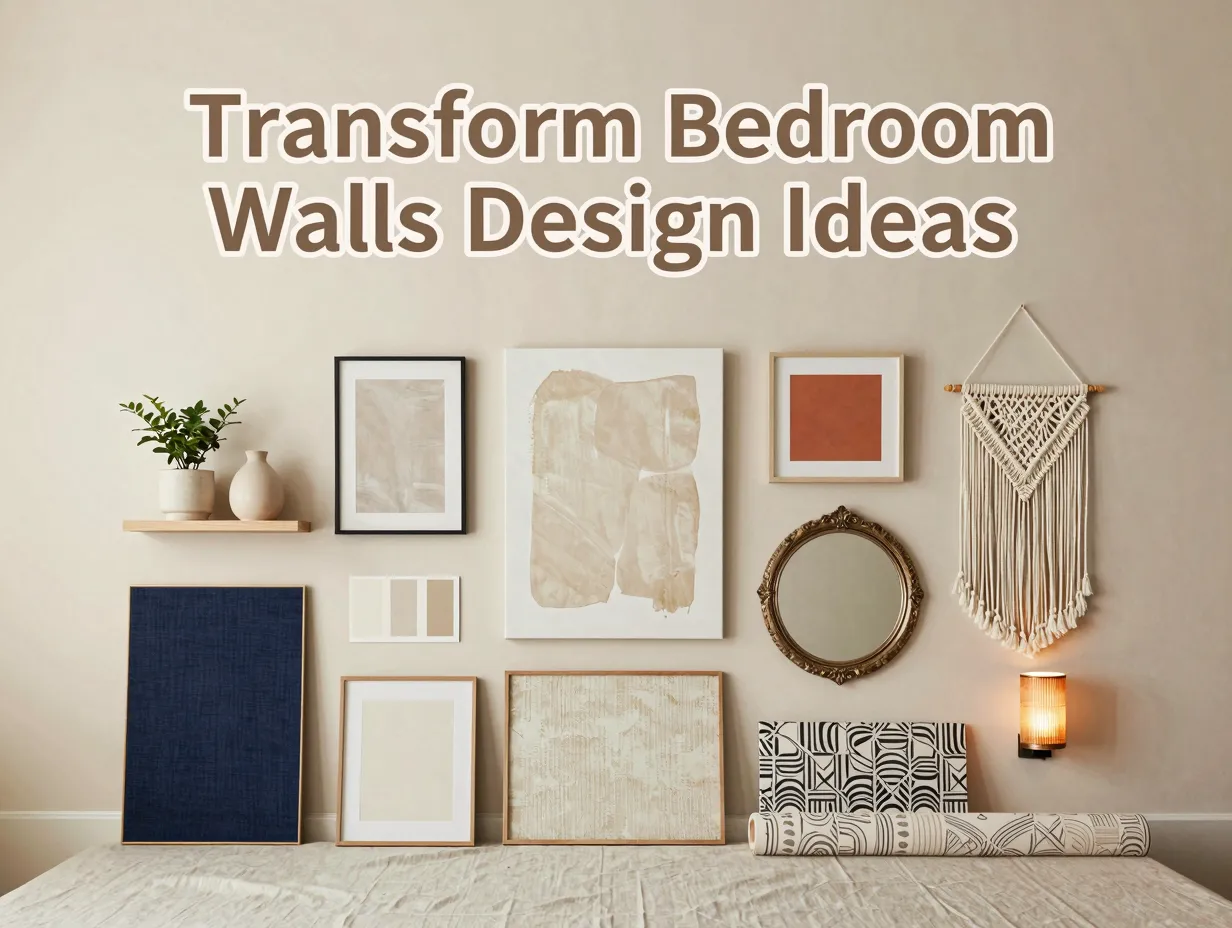
These 9 bedroom wall decor design ideas to transform your personal space are built to change that. Whether you are working with a rented apartment, a sprawling primary suite, or a compact guest room, the strategies in this guide give you a clear, actionable framework for creating walls that feel intentional, personal, and genuinely beautiful. I have tested many of these approaches in my own home and consulted with professional interior designers to bring you ideas that are both inspiring and practical.
Key Takeaways
- The most impactful bedroom wall decor starts with a clear design intention, choosing a style, palette, and focal point before buying a single item.
- Gallery walls, statement art, and textured wall treatments can work in rooms of any size when scaled correctly.
- Mixing materials, wood, metal, fabric, and paint, creates depth and prevents a bedroom from feeling flat or one-dimensional.
- Budget is not a barrier: DIY options like removable wallpaper, washi tape murals, and thrifted frames deliver high-impact results at low cost.
- Lighting is the hidden multiplier, the right wall sconce or picture light can elevate even modest decor to a professional standard.
Why Your Bedroom Walls Deserve More Attention
Most people spend roughly one-third of their lives in their bedroom. That is a significant amount of time to spend staring at walls that do nothing for you. Research published in the journal Environment and Behavior confirms that visual complexity in personal spaces, when thoughtfully curated, reduces cortisol levels and promotes a sense of psychological safety.
The bedroom wall is not just a backdrop. It is a canvas for self-expression, a tool for mood regulation, and one of the highest-return investments you can make in your living environment. A single well-placed piece of art above a bed can anchor an entire room’s aesthetic. A thoughtfully chosen paint color can make a small room feel expansive or a large room feel intimate.
The good news: you do not need a designer’s budget or a contractor’s skill set. The 9 bedroom wall decor design ideas explored in this guide range from weekend DIY projects to considered long-term investments, covering every style from minimalist to maximalist.
9 Bedroom Wall Decor Design Ideas to Transform Your Personal Space
1. Build a Gallery Wall That Tells Your Story
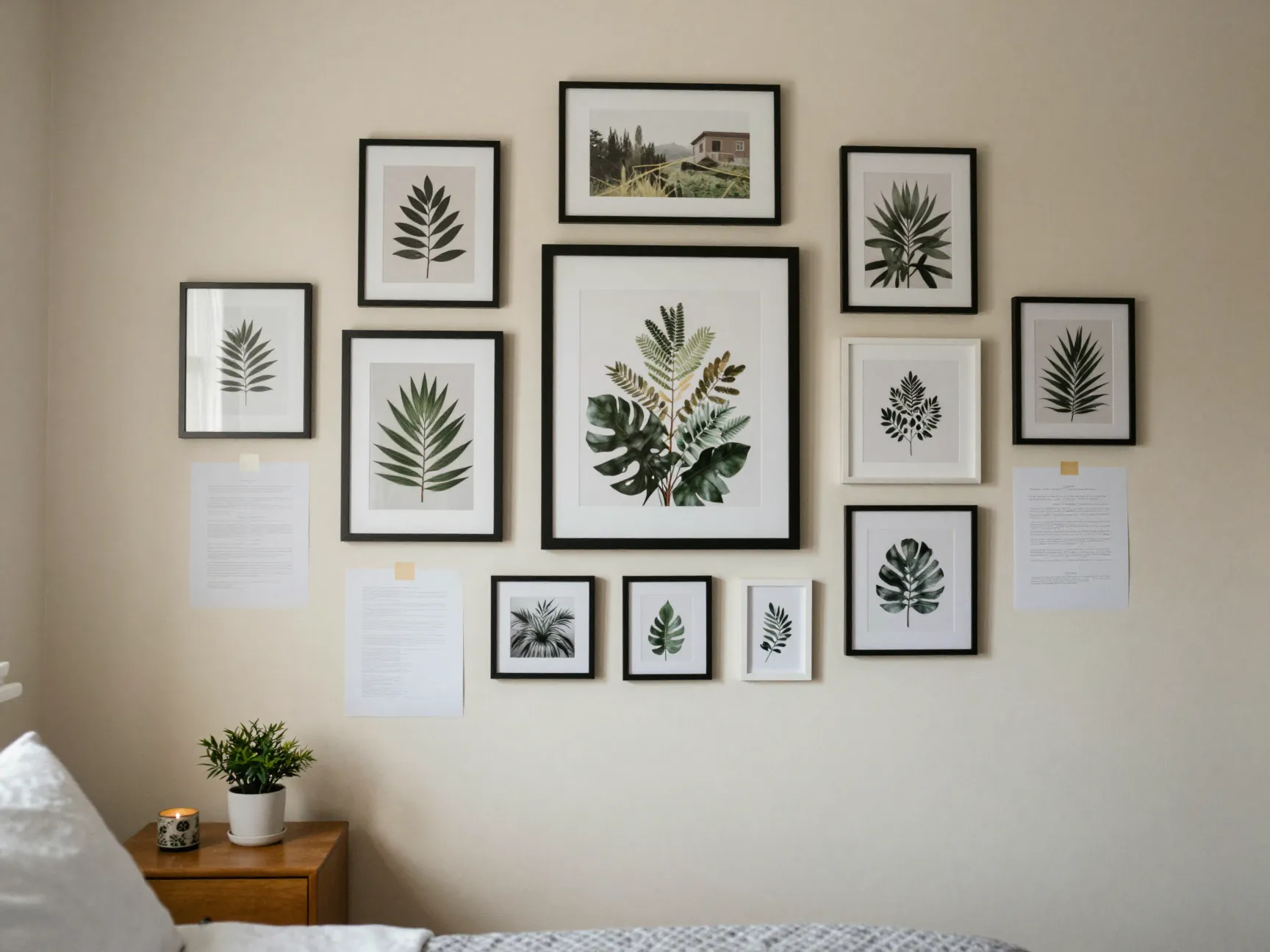
A gallery wall is one of the most versatile and personal forms of bedroom wall decor. Unlike a single large print, a gallery wall allows you to layer multiple frames, photographs, illustrations, and even three-dimensional objects into a cohesive visual narrative.
How to do it well:
- Start by choosing a unifying element, this could be a consistent frame color, a shared color palette within the artwork, or a recurring theme such as botanicals, travel photography, or abstract shapes.
- Lay all pieces on the floor before hanging anything. Photograph the arrangement from above to preview the composition.
- Use paper templates taped to the wall to map out placement before committing to nails.
- Mix frame sizes intentionally. A large anchor piece (at least 18×24 inches) surrounded by smaller works creates a natural focal point.
I spent an entire Saturday afternoon rearranging paper cutouts on my bedroom wall before landing on a layout that felt balanced. That extra hour of planning saved me from a wall full of unnecessary holes, and the result looked like something out of an interior design magazine.
“A gallery wall is a living document of who you are. It should grow and change as you do.”, Emily Henderson, interior stylist
Pro tip: Keep the bottom edge of the gallery wall at a consistent height (typically 57-60 inches from the floor, which is the standard museum hang height) for a polished, professional look.
2. Invest in One Large-Scale Statement Art Piece
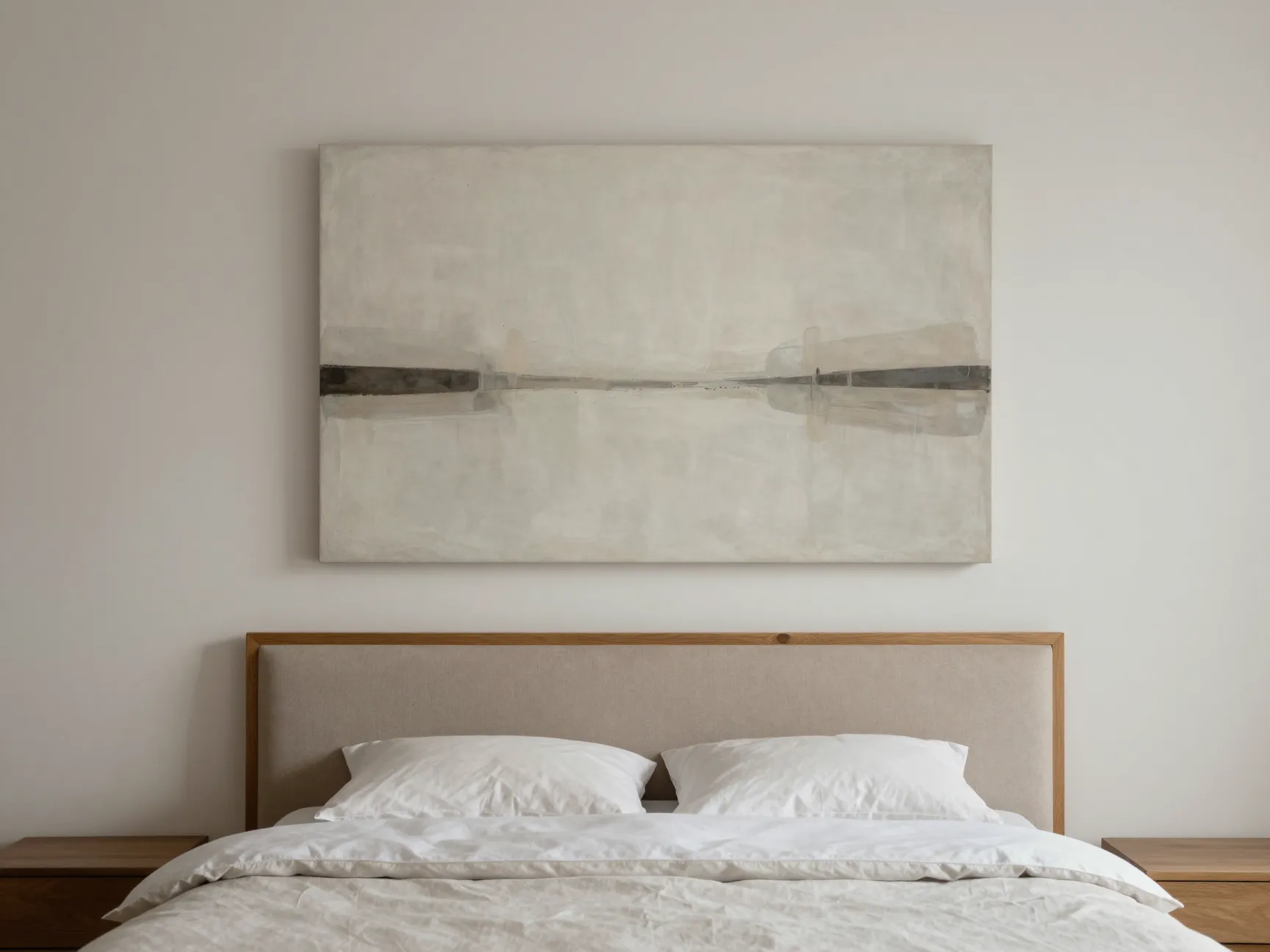
Sometimes the most powerful design move is restraint. A single oversized artwork, a canvas, a framed photograph, or a textile print, can define the entire character of a bedroom without competing for attention.
Large-scale art works especially well above the headboard, where it functions as both a focal point and a visual anchor for the bed. The general rule of thumb is that the artwork should be approximately two-thirds the width of the headboard or bed frame.
What to look for:
- Abstract works in muted tones work well in calm, sleep-focused bedrooms.
- Bold graphic prints inject energy and personality into neutral rooms.
- Black-and-white photography creates a timeless, editorial quality.
- Oversized botanical or landscape prints bring a sense of the natural world indoors.
You do not need to spend thousands of dollars. Many independent artists sell large-format digital prints that you can have printed locally at a fraction of gallery prices. Websites like Society6, Minted, and Desenio offer high-quality options at accessible price points.
3. Experiment with Textured Wall Treatments
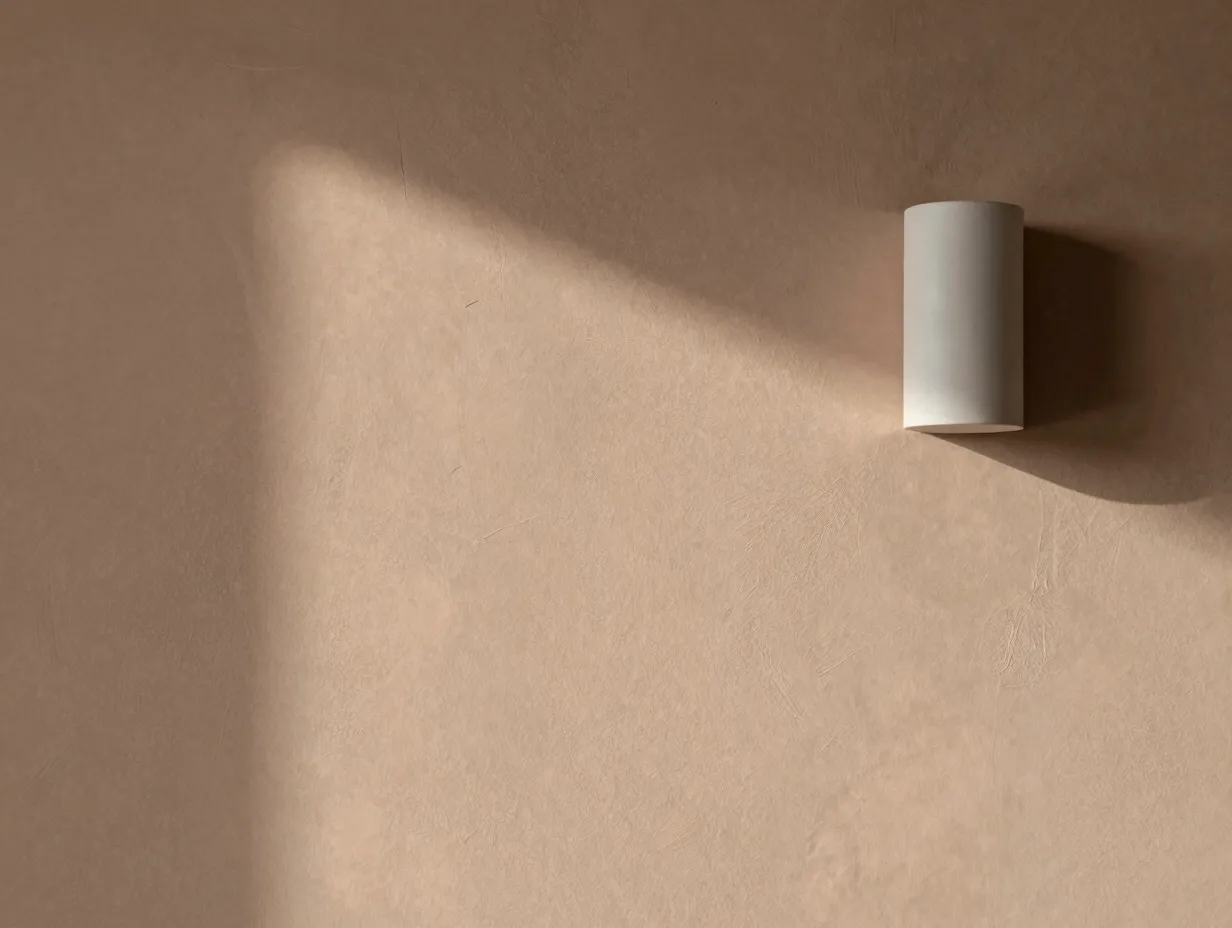
Paint is the default wall treatment, but it is far from the only option. Textured wall treatments add a tactile, architectural dimension to bedroom walls that flat paint simply cannot replicate.
Popular textured treatments include:
- Limewash paint: A centuries-old technique that creates a soft, mottled, aged finish. It is breathable, eco-friendly, and extraordinarily beautiful in person.
- Venetian plaster: A polished, marble-like finish that reflects light and adds depth. More labor-intensive but stunning in primary bedrooms.
- Grasscloth wallpaper: A woven natural fiber wallcovering that adds warmth and organic texture. Particularly effective on a single accent wall.
- Shiplap or board-and-batten paneling: Adds architectural interest and a sense of craftsmanship. Works well in farmhouse, coastal, and transitional styles.
- Removable peel-and-stick wallpaper: An ideal solution for renters. The quality of removable wallpaper has improved dramatically in recent years, with options that convincingly mimic linen, marble, and geometric tile.
Textured treatments are especially effective when combined with directional lighting, a wall sconce positioned to rake light across a limewashed surface will reveal every beautiful variation in the finish.
4. Create a Focal Point with an Accent Wall
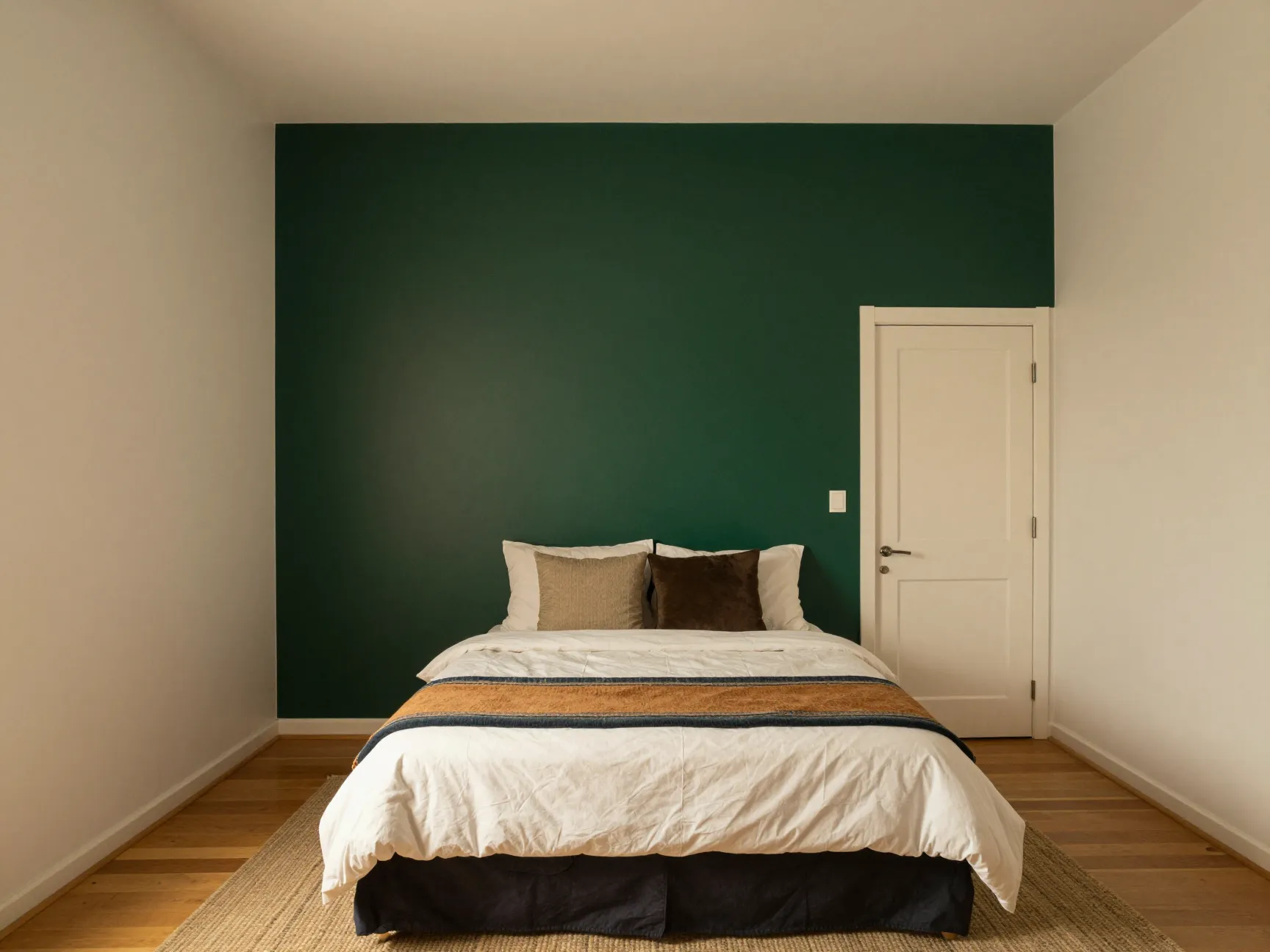
An accent wall is a deliberate design choice: one wall in the room receives a treatment that is visually distinct from the others. Done correctly, it creates depth, defines the room’s focal point, and makes the space feel larger and more intentional.
Accent wall strategies that work:
- Paint the wall behind the headboard in a deep, saturated color, navy, forest green, terracotta, or charcoal, while keeping the remaining walls neutral.
- Apply a bold wallpaper pattern to a single wall. Geometric, floral, and abstract patterns all work well when contained to one surface.
- Use a contrasting material: exposed brick, reclaimed wood planks, or stone veneer panels create a dramatic textural contrast.
A word of caution: The accent wall should be the wall that naturally draws the eye when you enter the room, almost always the wall directly opposite the door or the wall behind the bed. Placing an accent treatment on a side wall or the wall with the window often feels disconnected from the room’s natural flow.
5. Incorporate Floating Shelves as Functional Decor
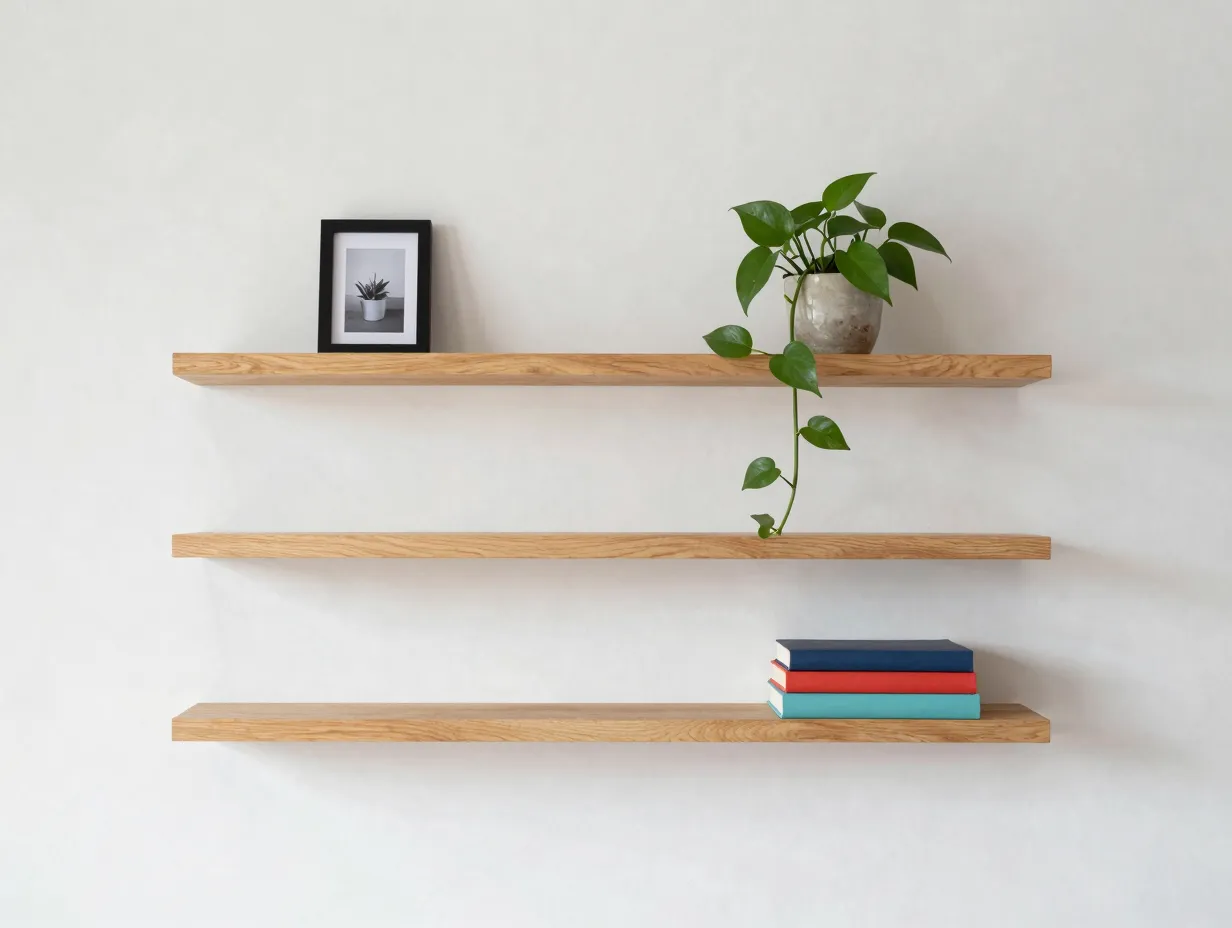
Floating shelves transform a blank wall into a curated display space. In the bedroom, they serve a dual purpose: they provide practical storage and act as a three-dimensional gallery for objects that reflect your personality.
What to display on bedroom floating shelves:
- Small framed prints or photographs
- Plants (trailing pothos, small succulents, or air plants)
- Books arranged by color or size
- Candles, ceramic vessels, and sculptural objects
- A small clock or a collection of meaningful keepsakes
The key to shelves that look styled rather than cluttered is the rule of three: group objects in odd numbers, vary the height of items within each group, and leave deliberate negative space between groupings.
Shelf placement matters: Position shelves at eye level or slightly above when standing, which is typically between 60 and 72 inches from the floor. In a bedroom where you spend much of your time seated or lying down, consider lowering this slightly to ensure the display is visible and accessible from the bed.
6. Hang Textile Art and Fabric Wall Hangings
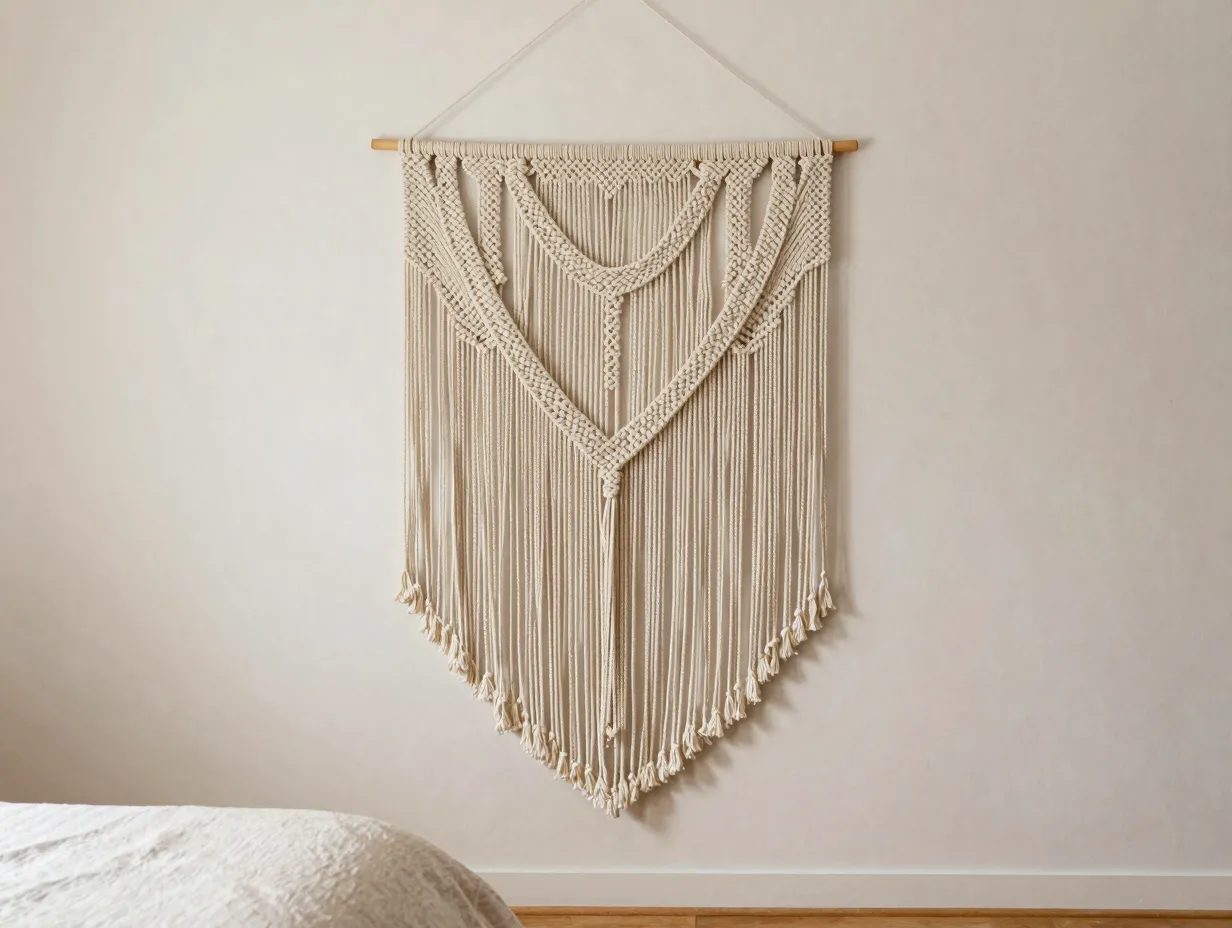
Textiles bring warmth, softness, and acoustic benefits to bedroom walls, qualities that hard-surfaced art cannot replicate. A well-chosen wall hanging can soften the acoustics of a room, add color and pattern, and introduce an artisanal, handcrafted quality to the space.
Types of textile wall art to consider:
- Macrame wall hangings: A perennial favorite for bohemian and coastal interiors. Modern macrame has evolved well beyond the 1970s aesthetic, contemporary versions are sculptural, minimal, and sophisticated.
- Woven tapestries: Traditional and contemporary weavers create stunning large-format tapestries that function as the textile equivalent of a statement painting.
- Quilts and fabric panels: A vintage quilt hung on a dowel rod becomes an instant piece of folk art. Contemporary fabric panels from textile artists offer bold, graphic options.
- Embroidered hoops: Small embroidered hoops grouped in clusters create an intimate, handmade gallery wall.
Textile art is particularly valuable in rooms with hard floors and minimal soft furnishings, where sound can bounce and create an uncomfortable acoustic environment. A large wall hanging can absorb sound and make the room feel quieter and more restful.
7. Use Mirrors Strategically to Expand the Space
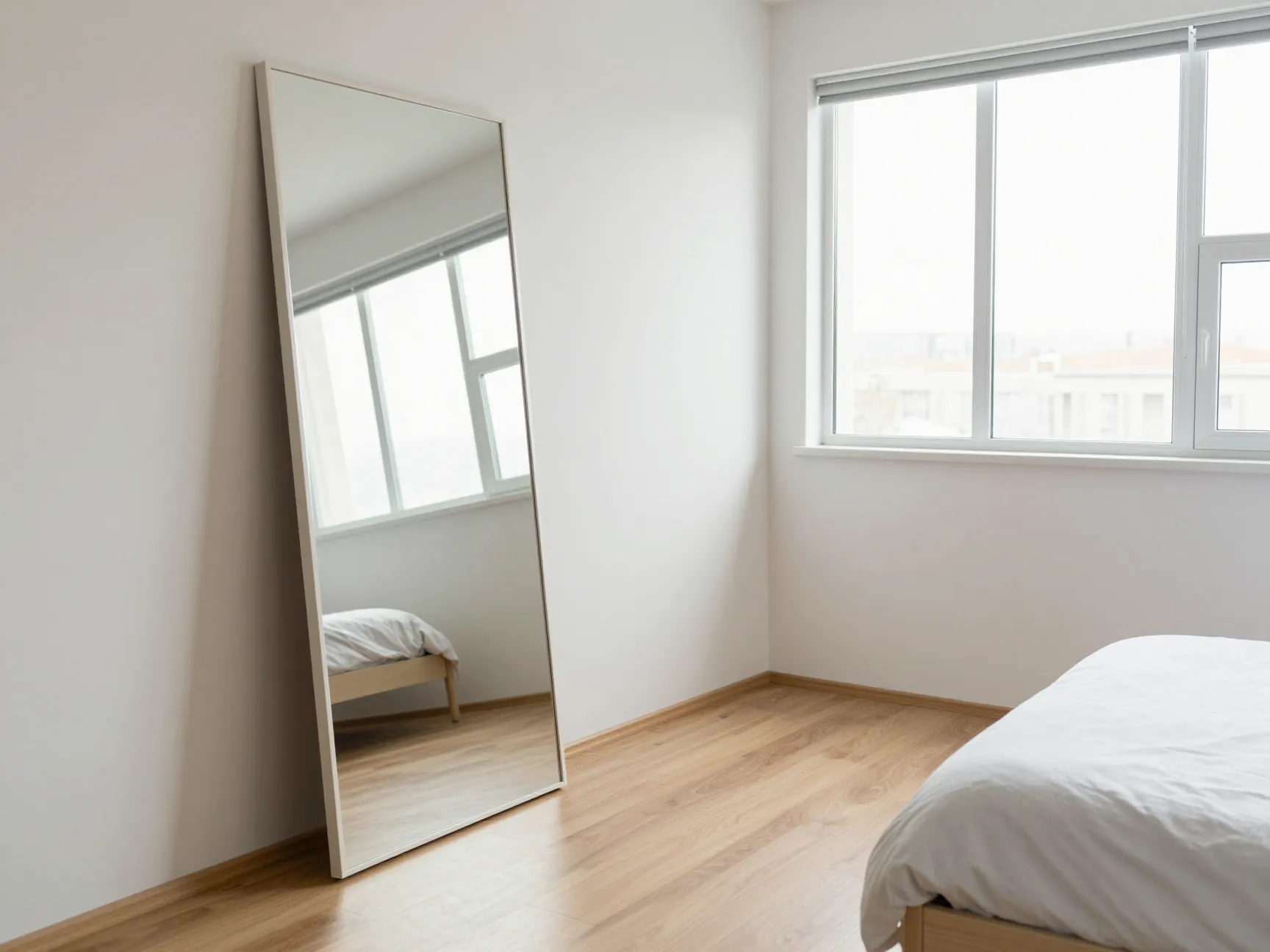
A well-placed mirror is one of the most powerful tools in interior design. In the bedroom, mirrors serve multiple functions: they reflect light, create the illusion of additional space, and add a decorative element that is both functional and beautiful.
Mirror strategies for bedroom walls:
- Oversized floor-to-ceiling mirror: Leaned against or mounted on a wall, a large mirror can double the perceived size of a small bedroom. Position it to reflect a window for maximum light amplification.
- Decorative mirror as art: An ornate or architecturally interesting mirror frame, antique gold, carved wood, or industrial black metal, functions as a piece of art in its own right.
- Mirror groupings: A cluster of smaller mirrors in varying shapes (round, arch, hexagonal) creates a gallery wall effect with the added benefit of light reflection.
- Mirrored panels: Full-wall mirrored panels are a bold choice that can transform a dark or narrow bedroom into a light-filled space.
One important rule: Avoid positioning a mirror directly opposite the bed. Many people find this disorienting during sleep, and from a purely practical standpoint, catching your own reflection when you wake up at 3 a.m. is rarely a pleasant experience.
8. Apply Murals or Wall Decals for Dramatic Impact
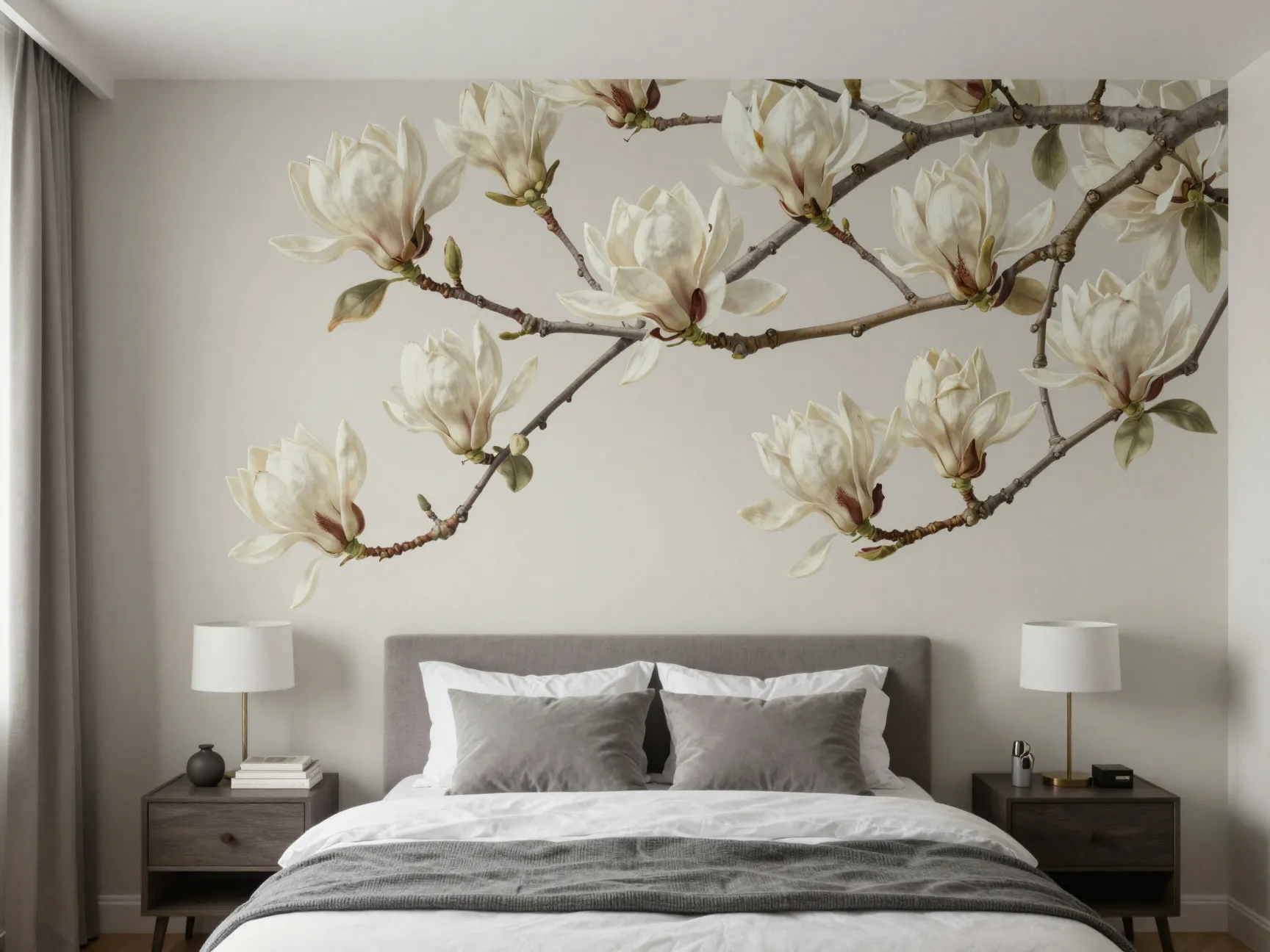
Wall murals have experienced a significant resurgence in interior design, driven in part by the availability of high-quality, removable mural wallpaper that can be installed without professional help and removed without damaging walls.
Mural options for the modern bedroom:
- Scenic landscape murals: Forest scenes, mountain vistas, and abstract landscapes create a sense of depth and bring the natural world into the bedroom.
- Abstract color-wash murals: Large-scale abstract color fields painted directly on the wall (a technique sometimes called a “color drenching” effect) add drama without the complexity of a representational image.
- Botanical and floral murals: Oversized botanical prints, magnolia branches, tropical leaves, cherry blossoms, are perennially popular and work across a wide range of design styles.
- Geometric and architectural murals: Clean lines, arches, and geometric patterns painted directly on the wall add a graphic, architectural quality without requiring wallpaper.
For renters or those who want flexibility, peel-and-stick mural wallpaper from brands like Tempaper, Chasing Paper, and Photowall offers stunning options that install in an afternoon and remove cleanly when it is time for a change.
9. Layer Lighting to Highlight Your Wall Decor
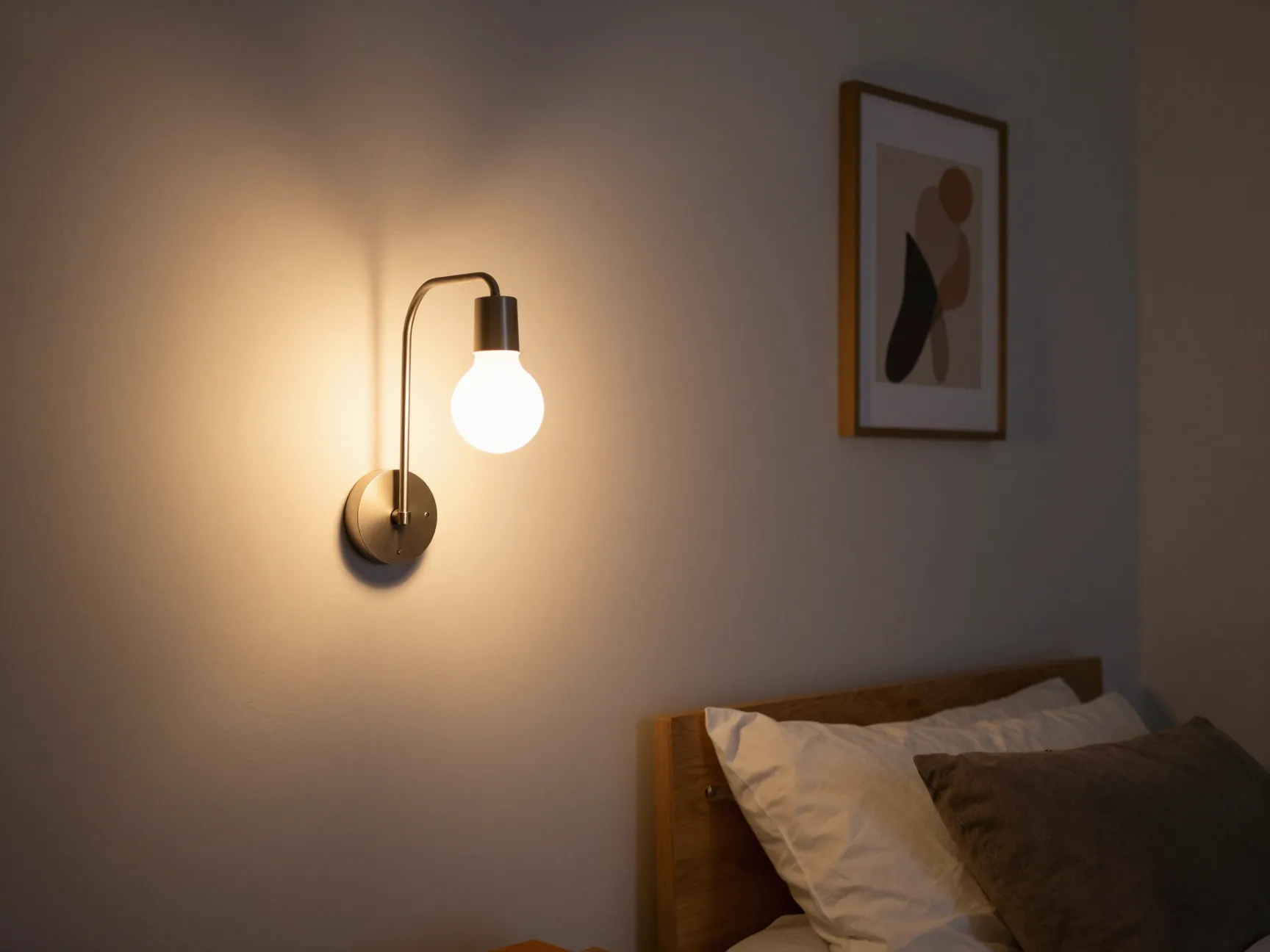
This is the idea most people overlook, and it is arguably the most transformative of all 9 bedroom wall decor design ideas to transform your personal space. Lighting is not just a functional necessity, it is the single most powerful tool for making wall decor look intentional, curated, and beautiful.
Lighting strategies for bedroom walls:
- Wall sconces: Mounted on either side of the bed, sconces free up nightstand space and cast a warm, directional light that creates intimacy and depth. Choose sconces with adjustable arms for maximum flexibility.
- Picture lights: Small, focused lights mounted directly above or below a piece of art draw the eye to the work and give it the same reverent treatment you would find in a gallery.
- LED strip lighting: Installed behind floating shelves or along the top of a headboard wall, LED strips create a soft ambient glow that adds depth and dimension without harsh shadows.
- Uplighting: A small uplight placed on the floor and directed at a textured wall, limewash, shiplap, or stone, rakes light across the surface and reveals every beautiful detail in the texture.
The layered lighting approach: The most effective bedroom lighting combines at least three layers, ambient (overhead or recessed), task (reading lights or sconces), and accent (picture lights or uplights). When all three layers are present and dimmable, you have complete control over the mood of the room at any time of day.
Putting It All Together: A Quick Reference Guide
| Idea | Best For | Difficulty | Approx. Cost |
|---|---|---|---|
| 1. Gallery Wall | All styles | Moderate | Low to High |
| 2. Statement Art | Minimalist, Modern | Easy | Medium to High |
| 3. Textured Treatments | Traditional, Transitional | Moderate to Hard | Medium |
| 4. Accent Wall | All styles | Easy | Low |
| 5. Floating Shelves | Eclectic, Scandi | Easy to Moderate | Low to Medium |
| 6. Textile Art | Bohemian, Coastal | Easy | Low to Medium |
| 7. Strategic Mirrors | Small rooms, Modern | Easy | Medium |
| 8. Murals and Decals | Bold, Eclectic | Easy to Moderate | Low to Medium |
| 9. Layered Lighting | All styles | Moderate | Medium to High |
Common Mistakes to Avoid
Even the best bedroom wall decor ideas can fall flat when executed poorly. Here are the most common mistakes I see, and how to avoid them.
Hanging art too high. This is the single most common error in home decorating. Art should be hung so that its center is at eye level, approximately 57 to 60 inches from the floor. When art is hung too high, it disconnects from the furniture below and makes the room feel unbalanced.
Choosing art that is too small. A small print floating above a king-size bed looks lost and tentative. Scale your art to your furniture. When in doubt, go larger.
Ignoring the relationship between wall decor and room color. A bold piece of art on a wall painted in a competing color creates visual chaos. Either let the art be the star on a neutral wall, or choose art that harmonizes with your wall color.
Over-decorating. More is not always more. A wall packed with too many objects at too many scales creates visual noise rather than visual interest. Editing is a design skill, the objects you choose to leave off the wall are as important as the ones you put on it.
Neglecting lighting. As discussed in idea nine, lighting transforms wall decor from ordinary to extraordinary. If your art is not lit, it is not being seen at its best.
Conclusion
The 9 bedroom wall decor design ideas to transform your personal space covered in this guide represent a full spectrum of approaches, from the accessible simplicity of a single statement art piece to the architectural commitment of a textured wall treatment. The common thread running through all of them is intentionality: the decision to treat your bedroom walls as an active part of your living environment rather than a passive backdrop.
Your actionable next steps for 2026:
- Walk into your bedroom right now and identify the one wall that has the most visual impact, usually the wall you face when you enter or the wall behind your bed. That is where you start.
- Choose one idea from this list that fits your current budget and skill level. You do not need to implement all nine at once.
- Before purchasing anything, define your color palette. Limiting yourself to three to four colors across all wall decor elements will create cohesion even when mixing styles and materials.
- Address lighting last, but do not skip it. Even a single picture light or a pair of warm-toned sconces will elevate whatever decor you have chosen.
- Give yourself permission to evolve. A gallery wall can gain new pieces over time. A paint color can be changed. The best bedroom decor is a living reflection of who you are right now, and who you are becoming.
Your bedroom walls have been waiting long enough. Start with one idea, execute it well, and let the momentum carry you forward.
References
- American Society of Interior Designers. (2019). ASID Impact: Design Impacts the Human Experience. ASID.
- Augustin, S. (2009). Place Advantage: Applied Psychology for Interior Architecture. Wiley.
- Ellard, C. (2015). Places of the Heart: The Psychogeography of Everyday Life. Bellevue Literary Press.
- Henderson, E. (2015). Styled: Secrets for Arranging Rooms, from Tabletops to Bookshelves. Potter Style.
- Kopec, D. (2012). Environmental Psychology for Design. Fairchild Books.
- Ulrich, R. S. (1991). Effects of interior design on wellness: Theory and recent scientific research. Journal of Health Care Interior Design, 3(1), 97-109.
- Winchip, S. M. (2017). Fundamentals of Lighting (3rd ed.). Fairchild Books.