8 Apartment Interior Design Rules Renters Can Actually Use
Nearly 44 million households in the United States rent their homes, yet most renters still treat their apartments as temporary holding spaces rather than real homes worth investing in. That is a costly mistake, not financially, but emotionally. The space you live in directly shapes your mood, productivity, and sense of well-being. The good news is that the 8 apartment interior design rules renters can actually use do not require drilling into walls, spending a fortune, or risking your security deposit.
Disclosure: This post contains affiliate links. As an Amazon Associate, we earn from qualifying purchases, and at no extra cost to you.
I have spent years helping people transform cramped, beige-walled rentals into spaces that feel genuinely personal and well-designed. The rules in this guide are practical, landlord-approved, and built for real-world renter constraints. Whether you are in a studio or a two-bedroom, these principles work.
Key Takeaways
- Removable, peel-and-stick surfaces are the single most powerful renter-friendly upgrade available in 2026
- Measuring your space and locking a furniture layout before buying anything saves money and prevents costly mistakes
- Vertical space is almost always underused in rental apartments and can dramatically change how a room feels
- Multi-functional and correctly scaled furniture is the foundation of smart small-space design
- Zoning and clear circulation paths make even the smallest apartment feel organized and livable
Why These 8 Apartment Interior Design Rules Renters Can Actually Use Actually Work
Before diving into the specific rules, it helps to understand the core philosophy behind renter-friendly design. Most design advice assumes you own your home. It tells you to paint, knock down walls, or install custom built-ins. Renters cannot do most of that, or at least cannot do it without written landlord permission.
The rules below are built around a different premise: work with what you have, make reversible changes, and use smart design principles that apply universally regardless of square footage or lease terms. These are not workarounds. They are legitimate design strategies used by professional interior designers in constrained spaces [1].
1. Start With Landlord-Approved Wall Changes
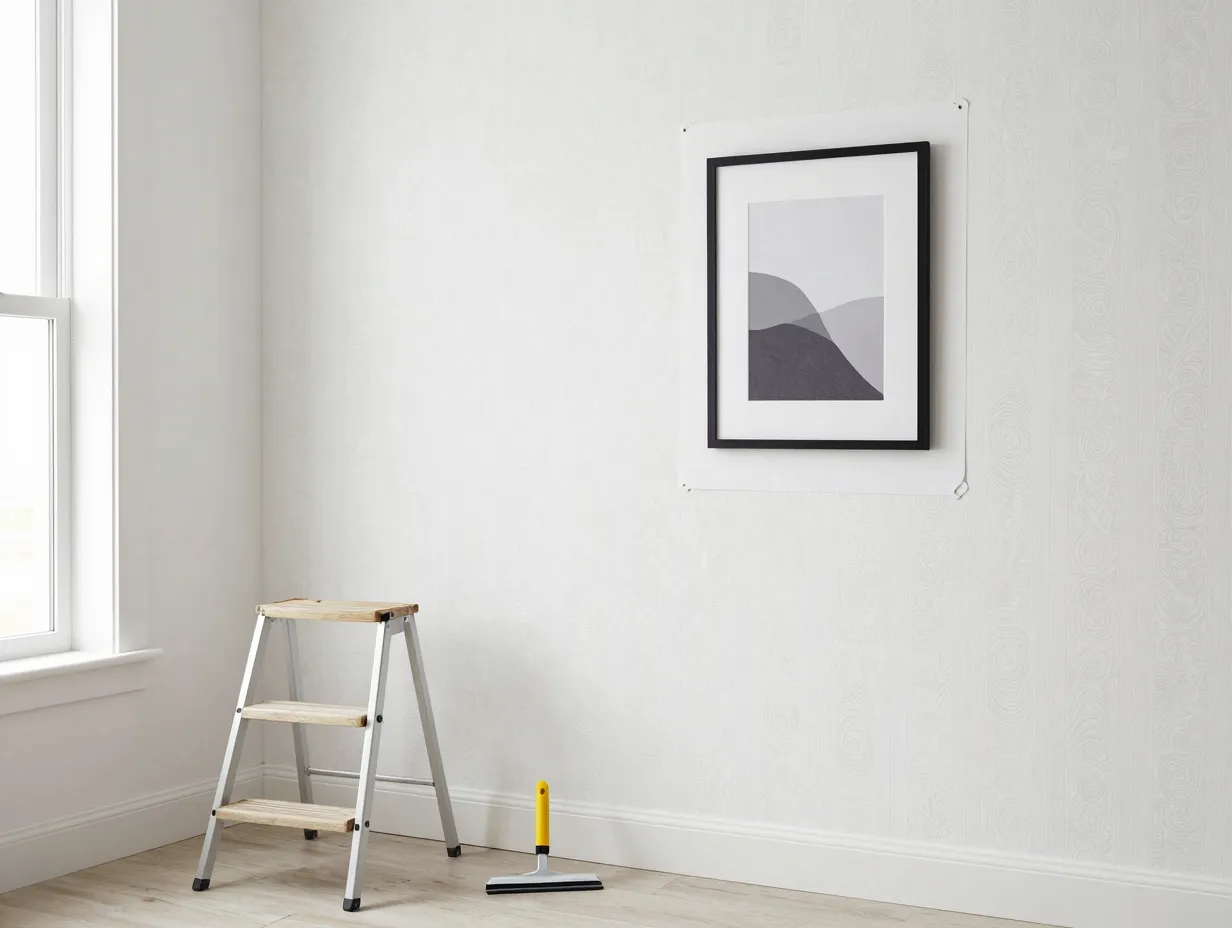
The walls are the largest surface in any room, and in most rentals they are a flat, uninspiring white or beige. The temptation is to paint, but even that requires landlord approval in most leases. Before touching anything, have a direct conversation with your landlord and get any permissions in writing.
What you can almost always do without permission:
- Hang art and mirrors using removable adhesive strips rated for the weight
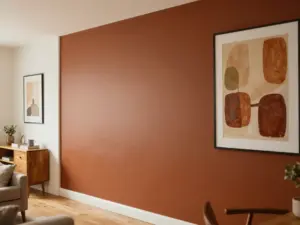
- Use temporary wallpaper or peel-and-stick panels on one accent wall
- Add removable wall decals for texture or pattern
What often requires written approval:
- Painting (even with the intention to repaint before move-out)
- Installing permanent shelving with wall anchors
- Mounting a television directly into drywall
Getting clarity upfront protects your deposit and opens up more options than you might expect. Many landlords are surprisingly open to changes when asked professionally [7]. I once had a landlord approve a full accent wall repaint simply because I offered to return it to the original color before leaving, and put that agreement in a written addendum to my lease.
The key principle here: ask first, document everything, and never assume silence means permission.
2. Use Peel-and-Stick and Removable Surfaces as Your Primary Upgrade
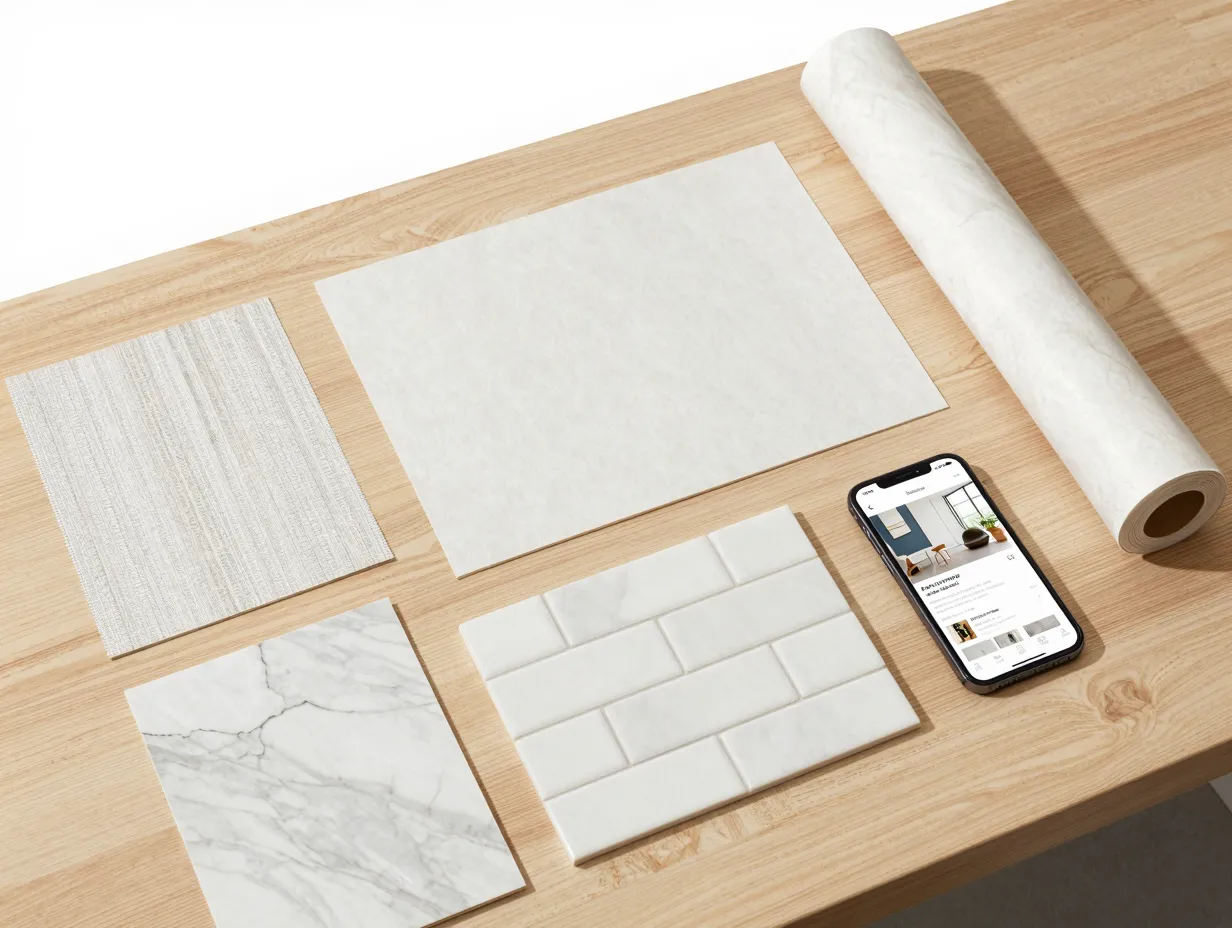
This is the single most transformative rule in the 8 apartment interior design rules renters can actually use, and it has never been more relevant than in 2026. The market for removable surfaces has exploded. You can now find peel-and-stick options for nearly every surface in your apartment [5].
What is available in 2026:
| Surface | Removable Option |
|---|---|
| Walls | Peel-and-stick wallpaper, fabric wall panels |
| Floors | Peel-and-stick vinyl tiles, interlocking floor tiles |
| Backsplash | Removable tile stickers, peel-and-stick subway tile |
| Furniture | Contact paper for countertops and shelving |
| Ceilings | Removable ceiling medallions, fabric canopies |
The quality of these products has improved dramatically. Early peel-and-stick wallpaper was thin, prone to bubbling, and left residue. Today’s versions from reputable brands are thick, washable, and genuinely difficult to distinguish from traditional wallpaper at a glance [8].
Application tips that matter:
- Always clean and dry the surface thoroughly before applying
- Use a squeegee or credit card to push out air bubbles as you go
- Start from the top and work down for wallpaper panels
- Store the original materials (like cabinet hardware) in a labeled bag so you can restore everything before move-out [2]
A single peel-and-stick accent wall behind a bed or sofa can completely reframe a room. Pair it with coordinating throw pillows and a rug, and the space feels intentionally designed rather than accidentally furnished.
3. Measure Everything and Lock a Layout Before Buying Furniture
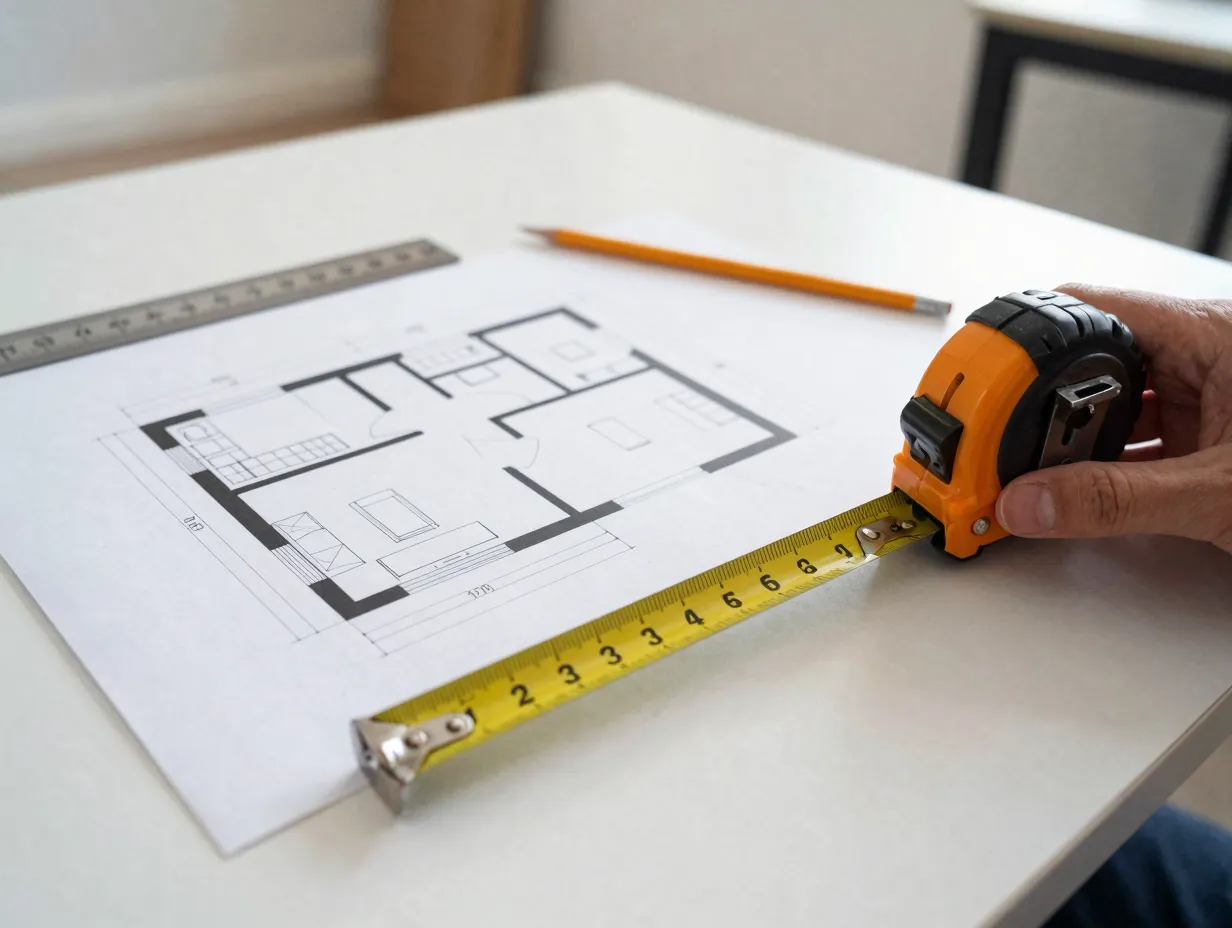
This rule sounds obvious. It is almost universally ignored.
The number of people who buy a sofa, a bed frame, or a dining table without measuring their actual space, and then discover it does not fit through the door, or blocks a window, or makes the room feel like a furniture warehouse, is staggering. I have done it myself. I once bought a beautiful sectional sofa that was technically the right size for my living room but left only 14 inches of walking space between it and the coffee table. The room was unusable.
The correct process is this [10]:
- Measure every wall, doorway, and window in the room
- Note ceiling height, outlet locations, and any fixed elements like radiators
- Sketch the room to scale on graph paper or use a free floor plan app
- Place furniture cutouts (or digital versions) into the layout before buying anything
- Walk through the layout mentally, can you open every door fully? Can you reach every outlet?
The 2-foot rule: Every main circulation path in a room needs at least 24 inches of clear walking space. This is the minimum for comfortable movement and is a standard used in professional space planning [9]. In a small apartment, this single rule will eliminate a surprising number of furniture configurations that look fine on paper but feel claustrophobic in real life.
Lock your layout first. Then shop. Not the other way around.
4. Zone Your Space and Protect Circulation Paths
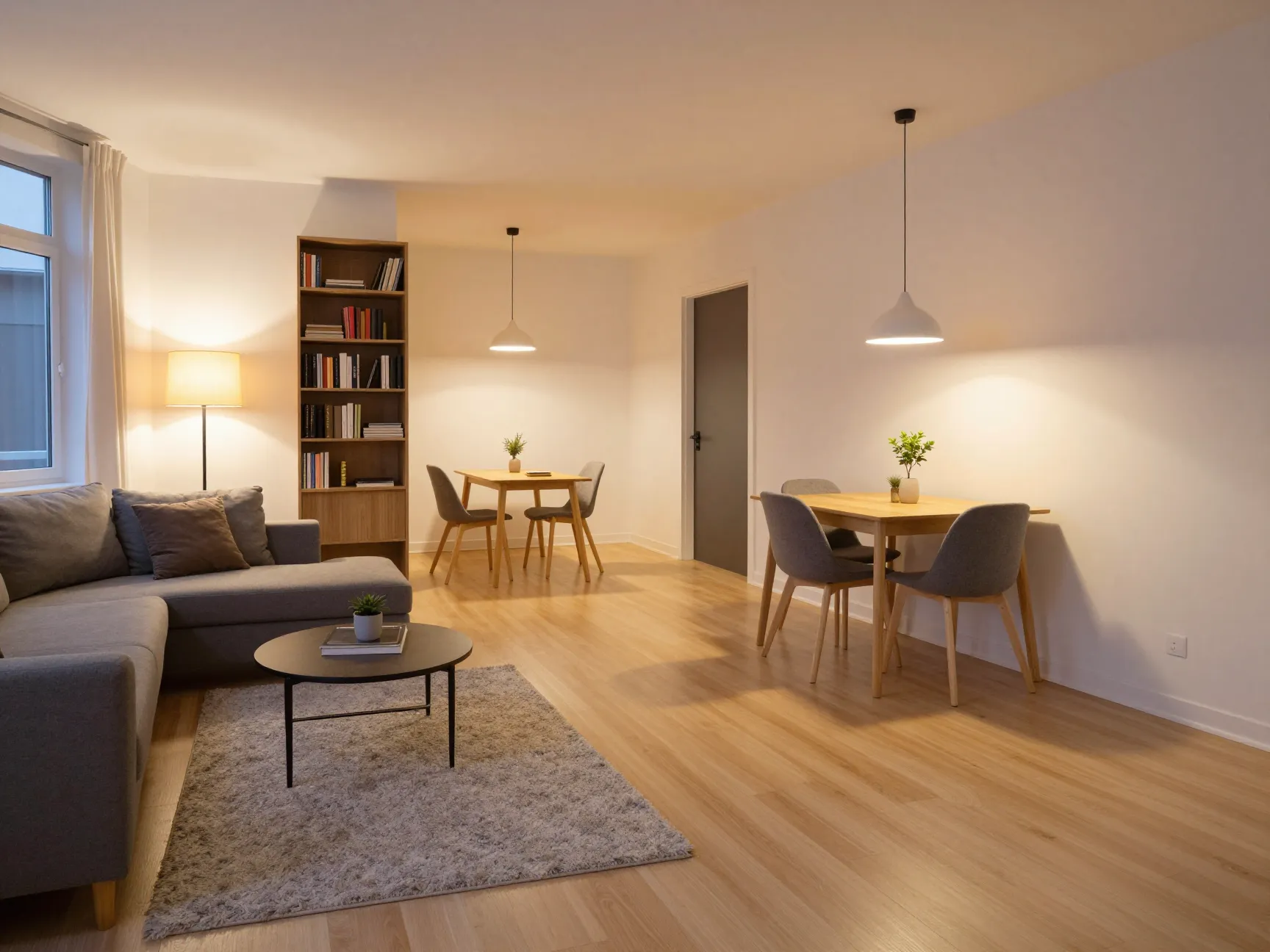
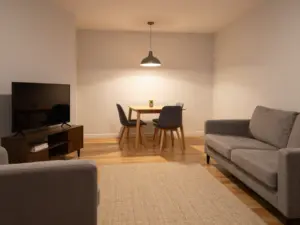
In an open-plan apartment or studio, the absence of walls does not mean the absence of structure. Zoning is the practice of defining distinct areas within a single open space, a living area, a sleeping area, a work area, using furniture arrangement, rugs, lighting, and visual cues rather than physical walls [9].
How to create zones without walls:
- Use a large area rug to anchor and define the living zone
- Position the back of a sofa to create a visual boundary between living and dining
- Use a bookshelf or open shelving unit as a room divider
- Hang a curtain from a ceiling-mounted track to separate a sleeping area
- Use pendant lighting or a floor lamp to signal a specific zone’s purpose
Zoning does two things simultaneously. It makes the space feel more organized and intentional. And it forces you to protect circulation paths, the clear routes between zones that keep the apartment from feeling cluttered [3].
A well-zoned studio apartment does not feel like a studio. It feels like a small home with distinct rooms. The psychological effect of this is significant. When your sleeping area is visually separated from your work area, your brain starts to associate each zone with its purpose, which improves both sleep quality and focus.
5. Invest in Multi-Functional and Modular Furniture
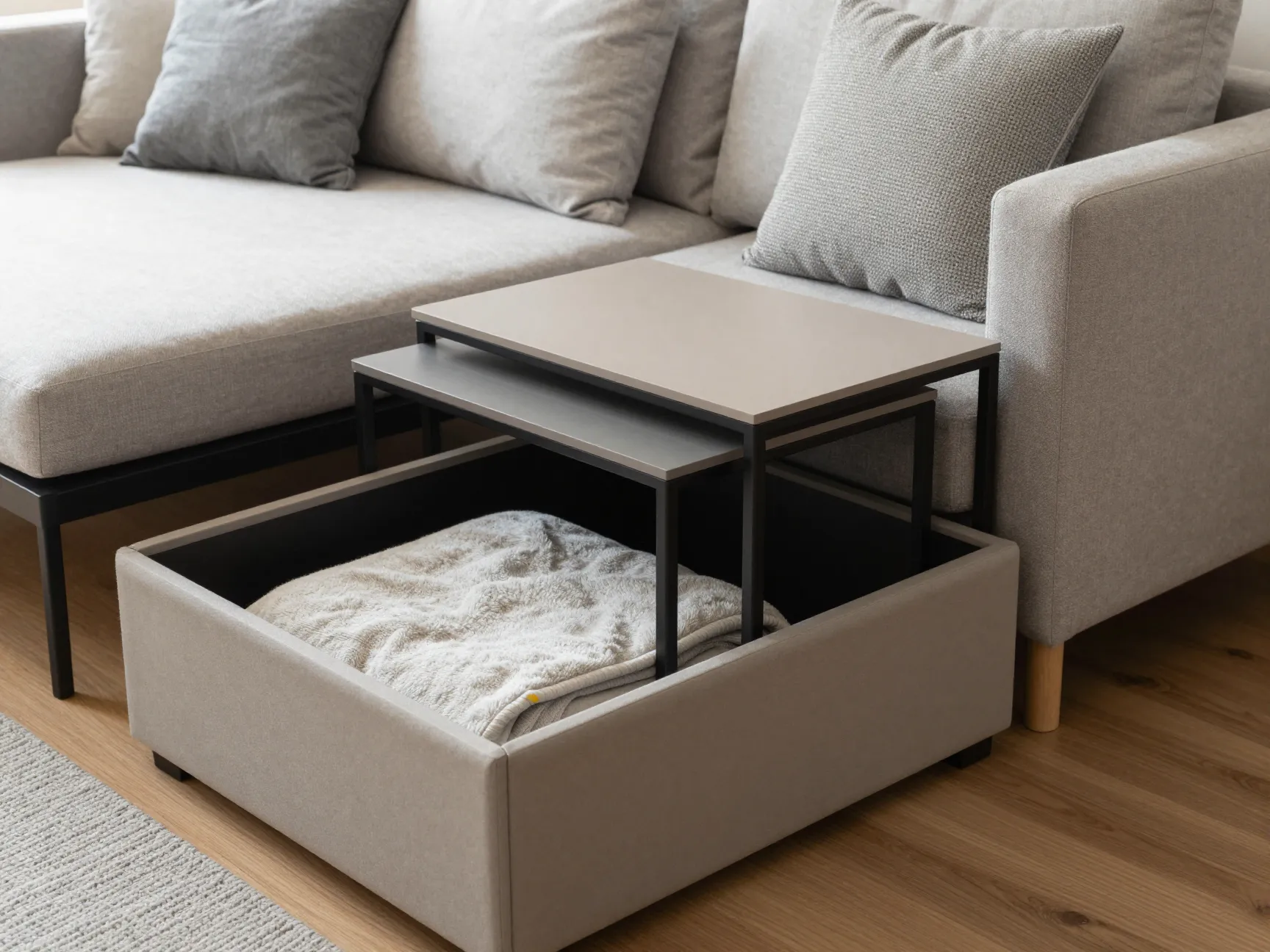
Square footage is the most expensive commodity in most rental markets. Multi-functional furniture is how you buy more of it without paying more rent.
The principle is straightforward: every piece of furniture in a small apartment should ideally serve at least two purposes. A storage ottoman replaces both a coffee table and a storage chest. A daybed serves as both a sofa and a guest bed. A fold-down wall desk disappears when not in use. A dining table with drop-leaf extensions seats two on a Tuesday and six on a Saturday [8].
Multi-functional furniture worth the investment:
- Storage beds with drawers or hydraulic lift storage underneath
- Nesting tables that stack when not needed
- Benches with interior storage at the foot of a bed
- Modular shelving that can be reconfigured as your needs change
- Sofa beds or sleeper sofas for studio apartments
Modular furniture deserves special mention. Unlike fixed-configuration pieces, modular sofas, shelving systems, and storage units can be rearranged, expanded, or reduced as your space or life changes. This is particularly valuable for renters who may move every one to three years [5].
“The best piece of furniture in a small apartment is the one you do not have to own. Every item you bring in should earn its square footage.”
Correctly scaled furniture is equally important. Oversized furniture in a small room does not make the room feel larger, it makes it feel smaller. Choose pieces that are proportional to the room’s actual dimensions. A loveseat instead of a full sofa. A round dining table instead of a rectangular one. A narrow console table instead of a wide sideboard.
6. Make Walls and Vertical Space Do the Heavy Lifting
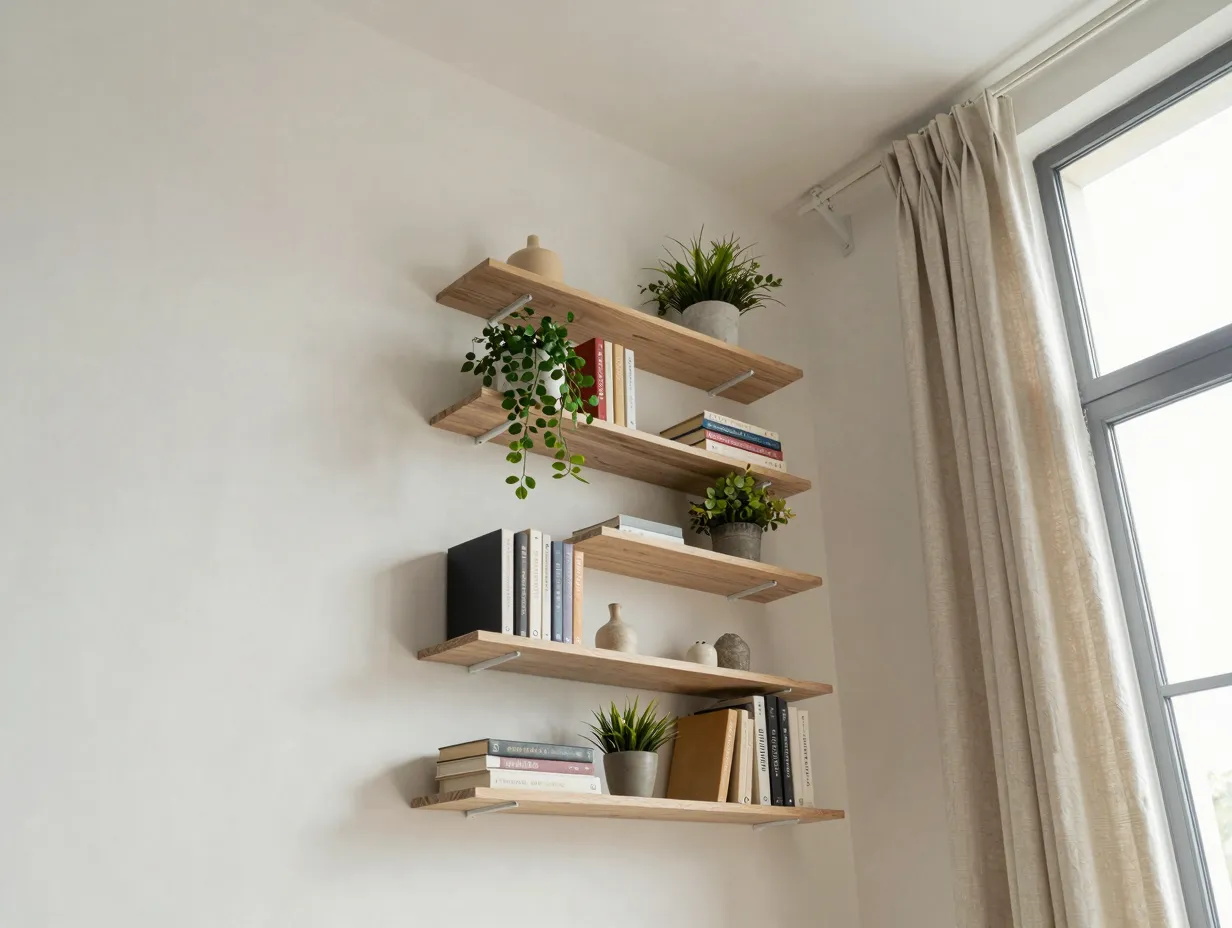
Most renters decorate horizontally. They fill floor space with furniture and leave the walls bare above eye level. This is a missed opportunity, especially in apartments with standard 8- or 9-foot ceilings.
Vertical space is free real estate. Using it well makes a room feel taller, more organized, and more designed [1].
Vertical space strategies that work in rentals:
- Install floating shelves (with landlord approval or using heavy-duty removable anchors) from mid-wall up to near the ceiling
- Stack books and objects vertically on shelves rather than spreading them horizontally
- Hang curtains as close to the ceiling as possible, even if the window is much lower, this draws the eye up and makes ceilings feel higher
- Use tall, narrow bookcases instead of wide, low ones
- Hang art in vertical groupings rather than single horizontal rows
The curtain trick is one of the most effective and least expensive design moves available to renters. A curtain rod mounted 4 to 6 inches below the ceiling, with curtains that fall to the floor, visually doubles the perceived height of a window and makes the entire room feel more expansive [3].
Vertical shelving also solves one of the most common renter problems: storage. When floor space is limited, going up is the only direction left. A well-organized wall of shelving can replace multiple pieces of floor-standing furniture while adding visual interest and personality to the space [2].
7. Build a Cohesive Color and Material Story
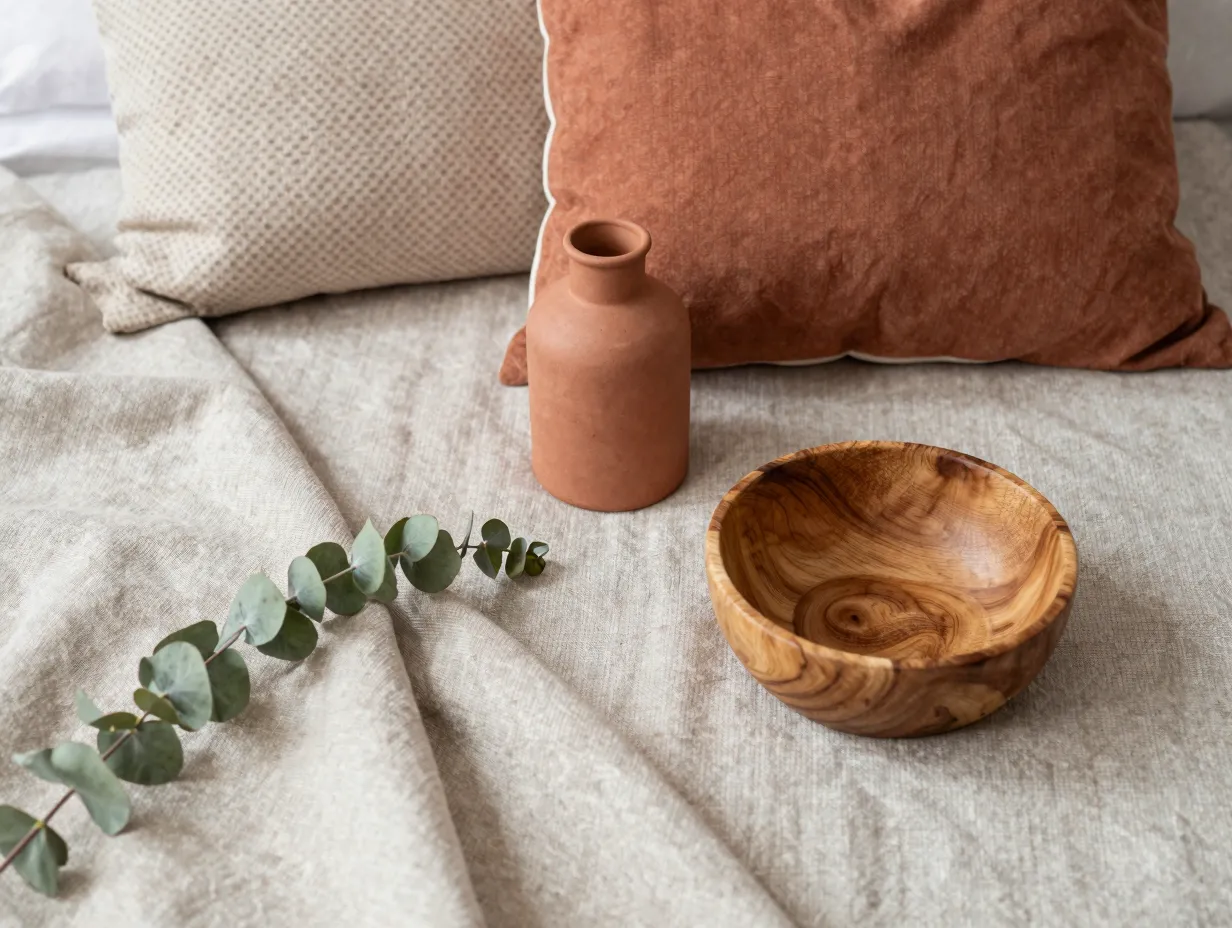
Rental apartments often come with a neutral palette, white walls, beige carpet, builder-grade fixtures. This is actually an advantage, not a limitation. A neutral base is a blank canvas that works with almost any color direction you choose to take with your furnishings, textiles, and accessories.
The mistake most renters make is buying pieces they individually love without considering how they work together. The result is a room that feels busy, disconnected, or accidentally cluttered.
How to build a cohesive palette:
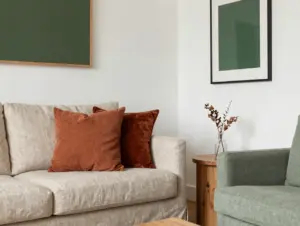
- Choose a dominant color (usually a neutral) that appears in the largest pieces, sofa, rug, bedding
- Choose one or two accent colors that appear in smaller pieces, throw pillows, art, plants
- Choose a consistent material story, for example, warm wood tones, matte black metal, and natural linen
- Repeat each color and material at least three times throughout the space to create visual rhythm
The three-times rule is a practical shortcut used by professional designers. If a color or material appears only once, it looks like an accident. If it appears three or more times, it looks intentional [1].
Textiles are the most cost-effective way to introduce color and warmth into a rental. Rugs, throw blankets, curtains, and pillows can completely transform the mood of a room without any permanent changes. They are also easy to swap out seasonally or when your taste evolves.
8. Personalize With Layers, Not Permanence
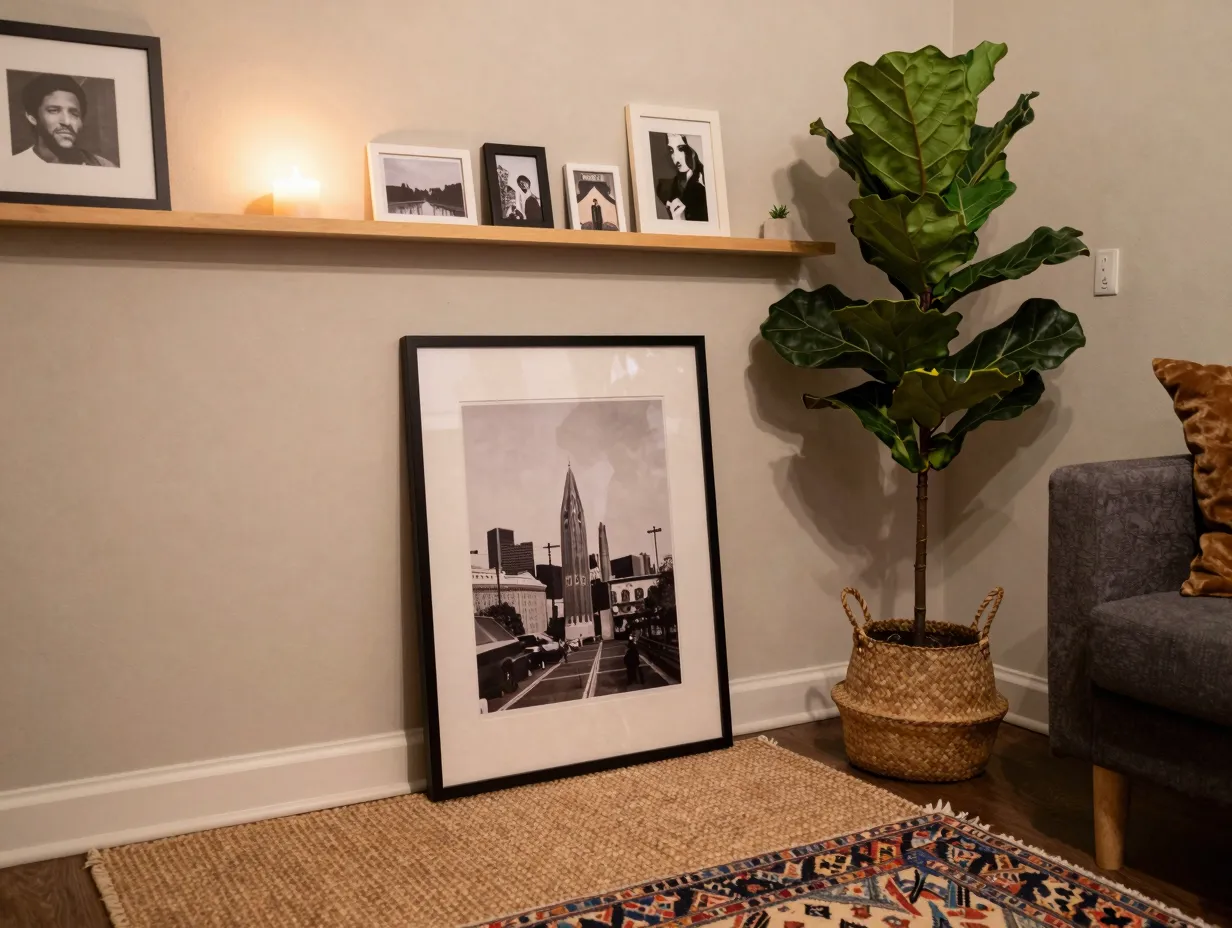
The final rule in the 8 apartment interior design rules renters can actually use is about mindset as much as method. Personalization does not require permanence. The most personal, character-filled homes I have ever seen were rentals where the occupants had layered meaningful objects, art, plants, and textiles over time, not renovated.
Layering means building up visual depth and personal meaning through objects that sit on, lean against, or hang from existing surfaces rather than being attached to them.
Layering techniques for renters:
- Lean large art prints or mirrors against walls rather than hanging them
- Use a gallery ledge shelf to display and easily swap framed photos and art
- Introduce plants at multiple heights, floor plants, shelf plants, hanging planters
- Layer rugs (a jute base rug under a smaller patterned rug) for texture and warmth
- Use books, candles, and personal objects to style shelves and surfaces
Plants deserve particular emphasis. They are the single most effective and affordable way to make a rental feel alive and personal. A few well-placed plants, a large fiddle-leaf fig in a corner, trailing pothos on a shelf, a small succulent collection on a windowsill, add color, texture, and organic warmth that no furniture purchase can replicate [7].
The goal is a space that feels like you, not like a showroom, and not like a temporary stop. Renters who treat their apartments as real homes, even when they know they will eventually move, consistently report higher satisfaction with their living situations and greater overall well-being.
Putting the 8 Apartment Interior Design Rules Renters Can Actually Use Into Practice
Implementing all eight rules at once is not necessary or realistic. The most effective approach is sequential:
- Start with the layout. Measure, plan, and lock your furniture arrangement before spending any money.
- Address the walls. Decide what removable upgrades make sense for your space and budget.
- Audit your furniture. Identify what is correctly scaled and multi-functional, and what needs to be replaced or removed.
- Zone the space. Use rugs, lighting, and furniture arrangement to define distinct areas.
- Build vertical. Add shelving and adjust curtain placement to maximize perceived height.
- Edit the palette. Remove pieces that do not fit the color and material story, and add cohesive textiles.
- Layer personality. Add plants, art, and personal objects last, once the foundation is solid.
This sequence matters because each step builds on the previous one. Layering personality into a poorly planned layout just makes the clutter more personal. Getting the foundation right first makes every subsequent decision easier and more effective [10].
Conclusion
Renting does not mean settling. The 8 apartment interior design rules renters can actually use are not compromises, they are smart, professional design principles adapted for the specific constraints of renting. Start with landlord communication and removable surfaces. Build a solid layout foundation before buying furniture. Use vertical space aggressively. Zone your apartment into distinct areas. Choose multi-functional pieces at the right scale. Build a cohesive color story. Then layer in the personal touches that make the space genuinely yours.
Your next step is simple: grab a tape measure and spend 30 minutes measuring every wall, doorway, and window in your apartment. Sketch it out. That single action, free, immediate, and requiring no landlord approval, will change how you see your space and how you make every design decision going forward.
Your apartment is not a waiting room. Design it like a home.
References
[1] Best Renter Design Hacks – https://stylebyemilyhenderson.com/best-renter-design-hacks
[2] Decorate Rental – https://thediyplaybook.com/decorate-rental/
[3] Interior Design Tips For Renters – https://camillestyles.com/design/interior-design-tips-for-renters/
[5] Apartment Remodel Ideas 2026 – https://havenlyne.com/apartment-remodel-ideas-2026/
[7] Renter Friendly Design Choices That Will Leave You Feeling Right At Home – https://www.seattletimes.com/explore/at-home/renter-friendly-design-choices-that-will-leave-you-feeling-right-at-home/
[8] Renter Friendly Upgrades 25 Easy Ideas To Transform Your Apartment – https://www.rentenigma.com/renter-friendly-upgrades-25-easy-ideas-to-transform-your-apartment
[9] Ideas For Small Space Living – https://homnora.com/ideas-for-small-space-living/
[10] Apartment Interior Planning Checklist – https://www.studiomatrx.org/guides/apartment-interior-planning-checklist