8 Organic Modern Living Room Decor Ideas for a Natural, Elevated Vibe
A 2023 survey by the American Institute of Architects found that “connection to nature” ranked as the single most requested design quality among homeowners renovating their living spaces, surpassing open floor plans for the first time in the survey’s history. That shift is not a trend. It is a fundamental reset in how people want to feel inside their homes.
Disclosure: This post contains affiliate links. As an Amazon Associate, we earn from qualifying purchases, and at no extra cost to you.
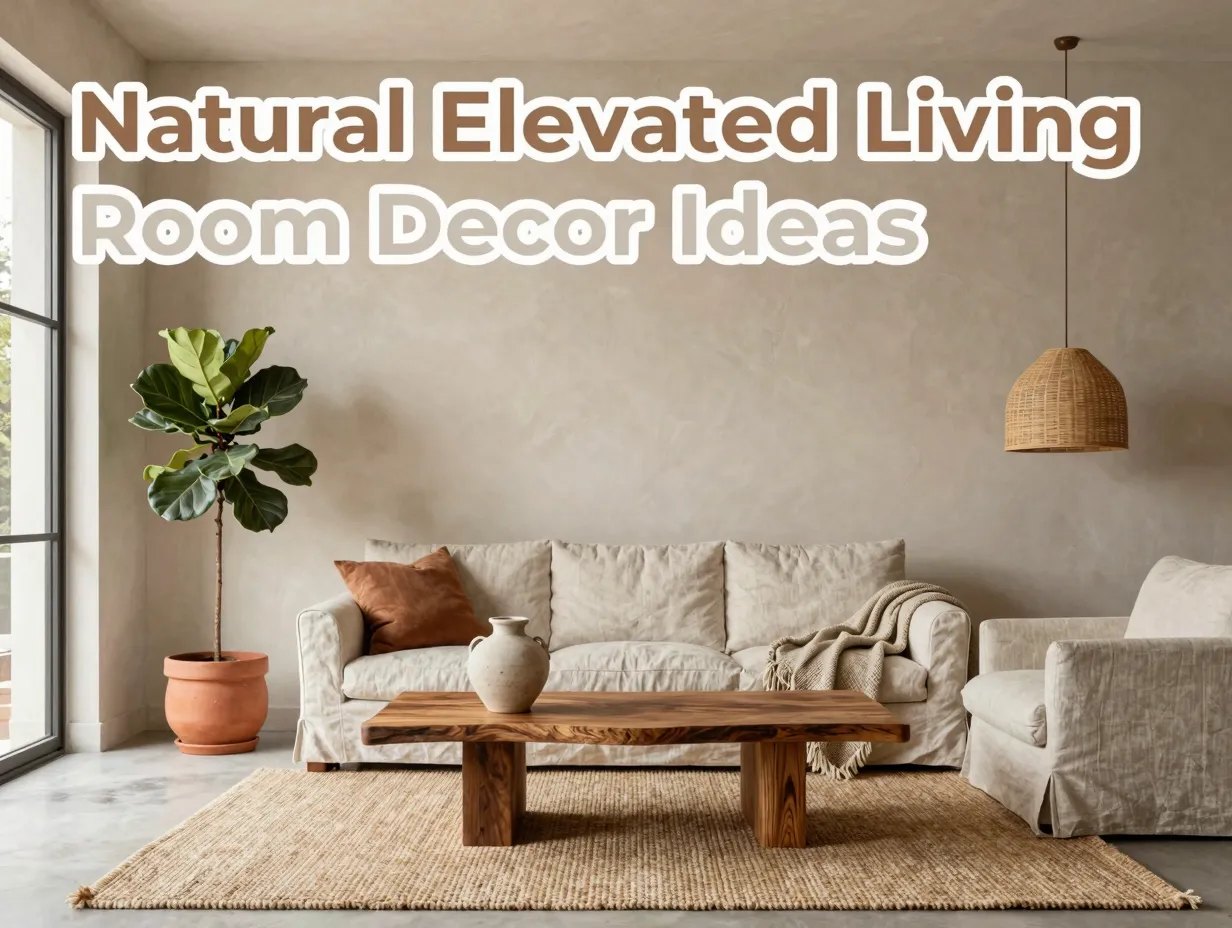
This article walks you through 8 Organic Modern Living Room Decor Ideas for a Natural, Elevated Vibe, a curated set of design moves that blend the clean lines of contemporary style with the warmth, texture, and soul of the natural world. Whether you are starting from scratch or refreshing a room that feels sterile and cold, these ideas will give you a clear, actionable path forward.
Key Takeaways
- Organic modern design is not about adding plants everywhere. It is about layering natural materials, textures, and tones in a way that feels intentional and calm.
- A restrained color palette anchored in earth tones, warm whites, taupes, terracotta, sage, is the single most powerful tool in this style.
- Texture does more visual work than color in an organic modern room. Bouclé, linen, jute, raw wood, and stone create depth without clutter.
- Quality over quantity is the core philosophy. A few well-chosen pieces in natural materials will always outperform a room full of trendy accessories.
- Lighting, both natural and artificial, is the invisible design element that either makes or breaks the organic modern aesthetic.
Why Organic Modern Design Dominates Living Room Trends in 2026
Before diving into the specific ideas, it helps to understand why this aesthetic has such staying power. Organic modern design sits at the intersection of two powerful forces: the minimalist impulse to remove what is unnecessary, and the deeply human need for warmth, texture, and a sense of the natural world.
I first encountered this tension when I helped a friend redesign her downtown apartment living room a few years ago. The space was technically beautiful, clean walls, good proportions, a neutral palette, but it felt hollow. Every surface was smooth, every edge was sharp, and every material was synthetic. Walking into it felt like opening a brand-new laptop box: impressive for a moment, then oddly unsatisfying.
The fix was not dramatic. We swapped a glass-topped coffee table for a live-edge walnut piece, layered a jute rug under the existing sofa, and placed a single large ceramic vessel in the corner. The room transformed. The same bones, a completely different feeling.
That experience is the core lesson of organic modern design: it is not about what you add, but what you replace and how you layer it.
8 Organic Modern Living Room Decor Ideas for a Natural, Elevated Vibe
The eight ideas below are organized to build on each other. Start with the foundational moves, color and material, before adding the finishing layers of texture, light, and living elements.
1. Anchor the Room with an Earth-Tone Color Palette
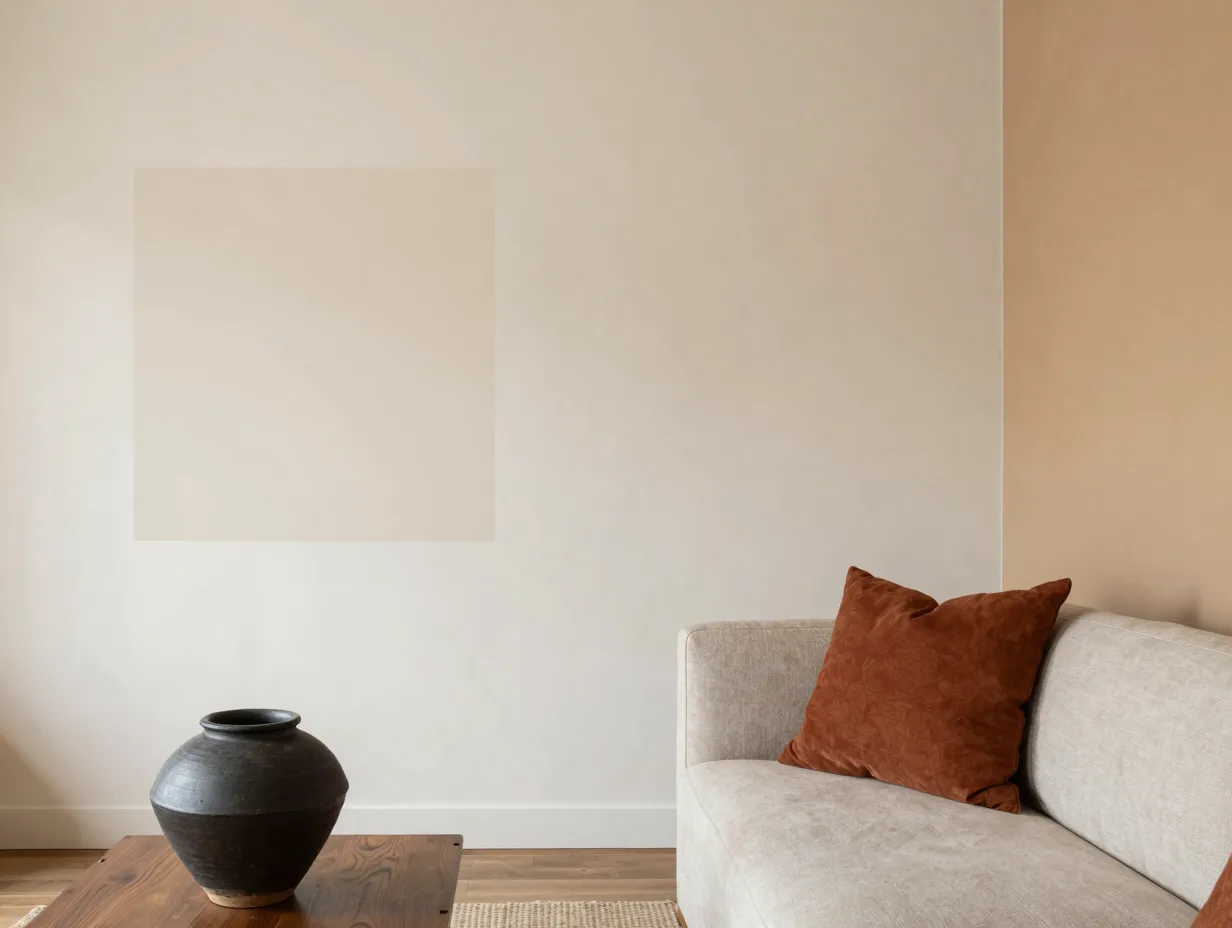
Color is the first decision, and in organic modern design, it is also the most restrained one. The goal is not to pick a single “nature color” and paint everything that shade. The goal is to build a palette that reads like a landscape, layered, cohesive, and easy on the eye.
The core palette for an organic modern living room typically includes:
- A warm white or off-white for walls (avoid cool, blue-toned whites)
- One or two mid-tone anchors: warm taupe, greige, or sand
- One accent in a deeper earth tone: terracotta, rust, warm olive, or clay
- A near-neutral dark for grounding: charcoal, deep walnut brown, or matte black
The key rule is that every color in the palette should feel like it could exist in a natural landscape. If you hold a paint chip up and it reads as “synthetic,” it probably is.
“The most sophisticated rooms are often the quietest ones. A palette of four tones, all pulled from the same natural landscape, will always outperform a room trying to do too much.”, Interior designer Amber Lewis, as quoted in Architectural Digest
Practical tip: Paint a large swatch (at least 12 inches by 12 inches) and live with it for 48 hours before committing. Natural light shifts dramatically throughout the day, and what looks like a warm sand in the morning can read as a cool gray by evening.
2. Choose Furniture with Visible Natural Materials
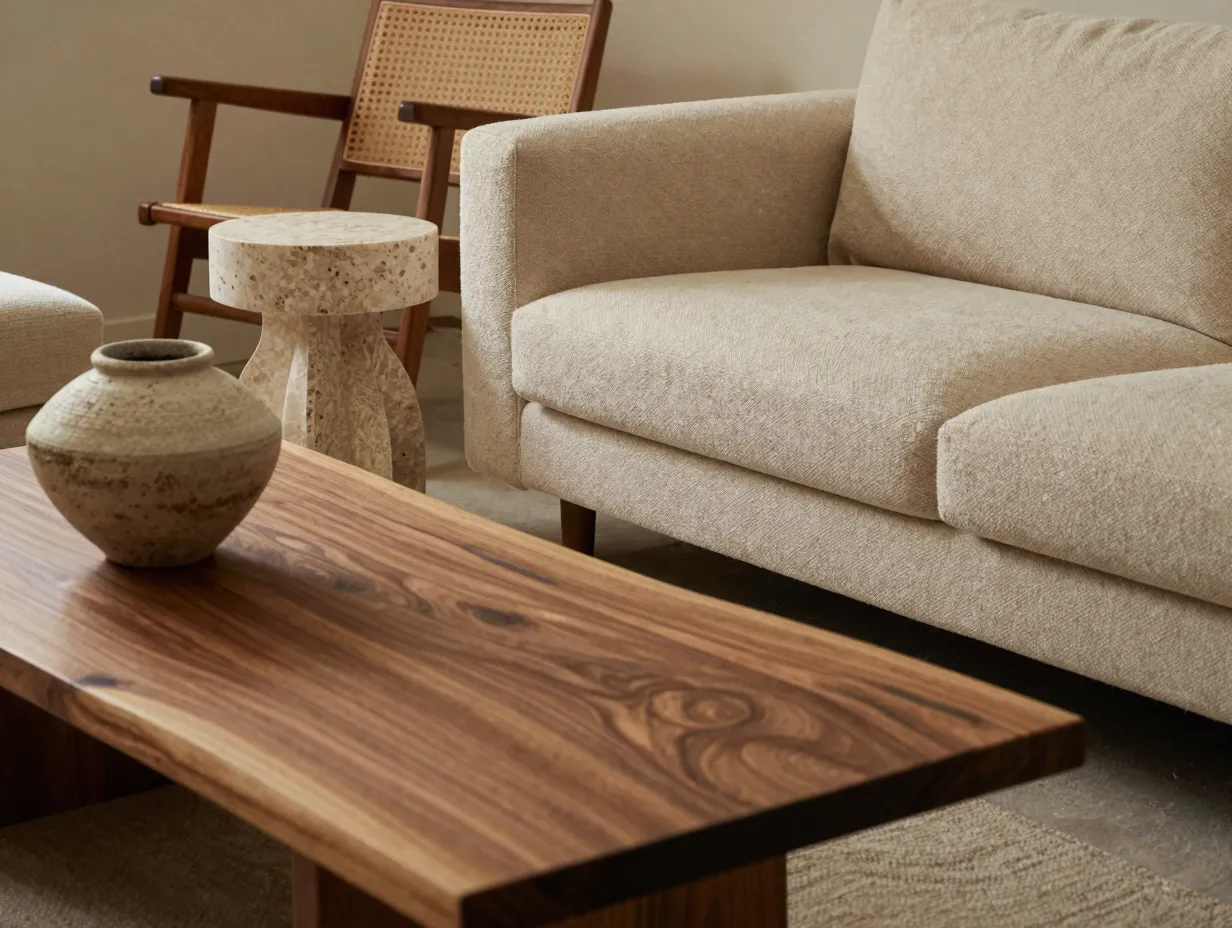
Once the palette is set, furniture selection is the next major lever. In organic modern design, the material a piece is made from matters as much as its shape.
The hierarchy of preferred materials:
- Solid wood with visible grain (walnut, oak, ash, teak)
- Natural stone (marble, travertine, slate, especially for tabletops)
- Rattan, cane, and wicker (for accent chairs, side tables, pendants)
- Linen, cotton, and bouclé (for upholstered pieces)
- Raw or hand-thrown ceramic (for decorative objects and vessels)
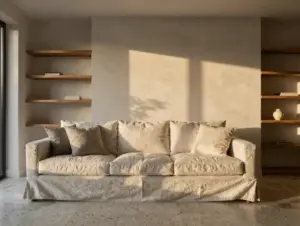
The shapes that work best in this style are soft and low. A sofa with rounded arms and a low profile reads as more organic than one with sharp angles and high backs. A coffee table with a live edge or an irregular stone top introduces the kind of natural imperfection that makes a room feel alive.
What to avoid: Highly polished chrome, lacquered surfaces, and anything that looks like it was extruded from a machine rather than shaped by a hand or grown in the ground.
3. Layer Textures to Create Depth Without Clutter
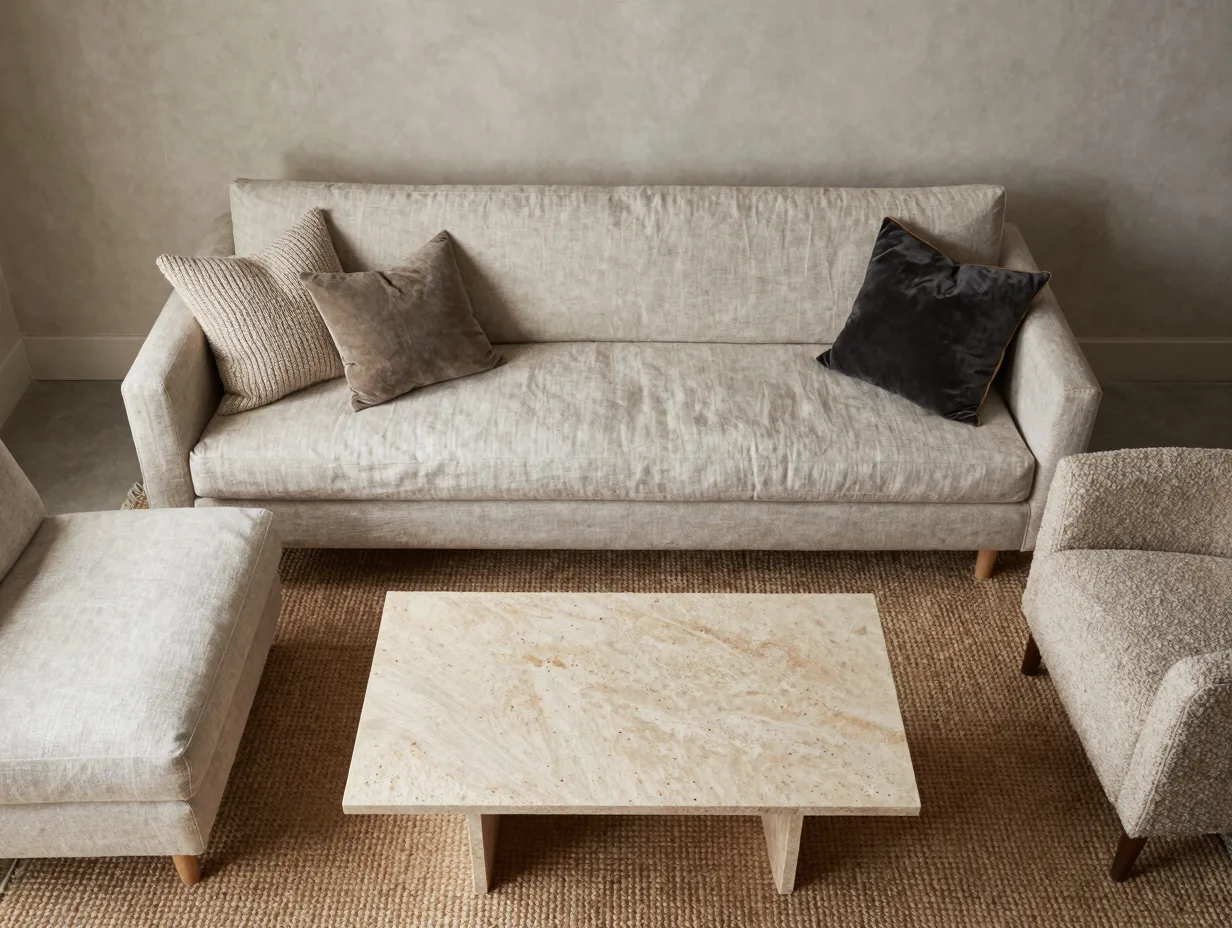
Texture is the secret weapon of organic modern design. A room done entirely in smooth surfaces, even beautiful ones, will feel flat. The goal is to create what designers call “tactile richness”: the sense that every surface in the room would feel different if you ran your hand across it.
A practical texture layering framework:
| Layer | Element | Texture Type |
|---|---|---|
| Foundation | Area rug | Jute, sisal, or wool loop |
| Mid-layer | Sofa and chairs | Linen, bouclé, or textured cotton |
| Accent layer | Throw pillows and blankets | Chunky knit, velvet, or woven cotton |
| Hard surface | Coffee table and shelving | Raw wood grain or honed stone |
| Wall | Limewash or plaster finish | Matte, slightly uneven surface |
The goal is contrast between layers. A smooth stone tabletop looks best next to a rough-textured rug. A bouclé sofa pops against a limewash wall. Each material makes the others look better by comparison.
4. Introduce a Statement Natural Stone or Wood Element
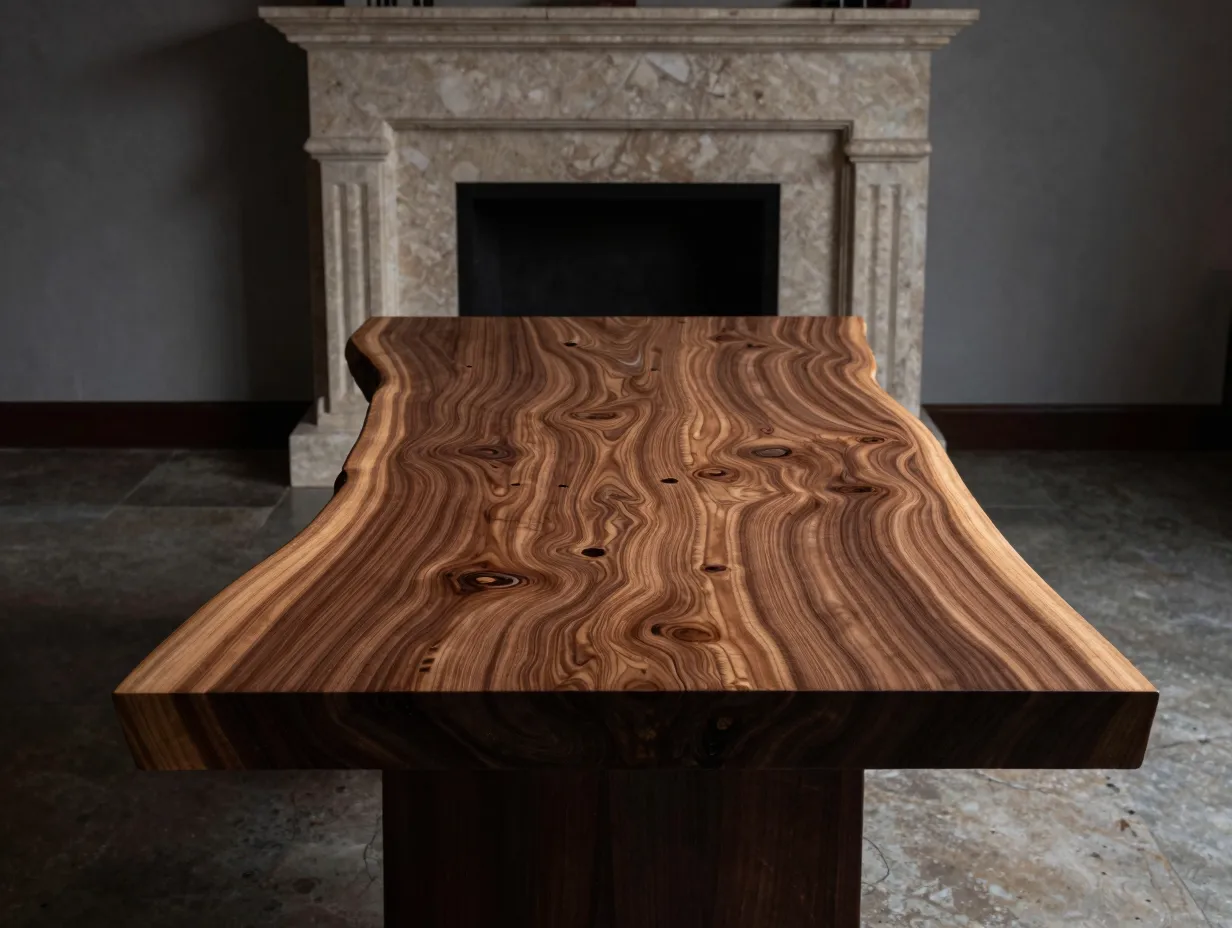
Every well-designed organic modern living room has at least one element that stops you in your tracks, a piece that communicates “this room was designed with intention.” Natural stone and live-edge wood are the two most powerful options for this role.
Natural stone options:
- A travertine or marble fireplace surround
- A honed limestone or slate hearth
- A stone-topped console or side table
- A large-format travertine tile feature wall (even a partial one behind a sofa)
Live-edge and reclaimed wood options:
- A live-edge walnut or oak coffee table
- Floating reclaimed wood shelves on a feature wall
- A solid wood beam used as a mantel
- A chunky wood bench at the base of a sofa
The reason these elements work so well is that they are irreplaceable. A live-edge slab is unique. A piece of travertine has veining that exists nowhere else on earth. That irreplaceability signals quality and authenticity in a way that manufactured pieces simply cannot.
5. Use Organic Lighting to Set the Mood
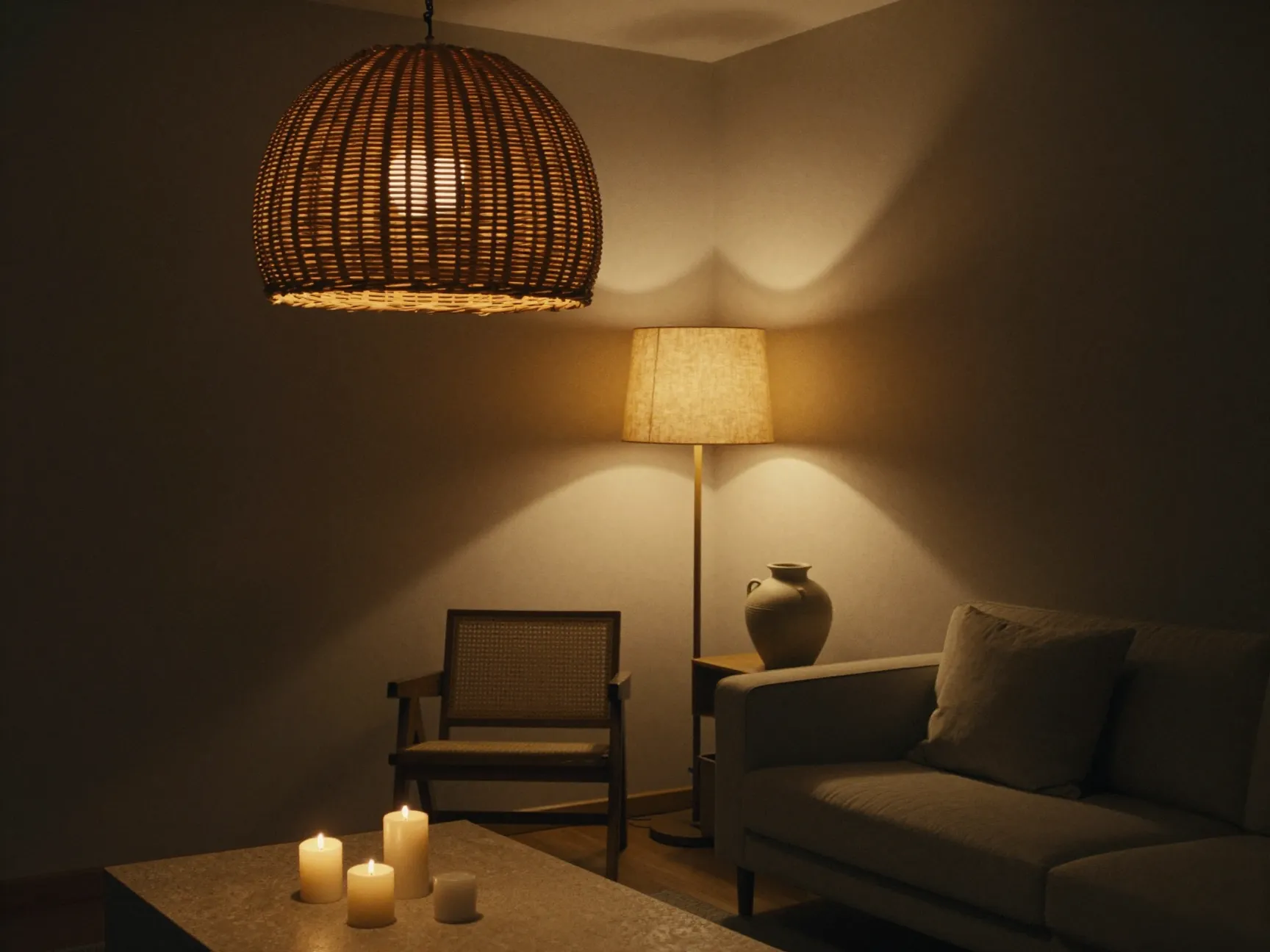
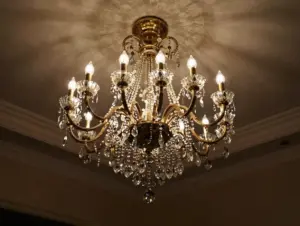
Lighting is the most underestimated element in any living room design, and it is especially critical in the organic modern style. The goal is to move away from the single overhead fixture that floods a room with flat, even light, and instead build a layered lighting plan that creates warmth and depth.
The three-layer lighting approach:
- Ambient light: A statement pendant in natural rattan, woven seagrass, or hand-blown glass provides the room’s primary light source while also functioning as a sculptural object.
- Task and accent light: Floor lamps with linen or paper shades, positioned beside seating, create pools of warm light that invite you to sit and stay.
- Decorative light: Candles, sculptural ceramic table lamps, and low-wattage Edison-style bulbs in exposed fixtures add warmth and a sense of ritual to the space.
Bulb temperature matters enormously. For an organic modern living room, stay between 2700K and 3000K (warm white). Anything cooler will work against the warmth of your natural materials.
I made the mistake of using 4000K daylight bulbs in a room I designed for my own home. The travertine coffee table, the linen sofa, the jute rug, all of it looked washed out and clinical. Switching to 2700K bulbs cost less than twenty dollars and transformed the room entirely.
6. Bring in Living Plants as Architectural Elements
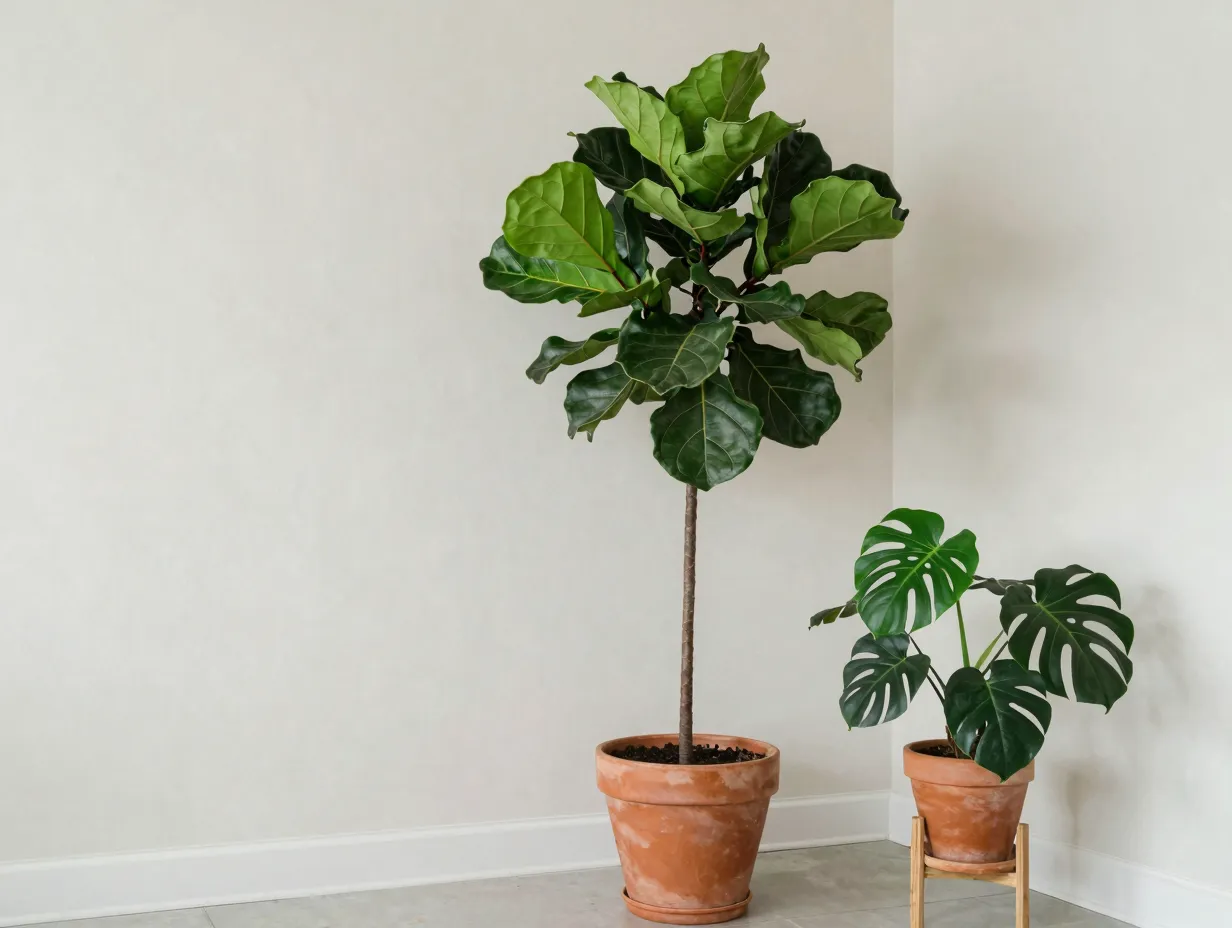
Plants in an organic modern living room are not accessories. They are structural. The goal is not to scatter small potted plants around the room, but to use a few large, well-placed plants as you would use a piece of furniture, to define space, add height, and create a focal point.
The most effective plants for this role:
- Fiddle-leaf fig (Ficus lyrata): Tall, sculptural, and architectural. A single specimen in a large matte clay pot can anchor an entire corner.
- Monstera deliciosa: Large, dramatic leaves with natural cutouts. Works beautifully against a limewash or plaster wall.
- Olive tree (Olea europaea): Increasingly popular in interior spaces. Adds a Mediterranean, sun-drenched quality.
- Trailing pothos or philodendron: Used on high shelves, these create a cascading green element that softens hard edges.
- Dried pampas grass or preserved eucalyptus: For those who want the organic visual without the maintenance commitment.
Pot selection is as important as plant selection. Matte terracotta, hand-thrown ceramic, and woven basket planters all reinforce the organic modern palette. Avoid glossy, brightly colored, or plastic pots.
7. Edit Ruthlessly, Curate, Do Not Accumulate
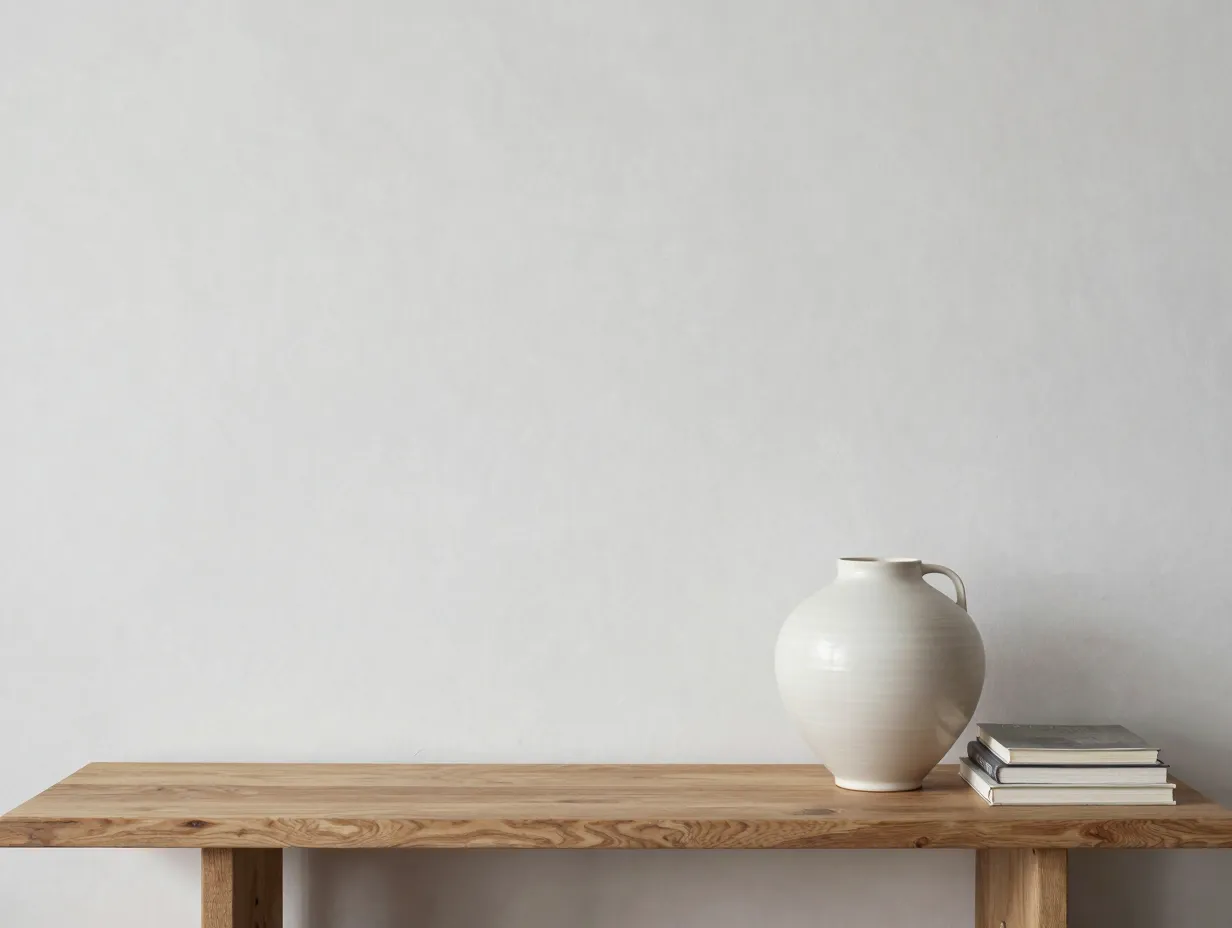
This is the idea that separates a truly elevated organic modern living room from one that simply has a lot of natural materials in it. Curation is the practice of choosing fewer, better things and giving each one room to breathe.
The editing principle in practice:
- Every decorative object on a surface should earn its place. Ask: does this add texture, color, height, or meaning? If the answer is no, remove it.
- Negative space is not empty space. A bare stretch of limewash wall next to a single large ceramic vessel is more powerful than a shelf crowded with objects.
- Group objects in odd numbers (three or five) at varying heights. This creates visual rhythm without feeling cluttered.
- Rotate seasonal elements, dried botanicals in winter, fresh branches in spring, to keep the room feeling alive without adding permanent clutter.
“Editing is the hardest skill in interior design. Anyone can add. The discipline is in knowing what to take away.”
A practical exercise: photograph your living room as it currently stands. Look at the image, not the room. The camera removes your emotional attachment to objects and shows you what is actually there. Most people find at least five things they would remove immediately.
8. Layer Soft Goods for Warmth and Livability
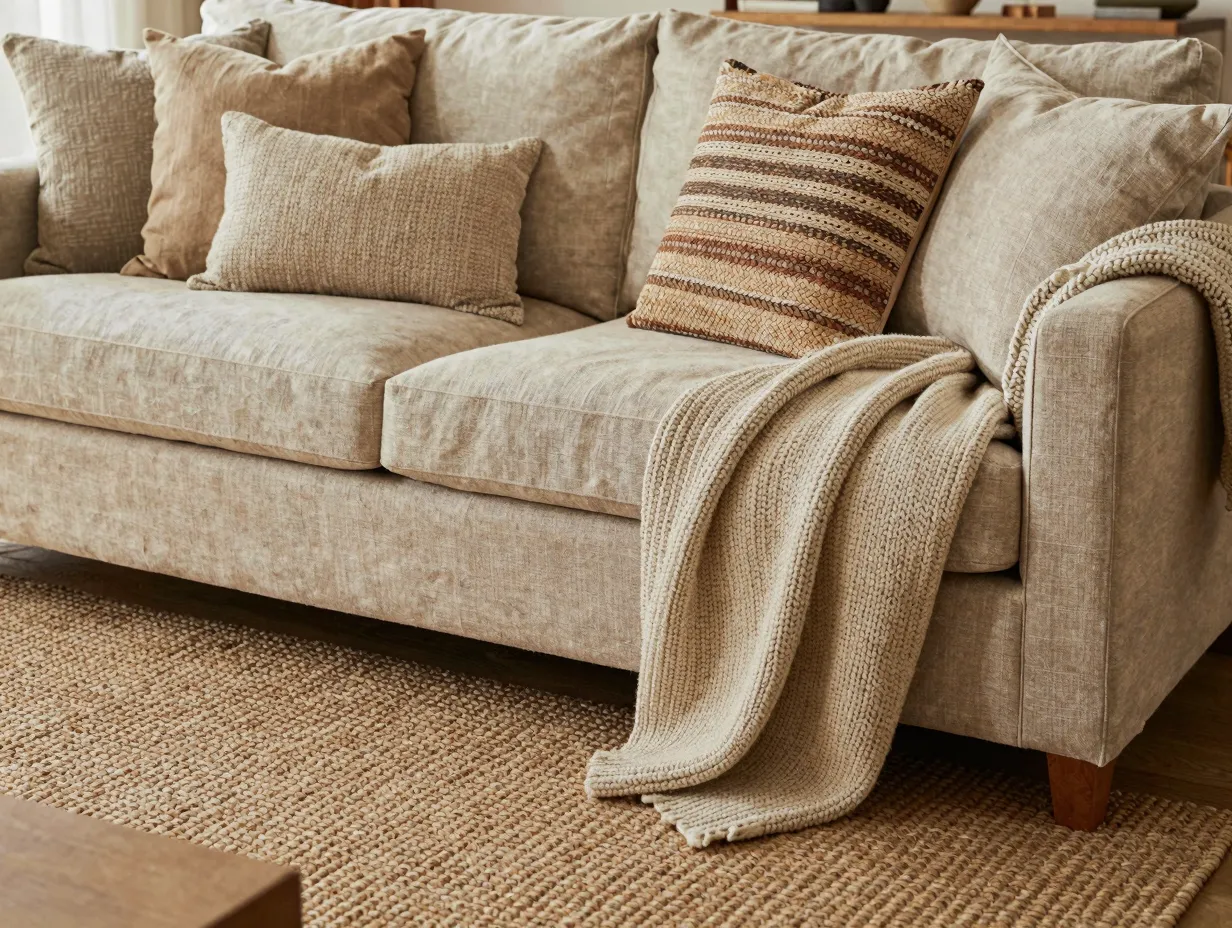
The final layer in the 8 Organic Modern Living Room Decor Ideas for a Natural, Elevated Vibe framework is soft goods, the throws, pillows, and textiles that make a room feel genuinely livable rather than staged for a photo shoot.
The soft goods checklist for an organic modern living room:
- A large-format area rug in jute, sisal, wool, or a natural fiber blend (size up, most people choose rugs that are too small)
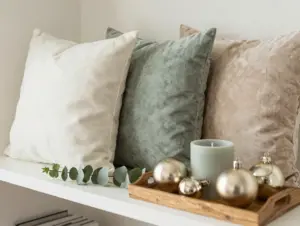
- Two to four throw pillows per sofa in varying textures: linen, bouclé, and a woven cotton or kilim pattern
- One or two throws draped casually over the arm or back of the sofa, chunky knit, waffle-weave cotton, or a lightweight linen blend
- Window treatments in linen or cotton that filter light rather than block it entirely
The “lived-in” technique: Do not fold throws perfectly or arrange pillows symmetrically. Slightly imperfect placement, a throw half-draped, a pillow slightly angled, communicates that the room is actually used and loved. That quality of livability is the emotional core of the organic modern aesthetic.
Fabric care note: Natural fibers require more attention than synthetic ones. Linen wrinkles. Jute can be sensitive to moisture. Bouclé can snag. These are not flaws, they are evidence of authenticity. Embrace them.
How to Apply These 8 Organic Modern Living Room Decor Ideas for a Natural, Elevated Vibe on Any Budget
One of the most common objections to organic modern design is cost. Live-edge walnut tables and hand-thrown ceramic vessels are not cheap. But the principles behind this style are entirely scalable.
Budget-tier approach:
- Start with paint. A warm limewash or matte earth-tone wall color costs the same as any other paint and delivers the single biggest visual impact per dollar.
- Shop secondhand for wood furniture. Thrift stores, estate sales, and platforms like Facebook Marketplace regularly yield solid wood pieces that need only light refinishing.
- Invest in one anchor piece. Rather than buying several mediocre items, save for one genuinely beautiful natural material piece, a real stone tabletop, a solid wood bench, a quality linen sofa.
- Use dried botanicals instead of live plants if maintenance is a concern. Dried pampas grass, preserved eucalyptus, and dried seed pods are widely available and require zero upkeep.
- Replace synthetic throw pillows and blankets with natural fiber versions gradually. Linen and cotton options are available at most price points.
The 80/20 rule applies here: 80% of the visual impact of an organic modern living room comes from 20% of the decisions, specifically, the wall color, the rug, and the primary sofa material. Get those three right, and the rest of the room will follow.
Common Mistakes to Avoid in Organic Modern Living Room Design
Even with the best intentions, a few common errors can undermine the aesthetic.
Mistake 1: Mixing too many wood tones. Organic modern design works best with one dominant wood tone (typically warm walnut or cool oak) used consistently. Mixing light pine, dark mahogany, and mid-tone walnut in the same room creates visual noise.
Mistake 2: Over-planting. A room filled with fifteen small plants reads as chaotic, not organic. Three large, well-placed plants will always outperform fifteen small ones.
Mistake 3: Choosing the wrong white. Cool, blue-toned whites (common in many popular paint lines) fight against the warmth of natural materials. Always test paint in the actual room before committing.
Mistake 4: Ignoring scale. A rug that is too small, a pendant that is too tiny, or a plant that is too short will make even beautiful individual pieces look wrong. Scale everything to the room, not to the item in isolation.
Mistake 5: Treating it as a trend. Organic modern design is most successful when it reflects the people who live in the space. Buy pieces you genuinely love, not pieces that look right in a mood board. The rooms that feel most alive are the ones that have a point of view.
Conclusion
The 8 Organic Modern Living Room Decor Ideas for a Natural, Elevated Vibe outlined in this article are not a checklist to complete all at once. They are a framework for making better decisions, one at a time, until the room reflects the calm, textured, grounded quality that makes organic modern design so compelling.
Start with the foundation: get your color palette right and choose furniture in genuine natural materials. Then layer in texture, lighting, and living elements. Edit consistently. And finish with the soft goods that make the space feel like home.
Your actionable next steps:
- Photograph your current living room and identify the three things that feel most synthetic or out of place.
- Choose one element from this list to change first, ideally the wall color or the area rug, since these have the highest impact per dollar.
- Set a “one in, one out” rule for decorative objects going forward. Every new piece you bring in should replace something that no longer serves the space.
- Visit a stone yard, a timber merchant, or a ceramics studio in person. Seeing and touching natural materials firsthand will sharpen your eye faster than any amount of online browsing.
- Give the room time. Organic modern design rewards patience. A room that is 80% right and allowed to evolve slowly will always feel more authentic than one that was completed in a single weekend shopping trip.
The natural, elevated vibe you are after is not a destination. It is a practice of choosing quality, honoring materials, and editing with intention, and it gets easier and more rewarding every time you do it.
References
- American Institute of Architects. (2023). Home Design Trends Survey. AIA.
- Lewis, A. (2022). Amber Lewis: Design by Nature. Abrams.
- Architectural Digest. (2022). The organic modern movement: Why natural materials are taking over interiors. Conde Nast.
- Houzz. (2023). U.S. Houzz & Home Study: Renovation Trends. Houzz Inc.
- Regan, L. (2021). The Curated Home: Organic Modern Interiors. Rizzoli.