9 New Home Decor Ideas Interior Design Lovers Need to Try This Year
A recent survey by the American Institute of Architects found that nearly 70% of homeowners planned to refresh at least one room in their home within the next 12 months, yet most admitted they had no clear idea where to start. If that sounds familiar, you are not alone. The world of interior design moves fast, and keeping up with what actually works versus what simply looks good on a mood board can feel overwhelming.
Disclosure: This post contains affiliate links. As an Amazon Associate, we earn from qualifying purchases, and at no extra cost to you.
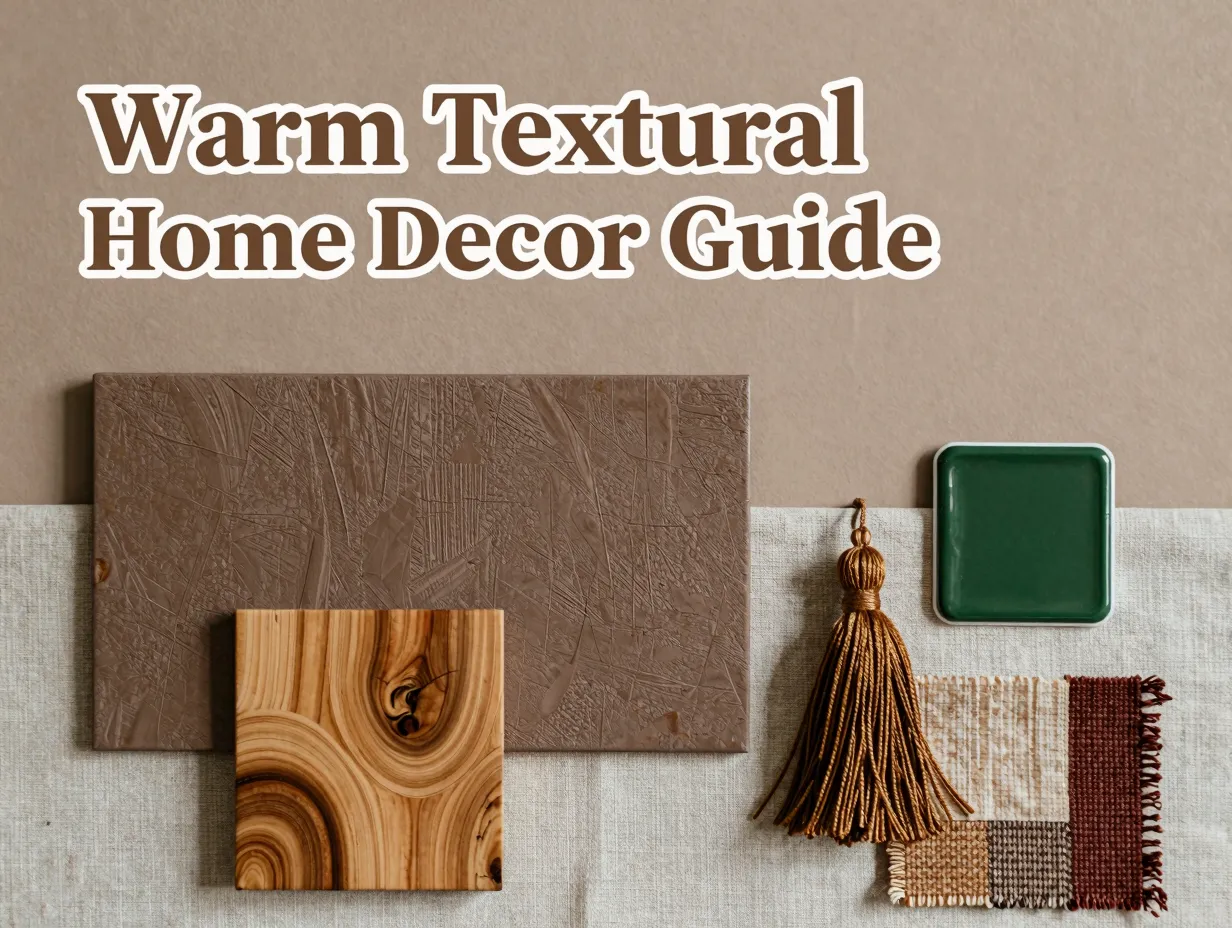
That is exactly why I put together this guide on the 9 New Home Decor Ideas Interior Design Lovers Need to Try This Year. Whether you are redecorating a single room or overhauling your entire home, these ideas are grounded in real design events, expert opinions, and emerging trends that are shaping interiors in 2026. From rich earthy neutrals to cozy snug spaces, each idea on this list offers something genuinely fresh and actionable.
Key Takeaways
- Warm, characterful neutrals like chocolatey taupe are replacing flat beige as the go-to backdrop for sophisticated interiors.
- Tactile richness, through silk, burl wood, tassels, and patchwork textiles, is the defining quality of standout rooms in 2026.
- Soft green palettes and cocooning snug spaces reflect a broader cultural shift toward calm, restorative home environments.
- Bold color contrasts and revived 1980s design elements offer a high-impact route for those who want drama without full renovation.
- Layering textures and curating “found luxury” pieces creates depth and personality that mass-produced decor simply cannot replicate.
Why These 9 New Home Decor Ideas Interior Design Lovers Need to Try This Year Actually Matter
Before diving into the list, it is worth understanding why these particular trends have risen to the top. The 2026 WOW!house event, one of the most closely watched showcases in the UK interior design calendar, brought together leading designers whose work reflected a clear collective direction: away from cold minimalism and toward warmth, texture, and personal expression [2]. At the same time, global paint brands and lifestyle publications have been tracking a measurable shift in consumer color preferences, with earthy, grounded tones dominating sales data [1].
These are not trends invented by algorithm. They come from designers working with real clients in real spaces, solving real problems. That context matters when you are deciding how to spend your decorating budget.
1. Embrace Chocolatey Taupe as Your New Neutral
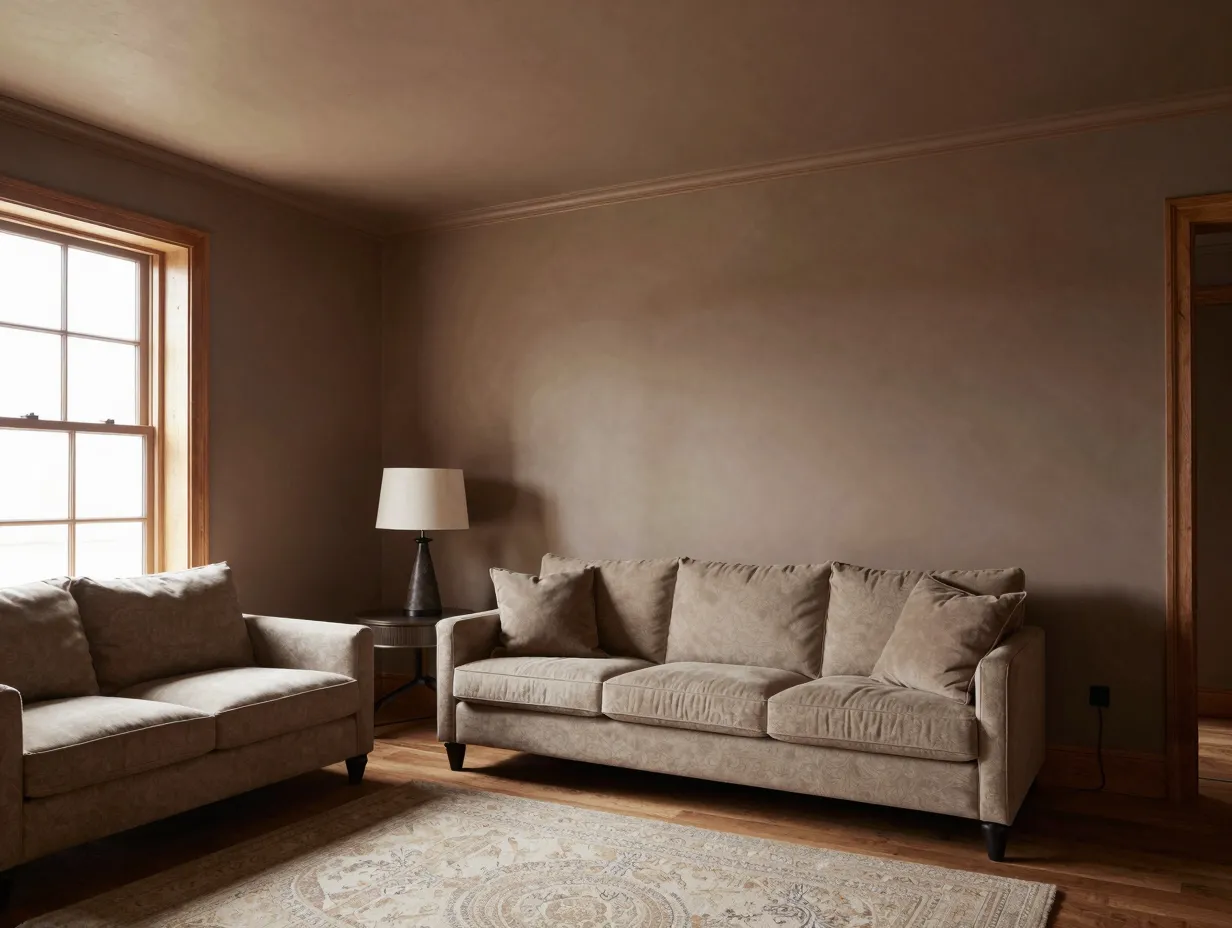
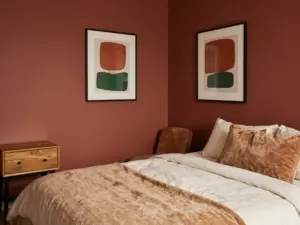
For years, beige was the safe default for anyone who wanted a neutral backdrop. But interior designers are now pointing firmly toward chocolatey taupe, a hue that sits between gray and brown, pulling in tones of milk chocolate and mole brown, as the smarter, more characterful choice [1].
What makes taupe work so well is its warmth. Unlike cool gray, it does not drain natural light from a room. Unlike flat beige, it has enough depth to feel intentional. Leading paint brands like Benjamin Moore and Farrow & Ball have both leaned into this direction, with shades like Taupetone and Broccoli Brown gaining significant attention among designers and homeowners alike [1].
How to use it: Designers recommend “tonal drenching”, painting walls, ceiling, and trim in closely related taupe tones. This technique wraps a room in a single mood without feeling monotonous, because the slight variation between surfaces creates subtle visual interest.
“Tonal drenching in taupe creates a cocoon-like quality that feels both grounded and genuinely luxurious.”, Interior design consensus from Livingetc [1]
2. Incorporate Silky Textures for Tactile Richness
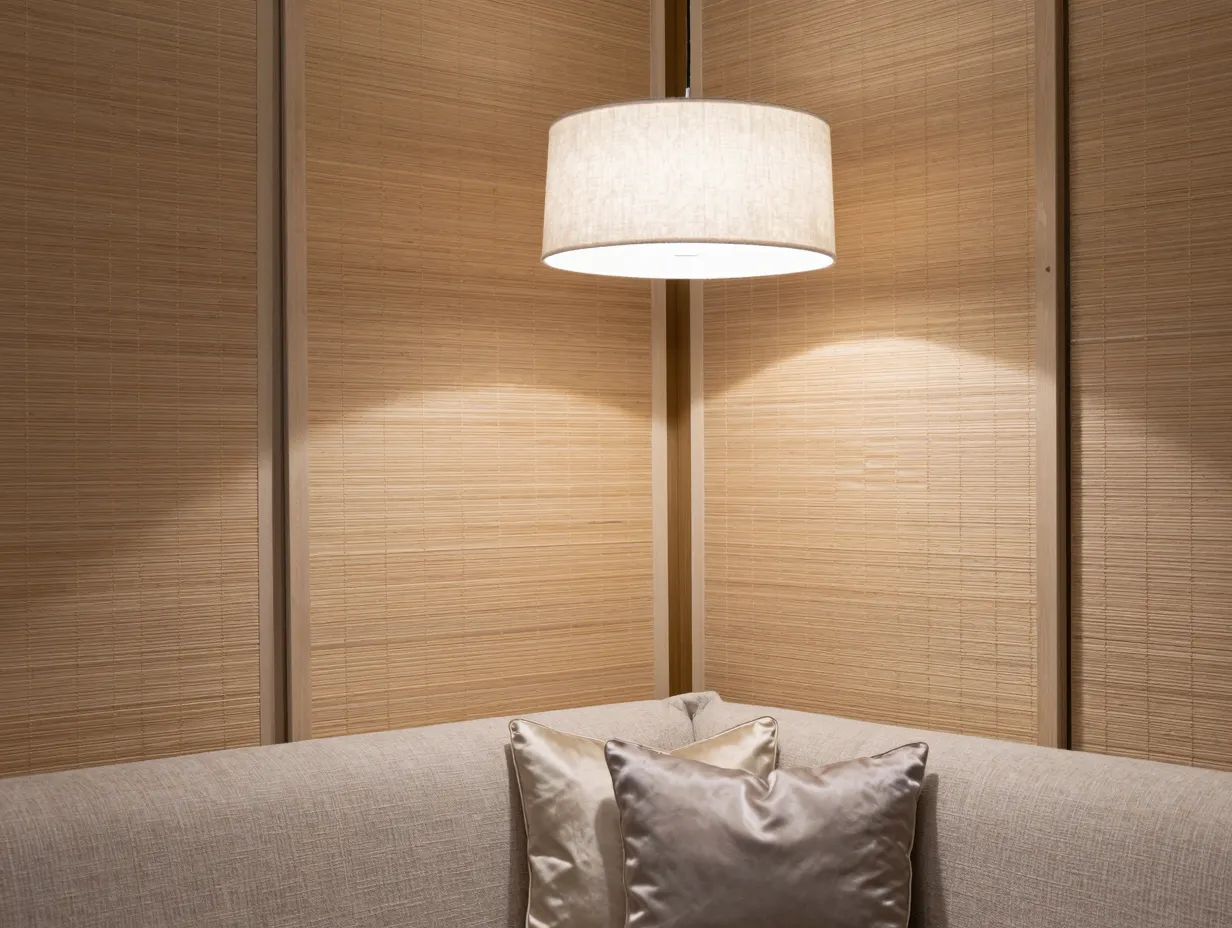
One of the most striking revelations from the 2026 WOW!house showcase was the use of bamboo silk across multiple surfaces, ceilings, chandeliers, and wall panels, within a single room [2]. The effect was not just visual. It was sensory.
When the same material appears in different forms throughout a space, the room gains a kind of internal rhythm. Your eye travels from one surface to another, and the repetition creates a sense of cohesion that is difficult to achieve with mixed materials alone.
Practical applications include:
- Bamboo silk wall panels as an alternative to painted feature walls
- Silk-lined lampshades or pendant lights for soft, diffused glow
- Silk cushion covers layered over linen or velvet upholstery
The key is restraint. Silky textures work best when they are used with intention rather than applied everywhere at once.
3. Adopt Soft Green Palettes for Calm and Depth
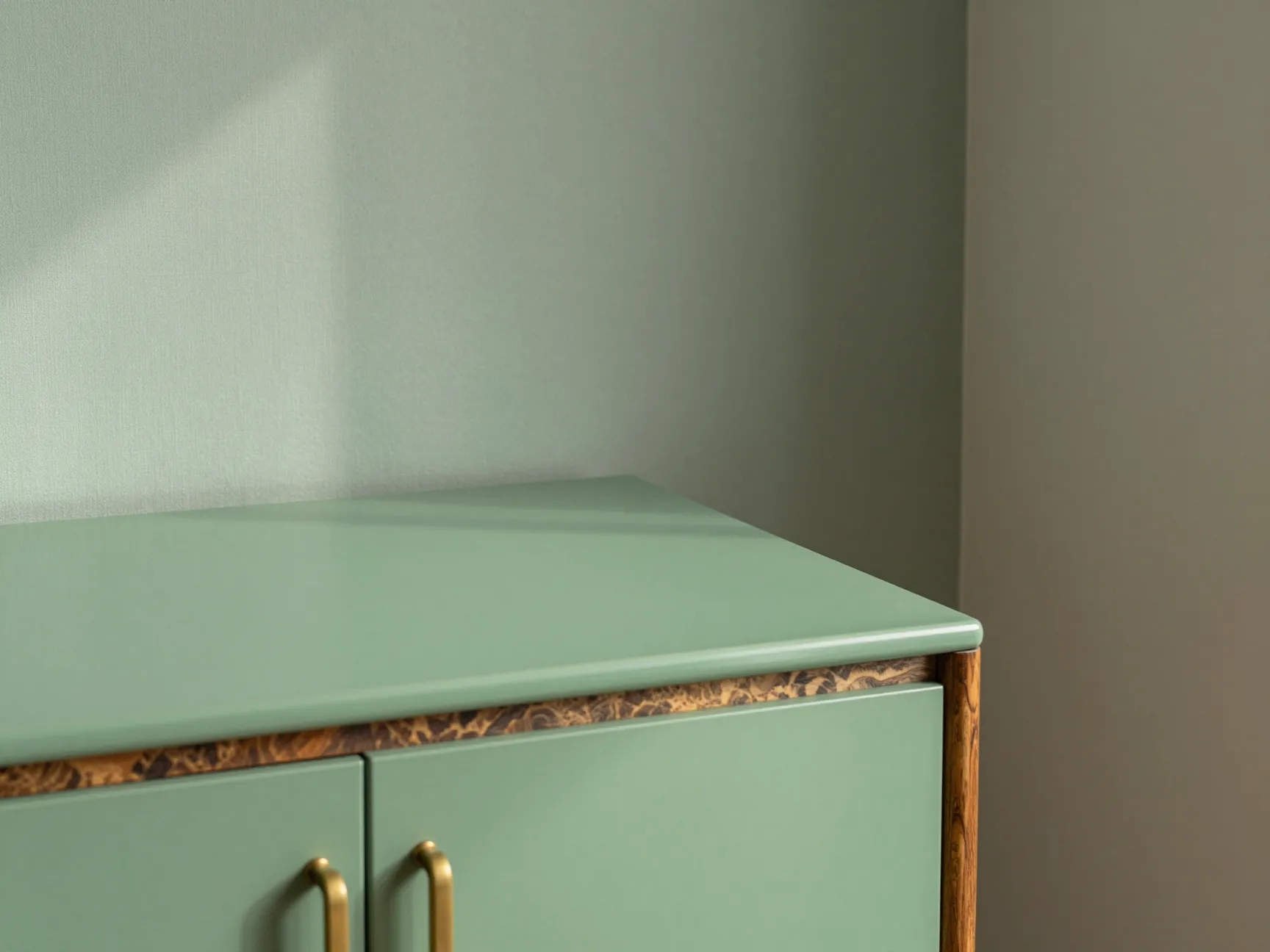
Soft, tonal greens have been building momentum for several years, but in 2026 they have moved from accent color to full-room commitment. Designers like Samantha Bartlett and Sara Cosgrove have used layered green palettes, from sage to deep forest, to create spaces that feel simultaneously calm and complex [2].
The addition of lacquer finishes is what elevates this trend beyond a simple paint choice. Lacquered green surfaces catch light differently throughout the day, shifting from matte to luminous depending on the angle and hour. This dynamic quality gives a room life without requiring constant redecoration.
Green palette pairings that work well in 2026:
| Green Tone | Complementary Material | Effect |
|---|---|---|
| Sage | Natural linen | Airy and relaxed |
| Olive | Warm brass hardware | Earthy and grounded |
| Deep forest | Dark burl wood | Rich and immersive |
| Mint | White plaster | Fresh and light |
4. Experiment with Tassels for Artistic Texture
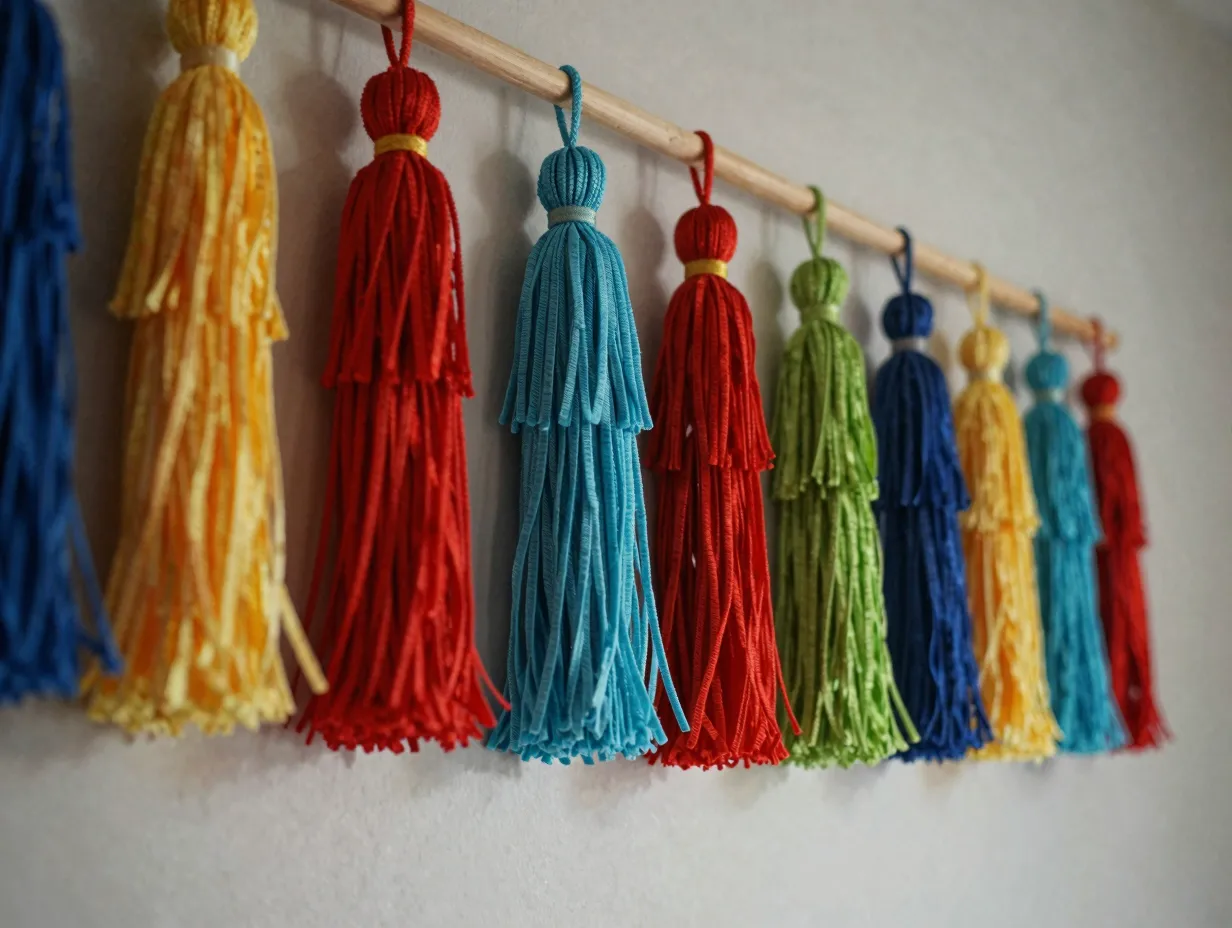
Tassels have long been associated with cushion trims and curtain tiebacks, but Studio Enass’s garden room at the 2026 WOW!house event demonstrated something far more ambitious: tassels used as wall art and table decoration [2].
When arranged in clusters or rows on a wall, tassels introduce movement and dimension that flat prints simply cannot offer. They shift slightly with air currents, catching light and casting small shadows. The result is a surface that feels alive.
This is a low-cost, high-impact idea that I find particularly compelling for renters who cannot paint or make structural changes. A tassel wall installation requires nothing more than a curtain rod or a strip of doweling, and it can be removed without damage.
Ways to incorporate tassels beyond the obvious:
- Hang a row of oversized tassels from a shelf edge as a decorative fringe
- Use tassels in contrasting colors to create a geometric wall pattern
- Add tassel clusters to the corners of a tablecloth for a bohemian dining look
5. Create Unexpected Color Contrasts
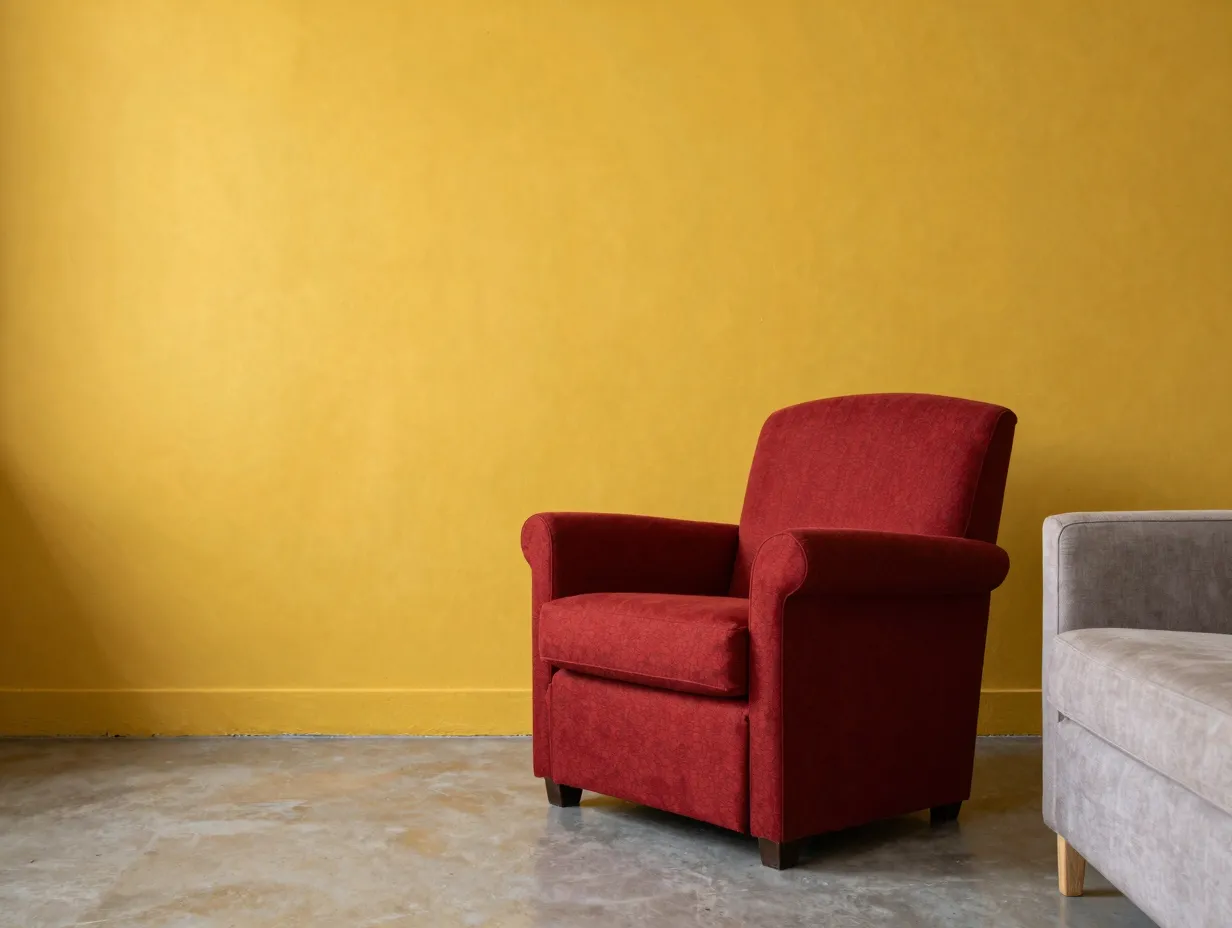
Safe color combinations are comfortable, but they rarely create memorable rooms. The work of Studio Duggan, showcased at the 2026 WOW!house event, demonstrated how unexpected color pairings like mustard with cherry red, or rust with lilac and green, can transform a space from pleasant to genuinely arresting [2].
The psychological principle at work here is contrast. When two colors that do not “match” in a conventional sense are placed together, the brain registers the pairing as intentional and bold rather than accidental. The room reads as confident.
A few unexpected pairings worth trying in 2026:
- Mustard yellow walls with cherry red upholstery
- Rust orange cabinetry against a lilac-painted wall
- Cobalt blue shelving against a warm terracotta backdrop
The rule I follow: pick one dominant color and one accent. Resist the urge to introduce a third strong color unless you have a very clear vision of how it ties the scheme together.
6. Integrate Burl Wood Accents for Timeless Luxury
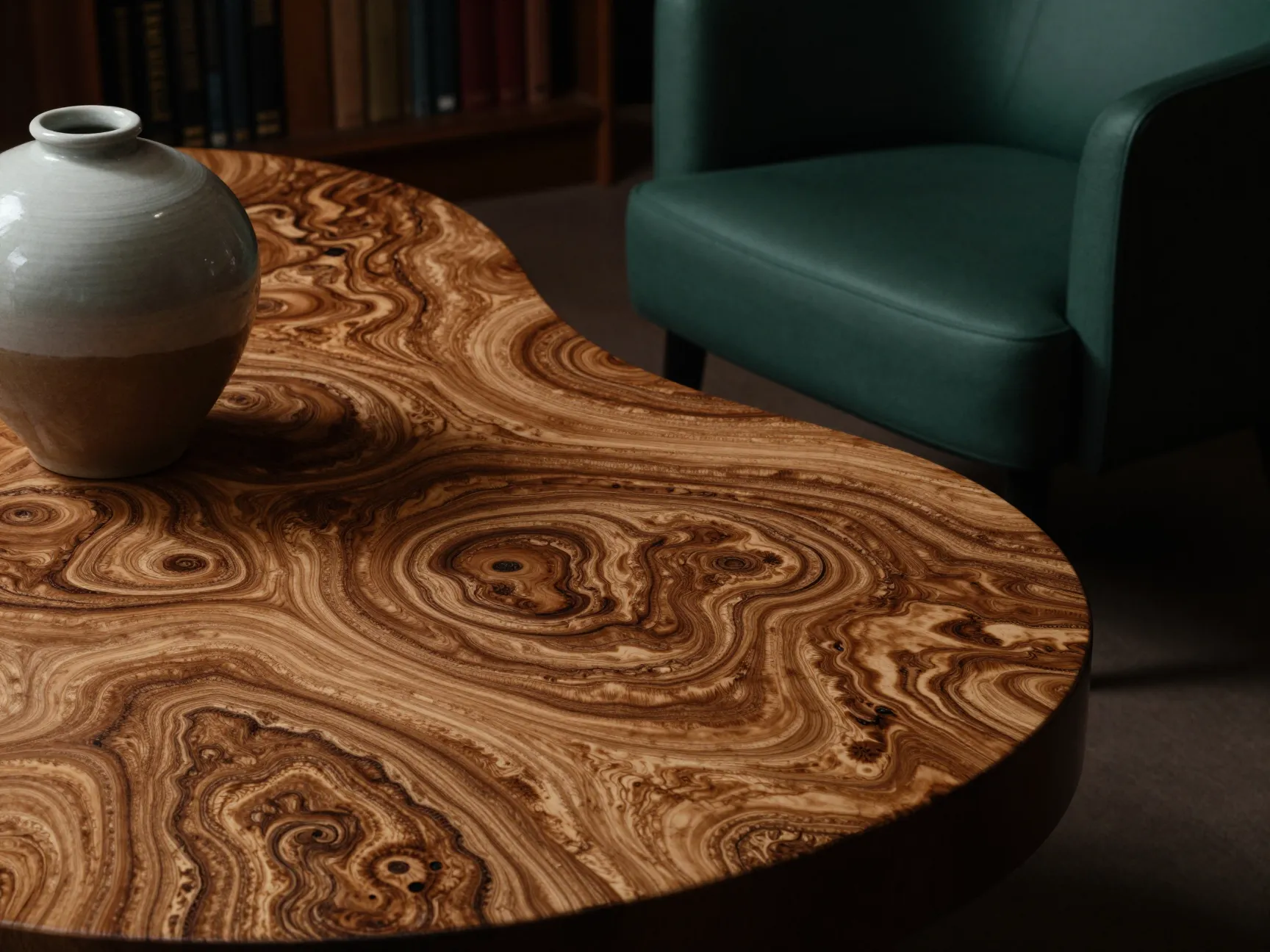
If there is one material that defines the mood of high-end interiors in 2026, it is burl wood. Characterized by its swirling, irregular grain patterns, burl wood has a visual complexity that no two pieces share. Róisín Lafferty’s library design at the 2026 WOW!house event showed how this material can anchor an entire room, creating an atmosphere of immersive, moody luxury [2].
Burl wood works particularly well in rooms where you want to signal permanence and quality, libraries, home offices, and dining rooms chief among them. It pairs beautifully with deep green, navy, and rich terracotta, and it holds its own against both modern and traditional furnishings.
Where to introduce burl wood without a full renovation:
- A burl wood side table or coffee table as a focal point
- Burl wood veneer cabinet doors in a kitchen or bathroom
- A framed burl wood panel used as wall art
The investment is higher than most decorative choices, but the longevity and visual impact justify it for pieces you intend to keep for years.
7. Layer Textures for “Found Luxury” Depth
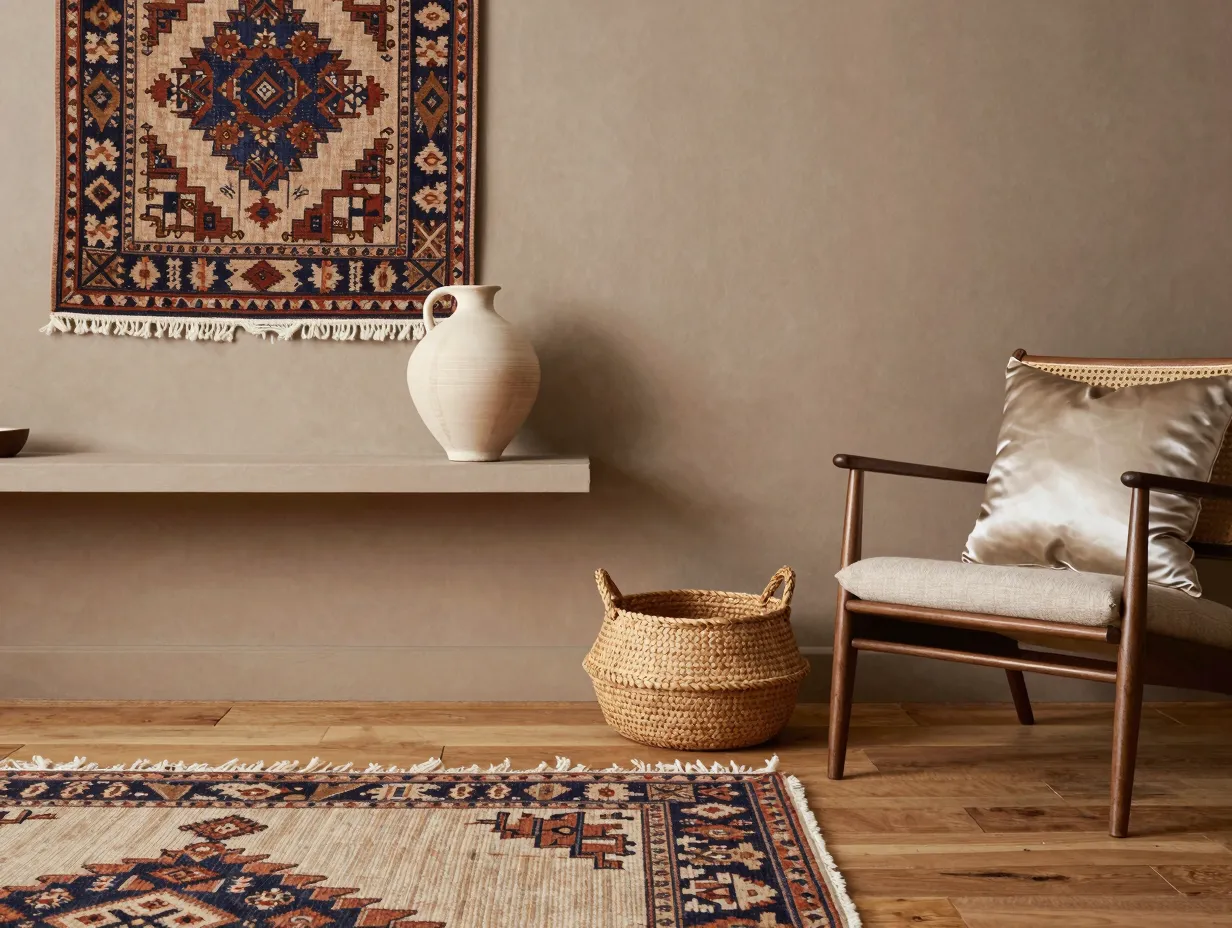
One of the most compelling interior design concepts gaining traction in 2026 is what Homes & Gardens describes as “found luxury”, a curated approach to maximalism that favors vintage, handcrafted, and tactile elements over polished, mass-produced uniformity [3].
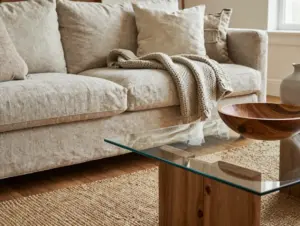
The idea is that a room should look as though it has been assembled thoughtfully over time, not ordered from a single catalog. Patchwork textiles, folk-inspired ceramics, hand-thrown pottery, and woven wall hangings all contribute to this aesthetic.
The layering formula that works:
- Start with a neutral base (taupe walls, natural wood floors)
- Add a large-scale textile with pattern (a vintage kilim rug or patchwork throw)
- Introduce handcrafted objects at different heights (a ceramic vase on a shelf, a woven basket on the floor)
- Finish with a single luxurious accent (a silk cushion, a burl wood tray)
This approach is also inherently sustainable. Buying vintage and handcrafted pieces reduces reliance on fast-furniture cycles and results in a home that feels genuinely personal rather than trend-dependent.
8. Revive 1980s Design Elements, Done Right
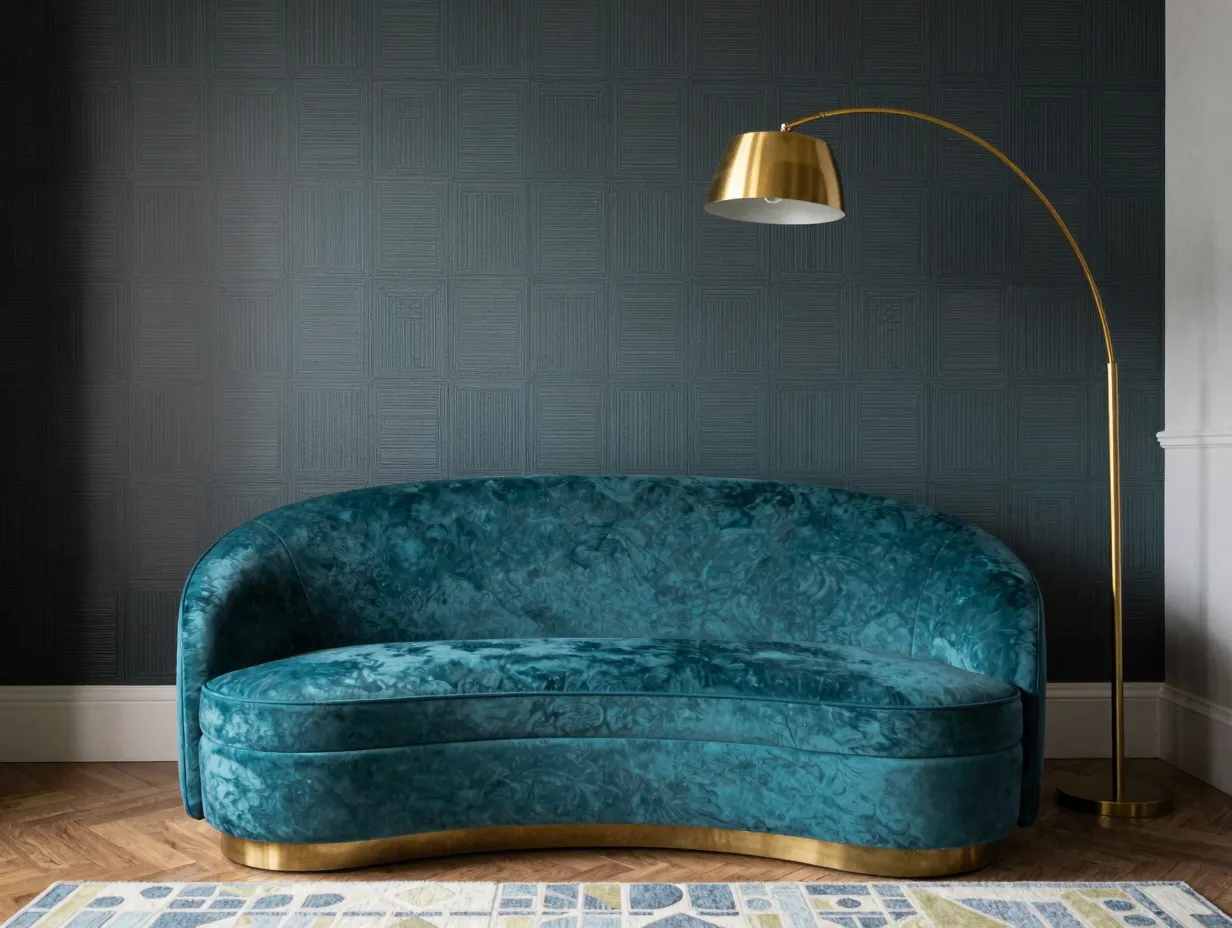
The 1980s are back, and this time the revival is more considered than the decade’s original maximalism. Pattern layering with mismatched yet curated motifs, bold statement furniture, and vibrant color maximalism are all returning, but filtered through a 2026 lens that prioritizes quality materials and balanced compositions [4].
I remember visiting a friend’s apartment last year that had leaned fully into this direction. A bold geometric wallpaper in gold and black, a curved velvet sofa in deep teal, and a brass arc floor lamp created a room that felt like a confident design statement rather than a nostalgic pastiche. The key was that every piece was well-made and the overall composition was controlled.
1980s elements worth reviving in 2026:
- Curved, sculptural furniture silhouettes (arched sofas, rounded armchairs)
- Lacquered surfaces in bold colors (black, deep red, forest green)
- Geometric pattern wallpaper used on a single feature wall
- Brass and gold hardware as a unifying metallic thread
1980s elements best left in the past:
- Mirrored everything (one mirrored surface is interesting; five is overwhelming)
- Matching suite furniture (a full three-piece suite in identical fabric reads as dated)
- Neon color schemes without grounding neutrals
The experts at Woman & Home emphasize that modernizing these trends requires focusing on quality materials and balanced compositions to avoid overwhelming a space [4]. One or two strong 1980s-inspired pieces in an otherwise restrained room will always outperform a full-throttle revival.
9. Design a Cozy Snug Space for Intimate Retreat
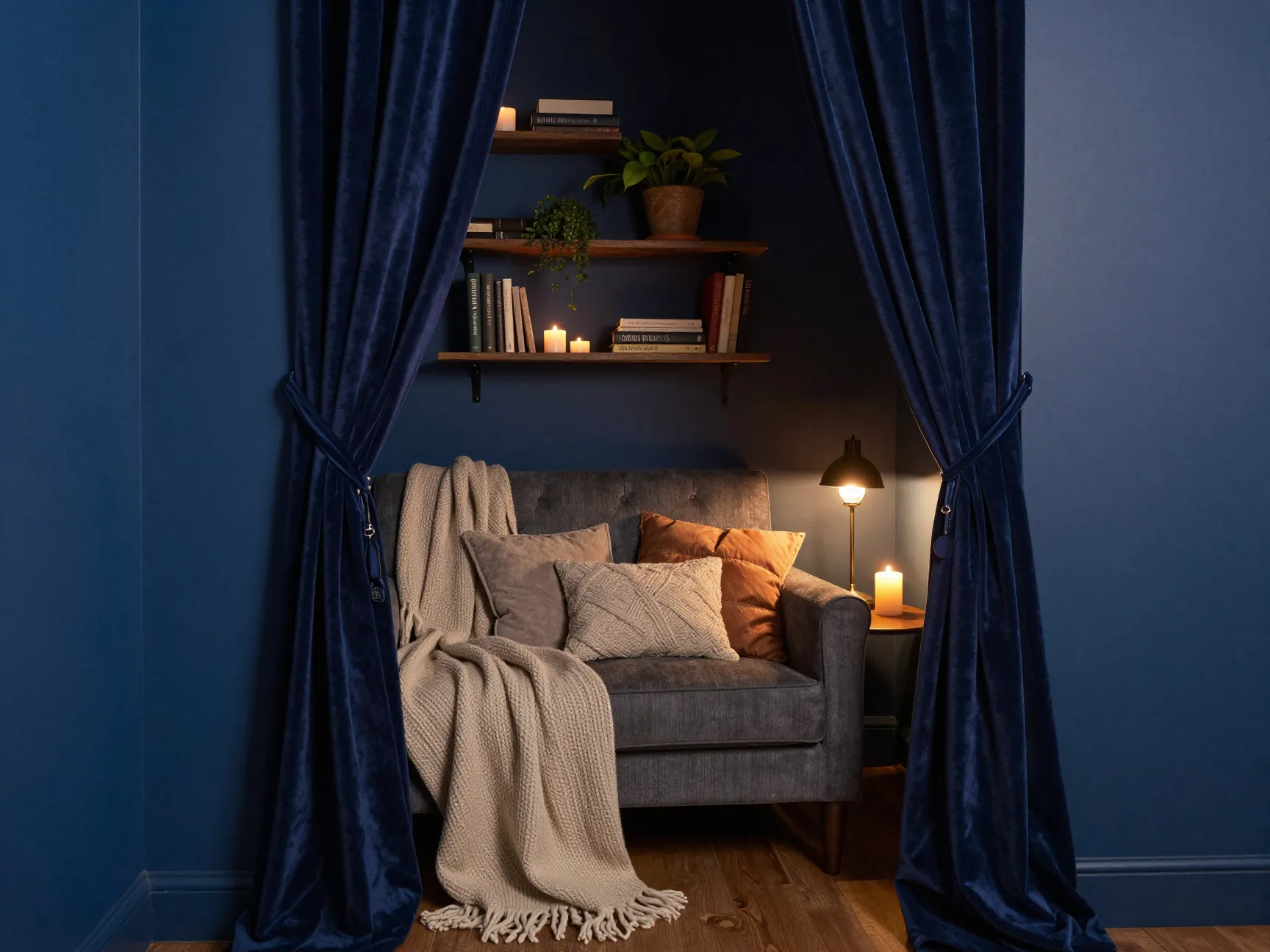
The final idea on this list of 9 New Home Decor Ideas Interior Design Lovers Need to Try This Year may be the one with the most immediate impact on daily life. Interior designers are giving renewed attention to snugs, small, dedicated rooms or alcoves designed purely for comfort and retreat [5].
A snug is not simply a small living room. It is a space with a specific emotional brief: to feel enclosed, warm, and separate from the demands of the rest of the house. According to Livingetc, the most effective snug designs use cocooning colors, luxurious textures, and subtle theatrical elements to achieve this [5].
The anatomy of a well-designed snug:
- Color: Deep, saturated tones like midnight blue, forest green, or burgundy. These colors absorb light and create a sense of enclosure.
- Textiles: Dramatic velvet curtains, heavy wool throws, and layered cushions in varied textures.
- Lighting: Warm, low-level lighting from table lamps and candles rather than overhead fixtures.
- Storage: Curated shelving niches that display books, objects, and plants without feeling cluttered.
- Scale: Furniture slightly oversized for the room, reinforcing the cocooning effect.
Even if you do not have a dedicated room, a snug corner can be carved out of a larger space using a bookshelf as a divider, a canopy over an armchair, or a bay window seat with deep cushions and curtains that can be drawn closed.
“The best snugs feel like they exist outside of ordinary time, a room where the outside world genuinely recedes.” [5]
Bringing All 9 New Home Decor Ideas Together
What connects these nine ideas is a shared philosophy: that the best interiors in 2026 are built on sensory richness, personal curation, and emotional intention rather than trend-chasing for its own sake. Whether you choose to start with a single taupe paint color or commit to a full snug transformation, the underlying principle is the same, design spaces that make you feel something.
The 2026 WOW!house event, the research from Homes & Gardens, and the expert voices at Woman & Home all point in the same direction: toward homes that are warmer, more tactile, more personal, and more deliberately designed for the people who actually live in them [2][3][4].
Conclusion
The 9 New Home Decor Ideas Interior Design Lovers Need to Try This Year are not about following trends blindly. They are about understanding what is working in the hands of skilled designers and translating those principles into your own space with intention and confidence.
Here are your actionable next steps:
- Choose one idea from this list that resonates most strongly with your current space and lifestyle.
- Start small, a taupe paint sample, a single burl wood accessory, or a tassel wall installation costs very little but tells you immediately whether the direction is right for you.
- Layer gradually. The most successful interiors in 2026 were not designed in a single weekend. They were built up over time, with each addition considered against what was already there.
- Invest in quality where it counts. A single well-made piece, a silk cushion, a handcrafted ceramic, a vintage textile, will do more for a room than a dozen inexpensive substitutes.
- Trust your instincts. These trends are starting points, not rules. The best room you can design is one that reflects who you are, not who a trend report says you should be.
Your home is the one environment you have complete control over. In 2026, the most exciting design spaces are the ones that feel genuinely lived in, thoughtfully assembled, and unmistakably personal. Start there.
References
[1] Taupe Color Trend – https://www.livingetc.com/ideas/taupe-color-trend?utm_source=openai
[2] Wowhouse 2026 – https://www.livingetc.com/ideas/wowhouse-2026?utm_source=openai
[3] Interior Design Trends 2026 – https://www.homesandgardens.com/interior-design/interior-design-trends-2026?utm_source=openai
[4] Nostalgic 80s Interior Design Trends Worth Revisting – https://www.womanandhome.com/homes/decor-advice/nostalgic-80s-interior-design-trends-worth-revisting/?utm_source=openai
[5] Snug Design Trends – https://www.livingetc.com/ideas/snug-design-trends?utm_source=openai