9 Outdoor Gardens Design Principles For A Cohesive And Beautiful Yard
Fewer than 30% of homeowners who redesign their yards are satisfied with the result after two years, not because they lacked budget, but because they lacked a framework. A beautiful yard is not an accident. It is the product of deliberate decisions guided by proven design principles that landscape professionals have refined over decades.
Disclosure: This post contains affiliate links. As an Amazon Associate, we earn from qualifying purchases, and at no extra cost to you.
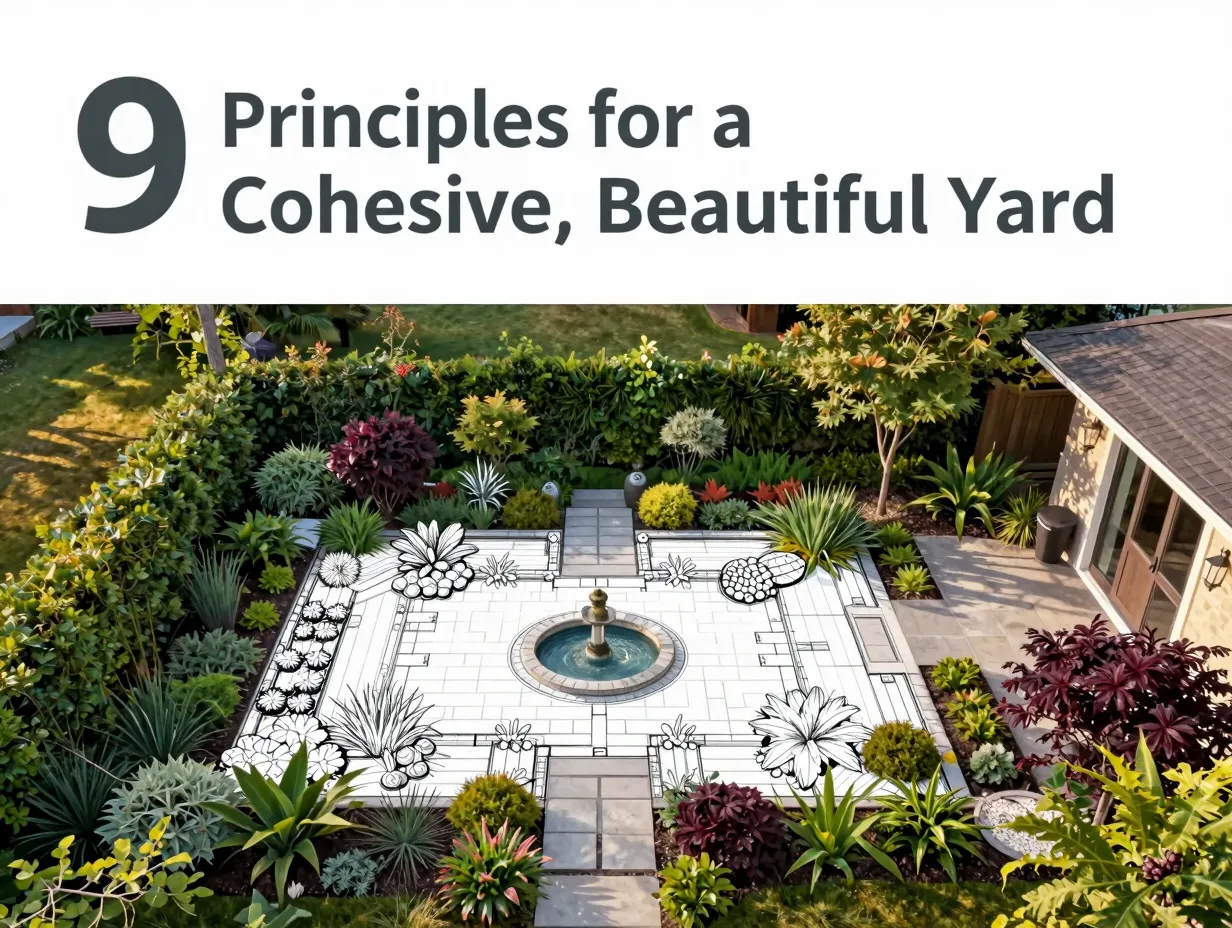
Whether you are starting from bare soil or trying to pull together a yard that feels scattered and unfinished, understanding the 9 outdoor gardens design principles for a cohesive and beautiful yard gives you a reliable blueprint. These principles, unity, balance, proportion, scale, rhythm, focal points, contrast, simplicity, and function, work together as a system. Ignore one, and the others start to feel off. Apply them thoughtfully, and even a modest yard can feel like a considered, intentional space. [1][6]
I have spent years working alongside landscape designers and homeowners, watching projects succeed and fail. The difference almost always comes down to whether the design was built on these principles or assembled by impulse. This article walks through each one with practical guidance you can apply right now.
Key Takeaways
- Unity is the master principle: every material, plant, and structure should feel like it belongs to the same family.
- Balance does not require symmetry, asymmetrical layouts can feel just as stable and often more natural.
- Proportion and scale connect your yard to your home; oversized or undersized elements create immediate visual tension.
- Rhythm, repetition, and contrast work together to guide the eye and prevent monotony.
- Function is a full design principle, not an afterthought, a yard that does not serve its users will never feel truly cohesive. [6][8]
Understanding The Foundation Of The 9 Outdoor Gardens Design Principles For A Cohesive And Beautiful Yard
Before diving into each principle individually, it helps to understand why this particular set of nine has earned such broad consensus among landscape professionals. Industry summaries consistently list unity, harmony, balance, scale, proportion, rhythm, focal points, contrast, and simplicity as the foundational rules for cohesive gardens. [1] More recent professional guidance has elevated function and transition to the same level, recognizing that a yard must work for the people who live in it, not just look good in photographs. [8]
Think of these principles the way a musician thinks about music theory. You can play by ear and occasionally produce something beautiful, but understanding the rules lets you make deliberate choices, and break the rules intentionally when the result calls for it.
The nine principles also interact. Unity sets the overarching tone. Balance and proportion determine structure. Rhythm and contrast create movement and interest. Focal points anchor the eye. Simplicity prevents chaos. And function ensures the whole thing is livable. [10]
The 9 Outdoor Gardens Design Principles For A Cohesive And Beautiful Yard, Explained One By One
1. Unity
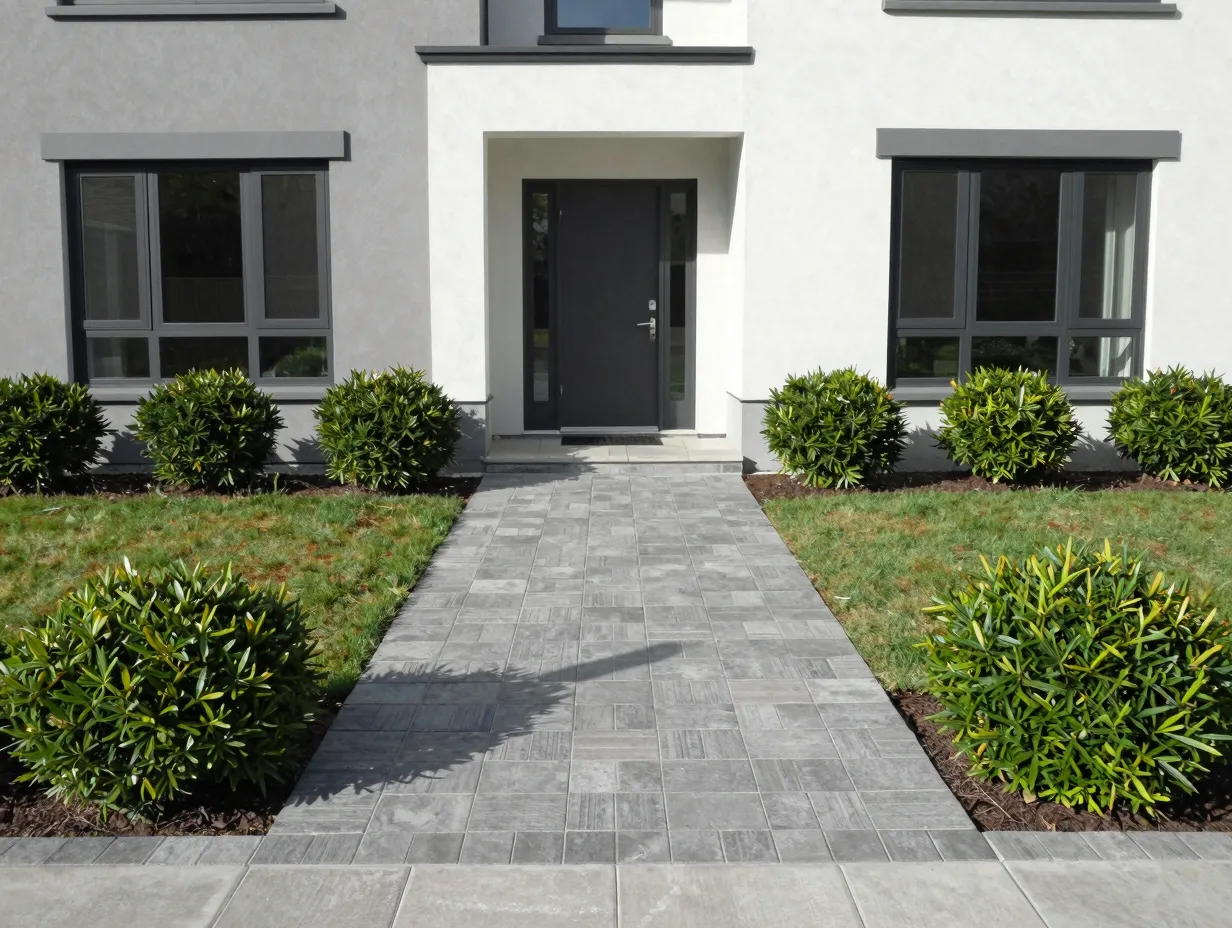
Unity is the master principle, the one that makes a yard feel like a single, complete idea rather than a collection of unrelated parts. It is achieved by repeating colors, textures, materials, and forms throughout the space so that every element feels like it belongs to the same family. [10]
In practice, unity means choosing a limited palette. If you use three types of paving material, the yard will almost always feel busier than if you use one or two. Professional guidance recommends limiting underfoot materials to roughly three at most, and fewer is usually better. [2] The same logic applies to plant selection: a yard planted with twenty different species in no particular pattern will feel chaotic, while one that repeats five or six species in thoughtful groupings will feel resolved.
Unity also means connecting your landscape to your home’s architecture. The lines, materials, and scale of your house should inform your planting and hardscape choices. A modern home with clean horizontal lines calls for structured planting and geometric paving. A cottage-style home invites softer, more informal plant masses. [11]
Quick unity checklist:
- Repeat at least one plant species or material in three or more locations
- Echo the home’s dominant color in at least one hardscape or plant choice
- Limit paving materials to two or three types maximum
2. Balance
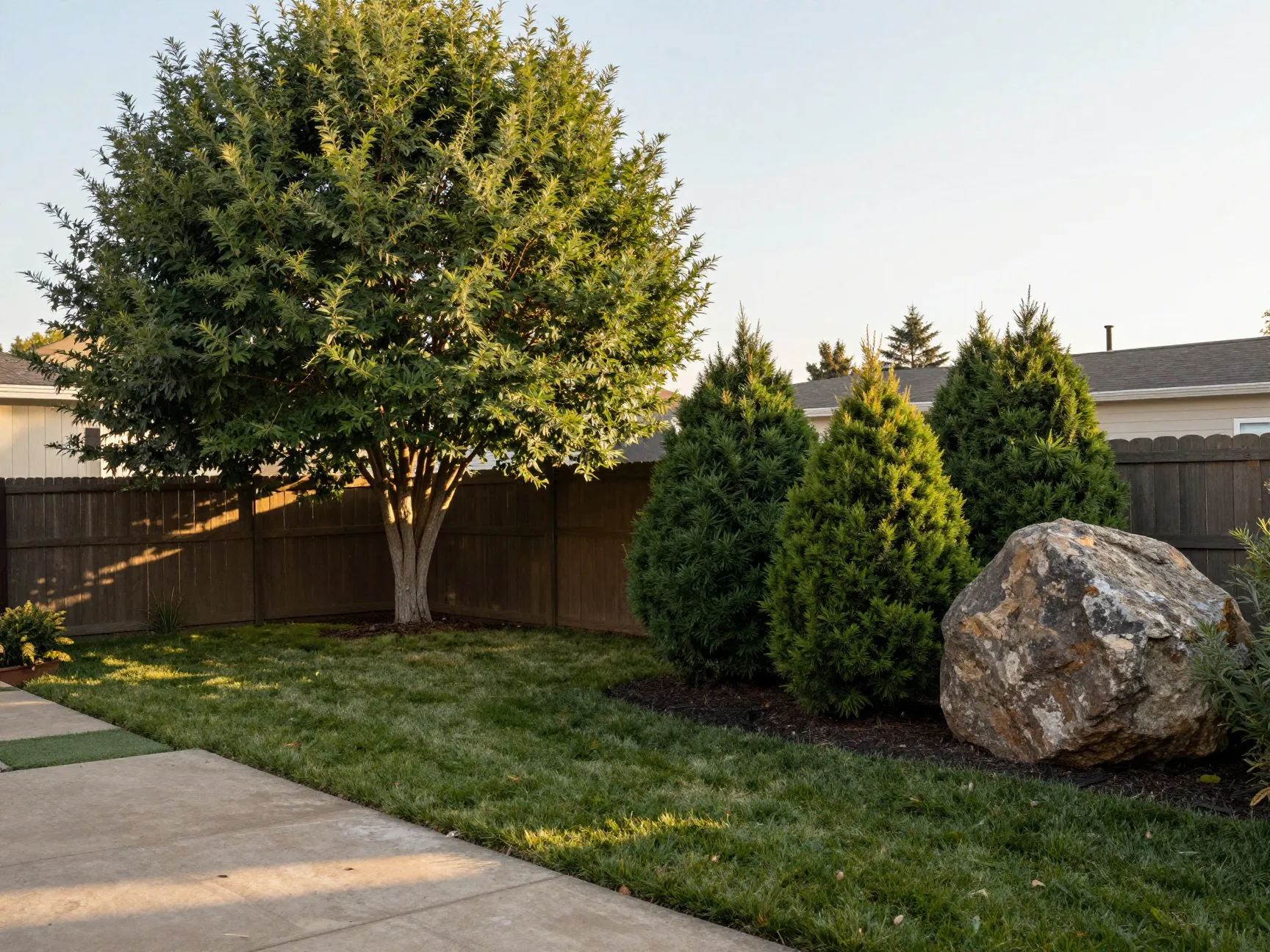
Balance is the sense of visual stability in a design. It comes in two forms: symmetrical (formal) and asymmetrical (informal). Symmetrical balance places matching elements on either side of a central axis, think mirrored hedges flanking a front door. Asymmetrical balance achieves stability through different elements of equal visual weight placed on either side of an implied center. [10]
Most residential yards benefit from asymmetrical balance because it feels more natural and is easier to maintain over time as plants grow. A large ornamental tree on one side of a yard can be balanced by a grouping of medium shrubs and a boulder on the other side, even though the elements are entirely different.
The key insight is that balance is about perceived weight, not identical elements. Dark colors, large masses, and dense textures carry more visual weight than light colors, small forms, and fine textures. Learning to read visual weight is one of the most transferable skills in garden design. [7]
3. Proportion
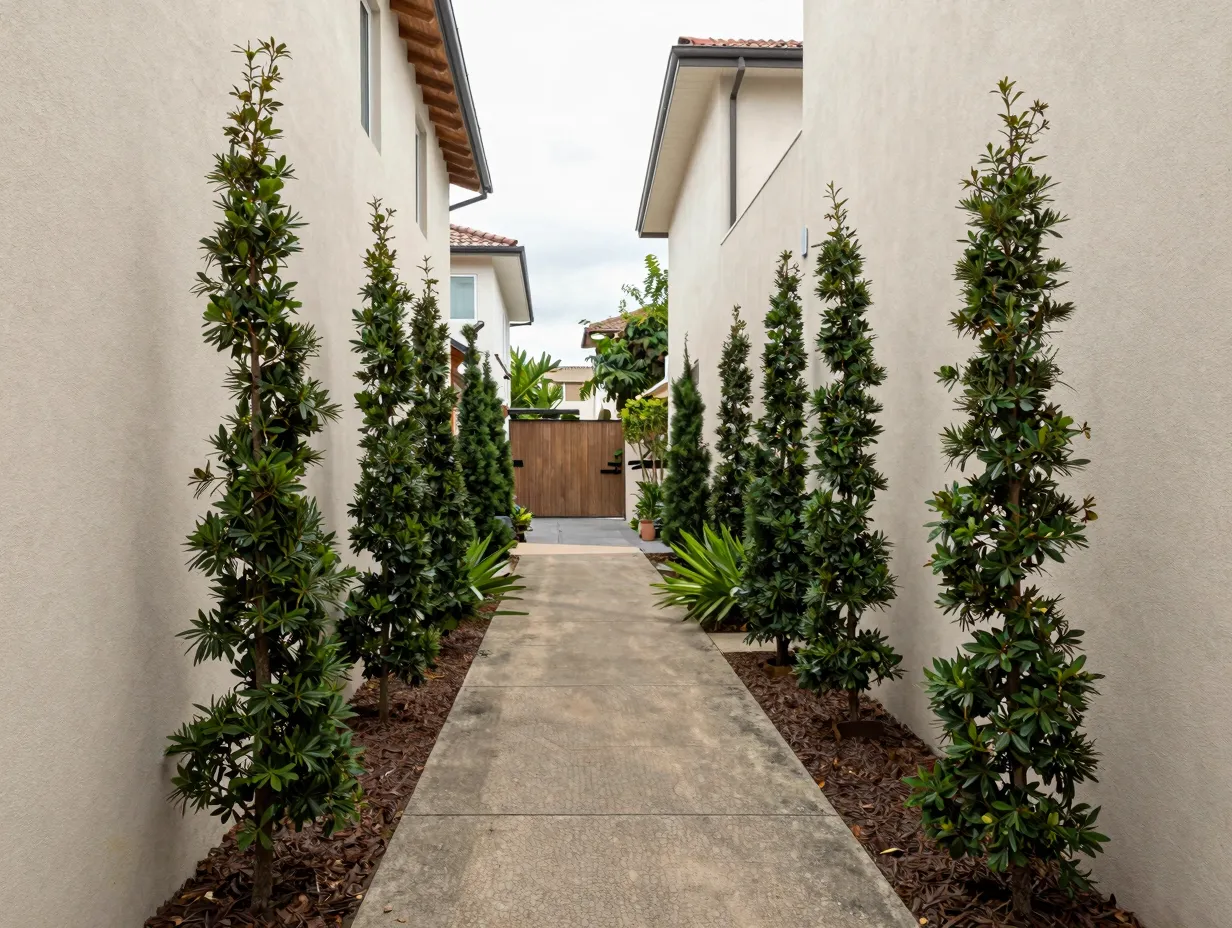
Proportion refers to the size relationships between elements within the garden itself. A delicate ornamental grass planted at the base of a two-story wall looks lost. A massive specimen shrub crammed into a narrow side passage looks suffocating. Getting proportion right means matching the scale of plants and structures to the spaces they occupy. [4]
A useful rule of thumb: the height of a plant or structure at maturity should generally not exceed the width of the space it anchors. Tall, narrow plants can work in tight spaces precisely because their vertical emphasis draws the eye upward rather than outward.
Proportion also governs the relationship between hardscape and softscape. A widely cited guideline recommends balancing hardscape, patios, paths, walls, at roughly 30 to 40 percent of the yard, with softscape, plants, lawn, beds, at 60 to 70 percent. This ratio tends to produce visual harmony across a wide range of yard sizes and styles. [9]
4. Scale
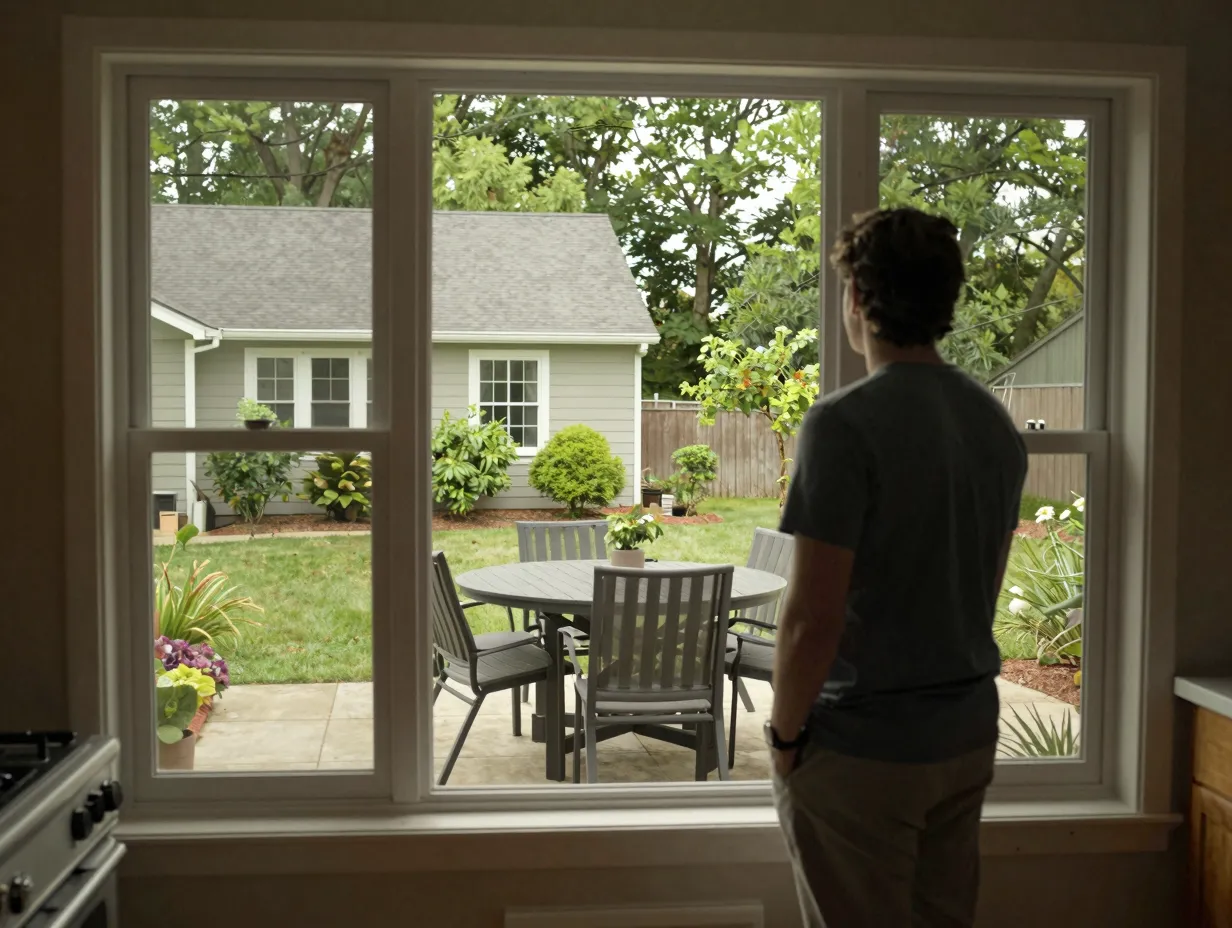
Scale is closely related to proportion but specifically concerns the relationship between garden elements and the human body, and between the garden and the home. A path that is only 18 inches wide will feel cramped for two people walking side by side. A patio that seats eight but is only 10 feet square will feel uncomfortable.
Scale also means reading your home’s footprint honestly. A small ranch house surrounded by towering specimen trees will feel overwhelmed. A large colonial home flanked by low foundation shrubs will look unanchored. The goal is for the landscape to feel like a natural extension of the building, neither dwarfing it nor being dwarfed by it. [10]
When I work through scale decisions with homeowners, I often ask them to stand at the spot where they spend the most time looking at the yard, usually a kitchen window or a back door, and describe what feels too big or too small from that vantage point. That single exercise reveals more than a site plan drawn at a desk.
5. Rhythm
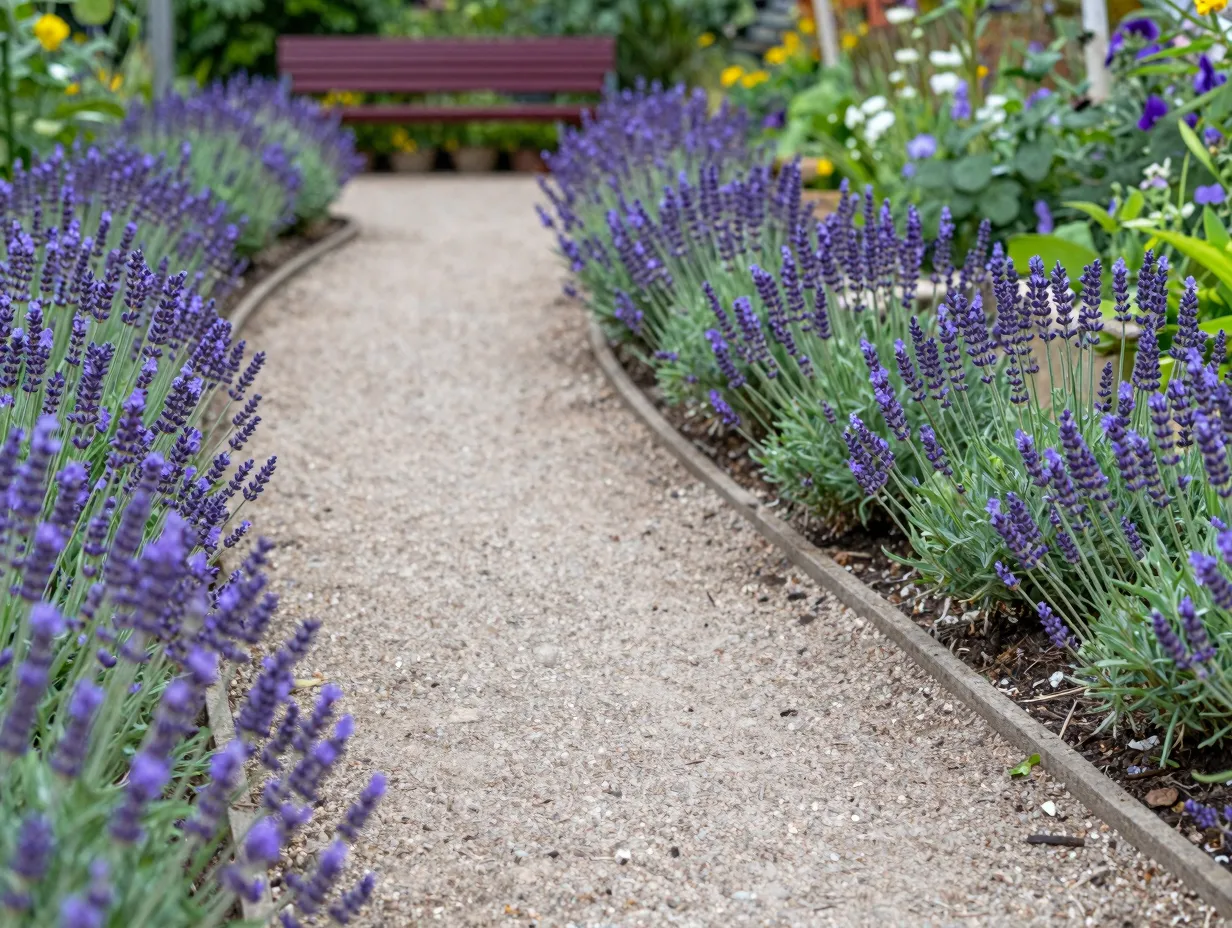
Rhythm in garden design is the repetition of elements, forms, lines, textures, colors, or materials, at regular or intentional intervals. It is what gives a yard a sense of movement and flow, guiding the eye from one area to the next without jarring transitions. [8]
Rhythm can be created through:
- Repeating the same plant species along a path or border
- Using consistent spacing between structural elements like posts or urns
- Echoing a color, say, the burgundy of a front door, in plant foliage or container choices throughout the yard
The concept of “echoes” is particularly powerful. When a color, texture, or form appears in one part of the garden and then reappears in another, the brain registers the connection and the space feels unified. [8][12] This is why professional designers often carry a single plant or material motif through an entire design, even when the individual zones serve very different functions.
Rhythm also prevents monotony. A border planted with the same species at identical intervals will feel mechanical. Varying the spacing slightly, or alternating between two complementary species, creates rhythm with enough variation to stay interesting.
6. Focal Points
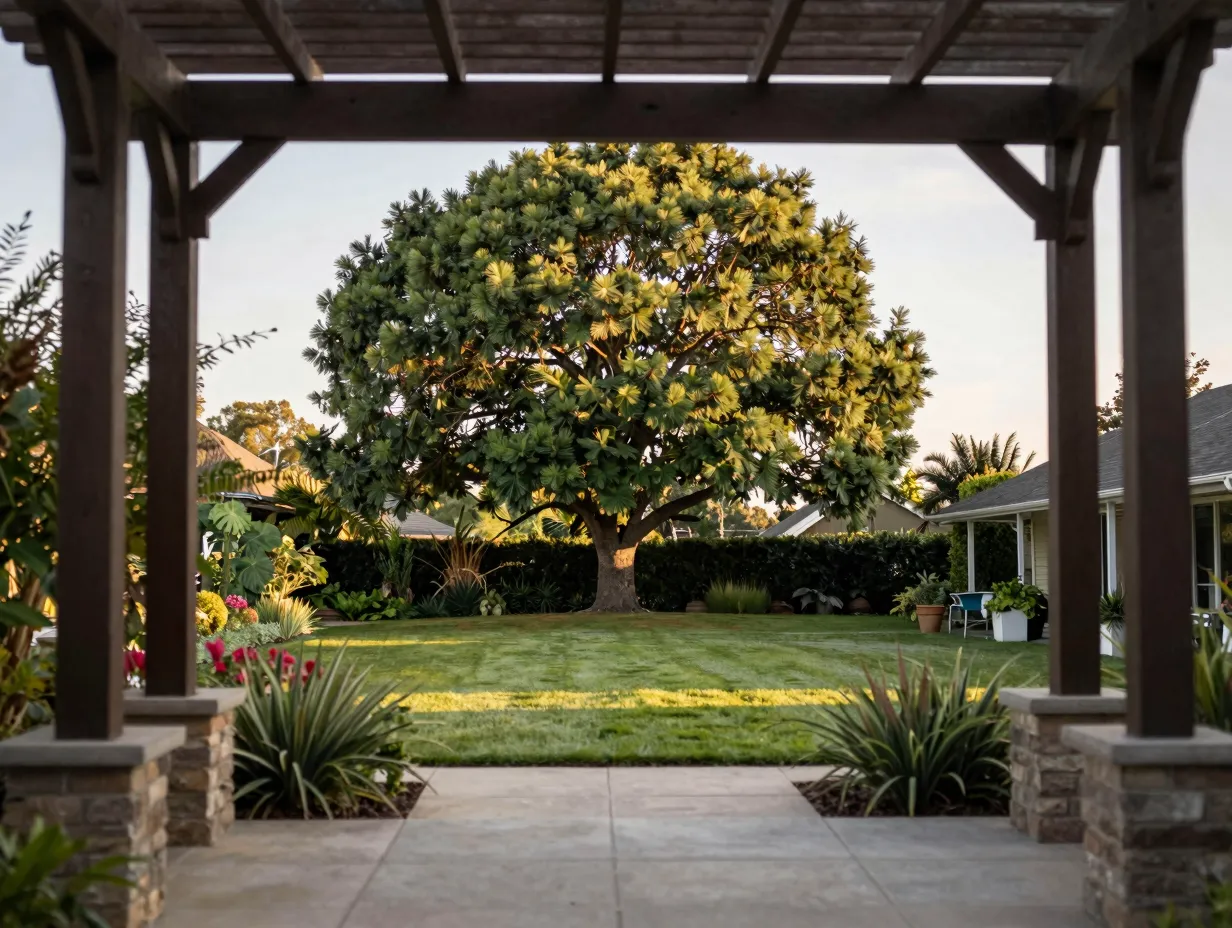
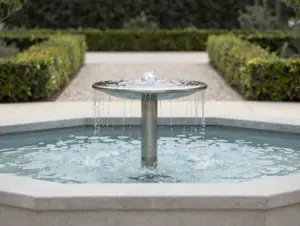
Every successful yard has at least one focal point, a visual anchor that draws the eye and gives the space a sense of purpose. Focal points can be natural or built: a specimen tree, a water feature, a sculpture, a boldly colored planting, or even a well-framed view borrowed from beyond the garden boundary. [7][2]
The principle of “borrowing views” is worth emphasizing. If your yard backs up to a mature woodland, a distant hill, or an interesting skyline, framing a sightline toward that view turns the landscape beyond your property line into a focal point you did not have to plant or build. This technique dramatically expands the perceived size of a small yard. [2]
A few rules for effective focal points:
- A yard needs at least one strong focal point, but rarely more than three
- Focal points should be visible from the primary viewing locations, the main seating area, the kitchen window, the entry path
- The path or sightline leading to a focal point is as important as the focal point itself
Focal points also organize space. When the eye has somewhere to land, the surrounding planting and hardscape feel purposeful rather than random. [7]
7. Contrast
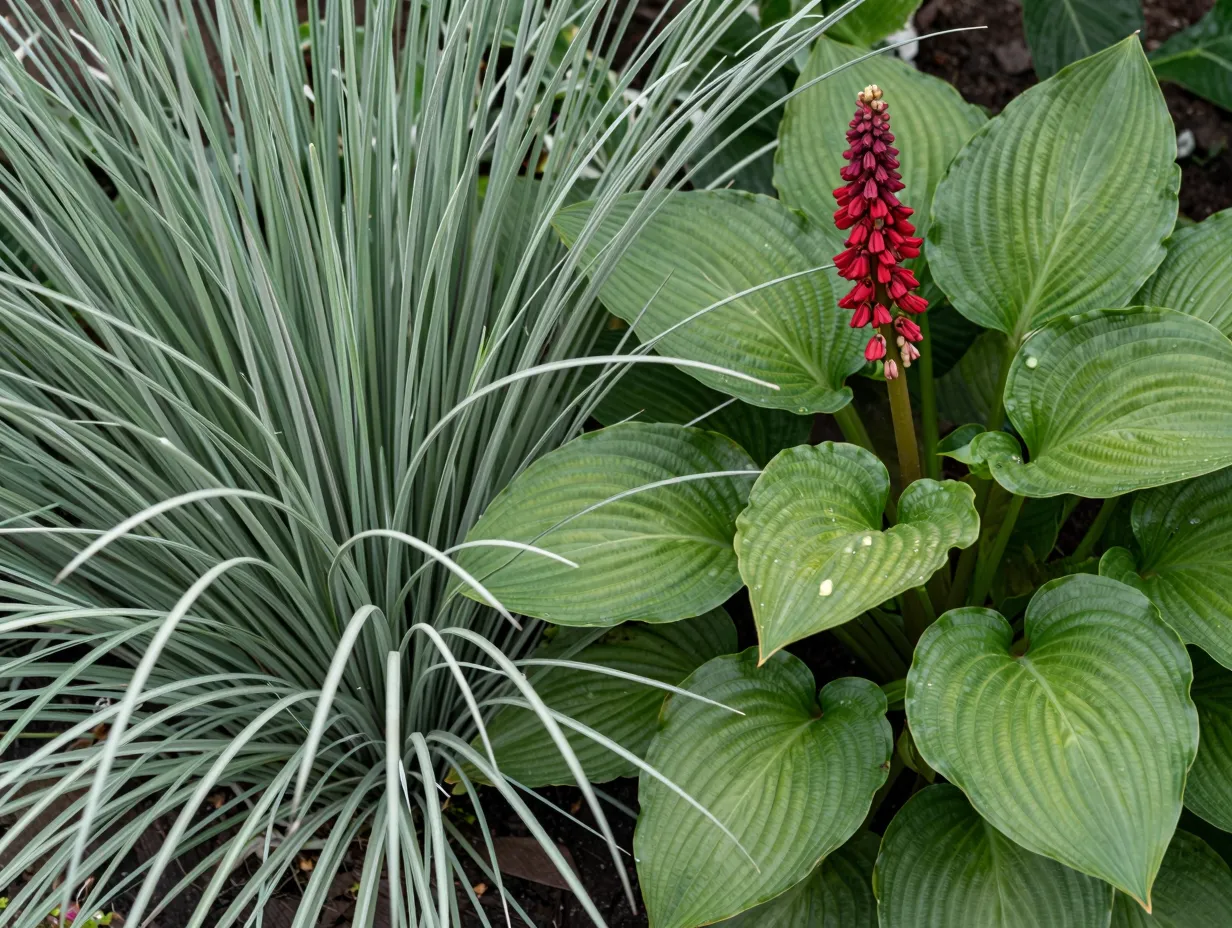
Contrast is the principle that prevents a unified design from becoming boring. It is the deliberate juxtaposition of opposing elements, light against dark, fine texture against coarse, upright form against spreading form, to create visual interest and definition. [1][3]
Without contrast, even a well-unified yard can feel flat. A border planted entirely in medium-green, medium-textured shrubs of similar height will read as a green wall rather than a designed composition. Introduce one plant with silver foliage, one with bold architectural leaves, and one with a dramatically different growth habit, and suddenly the border has depth and energy.
Contrast works at every scale:
- Color contrast: Dark foliage against light-colored paving or walls
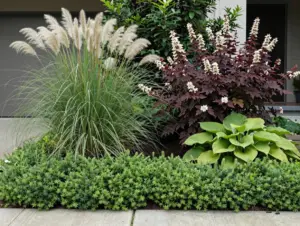
- Texture contrast: Fine ornamental grasses next to broad-leaved hostas or cannas
- Form contrast: Rounded mounding plants next to vertical accent plants
- Material contrast: Rough stone walls paired with smooth concrete or timber
The key is to use contrast as punctuation, not as the main text. Too much contrast produces chaos. The right amount creates emphasis and guides attention to the elements you most want the viewer to notice.
8. Simplicity
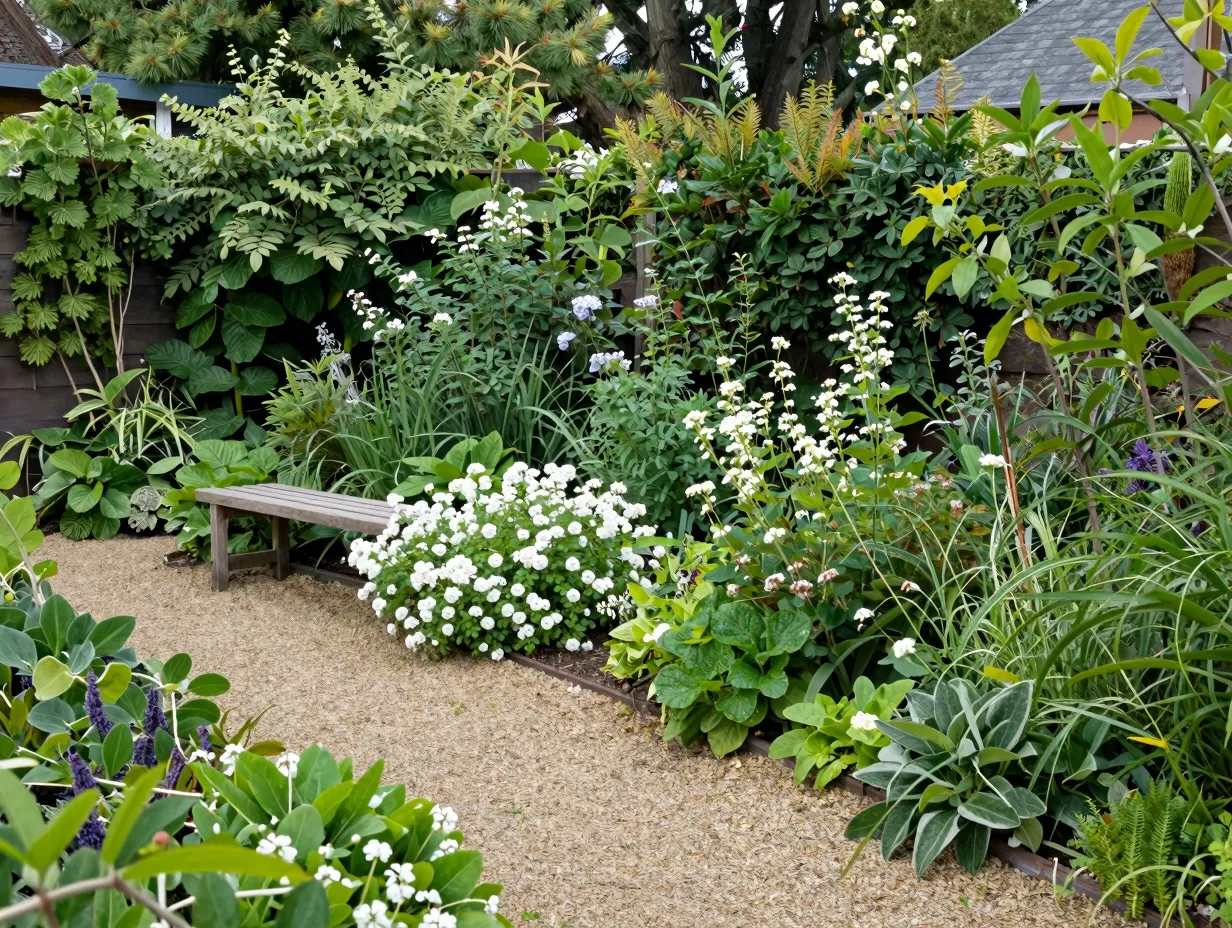
Simplicity is perhaps the most underrated of the nine principles, and the one most often abandoned in the excitement of a new garden project. It is the discipline of doing less, fewer species, fewer materials, fewer competing focal points, so that what remains has room to breathe and make an impact. [1][10]
A common mistake I see in residential yards is what designers call “plant collector syndrome”: the impulse to include every interesting species encountered at the garden center. The result is a yard that looks like a botanical sample collection rather than a designed space. Simplicity asks you to edit ruthlessly and trust that repetition and restraint are more powerful than variety.
Simplicity also ages better. A complex design with many different materials and species requires constant maintenance to stay looking intentional. A simpler design with fewer, well-chosen elements tends to improve as plants mature and materials weather. [2]
“The best gardens feel inevitable, as if they could not have been any other way. That quality almost always comes from simplicity.”
This does not mean minimalism. A lush cottage garden can be simple in its underlying structure even while it overflows with planting. The simplicity is in the framework: a clear path, a defined boundary, a single dominant color palette repeated throughout.
9. Function
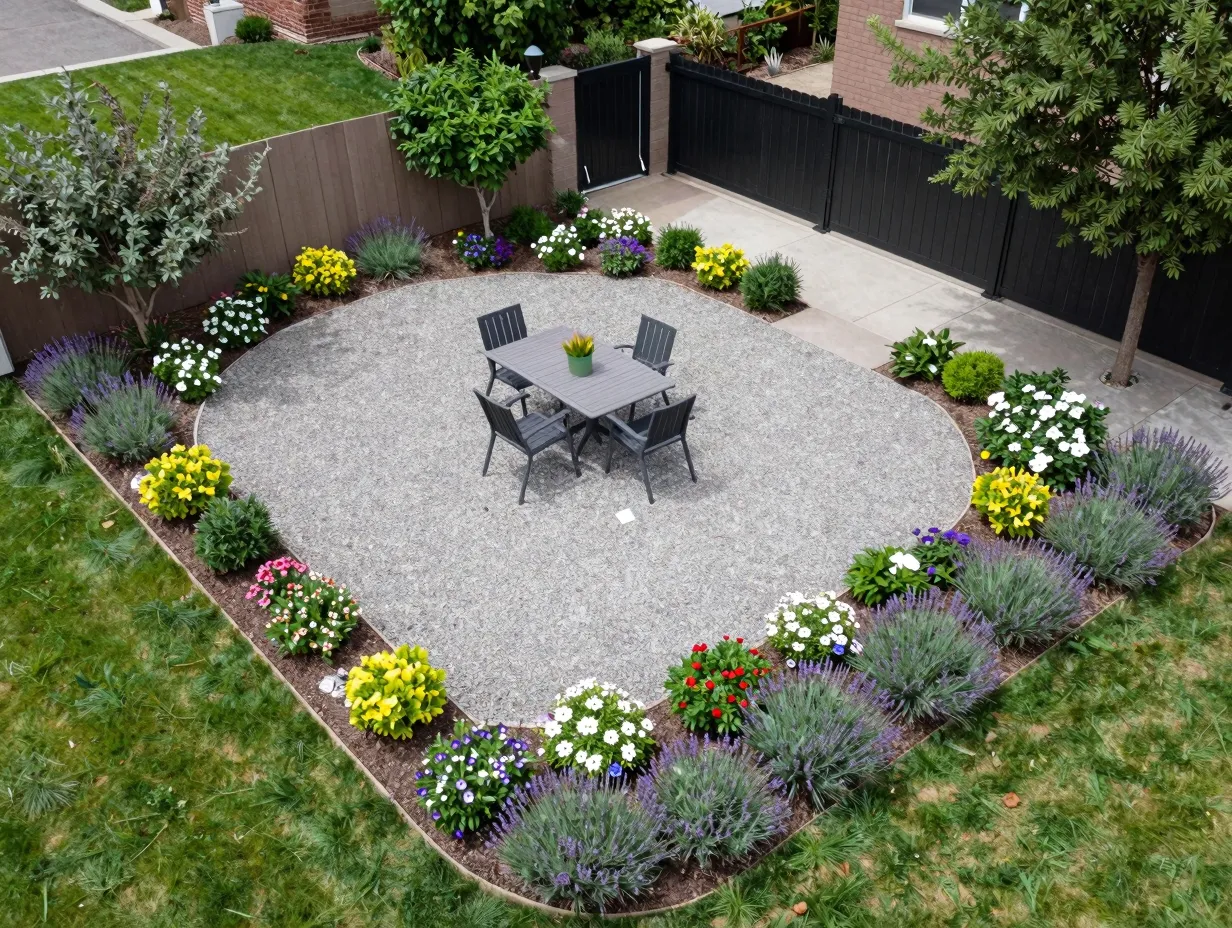
Function is the principle that grounds all the others in reality. A yard that looks beautiful in photographs but fails to serve the people who use it is not a successfully designed space. Function covers circulation (can people move through the space comfortably?), usability (does the patio actually fit the furniture and the family?), and sustainability (will the design hold up with the maintenance time and resources available?). [6][8]
Contemporary landscape guidance increasingly folds climate adaptation into function. Selecting region-appropriate plants, designing for water conservation, and balancing hardscape and softscape for drainage and heat management are all functional considerations that directly affect long-term cohesion and beauty. [5] A yard full of plants that struggle in the local climate will never look as good as one planted with species that thrive naturally.
Function also includes transition, the smooth connection between different areas of the yard. A sudden shift from formal patio to wild meadow without any transitional planting or material change will feel jarring. Smooth transitions, achieved through gradual changes in plant height, texture, or material, are what allow a yard to contain multiple distinct zones while still reading as a single unified composition. [8]
Functional design checklist:
- Primary paths are at least 36 inches wide for comfortable single-file movement, 48 to 60 inches for two people side by side
- Seating areas are sized to accommodate actual furniture plus circulation (minimum 10×10 feet for a small dining set)
- Plant selections match the local climate and the realistic maintenance commitment of the household
- Transitions between zones use at least one shared material or plant to maintain visual continuity
Putting The Principles Together: The Rule of Three and Hardscape Ratios
Two practical tools help translate these nine principles into on-the-ground decisions.
The Rule of Three states that plant and feature groupings in odd numbers, 3, 5, 7, look more natural and cohesive than even-numbered arrangements. [9] This is not a rigid law, but it reflects the way the human eye processes groupings: odd numbers feel dynamic and intentional, while even numbers can feel static or paired-off. When in doubt, plant in threes.
The 30/40/60/70 Hardscape-Softscape Ratio provides a starting framework for any yard: aim for hardscape (patios, paths, walls, structures) at roughly 30 to 40 percent of the total yard area, with softscape (plants, lawn, beds, water) at 60 to 70 percent. [9] This ratio is not absolute, a rooftop garden or a courtyard might skew heavily toward hardscape, but it is a reliable starting point that tends to produce visual harmony across a wide range of yard sizes and styles.
| Principle | Primary Tool | Common Mistake |
|---|---|---|
| Unity | Repeated materials and plant species | Too many competing palettes |
| Balance | Visual weight distribution | Forcing symmetry where it does not fit |
| Proportion | 30/40-60/70 hardscape-softscape ratio | Oversized hardscape overwhelming planting |
| Scale | Human body and home footprint as reference | Plants that outgrow their space at maturity |
| Rhythm | Repeated echoes of color, form, texture | Identical spacing that feels mechanical |
| Focal Points | Specimen plants, water features, borrowed views | Too many focal points competing for attention |
| Contrast | Texture, form, and color juxtaposition | Overusing contrast until everything competes |
| Simplicity | Editing and restraint | Plant collector syndrome |
| Function | Circulation, sizing, climate-appropriate planting | Designing for photos rather than daily use |
Sustainability and Climate Adaptation as Part of Outdoor Garden Design
In 2026, no serious conversation about garden design principles is complete without addressing sustainability. Climate adaptation has moved from a niche concern to a mainstream design requirement. Selecting region-appropriate plants, designing for water conservation, and managing the balance between hardscape and softscape for drainage and heat are now considered core components of the function principle. [5]
A yard designed with native or climate-adapted plants will almost always look more cohesive over time than one planted with species that struggle in the local environment. Stressed plants lose their designed form, their color, and their contribution to rhythm and unity. Thriving plants do the opposite: they grow into their intended role and make the whole composition stronger.
Practical sustainability moves that also serve design principles:
- Replace high-maintenance lawn with ground covers or gravel in areas that receive heavy shade or foot traffic (supports simplicity and function)
- Group plants with similar water needs together (supports function and proportion)
- Use permeable paving materials to manage runoff while maintaining the hardscape-softscape ratio (supports proportion and function)
- Choose plants whose mature size fits the space without heavy pruning (supports scale and simplicity)
Conclusion
The 9 outdoor gardens design principles for a cohesive and beautiful yard, unity, balance, proportion, scale, rhythm, focal points, contrast, simplicity, and function, are not abstract theory. They are practical tools that answer real questions: Why does this yard feel cluttered? Why does that border feel flat? Why does the patio feel disconnected from the house?
Start with unity. Decide on a limited palette of materials and plants that connect to your home’s architecture, and repeat them throughout the space. Then work through balance and proportion to establish a stable structure. Add rhythm and contrast to create movement and interest. Anchor the design with one or two strong focal points. Edit ruthlessly toward simplicity. And always, always design for the people who will actually use the space.
Actionable next steps for 2026:
- Walk your yard and identify every material and plant species currently present. If the list exceeds fifteen to twenty items, simplicity work is needed.
- Stand at your primary viewing location and identify whether there is a clear focal point. If not, choose one element to elevate, a specimen plant, a water feature, or a framed view.
- Check your hardscape-softscape ratio. If hardscape exceeds 40 percent of the yard area, consider softening with additional planting.
- Review your plant list for climate appropriateness. Replace any struggling species with region-adapted alternatives.
- Apply the Rule of Three to your next planting decision: group in threes, fives, or sevens rather than twos or fours.
A cohesive, beautiful yard is within reach for any homeowner willing to think before they plant. These nine principles are the thinking framework that makes it possible.
References
[1] Rules – https://www.gardendesign.com/landscape-design/rules.html
[2] Golden Garden Design Rules – https://www.gardensillustrated.com/garden-design/golden-garden-design-rules
[3] The 10 Principles Of Aesthetic Garden Design A Comprehensive Guide To Creating Beautiful And Harmonious Spaces – https://deepgreenpermaculture.com/2025/04/05/the-10-principles-of-aesthetic-garden-design-a-comprehensive-guide-to-creating-beautiful-and-harmonious-spaces/
[4] Basic Principles Of Landscape Design – https://warelandscaping.com/resources/basic-principles-of-landscape-design/
[5] Lawn And Garden Design – https://nehemiaslandscaping.com/lawn-and-garden-design/
[6] Creating Your Own Outdoor Paradise The 10 Essential Principles Of Garden Design – https://www.gardendesignacademy.ie/blog/creating-your-own-outdoor-paradise–the-10-essential-principles-of-garden-design
[7] Landscape Design Principles – https://www.bradleymowers.com/landscape-design-principles
[8] Elements And Principles – https://www.gardendesign.com/landscape-design/elements-and-principles.html
[9] Ideas Outdoor Landscaping – https://www.thebrickyardwi.com/feeds/blog/ideas-outdoor-landscaping
[10] Garden Design – https://dgfloors.com/garden-design/